
Updated at 4:10 p.m. on 5/21/2021 — The Commonwealth Transportation Board unanimously approved the resolution to designate the 495 NEXT lanes as high-occupancy toll lanes during its meeting on Wednesday (May 19).
Earlier: Plans to extend the I-495 Express Lanes from the Dulles Toll Road to the American Legion Bridge are about to inch a little closer to a reality.
The Commonwealth Transportation Board’s meeting agenda for today (Wednesday) includes a vote on whether to designate the Virginia Department of Transportation’s I-495 Express Lanes Northern Extension (495 NEXT) project as high-occupancy toll lanes.
The move would pave the way for 495 Express Lanes operator Transurban to expand its operations into McLean past George Washington Memorial Parkway, if VDOT’s plans to widen the interstate with two dedicated travel lanes in each direction materialize.
VDOT’s Northern Virginia Megaprojects Office, which is handling the 495 NEXT project, told Tysons Reporter that it expects the Federal Highway Administration to issue a decision on the Environmental Assessment by the end of May 2021.
“A final project agreement between VDOT and Transurban, or commercial close, is expected in August 2021, followed by the project’s financial close in December 2021,” VDOT said.
In addition to formally designating the proposed lanes as HOT lanes, the CTB vote will establish a high-occupancy requirement of three or more individuals and authorize Virginia Commissioner of Highways Stephen Birch to develop a new memorandum of understanding with the Federal Highway Administration to govern the extended lanes.
According to the resolution, if approved, the HOT lane designation will officially take effect once a “Service Commencement Notice to Proceed” is issued, meaning the lanes are opened for public use, which VDOT now says it doesn’t anticipate happening until 2025.
VDOT is asking the CTB to approve the resolution in anticipation of amending an agreement that it originally signed on Dec. 19, 2007 with Transurban, which has operated the existing 14 miles of 495 Express Lanes since they opened in 2012.
Like its MOU with the FHWA, VDOT’s agreement with Transurban needs to be revised to include the two miles of lanes that would be added with the 495 NEXT project.
As with the existing express lanes, the tolls for the new lanes will likely be determined using congestion pricing, which fluctuates based on the number of vehicles on the road at a particular time, according to the resolution.
The 495 NEXT project has been in the works since late 2019, when Virginia Gov. Ralph Northam and his Maryland counterpart, Larry Hogan, announced an accord to replace the American Legion Bridge and widen the Capital Beltway to relieve traffic congestion.
The project has been endorsed by local chambers of commerce and, more recently, the Fairfax County Board of Supervisors, but many community members and officials — including members of the county board — have expressed concerns about the potential environmental impact and the prospect of Maryland failing to follow through on its half of the Beltway accord.
The Maryland Department of Transportation decided last week to shrink the scope of its I-495/I-270 HOT lanes project, opting to focus on the western section that includes the American Legion Bridge.
Officials said the move will allow the project to move forward more quickly, since it cuts out a large portion of the design that drew strong opposition from residents and local leaders in Montgomery County.
In a statement to Tysons Reporter, the VDOT Northern Virginia Megaprojects Office says it will continue to work with Maryland “to coordinate our two projects”:
Maryland’s announcement regarding the state’s modified approach for their environmental document indicates Maryland’s continued focus on the American Legion Memorial Bridge (ALMB) and the I-495 segment between the ALMB and the I-270 Spur. The new recommended preferred alternative (RPA) by Maryland and FHWA, known as Alternative 9, Phase 1A South, includes the same two HOT managed lanes in each direction on I-495 that were in Maryland’s previous RPA, and is compatible with Virginia’s 495 NEXT project.
Photo via Google Maps
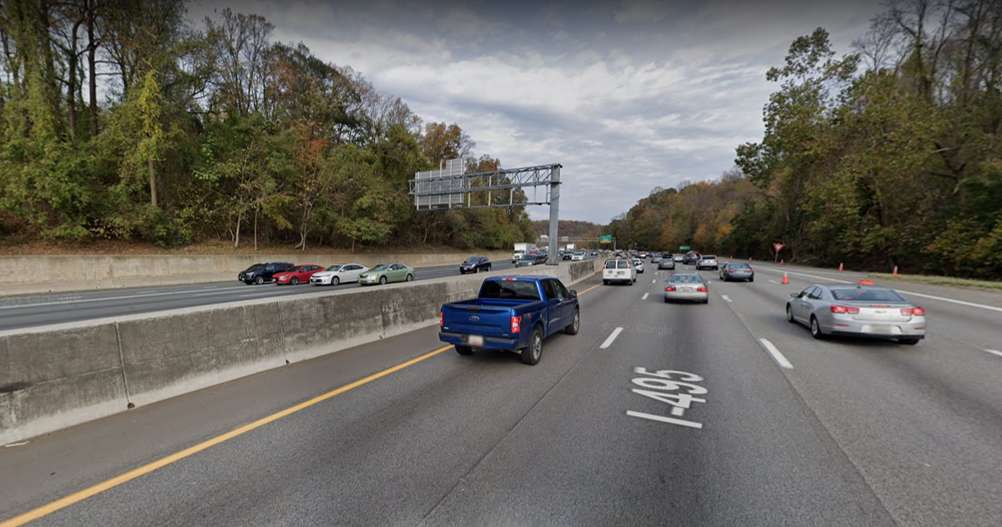
In its current state, the American Legion Bridge doesn’t work. Anyone who has driven across the bridge during rush hour knows the pain of being stuck in hours of back up as traffic bottlenecks, but a new study aims to relieve some congestion with proposed bus routes between Maryland and Virginia.
Conducted by the Maryland Department of Transportation and the Virginia Department of Rail and Public Transportation, the transit and transportation demand management study examined the existing traffic congestion on the bridge and finalizes recommendations for future bus routes with dedicated transit lanes in the I-495 corridor.
According to the study, traffic on the American Legion Bridge has continued to increase over the past two decades:
Between 2002 and 2017, the traffic volumes on the Bridge increased by 18 percent. Population and employment growth is projected to continue in the region, specifically in Tysons and the surrounding area, putting further strain on the existing infrastructure. The Traffic and Transportation Technical Report for the I-495 Express Lanes Northern Extension also found that trips travelling across the Bridge have a wide-range of origins and destinations, with many existing and projected future trips originating and ending in locations outside of Fairfax County and Montgomery County — the two jurisdictions connected by the Bridge.
And it’s likely to get worse. Based on projected population growth in areas like Tysons, the study says traffic on the bridge is expected to increase by 31% over the next two decades, with 1,833 additional trips per year, primarily from Maryland residents coming to attractions or workplaces in Virginia.
“The majority of existing trips are generated in Maryland, clustered along the MD 355 corridor, along with smaller clusters around Frederick and the US 29 corridor,” the study said. “In Virginia, trip generation is concentrated in the activity centers of Tysons, Dunn Loring, Alexandria, and Arlington.”
The study noted that aside from Metro, no existing transit options offer any inter-state connections, and the Metro routes circuitously travel through Rosslyn.
“Commuter bus routes running on managed lanes could be more efficient to commuters travelling between these key activity centers rather than a circuitous transit trip on Metrorail,” the study said. “In addition to local and commuter bus service, access to managed lanes can drastically improve travel times for carpool and vanpool users.”
The Fairfax County Board of Supervisors recently endorsed plans to extend the I-495 Express Lanes to the American Legion Bridge, but the viability of the 495 NEXT project depends on Maryland widening its portion of the highway, a proposition that remains tentative at best.
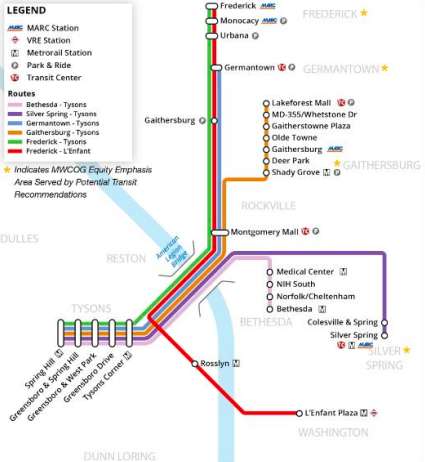
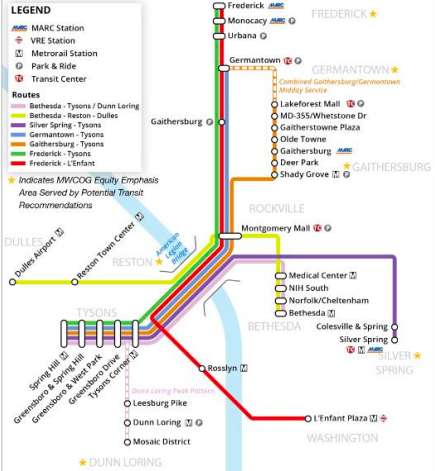
If the planned dedicated transit lanes on the American Legion Bridge do come to fruition, the study looked at several potential bus routes that could run between Tysons and Maryland, including lines to Bethesda, Germantown, Silver Spring, Frederick and Gaithersburg.
The study found that the routes to Bethesda, Silver Spring and Gaithersburg all scored fairly highly when it came to factors like connections to low-income areas and potential ridership.
The study included a range of options based on different levels of investment in transit infrastructure.
The baseline transit expansion was for $2.2 million to $3.5 million in annual operating costs. This would offer a pair of routes that run from Spring Hill to Lakeforest Mall in Germantown and Bethesda.
A medium-cost expansion would run from Spring Hill up to Frederick and to Bethesda as well as Silver Spring, with another line connecting Frederick down to Rosslyn and L’Enfant Plaza. This package has estimated annual operating costs of $6.8 million to $11.6 million.
The highest investment package would include all the above, plus a line out to Reston Town Center and Dulles Airport and another to the Mosaic District. The annual operating cost would be between $11.4 million and $19.8 million.
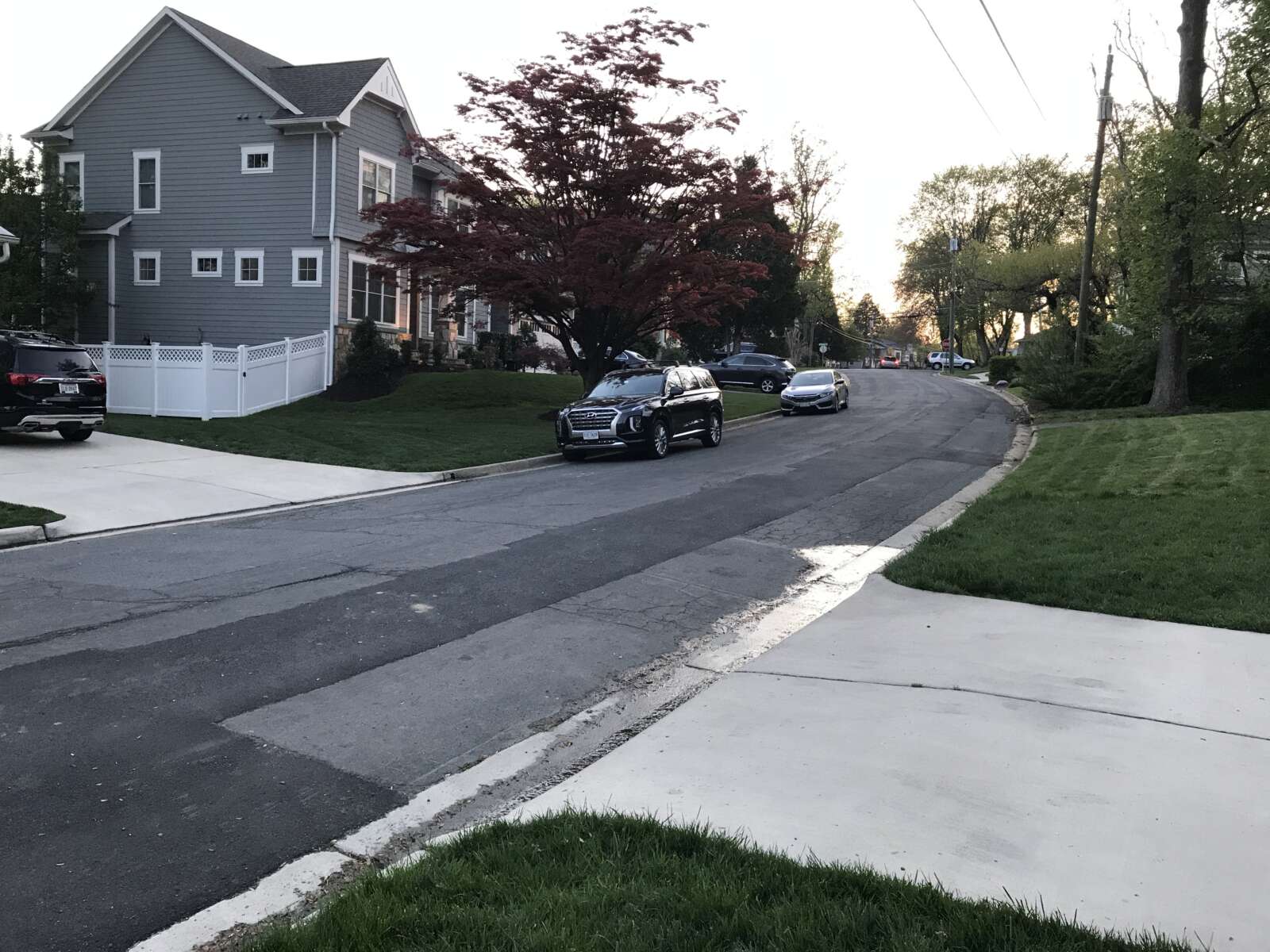
When former Vienna Town Councilmember Maud Robinson died in 2019, she set aside much of her estate to pay for sidewalks throughout town.
At the time, town staff projected that the money would fund 22 stretches of sidewalk totaling about 3.3 miles. Vienna would front the costs for these projects and accept the trust in the form of reimbursement.
Two years later, the town council has approved four eligible roads but have deferred six others in response to objections from neighbors, who have argued that the sidewalks are unnecessary, would encroach on precious driveway space, affect their trees, or place a burden on residents to maintain them.
At this rate, those close to the initiative are feeling the pressure of a deadline. Vienna has until fall 2024 to use up the Maud Ferris Robinson Charitable Trust.
Town staff estimate it could take up to two years after a street is identified to complete a project, and no construction has started, meaning no money can be transferred. A few town council candidates have also highlighted the importance of using the bequest.
“We are remaining optimistic [but] we do know we need to hit the accelerator button on that a little bit,” Vienna Public Works Director Michael Gallagher said.
The town is poised to take a step forward soon, with several sidewalk projects set to go before the Vienna Town Council next Monday.
Two are designed and ready for construction, which would cost nearly $320,000 combined, and there will be a public hearing for nine other projects.
Those nearing the construction phase are Cabin Road SE from Glyndon Street to Branch Road and Pleasant Street SW from east of Maple Avenue to Surveyors Court. Another two could be ready for final approvals in May, according to Gallagher.
The nine slated for a public hearing and the first round of approvals are:
- Alma Street SE — Delano Drive to Follin Lane
- Birch Street SW — Battle Street to Plum Street SW
- Blackstone Terrace NW — Holmes Drive to Lawyers Road
- Charles Street SE — Locust Street to Branch Road
- Cherry Circle SW — Cottage Street to end
- Elmar Drive SE/SW — DeSale Street to Park Street
- Oak Street SW — Birch Street to Center Street
- Symphony Circle SW — Melody Lane to end
- Timber Lane SW — Tapawingo Road to Harmony Drive
Even though it seems like it’s moving slowly, Andrew Jinks, Vienna’s transportation engineer, says the timeline will still be shorter because the town will not have to do the time-consuming work of navigating state and federal regulations.
“That is a significant benefit,” he said. Read More
Fairfax County Clears COVID-19 Vaccine Waitlist — The Fairfax County Health Department’s vaccine waitlist is now at zero, according to its data dashboard. That means everyone who registered before the county entered Phase 2 on April 18 has been invited to schedule an appointment. The department registered a total of 435,981 people. [FCHD]
Springfield Doctor Charged in Two Sexual Assaults — Fairfax County Commonwealth’s Attorney Steve Descano announced yesterday (Tuesday) that Drew John Steiner, 58, a physician who practiced family medicine at Fort Belvoir Community Hospital, has been indicted on charges of rape, abduction, and unlawful filming for allegedly sexually assaulting two women last summer. [WTOP]
Vienna Town Council Debates Future of Mulch Facility — “The town of Vienna’s leaf-mulching facility on Beulah Road, N.E., for decades has produced free mulch for residents, but also has aggravated adjacent neighbors with noise and a pervasive stench from the stored leaves. The Vienna Town Council on April 19 mulled options for the site’s future, but could not arrive at a clear consensus.” [Sun Gazette/Inside NoVA]
ActiveFairfax Survey Deadline Extended — Fairfax County residents now have until May 15 to weigh in on the ActiveFairfax Transportation Plan, which will shape the county’s future efforts to plan for bicycles, pedestrians, and other forms of non-motorized transportation. The county held a community conversation on the plan for the Dranesville District last night, and a Providence District meeting is scheduled for April 28. [Fairfax County Government]
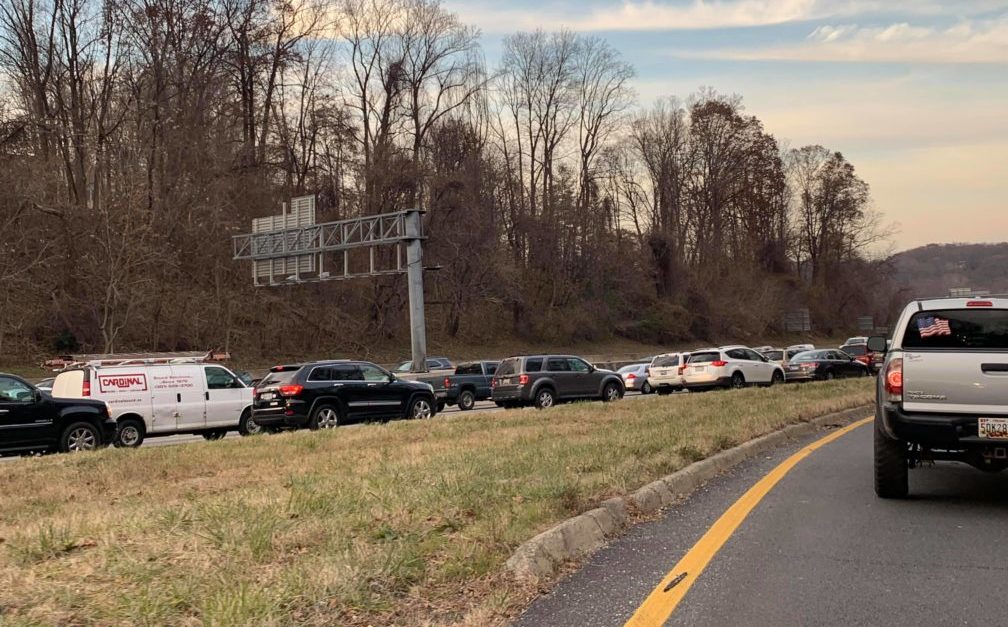
(Updated at 2:10 p.m.) Officially, the Fairfax County Board of Supervisors endorsed the I-495 extension of the express lanes on Tuesday (April 13), but the discussion leading up to that vote showed that some officials closest to the project still have reservations.
Supervisor John Foust, representing the Dranesville District that would ostensibly stand the most to gain from the project called 495 NEXT, said the project only addresses half the problem and, without the other half, could only worsen an already miserable bottleneck.
“I’ve lived with the horrible congestion caused by backups at the American Legion Bridge and I’ve supported widening or replacement of the bridge,” Foust said. “But without the Maryland project, 495 NEXT worsens traffic in the general portion lanes…Until the American Legion Bridge is widened, these adverse impacts are far greater than any public benefit.”
The plan would add new express lanes from 495’s intersection with the Dulles Toll Road up to the American Legion Bridge, where the plan was to connect with similar lanes on the Maryland-owned bridge and onto the Maryland side of the beltway. Foust’s frustration comes from Maryland dragging its heels on the project despite an earlier pledged commitment to widening.
Foust said that, as recently as December, the Board agreed that VDOT should only consider further action on widening once Maryland executed a comprehensive agreement with a developer to fulfill their half of the project.
“Of course that hasn’t happened, nothing significant has happened since December to justify us reversing our opinion,” Foust said. “I want to make it clear, I think it’s a mistake. Going forward without agreement from Maryland is exposing us to worsening impacts.”
But Fairfax County has faced mounting pressure to endorse 495 NEXT, most recently from Virginia Secretary of Transportation Shannon Valentine. Board of Supervisors Chairman Jeff McKay and others on the board described the endorsement as a good-faith move on Fairfax’s part.
“We don’t entirely control the schedule here,” McKay said. “There are some signfiicant benefits to this project. Everyone is familiar with the gridlock that Foust has explained…We’re close to a guarantee that Maryland is making significant progress.”
“This is a chance for Fairfax County to be a leader,” Supervisor Pat Herrity agreed, “and I think this encourages Maryland to move forward.”
The endorsement passed in a 8 to 2 vote, with Foust and Hunter Mill District Supervisor Walter Alcorn voting against it. The new lanes are scheduled to open to traffic in 2024.
(Updated at 10:10 a.m. on 4/13/2021) The Fairfax County Board of Supervisors will take an official position on the Virginia Department of Transportation’s much-debated Interstate 495 Express Lanes Northern Extension (495 NEXT) project when it meets on Tuesday (April 13).
A prepared letter to Virginia Secretary of Transportation Shannon Valentine suggests the board plans to endorse the project, which will extend the I-495 Express Lanes about three miles from the Dulles Toll Road interchange in Tysons to the American Legion Memorial Bridge.
However, whether the board will actually approve the letter as it currently stands remains to be seen.
Dranesville District Supervisor John Foust told Tysons Reporter on Friday (April 9) that he hopes to revise the letter with firmer language calling for closer coordination with Maryland’s plans to widen the American Legion Bridge and I-270 and objecting to the design of the Capital Beltway/Dulles Toll Road interchange.
“If I can’t get those revisions made, I won’t be able to support it,” Foust said.
The letter says the 495 NEXT “will improve mobility” in the D.C. region by connecting the existing 495 Express Lanes to toll lanes that Maryland is considering constructing on its side of the Potomac River.
It indicates that Fairfax County and VDOT have made progress on addressing transit, pedestrian and bicycle facilities, and stormwater management concerns that have been raised throughout the project’s development.
According to the letter, VDOT will fund the capital and operating costs of one of the Tysons-Montgomery County bus routes proposed by the Virginia Department of Rail and Public Transportation’s transit demand management study.
The state has also now committed to continuing its planned regional trail toward Tysons instead of stopping it at Lewinsville Road, and the county is working with VDOT to secure an agreement that would require the 495 NEXT builder to contribute funds to Scotts Run stream restoration efforts.
At the same time, county officials say they “remain concerned” about the possibility that Maryland will further delay its express lanes project. Without a widened American Legion Bridge, the 495 NEXT project would simply move the congestion that currently plagues drivers on the Beltway further north.
“The continuation of an express lanes system into Maryland over the ALMB remains a critical priority to realize the maximum benefit of the I-495 NEXT project,” the Board of Supervisors letter says. “The Board continues to strongly encourage VDOT to coordinate with Maryland to minimize the time between the opening of the I-495 NEXT express lanes and Maryland’s managed lanes.”
Foust says he hopes to revise the letter to tell the Commonwealth Transportation Board “to wait until we are certain that Maryland is going to move forward with their project before we authorize [express lanes operator] Transurban to begin construction of 495 NEXT.”
He also wants to make clear his opposition to the proposed design of the Dulles Toll Road interchange.
“I suspect that it is designed to move cars very effectively, but it is just outrageously huge and visually unacceptable for that location adjacent to Tysons,” he said.
Virginia and Maryland’s Beltway plans have also drawn criticism from environmental advocates.
The Coalition for Smarter Growth, Audubon Society, National Parks Conservation Association, and Sierra Club chapters from both states released a “Best Smart Growth Plan” on Friday, urging officials to pause the projects and conduct a comprehensive analysis to find “a less destructive and more sustainable and equitable solution.”
Foust says he is “sensitive” to the groups’ environmental concerns, noting that some impact on parks, trees, streams, and open space is unavoidable with an infrastructure project of this size.
However, he believes Virginia and Maryland have already waited too long to address the traffic issues at the American Legion Bridge, and postponing action for another 15 years, when the bridge is expected to need a replacement, would be “absolutely unacceptable.”
“We’ll have to mitigate those impacts, but there’s no reason to incur them if Maryland doesn’t move forward with their project to connect to 495,” Foust said.
VDOT acknowledged that there have been persistent concerns about 495 NEXT in a statement to Tysons Reporter:
VDOT continues to
collaborate with the Fairfax County Board of Supervisors and staff to listen to and address their concerns on VDOT’s I-495 Northern Extension Express Lanes Project. The issues identified by Fairfax County remain important to VDOT and to our efforts to develop and deliver the best possible multimodal transportation solution for the I-495 corridor, and make a positive impact on our Commonwealth.
Photo via Google Maps
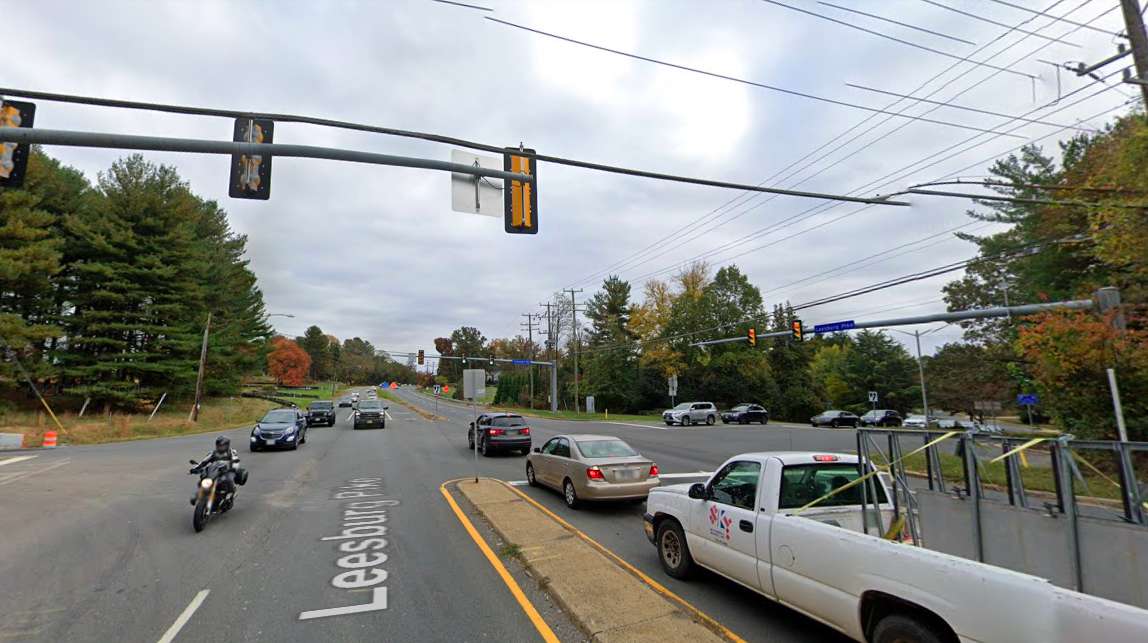
The Virginia Department of Transportation is moving forward with plans to overhaul the intersection of Towlston Road and Leesburg Pike (Route 7), but despite requests from local residents, the highway’s speed limit will not be reduced after construction is finished.
VDOT officials say the need to move traffic to and from Tysons will keep the speed limit on Route 7 at 55 miles per hour.
VDOT discussed the changes coming to the Route 7 and Towlston intersection at a virtual town hall hosted by the Great Falls Citizens Association on March 31.
The need for improvements to the intersection emerged in the aftermath of a fatal crash in December. At the meeting, officials said the incident occurred when a vehicle traveling southbound on Towlston Road attempted a left turn onto Leesburg Pike. A distracted driver ran through the red light and struck the turning vehicle.
“What the community is seeking is an assurance that the intersection will be as safe as possible when VDOT completes its work under the widening project,” GFCA executive board director Mike Barclay said.
Barclay said that the intersection improvements need to ensure that, when a car turns left on Route 7 from Towlston, the driver “will have an unimpeded view of traffic traveling west on Route 7.”
Public feedback at the meeting ranged from urges to reduce the speed limit to a call to convert the intersection into a four-way stop.
Some of those concerns, particularly regarding sight-lines, should be waylaid by the current project to widen Route 7 from Reston to Tysons, VDOT said.
As part of the project, extended turn lanes will be added to Leesburg Pike to make it easier for trucks to turn onto Towlston Road, a response to the common complaint that trucks turning at the intersection often block several lanes of traffic.
Steve Kuntz, transportation business unit manager for consultant Dewberry, said sight-lines at the intersection will be improved as part of ongoing work at the intersection.
“We’re still not in the final configuration,” Kuntz said. “It is still a work in progress. We want to make sure everyone recognizes: what you see today is not the permanent configuration.”
But VDOT said there are no plans to reduce the speed limit on Leesburg Pike.
“Reducing speed on Route 7 is not an option,” VDOT district construction engineer Bill Cutler said. “It’s a highway to Tysons and needs to be able to move people along.”
However, changes will be made to Towlston Road, which will be reduced to 25 miles per hour near the intersection.
Cutler said VDOT will also be working with the contractor and the operations center to optimize timing at the signal as part of a broader effort to synchronize signals throughout the Route 7 corridor.
“We expect that this will function well,” Cutler said. “Now, it won’t function perfectly because we’re in Northern Virginia. Nothing functions perfectly, but it should function better than it has in the past. We’ll take counts and see how that holds up compared to our forecasts, and certainly to reality.”
Photo via Google Maps
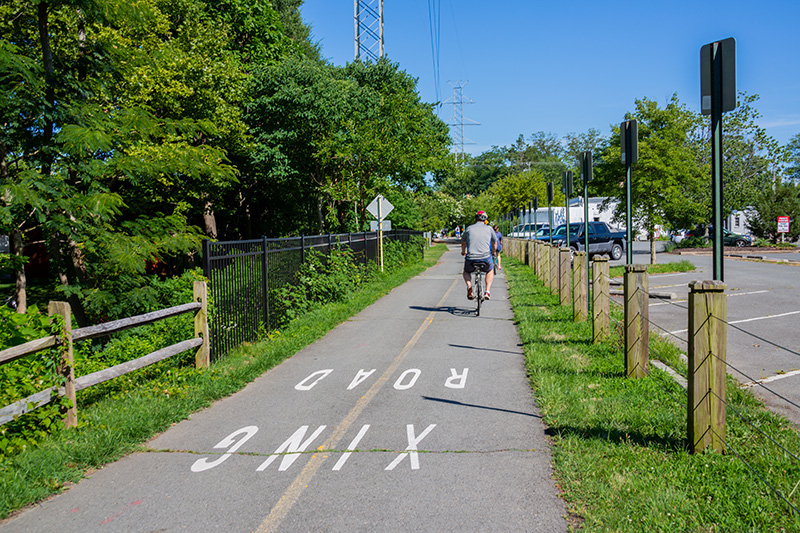
The Fairfax County Department of Transportation will host a series of virtual discussions next month for community members to share their thoughts on walking, bicycling, and other modes of travel that don’t involve getting inside a car.
The community conversations are intended to give county staff insight into people’s travel habits and areas where the county could improve bicycle and pedestrian access or facilities as part of FCDOT’s efforts to develop a new ActiveFairfax Transportation Plan.
“Community input is critical to the success of this planning effort,” FCDOT spokesperson Anna Nissinen said in a statement. “We want to hear all perspectives, from families biking and walking within the community to individuals who use scooters and bike share as part of their commute. This is the only way to create a comprehensive and functional plan that truly supports the needs of the community.”
12 online meetings have been scheduled, starting with an evening conversation for Mason District residents on April 8. The meetings focused on the Tysons area include:
- Dranesville District (McLean): Tuesday, April 20, 7 p.m.
- Hunter Mill District (Vienna): Monday, April 19, 7 p.m.
- Providence District (Tysons, Merrifield): Wednesday, April 28, 7 p.m.
There will also be a meeting in Spanish on April 15 at 7 p.m. and two “Lunch and Learn” sessions at noon on April 13 and 23.
A recording of the event and the presentation will be available on the ActiveFairfax webpage for anyone unable to attend a meeting. There is also an online survey for community members to share their perspective on barriers to non-motorized travel, potential trail and bicycle network improvements, and other topics.
The Fairfax County Board of Supervisors directed FCDOT to review its plan for active transportation — defined by the county as “self-propelled, human-powered travel” such as walking, cycling, or using a scooter or wheelchair — in January 2020.
Launched last summer, the project is divided into two phases. First, FCDOT is developing a vision statement laying out the county’s goals, evaluating existing conditions, and creating a plan for a systematic safety program. Then, the department will come up with recommendations, including potential comprehensive plan updates and project and policy prioritization.
Local officials have been looking at ways to enhance Fairfax County’s bikeability and walkability, particularly in urbanizing areas like Tysons and Reston, to improve safety and reflect people’s evolving travel habits.
The National Capital Region Transportation Planning Board’s most recent Regional Travel Survey found that the number of bicycle trips in the D.C. area has doubled over the past decade, though the amount of daily walking trips has remained steady.
“The plan will establish a vision and a roadmap for implementation of safe, convenient, and enjoyable streets, sidewalks, bike facilities, and trails in Fairfax County for people of all ages and abilities,” Nissinen said. “The plan will support livable street design through the development of a transportation network that connects people to where they live, work, play, learn and take transit.”
Photo by Michelle Goldchain
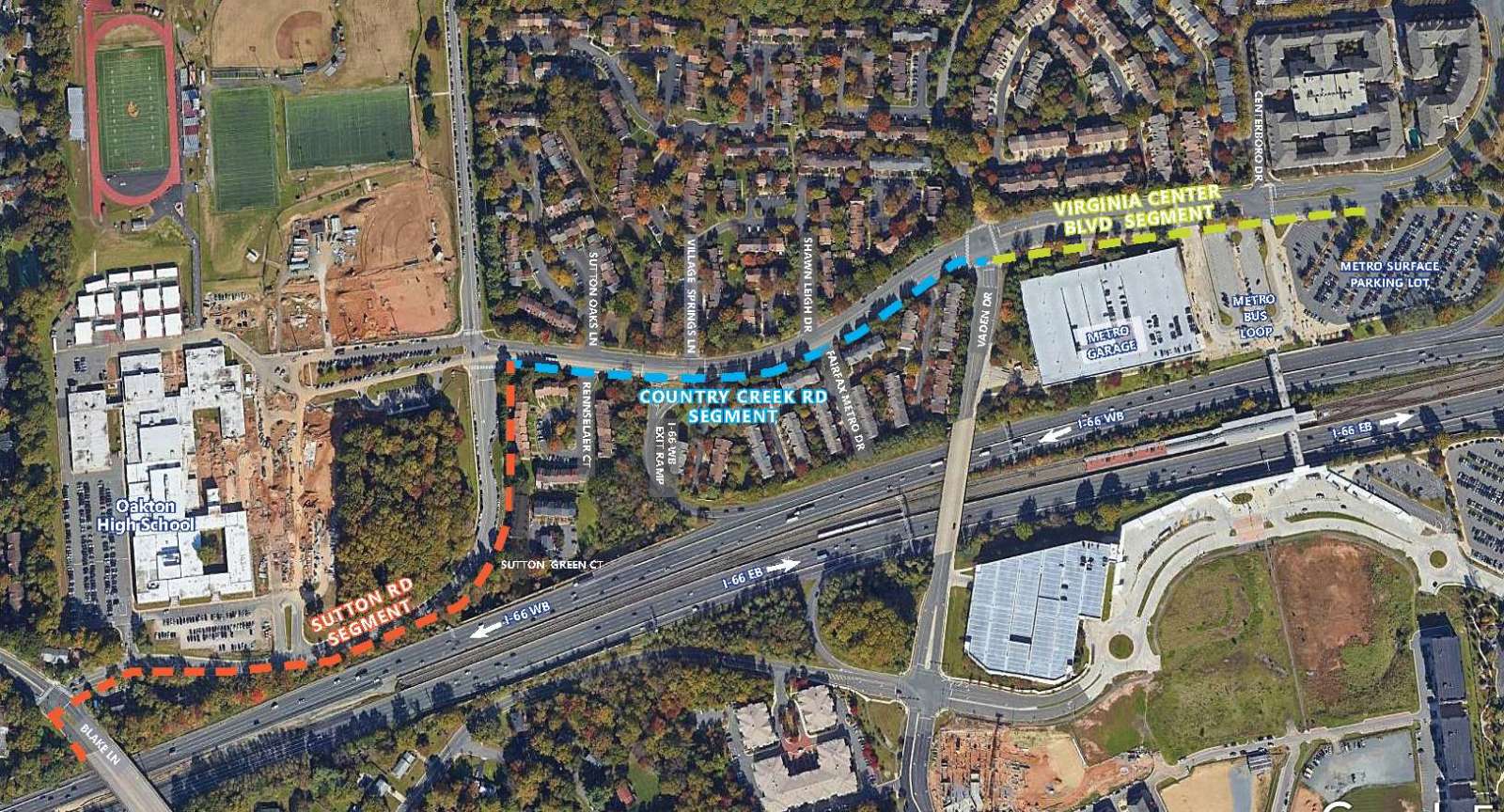
The Virginia Department of Transportation’s period for public comments on proposed pedestrian and bicycle improvements around the Vienna Metro station will close on Monday (March 29).
VDOT held a virtual public information meeting on March 18 to discuss its plans, which are being developed in conjunction with efforts to construct a network of pedestrian and bicycle facilities along Interstate 66 as part of the Transform 66 Outside the Beltway project.
The I-66 parallel trail network will cover 11 miles between Gallows Road in Dunn Loring and Centreville, connecting existing regional trails — including the Washington & Old Dominion Trail — and adding new pedestrian bridges over I-66, according to Andrew Beacher, VDOT’s preliminary engineering manager for Fairfax and Arlington counties.
“The Vienna Metro bicycle and pedestrian improvements project is a key portion of that larger network that’s going to be implemented in the coming years,” Beacher said. “…It is an extensive planned network that we hope will ultimately serve the community well.”
The Fairfax County Department of Transportation told Tysons Reporter in February that the Vienna Metro portion of the project is being implemented separately, rather than as I-66 is widened, because the trail has to deviate from the interstate “for engineering reasons and for access-to-the-community reasons.”
Divided into three segments between Blake Lane and the Vienna Metro surface parking lot, improvements currently being considered include:
- The addition of a 10-foot-wide shared-use path on Sutton Road
- Removal of one eastbound through lane on Country Creek Road and Virginia Center Boulevard, which would create room for a road diet and two-way cycle track and sidewalk on the south side of the road
- The construction of a new 10-foot-wide shared-use-path on Virginia Center Boulevard close to the westbound I-66 ramp adjacent to the parking lot
- The installation of new pavement markings and signs
- Upgraded crosswalks, traffic signal optimization, and other intersection changes
In addition, two new bus stops will be added on Sutton Road “to provide convenient access to Oakton High School faculty, staff, and students,” and six existing stops on Country Creek Road will be relocated to align with the proposed new crosswalk locations, FCDOT project coordinator Caijun Luo said during the March 18 meeting.
At Fairfax County’s request, VDOT is also looking at possible interim solutions to bridge the anticipated gap between the completion of the Transform I-66 improvements in late 2022 and the conclusion of the Vienna Metro project, which is not expected to finish construction until spring 2025.
State transportation planners have proposed restriping Country Creek Road and Virginia Center Boulevard to create a two-way, 10-foot-wide cycle track with a buffer of concrete or flex posts to separate bicyclists from drivers.
According to VDOT project manager Zamir Mirza, it will be harder to implement temporary measures on Sutton Road due to variations in road width, especially approaching the curve near the southern entrances of Oakton High School.
“We are considering design options for this segment, including removing parking on the northwest side of the site for the bicyclists,” Mirza said. “We may need to consider widening the existing sidewalk also, or have a combination of the two options.”
Mirza added that the project website will be updated when VDOT finishes studying the proposed interim options for Sutton Road.
The Vienna Metro improvements project has a total estimated cost of $9.4 million.
A public hearing on the project design will be held this summer before getting approved in the fall. VDOT plans to begin right-of-way acquisitions and utility relocations in the spring of 2022, and construction is expected to begin in summer 2024.
Community members can submit comments to [email protected] or by mail to VDOT’s Northern Virginia District office. VDOT also has a survey to gather feedback.
Image via VDOT
People who live and work in Tysons are one step closer to getting a bus rapid transit route through the area.
Fairfax County began studying options for bus rapid transit in Tysons two-and-a-half years ago as part of the larger Envision Route 7 BRT project from the Northern Virginia Transportation Commission, which would establish bus service between Tysons and the Mark Center in Alexandria.
Now, the Fairfax County Department of Transportation has settled on a preferred route within Tysons, which it will recommend to the NVTC as the organization embarks on the fourth phase of study for the Envision project.
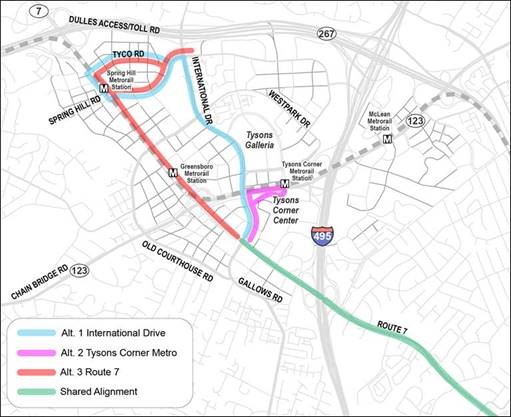
The county’s preferred route goes up Route 7 and takes International Drive up to Spring Hill Road, where it loops onto Tyco Road to rejoin International Drive. It will make six stops, FCDOT BRT Route 7 Project Manager Sean Schweitzer said during an informational meeting Wednesday night (March 24).
FCDOT chose the route out of three proposed alternatives because it would serve the most households, the greatest population — about 6,700 people — and the largest employment area in Tysons, according to Schweitzer.
Staff had narrowed nine options down to three after considering cost, sustainability, and accessibility, among other factors, he said. The second option, which is much shorter, branches off Route 7 to loop past Tysons Corner Center and the Tysons Metro station.
Schweitzer said the third alternative most closely resembles the NVTC’s vision for a route through Tysons, circling around Tyco and Spring Hill roads but remaining aligned with Route 7 by passing through the Greensboro Metro station.
FCDOT staff will accept comments on the proposed paths through April 14 via the Route 7 BRT Survey. The NVTC will incorporate the selected route into the final phase of its Envision Route 7 BRT study this summer and fall, Schweitzer said.
“BRT is a more efficient form of local bus, which typically operates in zone-exclusive lanes,” he said. “BRT usually has enhanced stations with raised platforms for level boarding, smart digital fare, and real-time passenger information and bus times. Stops are more limited than local bus and are more distanced.”
BRT is comparable to light rail but at a lower capital cost, he said.
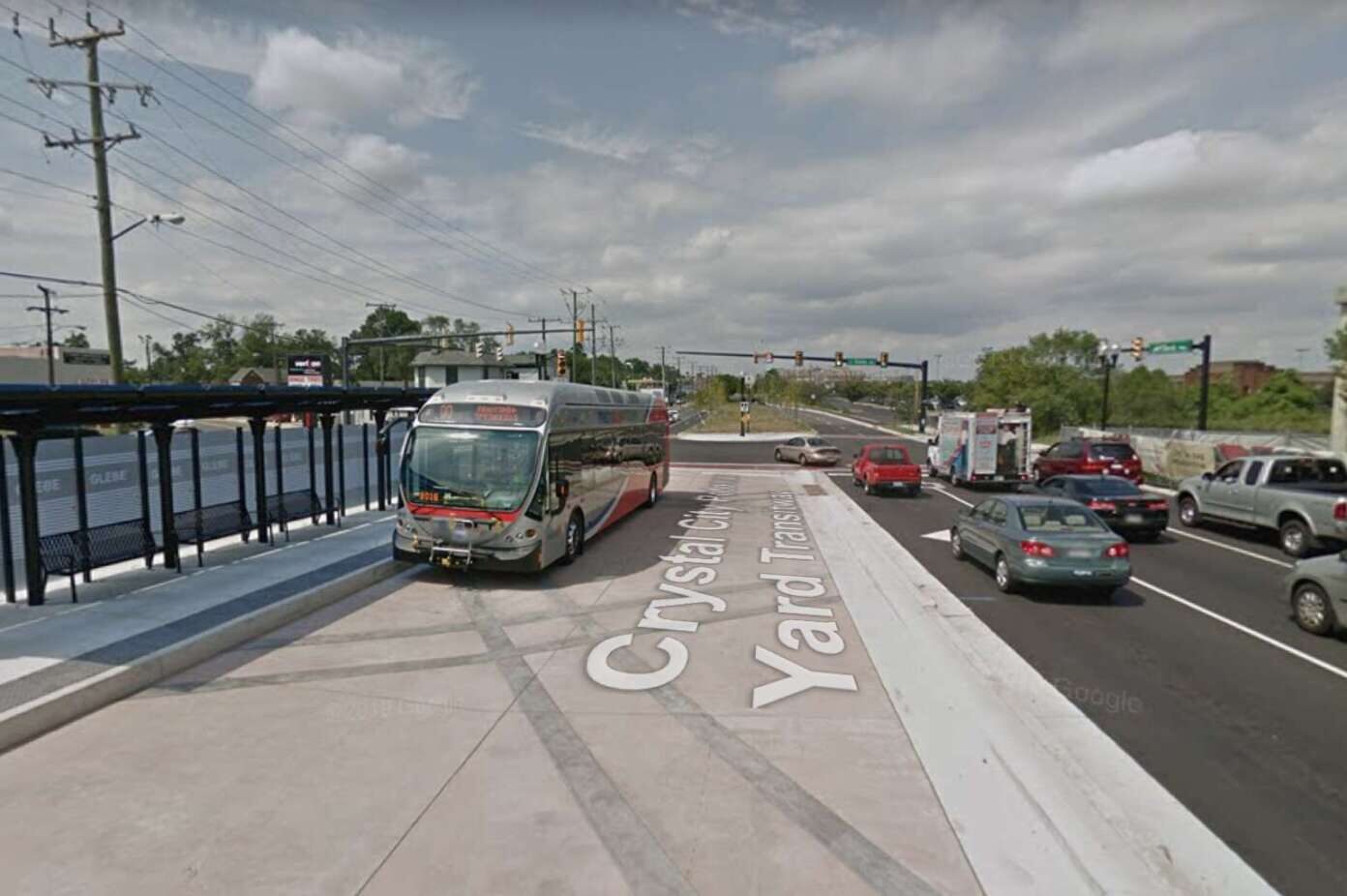
Like the BRT service operated by the Washington Metropolitan Area Transit Authority in Alexandria, pictured above, a service in Tysons could run along the median for part of the route. To further reduce conflicts with cars and bicycles, buses would get transit signal priority, and bicycle lanes would run behind the stations.
The buses would drive in mixed traffic, turning left onto Spring Hill and transitioning into a bus-and-turn lane before returning to the median lane, according to Schweitzer.
The service would run from 5 a.m. to 1 a.m. on weekdays and 6 a.m. to 12 a.m. on weekends, seating 110 passengers, he said.
After the meeting, FCDOT planner Mike Garcia told Tysons Reporter that the county obtained input from residential and commercial management groups, homeowners and civic associations, faith communities, libraries, recreational centers, schools, and other stakeholders, including the Tysons Partnership, in coordination with district supervisor offices.
“The pandemic did limit our outreach efforts to physically reach out to communities,” he said.
Map via FCDOT, photo via Google Maps