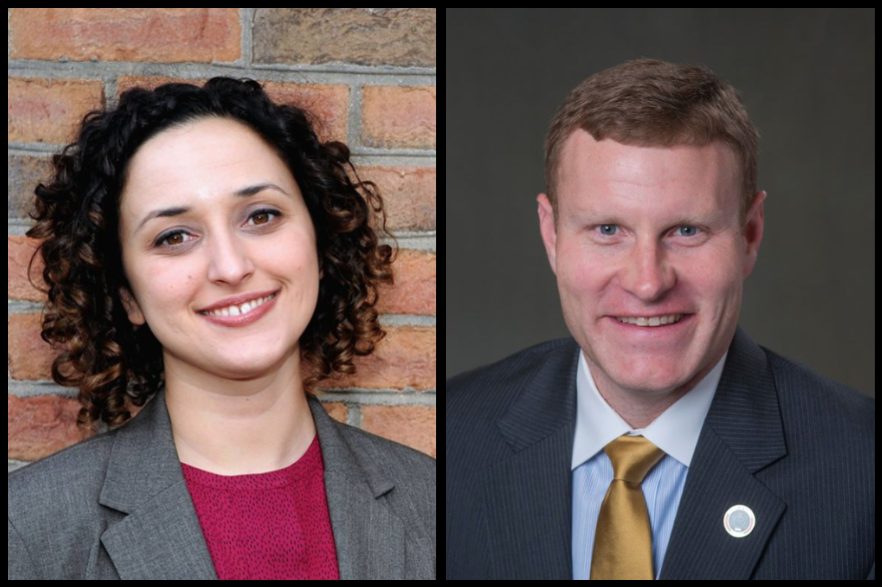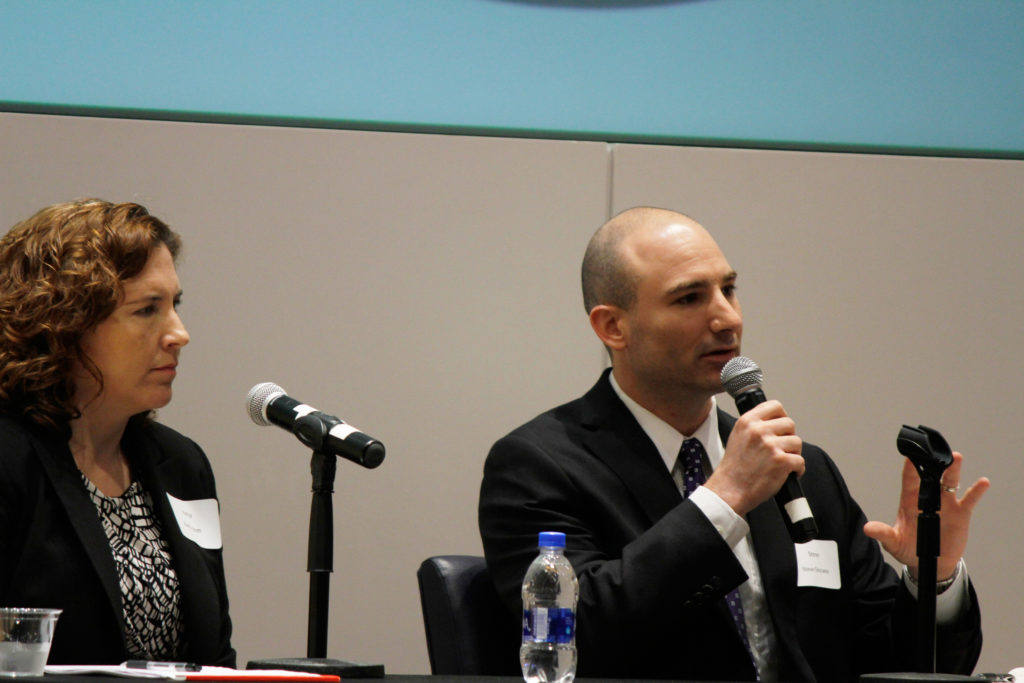

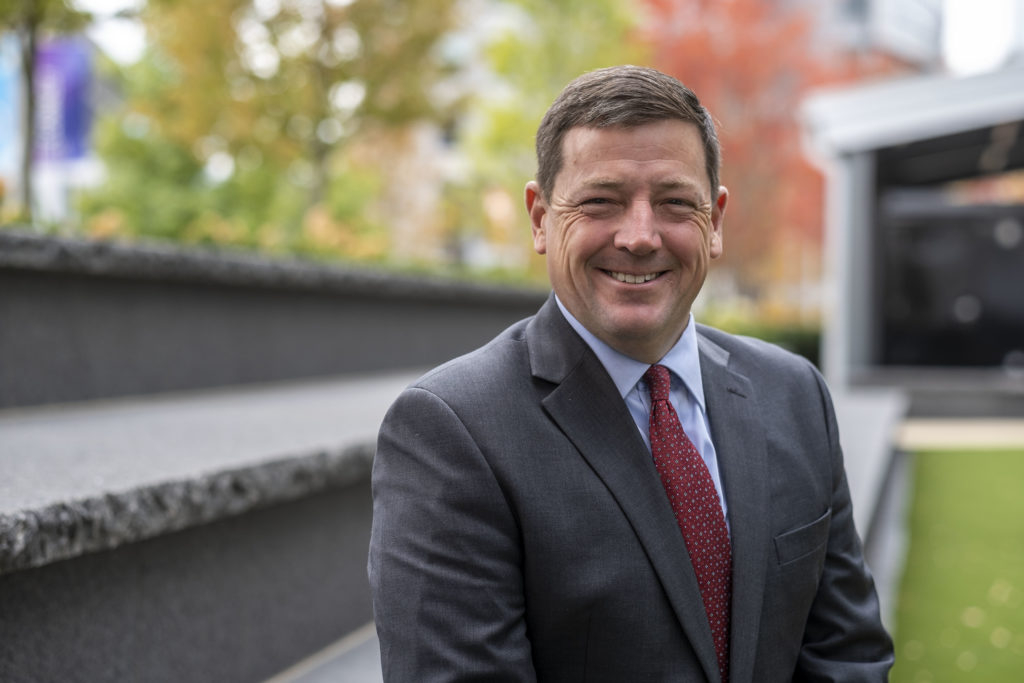
Editor’s Note — Tysons Reporter is running Q&As with the candidates running for the Dranesville and Providence District seats on the Fairfax County Board of Supervisors this week. The stories have been lightly condensed and edited for clarity.
Featured here is Ed Martin, who is running as a Republican against Democrat John Foust for the Dranesville District seat, which represents McLean, Great Falls, Herndon and portions of Vienna and Falls Church.
Ed Martin is a radio host, president of a conservative think tank and Great Falls resident. Now, he wants to become the Dranesville District Supervisor.
Originally from New Jersey, Martin has worked as a lawyer and headed up the Human Rights Office for the Archdiocese of St. Louis from 1998-2001, he told Tysons Reporter.
Fascinated by President Donald Trump’s tweets, Martin wanted to write a book about them and ended up teaming up with an artist to create three Trump coloring books featuring the president’s tweets.
He now runs Phyllis Schlafly Eagles, a conservative group named after the controversial social leader known for opposing the Equal Rights Amendment. Martin moved to Great Falls shortly after the 2016 election, he said.
Tysons Reporter met up with Martin to talk about how he would want to help seniors age in place and address capacity issues at public schools in the county if elected to the Board of Supervisors.
Tysons Reporter: What are your top three goals to help people age in place?
Ed Martin: My wife is a geriatrics physician so her specialty is seniors, so for 15 years I’ve been hearing from her the details of what they call the “grey tsunami” — it’s the number of people who are in the Baby Boomer generation that will age out.
One observation, broadly, is there is a growing — especially in government — distrust in what’s happening. More transparency in what is going on is more important than ever. The second thing, the taxes have gone up, up, up. I think the taxes are too high. I think we need to lower the cost of taxes.
The top one I would describe now is the cost of living here. It’s not just for seniors by the way. If you talk to the cops — and the cops endorsed me, one of the PBAs endorsed — those guys and gals are telling you they can’t live here. They can’t afford to live in Fairfax County. That’s a big one, I would say the taxes.
What’s the vision for development here? How do you put together the pieces that let people move? I think we have a wonderful community [in] Fairfax County, especially in Dranesville District, has some incredible strengths and volunteers and pockets of communities, churches and synagogues that want to do things — how do you build that together?
In Great Falls there’s a center that has come together to support seniors. That’s got to happen more. We need creative solutions. I think that’s going to include the possibility of ride-sharing so that more people can stay.
TR: How would you address affordable housing in the county?
Martin: The biggest thing I think helps with affordability is lowering taxes and the costs. That would be the number one thing. I would say the number one thing is to lower the cost of living here, whether that’s for a cop and his family or an individual. And that’s the best way I know how to do that is to cut taxes, lower cuts, cut regulatory costs and the schools are what draw people here.
They are willing to tolerate some of the high real estate prices because the schools are so good in the Dranesville District, so I think that’s the biggest concern people have now. How can I trust to move there if we’re having something that looks like boundary changes — what does that mean? Confidence in the school system is going to be really important.
TR: What do you think about developers setting aside units for workforce housing and contributing to the county’s housing fund?
Martin: I’m a little bit cynical of set-asides. I would like to see how well they work. I don’t believe they work as well as we’re told. They tend to be window dressing for everyone to feel good.
TR: More broadly — not just about McLean High School — how would you want to address capacity issues here in Fairfax County both before it’s an issue and once a school is over capacity?
Martin: The Board of Supervisors gives an extraordinary amount of money to the School Board. Which means we should have — I know it’s possible to have [because] I’ve talked to Tom Davis, the former congressman who was a Fairfax County Supervisors and I’ve talked to Pat Herrity about it — the Board of Supervisors can have a lot more influence than currently is perceived on what the School Board does.
It’s how you spend money that makes a difference. So if you look at spending priorities and you say, “Why hasn’t McLean High School had whatever could be done to eliminate the many trailers?” — whether it means a building project, whether it means expanding the existing school — we should have been doing that instead of spending money on everything else.
Fairfax County is not broke. I think we’re misspending our money.
TR: Would you want to build a new school? Would you want to try to look at renovations or additions to existing schools?
Martin: I think the preference should be on the students who are in a school being able to stay in their school. If you have room for trailers, you have room for some buildings. Maybe it’s not one-for-one, but I think McLean [High School] could creatively expand their school.
TR: What do you think of the electric school bus idea?
Martin: I don’t know enough about the cost of it. I’m not against electric cars or electric buses if they work. I know sometimes the cost of something can be deceptively cheaper on the front end — it looks like it’s going to save you — I don’t think I know enough. I like the idea of electric cars. The good old fashioned buses work pretty well.
TR: Do you have any plans to encourage wind and solar power use among constituents and if so, how?
Martin: I think wind and solar [power are] fine. I would not be in favor of incentivizing with either taxes or anything like that. Dominion gets a bad rap for not succeeding in a variety of ways, but they have to be a partner going forward. I think that’s a different question.
Over time you need to find partnerships where things can be creatively done and I think Dominion could make some things more likely in terms of renewables. I think it’s fine to encourage people.
TR: What are your top three transit infrastructure priorities?
Martin: The number one is to get a grasp on what’s happening in Tysons because it’s impacting Dranesville.
I think the Leesburg Pike has to be addressed more significantly. If I could those two together, you hear people complain about the Georgetown Pike and some of it’s a windy road and will be forever, but some of it around the Great Falls Park is because in the summer the park is full up.
I think the third issue is what is the future going to be? I mean we have a problem that’s a wonderful blessing with these businesses moving in and the people moving in, but I don’t think we really understand the scope of the problem. I think we have to be creative. It might mean there’s more ride-sharing — I’m a sort of fan of watching the market disrupt through Uber and Lyft and all — but coming up with how to alleviate traffic congestion in the district.

Editor’s Note — Tysons Reporter is running Q&As with the candidates running for the Dranesville and Providence District seats on the Fairfax County Board of Supervisors this week. The stories have been lightly condensed and edited for clarity.
Featured here is Democrat John Foust, who is running against Republican Ed Martin for the Dranesville District seat, which represents McLean, Great Falls, Herndon and portions of Vienna and Falls Church.
John Foust is hoping that the upcoming election will land him another term representing people in McLean on the Board of Supervisors.
First elected to the board in 2007, Foust currently serves as the chairman of the county’s transportation and information technology committees, along with chairing the Fairfax County Economic Advisory Commission.
Originally from Johnstown, Pennsylvania, Foust has been living in Northern Virginia since 1981 and in McLean since 1987, according to his county bio. He’s worked in steel mills and practiced construction law in Northern Virginia.
During a recent candidate debate in McLean, Foust pointed to his experience on the county board — pointing to the expansion of Balls Hill Road at Georgetown Pike to address traffic and the widening of Leesburg Pike (Route 7).
Tysons Reporter met up with Foust in his office to ask about how he would tackle affordable housing and capacity issues at public schools and what his top infrastructure priorities are if he is re-elected for another four-year term.
Tysons Reporter: Do you any plans to encourage the use of wind and solar polar among constituents. If so, how?
John Foust: Definitely. We are particularly with solar we at the county level have 130 or so buildings that we are looking at putting solar on, but with the constituents we are going out to the community with the CECAP — a community-wide energy and climate action planning process — and part of that is going to be looking at the possibility of solar on residential and commercial buildings in Fairfax County.
TR: As people come into the area, what do you say are your top priorities to stay and age in place?
Foust: At the county level, we have a 50+ Committee that has developed a lot of programs and services to address the senior population and to help them stay in their homes. Locally, I have established three different groups — one in McLean, one in Great Falls and one in Herndon — to help seniors and people with disabilities stay in their homes and stay in the community.
Each one has taken is set up to be run by volunteers and community leaders, and each one has taken on a slightly different angle on how they are going to do that based on what they think the most immediate needs are in their particular community.
For example in Herndon, it’s almost exclusively designed around transportation and getting seniors rides to their doctors and to wherever they need to go. It’s the most common complaint we hear from seniors is that they don’t have transportation.
So then we have in Great Falls, which is a semi-rural community and people don’t see each other on a regular basis all of the time, they focus more on a social environment. In McLean, it has been very active. We’re focusing a lot on education and resources.
TR: Anything you haven’t done yet that you would want to do to help people age in place?
Foust: The most important thing we can do for some people is to get the economy going to the point where they have a strong economy that can provide tax relief. That’s a very expensive proposition but it’s also something that is contributing to the difficulties seniors have staying in their homes.
We — Fairfax County and all counties in Virginia — our primary funding source is property taxes and so there are programs available to provide relief to seniors but they are not very generous and they can’t be until we have other revenue sources to subsidize that relief.
TR: What about home-sharing?
Foust: We’ve talked about it on numerous occasions. There are obviously issues having strangers come into your home and being responsible for some of your care. So there are issues but there are nonprofits that I think take the issues on and make that happen. And it would be a very positive development if we had that. It would provide another choice.
TR: How do you want to approach affordable housing? What do you think the county can do to make sure there are enough units for young professionals coming in?
Foust: The market pretty much delivers the housing we need for the people earning 120% or more of the AMI — the area median income. We use inclusionary zoning to try to create a significant inventory of what we would call workforce housing, which is in the 80-120% of AMI in and around the Metro stations. But then for 80% or 60% of AMI or lower, it’s a huge challenge and that’s the affordable housing market that we as a government have to be more involved in, whether it’s creating incentives or financial participation.
At the Board of Supervisors, we dedicate half of a penny a year — this is a new development — on the real estate tax, which is about $12 million, to support nonprofits and others who are trying to preserve the affordable housing that we do have. And then we added an additional penny, which is about $25 million a year — to support nonprofits and others who are trying to expand to the number of affordable housing units that we have in the county.
We, as a board, we have made a commitment to have delivered 5,000 units of affordable housing for people earning 60% or lower of the AMI over the next 15 years.
TR: Do you think the county needs to do more for affordable housing? Or is the track you’re on right now —
Foust: — No, the track we’re on right now isn’t — it’s a much better track, but it’s not going to lead to fully satisfying the demand. So that’s why we have other tools that we use. And we have Phase 1 of the Strategic Plan identified 25 different things that we could be doing. For example, big things like working with nonprofits [and] making government-owned land available.
TR: What are your top three transit infrastructure priorities?
Foust: Completing the Silver Line is absolutely critical. Creating and expanding a bus rapid transit network between activity centers in the county. And expanding the general bus service feeding the Metro stations on the Silver Line.
TR: Overall, how do you think the county can better approach capacity issues at the public schools?
Foust: You have to look at adjacent school districts and see if there are dramatic capacity differences and if so, whether there is are adjacents that can be made with community support to utilize the capacity at schools that are underutilized and relieve the pressure on schools that are over capacity.
You also have the Capital Improvement [Program], which require significant funding. So we made significant increases in capital improvements for schools currently at $180 million a year under bonding authority. In all probability, that number should be higher and we need to continue to look at that and try to get more projects done.
And generally, other outside funding via bonding in other areas to deliver more annual funding streams to focus on capital improvements and renovating the schools and increasing capacity.
TR: I’m assuming it’s different trying to address it before it becomes an issue than have to go back and try to fix it.
Foust: Yeah. We just have to bite some bullets and build some new schools. Eventually, we have built very few new schools in the county in the past decade and [the] population continues to grow.
My sense is that the School Board feels that buying the land is not the best bang for the buck because they already have schools with the land and it makes more sense to expand those schools. And from an operating standpoint — budgetary — it makes more sense to renovate and expand the schools you have rather than to build new schools.
But that gets you so far and at some point, you’re going to need to get some new schools. The one in Tysons is very high on my priority for the elementary school, especially. They have the land proffered to us, given to us by a developer. And it just needs to be incorporated into the school’s CIP and built.
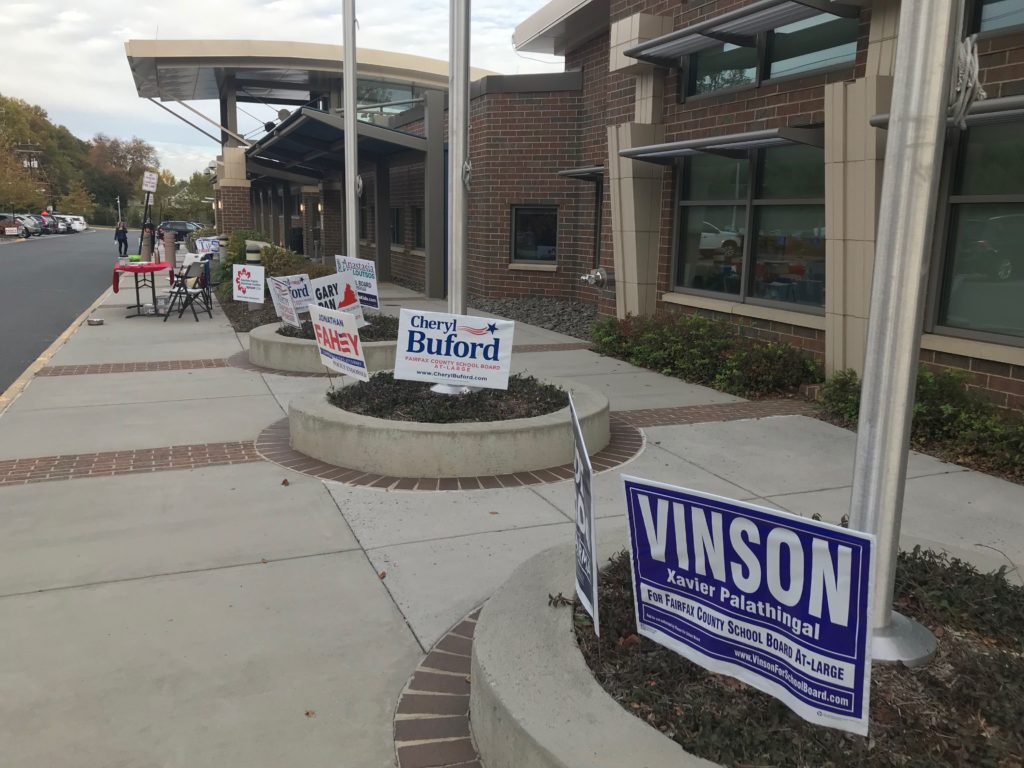
The election is one week away for Fairfax County voters — and several seats are contested on the Fairfax County Board of Supervisors and School Board.
Eight of the nine district seats on the school board are contested, while six district seats and the chair are contested for the Board of Supervisors.
While many are incumbents — like John Foust, Penny Gross and Pat Herrity on the Board of Supervisors — some new faces are also vying for seats due to officials retiring, like Hunter Mill District Supervisor Cathy Hudgins and Providence District Supervisor Linda Smyth.
Here are the candidates (listed alphabetically by last name) running in the races Tysons Reporter will be reporting on next week:
Chairman of Board of Supervisors
- Joseph Galdo (Republican)
- Jeff McKay (Democrat)
Providence District Supervisor
- Eric Anthony Jones (Republican)
- Dalia Palchik (Democrat)
Dranesville District Supervisor
- John Foust (Democrat)
- Ed Martin (Republican)
Commonwealth’s Attorney
- Steve Descano (Democrat)
- Jonathan Fahey (Independent)
Fairfax County School Board — Providence District Seat
Fairfax County School Board — Dranesville District Seat
Fairfax County School Board — At-Large Seats (voters choose three)
In total, 10 locations will offer in-person absentee voting until Saturday, Nov. 2, at 5 p.m.
Voters can find their polling locations with the My Neighborhood Map or through the portal on the Virginia Department of Elections website. Polls will be open from 6 a.m. to 7 p.m. on Election Day.
Check back on Wednesday and Thursday this week for Q&As with the Providence and Dranesville District candidates for the Board of Supervisors.
The election is next Tuesday, Nov. 5.
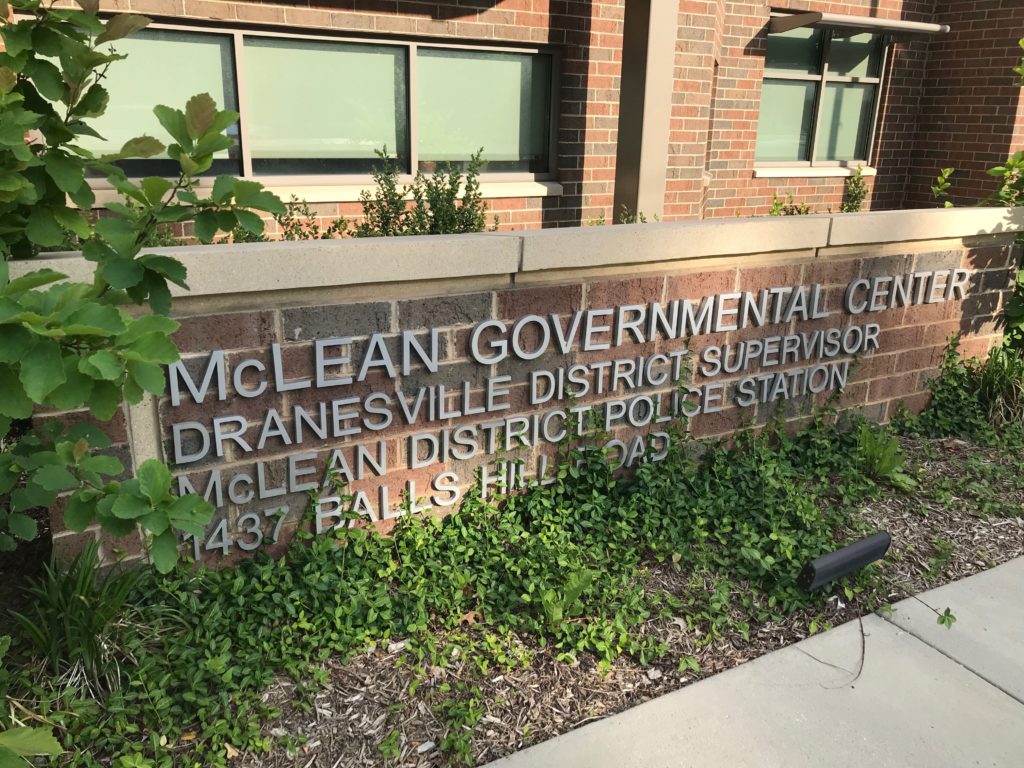
(Updated 10/18/19) In-person absentee voting starts today (Thursday) at the McLean Governmental Center, along with several other locations around Fairfax County.
In total, 10 locations will offer in-person absentee voting until Saturday, Nov. 2, at 5 p.m. — the last day to vote absentee in-person.
Voters in the Tysons area can head to the McLean Governmental Center (1437 Balls Hill Road) and the Providence Community Center (3001 Vaden Drive) between 3-7 p.m. Monday-Friday and 9 a.m.-5 p.m. on Saturdays.
All of the locations will be closed on Sundays.
The last day to apply for an absentee ballot was Oct. 29.
10 locations across Fairfax County are now open for in-person absentee voting. Learn more: https://t.co/5hVlINJtoU #absenteeballot #virginiaelections #VAleg #VApol #vote #fairfaxcounty pic.twitter.com/53wjheiCou
— Fairfax County Votes (@fairfaxvotes) October 17, 2019
Tysons Reporter has learned that a retired foreign service officer is joining the race for the Fairfax County Board of Supervisors’ Providence District seat.
Eric Jones started working for the U.S. State Department in 1990 and retired in 2016, according to his LinkedIn.
Jones and his wife Yelena, who is a realtor, bought their home in Fairfax in 2005, according to The Washington Post.
Jones has been endorsed by the Republican Party, Pat Ferguson, who works in Fairfax County’s Office of Elections, told Tysons Reporter.
His name is expected to show up on the Virginia Department of Elections’ list of candidates on Monday, Ferguson said.
The previous Republican candidate for the seat, Paul Bolon, died from a heart attack in August at the age of 69.
Jones will face Democratic candidate Dalia Palchik on Nov. 5.
Image via Fairfax County Republican Committee
As election season heats up, debates give voters a chance to hear from candidates and learn more about pressing issues that matter to them most.
Throughout October, there will be several public forums around the area hosted by community organizations.
Wednesday, Oct. 16: Providence District candidates
The Providence District Candidate Forum will take place from 7 -9 p.m. at the Providence District Community Center (3001 Vaden Drive). This is an opportunity to meet the candidates running for the Providence District School Board and Providence District Supervisor seats. This event is hosted by the League of Women Voters in the Fairfax Area.
Thursday, Oct. 17: Dranesville District candidates
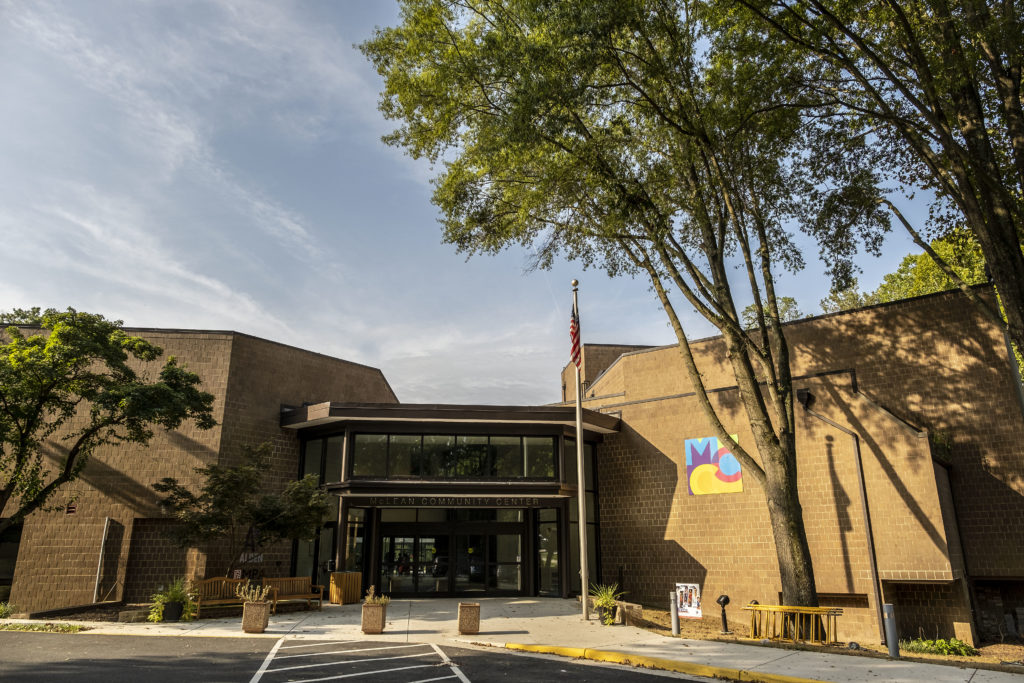
The League of Women Voters-Fairfax Area will host a forum at the McLean Community Center (1234 Ingleside Avenue). Speakers will include those running for Dranesville District Supervisor, Dranesville District School Board Member and House District 34, which represents Great Falls, parts of McLean and the Wolf Trap area. It starts at 7 p.m.
Thursday, Oct. 24: Falls Church City Council candidates
Attendees will be able to hear from the four candidates vying for three seats on the Falls Church City Council starting at 7 p.m. at the Falls Church American Legion Hall, Post 130 (400 N. Oak Street).
The candidates are: Phil Duncan, Letty Hardi and David Tarter — incumbents — and Stuart Whitaker. Former candidate Thomas Cash dropped out of the race in August.
Wednesday, Oct. 30: Dranesville District candidates
The McLean Citizens Association will hold a forum at the McLean Community Center with the candidates running for Dranesville District Supervisor, Dranesville District School Board Member and House District 34. The event starts at 7:30 p.m.
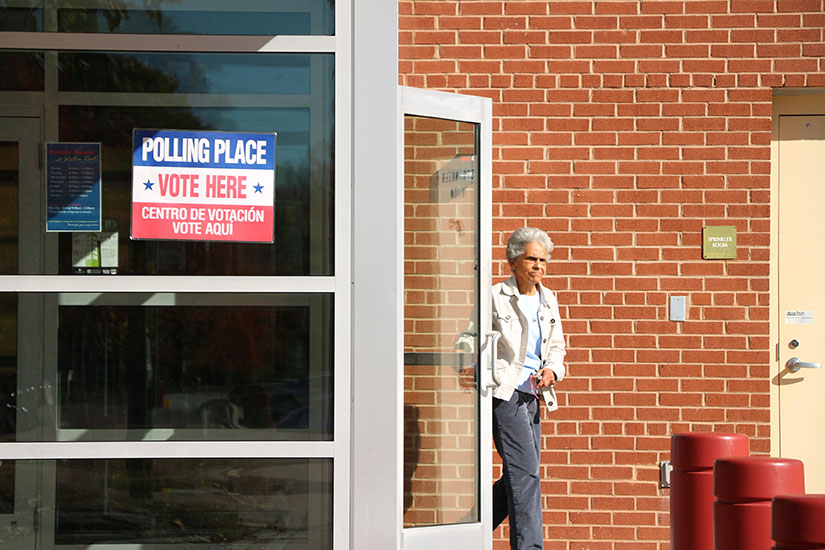
Absentee voting in Fairfax County begins tomorrow (Sept. 20) for the Nov. 5 elections.
Eligible community members can register to vote for the upcoming elections online or at the Office of Elections (12000 Government Center Parkway) in conference rooms two and three. Voters may also receive their ballots through the mail.
Absentee voters in the Tysons area may also submit their registration or ballots to the McLean Governmental Center (1437 Balls Hill Road) on Oct. 19, Oct. 26 and Nov. 2 from 9 a.m. until 5 p.m.
Some reasons voters may want to submit absentee ballots include temporary residence outside of the U.S., confinement awaiting trial or those who have a religious obligation. Other reasons can be found on the Virginia Department of Elections’ website.
All absentee voters will need a valid driver’s license or state-issued identification card and their social security number to register.
This year, voters can choose candidates can choose between candidates for a variety of positions including the next chairman for the Fairfax County Board of Supervisors.
For those unfamiliar with the process of absentee voting, Fairfax County published a variety of resources to explain the procedure and help answer questions.
Ballots will be translated into English, Spanish, Korean and Vietnamese.
The last day to apply for an absentee ballot is seven days before the election, or Oct. 29 by 5 p.m., according to Fairfax County. All absentee ballots must be received by 7 p.m. on Nov. 5 in order to be counted.
 Jonathan Fahey, a former federal prosecutor, has thrown his hat into the race for the commonwealth’s attorney position in Fairfax.
Fahey worked on drug, gang and white-collar crime cases as an assistant U.S. attorney in the Eastern District of Virginia, but resigned last month, the Washington Post reported.
He is listed as an Independent candidate for the spot, according to Fairfax County candidate information.
Fahey served as general counsel for the White House Office of National Drug Control Policy last year, according to his LinkedIn. He also was an adjunct professor at American University’s law school and the George Washington University.
Fahey lives in the Falls Church area of Fairfax County near Belvedere Park, according to the Fairfax Bar Association.
Fahey will face off against former U.S. Department of Justice prosecutor Steve Descano, a progressive candidate who ousted Raymond Morrogh in a close race for the Democratic nomination.
The general election is Nov. 5.
Photo via Jonathan Fahey/LinkedIn
School Board member Dalia Palchik and Lee District Supervisor Jeff McKay won their Democratic primary races yesterday, marking the end to an expensive, crowded and contentious primary.
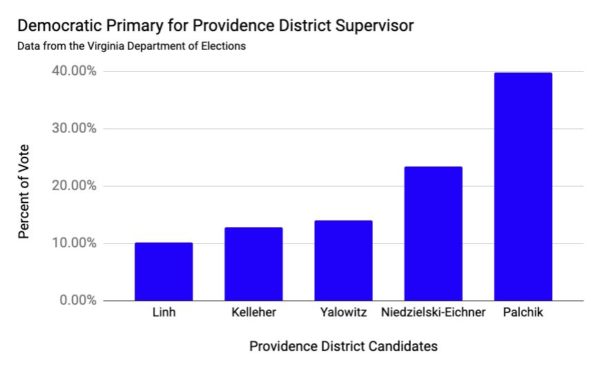
Palchik won the nomination for the Providence District seat on the Board of Supervisors, defeating four challengers and pulling ahead of Fairfax County Planning Commissioner Phillip Niedzielski-Eichner by nearly 1,500 votes.
Meanwhile, McKay beat three challengers to clinch the Democratic nomination for the county board’s chair.
Frank Anderson, the executive director of the Fairfax County Democratic Committee, told Tysons Reporter that he was surprised by how many Democratic candidates flooded the Board of Supervisors races, although the large fundraising sums weren’t unexpected.
“I was surprised by how many candidates decided to jump in,” Anderson said, adding that a race like the one for Providence District supervisor typically has two to three candidates instead of five.
With crowded races, some of the candidates’ clashing resulted in an “acrimonious” primary, Anderson said, adding, “It’s expected to be.”
The race for the board’s chair was particularly divisive — McKay faced an ethics complaint filed by a rival, while the Washington Post endorsement raised concerns about sexism.
On the Democratic Party’s end, Anderson said that the debates “got awkward,” yet the staff focused on staying “as non-partial as we can” and professional.
The primary also turned out to be expensive for several candidates.
Niedzielski-Eichner and Palchik both neared the $100,000 fundraising mark in the race for the Democratic nomination.
Every candidate for the Democratic nomination to the chair position raised over $100,000, with developer Tim Chapman raising $952,109.
Anderson said that the high fundraising amounts serve several purposes. Beyond paying for resources like campaign staff, recorded calls, glossy mailers and advertising, they also help to give the impression that a candidate has the backing of more supporters.
“When you donate to a candidate, you do it because you believe in them,” Anderson said. “You can’t know whether your dollar made the difference.”
Anderson said that potential donors can become enticed to give money if they see how much others have donated — essentially equating money with value.
Some candidates in the race received sizable checks, either from donations to themselves or from a few key supporters, like developer Tim Chapman who raised most of his $952,109 by donating to himself in the chair race and Hunter Mill candidate Maggie Parker, who received support from Comstock Companies, her employer.
“Not many voters have the time to see who is donating to the candidates,” Anderson said.
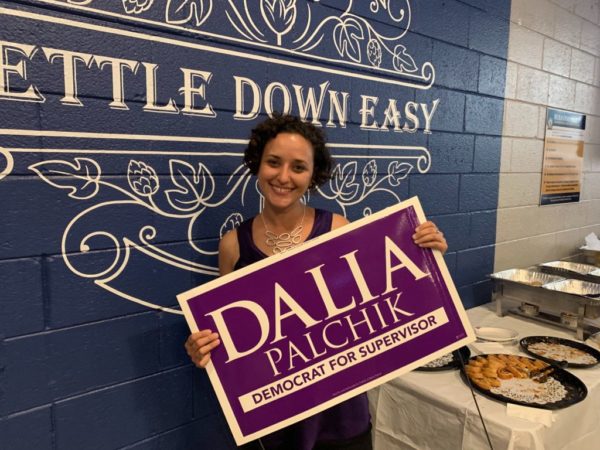
(Updated at 10:05 p.m.) School Board member Dalia Palchik won the Democratic nomination for the Providence District seat on the Board of Supervisors.
Shortly after 9 p.m., Palchik defeated Fairfax County Planning Commissioner Phillip Niedzielski-Eichner and three other challengers in the Democratic primary.
Palchik received 39.7 percent of the vote. She will face Republican Paul Bolon in the November election.
Palchik said in her victory speech:
This is part of a movement; a movement of people who want new leadership. People who want classrooms — not trailers — and teachers who can afford to live here. They want someone who is going to fight to protect the environment, to get solar panels, who are going to work hard every day to get us out of our cars and walking, biking, getting around, with access to buses and metro, and into a community that cares and is inclusive. This is the beginning. It’s been an incredible campaign. It was scary. It was fun. We cried. We laughed. And we want to see the next phase of Providence District in Fairfax County.
Palchik celebrated her win at Settle Down Easy (2822 Fallfax Drive), a local brewery that launched in 2018. It was a trendy spot that is representative of a candidate who pulled together a coalition across a variety of demographics.
Even at the headquarters of Niedzielski-Eichner, the runner-up in the race with 23.4 percent of the vote, there was a reluctant admission that Palchik was a charismatic candidate. Several Niedzielski-Eichner supporters noted that they saw her at polls shaking hands and taking selfies with voters.
Del. Mark Keam (D-35th) said Niedzielski-Eichner relied on an older local establishment, while Palchik was able to tap into a younger, wider base of local supporters.
Linda Smyth, the current Providence District supervisor, announced in December that she wouldn’t run for reelection this year, along with several other supervisors on the 10-member board.
Shortly before 10 p.m., current Lee District Supervisor Jeff McKay won the Democratic nomination for the Board of Supervisors’ chair with 42 percent of the vote. McKay beat Georgetown law professor Alicia Plerhoples, who received 31 percent of the vote, and two other Democratic challengers.
For the Virginia State Senate, incumbent Barbara Favola won with 61 percent of the vote, beating Nicole Merlene for the 31st District seat, which encompasses McLean.
Incumbent Dick Saslaw narrowly beat challengers Yasmine Taeb and Karen Torrent for the 35th District seat. Saslaw received 48 percent of the vote.
In a close race, challenger Steve Descano beat incumbent Raymond Morrogh for the Democratic nomination for the commonwealth’s attorney position in Fairfax.
Catherine Moran and Vernon Miles worked on this story.