
Updated March 2 to clarify that the funding is Amazon-related, not Amazon-funded.
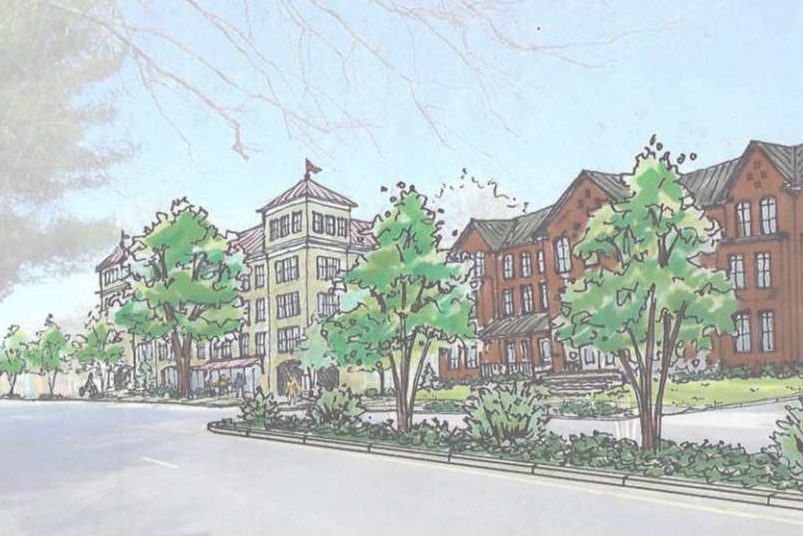
The City of Falls Church is getting $3.75 milli0n in grants for affordable housing initiatives to prepare for Amazon’s arrival in Arlington County.
In response to concerns about the anticipated impact of its second headquarters in Arlington on the region’s housing prices, Virginia Housing is investing $75 million dollars spread out over five years in affordable housing.
“Ensuring affordable access to housing for all is a key priority for the City Council and our community as a whole,” City of Falls Church Mayor P. David Tarter said in a statement. “We are delighted that Virginia Housing has awarded this grant and appreciative to Senator Dick Saslaw (VA-35) for his efforts to bring this important program to the City.”
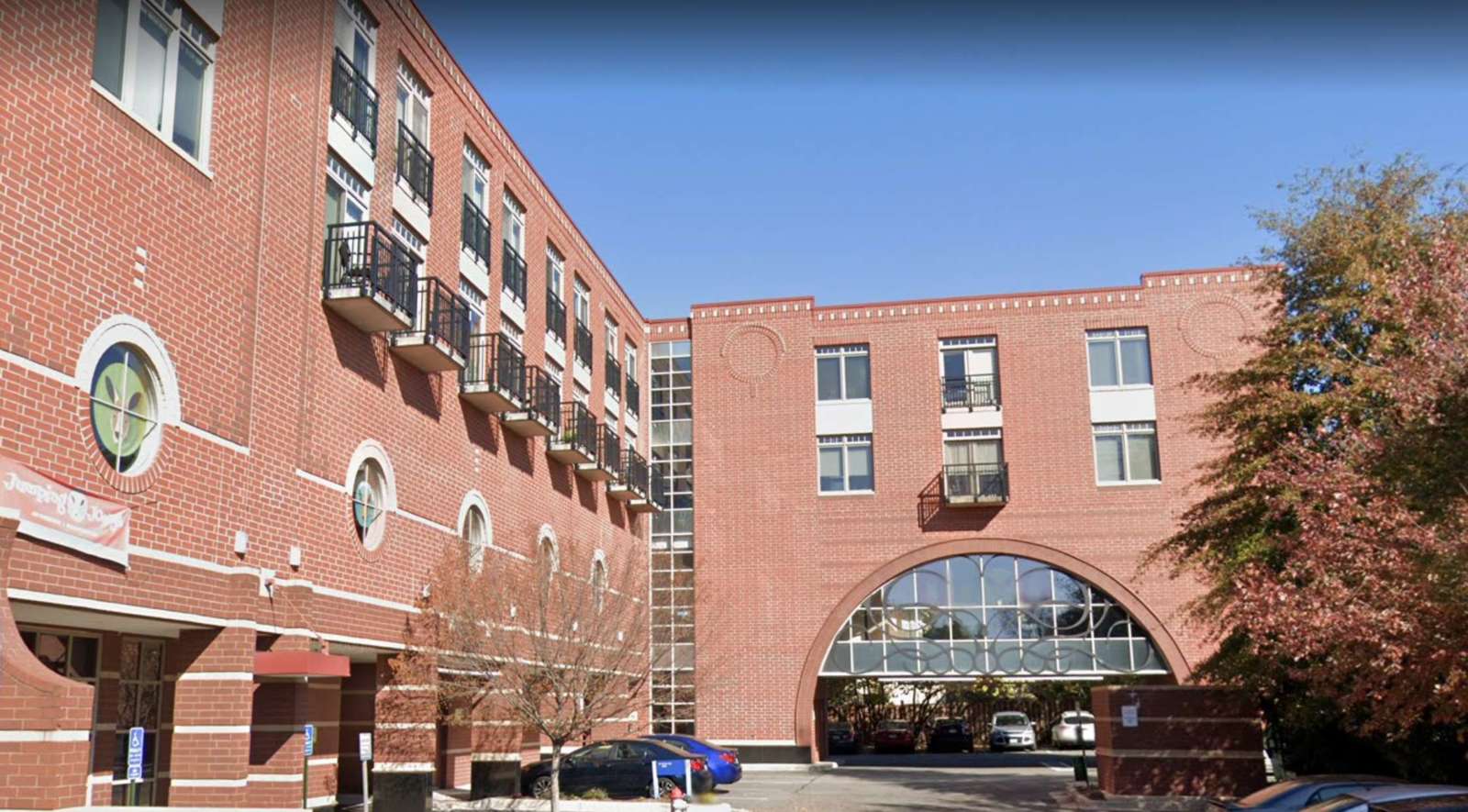
Falls Church will get $3.4 million for a new affordable housing homeownership program and $350,000 to extend the availability of nine committed affordable apartments at the Read Building (402 W. Broad Street).
“Homeownership has been increasingly out of reach for many, and this is an innovative first step to reverse the trend,” Councilmember Letty Hardi said, calling the grant “a major step forward for the city.”
The NHP Foundation will manage the homeownership program with support from the city’s Housing and Human Services Department. Once the program is established, the city says it will take about one year for NHPF to purchase, rehabilitate, and resell the homes.
With the $3.4 million, the city estimates that 18 qualified first-time home-buyers will be able to purchase rehabilitated homes between $425,000 and $525,000. The program will make use of Virginia Housing special lending programs and mortgage credit certificates, as well as local down payment assistance, according to the city.
“We’ve already received several calls from interested homebuyers, so we’re excited to get the program established,” Falls Church Housing and Human Services Deputy Director Dana Lewis said in a statement.
The city says it expects most qualifying homes to be condominiums, but single-family homes and townhouses could also be eligible.
NHPF currently manages the Winter Hill Apartments in the City of Falls Church.
The remaining $350,000 in grant funds will subsidize rent prices for nine workforce units at the Read Building until Dec. 31, 2032. These units are reserved for qualified renters, including Falls Church City Public School teachers and staff and City of Falls Church government employees.
“In the City, there is a gap between what many households can afford and available rental and ownership homes,” Nancy Vincent, director of the City’s Housing and Human Services Department, said. “These grant funds help address the diverse housing needs of the City’s current and future populations.”
City officials suggested these solutions during a city council meeting on Nov. 9, building on a consultant’s report that outlined ways for the city to expand its affordable housing supply.
Virginia Housing is managing these grants through its REACH (Resources Enabling Affordable Community Housing in Virginia) program, which supports affordable and accessible housing as well as revitalization and preservation efforts.
Gov. Ralph Northam first announced the investment by Virginia Housing in 2018.
Image via Google Maps
In response to a new wave of public feedback, Fairfax County staff has revised its drafted plan to revitalize the McLean Community Business Center.
The changes include harder caps on building heights, guarantees for syncing development to public school capacity, and more specific environmental requirements — all concerns that some community members and civic associations have recently raised.
Staff discussed the changes during a virtual open house on Saturday (Feb. 20).
The draft plan is currently under review as it winds through county processes. It will go before the Fairfax County Planning Commission for a public hearing on Apr. 28, followed by a May 18 Board of Supervisors meeting when county leaders will vote on whether to adopt the plan.
McLean Citizens for Right Size Development (Right Size McLean), a coalition of local neighborhood associations, welcomed the changes.
“We were encouraged to see the proposed changes to the maximum heights by zone and that the plan would spell out the maximums in linear feet, reducing the allowable height of the land parcels that abut Franklin Sherman Elementary School along Chain Bridge Road to 40 feet,” Right Size McLean member Linda Walsh said.
Walsh says the group was also glad to see that the new draft sets stronger environmental goals, especially for tree canopies and stormwater quality and quantity.
The McLean CBC study process began in 2018 when consultant StreetSense worked with members of the McLean community to draft a 10-year “Vision Plan.” Since then, a task force appointed by Dranesville District Supervisor John Foust has worked with county staff to create a Comprehensive Plan spanning 25 years.
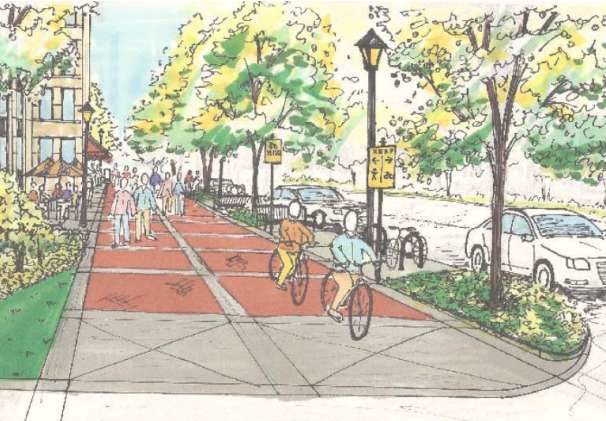
According to Foust, task force members, and staff, downtown McLean will become a vibrant, biking- and walking-friendly downtown that creates a real sense of place. The plan envisions a total of 3,850 residential units in the district as well as traffic pattern changes and streetscape updates.
The community business center will be divided into three zones: Center, General and Edge, with corresponding heights for each. The most recent draft does not change height caps for buildings in each zone, but it does specify maximum heights in feet as opposed to the number of stories.
Buildings cannot exceed 92 feet (or seven stories), although one building in the Center zone will be allowed to reach 128 feet (or 10 stories). The developer who is awarded the tallest building will be responsible for creating the two-thirds-acre public plaza envisioned in the plan.
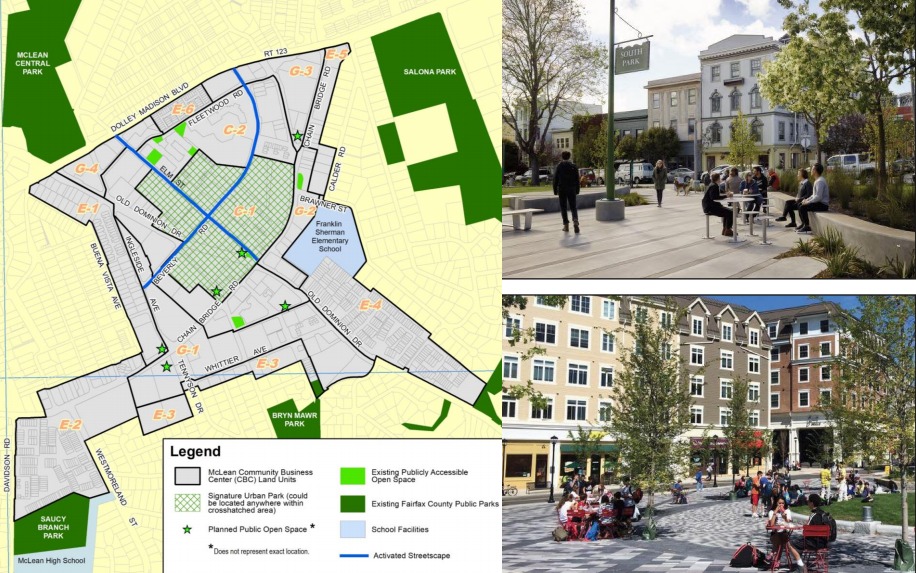
General zone buildings surrounding the Center zone can reach 68 feet (five stories). The county did not make any changes to the Edge zone in the most recent draft. Read More
Virginia Gov. Ralph Northam is easing some of the public health restrictions prompted by the COVID-19 pandemic, including the 10 p.m. curfew on alcohol sales.
Effective Mar. 1, Virginians will be able to buy and drink alcohol at restaurants, food courts, breweries, distilleries, and wineries until they are required to close at midnight.
The changes to the current executive order come amid declining rates of hospitalizations and infections and rising vaccination rates in the Commonwealth, Northam said during a press conference this morning (Wednesday).
Northam is also easing restrictions on outdoor entertainment and social gatherings, where evidence shows the risk of airborne transmission of COVID-19 is lower.
“Thanks to the hard work and sacrifice of all Virginians, hospitalization and positivity rates across the Commonwealth are the lowest they have been in nearly three months,” Northam said in the press release. “As key health metrics show encouraging trends and we continue to ramp up our vaccination efforts, we can begin to gradually resume certain recreational activities and further reopen sectors of our economy.”
He attributed the rise in cases over the winter to cold weather and the holidays.
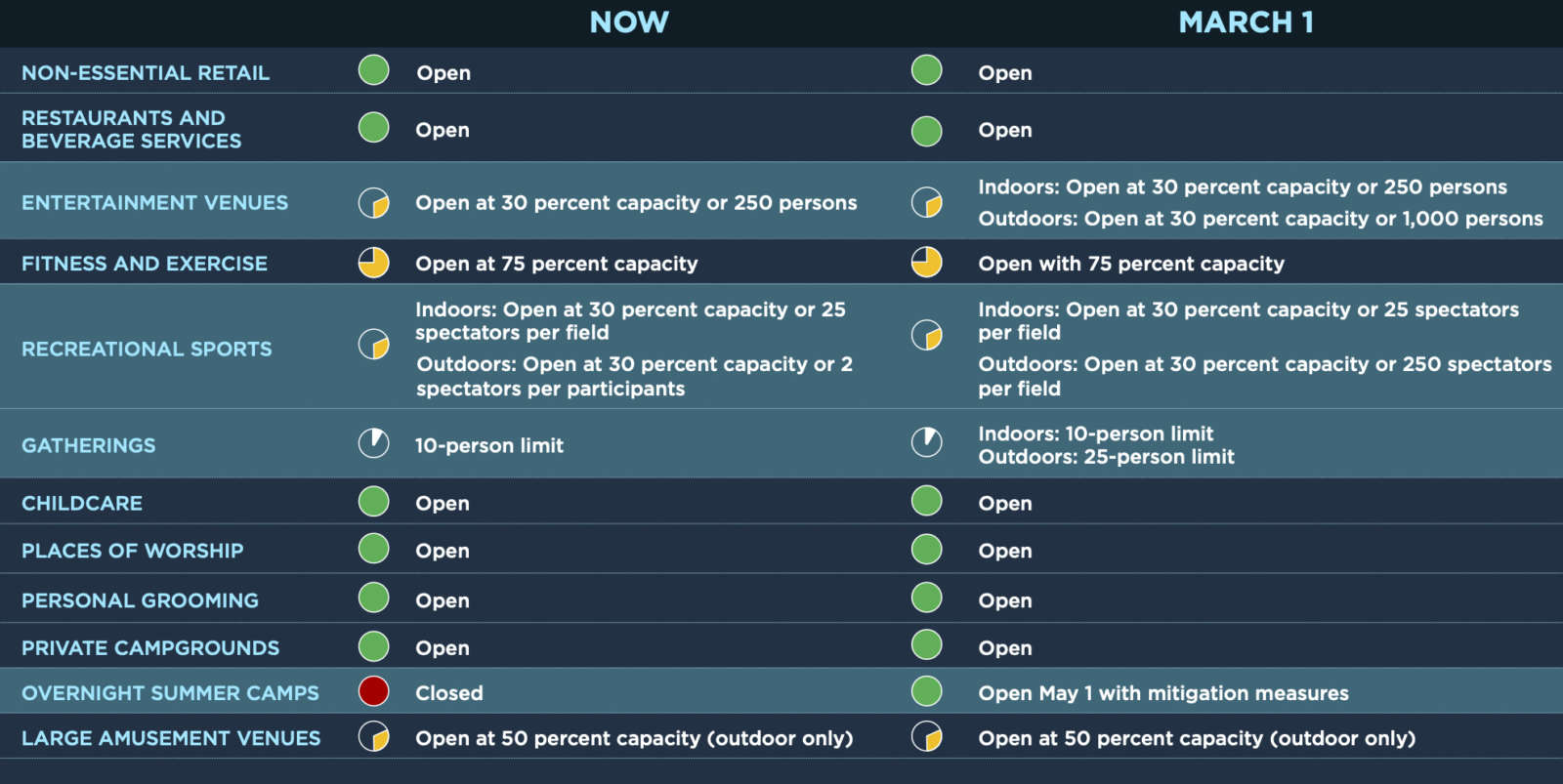
The state’s Safer at Home strategy will remain in place, along with its accompanying requirements for physical distancing, mask-wearing, gathering limits and business capacity restrictions.
“Even as we take steps to safely ease public health guidelines, we must all remain vigilant so we can maintain our progress — the more we stay home, mask up, and practice social distancing, the more lives we will save from this dangerous virus,” he said.
The current modified Stay at Home order will expire on Sunday (Feb. 28).
The full press release from the governor’s office is below. Read More
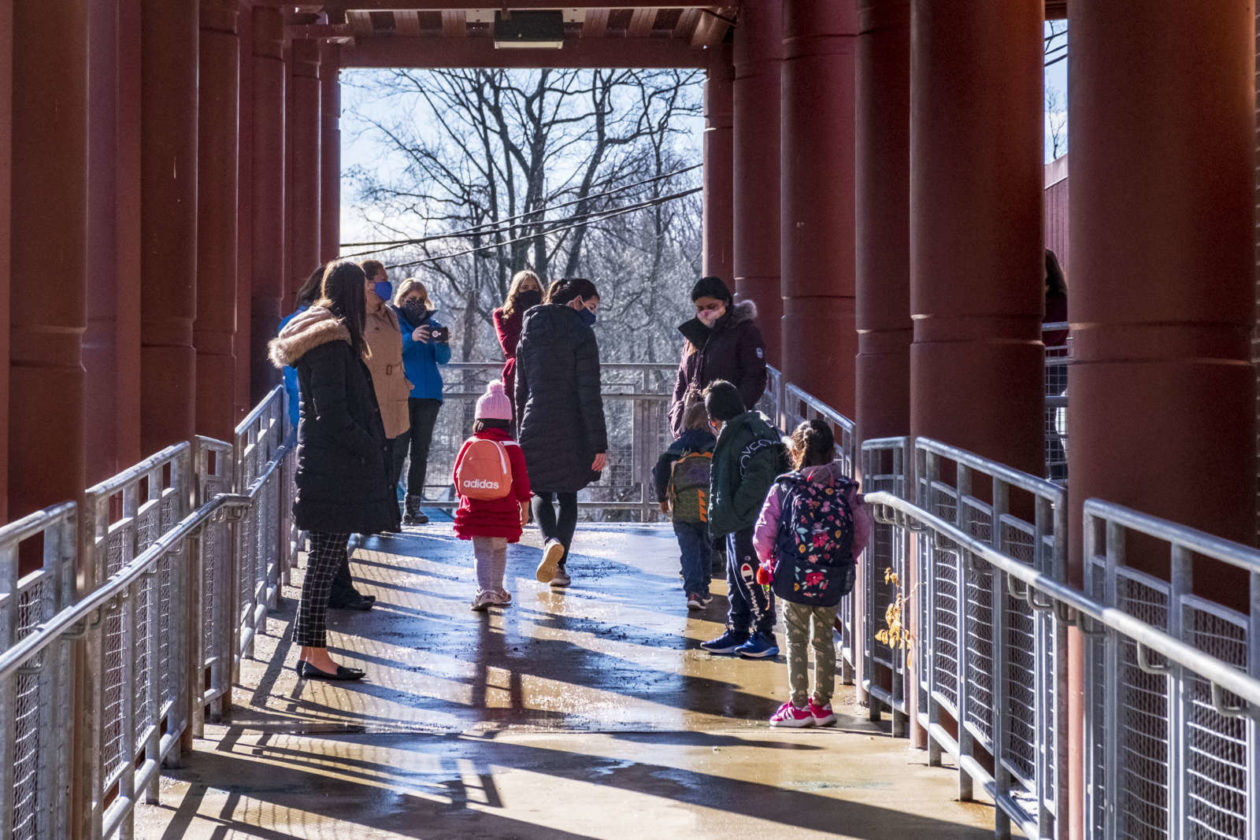
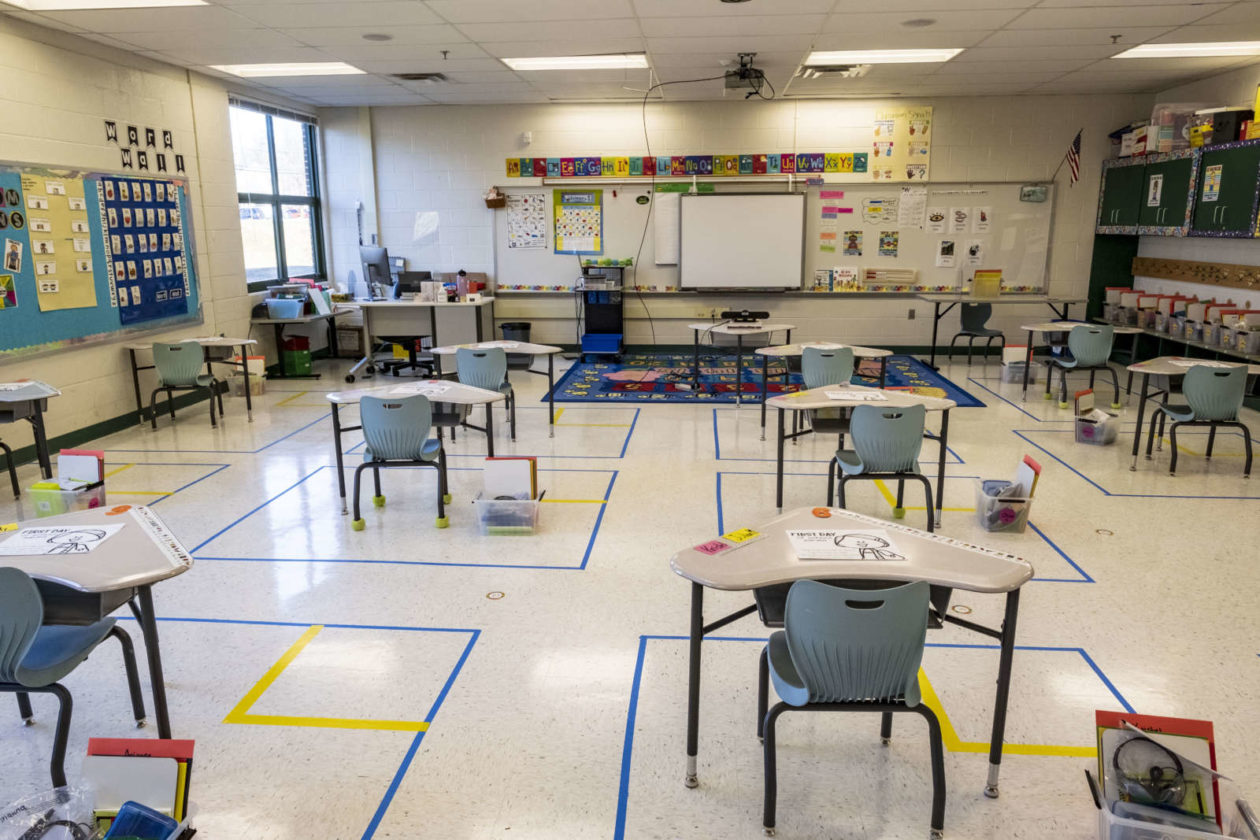
On Tuesday morning (Feb. 23), 12 kindergarteners stepped into their classroom at Graham Road Elementary School in Falls Church for the first time.
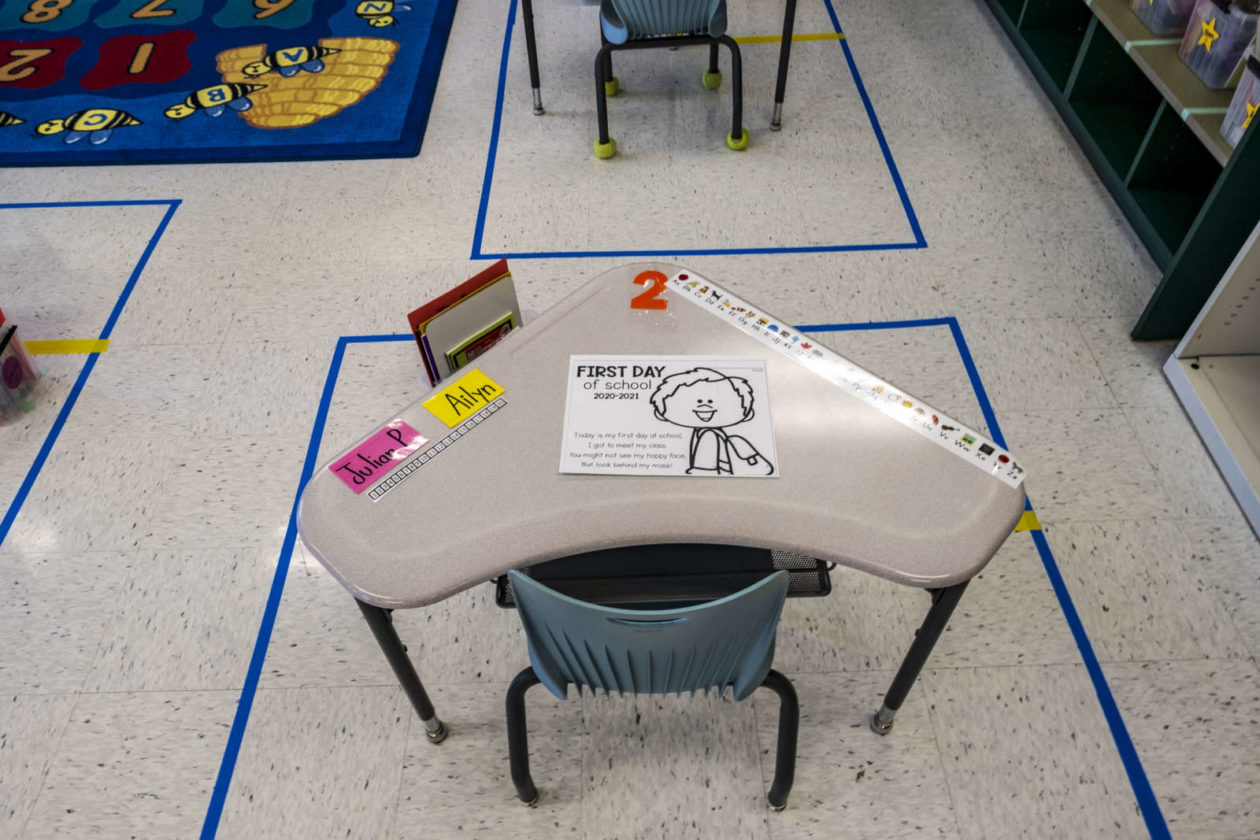
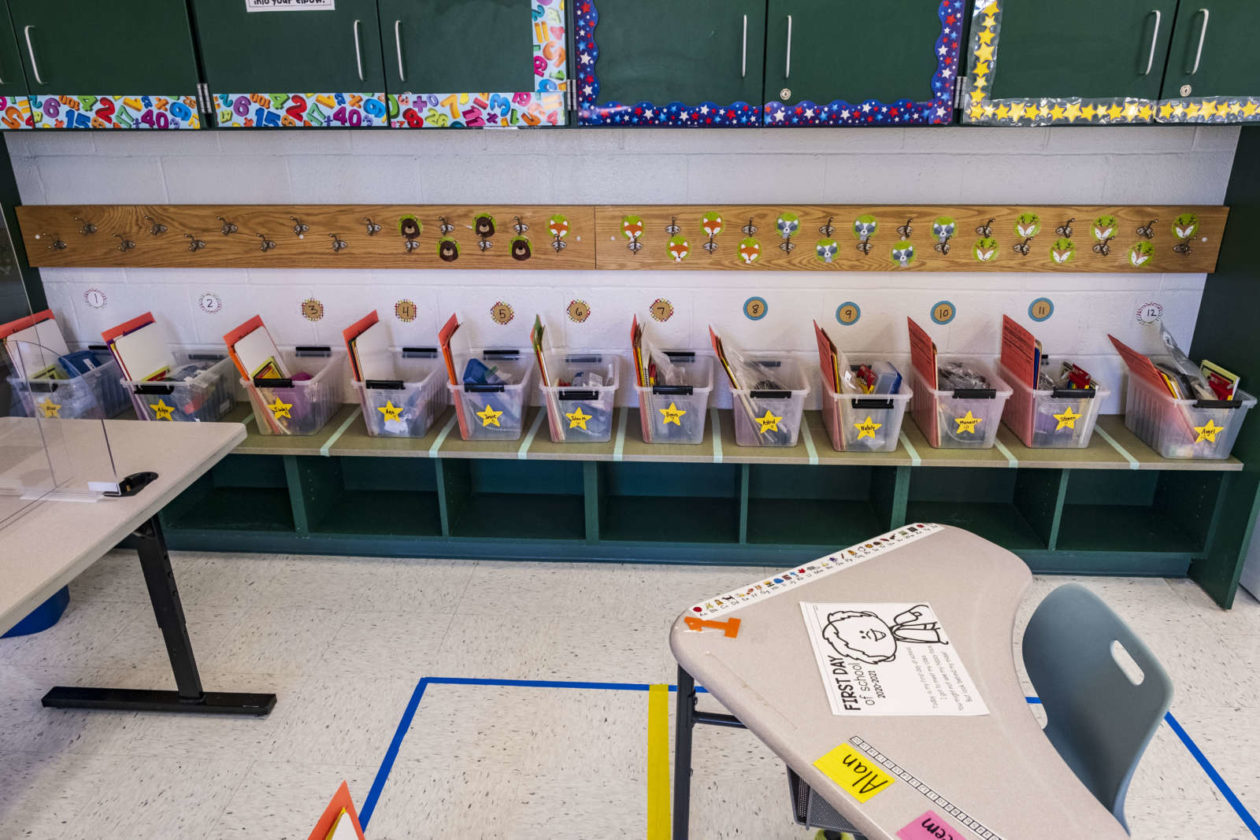
Their teacher, Claire Kelley, and Principal Lauren Badini had distributed individually bagged breakfasts on the distanced desks. The classroom looked like the quintessential kindergarten classroom, decorated with bright colors and posters.
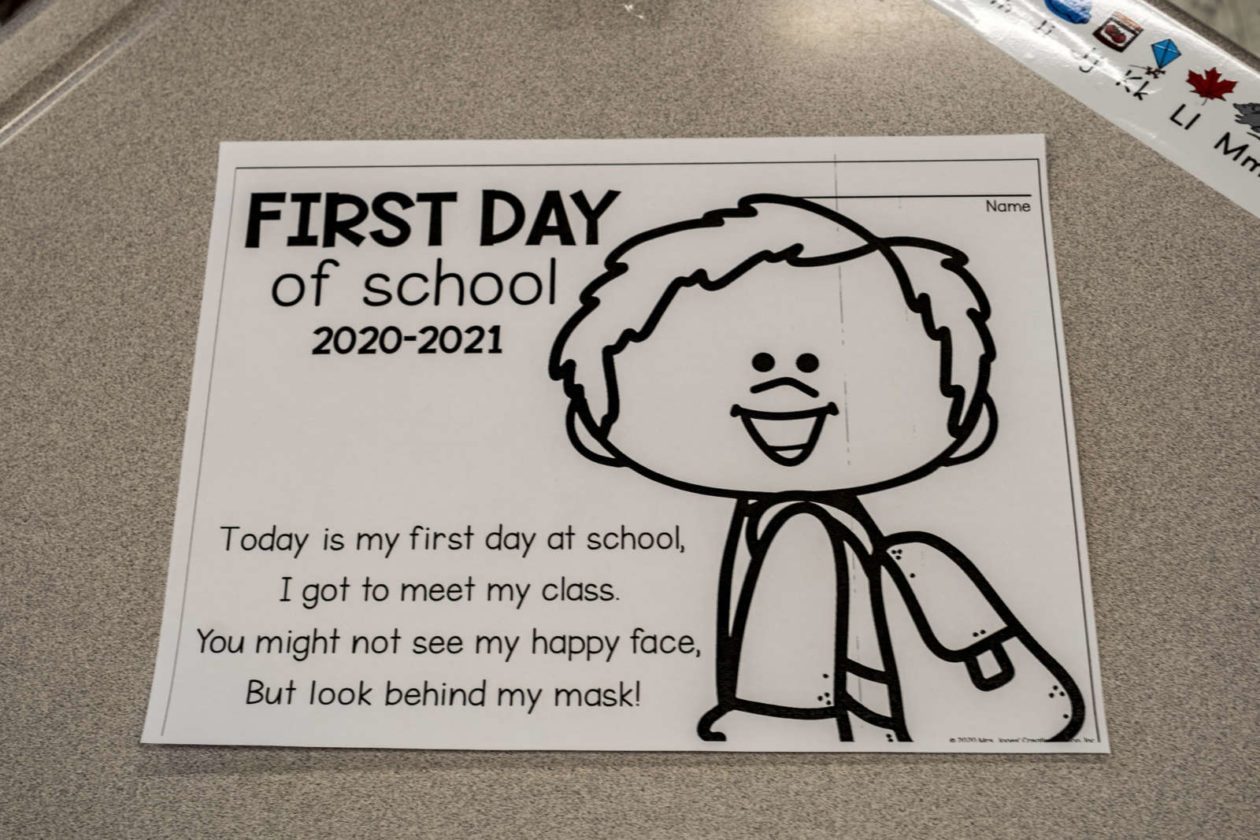
However, some of the posters bore messages instructing students to keep their distance from each other, wash their hands, and wear masks, a reminder that this was anything but a typical school day in a typical school year.
“It’s a pandemic classroom,” Badini said. “[Kelley’s] done an amazing job making it fun and exciting.”
Kelley will welcome another 12 kindergarteners to her classroom today (Wednesday).
“I’m really excited,” she said. “I’m super hopeful things are getting better.”
Nearly one year since schools closed due to the COVID-19 pandemic, Fairfax County Public Schools is reopening its doors for families who opt for in-person instruction in stages over the next month.
After delaying plans to resume in-person classes in January, the Fairfax County School Board approved a new Return to School timeline earlier this month that started bringing students back on Feb. 16. Its schedule lines up with Virginia Gov. Ralph Northam’s mandate that all school divisions provide an option for in-person instruction by Mar. 15.
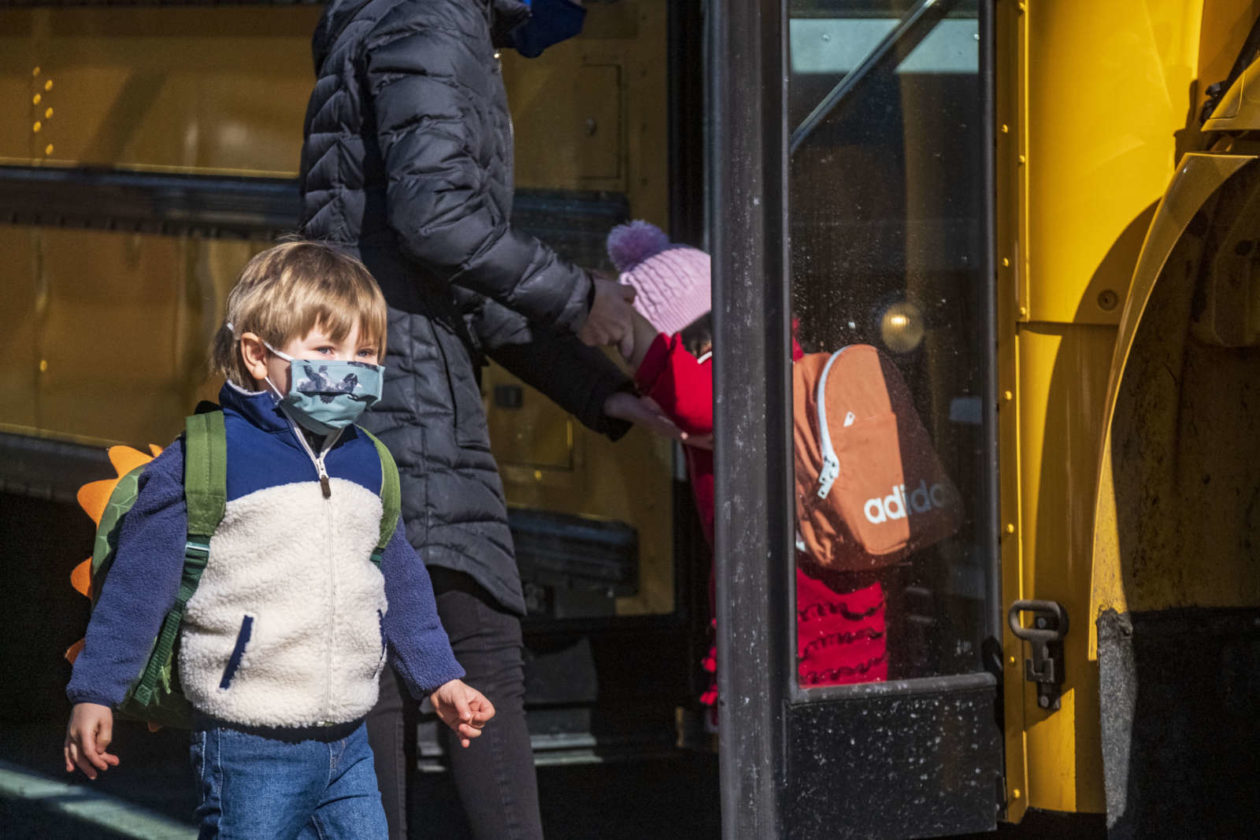
This week, 7,000 kindergarteners across the division returned, along with preschoolers, Early Head Start students, and other students receiving specialized instruction. Kids who are not receiving special education services are following a hybrid model that provides two days of in-person classes per week, with groups coming in on alternating days.
Graham Road will add 60 first and second graders on Mar. 9 and 80 students in grades 3-6 on Mar. 16. The phasing was designed so kindergarteners would have time to adjust to mitigation behaviors before being overwhelmed by older students, according to Badini.
“We’ve been prepping since July,” Badini said. “We’ve had to rethink every aspect of school. Elementary school turns on collaboration, talking, being close, holding hands.”
Kelley started preparing her students over Zoom by having them greet each other with fist bumps and air hugs. They practiced wearing their masks and watched videos of handwashing. The teacher developed songs and verbal cues, like pantomiming a zombie, to make sure kids stay apart.
“These are the rules they have to follow to stay in school,” she said. “I’m taking a step back to make sure they understand what they need to do to stay safe.”
For Badini, Mar. 12, 2020 was the last day things felt normal. When schools closed, the principal sprang into action to make sure her students — most of whom qualify for free- or reduced-price lunches — have internet access, piloting a program with FCPS and internet provider Cox.
Badini says the school tries to “do everything we can” to make up for the sacrifices parents are making, by providing free meals and snacks because “there has had to be a give and take somewhere.”
While Graham Road has some distinct challenges, all school principals are grappling with engagement, connectivity, and attendance, she said.
“We have wanted this and have been waiting for this for a year,” Badini said. “We know parents are frustrated. We’re working parents, too.”

(Updated 5 p.m. — This article has been updated to correct the number of residential units being proposed and to expand the sources of residents’ concerns.)
Fairfax County staff are hosting a virtual town hall tomorrow (Saturday) to present changes to a draft comprehensive plan for revitalizing the McLean Community Business Center and hear residents’ opinions.
The meeting takes place from 9-11 a.m. and will be accessible via this link.
The new draft includes changes that address building heights and environmental guidance, Fairfax County Planning Division Director Leanna O’Donnell says. Many of the tweaks were made in response to concerns raised by community members about a draft of the plan that was released on Dec. 9.
“This is an exciting opportunity to bring forward the vision plan developed by the community, take it and get it into our Comprehensive Plan formally,” O’Donnell said. “We look forward to continued engagement with the draft as we move forward.”
Some residents, including a coalition of local neighborhood associations called McLean Citizens for Right Size Development (Right Size McLean), have developed a laundry list of concerns about the December draft plan and representation on a task force appointed by Dranesville District Supervisor John Foust.
Right Size McLean recently issued a survey that drew about 600 responses from an even mix of young and old, new and longtime residents, group member Linda Walsh says.
While the full results will be released later, Walsh said that 90% of respondents oppose bringing the total number of residential units downtown to 3,850 units.
The increasingly vocal opposition comes as a culmination of three years of work by county staff draws nearer. A recommended new comprehensive plan will be presented to the Fairfax County Planning Commission for a public hearing on Apr. 28, followed by a hearing by the Board of Supervisors on May 18.
The McLean CBC study process began in 2018 when consultant StreetSense worked with members of the McLean community to draft a 10-year “Vision Plan.”
“Everyone was invited to participate and hundreds did,” Foust said of the visioning process. “It was a good process and almost everyone who participated was supportive of the Vision that was adopted.”
Residents shared their visions for McLean and the amenities it would offer. The plan outlined incentives to attract commercial and residential developers to McLean with requirements for contributing toward community benefits such as open spaces. Read More
There are a number of things that give Caffe Amouri owner Michael Amouri a warm feeling: drinking a cup of coffee, unsurprisingly, getting to a toll booth and learning someone paid it forward, and stopping to chat with someone in the street.
But those feel-good community moments have been hard to come by during the pandemic.
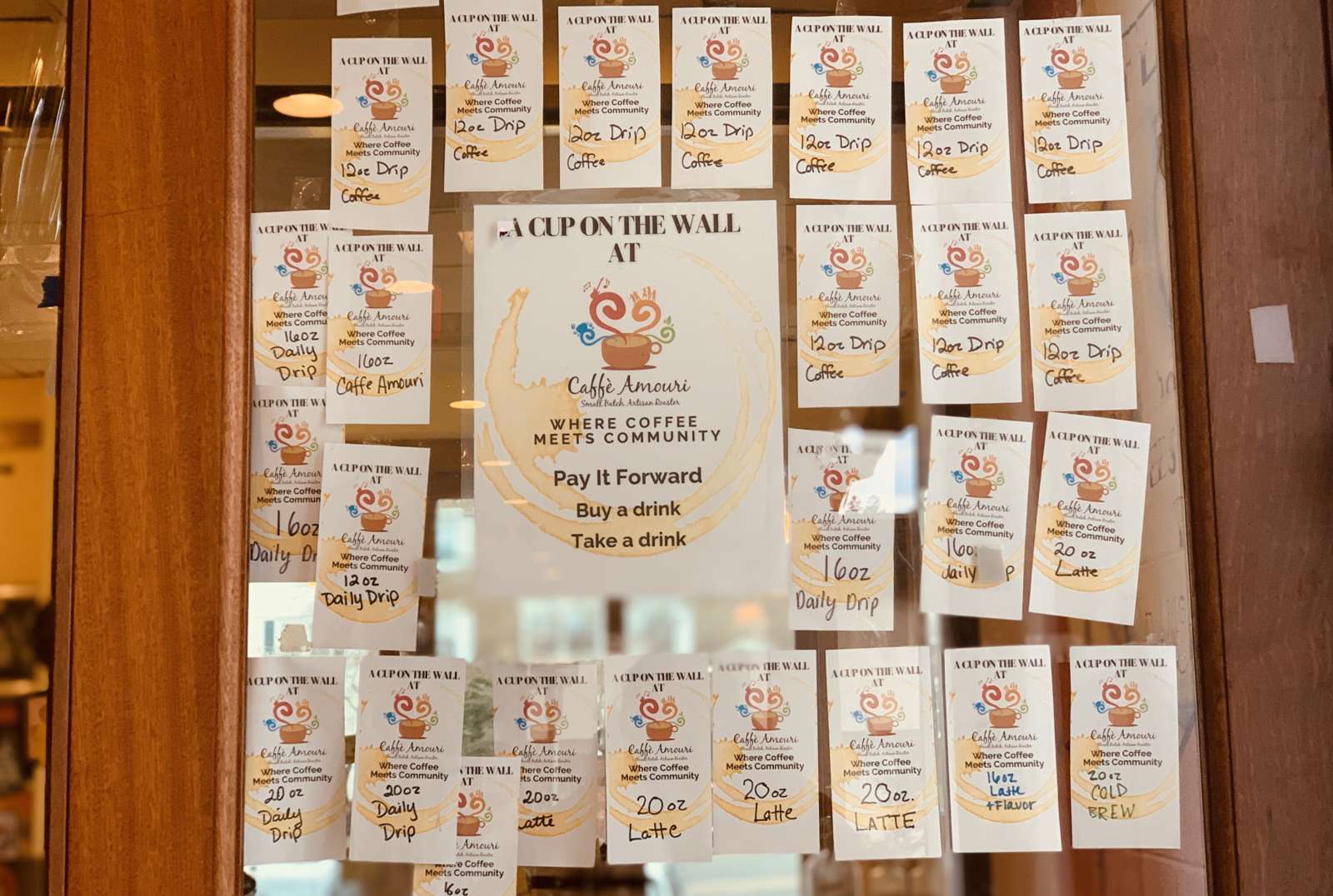
In the hopes of reviving that neighborly goodwill among his customers, Amouri has introduced a pay-it-forward “Cup on the Wall” program to his Vienna coffee shop. He was inspired by the Vienna Foodies and the Italian practice of caffè sospeso — literally “pending coffee” — when a cup of coffee is paid for in advance as an anonymous act of charity.
Customers ordering in-person or online can choose to buy any drink on the menu for someone else. Staff put a sticker on the window for someone to “cash in” when they order.
“If you’re feeling a little down, come and let a ‘friend’ buy you a drink,” he said.
It can be for anyone, particularly people who cannot afford a cup of coffee, but also for someone having a bad day or celebrating their birthday, Amouri says. The option will be available as long as the community engages with it.
Though it has mostly stayed open, Caffe Amouri has not been offering indoor service during the COVID-19 pandemic.
“Competitively, we’ve probably lost some ground, but I just don’t feel I can do it,” Amouri said.
Customers can order in-person from one window, or pick up an online purchase from another window. The coffeehouse’s interior is configured to allow for six feet of distance between staff members, and staff and delivery workers are screened daily for COVID-19 symptoms.
Amouri plans to reopen after his staff is vaccinated.
“I have amazing staff and I can’t believe they’ve weathered it so well,” he said.
Amouri says he founded his shop nearly 11 years ago on the principles of quality, community, and sustainability. During the pandemic, he said the cafe’s role as a liaison among the government, the Vienna Business Association board — which Amouri sits on — and residents has grown in importance.
He commended Vienna residents for supporting local businesses and making the small town “feel even more small-townish.”
“There are times when I go, ‘I didn’t want to have a coffeehouse and hand coffee out a window’,” he said. “But as long as we can keep our doors open until we can fully open, I’m going to count that as a success.”
Photo courtesy Michael Amouri
Two former competitive swimmers, who are now partners in business and marriage, are opening a year-round, warm-water swimming school in Tysons.
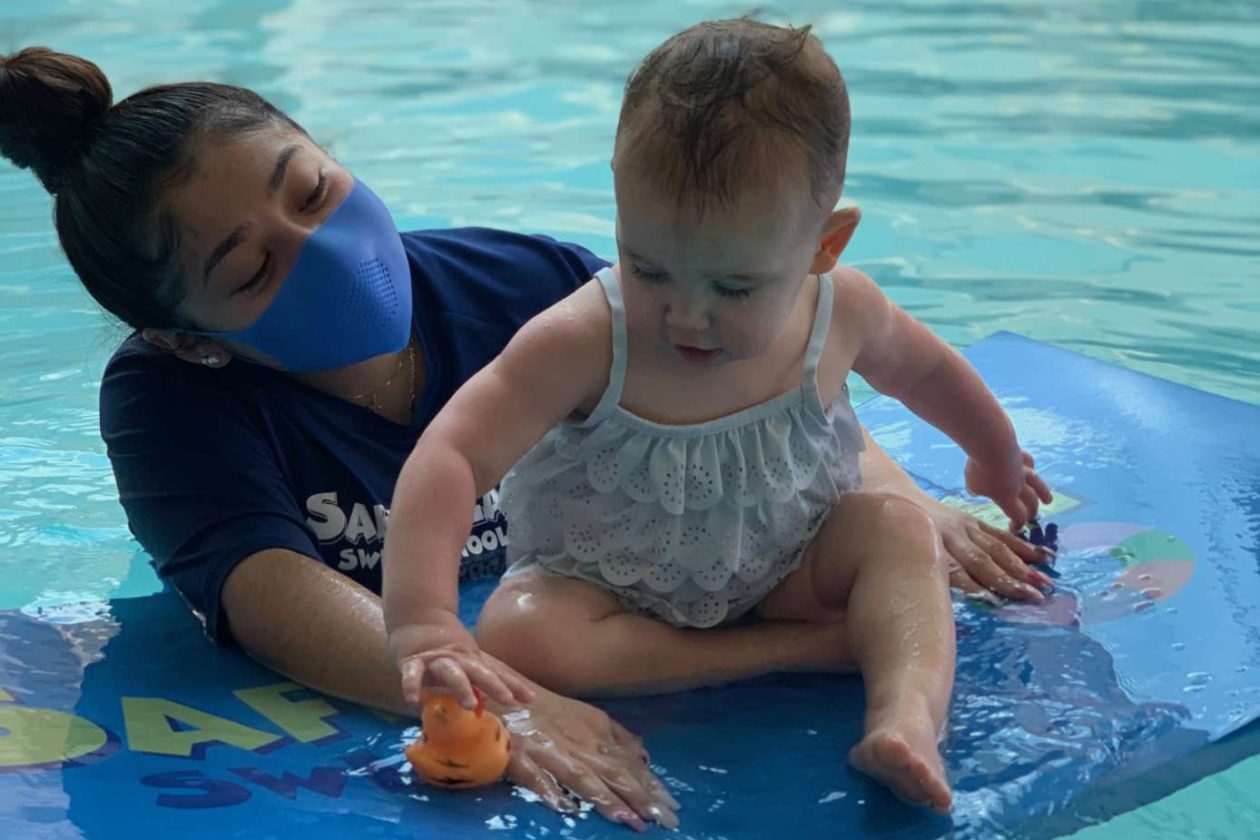
Called SafeSplash, the school is located inside the Hilton McLean Tysons Corner (7920 Jones Branch Drive) and will be open four days a week, co-owner Jennifer Lilintahl says.
SafeSplash is a national swim school franchise with more than 100 locations. It is also the official swim school provider of USA Swimming, the governing body for competitive swimming that chooses the U.S. Olympic swimming team.
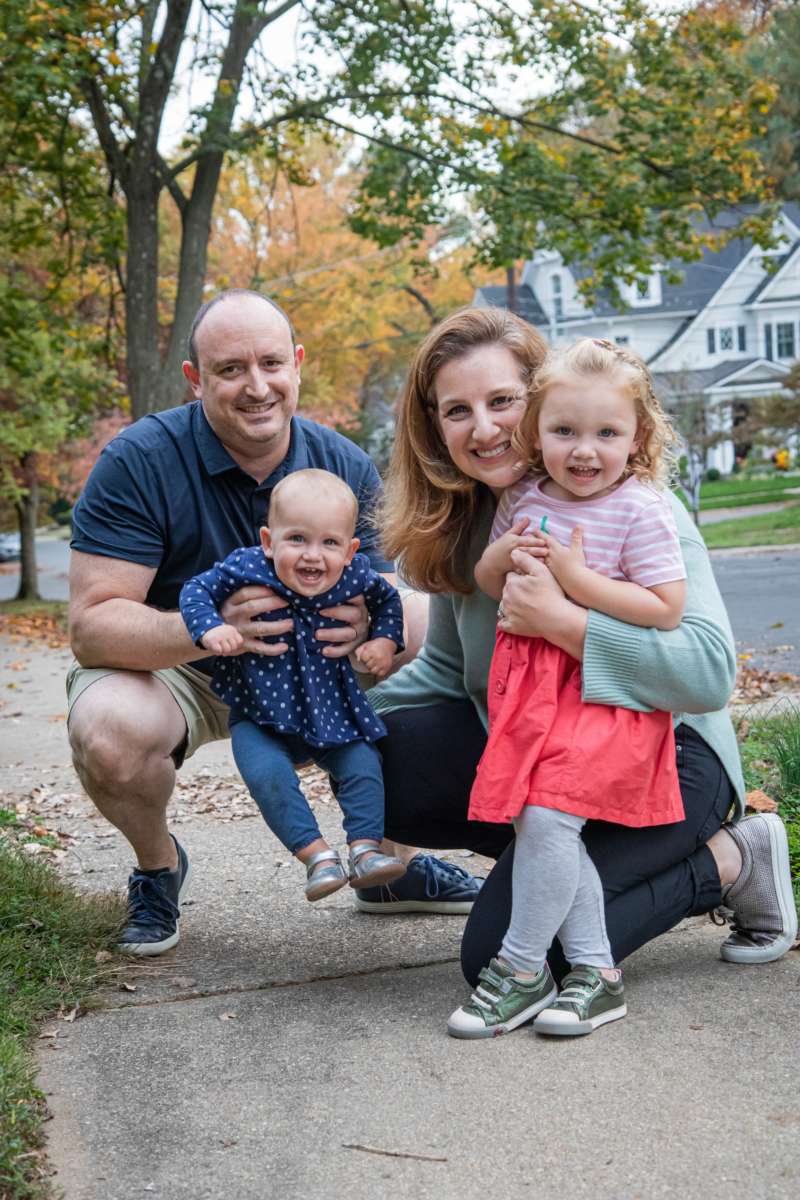 This is Jennifer and Michael Lilintahl’s fourth SafeSplash in the D.C. area, their second inside a hotel, and their first in Virginia. The couple chose the McLean area because there are relatively few conveniently located options for swim schools, Jennifer says.
The Lilintahls have also tapped into an underutilized resource for swimming schools: hotel swimming pools. Now, their idea is paving the way for other franchisees.
After the Washington Sports Club that housed one of their two Bethesda schools closed for good last summer, the couple moved it to a Hilton Hotel in D.C.’s Friendship Heights area. They now serve as a resource for SafeSplash franchisees interested in working with hotels.
Building a dedicated swimming facility is expensive, and available bodies of water are hard to come by, Jennifer says. Meanwhile, many hotels boast rarely used pools.
“It has worked out well during COVID-19. Hospitality is having such challenges, so this is an extra stream of revenue for them and a body of water for us,” she said. “It’s a win-win.”
The Lilintahls opened their first location in 2017 on Rockville Pike in North Bethesda and soon after, expanded to a Washington Sports Club in downtown Bethesda. They opened a franchise in D.C.’s Columbia Heights area in 2019.
“It’s been a long journey,” Jennifer, who swam competitively through high school, said.
She credits her husband with proposing the idea to run their own swimming schools. Michael Lilintahl went to college on a full-ride athletic scholarship for swimming and represented his home country, Venezuela, in the 1996 Olympic Games in Atlanta. She says he wanted to help others unlock opportunities in life through the sport.
“It was always a passion of his to combine his love for swimming with a business,” she said. “Swimming took him so far in life.”
The Tysons SafeSplash will first open its doors on Saturday, Feb. 20, from 9:30 to 11:30 a.m. Ahead of opening day and for a limited time afterward, the Lilintahls are offering discounts: 20% off for eight consecutive weeks of lessons or 50% off one class.
To keep clients safe during the pandemic, the couple is only offering private and semi-private lessons, which are capped at three children (typically siblings or kids in the same “pod”). Every instructor wears a silicone, water-proof mask, and many are doubling up with surgical masks, she said.
The school will be open Mondays and Wednesdays from 4 to 6 p.m. and on weekends from 9 a.m. to 1 p.m.
Photos courtesy of Jennifer Lilintahl
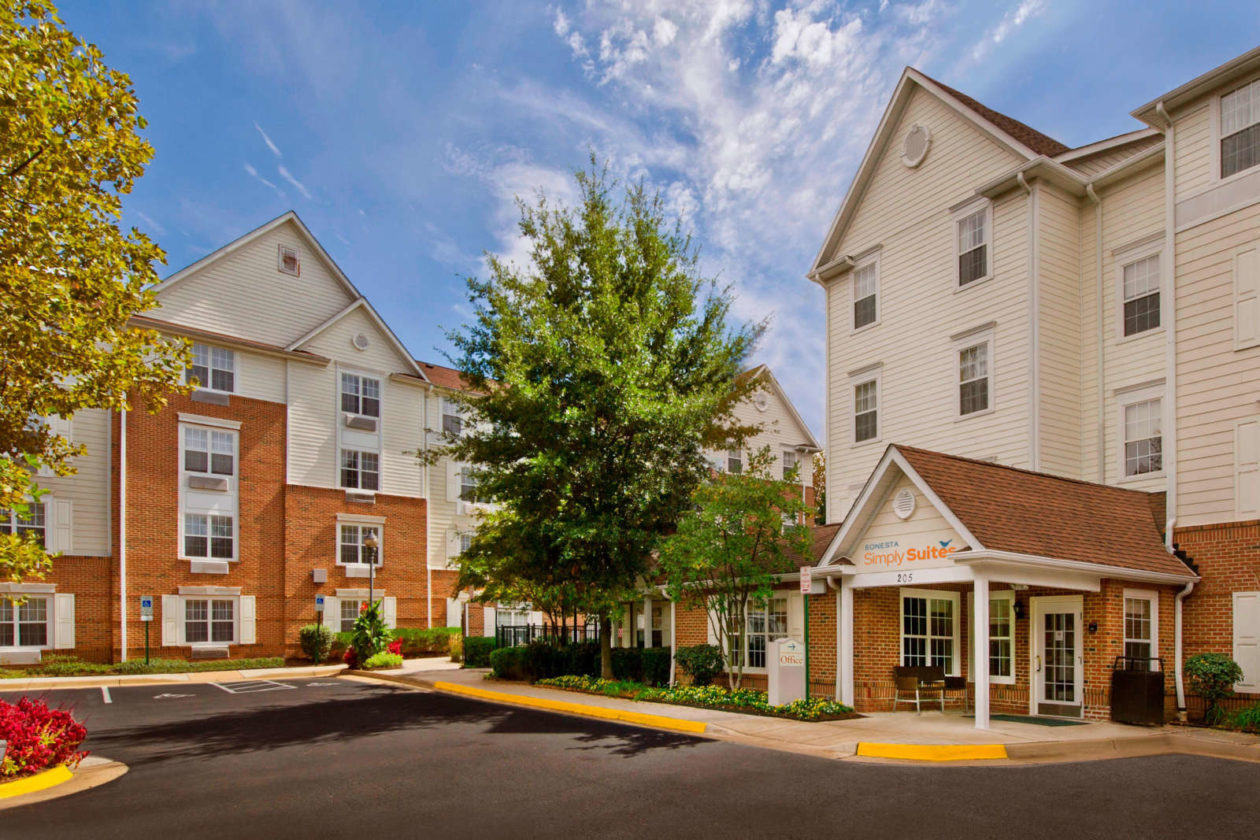
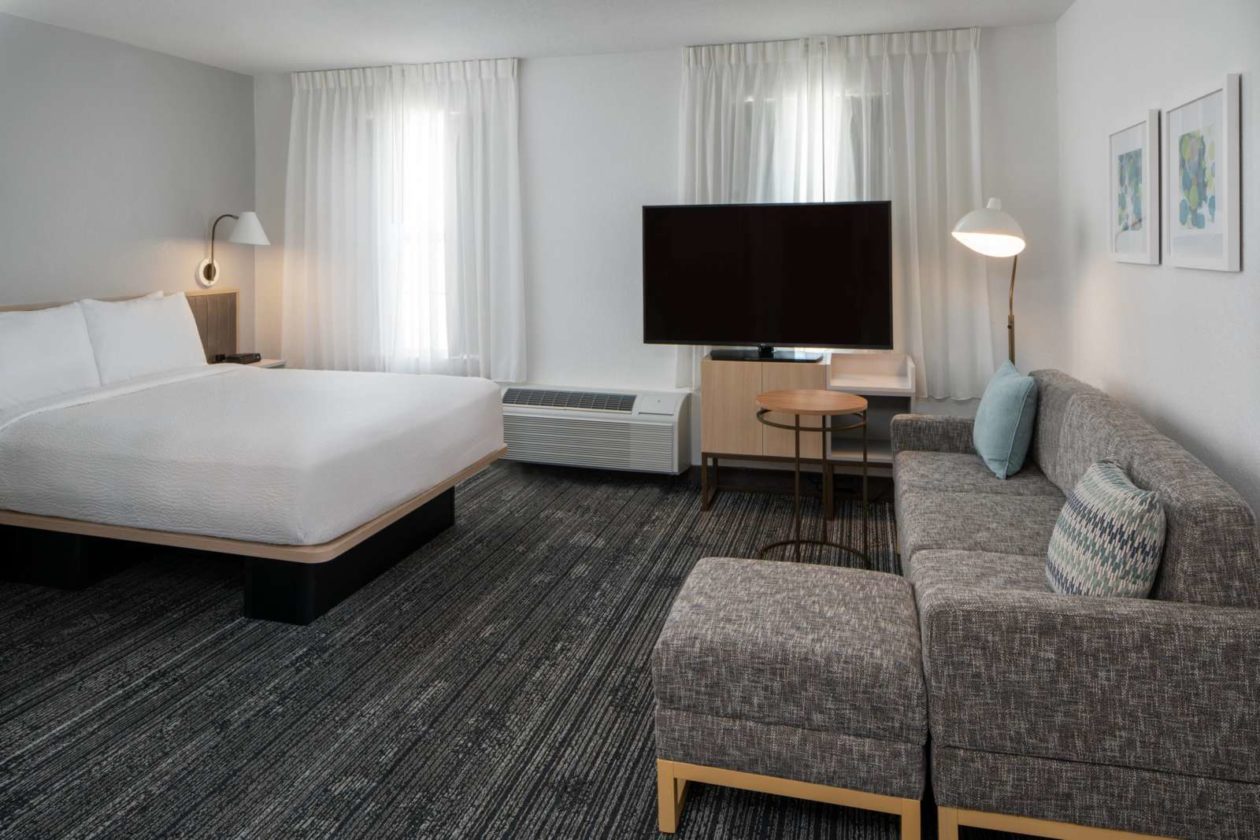
The Marriott TownePlace Suites Falls Church hotel is under new management as Sonesta Simply Suites Falls Church (205 Hillwood Ave).
The pandemic has hit Fairfax County’s hospitality industry hard, resulting in a huge loss in revenue and widespread lay-offs. But one hotel brand called Sonesta International Hotels has steadily been acquiring hotels during unprecedented drops in travel.
Sonesta acquired the TownePlace Suites in Falls Church and 97 other hotels affiliated with Marriott in October because the hotelier had fallen behind on payments, according to the properties’ owner, Service Properties Trust (SVC).
A Massachusetts-based real estate investment company, SVC says it ended its 26-year relationship with Marriott last fall after attempting and failing to collect $11 million in missed payments from the hotel chain. SVC owns a 34% share of Sonesta.
“We believe that the rebranding of these hotels with Sonesta will benefit SVC as an owner of Sonesta, create greater flexibility in managing these hotels through these challenging market conditions and have a positive impact on this portfolio’s performance in the future,” SVC President and CEO John Murray said in a statement last fall.
The international hotel chain lost 122 hotels, which had collectively generated only $2.6 million in eight months, the press release said.
Sonesta took over the management of 98 of the 122 hotels. The remaining 24 hotels were sold for more than $150 million.
“This is a momentous time for the company, underscoring the continued growth and amplifying the long-term success of Sonesta and its branded hotels,” Sonesta says on its website.
Sonesta has experienced 350% growth in less than six months, and will soon have 300 operating properties across seven brands operating in North and South America, Egypt, and St. Maarten, according to a press release from Sonesta.
The D.C. area saw hotel occupancy rates drop below 50% last year, Visit Fairfax President and CEO Barry Biggar previously told Tysons Reporter. Fairfax County saw $9.1 million in hotel revenue in May 2020, compared to $70 million in May 2018, and that figure did not include related services, such as catering.
Sonesta’s growth comes amid early signs of recovery in the hard-hit hotel industry, including a sudden spike in occupancy rates ahead of the Inauguration last month. Still, travel is not projected to bounce back fully until 2024.
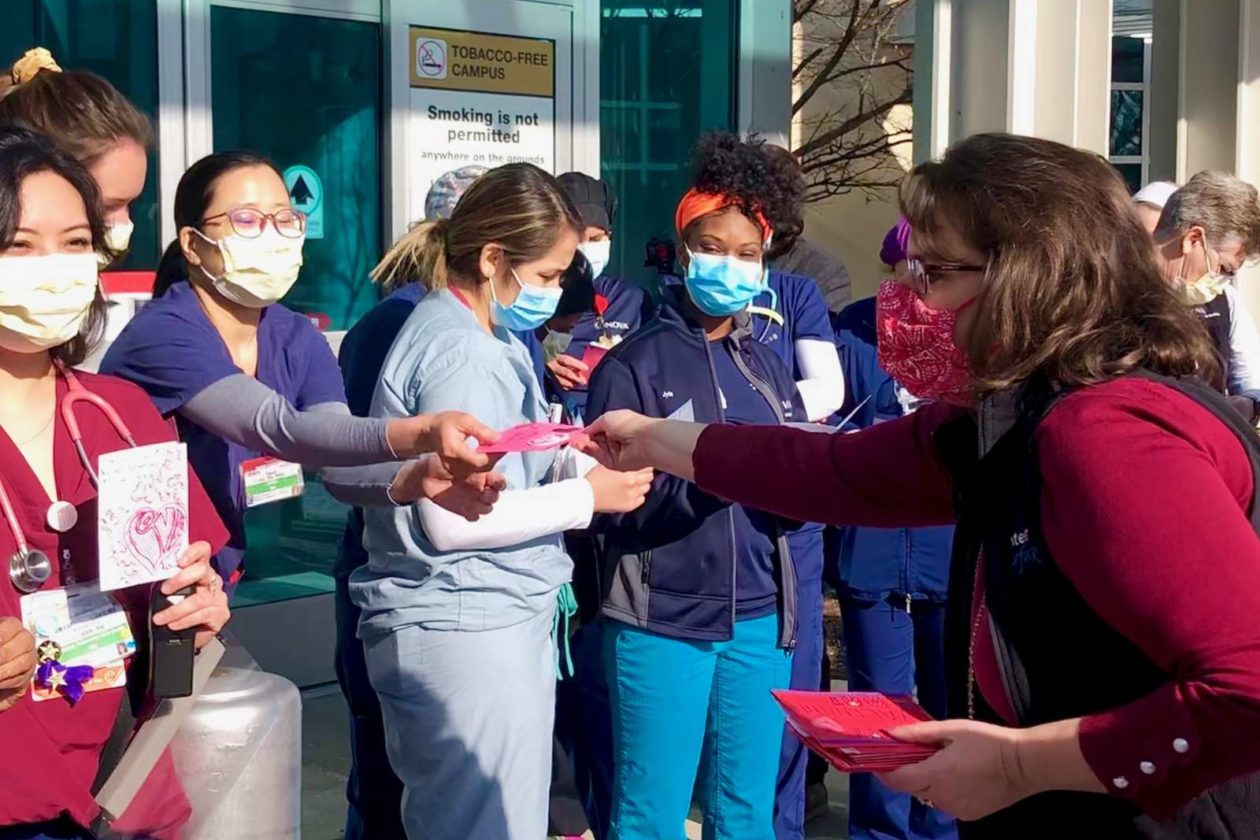
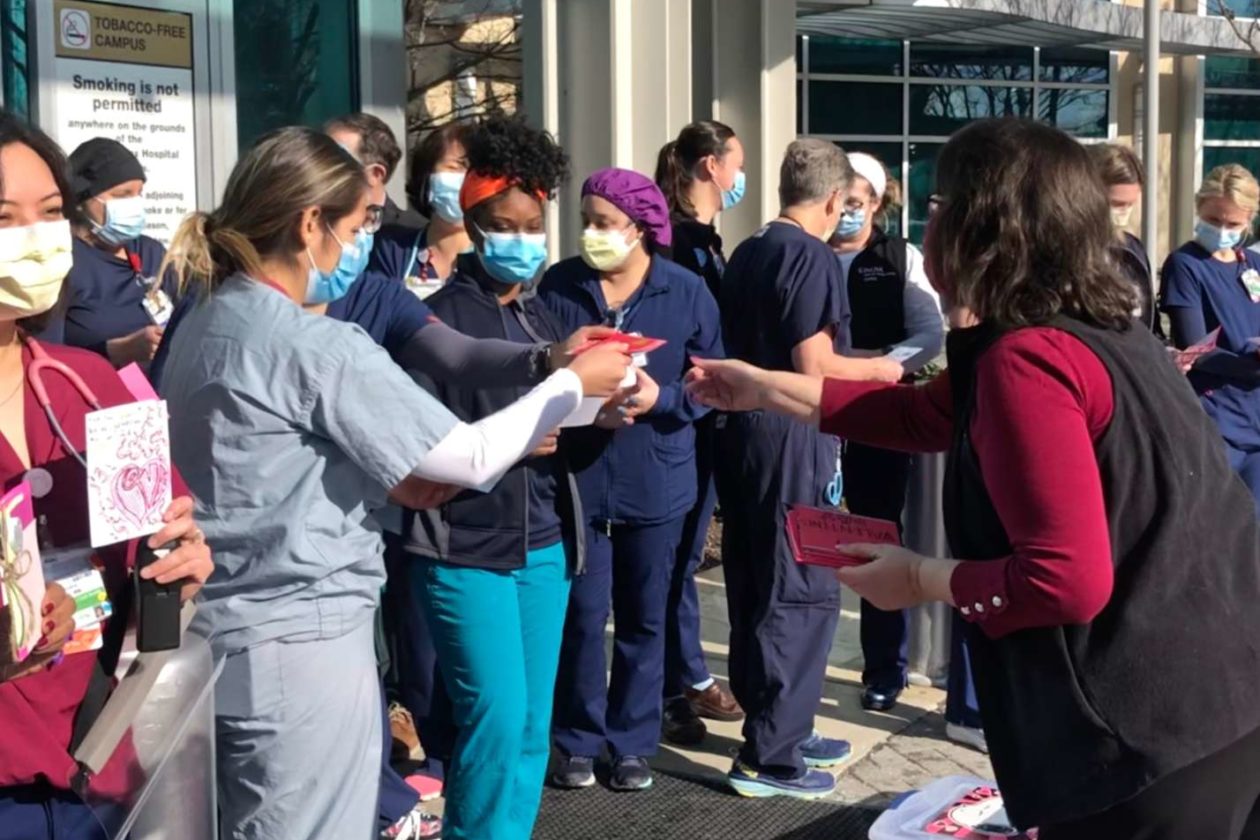
Just a few days before Valentine’s Day, about 650 volunteers in the Tysons area and Fairfax County made medical workers at Inova Hospital their valentine.
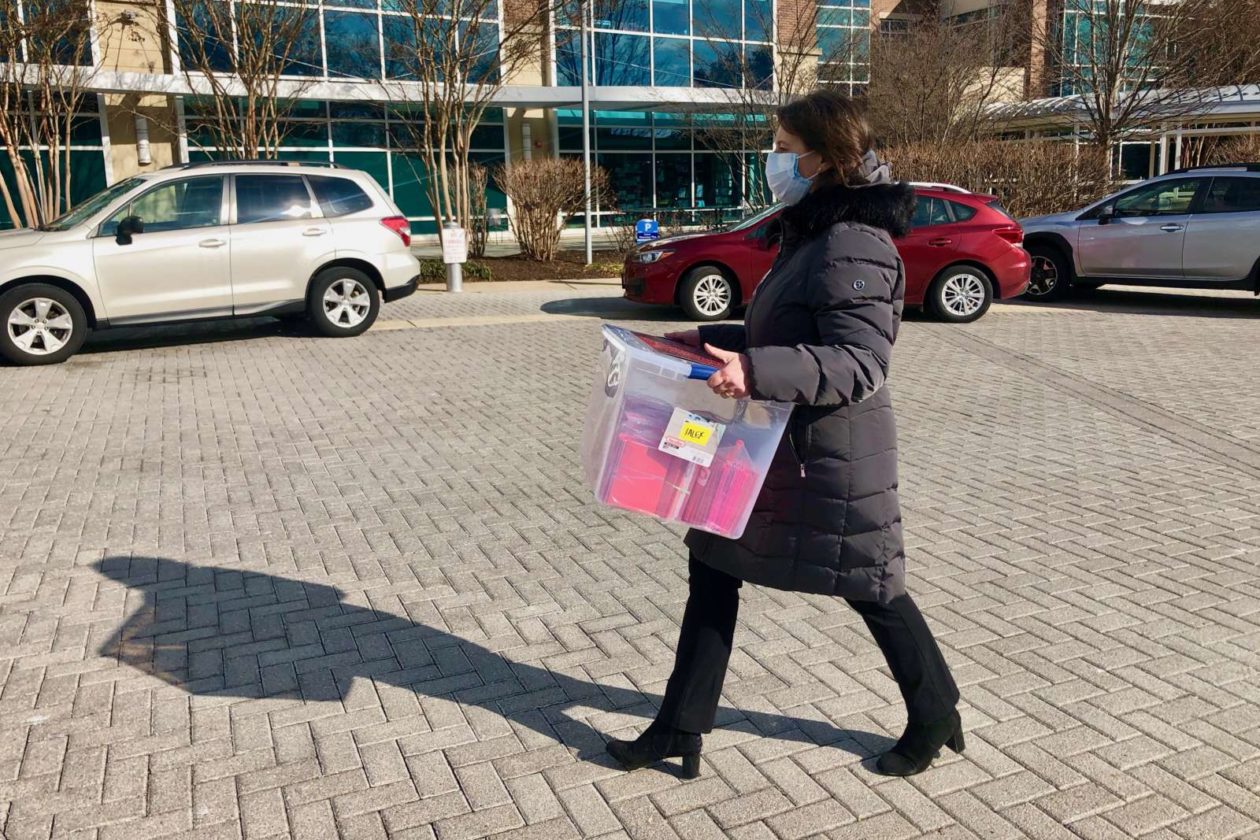
The nonprofit organization Volunteer Fairfax distributed about 7,000 handmade pink and red cards yesterday (Tuesday) to Inova nurses outside the Inova Heart and Vascular Institute and throughout the Inova Children’s Hospital in Falls Church.
“This many cards, from this many people, shows that the community acknowledges what we’re going through,” nurse Sabeena Jamali said.
Volunteer Fairfax has been delivering handmade Valentine’s Day cards for 10 years now, but this year, volunteers crafted 10,000 cards — more than ever before, according to Volunteer Fairfax Communications Director Lorna Clarke.
3,000 cards are earmarked for children who are in or graduating from the foster care system.
Before the novel coronavirus, the organization would take over a fire station during Martin Luther King Jr. weekend — as an homage to his legacy of service — and people would come to make cards in person, Clarke said. This typically yielded 3,000 to 5,000 cards.
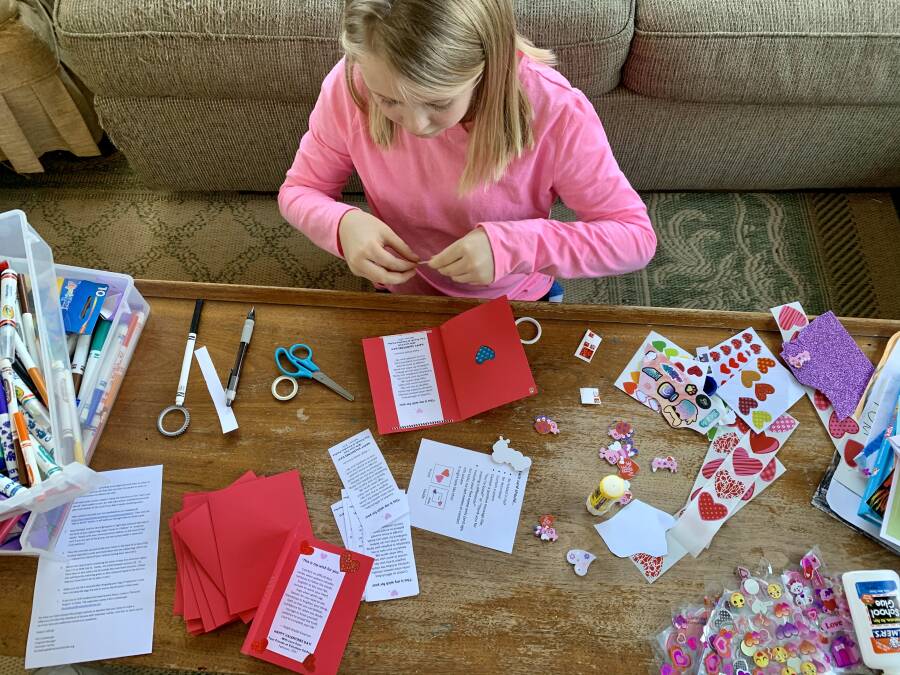
She attributed the huge influx of cards this year to a practical reason — volunteers were able to do this from home — as well as a sentimental one, as appreciation has deepened in the community for healthcare workers and the sacrifices they make.
Inova is one of the largest employers in the region, but it is easy to take it for granted when driving past the campus on the way to work, Volunteer Fairfax CEO Stephen Mutty said.
“We wanted to raise awareness and say thank you,” he said, crediting Tysons for its “demographic of caring, socially engaged people.”
For Inova President Steve Narang, Valentine’s Day is a special holiday because it gives people a chance to reflect on what it means to have a connection to another person. The cards establish and reinforce a connection between a hospital worker and someone in the community.
“You could see it in their eyes, the recognition that ‘I’m still being seen,'” Narang said.
Case manager Ruth Mahat said she is going to put her Valentine up in the break room to cheer her up whenever she rushes in to grab something or has to step away because she feels overwhelmed.
“Seeing the card brings your morale up,” Mahat said. “Someone in the community is thinking about you and appreciates what you do.”
Image via Volunteer Fairfax
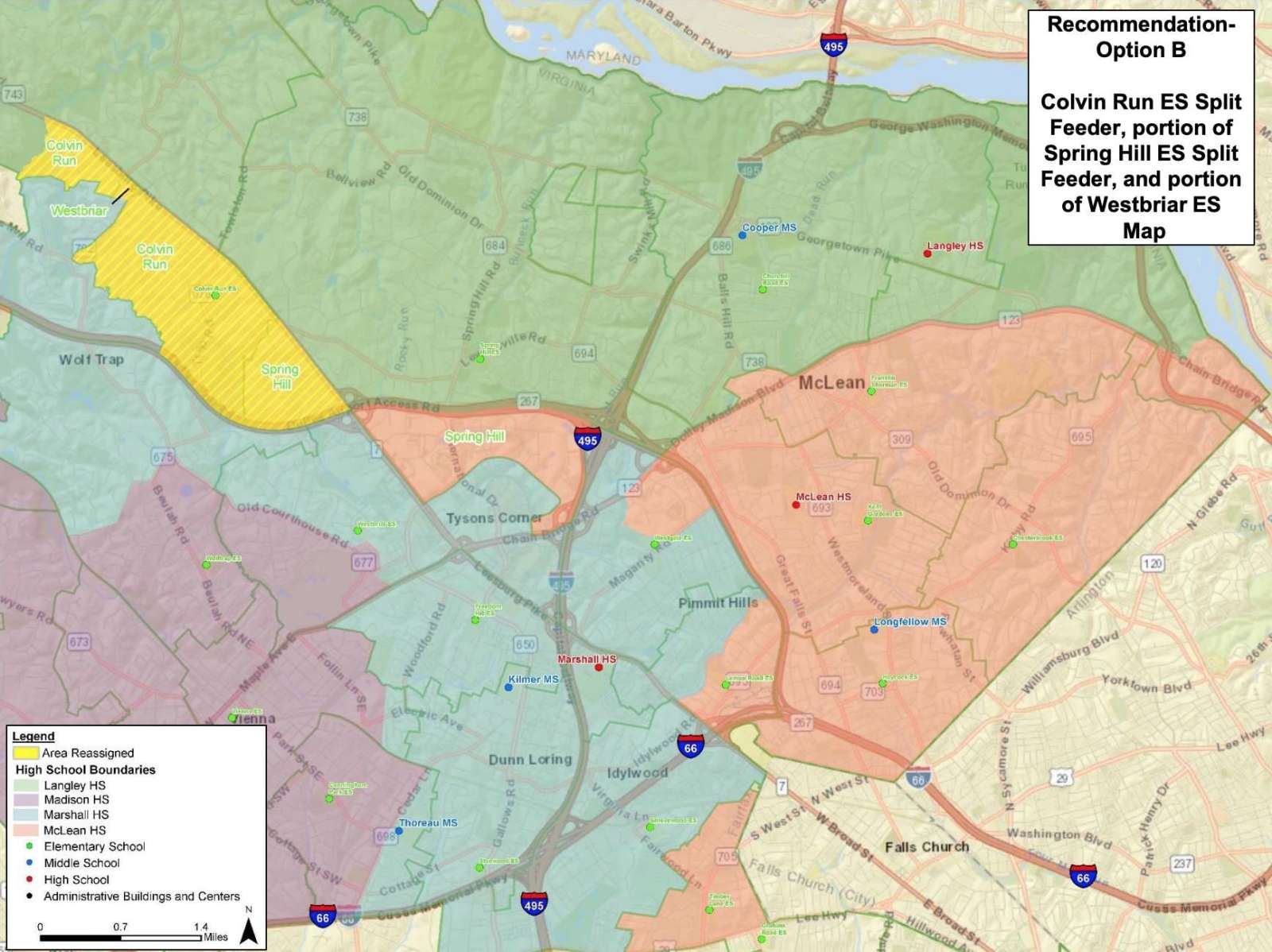
The Fairfax County School Board voted last night (Thursday) to change the boundaries for McLean and Langley high schools — but not in the way they had discussed last month.
Of the three possible boundary changes presented to the community in December, Fairfax County Public Schools recommended a modified version of Option C when the school board met on Jan. 21. Last night, however, the option presented for the board to vote on was “Option B,” which passed 11-1 with Member-At-Large Abrar Omeish dissenting.
The approved boundary change will reassign students from McLean to Langley in the Colvin Run Elementary School split feeder area, along with portions of the Westbriar and Spring Hill elementary school split feeder areas.
Dranesville District Representative Elaine Tholen also included a provision that would allow rising ninth graders affected by the boundary change to either attend Langley High School this fall or be grandfathered into McLean High School and get transportation provided for all four years of school.
Overcrowding is a decades-old problem at McLean despite several attempts to add space, the latest of which comes in the form of 12 modular classrooms that are currently under construction. They will be finished later this month and ready for students’ return in March, Tholen said.
The option that was favored last month would have shifted some Spring Hill Elementary students from Longfellow Middle School and McLean High to Cooper Middle School and Langley High.
Tholen said Option B came out ahead after the board weighed “many considerations, many of them contradictory,” from the impact of future developments to diversity at Langley High School.
“We heard loud and clear from those who participated in our public hearing and public engagement process: Clean up at least one split feeder while giving McLean some capacity relief,” Tholen said.
Community input is also the reason why the two feeder middle schools of Longfellow and Cooper were included in the boundary adjustment study.
As a result of the new boundaries, an estimated 190 students previously assigned to McLean will now go to Langley, and an estimated 78 students from Longfellow will be moved to Cooper.
“This is not a perfect solution. Neither were the other options,” Providence District Representative Karl Frisch said, adding that he would have loved to address the Colvin Run and Spring Hill split feeders “in their entirety.”
Frisch said this option relieves capacity concerns at McLean without overloading Langley or Cooper, and improves both the Colvin Run and Spring Hill split feeders. He added that FCPS and the board will continue studying capacity data for McLean, Langley and Marshall high schools as well as other schools in the Tysons area.
Omeish commended Tholen for her diligence but predicted the board will be “finding ourselves here in a few years” with this limited change.
“I don’t feel in good conscience that this is the most long-term solution,” she said.
Image via FCPS