
Labor Day weekend has almost arrived, unofficially bringing summer to an end with an occasion to recognize the achievement of workers and the labor movement.
For students, the weekend has already begun, since Fairfax County Public Schools has designated both today (Friday) and Monday (Sept. 6) as holidays.
With Labor Day falling on Monday, many public facilities and services in Fairfax County will be closed or have altered schedules to accommodate the federal holiday. Here are some of the changes that residents in the Tysons area should keep in mind:
Fairfax County Government
- County government offices will be closed on Sept. 6.
Fairfax County Courts
- The Fairfax Circuit, General District, and Juvenile and Domestic Relations District courts will all be closed on Labor Day.
Town of Vienna
- Town offices will be closed all day, but waste collections will proceed as normally scheduled.
- The Vienna Community Center will also be closed on Monday.
City of Falls Church
- All city government offices and buildings will be closed on Labor Day, including City Hall, Gage House (401 Great Falls Street), and the Property Yard (7100 Gordon Rd.)
- The Falls Church Community Center will be closed on both Sunday (Sept. 5) and Monday before reopening under its normal business hours on Tuesday.
- Mary Riley Styles Public Library will remain closed as staff continue the process of moving into the newly renovated facility.
County Libraries and Recreational Facilities
- Fairfax County Public Library follows the same operating status as the general county government, so all branches will be closed on Labor Day.
- Nearly all Fairfax County RECenters will be open on Monday and follow their standard operating hours, which conclude at 6 p.m. The exception is the George Washington RECenter in Alexandria, which will be closed.
- The Colvin Run Mill and Sully historic sites, Green Spring Gardens in Alexandria, and all nature centers will be closed.
- The visitor center at Frying Pan Farm Park in Herndon will be closed, but the farm itself will be open from 9 a.m. to 5 p.m. The indoor arena will also be open from 9 a.m. to 9 p.m.
- The McLean Community Center will be closed on Labor Day.
- All Neighborhood and Community Services facilities, including community, teen, and senior centers, will be closed from Sept. 4-6.
Public Transit
- Fairfax Connector buses will operate on a Sunday schedule for Labor Day. Check the transit system’s website for the specific routes that will be in service.
- Metro will operate from 7 a.m. to midnight throughout Labor Day weekend, with trains serving 87 of 91 stations normally on the Red, Blue, and Silver lines and scheduled maintenance on the Orange, Yellow, and Green lines.
- On Labor Day, Metrorail, buses, and MetroAccess will follow a Sunday service schedule with off-peak fares and free parking in effect all day.
County Trash and Recycling
- Labor Day will not affect trash and recycling collections for county customers. However, the customer service center will be closed in observance of the holiday.
- The I-66 Transfer Station and I-95 Landfill Complex will both be open.
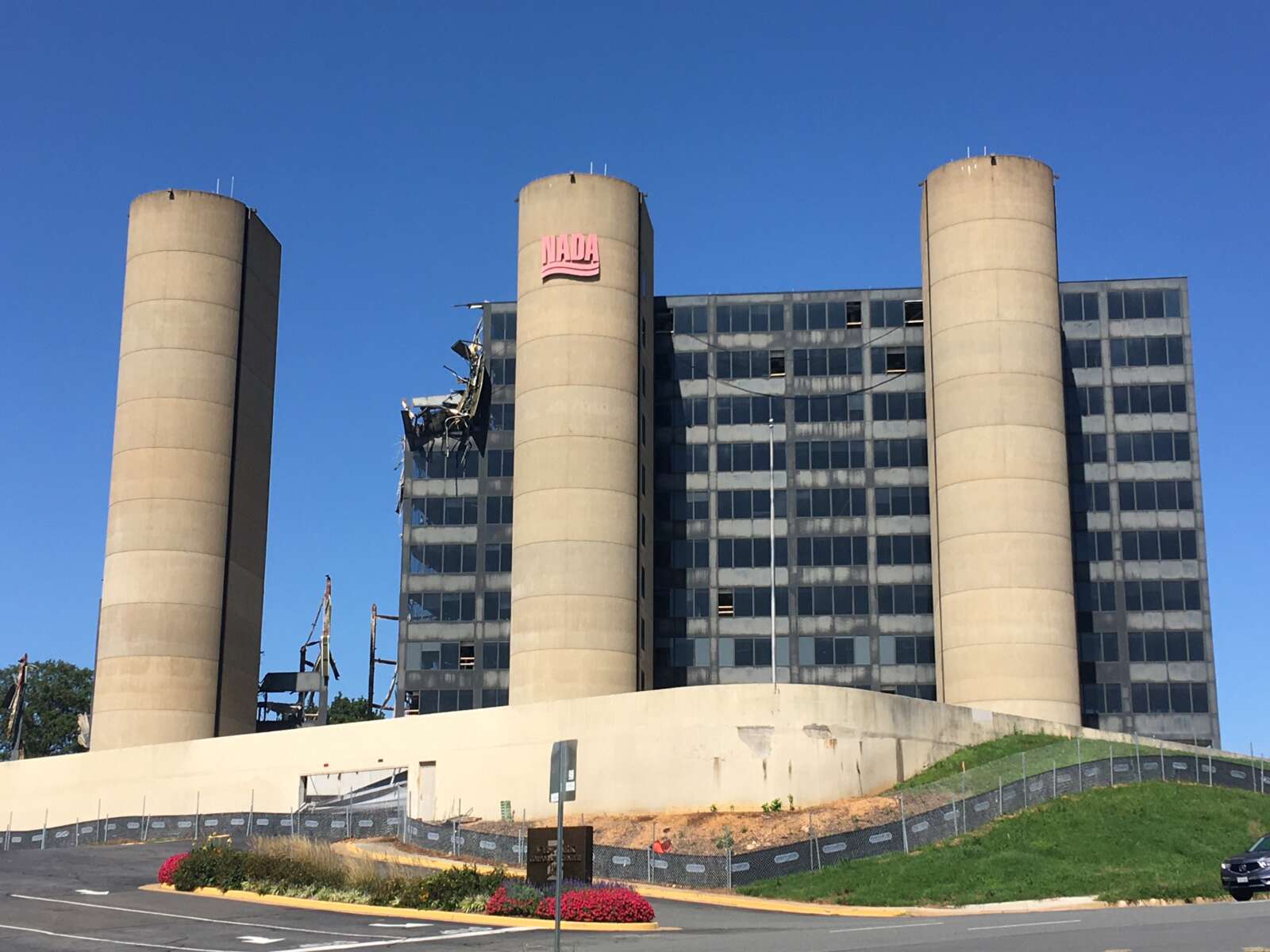
The McLean Citizens Association has thrown its support behind a planned expansion of The Boro after working with the developer to make adjustments to the project, which will replace the former NADA headquarters site in Tysons.
The volunteer group’s board of directors passed a resolution during a virtual meeting on Wednesday (Sept. 1), noting that developer The Meridian Group made changes to its plans that would appease the association as well as neighbors at The Rotonda Condominiums.
“Meridian has been very forthcoming with working with us,” Rotonda Condominium Unit Owners Association President Doug Doolittle told Tysons Reporter. “We’re pleased with our relationship with Meridian.”
The project calls for demolishing the former National Automobile Dealers Association building at 8400 Westpark Drive and introducing mixed-use development at the complex, including a residential and assisted living building for older adults, extensive retail space, new streets, park space, and more.
Doolittle said his association has been impressed with Meridian making adjustments to concerns they’ve shared.
The Rotonda Condo association hired a traffic consultant and land-use attorney and has met with the developer some eight or 10 times over the last year to address issues ranging from construction to visual impacts.
For example, a building slated to become a pharmacy won’t have windows in a rear area, so the developer arranged to have vegetation and a mural on the wall, Doolittle said.
When crews began tearing down the NADA building last week, the association sent an email to Meridian Vice President Tom Boylan, and the next day, the company had water sprayers on the site to address dust issues.
MCA board member Bob Perito reported that the citizens’ group, which bills itself as the “unofficial town hall” of the greater McLean area, had a similar experience with the developer regarding interactions with its Planning and Zoning Committee.
“The applicants…responded to detailed, written questions from the P&Z, and they modified the projects in response to some of the committee’s suggestions,” said Perito, who represents The Hamptons of McLean Townhome Association.
Meridian is scheduled to deliver a presentation to The Rotunda residents on Sept. 9. While the condo association has given regular progress updates, the meeting will give residents a chance to learn about the project firsthand. It will also be available to Rotunda residents via Zoom.
“This would be the residents’ first chance to really talk with Meridian,” Doolittle said.
Doolittle said he thinks making these requests during the planning process is a more effective way to push for meaningful change than waiting for a Fairfax County Planning Commission or Board of Supervisors public hearing.
The project builds off The Boro, which debuted in 2019 with luxury high rises, an office-and-retail building called Boro Tower, restaurants, and a 70,000-square-foot Whole Foods. The grocery store alone is the size of just over 1.2 football fields.
MCA’s resolution highlights the money for schools and a recreational field in Tysons that are included in the project’s proffers, though at-large board member Martin Smith noted that a developer contribution rate for multifamily residential units assumes there’s one kindergarten through 12th grade student per nine households.
According to the resolution, Meridian’s school contribution would amount to “$12,262 per expected student” based on varying ratios for the different kinds of residential units in the new buildings.
“That really seems low,” Smith said of the proposed rate of 0.112 students per unit for multifamily residences, wondering more about how the methodology of such contributions work.
The project will head before the Planning Commission on Oct. 6 and before the Board of Supervisors on Oct. 19.
FCPS Looks to Tighten COVID-19 Protocols — Missed emails have led some Fairfax County Public School students to show up for class when they’re supposed to stay home after coming into close contact with someone who tested positive for COVID-19. The school system is working with county health officials to speed up the complicated contact-tracing process. [Reston Now]
Abortion and Taxes Take Center Stage at Tysons Forum — Nearly 300 people gathered at the Ritz-Carlton in Tysons to hear all six major-party candidates for statewide offices. Democratic gubernatorial nominee Terry McAuliffe warned that the abortion restrictions approved in Texas on Wednesday (Sept. 1) could come to Virginia if his opponent is elected, while Republican Glenn Youngkin detailed his recently announced tax cuts plan. [Associated Press]
Falls Church Sets Opening Date for Renovated Library — The Mary Riley Styles Public Library will reopen next Friday (Sept. 10) after a year-long renovation that expanded the facility by 6,000 square feet, reconfigured the layout, and updated its amenities and infrastructure. City officials and library staff will mark the opening with a ribbon-cutting ceremony, with a public grand opening celebration to come later in the fall. [City of Falls Church]
Caliburger Food Truck Coming to The Boro — “Southern California burger joint @caliburgerdc is coming to #TheBoroTysons next year! In the meantime, get a preview of their sunny SoCal style from the CaliBurger Food Truck on Sat evenings from 6:30-8:30pm (beginning 9/4), & lunch on Wednesdays from 11:30am-2pm (starting 9/8).” [The Boro/Twitter]
Photo by ERTRIPP9/Twitter
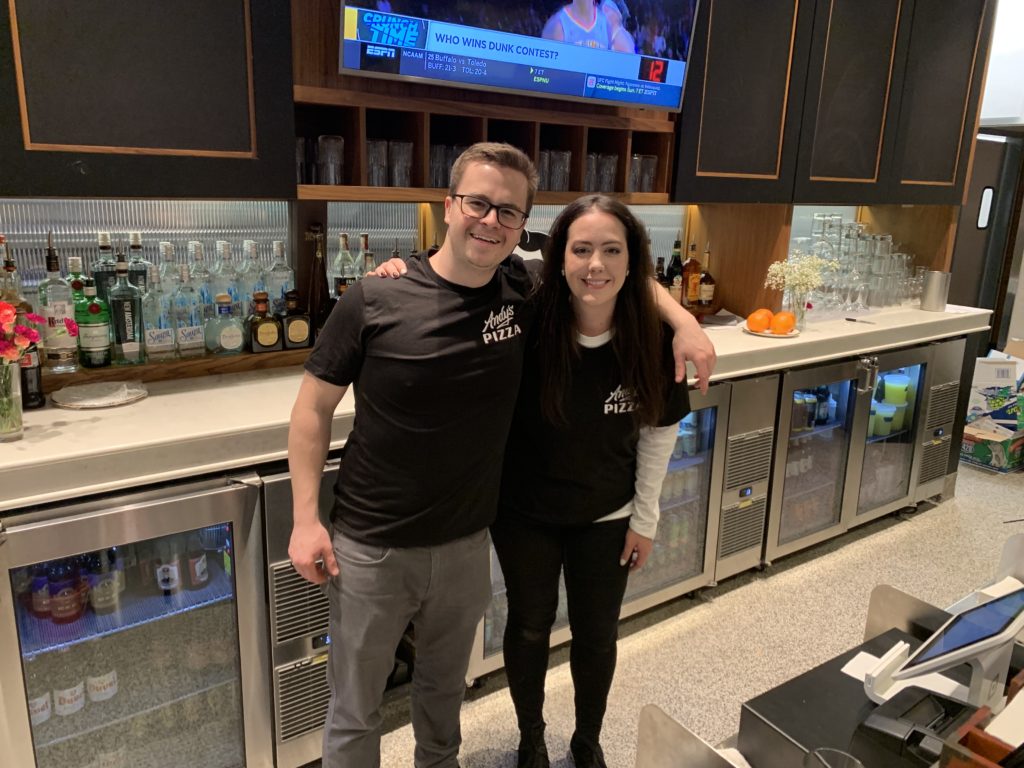
Among a crowd of pizza crafters applying fixtures with eyedroppers or a brush, chef Andy Brown did what he did best: make the same kind of pizza he’d make if he were any given Friday at the shop.
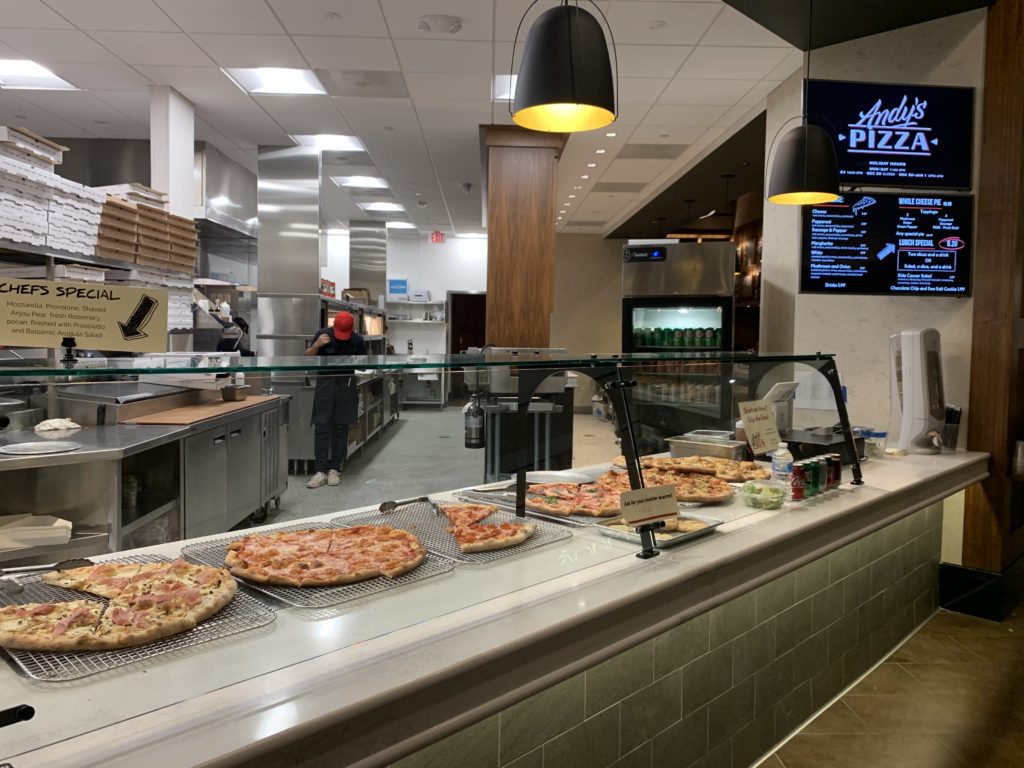
That’s how Andy’s Pizza, a small regional chain with a location in Tysons Galleria, took home the first-place prize in the traditional pizza category of the International Pizza Challenge last month.
“The whole point of the traditional category is: what do you do really great at 7 p.m. on a Friday?” said Emily Brown, Andy’s cousin and co-owner of Andy’s Pizza. “Maybe it was a risky move, but we just did what we put out on Friday. No paint brushes, no eye-droppers.”
Originally introduced in 2007, the International Pizza Challenge is the largest pizza-making competition in the U.S. It unfolded this year from Aug. 17-19 as part of the 37th annual International Pizza Expo.
Part of the rules for the traditional category is to use no more than two toppings, but as Emily explained, traditional doesn’t necessarily mean simple. There’s a specific process behind the scenes that goes into making the pizza.
“We do a 72-hour minimum cold fermented crust,” Emily said. “For our sauce, we have a beautiful red sauce with a pinch of salt, and we use the best cheese money can buy — mozzarella from Grande Cheese. Our crust is blistered, and we use a special technique to keep it chewy and soft while being crisp on the bottom.”
Emily suspects it was the blistered crust that helped Andy’s Pizza stand out from the competition.
“A lot of people do that ferment, and a lot of people use that cheese, so it’s really the blister,” Emily said.
Meanwhile, the pizzeria just started serving its first vegan pies. Emily says they were previously unimpressed with the quality of artificial cheeses, but they found the right one with Vertage in Ivy City in D.C.
Emily also helped spearhead the pizzeria’s beer menu, which has started to see a gradual comeback after lunch and happy-hour crowds took a hit with office workers staying home during the pandemic.
“Tonight, people came out from D.C. and were like ‘how did you get this beer?'” Emily said. “Our bread and butter was office, and they were gone and started to trickle back…You still don’t get that automatic 50-person-on-a-Tuesday Capital One happy hour yet, so you have to work really hard not to let that program slip. If you do something hard enough, people will notice.”
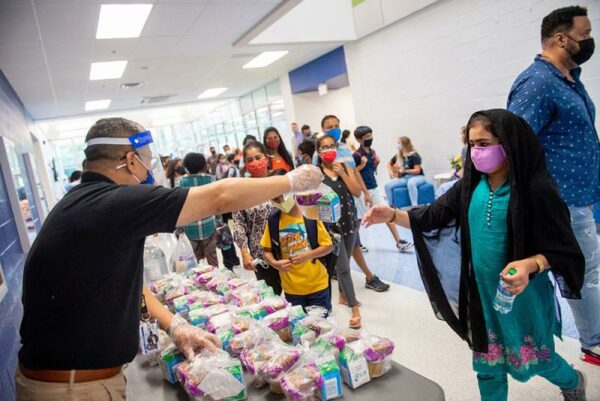
As COVID-19 cases rise in Fairfax County Public Schools, so have concerns from parents, students, and staff, particularly when it comes to the cafeteria.
More than 205,000 students and staff in Fairfax County went back to school on Aug. 23 after 18 months of mostly remote learning. Excitement about seeing friends and having in-person classes mingled with frustration over transportation issues and pandemic-related anxieties.
After more than a week of classes, some community members have expressed increasing alarm at the sight of crowded cafeterias during lunch, jam-packed school hallways, and what they feel is a lack of oversight by FCPS administrators.
FCPS has seen a clear uptick in COVID-19 cases since classes began, according to its dashboard, which displays cases that are self-reported by students and staff and shared with the Fairfax County Health Department.
As of yesterday (Wednesday), the school system had recorded 351 new cases in August, including 266 cases involving students and 84 among staff. 252 cases have come in since schools reopened on Aug. 23.
While this remains a small percentage compared to the division’s overall population, which is the largest of any Virginia school district, the numbers still have many worried.
An online petition urging FCPS to offer a virtual option for more students has now garnered close to 5,000 signatures, almost double what it had in mid-August.
FCPS has a virtual program, but enrollment for this year was limited to students who personally have a documented medical need. Eligibility wasn’t extended to students based on health concerns in their family or household.
“FCPS believes that students learn best in-person,” an FCPS spokesperson said. “We are focused on providing a safe and positive learning experience for all students.”
Lunch time has emerged as a particular concern, since students have to remove the face masks that are otherwise required inside school buildings. The Centers for Disease Control and Prevention characterize mealtime at schools as a “high-risk situation.”
In particular, elementary school students are at risk.
While about 80% of middle and high school aged students in Fairfax County have gotten at least one vaccine dose, children under the age of 12 are not yet eligible. At this point, it’s not expected that vaccines will be available for those children until this winter if not early next year.
A parent of a student at Westbriar Elementary School in Vienna told FFXnow that, during the first week, she saw students “elbow-to-elbow” inside the small cafeteria, eating and talking without masks on. The school has an outdoor space with a tent, the parent says, but it isn’t being used enough.
The student said they “don’t feel safe” during lunch and snack time in school.
The parent doesn’t fault the young students, but rather, the administrators for not adequately monitoring or providing better options.
When these concerns are brought up to administrators, the parent feels like they’re ignored or given unsatisfying explanations, such as that it was raining, even though the outdoor space is under cover, or that letting one class go outside and not another wouldn’t be “equitable.”
The Westbriar parent takes their student out of school for lunch every day due to their health concerns, but admits many other families don’t have the time or ability to do that.
In an email to FFXnow, an individual who identified themselves as an FCPS staff member expressed concern that there has been “no social distancing” during lunch periods, singling out Fairfax High School in particular.
When staff members approached the school administration with their concerns, they were told that the school is “doing what is required of us by the county,” the tipster said.
FCPS officials have stressed that maintaining six or even three feet of social distancing in cafeterias would be impossible with 99.5% of the student body back in school buildings.
However, beyond having general guidelines about mask-wearing and directing elementary schools to establish seating charts, the division has mostly left the logistics of meals up to the discretion of individual schools.
“The size of every school cafeteria is different and the number of students at each school is different,” FCPS says on its website. “The physical layout of each cafeteria varies from school to school depending on size and student enrollment. Some schools (but not all) will have outdoor cafeteria spaces or options. These may be used on days when the weather is good.”
In a statement, an FCPS spokesperson confirmed that individual “administrators are tasked with making decisions on their individual school lunch set-ups,” though outdoor eating is encouraged when possible:
Where possible, students will eat outside and 186 tents have been installed to serve this purpose. Schools are also using additional spaces to space out students during lunch. Plexiglass, forward-facing seating and additional spacing between students is also being used to create a safe environment for students during lunch. Finally, some schools are extending lunch so students can be more spaced out in cafeterias. The situation is being reviewed in every school to make sure they are doing everything possible to create a safe and healthy environment.
Melanie Meren, who represents Hunter Mill District on the Fairfax County School Board, says she has seen different schools use a variety of methods to try create distance between students based on each building’s layout, seating, availability of outdoor space, and population.
School board members shared concerns that they had received about crowded cafeterias with FCPS Superintendent Scott Brabrand during a work session on Aug. 24. The board then approved a federal relief spending plan last Thursday (Aug. 26) that included $10 million to hire monitors for cafeterias, classrooms, and outdoor spaces.
“The School Board has given clear direction to the Superintendent that students should be using outdoor areas — whether that’s at picnic tables, under tents, on yoga mats, etc.,” Meren wrote in an email. “The Board approved use of funds to hire in-person monitors to supervise students in smaller groups during meals. This direction reflects input I’ve heard from some families who want more social distance in place when masks are off while eating.”
However, the onus remains on administrators at each of the county’s nearly 200 public schools to figure out how to implement tools like outdoor tents and cafeteria monitors, which the Westbriar parent finds less-than-ideal.
“Our principal is not a public health expert. This is totally out of her realm,” the parent said. “[Create] a health and doctor committee that can then go to these schools and give them wise words of wisdom and best practices.”
FCPS officials said during the Aug. 24 work session that they are working with an outside vendor to set up safety teams to monitor COVID-19 health practices at each school, like the ones that were deployed last year, but the hiring process was still underway at that point.
Dr. Amira Roess, a professor of epidemiology at George Mason University, says lunchtime in crowded, loud cafeterias is a huge concern for her, particularly for elementary school-aged children who aren’t yet eligible for the vaccine.
“We know from a lot of outbreak investigations that eating, projecting your voice, singing, shouting, does carry a significant probability of infection,” she said.
She recommends eating in shifts, moving outdoors, and setting a good example.
“If the adults around [younger students] are modeling good mask-wearing behavior and are reminding them to wear masks, they tend to follow these rules and they wear their masks,” Roess said, adding that regular and frequent testing would also be a good strategy to identify potential sources of outbreaks.
FCPS has mandated that all employees get vaccinated against COVID-19 by late October or submit to regular testing, and the school system announced earlier this week that high school students must be vaccinated to participate in winter and spring sports this year.
However, there remains fewer protections for younger students. FCPS’s lunch time procedures and guidelines remain the same for high schools as they are for elementary schools, save for a required seating chart.
Roess acknowledged that the cost and logistics of these measures can be a challenge for schools that are often already overcrowded and under-resourced, but they could prevent what public health experts fear will be a nationwide surge in COVID-19 cases among children.
“The problem with a lot of children getting infected at once is that it’s just a numbers game,” Roess said. “We’re going to have a larger number of kids who end up with more severe cases and will need to be hospitalized.”
Photo via FCPS
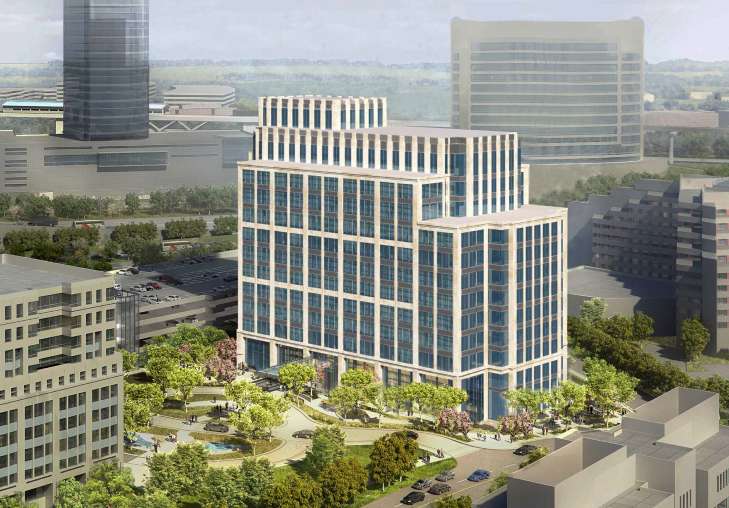
An office building from the 1970s could be demolished to make way for a modern skyscraper along the Capital Beltway in Tysons.
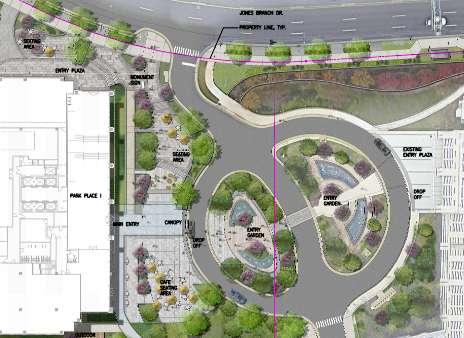
The 11-story, 135-foot tall Park Place I (7926 Jones Branch Drive) is slated for an overhaul. Property owner B.F. Saul Real Estate Investment Trust is looking to replace it with a building with ground-floor retail, a terraced plaza, outdoor seating areas, and “trophy-class office space,” according to application materials.
The developer is seeking a special exception from Fairfax County to waive certain requirements, including an increase in the site’s permitted building height, to make way for the project.
“Compared to the existing building, the proposed Park Place I building will be rotated 90 degrees, thereby opening up views, light, and air through the site and creating symmetry with the adjacent Hilton Worldwide headquarters building,” Mark Viani, a land use and zoning lawyer for the project, said in a July 2 statement of justification to the county.
Viani, who works with the Arlington-based law firm Bean, Kinney, & Korman, noted that the current building remains in operation but “is outdated and is 100% vacant of all tenants.”
B.F. Saul previously submitted plans for an 18-story building in 2018, when it sought to obtain a parking requirement exception. Under its current plan, the redeveloped property would provide 1,842 spaces — more than the 1,506 spaces required.
As part of improvements, the owner would provide 4,040 square feet of urban park space at the property along Jones Branch Drive, which also would be widened to accommodate a new bike lane.
Park Place II (7930 Jones Branch Drive) would not be affected by the redevelopment project. The 147-foot tall office building was built in 2008 and remains home to Hilton’s corporate headquarters.
The proposed construction project is in a C-4 High Intensity Office District county zoning area, which restricts a building height to 120 feet and requires a front setback of 54 feet.
Under the names Tysons Park Inc. and Tysons Park Place II LLC, B.F. Saul is requesting permission for the new building to be 175 feet high and other waivers, including a 41-foot front setback.
The proposal calls for amending a special exception that was approved in 2000 and permitted the Park Place II to reach up to 150 feet in height but maintained Park Place I’s current height, according to the application.
As part of the justification in the request, Viani noted the county’s Tysons Comprehensive Plan calls for buildings up to 175 feet tall in that area based on its proximity to Metro stations. He says that by building “up” rather than “out,” the applicants will better improve pedestrian-oriented spaces and on-site open space.
“Its location along a prominent road makes it a desirable site for additional height to help create a stronger building identity and sense of place in Tysons,” Viani wrote.
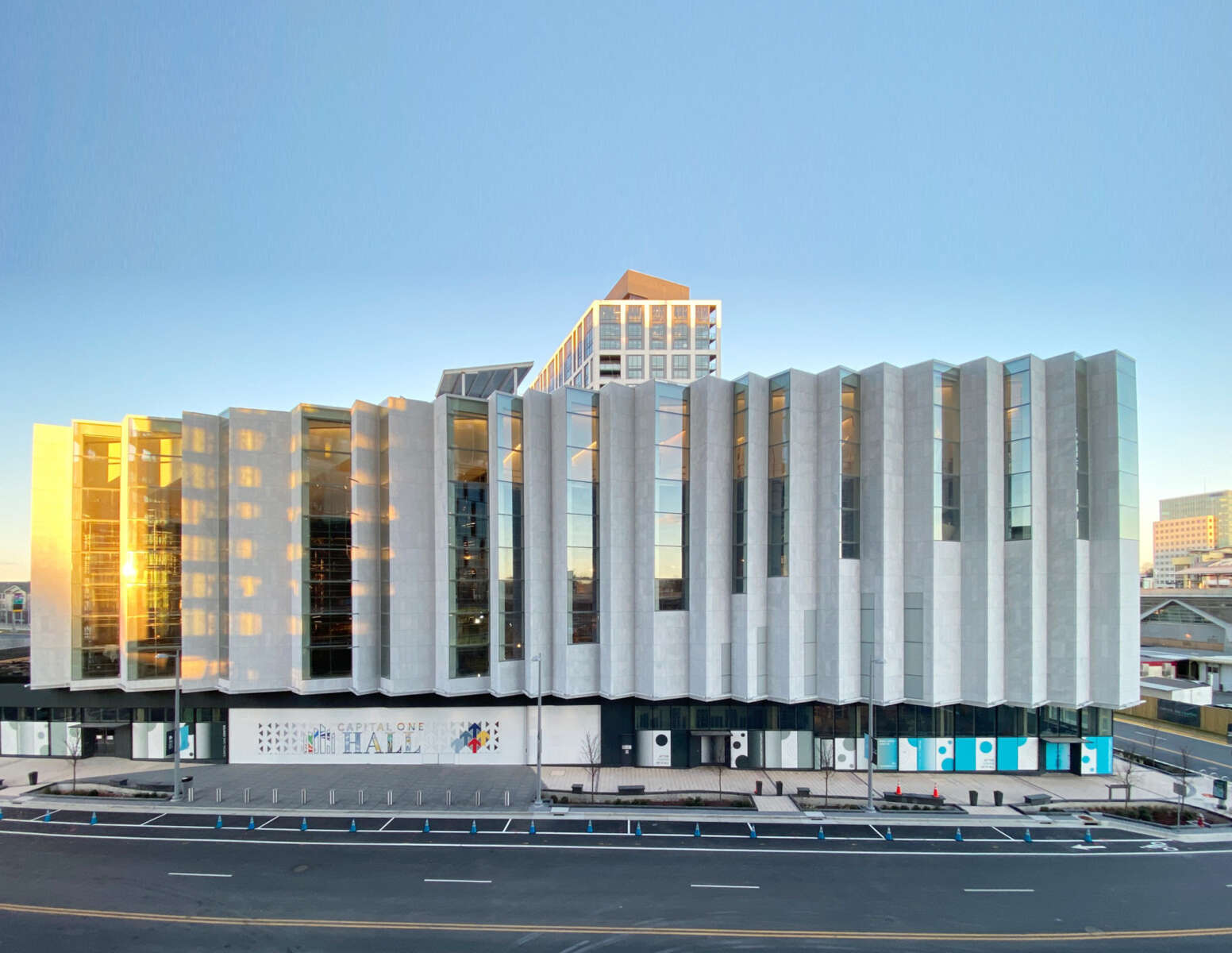
(Updated at 10:15 a.m.) Exactly one month before it opens to the public for the first time, Capital One Hall has announced that all patrons will be required to show proof of vaccination or a negative COVID-19 test in order to attend an event.
Attendees will also be required to wear face masks while inside Tysons’ new performing arts venue except when they’re actively eating or drinking.
According to an email sharing the new policies, either a hard-copy vaccine card or a photo can be used as proof of vaccination, but the last dose must have been administered at least 14 days prior to the event. Individuals must also have a form of photo identification with a name that matches the one on their card.
For those who choose to present proof of a negative COVID-19 test instead, the test must be one approved by the Centers for Disease Control and Prevention, and it must have been taken within 48 hours of entering Capital One Hall.
A spokesperson for Capital One Center, the mixed-use development that’s emerging around the financial giant’s headquarters in Tysons, says the mask and vaccination policies were determined by ASM Global, the company that operates Capital One Hall.
“Their decision and rationale is fact-based, on guidance from experts, feedback from their network of venues around best-practices, input from shows/tours/acts, and the like,” the spokesperson wrote in an email, adding that the requirements will also be in place for both full and part-time employees.
According to the spokesperson, Capital One Hall is expected to soon have its protocols and health risk mitigation best practices certified by the Global Biorisk Advisory Council, an international network that evaluates facilities for their preparedness and response to infectious disease and biohazard situations.
“The policy at Capital One Hall is continuously reviewed as conditions and circumstances change, and any changes will be communicated directly to ticket holders and the policy updated on the Capital One Hall website,” the Capital One Center spokesperson said.
Capital One Hall will kick off its inaugural season on Oct. 2 with an 8 p.m. show by the country band Little Big Town.
Since confirming a performer for the first time in early June, the performing arts center has filled out its initial season with musical, comedy, theater, orchestral, and family-oriented acts. The full schedule can be found on the Capital One Hall website.
The venue consists of a 1,600-seat main theater as well as a 225-seat black box theater called The Vault. Other amenities include a terrace, an atrium for weddings and other events, a conference board room, and meeting rooms that can also function as classrooms.
The 11th floor of the building features The Perch, a 2.5-acre park that includes an amphitheater, a dog park, and the Starr Hill Biergarten, which opened to the public on Aug. 21. The Perch is scheduled to have a three-day grand opening event on Sept. 17-19.
The Watermark Hotel, a 25-floor, 300-suite luxury hotel that sits above Capital One Hall, is set to open on Sept. 21.
Help Name Former Container Store — Celebrate Fairfax is turning the former Container Store at 8505 Leesburg Pike in Tysons into a community event venue whose name will be determined by a social media poll. The options are Tysons Commons, Tysons Collective, Social District at Tysons, and The PARC (People, Art, Recreation, and Community) at Tysons. [Celebrate Fairfax Festival/Twitter]
Inova-Tested Drug Helps COVID Patients — “A drug tested at Inova Health System has shown to improve clinical outcomes in hospitalized COVID-19 patients who required supplemental oxygen. The Phase 2 clinical trial evaluating the safety of fostamatinib was conducted on behalf of Rigel Pharmaceuticals Inc…Results were published Wednesday in Clinical Infectious Diseases, an official publication of the Infectious Disease Society of America.” [Inside NoVA]
Falls Church to Get First Electric School Buses — “FCCPS is one of 19 Virginia school divisions receiving a grant to replace diesel school buses with new electric buses. The grant announcement came last Thursday, in a news release from the governor’s office. FCCPS will receive $530,000 for two electric buses from the Volkswagen (VW) Environmental Mitigation Trust.” [Falls Church News-Press]
Local Nonprofit Names New Leader — “Vienna-based Langley Residential Support Services, a nonprofit serving adults with developmental disabilities, has named a new executive director. Langley Residential’s board hired Maureen K. Gum as executive director after she served as interim executive director.” [Patch]
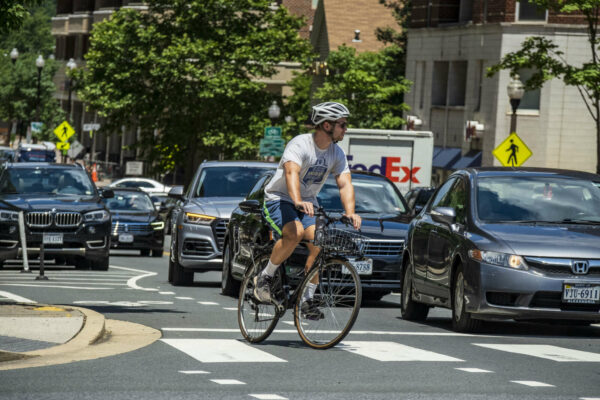
Around noon on June 12, a pedestrian trying to reach a pathway by Dogwood Pool on Green Range Drive in Reston was nearly hit by a vehicle, because the trail was blocked by parked cars.
Three days earlier, another driver failed to yield and sped through a left turn at the Westpark and Galleria Drive intersection in Tysons, almost colliding with a person who was using the crosswalk.
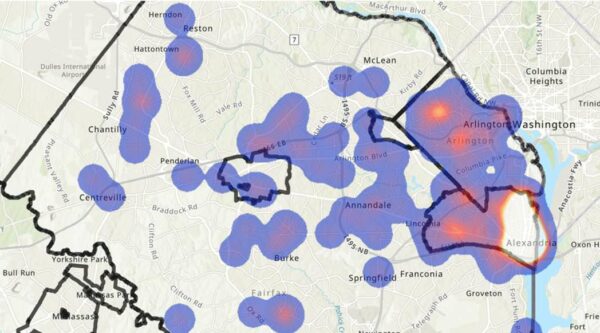
Those are two of more than 350 “near miss” traffic incidents that community members have reported to Northern Virginia Families for Safe Streets (NoVA FSS) since the advocacy group launched a survey on June 17 to collect data on dangerous roadways across the region.
Developed with the help of Virginia Tech graduate students, the Near Miss Survey allows walkers, bicyclists, drivers, and other road users to report instances where they came close to getting into a crash or accident but were fortunate enough to avoid it.
The resulting map highlights specific incidents as well as hotspots that are especially accident-prone, with the goal of helping local transportation and public safety officials see what areas need their attention and how they can improve policies and infrastructure to make streets safer.
“It gives people an opportunity to report on areas that might be dangerous,” Phil Kemelor, the Mason District board member for Fairfax Families for Safe Streets, said. “Just because it doesn’t result in a specific accident like with someone getting hit or killed, it’s still something people should know about.”
While the survey is still new, some trends have already emerged. Unsurprisingly, there tend to be more incidents at times with more traffic, such as the afternoon rush hour, and failure to yield to pedestrians in crosswalks is the most frequently reported issue.
Kemelor notes that the reported incidents haven’t been weather-related, since they’ve all occurred during clear conditions, and they are rarely one-time issues.
“Those reporting the incidents cite multiple occurrences at the locations mentioned,” he said.
The Near Miss Survey project grew out of conversations between NoVA FSS founder Mike Doyle and Tom Sanchez, who teaches urban affairs and planning at Virginia Tech.
As a capstone requirement for the master’s program, graduate students take a year-long studio class where they work on a project with a client from the community.
For the 10 students who took the class during the 2020-2021 academic year, that client was Families for Safe Streets, which began in the City of Alexandria in 2017 and has since added Arlington and Fairfax chapters.
Sanchez says the idea of collecting near-miss data appealed to the class, because there was no existing source for that kind of information, even though a split second could be the only difference between a close call and a tragic collision.
“Even though [a crash] didn’t happen, it could’ve easily,” Sanchez said. “So, it’s a very good indicator of where there may be, say, bad street design or poor visibility or bad signage or lots of other potential problems.”
Limited to Zoom meetings due to the ongoing COVID-19 pandemic, the students built the mobile platform that collects, analyzes, and maps the near-miss data over the course of two semesters.
Now that the platform is online, the focus has shifted to giving NoVA FSS the resources maintain it indefinitely and raising awareness about the tool. One of the biggest challenges for NoVA FSS so far has been figuring out ways to incentivize people to report an incident, Sanchez says.
“You’re on your bike or you’re walking and you almost get hit by a car. You’re not thinking, hey, I need to get on my phone and I need to record that information. You’re thinking…I’m glad I didn’t get hurt,” he said. “So, part of their campaign to increase the visibility of [the survey] is really to get the word out about…this benefits us all if we can gather this information and map it and highlight where some of these dangerous places are so we can go out and fix it.”
In addition to encouraging community members to share the survey link, NoVA FSS has reached out to local officials to discuss the project. The Fairfax chapter, for instance, recently had a call with the Fairfax County Police Department to let them know about the collected data.
The FCPD says its traffic safety division uses record management systems and “a variety of open sources” like the near-miss survey to monitor traffic incidents and crashes. That data gives police a better understanding of existing trends and helps them develop enforcement strategies.
“We are fortunate to have great relationships with our community partners,” the department said in a statement. “One of our second lieutenants from our traffic safety division attends monthly meetings with the Northern Virginia Families for Safe Streets to share our data and hear their concerns. We would encourage community members to reach out to their district station for any traffic enforcement requests.”
The Virginia Department of Transportation’s Bicycle and Pedestrian Program coordinator has also been in touch with NoVA FSS and “looks forward to continued information and data sharing,” VDOT spokesperson Kathleen Leonard says.
She noted that VDOT has a form where people can report roads and sidewalks that are blocked or in need of repair and a Pedestrian Safety Action Plan Map that identifies “priority corridors” based on crash data.
“Safety is always our top priority and balancing the needs of all modes is a key consideration at each stage of the project development process,” Leonard said. “Data makes our projects and programs better and crash data is a key factor in the overall project development process.”
NoVA FSS says the data collected by its near-miss survey will help inform its advocacy efforts around infrastructure improvements, traffic laws and regulations, and other aspects of road safety, with the ultimate goal of achieving Vision Zero and eliminating all traffic fatalities and injuries.
“The survey, it’s open,” Kemelor said. “We just want as many people to know about it to put their information into it.”
The post Street safety advocates map reported close calls on Fairfax County roads first appeared on FFXnow.
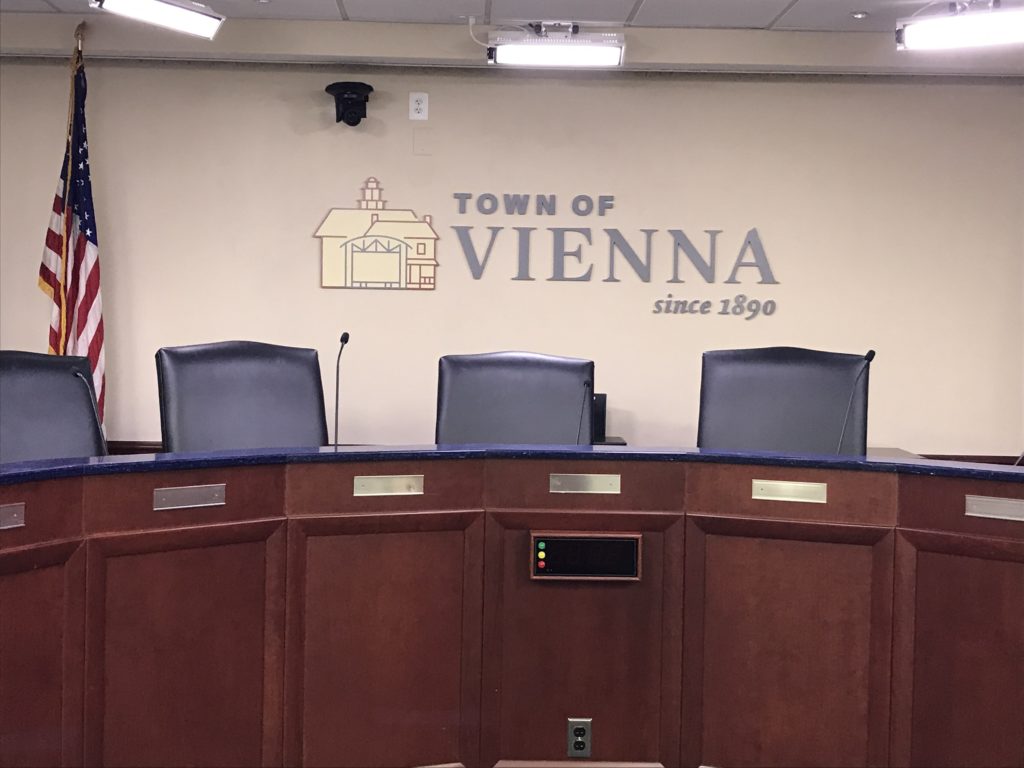
Vienna elected officials will discuss how to use the town’s federal COVID-19 relief funds at a meeting next month, though the town council is leaning away from using the money to give essential workers extra pay, Director of Finance Marion Serfass said on Monday (Aug. 30).
The Town of Vienna formally received $8.5 million on July 12 — half of its $17.1 million allotment from the American Relief Plan Act, which is providing the money to help local and state governments respond to the pandemic.
“Any funds that are not expended or that will not be expended on necessary expenditures incurred by December 31, 2024, by the locality…must be returned to the federal government,” Virginia Secretary of Finance Joe Flores noted in a June 9 letter to recipients.
At a public hearing on Monday (Aug. 30), Serfass detailed the limits on how the town can use the money, noting that it can’t independently offer certain services that are provided by the county, such as schools and libraries.
The U.S. Treasury permits localities to spend ARPA funds on four categories, as summarized by the town:
- Category A: Response to the public health emergency and negative impacts of the pandemic, including capital improvements to adapt buildings and maintenance of park space for deferred upkeep and extra use during quarantine periods
- Category B: Premium pay to essential workers and grants to employers of essential workers; the only eligible workers in the town would be sanitation and public safety
- Category C: Provide government services related to revenue reduction from the pandemic
- Category D: Necessary capital investments in water, sewer, or broadband infrastructure, which has been interpreted to involve stormwater
Serfass said that the town so far has informally elected not to allocate funds to category B but added that the issue could be discussed further.
According to Serfass, the government services category has been interpreted to mean any services that the town provides, which could include cybersecurity improvements, for example. She also said a preliminary calculation suggests the town won’t be allowed to spend more than $2.6 million in this area based on federal restrictions.
The public hearing on Monday drew only one speaker, Bob McCahill, who represented the civic group North East Vienna Citizens Association.
McCahill said his group recommends that the town devote money for water and sewer infrastructure to free up capital money for purchases of equipment that could be used to collect and remove leaves in the fall.
“The idea is that the purchased capital equipment would be much more efficient than the current method,” he said.
The NEVCA has advocated for changes to a town-owned property along Beulah Road that is currently used to store leaves and process them into mulch. The group says those operations disturb residents, and the space should be restored back to a park.
McCahill also said the association wants the town to use the federal money to mitigate parking issues.
The town council will deliberate on how to spend the money in a conference session scheduled for 7:30 p.m. on Sept. 20 at Vienna Town Hall.
The public hearing is closed, and there won’t be public comment at the September meeting, but residents are always encouraged to share their thoughts with the mayor and council, town spokesperson Karen Thayer said in an email yesterday (Tuesday).
Residents can email Town Clerk Melanie Clark at [email protected], call her at 703-255-6304, drop off correspondence at the town hall, or contact elected officials directly.