
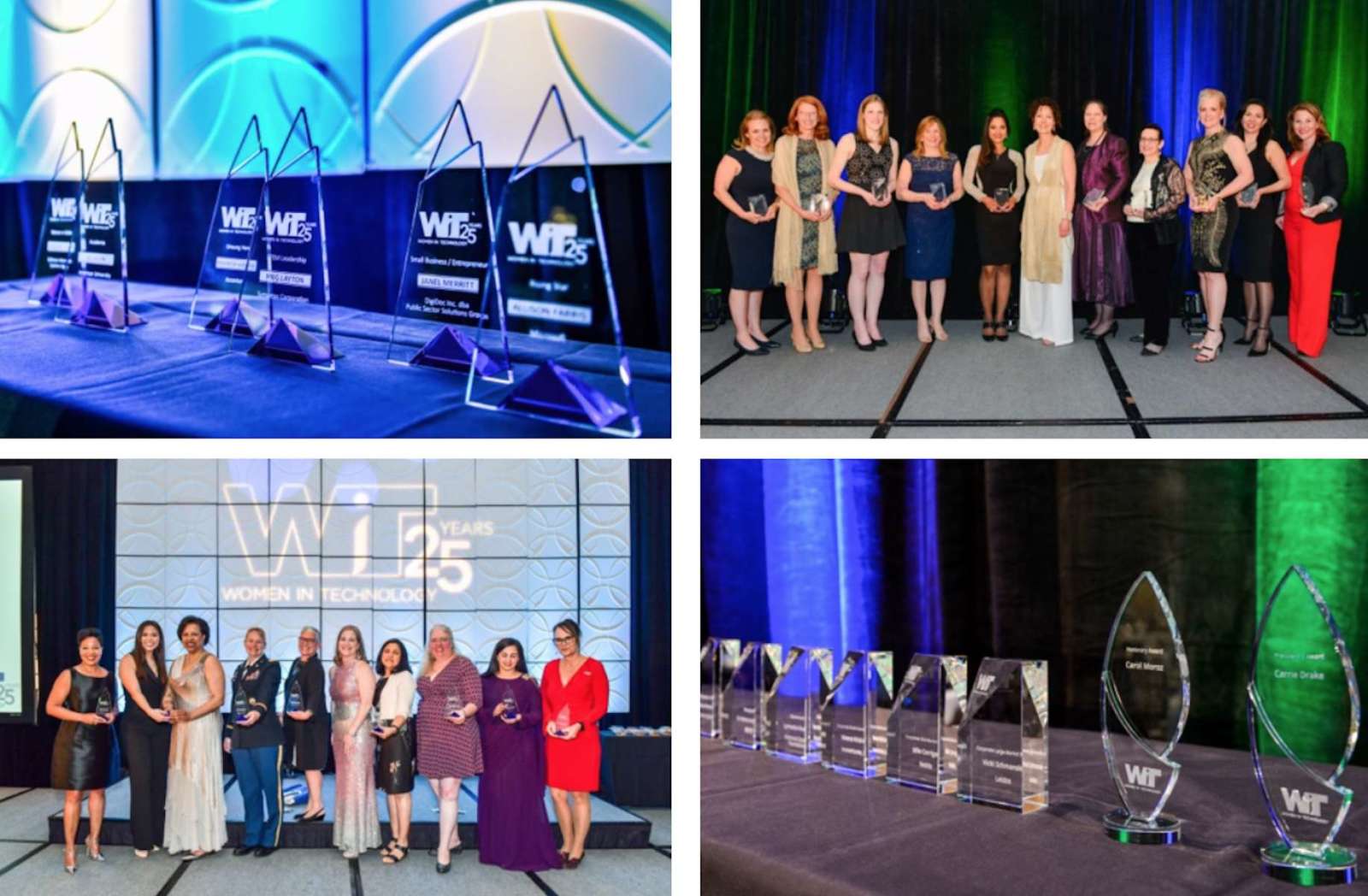
A group headquartered in Falls Church aims to get women “from the classroom to the board room” by offering developmental resources and networking opportunities.
With more than 1,000 members, the Women in Technology group (200 Little Falls Street) operates around the D.C. area and works with a large variety of age groups — including young girls and women at the height of their careers, according to its website.
“Our scope is to really network and support the advancement of women and girls in this specific area to enter STEM fields,” recently elected Board Member Cristine Gollayan said. “It’s for girls and women at any stage of their life.”
Gollayan’s own story with the group began around 2013 when she said she attended an event and eventually worked her way up the group’s leadership ladder.
Since then, she also served on the job fair committee board and was eventually elected into the WIT’s Board of Directors in 2018.
Gollayan currently works in Herndon as a senior manager for Sony’s Global Information Security team and said events hosted by WIT take place throughout the area, including Tysons — a central location for many of the organization’s volunteers.
WIT has several representatives, who happen to be women of color, on both its board of directors and the executive committee. But, the group doesn’t offer specific programs targeting women of color or transgender women.
Gollayan also said anyone who identifies as a woman is more than welcome to join.
“Anything we promote, we try to ensure that diversity and inclusion is an important piece,” she said.
Two of Gollayan’s favorite events include the leadership awards ceremony and STEM for Her Gala, which Gollayan also said she helps to plan, because the women at both of the events are “so poised and ready to rock and rule the world,” she said.
Other events run by the group include two seasonal job fairs a year, the Leadership Foundry and Girls in Technology. A full list of offerings can be found online.
For example, the Leadership Foundry is a nine-month-long program that teaches women to run board meetings and take on positions of power within their own companies. So far, 20 alumnae from the program have ended up on boards within a corporation, according to Gollayan.
Meanwhile, Girls in Technology is a subgroup within WIT that targets young girls considering careers in STEM.
The CyberPatriot Girls is a program through Girls in Technology that takes 6th-12th-grade girls and challenges them to participate in a “fast-paced and high-pressure” simulation that resembles a mock cyber-attack, according to Gollayan. It is hosted in partnership with the Air Force and the University of Maryland. In the activity, girls form teams and are expected to “protect national infrastructure” while learning technical skills, she said.
For people interested in the group, the next upcoming event, WIT.Connect, is coming up.
On Feb. 20 from 6 to 8:30 p.m., people will gather at Valo Park (7950 Jones Branch Drive) to network and learn about upcoming technological trends in healthcare. Attendees will have the chance to hear from speakers and WIT members.
Registration is $45 for WIT members or $55 for non-members.
Photo courtesy Cristine Gollayan
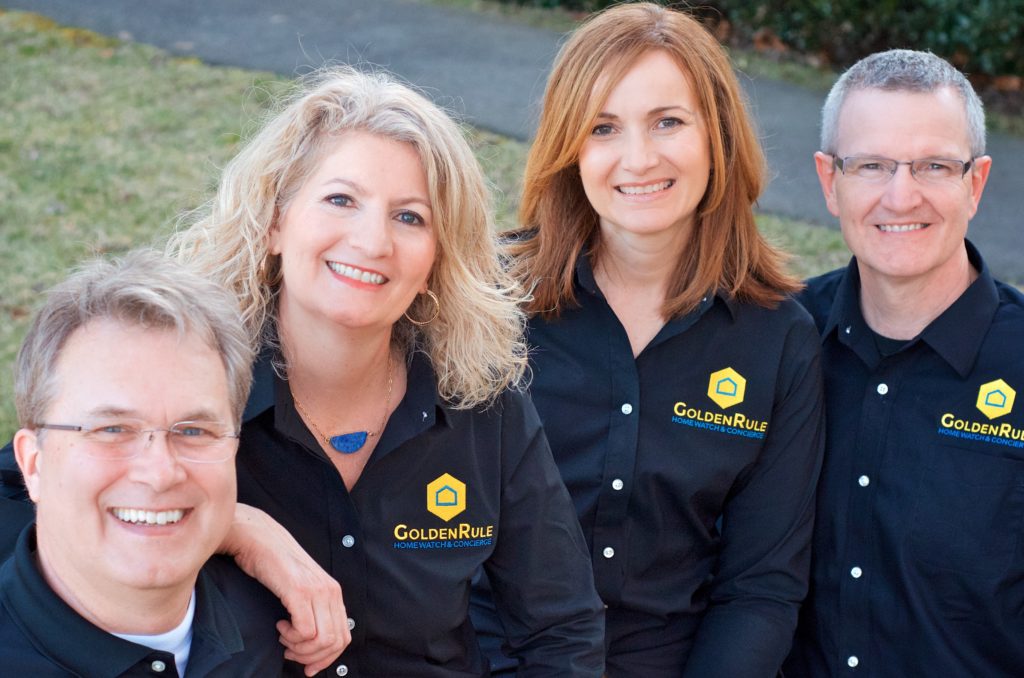
(Updated 12/13/19) Golden Rule, a housesitting service, began in 2018 and expanded to serve clientele in the Northern Virginia area, with a focus around McLean.
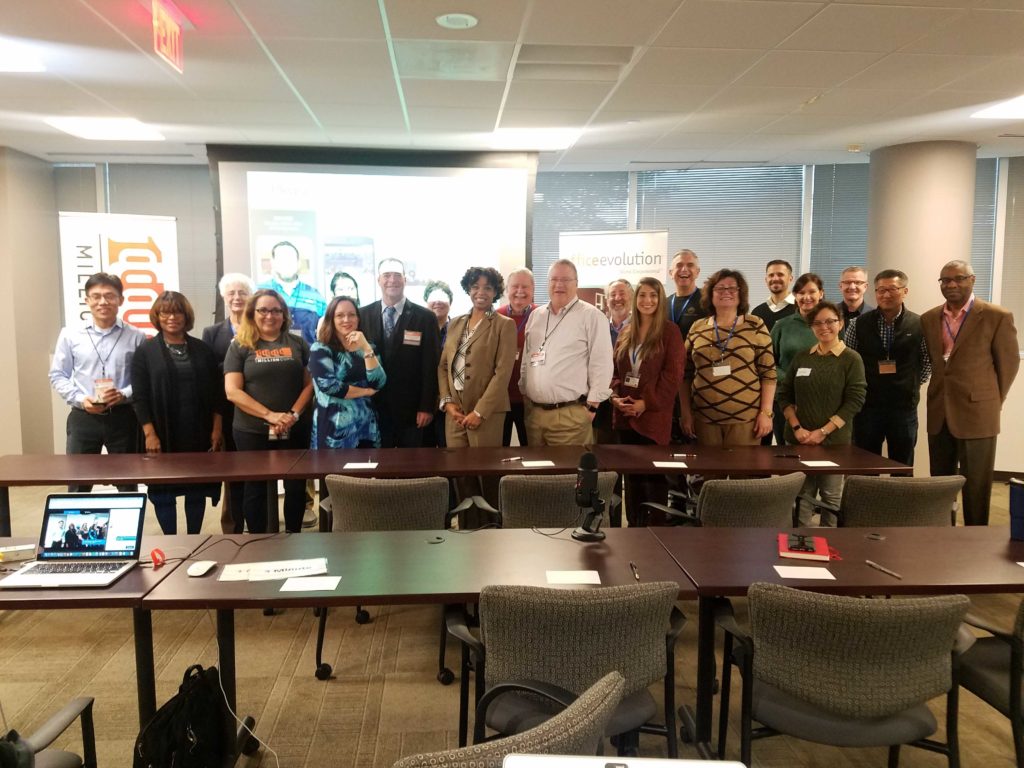
Today (Dec. 11), company founder Dan Lender stood in front of fellow entrepreneurs at the 1 Million Cups Fairfax event in Tysons and pitched his company to the room, seeking advice and recommendations on how to better serve his existing clients.
Currently, the company helps around 20 clients to watch their homes, property and occasionally apartments while they are gone for extended periods of time.
Feedback from the event included ways to target his ideal market and focus efforts on specific services.
The clients of Golden Rule consist primarily of people over 50 who spend several months out of the year away from their homes because of vacation or work, Lender said.
Golden Rule staff offer different services for almost every client in order to meet the individual needs, Lender told Tysons Reporter.
The group specializes in services that accompany security measures from larger companies like ADT. Instead of just monitoring the property, Golden Rule will send someone in-person to survey the property, take pictures of things that seem a miss and take care of various tasks.
“A Golden Rule Team Member will visit your home in Northern Virginia regularly to perform a comprehensive, top to bottom, interior and exterior check,” according to the company’s website. “At the conclusion of each check, you will receive a customized, time date and geo-location stamped electronic report with photos and details.”
After each visit from a Golden Rule representative, the company will send an email to the owner with updates.
“You still need eyes and ears on the street,” Lender said, adding that though ADT will call the police, they won’t send someone in person to take care of the property. Unlike other services, Lender said that Golden Rule employees do not stay and live at the house they watch.
The company’s name was inspired by the philosophy of the Golden Rule: “treat others like you’d want to be treated.”
Lender told Tysons Reporter that the company channels this philosophy into their work and treat every client’s home or property like it is their own.
In an attempt to cater to the individual needs of customers, Golden Rule even transported a car for a client and took care of a greenhouse.
When it comes to pricing for the service, it depends completely on what is requested by the client. Though they have basic price points for hourly service and a basic set up fe.
“A lot of our customers recognize the value and they don’t even ask price,” Lender said.
Going forward, Lender told said that although they want to expand, they also don’t want to scale too quickly and jeopardize the quality of the company’s services.
“We don’t cut any corners,” he said.
Photo courtesy Dan Lender
Almost every Wednesday morning, dozens of entrepreneurs and tech gurus gather to network and share their ideas at an office in Tysons.
1 Million Cups Fairfax is part of a 160-chapter initiative that invites upcoming entrepreneurs from around the country to pitch their venture and receive feedback from other local stakeholders and innovators.
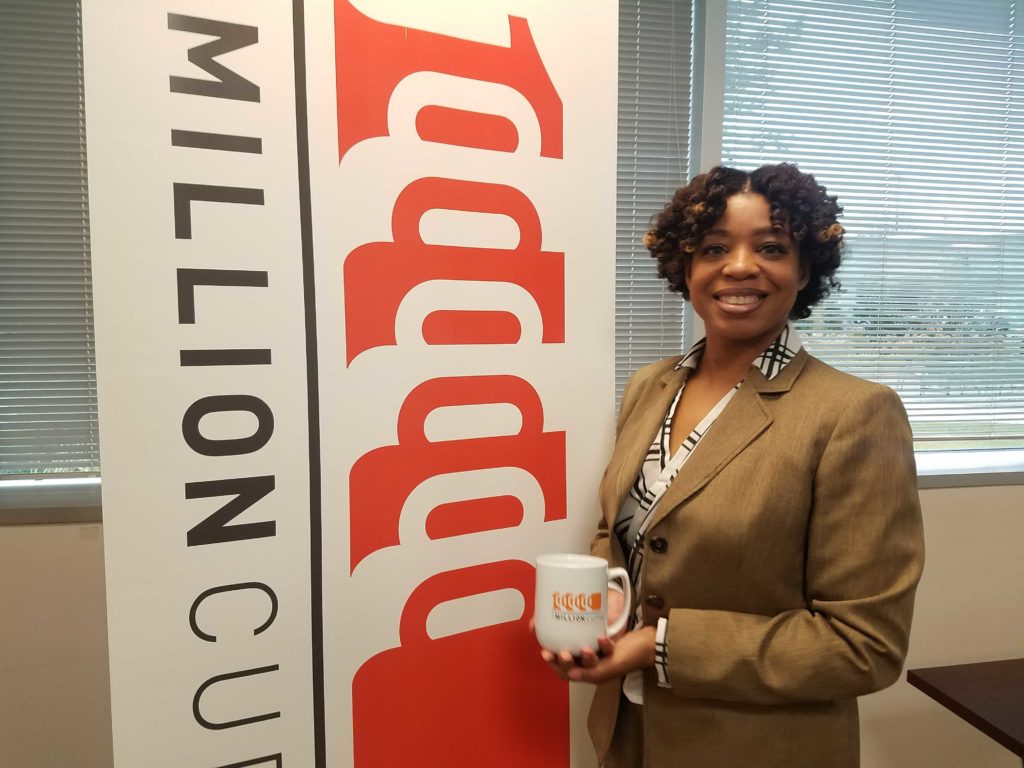
On Nov. 20, Tysons Reporter attended the weekly event and listened to Malaika Simmons of Momentology Media pitch her brand.
Following Simmon’s pitch, which focused on her plans to help women and kids though life coaching and development of a personal brand, attendees offered to connect her with other people in the field, gave advice and asked questions about her mission.
One person said that her model might be good for couples working through difficult times, while another suggested she should consider partnerships with corporate companies.
“My number one goal is to get corporate sponsors,” Simmons said, adding that she has already worked with the federal government and Fortune 500 companies in the past.
Simmons said that corporate sponsors are the best way to scale her business, but her true passion is working with women and children.
Event organizers told Tysons Reporter that feedback like this is typical and people can feel free to be honest with one another.
1 Million Cups began under the Kauffman Foundation, which aims to help businesses owners from disadvantaged backgrounds reach their potential, according to the website.
1 Million Cups Fairfax, which is Tysons’s local chapter, began about a year and a half ago on Valentine’s Day 2018, John Yu, a spokesperson for Office Evolution, said. Yu said that the program has become increasing in popularity, with presentation spots filling up quickly.
To ensure that the presentations will be productive for everyone, organizers ensure that each entrepreneur has a sense of direction and a business model.
“We very rarely turn anyone away,” Yu said. “We just postpone.”
Anyone is welcome to listen and join in the group discussion.
Several attendees said there is typically a dynamic turnout for these events. Tysons Reporter met a variety of people, including several “serial entrepreneurs,” representatives from the Fairfax County Economic Development Authority and one man who simply wanted to know more about local business.
The weekly event is held at Office Evolution (609 Westwood Center Drive) from 8:30-10 a.m. and the next session will take place after Thanksgiving, on Wednesday, Dec. 4.
“We try to give a voice to startups around the area,” Yu said.
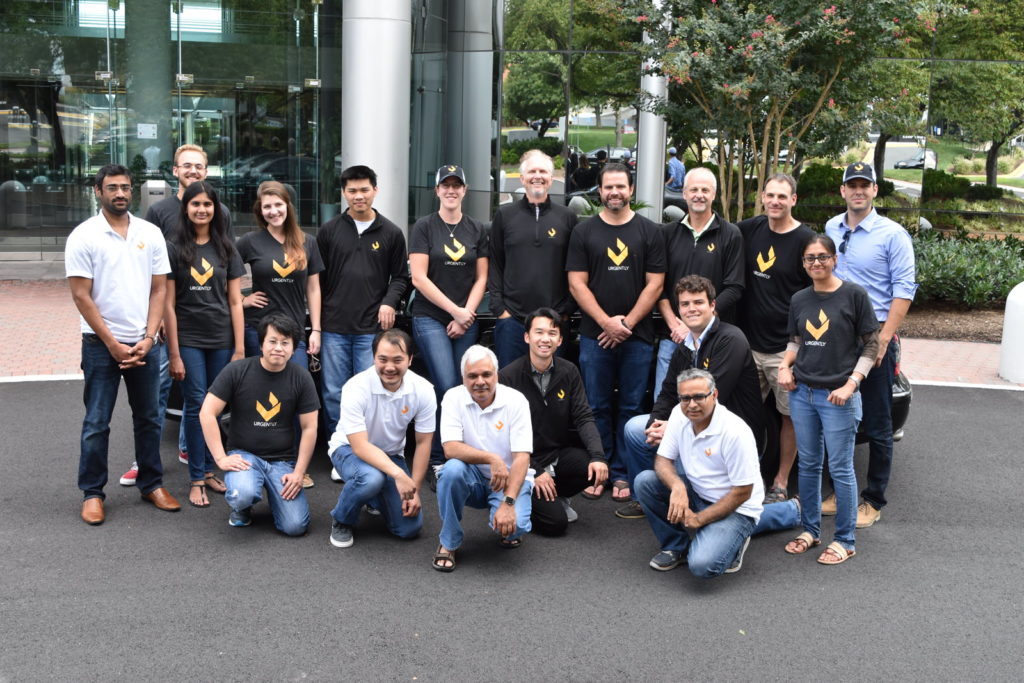
Tysons company Urgent.ly has scored a high spot on Deloitte’s new list highlighting the fastest-growing tech companies in North America this year.
The roadside assistance company nabbed the #6 spot on the “2019 Technology Fast 500 Ranking.”
Earlier this year, the company gained national attention for its partnerships with Uber, Volvo and Amazon.
In total, five Tysons-based companies made the list.
The other Tysons companies on the list are:
- #59: Ridgeline International Communications
- #184: Binary Fountain Software
- #333: GTT Communications, Inc.
- #411: KLDiscovery Software
The list “provides a ranking of the fastest-growing technology, media, telecommunications, life sciences, and energy tech companies — both public and private — in North America,” according to Deloitte.
The companies on the list were chosen based on percentage fiscal year revenue growth from 2015 to 2018.
Image courtesy Urgent.ly

A Tysons tech company wants to boost fundraising, sales and marketing efficiency for both non-profits and businesses by using artificial intelligence.
BoodleAI (1751 Pinnacle Drive), which eventually branched out to also create guidonAI, began as a small startup roughly three years ago and managed to expand its client base to include around 30 non-profit groups and businesses once product development was complete.
BoodleAI works with non-profits to expand their donor bases, while guidonAI exclusively works with businesses to boost marketing strategies and sales, France Hoang, the chief strategy officer and co-founder, told Tysons Reporter.
Both companies offer predictive analytics to help organizations by taking the clients’ pre-existing data and cross-referencing it with more than 500 other data points on each person, using only names and email. All of the data sets are then analyzed by AI to come up with a predictive model that will be tested for power and reliability, according to the company’s website.
Hoang began the company because he felt that non-profits are an “underserved market.”
“I know the pain non-profits go through trying to raise funds for their mission,” Hoang said.
The company names were inspired by Hoang’s time at the United States Military Academy at West Point, where he graduated before serving time as Special Forces in Afghanistan, moved onto law school at Georgetown University and eventually become an entrepreneur.
Everything had its place at the academy, he said, adding that all of the cadets were expected to keep things extremely organized.
“The one exception to that is that you are allowed one exception of cookies, candy and things sent to you by your friends and family back home,” he said, adding that things come in a box and the contents are referred to as “boodle.”
GuidonAI was inspired by the flag that represents a unit. “If you want to know where to go, you look towards the guideon,” Hoang said.
The company offers decreased pricing options for non-profits but the cost will ultimately depend on variables including the size of the organization, the amount of help they need and the size of the problem, Hoang said.
“We would like to be the prime, dominant builder of people-focused, predictive applications,” Hoang said after being asked where he wants to see the company in five years.
Unlike competitors, boodleAI focuses on the fit of a person’s needs rather than on their online behavior, Hoang said, adding that their algorithms can pick out the target market four out of five times.
Hoang said that he loves connecting the world with issues they care about through outreach and the company’s work with non-profits.
“I’m passionate about solving problems in new ways. It’s in my blood.”
Photo via BoodleAI

(Updated 10/25/19) The City of Falls Church is a 10-minute drive from rapidly expanding Tysons, but members of the Falls Church City Council want to maintain the feeling of a small community while still capitalizing on innovation and growth.
The City of Falls Church operates as an independent entity under the Falls Church City Council while Tysons still has no official governing body of its own, outside that of Fairfax County.
Councilmember Ross Litkenhous said that Falls Church wants to stay unique and its small population and efficient city council allows the city to stay “agile.”
“We are by no means trying to keep up with anybody,” he said.
Tysons Reporter talked to the councilmembers, seeking their input about the future of Falls Church.
“Always Been a Cut-Through”
Several councilmembers said the city is already seeing increased traffic thanks to Tysons’ urban sprawl.
The increase in traffic was brought on by the tolls on I-66 and the increasing popularity of apps like Google Maps, Litkenhous said.
Litkenhous worked in commercial development for 10 years before becoming a councilmember.
Councilmembers were originally told by the Virginia Department of Transportation that the addition of freeways tolls around the area would not impact traffic flow, he said, but people started driving through the city to avoid the tolls.
Now, the city is faced with concerns about pedestrian and bicycle safety that come with more traffic. Litkenhous cited several incidences concerning the safety of residents, especially kids.
There have been a few pedestrian deaths in the last few months in the Falls Church area, which are spurring discussions with officials.
But, Vice Mayor Marybeth Connelly noted that it is important to remember that “Falls Church has always been a cut-through” and a “crossroad” in the Northern Virginia area.
“Mini Tysons”
In August, the city broke ground on a new project that focuses on improving pedestrian access and traffic flow near the upcoming George Mason High School.
The $15 million infrastructure investment will make the area safer and open up accessibility to the future mixed-use retail space, Cindy Mester, the Falls Church Assistant City Manager, said.
The mixed-use retail space is being developed by the same people who built the Wharf in D.C., Mester said, adding there will be a grocery store, a senior living facility, an arts center, restaurants and retail shops in the development.
Mester referred to the upcoming space as Falls Church’s own “Mini Tysons.”
Enticing Techies
When it comes to the evolution within the city’s limits, Litkenhous supports the idea of Falls Church evolving as a tech hub.
“Here in Falls Church, we’ve had a chance to capitalize on the indirect spinoff [of Tysons],” Litkenhous said.
With the new startups and tech companies in Tysons, it allows local high school students to take on fellowships or internships with innovative and entrepreneurial companies, according to Litkenhous, further encouraging students to pursue STEM-related fields.
With the new startups and tech companies in Tysons, it allows local high school students to take on fellowships or internships with innovative and entrepreneurial companies, according to Litkenhous.
Though Litkenhous said he would love to have some of these companies move into Falls Church, he realizes offices are limited and added that a co-working space within city limits would be a solution. “We can’t work in a vacuum here and we recognize that,” he said.
A Stroll in a New Direction
Unlike Tysons through, Litkenhous said Falls Church focuses on small businesses and walkability within city limits. “We’ve got Tysons beat on walkability by a mile.”
Last year, the City Council started the “Live Local Campaign,” sparked by Litkenhous, which encourages people to eat, play and spend money within the city’s limits.
Councilmember Phil Duncan said he keeps tabs on local businesses moving into the city and tries to support them by attending grand openings.
“I think there’s a good mix of big names and more local, family-run businesses,” he said, adding that some businesses that would have previously passed up Falls Church might realize that it is a new market.
“This whole area will become a great American city,” Duncan said.
Coming up in November, the city will host its second “Live Local Campaign” to encourage people to spend money within the community by eating at local restaurants and shopping for holiday gifts from small companies.
Both Litkenhous and Connelly said they want people to follow in their example and take advantage of all the dining and shopping options within the area.
Ultimately, Mester said she thinks the people in Falls Church help to make it special and unique.
“We have a caring and wonderful workforce,” she said.

After a Tysons entrepreneur set out to rethink the soap industry, he ended up attracting the attention of thousands of Kickstarter backers for a new product.
Sud Stud is a cover for a bar soap that supposedly conserves soap and acts as a loofah while also being more hygienic than other products, Dale Lin, the products creator and CEO of Silli.Co, told Tysons Reporter.
Within the first fundraising period on Kickstarter, Lin managed to raise more than $57,000 in 36 days from supporters internationally.
“As an alternative to the notoriously filthy loofahs we all use, Sud Stud’s innovative design uses less soap and creates a frothier lather for a deeper clean while also eliminating bacteria build-up while awaiting its next use,” Lin said.
His product is designed to fit any type of soap bar no matter the shape. Users can simply wet the bar and slip it into the silicone sleeve, according to the website. When it comes to cleaning, users can either microwave it or stick it in boiling water.
He began developing the product about a year ago and launched his funding campaign in June.
Lin said runs the company Silli.Co, under which he created Sud Stud, by himself, with occasional packing assistance from his mom. He works in e-commerce full time and is developing the company on the side.
While he said he named the company Silli.Co because he liked the play on words with “silicon company,” he doesn’t put too much effort into product names. He chose the name “Sud Stud” because it was “straight to the point” and summarizes the product well.
Though this isn’t Lin’s first successful Kickstarter campaign, he was surprised how quickly people picked up on his idea. (In the past, he also ran a Kickstarter for specialized fidget spinners, which are still for sale on Amazon.)
“My goal is to develop fun and unique products that solve problems, big or small,” Lin said.
One of his largest challenges so far has been knock-off products that people are trying to sell online. Kickstarter has a policy where entrepreneurs must put almost exact plans and dimensions for the project, which Lin says puts innovators at a disadvantage.
Now, Lin is preparing to ship the product out to customers in December.
After the initial round of Sud Studs gets sent out, Lin told Tysons Reporter that he wants to expand Silli.Co, along with his product line with silicon pillows and a soap brand.
Image via Sili.Co

A Tysons-based entrepreneur struck a big deal with the founder of KIND Snacks on reality television last week.
Things were looking down financially for TahDah Foods before CEO John Sorial decided to appear on the season 11 premiere of “Shark Tank” on ABC — ultimately making a deal with Daniel Lubetzky, the CEO of KIND Snacks.
TahDah Foods began as a frozen falafel wrap line, which offers customers several flavor varieties. The products are naturally gluten-free since they are made with chickpeas. The company also donates 25% of profits to charity, aiming to help end hunger and inspire social change, according to the website.
The food has been in stores for some time — including Wegman’s, Whole Foods Market, Harris Teeter and MOM’s Organic Market. Recently, the company ran into a supply problem and was losing money because the product wasn’t being produced quickly enough.
Four people were doing the job of 12, he told the sharks. “I would stay up with the staff and was shoveling chickpeas myself.”
Sorial is the son of Egyptian parents, who fled to the U.S. because of political persecution. After working in chemical engineering, he decided to transition to a career he felt was more fulfilling.
“I took authentic foods from the motherland and gave them a fresh new taste and look,” he said, adding that the idea of helping his family and people around the world motivates him to succeed.
After some debate and competition with another shark, Sorial accepted a $500,000 deal in exchange for 25% of the business — not the original $300,000 in exchange for the 10% of the business, that he was seeking originally.
“Your story resonates a lot with me,” Lubetzky said, adding that he thought Sorial’s original goal wouldn’t be enough to get him out of the financial hole.
Photo via Facebook
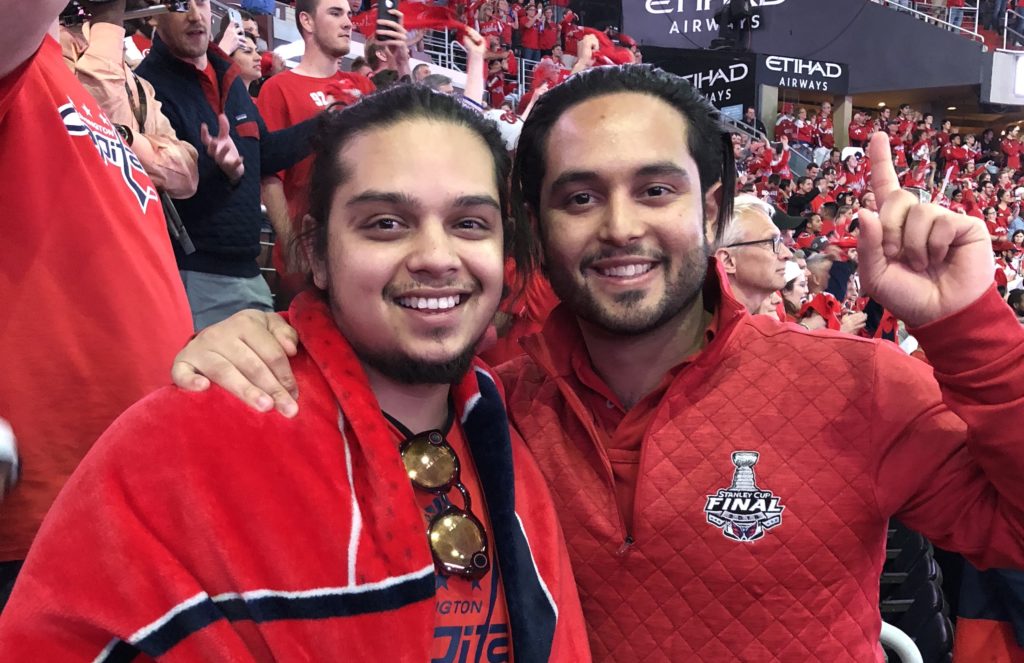
Two Vienna residents looking to simplify the way people buy and sell event tickets decided to start their own company.
Newly created TicketFam is an online platform that controls ticket distribution for events. Though still in the early startup phase of the company, co-founders and friends Ashik Banjade and Arian Shahbazi said that their main goal is to disrupt how people buy and sell tickets now.
The James Madison University graduates met while in college a few years back and launched their company eight months ago. Though they both have full-time jobs as IT consultants, they said they work on their company during their spare time.
“We’ll work with anyone — vendors, artists or stadiums,” Banjade told Tysons Reporter, adding that users can register on the platform and create an event page.
The platform functions by working with event organizers to create a seating or ticketing arrangement, promote events and special offers, analyze the target audience for the event for marketing purposes and allow attendees to purchase tickets from sellers, according to the company’s website.
Currently, the co-founders work with a production company run by Shahbazi’s family called Arian Productions.
On TicketFam’s website, tickets are only available for the upcoming act 25Band, which the production company booked. But the founders said they will be adding more ticket opportunities this week, including an event on Halloween.
Event attendees will be given a QR code upon checkout, the co-founders said.
“All of our payment processes are managed via Payment Card Industry-certified third parties, ensuring the checkout process is secure and regulated,” Banjade said. In the future, the co-founders also want to accept cryptocurrency, PayPal and other forms of payment for tickets.
Soon, TicketFam will unveil a new user interface and features, including a rewards system and game, which Banjade and Shahbazi declined to provide more details on.
Within the next five years, the young entrepreneurs said they hope to catch the attention of competitors and maneuver into a position of power to challenge the status quo and become a main player in the ticket sales industry.
When it comes to costs for artists and event organizers, they do not have a set cost, Banjade said. Instead, they are competitive and will match the price of any competitor until they establish themselves in the ticket sales industry.
“As young entrepreneurs, you’ve just gotta keep trying,” Banjade said.
Photo courtesy TicketFam

(Updated 9/19/19) A company in the City of Falls Church is rethinking cell phone service to eradicate dead zones across the globe.
Lynk is a new startup in the process of launching satellites that will allow cell phone users to send and receive SMS texts anywhere in the world within 55 degrees north or south of the equator.
Though they aren’t operational just yet, they want to show partners that their technology is beyond that of science fiction, said CEO and Co-founder Charles Miller.
By working with cell phone companies, Lynk will be able to provide secondary service from satellites when it isn’t available from normal towers, Miller said.
The idea for the startup came from Co-founder and Cheif Operating Officer Margo Deckard during her time in Africa easing the impact of Ebola through data and satellite information, Miller said.
Deckard noticed people had a hard time communicating with one another using technology because wi-fi and cell tower service were not available and wondered if satellites could be a solution.
When the team first proposed the project there were lots of naysayers, Miller said. But given his background as a senior adviser for NASA, he was confident in the capabilities of satellites and his team.
“Basically people thought it was impossible and assumed it couldn’t be done because it defied conventional wisdom,” Miller said.
Miller said getting funding was one of the largest roadblocks he faced, adding that the company needed investors to fund prototypes and test-runs. After three rounds of funding, the company finally received in June the $12 million they needed to begin test runs.
Lynk will launch all of their satellites via a rocket to the International Space Station (ISS) and then from ISS into space.
Now, the company has 33 partners, including call phone carrier companies Telefonica Argentina and Vodafone Hutchison Australia, who are monitoring Lynk’s growth.
The company recently decided to rebrand from Ubiquitilink Inc. for clarity and ease of name recognition. Miller said that it was hard to spell and it didn’t translate well into other languages.
Lots of investors have been suggesting they move their headquarters to Silicon Valley, but Miller said he considers Northern Virginia to be his home as well as a hotbed for innovation.
Looking forward to the future, Miller said the company will focus first on establishing reliable text messages before they establish bandwidth for phone calls or data streaming services. He said 3,000-5,000 text messages can be sent with the same bandwidth that it takes to support one five-minute phone call.
“We would rather service 3,000 to 5,000 people than lock up that one channel,” he said.
Once they manage to raise capital through private companies, they will expand to assist the Federal Emergency Management Agency, U.S. Department of Homeland Security and the Coast Guard, Miller said.
To meet their upcoming goals, Miller said they are looking to recruit one more investor by the end of the year.
The company is currently looking to hire eight different positions, including a vice president of business development and a telecommunications software engineer.
Image via Lynk.world