
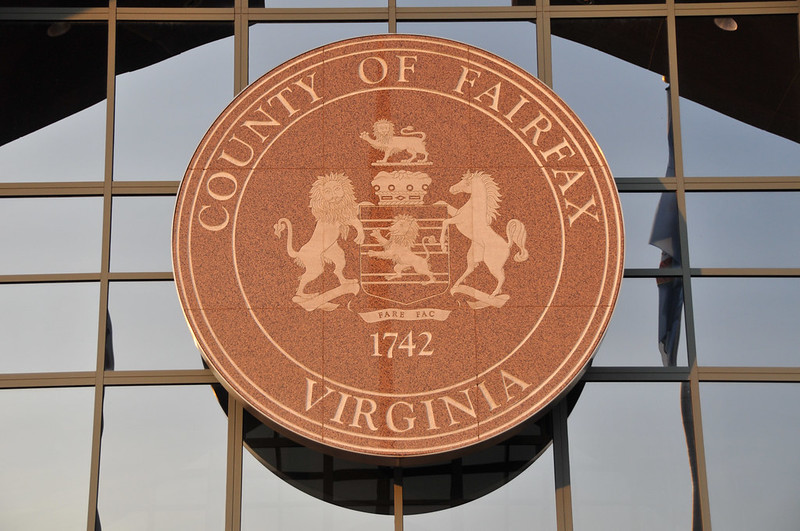
(Updated at 12:25 p.m.) The Fairfax County Government Center, where county policy is created and official functions take place, is an imposing, modern-looking building. Above the main doors is the county seal: a royal-looking crest with lions, a horse, and the date “1742.”
Unlike the building, the seal is of a different time. Adopted seven decades ago, it bears a version of the coat of arms belonging to Thomas Fairfax, the sixth Lord Fairfax and a slaveholding British loyalist who once owned much of the land that makes up Fairfax County today.
As neighboring counties and cities reexamine their logos and symbols, it seems like only a matter of time before Fairfax County faces its own questions.
When asked if there’s been discussion about further research into the county logo, representatives of the Fairfax County History Commission said it’s not on the agenda or a priority right now. The commission is currently undertaking an inventory of local African American history after completing one about Confederate names on public places.
Fairfax County Board of Supervisors Chairman Jeff McKay says, unlike with the use of Confederate names and symbols, officials have not heard any objections to the county seal from the community:
America was unfortunately built in part through the oppression of people of color. We cannot separate this history from Fairfax County, but we can listen to the community on what symbols are continuing to create divisiveness and inequity. Symbols of the Confederacy, for example, do not speak to the County’s values today, so we are working to remove these through the proper processes. Currently, there are ongoing efforts to change road names as well as other Confederate symbols and the Board previously took action to remove the monument of John Quincy Marr from the courthouse. We have not heard from our community members that these same messages are felt from the County seal. We continue to invest significant resources into our historically underserved communities to ensure that everyone has the opportunity to thrive in Fairfax County.
The county selected the seal as its logo in 1949 ahead of an impending visit from the then-Lord Fairfax. It won over a dozen other seals belonging to the Fairfax family due to “its clarity when reproduced,” according to historical documents from Fairfax County Public Library’s Virginia Room.
A county flag with the seal was unveiled on June 13, 1968, the day before Flag Day, in response to repeated requests for a flag from county schools.
“We probably ought to have a Betsy Ross here to get the flag ready for Flag Day,” said Gil Shaw, the flag’s creator and the county’s director of information services at the time. “But the coat of arms of Thomas Lord Fairfax will soon fly over the lands he once owned and which became Fairfax County in 1742.”
Early colonial Virginia land history is admittingly a bit confusing due to the limited availability of written records and a lack of variety in names.
“The famous one, for our purposes, was the sixth Lord Fairfax,” explains Steve Harris-Scott, an assistant professor in George Mason University’s history department and an expert on colonial Virginia history.
“The nobles generally passed on their names to their first-born son, so when they took over the title, they were all the same names,” he said. “There was a Thomas Fairfax, first Lord Fairfax, then there was Thomas Fairfax, the second Lord Fairfax, etcetera.”
The sixth Lord Fairfax was born in England in 1693 to the fifth Lord Fairfax and Catherine Culpepper.
Through his mother’s side, he inherited about 5 million acres of land in 1710 known as the “Northern Neck,” which encompassed today’s Fairfax County. Taken from the indigenous people who had lived there for centuries, the land was a gift to Catherine’s father, Thomas Culpepper, from the restored King Charles II for his support during the English Civil War.
“[This land] is essentially bordered by the Rappahannock [River] on the south and the Potomac on the north,” Harris-Scott said.
However, Fairfax spent most of his life in England and didn’t move to Virginia until 1742, the date on the county’s logo. He also may never have resided in what is now Fairfax County, according to Harris-Scott. Read More

Arts organizations, museums, and hotels are some of the key targets for Fairfax County’s new initiative to get money to those in need, and informational sessions are providing help.
Approved by the county board last week, the PIVOT program will provide financial grants to small businesses as well as other recipients, and webinars about the effort will begin at 1 p.m. tomorrow (Tuesday) in English and at 2 p.m. Thursday (June 17) in Spanish.
Links to the webinars can be found on the Fairfax County Department of Economic Initiatives website.
“Fairfax County is committed to helping businesses recover from the effects of the pandemic,” Board of Supervisor Chairman Jeff McKay said in a news release. “Through the PIVOT grant we will help those businesses who saw the greatest financial impact regain their momentum so they will be able to thrive in the reopening marketplace.”
Federal funding through the American Rescue Plan Act is supporting the program with $25 million to the county.
Applications can be submitted online through a grant portal that will be open from June 23 to July 9. The money is being administered through the nonprofit Latino Economic Development Center, said Rebecca Moudry, director of Fairfax County Department of Economic Initiatives.
The areas targeted will give relief to food services, lodging, retail, services, amusements, arts organizations, museums, and historical sites.
Potential monetary awards for individual businesses and nonprofits include the following:
- $18,000 for restaurants with less than $3.5 million in annual receipts or gross revenue per establishment
- $12,000 for retail, services, and amusements with less than $3.5 million in annual receipts or gross revenue per establishment
- $10,000 for large arts organizations, museums, and historical sites with annual receipts or gross revenue greater than $100,000
- $5,000 for smaller arts organizations
- $1,500 for food trucks that don’t belong to a restaurant
- $400 per room to hotels with a minimum of 10 rooms
The money will go to businesses that have no more than 500 employees, among other criteria. Nonprofits don’t have an eligibility restriction regarding the number of workers they have.
“Fairfax County’s PIVOT grants will target grant money to the arts who experienced a 98% program cancellation and venue closures during the pandemic,” ArtsFairfax President and CEO Linda Sullivan said in an email, adding that despite the economic losses, arts pivoted to online offerings to keep the community engaged. “We hope to see the arts come back strong.”
The new outreach comes after the county ended its Fairfax Relief Initiative to Support Employers (RISE) program last year, distributing around $53 million, one of several financial outreaches by the county.
The PIVOT grants will go to hotels first, then to other organizations if demand is too great. The county could also add to the funding in the future.
Photo via Clay Banks on Unsplash
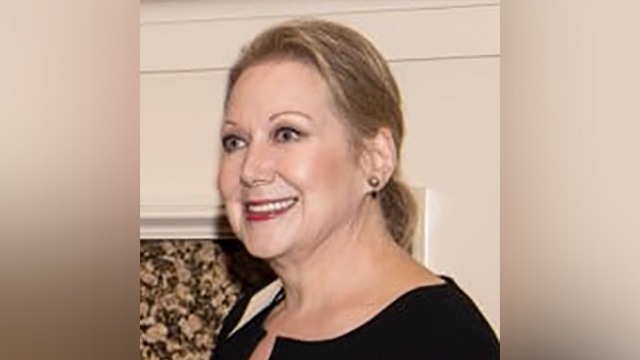
True to her past as a former presidential staffer and Pentagon assistant, Sondra Seba Hemenway stayed up until 3 a.m. tweaking a TV script for a Fairfax County leader the night before a filming for Women’s History Month.
Hemenway was helping out as part of the Fairfax County Commission for Women, which acts as an advocacy unit, even as she missed some meetings due to cancer treatments after melanoma developed in her eye. All the while, though, her cancer was worsening.
Hemenway died Saturday (June 5) at her home in McLean, according to her obituary. She was 67.
“She fought for her life the way she fights for women and girls in marginalized communities,” said Lisa Sales, chair of the county women’s commission, who recalled Hemenway staying up late to help her with the Channel 16 TV program.
Hemenway had served at one point as vice chair of the commission with Sales, but when that title was removed, she still maintained her key involvement.
Her attention to detail and research resonated with Sales, who recalls regularly receiving a supportive hug or hand on the shoulder from Hemenway.
A sunny, sparkling woman from Hot Springs, Arkansas, who spoke with a Southern drawl, Hemenway served the White House Office for Women’s Initiatives & Outreach, Department of Defense, and White House Office of Presidential Personnel in the Clinton-Gore administration.
“She was a real connector,” said Audrey Sheppard, who worked in the Department of Defense’s Office of the Secretary, noting that Hemenway’s mother and former President Bill Clinton’s mother were best friends in Arkansas. “What would pop into her brain — ‘Oh, you have a problem? Here’s a person who can help solve that problem or here’s a person who would want to know about this issue or challenge.'”
Sheppard remembers first meeting Hemenway, who had been selected to be her special assistant in the early ’90s under Secretary of Defense Les Aspin.
“She appeared one day in the Pentagon. I had never heard of her, I had never met her, and she just radiated her Southern charm and had this — an enormous can-do way about her,” Sheppard said, describing her as charmingly persistent. “And she made things happen.”
When Aspin resigned and several people found their jobs in jeopardy, Hemenway threw her support behind her former supervisor to help Sheppard get a position tied to the White House. In following years, she would repeatedly introduce Sheppard to people as her old boss — even when Sheppard sought to change that.
“She was just very generous, and that was part of her generosity,” Sheppard said. “She wasn’t transactional…It just came very much from her heart.”
During Hemenway’s illness, Sales would send flowers, likening her to a sister and mother that she never had. But in the same fashion as her mentor, Sales went above and beyond, tracking down a flower shop in Alexandria that would deliver flowers to McLean. She usually ordered them in the colors of the suffrage movement: purple, white, and gold.
“She’s so special, I wanted something special for her anytime I ordered something for her,” Sales told Tysons Reporter, at times crying while recalling the memory of her friend.
After the TV show, Hemenway had a 4-foot-tall gift of flowers sent to Sales’s home.
She’s survived by her husband, father, brother Brian Seba of Las Vegas, and other family members.
Hemenway was also a board member of the Fairfax County Convention & Visitors Corporation and the Sewell-Belmont House and Museum — a women’s history landmark now known as the Belmont-Paul Women’s Equality National Monument — on Capitol Hill.
When there were needs, she responded not just with ideas, but with research, networking, fundraising, and more.
“She was always the first to write a check,” Sales said.
When Hemenway met Kari Galloway, the executive director of the Alexandria-based Friends of Guest House, which helps women get back into society after jail, Hemenway continued to keep in touch, sending her articles even if it just meant contacting with her a few times a year, Galloway said.
“She was always interested in how to support people,” Galloway said. “It’s nice to know someone was always thinking about you.”
Photo courtesy Lisa Sales
As the spread of COVID-19 abates, Fairfax County is exploring a variety of ways to help local businesses recover from the pandemic’s economic impacts.
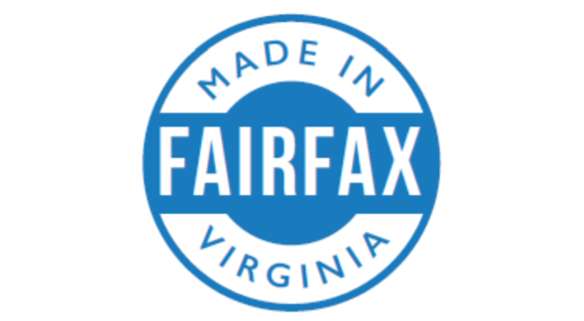
In addition to creating a new grant program that will provide financial relief to small businesses and nonprofits, the Board of Supervisors voted today (Tuesday) to license and pursue a trademark for a new “Made in Fairfax” logo that businesses could use to indicate that their products were made in the county.
The board’s vote gives the Fairfax County Department of Planning and Development authority to execute licensing agreements that would let local businesses include the logo in their marketing. The county will also apply for a trademark registration from the Commonwealth of Virginia, which would enable the county to protect its brand.
Officials say the logo will be a useful promotional tool not just for the businesses that use it, but also for the county as it seeks to build a vibrant local economy.
“This is an innovative approach,” Lee District Supervisor Rodney Lusk said. “This is how we differentiate ourselves. This is how we make Fairfax County a leader in new areas as well.”
The Made in Fairfax program launched in June 2018, growing out of a Small-Scale Production Initiative that the county started to identify ways to better support and bring visibility to local manufacturers and entrepreneurs.
Initially, the program focused on revising Fairfax County’s comprehensive plan and zoning code to make them friendlier to what the county calls “maker” businesses — manufacturers that work on a small scale to produce anything from food and beer to clothing and furniture.
Drafted during the early stages of the Zoning Ordinance Modernization Project but as a separate effort, the new zoning rules permit production businesses in most commercial zones within the county, instead of restricting them to industrial areas, according to Doug Loescher, the program manager for Fairfax County’s Community Revitalization Office.
“We recognized that we probably had small-scale production businesses in Fairfax County, but they were not very visible,” he said. “…Our hope was that, by being in commercial shopping centers and retail areas, they can be more visible, and we can support them better.”
The county also created a Made in Fairfax network and directory that now consist of more than 125 businesses. About half of them provide food products, but there are also woodworking shops, candle makers, and even a blacksmith.
While Loescher says his office hopes to also work with larger Fairfax County-based businesses, Made in Fairfax primarily concentrates on small businesses that are more isolated and lack their own marketing resources. Most participants are working solo or have fewer than 10 employees.
The county developed the new logo with the help of a committee of maker businesses as part of a larger branding effort to promote the Made in Fairfax Network.
For the most part, the only criterion for businesses to be eligible to license the logo will be that they need to have a production facility located in Fairfax County. The county also reviews makers that register for the network to ensure “there’s no problems with what they’re producing, that it’s not illegal or improper in some way,” Loescher says.
Though the Made in Fairfax program was established prior to the pandemic, Loescher says the past year has illustrated why it’s necessary for the county.
“There’s a recognition by people about how important it is to actively support small, independent, local business enterprise, and this is just another way of doing it,” Loescher said. “It’s a fairly small program, but I think symbolically, we hope it communicates to the business sector and to the community that we value these businesses and that we want to support them.”
Photo courtesy Fairfax County

Fairfax County is developing a new grant program intended to help small businesses and nonprofits recover from the COVID-19 pandemic, but in a change from previous relief efforts, this program will first award money to hotels before determining recipients in other industries by lottery.
If it’s approved by the Fairfax County Board of Supervisors today (Tuesday) as scheduled, the proposed PIVOT Business Recovery Grant program will be supported by $25 million in federal funds from the American Rescue Plan Act passed by Congress in March.
“The estimated 48,200 jobs lost in Fairfax County through December 2020 were heavily concentrated in the food service, hospitality and retail sectors,” county staff said in the agenda for today’s meeting, which starts at noon.
Staff added that approximately 50% of job losses in the county in 2020 were lodging, food services, retail, arts, entertainment, and other services.
But why hotels should get first dibs on the new money over restaurants and other affected businesses remains unclear. A county spokesperson says it’s a draft and subject to change.
The background provided in the agenda item does note that Northern Virginia’s lodging industry has been struggling in comparison to the rest of the state:
According to the global hospitality data firm STR, Virginia lodging businesses experienced a 2020 monthly average 50.5 percent decrease compared to 2019 — totaling more than $2.2 billion in lost revenue. Northern Virginia is the only region in Virginia that continues to decline and as of March 2021 has the lowest revenue per room in the Commonwealth.
The plan says hotels with at least 10 rooms will be eligible for a grant. Businesses in the program could get the money if they have 500 employees or less and their principal place of business is in the county.
Hotels are not the only industry hit hard by the pandemic. An International Monetary Fund report shows that in the U.S., the pandemic at one point led to a crash in restaurant bookings as well as steep drops in flying and driving.
The new business assistance plan comes after Fairfax County distributed around $52.6 million to small businesses and nonprofits last year through the Fairfax Relief Initiative to Support Employers (RISE) program. Recipients had to have less than 50 employees across all locations.
The RISE program, which helped over 4,800 recipients, dedicated at least 30% of the money to women-, minority- and veteran-owned businesses, which ended up with 72% of the funding, according to the county.
That aligns with the findings of a consultant report completed in January that said the county should target further assistance to help those most affected by the pandemic. It detailed how low-income and minority households faced greater difficulties in the workforce, along with women, who have been held back by affordable child care challenges.
Photo courtesy Febrian Zakaria/Unsplash
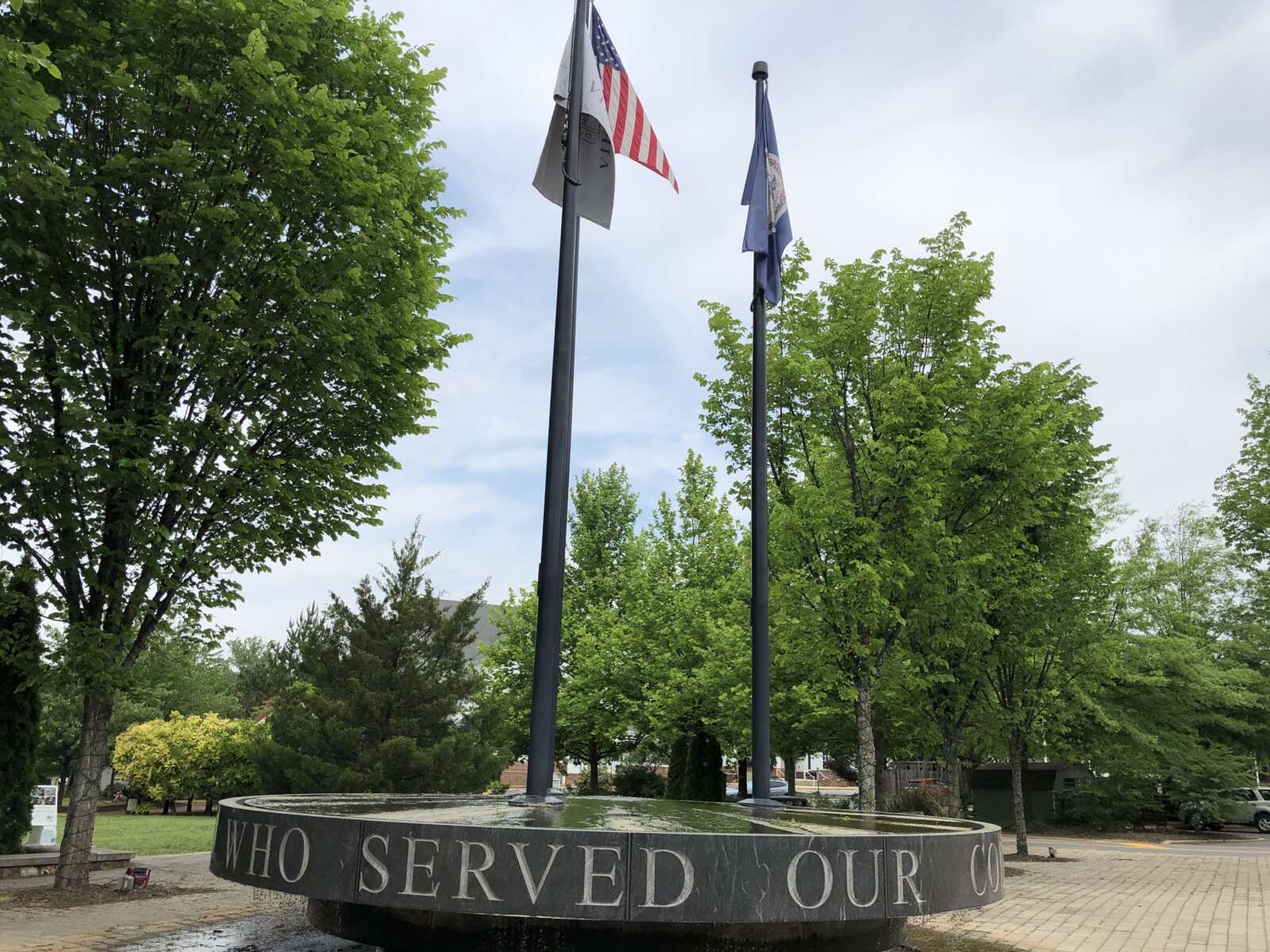
Memorial Day is just around the corner on Monday (May 31), and the federal holiday will bring a few closures of public buildings in the Tysons area.
Fairfax County Government:
- County government offices will be closed on May 31.
Fairfax County Courts:
- The Fairfax Circuit, General District, and Juvenile and Domestic Relations District courts will be closed all day on May 31.
Town of Vienna
- Town offices will be closed all day.
- The Vienna Community Center hours will change to 8 a.m. to 6 p.m. on May 31.
- The holiday will not affect waste collection. Residents scheduled for pick-up on Mondays can place their waste by the curb as normal.
City of Falls Church:
- All city offices and services, including City Hall, the Mary Riley Styles Public Library, and the Community Center will be closed.
Public Schools:
- Fairfax County Public Schools will be closed for Memorial Day.
County Libraries, Recreation Centers, Parks:
- All Fairfax County library branches will be closed.
- All Fairfax County RECenters will operate at their regular hours.
- Colvin Run Mill and Sully Historic Site grounds will be open from noon to 4 p.m. for strolling, but all the buildings will be closed.
- The E.C. Lawrence, Hidden Oaks, Hidden Pond, and Huntley Meadows nature centers will be open from noon until 5 p.m. on May 31.
- The Riverbend Park visitor center will be open from 9 a.m. to 5 p.m.
- The McLean Community Center will be closed for Memorial Day.
Public Transit:
- Fairfax Connector buses will operate on a Sunday service schedule. Check the link for details on specific routes.
- WMATA Metrorail service will operate from 7 a.m.-11 p.m. on Saturday and from 8 a.m.-11 p.m. on Sunday and Monday.
- WMATA Metrobus will operate on a Sunday service schedule.
County Trash and Recycling:
- There will be no change in the county’s trash and recycling collection.
- The recycling and disposal centers at the I-66 Transfer Station and I-95 Landfill Complex will be open.
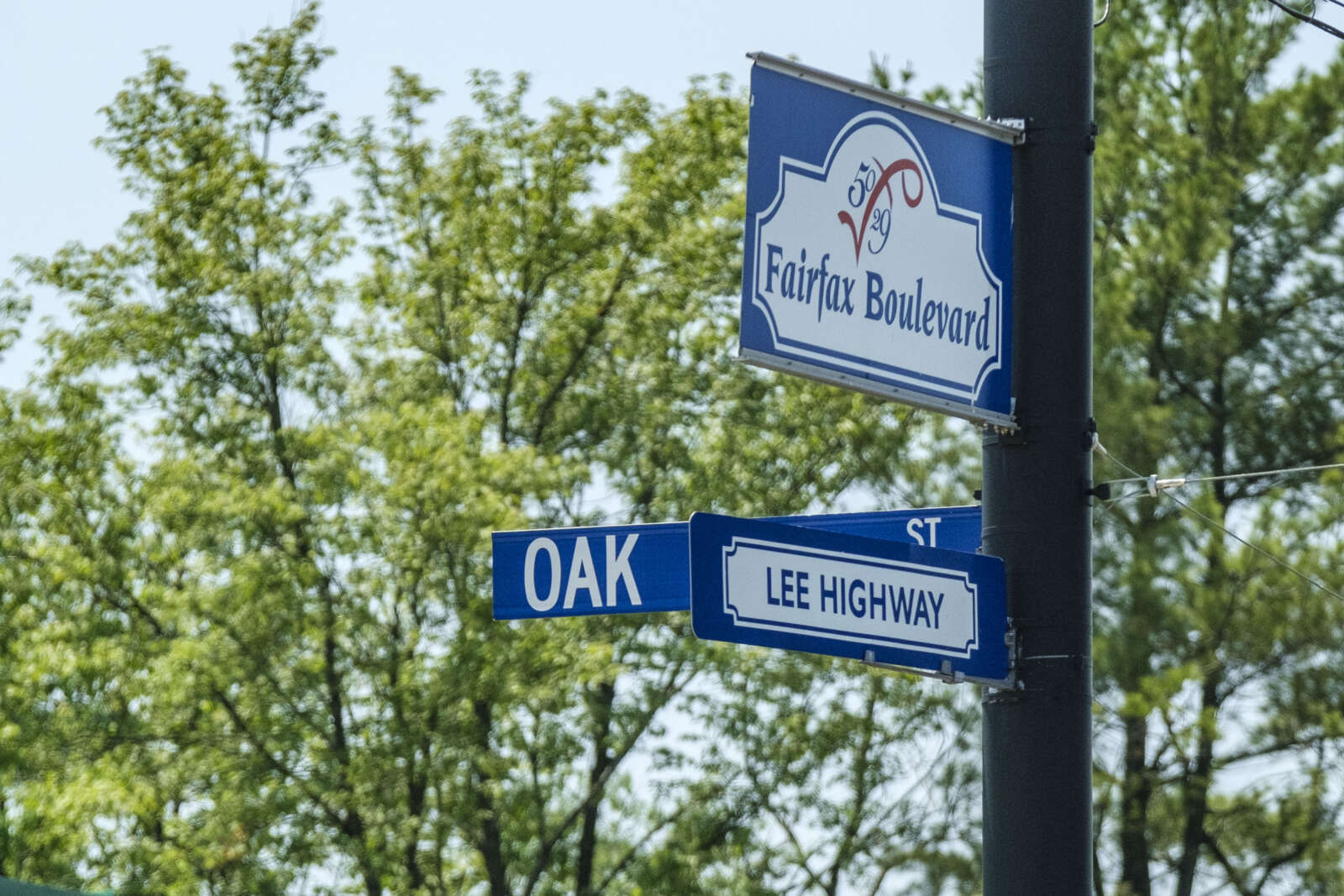
A list of possible new names for Lee Highway (Route 29) and Lee-Jackson Memorial Highway (Route 50) could be ready as soon as this December.
On July 13, the Fairfax County Board of Supervisors could approve about 25 members for a task force to examine the possibility of renaming the highways and appoint the group’s chair.
The group would recommend whether to rename those streets and what new names to consider this December. A public hearing and decision could come in early 2022.
“Approximately 30 organizations and individuals have expressed an interest in participating,” Fairfax County Department of Transportation Director Tom Biesiadny said yesterday (Tuesday). “14 organizations and individuals declined to participate.”
This schedule was announced one year after the May 25 death of George Floyd in Minneapolis, which sparked Black Lives Matter protests nationwide. In Fairfax County, the movement prompted the board to consider renaming streets and structures with Confederate names.
Biesiadny and his staff presented their recommendations to the board’s land use policy committee for how to move forward with renaming Route 29 and 50 as well as streets and subdivisions.
“I think the schedule is good and compact,” Board of Supervisors Chairman Jeff McKay said. “If we can get the recommendations by the end of the year, that would be helpful.”
The two thoroughfares are the first locations to be considered for new names after the Fairfax County History Commission compiled a list of street names, monuments and public spaces with Confederate ties.
The group identified more than 26,000 streets and places, which was first narrowed down to 650 well-known Confederate officers and locally-known Confederates and again, down to 150 assets confirmed to have Confederacy-associated names.
Neighboring Loudoun County is establishing a task force to consider renaming Lee-Jackson Memorial Highway, and a group in Arlington County is discussing new names for Lee Highway, Biesiadny said.
Some supervisors urged staff to keep coordinating with Fairfax’s neighbors.
“If it’s possible to be on the same page as Arlington and Loudoun, that’s great,” Braddock District Supervisor James Walkinshaw said. “We shouldn’t be driven by their process, but that seems to be like a viable secondary goal.”
He also suggested the task force develop a naming plan that reduces confusion for local businesses.
“One of the things I have heard from businesses in and around the Kamp Washington intersection is that the status quo is very confusing,” Walkinshaw said.
Route 50 has four names depending on the location, Deputy County Executive Rachel Flynn explained to Tysons Reporter in December.
In Loudoun County, it’s John Mosby Highway, and in Fairfax County, it becomes Lee-Jackson Memorial Highway. Route 50 then becomes Fairfax Boulevard in the City of Fairfax, where it intersects with Route 29, also known as Lee Highway. East of the city, Route 50 turns into Arlington Boulevard once it’s back in Fairfax County. Read More

The Fairfax County Democratic Committee wants county leaders to fire newly hired county Police Chief Kevin Davis in response to continued controversy surrounding his history as an officer.
The local political group passed a motion at its general membership meeting yesterday (Tuesday) recommending that the Fairfax County Board of Supervisors fire Davis, reopen the police search, and implement a transparent hiring process.
“We believe we need to overhaul the criminal justice system from top to bottom, to end racial inequity in policing, end police brutality and build a police force built on trust where our residents don’t need to worry about protecting their families from the police sworn to protect and serve them,” FCDC said.
Davis’s hiring has drawn vocal criticism from civil rights advocates and community groups since he was appointed as retired Chief Edwin Roessler’s successor on April 23, particularly in the wake of an NBC4 report on two lawsuits that he faced while working as an officer in Prince George’s County, Maryland in the 1990s.
In one case, Davis reportedly stopped and violently arrested a driver, eventually leading to a $12,500 jury award to Mark Spann, who is Black. The other case involved Davis and a group of narcotics officers illegally detaining a 19-year-old, who later sued and won a $90,000 judgment.
Davis has also faced renewed scrutiny for his 2015-2018 tenure as commissioner of the Baltimore Police Department, which included a secret aerial surveillance program and a six-day lockdown of the predominantly Black Harlem Park neighborhood that is the subject of an ongoing lawsuit filed by the ACLU’s Maryland chapter.
“Hiring a candidate with a history of racially charged use of force incidents in their past is not starting from a place where community trust can be built,” FCDC said.
Board of Supervisors Chairman Jeff McKay has repeatedly expressed confidence in Davis as Fairfax County’s new police chief.
A spokesperson from his office declined to comment on the FCDC motion, which was developed by the committee’s Black caucus. The committee says in a press release that it was “overwhelmingly” supported by its 1,000-plus members.
In lieu of a comment, McKay’s office shared a letter sent to FCDC on May 20 that touted Davis’s “ability to implement progressive reforms,” citing his efforts to implement changes in Baltimore like the introduction of body-worn cameras and a revised use-of-force policy that emphasizes deescalation.
The letter, which was signed by all nine Democratic supervisors, also defended the level of public engagement used during the police chief hiring process. The search included a pre-screening panel, a survey that generated over 3,000 responses, and an outreach campaign with over 275 community meetings and calls.
Davis also participated in a public input session during his first week as the new police chief — albeit with continued controversy.
“We are confident that this year’s process was the broadest and incorporated both extensive public input and intentional inclusivity,” the Board of Supervisors letter said. “Regardless, we commit to looking at our entire public participation process for future personnel decisions and establishing a framework for further improvement.” Read More
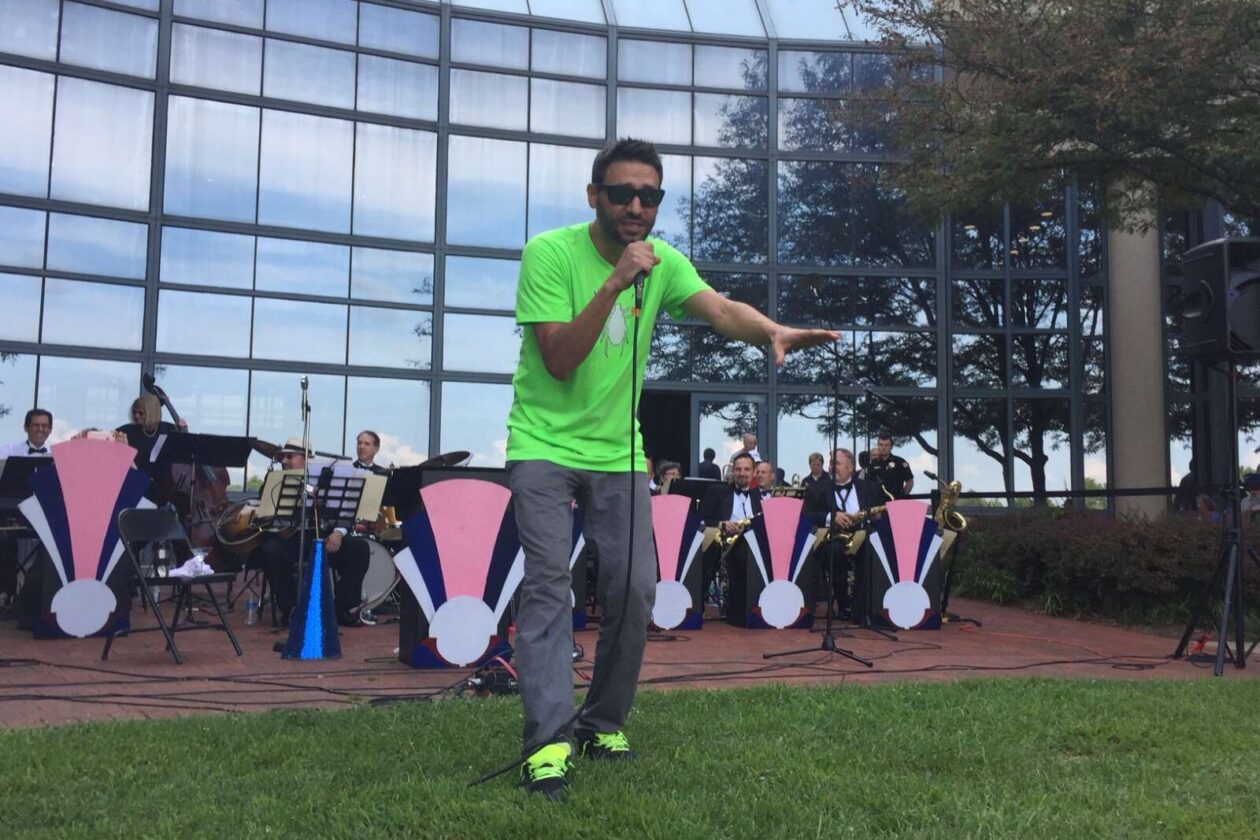
The cicadas are here, along with a new rap about the insects from local hip-hop artist MC Bugg-Z.
“Brood X-cellence” is a deep rhyming dive into the entomology, science, and emergence of Brood X, the periodical cicadas that are just now surfacing from their 17-year slumber underground.
Lines like “I have been chilling underground with my friends sippin on root juices” and “It’s a fitness thing, you’re witnessing predator satiation” will certainly have wings flapping and red eyes darting.
The song is written and performed by MC Bugg-Z, who isn’t just any old bug-loving underground hip-hop artist. He’s an entomologist and biologist who works for Fairfax County.
“I’m part of the Fairfax County Health Department’s Division of Environmental Health and, inside the Division of Environmental Health, we have the disease-carrying insects program,” Andy Lima said. “That’s my normal, real-life job.”
Lima has been writing and recording underground hip-hop since his college days in the mid-2000s with a focus on intelligent lyric writing.
“It’s more about the rhymes than the beats,” Lima said. “I love to convey the knowledge about the things I love and the world I know…by putting it into hip-hop song form.”
In Lima’s case, that’s bugs, and this isn’t his first foray into the emerging genre of insect rap.
In 2016, he released “Zika 101” about protecting oneself from disease-carrying mosquitoes. In 2018, there was “Tick-Check 1-2” about checking for ticks and avoiding Lyme Disease, followed a year later by “West Nile Story.”
While cicadas are not known to carry disease, Lima couldn’t skip the opportunity for a new song about a bug.
“Brood X-cellence” is a remix or sequel of sorts to a cicada rap he wrote back in 2004, when the brood last emerged. He was a student at Indiana University back then, and the din of the cicadas could actually be heard in the background of the recording.
“I was going to just re-release that one this year and just felt like there were things about the song that I wanted to change, new information that I wanted to include and, also, some errors,” Lima said. “I’ve learned some stuff over the past 17 years…Now, the focus is much more on the biology of it as opposed to the spectacle itself.”

When he writes songs, Lima takes a reverse-engineered approach. He thinks about how he wants to end a line and then finds a rhyme to match it.
“I don’t shy away from the scientific words because they are multi-syllables,” Lima said. “You can often find a way to rhyme them or, even, define some of these terms [in the rhyme]…like predator satiation.”
It took about two weeks to write, re-work, and record “Brood X-cellence.” The beat was provided by Kelton Williams, another Fairfax County employee who Lima met while helping with COVID-19 emergency response.
“He’s a great musician,” said Lima. “As soon as I heard [his beat], I thought ‘Oh man, this is going down.'”
The main takeaway that Lima wants folks to get from the song is that this cicada takeover is an incredibly rare and amazing occurrence.
“It’s a fleeting event, a miracle of nature,” he said. “It really only occurs in the eastern half of the United States and nowhere else in the world…It’s just so rare that the public is kind of overrun with insects.”
He hopes his bug rap educates, entertains, and allows folks to have a little fun after a difficult year.
With the temperatures warming, particularly in the evening, the cicadas are expected to come out of the ground en masse within a matter of days, looking to play their own song.
“We’re really going to see the surge that’s just beyond,” Lima said. “So, hopefully my song is well-timed.”
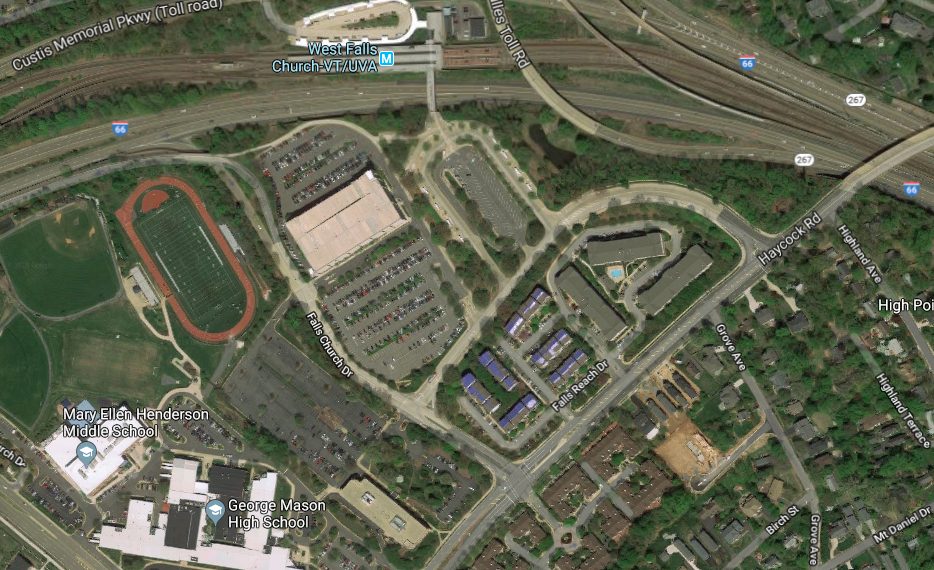
The arduous journey toward a re-imagined West Falls Church Transit Station Area is drawing to a close with the last two approvals slated for this summer.
“I want to thank the entire team for two-and-a-half years of dedicated work on behalf of the Dranesville district,” Dranesville District Supervisor John Foust said during a community meeting on Tuesday (May 11). “This has been a long, difficult process, and as a consequence, the product is much better. The time was well spent. The product is good — and getting better — and we still have some time.”
The development plan will go before the Fairfax County Planning Commission on June 16 and the Board of Supervisors on July 13. The plan was narrowly approved by a task force that voted 5-3-1 earlier this month.
When the proposed plan was presented to the community for the first time on Tuesday, however, some residents expressed concerns about traffic along Haycock Road, pedestrian safety, and distance from Virginia Tech’s property.
“I’m not anti-development, but I’m really concerned,” one attendee said. “I’ve been trying to get our streets to be safer as they’re crowded with cars.”
Predicting that the new I-66 exit ramp will pour traffic into the new community, she asked staff to find a way to make it inconvenient to “pop out onto Haycock Road” for those looking to get to Tysons, DC or Arlington “as fast as possible.”
“I know every area is screaming for sidewalks, but one thing you could do is paint the speed limit or look at other creative, inexpensive ways that communities have found to reduce the speed and the number of cut-thru cars, and make better buffers and calming measures for people who live here, pay taxes and are part of the community,” she said.
The draft plan includes language directing the county to develop a West Falls Church Active Transportation Plan with recommendations for transportation improvements that will increase connectivity, fill in missing or inadequate facilities, and promote walking and bicycling.
“County staff are working on this,” county transportation planner Tim Kutz said. “A follow-up motion will be approved after the plan amendment goes forward and we’ll be reaching out in the fall to continue engaging with you. Getting your perspective is going to be critical in developing recommendations to increase active transportation in the area.”

The plan includes mitigation measures for what people perceive as “bad traffic,” with signal timing, new signals and reconfigured intersections, county planner Bryan Botello said.
Residents worried there was little to ensure the local government implements those changes, but staff said these changes will happen when developers come into the picture.
“The improvements approved are recommendations that would happen when the development team is actually going to the rezoning and development review stage,” senior transportation planner Bob Pikora said. “The comprehensive plan informs what we will be doing in the zoning and review phases, but the developments will be up to the development team.”
More landscaped buffers and green spaces have been added to the plan, according to staff.
New plans have not materialized for the Virginia Tech property after the university nixed a project to expand its Northern Virginia Center with a design school and other facilities. But some task force members were keen to get a buffer between the campus and nearby housing.
“We’ve added an additional landscaped buffer between Virginia Tech and the Villages condominium, and added additional language that strengthens the buffer, and creates a linear park,” Botello said.
Housing will be separated from Virginia Tech by landscaped buffers, a pedestrian walkway, a road and streetscaping, according to the plan.
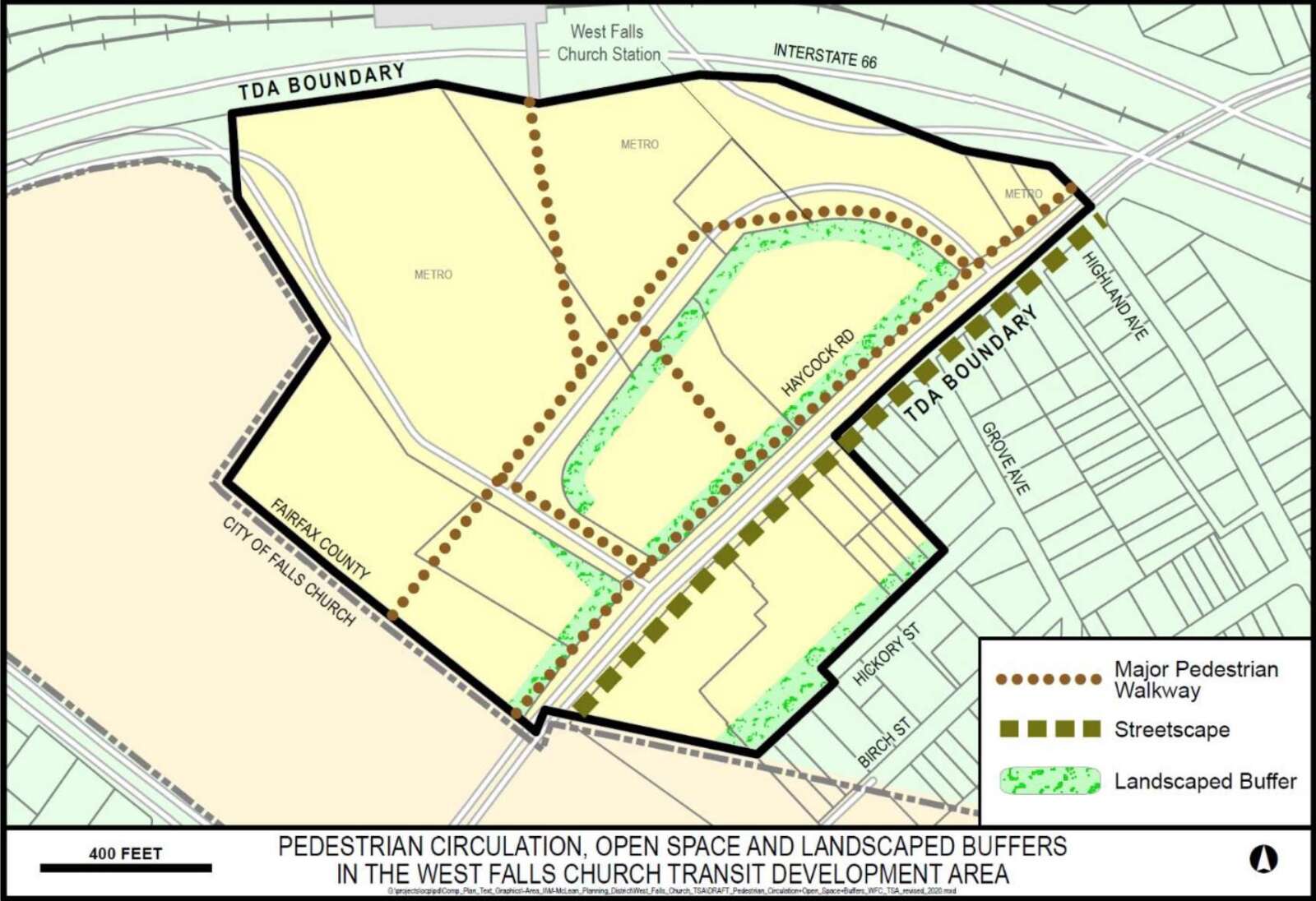
The new plan envisions a sequence of parks through the area instead of the courtyard featured in the current comprehensive plan.
“There are really a lack of options for accessible parks south of I-66, so it was certainly a priority for us when we were drafting the plan,” Botello said, noting that the park areas shown below could take the form of pocket parks, urban greens, or a civic plaza.
A recreational park is envisioned at the northeast corner of the study area, at the corner of Haycock Road and Metro Access Road.
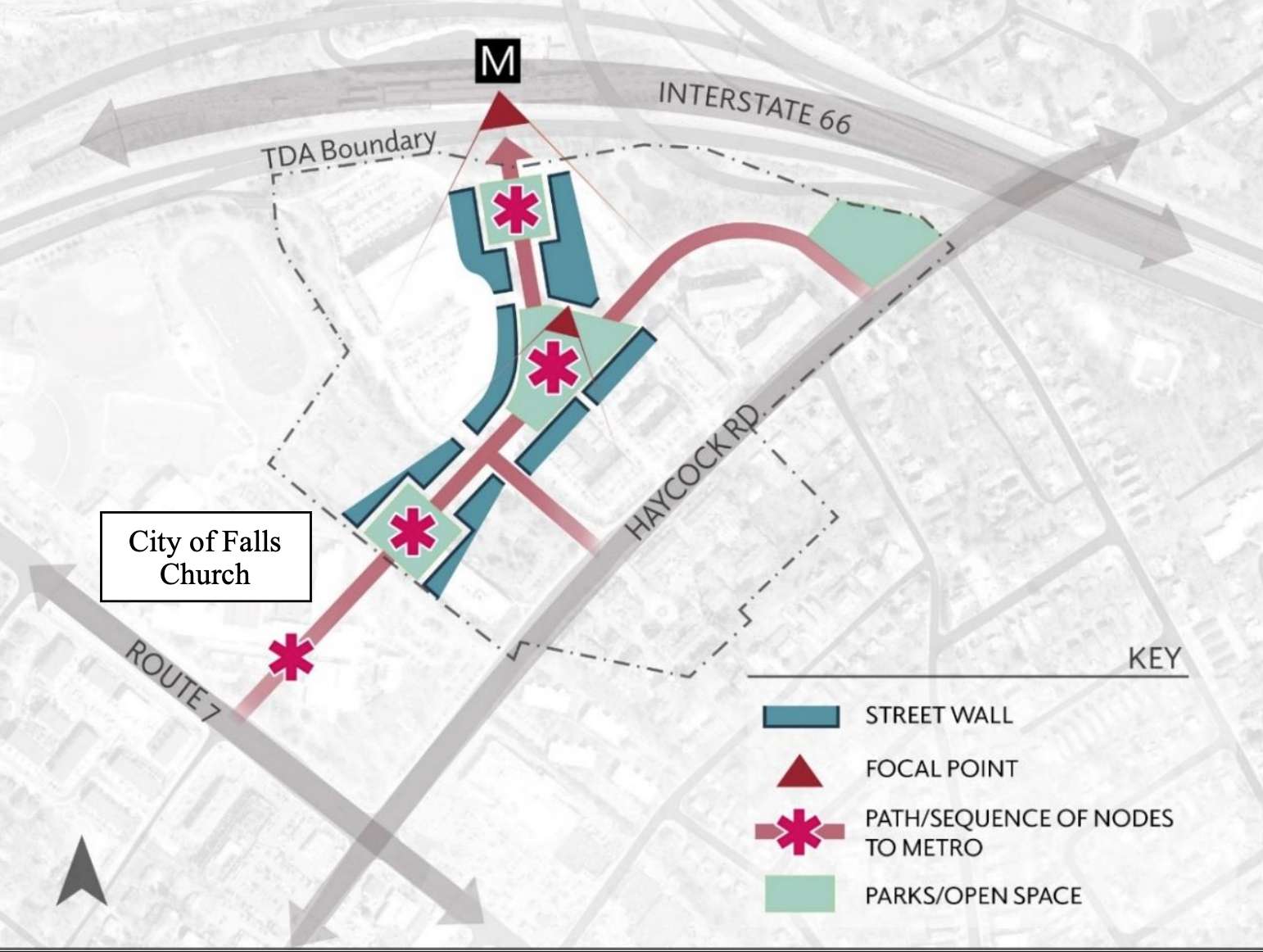
Images via Fairfax County