
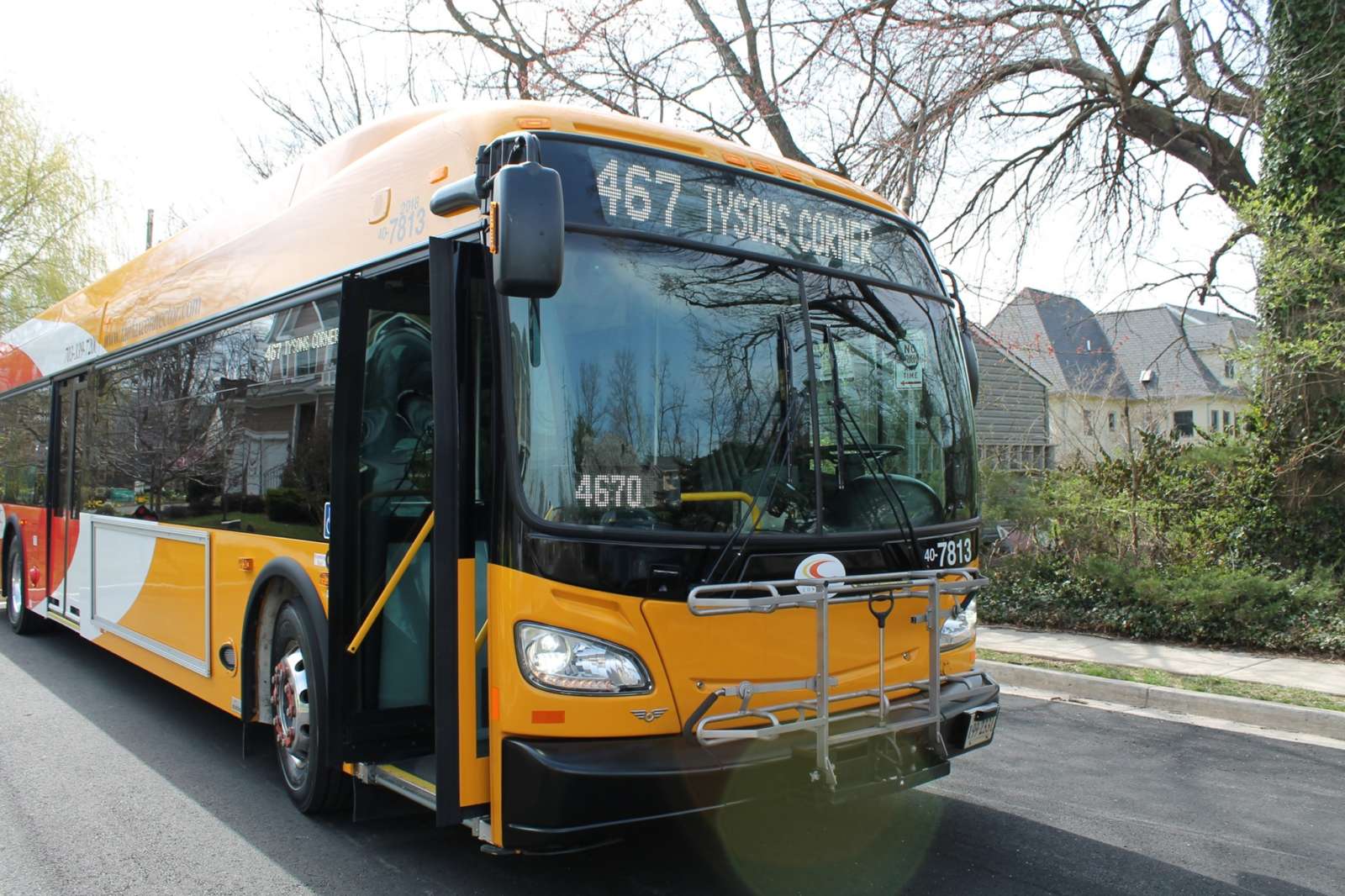
Fairfax County is taking a small but crucial first step toward electrifying its sprawling government vehicle fleet, thanks to more than $4 million in state grants.
Gov. Ralph Northam announced on Friday (May 7) that the county will receive $4.4 million from the first round of Virginia’s Clean Air Communities Program, an initiative that launched in November using $20 million from the state’s Volkswagen Environmental Mitigation Trust.
Three of the five awarded grants went to Fairfax County agencies:
- Department of Transportation: $2.9 million for four shuttle buses and chargers
- Department of Public Works and Environmental Services: $1.2 million for four solid waste and recycling trucks and chargers
- Department of Vehicle Services/Department of Procurement and Material Management: $205,275 to purchase a medium-duty truck and charger for the public library system
The other recipients are the Metropolitan Washington Airports Authority, which will get $3.9 million to purchase five shuttle buses and chargers, and Amherst County, which got $998,301 for two trucks, a shuttle bus, and chargers.
“Supporting clean transportation solutions is a vital part of our efforts to combat climate change and improve air quality in the Commonwealth,” Northam said. “These investments will reduce harmful vehicle pollution, which disproportionately impacts marginalized communities, and help accelerate an equitable transition to a cleaner economy for all Virginians.”
Fairfax County will use its grant funds to launch an electric vehicle pilot as part of a broader push to eliminate fossil fuels from the county’s transportation operations and achieve carbon neutrality by 2040.
The county’s Joint Environmental Task Force recommended in October that the Fairfax Connector bus fleet transition to electric vehicles or other non-carbon-emitting alternatives by 2030, followed by public school buses and non-bus vehicles in 2035.
The county has approximately 6,347 vehicles in its overall fleet, including 1,540 Fairfax County Public School buses, according to the Department of Vehicle Services.
While the new pilot will kick off the conversion of the county government fleet, FCPS received its first electric school buses in January from a statewide initiative led by Dominion Energy, which has pledged to replace all diesel buses in the state with electric ones by 2030.
The county first utilized electric vehicles for public transit in November, when the autonomous Relay shuttle kicked off passenger service in Merrifield for a year-long pilot project.
“To cut carbon admissions, we have to reimagine the way in which we travel,” Fairfax County Board of Supervisors Chairman Jeff McKay said. “As a county, we are already actively moving towards cutting our emissions from our public transit and this will move us closer to our end goal.” Read More
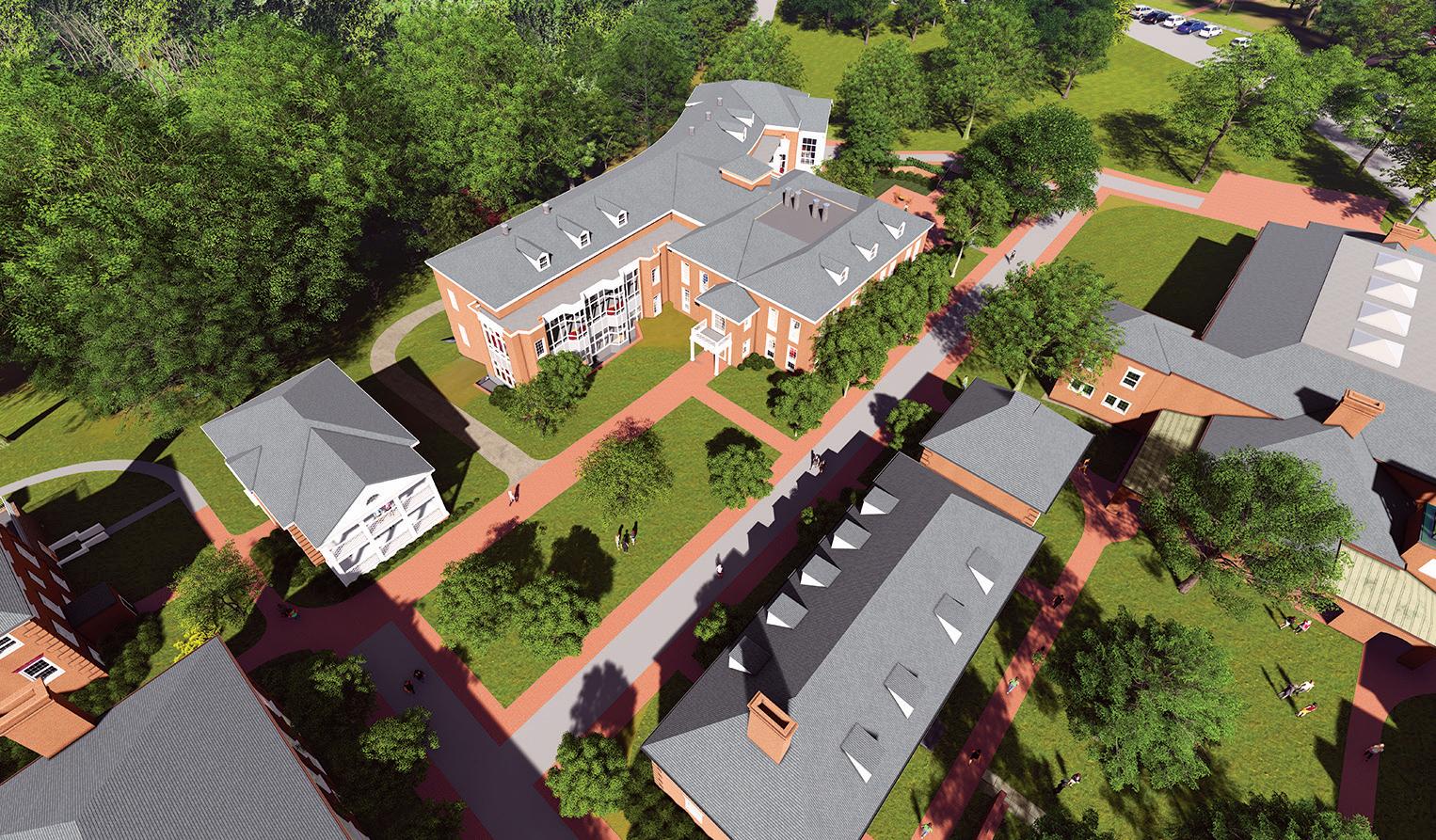
The Madeira School in McLean could undergo an extensive overhaul if its application goes through, but down the road, Fairfax County staff say the school might consider being designated as a historic district, among other long-term changes.
The all-girls private school is seeking to tear down several buildings on its Georgetown Pike site so they can be replaced with new educational facilities, like a science and technology hall and new stables.
In an extensive report on the project, county planning staff raised objections to a couple of items, but generally expressed support for the plan and recommended approval.
“Staff finds that the application, with the proposed development conditions contained in Appendix 1, is in harmony with the Comprehensive Plan and the standards set forth within the Zoning Ordinance,” staff said in the report. “For these reasons, staff supports approval of this application.”
Among the buildings being demolished are a farmhouse built in 1930, a cabin moved to the campus in 1989 — but the original date of construction is unknown — and a science building constructed in 1975 with a unique architectural style.
While staff recommends approval of the demolition, the recommendation comes with the condition the school obtain background information on the buildings and thoroughly photograph them before they are knocked down.
Moving forward, staff said the applicant should nominate the Madeira school property as a historic district:
Staff believes the history of the development of the school in the 1930s, as well as the community impact of the school, make it a potential candidate for listing on the Inventory of Historic Sites. If a nomination is completed, the History Commission will then review the nomination and determine if it meets inventory criteria. The listing on the Inventory of Historic Sites is an honorific designation and does not place any additional use or development restrictions on the property. It is used as an educational tool to create awareness of historic structures.
Staff also noted that listing the school on the inventory could provide an opportunity for the Department of Planning and Development to identify mitigation strategies to avoid negative impacts from future development.
Staff are also working with the applicant on transportation improvements at the site — namely, a realignment of the entrance to the school. The school has not agreed to the modification, since it argues that there is no planned increase in school capacity.
Despite the disagreement, staff said the issue was relatively minor.
The Fairfax County Planning Commission will hold a public hearing on Madeira School’s special exception amendment application at 7:30 p.m. on May 19, with a Board of Supervisors hearing scheduled for 3:30 p.m. on June 8.
Image via Madeira School
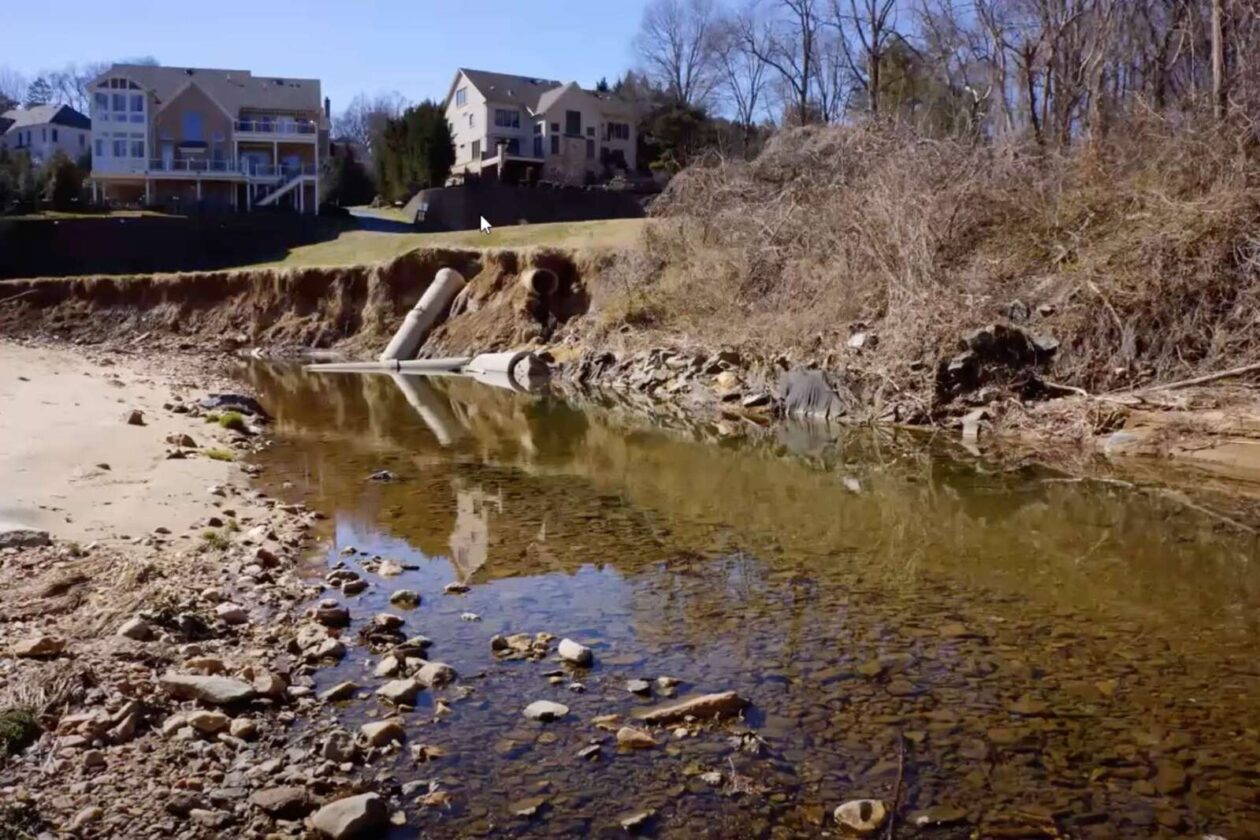
Fairfax County is designing restoration plans for an eroded stretch of Little Pimmit Run from Franklin Park Road to just upstream of Kirby Road in McLean.
The $9.23 million project will address 7,100 feet of degraded stream channel in addition to about 1,250 feet of tributaries, which will be restored so that they tie into the main channel of Little Pimmit Run.
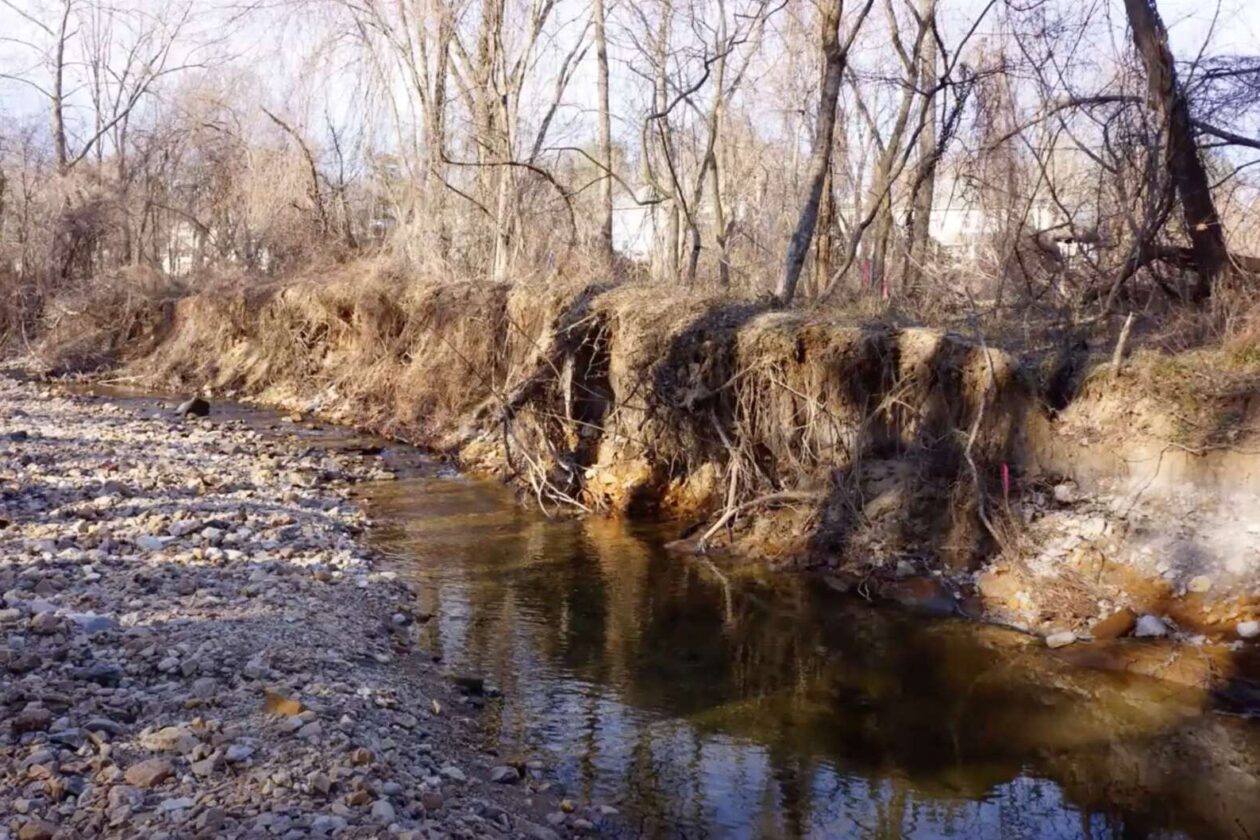
“The water has a lot of energy and it’s causing a lot of erosion,” project manager Fred Wilkins said during a recent meeting.
According to Wilkins, the project aims to slow the speed of the water, which will protect infrastructure and area vegetation. It will also restore the ecology of the stream and the surrounding area, while preventing sediment and pollutants from flowing from Little Pimmit Run into the Chesapeake Bay.
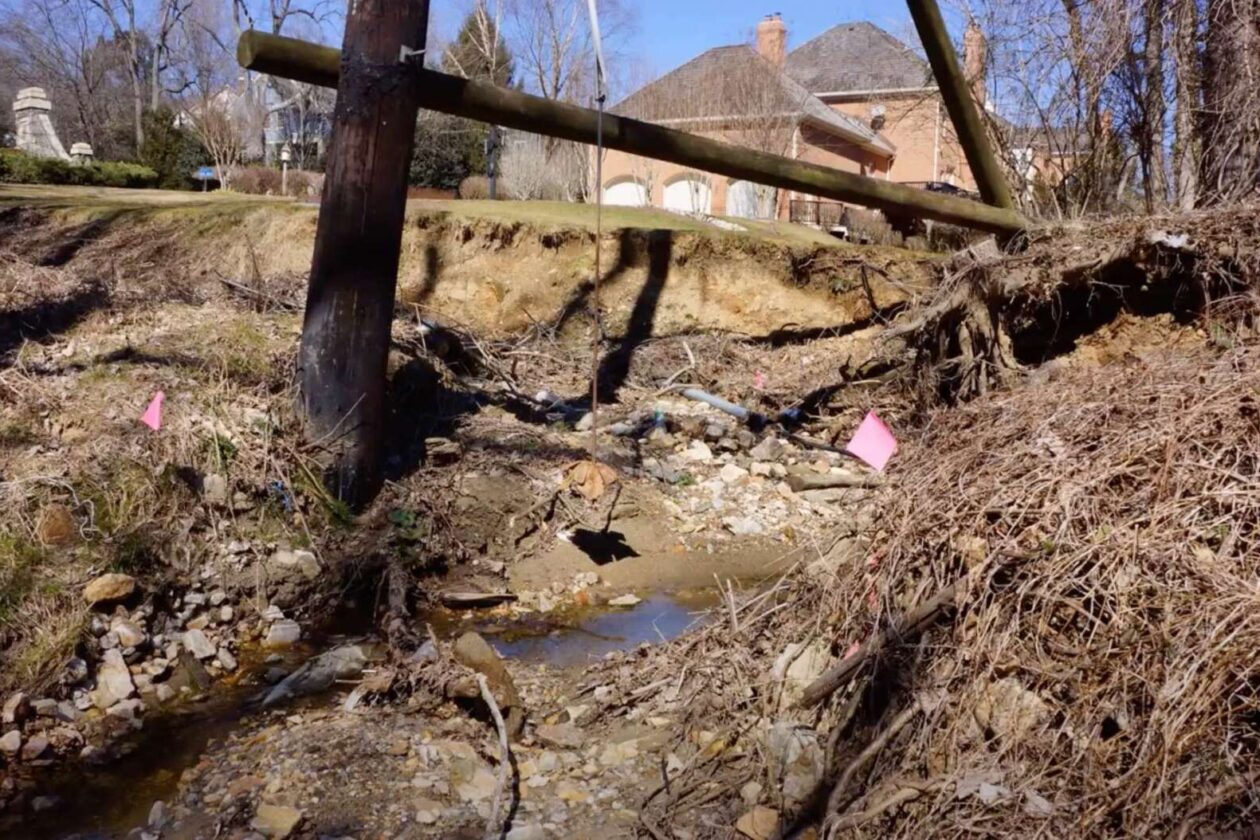
Identified in 2019, other problems caused by the ongoing erosion include undercut banks and compromised trees, the county’s project page says.
Wilkins says another goal of the project is to protect infrastructure.
“There are multiple locations where we have sanitary pipes that cross the stream bed, and in some cases, the water can move debris that can damage the sanitary crossings, as shown during the 2019 storm, which caused emergency repairs to be needed,” he said.
Last but not least, the project manager said the county aims “to give the community something to enjoy.”
The project will unfold in two phases, starting with a stretch of stream from Franklin Park Road to Chesterbrook Road that runs parallel to Solitaire Lane. The second phase picks up north of Chesterbrook Road and goes away the way to Kirby Road.
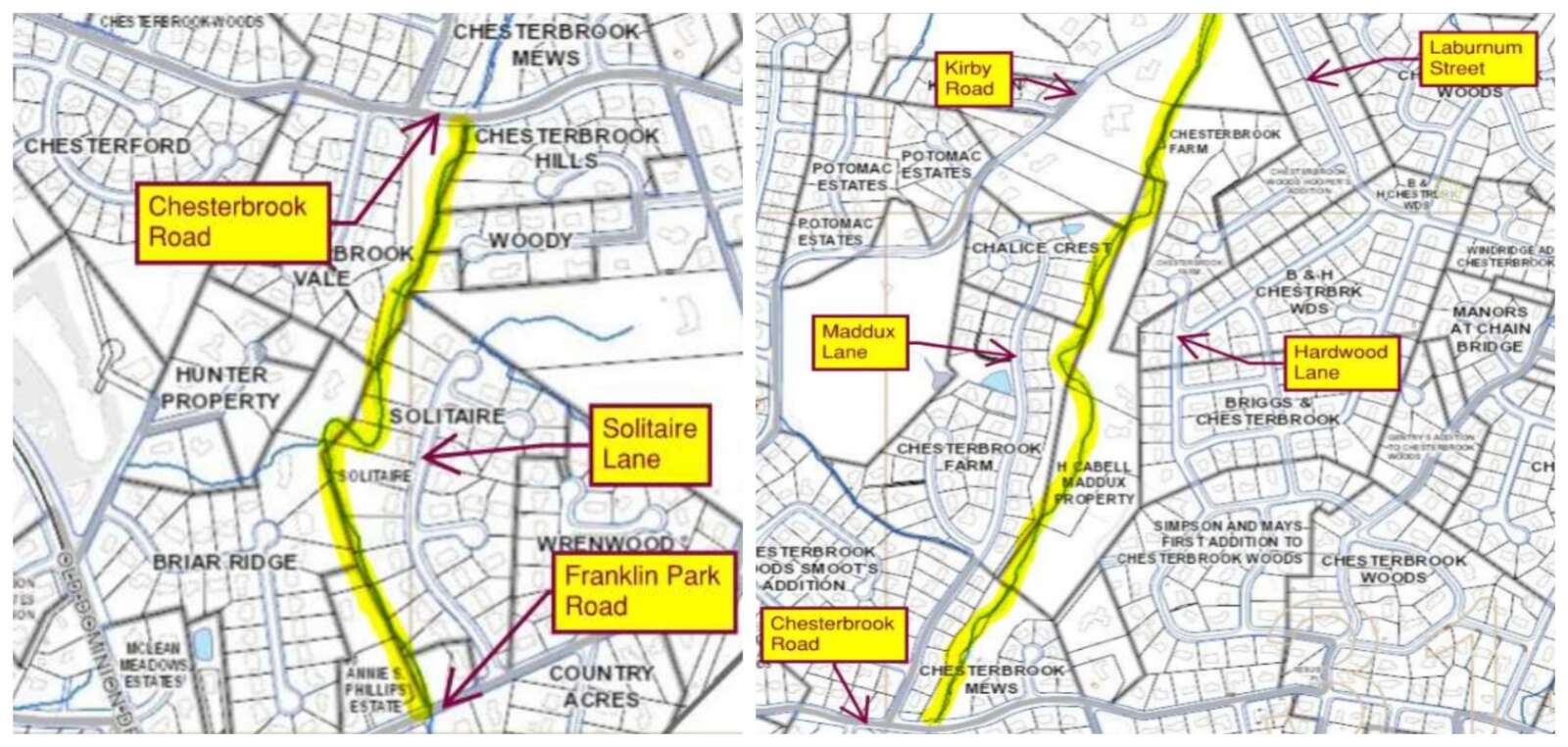
Right now, county officials are deliberating the future alignment of the channel. Once one is chosen, concept designs should be ready to be submitted this September 2021. A community meeting is slated for November.
There will not be a construction timeline until the designs are completed.
The project straddles private property and county property, and will require coordination between the county and property owners, Wilkins said.
People in the area can expect to see flagging and survey markers over the next several months, according to the county’s project website.
“Survey markers do not necessarily mean that the marked tree will be removed,” the website said.
This restoration work joins another stream restoration project along the channel between Forest Lane and North Albemarle Street, along with a sewer realignment project, emergency wastewater stabilization, and a Fairfax County Department of Transportation sidewalk project, Wilkins said.
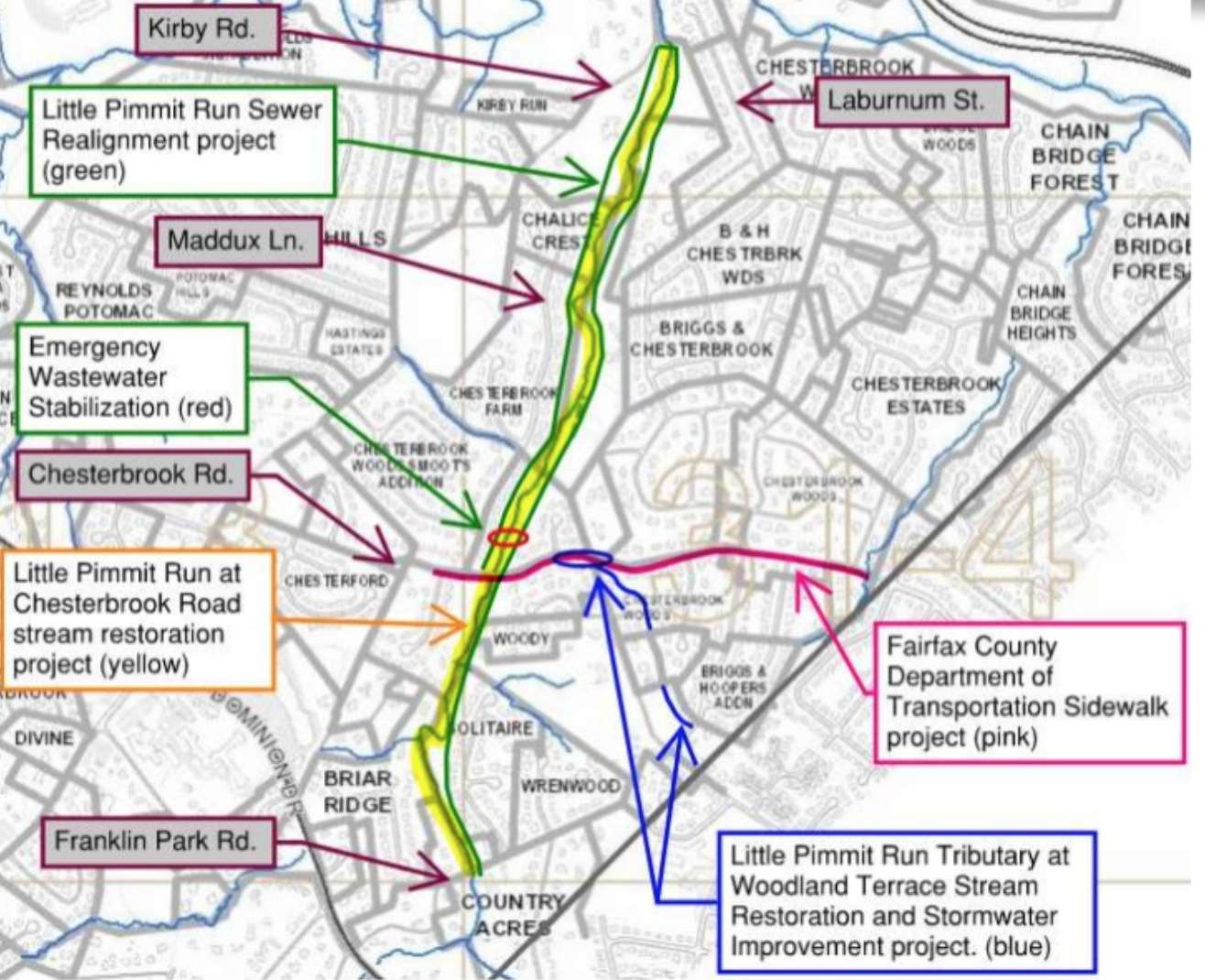
The project is being funded through the county Stormwater Service District.
Images via Fairfax County
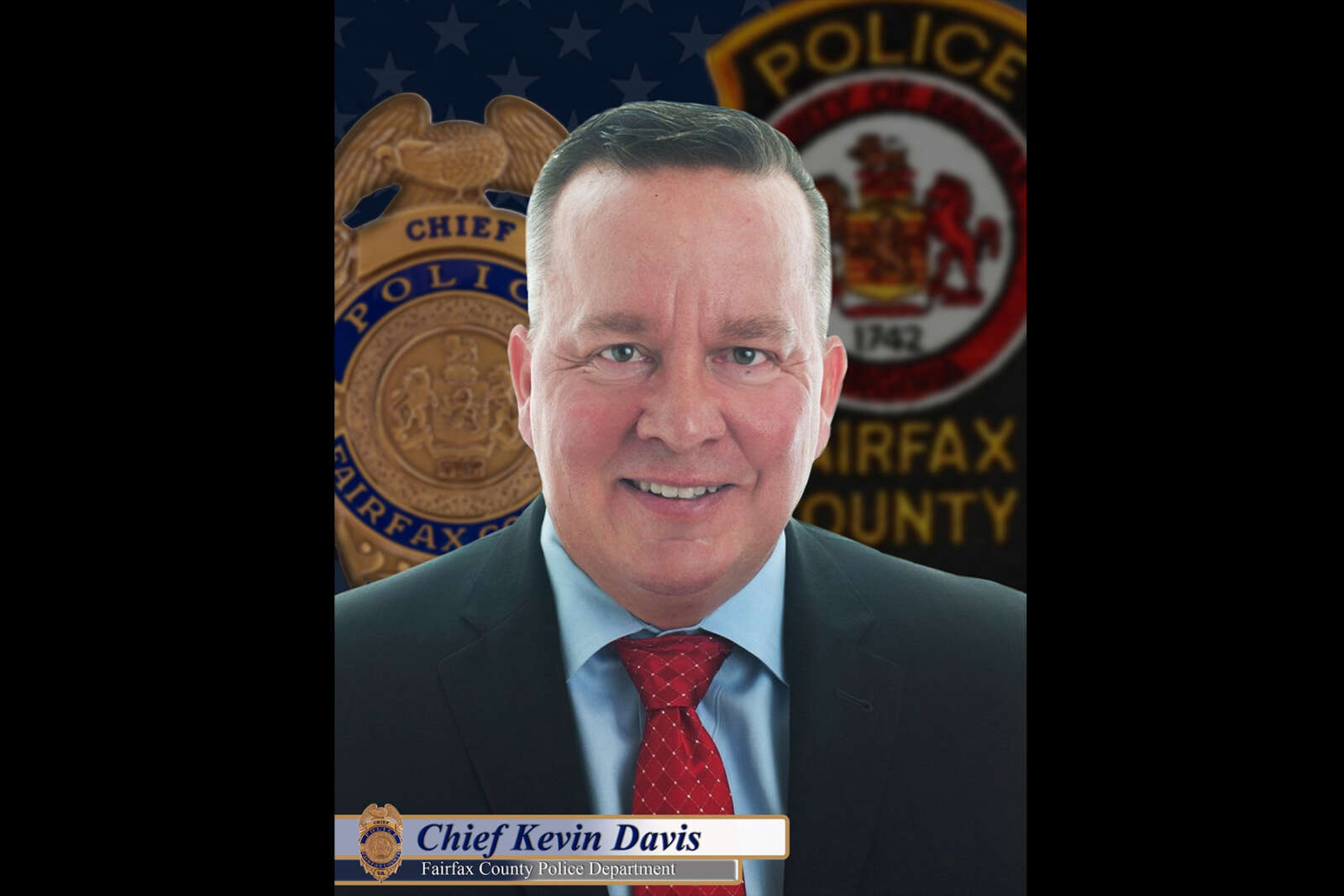
Fairfax County Board of Supervisors Chairman Jeff McKay remains confident in the board’s choice of former Baltimore Police Commissioner Kevin Davis as the county’s next police chief, despite reports that he previously faced lawsuits over use-of-force incidents.
With Davis set to assume his new position on Monday (May 3), McKay told Reston Now in a statement that he continues to support the new police chief.
“The history of policing has not centered around the safety of all members of the community. That is a systemic problem we are always working on in Fairfax County,” McKay wrote. “After an extensive interview and outreach process, the entire Board felt confident in Chief Davis’s ability to lead and further reforms to policing. We look forward to everyone in the community engaging with the new Police Chief and engaging in their own conversations with him.”
The board of supervisors unanimously voted on Friday (April 23) to appoint the former Baltimore police commissioner and Prince George’s County assistant police chief to lead the Fairfax County Police Department.
At the time, Fairfax County Board Supervisor Jeff McKay hailed Davis and said in a statement that he would “continue Fairfax’s work on police reform, build on the deep community involvement and relationships with stakeholders, and improve morale within the police department.”
However, NBC4 Washington reported earlier this week that Davis had lost at least two civil lawsuits related to inappropriate use-of-force and false imprisonment while he was on the job in Prince George’s County.
One of the lawsuits was related to a 1993 incident where Davis reportedly stopped law student Mark Spann in front of his family’s Maryland home.
“At that point, Davis says, ‘Give me your hands’ and lodges me to the ground, throws me to the ground, and proceeds to mash my face into the pavement,” Spann told NBC 4. He also said that Davis continued to intimidate him with a baton on the drive to the hospital and subjected him to further insults.
“I have to this date never experienced such racial slants, slurs and epitaphs and the denigration,” Spann said.
Spann has dried blood on his face in footage from an interview that NBC4 conducted with him in 1993.
According to NBC4, Spann was charged with battery, resisting arrest and disorderly conduct, but it remains unclear on why Davis pulled him over in the first place.
Another lawsuit filed six years later accused Davis of false imprisonment when he was sergeant in the Prince George’s County Police Department. The victim also won that case.
Davis, for his part, told NBC 4 in a statement that he was “proud of my long career,” which he says includes a history of reform, a commitment to diversity, body camera implementation, police displicne transparency, and use of force de-escalation.
He will be tasked with the full implementation of Fairfax County’s body camera program throughout 2021. So far, cameras have been deployed at five of the police department’s eight district stations, including in the McLean District.
Davis succeeds Deputy County Executive for Public Safety Dave Rohrer, who was serving as interim chief since February when Chief Edwin C. Roessler retired. Read More
The Fairfax County Board of Supervisors won’t approve a budget for the next fiscal year until May 4, but the bulk of the work to get to that final document will be done today (Tuesday) when the board meets at 10 a.m. to mark up the proposed budget.
Unveiled during a budget committee meeting on Friday (April 23), Board of Supervisors Chairman Jeff McKay’s proposed adjustments to the advertised fiscal year 2022 budget include a small raise for county employees and support for County Executive Bryan Hill’s recommendation of a one-cent decrease in the real estate tax rate.
The proposed cut would put the tax rate at $1.14 per $100 of assessed value, but rising residential property values mean that county homeowners will still see their tax bills go up by $224 on average.
“We all know that many families are struggling because of the impacts of COVID-19,” McKay said. “While the one-cent decrease isn’t a tax reduction for most families, I chose to support it because it provides some relief to families while still allowing the County sufficient funds, particularly with the stimulus dollars, to continue to stand up the programs that I know are needed in the community.”
The county is also considering lowering its refuse disposal fee from $68 to $66 per ton, but the board has proposed increases in sewer charges and for the refuse collection fee, which would go from $370 to $400 per household.
“It should be noted that this rate was reduced last year from $385 per household based on the inability to provide yard waste collection during the pandemic,” the proposed mark-up summary says.
With Fairfax County expecting a total of $222 million in federal relief funds from the American Rescue Plan Act, McKay has suggested redirecting $20 million that Hill had recommended setting aside as an economic recovery reserve fund to instead give county government employees a 1% pay raise.
The proposed mark-up doubles the increase in transfer funds to Fairfax County Public Schools from $14.1 million to $29.3 million — mainly to cover a 2% pay raise for school employees — and includes salary supplements for state probation and parole officers and support staff in the Public Defender’s Office.
“The Board remains committed to both acknowledging the hard work of our employees and maintaining competitive salaries relative to the market,” McKay said when outlining his mark-up proposal.
The board also plans to amend in its FY 2021 third-quarter review package to include $12.6 million for one-time bonuses for employees, along with funding for Celebrate Fairfax Inc., planning studies, athletic scholarships for at-risk kids, and environmental initiatives, including a green bank and zero-waste policies.
The county government employees’ union SEIU Virginia 512 said in a statement that it was “heartened” to see the board respond to the concerns that workers raised at public hearings on the FY 2022 budget last week about the possibility of having their pay frozen for a second consecutive year.
“However, the basic fact remains: the cost of living continues to rise, while Fairfax County workers continue to fall behind,” SEIU Virginia 512 Fairfax Chapter President Tammie Wondong said. “We urge the Board of Supervisors to continue to work to fund the county’s agreed-to pay plans.”
The union has also been advocating for the Board of Supervisors to adopt an ordinance allowing county employees to engage in collective bargaining.
“A union contract would bring consistency, improve recruitment and retention, and improve services for the community,” Wondong said.
According to McKay’s office, county staff are currently drafting a proposed ordinance, and the board will discuss the issue during its personnel committee meeting on May 25.
While the mark-up package mostly focuses on employee compensation, the Board of Supervisors also hopes to address affordable housing needs by allocating at least an additional half-penny from real estate tax revenues to the county’s affordable housing fund, which currently receives one half-cent, in FY 2022 and FY 2023.
Hunter Mill District Supervisor Walter Alcorn said he was glad to see that guidance in McKay’s mark-up proposal, even if it would still fall short of the two-cent allocation he campaigned on when running for office in 2019.
“Getting us back to a penny, at least historically, has been on the agenda for a long time,” he said. “I see the federal money as the opportunity, if you will, to pay back a lot of what we weren’t able to do in some previous years, so I do want to see us get to one penny as soon as possible.”
Hunter Mill District Supervisor Walter Alcorn hosted a town hall on Tuesday (April 20) to talk about public places in Fairfax County named after Confederates.
The discussion was based on the Fairfax County History Commission’s 539-page inventory, which was first released in December and details the history and context of each place named after a prominent Confederate figure.
The project traces its roots to last summer, when the Fairfax County Board of Supervisors directed the commission to study the legal and financial implications of possible name changes throughout the county.
The commission determined that, out of about 26,500 total named places in the county, approximately 157 streets, parks, monuments, subdivisions, and public places in Fairfax County bear names with ties to the Confederacy.
“This research confirmed…that Fairfax County was a crossroads of war,” Fairfax County History Commissioner Barbara Naef said. “Combatants of both Union and Confederates flourished, camped, marched, clashed, and suffered both victory and defeat here.”
In addition to cataloging sites, the report provides appropriate context, history, and narrative for possible name change discussions, including a dive into “Lost Cause” ideology, its pervasiveness in Fairfax County, and how it influenced the naming of places.
The Lost Cause ideology encompasses myths used to rationalize Confederacy sympathy, mainly that the Civil War was not fought over slavery, the pre-war Southern way of life is to be celebrated, and that prominent figures like Confederate Gen. Robert E. Lee didn’t believe in slavery.
“There was an urging by some to exclude it from the report altogether or soften its tone,” Naef said. “These reactions prove the point. The perspective of the Lost Cause has been embraced by generations.”
In its report, the History Commission recommended making the inventory available to the public via the Fairfax County Public Library, which is currently the case, and using the report as a guide for “a robust public process for considering future actions.”
The Hunter Mill District town hall is one of the first steps in that process, members of the commission at the meeting noted.
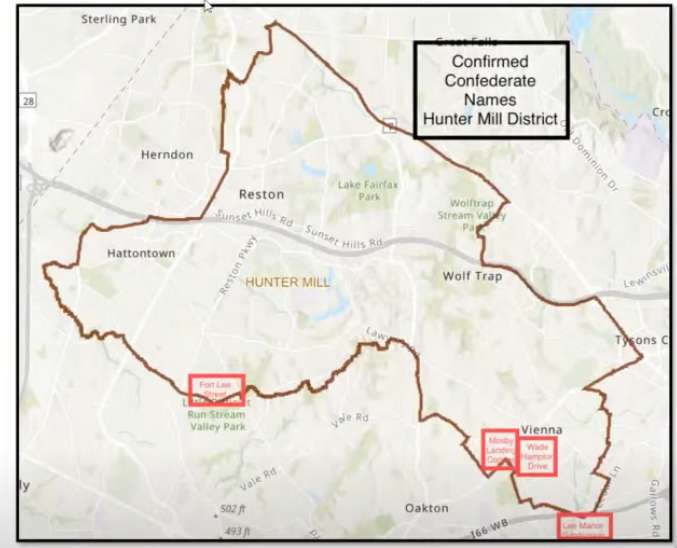
Within the Hunter Mill District, there are believed to be four places named after Confederates: Fort Lee Street, Lee Manor, the Mosby’s Landing condominium complex, and Wade Hampton Drive.
Fort Lee Street in Herndon and Lee Manor along Lee Highway near Vienna both derive their names from Robert E. Lee.
Fort Lee Street was named in the mid-1970s when Fox Mill Inc. developed the Folkstone subdivision, while Lee Manor is directly tied to Lee Highway, which is in the process of being renamed.
The Virginia General Assembly passed a bill in February, allowing Arlington to rename their portion of Lee Highway.
Mosby’s Landing in Vienna takes its name from John Mosby, a Confederate commander who was also known as the “Gray Ghost.” The condo complex was built on the site where legend says that Mosby and his horse hid out from Union soldiers.
Vienna’s Wade Hampton Drive is named after a Confederate lieutenant general who reportedly led a unit of 600 men and horses down the road in 1865. After the war, Hampton criticized Reconstruction and worked to suppress the vote among South Carolina’s Black population when he became governor of the state.
According to the history commission, the Town of Vienna named the street after Hampton in recognition of the Civil War’s 100th anniversary. The town is currently in the process of having the road’s name changed.
“The town has appointed an ad hoc group to look at this street name and consider alternatives,” Fairfax County History Commissioner Anne Stuntz said.
While the Commission’s charge was to examine places named after Confederates, several residents suggested that places named after individuals involved in the “Mass Resistance” movement opposing school integration should also be re-examined.
Examples include former Fairfax County Public Schools Superintendent W.T. Woodson, who opposed desegregation and still has a high school bearing his name, though schools were overall not included in the history commission’s inventory.
Commenters also mentioned Carter Glass, a state senator who developed laws intended to prevent Black people from voting, including Virginia’s poll tax.
For years, the library at Lake Anne Plaza in Reston was named after Glass. Today, that building is now the Reston Museum.
Photo via Fairfax County/YouTube
Fairfax County has been awarded approximately $3.3 million in federal funds to cover the costs of personal protective equipment, Sens. Tim Kaine and Mark Warner announced on Wednesday (April 14).
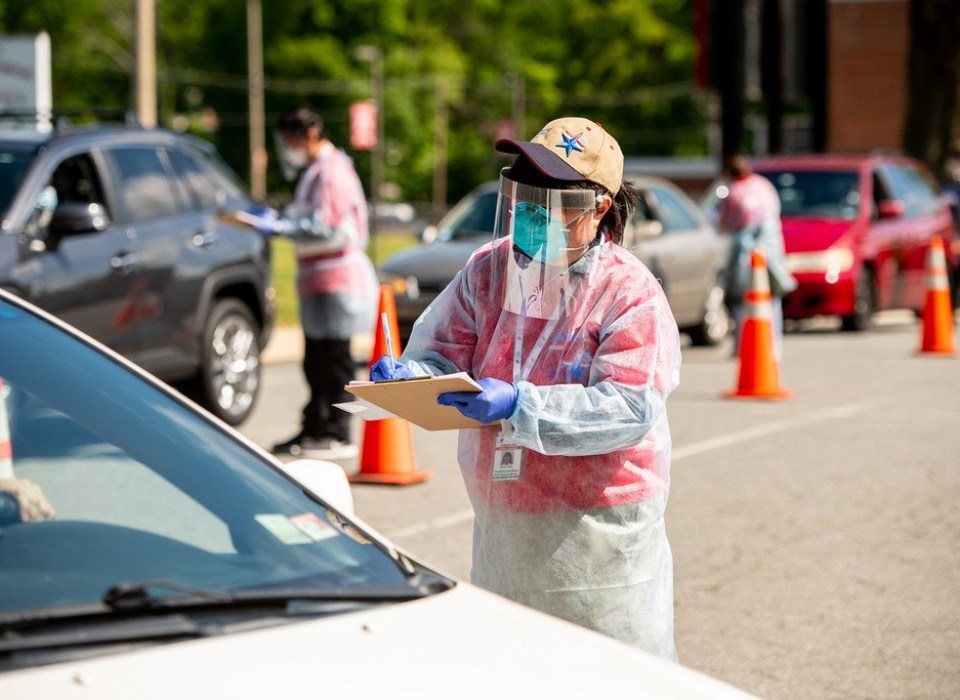
The funds come from the Federal Emergency Management Agency and will be used to purchase and distribute masks, respirators, eye and face shields, and other PPE necessary to protect county workers during the COVID-19 pandemic, according to a joint news release from the senators’ offices.
The money can also go toward tents, bags, door openers, and tables utilized by workers as part of the county’s pandemic response.
“We’re glad to see these federal dollars go towards managing, controlling, and reducing the spread of the COVID-19 virus,” Warner and Kaine said. “As Virginians continue to wear a mask, social distance, and get tested and vaccinated, we remain committed to ensuring that the Commonwealth has the necessary tools to continue to combat this health crisis.”
Fairfax County Board of Supervisor Jeff McKay says that, so far, FEMA has approved $11.5 million in requests for financial assistance from the county, including public assistance reimbursements for PPE, disinfectants, plexiglas, and communications expenses related to public health orders during the pandemic.
“I am appreciative of FEMA’s responsiveness in approving our submissions,” McKay said.
McKay’s office confirmed to Tysons Reporter that Fairfax County will receive $402 million in COVID-19 stimulus funds from the American Rescue Plan, the federal relief package passed by Congress and signed into law by President Joe Biden in March.
About $179.7 million will go to Fairfax County Public Schools, while the remaining $222.5 million will go to the county government. In addition, the Town of Vienna is expected to receive close to $15 million, and $2.8 million will be allocated to the City of Falls Church, according to Inside NoVA.
McKay says Fairfax County is still waiting for “specific guidance” from the Treasury Department for how to utilize its stimulus money, but the county hopes to continue initiatives like the Fairfax RISE grant program that were supported by previous relief funds.
“We expect the funds to be more flexible than the CARES Act funding so we will need some time to see what our options are,” McKay said. “Regardless, we are excited to have the support of the federal government and believe it will be crucial to continue to lift up our community.”
According to a March 12 memo from County Executive Bryan Hill, Fairfax County had finished allocating more than $200 million in the Coronavirus Relief Fund that it created with money from the CARES Act. The funds went to support public health programs, county government operations, and virtual learning at FCPS and to provide assistance for residents and businesses.
Hill also noted that the county will also receive additional funds from the American Rescue Plan for its emergency rental assistance program, though the memo doesn’t specify the amount.
Kaine and Warner announced on April 8 that Virginia will get more than $96 million, including $7.8 million for Fairfax County, to support access to safe and affordable housing for people who are experiencing homelessness or at risk of losing their homes.
The Board of Supervisors will formally accept its American Rescue Plan stimulus funds on April 27 when it approves the county’s fiscal year 2021 third-quarter review, according to Hill.
Photo via Fairfax County Government
Time is running out for community members to weigh in on Fairfax County’s first Countywide Strategic Plan, which will serve as a template for the county government’s vision and priorities for the next two decades.
A public survey on the strategic plan will close at the end of today (Thursday), though the county plans to conduct a fourth round of community engagement this summer before the document is revised and ultimately adopted in October.
The survey is available in English, Spanish, Vietnamese, Chinese, Korean, Arabic, Urdu, and Farsi. A form for individuals to submit more general feedback can also be found at the bottom of the strategic plan website.
“We view community engagement as a process that is never complete, and strongly encourage you to see the ways the strategies within this plan will positively impact your daily lives,” County Executive Bryan Hill said in a note to the community. “We are counting on you to help us track success, as well as how we can continue to improve — this is not only a government plan, but a way to shape our collective future in a way that benefits us all.”
The effort to develop a single, cohesive plan for the county’s future launched in early 2019 with an initial round of community engagement.
Hill presented what was supposed to be a final version of the document to the Fairfax County Board of Supervisors on Feb. 25, 2020, but the county decided to pause work on the initiative when the COVID-19 pandemic arrived in March 2020.
After the county spent a year revising the document to take into account the pandemic’s impact, Hill delivered a new proposed strategic plan to the board on Feb. 23, alongside his presentation of the county’s advertised Fiscal Year 2022 budget.
The Board of Supervisors was previously scheduled to adopt the plan in conjunction with its mark up of the budget on April 27, but county staff agreed to push the adoption date back to Oct. 5 after “several” supervisors suggested more time was needed for both the board and the public to review the plan and provide input.
“We absolutely think that this makes sense, because while we recognize that the plan was originally designed to be flexible, adaptable, and future-oriented, we also recognize that COVID is our first real test of that design,” Countywide Strategic Plan Coordinator Aimee Brobst said during a budget committee meeting on March 16. “We want to ensure that the board has adequate time to fully focus on the countywide initiative that we, of course, consider to be extremely important.”
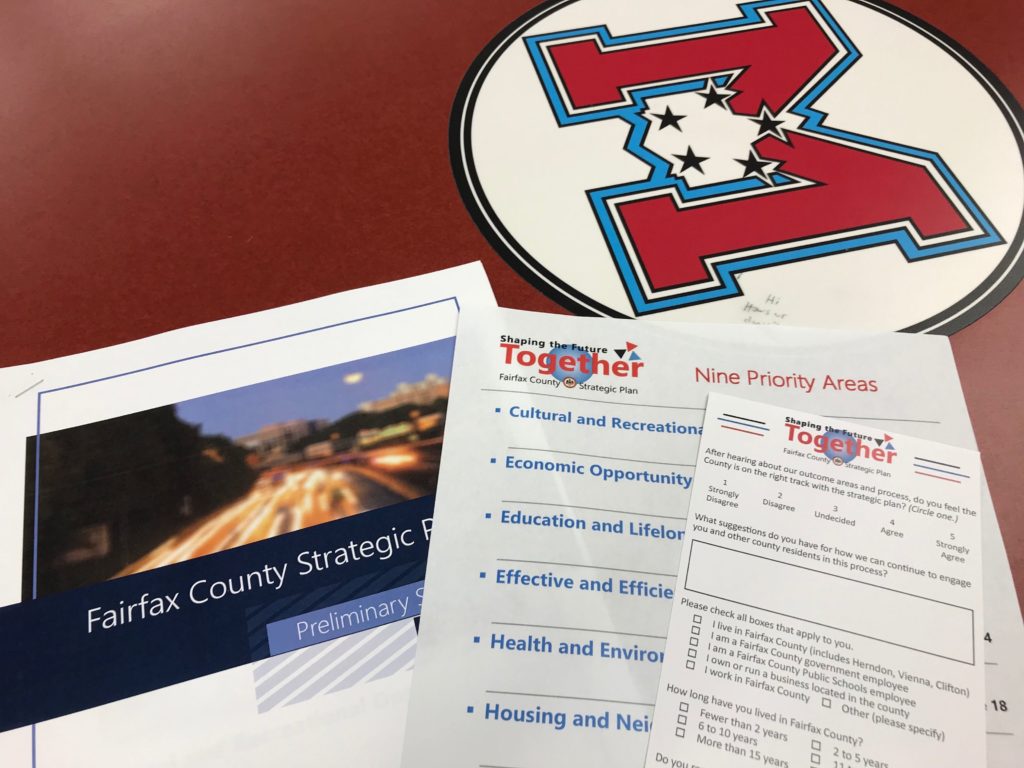
The 56-page strategic plan currently being considered categorizes the county’s goals and strategies for achieving those goals into nine priority areas:
- Cultural and recreational opportunities
- Economic opportunity
- Effective and efficient government
- Empowerment and support for residents facing vulnerability
- Health and environment
- Housing and neighborhood livability
- Lifelong education and learning
- Mobility and transportation
- Safety and security
In his note, Hill says that the pandemic has exacerbated existing health and economic disparities in Fairfax County, while posing “significant current and future budget challenges that will require us to focus our limited resources on our top strategic priorities and most urgent community needs.”
“Now more than ever, we must intentionally align existing government and community plans and priorities to respond to the areas of greatest importance to our residents, and strategically focus our resources on these priorities over the next 5, 10, 20 years and beyond,” Hill said.

Updated 4:50 p.m. to correctly attribute a quote to Martin Smith.
The McLean Citizens Association wants to see significant changes to the downtown revitalization plan slated to go before the Fairfax County Planning Commission this month.
Members of this board focused their criticisms of Fairfax County’s most recent draft plan to update the McLean Community Business Center on parking, building height, overall density, stormwater management, and schools.
The MCA passed a resolution on April 7 opposing the document unless the county made a number of changes, including:
- Reduce language encouraging underground and on-street parking in favor of language protecting surface parking
- Guarantee that a developer’s proposed building height includes all above-roof features
- Require a 10-year review midway through the plan’s proposed 20-year vision with regard to increasing density
- Eliminate language that encourages “innovative solutions” to school overcrowding if, as density increases, schools need to expand
Multiple board members said the resolution contains emphatic language in the wake of the Fairfax County Zoning Ordinance Modernization project. That initiative encountered vocal opposition from many homeowners’ groups, including MCA, but was ultimately approved 7-3 by the Fairfax County Board of Supervisors.
“We took a softer, more positive approach on zMOD and I’m not sure it got us anywhere with zMOD,” MCA board member Jen Jones said. “I think this is just as important as that was, and I think taking a stronger stance makes a lot of sense.”
Martin Smith, who opposes the McLean CBC plan completely, likewise voiced support for the resolution but said he wished the language were even stronger.
“I support this because I think it’s clear that we don’t like the fact that they haven’t responded to our previous suggestions, and I just think we have to make a stronger statement,” he said.
But some members said the resolution contained language that was too strong.
“I think that this is a document which we agree with on very many points,” board member Ron Bleeker said. “There have been some very good points which have been raised and should be considered. Whether this requires us to say we oppose the entire document, I think may not be the best approach.”
Fairfax County staff recently revised its drafted plan to revitalize downtown McLean in response to a wave of public feedback.
Dranesville District Supervisor John Foust and Fairfax County staff say they plan to further engage with the MCA.
“The provisions of the proposed comprehensive plan are very good, but we have time to make them even better before the plan is presented to the Board of Supervisors for approval,” Foust said. “The MCA’s resolution is helpful, and each of their recommendations will be considered as the language of the draft plan is finalized.”
Leanna O’Donnell, planning division director of the Fairfax County Department of Planning and Development, said her department is reviewing the resolution and will be reaching out to discuss the MCA’s concerns.
The draft will go before the Planning Commission on April 28 and the Board of Supervisors on May 18.
Photo via Fairfax County
Fairfax County’s government workers union urged the Board of Supervisors yesterday (Tuesday) to adopt a fiscal year 2022 budget that includes increased compensation for employees, whose year-long pay freeze would be prolonged if the county’s proposed budget takes effect.
The testimony came during the first of three public hearings on the advertised FY 2022 budget that have been scheduled for this week. There will also be hearings at 3 p.m. today and tomorrow (Thursday).
Service Employees International Union Virginia 512, which represents social workers, librarians, maintenance staff, and other general county government employees, says that its top priorities for the new budget are ending the pay freeze and establishing rules for collective bargaining.
“For over one year, we have worked tirelessly to keep the community running,” SEIU Virginia 512 President Tammie Wondong said. “We have done everything we can to keep Fairfax families healthy and safe, even when we have not been healthy and safe ourselves. Today, we are asking that you recognize and value county employees in this year’s budget.”
Wondong acknowledged that the county has made an effort to support employees during the COVID-19 pandemic by expanding leave options and providing hazard pay. The board is also considering offering one-time bonuses in the FY 2021 budget as part of its third-quarter review, which will be approved on April 27.
However, the union argues that that remains insufficient compensation for employees who are essential to maintaining county services but often struggle with the rising costs of housing, healthcare, and other needs.
Fairfax County Health Department employee Jenny Berkman-Parker said in a video that played during the public hearing that the most recent evidence of the ongoing pay freeze’s impact on her family came in the form of an email from her son’s university, which announced that it will raise tuition costs by 5% next year.
“I was trying to be understanding the first year. The second year is definitely more stressful,” she said. “…Now that we’re having pay freezes for two years in a row and we’ve had pay freezes in the past, my income is no longer keeping up with the cost of living.”
Fairfax County Public Schools employees would also have their pay frozen again under the advertised FY 2022 budget. The Fairfax County School Board requested a 3% pay raise for all employees, but that was not incorporated into the county’s proposal, which increases funding for the school system by just $14.1 million.
The Fairfax County Federation of Teachers, which represents all non-administrative FCPS staff, said in a press release issued on Monday (April 12) that 60% of respondents to a poll it conducted reported living paycheck to paycheck. Three out of four respondents said they have considered leaving for another school district due to the pay freeze.
“These statistics should not be the case in one of the wealthiest districts in the Commonwealth,” FCFT President Tina Williams said. “…Our district and county must do better.”
County Executive Bryan Hill’s proposed budget largely limits spending in response to the ongoing demands of the pandemic and uncertainty about the county’s future recovery.
When he presented his proposal on Feb. 23, Hill told the Board of Supervisors that it would cost more than $55 million to fund the county’s employee compensation program, including almost $30 million for a 2% market rate adjustment. Read More