
A wallet was stolen in Reston — and several of the cards inside wound up in Vienna the next day.
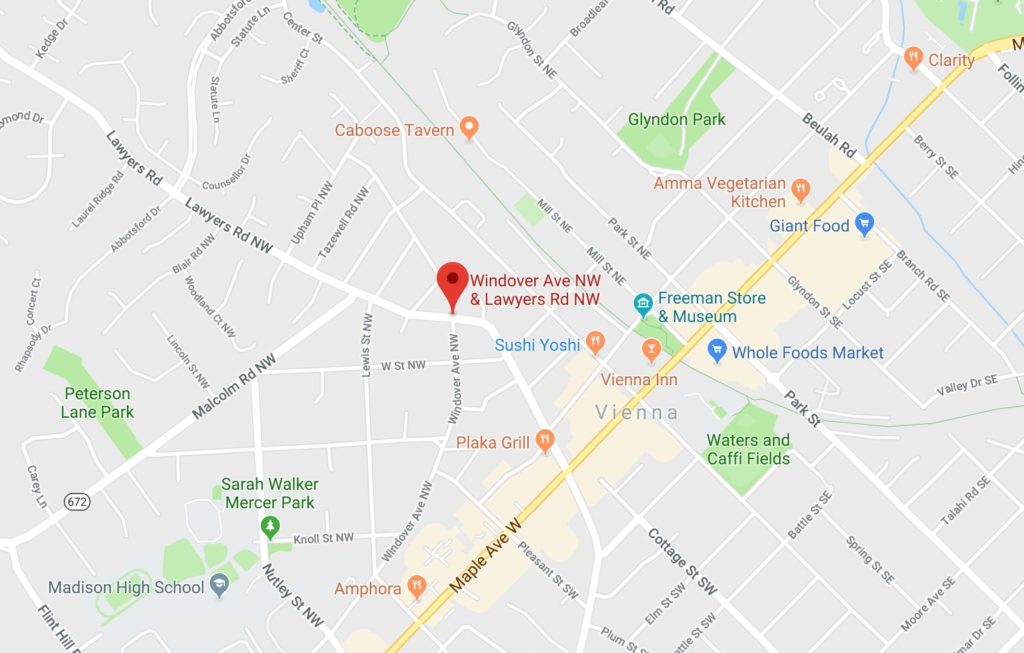
The discovery was made Saturday morning at the intersection of Lawyers Road and Windover Avenue NW.
“A citizen was walking their dog when they found a driver’s license and a store card on the road and brought them to the police station,” said this week’s Vienna Police Department crime report. “When an officer notified the owner, they were advised the cards were in their wallet which had been reported as stolen in Reston, Virginia the previous day.”
The wallet, its other contents and the person who took it remain at large.
Map via Google Maps

Currently, e-bikes are not allowed on Fairfax trails, but that could be changing soon.
NOVA Parks regulations currently group motor-assisted bicycles in with motor vehicles, and they are only permitted where motor vehicles are allowed. The regulation was originally intended to regulate the use of mopeds and does not fully address e-bikes.
As a result, NOVA Parks is recommending a change in Fairfax County’s regulation to allow legal use of e-bikes where other pedal-powered bicycles are permitted.
The new regulations add a specific section — fittingly section “E”– governing e-bikes:
Electric power-assisted bicycles (e-bikes) equipped with pedals that allow propulsion by human power are considered bicycles and non-motorized vehicles for the purpose of these regulations, and are allowed in the same places that traditional, pedal-powered only bicycles are allowed.
Under federal law, e-bikes are broken up into distinct classes, but in Virginia, e-bikes are regulated by power with a maximum allowed speed of 25 miles per hour. In Fairfax, the new regulations would limit e-bikes to those with 750 watts of power or less and limit speed to under 20 miles per hour. E-bikes would be allowed anywhere pedal bikes are.
Like pedal bikes, guidelines say e-bikers should yield to pedestrians and equestrians.
A study by NOVA Parks found that e-bike users exhibit nearly identical behavior as regular bike users, with lower than standard bike speeds and a similar crash rate.
Allowing e-bikes in Fairfax can be a contentious topic, with safety concerns about the size and speed of the vehicles. Large vehicles fitting under the nebulous “e-bike” categorization have been spotted speeding along the trail.
But Alexis Glenn, a board member of the Fairfax Alliance for Better Bicycling (FABB) and an e-bike rider, said it’s practically impossible for most bikes to go more than 10 or 15 mph and are often passed by other pedal-powered bikes on the trail.
“Safety on trails will always, always be an education and culture issue, not an equipment issue,” said Glenn. “The weight of e-bikes actually makes it take longer for a rider to get them up to or maintain high speeds. And, if an e-bike user is somehow able to buzz down a trail at 20 mph without encountering a curve, bump, or other users to slow her down, then the battery will drain fast, rendering the e-bike to just a bike.
“My inclinations aside, yes, speeds are a valid concern and NOVA Parks are working on regulations regarding this,” Glenn continued. “I’ll say it again, speed is a user education issue, not an equipment issue. When a driver speeds recklessly we don’t cite the make and model of his vehicle as the culprit, it’s his bad behavior.”
Glenn said FABB supports the proposed policy change as part of promoting greater use of bicycles for recreation and transportation.
Judy Pedersen, public information officer for Fairfax County Park Authority, said the Park Boards are likely to make a decision on the regulation in the spring.
But in the meantime, Pedersen asked e-bikers to obey current park rules and keep off the trails.
“Until the new regulation is approved by both Boards riding e-bikes on trails would be a violation of park regulations,” said Pedersen. “Current park regulations define any vehicle with a motor (gas or electric) as a motor vehicle, therefore excluding their use on park trails.”
Tysons Company Tops Fortune List — Tysons-based Hilton is No. 1 on Fortune’s new 100 Best Companies to Work For list. The hotel operator was also joined by local companies Navy Federal (#29, Vienna), Capital One (#39, Tysons), CustomInk (#86, Merrifield) and Mars Inc. (#98, McLean) on the annual list. [Fortune, Twitter]
State of McLean: Under Construction — “McLean is poised to benefit from a raft of infrastructure and revitalization projects, Supervisor John Foust (D-Dranesville) told the Greater McLean Chamber of Commerce Feb. 14 [during] his annual ‘State of McLean’ speech.” [InsideNova]
Falls Church Property Assessments Rise — “Property values are on the rise in Falls Church, according to 2019 assessment data released by the city. Overall residential and commercial property values have increased from January 2018. Commercial property values rose by 4.3 percent and residential real estate values by 2.93 percent over the last year.” [Patch]
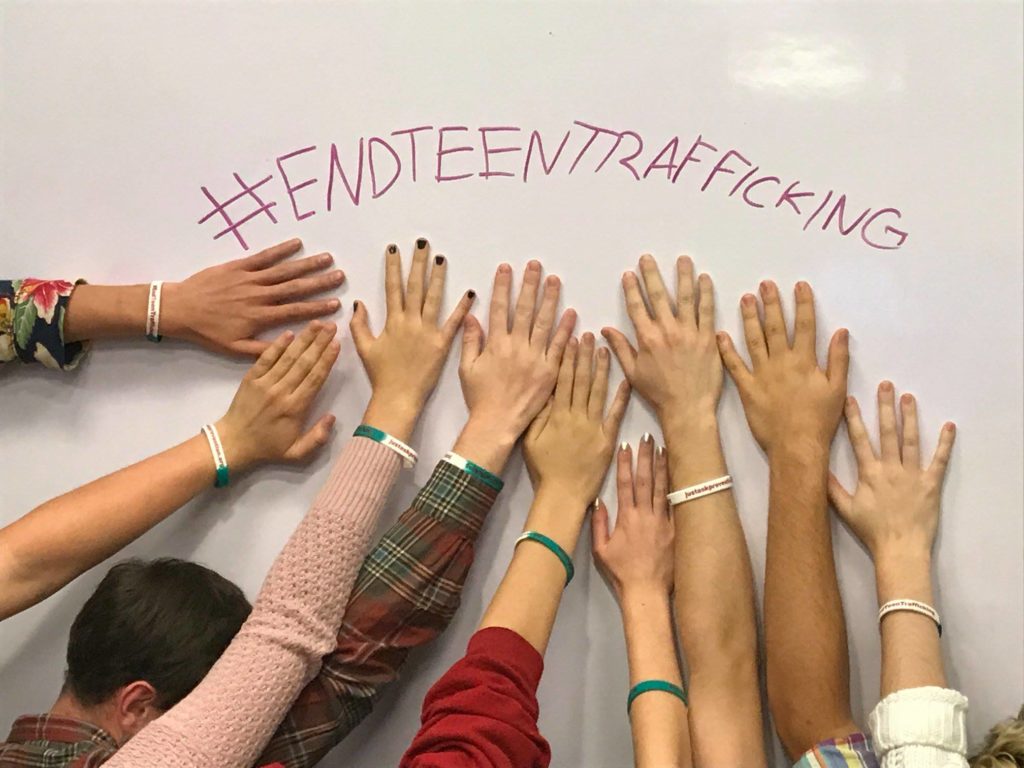
Women’s and safety organizations around McLean are coming together for a panel discussion on combatting local teen trafficking.
In 2017, Virginia ranked sixth in the number of human trafficking cases on federal court dockets. There were 33 active human trafficking cases, most of them in the Eastern District of Virginia, which includes Northern Virginia.
The panel presentation will be led by the Just Ask Prevention Project, a nonprofit based out of Tysons dedicated to combatting sex trafficking helmed by former Detective Bill Woolf. Woolf first became involved with the fight against sex trafficking after he discovered a young victim who was being trafficked by a gang.
The event is scheduled for next Tuesday (Feb. 19) at 7 p.m. at the McLean Presbyterian Church (1020 Balls Hill Road). The discussion is free and open to the public, though the website includes an option to donate to Just Ask Prevention.
The event is being co-hosted by the Women’s Club of McLean, the Safe Community Coalition and the New Dominion Women’s Club.
According to the event description:
“Trafficking and exploitation of teens is appallingly prevalent and underreported in Fairfax County. Help us eradicate this horrendous scourge by learning what makes children vulnerable, how to identify the signs of a possible victim, and what to do if you suspect a teen is being exploited.”
Photo via Facebook
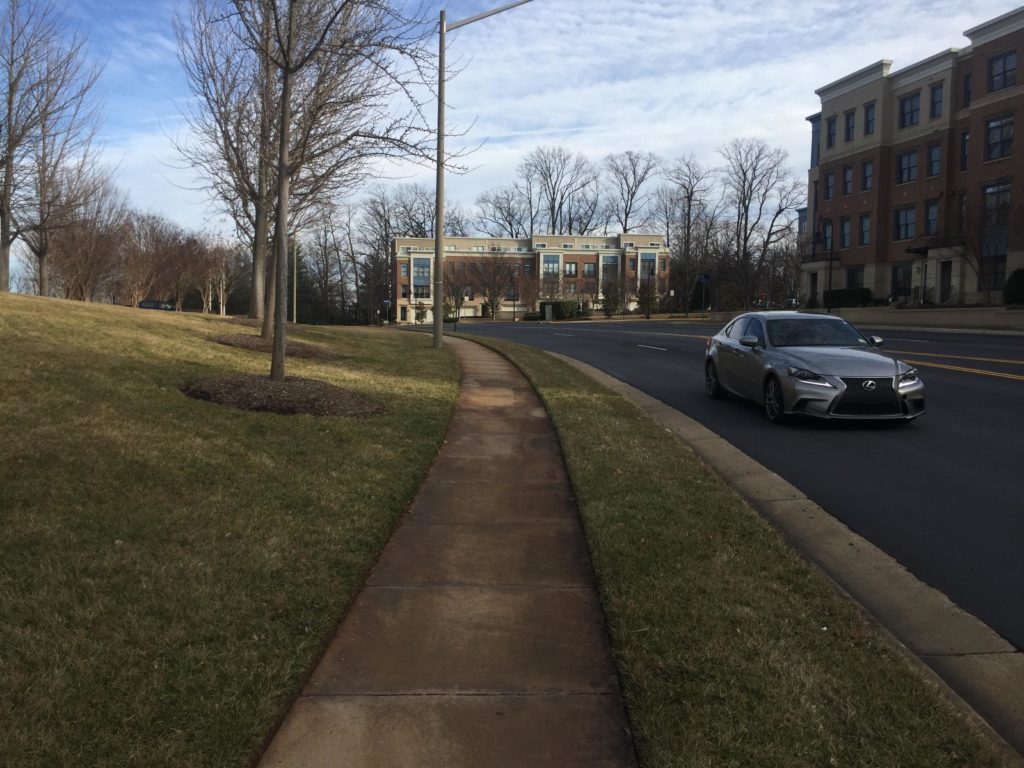
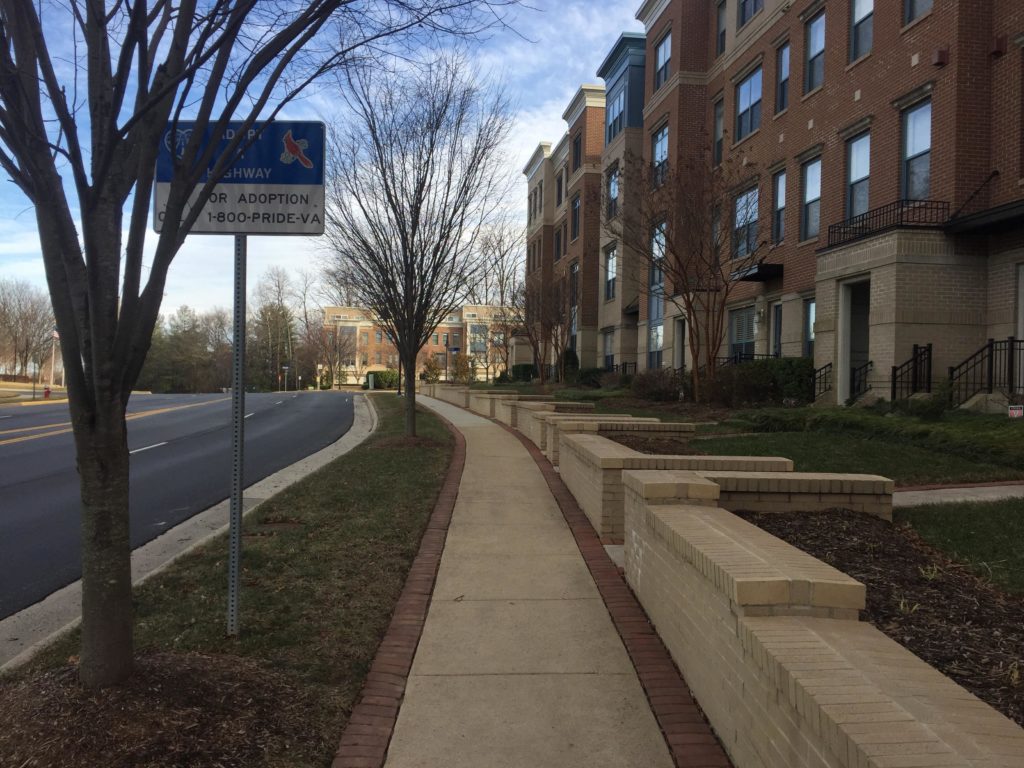
More and more sidewalks are coming to Tysons, but not all of them are created equal.
Sidewalks have been getting a lot of attention lately, They’re credited with the power to revitalize the economy and save lives, but sidewalks, like all infrastructure, need planning, engineering and investment — and some are implemented better than others.
Modern designers understand the subtleties of how to make a sidewalk safe and comfortable, while exciting new materials offer new technological possibilities and economists are coming to better understand the investment potential of sidewalks.
The best tools in any arsenal are multitaskers, and sidewalks aren’t just for moving. Just like we use streets for both driving and parking, we use sidewalks both for walking to a destination and also for standing still once we arrive.
In dense residential areas, like The Boro or The Mile, sidewalks can provide an outdoor common space, like a shared living room, for those living in small apartments. Sidewalks are also a good investment — they contribute thousands of dollars to property values. Good sidewalk design can even make a street safer for drivers.
Anatomy of a Sidewalk
The National Association of City Transportation Officials has a lot to say about how to engineer sidewalk space. In its design guide, it carves sidewalks up into three parallel zones – and while all three are for people, only one is actually about walking.
The frontage zone meets the facades of buildings and functions as an extension of them. It is usually home to cafe seating, benches, signs, staircases and entry ramps, and in residential areas individuals’ front gardens.
It can provide small nooks where you can stand under an awning and fire off a text message, or a place for eager customers to wait in line at the hip new cupcake shop. The frontage zone, while public, feels most closely associated with the building it touches.
The through zone is where pedestrians actually travel. It’s a clear lane for foot traffic, extending straight across multiple blocks, free of obstructions and wide enough for wheelchair users or groups of walkers to pass one another. It is often distinguished from the other two zones by a slightly different paving material. In order for pedestrians to move quickly, comfortably and efficiently, the through zone must be wide (at least five feet and up to 12) and unobstructed.
The furniture zone, also called the curb zone, is both the access to and the barrier from the street.
Traditionally, it is home to trees, light posts, traffic signs, utility boxes, newspaper stands and bus stops. In the 21st century, it gives us access to our wealth of new mobility options: car rental kiosks, Capital Bikeshare stations, pick-up zones for Uber or Lyft. This is where shared scooters ought to be parked.
Like the frontage zone, it can have benches or picnic tables, but this space feels entirely public, whereas benches in the frontage zone seem to belong to the adjacent building. The objects, furniture, and especially trees in this zone protect pedestrians from car traffic but the bus stops, taxi stands and bikeshare stations let them enter it on their terms. Like the wall of your house with its doors and windows, it protects you from the elements while also forming a point of access.
All sidewalks have these three zones, although they might blur together or be very narrow. Designing a good sidewalk, though, means understanding the role of each. Many sidewalks in Tysons, for lack in investment, don’t have the essential elements that fully flesh out the frontage and furniture zones. These sidewalks, simple concrete paths through grass, are incomplete.
Sidewalk Engineering
Concrete is classic, but new materials offer exciting possibilities for the sidewalks of the future. New kinds of sidewalks could double as automatic storm drains, use recycled materials, or generate electricity — and the D.C. area is on the cutting edge.
Engineers in many cities around the world have started experimenting with using recycled rubber as a paving material for the last two decades. Results have been mixed, with maintenance costs higher than expected in some places, but the rubber has a threefold advantage. DC has been a national leader with this technology, meaning Tysons has a lot of local expertise to reference.
First, by reusing waste rubber, the material is ecologically friendly.
Second, this rubber paving is usually slightly porous — meaning it absorbs some water during a heavy rainfall, helping deal with the thorny problem of stormwater management and preventing puddles from accumulating.
Third, as trees on sidewalks grow, their roots can push up and out, dislodging cement blocks and making the through zone inaccessible to those in wheelchairs. Rubber paving, because of its flexibility, can actually accommodate shifts in root structures without cracking.
Another new type of sidewalk has only made its way out of the laboratory a few years ago. In 2013, the George Washington University campus in next-door Loudoun County unveiled the world’s first walkable solar-powered pavement. This “Solar Walk,” part of the public campus sidewalk, uses solar panels embedded beneath a reinforced material to generate electricity that can not only light the sidewalk up at night but also send some power back to nearby Innovation Hall.
However, these flashy technologies have their critics, and it may be that traditional bricks offer greater value and some of the same benefits as the rubber material.

Three men were arrested in a Tysons Corner Center parking deck after allegedly passing counterfeit bills at the Lord and Taylor store.
Store employees called police to report the crime around 8 p.m. Wednesday. Officers stopped the men in their car and recovered additional counterfeit currency, narcotics and brass knuckles, according to police.
More from FCPD:
Andres Moreno, 34, Warren Missouri, 26 and Michael Allen 42, of Baltimore, Md. were arrested for possession of schedule I or II narcotics, carrying a concealed weapon, forging bank notes, obtaining money by false pretenses, possession of marijuana and obtaining identifying information to avoid arrest.
Also Wednesday, the McLean Islamic Center, which recently won approval increase parking, was burglarized by a man entering the building through the window.
The man was described as 6′ tall, wearing a dark jacket and jeans, and driving a four-door beige car, according to FCPD.
Photo courtesy FCPD
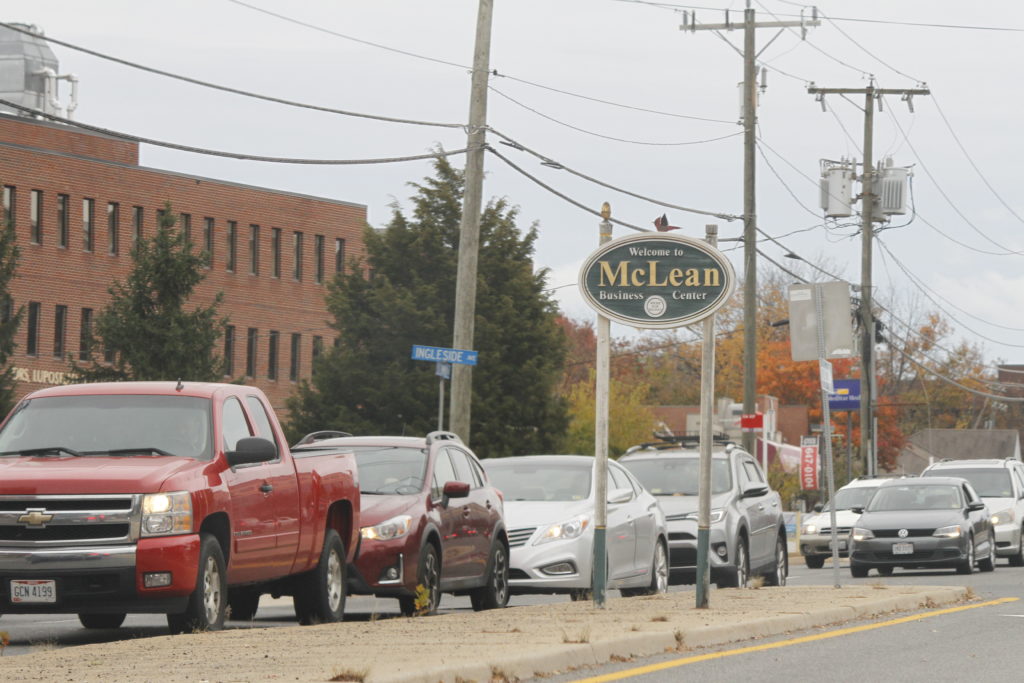
McLean, like nearby Great Falls and Wolf Trap, are all still in the Top 50 for Bloomberg’s 2019 Richest Places ranking, but the elite suburban communities took a dip in this year’s rankings.
McLean’s average household income is $283,992, a slight increase over 2016’s $280,225 and 2015’s $268,997, which was what the 2018 rankings were based on.
But that wasn’t enough to keep the locality from falling five spots in this year’s ranking. It was surpassed by newcomers like Rumson, a wealthy corner of Monmouth County in New Jersey.
Great Falls ranked higher than McLean, at number 16 in the rankings. It too took a hit, falling from a lofty 14th place with its $309,599 average household income.
Wolf Trap, currently ranked 42nd, fell three places. The neighborhood’s average household income is $251,610.
Overall, Fairfax County was ranked second in U.S. News & World Report’s richest counties, with a median household income of $117,515, between Loudoun County in first place and Howard County, Maryland in third place.
It’s Valentine’s Day and there’s plenty of options around the area for romantic gestures, from a singing quartet to a wide array of restaurant specials.
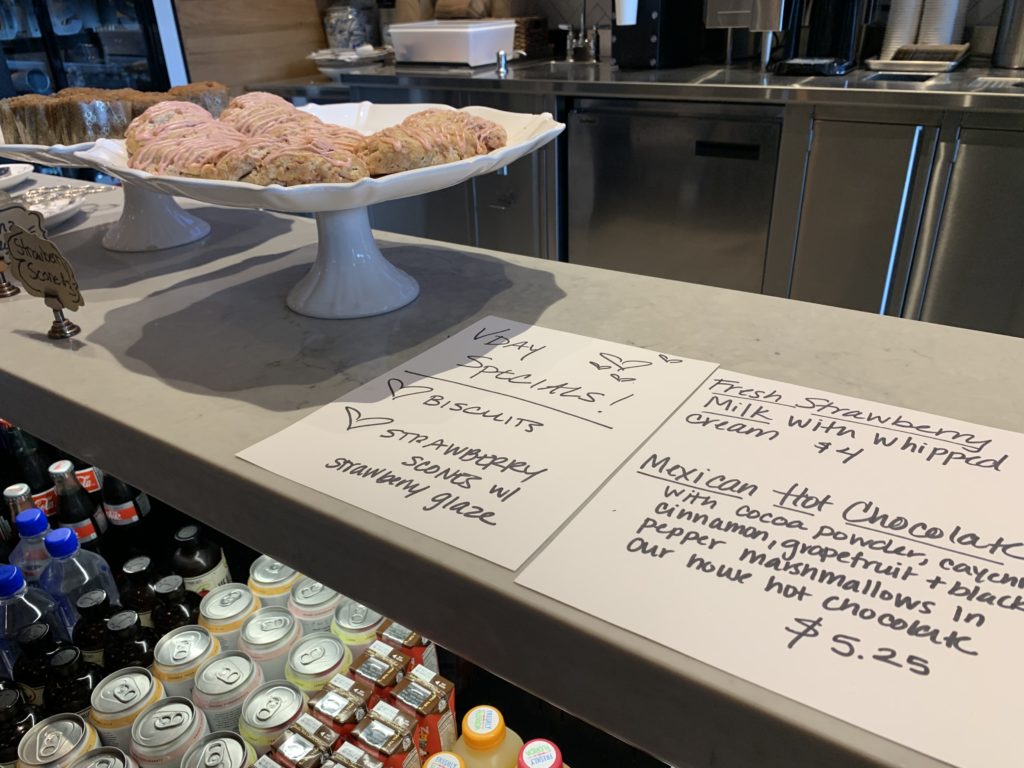
But if you’re looking for something a little more low-key, Stomping Ground in Tysons Galleria’s Taste of Urbanspace has a few special treats for today only.
In addition to the usual biscuits, the location will be offering strawberry scones with a pink strawberry glaze for $3. The scones — of course — have been cut into heart shapes.
In keeping with the pink theme, Stomping Ground will also have fresh strawberry milk with whipped cream for $4.
The last special is something of an inexplicable Valentine’s Day specialty: Mexican Hot Chocolate. The drink has cocoa powder, cayenne, cinnamon, grapefruit and black pepper marshmallows in a house hot chocolate for $5.25.
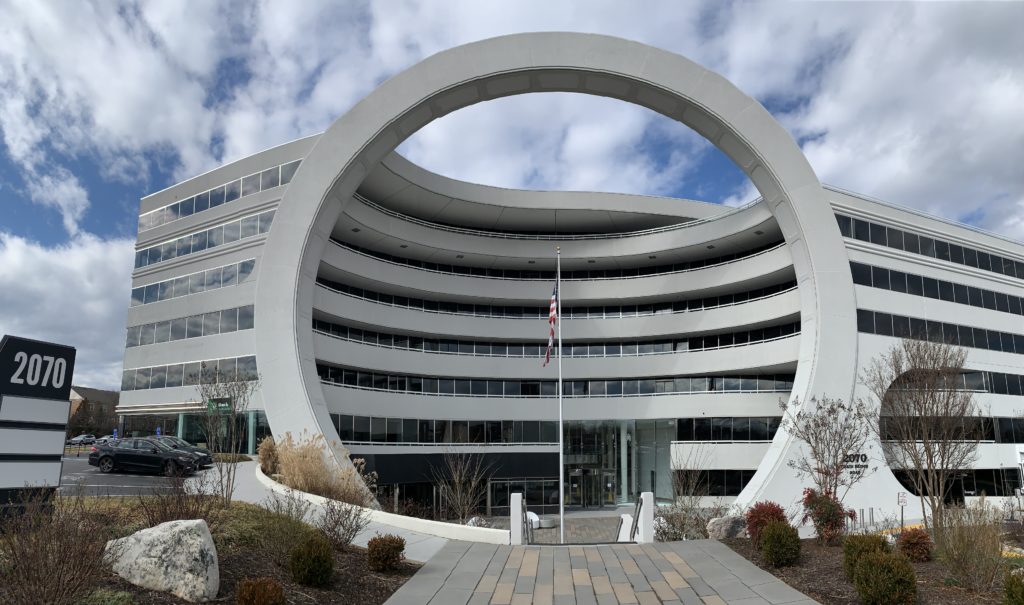
For all its faults, it’s hard to say Tycon Courthouse doesn’t stand out.
More locally known as the “Toilet Bowl” or “Stargate” building, Tycon Courthouse on Route 123 just west of Leesburg Pike is most notable for it’s over seven-story tall ring in the front of the building.
But there was a time where the building, labeled the ugliest in Virginia in Business Insider’s 2018 list of ugliest buildings in every state, was once the height of local architecture. It was, at one point, the largest office building in Tysons and the first structure to include massive structure parking, able to accommodate a then-record 900 cars.
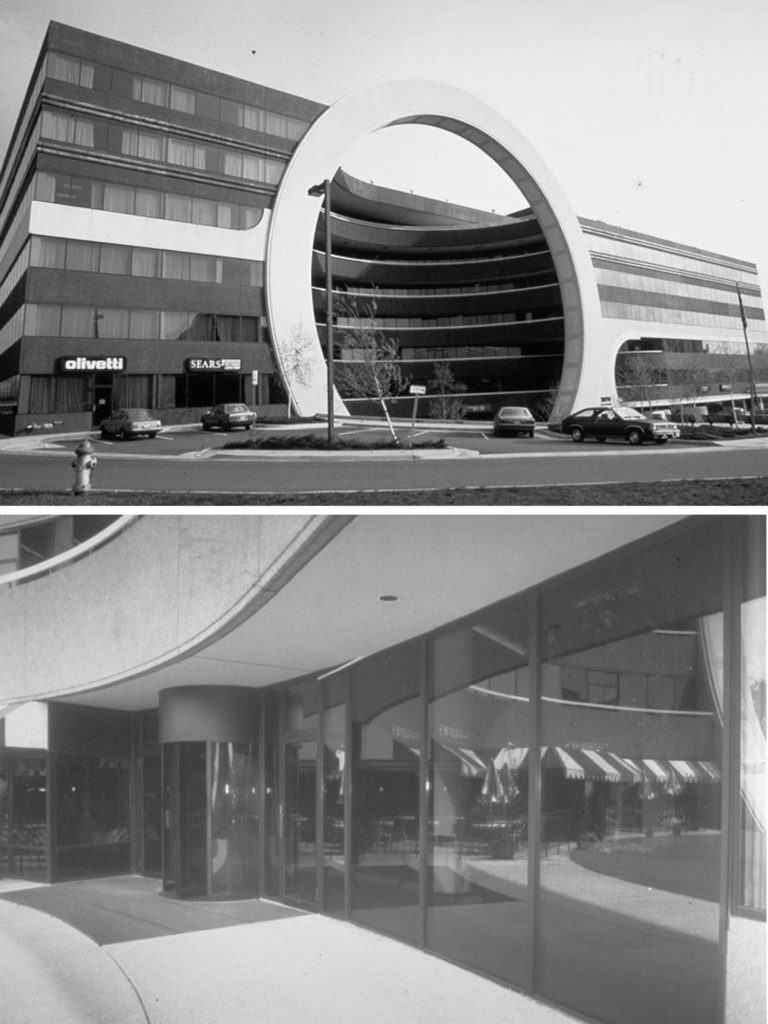 It was built in 1983 in the middle of a “screaming architecture” fad — a Washington Post article at the time said the buildings were designed to be their own advertisements. They were reflective of peak Reagan-era style, where notability was more important than pleasing aesthetics. Architects Volker Zinser and Barry Dunn were credited with the project.
There are several urban rumors about the project, like that it was designed to look like an “O” for the Olivetti Company, or the lenses of a Nikon camera, but an interview with Zinser at the time said he was inspired by a book about 19th-century French architects who designed projects that explored geometric volumes.
In keeping with the style, Zinser said the fact that the building was being talked about was more important than what people were calling it.
The screaming architecture fad was centered around Fairfax County. Experts at the time called it medieval, noting that businesses were grabbing spaces and turning them into private fortresses.
The Blade Runner-esque Tysons Office Center on Route 7 and Gallows Road, sometimes called the “Flash Cube” building, and Tycon Towers, the 17-story “shopping bag,” were other local examples of this design.
Tycon Courthouse in the 1980s photo via Bonstra Haresign Architects
Robbery Attempt in Falls Church — “The victim was getting out of a van when a man walked up to him, displayed a handgun and demanded money. The victim quickly backed away and the man ran away.” [FCPD]
Students, Retirees Send Valentine’s Day Care Packages — “On Jan. 27, nearly 150 individuals, from kindergartners to octogenarians, took part in The Potomac School’s third annual Intergenerational Valentine’s Day Service Event, hosted by Vinson Hall Retirement Community.” [McLean Connection]
Snow in the Forecast — “The first in this trio of storm systems is slated to arrive Saturday, with a second one possible Sunday and finally another targeting late Tuesday into Wednesday next week. The Saturday and late-Tuesday-Wednesday systems appear to have the most wintry potential locally, but they are also far from sure bets.” [Washington Post]