
A new report confirms what anyone who has driven to a business in Vienna might have suspected: getting there by car can be a nightmare, strict zoning rules can make storefronts hard to find, and much of the retail space is going to need some heavy maintenance if it hopes to survive.
An economic development report from consultant Streetsense and real estate consulting firm RCLCO examined the economic health of Vienna and made recommendations for where it can be improved.
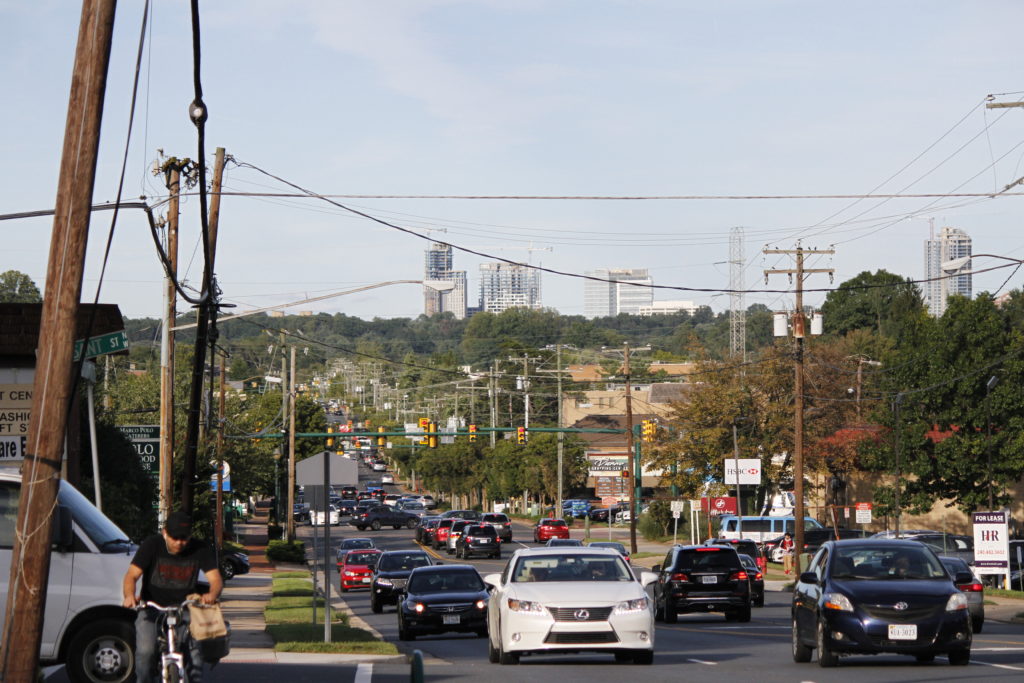
“Retailers reported that the greatest pain point for customers arriving by car is heavy traffic on Maple Avenue and adjacent streets leading to commercial nodes,” the report said. “The extended travel time results in customer perception of inconvenience.”
The report notes that many streets in the town are designated with turning restrictions, which limits vehicle circulation around town and poses an inconvenience to customers, particularly those trying to reach commercial areas when entering the city along back roads — for example, people traveling to Vienna from the Mosaic District.
The report also said a lack of a cohesive parking strategy is another pain for visitors:
Although there are approximately 200+ public parking on-street and off-street spaces available to visitors in the core of the Town with a larger existing supply of parking spaces in privately-owned shopping centers along Maple Avenue, customers reported challenges in finding convenient parking during peak evenings when customer dwell times in Town are longer due to restaurant dining. At this time, there is no shared parking structure/agreement to support complementary utilization of available parking lots across disparate shopping center properties and public parking.
The report says the challenges of driving in Vienna are exacerbated by the clear delination between residential and commercial districts, which leaves few residents within walking distance of much of the town’s retail.
“In Vienna, there are few residents living within 0.25 mile of the commercial core of town when measured from the intersection of the W&OD Trail and Maple Avenue,” the report said. “As such, it is expected that most customers will arrive by car and must find parking within convenient proximity to their final destination storefront.”
The report said that these challenges put Vienna behind regional competitors like Old Town Alexandria, the Mosaic District, and Falls Church.
According to the report, Vienna currently has a 9% retail vacancy rate, but over half of that vacancy is in Class B space — mid-quality facilities that will require maintenance for a national retailer to operate.
“Class B space makes up the majority of spaces within the Town at 45%, or 472,000 SF, of the total inventory,” the report said. “Though present throughout the Town, most Class B space is present in the Maple Avenue node.”
To grow a healthier commercial base, the report recommends that the Town of Vienna loosen up a little bit in regards to flexible zoning, something that could be addressed as part of the town’s ongoing zoning code rewrite.
“Although Maple Avenue, Church Street, and Mill Street permit a variety of uses as-of-right — mainly retail, restaurant, light manufacturing and professional offices (although only in ‘office buildings’),” the report said, “there are still a number of emerging uses that are highly complementary to retail tenants and that in fact drive visitation to the commercial nodes that are either not permitted or that require conditional use permits or high minimum off-street parking that inhibit concept testing in the market.”
The report also recommends that the town relax some of its restrictions on creative use of frontage zones to help retailers market their stores.
“The storefront and its frontage zone is a retailer’s stage, and often helps grab a new customer’s attention or shapes a first impression,” the report said. “As such, it is critical that retailers are given the opportunity to maximize visual merchandising, signage, and advertising just outside the store. At this time, the Town prohibits blade signs that extend out onto the frontage zone as well as outdoor display of merchandise.”
The report says local businesses cited these restrictions as detrimental during feedback sessions.
“Customers’ attentions are often short-lived; especially now as they are being more selective in how and where they spend their time and their dollars,” the report said. “Now, more than ever, storefronts will need to carefully consider how to address a mix of temporary/ad-hoc and permanent signage and use classic, timeless approaches and even subtle touches, including creative outdoor display and dining, blade signs, and sandwich boards.”
The City of Falls Church is keeping some of the relaxed restrictions on noise levels for businesses put into effect during the pandemic, but it isn’t going as far as some on the city council have wanted.
The Falls Church City Council voted 6-1 on Monday (May 10) to accept city staff’s recommendation to adopt a new noise ordinance that codifies the extension of what is considered “daytime hours” for noise levels up to 10 p.m.
The change was implemented during the COVID-19 pandemic to help local businesses. However, a suggestion to extend the definition of daytime hours to 10:30 p.m. was not approved.
A proposal to increase the maximum decibel levels was also struck down after staff gathered city council members in a field to hear what different decibels sounded like. The current level for commercial districts of 65 decibels will stay intact.
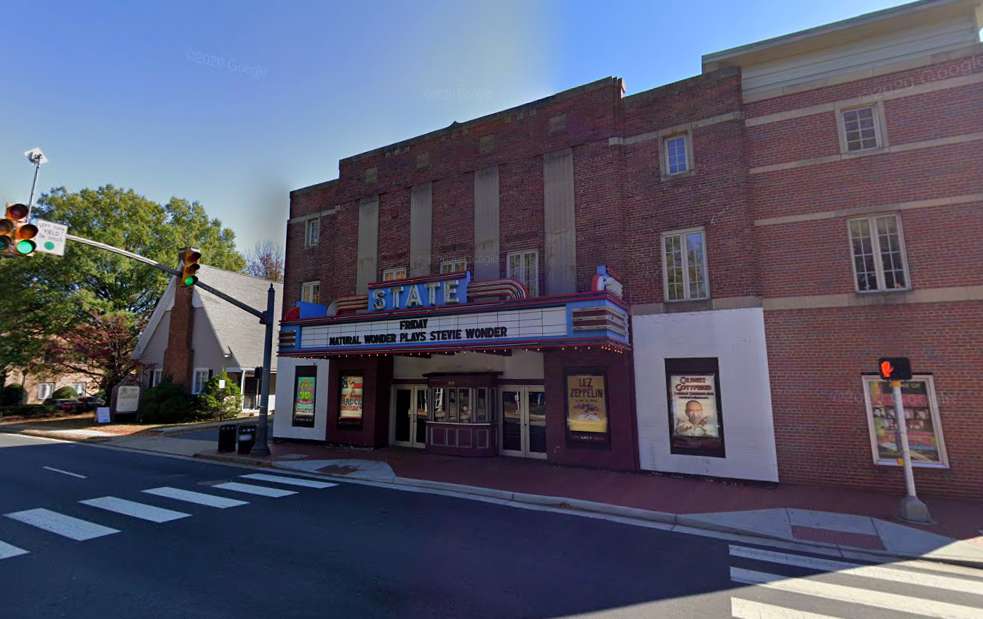
Some councilmembers worried this could set up problems for some businesses down the road. In particular, Councilmember Ross Litkenhous said he was concerned about entertainment venues struggling to come back, like the State Theater.
“I’m not convinced that, for a weekend night, for a venue that wants to play music, that 65 decibels is the appropriate level,” Litkenhous said. “Is it 75? I don’t know, but keeping it at 65 decibels is setting those businesses up for controversy.”
Litkenhous was the sole vote against the approval of staff’s recommendation for the ordinance.
Photo via Google Maps
The Madeira School in McLean could undergo an extensive overhaul if its application goes through, but down the road, Fairfax County staff say the school might consider being designated as a historic district, among other long-term changes.
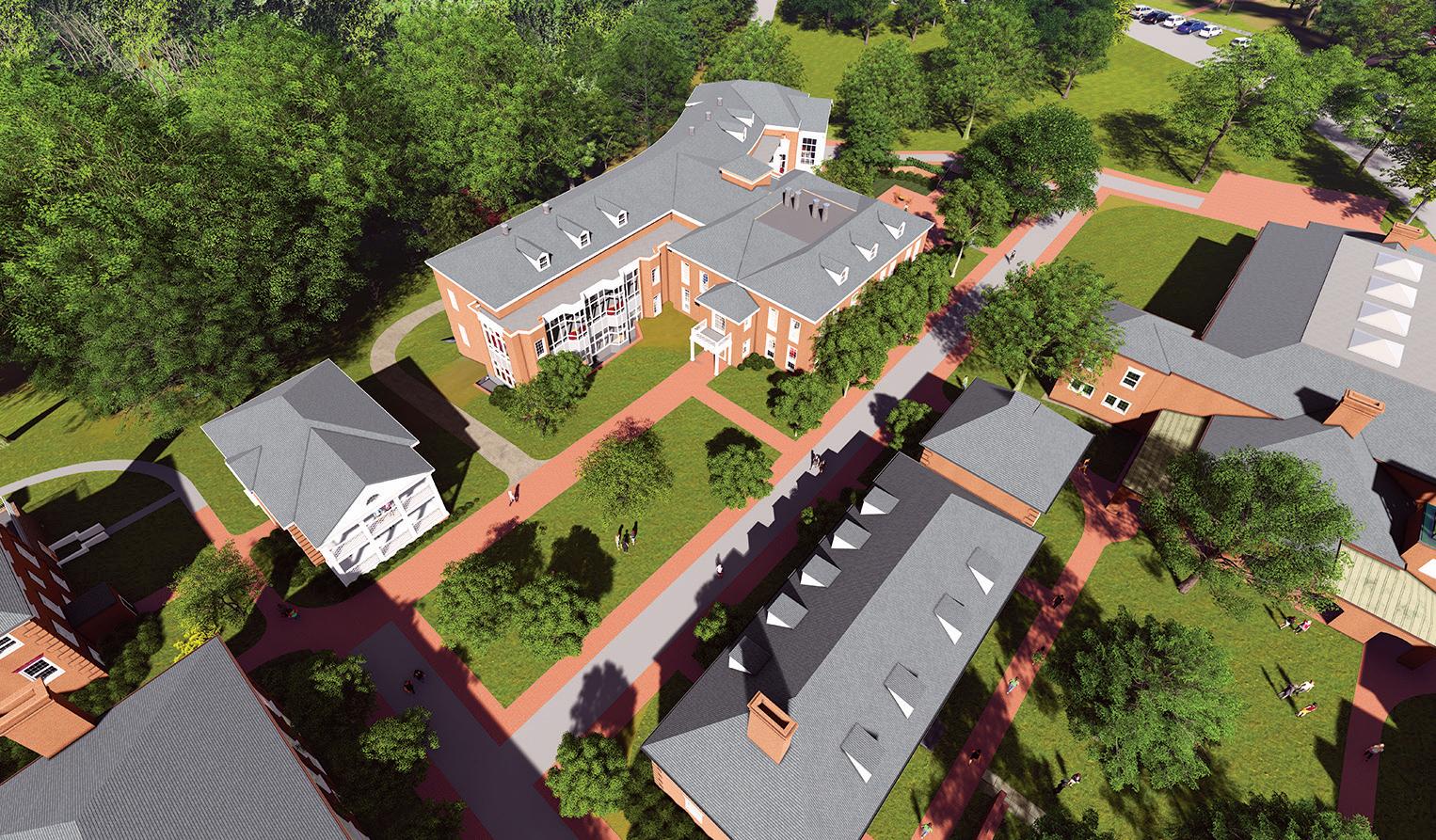
The all-girls private school is seeking to tear down several buildings on its Georgetown Pike site so they can be replaced with new educational facilities, like a science and technology hall and new stables.
In an extensive report on the project, county planning staff raised objections to a couple of items, but generally expressed support for the plan and recommended approval.
“Staff finds that the application, with the proposed development conditions contained in Appendix 1, is in harmony with the Comprehensive Plan and the standards set forth within the Zoning Ordinance,” staff said in the report. “For these reasons, staff supports approval of this application.”
Among the buildings being demolished are a farmhouse built in 1930, a cabin moved to the campus in 1989 — but the original date of construction is unknown — and a science building constructed in 1975 with a unique architectural style.
While staff recommends approval of the demolition, the recommendation comes with the condition the school obtain background information on the buildings and thoroughly photograph them before they are knocked down.
Moving forward, staff said the applicant should nominate the Madeira school property as a historic district:
Staff believes the history of the development of the school in the 1930s, as well as the community impact of the school, make it a potential candidate for listing on the Inventory of Historic Sites. If a nomination is completed, the History Commission will then review the nomination and determine if it meets inventory criteria. The listing on the Inventory of Historic Sites is an honorific designation and does not place any additional use or development restrictions on the property. It is used as an educational tool to create awareness of historic structures.
Staff also noted that listing the school on the inventory could provide an opportunity for the Department of Planning and Development to identify mitigation strategies to avoid negative impacts from future development.
Staff are also working with the applicant on transportation improvements at the site — namely, a realignment of the entrance to the school. The school has not agreed to the modification, since it argues that there is no planned increase in school capacity.
Despite the disagreement, staff said the issue was relatively minor.
The Fairfax County Planning Commission will hold a public hearing on Madeira School’s special exception amendment application at 7:30 p.m. on May 19, with a Board of Supervisors hearing scheduled for 3:30 p.m. on June 8.
Image via Madeira School

It’s unclear what he was protesting, it’s unclear why he was protesting, but Vienna has an angry chicken-man.
According to last week’s Vienna Police Highlights, on May 2 around noon, there was a trespassing call for a man harassing customers at Clarity, an American-dining restaurant at 442 Maple Ave E.
Officers responded to the report of a man dressed in a chicken costume harassing customers at the restaurant. Members of a political party were having a private gathering at the restaurant. The man dressed as a chicken was with an opposing political party. The manager of the restaurant trespassed the man from the property. The man moved to the sidewalk in the public right of way to continue his protest.
The police report does not specify the exact nature of the political disagreement, but it clearly ruffled some feathers.

McLean has had its fair share of contentious development debates, but to the relief of everyone involved, a planned senior living facility at 1638 and 1642 Chain Bridge Road didn’t go that way, instead getting a unanimous vote of support from the Fairfax County Board of Supervisors.
Tension over the future of development in McLean has been brewing in recent weeks with the much-debated downtown revitalization plan headed for a delayed planning commission public hearing on May 26.
In this case, however, Dranesville District Supervisor John Foust says the cooperation and willingness to compromise from both developer Tri-State Development Companies and the nearby residents resulted in a smooth process.
The plan is to build 35 independent living units, five of which are expected to be sold as affordable, and a central clubhouse area for residents to gather.
“This has been a really good experience, working with the community and this developer,” Foust said. “Sometimes you don’t come away with such a good taste in your mouth after you go through a difficult land use case, and this wasn’t simple, but everyone was so positive and cooperative and I want to thank everyone involved in the process.”
While speakers at the meeting generally expressed support for the project, neighboring property owner Bobbi Bowman, who said she’d lived there for 22 years, stated that she still had concerns about the noise level from the clubhouse on the site.
“I will look over my back yard and side-yard fences into the front yard of two-story townhouses and clubhouse with an joining outdoor area,” Bowman said. “I believe this application fails to meet county standard that says such development must be compatible…I am not asking the applicant to forego the clubhouse, I’m only asking to be protected from the noise.”
Tri-State has agreed that the clubhouse will not be rented out to anyone outside of the condominium owners association that will be formed to govern the facility, and no audible music will be allowed in the patio area, according to a list of approved development conditions attached to the project.
Other speakers said they were looking forward to the development in part because they see the need for senior housing for their parents or for themselves a few years down the road.
“I think it’s an excellent idea,” nearby resident Eric West said. “I don’t know of any place within the DMV that has something that would meet the needs of those who want to age in place.”
Winnie Pizzano, president of the nearby Stoneleigh Homeowners Association, said the project had great support from within her community.
Resident Scott Shawkey expressed hope that the project could help pave the way for a transformation of McLean’s downtown area, a goal of the county that has been several years in the making.
“I have a father in his 80s who’s worked his entire life for something nice,” Shawkey said. “This is something special, a celebration of life. I think it will be great…We have an incredible community, but our downtown is just a four-way intersection.”
Map via Fairfax County
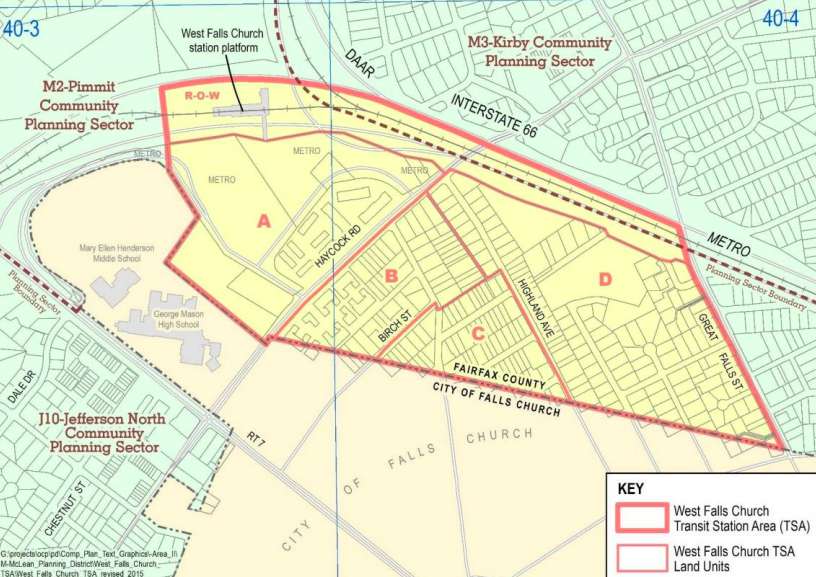
(Updated 4/7/21) After two years, the West Falls Church TSA Task Force pushed through a tense nearly-three hour meeting to finally approve an updated plan that will guide the overhaul of one of the Metro system’s most underused stations.
In recent meetings, some lingering divides on the task force sometimes escalated into heated moments between those with concerns about pedestrian safety and those pushing for approval of the plan to usher in new growth to the area.
“I think this plan exemplifies the transit-oriented development goals [and] represents an intensity of uses that we would expect for a vibrant, active Metro station,” Bryan Botello, a Fairfax County planner who helped oversee the task force, said.
Botello argued that the plan addresses two of the main concerns raised by task force members, namely ones related to pedestrian connectivity and safety and the efficiency of the area’s road network.
“I think this plan really balances the priorities of all road users,” he said. “…It should satisfy everyone and improves connectivity to the Metro for pedestrians and provides more efficient traffic operations.”
Covering roughly 156 acres near the West Falls Church Metro station, the new plan is a complicated patchwork of transportation and development suggestions.
The task force did hit a stumbling block when one of the major impetuses for its creation — the development of the Virginia Tech campus — was abruptly canceled earlier this year.
While county staff endorsed the plan, two of its most vocal critics, Christopher Szara and Paul Rothstein, who represent the nearby residential development The Villages, said the plan doesn’t go far enough in protecting and improving pedestrian transportation options in the area.
A motion by Rothstein to delay approval of the plan until further study by the Virginia Department of Transportation was struck down by the rest of the task force.
“We have had concerns…regarding traffic and the impact of the project outside of the scope of our discussion here, and the added impact of the WMATA project,” Szara said. “Traffic is a concern and I’m not convinced its been adequately addressed. I know over the last year we’ve been lulled into submission with regards to traffic, but having been a commuter for many many years I know how bad it can be, and having my son go to Haycock and him walking to school, I know how treacherous that can be.”
Szara, Rothstein, and task force chair David Wuehrmann voted no on the plan but were beaten by five votes in favor and one abstension.
McLean Citizens Association representative Darren Ewing had been a leading voice pushing for approval of the plan that evening.
“First and foremost, the [plan amendment] we’re entertaining here is consistent with the MCA’s long standing that density is appropriate at Metro sites,” Ewing said. “We have a failing Metro station with pre-COVID Metro ridership levels at 25,000 trips per day, one of the lowest number of trips in the entire Metro system. It’s not an inviting station, it’s a suburban parking lot, and it doesn’t encourage walking or biking. Even the park-and-ride is operating at 60% capacity pre-COVID.”
An email from MCA President Rob Jackson noted that, while the MCA is on record as supporting higher density at Metrorail stations, it has not adopted a position on the West Falls Church Comprehensive Plan Amendment.
“Our Planning & Zoning Committee will be preparing a resolution setting forth a recommended position that is expected to be presented to the MCA board at its June meeting,” Jackson said.
Following the task force’s approval, the plan will be discussed in a community meeting on Tuesday (May 11) before going to the Planning Commission on June 16 and Board of Supervisors on July 13.
Image via Fairfax County

A festival celebrating southern cuisine — from beer to bacon and biscuits — is returning to Tysons for a fifth year.
“This 5th Annual affair offers up all those pleasures that true Southerners live by — Beer, Bourbon, Barbecue, Boots, Bacon, Biscuits, Bluegrass, and Smoked Beasts,” the festival’s website advertises. “It’s a great day of beer sippin’, bourbon tastin’, music listenin’, cigar smokin’, and barbecue eatin’.”
Admission to the festival is $49 for a three-hour window on Saturday, May 22. Admission comes with a souvenir tasting glass and an all-you-can-taste sampling of beer and bourbon.
A $79 ticket offers a four hour window at the festival along with a BBQ dinner platter.
This year, the festival will be held at The Plaza at Tysons Corner Center (1961 Chain Bridge Road).
The festival site advises attendees to bring cash, as many vendors will not accept credit cards, and there might be lines at the ATM. Guests are also allowed to bring their own snacks and non-alcoholic beverages.
No pets are allowed at the festival and service animals must be registered in advance. No weapons or outside alcohol are allowed either.
A full list of beer and bourbon vendors at the site is available online.
Photo via Beer, Bourbon, BBQ/Facebook
One of the fun aspects of local elections is the interesting intersection of national issues — like helping businesses recover from the pandemic — with hyperlocal problems, such as a too-loud mulch machine.
In a forum earlier this month, the four candidates running for Vienna Town Council met virtually to discuss top issues of importance, the first being the industrial mulching operation on Beulah Road. Candidates were asked whether they support removing the facility over the next two years.
David Patariu, a lawyer who was appointed to the Planning Commission in October 2019, came out swinging against the mulch operation.
“Two years is too long,” Patariu said. “It should have been removed last year.”
Patariu said with students learning from home in nearby residences, the 89-decibel operation sounds like a jet engine running in their neighbors’ back yard.
“We have to get rid of that right now,” Patariu said. “This is not a financial issue, it’s a moral issue. Residents in that part of town have suffered long enough.”
The other three candidates — incumbents Nisha Patel, Steve Potter, and Howard Springsteen — recognized the operation’s nuisance but said more work needs to be done to study the impact of shutting it down.
“Leaf collection is an important service, but mulching has raised concerns,” Patel said. “I’m hoping to get more information when we get a report from a consultant later this month. If leaf mulching is not cost effective, I would prefer to remove this aspect.”
Similarly, Springsteen said there’s more to consider that comes along with shutting down mulching.
“Do we buy or lease a new site, eliminate leaf collection, and transfer responsibility to residents, truck leaves for disposal, or leave as is?” Springsteen said. “I want us to look at the numbers. I know we’ve reduced [the noise] and that’s a step in the right direction.”
Potter said that for all its challenges, it’s important to recognize some of the benefits to local residents of leaf mulching.
“Leaf collection has been around for about 30 years now and a lot of citizens appreciate the service,” Potter said. “We must come up with a solution that is economical, ecologically sound, and move from there.”
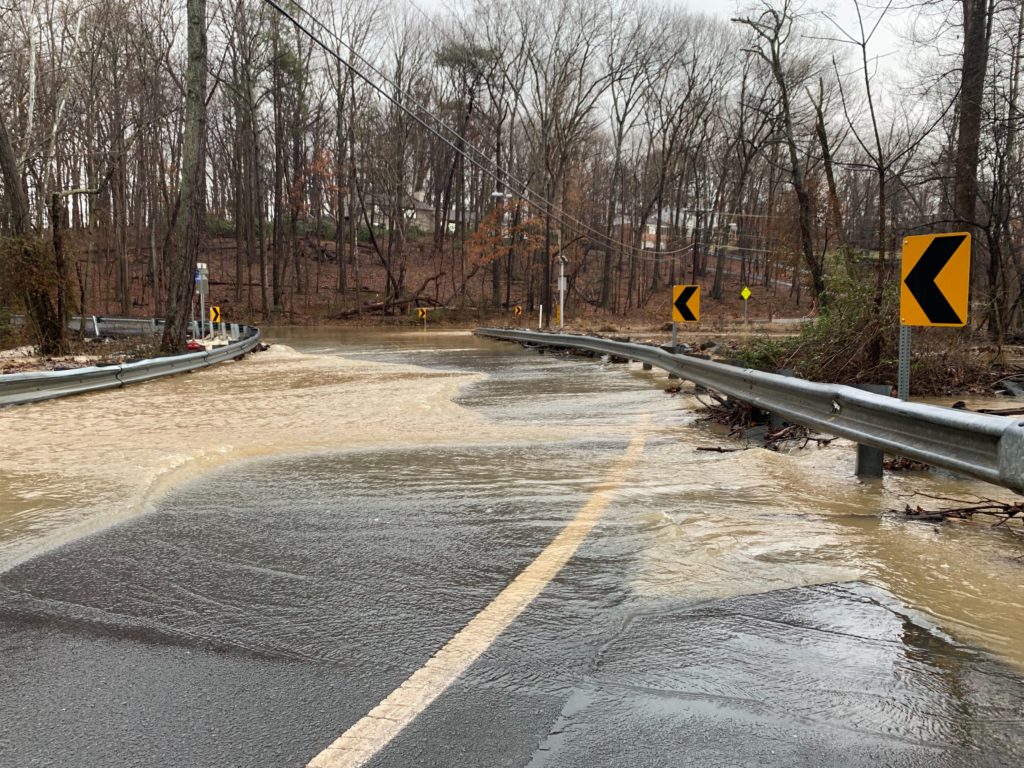
Another issue facing Vienna is the continued need for improved water infrastructure. All four town council candidates said improving the town’s stormwater sewer infrastructure has to stay the top priority — along with traffic improvmeent.
“Getting water and sewer infrastructure organized is very important, but I also think traffic along Maple Avenue is another issue that needs to be dealt with,” Patel said. “[We’re] looking at infrastructure to be able to support [smart lights].”
Patel said the town is currently working on a project to synchronize lights on Maple Avenue, which could help improve traffic on the busy street.
“As far as water pipes are concerned, we need to replace the water pipes,” Patel said. “They were built in the ’50s and ’60s. We can’t continue to have water main breaks like we’ve been having.”
Because the pipes are so old, Springstreen said Fairfax County had no interest in taking over Vienna’s water infrastructure, so the town will have to handle it themselves.
“This system is not supported by taxes, but by user fees,” Springsteen said. “We need to replace our pipes. We have 63 miles of pipes, and we need to replace them as a pretty progressive rate. We need to make sure we don’t turn ourselves into Texas.” Read More
(Updated at 2:40 p.m.) The Falls Church City Council approved a real estate tax rate reduction on Monday (April 26) in what councilmembers called a testament to the hard work and planning of the city staff — especially amid a pandemic that devastated the national economy.
Overall, the three-and-a-half-cent tax rate decrease comes despite a 2.3% growth in the city’s operating budget, which totals $41.3 million.
“The adopted budget includes a real estate tax of $1.32 for every $100 of assessed value, which is a decrease of $0.035 from the previous year,” the city said in a press release. “The general government operating budget is approved at $41.3 million, which is 2.3 percent growth over the previous year.”
The Falls Church City Public Schools budget was fully funded at $43.9 million — a 2.5% growth over the previous year.
“The last time we even contemplated lowering the tax rate was 2005,” City Councilmember Letty Hardi said. “It’s a pretty remarkable achievement.”
The city says the tax rate decrease was made possible through a combination of eliminating a contingency fund, cutting $340,000 in capital projects, and using $460,000 in funding from the Founder’s Row development as a downpayment on the city’s high school construction debt.
The city said the reasoning behind the capital project cuts is that many are expected to be eligible for federal grant funding starting next year.
It’s not all good news on the bill front, though. The stormwater utility rate is increasing by 2% — an average $5 increase for the average homeowner:
The Council also set a new stormwater utility billing rate of $18.72 per 200 square feet of impervious surface, an increase of 2 percent from the current rate. The increase would result in an approximate $5 increase for the average homeowner. The stormwater utility rate increase is needed to address increased investment in repairs and maintenance of the system. The Stormwater Task Force, convened by City Council in 2019, identified six major flood mitigation projects, which are in final engineering now. A financing plan to pay for these major projects will be finalized in the coming year.
Other items of note in the budget include $100,000 for the Affordable Housing Fund and body-worn cameras for police officers.
“The City Council understands that this has been a difficult year for a lot of people, including our taxpayers,” Mayor David Tarter said. “I am happy that we were able to lower our tax rate and ease the burden on our residents while maintaining our schools and critical City services. We are grateful to our community for helping us get through challenging time.”
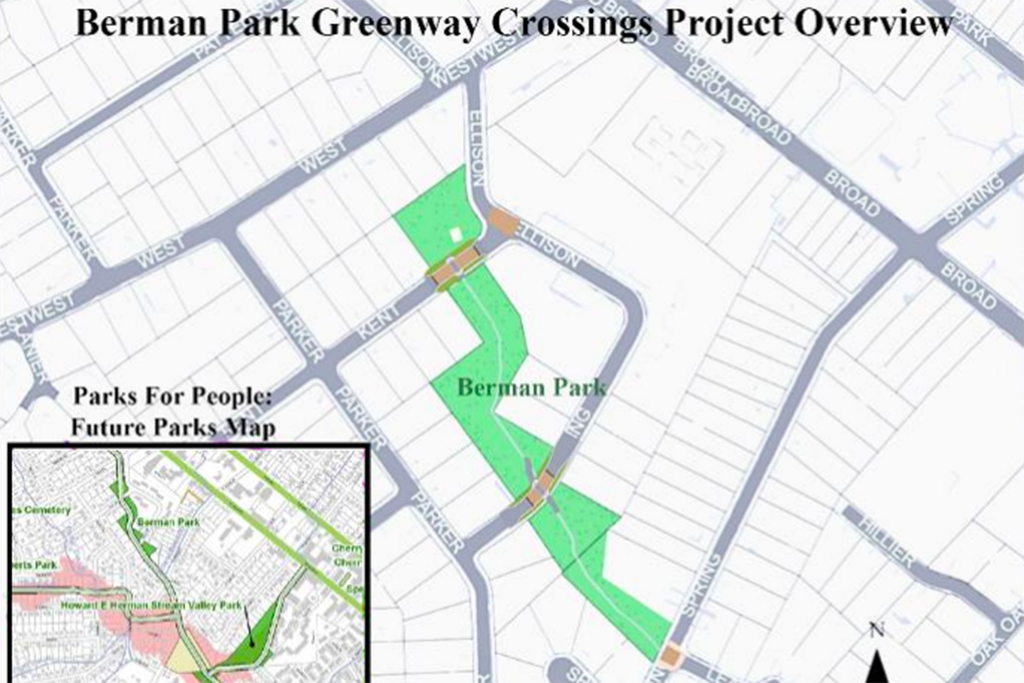
(Updated at 3:40 p.m.) If your reaction to Falls Church’s Berman Park is “what’s that?,” you’re probably not alone.
Even City of Falls Church Planning Commission members said they were only vaguely familiar with the linear park when presented with project details last week, but a new plan aims to make the park a more memorable part of the city’s green infrastructure.
The park is in the center of the city and connects several commercial properties and residential areas, but it is broken up by several street crossings that the city says lack adequate pedestrian facilities and signage.
In a presentation to the Planning Commission, staff said the goal of the project is to make those crossings more pedestrian-friendly by increasing visibility for all users and decreasing vehicle speeds.
“I agree with staff’s recommendations, they seem to be the most bang for the buck for those types of improvements,” Planning Commission Chair Brent Krasner said. “Berman Park is kind of like — I’ve ridden my bike through there…but the first time I even found it existed, I was like ‘okay, I didn’t even know this was here.'”
At the meeting, city staff went through each of the four intersections connecting the project and shared plans how the streetscape could be modified. Every proposal included some level of curb extension to make the sidewalks more walkable, and nearly every project also included new street signs.
“The goal of the project is to improve safety for pedestrians and bicyclists using the trail,” staff said in the project description. “The proposed trail crossings will greatly enhance the trail for users traveling through the City and could set a precedent for further improvements trail-wide.”
Preliminary engineering for the project is scheduled to be completed next January, with construction starting a year later in January 2023 and finishing that July.
The project is being funded by a $600,000 award from the Highway Safety Improvement Program/Bicycle and Pedestrian Safety Program (HSIP/BPSP) and an additional 30% local funding.