
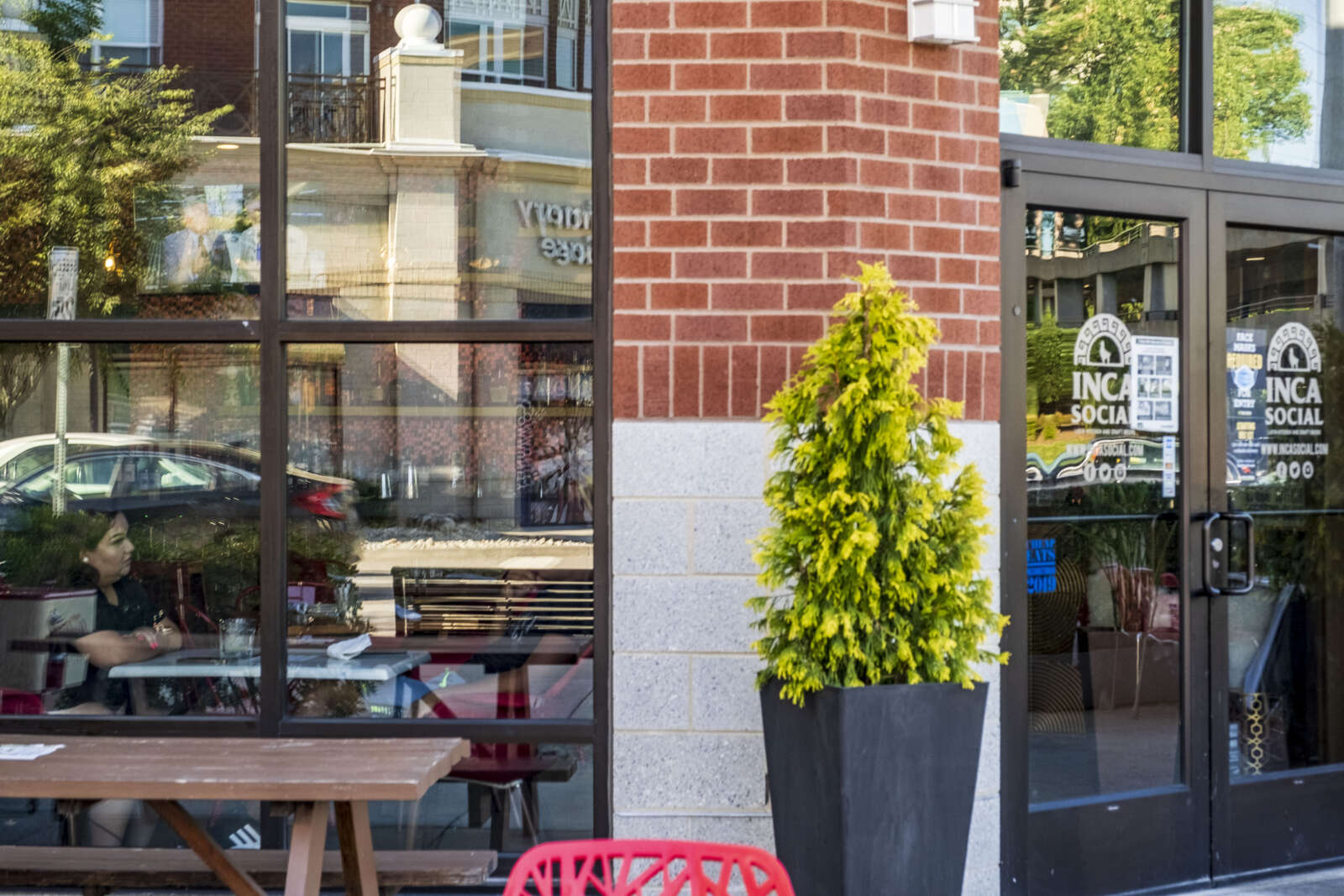
About a month after Virginia lifted all COVID-19 capacity and social distancing requirements, in-person dining is starting to make a comeback at local restaurants, even as evolving guidance around masks suggests the pandemic may not be entirely in the rearview mirror.
From D.C. to northern Virginia, restaurants throughout the region look much different than they did a year ago, when many venues were either temporarily closed or just starting to invite customers back inside.
Now, restaurants are free to return to full occupancy, and patrons can eat and drink without fumbling with a mask, though individual businesses can still require masks if they choose to keep a policy in place.
“Carryout and to-go sales of alcohol are still continuing to help our restaurants, but yet, we are definitely seeing a shift in the return of more and more in-person dining,” said Barry Biggar, president and CEO of the Fairfax County tourism agency Visit Fairfax. “The future is bright and we are on a forward trajectory towards full recovery.”
At Agora Tysons (7911 Westpark Drive), carryout with Uber and DoorDash is still busy, but after May, in-person dining demand increased to the point that the Mediterranean restaurant had to turn people away, restaurant manager Hasan Kaya said.
They’re getting 80 to 90 people per night on weeknights and exceeding 150 people per night on weekends, he said Thursday.
“Most of the offices around our restaurant [are] closed still,” Kaya said. “We are hoping to be open back for lunch once they move their office back.”
Shuttered offices are among the many challenges that the food service industry has faced over the past year, along with significant job losses, stay-at-home orders, and ever-changing public health rules. A reckoning over the industry’s conditions for workers poses another complication to recovery efforts.
“The positive news is that many of our restaurants are starting to see around 80 to 90 percent of pre-COVID numbers,” Biggar said in an email. “And while that sounds great, and sales are up, it does not always translate to straight profit. Many restaurants are still paying deferred rent, utilities, and other expenses that they had to hold off on paying due to the pandemic.”
While Virginia’s state of emergency is set to expire today (Wednesday), health officials have recently started raising new concerns about the spread of more dangerous COVID-19 variants, even for fully vaccinated people.
The Commonwealth followed the Centers for Disease Control and Prevention’s lead in May in easing mask requirements for fully vaccinated individuals in most places. But the World Health Organization suggested Friday (June 25) that even vaccinated individuals should still wear masks to reduce the spread of the highly transmissible Delta variant.
Experts who talked with the Miami Herald advised caution regarding whether or not to wear masks, and the CDC hasn’t adjusted masking guidance based on the Delta variant, which was first detected in India and is estimated to contribute to one in five U.S. cases now.
The CDC says there’s evidence that the variant causes more severe disease and has increased transmissibility.

Homeowners seeking to rent out their basements or other parts of their residence as well as renters and neighborhoods concerned about parking will soon have new rules aimed at helping them.
A revised zoning code for Fairfax County, the first overhaul in around 40 years, becomes effective Thursday (July 1).
In addition to updating the county’s regulated uses with new options like live-work developments and solar farms, the new ordinance loosens some restrictions around accessory dwelling units — independent residential units that share a property with a main dwelling. But zoning officials say they expect a modest increase in homeowners converting parts of their property for other people.
Adopted in March, the new rules replace existing standards for ADUs — now dubbed accessory living units or ALUs — from 1978 and 1983, drop requirements that the occupant of the revamped space have a disability or be 55 years or older, and add parking requirements.
While the changes inspired some strong opinions from community groups, their impact is expected to be relatively small: Fairfax County approved 12 accessory unit applications in 2019, seven in 2020, and two so far this year as of Friday.
County staff previously noted there have been community concerns over whether the code is being enforced. A burdensome special permit approval process also may have been creating problems, the county said.
“Others may be installing ALUs anyway, but then perhaps they’re more likely to be unpermitted construction without the benefit of the permits and inspections,” Carmen Bishop, assistant zoning administrator, said in January before the Fairfax County Planning Commission. “So a less burdensome process may result in better compliance.”
People who have wanted such changes have had to go through a hearing, a process where neighbors could weigh in. Under the new rules, a property owner can add an interior ALU with just an administrative permit instead if they meet certain requirements.
That includes a new measure that adds an extra parking spot in off-street parking. Whether or not there’s an accessory living unit, a detached single-family house on a public street must have two off-street parking spaces or — if it’s on a private street — three off-street spots, according to the county.
“When a house has an ALU, one additional parking space will be required, which means, homes on public streets will need three off-street spaces and homes on private streets will need four off-street spaces to meet the zoning ordinance standard,” Leslie Johnson, the zoning administrator for the county’s Department of Planning and Development, said in an email Friday.
The new standards come as the county’s population exceeds 1.1 million people after rising by over 100,000 people every decade from 1980 to 2010, according to census data.
With housing prices expected to continue rising, proponents of the ALU rule changes argue that they will provide more flexibility for residents who want to stay in the county but can’t afford to live on their own.
Earlier in June, the Fairfax County Redevelopment and Housing Authority approved a change that made it easier for certain people in a first-time homebuyers program to rent a portion of their owner-occupied homes after a resident made a request.
The switch applies to 38 units and makes the authority’s policy consistent with all other units in county homebuyer programs, county spokesman Benjamin Boxer said in an email.
“Those owners may rent a portion of their home as long as they continue to occupy the property as their primary residence,” Boxer said in an email. “It is worth noting that, historically, we have rarely received any requests from our participating homeowners to rent portions of their homes.”
Courtesy Jeremy Levine/Flickr
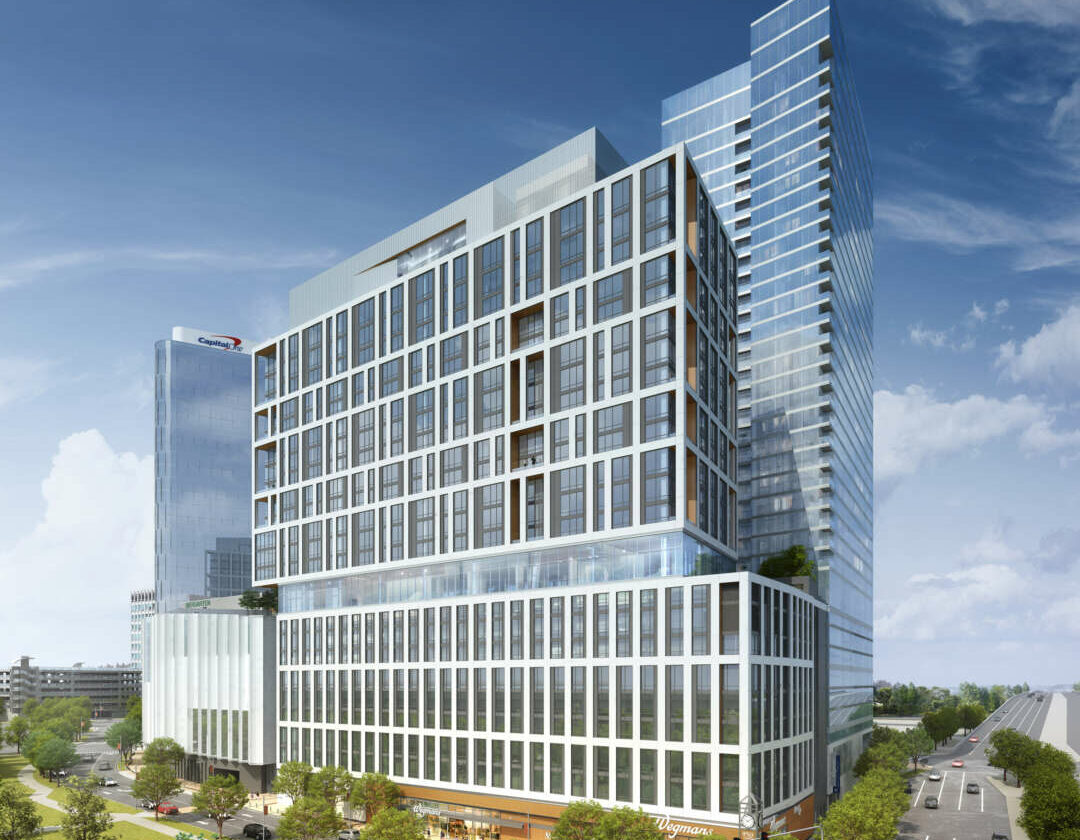
(Updated at 5:10 p.m.) A luxury hotel, skyline view park, and entertainment venue part of the campus surrounding Capital One’s new headquarters are slated to open this year.
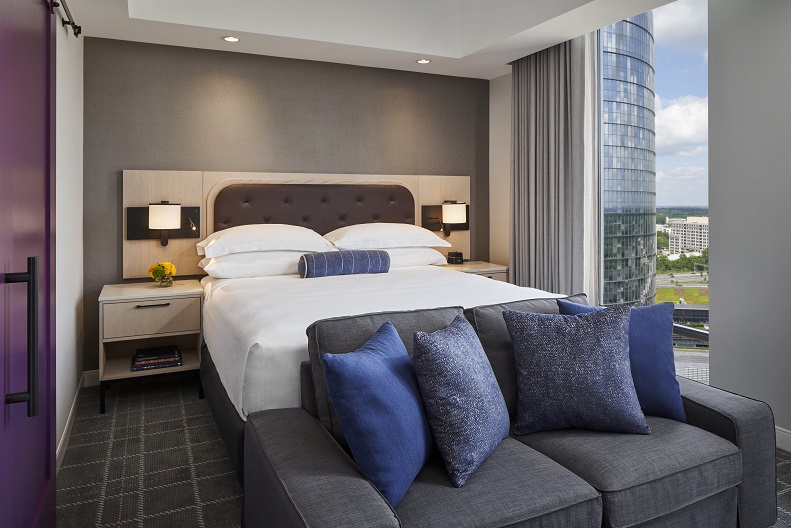
Construction crews are still building at the Capital One Center site alongside the Capital Beltway in Tysons, but Tysons Reporter has confirmed that The Watermark Hotel, the development’s 25-floor, 300-suite luxury hotel, is scheduled to open on Sept. 21.
The Perch, the outdoor park sitting atop Capital One Hall that will feature a beer garden anchored by Starr Hill Brewery, will open in August, and the performance venue itself will open to the public on Oct. 2, spokesperson Andrea Khoury told Tysons Reporter.
“It’s really a high-end experience,” Khoury said of The Watermark, noting that the final pieces are now coming together.
The following details for the hotel were also released:
The property will feature studio, one-bedroom, and two-bedroom suites with furnishings that are similar to an apartment. Each over-sized suite will include a pantry style kitchen with mini-fridge, microwave and coffee service. The suites offer large work areas, well-appointed bathrooms, digital flat screen televisions, complimentary high-speed internet, and a sophisticated, yet warm home-like décor. With stone countertops, tile and carpeted floors, and upscale furnishings, the suites will present a comfortable environment that is very functional for both short-term and longer-stay guests.
The Watermark Hotel offers a full, self-service breakfast serving a seasonal selection of local produce and baked goods, classic breakfast staples, and elevated coffee offerings. Additional hotel amenities include a business center, 1,600 square-feet of meeting space, a well-equipped fitness center, ample parking spaces, a self-serve market and sundry, and an expansive outdoor patio with appropriate seating and direct access to the 1.2 acre skypark–The Perch. The hotel also offers a full-service bar featuring craft cocktails, a wide selection of local beers and wines, appetizers, salads, small plates and entrees with an international flare.
B. F. Saul Company Hospital Group of Bethesda, Maryland announced today (Monday) that it will operate the hotel, which will be owned by Capital One and have no franchise affiliation.
“We are delighted to partner with Capital One to introduce this one-of-a-kind hotel in the heart of the Capital One Center campus,” B.F. Saul Company President Mark Carrier said. “Our dynamic team of hospitality professionals look forward to doing everything possible to exceed the expectations of the Capital One community.”
Capital One’s new headquarters (1600 Capital One Drive) was constructed adjacent to the company’s previous one and was completed in 2018, becoming the tallest occupied structure in the D.C. region.
Capital One Center occupies more than 24 acres near the McLean Metro station. The first component of the mixed-use development arrived in November with the opening of Wegmans.
Since announcing its first confirmed performer earlier this month, Capital One Hall has started to fill out its inaugural season lineup with a mix of musicians and comedians, including the country band Little Big Town for the opening weekend. The facility will contain a 1,600-seat main theater and a 225-seat black-box theater called The Vault.
A former state legislator has convinced the Town of Vienna to save some trees by an iconic preschool that’s slated to become a new housing development.
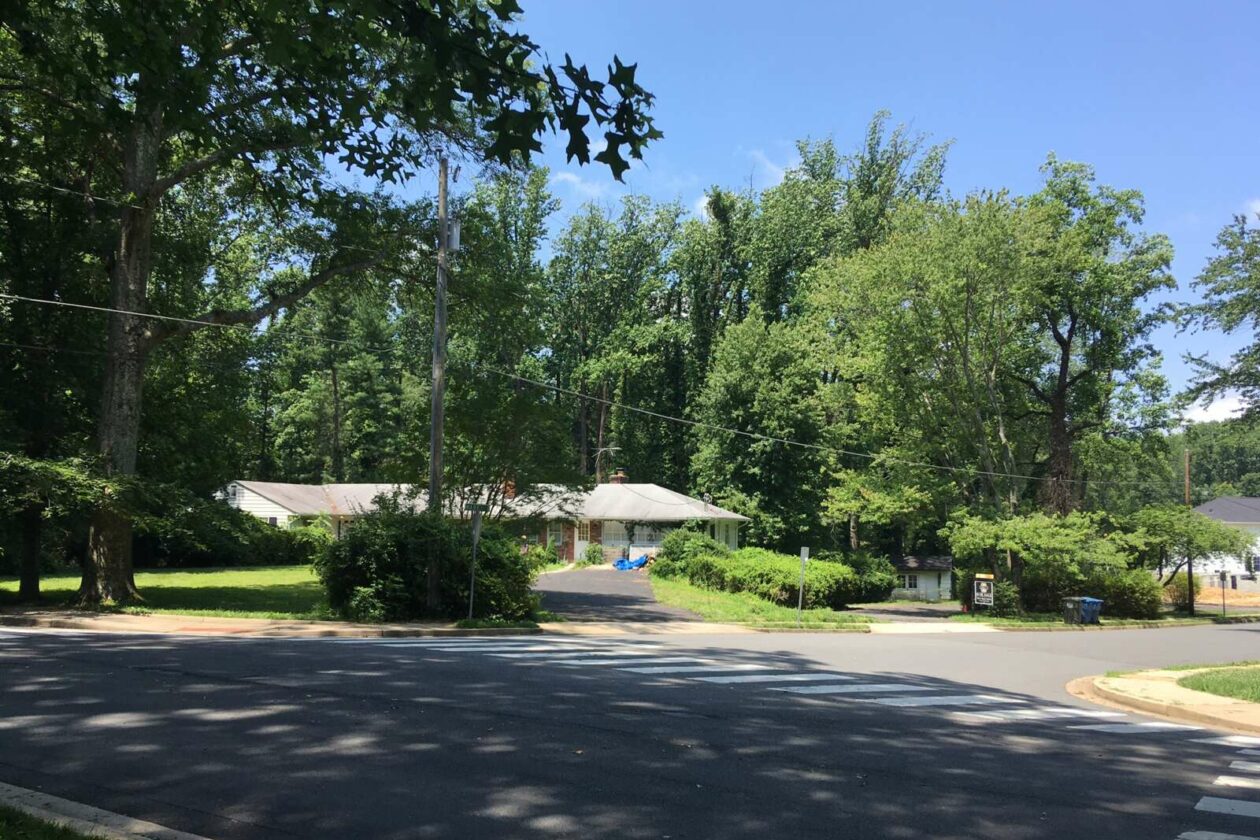
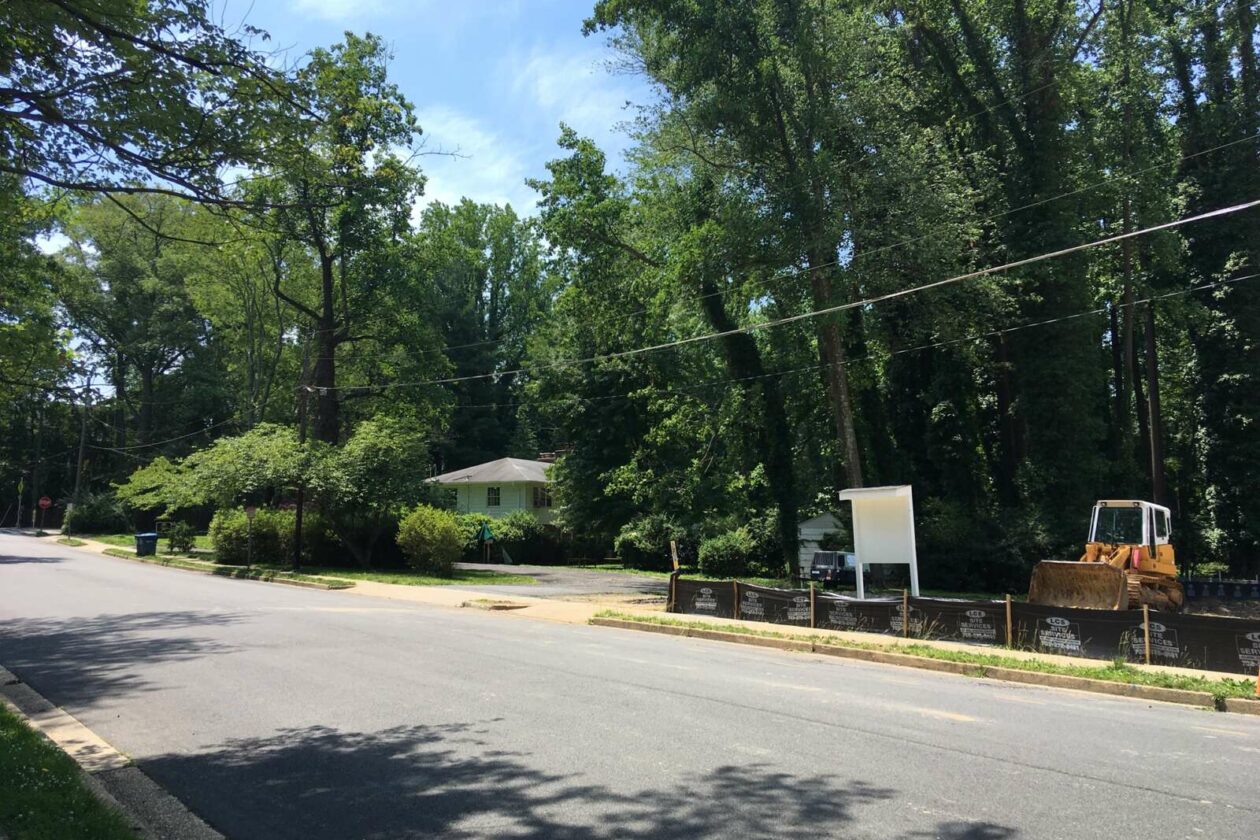
A developer is turning Parkwood School into a housing subdivision called Parkwood Oaks that could have up to nine homes, according to engineering notes for the developer in a plan on file with the town.
The son of Parkwood School founder Clarene Vickery, Raymond “Ray” Vickery Jr. sent a letter to the town council on June 11 asking them to save several trees, including a large oak, on the edge of the property at 601 Marshall Road SW near the Ware Street SW intersection.
“We want to particularly save the big oak my dad planted about 60 years ago at the corner of Ware and Marshall,” Vickery told Tysons Reporter.
Clarene Vickery, 101, died in 2019 after founding Parkwood School in 1956 and spending most of her life as director of the preschool, which has served over 10,000 kids. She lived in the upstairs part of the home, which also served as part of the school with its lower half.
Vickery’s father, Raymond Ezekiel Vickery, was a lieutenant colonel with the U.S. Army and died in 1987 at age 77. The couple is buried in Arlington National Cemetery.
Vienna Town Manager Mercury Payton said in an email that trees located next to an existing sidewalk needed to be removed because the town requires sidewalks to be upgraded to a new code when there’s a new home or development building.
But Vickery argued in his letter to the town that “slight deviations could be made to save the large oak and other trees that mean so much to the citizens of Vienna who live in the 601 Marshall Road vicinity.”
It worked: Vickery connected with the town, which agreed to save a few key trees there next to a sidewalk, including the oak his dad planted.
However, some trees will still have to be removed, said Scott Diffenderfer, an urban arborist for the town.
“On the other hand, the developer is saving a lot of trees, and there’s going to be trees planted as the development progresses,” Diffenderfer said.
A property sale closed last Monday (June 21), and buyer John Sekas of Sekas Homes Ltd. has agreed to erect a historical marker there, Vickery said.
Vickery has also offered to donate Japanese cherry trees to be planted along Ware Street in honor of his parents.
The preschool had multiple single-family dwellings for its campus, but during the COVID-19 pandemic, it used virtual programming instead of in-person activities.
According to Vickery, Malisa Eaton, the school’s executive director, has taken over Parkwood School and is looking for new premises. She didn’t immediately respond to messages seeking comment.
Vickery, who served in the Virginia General Assembly from 1974 to 1980, says he plans to go the town council’s July 12 meeting to address the town’s tree ordinance, highlighting how trees help reduce carbon dioxide emissions and protect the ozone. The latter benefit is particularly important to him as someone who has been affected by skin cancer.
“The ordinance, though, is written so that trees, even though they’ve been marked and identified, can — can be taken down and replaced with saplings that’ll have 20% cover in 20 years,” he said. “And my perspective is if you have coverage there of existing trees…you ought to save existing trees.”
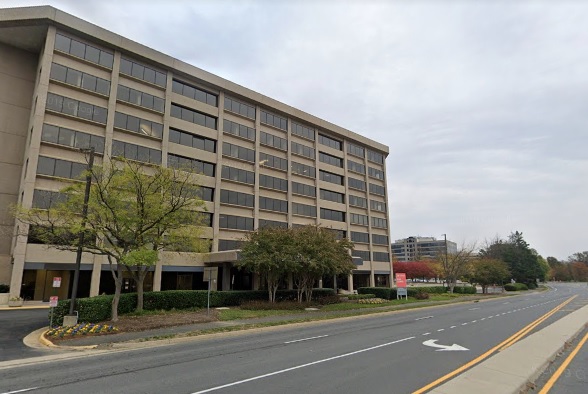
(Updated at 3 p.m. on 6/29/2021) A developer is looking to transform a site with an eight-story, 88-foot-tall concrete office building into a three-building residential development called Flats at Tysons Corner.
The existing building at 1953 Gallows Road in Tysons would be replaced with a multifamily residential building with 225 to 260 units. The new structure would be 50 to 75 feet high and include a courtyard in its center, according to a development plan filed Tuesday (June 22) with Fairfax County.
Other proposed changes include converting parking lots into space for two 60-foot high multifamily buildings — one with 36 units and the other for 50 units, including 14 workforce dwelling units total — and also creating two publicly accessible parks with amenities such as lawn furniture, ping pong tables, and more.
The existing office building, built in 1983, would remain during the first phase of the project, which would focus on the parking lot area, and then be demolished in the second phase, per the development plan from Pulte Homes.
Approximately 2,628 square feet of space in the property’s northeastern corner will be set aside during the project’s first phase to accommodate a planned extension of Boone Boulevard in accordance with the county’s Tysons Comprehensive Plan, according to a statement of justification submitted by the law firm DLA Piper, which is representing Pulte.
The development will also contain a new service road that will be constructed as a future public street to connect Gallows Road to Boone Boulevard, with the potential to eventually be extended to Leesburg Pike.
In the statement of justification, DLA Piper says the proposed redevelopment will help “rejuvenate” the site by introducing residential uses to an area dominated by commercial and office buildings:
The redevelopment of this site as proposed presents a timely opportunity to rejuvenate the under-utilized, asphalt-covered site and transform it in the vision contemplated by the Comprehensive Plan for Tysons Urban Center with additional meaningful open space, the introduction of residential units to the quadrant, enhanced environmental features, critical multimodal transportation infrastructure, and a stepdown transition in density from the core of Tysons near Route 7 to the outer edges across Gallows Road. If this opportunity is missed because adjacent sites are not ready to redevelop, the Property will likely remain a sea of parking…for another 15-20 years, rather than serving as a catalyst and setting the stage for an exciting transformation of this quadrant.
PulteGroup, which is based in Atlanta, did not immediately return Tysons Reporter’s questions about the project, including its timeline. It’s the third largest homebuilder nationwide.
The Meridian Group, which owns the existing office building, says it has a contract with Pulte to sell part of the surface parking lot for the proposed development, but there are no immediate plans to get rid of the building.
“The developer plans are just designed to give them flexibility for the distant future,” a Meridian spokesperson told Tysons Reporter. “Perhaps in 20 years, they might want to demolish the building. But they have no plans to do so. The building will remain untouched and is not part of the rezoning.”
It isn’t yet clear when the project could go before the county planning commission. Upcoming meetings through July 28 didn’t list the application on board agendas, and the county’s online Land Development System showed no hearing information.
Nearby at Fairfax Square, the mall is seeking to upgrade signs. If PulteGroup’s proposal moves forward, the more than 5-acre residential complex would wrap around that shopping and dining center.
Photo via Google Maps

Hospitality workers looking to return to their jobs and hotels trying to recover from the COVID-19 pandemic are seeing signs of progress in an industry wrecked by shutdown orders and travel disruptions.
Fairfax County’s new PIVOT grant program is prioritizing grant money for hotels, while also assisting other hard-hit businesses with $25 million in federal COVID-19 relief money. The program received 581 fully completed applications — including 15 in the lodging category — on Wednesday (June 23), its first day accepting applications.
Applications will be accepted through July 9, and the order they are received has no bearing on priority. But if funds are limited, lodging businesses with at least 10 rooms will be addressed first before a lottery then determines which companies in need will get money.
Inns of Virginia Falls Church Manager Michael Riddlemoser said he was unaware of the PIVOT grant or whether his company is applying for the money but felt it could be useful to try. He said his 32-room hotel is around 50% full, down from 75 to 80% before March 2020.
While some travelers come specifically for Tysons or business in Virginia, declining travel to D.C. has been a blow to Riddlemoser’s lodging business. As hotels in Washington fill up, it brings a trickle-down effect that boosts locations like his.
“We just need more people coming into town,” he said. “D.C. [needs] to get full for us to start getting the D.C. business.”
Managers at nearby hotels also reported being around half capacity. One said many furloughed staff are inquiring about when they can return, and three wedding parties stayed there recently.
A study commissioned by the Tysons Partnership found that the region’s hotel business could rebound by 2025.
“The COVID-19 pandemic that has devastated the hospitality sector has not spared Tysons hotels, which have seen revenues drop by 64%,” the study said. “Still, this is a modest decline relative to major regional competitors.”
The study noted that Tysons is expected to add another 478 hotel rooms this year with the completion of The Archer in Scotts Run and the Watermark in Capital One Center. Those new hotels say they’ll open in late summer and October, respectively.
The leisure and hospitality sector has lost 3.1 million jobs during the pandemic, representing over a third of all unemployment in the U.S., according to an American Hotel & Lodging Association report from February.
The report said the industry lost over 17,000 jobs in Virginia last year and was projected to lose over 13,000 jobs this year.
UNITE HERE Local 25, which represents about 7,200 hospitality workers across the DC region, had only 2% of members working last July, but the employment rate has bounced back to 25% in Northern Virginia, according to Benjy Cannon, the union’s director of communications.
Cannon attributes recent gains over the last eight weeks to vaccinations and domestic travel.
But the union believes pre-pandemic occupancy levels won’t return until international travel and long-term business travel returns, Cannon said. With unemployment benefits set to expire in September, that could lead the group to press legislators for changes.
“By late 2023, 2024, the industry is slated to recover stronger than it was in 2019,” Cannon said. “So, while this is an unfortunate bump in the road and our members are certainly mourning over it, we do still think that this region, this market, can recover in a really robust fashion and expect it to, even if it’s still a few years away.”
Photo via Febrian Zakaria on Unsplash
The Fairfax County Economic Development Authority will soon add two new seats to its seven-member commission, which has remained the same size since it was created in 1964.
Virginia legislators and the governor approved a measure earlier this year allowing the change, which takes effect July 1 and will help meet diversity needs, officials say.
Charged with helping the county attract, retain, and support businesses, the FCEDA commission consists of local business and community leaders appointed by the Fairfax County Board of Supervisors.
FCEDA Chair Cathy Lange says the expanded board will help the authority bring different viewpoints to the table after the county has changed and grown over the past 57 years.
“We need a richness of perspectives to help the FCEDA understand why companies start here, grow here and stay here,” Lange said by email. “This diversity of needs also is directly tied to our understanding and support of talent attraction and retention. The companies want and need a broad and diverse talent pool, and we have to connect the talent to the companies.”
According to Lange, the EDA board hopes to further diversify representation of emerging and growing business sectors, such as financial services, cyber, cloud, and data analytics, as well as entrepreneurs and small business leaders “building the next base” of companies.
“At the same time, we can identify leaders who are reflective of the growing diversity in our county and its business community,” Lange wrote.
In its legislative agenda for the General Assembly’s 2021 session, Fairfax County noted the authority was created by state law in 1964, allowing the county to appoint seven board members.
“That number has not changed in the 50 years since the FCEDA was created, though Fairfax County has changed substantially during that time,” Fairfax County officials said in the report, which was adopted on Dec. 1.
In the legislative agenda, officials noted that the county’s increasing diversity extends to its economy:
The County has experienced tremendous growth, as has the local economy — the number and size of companies has increased, and businesses have expanded into new and diverse industry sectors. Increasing the size of the FCEDA board could further diversify participation from the County’s business community, while maintaining focus on the County’s traditional business base (including government contracting and IT services).
Among its services, the authority helps businesses find office space in the county, assists with special tax-exempt bonds for companies and nonprofits, and aids international firms seeking office space in Fairfax County.
While headquartered in Tysons, the authority has offices around the country and the world, including in Germany, India, Israel, South Korea, and the U.K. as well as Los Angeles.
Lange said in the email that Fairfax County is an amazing success story, and expanding the commission will help to ensure that continues.
“Understanding what different companies need to succeed here helps us to inform county leaders on what policies and programs need to be implemented to continue our success,” Lange wrote. “This also will help us understand how to market the county to businesses that want opportunities to grow and success, and how to market the region to talent.”
FCEDA vice president of communications Alan Fogg said by email that he expects there will be movement around appointments starting next month.
(Updated at 2:45 p.m.) When residents at McLean’s Vinson Hall Retirement Community wanted outdoor recreation during the pandemic, retired Marine Col. Mike Cluff grabbed a pickax and sledgehammer and built the sought-after amenity himself.
Decades before he became a resident at Vinson Hall (6251 Old Dominion Dr.), Cluff oversaw the building of an encampment in Vietnam and was present during the Tet Offensive in 1968.
More recently, he put his “keep moving” mentality to use to construct horseshoe and bocce ball pits for the McLean retirement community, an approximately 400-room facility that focuses on caring for military veterans and their families as well as high-ranking former federal government employees.
“The genesis of this was…everyone wanted to play outside,” Michelle Crone, director of philanthropy and engagement for the Navy Marine Coast Guard Residence Foundation, said.
As Vinson Hall’s philanthropic arm, the foundation supports facility renovations and provides financial assistance to residents in need.
Cluff, 82, was motivated to construct the horseshoe and bocce pits by fellow Vinson Hall resident Midge Holmes, who is active with getting people involved and wanted residents to be able to play horseshoes.
After looking up plans for horseshoe pits online, Cluff worked with the retirement community to get the materials he needed and spent a few weeks during the spring of 2020 finishing the project, which is located on the site of a former house that was demolished years ago and is now becoming an outdoor recreation area.
Vinson Hall later added artificial turf to the horseshoe and bocce ball pits to help with maintenance. A multi-surface area next to them is under construction and could facilitate more outdoor activities, such as pickleball, which was played inside at the facility until the pandemic halted it.
The new outdoor recreational area is one of several capital projects that Vinson Hall has undertaken during the pandemic after getting a financial boost, thanks to a Fairfax County Economic Development Authority measure that let the retirement community refinance bonds that had been previously issued to fund campus improvements.
Vinson Hall Chief Financial Officer Rick Bova says the move will bring savings and help improve the lives of residents and staff by supporting property upgrades and salary increases for staff.
The retirement community is refinancing around $70 million in debt to get a savings of some $10 million to $12 million over a 12-year period with the economic development assistance, he says. The FCEDA approved the measure on June 14, and the money is being facilitated by Truist Bank.
“In our business, every dollar counts,” Bova said.
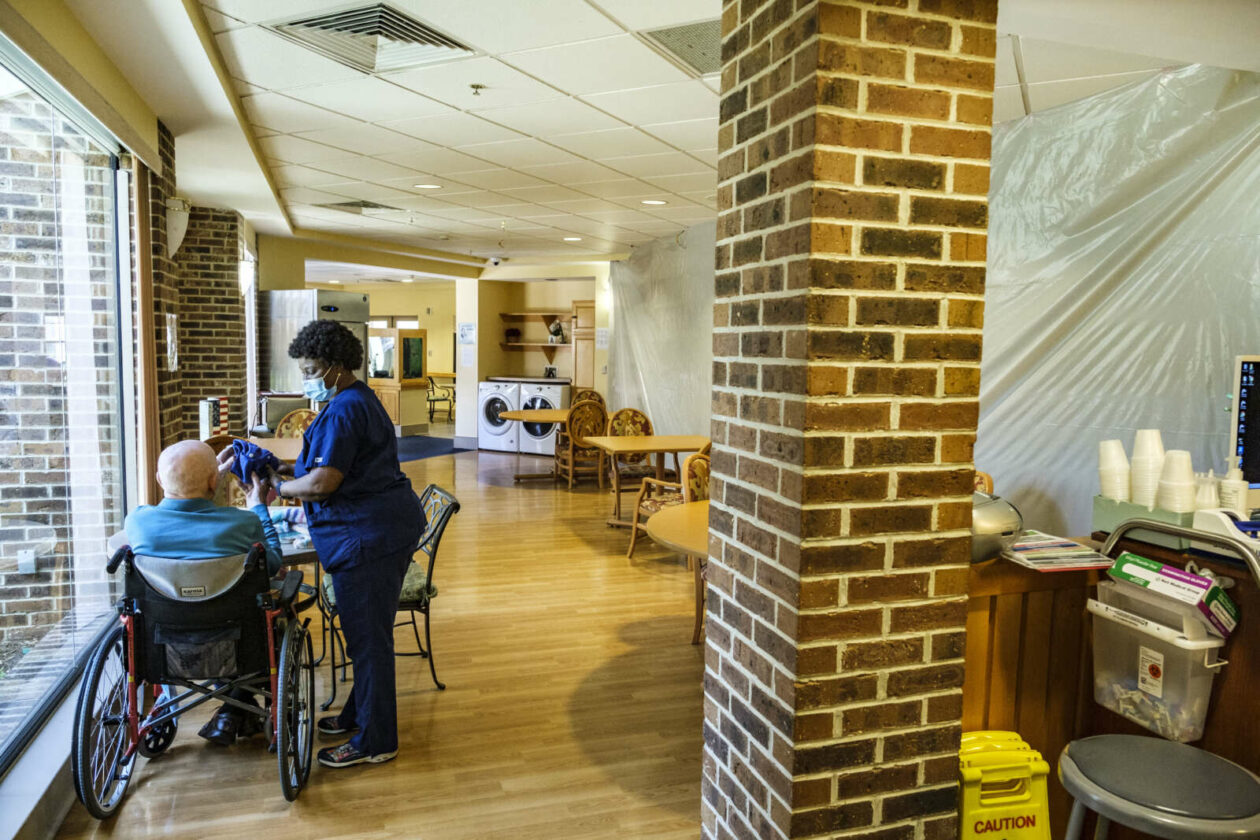
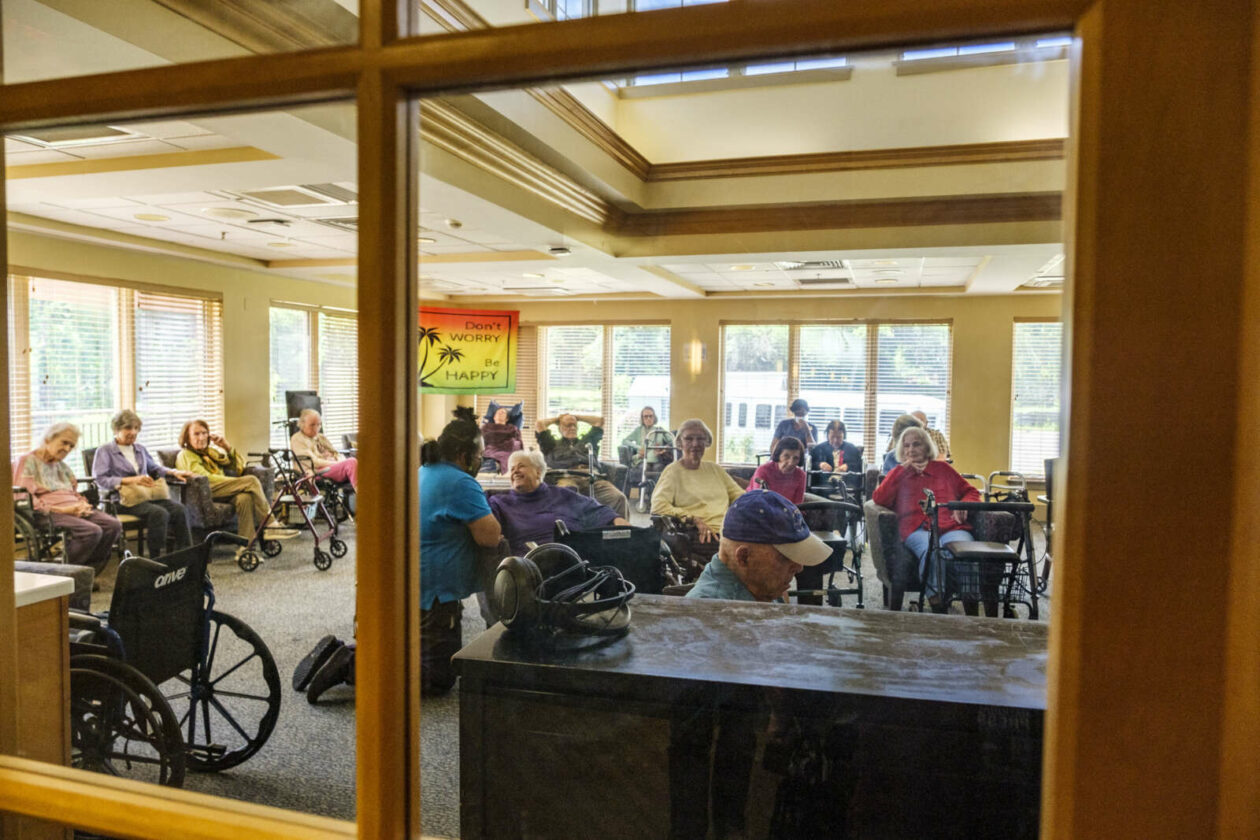
Among the ongoing improvements is a renovation of The Sylvestery (1728 Kirby Rd.), a memory care unit that assists residents with Alzheimer’s disease and other forms of dementia.
Other proposed changes include enhanced lighting and other additions to the memory care unit’s sensory room, which offers an array of items for residents to touch and interact with, from stuffed animals to tropical colored bowling pins.
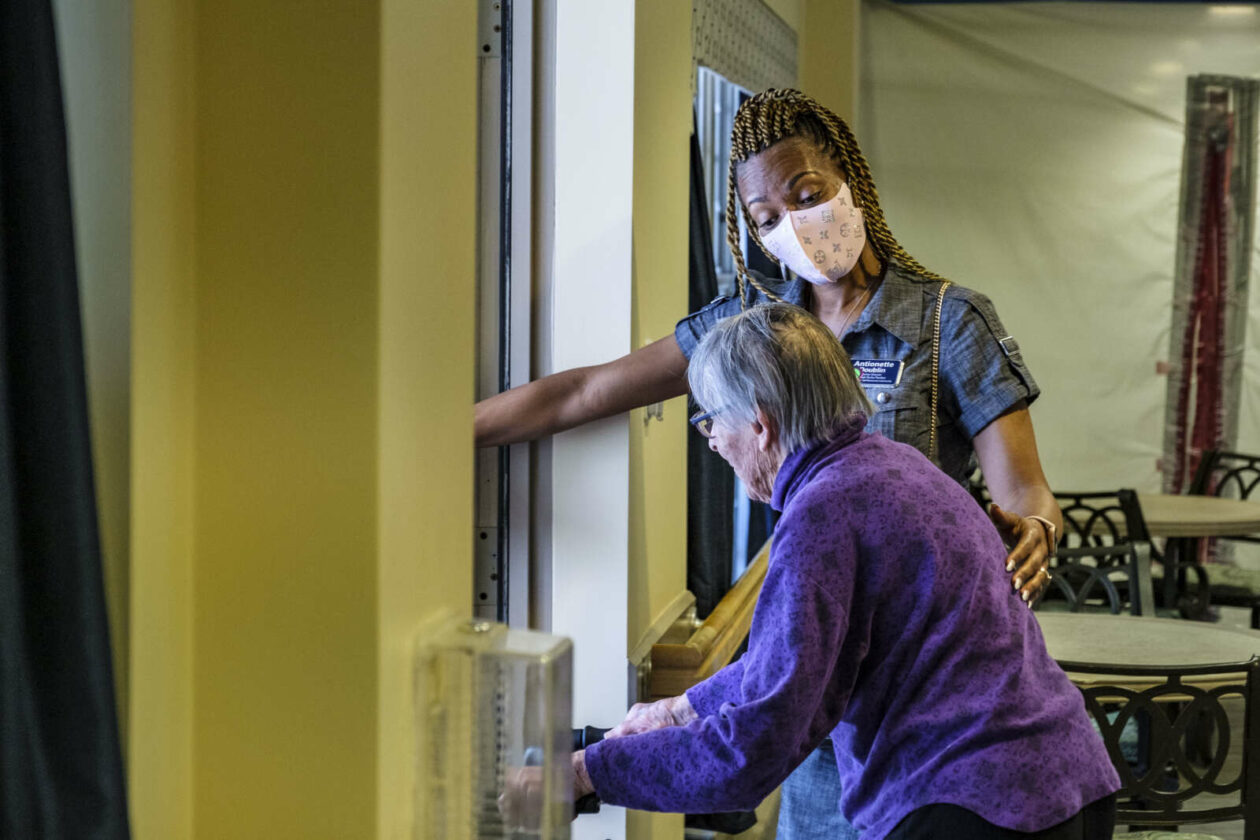
Called a sensory oasis, the room helps patients with dementia calm down, says Antionette Doublin, senior director and administrator of the skilled nursing facility Arleigh Burke Pavilion and The Sylvestery. Research shows that multisensory sessions can help verbal agitation and provide other benefits.
“So, we bring them in here, and it calms them down,” Doublin said.
The Sylvestry is also getting a central kitchen area that can host cooking demonstrations. The project is currently under construction and could be finished in two to three weeks.

(Updated at 6 p.m.) Fairfax County’s first venture into self-driving public transportation has encountered impatient drivers and other difficulties, but the autonomous shuttle in Merrifield could still serve as a roadmap for expansion and future projects.
Operating between the Mosaic District and Dunn Loring-Merrifield Metro station since October, the high-tech Relay service navigates through bustling areas and amongst shoppers, giving free rides and demonstrating the possibilities offered by autonomous vehicles.
Eta Nahapetian, a manager with the Fairfax County Department of Economic Initiatives, remembers watching “Star Trek” as a kid, along with flying cars in the animated TV show “The Jetsons.”
“Here we are, trying to make some of those childhood cartoons a reality,” she said on June 10 during a webinar about autonomous technology, “Creating an Autonomous Vehicle Ecosystem in Virginia.”
Sarah Husain, a transportation planner with the Fairfax County Department of Transportation, said the technology has elicited high interest from the community for how it helps people with disabilities.
During the presentation, Husain also described some of the challenges that have emerged during the pilot project, which is a joint effort between the county and Dominion Energy.
She said drivers can get impatient and illegally pass it, so officials with the project worked on adding signage and enlisted the Fairfax County Police Department to help with the issue.
In response to complaints about vehicles passing the autonomous shuttle, the McLean District Station has assigned officers to conduct extra patrol and enforcement to address drivers “speeding or passing Relay,” the FCPD said.
“We’d like to ask for our community’s patience when driving behind the shuttle,” police said. “Relay should only be passed, with care, when a full lane is available.”
According to the county, “Do not pass” signage was installed alongside Eskridge Road and Merrilee Drive in March 2021. Stickers with the same message were also placed on the shuttle.
“We sought out these challenges with the pilot,” Husain said, noting several solutions that came forth, such as installing monitoring devices that detect if the shuttle needs more time to pass through an intersection.
The technology remains limited in some ways. For instance, if an idled vehicle, such as a parked car, is in the way, a shuttle attendant has to take over in manual mode to advance the shuttle.
The shuttle runs from 10 a.m. to 2 p.m. Monday through Thursday from the Dunn Loring station to the Barnes & Noble in the Mosaic District. It’s designed to fill the “first/last mile” need in public transportation, connecting travelers to their ultimate destinations.
Fairfax County is seeking additional funding to continue Relay’s length of service and expand the routes that it serves. The pilot project is slated to end in August.
Dominion Energy, which supplied the shuttle, says an expansion of the pilot is among many options that it is considering for future uses of automated vehicle technology.
“Dominion Energy is considering other opportunities that may include an expansion of the current project,” Dominion Innovation Strategist Julie Manzari said. “The purpose of the pilot is to learn and gather information that will help us adjust or pivot to other concepts.”
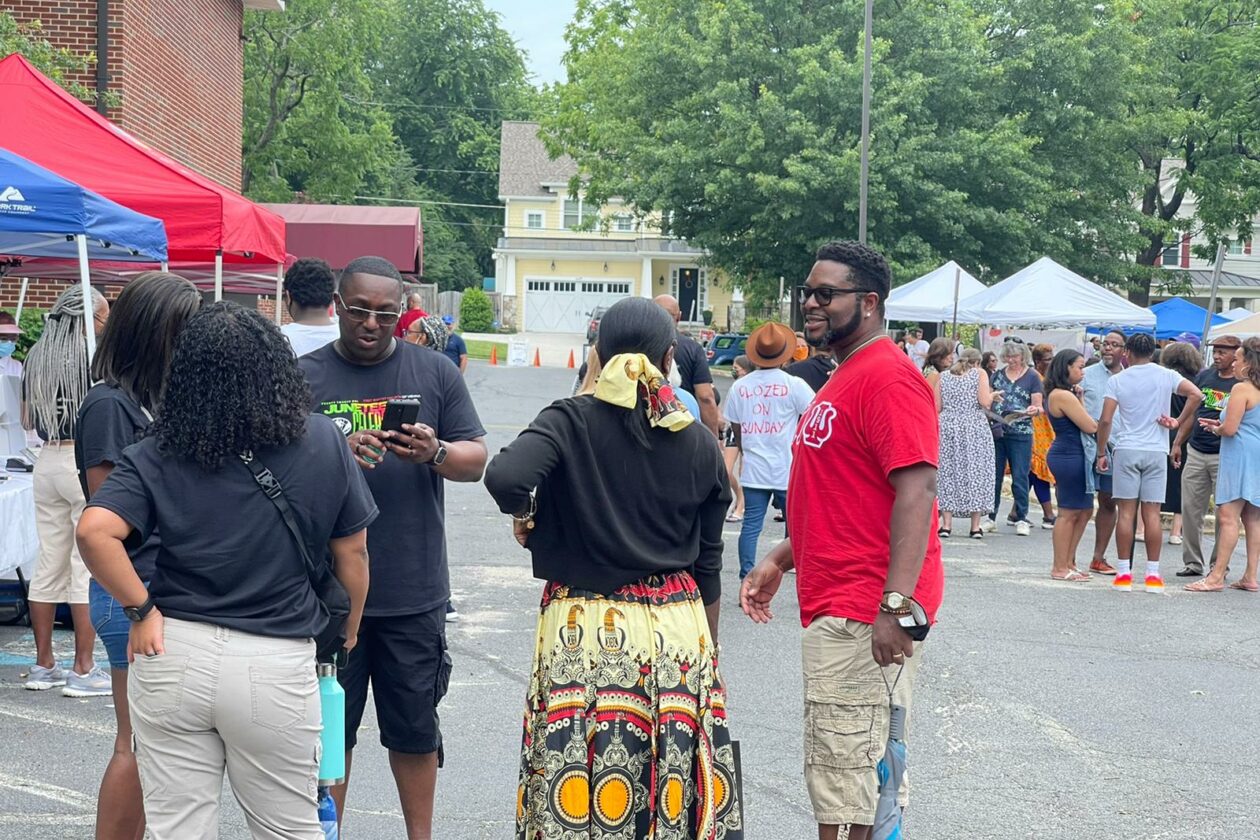
Stanley Stewart wasn’t the only one wearing a Black Lives Matter shirt among the crowd of people at the Juneteenth event outside the First Baptist Church of Vienna on Saturday (June 19).
But this gathering was more celebration than protest, serving as a kick-off for the Town of Vienna’s inaugural Liberty Amendments Month.
Officially recognized by Congress as a federal holiday for the first time this year, Juneteenth — a portmanteau of June 19 — serves as a symbolic commemoration of the U.S.’s abolition of slavery. It comes on the anniversary of the day in 1865 when a major general for the Union informed Texas that all enslaved people were now free.
“This wasn’t in no history book I read,” Stewart said.
The Juneteenth recognition represents the first new federal holiday since Martin Luther King Jr. Day was created in 1983 to celebrate the civil rights leader’s birthday, following his assassination in 1968.
The Lone Star State became the first state to recognize Juneteenth as a state holiday, starting in 1980, and other states followed. More informal commemorations, though, began as early as 1866.
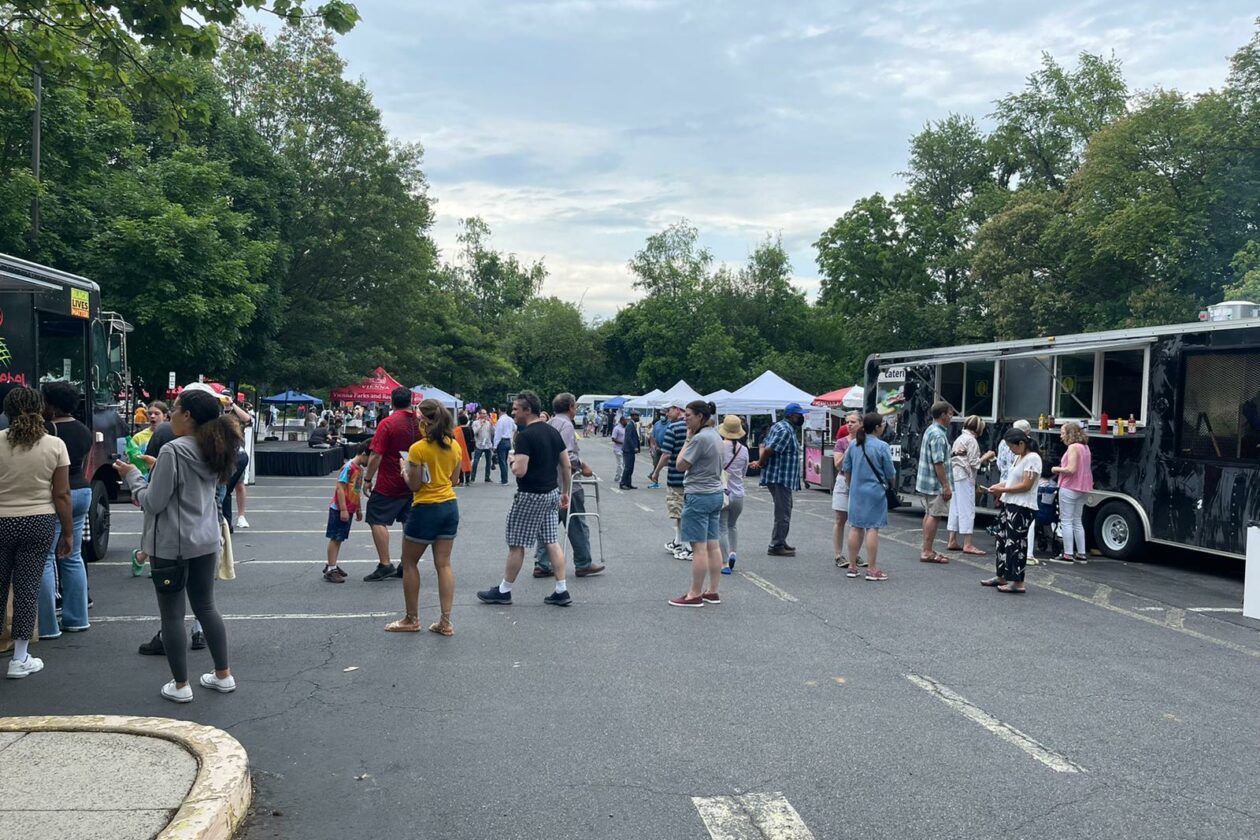
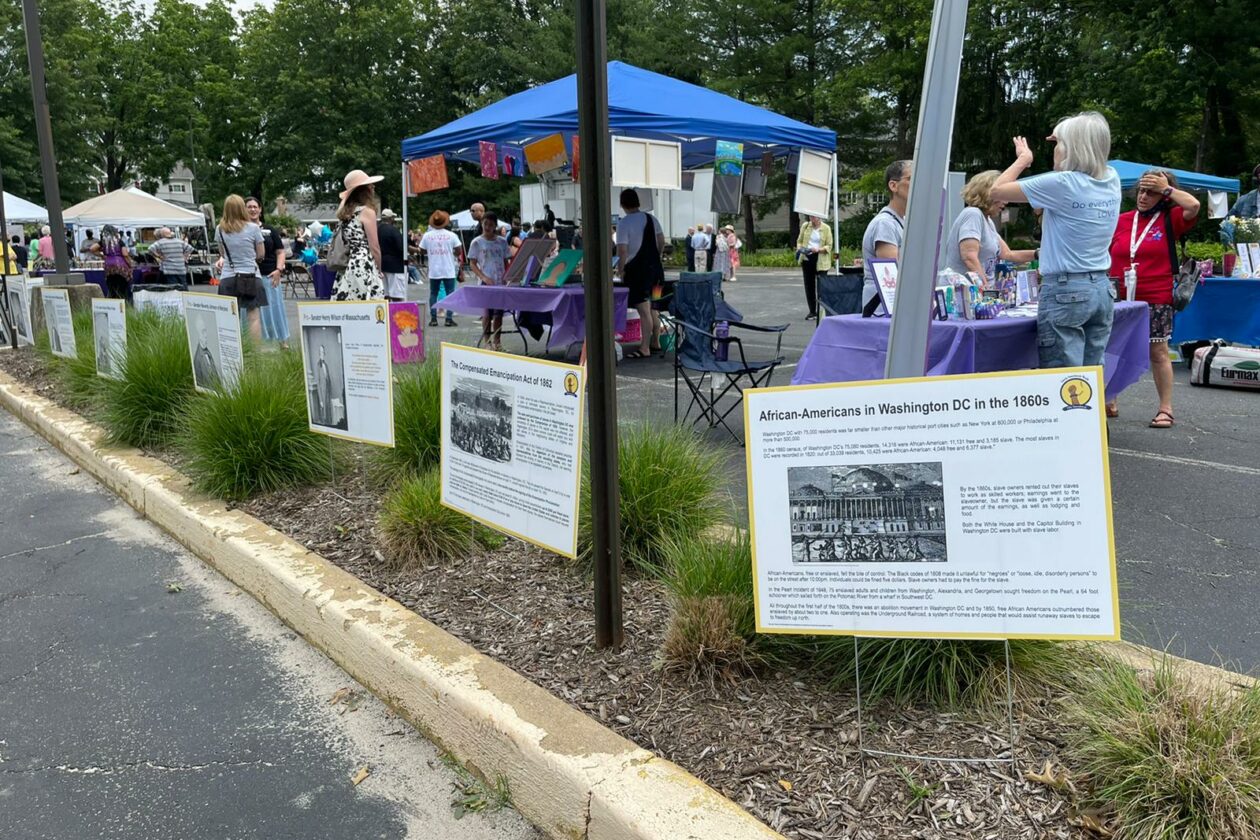
Wrapping around the church parking lot, Vienna’s Juneteenth Celebration featured informational booths, vendors, music, and more in addition to providing a COVID-19 vaccination clinic in the church.
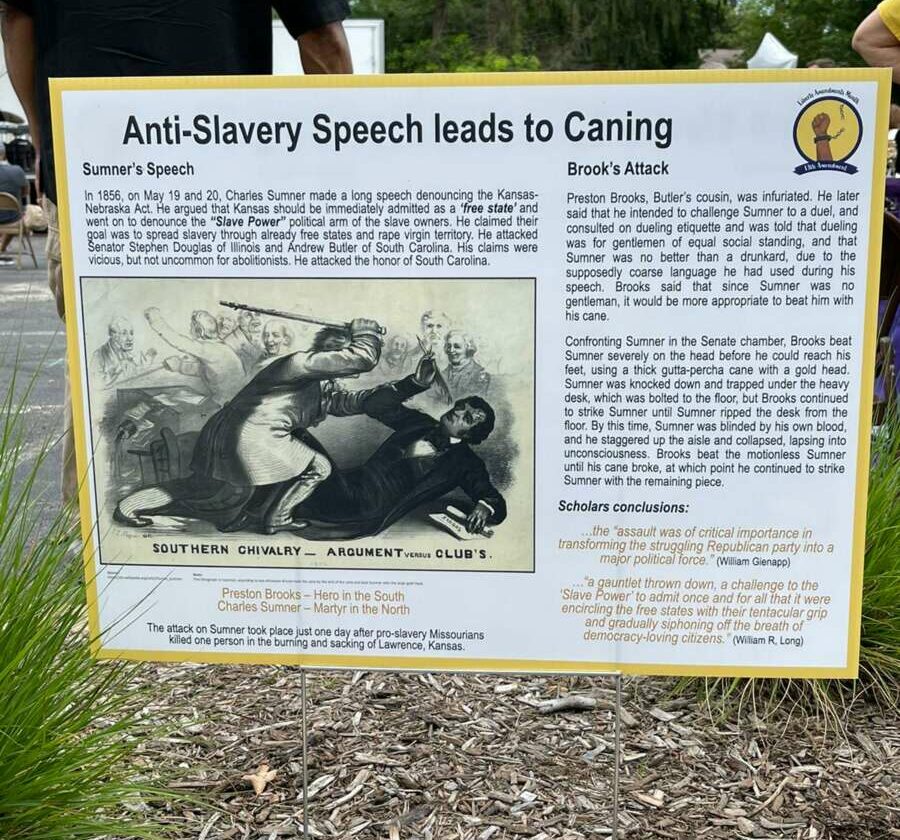
Signs at the event looked at past historical figures and events, with one noting that slave labor helped build the White House and U.S. Capitol. Others highlighted U.S. senators who stood up for abolition.
An outdoor stage set up by the church hosted a variety of musical performances, including a gospel singer who sprinkled in references to Juneteenth and invited listeners to clap their hands if they’re free.
“It’s a start,” said Wes Cherry, a field underwriter with Foresters Financial operating with the group Focus on Community. The company is a fraternal benefit society that gives money back to communities.
For Cherry, the federal holiday recognition is much appreciated, but he also noted the move came at the same time that many state legislatures, including in Texas, are working to limit teachers’ ability to discuss racism in their classrooms.
The additional federal holiday also comes a year after last summer’s widespread protests for racial justice in the wake of several killings, including George Floyd in Minneapolis and Breonna Taylor in Louisville at the hands of police as well as jogger Ahmaud Arbery, who was shot and killed by three white men in Georgia.
“America, while we love it, [has] to acknowledge our past and history,” said Vernon Walton, senior pastor of the First Baptist Church of Vienna.
Last year, the church held a rally for Juneteenth following the “lynching of George Floyd,” Walton said. This year, he said he’s overjoyed that people can celebrate the federal government recognizing the holiday.
Despite the somber and painful legacy of the past that continues to shape the present, Walton and other attendees this year noted how the event drew diverse members of the community.
“People are here from all walks of life,” he said. “We really are blessed.”
The event’s kickoff ceremony remains to watch on social media. It launched the Town of Vienna’s weeklong celebration of the 13th Amendment abolishing slavery, which will be followed by events commemorating the 14th, 15th, and 19th Amendments.