

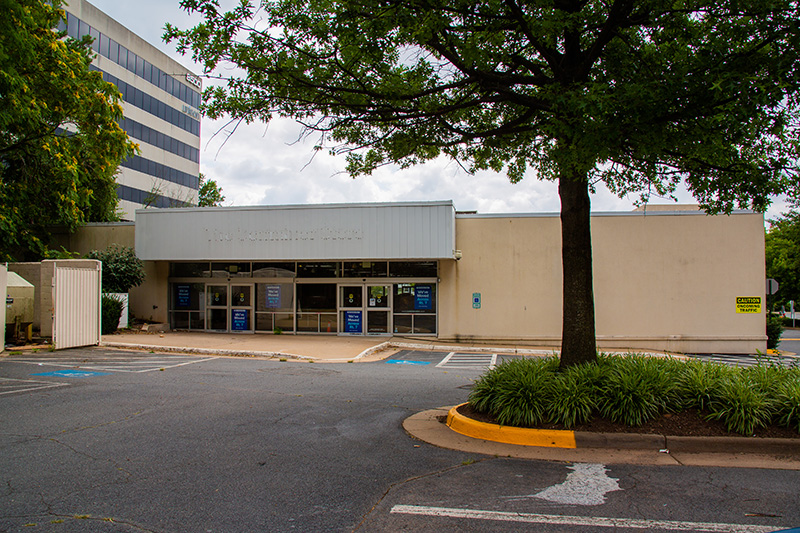
After being adapted for emergency uses during the COVID-19 pandemic, the former Container Store in Vienna could undergo another transformation.
The vacant storefront at 8505 Leesburg Pike near the Greensboro Metro station could be used by the Tysons Partnership and Celebrate Fairfax, Fairfax County Department of Economic Initiatives Director Rebecca Moudry told Tysons Reporter.
The building is 19,260 square feet in size and has approximately 95 parking spaces. The Container Store previously used the space before relocating to 8459 Leesburg Pike in 2018.
The county acquired the space in 2019 for $16.6 million with the hopes of using it to support innovation and entrepreneurship and create a vibrant destination for residents and visitors. Those goals remain and could be realized by this fall, Moudry says.
When the county requested proposals for the space before the pandemic, development officials suggested the property could host temporary or “pop-up” community-oriented events, arts and cultural special events, innovation hubs or exchanges, or civic and cultural programming that complements and supports primary uses of the property.
Over the past year, it has been used for storage, including for personal protective equipment, and it was designated as a hypothermia shelter from Dec. 1 to April 1.
“As we plan for reopening and economic recovery, placemaking, local businesses and community engagement will play vital roles in this work,” Providence District Supervisor Dalia Palchik said in a statement. “The county owned building at 8508 Leesburg Pike is uniquely situated to serve the growing residential and business community in this area of Tysons, and we are currently reviewing proposals to provide such opportunities.”
A representative for Tysons Partnership, the nonprofit group charged with implementing the county’s vision for Tysons, had no update on the plans as of mid-June, and Celebrate Fairfax did not immediately respond to a message.
“I hope to be able to see this site activated in the coming months, both with its indoors and outdoors spaces,” Palchik said in her statement.

A civil engineer for the Fairfax County government has been accused of soliciting sex from an underage boy online.
Francesco Lauretti, 46, of Vienna, was allegedly caught in a sting operation for a felony charge regarding computer solicitation. Police say he proposed sex with a minor under 15 years of age and was arrested March 30, about a week after the alleged offense.
Following an arraignment on March 31, the Fairfax County General District Court held a preliminary hearing last Wednesday (June 16) and moved the case to the county’s circuit court for a grand jury to determine if there is probable cause.
Lauretti has been on paid administrative leave from his job with the Fairfax County Department of Transportation since March 31 “pending the outcome of an ongoing internal investigation,” according to the county.
An attorney for Lauretti argued that he should be released without a bail stipulation that required him to not use the internet, a restriction that can be imposed on other defendants.
The attorney said in a court filing that Lauretti has been seeing telehealth providers virtually due to the COVID-19 pandemic and an internet ban would also result in the defendant’s imminent unemployment.
His current attorney, Michael Sprano, said he did not have any comments to make presently.
The charge is a Class 5 felony that involves using a communications system or other electronic means to solicit “with lascivious intent” a person that the accused knew or had reason to believe was a child less than 15. If the offender is more than 7 years older than the child, as in this case, a conviction carries a minimum prison sentence of five years.
According to a court document filed earlier this year, Lauretti has a wife and kids.
Photo via Google Maps

A multimillion-dollar indoor tennis facility is slated to come to the Westwood Country Club in Vienna.
The club is seeking to replace its existing tennis bubble with a new facility that would have three indoor tennis courts as well as court tennis, also known as real tennis, a rarity in the U.S. and the world.
“The court tennis facility will be one of less than 50 in the world, and we couldn’t be more excited to introduce the sport at Westwood,” Bryan Stone, the club’s general manager, said in an email.
According to the club, the project will cost around $5.5 million to $6 million.
The club expects to host national as well as international tournaments. Outside the U.S., court tennis is only played in the United Kingdom, France, and Australia, according to court tennis groups. Players can use the walls in court tennis in a manner similar to other indoor racquet sports.
Stone wrote that demolition of the existing four-court bubble should begin in mid-July and a pre-engineered metal building would begin to be erected in late August or early September.
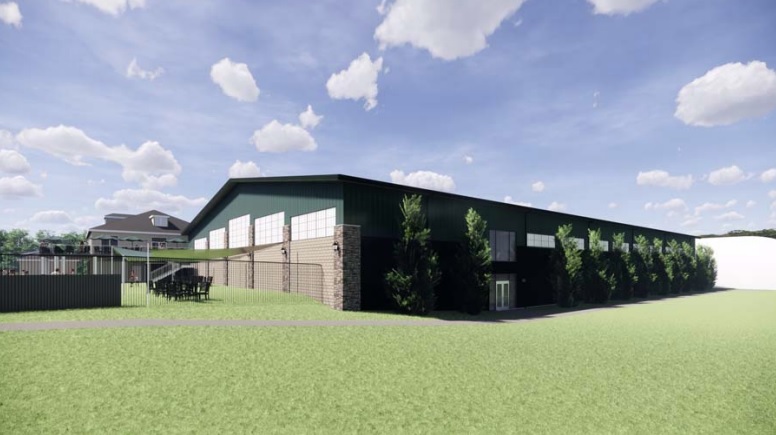
“If all goes according to plan, we expect the project to be completed in May of 2022,” Stone wrote.
The new 31,240 square-foot facility would have a lower gallery and an upper-level mezzanine both for spectators. It would be available to members and their guests.
Architectural plans for the facility say that it will connect with the first-floor lobby of the country club’s adjacent poolhouse to create “a cohesive entrance experience.” There will also be a tennis pro shop in the new building.
The project is slated to go before the Town of Vienna’s Board of Architectural Review when it meets at 7:30 p.m. today (Thursday).
Photo [1] via Herry Lawford/Flickr

With federal money that gives low-income households a discount on internet service set to run out this year, Fairfax County leaders and staff are looking at ways to ensure people get access to broadband internet, which they’ve likened to a utility like electricity or water.
A staff report presented to the Fairfax County Board of Supervisors’ information technology committee on Tuesday (June 15) found that there are significant disparities in internet access among homes in the county due to infrastructure and affordability.
While different county representatives — from the school system to the Department of Family Services — were collaborating prior to the COVID-19 pandemic, they started looking more intently at equity issues during the pandemic, as technology needs hit a crescendo between students attending school from home and job seekers looking for work.
“Many of us saw at the outset how difficult it was for community members to work from home or for their children to be educated from home — whether or not they had the technology available, if they had strong enough internet connectivity, if they had space in their own homes to do this, or if they were trying to locate wireless within the community and do all of this from their own cars,” Fairfax County Public Library Director Jessica Hudson said.
Some zip codes are more affected by this lack of connectivity than others.
According to an analysis presented by the county, an estimated 4.2% of households in the county have no broadband internet access, but that number jumps up to 20.8% in the zip code 22044 and 18.8% in zip code 22041, both neighborhoods in the Seven Corners area of Falls Church.
The county estimates that 10.7% of households in north Reston (zip code 20190) are without broadband internet, along with 6.2% of Herndon residents (zip code 20170).
The gaps in connectivity are concentrated in areas with many people of color and lower-income households, Fairfax County Chief Equity Officer Karla Bruce said on Tuesday.
The Federal Communications Commission internet discount, known as the Emergency Broadband Benefit or EBB, helps lower-income households get a $50 discount each month for broadband service, among other benefits.
Officials are continuing to share information about the program, providing outreach in multiple languages and partnering with nonprofits and other community organizations.
You can still get the discount even if you have another benefit called Lifeline, which provides a $9.25 monthly discount indefinitely, Hudson said.
But the $3.2 billion fund set up to provide the EBB benefits nationwide is expected to run out this year, possibly around Thanksgiving, according to Hudson.
Among the county’s efforts to improve access, the library system offers Chromebooks that people can check out for two weeks at a time, along with extended exterior WiFi access outside buildings (except in parking garages) from 6 a.m. to 10 p.m.
In addition, Neighborhood and Community Services is conducting a countywide analysis of Wi-Fi access, and the Department of Housing and Community Development and Redevelopment and Housing Authority are conducting a site analysis to address connectivity barriers, according to the county presentation.
“All of these community agencies are trying their hardest to find ways to connect with residents and make sure that they have appropriate technology, digital literacy skills, and access points,” Hudson said.
County supervisors asked for more information to target areas in need as part of the county’s efforts to help overcome access issues.
Photo via Josefa nDiaz/Unsplash

Fairfax County is slated to send additional funding to businesses that suffered the most during the COVID-19 pandemic, but a Black nonprofit says more can be done.
The Northern Virginia Black Chamber of Commerce has repeatedly been neglected in the development of major business grant programs connected to Fairfax County, the nonprofit’s executive director Sheila Dixon says.
“I would have thought we would have had the opportunity to be at the table,” she said.
The county says it’s committed to working with more than 55 chambers, including minority chambers, multicultural groups, and other community and business support groups in multiple languages with its most recent financial assistance initiative.
A working group of local minority business owners is also trying to make changes and build bridges. A webinar co-hosted by the Community Foundation of Northern Virginia on June 23 seeks to address the needs of minority-owned businesses and how they can be helped.
The group has reached some conclusions and recommendations about equitable recovery across the region and is sharing data, according to the event description. Georgetown University adjunct professor Melissa Bradley, who also co-founded a business mentoring service called Ureeka, is the keynote speaker.
The county has noted these kinds of inequities. A consultant report for the county completed in January detailed how low-income and minority households faced greater difficulties in the workforce, along with women, who have been held back by affordable child care challenges.
Those findings came from working with businesses and a roundtable of minority chambers. The Northern Virginia Black Chamber of Commerce was invited to give input and was also asked to participate in a survey about impacts and recovery, according to the county.
Fairfax County’s Relief Initiative to Support Employers (RISE) program, which gave grants to small businesses and nonprofits, dedicated at least 30% of funding to businesses owned by women, minorities, or veterans. Those businesses ended up with 72% of the approximately $53 million of RISE funding, according to the county.
“We are building on and expanding those efforts,” county spokesperson Wendy Lemieux said in an email, adding that the county is committed to extensive outreach with businesses, particularly ones owned by women and people of color affected by the pandemic.
Unlike the RISE program, the county’s new PIVOT grant program didn’t include any provisions explicitly dedicating funds to often marginalized groups when the Board of Supervisors passed it last week.
Meanwhile, the Black chamber of commerce has shared the PIVOT grant information, but it’s also continuing its own initiatives to help businesses recover from the economic effects of COVID-19.
The organization recently launched an outreach called BTRNow (Build Thriving Returns Now) that provided an online workshop for kid entrepreneurs this spring, held a “Caring through COVID” panel discussion on Monday (June 14), and is currently carrying out a listening tour, among other programming.
Dixon says a lot of the chamber’s members have pivoted amid the pandemic and have been thriving.
But she also noted that there can be disparities, and various Black businesses might be reluctant to apply for resources if they’re skeptical that the support will materialize, even if race is considered as a factor in applications.
“It will be interesting to see if people feel more comfortable,” Dixon said. “We are building up and scaling up our businesses and providing them with the education and the resources that are available within the community.”
Photo via Nathan Dumlao/Unsplash
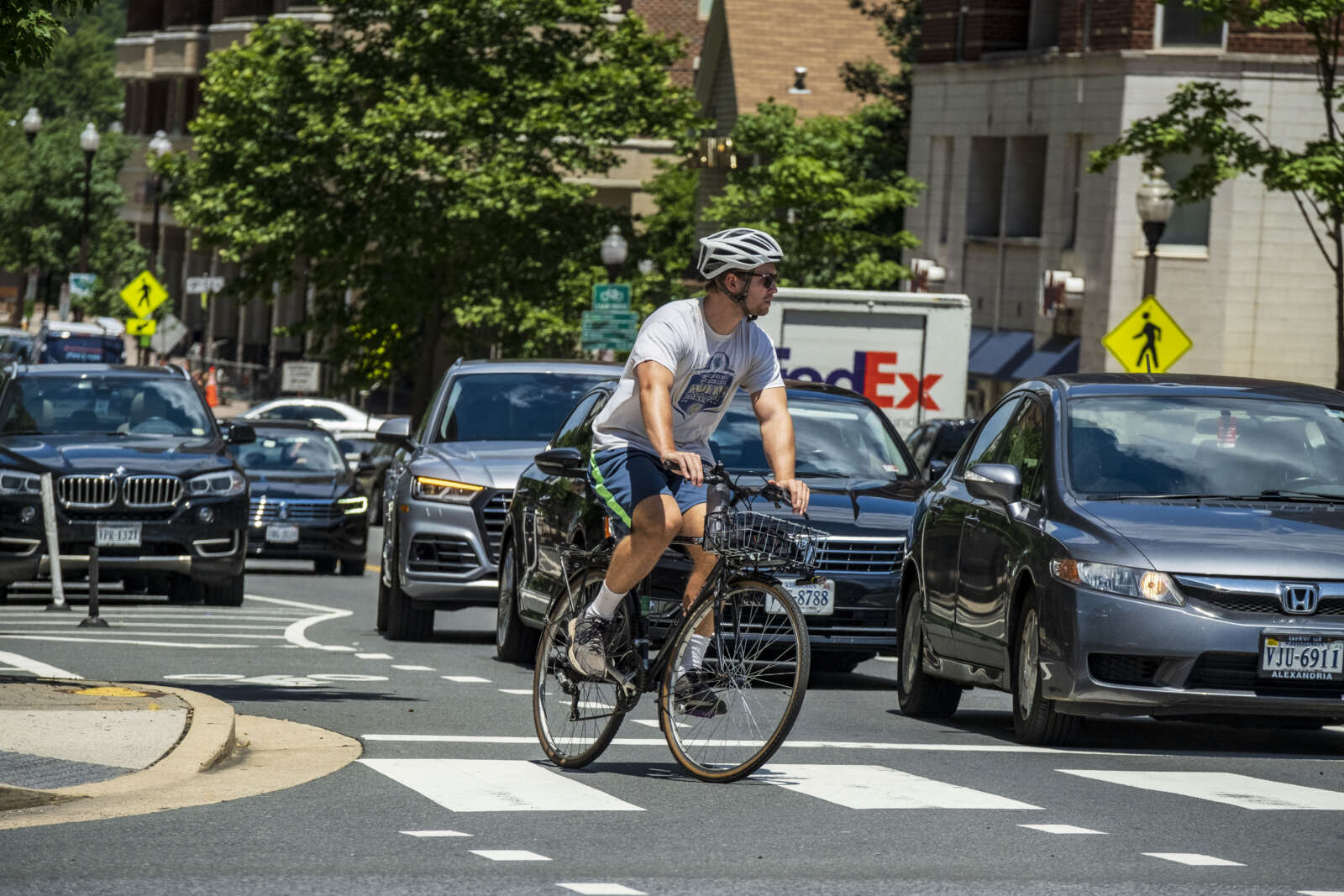
If you’re passing a cyclist or group of riders in a vehicle, you’ll soon have to change lanes a lot more.
A new law going into effect July 1 will require drivers to switch lanes if they can’t maintain three feet of distance when passing cyclists.
The Fairfax County Police Department says this means motorists may have to cross double yellow lines, imploring people to “share the road.” Police told Tysons Reporter that they hope people will abide by the new legislation and help keep everyone safe on roadways.
“I think it’s going to be huge in the long run,” Fairfax Alliance for Better Bicycling President Bruce Wright said Monday while stopping during a bicycle ride on the Washington & Old Dominion Trail. He acknowledged that the change may require some education.
Wright says the new law means that vehicles will generally need to shift lanes, because lanes in the state are typically 11 or 12 feet wide.
“In effect, almost every lane in Virginia will require a motorist to safely pass,” he said.
The state law was adopted in February after General Assembly legislators removed a provision that would have allowed cyclists to treat stop signs like a yield sign.
Some states, including Delaware, allow the so-called “Idaho stop” for bicycle riders. Like Virginia, Washington, D.C., considered the stop-as-yield measure but also declined to adopt it.
The new law also ends a requirement for cyclists to file into a single lane when being passed.
Tensions between cyclists and drivers played out on the county police department’s Facebook post about the issue. Several people noted cyclists should obey traffic laws, too.
Wright says those online arguments between cyclists and drivers are similar to honking as well as dangerous behaviors on the road.
“There’s so much animosity, and it’s aggressive,” Wright said.
Some people on social media questioned whether double yellow lines should ever be crossed.
Current law already allows drivers to cross double yellow lines when passing others, including cyclists, skateboarders, and scooters. Another provision involves giving enough distance to mopeds, animal-drawn vehicles, and more when drivers pass them.
Pedestrian and bicycle safety is a persistent concern in Fairfax County, where seven pedestrians and two cyclists have died in car crashes so far this year. Whether these new laws help alleviate those issues remains to be seen.
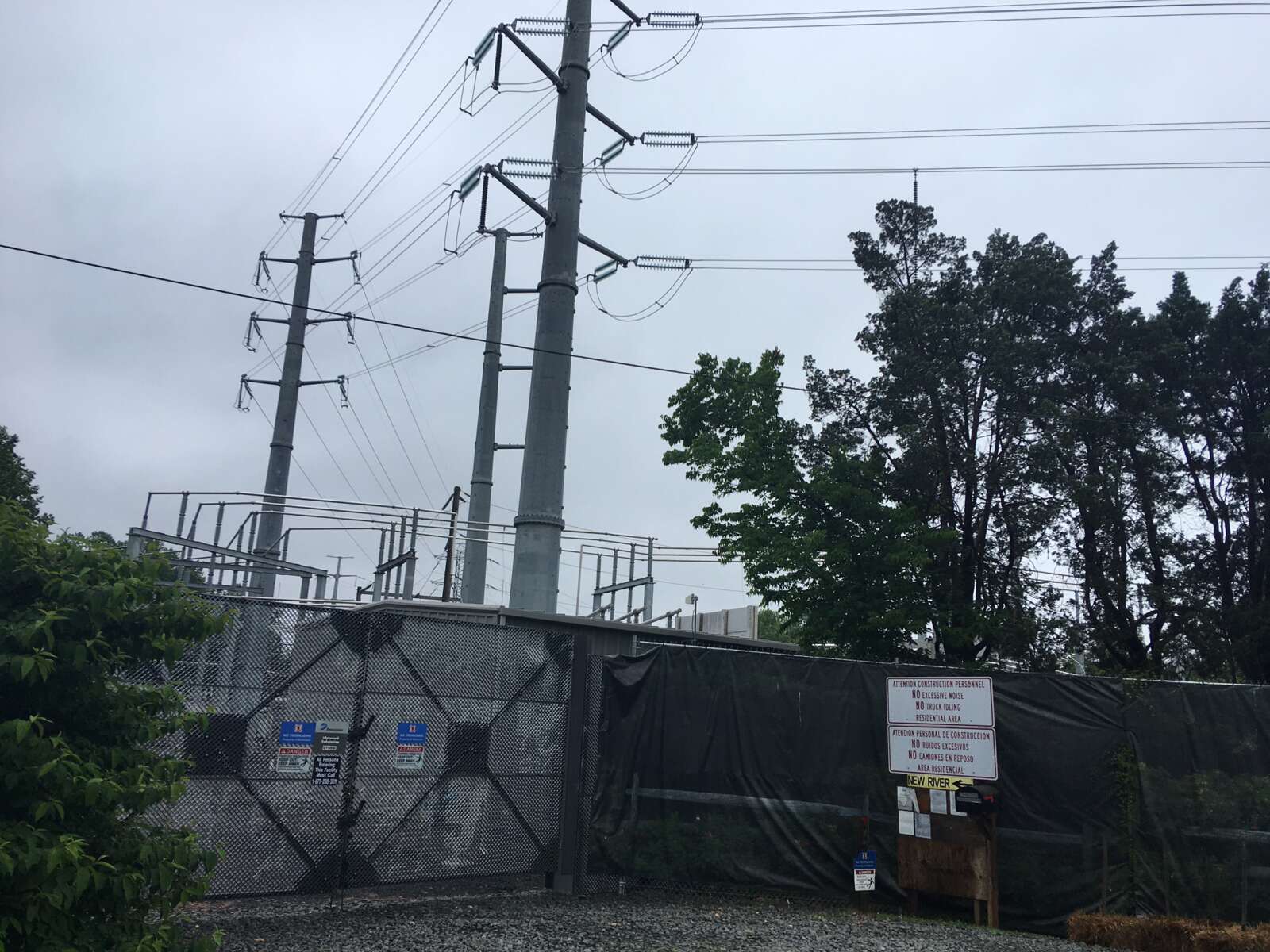
The State Corporation Commission is reviewing whether Dominion Energy could extend a substation project that has frustrated, irked, and baffled residents to 2026.
Hearing officer Ann Berkebile said Thursday (June 10) that she will issue a report following public testimony in which residents detailed their frustrations over a project to rebuild the Idylwood Substation on Shreve Road.
“The first thing I want to note is how disheartening it is to be contemplating construction in our community until December 2026,” said Lori Jeffrey, president of Holly Crest Community Association, further saying delays and excuses from Dominion have occurred throughout the project and residents have learned to not accept the company’s statements at face value.
Dominion didn’t respond Friday to a request for comment. Attorneys for the company as well as county and other parties didn’t question witnesses when given the opportunity at Thursday’s hearing. Fairfax County didn’t address a media inquiry by press time.
Approved by the county in 2015 and the SCC in September 2017, the project calls for rebuilding, relocating, and replacing facilities and lines in and around the existing substation.
Dominion has said the proposed enhancements will “provide seamless, reliable power to Fairfax County, the cities of Falls Church and Fairfax and support the energy needs of the Metrorail.”
In justifying the extension, the utility company has cited the complexity of the project as well as lengthier permitting processes than expected and acknowledged that it underestimated parts of the timeline, among other factors.
“The Company is cognizant of the amount of time this Project has been in process and the strains the Project has placed on the surrounding community,” Dominion said in a March filing with the state detailing why it’s seeking a six-year extension.
During Thursday’s hearing, Collin Agee, a Holly Manor Drive resident, said work on the project started in 2016, five years ago.
The 2017 application approved by the state had the ability for an extension — provided it got the SCC’s approval. A May 31, 2020 deadline is currently suspended, according to the commission, a regulatory entity that has authority over utilities.
Tensions between Dominion and local interests have been developing, though, with the company proposing a new timetable to finish by Dec. 31, 2026. The project cost has also increased from around $107 million to $159 million as of February, according to the company.
The conflict continued at Thursday’s hearing, which will help the three-member commission make a determination. Hearing officer reports typically have a 21-day comment period by the formal parties in a case, according to the commission.
For homeowners like Andrew Laine and his wife, who plan to retire and relocate, that’s concerning. Laine said they previously rented their home for three years during the time the project began, and construction work behind their home led their family to say they wouldn’t have rented there if they had known about the extent of the project.
“Dominion has not been upfront with anything,” Laine said.
The three driving factors of the project are addressing power reliability regulations, increasing operational efficiency, and maximizing space for potential expansion, according to Dominion.
Dominion notes the project is located at two major overheard transmission corridors, an electrical transmission hub, and major distribution substation.
“Continuing to terminate lines and add load to the Idylwood Substation with [its current] arrangement would increase the severity of a breaker failure event,” the company said previously.
The rearrangement’s additional space could “accommodate potential future transmission terminations,” but there are no future transmission terminations and transformation planned at this time, Dominion said in the March SCC filing.
According to a Dominion project website, the existing Idylwood Station is on a 7.15-acre lot and the “existing equipment footprint” is 3.99 acres. The company seeks to reduce that equipment footprint to be around 2 acres.
Catarina Couto, the previous president of the Holly Crest Community Association, told Tysons Reporter that Dominion presented a project in 2013 with a much smaller footprint than what they were going to do. Couto said residents kept pushing for more information, and the company wasn’t forthright and honest with the neighborhood.
She asked the state at Thursday’s hearing to help neighbors in keeping the company accountable, arguing that 2026 was too long of a timetable.
“At this point, we have lost trust in Dominion’s ability to provide us with anything that is of tangible or valid information,” Cuoto said. “They have continuously pushed the agenda, they have received various…extensions, and they have caused our neighborhood great, great grief.”
Arts organizations, museums, and hotels are some of the key targets for Fairfax County’s new initiative to get money to those in need, and informational sessions are providing help.
Approved by the county board last week, the PIVOT program will provide financial grants to small businesses as well as other recipients, and webinars about the effort will begin at 1 p.m. tomorrow (Tuesday) in English and at 2 p.m. Thursday (June 17) in Spanish.
Links to the webinars can be found on the Fairfax County Department of Economic Initiatives website.
“Fairfax County is committed to helping businesses recover from the effects of the pandemic,” Board of Supervisor Chairman Jeff McKay said in a news release. “Through the PIVOT grant we will help those businesses who saw the greatest financial impact regain their momentum so they will be able to thrive in the reopening marketplace.”
Federal funding through the American Rescue Plan Act is supporting the program with $25 million to the county.
Applications can be submitted online through a grant portal that will be open from June 23 to July 9. The money is being administered through the nonprofit Latino Economic Development Center, said Rebecca Moudry, director of Fairfax County Department of Economic Initiatives.
The areas targeted will give relief to food services, lodging, retail, services, amusements, arts organizations, museums, and historical sites.
Potential monetary awards for individual businesses and nonprofits include the following:
- $18,000 for restaurants with less than $3.5 million in annual receipts or gross revenue per establishment
- $12,000 for retail, services, and amusements with less than $3.5 million in annual receipts or gross revenue per establishment
- $10,000 for large arts organizations, museums, and historical sites with annual receipts or gross revenue greater than $100,000
- $5,000 for smaller arts organizations
- $1,500 for food trucks that don’t belong to a restaurant
- $400 per room to hotels with a minimum of 10 rooms
The money will go to businesses that have no more than 500 employees, among other criteria. Nonprofits don’t have an eligibility restriction regarding the number of workers they have.
“Fairfax County’s PIVOT grants will target grant money to the arts who experienced a 98% program cancellation and venue closures during the pandemic,” ArtsFairfax President and CEO Linda Sullivan said in an email, adding that despite the economic losses, arts pivoted to online offerings to keep the community engaged. “We hope to see the arts come back strong.”
The new outreach comes after the county ended its Fairfax Relief Initiative to Support Employers (RISE) program last year, distributing around $53 million, one of several financial outreaches by the county.
The PIVOT grants will go to hotels first, then to other organizations if demand is too great. The county could also add to the funding in the future.
Photo via Clay Banks on Unsplash
Editor’s note — The candidate bios below come from their responses to requests for comment from Tysons Reporter. Any candidate who wishes to add to their entry can email [email protected].
The Falls Church City Council and School Board races will have crowded fields for limited openings this November.
After the filing deadline closed earlier this week, the city council has six candidates for four seats, and the school board has nine candidates for four seats. Terms for each are for four years.
One question hovering over the general election, which is set for Nov. 2, is whether early voting returns will be similar to the jump in 2020 or return to pre-pandemic levels, Falls Church City General Registrar and Director of Elections David Bjerke wrote in an email when contacted by Tysons Reporter.
Turnout for the election could also be affected going forward by the introduction of a permanent absentee ballot by-mail request form, a new option that will be available in Virginia starting July 1, according to Bjerke.
“So if you want your ballots mailed to you for all elections, you fill out that form and we’ll mail the ballot to you,” he wrote. “As voters opt into that program, they will be informed of the election earlier and may well vote earlier. If they choose to vote in-person, that request gets canceled and they have to opt in again for future elections.”
In addition to the city council and school board candidates below, the general election ballot will include races for commissioner of the revenue, treasurer, and sheriff, according to the City of Falls Church.
City Council
The top four vote-getters will earn seats.
Mayor David Tarter’s term runs to the end of 2023. After the November election, the newly elected council will vote for vice mayor and mayor, whose positions are in place for two years. Other council members whose terms also run until then are Phil Duncan and Letty Hardi.
Names are ordered as they will appear on ballots.
- David F. Snyder is seeking another term. Snyder, a former mayor and vice mayor, was first elected to council in 1994.
- Debora “Debbie” Schantz-Hiscott is seeking her first full term after winning a special election last November after Councilmember Dan Sze died of cancer.
- Marybeth D. Connelly is seeking another term. She’s been the vice mayor since 2016 and was first elected in 2014.
- Stuart M. Whitaker
- Caroline S. Lian
- Scott C. Diaz
School Board
The top four vote-getters will land seats.
The openings come from the seats of board members Shannon Litton (the chair), Greg Anderson, and appointees Sonia Ruiz-Bolaños and Edwin Henderson II, who filled partial terms this year due to vacancies.
Terms for board members Laura Downs, Susan Dimock and Phil Reitinger last until 2023.
Names are ordered as they will appear on ballots.
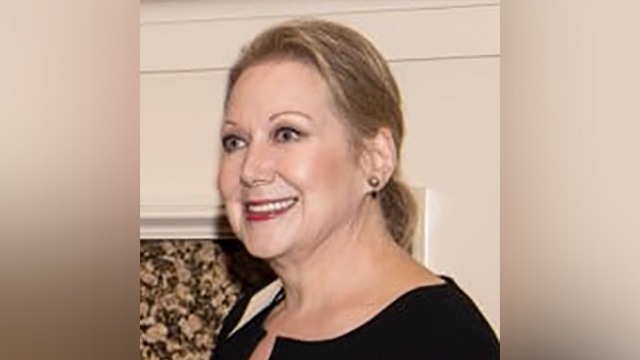
True to her past as a former presidential staffer and Pentagon assistant, Sondra Seba Hemenway stayed up until 3 a.m. tweaking a TV script for a Fairfax County leader the night before a filming for Women’s History Month.
Hemenway was helping out as part of the Fairfax County Commission for Women, which acts as an advocacy unit, even as she missed some meetings due to cancer treatments after melanoma developed in her eye. All the while, though, her cancer was worsening.
Hemenway died Saturday (June 5) at her home in McLean, according to her obituary. She was 67.
“She fought for her life the way she fights for women and girls in marginalized communities,” said Lisa Sales, chair of the county women’s commission, who recalled Hemenway staying up late to help her with the Channel 16 TV program.
Hemenway had served at one point as vice chair of the commission with Sales, but when that title was removed, she still maintained her key involvement.
Her attention to detail and research resonated with Sales, who recalls regularly receiving a supportive hug or hand on the shoulder from Hemenway.
A sunny, sparkling woman from Hot Springs, Arkansas, who spoke with a Southern drawl, Hemenway served the White House Office for Women’s Initiatives & Outreach, Department of Defense, and White House Office of Presidential Personnel in the Clinton-Gore administration.
“She was a real connector,” said Audrey Sheppard, who worked in the Department of Defense’s Office of the Secretary, noting that Hemenway’s mother and former President Bill Clinton’s mother were best friends in Arkansas. “What would pop into her brain — ‘Oh, you have a problem? Here’s a person who can help solve that problem or here’s a person who would want to know about this issue or challenge.'”
Sheppard remembers first meeting Hemenway, who had been selected to be her special assistant in the early ’90s under Secretary of Defense Les Aspin.
“She appeared one day in the Pentagon. I had never heard of her, I had never met her, and she just radiated her Southern charm and had this — an enormous can-do way about her,” Sheppard said, describing her as charmingly persistent. “And she made things happen.”
When Aspin resigned and several people found their jobs in jeopardy, Hemenway threw her support behind her former supervisor to help Sheppard get a position tied to the White House. In following years, she would repeatedly introduce Sheppard to people as her old boss — even when Sheppard sought to change that.
“She was just very generous, and that was part of her generosity,” Sheppard said. “She wasn’t transactional…It just came very much from her heart.”
During Hemenway’s illness, Sales would send flowers, likening her to a sister and mother that she never had. But in the same fashion as her mentor, Sales went above and beyond, tracking down a flower shop in Alexandria that would deliver flowers to McLean. She usually ordered them in the colors of the suffrage movement: purple, white, and gold.
“She’s so special, I wanted something special for her anytime I ordered something for her,” Sales told Tysons Reporter, at times crying while recalling the memory of her friend.
After the TV show, Hemenway had a 4-foot-tall gift of flowers sent to Sales’s home.
She’s survived by her husband, father, brother Brian Seba of Las Vegas, and other family members.
Hemenway was also a board member of the Fairfax County Convention & Visitors Corporation and the Sewell-Belmont House and Museum — a women’s history landmark now known as the Belmont-Paul Women’s Equality National Monument — on Capitol Hill.
When there were needs, she responded not just with ideas, but with research, networking, fundraising, and more.
“She was always the first to write a check,” Sales said.
When Hemenway met Kari Galloway, the executive director of the Alexandria-based Friends of Guest House, which helps women get back into society after jail, Hemenway continued to keep in touch, sending her articles even if it just meant contacting with her a few times a year, Galloway said.
“She was always interested in how to support people,” Galloway said. “It’s nice to know someone was always thinking about you.”
Photo courtesy Lisa Sales
