

Two Vienna residents looking to simplify the way people buy and sell event tickets decided to start their own company.
Newly created TicketFam is an online platform that controls ticket distribution for events. Though still in the early startup phase of the company, co-founders and friends Ashik Banjade and Arian Shahbazi said that their main goal is to disrupt how people buy and sell tickets now.
The James Madison University graduates met while in college a few years back and launched their company eight months ago. Though they both have full-time jobs as IT consultants, they said they work on their company during their spare time.
“We’ll work with anyone — vendors, artists or stadiums,” Banjade told Tysons Reporter, adding that users can register on the platform and create an event page.
The platform functions by working with event organizers to create a seating or ticketing arrangement, promote events and special offers, analyze the target audience for the event for marketing purposes and allow attendees to purchase tickets from sellers, according to the company’s website.
Currently, the co-founders work with a production company run by Shahbazi’s family called Arian Productions.
On TicketFam’s website, tickets are only available for the upcoming act 25Band, which the production company booked. But the founders said they will be adding more ticket opportunities this week, including an event on Halloween.
Event attendees will be given a QR code upon checkout, the co-founders said.
“All of our payment processes are managed via Payment Card Industry-certified third parties, ensuring the checkout process is secure and regulated,” Banjade said. In the future, the co-founders also want to accept cryptocurrency, PayPal and other forms of payment for tickets.
Soon, TicketFam will unveil a new user interface and features, including a rewards system and game, which Banjade and Shahbazi declined to provide more details on.
Within the next five years, the young entrepreneurs said they hope to catch the attention of competitors and maneuver into a position of power to challenge the status quo and become a main player in the ticket sales industry.
When it comes to costs for artists and event organizers, they do not have a set cost, Banjade said. Instead, they are competitive and will match the price of any competitor until they establish themselves in the ticket sales industry.
“As young entrepreneurs, you’ve just gotta keep trying,” Banjade said.
Photo courtesy TicketFam
(Updated 9/19/19) A company in the City of Falls Church is rethinking cell phone service to eradicate dead zones across the globe.
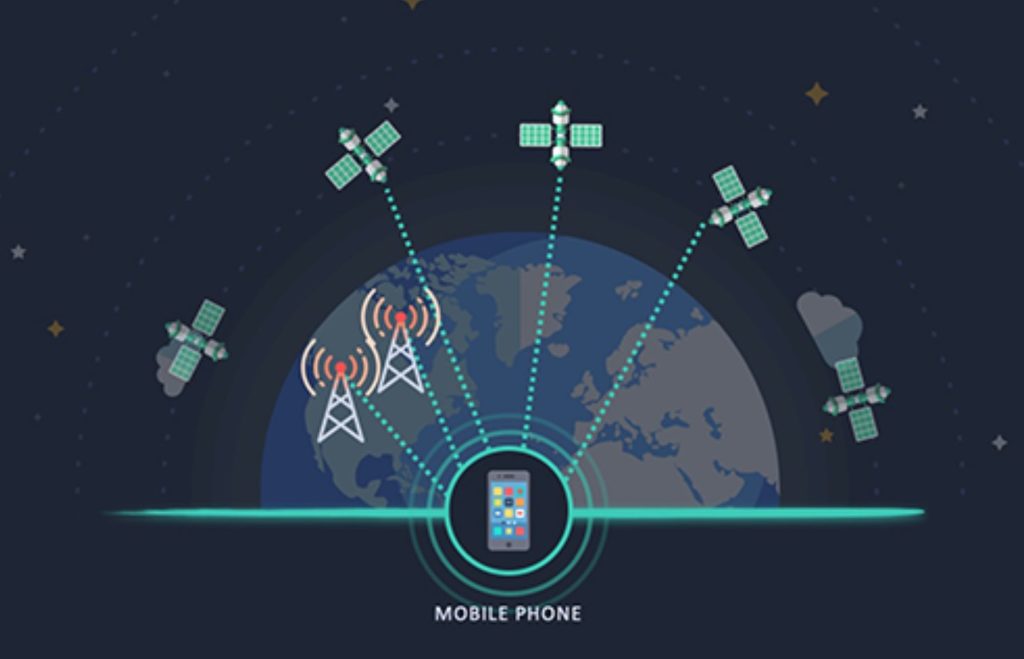
Lynk is a new startup in the process of launching satellites that will allow cell phone users to send and receive SMS texts anywhere in the world within 55 degrees north or south of the equator.
Though they aren’t operational just yet, they want to show partners that their technology is beyond that of science fiction, said CEO and Co-founder Charles Miller.
By working with cell phone companies, Lynk will be able to provide secondary service from satellites when it isn’t available from normal towers, Miller said.
The idea for the startup came from Co-founder and Cheif Operating Officer Margo Deckard during her time in Africa easing the impact of Ebola through data and satellite information, Miller said.
Deckard noticed people had a hard time communicating with one another using technology because wi-fi and cell tower service were not available and wondered if satellites could be a solution.
When the team first proposed the project there were lots of naysayers, Miller said. But given his background as a senior adviser for NASA, he was confident in the capabilities of satellites and his team.
“Basically people thought it was impossible and assumed it couldn’t be done because it defied conventional wisdom,” Miller said.
Miller said getting funding was one of the largest roadblocks he faced, adding that the company needed investors to fund prototypes and test-runs. After three rounds of funding, the company finally received in June the $12 million they needed to begin test runs.
Lynk will launch all of their satellites via a rocket to the International Space Station (ISS) and then from ISS into space.
Now, the company has 33 partners, including call phone carrier companies Telefonica Argentina and Vodafone Hutchison Australia, who are monitoring Lynk’s growth.
The company recently decided to rebrand from Ubiquitilink Inc. for clarity and ease of name recognition. Miller said that it was hard to spell and it didn’t translate well into other languages.
Lots of investors have been suggesting they move their headquarters to Silicon Valley, but Miller said he considers Northern Virginia to be his home as well as a hotbed for innovation.
Looking forward to the future, Miller said the company will focus first on establishing reliable text messages before they establish bandwidth for phone calls or data streaming services. He said 3,000-5,000 text messages can be sent with the same bandwidth that it takes to support one five-minute phone call.
“We would rather service 3,000 to 5,000 people than lock up that one channel,” he said.
Once they manage to raise capital through private companies, they will expand to assist the Federal Emergency Management Agency, U.S. Department of Homeland Security and the Coast Guard, Miller said.
To meet their upcoming goals, Miller said they are looking to recruit one more investor by the end of the year.
The company is currently looking to hire eight different positions, including a vice president of business development and a telecommunications software engineer.
Image via Lynk.world

A 3D modeling company in Tysons is trying to change the way U.S. armed forces, governments and disaster aid organizations strategize.
Vricon, a Tysons based company, uses imagery from satellites to map out land in acute detail to provide clients with geospatial data and solutions that can be used for planning and preparation.
Headquartered at 8280 Greensboro Drive, the company works with the federal government, armed forces, telecommunication companies and emergency responders, according to the company’s website.
Barry Tilton is the vice president of engineering and CTO for U.S. government programs at Vricon. He joined the company in 2017 shortly after its founding in 2015 and now works closely with company executives to develop the software and mapping tools.

The company is currently working on developing a tool that would allow troops to train for situations and eventualities in foreign or unfamiliar places.
There is no way of knowing where the next global conflict will occur, he said, but this technology allows armed forces to “modernize” their tactics.
Currently, the army uses high-resolution gaming models for training, Tilton said, adding that before the technology, training was limited to a smaller number of scenarios.
“The folks in the training environment wanted to get a set of tools that more accurately reflect the kind of information available to a warfighter in operation,” he said.
When it comes to international affairs, Vricon’s executives understand the power of their product, and Tilton said that company executives are careful when releasing data to companies or entities.
The CEO and the company’s board will work with the State Department when they receive data requests that might be used for nefarious purposes, he said, adding that they have denied requests for information in the past.
“If we are dealing with other countries, unless there is a good working relationship and a trusting relationship with the U.S., we will only provide countries data of their own area,” he said. “There is no real harm in giving people knowledge of their own country.”

When Hurricane Maria swept through Puerto Rico back in 2017, Vricon worked in coordination with the U.S. government to build an accurate before and after 3D comparison to help survey damage.
Once a storm clears up, Tilton said Vricon can prepare a model of a disaster zone relatively quickly — within two weeks — once the storm clears out.
To make a comparison, the team recollects data from scratch since things change so dramatically after storms hit. To get an accurate image, the company will take five or six satellite images before creating updated maps, he said.
In the coming weeks, Tilton expects the company to begin work on a model that will assess the damage in the Bahamas from Hurricane Dorian.
Vricon has also done work to preserve culturally significant sites in the Middle East. The company recreated an ancient Syrian citadel near Aleppo that was under threat of destruction from bombing so historians could understand what was lost, Tilton said.
“It was experimental in the idea we’ve never done anything like that,” he said.
Since Vricon is still a somewhat young company, they are still in the midst of forming partnerships and establishing themselves in the industry, Tilter said. They recently partnered with Apollo Mapping in Colorado and are working to see how their technology might be able to assist humanitarian organizations as well.
“We are engaging with NGOs to see what might be provide-able and under what circumstances,” Tilton said.
Images via Vricon
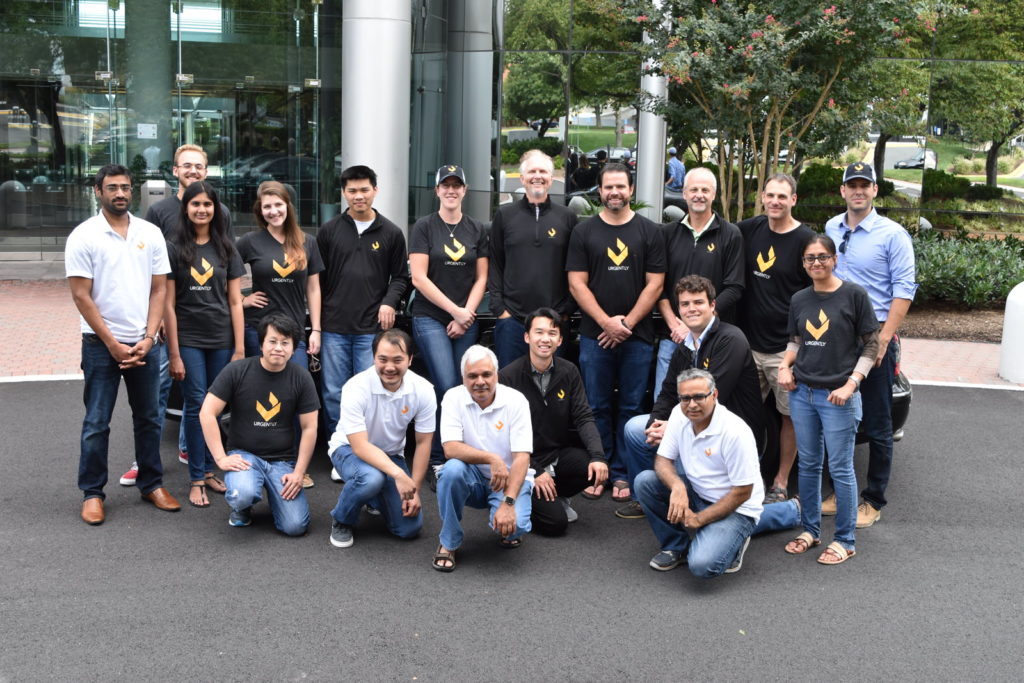
Tysons company Urgent.ly has sparked national attention after its recent partnerships with Uber, Volvo and Amazon.
Its partnerships with Uber, Volvo and Amazon were all formed within the last year, but the company is still focused on outward expansion Chris Spanos, the co-founder and CEO, told Tysons Reporter.
“I think it’s important for people to know we have the largest digitally connected network in the U.S.,” Spanos said.
Urgent.ly is a roadside assistance app that works on-demand with standardized pricing — no subscription needed.
Uber’s and Volvo’s partnerships allow their companies to receive rewards for roadside assistance including discounts, while growing Urgent.ly’s userbase and aligning them with well-known brands, according to the company’s website.
With Amazon, users can order Urgent.ly roadside assistance through Alexa.
The company was co-founded in 2013 by Spanos and five other colleagues. They used to gather at the McLean coffee shop Star Nut Gourmet for brainstorming sessions until they moved onto a permanent office, Spanos said.
Since Urgent.ly’s founding, the company has hired 250 employees, opened several offices throughout the U.S. and also began offering roadside service internationally. The company’s recent growth nabbed it the #12 spot on the 2019 Inc. 5000 national rankings as one of the fastest-growing private companies in the U.S.
“Our international strategy so far is to license our technology to players in those markets who operate a service directly,” Spanos said.
Though no subscription is needed to use the app, the company is offering a discounted $50 yearly membership that gives users access to discounts and free services like jumpstarts or lockout services.
Looking to the future, Spanos said he will watch for upcoming technology and may eventually offer roadside service for technology beyond traditional vehicles. “It’s fascinating to have a look into the future and how we may be receiving our packages.”
He said that he thinks drones and robots delivering packages may be a reality in the near future and that a company — like Urgent.ly — will need to fix them when they break on the job.
Though he couldn’t give specifics about future partnerships, he said that the company is looking to build alliances with early-stage companies exploring new technologies, like drone and robot deliveries.
“That’s where we see the next five years,” said Spanos.
Image courtesy Urgent.ly
BAE Systems announced its new Robotic Operations Center in Tysons yesterday (Monday).
The new center will “customize and deploy suites of software robots that automate high-volume, repetitive tasks in support of U.S. national security missions,” according to a press release.
“The emphasis on security is driving a significant increase in the collection of data across the IT enterprise, giving analysts access to more data in greater detail than ever before,” Peder Jungck, the vice president of intelligence solutions at BAE Systems, said in a press release.
Known as ROC, the new center stems from BAE Systems’ partnership with UiPath to increase machine learning in the U.S. defense and intelligence communities earlier this year.
“The ROC streamlines IT operations, helping customers to take advantage of the vast sea of information to improve responsiveness while reducing cost and security risk,” Jungck said.
The multinational defense, security and aerospace company has a Tysons office at 1676 International Drive, Suite 1000.
Image via Google Maps
Tysons-based Curbside Kitchen imagines a food truck-friendly world where companies can easily coordinate with food trucks to cater events or just switch up lunch-time options.
Amy Katz, the CEO of Curbside Kitchen, founded the company around 2017 after talking to her husband Brian about his struggles in real estate and difficulty coordinating food trucks for events.
To solve the problem, she decided to create a technological platform that allows managers to schedule food truck arrivals for their business or building.
Katz described the company as “Uber for a food truck — with a ton of heart” and said that her company helps buildings maintain tenants by building a sense of community and diversity based on a shared love for food.
“Each truck has its own DNA,” Katz said.
When first starting out, the main obstacle was finding a way to coordinate with hundreds of food trucks with unreliable hours and various management types, she said.
“The biggest struggle is bringing the food truck owners up to the same standard,” Katz said, adding that there are many “unforeseen” circumstances around food trucks, including maintenance issues or poor weather.
But, despite the challenges, Katz is optimistic about the company’s growth. “I am so passionate about it that every day we learn something new,” she said.
Today, the company has around 300 food truck partners on call in three cities, but Katz said they plan to keep growing thanks to the Virginia Founders Fund from the Center for Innovative Technology, which recently granted Curbside Kitchen money to expand their venture.
Katz said she did not feel comfortable revealing the grant amount, but she did say that she plans to hire a few more employees and build an app.
The app will tell food truck patrons when their favorite trucks are nearby, allow trucks and managers to schedule gigs and remind trucks to show up at certain times. She said the app should be available for download within six months.
Though they are not the only company that works with food trucks, Katz said that Curbside Kitchen isn’t worried about competition.
“There isn’t really anybody out there with the technology and integration we have,” she said.
As Curbside Kitchen expands, they plan to keep their headquarters in Tysons — where the community is incredibly supportive of the food truck culture.
“I believe people have a close eye on what we are doing,” Katz said.
Photo courtesy Amy Katz

YetiCloud in Tysons recently received a facelift after the owners decided to rework their business model.
When co-founders Tim Marcinowski and Peter Fraedrich began the company, previously called TaskFit.io, they aimed to solve information technology problems for companies using the cloud with assistance from artificial intelligence (AI). But Marcinowski said that their market research showed many potential clients were risk-averse and not comfortable relying on AI.
Instead of giving up on their venture, they decided to switch tactics and rethink how they cater to the needs of clients. They decided to edge away from solutions using AI and instead focused on offering consultations, training and a 24/7 platform support for customers.
“We monitor in real-time and take action in two ways,” Marcinowski told Tysons Reporter.
When an issue arises, the company gives clients an option to either direct YetiCloud on how they want an issue solved or allow YetiCloud to handle the problem as it best sees fit.
When rebranding, the founders tried to synthesize the passion of their customer base and their target goal — which is to simplify and help troubleshoot cloud use.
Marcinowski told Tysons Reporter when renaming the brand, the company began to play with names of a fictional character and settled on a Yeti because “we thought it was funny we could say we solved the big hairy problem of the cloud.”
Currently, YetiCloud works with about 15 clients, four of which are paying customers, according to Marcinowski. The company offers a free version of the software to establish relationships with potential customers to build a brand alliance and product trust.
In the beginning, the company was entirely funded through profits and personal capital from the co-founders. “We had an early potential investor but the terms didn’t match up,” Marcinowski said. He told Tysons Reporter that the investor wanted 6% of all the profits, but he and his co-founder decided to turn down the opportunity.
Since October 2018, the company brought on several new employees and plans to keep expanding. For the time being YetiCloud will remain at the WeWork location in Tysons Corner.
“We definitely have the ability to flip the perception of this area,” he said when discussing the possibility of Tysons becoming the next technology hub, especially with the new Amazon HQ2 and other companies coming to Northern Virginia.
By 2024, Marcinowski wants to have $20 million yearly reoccurring revenue, which he said would help legitimize the company by building a solid financial foundation.
YetiCloud also has a new goal to raise $600,000 from new investors within the next six months.
New companies like YetiCloud must find “alternative solutions to problems that didn’t exist 10 years ago,” he said.
Photo courtesy of Tim Marcinowski
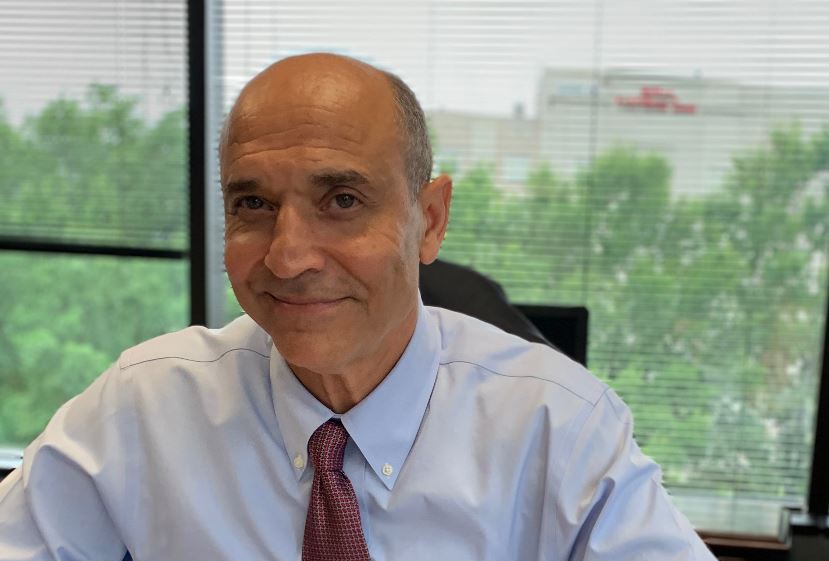
(Updated at 3:50 p.m.) Earlier this week, the Fairfax County Economic Development Authority announced that it had poached Arlington’s top economic development official, Victor Hoskins.
Currently the head of Arlington Economic Development, Hoskins recently wooed Amazon and its HQ2 to Arlington County. Come August, he will become FCEDA’s new president and CEO — one year after its now-retired and longtime leader, Gerry Gordon, announced his plans to leave.
Tysons Reporter talked to Hoskins about how he plans to head up one of the largest economic development agencies in the country.
“I’m done in Arlington.”
Hoskins said he entered the process for the FCEDA role back in May during the agency’s second hiring search for the position.
Back in December, he told ARLnow that he planned to work for Arlington County until the office vacancy rate dropped from its then-18 percent rate to 10 or 12 percent.
With a current rate of 16.7 percent, Hoskins said that Arlington County has “nothing to worry about” with Amazon coming in. Hoskins said that the career move is coming at the right time — “Yes, I’m done in Arlington.”
“If you look at my history, I pretty much do what I need to do and move on,” he said. In the case of both his former economic development role in D.C. and his Arlington County job, Hoskins, who describes himself as a person who likes to finish projects, said that he leaves once he’s accomplished the specific challenges of a job.
New Challenges Ahead
“What I look for in a career change is a challenge,” he said. “This is a different kind of challenge. Just the size of the market is pretty amazing.”
Hoskins said he is looking forward to encouraging companies in Fairfax County to recruit and train more top workers with a talent-focused strategy.
“We already have a lot of talent residing [in Fairfax County],” he said. “We need to keep the people we have.” A part of that will include offering more opportunities to retrain employees with skills like cybersecurity coding, he added.
He also said he would like to see FCEDA get more closely involved with the county’s Department of Housing and Community Development, in addition to continuing work with the Planning Commission, Virginia Department of Transportation and other county agencies to set priorities.
Additionally, Hoskins said that the county could use more work on placemaking.
“The size of Fairfax County makes it difficult to create places — concentrated nodes of activity,” he said, which could include creating more urban villages around the Silver Line stations and making “a nexus between residential and commercial nodes.”
Another area Hoskins wants to work on is making Fairfax County more attractive to millennials.
Some ideas he has: creating places where people want to work and eat outside, offering more housing choices, making “interesting environments” and strengthening mass transportation.
Hoskins was quick to note that many of the challenges he mentioned are not unique to the county, which he praised for its global reputation and competition with places like London and Paris.
“Fairfax is amazing right now,” he said, lauding the county’s quality of life, including its public schools and parks. “Fairfax has it all. What we’re trying to do it to move it to the next level.”
Amazon’s Impact on Fairfax County
While Fairfax County lost its bid for Amazon, Hoskins said that the tech giant will impact Northern Virginia, from adding a plethora of new job opportunities to a “back and forth between employees and employers” with Amazon and local companies.
Hoskins also mentioned a recent report by the Northern Virginia Association of Realtors and the George Mason University Center for Regional Analysis, which estimated that roughly 33 percent of Amazon’s workforce would live in Fairfax County, while 16.4 percent would live in Arlington.
“It’s a higher percentage than [Amazon employees who] will live and work in Arlington,” Hoskins said.
On a larger scale, Hoskins said Amazon will transform Northern Virginia into a more innovative environment that will increase the private sector.
“[Amazon will bring an] innovation focus to the region where companies begin thinking differently about how they work,” he said.
Hoskins starts his new role on Aug. 5. Until then, he said he will help with the leadership transition at his current job before having two to three days off.
“Building an economy is more like solving a very complex puzzle,” he said.
Photo courtesy Fairfax County Economic Development Authority
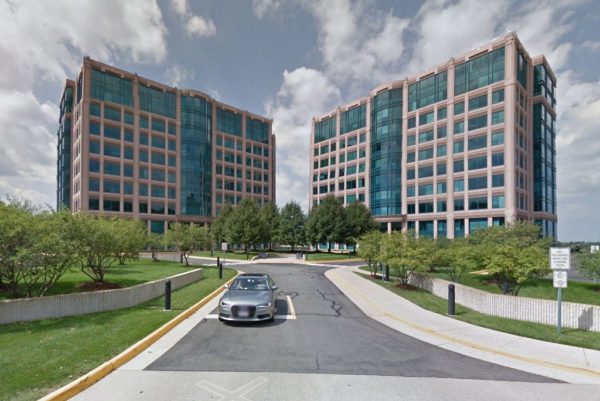
CollabraLink has decided to move to larger office space at the Highline near the Spring Hill Metro station in Tysons.
Started in 2003, CollabraLink provides IT services to federal and commercial clients.
The technology company will move to 22,000 square feet of office space at its current home (8405 Greensboro Drive), according to Newmark Knight Frank, a commercial real estate advisory firm.
“CollabraLink wanted to stay in Tysons but needed a long-term home with the option to grow,” NKF’s Senior Managing Director Chethan Rao said in the press release.
The Highline is a two-building office complex with more than 400,000 rentable square feet on 7.5 acres. The complex includes retail, an outdoor plaza, daycare facility and a fitness center for tenants.
“Location and continuity were extremely important to our firm and the NKF team had a clear understanding of our desire to stay in Tysons,” Rahul Pandhi, CollabraLink’s chief executive officer, said in the press release.
Image via Google Maps
Every Fairfax County high school student will soon have a school-issued laptop for the 2019-2020 school year.
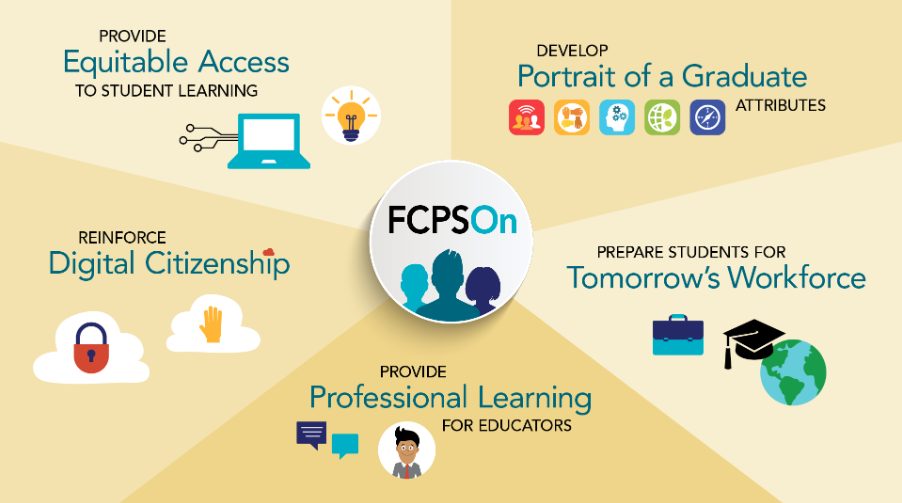
The upcoming rollout is part of the plan by Fairfax County Public Schools (FCPS) to issue computers to every student by 2023 with an initiative called FCPSOn.
FCPSOn aims to help students access a digital device for learning at school and possibly at home depending on the school and grade level.
“This 1-to-1 computing initiative will better prepare students for college and careers,” according to an FCPS press release, adding that the computers won’t replace teachers.
Last week, the Fairfax County School Board adopted the FCPS FY 2020 Approved Budget, which includes $16.1 million for instructional programs — where the FCPSOn initiative falls under.
The budget includes a little more than $4 million to implement FCPSOn for the high schools and a new technology fee of $50 per high school student per year, FCPS said will cover repairs or replacements for equipment.
FCPSOn started as a pilot program in the Chantilly High School pyramid and eLearning Backpack high schools in the 2016-2017 school year. Phase 1 was funded through a combination of FCPS and the VDOE e-Learning Backpack grant funding.
The remaining timeline — pending approval — is:
- school year 2020-21: middle schools
- school year 2021-22 elementary grades 5-6
- school year 2022-23: elementary grades 3-4
McLean High School is looking for volunteers to help with distribution from August 12-15 from 12-7:30 p.m.
Image via FCPS