

(Updated 10/25/19) The City of Falls Church is a 10-minute drive from rapidly expanding Tysons, but members of the Falls Church City Council want to maintain the feeling of a small community while still capitalizing on innovation and growth.
The City of Falls Church operates as an independent entity under the Falls Church City Council while Tysons still has no official governing body of its own, outside that of Fairfax County.
Councilmember Ross Litkenhous said that Falls Church wants to stay unique and its small population and efficient city council allows the city to stay “agile.”
“We are by no means trying to keep up with anybody,” he said.
Tysons Reporter talked to the councilmembers, seeking their input about the future of Falls Church.
“Always Been a Cut-Through”
Several councilmembers said the city is already seeing increased traffic thanks to Tysons’ urban sprawl.
The increase in traffic was brought on by the tolls on I-66 and the increasing popularity of apps like Google Maps, Litkenhous said.
Litkenhous worked in commercial development for 10 years before becoming a councilmember.
Councilmembers were originally told by the Virginia Department of Transportation that the addition of freeways tolls around the area would not impact traffic flow, he said, but people started driving through the city to avoid the tolls.
Now, the city is faced with concerns about pedestrian and bicycle safety that come with more traffic. Litkenhous cited several incidences concerning the safety of residents, especially kids.
There have been a few pedestrian deaths in the last few months in the Falls Church area, which are spurring discussions with officials.
But, Vice Mayor Marybeth Connelly noted that it is important to remember that “Falls Church has always been a cut-through” and a “crossroad” in the Northern Virginia area.
“Mini Tysons”
In August, the city broke ground on a new project that focuses on improving pedestrian access and traffic flow near the upcoming George Mason High School.
The $15 million infrastructure investment will make the area safer and open up accessibility to the future mixed-use retail space, Cindy Mester, the Falls Church Assistant City Manager, said.
The mixed-use retail space is being developed by the same people who built the Wharf in D.C., Mester said, adding there will be a grocery store, a senior living facility, an arts center, restaurants and retail shops in the development.
Mester referred to the upcoming space as Falls Church’s own “Mini Tysons.”
Enticing Techies
When it comes to the evolution within the city’s limits, Litkenhous supports the idea of Falls Church evolving as a tech hub.
“Here in Falls Church, we’ve had a chance to capitalize on the indirect spinoff [of Tysons],” Litkenhous said.
With the new startups and tech companies in Tysons, it allows local high school students to take on fellowships or internships with innovative and entrepreneurial companies, according to Litkenhous, further encouraging students to pursue STEM-related fields.
With the new startups and tech companies in Tysons, it allows local high school students to take on fellowships or internships with innovative and entrepreneurial companies, according to Litkenhous.
Though Litkenhous said he would love to have some of these companies move into Falls Church, he realizes offices are limited and added that a co-working space within city limits would be a solution. “We can’t work in a vacuum here and we recognize that,” he said.
A Stroll in a New Direction
Unlike Tysons through, Litkenhous said Falls Church focuses on small businesses and walkability within city limits. “We’ve got Tysons beat on walkability by a mile.”
Last year, the City Council started the “Live Local Campaign,” sparked by Litkenhous, which encourages people to eat, play and spend money within the city’s limits.
Councilmember Phil Duncan said he keeps tabs on local businesses moving into the city and tries to support them by attending grand openings.
“I think there’s a good mix of big names and more local, family-run businesses,” he said, adding that some businesses that would have previously passed up Falls Church might realize that it is a new market.
“This whole area will become a great American city,” Duncan said.
Coming up in November, the city will host its second “Live Local Campaign” to encourage people to spend money within the community by eating at local restaurants and shopping for holiday gifts from small companies.
Both Litkenhous and Connelly said they want people to follow in their example and take advantage of all the dining and shopping options within the area.
Ultimately, Mester said she thinks the people in Falls Church help to make it special and unique.
“We have a caring and wonderful workforce,” she said.
As election season heats up, debates give voters a chance to hear from candidates and learn more about pressing issues that matter to them most.
Throughout October, there will be several public forums around the area hosted by community organizations.
Wednesday, Oct. 16: Providence District candidates
The Providence District Candidate Forum will take place from 7 -9 p.m. at the Providence District Community Center (3001 Vaden Drive). This is an opportunity to meet the candidates running for the Providence District School Board and Providence District Supervisor seats. This event is hosted by the League of Women Voters in the Fairfax Area.
Thursday, Oct. 17: Dranesville District candidates
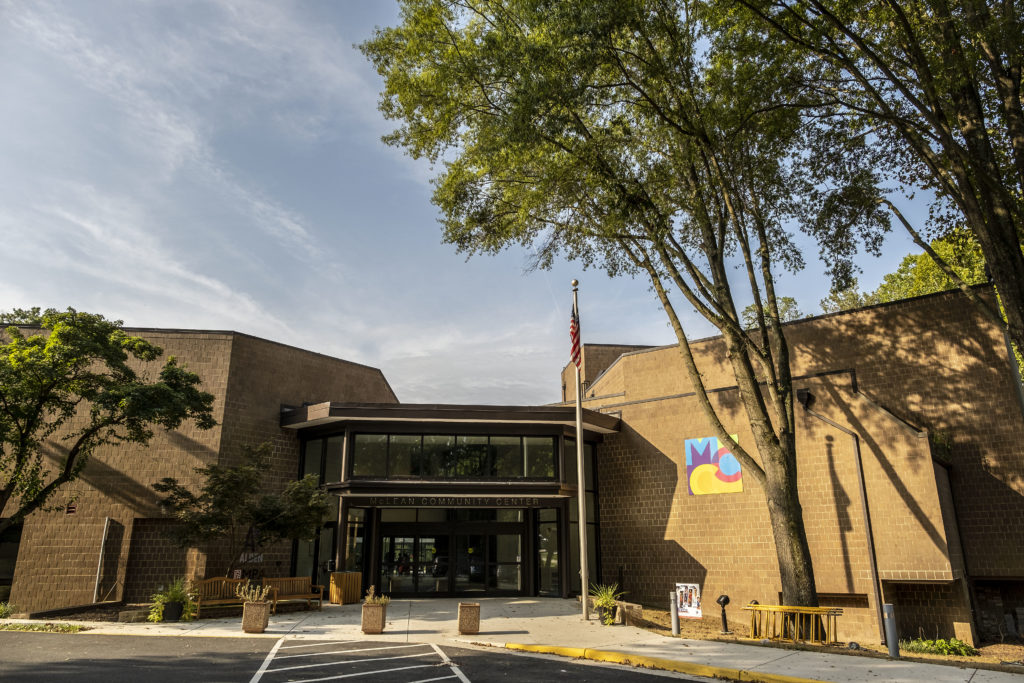
The League of Women Voters-Fairfax Area will host a forum at the McLean Community Center (1234 Ingleside Avenue). Speakers will include those running for Dranesville District Supervisor, Dranesville District School Board Member and House District 34, which represents Great Falls, parts of McLean and the Wolf Trap area. It starts at 7 p.m.
Thursday, Oct. 24: Falls Church City Council candidates
Attendees will be able to hear from the four candidates vying for three seats on the Falls Church City Council starting at 7 p.m. at the Falls Church American Legion Hall, Post 130 (400 N. Oak Street).
The candidates are: Phil Duncan, Letty Hardi and David Tarter — incumbents — and Stuart Whitaker. Former candidate Thomas Cash dropped out of the race in August.
Wednesday, Oct. 30: Dranesville District candidates
The McLean Citizens Association will hold a forum at the McLean Community Center with the candidates running for Dranesville District Supervisor, Dranesville District School Board Member and House District 34. The event starts at 7:30 p.m.
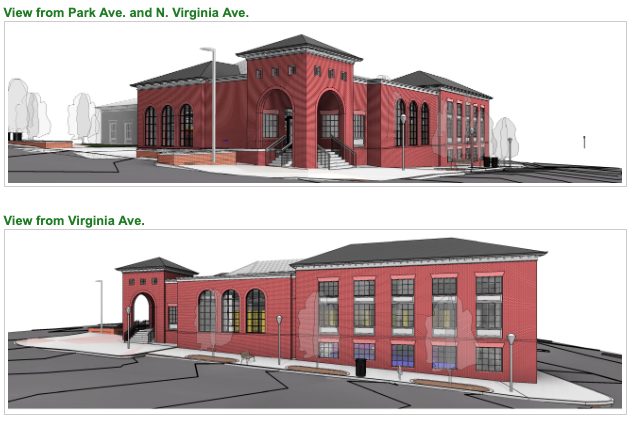
The Mary Riley Styles Public Library in Falls Church is reporting $2 million in unforeseen expenses for its upcoming renovation project.
The city is working to revamp the history room and add 3,174 square feet, along with new features to the aging Mary Riley Styles Public Library (120 N. Virginia Avenue). Voters approved the estimated $8.3 million budget in fall 2016.
Currently, the total estimated budget for the project is $10.8 million and has a shortfall of $2.1 million, Project Manager Joel Timmins said.
“So far we have spent $1.3 million,” Timmins said.
At a Falls Church City Council meeting last night (Monday), representatives of the library project said that unexpected costs stemmed from streetscape design, LEED Silver certification, added security measures and other areas.
Mark Manetti from BKV Group said that the upgraded library will be about two points short of receiving LEED Silver certification and that the team might need to purchase off-site credits to reach the 50-point minimum.
“To spend that kind of money to buy off-site credits is kind of anathema. Are there things we could do here to achieve LEED Silver?” Councilmember Dan Sze said. “Is it more tinkling with the HVAC? Is it more insulation?”
“I would have a preference to on-site energy reductions, efficiencies, et cetera as opposed to buying off-site credits,” Mayor David Tarter said.
Timmins said that the city’s Planning Commission said that the project needs a streetscape and the arborist recommended irrigation, which added costs.
Manetti added that the team didn’t realize initially that the project would need a streetscape design.
City Manager Wyatt Shields said that the library’s board and staff were primarily focused on the library when determining the original budget estimates for the project.
“I should have raised my hand and said we need to expand this to do the full site and the streetscape,” Shields said.
Shields added that he should have escalated the consultant’s estimate in 2014.
“Working with a 2014 number is difficult and not realistic or practical,” Shields said.
“What we asked the voters to approve for this particular project for generally what we wanted to do both in terms of expanding square footage and all of the stuff that comes along with it — forget cost escalation, forget tariffs, forget all of that — it just never seemed to comport,” Councilmember Ross Litkenhous said.
Litkenhous said he is frustrated that the referendum for the voters was $8 million instead of a higher number.
“If the referendum had said $12 million or $14 million, it probably still would have passed,” he said. “At the end of the day, there is going to be a cost overrun and it’s going to be significant.”
The total cost should be determined within a few weeks, Timmins said. Construction is slated to start by February. The library is scheduled to reopen March 2021.
Councilmember Phil Duncan said that he’s “fairly satisfied with what we’re paying.”
“The more I talk — the more all of us talk — the more expensive it gets,” Duncan said.
Image via City of Falls Church

A park in the City of Falls Church will now honor the city’s oldest business and the family behind it.
Located in the 100 block of W. Broad Street, “the park has generally been known as a downtown plaza, but is now a popular gathering place in the heart of the City in need of a name to identify it for publicity and place-making,” according to city documents.
The Falls Church City Council unanimously voted to name the park “Mr. Brown’s Park” to honor Brown’s Hardware (100 W. Broad Street)and the three generations of Browns that go back to 1883.
A survey of locals showed “overwhelming community support to reference Brown’s Hardware,” according to city documents.
“This park was first created in the 1960s and was significantly renovated this year using funds provided by the Economic Development Authority (EDA),” according to city documents. “The park is currently being used for events such as live music, yoga lessons, and children’s entertainers.”
Jim Snyder, the city’s economic development director, told the council that the park, which was built in 1966, is well used and needs restoration.
Synder also said that the park might get a mural on the wall. “It’s been painted, so we have a blank canvas,” he said.
In response to Councilmember Dan Sze’s question about funding for signage and a gateway to the park, Snyder said that signage will cost about $10,000.
A grand reopening of the park to celebrate the new name will take place on Monday, Sept. 30.
“I think it’s a great name,” Sze said.
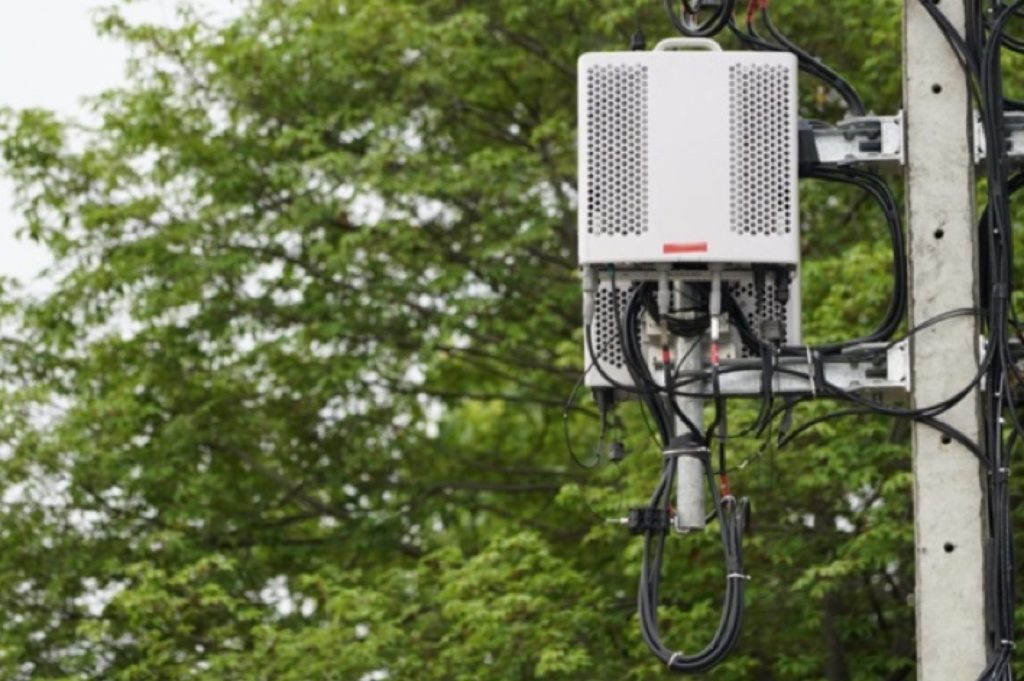
The future of 5G in Falls Church is unclear.
The new service offers cell phone users faster speeds but is not yet available in the City of Falls Church.
Karen Jones is a member of the Falls Church Tree Commission who prepared a city plan for how to implement the new service. Though she began her research out of concerns for tree preservation, she said her research guided her down another concerning path.
She found that in order to bring 5G services to the city, telecommunication companies would likely install transmitters — roughly the size of a child’s backpack — on already existing infrastructure like telephone polls, streets or powerlines.
“They’re boxy, not attractive typically, and they will be put on streetlights and on the side of buildings,” she said.
The transmitters’ high frequency only reaches so far meaning they would need to be installed every 100 feet, Jones added.
She is urging the city to adopt a 5G policy since telecommunication companies could approach the city any day with a proposal.
According to the Telecommunications Act of 1996, the city has 90 days to approve or reject a plan once the Federal Communications Commission proposes implementation.
If the City of Falls Church already has a plan, Jones said they will be able to have more control over the way 5G is implemented within city limits.
To ease the aesthetic burdens of 5G, Jones spoke with several companies that specialize in covert transmitters.
Ericsson, for example, makes products that allow contractors to hide 5G antennas in the wallpaper or under carpet, according to Jones. She also discussed solutions like hiding 5G antennas under specialized manhole covers.
“There is also a significant amount of research and prototyping on transparent conductive films,” Jones said.
Jones already presented her proposal to the Tree Commission and is going to educate City Council members on the topic in the coming weeks.
“There are mediation measures that need to be considered. They need to consider this now because the FCC has embarked on this unprecedented focus of building out 5G,” Jones said.
Photo courtesy Karen Jones
Falls Church city officials say now that the city’s housing guidelines have been updated, the real work begins.
On Aug. 12, the City Council unanimously voted in favor of new affordable housing and demographics chapters as the city staff works to update its Comprehensive Plan.
“Revisiting the city’s zoning ordinances is an appropriate thing to do to make sure the rules of the game support the goals the city is trying to work toward,” Paul Stoddard, the city’s planning director, said. “Housing doesn’t operate in a free market. It is heavily constrained by local regulation.”
These approved changes come after months of work and revisions from committees, including the Housing Commission and Planning Commission. Now, city leaders are calling on the public to speak up — to ensure that the plan is implemented.
Housing Commissioner Pete Davis, who acted as an ally for the plan throughout its development, said he emphasized the importance of affordable hosing amendments that will address Falls Church’s “crisis.”
He asked the Planning Commission to “keep affordable housing in the forefront of [its] mind” during an address on Aug, 5.
At the same meeting, commissioners noted changes to the proposal since the group last met, with key adaptions including the addition of religious organizations as a partner to ease housing burdens, a revised definition of median income, the inclusion of accessory dwellings as a solution and acknowledgment that it will take the entire community to solve the issue.
Davis said that the next steps require community members to speak up about affordable housing and continue to put pressure on the Falls Church City Council.
Within increasing pressure from Amazon’s HQ2 coming into the area, Davis said that city officials and community members can no longer remain passive and wait to see how the market reacts — they must act now and push for more affordable housing units.
“We cannot take a hands-off approach anymore,” Davis said.
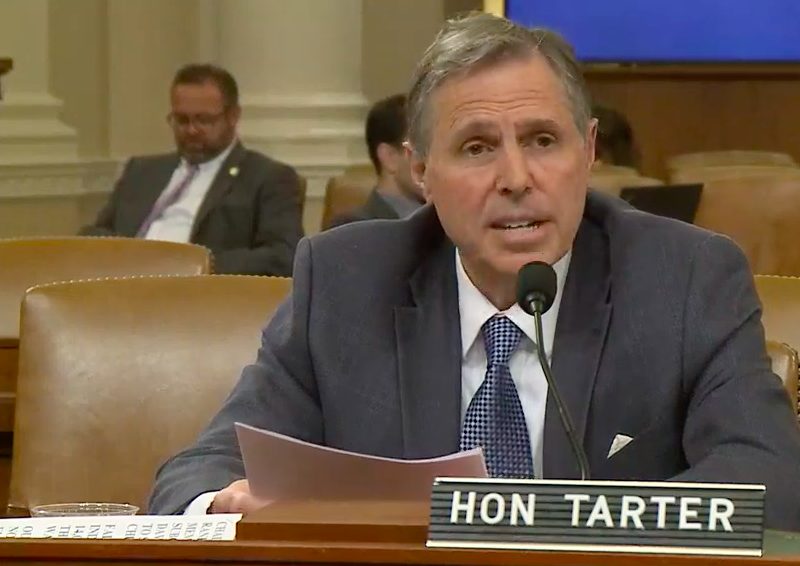
The City of Falls Church mayor is fighting a federal tax law change that he warns will put a strain on local residents.
In December 2017, Congress passed a new law that limits the amount of state and local taxes (SALT) that people can deduct from their federal income tax return to $10,000.
Known as the SALT deduction cap, this law has stirred up controversy.
Some people claim it puts people in areas with a higher cost of living at a disadvantage because they will likely pay more in taxes, while others say that SALT deductions disproportionately benefit a small proportion of wealthy taxpayers.
In June, Mayor David Tarter spoke in front of the House Ways and Means Subcommittee by invitation of Rep. Don Beyer (D-Va.) regarding the recent cap on the SALT deduction policy.
Tarter said he is one of a few politicians across the country that are spearheading an effort to reverse the decision or minimize the damage they say it will have on their communities in the near future.
“The new cap on the SALT deduction double taxes citizens on these payments and penalizes workers in high-cost areas, like my city, where wages and income are high but are fully matched by the cost of living,” Tarter told the committee, adding that the new law takes away more tax dollars from the city.
Falls Church City Manager Wyatt Shields, who manages the city’s finances, told Tysons Reporter that Falls Church residents spend more on housing comparative to anyone else in the country. He added that this new legislation only “exacerbates” the city’s lack of affordable housing.
According to Tarter’s statement to the committee, the median home price in the city is around $825,000 — “That doesn’t buy you a mansion but likely a modest brick rambler built in the 1950s.”
That median home price is drastically more than the $229,000 median home price across the U.S., according to Zillow.
Despite the fact that Fairfax County is among the richest counties in the nation, it still has problematic financial burdens that lawmakers are attempting to solve.
“I’ve heard from a fair amount of people how their taxes have gone up and not at first realized implications,” Tarter told Tysons Reporter while talking about the fallout from the law.
The Internal Revenue Service (IRS) announced Wednesday, Aug. 14, that they will waive the tax underpayment penalty for more than 400,00 people who did not claim a special penalty waiver when they filed their federal income tax returns this year.
“Earlier this year, the IRS lowered the usual 90% penalty threshold to 80% to help taxpayers whose withholding and estimated tax payments fell short of their total 2018 tax liability,” according to an IRS press release.
Locally, this may help residents in the Northern Virginia area who were hit with unforeseen financial burdens recently because of the SALT deduction cap.
“There are no yachts in Falls Church, just lots of hard-working families trying to get by in the high-rent district,” Tarter said. “Most of the folks that I know are two-income families who serve their country through work in government or the military and want the best education possible for their children.”
Ultimately, Tarter hopes that the SALT deduction cap, currently sitting at $10,000 per household, is heightened or eliminated entirely.
“The next steps are up to Congress,” Tarter said. “I suspect, given the way things are right now, there probably won’t be any immediate action.”
Image via C-Span
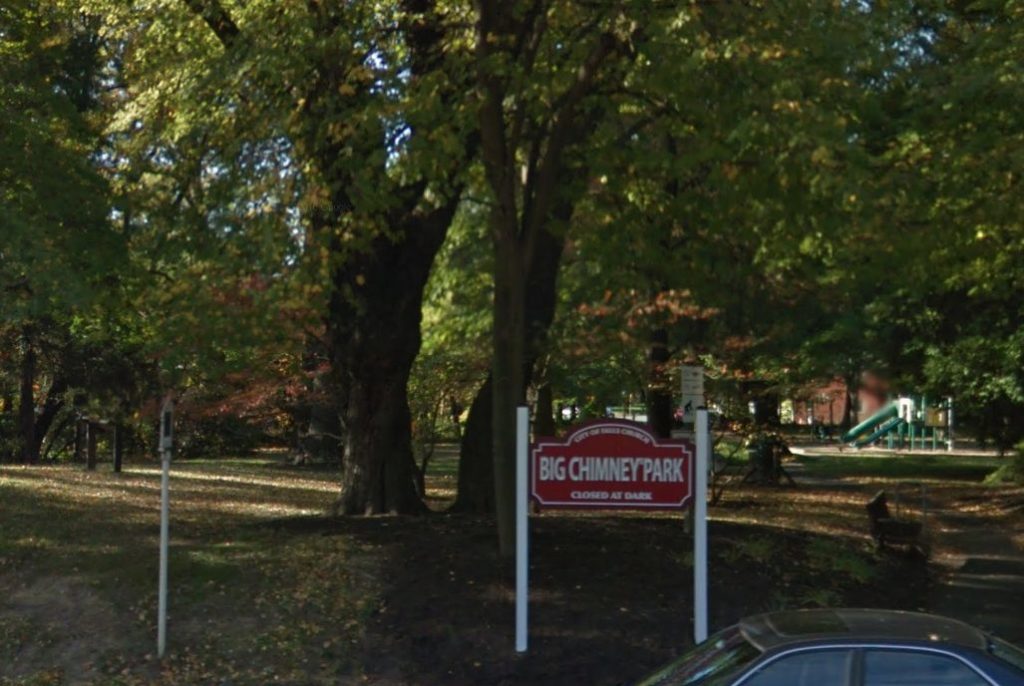
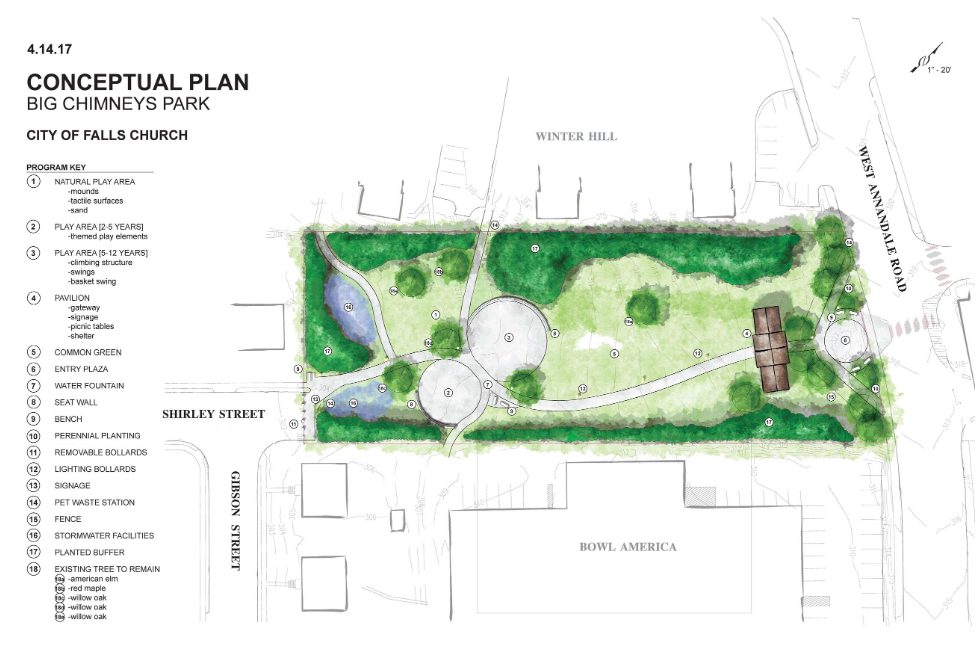
Big Chimneys Park in the City of Falls Church will soon welcome new improvements.
Currently, the aging downtown park has a grill, a grass-covered area, picnic tables and a playground at 210 Gibson Street.
The park is named after two big chimneys, which are believed to have been apart of the first permanent structure built on the land in the city, according to the Falls Church Historical Commission.
The 1.7-acre park is slated to undergo an update, which includes:
- replacing aging play equipment
- adding ADA access from Gundry Drive
- updating landscaping and signage
- creating a new trail
- improving stormwater management
City Manager Wyatt Shields told the City Council at Monday’s meeting that the project will “really enhance that park and make it more welcoming.”
The construction contract is being finalized with the contractors before work starts in October, Shields said.
Shields said that the council may need to revisit the $1.3 million funding for the park’s improvements in the future.
“We are struggling actually to keep that project within the budget,” Shields said. “I’m hoping it won’t be a problem.”
The project is slated to finish next spring.
Image 1 via Google Maps, image 2 via City of Falls Church
The Falls Church City Council will hold public hearings tonight (Monday) on proposed housing and demographics guidelines as the city looks to offer more affordable housing.
The Comprehensive Plan’s chapters for both areas haven’t been updated since 2005, according to city staff.
The new demographics chapter would focus on three areas: trends, projections and how changes relate to community needs, especially for housing, economic development and public facilities.
“Demographics are a critical base of information for city planning; the city’s housing, transportation, economy, parks and recreation, and social framework rely on current and future population trends and need,” according to city documents.
Meanwhile, the revamped housing chapter would outline a vision for how the city can address diverse housing needs through nine focus points.
The city’s Planning Commission voted in favor of both updates at its meeting last Monday, Aug. 5.
The city council meeting is set to start at 7:30 p.m. at 300 Park Avenue.
(Updated at 3:05 p.m.) A park in the City of Falls Church needs a name.
Located in the 100 block of W. Broad Street, the park is right by downtown shops and restaurants.
Now, city staff recommends that the park gets named “Mr. Brown’s Park” to honor Brown’s Hardware (100 W. Broad Street) — the city’s oldest business, spanning three generations of Browns back to 1883.
Staff teamed up with Council member Letty Hardi, EDA member Erik Pelton and Recreation and Parks Board member Bill Brew to survey locals, which yielded 130 submissions and “overwhelming community support to reference Brown’s Hardware,” according to city documents.
“This park was first created in the 1960s and was significantly renovated this year using funds provided by the Economic Development Authority (EDA),” according to city documents. “The park is currently being used for events such as live music, yoga lessons, and children’s entertainers.”
The city’s Planning Commission is set to review the proposed name — and any other suggestions — at its meeting next Monday (Aug. 5). The City Council is scheduled to hold a public hearing and make a decision on Sept. 9.