

As Fairfax County moves to expand its use of renewable energy, the Board of Supervisors is looking for feedback on the next round of county facilities being considered for solar panel installations.
The board will hold a public hearing on Tuesday (March 9) to determine whether the county should lease roof space at 22 county-owned properties to the energy company Sigora Solar, which would be responsible for installing, operating, and maintaining solar photovoltaic panels at the sites.
Sites under consideration in the Tysons area include:
- McLean Government Center and Police Station (1437 Balls Hill Road)
- Wolf Trap Fire Station #42 (1315 Beulah Road)
- McLean Community Center (1234 Ingleside Avenue)
- Thomas Jefferson Library (7415 Arlington Boulevard)
- Merrifield Center and Kerrifield Center Garage (8221 Willow Oaks Corporate Drive)
This is the second set of properties that county officials have proposed as possible locations for solar panels. The county previously approved leases for roof space at eight sites, including the Providence Community Center, in October.
In an effort to pivot to renewable energy as a means of reducing greenhouse gas emissions, Fairfax County announced in December 2019 that it had awarded contracts to multiple solar power companies in what was the “largest solar power purchase agreement initiative by a local municipality in Virginia” at that time, according to the Fairfax County Office of Environmental and Energy Coordination.
In addition to Sigora Solar, the county has contracted with the providers BrightSuite — a subsidiary of Dominion Energy — and Ipsun Solar for the initiative, which could also include Fairfax County Public Schools facilities.
In the board package for Tuesday’s meeting, county staff say there is no expected net cost from the solar panels. Sigora Solar has offered a fixed rate of $0.069 per kilowatt per hour (kWh) on a 25-year contract term. The county will save $0.016 per kWh compared to current electric costs which will help pay off the costs of installation and upkeep to Sigora Solar.
The public hearing is expected to start around 4 p.m. Like the rest of the Board of Supervisors meeting, it will be available to watch via the county’s cable TV channel and online live stream, and live audio can be accessed by calling 703-324-5300.
Image via Flickr/Minoru Karamatsu
The Fairfax County Planning Commission voted unanimously on Wednesday (Mar. 3) to recommend that the county replace its current zoning code with a new draft resulting from the Zoning Ordinance Modernization Project (zMOD) that has now been underway for almost four years.
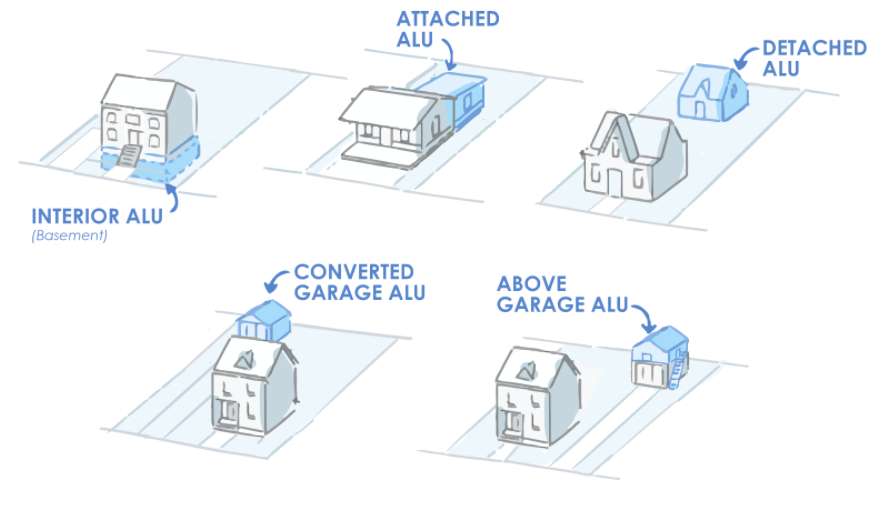
The 12-0 vote came after more than an hour of debate over the county’s proposed regulations for accessory living units (ALUs) — independent residential units located on the same property as a primary dwelling — and home-based businesses, which have emerged as two of the most contentious components of the 614-page document.
“The zMOD result on ALUs and home-based businesses, I believe, misses the mark,” Mason District Commissioner Julie Strandlie said. “It does not incorporate community concern and avoids a significant opportunity to make a real difference in housing policy. If we want to successfully expand housing options, we need community input, involvement, and buy-in.”
Released on Feb. 17, the draft zoning ordinance crafted by county planning staff and the consultant Clarion proposed allowing ALUs for single-family detached dwellings with an administrative permit if they meet certain requirements, including a maximum gross floor area of 800 square feet or 40% of the principal dwelling and that an occupant be at least 55 years old or have a disability.
Citing an “exceptional amount” of public opposition to that proposal, including at a public hearing on Jan. 28, the planning commission recommended that the Fairfax County Board of Supervisors instead utilize a special permit review process for all ALUs, which requires property owners to notify neighbors and make their case at a public hearing.
“This [administrative] process — what I’m seeing and what I’ve personally experienced — it pits neighbor against neighbor, or potentially could put neighbor against neighbor,” Mount Vernon District Commissioner Walter Clarke said. “I think it’s only fair, and we owe it to the citizens of this community, to have a process whereby they still can be engaged.”
The commission also recommended lifting the requirement that an occupant have a disability or be 55 years or older when an ALU is approved with a special permit, and allowing units to fill a basement or cellar based on its existing size on the date the new zoning ordinance becomes effective.
The commission also recommended amending the draft to prohibit on-site customers for home-based businesses approved through an administrative permit, except in cases involving instructional activities at a “specialized instruction center” — i.e., private tutoring or music lessons — or a health and exercise facility.
Instruction centers and health and exercise facilities could have up to four students at a time and eight students in a day. Other home-based businesses could have customers if they obtain a special permit.
In addition, all home-based businesses will have to be approved by the Fairfax County Health Department if there is a well or septic tank on site, a provision that was already proposed for ALUs.
While acknowledging that ALUs could help people who otherwise might not be able to afford to live in Fairfax County, the majority of commissioners ultimately expressed reservations about loosening restrictions across the entire county without getting a clearer sense of the potential impact on traffic, parking, and other issues, especially in high-density areas.
“While I do believe that accessory living units can provide an opportunity for additional living space in our very expensive county, I believe additional time is needed for study of the proposed countywide applications of accessory living units by administrative review,” At-Large Commissioner Timothy Sargeant said.
The commission recommended that the Board of Supervisors direct the county planning department to convene a task force that will study ALUs and home-based businesses for 18 months and deliver a report with any recommendations for further changes to the zoning ordinance.
Earlier in the meeting, the commission shot down a proposed zoning amendment that would have altered regulations for flags and flag poles, calling it “a solution in search of a problem.” The county’s only existing regulation for flags is a limit of three per lot.
Fairfax County launched its zMOD initiative in March 2017 with the goal of simplifying and updating a document that had not undergone a comprehensive revision since it was first adopted 40 years ago.
The Board of Supervisors is scheduled to hold a public hearing on the new zoning ordinance on Tuesday (Mar. 9). If the ordinance is adopted as it was approved by the planning commission, it would take effect at 12:01 a.m. on July 1.
Image via Town of Vienna

Two People Shot in Springfield — “Officers are investigating a shooting in the 6100 block of Hibbling Ave. in Springfield. Two people taken to the hospital with serious injuries. Updates to follow.” [Fairfax County Police Department/Twitter]
Capital One Renovating Health Clinic at McLean HQ — “The McLean banking giant is renovating an 11,000-square-foot suite in its building at 1680 Capital One Drive to accommodate its growing headcount and add more health-care services for them, according to Erin Mical, senior director of workplace solutions at Capital One.” [Washington Business Journal]
Fairfax County Government and Employees Prepare for Collective Bargaining — “On Feb. 25, Fairfax County Supervisor and Vice Chairman Penny Gross (D-Mason District), Chair of the Fairfax County Collective Bargaining Workgroup, opened the second meeting between Fairfax County leaders and union representatives. The meeting was meant to solicit input toward the writing of collaborative labor-management policies.” [Connection Newspapers]
Fairfax County Fire Department Reorganizes — “Effective Saturday, February 27, the Fairfax County Fire and Rescue Department (FCFRD) has implemented an operational reorganization that adds an 8th battalion, while also dividing the county into two divisions. This resulted in a battalion chief and a second deputy chief of operations (DC) being added to each shift.” [FCFRD]
Northam Endorses Attorney General Challenger — Gov. Ralph Northam announced yesterday (Thursday) that he has endorsed Del. Jay Jones (D-Norfolk), who is vying to unseat incumbent Attorney General Mark Herring. If elected, Jones would become Virginia’s first Black attorney general. [Associated Press/WTOP]
Staff photo by Jay Westcott
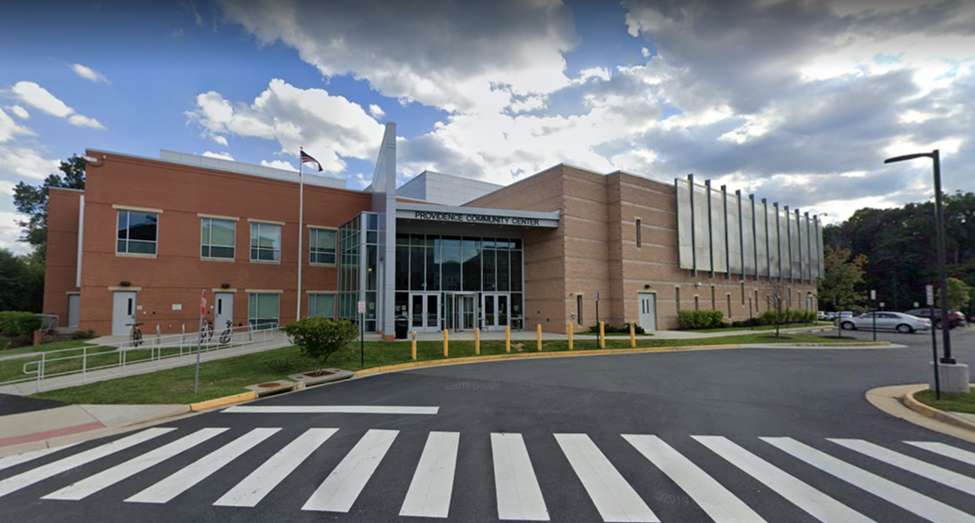
The Providence District Council will co-host a town hall for community members to learn about and discuss Fairfax County’s advertised Fiscal Year 2022 budget on Monday (Mar. 8).
Scheduled to run from 7-9 p.m., the budget town hall will feature:
- Providence District Supervisor Dalia Palchik
- School Board Providence District Representative Karl Frisch
- Fairfax County Chief Financial Officer Joe Mondoro
- Fairfax County Public Schools Department of Financial Services Assistant Superintendent Leigh Burden
- Providence District Council Jeff Agnew
The meeting will be streamed live online and on TV through Fairfax County’s Cable Channel 16. It will also be live-streamed on Palchik’s Facebook page.
Community members can email questions in advance to [email protected], or submit queries during the event by using the Facebook Live chat or calling a phone number that will be provided the day of the town hall.
Fairfax County will hold town halls throughout March to get public input on the county government and FCPS budgets for the next fiscal year, which starts on July 1.
The McLean Citizens Association already hosted a budget meeting on Monday (Mar. 1), but the Dranesville District will also get a live-streamed town hall at 7 p.m. on Mar. 22. For Vienna residents, the Hunter Mill District town hall will take place on WebEx and YouTube from 7-9 p.m. on Mar. 29.
The Fairfax County Board of Supervisors will also hold public hearings on the advertised budget on Apr. 13-15 before marking it up on Apr. 27 and adopting a budget on May 4.
The Fairfax County School Board, which approved an advertised budget for the public school system on Feb. 18, will hold public hearings on May 11 and, if needed, May 12 after the county’s budget is adopted.
Released on Feb. 23, County Executive Bryan Hill’s advertised budget proposes a one-cent decrease in the county’s real estate tax rate but largely holds back on new spending. The Board of Supervisors will determine an advertised tax rate, which can be equal to or lower than the final adopted one, on Tuesday (Mar. 9).
Palchik says the drastic impact of the COVID-19 pandemic on all aspects of life, including public health, education, mental health, equity, and the economy, makes it especially important for the public to share its thoughts during the budget process this year.
“In the Providence District, where we have an almost equal split between residential and commercial real estate, we saw a decrease in the commercial assessments with the increases in residential rates,” Palchik said. “Your voice is critical in helping us fully understand the needs of our entire community before the budget is finalized.”
Photo via Google Maps
The time for community members to weigh in on Fairfax County’s FY 2022 advertised budget has arrived.
The McLean Citizens Association hosted a public meeting on Monday (Mar. 1) so residents could discuss the proposed budget with Fairfax County Chief Financial Officer Joe Mondoro and Dranesville District Supervisor John Foust.
Mondoro kicked off the meeting by discussing highlights of the budget, including the county executive’s recommendation to decrease the real estate tax rate by one cent and building on the $200.2 million the county received through the CARES Act Coronavirus Relief Fund.
During the question-and-answer portion of the meeting, attendees asked if the value of commercial properties could change as leases end and some businesses migrate to smaller workspaces.
“We’re on the edge of a pretty significant paradigm shift in terms of the ways people think about office space,” Mondoro said, adding that the office and retail component of the budget is going to need to be evaluated on an ongoing basis.
While anticipating that the value of the properties will continue to decline, he offered a bit of optimism that a balance of teleworking and in-person work will be found in coming years that could help improve the value of office space.
Mondoro also said that all markets in the area are down and “the negativity is pretty much across the board” in terms of decreases in non-residential revenue.
“There are still differences based on where the buildings are located,” Mondoro said. “Those that are more appealing in non-pandemic years are more appealing now.”
Foust argued that, while Fairfax County should focus on building up its commercial base, it also needs to reduce its reliance on real estate taxes as a source of revenue.
“We have a fundamental structural problem in that we rely so heavily on real estate taxes,” Foust said. “…Other revenue sources will need to be established in order to make the revenue more dependent on economic activity and economic success as opposed to owning a home for 20 years, which has appreciated significantly more than your income has increased.”
Audience questions also touched on the possible impact of existing and future federal financial aid.
Fairfax County received $200.2 million from the CARES Act after it was signed into law last March to cover expenses incurred due to COVID-19. The advertised budget does not assume additional stimulus funds, but county staff is monitoring another potential round of payments that could come from a new package currently being negotiated in Congress.
Mondoro tempered anticipation that more federal aid could be used to help lower the property tax rates or fund public services like affordable housing or schools, noting that the money is non-recurring and comes with stipulations regarding how it can be spent.
Foust reiterated Mondoro’s words of caution, though he said the county will take a look at all possibilities.
“There may be one-time charges in the budget we can pay through the federal funds,” Foust said. “Last time we were told, we were told that we cannot replace funds. Everything we spent had to be in addition to what we had previously planned to spend and could not be used to pay for things that we had previously planned to spend [on].”
Image via McLean Citizens Association

Hispanic residents of Fairfax County are seven times more likely to die from COVID-19 than their white, non-Hispanic counterparts when adjusted for variations in age, county data suggests.
Fairfax County Director of Epidemiology and Population Health Dr. Benjamin Schwartz reported that sobering trend to the Fairfax County Board of Supervisors during its health and human services committee meeting yesterday (Tuesday) as part of a broad overview of the county’s efforts to implement an equity-focused strategy to distribute COVID-19 vaccines.
Knowing that the pandemic has disproportionately affected communities of color, especially Black, indigenous, and Latino people, Fairfax County staff calculated the relative risk levels for infection, hospitalization, and death faced by different races and ethnicities, using white, non-Hispanic individuals as the control group.
According to the county, the results show that the risk of contracting COVID-19 is 1.8 times greater for Black people than for white people and four times greater for Latino or Hispanic people, who are also seven times more at risk of hospitalization.
In Fairfax County, Black people are being hospitalized at more than three times the rate of white people and are almost three times as likely to die from the disease.

Schwartz says the data focuses on community transmission, excluding long-term care facilities, and it has been adjusted for age, meaning it eliminates variances in age across different populations. It shows, for instance, that Latinos are more likely to die from or be hospitalized by COVID-19, even though the county’s Latino population is generally younger and older people are considered more at risk.
“This really highlights the social, economic, and medical risk factors pertaining to different groups in our county,” Schwartz said, mentioning large households, exposures through work, and underlying health conditions among the factors that have made some populations more vulnerable to COVID-19.
Fairfax County Chief Equity Officer Karla Bruce says the county is utilizing its COVID-19 Vulnerability Index as well as data showing the disease’s spread to identify areas that need a targeted approach for vaccine outreach and distribution, often because residents have limited access to medical care, transportation, and other public services.
“There are a lot of intersecting factors which are preventing people’s access to resources or access to the vaccine,” Bruce said. “So, we want to understand and look at how we might be better able to connect people to what will enable them to then connect to the vaccine.”
The county has been working with different community partners, including nonprofits and faith-based organizations, not only to counter vaccine hesitancy with education and trust-building, but also to identify people who are currently eligible to get vaccinated and register them for an appointment.
To improve the accessibility of the vaccine, the Fairfax County Health Department has been developing a network of community-based partner clinics that is expected to grow in the coming weeks, as seen in the slide below:
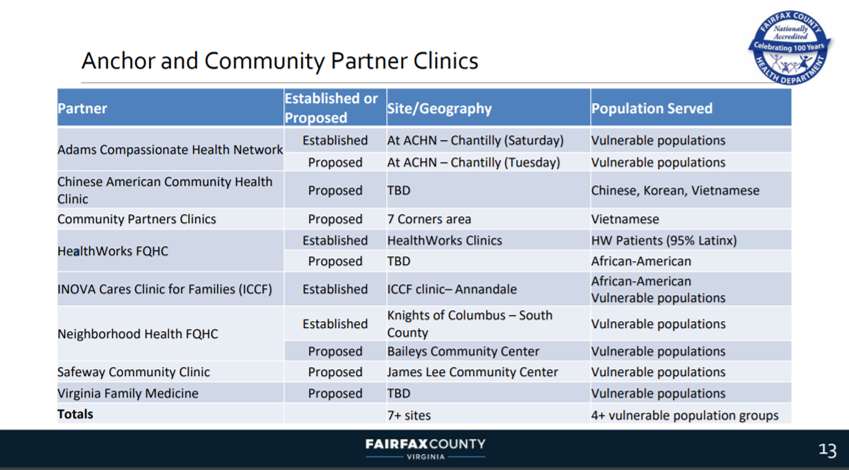
Schwartz says the Neighborhood Health federally qualified health center at the Bailey’s Community Center and the Safeway community clinic at the James Lee Community Center in Falls Church will start administering vaccinations this coming weekend.
The health department is also looking at sites in Lorton, Springfield, and Centreville, but the agreements are still being finalized.
“It will take a couple of weeks to have our clinics established, to confirm medical and non-medical staff for those clinics, and to get into a rhythm with the vaccinations,” Schwartz said. “But we are anticipating making substantial progress to reduce disparities in who receives vaccination in the county.”
Photo via Fairfax County, slides via Fairfax County Health Department (1, 2)
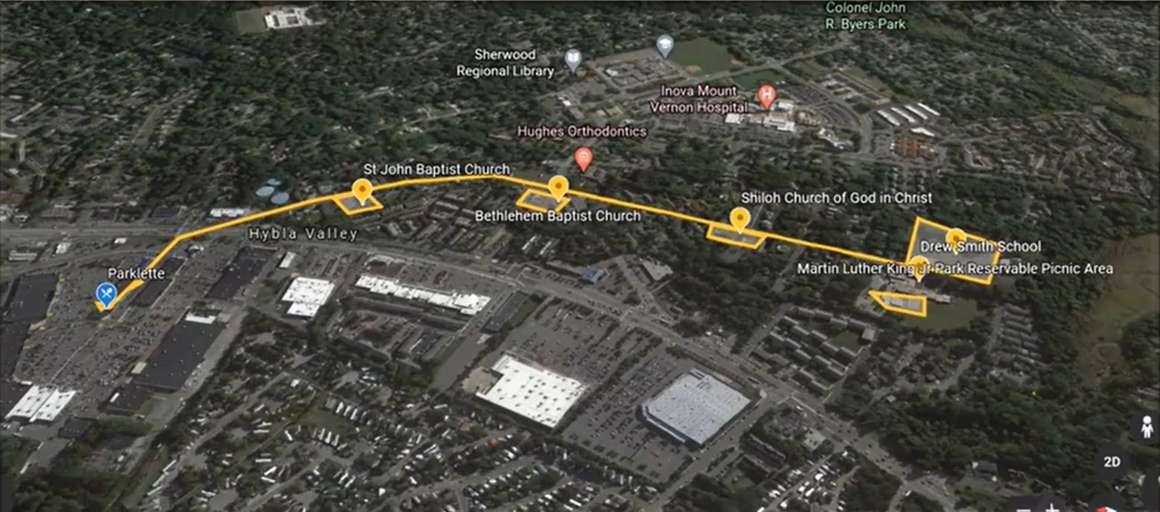
Victory came in different forms for the winners of Fairfax County’s first-ever Smart City Challenge.
Organized by the nonprofit Smart City Works and the McLean-based technology hub Refraction, the month-long virtual competition asked participants to develop projects that use innovative technology to address societal issues, such as housing, education, public health, and broadband access.
The challenge launched on Jan. 23 and concluded last Thursday (Feb. 25) with a live event where 11 finalist teams pitched their projects to a panel of judges that selected winners based on the innovation, impact, equity, and feasibility of their ideas.
The six judges, including Hunter Mill District Supervisor Walter Alcorn and Refraction CEO Esther Lee, ultimately named five winners of the overall competition:
- Autonomous Incident Response System: an incident response system that uses 911 geolocation and drones to improve public safety response times and reduce uses of force and casualties
- Databuoy: a gunfire detection system integrated with drones to decrease law enforcement response times to shooting incidents
- TRAXyL: optical fiber “painted” onto existing pavement to deliver high-speed broadband services
- VIA: an artificial intelligence assistant that guides people with vision loss
- Haven (student team): a wastewater analysis system that uses data to improve nutrition and address food insecurity
According to a press release, the winning teams each received $12,000 in cash, $10,000 in Amazon Web Services credits, seven months of free membership at Refraction, and free access to entrepreneurship programs at George Mason University.
VIA and Haven also won the two People’s Awards, which were voted on by the audience. Haven won a third award from Smart City Works, which invited the student team and the cybersecurity team Onclave Networks to participate in its accelerator program.
In addition, Fairfax County and the City of Fairfax are planning to pursue pilot projects with two teams each.
Alcorn announced on Thursday that the county will work with KnishKits, an online marketplace that lets local businesses reach customers directly without having to pay a third-party platform, and History Through AR, which was not one of the finalist teams.
Pitched by the Southeast Fairfax Development Corporation, History Through AR utilizes augmented reality technology as a tool for historical tourism. The team is specifically interested in telling the story of West Ford, a freed slave who founded Gum Springs, the oldest African American community in Fairfax County.
Fairfax County Department of Economic Initiatives Director Rebecca Moudry says Knish Kits stood out as an option to assist businesses as they try to recover from the COVID-19 pandemic, and the county is “exploring possibilities” with History Through AR to raise awareness and enhance access to local historical sites.
“Fairfax County is excited to continue to build on the success of the Smart Cities challenge,” Moudry said in a statement. “We are so impressed with the talent and ideas that have come forward that we want to capture some of that entrepreneurial lightning.”
Fairfax City selected Engage ARt and the student team WISE Cities as its pilot project winners.
According to Lee, the challenge drew about 500 participants, either as competitors or as attendees of the eight online panels held throughout the past month.
“The inaugural Smart City Challenge has proven that we have great innovative minds in our region working on the most pressing challenges in our communities,” Lee said. “We were overwhelmed by the many creative and powerful solutions we received…We can’t wait to host an even more impactful Challenge next year.”
Full descriptions of the Smart City Challenge winners and their submitted video pitches can be found on the initiative’s website.
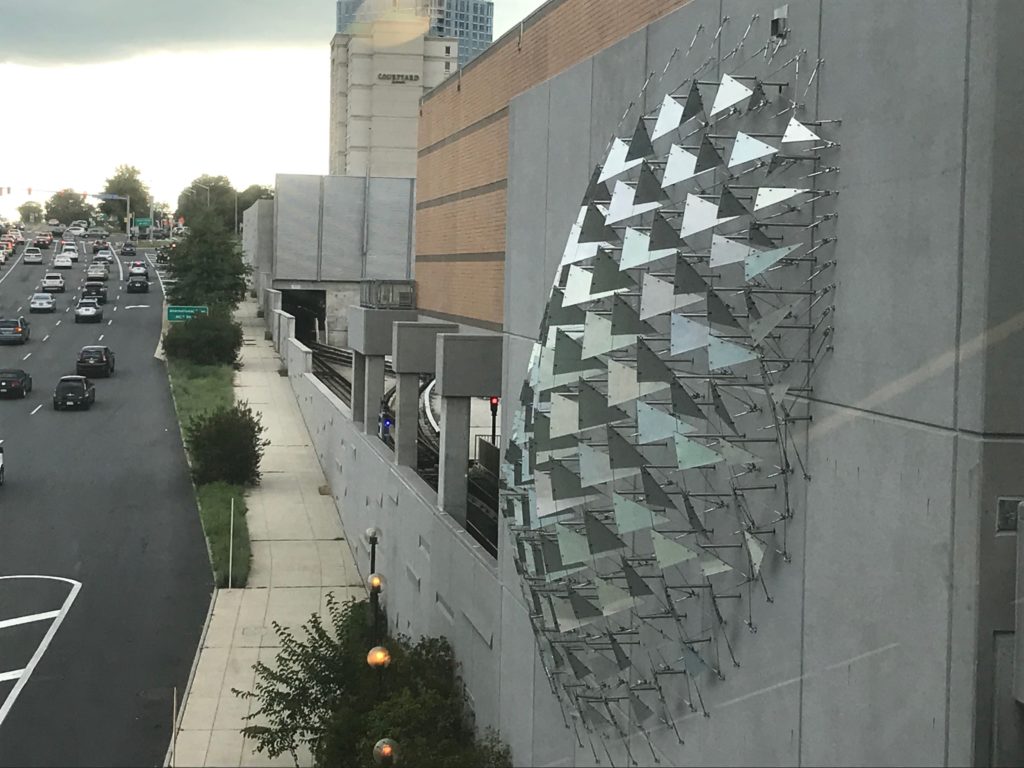
What would it take for you to reduce your carbon footprint?
That’s the question Fairfax County is posing as it enters the public engagement portion of its Community Energy and Climate Action Plan (CECAP) initiative, which will establish goals and strategies for reducing greenhouse gas emissions and mitigating the impact of climate change.
Launched in early 2020, the CECAP process is being led by the Fairfax County Office of Environmental and Energy Coordination (OEEC) with support from the Metropolitan Washington Council of Governments and the Fairfax-based consulting firm ICF.
The county previously sought public input on the plan in August and September, when a CECAP Task Force started developing draft mitigation goals.
In addition to holding two public meetings last week, one focused on energy and another on transportation, waste, and development, the county is looking to gather more public feedback through a trio of short surveys.
“We want to make sure that we expand our reach and get information from as many county residents and business owners as we can,” ICF Director of Human Capital Michelle Heelan said when facilitating the energy community meeting on Feb. 23.
One survey gauges respondents’ interest in undertaking projects to make their home more energy-efficient and sustainable, like installing solar panels and replacing light bulbs and HVAC systems. Another deals with transportation and development, asking questions about public transit, electric vehicles, and mixed-use development.
There is also a more open-ended survey for people to share general comments on the CECAP initiative.
“In Fairfax County, energy use and transportation are the two greatest sources of greenhouse gas emissions,” the OEEC says. “The CECAP will address both issue areas, and with your input, we can ensure that the final plan reflects the needs of everyone in our community as we work to reduce our collective carbon footprint.”
The surveys are currently available in English, Spanish, Korean, and Vietnamese. They will be open until 11:59 p.m. on Mar. 14.
ICF will draft a final report with input from a CECAP Working Group and the community for the Fairfax County Board of Supervisors to adopt this summer, according to OEEC Senior Community Specialist Maya Dhavale.
In response to a new wave of public feedback, Fairfax County staff has revised its drafted plan to revitalize the McLean Community Business Center.
The changes include harder caps on building heights, guarantees for syncing development to public school capacity, and more specific environmental requirements — all concerns that some community members and civic associations have recently raised.
Staff discussed the changes during a virtual open house on Saturday (Feb. 20).
The draft plan is currently under review as it winds through county processes. It will go before the Fairfax County Planning Commission for a public hearing on Apr. 28, followed by a May 18 Board of Supervisors meeting when county leaders will vote on whether to adopt the plan.
McLean Citizens for Right Size Development (Right Size McLean), a coalition of local neighborhood associations, welcomed the changes.
“We were encouraged to see the proposed changes to the maximum heights by zone and that the plan would spell out the maximums in linear feet, reducing the allowable height of the land parcels that abut Franklin Sherman Elementary School along Chain Bridge Road to 40 feet,” Right Size McLean member Linda Walsh said.
Walsh says the group was also glad to see that the new draft sets stronger environmental goals, especially for tree canopies and stormwater quality and quantity.
The McLean CBC study process began in 2018 when consultant StreetSense worked with members of the McLean community to draft a 10-year “Vision Plan.” Since then, a task force appointed by Dranesville District Supervisor John Foust has worked with county staff to create a Comprehensive Plan spanning 25 years.
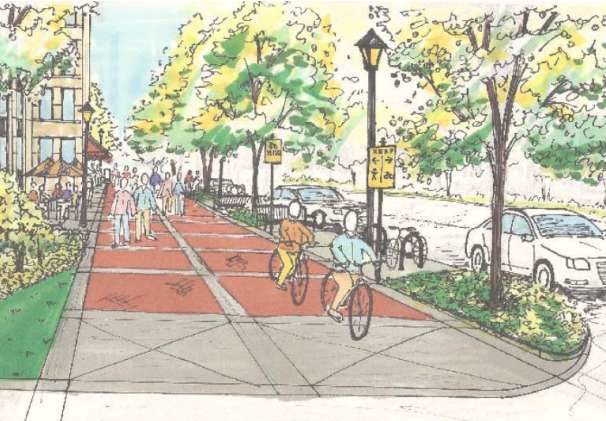
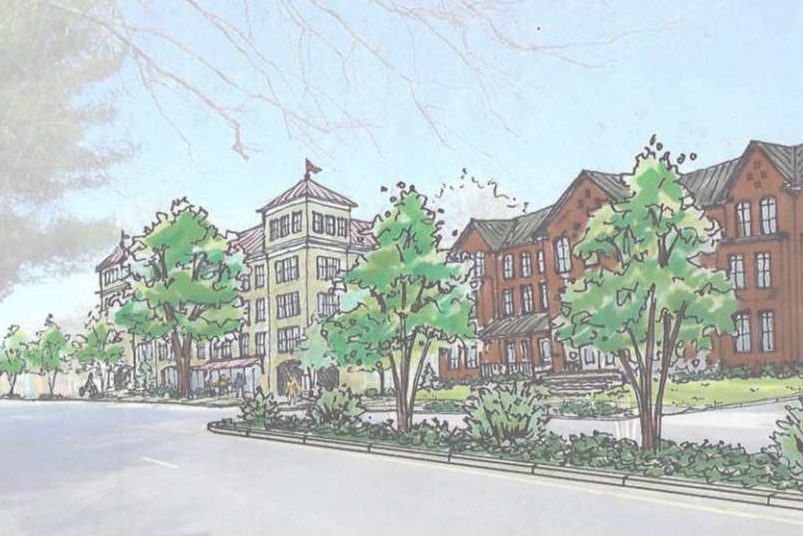
According to Foust, task force members, and staff, downtown McLean will become a vibrant, biking- and walking-friendly downtown that creates a real sense of place. The plan envisions a total of 3,850 residential units in the district as well as traffic pattern changes and streetscape updates.
The community business center will be divided into three zones: Center, General and Edge, with corresponding heights for each. The most recent draft does not change height caps for buildings in each zone, but it does specify maximum heights in feet as opposed to the number of stories.
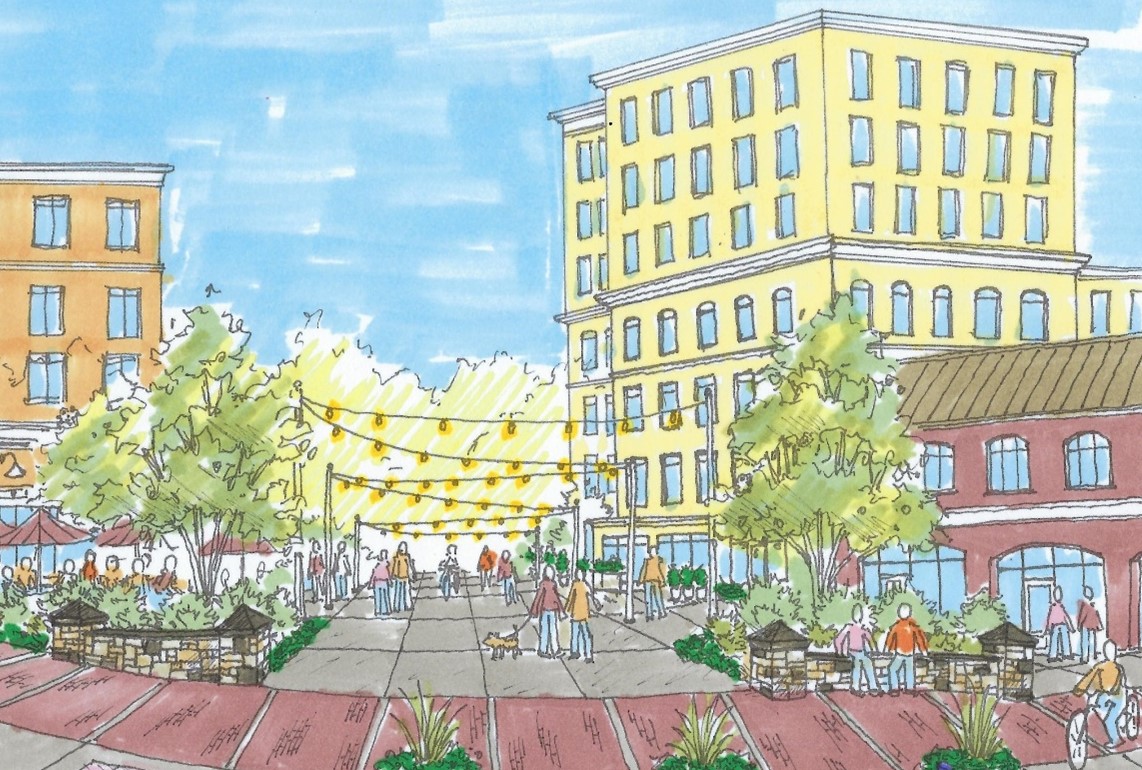
Buildings cannot exceed 92 feet (or seven stories), although one building in the Center zone will be allowed to reach 128 feet (or 10 stories). The developer who is awarded the tallest building will be responsible for creating the two-thirds-acre public plaza envisioned in the plan.
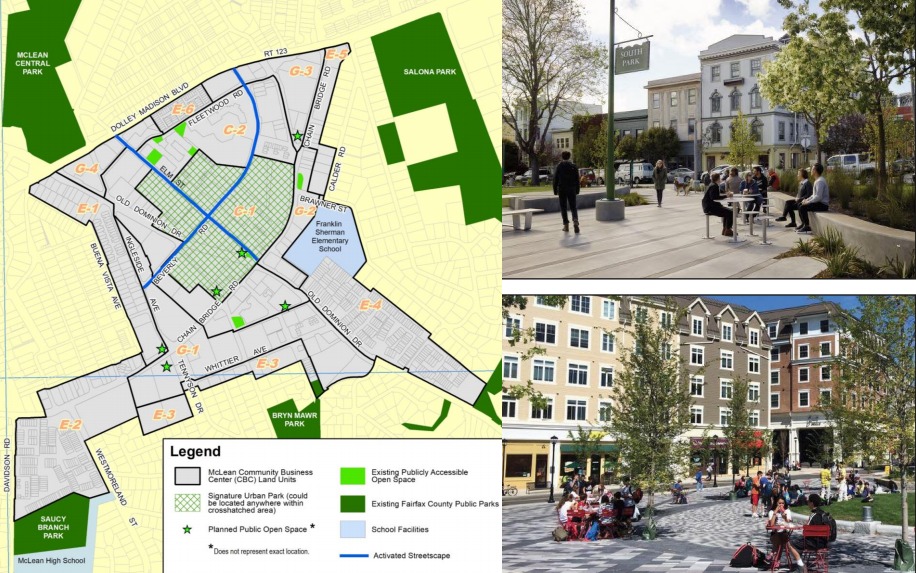
General zone buildings surrounding the Center zone can reach 68 feet (five stories). The county did not make any changes to the Edge zone in the most recent draft. Read More

A new bus route in Tysons is one step closer to becoming a reality.
The Fairfax County Board of Supervisors unanimously voted Tuesday (Feb. 23) to move forward with a Phase IV-1 Mobility Analysis Study as a part of a Envision Route 7 Bus Rapid Transit (BRT) project being undertaken by the Northern Virginia Transportation Commission (NVTC).
Launched in October 2018, the project aims to connect the Mark Center in Alexandria to Tysons through Bailey’s Crossroads, Seven Corners and Falls Church along Route 7 via bus. Three phases of the study have already been conducted, with the most recent one completed in fall 2019.
The fourth phase that the board approved Tuesday is “to evaluate and determine the mobility benefits and impacts resulting from the proposed BRT from Tysons to Seven Corners,” according to the board’s agenda package. The study will also identify right-of-way concerns and any other potential issues along the proposed project corridor.
The mobility analysis study will add about 3.5 miles to a micro-simulation model that the Fairfax County Department of Transportation (FCDOT) developed to evaluate current and future traffic conditions from Tysons to the City of Falls Church.
Last year, NVTC got a $560,000 grant from the Virginia Department of Rail and Public Transportation to fund the Phase IV-1 study. The state will cover half of the cost, while the localities involved in the study will collectively match the remaining $280,000.
Under a memorandum of agreement that the Board of Supervisors approved Tuesday, Fairfax County will contribute $140,000 to the local match. The funds will come from state aid held in trust at NVTC.
In the first phase of the Envision Route 7 study, NVTC assessed the existing issues and opportunities to improve the Route 7 corridor. The study team then determined that a BRT system from Mark Center to Tysons — via the East Falls Church Metro Station — could be a viable transit solution before conducting a conceptual engineering study.
NVTC says on the project website that the mobility analysis study is expected to take 12 to 18 months.
Working with the Virginia Department of Transportation, FCDOT is supplementing NVTC’s project with a Route 7 BRT study of its own that focuses specifically on Tysons from the Spring Hill Metro station to the I-66 interchange. The county says it will host a public meeting on its study in early March.
Image via NVTC