
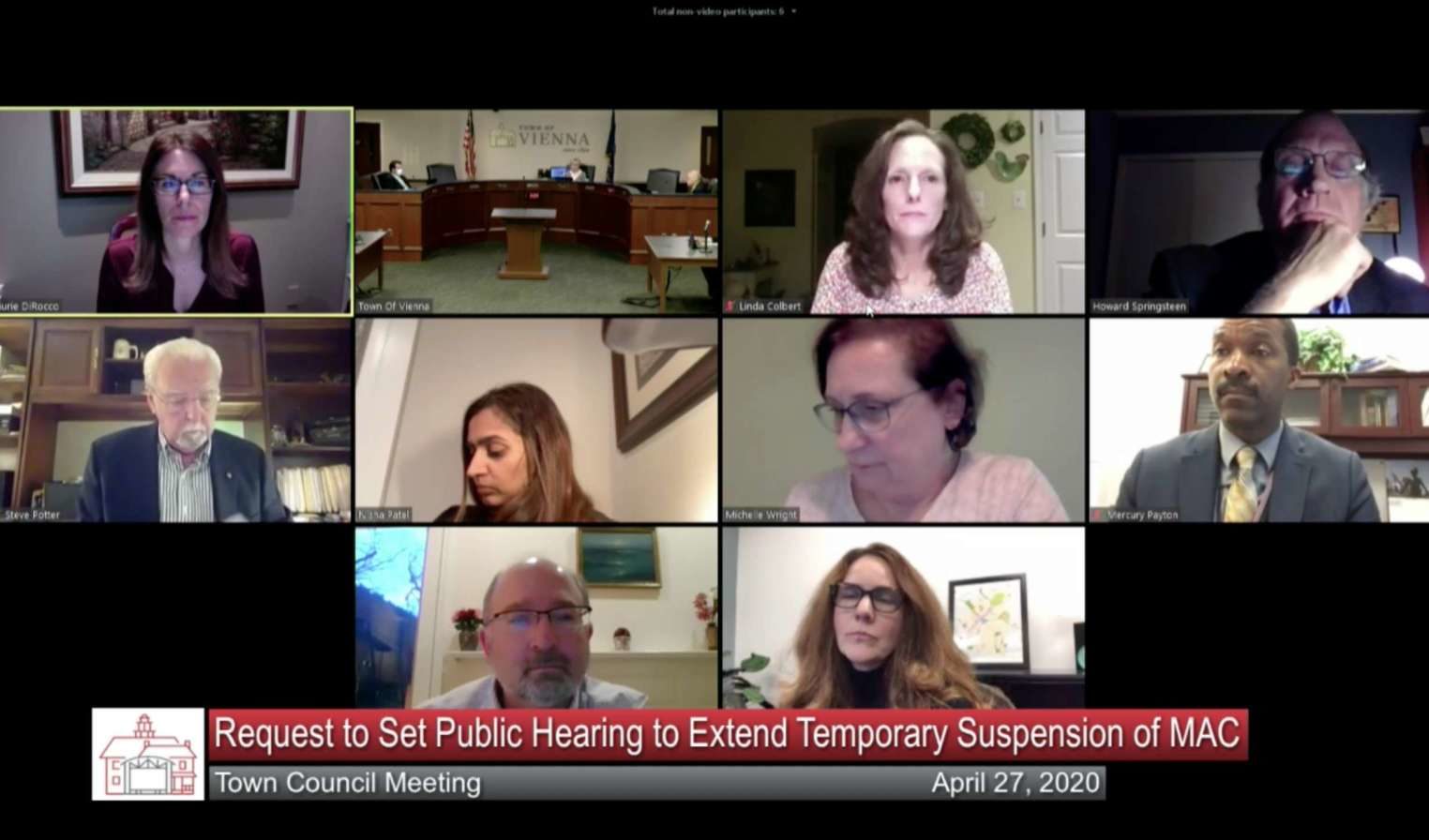
The Vienna Town Council is pausing its plans to speed up the Maple Avenue Commercial zone update due to the COVID-19 pandemic.
In December, Councilmember Steve Potter proposed that the town use a consulting firm, calling the work on the zoning ordinance a “log jam.”
Last night, the councilmembers were originally set to consider a contract award for consulting fees, but Town Manager Mercury Payton said that the coronavirus pandemic is delaying plans to hire the consultant.
Councilmember Pasha Majdi praised the delay in a statement, saying that using nearly $250,000 from allocated funds and prior reserves in the town’s budget should be put on hold for the moment.
“For months I’ve been calling for prudent budgeting and spending, which requires delaying nonessential spending at least until revenues stabilize,” Majdi said. “We need to refrain from nonessential spending during the pandemic.”
As the town grapples with the pandemic, the Vienna Town Council is also looking to extend the moratorium on the zoning ordinance from June 30 of this year to June 30, 2022.
The Vienna Town Council is looking to delay the soon-approaching deadline to revise the Maple Avenue Commercial (MAC) zone.
The moratorium was first put in place in the fall of 2018 so that town staff could redesign the town’s guidelines. Since then, it has been extended several times, drawing criticism from some residents and town officials.
Back in November, Vienna officials voted to push the moratorium to June 30.
But now as the town faces challenges due to the coronavirus pandemic and uncertainty about whether its election that is less than two weeks away will get delayed, town officials want to extend the moratorium again.
At the meeting on Monday (April 27), the council will consider pushing the moratorium until June 30, 2022.
If the council OKs a public hearing on the proposal, the matter will also go before the Planning Commission. The public hearing would be held June 1.
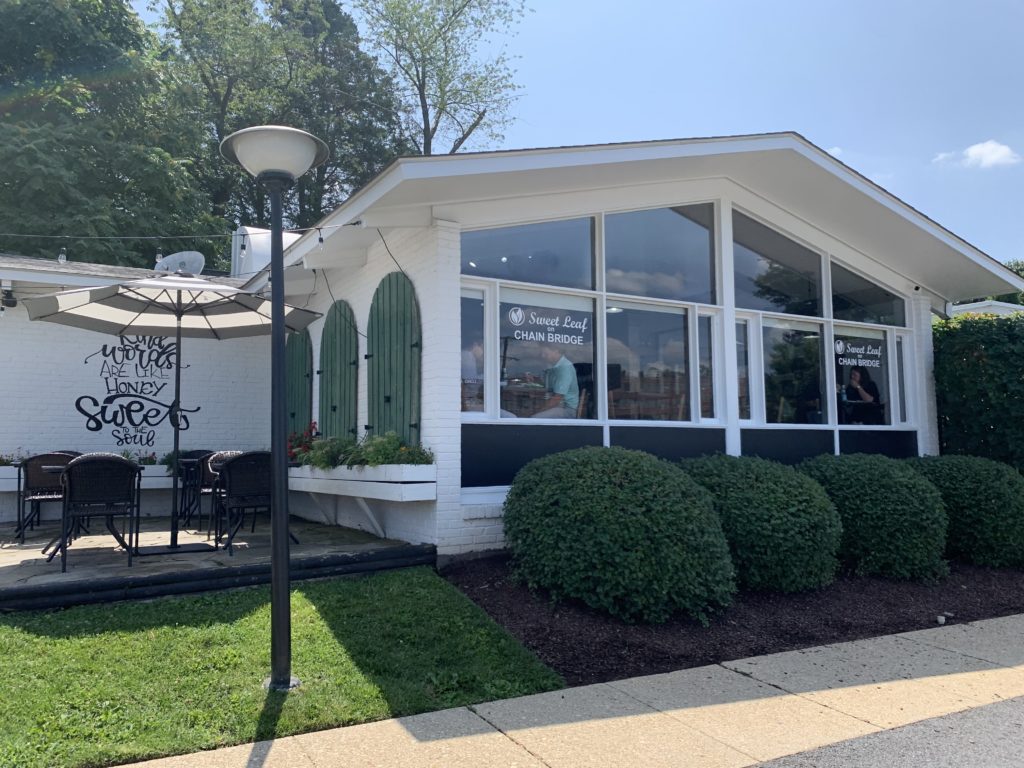
It’s been almost five years, and Sweet Leaf in McLean is still working to resolve a zoning violation caused by too few parking spots.
The Fairfax County Board of Zoning Appeals decided today (Wednesday) to defer Sweet Leaf’s appeal of its zoning violation for at least the 14th time.
“It’s been a long time, but we’ve been working through this process,” Sweet Leaf co-founder Andre Matini told the board today.
The restaurant has been operating in violation of the zoning code since late 2015, county staff said today.
Over the last few years, zoning changes have affected the cafe, which was originally slapped with zoning violations in 2015 following a complaint about a lack of parking.
One of the zoning violations is now “moot” after the Board of Supervisors adopted changes to the zoning ordinance in 2018, staff said.
When those changes were made, however, the cafe’s other zoning violation became more challenging to fix.
The cafe was incorrectly issued a non-residential use permit (non-RUP) for retail sales but not for food, staff said.
In order to qualify for the correct permit now, the cafe needs to have at least 14 parking spaces with an approved parking reduction — but it only has 12.
Getting the two extra spaces has been more challenging than expected, Matini said.
The county rejected a nearby church’s offer for diners to use its parking lot, Matini said. Now, another neighbor will let the cafe rent two spaces, he said, adding that county staff has been asking for more information.
If the parking reduction fails, then the cafe would need to decrease the square footage of the building.
One of the new changes to the zoning ordinance altered how the number of parking spaces is determined. The building’s square footage — instead of the number of tables at the food establishment — is now used to calculate the parking requirement.
So far, Land Development Services thought the information submitted for the parking reduction request has been “insufficient,” according to the staff report.
Fairfax County Zoning Administrator Leslie Johnson urged that the board make a “short deferral” to push the appellant to get all of the required information to county staff, who said there hasn’t been any recent progress on the parking reduction application.
“We’re not 100% sure how we would resolve the issue if everything is denied by the zoning office,” Matini said. “Obviously, we don’t want to shut down after all of these years in operation.”
The zoning board, staff and Johnson said they want to avoid a situation where the cafe would be forced to close. Dranesville District Supervisor John Foust has also said that he wants the restaurant to stay open.
To give the cafe and the county staff more time to get all of the required materials for the parking reduction application, the Board of Zoning Appeals decided to defer the case to July 22.
“It sounds like people are working hard to resolve this, but they quite aren’t to the finish line yet,” Chairman John Ribble III said.
Updated at 7:15 p.m. — Corrects James Hart’s name.
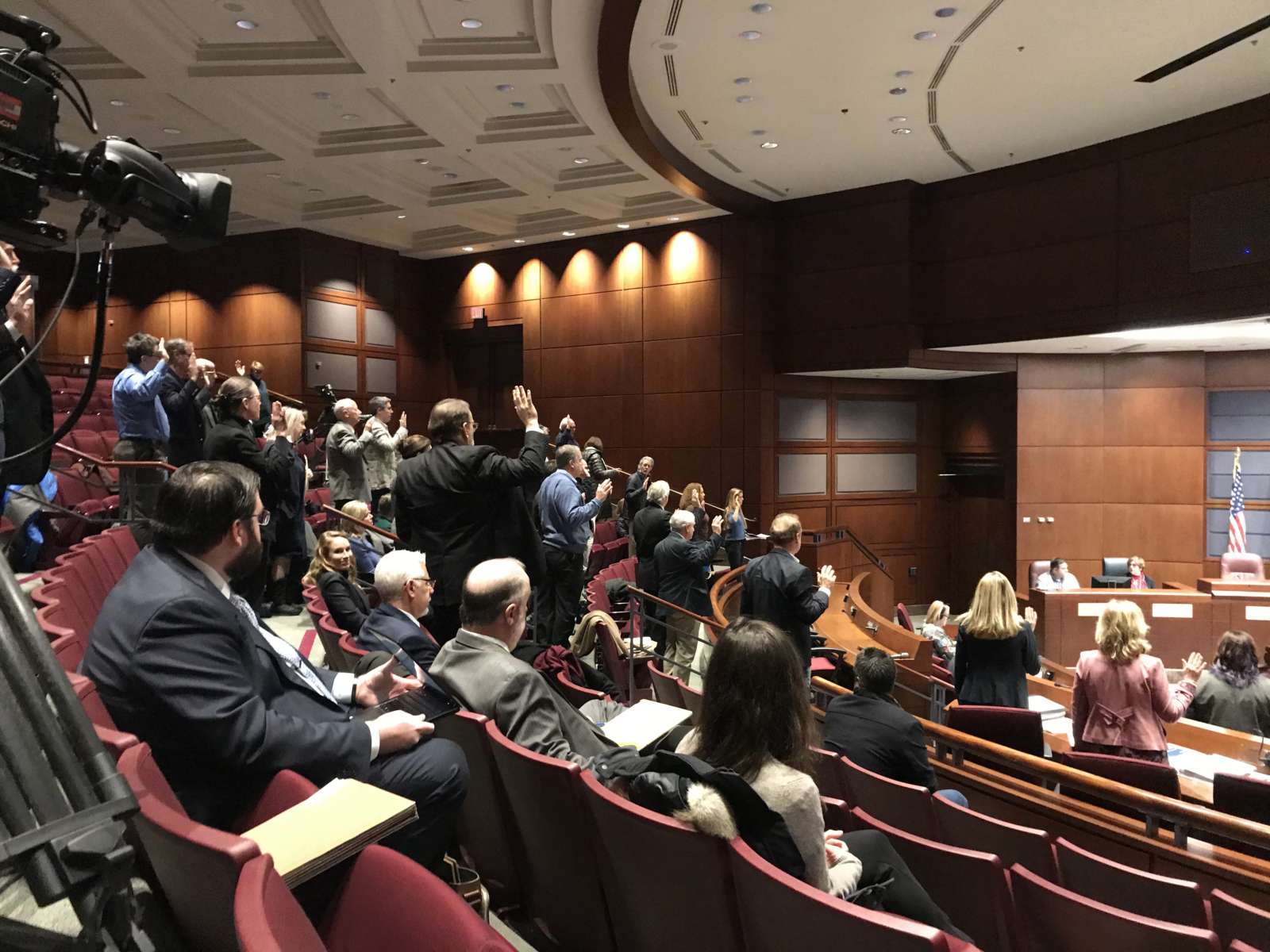
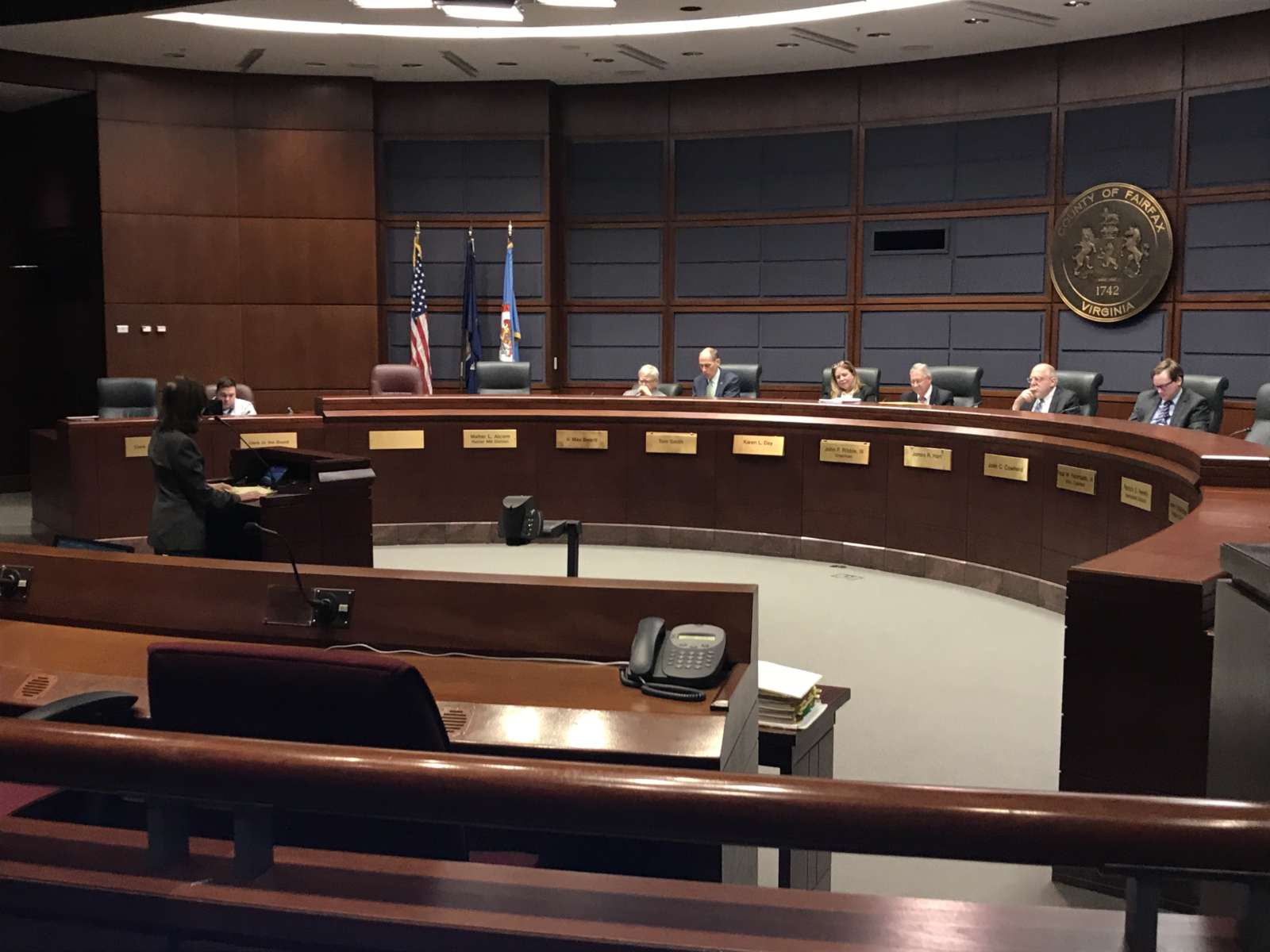
Fairfax County’s Board of Zoning Appeals is upholding a zoning determination that would allow a controversial teen rehab facility to open in McLean.
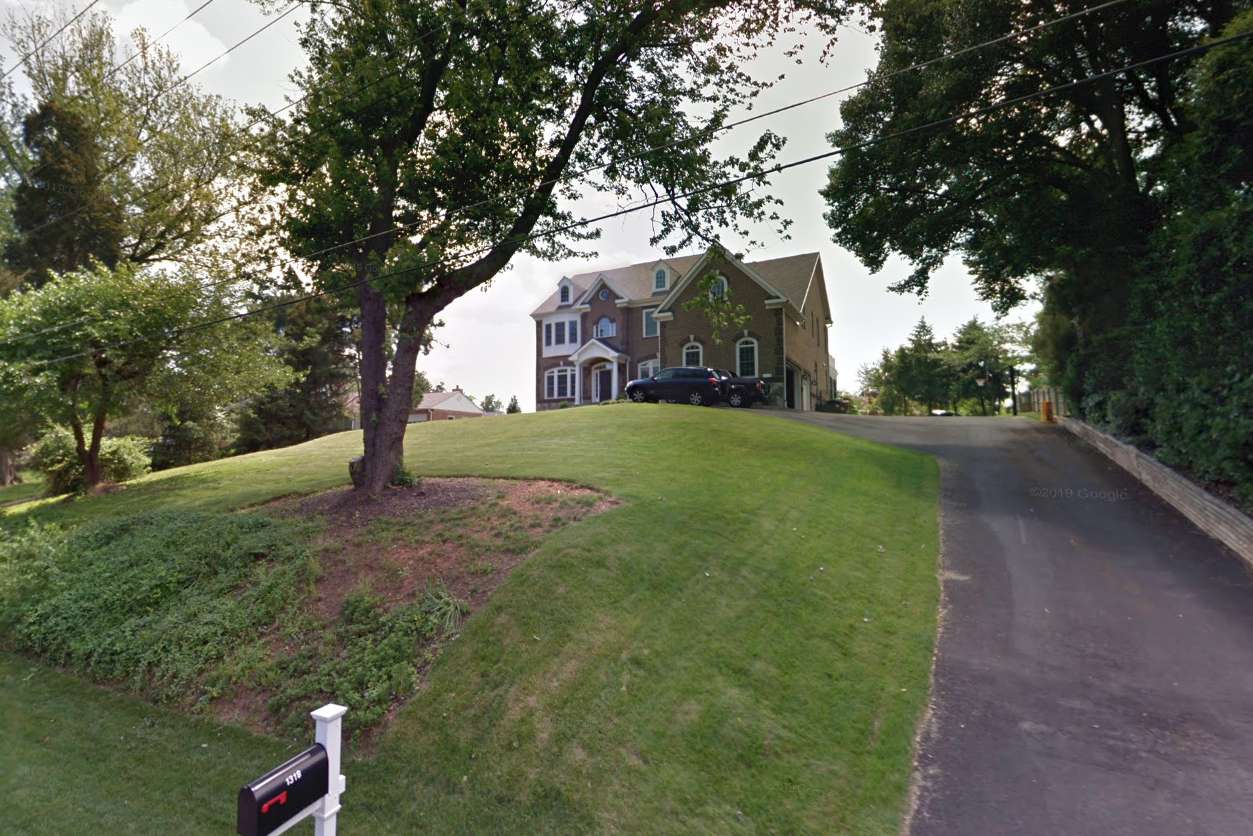
Newport Academy, a therapy program for teens with mental health issues, is looking to open at 1318 Kurtz Road, claiming that the location is a by-right use, which won’t require approval by the Board of Supervisors.
Last year, Fairfax County Zoning Administrator Leslie Johnson determined that the proposed facility in the Salona Village neighborhood is a group residential facility.
Several McLean residents submitted appeals to try to overturn the zoning administrator’s letter, arguing that the facility should be designated as a congregate or medical use facility.
At the Board of Zoning Appeals’ public hearing in January, the appellants raised concerns about noise, falling property values, safety risks and increased traffic. The board decided to defer the decision to allow for more time to consider the arguments.
Today (Wednesday), the board upheld the zoning administrator’s determination, but not without a lengthy discussion on the case, which several board members called “difficult.”
James Hart and Paul Hammack, Jr. — the two members who said the facility should be labeled a congregate or medical use facility — said that the zoning administrator looked at the predominant use of the facility rather than all of the uses.
“It’s difficult to apply a one-size-fits-all,” Hart said. “It is not exclusively one category or the other… It is a hybrid.”
Hammack said he agreed with Hart’s assessment, adding that the criteria for a group home “is not spelled out” like it is for a congregate or medical use.
The other board members had different reasons for backing the zoning administrator.
“I think that if you look at the definitions, the congregate use is talking about general care, and I don’t think this is general medical care,” John Cowherd said.
Thomas Smith, III said that the “difficult case” had compelling testimony on both sides, but that he ultimately found the zoning administrator’s determination more persuasive.
Hart’s motion to overturn the zoning administrator’s determination failed in a 2-4 vote.
The lawyer representing Newport Academy told Tysons Reporter in January that the company does plan to open the facility at Kurtz Road if the Board of Zoning Appeals upholds Johnson’s determination.
Previously, the rehab company decided to drop its plans to open another McLean location along Davidson Road, after the zoning administrator said it would be a congregate living facility.
While the vote today is a win for Newport Academy, the fight may not be over.
“We anticipate that whatever happens, this may be heading to court,” Hart said.
Vienna residents shared mixed feedback on a proposal that would relax lot coverage requirements earlier this week.
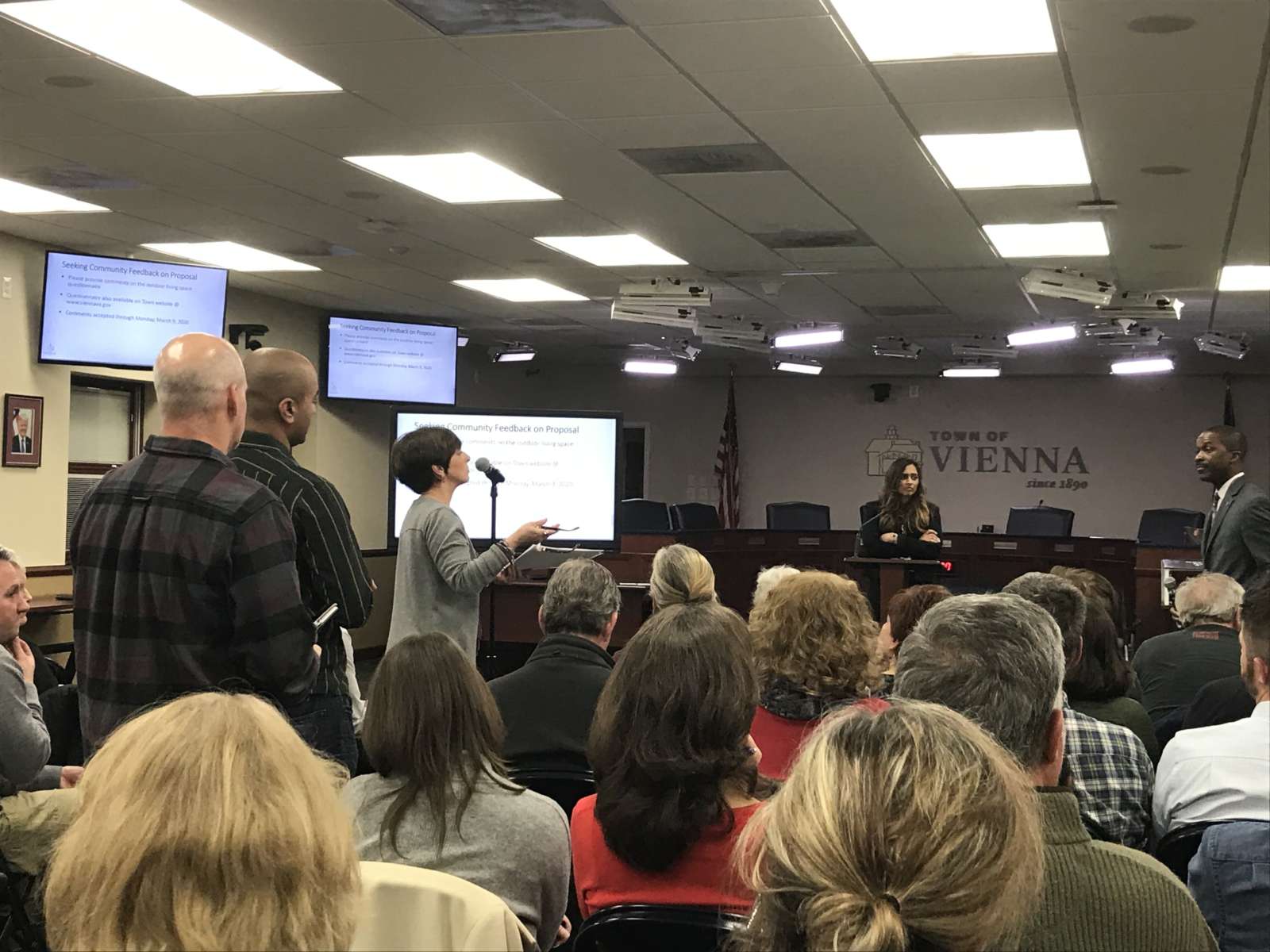
At a town hall on Monday, town officials and staff listened to dozens of residents’ thoughts on a proposal that would allow for more decks, patios and other types of “outdoor living space.”
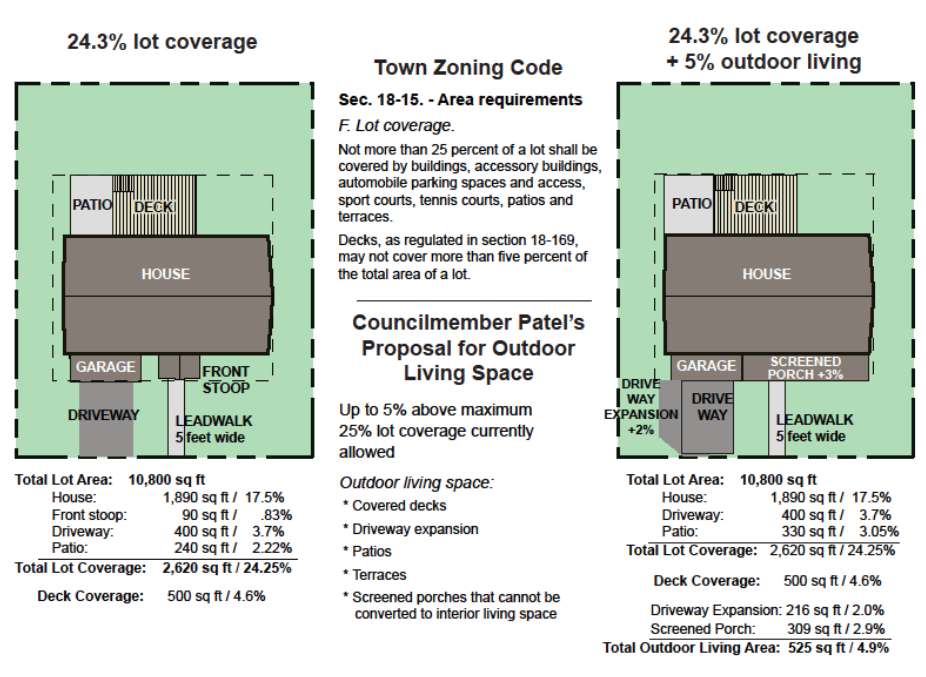
Councilmember Nisha Patel’s outdoor living space proposal would allow extra amenities as long as stormwater management systems are implemented
Currently, Town Code says that buildings, accessory buildings, automobile parking spaces and access, sport courts, tennis courts, patios, and terraces can only take up 25% of a lot.
Patel said that the proposal was sparked by people who said they didn’t know their builder had maxed out the lot coverage or couldn’t get out of their driveways safely because they don’t have a turnaround space.
“It’s open for modification, which is why we’re having this meeting tonight,” Patel said at the start of the meeting. “Should we allow 1%, 3% or 5%?”
Patel added that the proposal does not aim to encourage larger houses.
People who spoke in support of the proposal said that it could benefit people who live in older homes and fix drainage issues in the town.
Christine Silvia-Degennaro said she supports the proposal because she lives in a rambler and ran into zoning issues with her driveway when trying to put an addition on her house.
“I think that it would be a very beneficial thing for people to make this small adjustment,” she said. “We’re not speaking as somebody who has a 600,000-square-foot home. We have a very modest home in Vienna.”
Another person, an engineer, who spoke in favor of the proposal said that the stormwater management would fix drainage issues in the town.
Other residents opposed or critiqued the proposal, while a few said they have mixed feelings about the idea.
Some people said that people buying an expensive home in Vienna had a responsibility to be aware of lot coverage rules. “It’s not OK to claim ignorance,” one person said.
Other residents asked how the proposal would affect homes that have already been built versus future homes, raising concern that it could make a loophole allowing larger homes.
Shawn Thompson, who said he lives in a McMansion, summarized a NextDoor thread with concerns about privilege, protecting older residents, developers abusing rules and huge homes.
“It feels like privilege to me that the problem we’re having here is I bought my $1.5 million house and I don’t have even lot coverage left to put in the patio for a grill.”
Thompson said that he’s heard concerns from residents that older residents won’t be able to afford to live in the town.
“One of the reasons we all love Vienna is because grandma grew up here,” Thompson said. “Do we want grandma to have to move to Herndon or Loudon County?”

Meanwhile, Chuck Anderson, a former Planning Commissioner for the town, told the town officials and staff to be cautious with how they relax the lot coverage rules, if the proposal moves forward.
“Be very careful about selecting changing lot coverage rules on an ad hoc basis, because you don’t know the unintended consequences,” Anderson said, recommending that the lot coverage be considered on a comprehensive basis that could promote aging in place.
Sarah Couchman, the current vice chair of the Planning Commission, said that the proposal would boost her landscaping business, yet Couchman said that she’s concerned about developers building to the limit.
Ultimately, town staff said that they are looking to get more data and bring on a consultant as they consider reorganizing the zoning code, which hasn’t been overhauled since 1969.
Residents can submit comments and fill out a questionnaire through Monday, March 9.
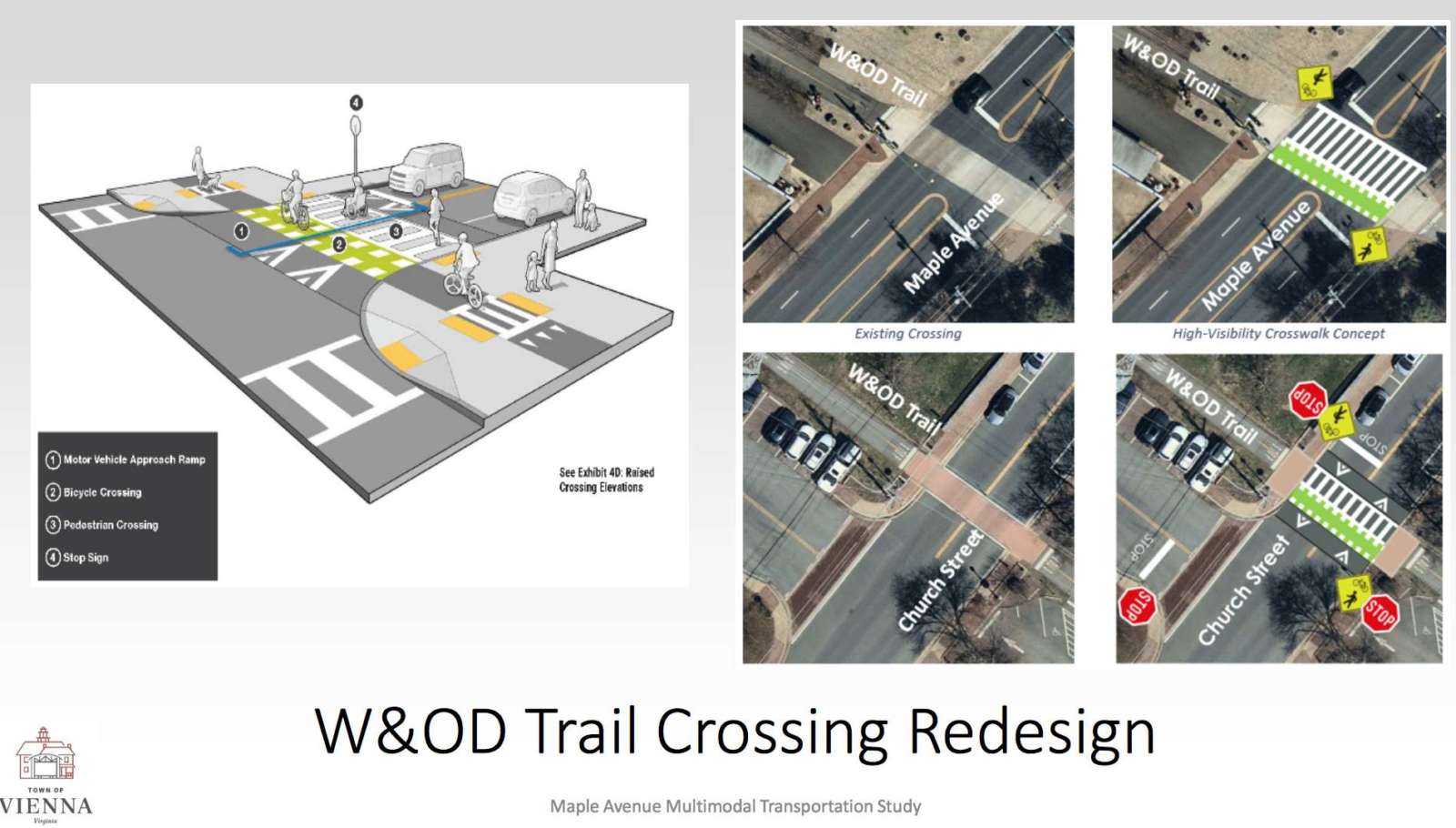
During the second half of the meeting, attendees were asked to prioritize recommendations from the Maple Avenue Corridor Multimodal Transportation and Land Use Study.
The 16 near and mid-term recommendations range from under low cost to up to $150,000. They include:
- improving Church and Mill streets
- redesigning W&OD Trail crossings
- filling “vital” sidewalk gaps
- creating a bicycle network
- having a parking supply and demand study
- considering a local circulator
The town asks that people rank their priorities online or on a paper version by 5 p.m. on Monday (March 9).
“We hear stories and we’re not sure how many people are affected,” Patel said about the significance of the town hall. “It’s important that we get a sense of what the community wants.”
Three images in story via Town of Vienna
Fairfax County’s Board of Zoning Appeals has delayed making a decision on appeals of a zoning determination for a controversial teen rehab facility proposed in McLean.
Newport Academy, a therapy program for teens with mental health issues, wanted to open two treatment facilities — one along Davidson Road and another at 1318 Kurtz Road.
Newport Academy has hinged its claim on the two locations being by-right uses — a use that won’t require approval by the Board of Supervisors.
Fairfax County Zoning Administrator Leslie Johnson issued a letter in May saying that Newport Academy’s three adjacent properties at 1620, 1622 and 1624 Davidson Road would be a congregate living facility.
Newport Academy originally tried to appeal the Davidson Road decision, but has withdrawn the appeal.
The Board of Zoning Appeals’ public hearing today (Wednesday) focused on three appeals from McLean residents regarding Johnson’s determination that the proposed Kurtz Road facility in the Salona Village neighborhood is a group residential facility — a win for Newport Academy.
The three appeals argue that the Kurtz Road facility should be designated as a congregate or medical use facility.
At the start of the public hearing today, county staff gave an overview of the appeals saying that the appellants have concerns about noise, falling property values, safety risks and increased traffic.
“Trying to skirt the zoning laws”
Roughly 50 people attended the public hearing today.
Attendees who testified in support of the appeal — against Newport Academy’s Kurtz Road facility — mentioned safety risks, traffic concerns on the narrow Kurtz Road,
Some of the Salona Village residents took issue with how close the facility would be to Franklin Sherman Elementary School (6633 Brawner Street).
Opponents to Newport Academy also voiced concerns about crime possibly increasing from the patients leaving the facility without permission and also how the facility would affect the local community.
One local said he and other neighbors met with the Carlyle Group, the investors behind Newport Academy, and suggested that Newport Academy use a house with more acreage and in an area with fewer traffic issues.
“Kurtz Road is full of walkers and bicyclists and people pushing strollers,” one female resident said. “I think the traffic from Newport would create a very dangerous situation.” Emergency vehicles, visitors, doctors and employees would add more vehicles to the road throughout the day, the woman said.
“Newport Academy is trying to skirt the zoning laws,” one Salon Village resident said — echoing a sentiment shared by several attendees.
“A Safe Haven”
Michael Allen, the lawyer representing Newport Academy, said that the girls, ages 12-17, at the facility would be “highly supervised.”
Allen told the board that Newport Academy screens its applicants, who mostly have anxiety, depression and eating disorders.
“Newport takes the appropriate safeguards at admission,” Allen said. Once admitted, Newport Academy does random room searches, random drug and alcohol tests and has tutoring and counseling, Allen said.
Board Member V. Max Beard asked why Newport Academy chose the McLean location and “Why create this kind of turmoil for yourself?” Allen responded that Fairfax County is a “county of opportunity” and a closer option for families in the Mid-Atlantic area.
Ultimately, Allen said that people who have disabilities and mental health should live alongside everyone else. “I suspect the neighbors testifying today will watch Newport like a hawk,” he said.
People who spoke in support of Newport Academy — including several licenses counselors — called the proposed facility a “safe haven” and “surrogate village.” Supports said that patients will be monitored 24/7 and supervised within the fenced in property.
Some parents praised Newport Academy for helping their kids. “We want them to be our neighbors,” one person said.
Newport Academy’s Plans for Kurtz Road
After facing a backlash from neighbors and local officials, Newport Academy’s intentions for the McLean properties have been unclear.
Dranesville District Supervisor John Foust previously told Tysons Reporter in the fall that Newport Academy plans to sell the properties and wanted the determination reversed for the Davidson Road properties so that the zoning determination wouldn’t negatively impact future plans.
One of the three Davidson Road properties is currently for sale.
Allen told Tysons Reporter that Newport Academy is not pursuing the Davidson Road properties anymore, but does intend to open at Kurtz Road if the Board of Zoning Appeals upholds Johnson’s determination.
Staff said today that Newport Academy has received a mental health treatment license from the Virginia Department of Behavioral Health.
Allen added that Newport Academy officials are feeling confident about their case.
Next Steps
Zoning staff recommended that the board uphold Johnson’s determination.
After more than four hours of discussion of testimonies, the board decided it would be best to defer the decision to a later date.
The appellants requested that the board delay its consideration by a few weeks to respond to arguments and material received “last minute” from Newport Academy. Allen, representing Newport Academy, also requested time to submit a post-hearing brief.
Board Member James Hart said he’s concerned about paperwork piling up, leading to further delays to give the board time to consider the arguments, which could then lead to more paperwork.
The board will consider the appeals again on March 11.
Appeals of a zoning determination for a controversial therapy facility proposed in McLean will head to Fairfax County’s Board of Zoning Appeals next week.
Newport Academy, a therapy program for teens with mental health or addiction problems, wanted to open two treatment facilities — one along Davidson Road and another at 1318 Kurtz Road — but faced a backlash from neighbors and local officials.
Fairfax County Zoning Administrator Leslie Johnson issued a letter in May saying that Newport Academy’s three adjacent properties at 1620, 1622 and 1624 Davidson Road would be a congregate living facility.
Newport Academy, which has hinged its claim on the two locations being by-right uses — a use that won’t require approval by the Board of Supervisors — originally appealed the Davidson Road decision.
Dranesville District Supervisor John Foust previously told Tysons Reporter in the fall that Newport Academy plans to sell the properties and wants the determination reversed so that the zoning determination won’t negatively impact future plans.
Newport Academy, though, has withdrawn its appeal regarding the Davidson Road facility.
The Board of Zoning Appeals will just hear the three cases regarding the Kurtz Road facility in the Salona Village neighborhood.
In August, Johnson issued a letter saying that the Kurtz Road facility is a group residential facility — a win for Newport Academy that McLean residents are trying to appeal.
The Board of Zoning Appeals will consider the three appeals at 9 a.m. on Wednesday, Jan 22.
A Facebook group of local residents that has been fighting Newport Academy’s attempt to open the facilities is urging people to come to the appeal hearing.
Image via Google Maps

Sunrise’s new proposal to build a senior living facility at 380 Maple Avenue will go before the Town of Vienna’s zoning and architectural review boards this week.
The new plans include approximately 950 square feet of ground-floor restaurant space and 85 assisted living units and common areas, along with structured parking and one level of underground parking, according to town documents.
Tonight (Wednesday), the plans head to the Board of Zoning Appeals for a public hearing on the request for the conditional use permit.
Then on Thursday (Dec. 19), the Board of Architectural Review will hold a public hearing on exterior modifications for Sunrise’s plan.
Both public hearings start at 8 p.m. at the Vienna Town Hall (127 Center Street S.)
Image via Sunrise
After dozens of meetings on proposed changes to the zoning ordinance, a Vienna Town official proposed a solution to speed up the process.
Earlier this year, the Vienna Town Council extended the moratorium on the MAC zone to June 30 — after pushing the deadline several times.
Councilmember Steve Potter called the work on updating the zoning ordinance a “log jam” and brought forward a motion for a comprehensive reorganization and update of Subdivision and Zoning Ordinances, Chapters 17 and 18 of Town Code, by using a consulting firm.
“It is time for a process check,” Potter told the Town Council last night.
“There have been approximately 75 Town Council and Planning Commission meetings and work sessions plus six MAC ad hoc committee meetings and two community workshops on proposed amendments to the zoning ordinance since 2016,” he said.
Potter’s motion:
I move to direct planning and zoning staff to expand the scope of the Maple Avenue Commercial (MAC) zone and other proposed commercial zone amendments, as directed by Council to date, to include: request for proposal preparation for the comprehensive reorganization and update of Chapters 17 and 18 of the Town Code; consultant interviews and selection recommendations for consulting firms with national and Virginia experience; and determination of a realistic moratorium period for the MAC zone based upon the scope of work identified.
All pertinent work accomplished to date by staff, committees, commissions, boards, and Council, as well as relevant results from public comments, surveys, and workshops shall be retained and shared with the winning consulting firm for use in development of the aforementioned reorganization and update.
“I think this gives us a chance to kind of fix things correctly,” Councilmember Howard Springsteen said.
Potter’s motion aims to make the regulations organized and easy to understand by using plain language, charts, tables and illustrations, along with consistent with the Town’s Comprehensive Plan.
“The project is funded, up to $240,000, through the FY 2019-2020 budget from currently allocated funds and prior reserves,” according to town documents.
The Vienna Town Council approved the motion, which Councilmember Linda Colbert called “a great way to end 2019 and a good way to start 2020.”
Image via Town of Vienna
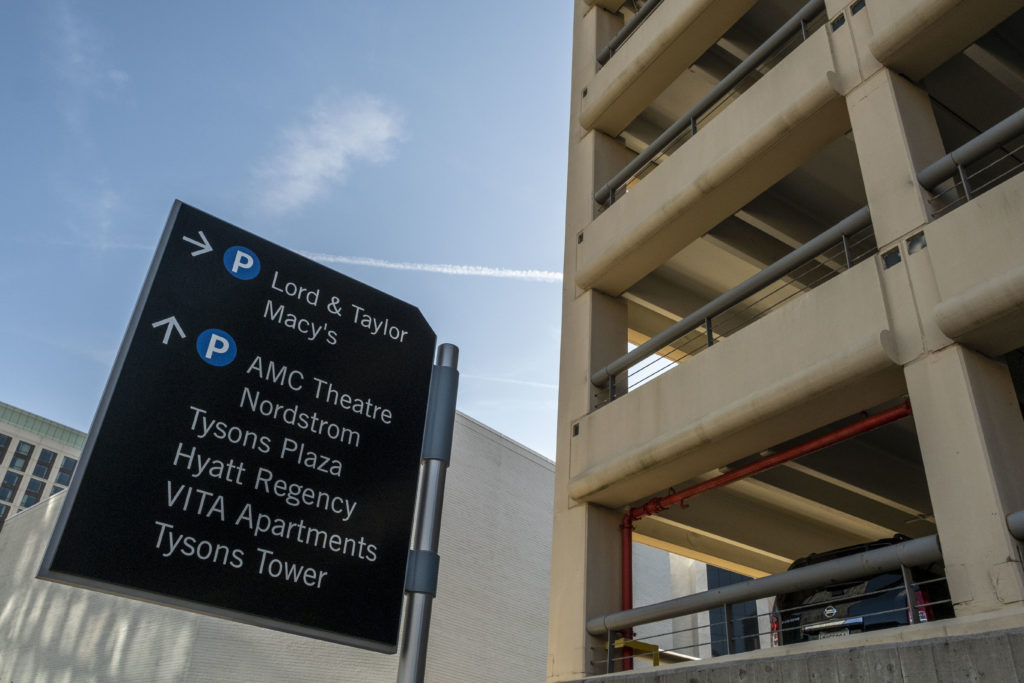
Fairfax County officials say that a newly approved parking rate for the county’s largest malls would not adversely affect Tysons malls.
Yesterday (Tuesday), the Board of Supervisors approved the zoning ordinance amendment that will allow lower parking rates at the four largest malls in the county — the two in Tysons, Fair Oaks Mall and Springfield Town Center.
The proposal was based on a review of the parking rates and demand at large regional malls by consulting firm Nelson/Nygaard.
The county’s planners stressed that the focus of the zoning amendment was meant to help Fair Oaks Mall, yet it sparked concern about whether it would create parking problems at Tysons Corner Center and also about the lack of data for the Tysons malls.
Nelson/Nygaard study’s evaluated parking data for Fair Oaks Mall and the Springfield Town Center, but the study did not evaluate the two malls in Tysons.
“It really has no bearing on Tysons,” Providence District Supervisor Linda Smyth said yesterday, noting that Tysons Corner Center is a part of the Planned Tysons Corner Urban District’s (PTC) parking rates, which allows for lower parking rates. Tysons Galleria is not a part of the PTC District, but could opt-in.
“There has been concern raised in the community that it would [cause issues in Tysons], but I agree with Supervisor Smyth that the real impact is in Springfield and Fair Oaks, where we need to reduce the parking requirements,” Dranesville District Supervisor John Foust said.
The change now lets shopping centers with 800,000 square feet of gross floor area or more to have a parking rate of 2.5 instead of four spaces per 1,000 square feet of gross floor area.
In addition to the zoning change, the county board also approved directing staff to prioritize review of the parking rates in phase two of the zoning ordinance modernization effort.