

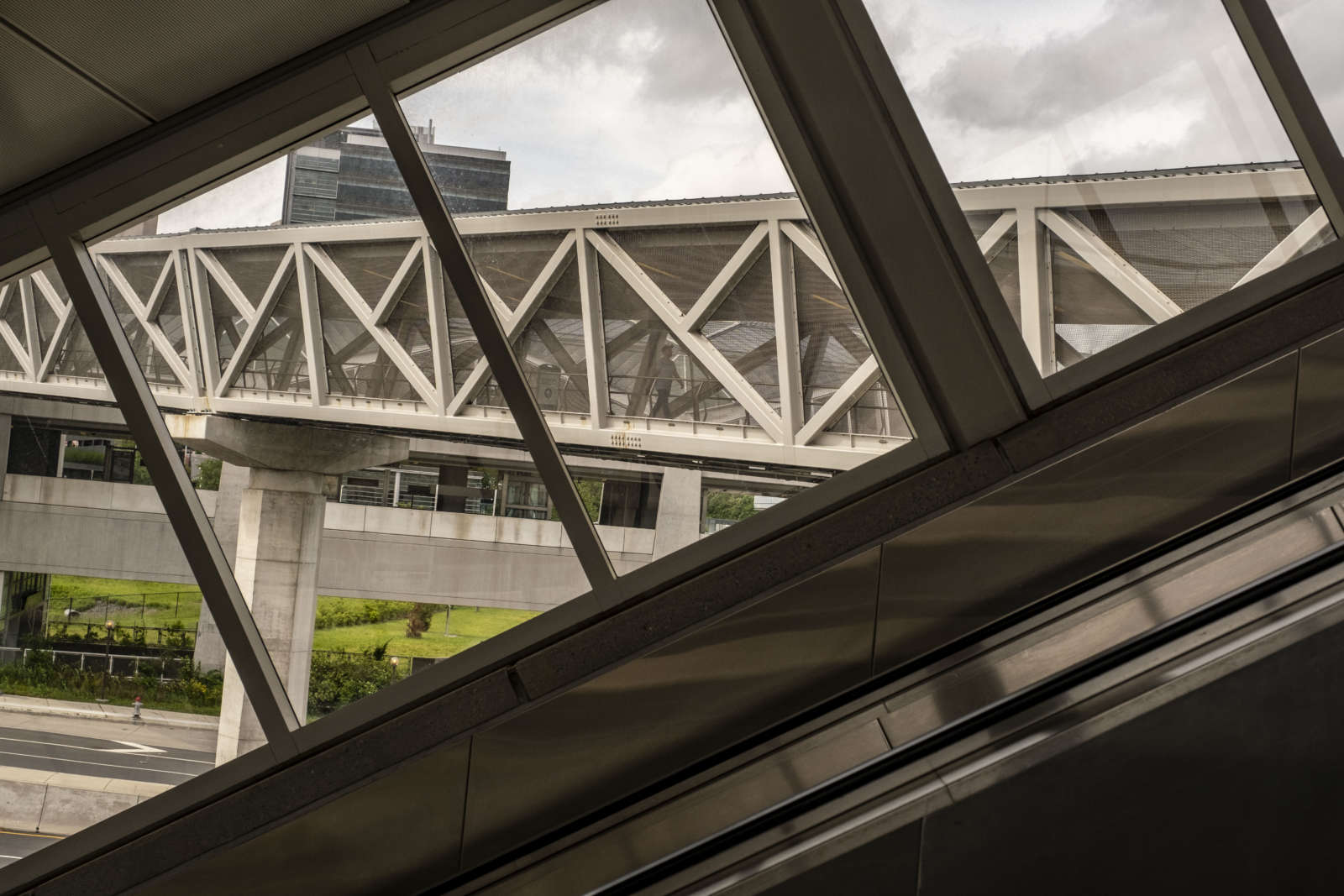
Vienna and Dunn Loring Metro Stations Will Get New Escalators — Metro awarded a $179 million, seven-year contract to replace 130 escalators at 32 stations, including two at the Dunn Loring-Merrifield station and three at the Vienna station. Work on the project will start in May and will require the demolition and removal of the existing escalators. [WMATA]
Fairfax County High School Football Season Starts Monday — Fairfax County Public Schools will allow some fans when the football season kicks off on Feb. 22. Players will be required to wear masks, but locker rooms will be off limits, among other COVID-19 safety protocols. [ABC7-WJLA]
Fairfax County Introduces Outdoor Document Drop Boxes — “Fairfax County Department of Family Services now has outdoor drop boxes to turn in documents for Medicaid, SNAP, TANF or other programs anytime, 24/7. Search Fairfax County Goverment, outdoor drop box to see a list of locations.” [@SupvPalchik/Twitter]
Virginia Seeks Public Input on History and Social Studies Education Standards — “Fairfax County Public Schools (FCPS) staff members are encouraging the community to provide comments to the Virginia Department of Education (VDOE) for its review and revision of the History and Social Science Standards of Learning, scheduled to be completed before November 2022.” [FCPS]
Tysons Wellness Center Was Ahead of the Teletherapy Curve — “[Derek] Russell, a licensed professional counselor and neurotherapist, opened Mindstate as a mental health and cognitive peak performance center at 1980 Gallows Road in Tysons. In just over a year, Mindstate has grown from a one-man business with neurotherapy and counseling services, to a center also staffed with another therapist and health coaches.” [McLean Patch]
Northern Virginia Home Sales Were Up in January — Sales were up 29% compared to January 2020, with competition particularly intense for single-family houses. The Northern Virginia Association of Realtors says there is more of a supply for condos, especially high-rise and luxury units in places like Tysons, possibly due to a wariness of shared amenities and close contact with neighbors. [WTOP]

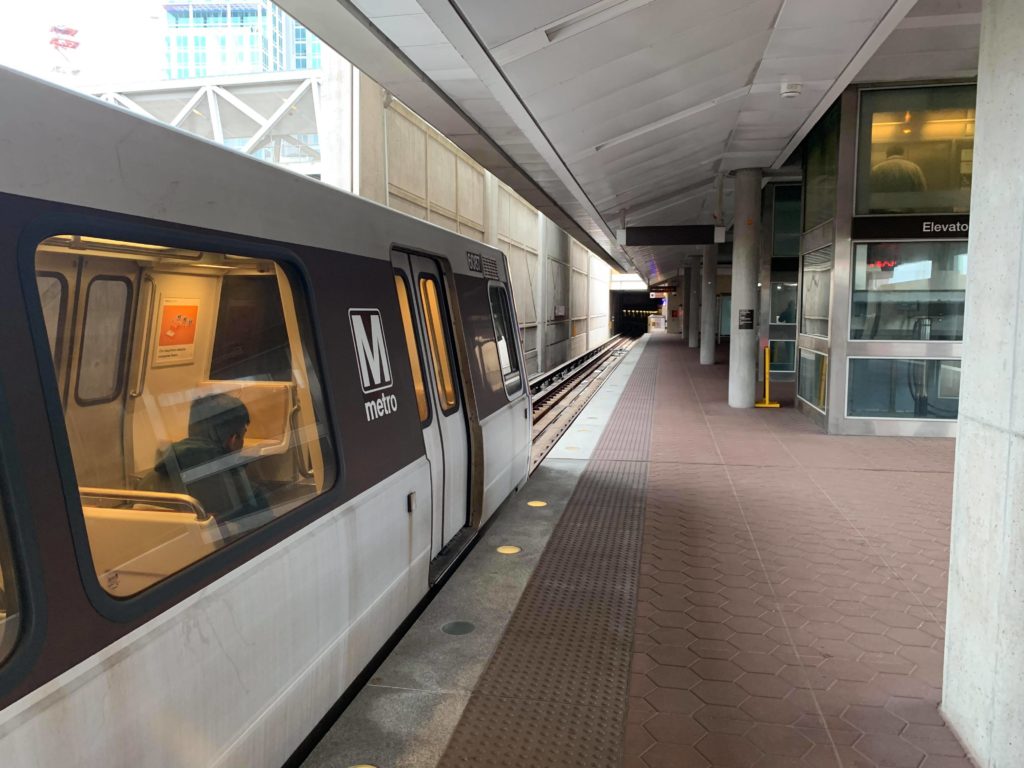
Metrorail is now operating at the same frequency during peak and off-peak hours on weekdays after budget changes prompted by the impact of the COVID-19 pandemic took effect yesterday (Monday).
Under the revised Fiscal Year 2021 budget, trains are running every 12 minutes on the Orange, Silver, Blue, Green, and Yellow lines, while Red line trains operate every six minutes. Service after 7 p.m. and on weekends has not been altered.
The reduction of rail service during weekday rush hours was recommended as part of a revised FY 2021 budget that the Washington Metropolitan Area Transit Authority Board of Directors approved when it met on Nov. 19.
“The changes bring rail service in line with ridership demand while managing costs amid pandemic-related budget constraints,” WMATA said in a news release. “Rail ridership remains down nearly 90 percent from pre-pandemic levels.”
In contrast, WMATA says Metrobus ridership is only down 55% on weekdays and less on weekends compared to pre-pandemic levels, so service will expand to accommodate additional capacity starting on Mar. 14.
“Customers will see more buses, more often on the 125 lines of service currently operating, and more routes will be added to expand bus service on weekends,” WMATA said.
More details about the March Metrobus service changes will be provided at a later date, the transit agency says.
Staff photo by Jay Westcott
The Tysons Partnership greeted news that the federal government might allocate funding to Metro for the next decade with a cheer.
Rep. Gerry Connolly (D-11th District) announced on Tuesday (Feb. 2) that he has reintroduced the Metro Accountability and Investment Act, which would provide funding to sustain the D.C. area transit system for 10 years.
Several other members of Congress who represent the D.C. area have also sponsored the bill, including Reps. Don Beyer (D-8th District) and Jennifer Wexton (D-10th District).
“We are hopeful that stable funding would instill a bright future for Metro and specifically ridership in Tysons,” the Tysons Partnership said yesterday.
The Metro Accountability and Investment Act would give the Washington Metropolitan Area Transit Authority (WMATA) $1.73 billion between 2022 and 2031 by reauthorizing the Passenger Rail Investment Improvement Act of 2008 (PRIIA), which established annual federal funding for Metro until it expired in 2018, according to The Washington Post.
Under Connolly’s bill, Metro would be required to implement and maintain certain safety and oversight reforms in order to receive the annual allocations, which range between $150 million and $200 million per year.
Among other conditions, the WMATA board of directors must pass a resolution by July 1 that gives independent budgeting, hiring, and procurement authority to the Office of the Inspector General, which conducts audits, reviews, and investigations of the transit agency’s programs and operations.
“Even before the pandemic, which has only exacerbated the challenges facing transit agencies across the country, WMATA was in need of a long-term plan that restored confidence in the rail system,” members of the National Capital Area Congressional Delegation said. “The Metro Accountability and Investment Act is a balanced proposal that recognizes the federal government’s responsibility to the funding, safety, and reliability of Metro.”
Plummeting ridership levels during the COVID-19 pandemic have created a dire financial situation for WMATA, which said last year that it would have to make significant service and personnel cuts without additional assistance.
Metro will avoid the worst-case scenario for now after Congress included an estimated $610 million for the transit system in the coronavirus relief package that was signed into law on Dec. 27. However, those funds are a temporary solution, and Metro officials say major cuts could be on the table again in 2022.
WMATA General Manager and CEO Paul Wiedefeld says the federal funding offered by the Metro Accountability and Investment Act “will be critical to the region’s recovery for years to come.”
“This bill once again demonstrates our Congressional delegation’s leadership supporting critically needed funding to maintain a safe and reliable transportation system,” Wiedefeld said. “…We welcome provisions that will increase transparency and ensure taxpayer funds are well-spent to continue to earn the public’s confidence.”
The Tysons Partnership published an article on Jan. 25 urging community members to tell legislators to support federal funding for Metro, noting that budget cuts would take a toll on the Silver Line with the potential closure of five stations — including the ones at McLean and Greensboro.
“If implemented, these transit cuts could be devastating to Tysons and the entire Silver Line corridor,” the Tysons Partnership said.
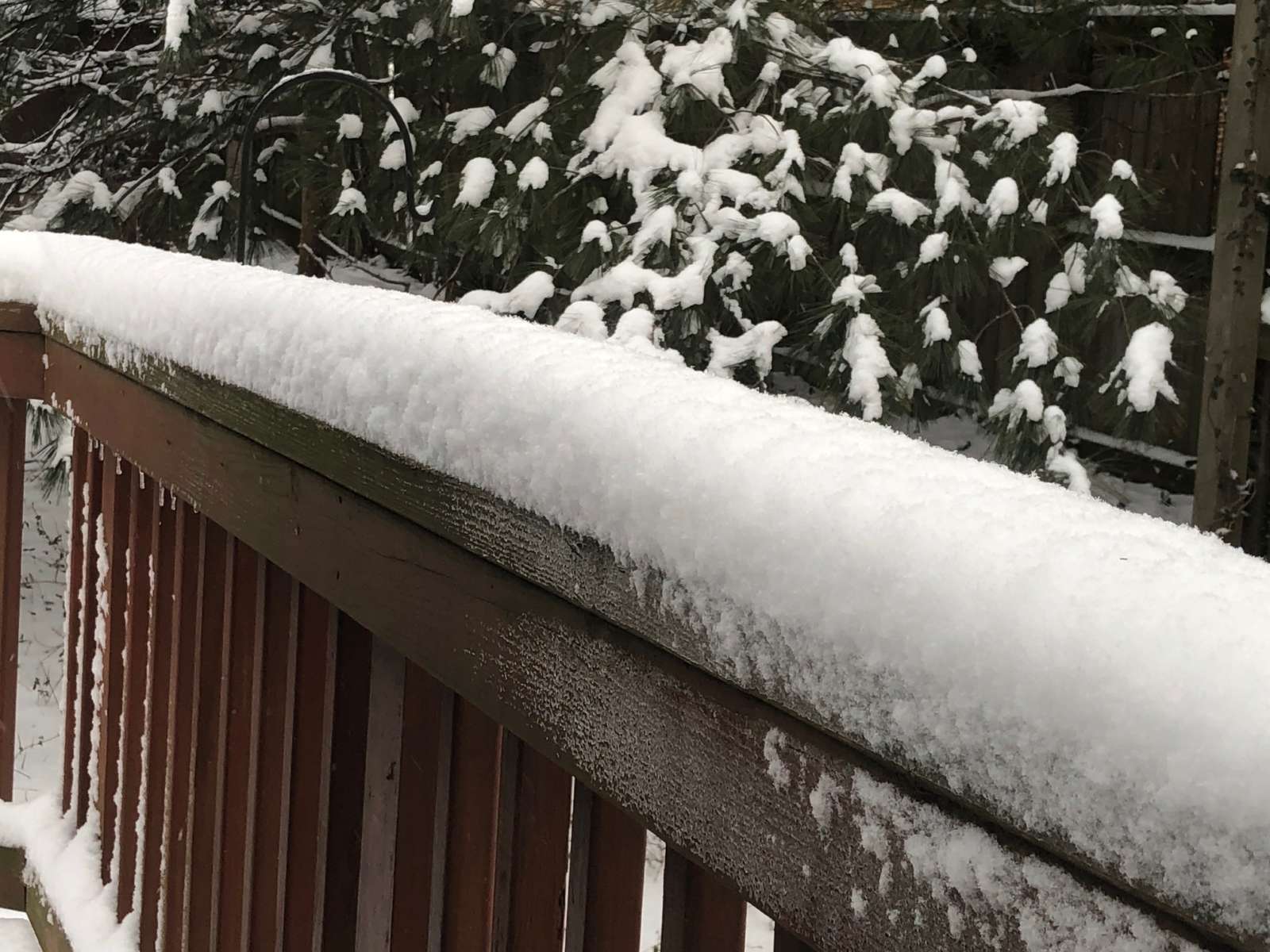
Winter Weather Advisory Extended to 1 P.M. — The National Weather Service has extended its winter weather advisory for the D.C. area, including Fairfax County, to 1 p.m. today due to “lingering snow bands.” There could be up to two inches of snow accumulation, and slippery roads could make the morning commute hazardous. [NWS]
Metro to Change Lost-and-Found Policy, Citing Budget Constraints — “Beginning March 1, Metro’s lost and found department will work to reunite customers with lost wallets and electronics (such as phones, tablets, and laptops) only. All other items lost in the system will be disposed of, donated to charity, destroyed, or auctioned.” [WMATA]
Mosaic District Partners with Virginia Plunge Again — The Polar Plunge Festival is the signature annual fundraiser for Special Olympics Virginia. In past years, the Mosaic District has hosted the Plunge, but due to the pandemic, the usual in-person event has been replaced by a week of festivities, culminating in a virtual ceremony on Saturday (Feb. 6). Registration is now open. [Mosaic District/Twitter, Polar Plunge]
Tysons-Based Media Company Buys Sports Podcast Network — “Tegna wants a bigger piece of the podcast action: The TV station group announced the acquisition of Locked On Podcast Network, which produces some 160 daily shows for teams across the U.S.’s four major pro sports leagues and more than 30 colleges.” [Variety]
Justice High School Graduate Drafted by Washington Spirit — “When the Washington Spirit returns to the field this spring, local fans may spot a familiar face at forward–Falls Church native Anna Heilferty. After graduating from Boston University this winter, Heilferty was selected 19th overall by the Spirit in the 2021 National Women’s Soccer League Draft.” [Washingtonian]
Metro riders will now be able to make calls, listen to music, and scroll through social media while commuting without risking any service interruptions.
The Washington Metropolitan Area Transit Authority (WMATA) announced yesterday (Wednesday) that it has finished establishing a systemwide wireless network, bringing WiFi to all 91 Metrorail stations and throughout 100 miles of tunnels.
The Silver Line in Tysons was one of the last three segments of the network to come online, along with the tunnels from Dupont Circle in D.C. to White Flint in Maryland and the Yellow Line between L’Enfant Plaza and the Pentagon.
According to a Metro press release, the project had been underway for more than a decade and involved partnerships with three major wireless carriers — AT&T, T-Mobile, and Verizon.
“Bringing this project to the finish line gives riders added security and all the conveniences of wireless connectivity,” WMATA General Manager and CEO Paul J. Wiedefeld said. “Customers can text, talk, and explore the internet and apps, including Metro’s mobile payment options to load value and manage their SmarTrip account while traveling on Metro.”
Congress ushered in wireless service for Metro with the passage of the Passenger Rail Investment and Improvement Act of 2008, which included an amendment authorizing grants for WMATA maintenance projects and requiring the transit agency to ensure access to wireless provider services.
Funded by an agreement between Metro and the wireless carriers, the project required the installation of more than 400 miles of cabling and infrastructure. WMATA attributes the lengthy timeline to the fact that much of the work could only be done when trains were not operating, limiting workers to three or four-hour overnight maintenance windows and scheduled track outages.
The completion of Metro’s wireless system will improve the safety of Metro riders and workers, according to Sen. Mark Warner (D-Va.), who helped facilitate the project with the rest of the D.C. region’s Congressional delegation.
“The federal government and the region have made substantial investments in making this system safer and more reliable, from rebuilding tracks to introducing new rail cars,” Warner said. “Now passengers will be able to use their cellphones underground throughout the system.”
Wiedefeld says systemwide wireless coverage will pave the way for Metro to implement technology that provides real-time communications with customers and allows the rail system to operate more efficiently. It could also be critical for enabling first responders to communicate in an emergency.
The wireless carriers will be responsible for overseeing the day-to-day operations and maintenance of their own networks, including testing and enhancements.
“This significant joint investment provides a communications network that allows each provider’s customers to stay connected with their friends, families and favorite content when using the Metro system,” AT&T, T-Mobile, and Verizon said in a joint statement. “The cooperative approach adopted by the Providers and WMATA was critical in bringing this project to fruition.”
Photo by Michelle Goldchain

The Weekly Planner is a roundup of interesting events coming up over the next week in the Tysons area.
We’ve searched the web for events of note in Tysons, Vienna, Merrifield, McLean, and Falls Church. Know of any we’ve missed? Tell us!
Monday (Jan. 25)
- Metropolitan Washington Restaurant Week — The D.C. area’s annual Restaurant Week starts today and lasts through Feb. 7. Several venues in the Tysons area are participating.
- Metro Mondays (Online) — 4-5:30 p.m. — Fairfax and Loudoun county officials will discuss the impact of COVID-19 on Metro’s budget and the Silver Line for a panel hosted by the Tysons Partnership. Registration for the Zoom event is free.
- The Amazing Max Magic Workshop (Online) — 4-5 p.m. — After putting on a family show on Sunday (Jan. 24), The Amazing Max will give children an opportunity to learn how to make magic. Tickets cost $15 per device for the general public and $10 for McLean Community Center district residents. They can be purchased through the Alden Theatre.
- Introduction to Ballroom Dancing — 7:30-8:30 p.m. — The McLean Community Center is offering new introductory classes to ballroom dance, with each month focusing on a different style. The class consists of 20 hour-long lessons, starting today through June 28. Instruction is available either in-person at the community center (1234 Ingleside Ave.) or virtually.
- The Nields Benefiting Jammin Java (Online) — 8 p.m. — Jammin Java will live-stream a virtual concert by the folk-rock band The Nields. Tickets are free, but donations to support the Vienna music venue/cafe are encouraged.
Tuesday (Jan. 26)
- Tuesday Morning Book Club (Online) — 10:30-11:30 a.m. — The Mary Riley Styles Public Library’s Tuesday Morning Book Club will discuss the novel “The Island of Sea Women” by Lisa See. Email group coordinator Catherine Wilson for more information about the Zoom meeting. No registration is required.
Thursday (Jan. 28)
- The Queen’s Gambit (Online) — 4:30-5:30 p.m. — With the Netflix show “The Queen’s Gambit” inspiring a new generation of female chess players, Tysons-Pimmit Regional Library chess club founder Ashley Xing will talk about the history of women in the game and her experience as a successful youth competitor. Registration is required and can be done through the Fairfax County Public Library website.
- Cup O’Jokes — 7:30 p.m. at Jammin Java (227 Maple Ave. E) — Jokes on Tap comes to Jammin Java once a month to present a comedy show featuring stand-up comics from around the D.C. region. Doors open at 6:30 p.m. Admission is free, but a donation is suggested, and a minimum two-item purchase is required for customers at tables.
Friday (Jan. 29)
- Vienna Police Station Groundbreaking — 10 a.m. at 215 Center St. South — The Vienna Police Department is holding a groundbreaking ceremony to mark the start of construction on its new headquarters building. Mayor Linda Colbert and other town officials will be present. Masks and social distancing are required.
Saturday (Jan. 30)
- Emo Trivia Night — 7:30 p.m. at Jammin Java (227 Maple Ave. E) — Test your indie cred at this trivia night focused on the alternative music scene. Doors open at 6:30 p.m., and masks are required except when eating or drinking. Teams must purchase tickets at the same time through Eventbrite, and they should arrive at the event as a group. Tickets start at $7.50, with four-ticket bundles available for $30.
Photo via Jonathan Ybema on Unsplash
Fairfax County Public Schools to Start Vaccinations on Jan. 16 — “All FCPS employees will have access to the COVID-19 vaccine as a part of the Virginia Department of Health 1b group of other essential workers. All FCPS staff who wish to access the vaccine will have the opportunity to receive their first dose in the next three weeks.” [FCPS]
Metro Announces Inauguration-Related Service Changes — Metro will close 13 stations starting Friday (Jan. 15) through Jan. 21. Trains will operate according to a Saturday schedule, bypassing the closed stations, and 26 bus routes will be detoured around the security perimeter that law enforcement authorities have put in place for the Inauguration on Jan. 20. [WMATA]
Airbnb Cancels Reservations in D.C. Area — “Today, in response to various local, state and federal officials asking people not to travel to Washington, D.C., we are announcing that Airbnb will cancel reservations in the Washington, D.C. metro area during the Inauguration week. Additionally, we will prevent any new reservations in the Washington, D.C. area from being booked during that time by blocking such reservations.” [Airbnb]
Tysons-based Alarm.com Debuts No-Touch Video Doorbell — The video doorbell uses “video analytics to ring itself whenever it sees someone standing on your mat. That design eliminates the need for anyone to physically press a button, and the built-in camera and microphone let you talk with them through your phone without opening the door.” [CNET]
Staff photo by Jay Westcott

Metro will start collecting fares from bus riders again on Jan. 3 as part of its pandemic recovery plan, the Washington Metropolitan Area Transit Authority announced yesterday (Thursday).
The WMATA board of directors authorized a temporary suspension of Metrobus fare collections in March as part of a policy prompted by the COVID-19 pandemic that required riders to board buses through the rear doors in an effort to reduce contact between passengers and drivers.
With fare collections resuming, bus riders should return to entering the vehicles from the front, where the farebox and SmarTrip equipment are located.
WMATA says the change in policy is enabled by the more robust public health procedures that it has put in place now that there is a better understanding of how the novel coronavirus is transmitted.
“With everyone wearing masks, shields for operators on every bus, and enhanced daily cleanings, front-door boarding is safe, expands our capacity for more riders, and helps us resume some normalcy,” Metro General Manager and CEO Paul Wiedefeld said. “We also need to collect fares from every rider to keep essential Metro transit employees working and continue to provide essential service.”
Metrobus costs $2 per trip, which is payable in cash or with a SmarTrip card. Metro also offers a seven-day bus pass for $15 that provides unlimited access to Metrobus and other local bus services, including the Fairfax Connector.
The plan to resume collecting bus fare comes as Metro threatens to make significant service cuts after plummeting ridership during the pandemic contributed to a projected deficit of nearly $500 million for Fiscal Year 2022.
The dilemma facing Metro is shared by other major transit systems around the country, leading local elected leaders and transportation officials to call for the inclusion of public transit funding in a federal coronavirus relief package currently under negotiation in Congress.
Without outside support, WMATA could close 19 stations, drastically reduce rail and bus service hours and routes, and eliminate 2,400 additional jobs. The impact of those cuts is expected to land hardest on low-income residents and other populations that depend on transit.
Metro’s proposed FY 2022 budget will be up for public comment early next year.
The Tysons Partnership has joined calls for federal legislators to give mass transit a financial boost as public transportation systems reel from dropping ridership levels and other impacts of the COVID-19 pandemic.
Charged with implementing the vision in Fairfax County’s Tysons Comprehensive Plan, the Partnership said yesterday (Tuesday) that its leaders sent a letter to members and stakeholders asking them to advocate for transit relief to their Congress members.
“There will be profound economic harm caused by transit service cuts in all urban centers that depend on transit to move people in [and] out of work, home, shopping and entertainment,” Tysons Partnership President and CEO Sol Glasner said.
Local elected leaders and transportation officials have stepped up their appeals for Congress to include public transit in a coronavirus relief package since Metro unveiled a sobering budget plan that includes drastic service cuts to compensate for an anticipated deficit of nearly $500 million.
In addition to closing 19 stations, including ones at McLean and Greensboro, the Washington Metropolitan Area Transit Authority’s proposed Fiscal Year 2022 budget would eliminate rail service on the weekends and reduce it to every half hour on weekdays. Bus service would also drop from 60 to 41 routes.
The WMATA board of directors voted on Dec. 10 move the proposal forward and authorize a public hearing on it in January or February. The board must adopt its next operating budget in March.
“If implemented, these transit cuts could be devastating to Tysons,” Glasner said. “Economic growth and development in Tysons may slow significantly as employers, retailers, employees and residents reconsider their respective commitments to a location in which the urban vision rests on the premise of access to transit.”
The Northern Virginia Transportation Authority and other transportation agencies in the region have been rallying in support of federal transit funding.
The NVTA included a call for additional federal COVID-19 funding for transit in its 2021 federal legislative program, stating that WMATA is critical to the federal workforce as well as first responders, healthcare workers, and other essential employees.
“At a time when we are looking to recover from the economic impacts resulting from the COVID-19 pandemic, it doesn’t make sense that our federal government would not prioritize transit systems that serve our federal capital and our national economic centers,” Glasner said.
According to the Tysons Partnership, Congress is currently negotiating a federal funding bill that allocates $15 billion to transit. The American Public Transportation Association says that public transportation around the country needs at least $32 billion in emergency funds to survive.

The future of Tysons as a transit-oriented urban district looks bright, but local leaders worry it could be marred by declines in Metro ridership.
During the State of Tysons event that the Tysons Partnership held last Thursday (Dec. 10), local elected officials, business leaders, consultants, and journalists outlined the present conditions and future of the city, touching on both the impacts of the COVID-19 pandemic and Tysons’ 40-year comprehensive plan.
While 2020 will be remembered for being upended by a once-in-a-century pandemic, for Tysons, it also represents a “decade of accomplishment” since Fairfax County adopted a comprehensive plan that “envisioned and guides transformation of our suburban-edge city to an urban destination,” event emcee Sol Glasner said.
In the past, Tysons was “characterized by regional retail anchors, ringed by acres of low rise office parks, themselves encircled by acres of surface car parking, encased in ribbons of asphalt,” he said.
But participants agreed that Tysons has made strides to becoming a transit-oriented urban district with more mixed-use housing and retail development, and more young families choosing to live in the city.
“We really are making progress. Sometimes it doesn’t feel that way,” Providence District Supervisor Dalia Palchik said. “This is a 40-year plan, and we’re 10 years in. We need to stay committed to these goals and applying resources and ideas to help achieve them.”
The primary concern for the State of Tysons speakers and panelists was the future of transit.
Pre-pandemic, the four Tysons Metro stops were clocking the highest-ever Metro ridership rates, according to Palchik.
With low ridership persisting, WMATA cuts looming, and little chance of federal aid in sight, the future looks grim, City Monitor editor Sommer Mathis said.
“If the service cuts that WMATA is proposing come to pass, Tysons is going to have to be more than agile,” she said. “It’s a huge potential blow to the ability of folks who were pleased to get to Tysons easily via Metro. We’re starting to track a death spiral for public transportation in a number of cities.”
Ridership declines due to COVID-19 could become semi-permanent when prices increase to make up for lost revenue, she said, adding that it will be difficult to get federal aid if the makeup of the U.S. Senate doesn’t change.
“Transit is under siege,” Palchik said. “It’s under fire. It’s going to take support from federal partners to make sure we make it through this challenging time and save transportation.”
Fairfax County Deputy County Executive Rachel Flynn said Tysons needs to be agile, checking in on the 40-year plan every few years. She stated that it is important to celebrate successes and identify areas to improve, such as transit, walkability, and equity.
Other focus areas in the coming months will be when companies start returning to their offices after the pandemic, responding to changes to the retail sector, and rebuilding the hospitality sector — particularly for restaurants.
Matthis said that some predictions of the future of remote work are overblown, but Tysons will need to respond to an increased demand for flexible office and meeting spaces as more firms are rethinking the traditional office space.
Staff photo by Jay Westcott
