
A review panel charged with providing community oversight of local law enforcement has challenged the results of an investigation by the Fairfax County Police Department for the first time since it was formed in 2016.
The Fairfax County Civilian Review Panel delivered a report in October that disputed the FCPD’s findings that racial bias did not play a role in an interaction between a Reston District Station police officer and an African American man that took place in Herndon in 2019.
Because six of the nine-member panel disagree with the outcome of the police investigation, the Fairfax County Board of Supervisors directed the police department to address the panel’s requests for the next steps. The matter was discussed at a board meeting on Tuesday.
The panel received a complaint of racial profiling in May 2019 from a man who said he felt that he had been targeted by a Fairfax County police officer and suspected of trespassing “for no reason at all.”
According to the investigation file, the officer began following the man’s car when he turned at a red light in Herndon and stared at the officer. When he ran the car’s license plate and it matched with a woman in Virginia Beach — what he knew to be “a source city for illegal substances” in Fairfax County — his suspicions grew and he followed the man into his apartment complex in Herndon.
The officer approached the man and asked him for his identification, where he lived, and other identifying information. In the complaint submitted to the county, the man said he was shaken by the encounter, which he recorded on his cell phone, and was “extremely frightened and nervous.”
According to the report, the officer stayed in the parking lot for a few more minutes after he verified the man’s identity and ran the license plate again.
The man, whose name was not released, said he felt the incident was racially motivated because the officer believed he did not live in the apartment complex and stood in a manner that hindered his ability to get out of his car. No force was used in the incident.
In official comments to the panel, Fairfax County Police Chief Edwin Roessler said that while the officer exhibited a series of “poor, cascading assumptions and judgments that were wrongly based on his training,” there is no evidence that race was a factor in the incident.
He acknowledged that FCPD said the encounter indicates that there are some elements that need to be “train[ed]-away.”
“We can’t just keep going to proactive patrol training,” Roessler told the civilian panel during the course of its investigation. “I pray that you are understanding that, as your chief, I don’t want this to happen to anyone else.” Read More
Fairfax County employees are now prohibited from providing information about a person’s immigration or citizenship status to federal immigration authorities unless required by law or court order.
The Fairfax County Board of Supervisors voted 9-1 to adopt the new Public Trust and Confidentiality Policy yesterday (Tuesday) as part of a board matter introduced by Chairman Jeff McKay, Dranesville District Supervisor John Foust, and Providence District Supervisor Dalia Palchik.
While Fairfax County has long maintained that it does not assist Immigration and Customs Enforcement (ICE) unless mandated, McKay, Foust, and Palchik say the need to turn those guidelines into a formal policy has been heightened the COVID-19 pandemic, which has disproportionately affected local Latino communities in particular.
“While there are no known instances of General County employees voluntarily sharing information about a resident’s immigration status, such policies are no doubt critical steps forward in building community trust and transparency,” the board matter said. “They also help quell fear in our community and ensure everyone feels comfortable getting the assistance they need from local government.”
The immigrant rights groups ACLU People Power Fairfax and CASA hailed the trust policy as “a major victory” after a four-year campaign urging Fairfax County to bar agencies from voluntarily disclosing information to ICE.
Advocates have argued that information-sharing with ICE can undermine public safety, as fear of detention or deportation discourages immigrants from reporting crimes, seeking medical attention, going to school, accessing basic needs assistance, and utilizing other critical local government services.
CASA says Fairfax County’s new policy is the first of its kind in Virginia.
“For four years, we have marched, spoken out and stood up for our rights as immigrants, and now we can finally breathe easier,” Luis Aguilar, CASA’s Virginia state director, said. “We are grateful for the leadership of Chairman McKay and Fairfax County Board of Supervisors, who stood strongly in support of immigrant families by voting through this critical county policy change.” Read More
 David Rohrer, deputy county executive for public safety, will take over as interim police chief for the Fairfax County Police Chief on Feb. 1.
The appointment was made by the Fairfax County Board of Supervisors at a meeting yesterday (Tuesday) as Edwin Roessler, the current police chief, retires next month.
It isn’t the first time Rohrer has worked for the Fairfax County Police Department. From July 2004 to October 2012, Rohrer served as the first-ever deputy county executive for public safety.
He jumpstarted his career in 1980 as a patrol officer in Fairfax County. During his 32-year tenure, he worked his way up to several ranks of the department as captain, major, and deputy police chief.
In a statement, Fairfax County Executive Bryan Hill said he expects the transition to be “seamless.“
“I work closely with Deputy County Executive Rohrer on a daily basis and I could not be more confident in his ability to see the Police Department through this period while we search for a new chief,” he said.
As the deputy county executive for public safety, Rohrer currently oversees the police, Fire and Rescue Department, the Department of Public Safety Communications, the Office of Emergency Management, the Department of Animal Sheltering, and the McConnell Public Safety and Transportation Operations Center.
Meanwhile, a nationwide search is underway to select the next new police chief. The county is working with POLIHIRE to conduct the search. A community survey to identify key skills, characteristics, and traits for the new hire is open through Saturday (Jan. 30).
Photo via Fairfax County Government

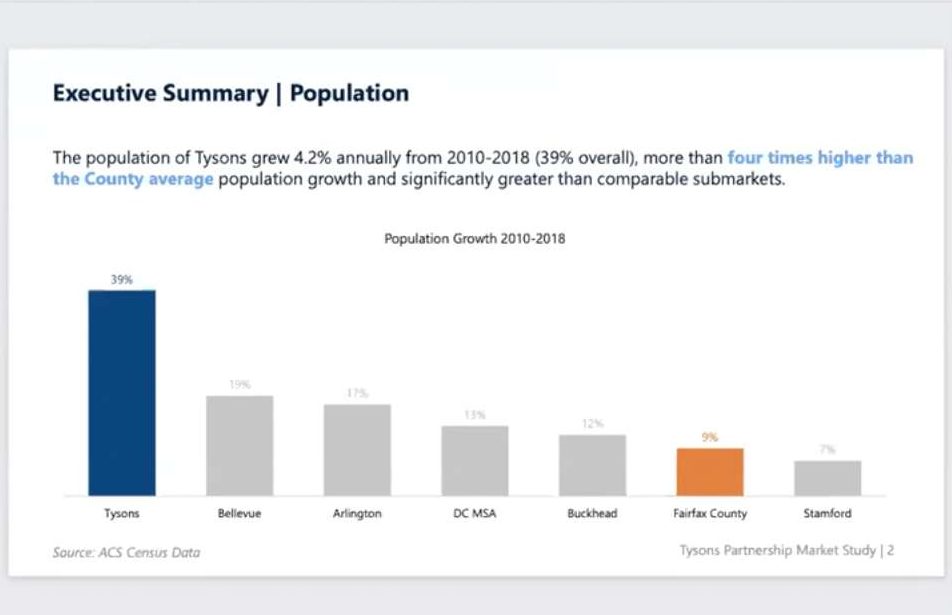
(Updated at 3:20 p.m.) Once home to 17,000 people living amid suburban office parks, Tysons has seen its residential population soar in recent years, growing four times faster than Fairfax County overall.
From 2010 to 2018, the population of Tysons grew 39% to about 23,749 people today, and by 2045, Providence District is expected to add roughly 57,000 residents. People under 20 now comprise one area of marked growth, from 1% of the population in 2010 to 21% in 2020.
“Forty percent is a tremendous number,” HR&A Partner Stan Wall said during the Tysons Partnership’s State of Tysons panel last week. “Tysons started off at a fairly low bar compared to some of the other communities in the region, but is outpacing Fairfax County and other areas around the region.”
Providence District Supervisor Dalia Palchik attributed much of the growth to the arrival of more young families in the area, as indicated by increases in children, teens, and 18- to 20-year-olds.
“People have not always thought of Tysons as a place where you can raise a family,” she said in a statement. “The increased investment in green space, affordable housing, and transit has made Tysons an attractive option for a demographic that previously did not consider Tysons as a place to live.”
But neither an influx of 57,000 people or the current growth rate are enough to reach Fairfax County’s goal of 100,000 residents in Tysons by 2050, according to Emily Hamilton, a research fellow and director of the Urbanity Project at the Mercatus Center at George Mason University.
Fairfax County set 100,000 residents as a target in its 2010 comprehensive plan, which also aims for a population of 44,000 by 2030. Tysons would have to expand at a rate of 8.5% annually — double its current annual growth rate of 4.2% — to hit those benchmarks.
If the lagging growth concerns policymakers, they should consider up-zoning areas slightly farther away from Metro stations and encourage smaller-scale developments, which move more quickly, Hamilton says.
Currently, most development is happening in the one-quarter mile radius around the area’s four Silver Line stations, she said. The lower-density and mid-rise zoning on the periphery of the stations could be amended to allow for more residential growth.
The county is also encouraging large, 10 to 20-acre developments that provide public benefits, such as parks, along with housing, she said. To Hamilton, this approach makes sense, especially if policymakers want to achieve a new grid of streets in Tysons, but it also slows down development.
Tysons relies heavily on the private sector to contribute to and provide public infrastructure as part of developments, Hamilton says, but with land values increasing, it has the capacity to meet the needs of new residents, such as schools.
With a 20% influx in residents under 20, school board members say they area already working to out ways to combat capacity issues at the schools in the Tysons area.
“We are working closely with the community and staff from the school division and Board of Supervisors to better understand and prepare for the impact increasing growth in Tysons will have on school capacity, especially at the high school level,” Dranesville District School Board Member Elaine Tholen said in an email.
Providence District School Board Representative Karl Frisch is proposing to repurpose Dunn Loring Administration Center as a new elementary school, using available bond funds to relieve capacity concerns at Shrevewood and in the Tysons periphery.
“This proposal will bring much-needed, sustainable capacity relief to Shrevewood Elementary School and the Tysons periphery,” Frisch said during a virtual meeting of the Shrevewood Elementary School PTA. “Overcrowding has been an ongoing challenge for the community, and now we have a solution.”
Staff photo by Jay Westcott, image via Tysons Partnership
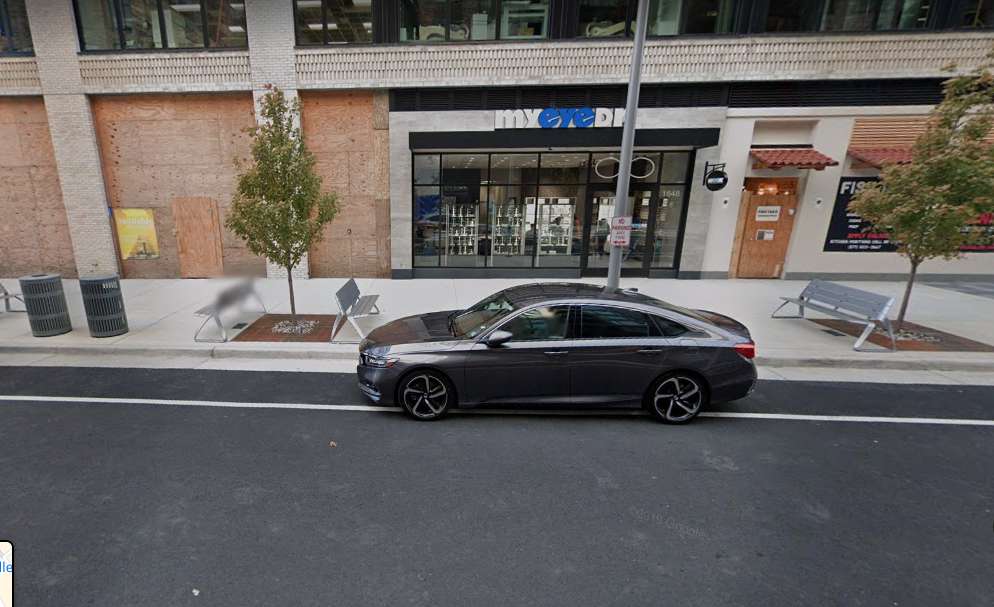
The Fairfax County Board of Supervisors gave the county’s transportation department permission this week to start work on plans for managed curbside parking in Tysons and Reston.
Whether the plan includes paid parking, time-limited parking, designated commercial vehicle parking, or some combination, the Fairfax County Department of Transportation will need at least a year to draw one up for the Board of Supervisors to review, staff said during a board transportation committee meeting on Tuesday.
The incremental step forward comes after professional traffic engineers released their findings from a two-year study that analyzed current parking habits in Tysons’ urban center and Reston’s transit station areas as well as potential options to manage parking.
“Currently in the county, we have a very limited toolbox of parking restrictions that can be implemented by either the Board or VDOT,” FCDOT Section Chief Neil Freschman said. “Generally, most on-street parking on public roadways is uncontrolled.”
The study found that public on-street parking in Reston is incredibly limited.
Parking is available on just 6% of the 15 miles of public curb space surrounding the Wiehle-Reston East, Reston Town Center, and Herndon Metrorail stations, FCDOT Senior Transportation Planner Henri Stein McCartney said.
“We found 211 total public on-street spaces within the study area, which is pretty low,” she said. “Most parking is on private streets, which we don’t manage.”
Comparatively, Tysons had more parking. Staff found 1,272 spaces along 22 miles — or 29% — of curb space on the roadways surrounding the Greensboro, Springhill, Tysons, and McLean Metro stations.
However, parking in Tysons suffers from other problems, including cars parked in “No Parking” zones and travel lanes, along with large commercial vehicles that overstay their welcome.
“Some of these vehicles are reportedly parking for days or weeks without moving,” McCartney said. “Our parking staff has received multiple complaints from Tysons businesses about commercial vehicles that are parking long-term near their building, so we know this is an issue.”
Transportation Committee Vice-Chair Kathy Smith, who represents Sully District, told Tysons Reporter that commercial vehicles parking for extended periods is a county-wide issue.
“I think it’s good that staff is looking into how to balance people’s ability to get into businesses and getting more turnover,” Smith said. “Everybody would agree you don’t want commercial vehicles taking up space for days.”
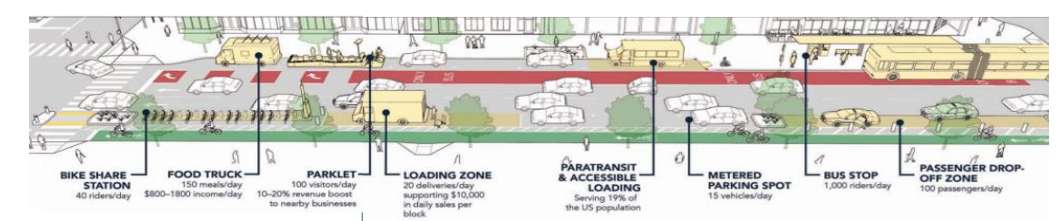
This parking plan is being developed alongside changes to the street grid in Tysons and Reston, Hunter Mill District Supervisor Walter Alcorn told Tysons Reporter. In some cases, parking policies will be developed for streets that do not yet exist, but have been incorporated into the two communities’ comprehensive plans to be more transit-oriented.
The management plan should encourage parking spot turnover to ensure that these future streets near transit stations, which are lined with mixed-use properties, do not become commuter lots, he said.
However, managed parking in Reston’s transit areas will have to overcome the controversy that Boston Properties ignited when the property manager introduced and later modified paid parking at the Reston Town Center.
“The number one lesson is, don’t make all your streets private,” Alcorn said. “We have an awful lot of private streets. What we’ve learned is that the public doesn’t have any say — it is up to the private street owner.”
While private streets make planning events more flexible, Alcorn says the 2017 flare-up, which focused mostly on the garage parking, could also be attributed in part to community members not having a say.
For the most part, though, what FCDOT is working on “is apples and oranges” compared to the RTC, he said.
Images via Google Maps, Fairfax County

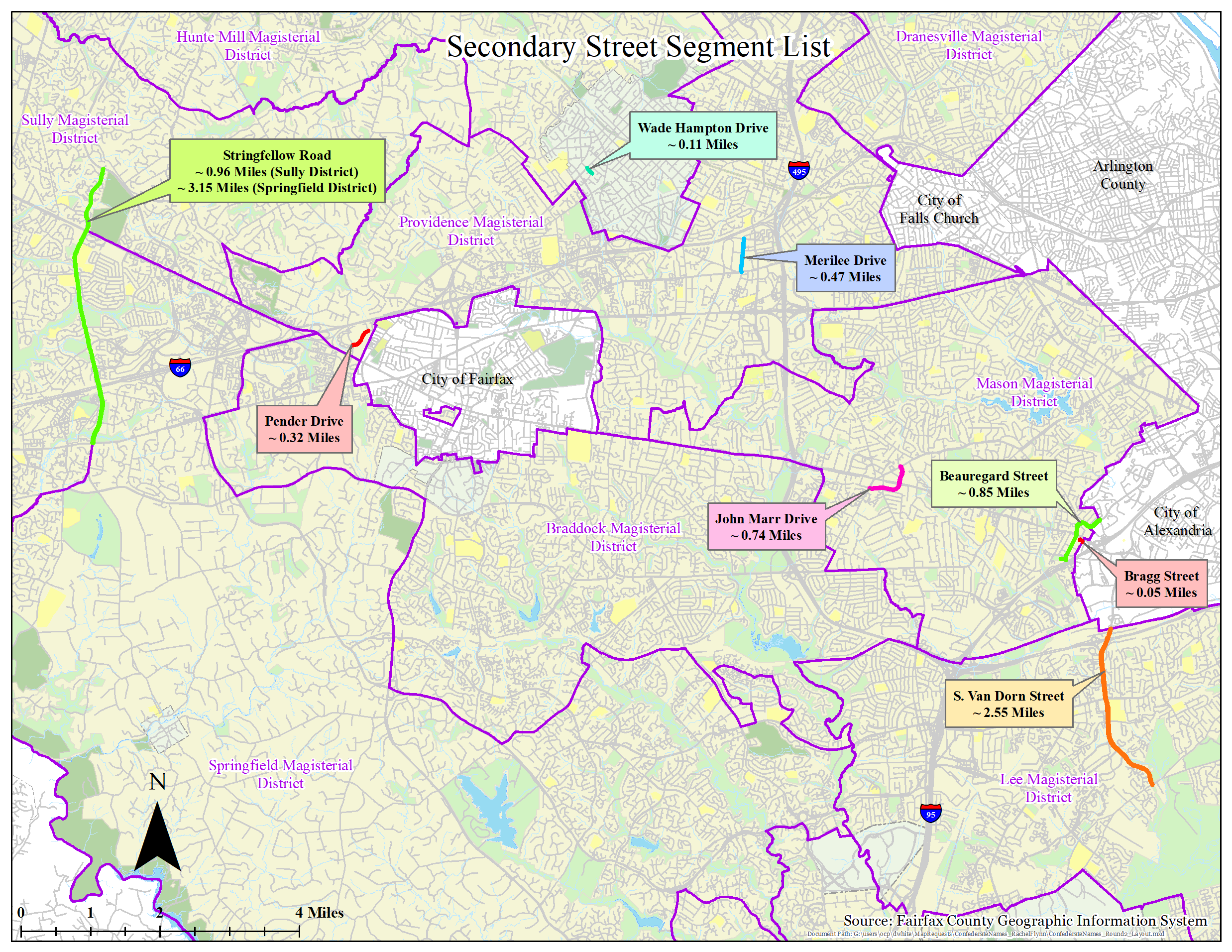
The Fairfax County Board of Supervisors met with the Fairfax County History Commission on Tuesday (Dec. 8) to discuss Confederacy-associated street and place names across the county.
This project began over the summer when the board directed the commission to create an inventory of places and structures within the county that have ties to the Confederacy after Black Lives Matter protests spread around the country following the May 25 death of George Floyd.
The resulting report identified more than 26,000 streets and places, leading the board to narrow its focus to 650 well-known Confederate officers and locally-known Confederates. After researching those names, the Commission found 150 assets to have confirmed Confederacy-associated names, according to the presentation by Anne Stuntz, the chairwoman of the history commission.
Hunter Mill District has four identified sites: the Lee Manor Subdivision, Fort Lee Street, Mosby’s Landing Condominium Complex, and Wade Hampton Drive.
Providence District encompasses 44 sites, the most of the county’s nine magisterial districts. The list includes Lee Highway, Pender Drive, Oak Marr Park, and the Stonewall Manor subdivision.
The commission recommended that the Board of Supervisors create a public dialogue on the issue through public meetings and community gatherings before deliberating and taking definitive action on the Confederate names. The commission also recommended archiving the extensive project research in the Virginia Room at the City of Fairfax Regional Library.
Fairfax County Department of Transportation Director Tom Biesiadney said that the Commonwealth Transportation Board would require public input and a formal request from the Board of Supervisors if the county decides to petition to change the name of Lee Highway and Lee-Jackson Memorial Highway.
In response to the Confederate names project, the history commission is collaborating with local African American organizations, including religious, social, and community groups, on a 2021 initiative to compile research materials on African American communities in Fairfax County.
The county supervisors shared their appreciation for the history commission’s extensive and intricate research. They also mostly agreed that the first priority should be renaming highways, and from there, they could start a community process for renaming secondary and neighborhood streets.
Lee District Supervisor Rodney Lusk expressed concern regarding the history of his district’s name.
“I was hoping that there’d be something more definitive about Lee District, in terms of where its name originated, but it appears that we still have the same set of ambiguity,” Lusk said. “We will have to have a community conversation about this name of this district.”
Springfield District Supervisor Pat Herrity warned against rushing into the name change process in the midst of the COVID-19 pandemic, emphasizing the need for “robust community participation” before moving forward.
Image via the Fairfax County History Commission
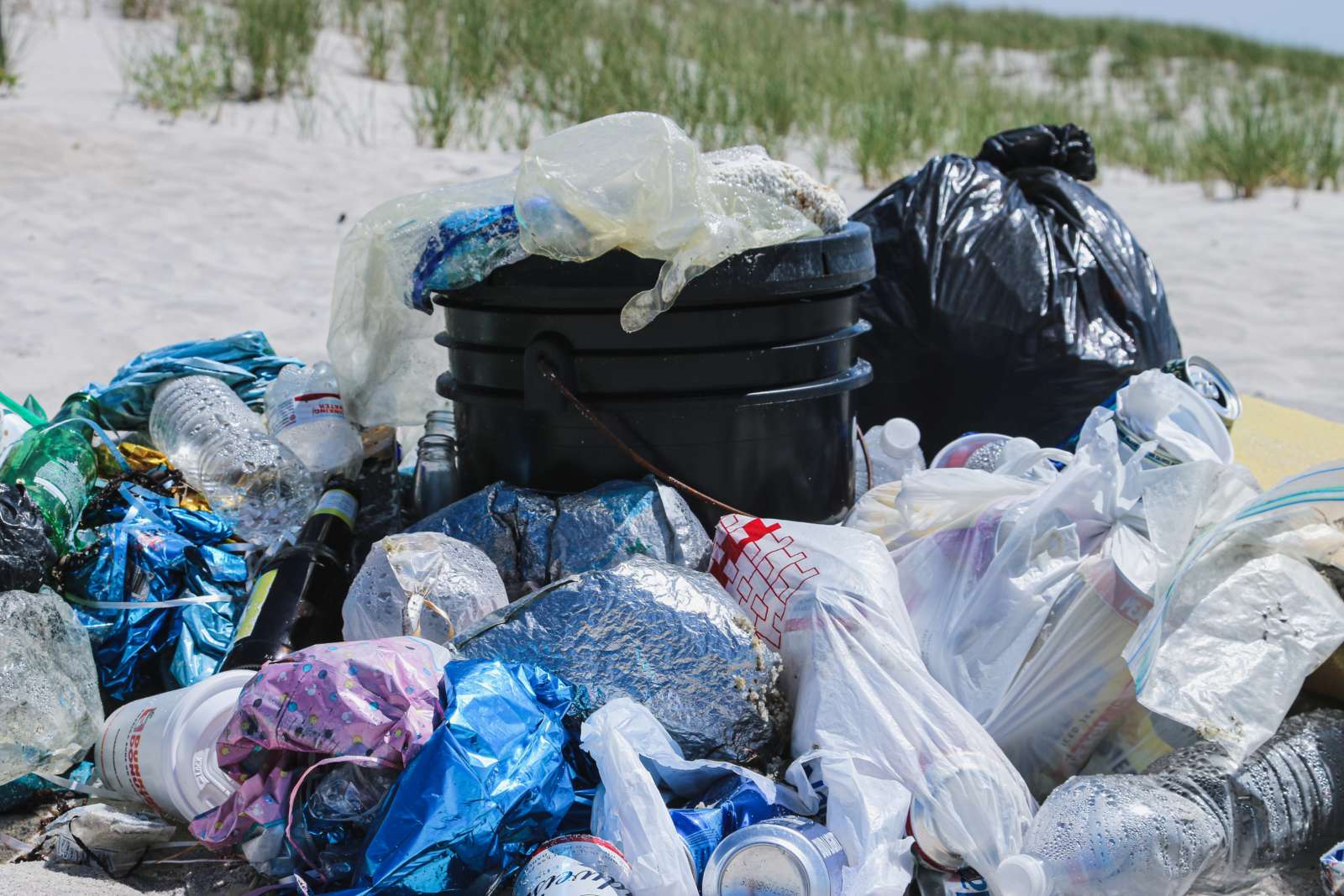
The Fairfax County Office of Environmental and Energy Coordination proposed a process for establishing a five-cent plastic bag tax during the Fairfax County Board of Supervisors’ Environmental Committee meeting on Tuesday (Dec. 8).
According to OEEC Deputy Director Susan Hafeli, legislation adopted by the Virginia General Assembly earlier this year now gives the county the ability to adopt an ordinance imposing a five-cent tax on most disposable plastic bags provided by grocery stores, convenience stores, and drugstores.
As of right now, the state has not established specific guidelines for the creation of a plastic bag ordinance. Instead, the state intends to wait until a locality adopts an ordinance to consider guidelines, according to the presentation.
Revenue collected from the new tax would be appropriated for environmental clean-up, mitigation of pollution and litter, education, and the provision of reusable bags to recipients of a federal food support program, according to Hafeli.
The proposed plastic bag tax could generate annual aggregate local revenues of between $20.8 to $24.9 million statewide, though the tax may be more of an “impetus to behavior change rather than a revenue generator,” Hafeli said.
Across the region, the Northern Virginia Regional Commission Waste Management Board has begun exploring the issues laid out in the legislation, according to Hafeli. Additionally, Arlington County is planning to convene a public workgroup in early 2021 to discuss the adoption of a plastic bag tax and issues regarding equity in the county.
The OEEC anticipates that the process of determing whether Fairfax County should instate a plastic bag tax will occur in two phases. The first phase will focus on public engagement, which would include developing a website, holding one or more workshops for input, and releasing an electronic survey.
The second phase will focus on the development of the ordinance and would involve updating the webpage with the proposed ordinance and requests for comments, giving presentations to the board, and holding a public hearing, according to Hafeli.
Several supervisors expressed concerns about the confusion regarding state guidelines, equity issues within the community, and the ability to collect sufficient research on the topic, especially in the midst of the pandemic.
However, most supervisors agreed that the environmental issue with plastic bags is significant, and that data from other jurisdictions, including the work that Washington, D.C., has done around the Anacostia River, has shown a plastic bag tax to have positive environmental effects.
Moving forward, the Board is looking to clarify the state’s policies while working in conjunction with regional partners and plan for further conversation on how to create the ordinance.
The next Environmental Committee meeting will take place on Tuesday, Feb. 2 at 11 a.m.
Photo by Brian Yurasits/Unsplash
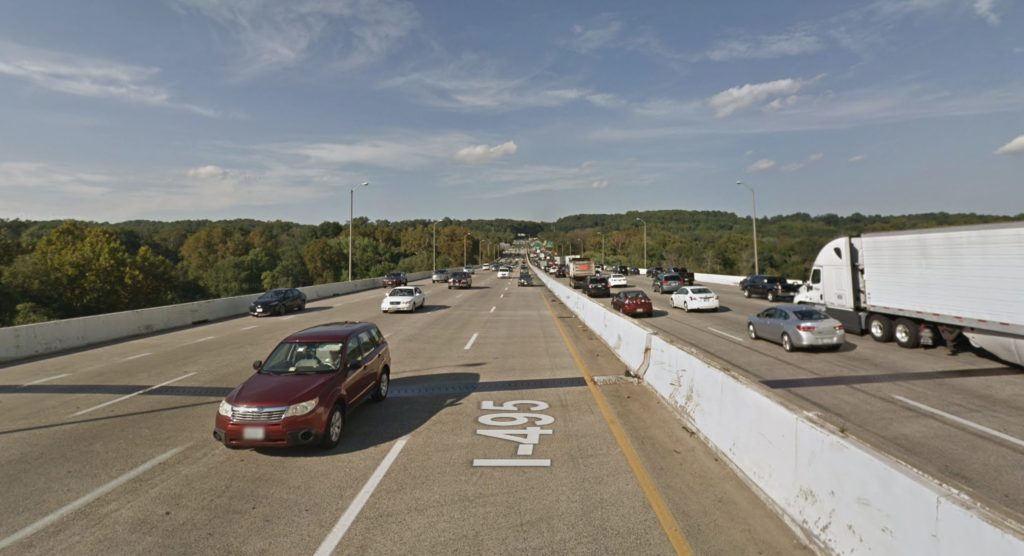
Members of the Fairfax County Board of Supervisors share numerous concerns about the environmental impact of the I-495 Express Lanes Northern Extension (495 NEXT) project.
Based on an environmental assessment released in February, the board’s comments highlight everything from traffic and transit to stormwater management, along with recommendations to minimize the impact on trees, waterways, streams, historic properties and noise.
“The Board requests that VDOT continue to allow time for the public to provide feedback on the project prior to executing a final contract,” Chairman Jeffery McKay said in a letter to Virginia Secretary of Transportation Shannon Valentine that the board is scheduled to approve when it meets today (Tuesday).
The project is intended to add more capacity to I-495 to take some of the cut-through traffic off nearby McLean streets, but without expanding the American Legion Bridge and I-495 on the Maryland side, some are concerned the express lanes will only push the bottleneck further north.
A traffic analysis found that generally, travel time along the Capital Beltway corridor will improve in both 2025 and 2045 once Maryland completes their managed lane system.
Until Maryland completes its improvements, the analysis predicted delays along general purpose lanes going north on I-495. In response, the board urged the Virginia Department of Transportation to shorten the time between the opening of the two projects.
“It is critical that VDOT address the temporary impacts of opening prior to Maryland’s managed lanes,” they said.
As part of the 495 NEXT project, VDOT has committed to building a major regional trail in accordance with Fairfax County’s Comprehensive Plan. The Board of Supervisors is requesting that the trail continue through Tysons instead of ending at Lewinsville Road.
They also urged VDOT to find money to promote transit access along the corridor, which will help reduce single-occupancy vehicle ridership and encourage sustainable transportation system.
Stormwater management ranks among Fairfax County’s top environmental concerns for 495 NEXT. Noting that flooding has particularly been an issue in the McLean area, the board wants VDOT to meet county requirements, rather than being grandfathered into lenient state standards.
“If meeting our local stormwater management requirements is not attainable, VDOT should implement requirements to the maximum extent practicable and provide documentation demonstrating that the technical requirements are not fully feasible,” McKay said in the letter. Read More
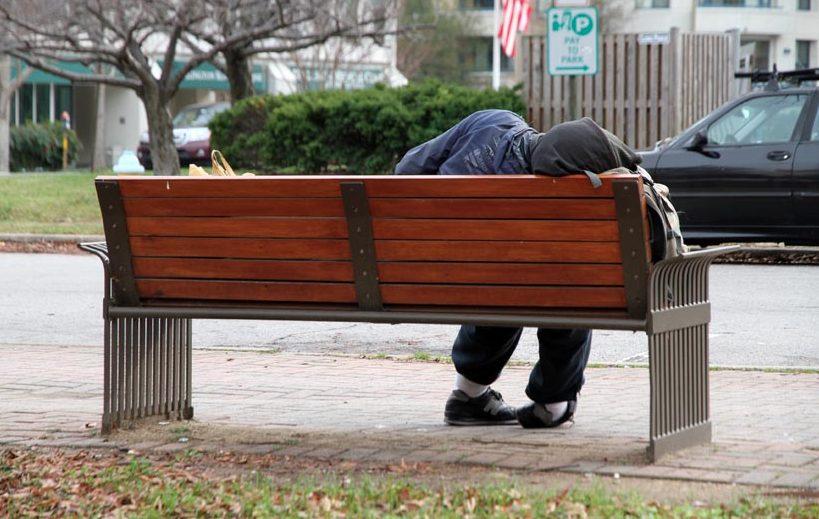
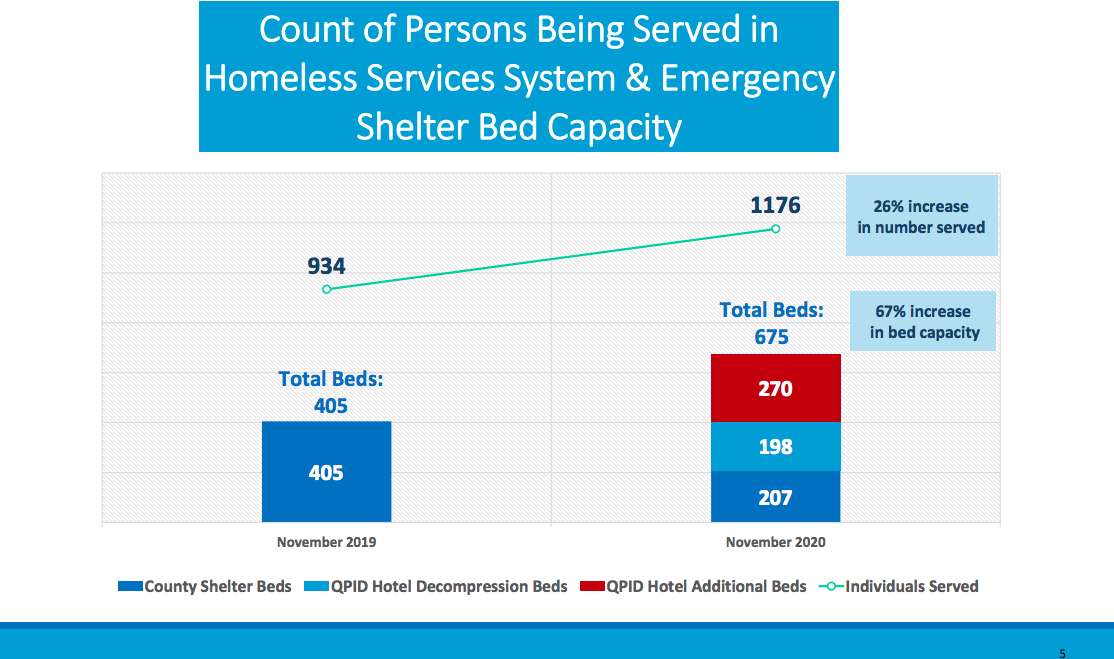
About 250 more people are using Fairfax County’s emergency homelessness services this November over last November, and there are enough beds for just over half of them.
That number could increase as the federal ban on evictions draws nearer.
“As we look at potential rising eviction numbers, we need to be aware of the capacity for the homelessness system,” Fairfax County Health, Housing and Human Services Chief Strategist Dean Klein told the Board of Supervisors during a Health and Human Services committee meeting on Tuesday (Nov. 24).
With COVID-19 cases rising, Fairfax County is dealing with increasing numbers of people experiencing homelessness as well as the threat of rising eviction rates. Klein says rent assistance and partnerships with landlords will be critical for preventing evictions and keeping people in homes this winter.
“Our ongoing efforts to reach out to vulnerable populations is increasingly critical,” he said.
One step Fairfax County has taken is to form an eviction prevention task force with representatives from various county agencies, the county sheriff’s office, and the nonprofit law firm Legal Services of Northern Virginia.
Klein says he hopes to receive financial support from the Board of Supervisors next month. His staff anticipates spending at the same level as it is right now, which is about $600,000 a week.
Providence District Supervisor Dalia Palchik said a board matter is in the works that would “give additional local support for our continuation of basic needs, which we know continues to be a concern for us.”
Although funding comes from a number of sources, some are set to run dry soon, adding to the sense of urgency.
The Federal Emergency Management Agency stepped in this year to pay for hotel rooms so that people experiencing homelessness could have a place to sleep safely during the pandemic. However, it is unclear how long FEMA will continue to provide funding, Klein says.
Fairfax County Office to Prevent and End Homelessness Deputy Director Tom Barnett said the FEMA commitments are on a month-to-month basis and will last through the middle of December.
“We will continue to request extensions every month as they will support most of these expenses,” he said. Read More

The Fairfax County Board of Supervisors indicated interest in a pilot program for electric-powered buses during its transportation committee meeting on Tuesday (Nov. 10).
During the meeting, Fairfax County Department of Transportation Director Tom Biesiadny delivered an presentation that explained the “ins and outs” of electric vehicles and included a proposal for moving forward with a pilot plan.
The next step would be to return to the supervisors with a more in-depth financial plan that includes details such as when and where this would take place, and how long the demonstration would last, which could be in the early part of 2021, Biesiadny says.
“This is exciting,”said Board of Supervisors Chairman Jeffrey McKay. “Clearly we need to jump into this area and we need to do it quickly.”
Providence Supervisor Dalia Palchick supported a pilot because it would help ensure the county implements these changes correctly.
“This is the future,” she said. “We need to stop going backward. I’m hopeful to see a plan not just to see a pilot but do a demonstration project, which in my mind, means ‘how can we move forward?'”
A pilot with four buses could cost between $3.8 million and $4.2 million, a gross cost that does not take into account sources of funding. Some money has been set aside through a bus replacement program, and there are grants available, Biesiadny said.
FCDOT has in-house and external expertise from Fairfax’s “ongoing partnership with Dominion Energy” and the Richmond Highway Bus Rapid Transit team to draw from, said Tom Reynolds, the FCDOT Section Chief of Transit Services Division.
The pilot would help the department learn about the buses’ range and charging, how they perform during different seasons of the year and on various local and express routes, and what staff training needs to be done, Reynolds said.
“The sooner we do the pilot, the sooner we see the results of it, the sooner we can start to make longer-term decisions about some of the capital costs that would be necessary if we were to expand this,” McKay said.
When the county talks about costs, Palchik — who said she developed childhood asthma living in the area — and Braddock Supervisor James Walkinshaw emphasized the costs of treating asthma and the health impacts of poor air quality.
“In Virginia, we spend $87 million a year because of asthma hospitalization,” Walkinshaw said. “Fairfax County is lower, but Route One is higher. Annandale is higher. Other parts of the county are higher. It would be a small thing, but as we look at this pilot, we might want to look at locating it in parts of the county that have been hit harder by asthma.”
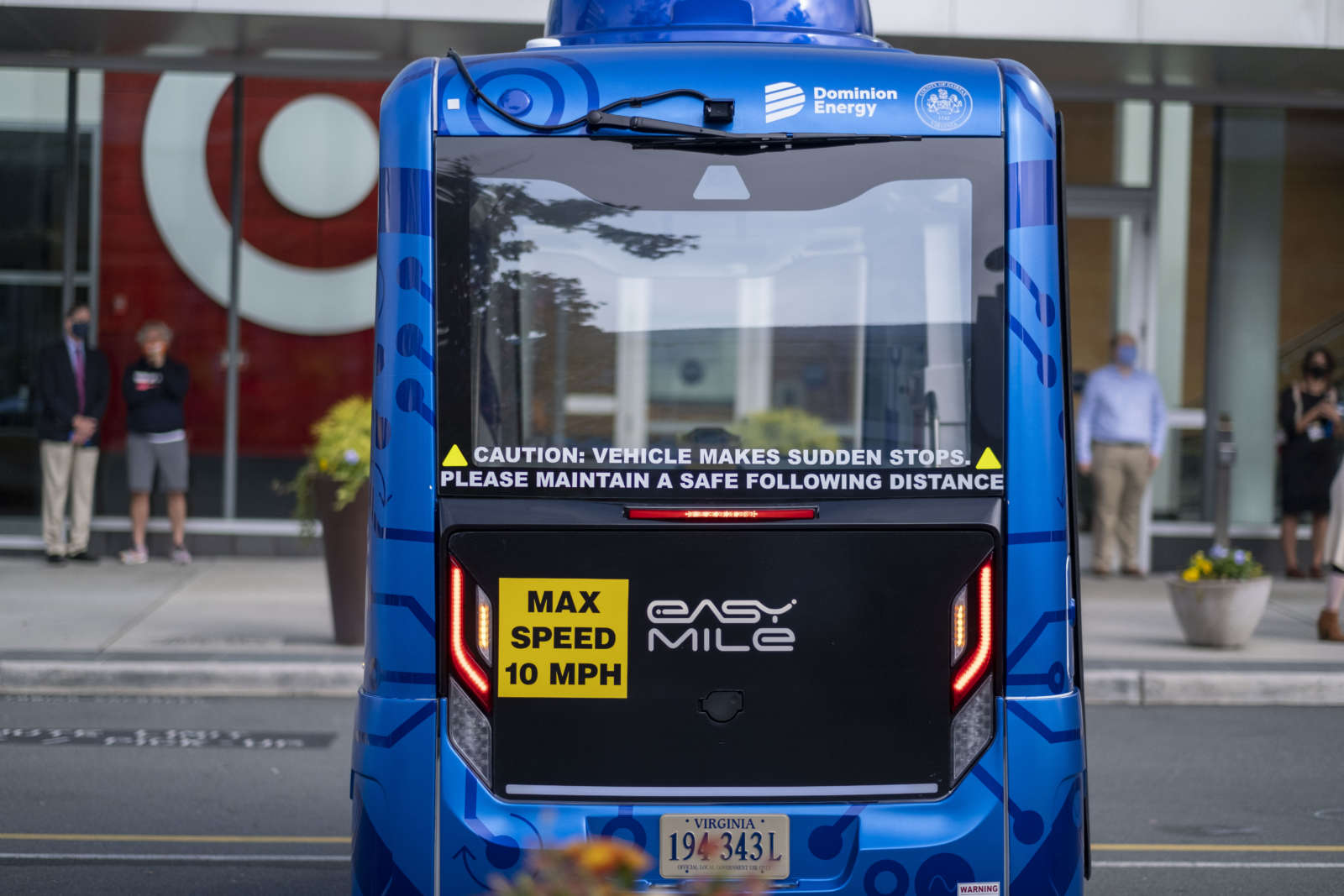
Fairfax County’s first effort to introduce electric vehicles into public transit came this year with the autonomous Relay shuttle now operating in the Mosaic District. That demonstration project is a partnership with Dominion Energy, Biesiadny said.
Photo via Electrify America; Staff photo by Jay Westcott