
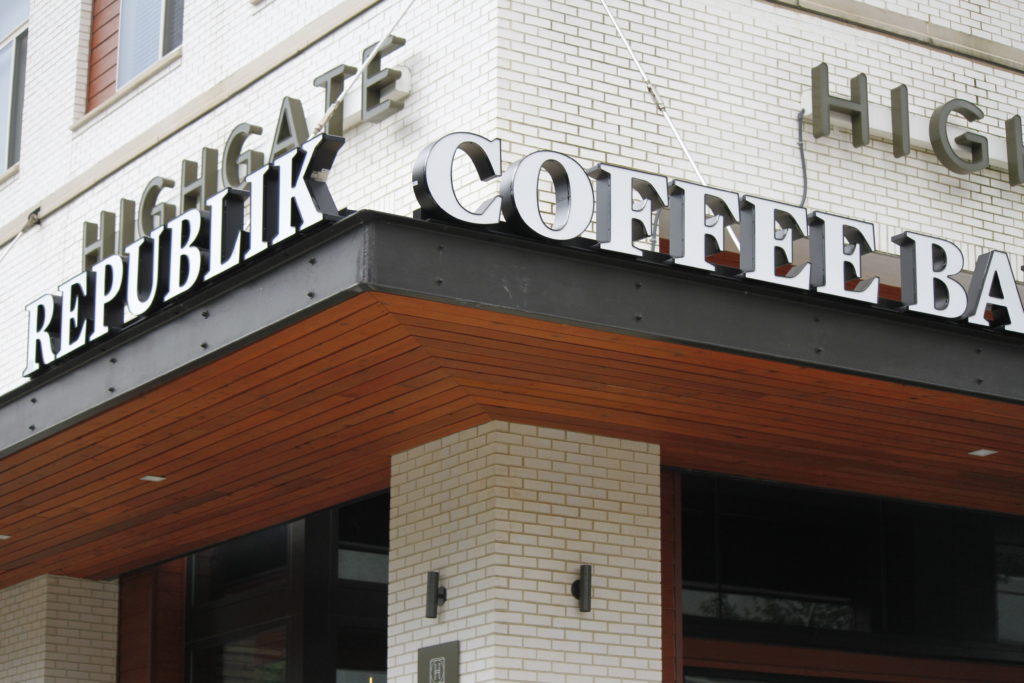
One week after Republik Coffee (7915 Jones Branch Drive) was scheduled for eviction, the local coffee shop is still serving coffee.
A manager at the location confirmed that the location plans to remain open but could add no details about how the coffee bar evaded the eviction.
Owner Talha Sarac had previously told Tysons Reporter that the eviction notice was part of a misunderstanding with Kettler, which owns the Highgate at the Mile building, and that he would meet with Kettler representatives to sort things out.
Kettler declined to comment, but whatever Sarac and Kettler discussed, it was enough to keep the location open for the time being.

Fairfax County police have issued an arrest warrant for Gervonta Davis, World Boxing Association champion in the 130-pound category, after police say Davis assaulted a man near a Tysons Galleria ATM on Feb. 17.
Police said an unidentified victim reported Davis as his attacker. Davis allegedly became belligerent. After the victim testified to the magistrate, a warrant was issued for Davis’ arrest.
Davis faces a misdemeanor assault and battery charge but the Washington Post reported that Davis has not responded to the warrant.
This is not the first or even second time Davis has been arrested following a physical altercation.
After the initial story broke, Davis tweeted vague disapproval of the news coverage.
Lies lies lies
— Gervonta Davis (@Gervontaa) March 5, 2019
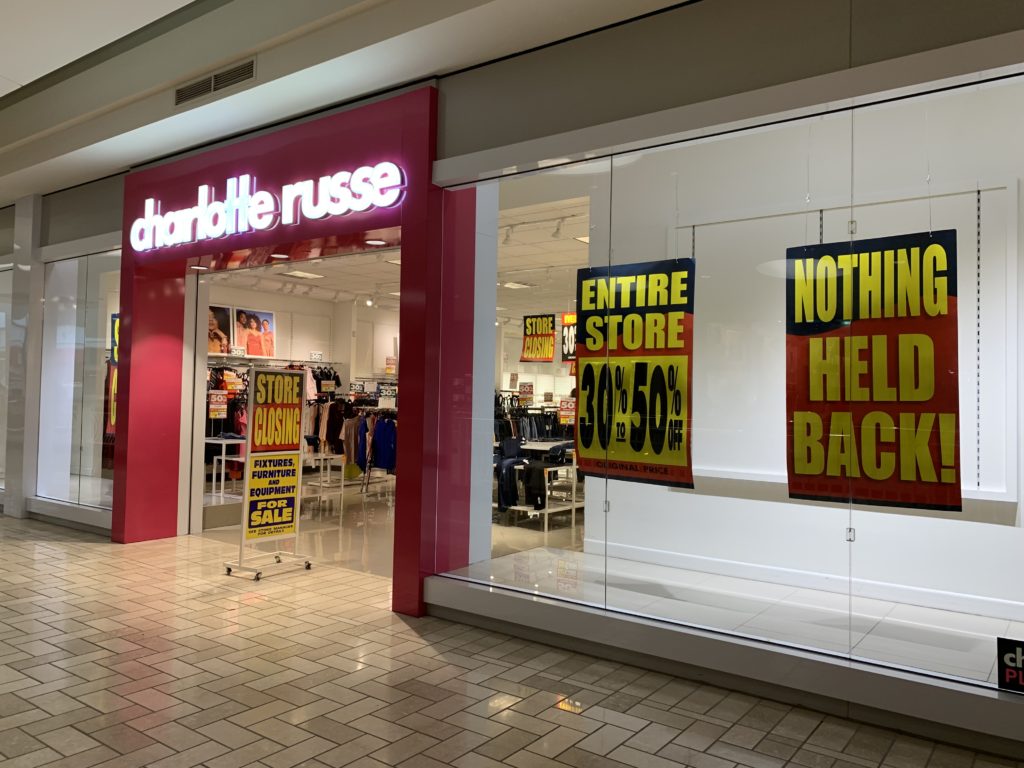
As the national women’s clothing chain files for Chapter 11 bankruptcy, the Charlotte Russe in Tysons Corner Center is closing up shop with some heavy sales.
Nearly half the store is now empty, but there are discounts of anywhere from 30-50 percent on items remaining in the store. Store merchandise ranges from jumpsuits and dresses to smaller items, like makeup kits.
Store fixtures, furniture and mannequins are also on sale — in case you’re a local business looking for cheap equipment or just a normal person who collects mannequins.
Staff at the store said they were not told specifically when the store would be closing, but that it would be gone by the end of the month.
The Charlotte Russe stores in Dulles and Springfield are also scheduled to close.
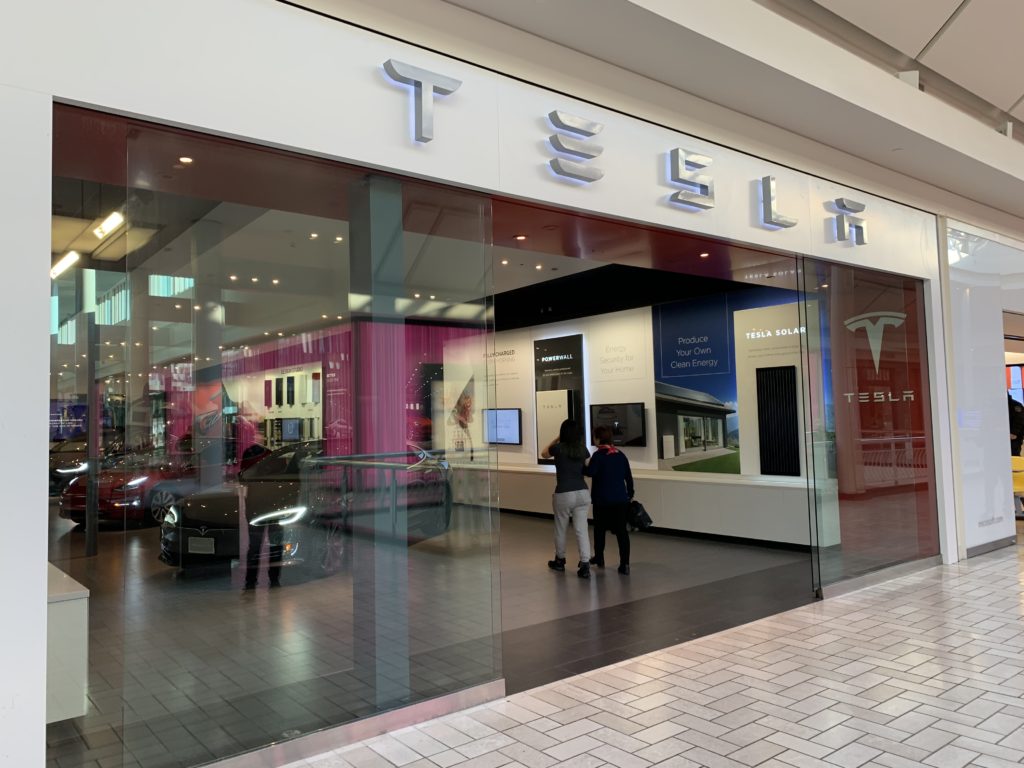
With Tesla’s announcement that it will be closing most of its retail locations, two Tysons locations remain in jeopardy.
One store is located on Tyco Road near Leesburg Pike. This location was the first Tesla dealership in Virginia, opening in 2015 in a former warehouse.
Tesla also has a showroom inside the Tysons Corner Center mall. The store in the mall includes interactive features to help customers configure their own Tesla in the design studios.
Brick-and-mortar locations are expected to be closed over the next few months, but a list of stores to be closed has not been released. Staff at the Tysons Corner Center showroom said they could not comment on whether or not that location will close.

D.C.-based nonprofit FRESHFARM will be taking over the Mosaic Farmers Market and is planning a market season kick off for April 6 and 7.
According to a press release from FRESHFARM, the market will operate every Sunday from 9:30 a.m. to 2 p.m. and will feature over 50 regional farmers and vendors selling fresh produce, bread, meat and other farmers market staples. The market is scheduled to run through December.
Current market vendors offer selections from crepes to candles and one vendor, Chase Your Tail Bakery, that makes handcrafted dog biscuits.
“The Mosaic Farmers Market is a vibrant part of this thriving community, and we were honored that EDENS invited us to join them in bringing delicious, locally grown and produced food to Mosaic District,” Julia Feder, executive director of FRESHFARM, said in the press release. “We look forward to getting to know the residents, visitors, and local businesses in the Mosaic neighborhood this season.”
FRESHFARM operates 16 farmers markets throughout the region, with an emphasis on locally sourced food.
That same weekend, the Mosaic District is also scheduled to host the “Art Blooms at Mosaic” festival, a cherry blossom event in partnership with the National Cherry Blossom Festival.
Photo via @claire_brunette/Instagram
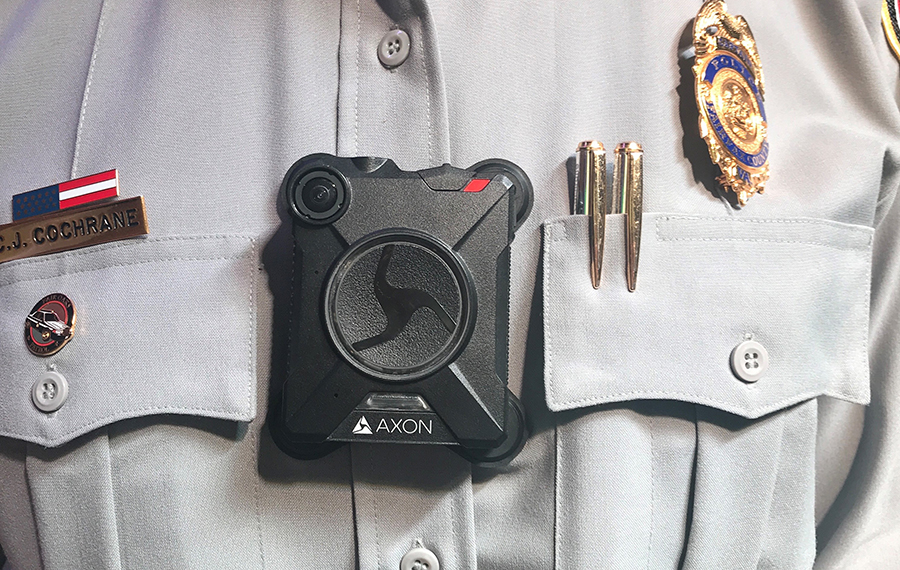
While McLean residents are mostly satisfied with what’s in this year’s county budget proposal, the McLean Citizens Association (MCA) takes issue with one item that isn’t: body worn cameras.
A pilot program for body-worn cameras was implemented through 2018 and a report on the findings of the program are expected sometime this spring, but funding for the program is not included in the police budget for FY 2020.
At tonight’s MCA meeting, the board will vote on a resolution to recommend body worn cameras be included in the budget.
Equipping police officers with body worn cameras is beneficial to both police and the community. [Body-worn cameras] can accurately record law enforcement actions and thereby capture evidence pursuant to investigations, reduce the number of complaints filed against officers, and provide additional safety for our officers as they patrol the streets. The cameras also increase transparency, accountability, and trust between the police and community, which has been an issue nationwide over the last several years and is particularly relevant to our community with the recent killing of Bijan Ghaisar by U.S. Park Police.
The killing of Bijan Ghaisar was controversial partly because videos from dashboard cameras released by Fairfax County Police that seemed to show no threat to U.S. Park Police when they shot Ghaisar.
Last year, on the anniversary of the shooting, the MCA approved a resolution pushing for more transparency in the investigation and praising the Fairfax County Police for releasing the video.
This isn’t the first time body-worn cameras have come up in budget discussions. At an earlier Board of Supervisors meeting on the budget, several board members expressed concern there was no funding identified for the program. Staff said at the meeting that they were waiting for the results of the pilot evaluation to add funding.
“The program has broad support, but actual implementation continues to drift to the right,” the MCA said in the resolution. “It is time to implement the program and, following completion of the [evaluation], we urge a cost-conscious [body-worn camera] implementation.”
Photo via Fairfax County Police
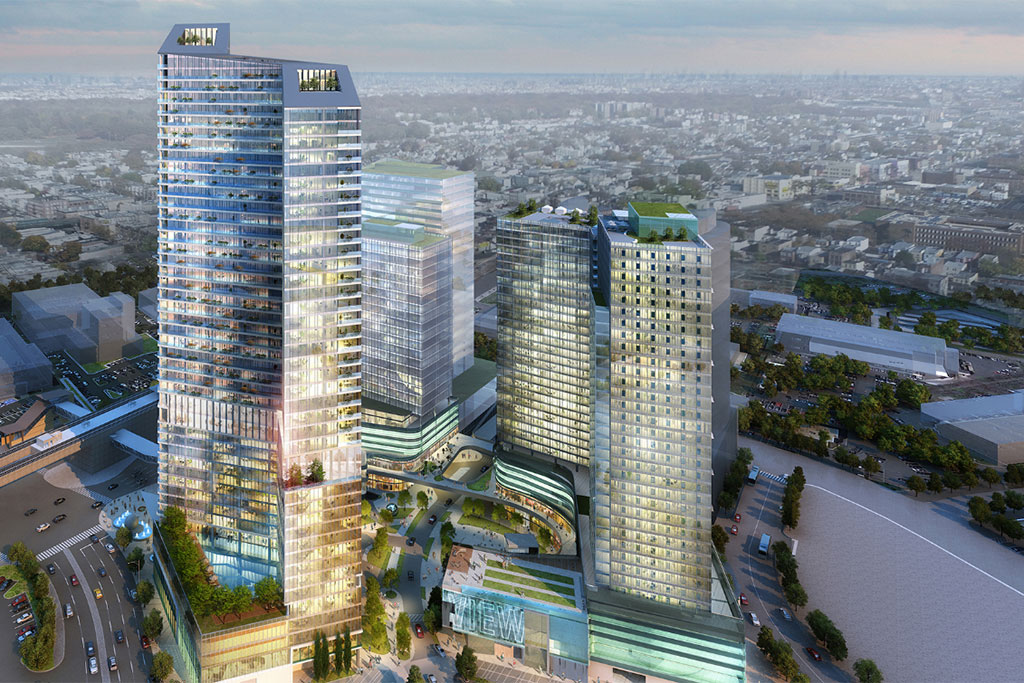
Tweaks to The View project proposed in Tysons include plans for a new performing arts center, according to the Washington Business Journal.
The development, which would include the region’s tallest building, is part of a sweeping series of new developments planned to transform Tysons east of the Spring Hill Metro station.
According to the Business Journal, the new proposal includes ground-floor retail beneath a 199-seat black box theater. Above the theater would be an outdoor amphitheater, and three floors of office space above that.
A previously proposed 500-seat theater is not part of the project.
Image via Gensler
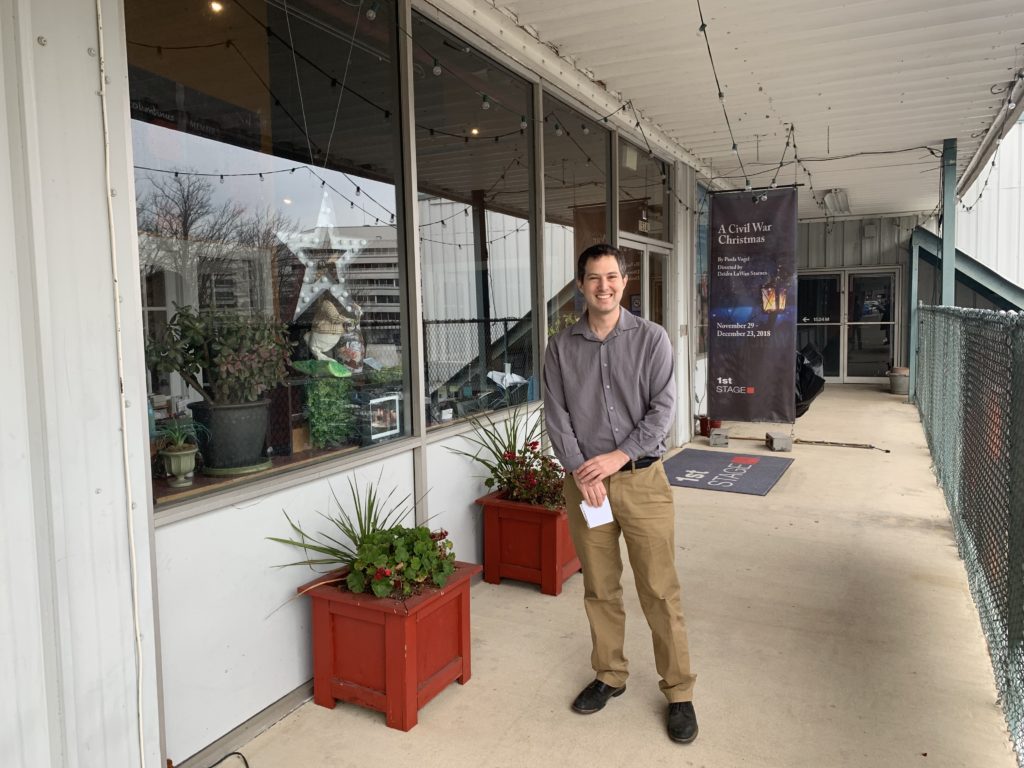
In a panel discussion on the role of arts in a rapidly gentrifying D.C. region, 1st Stage Theatre’s artistic director Alex Levy spoke on WAMU’s Kojo Nnamdi Show yesterday about the theater’s role in Tysons’ ongoing evolution.
Levy said on the show that before he came to Tysons, he’d heard it called a cultural wasteland — comparing it to the spots on old maritime maps where it’s just mermaids and openness.
“As I got here, that’s the conversation I heard forever, that this thing doesn’t belong out here,” said Levy. “But as soon as the company started, there was a great love for it because people want the arts in their community. They need it in their community.”
The theater is located above a garage and a salsa/bachata nightclub and Levy said many visitors don’t realize the theater is there until they walk inside.
“Anybody who has driven around Tysons, the thing you see most is a crane,” Levy said in the interview. “Most of what they’re building are large residential buildings. One of the reasons I moved my family to this community was to be a part of that conversation… You can’t build a community — the thing Tysons wants to be — without a cultural life.”
The 1st Stage Theater recently wrapped up performances of “The Brothers Size” and the next show, “columbinus,” is scheduled to start March 28.
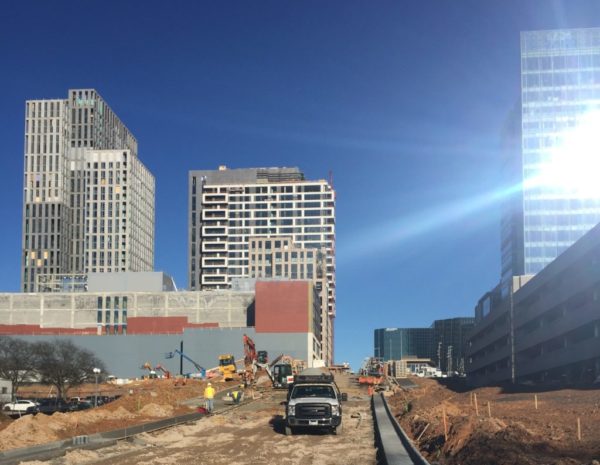
Traffic is not inevitable, and new development does not have to bring new cars.
Arlington County saw an astounding decline of 20 percent in average weekday traffic in just 15 years from 2000 to 2015. That same period saw a growth of nearly 20 percent in population. Certainly, many of Arlington’s new residents drove cars — but not all, and some of its long-time residents must have found new ways to get around.
There are several ways to fight congestion. Most people’s first thought is simply to widen the road. More road, more space for cars, less traffic — right? The problem is that it won’t work for long.
For economists, mobility can be a commodity like any other. And when the government gives something away for free — in this case, it’s giving away the use of asphalt — of course people will clog the system. When something is available for free people will wait in line, paying with time instead of money. So, if highway engineers widen the roadway, it’s only a matter of years until more cars come along and the traffic is as bad as it ever was.
Another idea might be to slow down new development — but it would be difficult to persuade Fairfax County to forgo all the additional tax revenue.
Third, the county could turn to public transit. The Metro arrived in Tysons in 2014 and, while ridership is increasing, it still lingers below expectations. It was certainly a step in the right direction, but Metrorail was a major investment, and it will take decades of development and improvements to local bus service and sidewalks before it sees full results.
Wider roads, slowing development, and railways are 20th-century solutions. The 21st century brings a more subtle, smarter approach — an approach that professionals call “transportation demand management.”
Transportation demand management is not a single technique, but a set of approaches that nudge people out of their cars and towards buses, bikes, walking and working remotely. It’s practiced cooperatively by Fairfax County, the Tysons Partnership and private developers. It often relies heavily on data-driven, highly connected approaches rather than on large infrastructure investments.
One example of a transportation demand management program is the “Guaranteed Ride Home” offered by Fairfax County. This program offers commuters a free trip home up to four times every year. It’s intended for those who would consider a new kind of commute, but who the fear of unplanned overtime or family emergency keeps tethered to their cars.
What Developers Are Doing
For a clearer understanding of what individual developers are doing to cut congestion, Tysons Reporter spoke with Caroline Flax of The Meridian Group, the master developer of The Boro.
Flax described the “pedestrian experience” at The Boro, and the options that will be available to people on foot. By locating residences close to offices, retail, restaurants and Metro stations, Meridian hopes to “create a bite-sized pedestrian experience.”
“We will have a pedestrian-only promenade that connects to Boro Park, and for the other streets we have created wide sidewalks with activated outdoor seating that will create a really inviting pedestrian experience,” she said.
According to the EPA, concerned with carbon emissions from cars, “Research consistently shows that neighborhoods that mix land uses, make walking safe and convenient, and are near other development allow residents and workers to drive significantly less.”
“[Transportation demand management] is about promoting the other transit options available to residents, visitors, and tenants — aside from driving,” she said. Those options include bicycles, buses, and trains.
Caroline emphasized “making [The Boro] accessible in general” — including shared office/commercial parking to efficiently accommodate drivers, wide sidewalks for pedestrians, designated bike parking, Capital Bikeshare, and creating options for easy pick up and drop off by ride-hailing companies like Uber and Lyft. Flax said that she hopes visitors and tenants at The Boro embrace all modes of travel.
Meridian will strengthen its five-minute walking connection to the Metro by supplying new residents with complementary SmarTrip cards, helping them see how easily they can “hop on the Metro and get downtown, or elsewhere in Tysons, really quickly.”
Flax also emphasized the new streets that will help make traffic smoother by creating more options and connections from the main thoroughfares in Tysons: Route 7, Westpark Drive and Greensboro Drive.
Silver Hill Road, connecting from Greensboro Drive to Route 7, is expected to alleviate traffic on Westpark Drive. Another connection, called Broad Street, currently links drivers and pedestrians from Solutions Drive to another new street that connects to Route 7. Once the second phase of the project begins, Broad Street will connect Westpark Drive to Spring Hill Road.
Smaller blocks make a neighborhood more walkable.
Transportation demand management is a field still in its infancy, as planners and developers find new ways to work toward a more balanced transportation network. People across the country are searching for new tools, and Tysons, frequently dubbed “America’s Next Great City,” will have to work hard to be on the cutting edge.
With the Boro opening soon, Flax concluded by saying, “We’re really excited for everything to come alive… and to show everyone the pedestrian experience we will bring.”
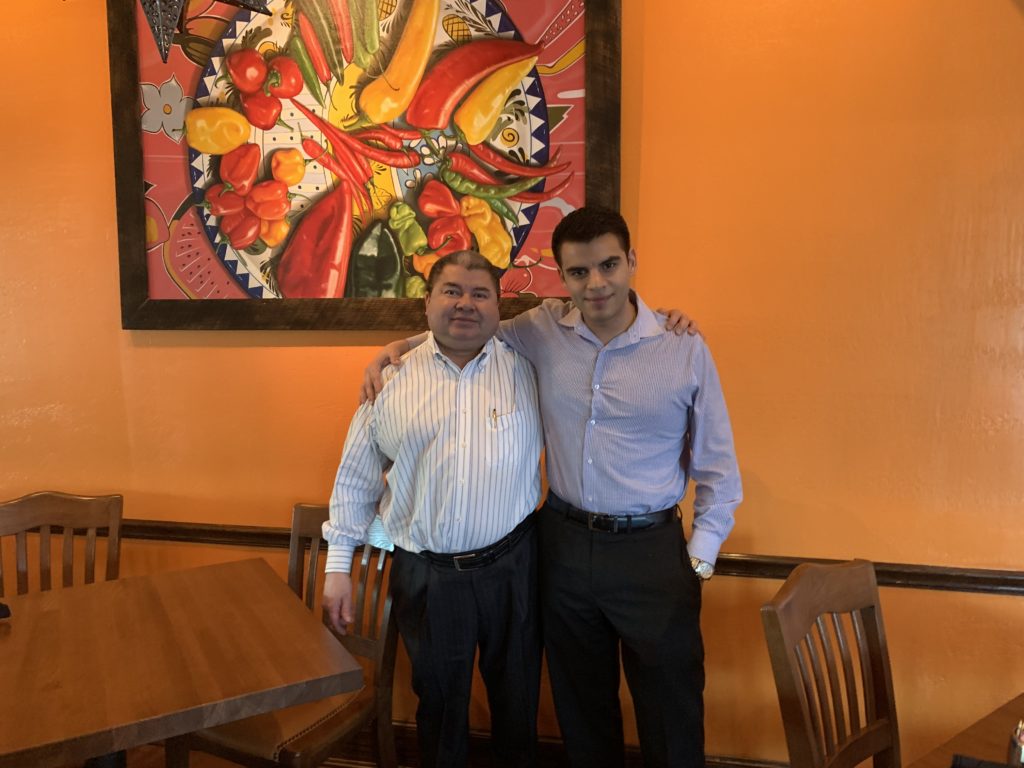
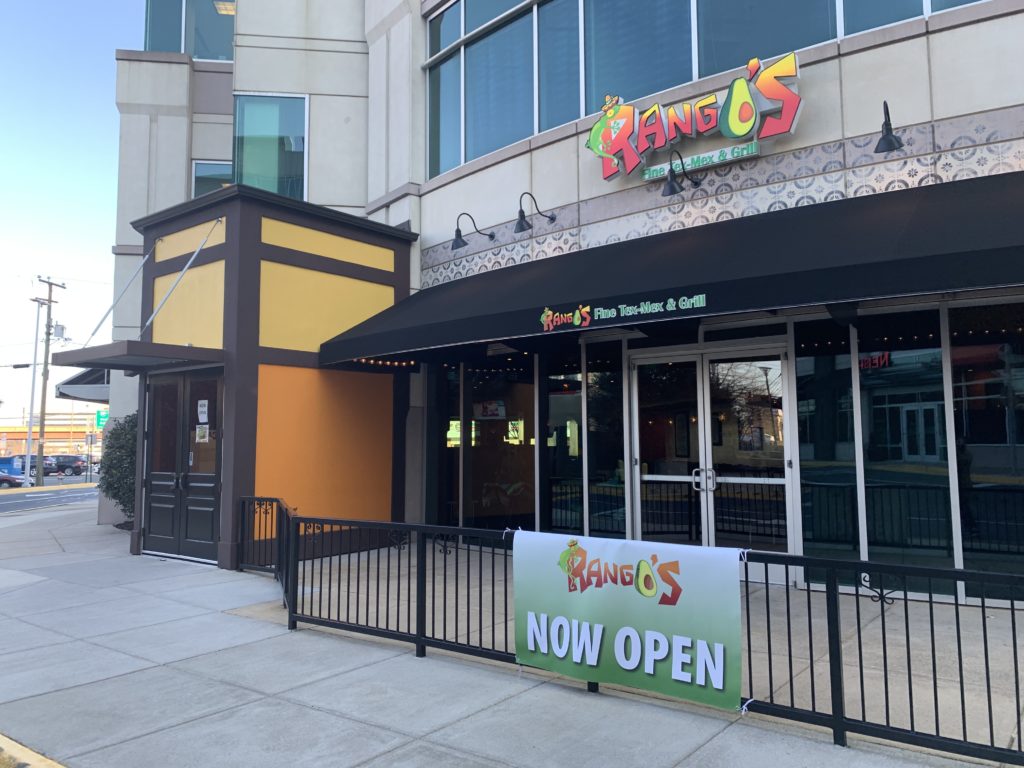
The father and son-operated Rango’s Fine Tex-Mex restaurant at 1934 Old Gallows Road is finally open.
The 200-seat restaurant had originally planned to open in November, but opened in early February.
“So far, so good,” said Robert Rosa, one of the two owners along with his dad, Ishmael Rosa. “People have been really nice and the word of mouth [around town] has helped.”
Robert said his goal for the restaurant is to stand out for quality, portions, and a family-friendly atmosphere.
“It’s a great location,” Robert said. “This [kind of restaurant] was in high demand, but there was a low supply in the area.”
The restaurant offers a variety of the usual taco and burrito platters in lunch and dinner varieties. A margarita menu features regular and frozen margaritas, sangria, Mexican beers and mojitos.
Robert also said one of the best parts of the job has been running it with his father.
“It’s been great working with my dad,” Robert said. “I’ve been working with him my whole life.”