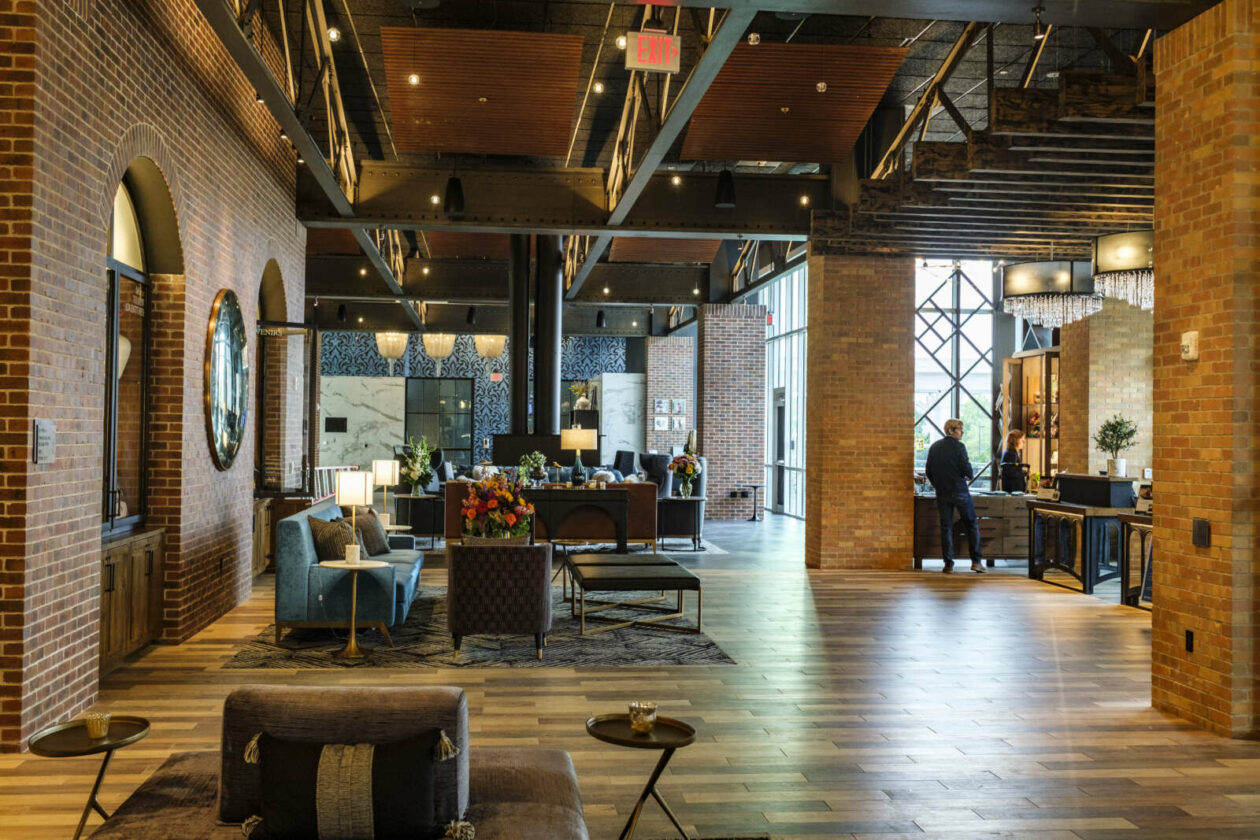

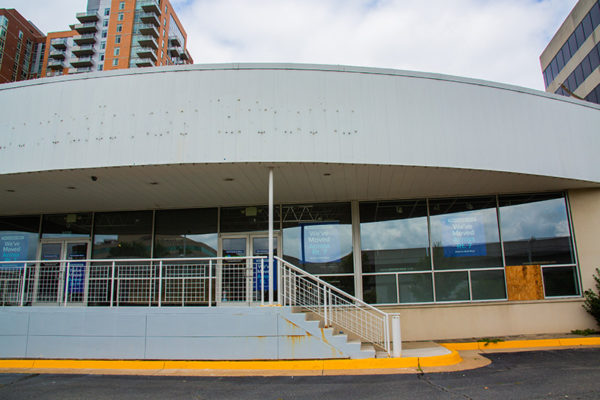
Updated at 10:15 a.m. on 9/24/2021 — The community event venue at the former Container Store will be called The PARC, Celebrate Fairfax announced on Sept. 17.
Earlier: After this weekend, the former Container Store in Tysons will no longer be known as just “the former Container Store.”
The county-owned, 19,260-square-foot site with 95 parking spaces at 8508 Leesburg Pike is being transformed into a community hub and venue for local events through a collaborative effort between Fairfax County, Tysons Partnership, and Celebrate Fairfax Inc.
Tomorrow (Friday), Celebrate Fairfax and participating vendors will host another Tysons Block Party from 4 to 8 p.m., during which a new name will be announced for the venue. The name was chosen based on an online poll that Celebrate Fairfax conducted across its social media accounts.
“Activating this site is part of a multifaceted community building process in Tysons that recognizes the importance of placemaking,” Providence District Supervisor Dalia Palchik said. “Having spaces like the one at 8508 Leesburg Pike in Tysons allows us to build social infrastructure, in addition to the built infrastructure that continues to grow.”
Singer Caz Gardiner is scheduled to perform at the event with a collections of vendors such as Settle Down Easy Brewing Co., Zainy’s Flyin’ Grill and Hangry Panda present.
In addition to a new name, the site will get a facelift in the near future with a mural by artist Rodrigo Pradel. Before work begins on the mural, however, Tysons Partnership is soliciting the community for input on the design with an online survey.
“The upcoming events in this space, including the Tysons Block Party and the mural live painting event, are just two of many opportunities for the Tysons community to share experiences, and make new connections, right here in Tysons,” Palchik said.
“This site can be a leader in facilitating in-person experiences, and a model for placemaking around our county,” she added.
After the Container Store relocated to 8459 Leesburg Pike in 2018, the county acquired the site in 2019 for $16.6 million with an eye toward utilizing it to support community innovation and entrepreneurship.
The county received a variety of proposals for the use of the site prior to the pandemic, including a suggestion from development officials to use it for community events.
However, during the pandemic, the building was adapted for emergency use. Over the past year, it has been used as a storage site for personal protective equipment, and it was designated as a hypothermia shelter from Dec. 1 through April 1.
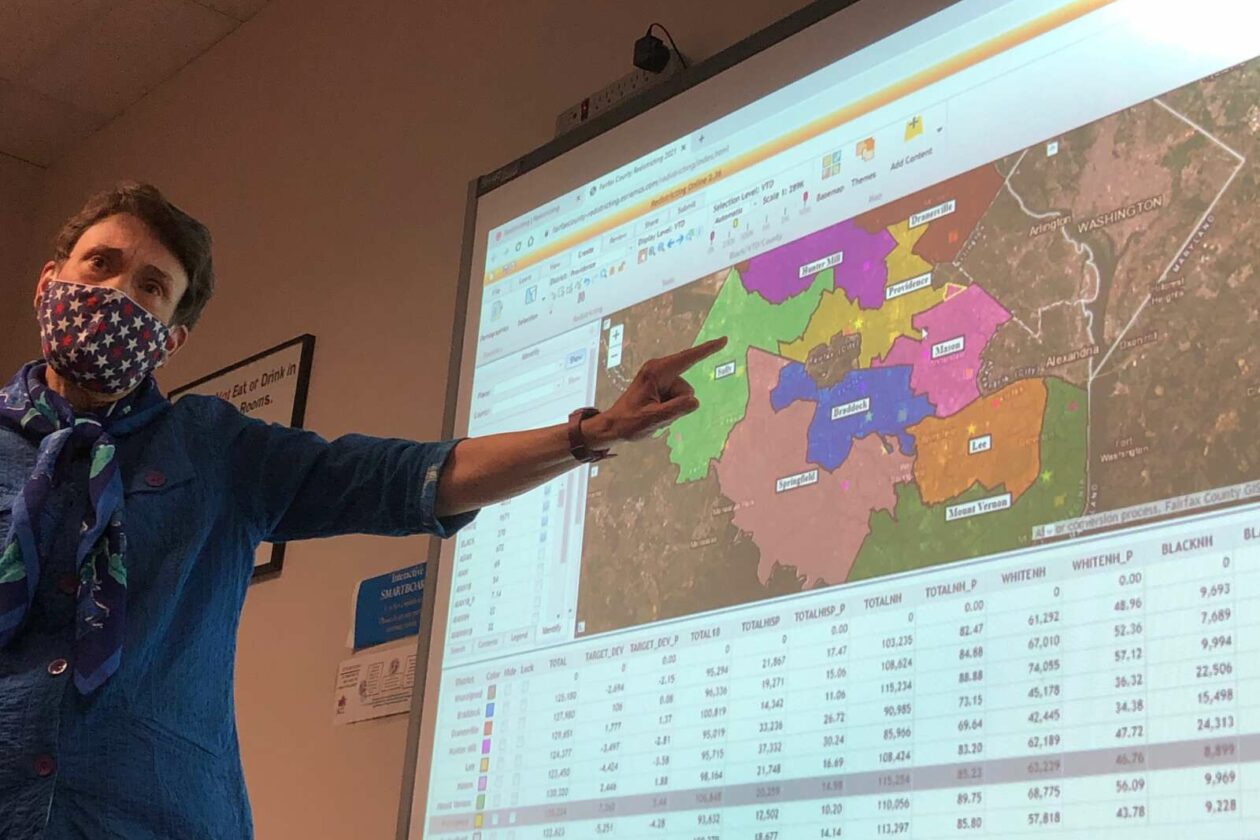
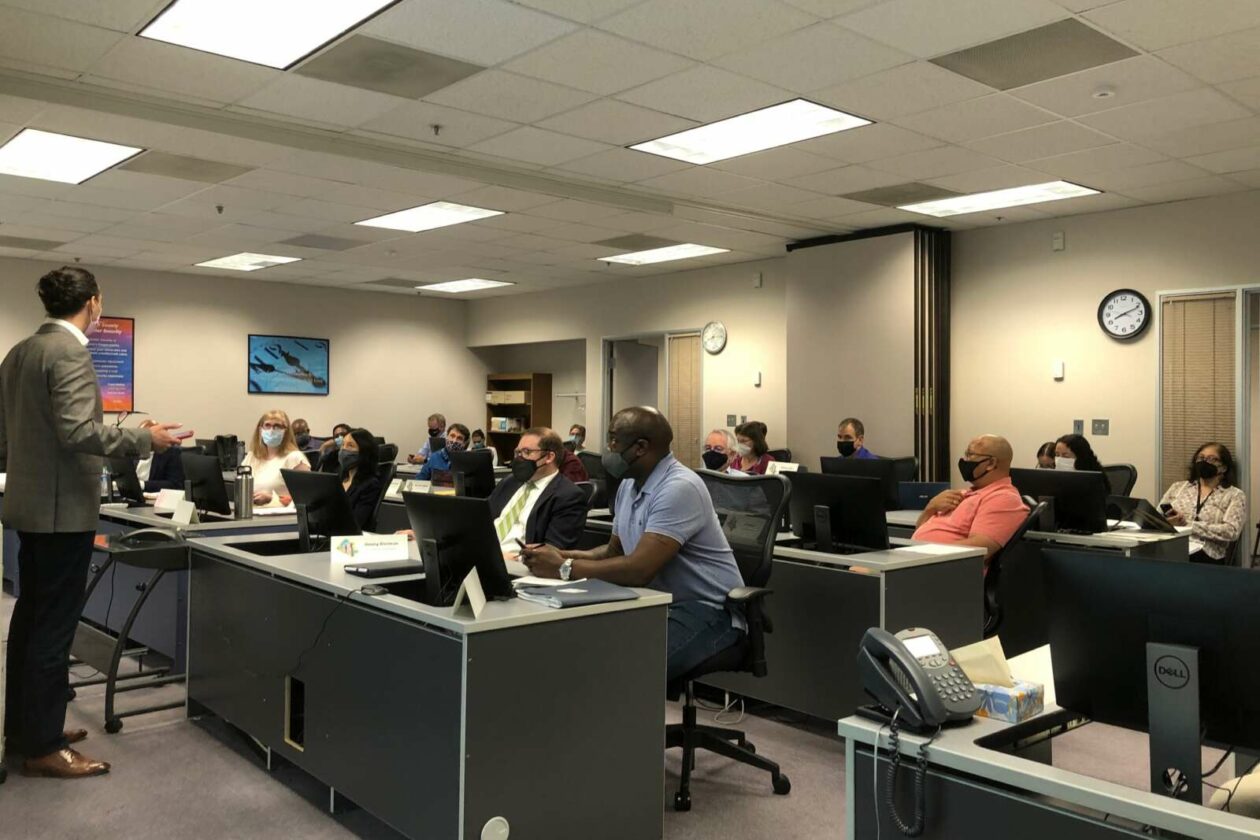
In a meeting room that more resembles a college classroom than the stateliness of the board auditorium just two floors down, 20 volunteers are redrawing the lines that divide and define Fairfax County.
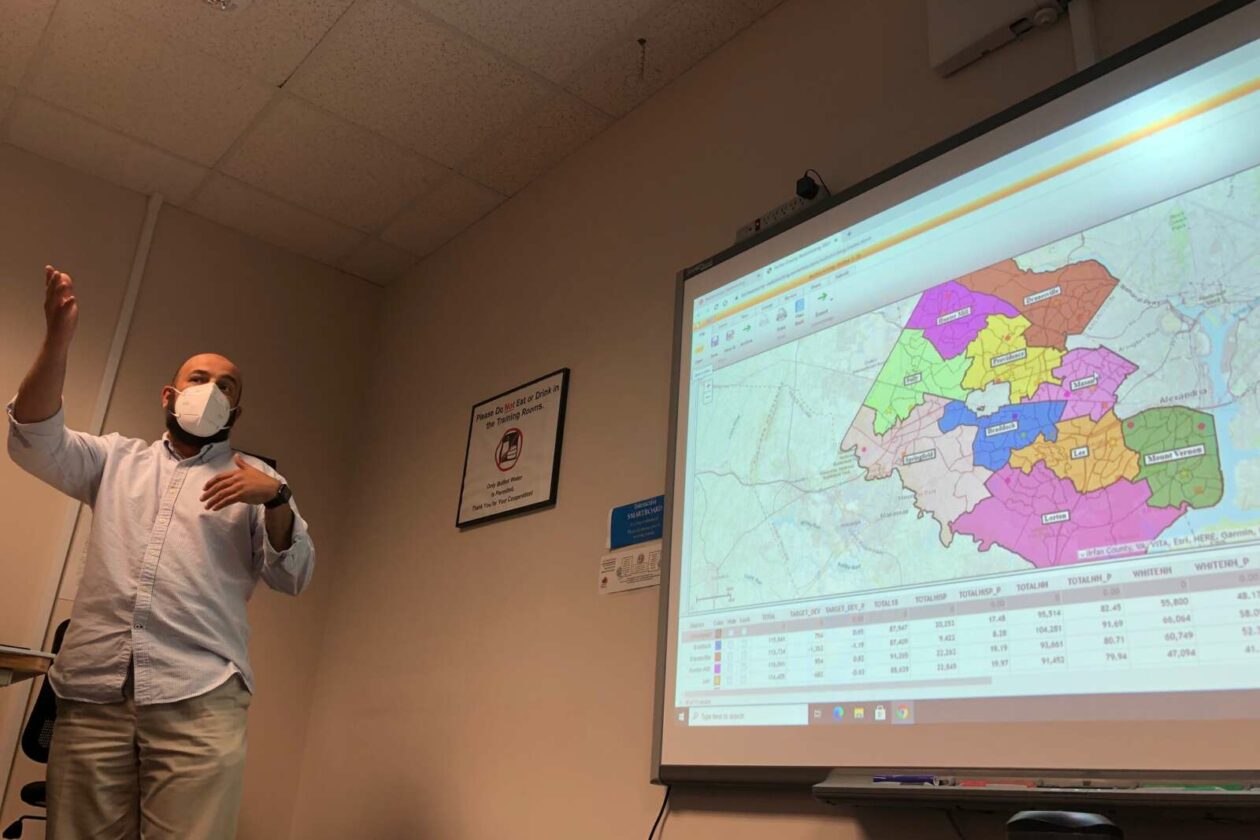
Appointed by the Fairfax County Board of Supervisors on June 22, the 2021 Redistricting Advisory Committee (RAC) has been meeting regularly since late July, but members got their first opportunity on Monday (Sept. 13) to present the district maps they’ve created to determine the county’s leaders for the next decade.
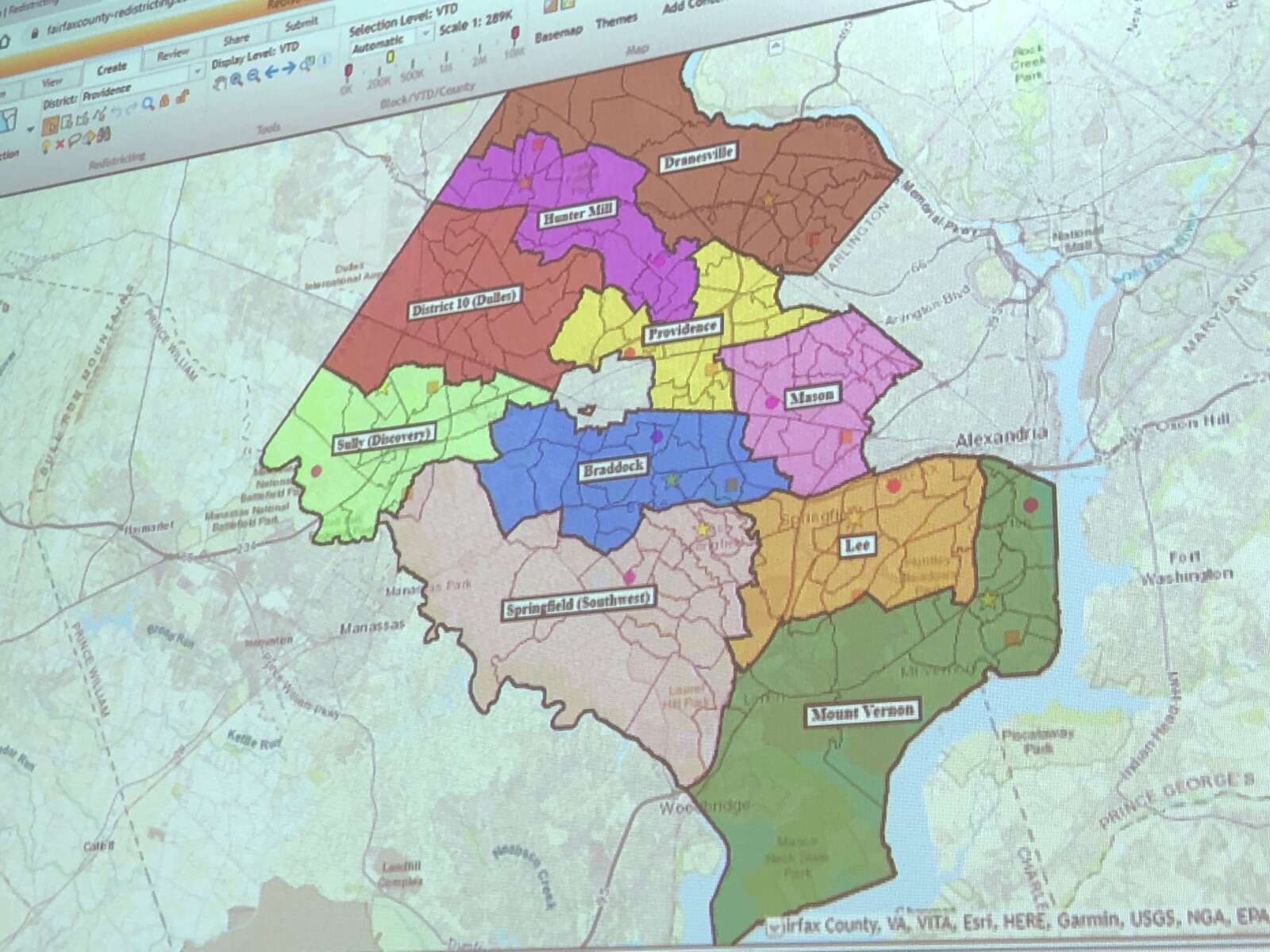
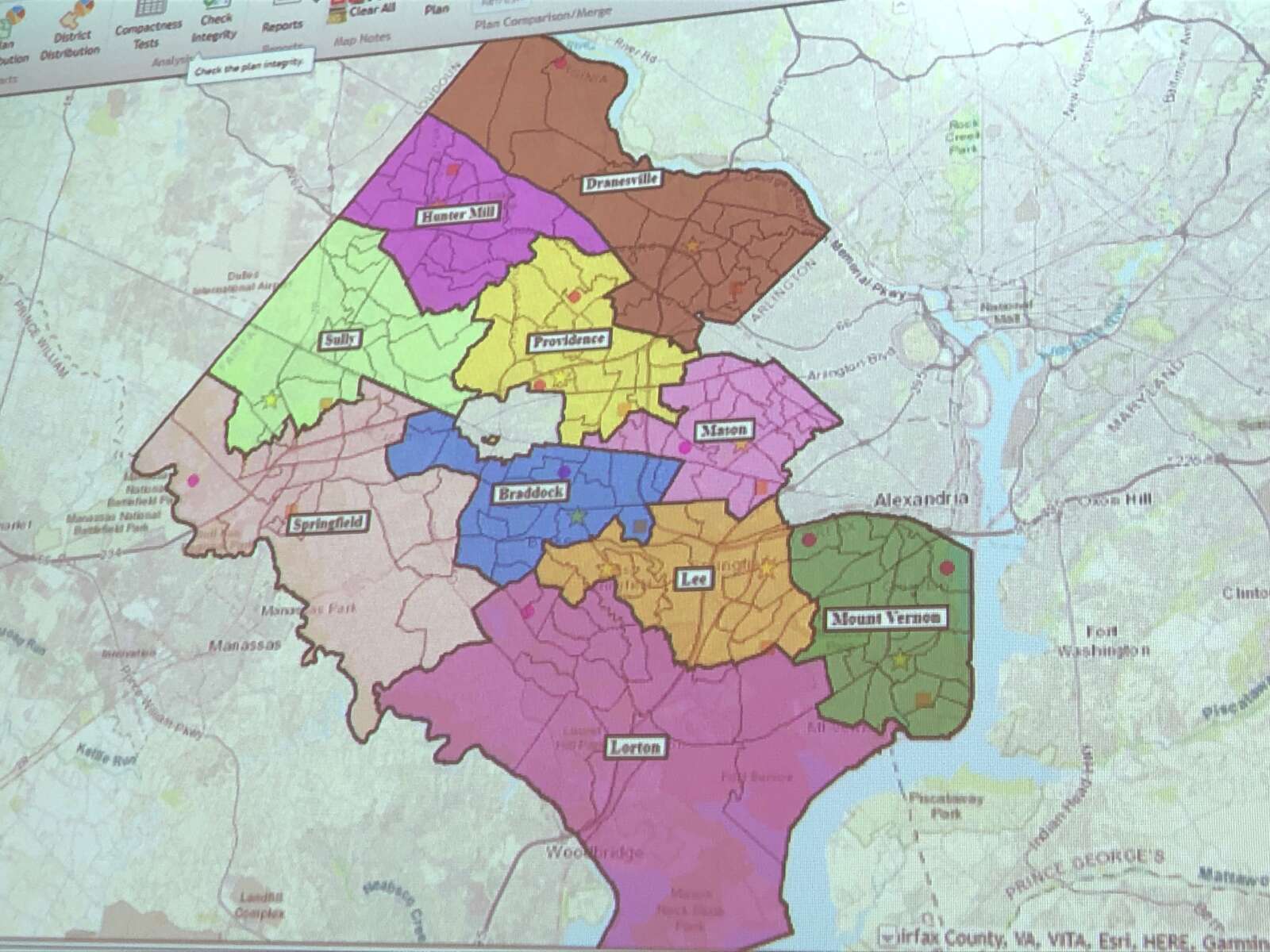
Some members suggested limited changes, moving the Fort Buffalo precinct across the district line from Providence to Mason, for example. Others crafted entirely new districts around Lorton or a swath of Herndon and Chantilly east of Dulles International Airport.
Fairfax County has developed a publicly available mapping tool that allows communities to be realigned with a simple click of a button, but each alteration could have significant implications for what the county will look like in the future.
“These are not just lines on a map,” said Linda Smyth, who now represents Providence District on the RAC and previously represented it on the Board of Supervisors. “It’s about neighborhoods. It’s about people.”
The pressure on this year’s redistricting effort is even higher than usual as the county races to complete a year-long process that has been condensed into roughly five months, thanks largely to coronavirus-related delays in the release of data from the 2020 Census.
The RAC voted on Monday to request a timeline extension after complications in getting adjusted Census data from the Virginia Division of Legislative Services further delayed county staff’s ability to build the online mapping tool that the committee needs to do its work, according to Braddock District Supervisor James Walkinshaw.
Under the schedule originally approved by the Board of Supervisors on June 8, the RAC was expected to finish its work and turn in all the map options they think the board should consider on Friday (Sept. 17).
However, the committee didn’t get the new Census population and demographic data until last Friday (Sept. 10). Prior to that, members had been using old data for training purposes, RAC Chairman Paul Berry says.
“We got the numbers much later in the calendar year than we expected. We would’ve been doing this in the spring if not for the pandemic,” Berry said Monday night. “…The board and Chairman [Jeff] McKay felt it was prudent to give everyone more time to do the work, because we’re all volunteers at the end of the day.”
After a motion put forward by Walkinshaw, the board voted unanimously on Tuesday (Sept. 14) to give the RAC until Sept. 28 to finalize its maps. The initial Sept. 10 deadline for members of the public to submit their own proposed maps has also been extended to this Sunday (Sept. 19).
Board members acknowledged that the new timeline remains less-than-ideal, giving the RAC under two weeks to evaluate its own maps and those from the public, but flexibility is limited by state law, which requires localities to send a redistricting plan to the attorney general for approval by the end of the year.
The need for localities get the attorney general’s approval is a new step introduced by the Voting Rights Act of Virginia, which combats voter suppression and discrimination. The General Assembly adopted the law in April, making Virginia the first state in the U.S. with its own voting rights act, and Gov. Ralph Northam formally signed it on Monday, though it took effect on July 1.
“It’s unfortunate we have to change the schedule, but it’s a very minor modification to make sure the public still has the opportunity to be involved in this,” McKay said. “The driver here is a whole lot of laws and other things we have to abide by, but it’s also to make sure the committee has a schedule and any member of the public can see where that window is.”
The Board of Supervisors will hold a public hearing on its redistricting plan on Nov. 7 and vote on a final ordinance on Dec. 7.
Conducted every 10 years by state and local governments, redistricting involves drawing electoral district boundaries to ensure each district has about the same population, though gerrymandering has often undermined that goal of equal voting representation.
Fairfax County’s newly drawn districts must meet several legal and policy criteria, including standards for compactness, a maximum 10% deviation in the populations of the most and least-crowded districts, and compliance with voting rights protections.
The Board of Supervisors also adopted rules to consider existing geographic, political, and voting precinct boundaries as well as “communities of interest” — neighborhoods or areas where residents share “social, cultural, and economic interests.”
Balancing the different criteria is one of the primary challenges facing the Redistricting Advisory Committee.
For instance, Saif Rahman, who represents the Arab American community on the RAC, proposed a map with a 10th “Lorton” district where all the districts had less than a 2% standard deviation in their populations.
Achieving that uniformity, however, required bumping the Springfield District Office out of Springfield and removing Mount Vernon from its eponymous district to create the new Lorton district, among other tweaks.
Because of the groups’ different timelines, the RAC also can’t refer to the work of the new Virginia Redistricting Commission, which was been hampered by partisan conflicts and last-minute process changes in its efforts to draw new House of Delegates and state Senate districts.
“I wish that they could finish first and that we could then do our work, because that would make it easier for us to align magisterial districts around the House and Senate maps,” Berry said. “That alignment, in my opinion, it’s less confusing for people who vote and live and work in these areas.”
As if redistricting wasn’t ambitious enough, the RAC also waded into the ongoing debates on renaming county landmarks with ties to slavery or the Confederacy, agreeing on Monday to include a passage in its report supporting a future reevaluation of the names of Fairfax County’s magisterial districts.
The committee’s discussions focused on Lee and Sully districts, which are respectively named after Confederate general Robert E. Lee and an 18th-century slave plantation, but the report will have broader language that doesn’t mention specific districts.
“We’ve been tasked by the Board of Supervisors to redraw the magisterial districts,” Berry said. “It seems very natural to me that we would, in addition to that work, add in, in the interest of equity, a recommendation that says we need to open up the naming discussion formally after our process is done.”
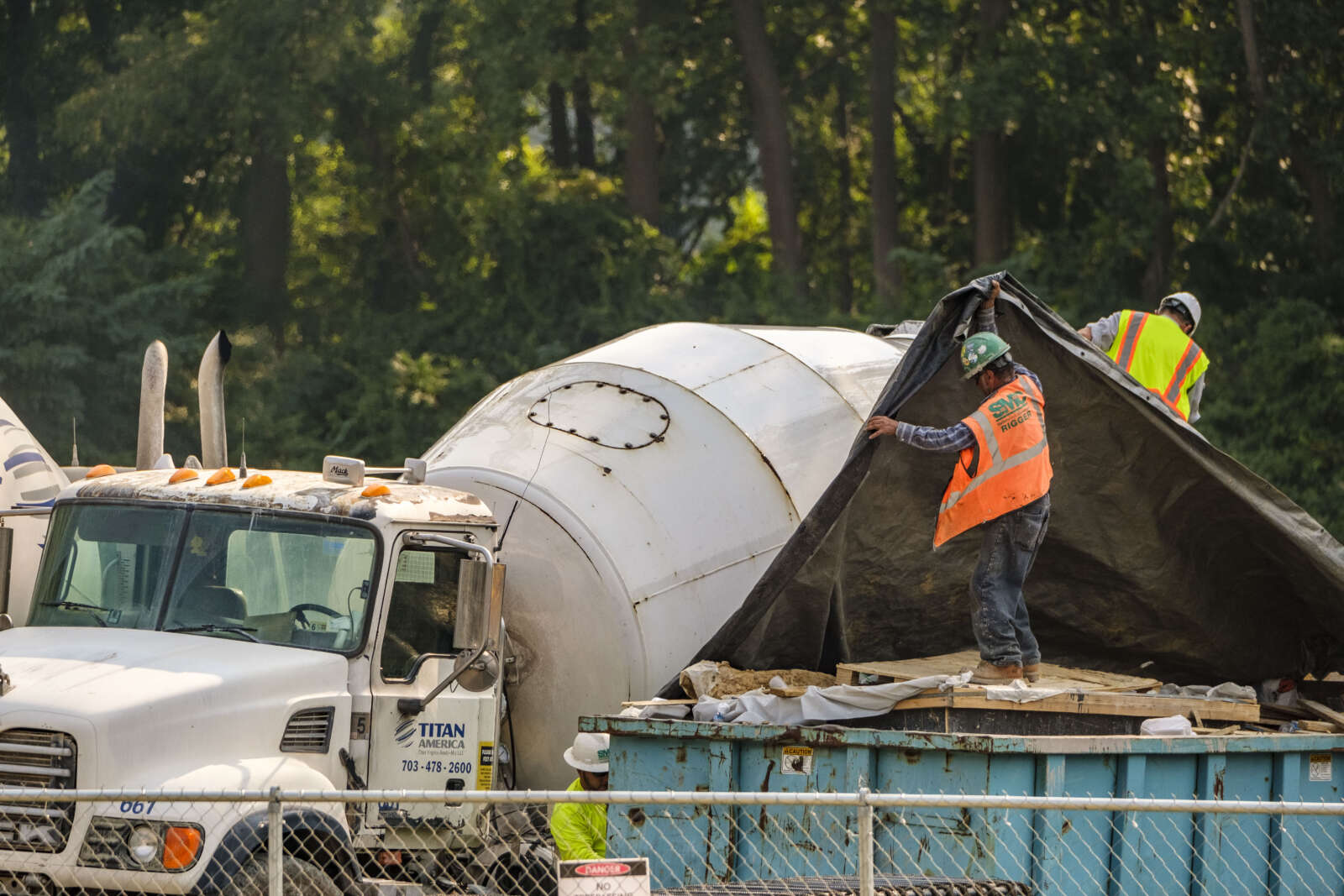
Health Department Tweaks Approach to Quarantined Students — Starting today (Thursday), students who have been exposed to COVID-19 can complete wellness checks and get guidance from the Fairfax County Health Department online instead of having to wait for a phone call. The change is part of an ongoing effort to speed up the contact-tracing and quarantining processes so students can return to school buildings. [FCHD]
Local Arts Groups See Bright Spots Amid Upheaval — “Fairfax County’s art scene is under-funded, under-capacity and still weathering the pandemic, but several upcoming projects will bring it closer to its potential, the president of ArtsFairfax said. The county’s prospects are changing more quickly than at any other point in her 12 years with the organization, Linda Sullivan told the Greater Tysons Citizens Coalition during a Sept. 9 roundtable.” [Sun Gazette]
Vienna Schedules Meeting on Economic Strategy — The Town of Vienna will hold a public meeting from 6-7:30 p.m. on Sept. 30 for residents to discuss a draft economic development report that looks at how the town could more effectively attract and support businesses. The town hired a consultant in January to conduct a market study and propose an economic development strategy that were released in June. [Patch]
Italian Bakery Sets Tysons Corner Grand Opening — “Handcrafted Italian pastry is coming to Tysons Corner Center! Celebrate the Grand Opening of DreamStart Winner Bisnonna Bakeshop on Saturday, 09/18 with family-friendly activities starting at 10am” [Tysons Corner Center/Twitter]

Given Bonchon’s overall ubiquity, it might surprise some residents to learn that the Korean fried chicken purveyor has yet to make an entry into the Tysons area.
That will change next year, when Bonchon opens its first Tysons location at 8603 Westwood Center Drive near Route 7 and the Spring Hill Metro station.
The restaurant chain announced today (Wednesday) that it recently executed a lease for Suite 100 in the Westwood office and retail complex, which counts Paisano’s Pizza and the Indian restaurant Bombay Tandoor among its current tenants.
Bonchon anticipates opening its new 2,600 square-foot restaurant in May 2022.
“Bonchon has been wildly popular across the state of Virginia but in particular in the DMV area,” Bonchon CEO Flynn Dekker said in a press release. “With each new Virginia location, we are reminded just how much the taste of our ‘hometown’ has been welcomed into the hearts and homes of so many.”
With a name that translates to “my hometown” in Korean, Bonchon was founded in South Korea in 2002 and expanded into the U.S. in 2006. It now boasts more than 370 restaurants worldwide and over 100 American sites, more than 20 of them in Virginia.
Right now, however, the eatery closest to the Tysons area is off of Old Lee Highway just outside the City of Fairfax. Korean fried chicken fans have also been able to get their fill from rival chain Chi Mc, which opened a location in the Town of Vienna in June 2020.
Other Bonchon locations in Fairfax County include Reston, Herndon, Centreville, Annandale, and Springfield. There are also sites in Arlington and the City of Alexandria.
The company says it plans to open two dozen new locations in 2022.
The Tysons Bonchon will take over the space most recently occupied by I-Thai’s Side Street and Sushi Bar, which has been reported closed on Yelp.
The Thai restaurant’s website remains up, but the phone number is no longer in service, and Tysons Reporter didn’t immediately receive a response from the listed email address.
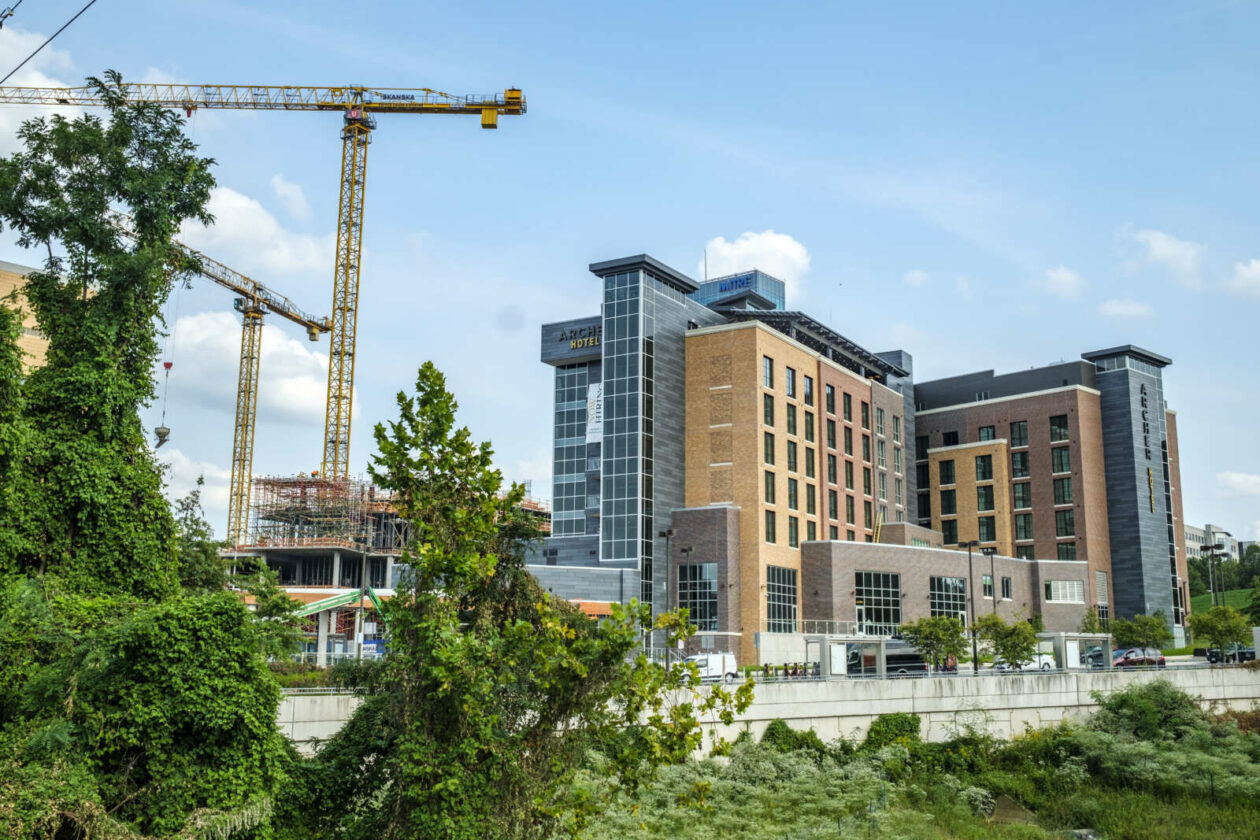
Archer Hotel Tysons has made its Scotts Run debut, adding a hospitality component to the residential and office buildings that have already taken shape in the Tysons East mixed-use development.
Almost two years after its October 2019 ground-breaking, the luxury hotel opened its doors to patrons yesterday (Tuesday), according to developer LodgeWorks Partners, which also owns and operates the establishment.
Archer Tysons is the seventh addition to the company’s Archer Hotel brand, which also has properties in New York City, New Jersey, Massachusetts, California, Washington, and Austin, Texas. LodgeWorks says its goal is to bring “boutique sophistication” to growing metropolitan areas.
“The urbanization of Tysons and the emergence of its newest walkable Scott’s Run South neighborhood is the epitome of live, work, play,” LodgeWorks President Mike Daood said. “Archer Hotel with its Virginia-centric, boutique vibe and classic hotel bar supports that lifestyle. We believe we bring something unlike anything in the area and hope to be a natural hub for commerce, getaways and celebrations.”
Designed by LK Architecture, the seven-story hotel has 178 rooms and over 17,000 square feet of indoor and outdoor meeting and event space, including a penthouse on the top floor. There are four different room layouts, with the largest suites reaching about 870 square feet in size, according to a press release.
Amenities include an AKB Hotel Bar that offers food and drinks, a 24-hour pantry in the lobby called The Market, complimentary Wi-Fi, in-room coffee, and curated, house-made turndown desserts, such as chocolate squares from the McLean-based chocolatier Craving for Chocolate.
The hotel also features art by local and regional artists, including a seventh-floor photo gallery centered on musicians who have lived in Virginia.
To celebrate the opening, Archer is offering a 20% discount on rooms at all locations through Oct. 31, though guests must book their stay for a period before March 31, 2022.
Located at 7599 Colshire Drive, Archer Tysons is the latest addition to Scotts Run, the 8 million square-foot development that Cityline Partners and other developers are building north and south of Route 123 around the McLean Metro station.
Established buildings in the development include The Kingston and Haden apartment complexes and the 14-story Mitre 4 office building.
Cityline also finished construction on Fairfax County’s new Scotts Run Fire Station this summer. The station, which the developer built as part of its Scotts Run South proffer agreement with the county, became operational on Aug. 14 and has a grand opening scheduled for this Saturday (Sept. 18).
“We are very excited to have the Archer Hotel at Scotts Run now open,” Cityline Partners Managing Director Tasso Flocos said by email. “The new boutique hospitality addition at the center of our urban neighborhood is an attractive place for visitors and neighbors to experience connections with others and the natural stream valley park.”
Across the street from Archer Hotel, work continues on The Heming, a 410-unit luxury apartment building from developer Skanska that began construction in January 2020 and is expected to be delivered by the second quarter of 2023.
The residential tower will sit above a three-level public plaza and 38,000 square feet of retail at 1800 Chain Bridge Road, which is also scheduled for a 2023 completion.
Also coming to Scotts Run is Paxton, a mixed-use building with 447 apartment units and 14,713 square feet of retail. Developer LMC announced on July 29 that it had closed a deal with Cityline to purchase land for the project, which is projected to be ready for tenant move-ins in early 2024.

Fairfax County will require certain businesses, but not all, to pay taxes on disposable plastic bags in a move to encourage customers to use reusable bags.
The Board of Supervisors passed the measure yesterday (Tuesday) after a new state law gave counties and cities the authority to begin imposing a 5-cent tax starting in 2021. The tax will take effect on Jan. 1, 2022 for Fairfax County.
In a statement released after the vote, Board of Supervisors Chairman Jeff McKay acknowledged the challenges of introducing a new tax while the county continues to grapple with the COVID-19 pandemic, but he says the impact of plastic bags on the environment “is too great” to not act.
“There are simple steps residents can take to avoid the over-use of disposable plastic bags,” he said. “A small fee on plastic bags is an opportunity for residents to look at their habits while providing the County with avenues for environmental cleanup, education, and access to environmentally friendly alternatives.”
Fairfax County is the first locality in Northern Virginia to adopt a plastic bag tax, according to Braddock District Supervisor James Walkinshaw’s office. Walkinshaw initiated a board motion to pursue the issue in July as part of a joint effort with McKay and Mount Vernon District Supervisor Dan Storck.
Consistent with the state law, the tax applies to grocery stores, convenience stores and drug stores, but there are exemptions for reusable plastic bags, bags used for perishable food to prevent damage or contamination, bags that carry prescription drugs or dry cleaning, and bags sold in bulk, such as garbage bags.
“Plastic bags frequently end up in a landfill, where it can take more than 500 years for the bag to disintegrate. Many plastic bags end up in our streams,” Fairfax County Office of Environmental and Energy Coordination Deputy Director Susan Hafeli said. “While the impact on human health is still being addressed, there is evidence that humans ingest and inhale thousands of microplastics per year, which result in the breakdown of disposable plastic bags and other plastic products.”
The Office of Environmental and Energy Coordination says the tax is intended to influence consumer behavior by discouraging consumers from using single-use disposable plastic bags.
According to the Environmental Protection Agency, the U.S. uses over 380 billion plastic bags and wraps yearly, requiring 12 million barrels of oil to create. Turtles, one of several aquatic creatures that suffer from the trash, die of starvation after eating them.
The Board of Supervisors approved the measure 9-1 with Springfield District Supervisor Pat Herrity — the lone Republican member — opposing it. He said food banks reported relying on the bags to distribute food and argued that it’s the wrong time to add any tax.
Before the vote, the board held a public hearing where dozens of community members spoke both for and against the proposed tax.
Proponents included sixth-grade student Emily Ackerman, who said by video that she wants her generation grow up in a country that’s clean and not full of trash.
“It upsets me most when I see [plastic bags] floating in the water,” she said.
Jennifer Cole, executive director of the nonprofit Clean Fairfax Council, suggested the choice customers face is not between plastic and paper, but sustainable and unsustainable, noting that while stores appear to give disposable bags away for free, it’s surely baked into the costs that customers absorb.
John Cartmill spoke while carrying a reusable bag filled with plastic bags that he said he’s collected over the past week along Sugarland Run Trail.
Opponents included former EPA administrator Andrew Wheeler, who argued that making this a local issue is misguided compared to the scale of the environmental challenges that the world is facing with climate change.
Pointing to China as the world’s biggest contributor to greenhouse gas emissions, he said a cotton tote bag would have to be used for 54 years to offset the environmental damage done by creating it. He suggested increasing educational programs and adding locations to recycle bags would be a better approach.
Walkinshaw noted after the hearing that former EPA administrators from both major political parties have criticized Wheeler’s tenure, which was under the Trump administration.
“If Andrew Wheeler says that we should turn right on an environmental issue, we should turn left,” the Braddock District supervisor said. “And that will help guide us, I think, tonight.”
Fairfax County advises people to take plastic grocery bags to larger grocery stores, where there are usually drop-off bins at or near the doors, for recycling. The county doesn’t accept plastic bags in its curbside recycling program, because they tangle and damage sorting equipment and can contaminate other kinds of recyclable plastic.
Studies have shown that plastic bag taxes can lead customers to sharply drop their plastic bag use.
Other individuals who argued against the plastic bag tax cited its potential impact on low-income county residents and sanitary concerns.
Maureen Brody said she goes out every week to clean roadways and rarely finds plastic bags but does find another form of trash: face masks.
Like with sales taxes, Virginia will collect the plastic bag tax and then send money back to local municipalities. McKay said he hoped no money would come from it.
“Not one single person in this county has to pay this fee,” McKay said after the public hearing, noting that people can avoid paying the tax by using alternatives.
McKay told FFXnow that the county hasn’t done any estimate on how much revenue it would generate, but any proceeds would supplement existing efforts, which he thought should prioritize litter pickup and getting reusable bags to those in need.
According to a staff report in the board agenda, revenue from the plastic bag tax can be used for environmental clean-up initiatives, including educational programs and pollution and litter mitigation, and to provide reusable bags to recipients of federal food assistance benefits.
Passed by the General Assembly in March 2020, Virginia’s plastic bag tax law notes that, if a city or county chooses to implement the tax, businesses could technically still give plastic bags to customers for free. However, those companies would still have to pay the tax for each bag.
In a move to encourage business to collect the money, those affected can keep 2 cents per bag until Jan. 1, 2023. After that, the dealer discount will drop to 1 cent per bag.
Photo via Ivan Radic/Flickr
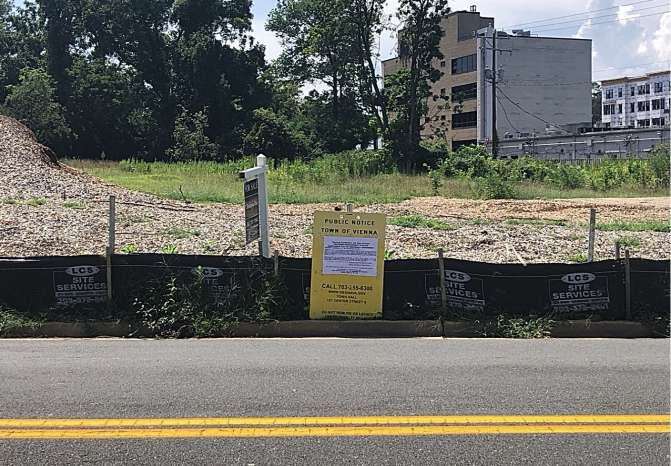
The Vienna Town Council approved a project on Monday (Sept. 13) to develop a vacant property with cottage housing-style duplexes.
Developer JDA Custom Homes is looking to construct six two-family dwellings at a 1.38-acre site at 117-121 Courthouse Road SW, where each unit would have a two-car parking garage at the basement level and belong to a homeowners’ association.
JDA Vice President Jordan Rice described the outside of the homes by saying they will use low-cost materials aimed at people looking to downsize their living space.
Her father, Dennis Rice, the company’s founder, said each home will have approximately 1,200 square feet on the main level and about 600 square feet on the second floor.
He declined to say what the price of each home or range would be when asked by Councilmember Nisha Patel at the public hearing.
“Do you foresee each unit being at least under $1 million?” she said.
“At this time, I cannot make any…statement on that,” Dennis Rice said, citing rising building material costs and adding that he couldn’t make a guess at this point.
Patel said she likes the project, which will provide an alternative to the single-family, standalone houses that dominate the Town of Vienna, but she noted that the majority of homes in the town are under $1 million.
Councilmember Chuck Anderson asked if two units could be reduced in size to make them more affordable. Dennis Rice replied that the units “really don’t become sellable” if they’re any smaller.
The town council first voted 5-0 to approve rezoning the lots from a single-family residential district to a multi-family, low-density area. Patel and Councilmember Ray Brill abstained from the vote.
After the rezoning was approved, JDA proposed changes to several development requirements, including one aimed at reducing the footprint of constructed buildings and amenities. The zoning area there limits lot coverage to 25% at most for anything from buildings, parking spots, and athletic courts to patios and terraces.
The developer asked for an allowance up to 60% but believes it can achieve the development with 55.3% lot coverage, the town said. The gap leaves room for flexibility, according to the developer.
Changes to rear and front setbacks as well as other lot requirements were also requested.
As part of its application, JDA noted that 13 other developments in the town had lot coverages ranging from 33.9% (Park Terrace Condo section two at 212-218 Locust St. SE) to 66.6% (Vienna Villager at 200 Locust St. NE).
Brill expressed concern that the town council is getting ahead of itself in trying to change Vienna’s housing stock, giving developers more influence than individual homeowners. He added that the town might want to finish its ongoing zoning code rewrite first.
Councilmember Ed Somers said the opportunity could evaporate and the developer didn’t have to go this route.
Patel also raised a concern about the front yard setback, in which the applicant requested the town allow two homes 23 feet from a sidewalk and a one-story clubhouse 20 feet away from the pedestrian route. The required setback there is 35 feet.
However, the town council ultimately approved the site modifications 6-0 with Patel abstaining.

County Appoints New Parks Director — “The Fairfax County Board of Supervisors affirmed the selection of Jai Cole as Executive Director of the Park Authority [Tuesday]…Cole, a park professional with more than two decades of leadership experience with award-winning recreation and park agencies will begin immediately, filling the vacancy created by the retirement of…Kirk Kincannon earlier this year.” [Fairfax County Park Authority]
Deadline for COVID-19 Relief Grants Extended — Fairfax County has extended the application deadline for its Active and Thriving Community Grants Program to 11:59 p.m. on Sept. 21. Previously set to close yesterday (Tuesday), the program is intended to help child care providers, community programs, and other small businesses and nonprofits negatively affected by the COVID-19 pandemic. [Fairfax County Government]
Tysons Adapts to Decline in Commuting — With the pandemic keeping many workers at home, local business leaders say a growing emphasis on mixed-use developments like The Boro and Capital One Center will help office-centric Tysons adapt to a world of remote work. Proximity to transit and retail amenities will be key to attracting young employees, ID.me Chief Marketing Officer Jean Rosauer said at last week’s Future of Tysons event. [Bisnow]
Some Teachers Skeptical of Live-Streaming Proposal — “After Fairfax County Public Schools added classroom streaming for students forced to stay home because of COVID-19, some teachers are pushing back…David Walrod, a teacher at FCPS, who also serves as the first Vice President of the Fairfax County Federation of Teachers, worries that the live streaming will evolve into concurrent learning — which even the superintendent said wasn’t ideal for students.” [WUSA9]
Tysons Security Company Evacuated Clients from Afghanistan — “As U.S. troops began to withdraw from Afghanistan, Tysons-based Global Guardian reached out to its clients there to offer evacuation assistance. On August 5, 10 days before the Afghan government collapsed, the company began evacuating its clients from Kabul and two other cities. By August 18, Global Guardian had successfully evacuated all but one individual, whom it later got out of the country.” [Fairfax County EDA]
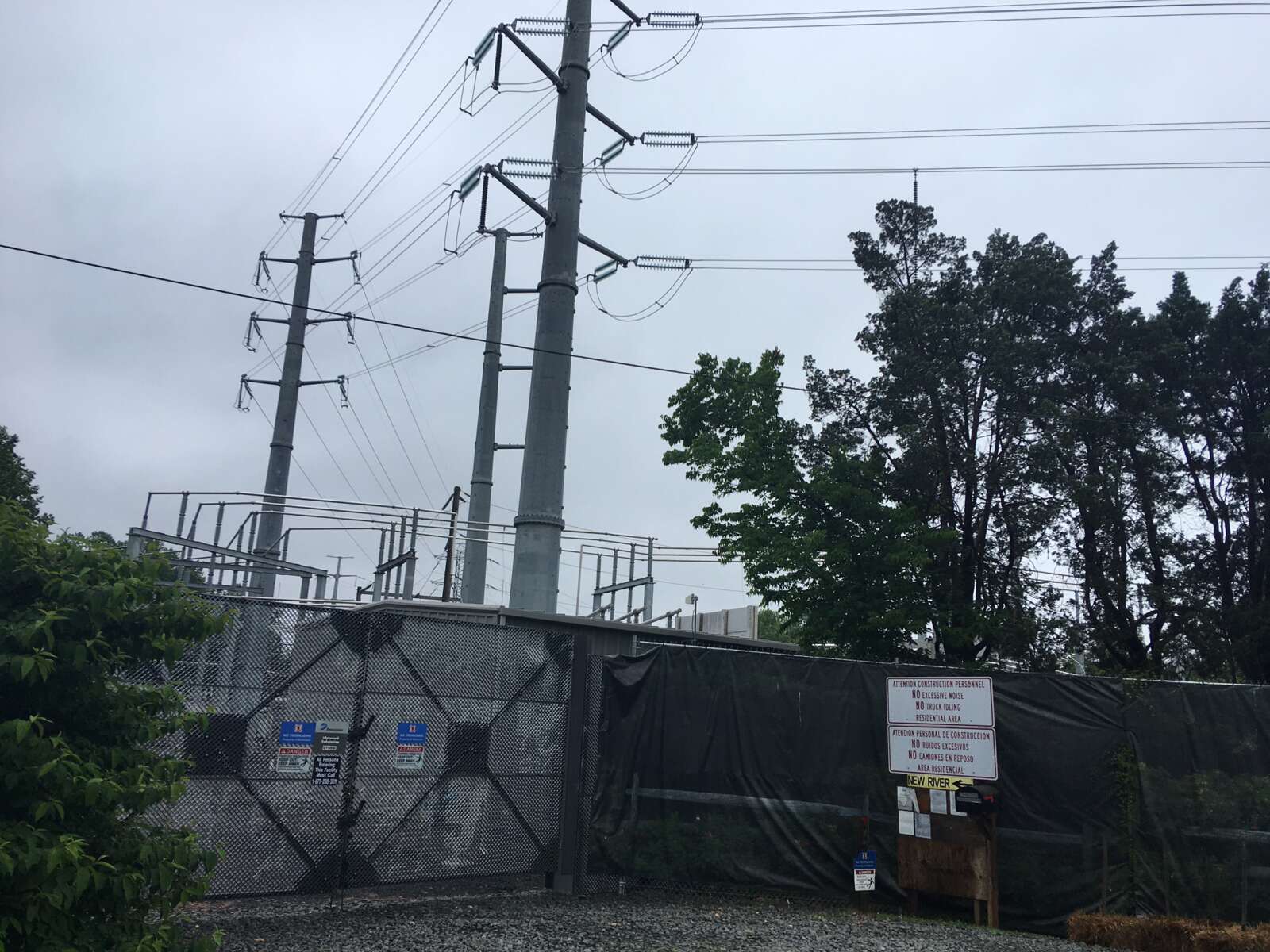
Idylwood residents will officially have to wait another five years for relief from construction on a power substation project that was originally slated for a May 31, 2020 completion.
The State Corporation Commission granted an extension to Dominion Energy last Wednesday (Sept. 8), letting the utility company take until Dec. 31, 2026 to finish a project that has become a headache for surrounding neighborhoods.
“I think the neighborhood is resigned and tired after 8 years,” Lori Jeffrey, president of the Holly Crest Community Association Board of Directors, said by email. “It’s always been uphill and we know that Dominion will ultimately get what they ask for.”
The project involves upgrading the Idylwood power substation at Shreve Road that was originally built in the late 1950s and reducing the facility’s footprint from 3.99 acres to 2.27 acres, according to Dominion.
The company filed application paperwork with Fairfax County in 2014, got SCC approval for the project in 2017, and ramped up pre-construction activities in 2018. The SCC’s initial order required the rebuild to be complete in 2020 but allowed room for an extension.
“We are committed to keeping this complex and necessary project on schedule,” Dominion spokesperson Peggy Fox said in a statement. “Ensuring the community’s energy needs go uninterrupted is a priority.
Adding that “much of the work is orchestrated around energized equipment,” Fox said that unexpected circumstances always occur during construction, but Dominion is taking precautions to limit delays and will adhere to its commitment to the neighborhood to limit weekend work.
Previously, the company justified the amount of time sought for the rebuild by citing the complexity of the project and longer-than-exected permitting processes, among other factors, acknowledging that it had underestimated parts of the timeline.
The extension comes after residents voiced concerns about delays in the project and questioned whether Dominion was being honest about its work.
During an SCC hearing in June that was requested by Fairfax County officials, residents spoke about the project lasting for years and questioned how trustworthy the company is when it presents information.
In a concession to residents’ frustrations, the commission’s timeline extension approval comes with a requirement that Dominion post quarterly construction updates on its website for the project.
“I think our constant pressure has also ensured that [Dominion] will build the wall on Shreve road this fall, years before the other 3 sides,” Jeffrey wrote. “This will help mitigate the appearance of the construction for everyone but the residents immediately adjacent to the substation.”
Metro has some bad news for fans of a proposed “Silver Line Express” rail service.
A recent cost-benefit analysis by the Washington Metropolitan Area Transit Authority (WMATA) found the project had the lowest cost-effectiveness of the five options being considered to boost capacity and reliability on the Blue, Orange, and Silver lines.
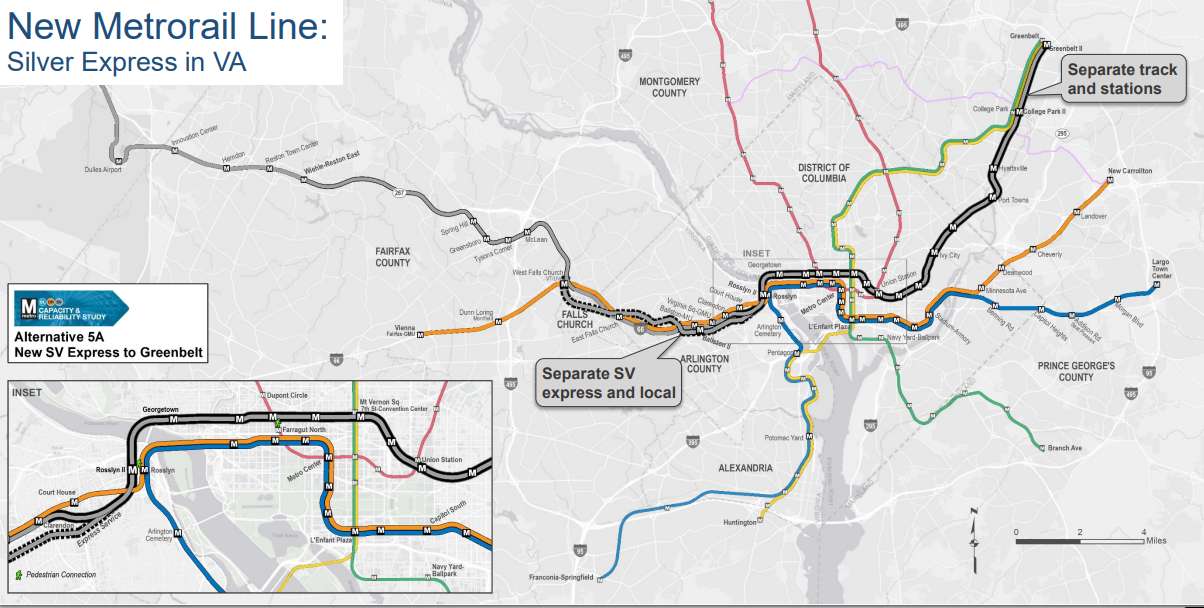
The hypothetical “Silver Line Express” would run through a new tunnel and tracks starting at the West Falls Church Metro station out to a second Rosslyn station in Arlington. The new tunnel could support express service, local service, or some mix of the two, a WMATA report said.
But a WMATA report and discussion at a Metro Board of Directors meeting on Thursday (Sept. 9) indicated the Silver Line Express may never leave the hypothetical stage. The cost-benefit analysis most heavily favored a new Blue Line route down from Union Station down to National Harbor.
The Silver Line Express carries an estimated cost of $20-25 billion, about the same as a new Blue Line route, but the report indicated that the express line would generate fewer new weekday trips — 139,000 compared to 180,000 for the new Blue Line — and receive less in annual fare — $119.4 million versus $154.2 million.
“When you look at the performance, the new Blue Line to national harbor offers highest impacts and highest benefits while lower cost alternatives have fewer benefits,” Mac Phillips, a principal planner and senior transportation economist-analyst for WMATA, told the Metro Board.
A cost-effectiveness ranking of the projects found the Silver Line Express to be the least cost-effective proposal, and only sitting at “medium-high” in terms of benefits.
Other options to expand capacity and ridership proposed by the study, which launched in 2019, include realigning the Blue Line at the second Rosslyn station to Greenbelt in Maryland and separating the Orange and Silver lines at Clarendon to create a second Silver Line connection at the proposed new Rosslyn station.