
Fairfax County businesses added nearly 9,000 jobs over the course of 2021, even with the uncertain environment created by the COVID-19 pandemic, the county’s economic development authority says.
According to a press release, the Fairfax County Economic Development Authority worked with 146 businesses that added a total of 8,973 jobs to the Fairfax County economy.
The businesses came from a variety of sectors, from manufacturing and real estate to information technology and cybersecurity. They were also spread out throughout the county, including Chantilly, Reston, Fairfax, Tysons, and Herndon.
Of the 146 businesses that reported job growth, 14 were newcomers that the FCEDA had courted to come to Fairfax County. Many were attracted not just from other areas of the U.S., but from other countries.
The seafood company Starkist, which is owned by Korean-based Dongwon Group, is relocating its headquarters from Pittsburgh to Reston Town Center. Other examples include the Canadian-based Brookfield Residential Properties and Israeli aerospace and defense company D-Fend Solutions.
According to data provided by the authority, the sector that saw the most growth was information technology services, which accounted for 2,648 new jobs, or 29.5% of the new positions in the county.
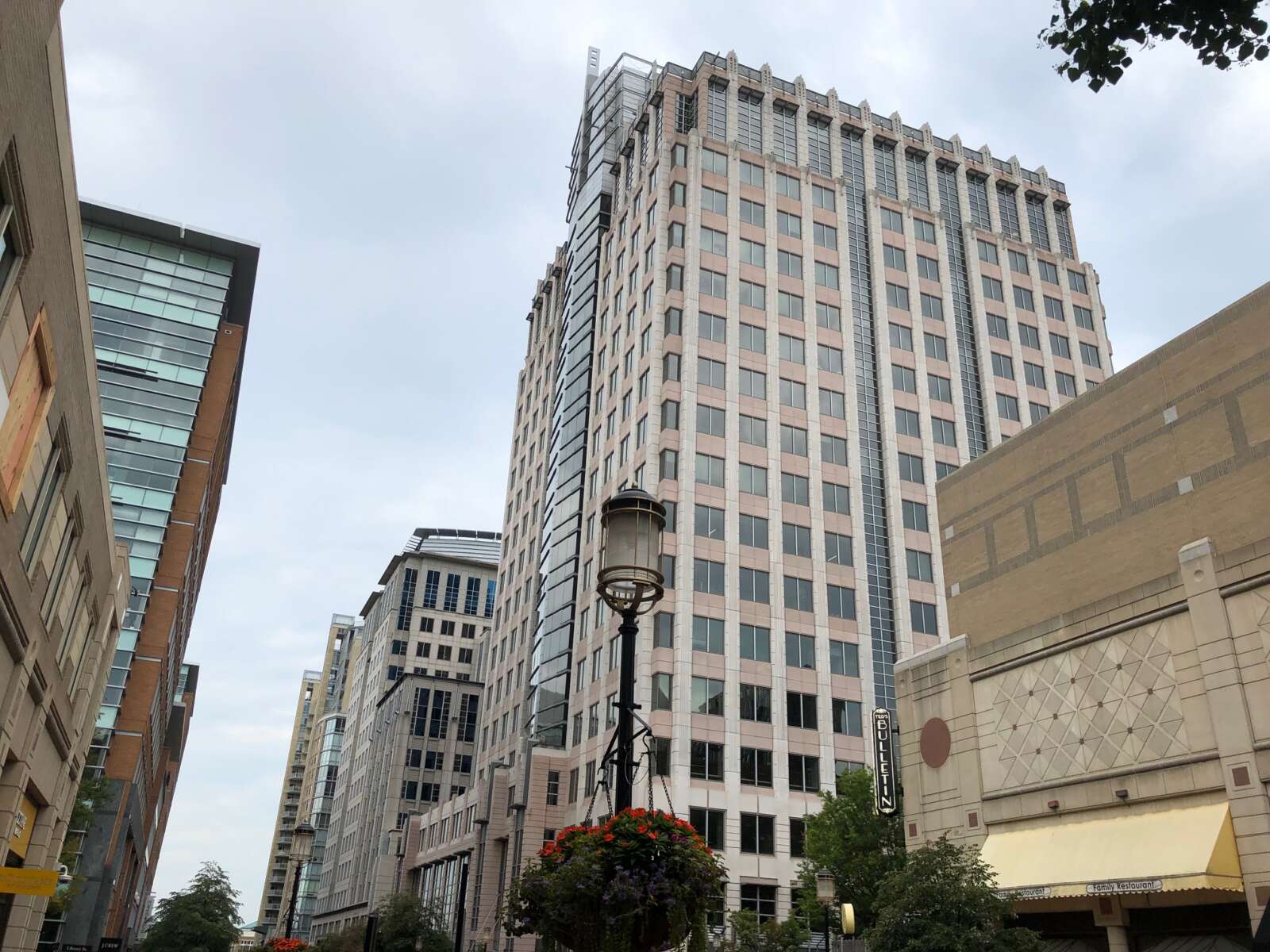
Much of that growth came courtesy of Herndon-based Peraton, which added 1,200 positions in 2021. The contractor announced plans in December to move its corporate headquarters to Reston Town Center.
“We would be proud to announce almost 9,000 jobs in any new year,” FCEDA President and CEO Victor Hoskins stated in the press release. “But very few communities can claim the kind of diversity that we have in our business community.”
FCEDA also touted that 25 of the American companies that came to the county are owned by women, minorities, or veterans.
Those businesses were found mainly in the information technology sector and include the Fairfax-based Kreative Technologies, which created 296 jobs, and Tysons-based Alpha Omega Integration, which created 154 jobs.
The nonprofit Community Foundation of Northern Virginia released a report in June 2021 showing that minority-owned businesses in Fairfax County have suffered more acutely than white-owned businesses during the pandemic.
The report stated that while the number of minority-owned businesses remained flat, revenue and staffing dramatically decreased, while unemployment insurance claims rose.
Fairfax County has worked to support local businesses during the pandemic by distributing federal relief funds through a series of grant programs, including the Fairfax RISE initiative that distributed more than $52 million in 2020 — 72% of which went to minority, women, or veteran-owned businesses.
The county awarded $16.8 million in grants last year with its PIVOT program, which focused on small businesses and the hospitality industry.
The FCEDA has been hosting virtual job fairs and other events to connect employers with workers as part of its Work in Northern Virginia initiative.

As it continues construction on another office tower, Capital One is preparing for the next phase of development on its headquarters campus in Tysons.
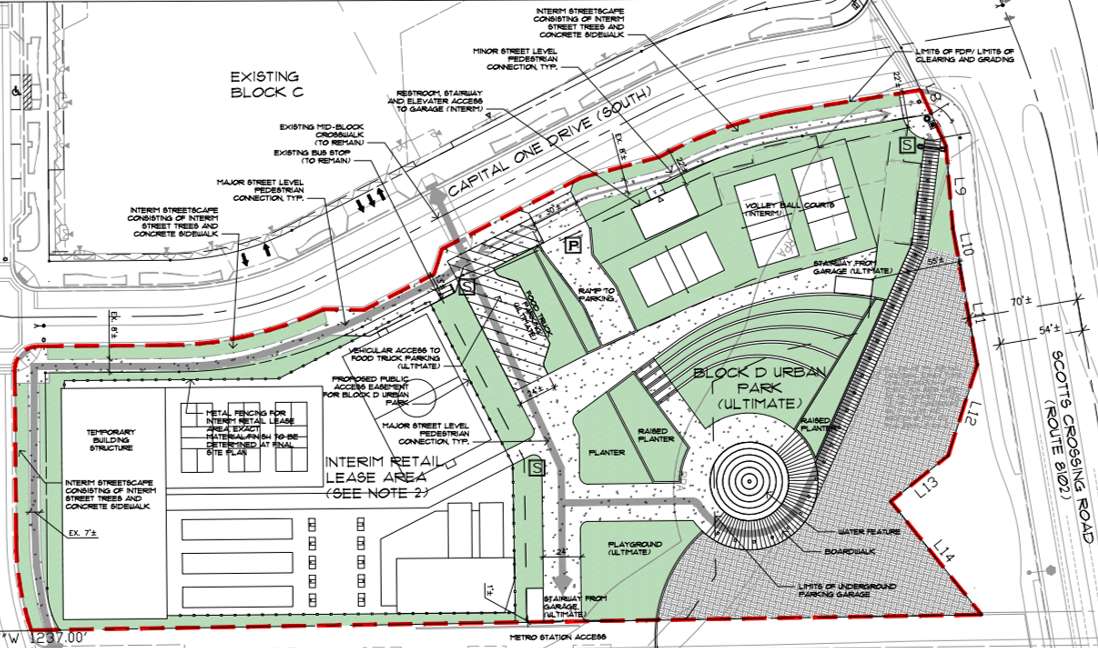
The banking giant has submitted a plan to Fairfax County for an urban park with a temporary retail building at the corner of Scotts Crossing Road and the McLean Metro station tracks.
According to Capital One corporate spokesperson Angela Solomon, the proposed park will bridge the gap between Capital One Center and the Metro station’s second entrance. The 3.4-acre site is currently being used as a construction staging area.
“This [final development plan] provides for a connection to the McLean Metro Station on the Silver Line to connect to the ‘back door’ to the Station that is currently planned between WMATA and Fairfax County to help facilitate a pedestrian-friendly environment and accessibility to public transportation,” Solomon said.
The park is envisioned as similar in design to The Perch, the skypark on top of Capital One Hall. Possible amenities include water features, a playground, an amphitheater, a food truck area, and landscaping, all of which will be publicly accessible.
The permanent park will take up just a portion of the land designated as Block D in the overall development plan for the campus.
The application proposes filling the rest of the block with interim volleyball courts and a retail area until they can be replaced by a residential tower and and office building, respectively.
The retail building will be limited to 45,000 square feet in size and have some space for indoor recreational facilities. It will be complemented by additional outdoor amenities, with bocce or pickleball courts and mini-soccer fields cited as possibilities.
“These improvements will provide active and passive amenities and recreation opportunities for the Headquarters Campus’s employees and visitors,” McGuireWoods land-use planner Mike Van Atta wrote in a Jan. 26 statement of justification on Capital One’s behalf. “[They] will continue to transform the Campus into a region-wide destination with a vibrant mix of uses and supporting amenities.”
As part of the project, a ramp will be constructed off of Capital One Drive South to provide access to a new underground parking garage, which will provide additional parking in the short term before serving the future office building.
The streetscapes around Block D will be designed to “facilitate pedestrian connectivity” and include interim tree plantings, according to the statement of justification. The developer will also remove invasive plants and replace them with native species in accordance with its existing commitment to help restore Scott’s Run streambanks.
“Capital One is proud to call Tysons home,” Solomon said. “As our commitment to the greater D.C. region continues to grow, so has our physical presence here at Capital One Center. We are designing an environment where our associates and the surrounding Tysons community can live, work and play.”
Solomon says construction on the urban park project could start as soon as this summer, with completion coming by fall 2023.
The master plan that Fairfax County most recently amended and approved in July 2020 anticipates a total of 944,000 square feet of development in Capital One Center’s Block D.
The future residential tower will have 385 units on 33 floors, while the office building will be 22 floors tall with almost 450,000 square feet of space. The plan allows up to 45,000 square feet of ground-floor retail across both buildings.
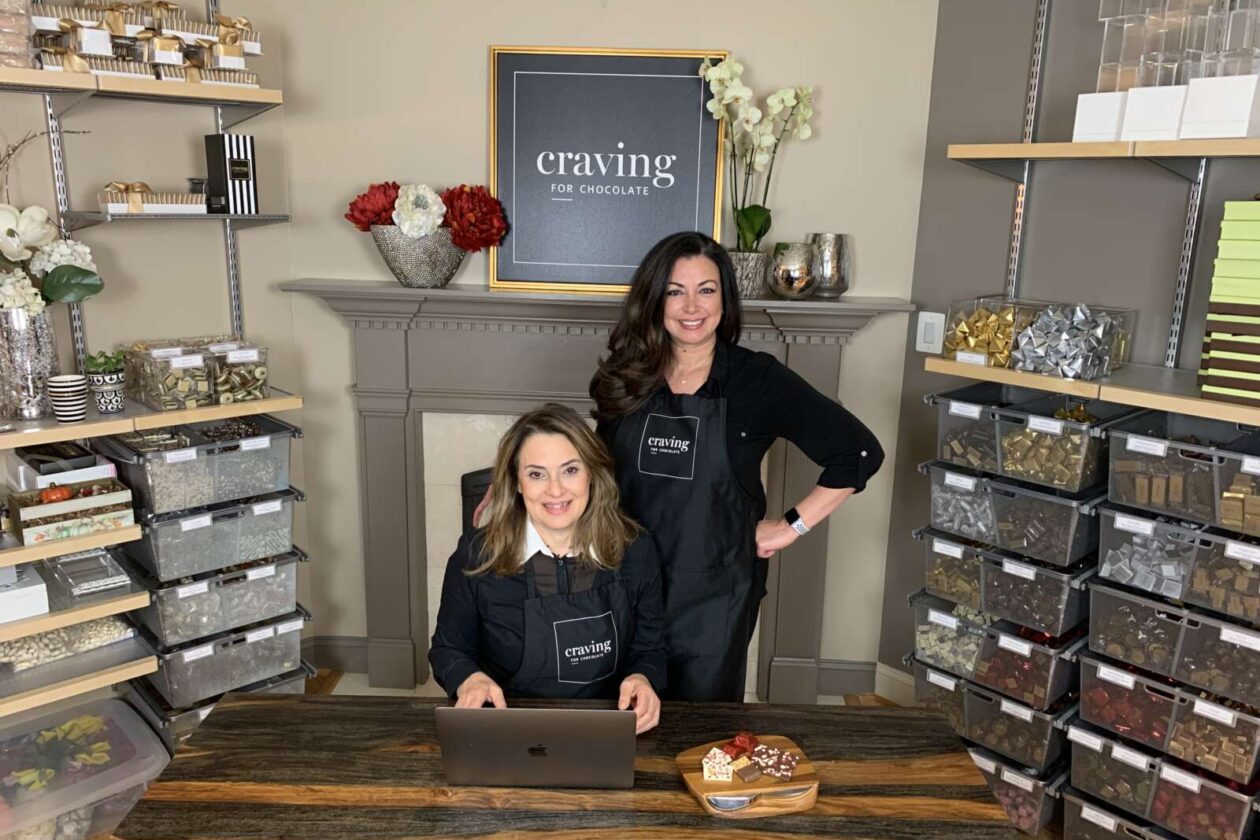
Valentine’s Day is, unsurprisingly, a busy time for Suzanne Nader and Dalia Hidayat, the two women behind local chocolatier Craving for Chocolate.
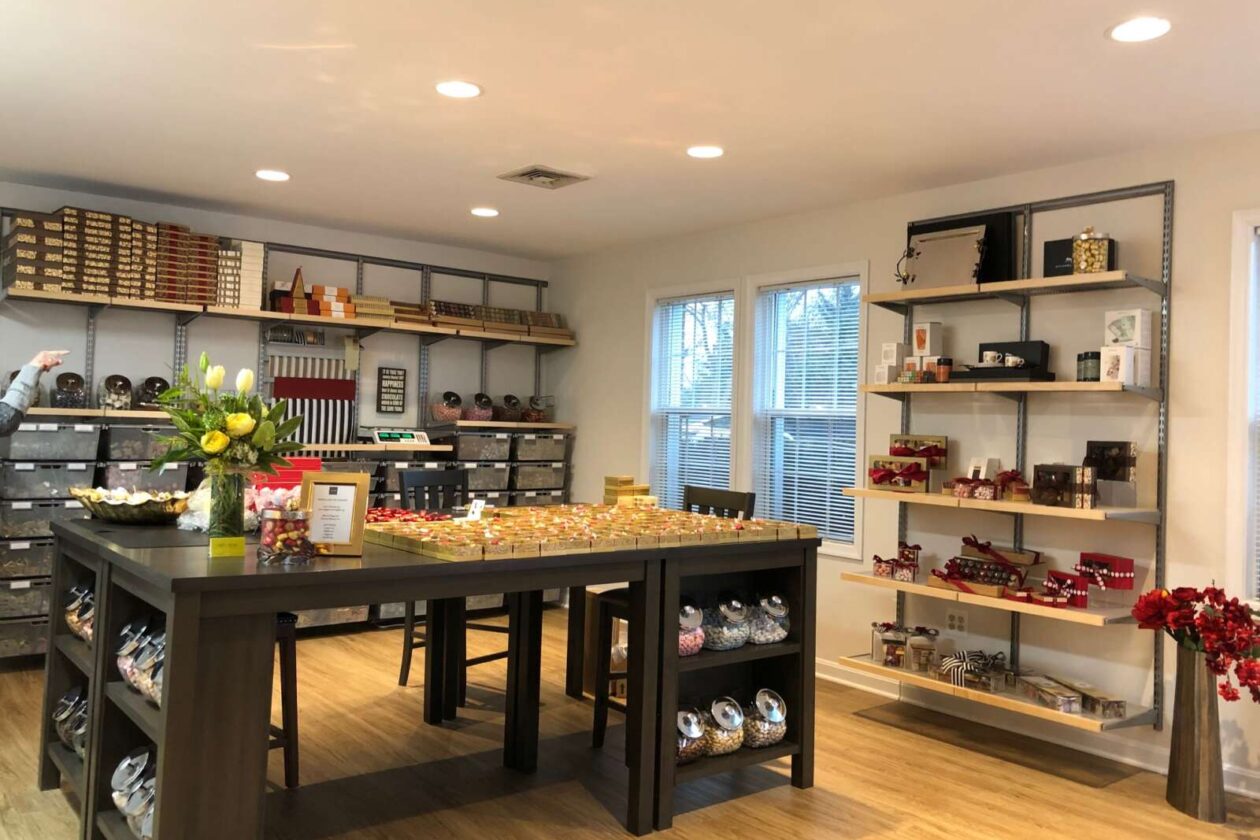
A visit to the pair’s new Dunn Loring studio (2108-A Gallows Road) on Monday (Feb. 7) found them filling and packaging dozens of boxes with sweets for corporate orders tied to the romantic holiday.
The demand for chocolate doesn’t end with Feb. 14, though. For this boutique retailer, it spans every occasion from Christmas — the most hectic time of year — and Ramadan to anniversaries and graduations, according to Hidayat.
“Somebody’s celebrating something every day, so it’s such an amazing business to be in,” she said.
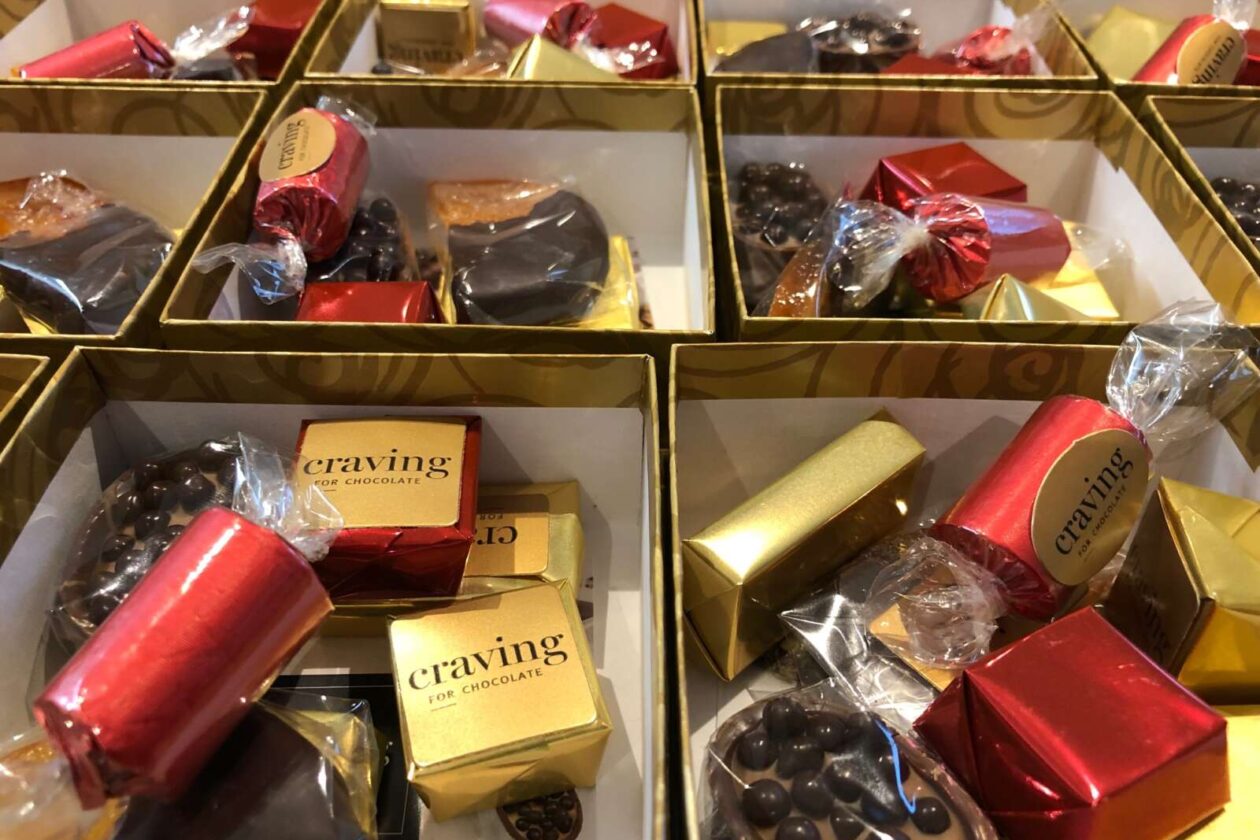
Distinguished by its use of Mediterranean and Middle Eastern flavors, such as rosewater and mastic, Craving for Chocolate has seen an explosion in sales since the COVID-19 pandemic forced it to pivot from pop-ups to e-commerce.
Nader, a McLean resident and Lebanese immigrant, founded the chocolatier in 2015 out of a desire to address what she saw as a lack of variety in the market. It started small, primarily serving family and friends, but the client base grew through word-of-mouth.
That’s how Hidayat got involved. Introduced to Craving for Chocolate after receiving one of its boxes as a gift, she was impressed not just by the chocolate, which is made at a factory in Lebanon, but also by the acrylic container it came in, which was hand-carved by refugee artisans.
She called for a refill and was surprised to learn that Nader was working from home.
“I have a 30-year background in sales and marketing, so it’s second nature to me to refer and think of ideas,” Hidayat recalled. “I worked at the Ritz, and I knew that they had space to do a pop-up for her, so I just connected her as a friend.”
Over the next two years, that pop-up at the Ritz-Carlton Tysons led to a partnership with Nordstrom and appearances at Tysons Galleria, along with various local markets.
With the business growing, the women were contemplating a transition to a full mall store or a brick-and-mortar site when the pandemic hit in March 2020.
Pivoting instead to Nader’s basement, they built up the company’s website to support more online sales and put renewed emphasis on their use of custom-made gift boxes, trays, and other crafted items for packaging the chocolate.
“We sell chocolate, but we also always focus on what can be a nice gift,” Nader said. “What can go with it, like the tray? The tea? What can also add to this gift?”
While Craving for Chocolate has expanded its reach, now shipping nationwide, they were committed to staying in the Tysons area when looking for a permanent workshop, with the business outgrowing Nader’s home.
They considered finding another location in McLean, but the Gallows Road office seemed more accessible from the Tysons core, Nader says. It’s also about halfway between her house and where Hidayat lives in Vienna.
Craving for Chocolate moved in at the beginning of January, and both Nader and Hidayat say the new space has been “amazing” so far. The studio is open by appointment only from 11 a.m. to 4 p.m. on Mondays through Saturdays.
“We like focusing on our clients and giving them that elevated service and one-on-one attention, and if you have more than two people here, it gets tough to do that,” Hidayat said. “They want to know what’s in the chocolates. They just want to spend time. That’s what we’ve noticed with our clients.”
FCPS Shares Plan for Easing Covid Rules — Amid mounting pressure from the state, Fairfax County Public Schools says it will make masks optional when COVID-19 transmission in the county reaches moderate levels and remains there for seven consecutive days. Masks will still be required for people who aren’t fully vaccinated. [FCPS]
Fairfax County Seeks to Address Language Barriers — With Fairfax County now boasting a “majority-minority” population, officials released a report last month on how to better serve the nearly 40% of households where residents speak a language other than English. Recommendations included creating a language access team in the county’s public affairs office and devoting more funds to translation technology. [Inside NoVA]
Inova Leases More Space in Merrifield — “The Falls Church-based nonprofit has signed a lease at 8260 Willow Oaks Corporate Drive in Fairfax near its flagship hospital. There, Inova will take over 48,000 square feet in two of the building’s eight floors to open four medical practices…The clinics will house pediatric rehabilitation and cardiology services, and pre- and post-operative evaluations and consultations.” [Washington Business Journal]
California Cybersecurity Company Adds Tysons Subsidary — Cloud security company Zscaler announced on Friday (Feb. 4) that has created a government-focused subsidiary called Zscaler U.S. Government Solutions. The Tysons headquarters will accommodate 75 employees “to support agencies and their systems integration partners.” [Executive Biz]
See Performers’ View of Capital One Hall — “Ready for the big stage? Take the walk from green room to main theater from the performers perspective and explore the unique spaces Capital One Hall has to offer!” [Capital One Hall/Twitter]
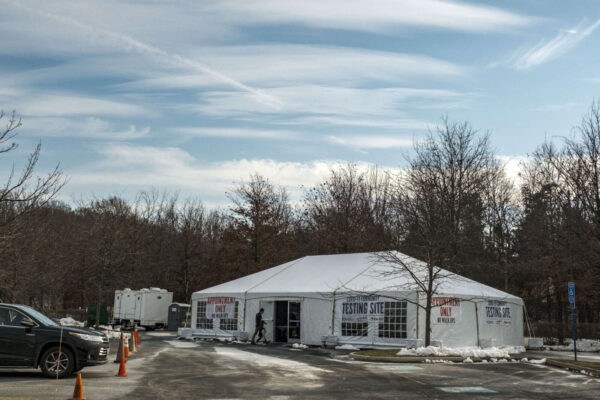
The COVID-19 testing site at the Fairfax County Government Center has closed less than a month after its launch.
The Virginia Department of Health shut down the Community Testing Center yesterday (Wednesday) as part of a statewide shift away from mass test sites in favor of a mobile “CTC+” initiative focused on communities with accessibility barriers.
“As the community response has decreased at the large-tent, fixed testing sites, the Virginia Department of Health is transitioning to a flexible response where the testing van can be moved and located in areas with low access to testing,” VDH COVID-19 Testing Co-Lead Suzie Trotter said by email.
The Fairfax County CTC opened on Jan. 15 in response to the omicron variant’s arrival in December, which pushed local Covid caseloads to record heights and triggered soaring demand for testing that strained limited supplies.
Trotter says the number of tests conducted at VDH’s nine CTCs “dropped off significantly over the past week,” as the latest surge in the pandemic has started to recede. The supply shortage has also eased with an increased availability of testing kits through pharmacies and other retail sites, along with the launch of a federal program that mails free at-home kits.
The Fairfax CTC conducted tests for 4,394 people over its 19 days of operations, according to Trotter, who says the closure date was determined far enough in advance to cut off appointments.
“VDH has a role to continue to support the safety net and support testing to those that either have difficulty getting to a test site or have low access to testing in their community,” Trotter said. “Mobile vans will allow access to testing in areas that have never had the opportunity to have testing nearby.”
Set to begin operations on Tuesday (Feb. 15), the CTC+ initiative consists of vans that will travel to different locations with no-cost PCR diagnostic tests based on community need, as requested by local health departments.
There will be just one van to serve the entire Northern Virginia region, but Trotter says it will “maintain a weekly presence” in the Fairfax Health District, though an official schedule has not been determined yet.
The Fairfax County Health Department will evaluate a variety of factors when choosing testing sites, such as case levels and positivity rates, the availability of existing testing resources, and accessibility, spokesperson Lucy Caldwell told FFXnow.
“This resource joins other FCHD testing resources that will continue to target communities most in need of testing,” Caldwell said by email.
Other testing options include health care providers, retail pharmacies, and FCHD clinics. The county has also restarted its mobile laboratory, which tests people with symptoms and is next scheduled to appear at the Safeway at Engleside Plaza in Mount Vernon.
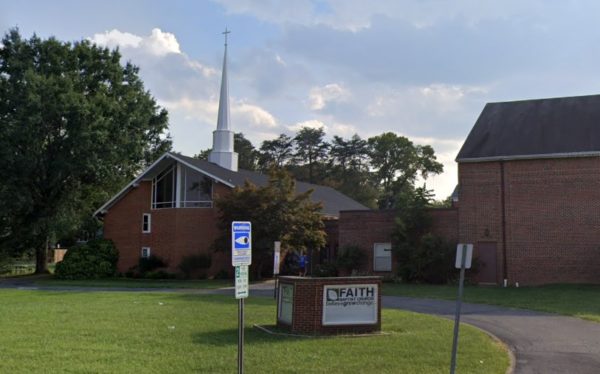
The Vienna Town Council unanimously voted Monday (Feb. 7) to borrow $12 million to fund capital projects, including improvements of roadways, sidewalks, and the recently acquired Faith Baptist Church building.
Of the $12 million in bond funding, $6.7 million will be repaid with meals taxes, $3.9 million repaid with water and sewer fees and $1.2 million repaid by the general fund, Director of Finance Marion Serfass told the council at its Monday meeting.
About 44% of the money will go toward construction improvements to streets and sidewalks, and 33% for water and sewer projects. The remainder of the costs are for smaller facility improvements, like parks and recreation projects, public-use vehicles, and bond issuance costs.
“I do want to say for the record that the town does not undertake borrowing $12 million lightly,” Councilmember Chuck Anderson said. “We have a stellar financial record and that money is cheap, and we’re using these funds for capital improvements that are much needed, so this is actually a very fiscally smart and responsible thing to do.”
Councilmember Ray Brill responded that “money is never cheap” and “there is a cost to the money.”
Serfass told Tysons Reporter that this morning (Thursday), credit rating agencies Moody’s and S&P both reaffirmed their AAA rating of the town, the highest possible rating, because of the town’s likelihood to pay back the debt.
Projects from the $26.5 million 2022 Capital Improvement Plan that will get some of the bond funding include:
- Glen Avenue sidewalks ($1.9 million)
- Asphalt and mill overlay ($1.65 million)
- Glyndon Road SE improvements from Locust Street to Valley Drive ($725,000)
- The Freeman Store and Museum roof replacement ($95,000)
- Glyndon Park playground and parking lot replacement ($300,000 each)
- Faith Baptist Church property improvements ($300,000)
Many of the projects have additional funding allocated in the CIP from the town’s American Rescue Plan Act money or from the Robinson Trust Sidewalk Initiative.
“A good use of the American Rescue Plan Act money is capital projects, one-time projects that don’t require additional funding going forward, so not a new program,” Serfass said at the town council’s Jan. 24 meeting when it approved the CIP. “That really is a benefit to us as a town and is going to allow us to take a little pressure off our debt capacity and off our water and sewer rates.”
Bond funding, including premiums, accounted for $37.6 million of the town’s 2020 CIP, which included about $15 million for the police station renovation, and $9.2 million of the 2018 CIP.
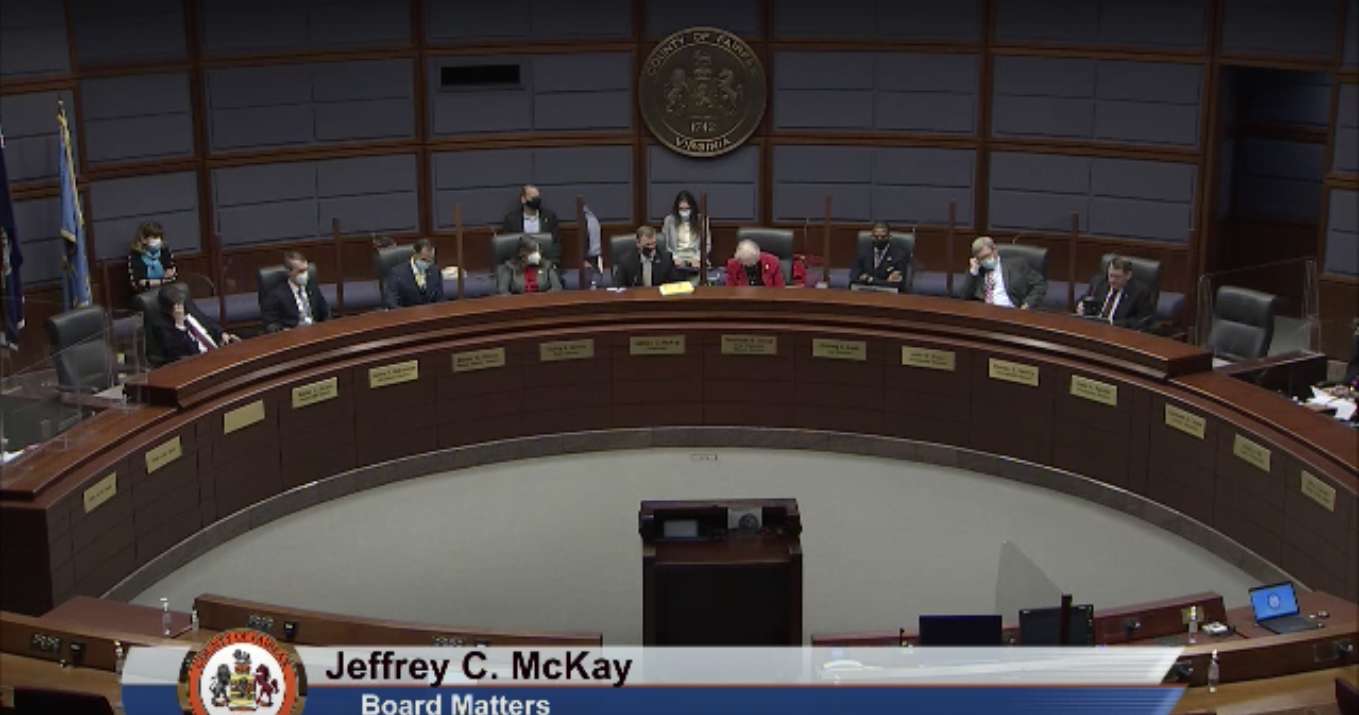
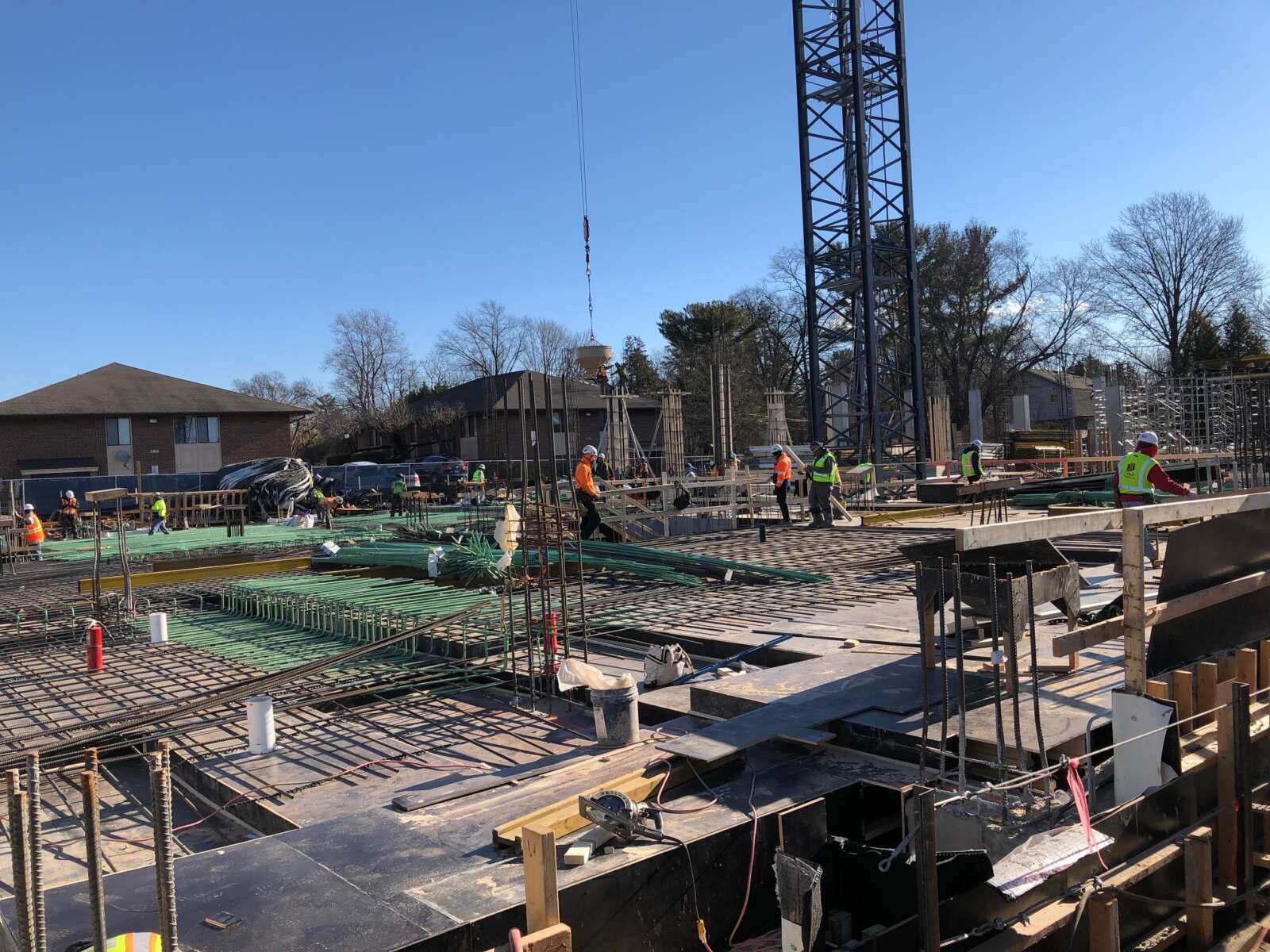
Planning is underway for a memorial to commemorate Fairfax County’s COVID-19 victims and the impact of the pandemic.
Board of Supervisors Chairman Jeffrey McKay said at a meeting on Tuesday (Feb. 8) that his office has been working with county team on the creation of a memorial.
The board approved the proposal to direct staff from Facilities Management, the Park Authority and other agencies to put together, by May 1, a cost estimate, timeline and design options for a memorial to be built on county or park property.
“We started this conversation early on and staff is well on their way to bringing back some formal recommendations on a creative way that we can permanently recognize the loss of life, but also all the personal sacrifices people in and throughout this county and region have made over the last two years,” McKay said.
McKay recalled joining public health officials on March 7, 2020 to announce the first presumptive COVID-19 case in Virginia, now 23 months ago to the day of the board meeting.
“Since that time, as we know, life has not been the same,” he said.
In his board matter, he discussed how residents have embraced vaccinations, masking, physical distancing, testing, and quarantine to protect themselves and the community.
As of Feb. 1, more than 80.0% of all Fairfax County residents have received at least one vaccine dose and there are more than 300 vaccination sites across the county. Our school age kids who have received at least one vaccine dose include: 46.7% of children 5-11 years, 90.1% of those 12-15, and 94.6% of those age 16-17 years.
While this is great positive progress, we all know we still feel the impact of the significant loss of life our community has experienced throughout the pandemic. There have been more than 170,000 COVID-19 cases within the Fairfax Health District. Sadly, this has resulted in more than 4,400 hospitalizations and 1,284 deaths.
Fairfax County has seen a decline in Covid cases over the past few weeks since the omicron variant fueled a spike around Christmas.
As of yesterday, the Fairfax Health District, which includes the cities of Fairfax and Falls Church, has recorded a total of 173,393 cases, 4,401 hospitalizations, and 1,344 deaths.
McKay emphasized that he wanted the county to do something permanent to memorialize the last two years.
“I want to make sure that we don’t forget ever the lives of so many people in Fairfax County who passed away as a result of Covid, especially those very early on, when we were still learning about the importance of so many of the safety measures and the importance of vaccinations, that didn’t get a chance to even do those right things that I mentioned in my Board Matter and sadly perished,” he said.
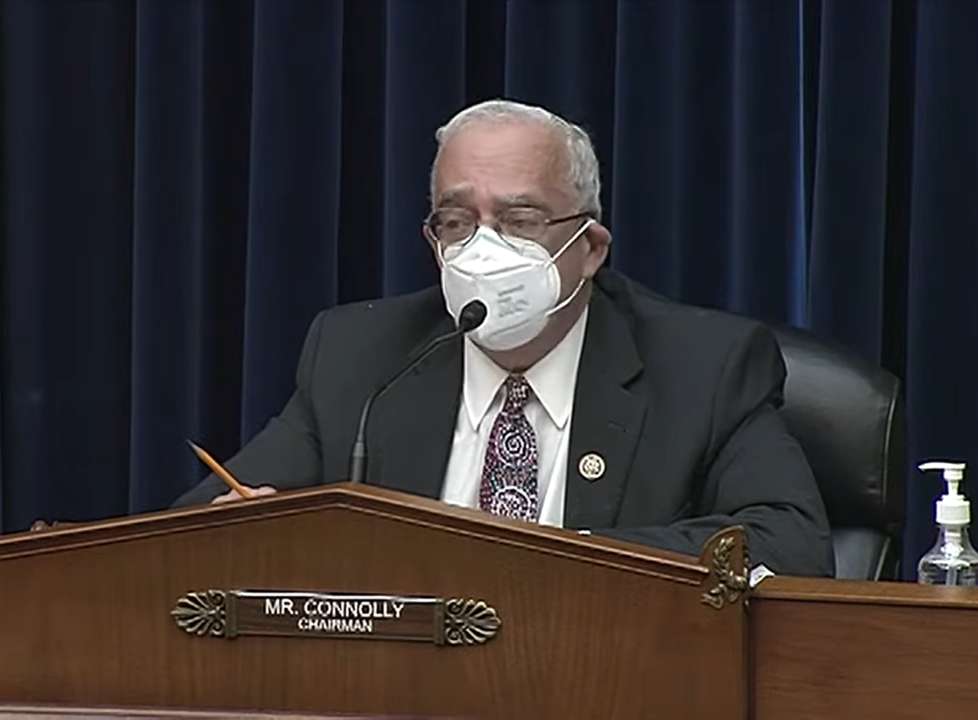
(Updated at 10:10 a.m.) Tysons got a shoutout yesterday (Wednesday) from Rep. Gerry Connolly (D) at the Congressional hearing on Metro.
Connolly called the hearing before the House Subcommittee on Oversight and Reform, which he chairs, in December to address the safety issues that have sidelined more than half of the transit system’s trains for nearly three months now after a derailment in Arlington.
The two-hour hearing primarily featured Washington Metropolitan Area Transit Agency leaders addressing questions about the prolonged effort to fix the 7000-series trains, ridership declines, and a looming budget shortfall with federal relief funds running out.
However, it also saw Connolly defend the investments made to bring Metro into Tysons and Reston. The first phase of the Silver Line opened in 2014, after Connolly assumed office in Congress, but the groundwork for the $2.9 billion project was laid while he served on the Fairfax County Board of Supervisors.
Asked whether the D.C. area has the density to support Metro, witness David Ditch, a policy analyst for the conservative Heritage Foundation, suggested local governments should privatize rail or shift resources to buses, which he argued are “more economical” since they “share road infrastructure.”
“When you’re in a hole, stop digging,” Ditch said. “Past spending on transit infrastructure is not a justification for ignoring high costs and limited benefits or adding even more high-cost infrastructure on top of what we already have.”
Connolly countered that federal and local officials “experimented with” a variety of options for the Silver Line, including the inclusion of a bus rapid transit system as part of the project. Fairfax County launched an express bus service in the Dulles corridor in 1999.
However, he said the buses saw a third or less of the ridership of the existing Metro trains, indicating that rail would be the better investment.
He pointed to Tysons as an illustration of how transit can spur economic development, drawing more residents and businesses that will sustain the system long term, at least if Fairfax County’s comprehensive plan pans out.
“When we built the Silver Line through Tysons, we had 17,000 people live in Tysons, a physical area bigger than downtown Boston,” Connolly said. “Because of the advent of rail, there’ll be 100,000 additional residents in Tysons. The density, in some cases, is dependent on the investment in rail, and I believe Tysons is a great example of a potential success story.”
Unmentioned during the hearing was that plans for bus rapid transit in Tysons are in the works, though the proposed system will be tied to Route 7, rather than the Silver Line.
The Fairfax County Board of Supervisors is also scheduled to approve plans to enhance bus service in Reston and Herndon later this month, as Metro prepares to open the Silver Line’s second phase this spring after years of delays.
Fairfax County Leader Criticizes Senate Vote on Masks — Fairfax County Board of Supervisors Chairman Jeff McKay said he’s “deeply disappointed” in the Virginia Senate for passing a bill that would let parents opt out of school mask requirements, arguing that it usurps local school boards’ authority. He says local officials have asked the governor to work with them on “an offramp” for when to stop using masks but “have not received any response to that suggestion.” [Jeff McKay/Twitter]
I-66 West Ramp to Vienna Metro Reopens — The ramp from westbound I-66 to the Vienna Metro Station, via an exit to Country Creek Road and Virginia Center Boulevard, has reopened to traffic after an extended closure that began on Jan. 21. The closure was needed for utility work related to the project to extend the I-66 Express Lanes from I-495 in Dunn Loring. [VDOT Northern Virginia/Twitter]
Park Authority Highlights History of Freedom Hill — “Drive through busy Tysons, Virginia, and the traffic, buildings and construction make it hard to imagine the place as anything but a busy urban center. But did you know that it was once a rural community made up of free Black Fairfax County citizens?” [FCPA]
Tysons Company Faces Facial Recognition Concerns — “Two days after the Internal Revenue Service said it would transition away from using facial recognition for taxpayers to access certain IRS documents online after a wave of privacy complaints, Tysons, Virginia-based ID.me said it would make the use of ‘selfies’ optional for all of its government clients.” [WTOP]
Farmers’ Market Managers Sought — The Fairfax County Park Authority is currently recruiting volunteers to manage its 10 farmers markets, including a McLean market that will operate from May 6 to Nov. 11 at Lewinsville Park (1659 Chain Bridge Road). The market managers provide on-site support by setting up supplies, enforcing rules, answering questions, and helping with vendor selection and community outreach. [FCPA]
Photo courtesy novafoto.co
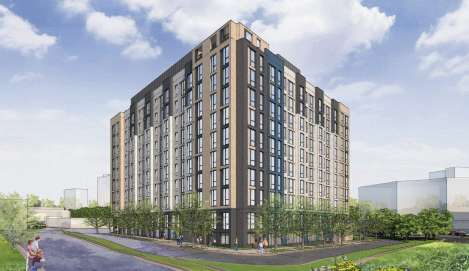
Dominion Square West in Tysons has been redesignated as a revitalization area to make way for an affordable housing project.
The Fairfax County Board of Supervisors approved the designation to help facilitate an application for Low Income Housing Tax Credits.
Hunter Mill District Supervisor Walter Alcorn noted that the term “revitalization area” isn’t related to the county’s economic revitalization efforts in areas like McLean and Lake Anne in Reston.
“This is a very specific term used in the state code, separate from what we’d say revitalization is in our Comprehensive Plan,” he said.
The nonprofit Arlington Partnership for Affordable Housing has a contract with the county to buy the 2-acre site on Spring Hill Road in the Tysons West neighborhood. The land was purchased by the county using $10.97 million from the American Rescue Plan Act and another $10 million from a Fairfax County Redevelopment and Housing Authority reserve fund.
APAH must submit its application for the credit to Virginia Housing before its March 2022 deadline. The property’s new status as a revitalization area was deemed necessary to help meet the criteria for the application process.
According to county documents, the tax credit would be used as a source of funding by APAH to construct a nine-story, 175-unit multifamily building for the first phase of the Dominion Square West development planned near the Spring Hill Metro station.
The units would be affordable to county residents with incomes between 30 to 60% of the area medium income, which is $129,000 for a family of four, according to the U.S. Department of Housing and Urban Development. 60% of that would be $77,500 for a family of four.
Board of Supervisors Chairman Jeff McKay noted that this was the first-ever item taken up by the board to come with a formal equity impact statement explaining how the project will help address the county’s goal of creating an inclusive community.
“Staff will be strategically applying the equity impact statements on items coming to the board, non-land use items,” McKay said.
According to the statement, the first phase of Dominion Square West “will provide equitable access to reasonably priced housing” in the increasingly urban economic hub of Tysons.
Since 2010, over 44,000 new units have been approved for development in Tysons. As of August 2021, a total of 752 of the 4,081 residential units delivered serve low to moderate-income households though the county’s affordable and workforce dwelling unit programs.
The county hopes to increase the supply of affordable housing by adding at least 5,000 homes by 2034.