
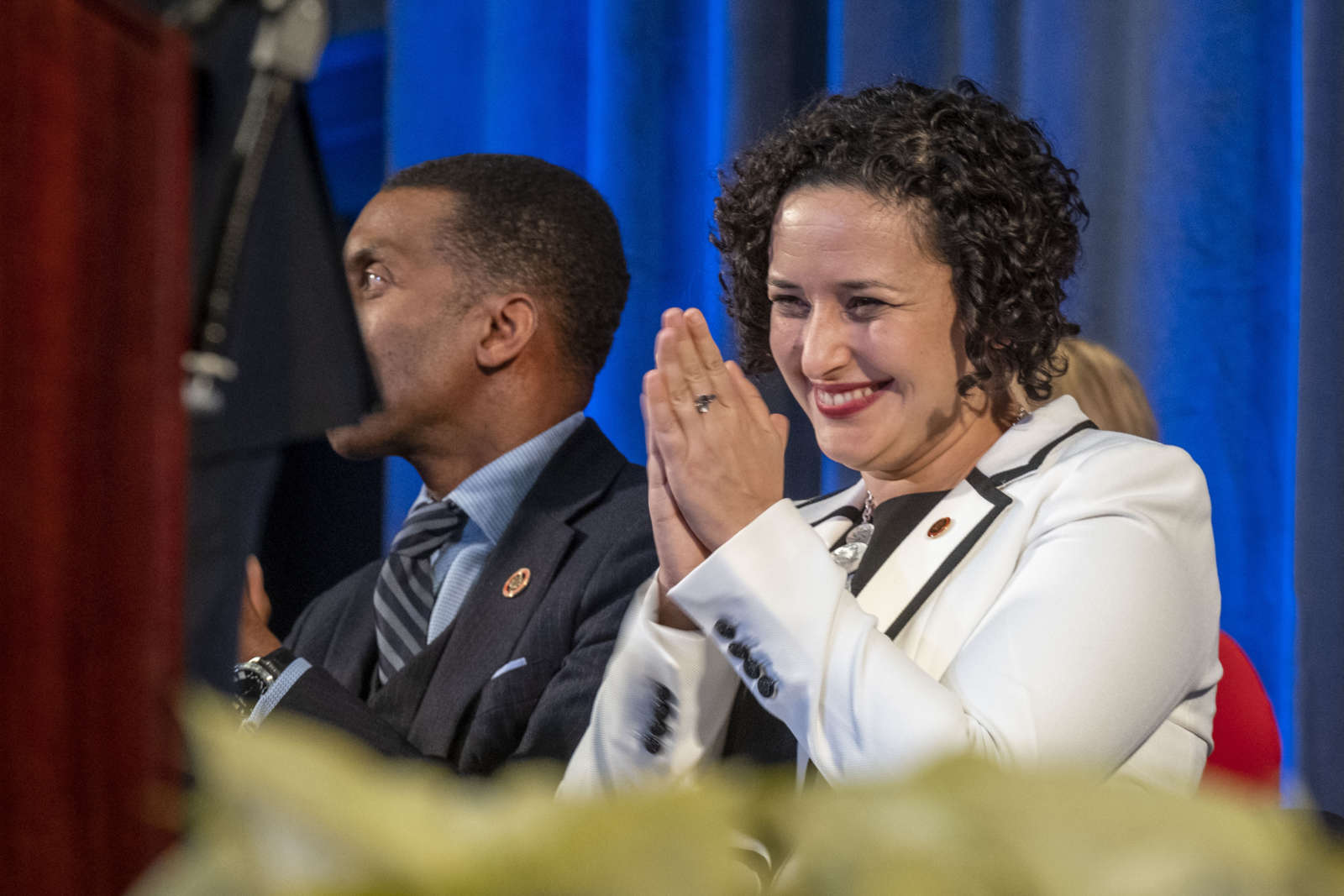
Although Dalia Palchik has spent nearly all her life in Providence District, her first term representing the district on the Fairfax County Board of Supervisors still threw her some curveballs.
Though she had some prior experience with the county government as Providence’s representative on the Fairfax County School Board, Palchik tells Tysons Reporter that she still had to get acclimated to the many departments, initiatives, and organizations, all while in the middle of a once-in-a-century pandemic.
“My next goal is to have us get away from acronyms,” Palchik joked.
More seriously, the supervisor says the pandemic has uncovered problems in Fairfax County that she believes can be tackled if the county commits to building trust in the community and working with established and respected local groups and organizations.
She says this year has revealed the vulnerability of communities that have less access to housing, good schools, and walking trails. Those populations also bear the brunt of economic depressions and climate change.
While it is important that the county has hard data showing these inequities, it needs to work “so much faster and harder to help not make those gaps even larger,” Palchik said.
Palchik also saw significant gaps in Fairfax County’s ability to communicate with people who speak Spanish. Upon becoming supervisor, she learned that the county had no Spanish-speaking person overseeing all communications with Spanish speakers.
“I was shocked, honestly,” she said.
For a few months, Palchik filled that role until it was taken over by a Spanish-speaking staff member who joined the county communications team this fall, she says.
As supervisor, Palchik also noticed a disconnect between the county’s operations and the needs of hyper-local communities, noting that many residents are more likely to think of Rhode Island when they hear the word “Providence.”
“They know that they live in Oakton, Falls Church, Tysons, Merrifield or Dunn Loring,” she said. “I think the big challenge is continuing to do things that support our whole county, while honing in at the community development level.” Read More
More people in Fairfax County are facing food insecurity this year due to the COVID-19 pandemic, as illustrated by increased requests to the county and local pantries for groceries.
Fairfax County received 5,980 requests for emergency food from Mar. 1 to Dec. 21 of this year, a 56% increase from the same timeframe in 2019, according to Shweta Adyanthaya, a public information officer for the county’s Health and Human Services Department.
“The height of the requests came in the early months of the response — April to September — and then leveled off to average levels of requests since then,” Adyanthaya said. “Those households in need of food resources are referred to nonprofit and faith-based community partners, as well as other county resources.”
She encourages residents in need to use the county’s map application to locate food distribution groups near them.
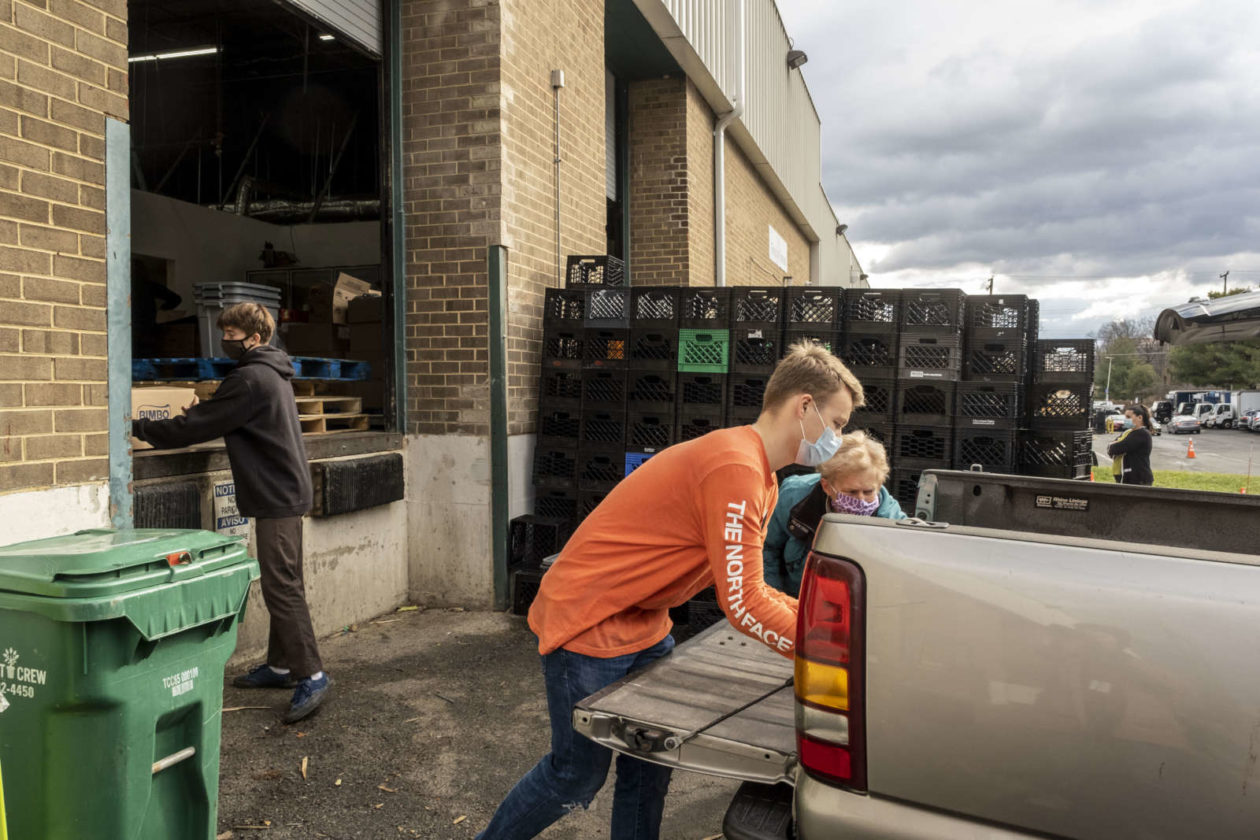
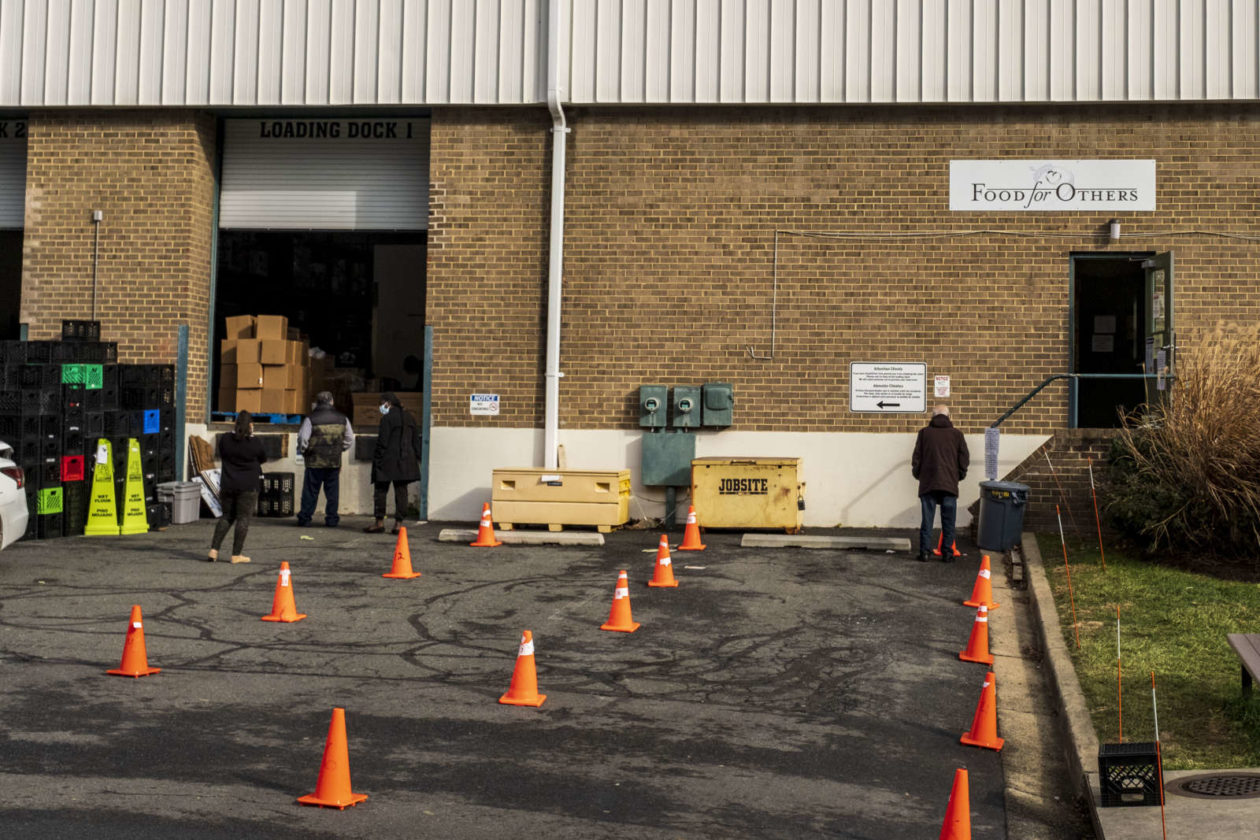
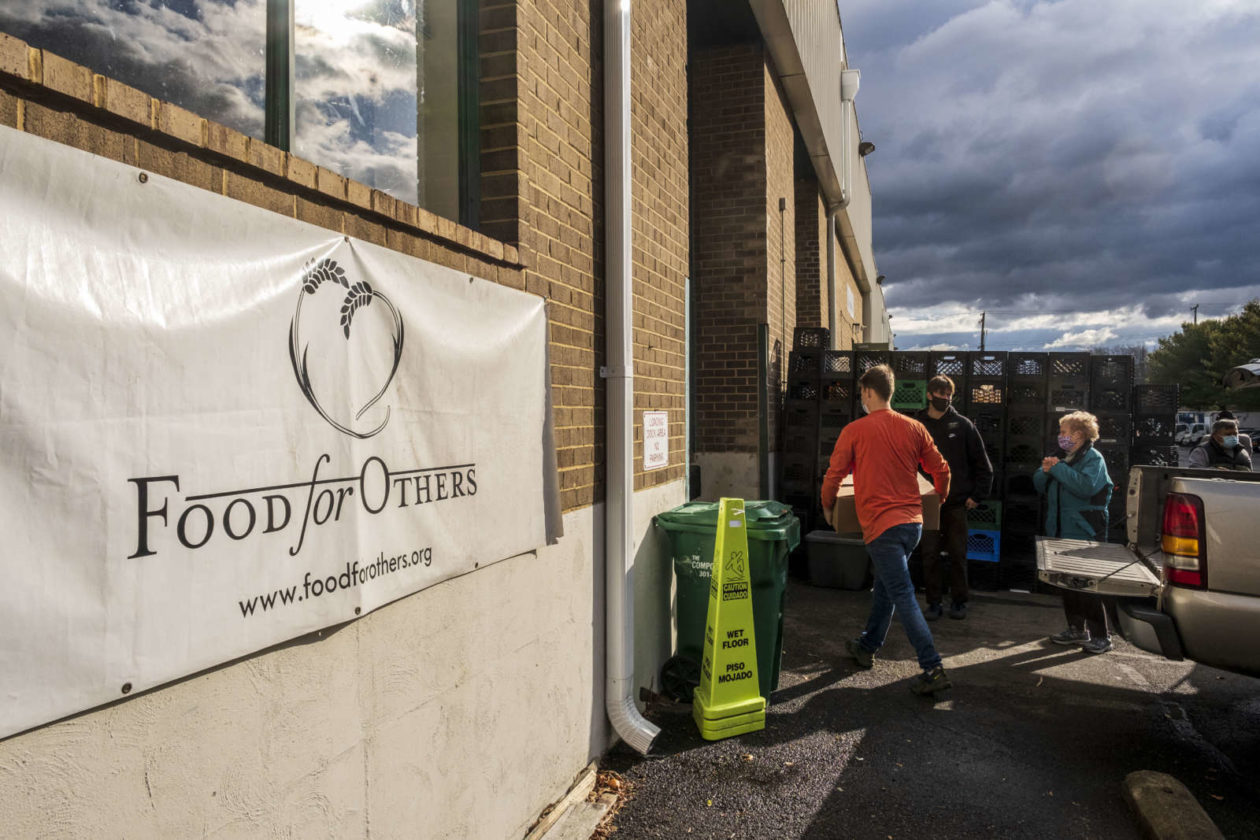
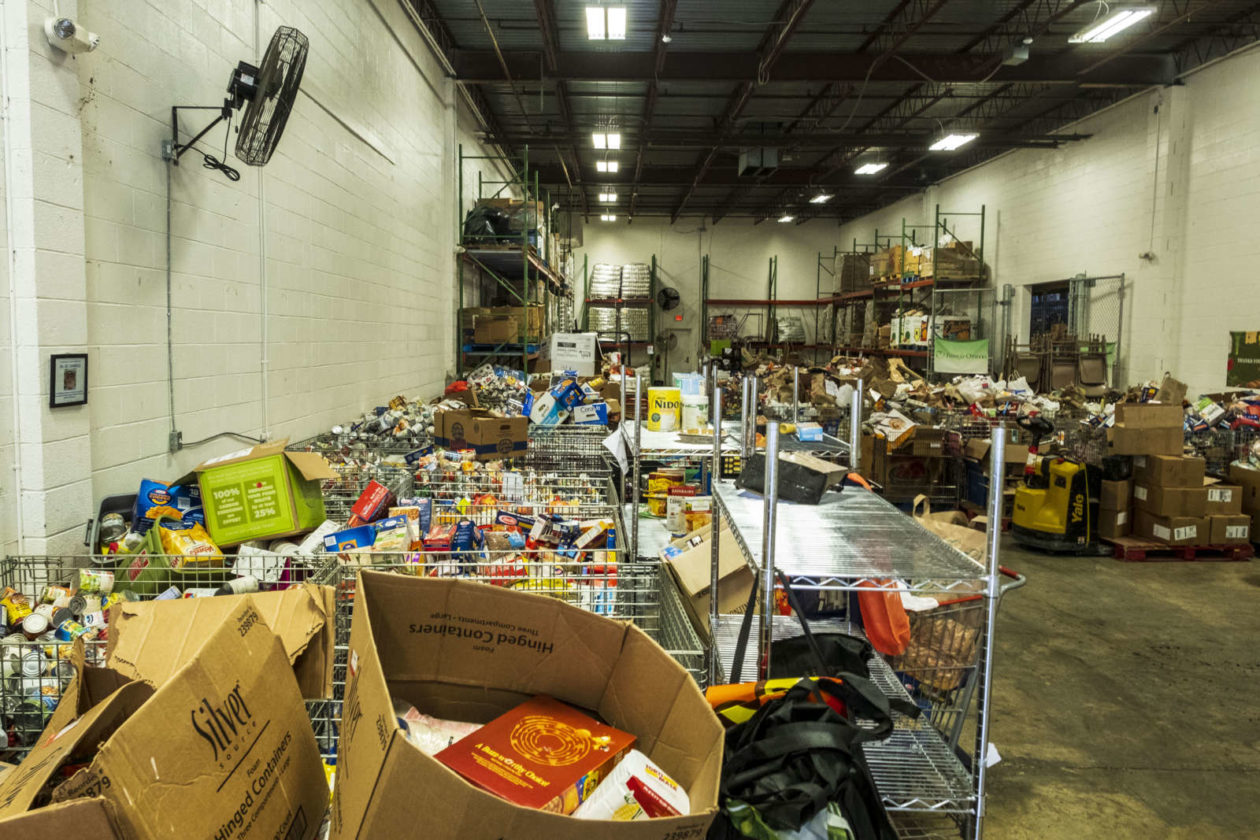
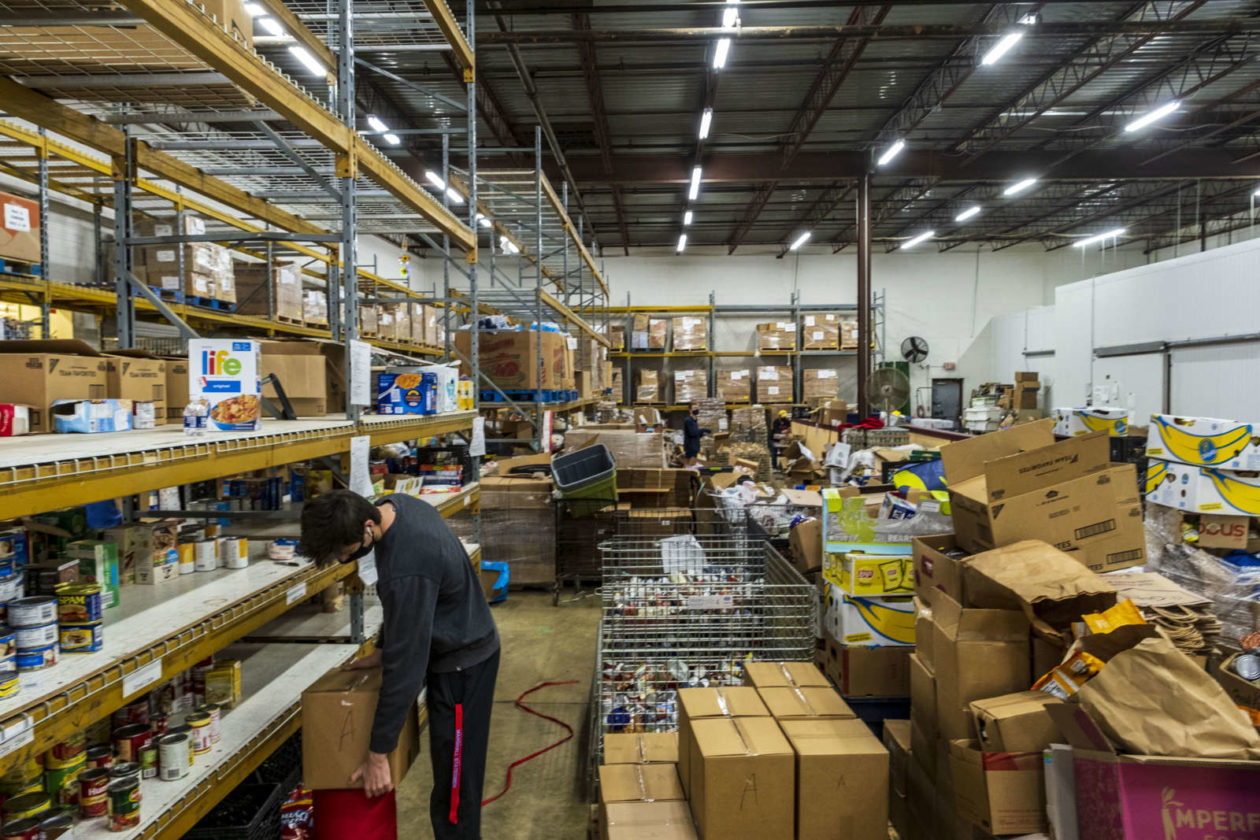
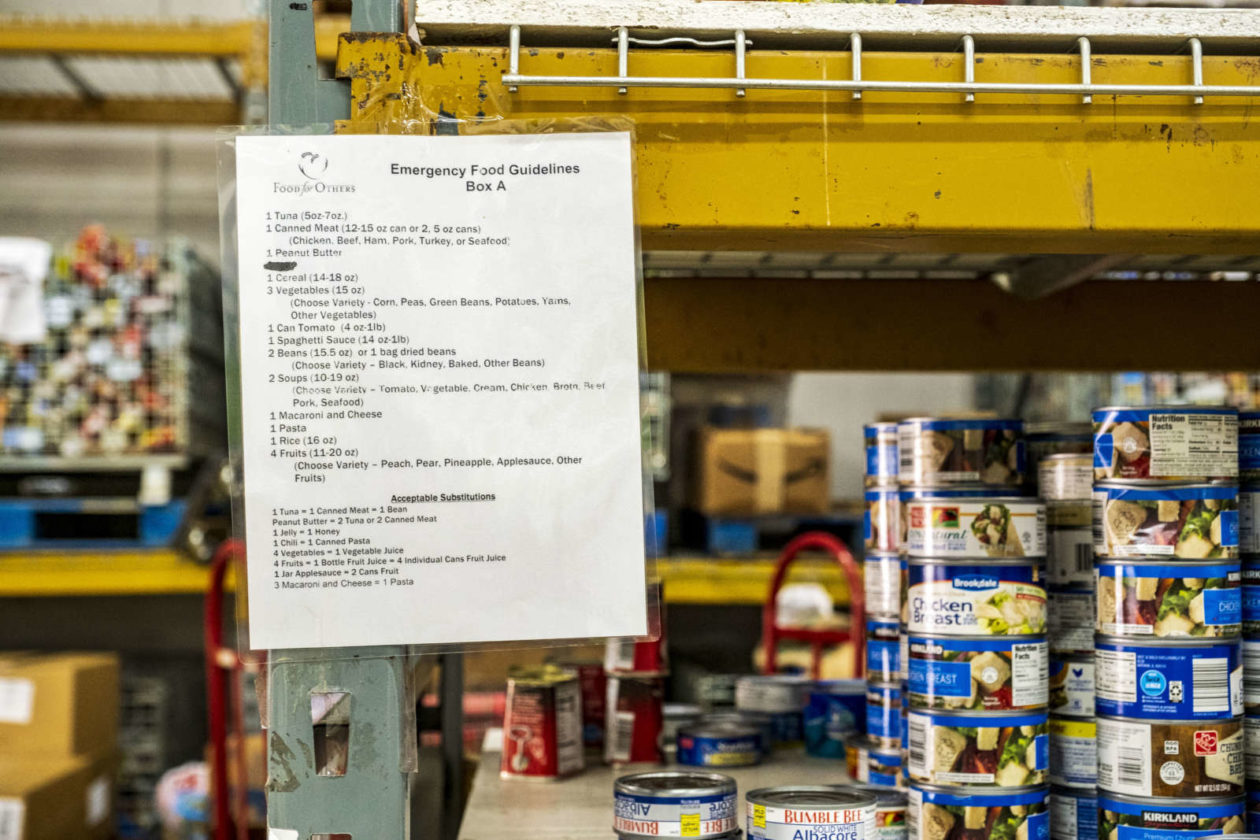
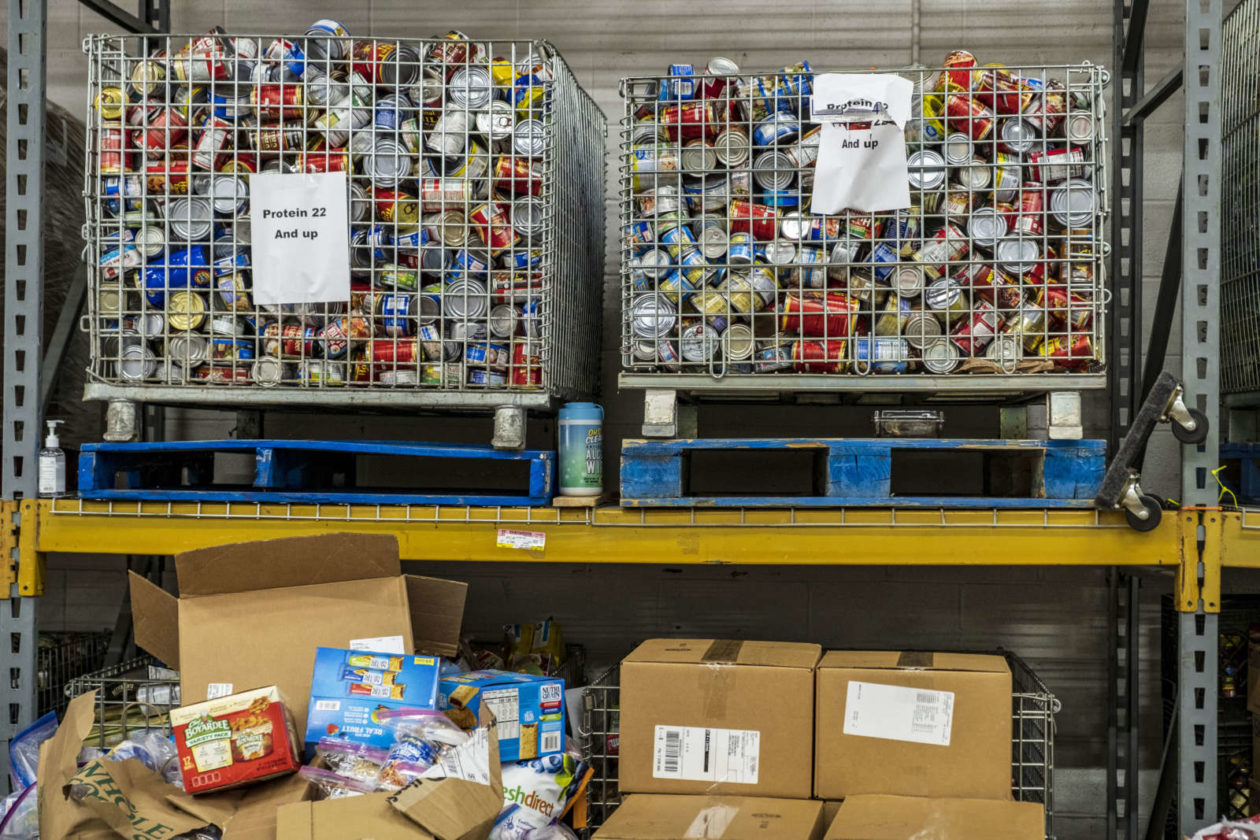
One nonprofit in the Tysons area is Food for Others, which operates out of a warehouse in Merrifield.
Food for Others spokesperson Bridge Snydstrup told Tysons Reporter that the nonprofit is distributing food to an average of 4,000 families weekly, double the number of families it served pre-pandemic.
“The majority of people we are serving right now are unemployed due to COVID-19,” Snydstrup said. “Many of our clients work in the service industry and have either lost their jobs or had their hours significantly reduced due to the pandemic.”
She said that donations are also ticking up, helping the nonprofit meet the additional need.
“The Northern Virginia community has been extremely generous in helping FFO respond to the COVID-19 crisis,” Snydstrup said. “So many people have reached out asking what they can do to help and have either donated food or made monetary donations.”
However, volunteer rates are down overall, even though many in the community are interested in helping out.
“We have to limit the number of people in our warehouse to allow for social distancing and to ensure that our staff, volunteers, and clients are safe,” Snydstrup said. “We do have limited volunteer slots in our warehouse on weekdays, [and] those interested can sign up on our website.”
The best thing to do for those who want to help but are unable to volunteer is to host a food drive and drop off the donations.
Students in the area are also stepping up, Dranesville District School Board representative Elaine Tholen said in her newsletter on Monday (Dec. 21).
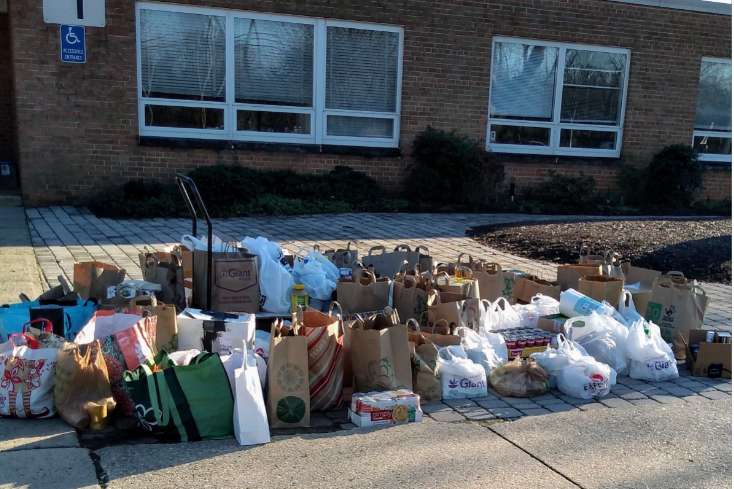
Last week, Cooper Middle School and Langley High School held a joint food drive for SHARE of McLean that brought in more than 6,500 non-perishable items. More than 40 students volunteered.
“We are thrilled to share it was an overwhelming success,” Tholen said. “We continue to be amazed by the generosity displayed by our school community and pyramid at large.”
The increase in demand for food assistance and drop in available volunteers are trends playing out nationally too.
Feeding America’s network of food banks have distributed nearly 57% more food in the third quarter of this year compared with 2019, according to an Associated Press analysis.
Meanwhile, NPR reported that food banks are seeing fewer volunteers, in part because the usual volunteers include older people, who are staying home to protect themselves from the coronavirus.
Food donation photo via Dranesville School Board Representative Elaine Tholen.

COVID-19 may have put a damper on a lot of year-end festivities, but many hallmarks of this holiday season are still going strong.
There is a certain magic in getting bundled up for ice skating or sipping mulled cider (or hot toddies) at outdoor restaurants. For something spectacular, families can enjoy holiday light shows or their neighbors’ tacky Christmas lights.
All of these and more winter activities can be done in Fairfax County through January. This year, you can justify these cold weather-friendly events to your heat-loving friends even more, since the risk of COVID-19 transmission is lower outside.
Does winter hold a certain spark for you? Are you going stir-crazy at home and need places to go? Tell us below how you are taking in this season, and drop recommendations in the comments.

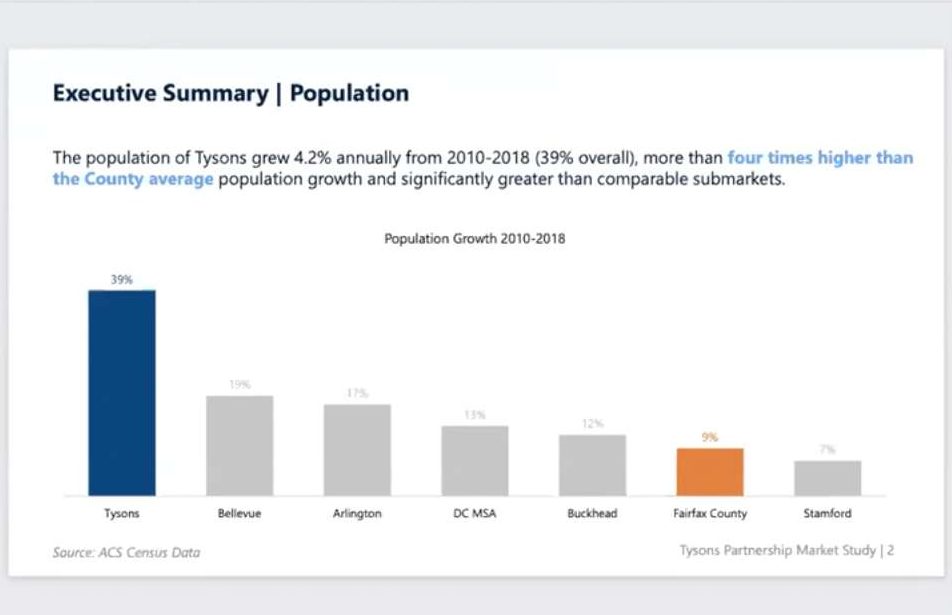
(Updated at 3:20 p.m.) Once home to 17,000 people living amid suburban office parks, Tysons has seen its residential population soar in recent years, growing four times faster than Fairfax County overall.
From 2010 to 2018, the population of Tysons grew 39% to about 23,749 people today, and by 2045, Providence District is expected to add roughly 57,000 residents. People under 20 now comprise one area of marked growth, from 1% of the population in 2010 to 21% in 2020.
“Forty percent is a tremendous number,” HR&A Partner Stan Wall said during the Tysons Partnership’s State of Tysons panel last week. “Tysons started off at a fairly low bar compared to some of the other communities in the region, but is outpacing Fairfax County and other areas around the region.”
Providence District Supervisor Dalia Palchik attributed much of the growth to the arrival of more young families in the area, as indicated by increases in children, teens, and 18- to 20-year-olds.
“People have not always thought of Tysons as a place where you can raise a family,” she said in a statement. “The increased investment in green space, affordable housing, and transit has made Tysons an attractive option for a demographic that previously did not consider Tysons as a place to live.”
But neither an influx of 57,000 people or the current growth rate are enough to reach Fairfax County’s goal of 100,000 residents in Tysons by 2050, according to Emily Hamilton, a research fellow and director of the Urbanity Project at the Mercatus Center at George Mason University.
Fairfax County set 100,000 residents as a target in its 2010 comprehensive plan, which also aims for a population of 44,000 by 2030. Tysons would have to expand at a rate of 8.5% annually — double its current annual growth rate of 4.2% — to hit those benchmarks.
If the lagging growth concerns policymakers, they should consider up-zoning areas slightly farther away from Metro stations and encourage smaller-scale developments, which move more quickly, Hamilton says.
Currently, most development is happening in the one-quarter mile radius around the area’s four Silver Line stations, she said. The lower-density and mid-rise zoning on the periphery of the stations could be amended to allow for more residential growth.
The county is also encouraging large, 10 to 20-acre developments that provide public benefits, such as parks, along with housing, she said. To Hamilton, this approach makes sense, especially if policymakers want to achieve a new grid of streets in Tysons, but it also slows down development.
Tysons relies heavily on the private sector to contribute to and provide public infrastructure as part of developments, Hamilton says, but with land values increasing, it has the capacity to meet the needs of new residents, such as schools.
With a 20% influx in residents under 20, school board members say they area already working to out ways to combat capacity issues at the schools in the Tysons area.
“We are working closely with the community and staff from the school division and Board of Supervisors to better understand and prepare for the impact increasing growth in Tysons will have on school capacity, especially at the high school level,” Dranesville District School Board Member Elaine Tholen said in an email.
Providence District School Board Representative Karl Frisch is proposing to repurpose Dunn Loring Administration Center as a new elementary school, using available bond funds to relieve capacity concerns at Shrevewood and in the Tysons periphery.
“This proposal will bring much-needed, sustainable capacity relief to Shrevewood Elementary School and the Tysons periphery,” Frisch said during a virtual meeting of the Shrevewood Elementary School PTA. “Overcrowding has been an ongoing challenge for the community, and now we have a solution.”
Staff photo by Jay Westcott, image via Tysons Partnership

Following a months-long review, the City of Falls Church Use of Force Review Committee is slated to recommend police reforms by February 2021 after the city council granted the committee an extension on Monday (Dec. 14).
Originally, the committee was set to disband after it presented its report to the Falls Church City police chief, city manager and city council at the end of December. That deadline has now been changed to Feb. 28, 2021.
The report will cover the committee’s discoveries from pouring over 113 reports of uses of force by local law enforcement, nearly 400 community responses to a survey about experiences with the police, and the department’s policies governing the use of force. It will also include a variety of recommendations, ranging from procedural changes to community engagement.
The 133 documented uses of force in the city since 2015 comes with a few caveats. At least 25 of the reports involve animals, since the Falls Church City Police Department’s definition of “uses of force” includes animal euthanasia, Use of Force Review Committee Vice Chair Brian Creswick said.
“Matching policy and procedure with practice, that is where the rubber meets the road…that’s where problems arise,” said Falls Church City Human Resources Director Steve Mason, who is the staff representative to the committee.
Falls Church established the committee on June 12 after recent deaths of Black men and women at the hands of police, including George Floyd, Breonna Taylor, and Ahmaud Arbery, fueled calls for action on racial justice issues.
The committee received 72 online applications, along with some mail applications. That is more than any other in the city’s history, Mason said.
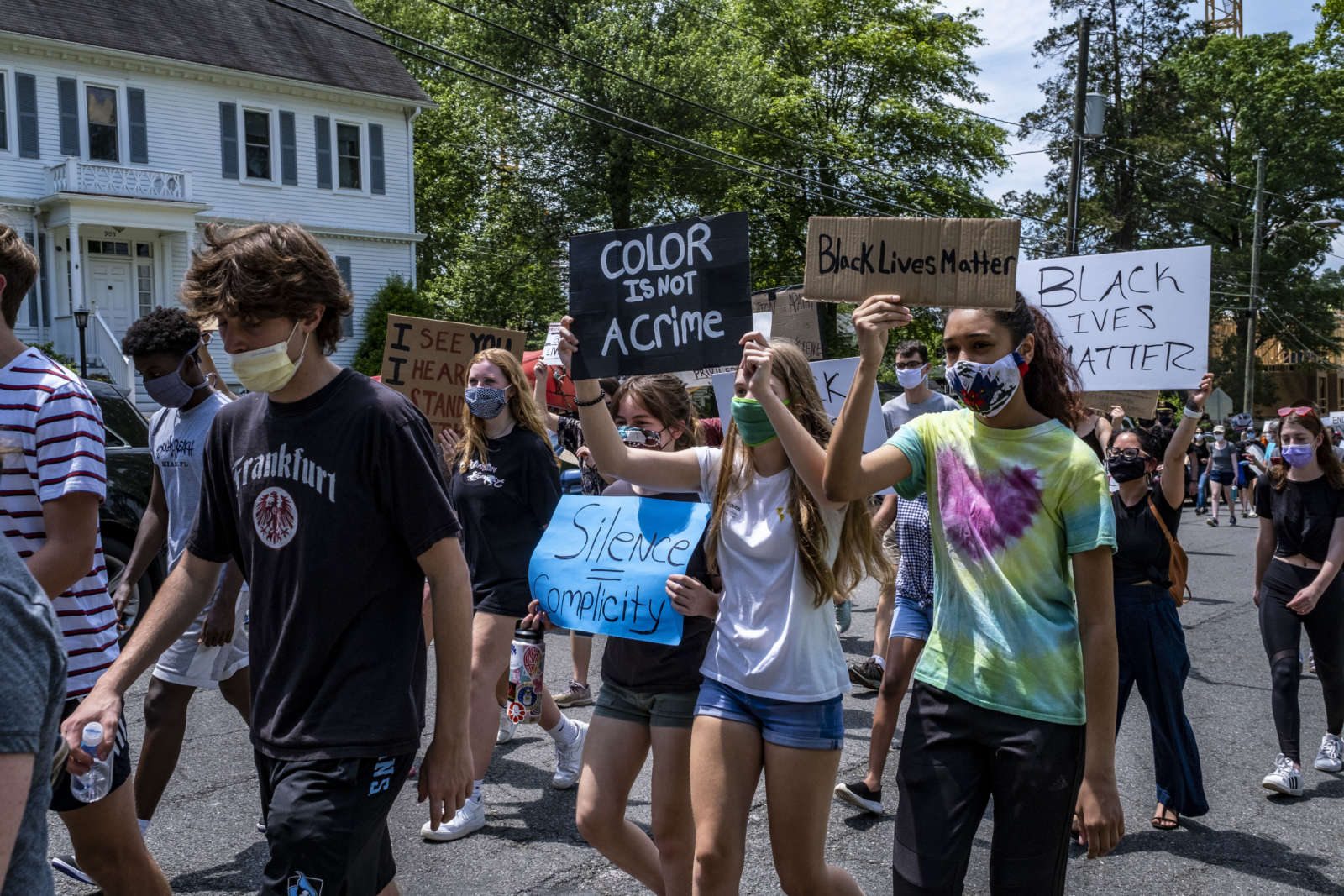
The committee is part of the city council’s commitment to the Reimagining Policing Pledge, which urges mayors and local officials to review and reform use-of-force policies over the course of 90 days.
In Virginia, Alexandria, Vienna, Dumfries, Richmond and Winchester have also formed similar committees. Creswick commended Falls Church for being part of the small group.
“We could’ve taken the easy road out because these things weren’t happening here,” he said. “We have a city council and a government that is really trying to make the city welcoming and inclusive.”
The committee consists of seven community members and six government officials, an intentional ratio to avoid the city government “controlling the narrative by sheer numbers,” Mason said. There are four Black people on the committee, and six women, representing a range of professional experiences, from social services to law.
“The seven community members selected are second to none and really added great expertise to this committee,” Mason said.
To learn about the community’s experiences with the police, the committee sent out a survey from mid-November through Dec. 4, though Johnson admits it was hard to engage people that would typically not answer a survey.
Respondents were asked, but not required to provide, demographic information, and the results indicate white women are the primary group to respond to surveys, Creswick said. Still, some respondents reported experiences that the committee is looking into more thoroughly.
Taken together, the committee’s survey, procedural review, and review of use-of-force reports will give people a “rich understanding of where there’s opportunities to improve,” according to Creswick.
Despite the adversarial tenor to national discussions on police reform, Creswick says the committee’s work here has been collaborative. Committee Chair Janis Johnson hopes the committee will help keep attention on police reform even when it isn’t dominating national headlines.
“The reasoning behind these committees and reviews is so that this stays on people’s minds, and there is change that lasts,” she said.

The future of Tysons as a transit-oriented urban district looks bright, but local leaders worry it could be marred by declines in Metro ridership.
During the State of Tysons event that the Tysons Partnership held last Thursday (Dec. 10), local elected officials, business leaders, consultants, and journalists outlined the present conditions and future of the city, touching on both the impacts of the COVID-19 pandemic and Tysons’ 40-year comprehensive plan.
While 2020 will be remembered for being upended by a once-in-a-century pandemic, for Tysons, it also represents a “decade of accomplishment” since Fairfax County adopted a comprehensive plan that “envisioned and guides transformation of our suburban-edge city to an urban destination,” event emcee Sol Glasner said.
In the past, Tysons was “characterized by regional retail anchors, ringed by acres of low rise office parks, themselves encircled by acres of surface car parking, encased in ribbons of asphalt,” he said.
But participants agreed that Tysons has made strides to becoming a transit-oriented urban district with more mixed-use housing and retail development, and more young families choosing to live in the city.
“We really are making progress. Sometimes it doesn’t feel that way,” Providence District Supervisor Dalia Palchik said. “This is a 40-year plan, and we’re 10 years in. We need to stay committed to these goals and applying resources and ideas to help achieve them.”
The primary concern for the State of Tysons speakers and panelists was the future of transit.
Pre-pandemic, the four Tysons Metro stops were clocking the highest-ever Metro ridership rates, according to Palchik.
With low ridership persisting, WMATA cuts looming, and little chance of federal aid in sight, the future looks grim, City Monitor editor Sommer Mathis said.
“If the service cuts that WMATA is proposing come to pass, Tysons is going to have to be more than agile,” she said. “It’s a huge potential blow to the ability of folks who were pleased to get to Tysons easily via Metro. We’re starting to track a death spiral for public transportation in a number of cities.”
Ridership declines due to COVID-19 could become semi-permanent when prices increase to make up for lost revenue, she said, adding that it will be difficult to get federal aid if the makeup of the U.S. Senate doesn’t change.
“Transit is under siege,” Palchik said. “It’s under fire. It’s going to take support from federal partners to make sure we make it through this challenging time and save transportation.”
Fairfax County Deputy County Executive Rachel Flynn said Tysons needs to be agile, checking in on the 40-year plan every few years. She stated that it is important to celebrate successes and identify areas to improve, such as transit, walkability, and equity.
Other focus areas in the coming months will be when companies start returning to their offices after the pandemic, responding to changes to the retail sector, and rebuilding the hospitality sector — particularly for restaurants.
Matthis said that some predictions of the future of remote work are overblown, but Tysons will need to respond to an increased demand for flexible office and meeting spaces as more firms are rethinking the traditional office space.
Staff photo by Jay Westcott

Toll revenues from the Interstate 66 Express Lanes to the tune of $1 million will fund a second entrance to the McLean Metrorail Station.
The plan is to knock down part of a wall in order to add doors and an entrance, Fairfax County Department of Transportation Special Projects Division Chief Martha Coello said.
“It really enhances the ability for people who live or work north of the station to easily access it,” she said. “Hopefully, that gives them greater incentive to use transit, rather than use their own vehicle.”
Fairfax County aims to start work “in the next year or so,” she said.
Using 66 Inside the Beltway toll revenue, the Northern Virginia Transportation Commission awarded money to six “low-cost, low-risk” transit projects as part of its Commuter Choice program for the I-66 corridor, according to an announcement on Thursday (Dec. 10).
“We’re expanding the transportation network now using a conservative strategy focused on low-cost projects and longstanding assets to ensure access to convenient, safe and reliable choices whenever people are ready to commute,” NVTC Executive Director Kate Mattice said in a statement.
Both the scope and timeline of the program are more conservative this year due to a drop in toll revenue caused by the novel coronavirus. Pre-pandemic, Commuter Choice anticipated getting $25 million in grant funding for the 2021-22 fiscal year. Instead, tolled trips dropped by nearly 50%.
The announcement called Fairfax County’s application the strongest out of the six projects, which will receive a total of $3.5 million. Other picks included renewing service for three “existing, high-performing express bus services” and converting parts of one lane of Lee Highway in Arlington into a bus and HOV-only lane.
Staff picked this batch of projects because it “minimizes the risk around the uncertainty of a return to pre-pandemic traffic volumes and makes the best use of the minimal available toll revenues,” NVTC says.
According to Commuter Choice, the program has enough money saved from previous years to continue existing projects and fund new projects.
Coello said the McLean Metro Station project “is a bit unusual” in that it was not formally part of a capital improvements plan, but rather, arose during a rezoning application from Capital One in 2012.
Working with the Washington Metropolitan Area Transit Authority, a team from Capital One designed the entrance, she said. The county received the exact amount it applied for, but Capital One has pledged to contribute to overages.
Coello says Fairfax County has been waiting for the right time to develop the site. Back in 2012, the change was not urgent enough to justify spending the money.
“Having an opportunity like Commuter Choice, this was kind of a golden opportunity,” she said. “It was a case of the right place, right time, right pieces falling in place.”
Since the Commonwealth of Virginia and NVTC established the program in 2017, Commuter Choice has provided more than $60 million grant funding to 36 projects in Northern Virginia.
Staff photo by Jay Westcott
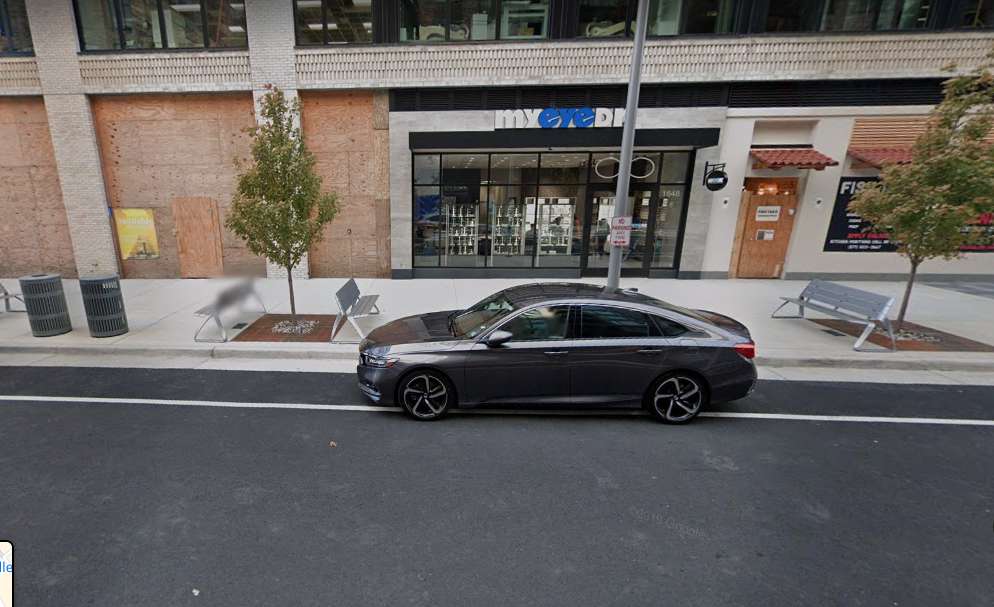
The Fairfax County Board of Supervisors gave the county’s transportation department permission this week to start work on plans for managed curbside parking in Tysons and Reston.
Whether the plan includes paid parking, time-limited parking, designated commercial vehicle parking, or some combination, the Fairfax County Department of Transportation will need at least a year to draw one up for the Board of Supervisors to review, staff said during a board transportation committee meeting on Tuesday.
The incremental step forward comes after professional traffic engineers released their findings from a two-year study that analyzed current parking habits in Tysons’ urban center and Reston’s transit station areas as well as potential options to manage parking.
“Currently in the county, we have a very limited toolbox of parking restrictions that can be implemented by either the Board or VDOT,” FCDOT Section Chief Neil Freschman said. “Generally, most on-street parking on public roadways is uncontrolled.”
The study found that public on-street parking in Reston is incredibly limited.
Parking is available on just 6% of the 15 miles of public curb space surrounding the Wiehle-Reston East, Reston Town Center, and Herndon Metrorail stations, FCDOT Senior Transportation Planner Henri Stein McCartney said.
“We found 211 total public on-street spaces within the study area, which is pretty low,” she said. “Most parking is on private streets, which we don’t manage.”
Comparatively, Tysons had more parking. Staff found 1,272 spaces along 22 miles — or 29% — of curb space on the roadways surrounding the Greensboro, Springhill, Tysons, and McLean Metro stations.
However, parking in Tysons suffers from other problems, including cars parked in “No Parking” zones and travel lanes, along with large commercial vehicles that overstay their welcome.
“Some of these vehicles are reportedly parking for days or weeks without moving,” McCartney said. “Our parking staff has received multiple complaints from Tysons businesses about commercial vehicles that are parking long-term near their building, so we know this is an issue.”
Transportation Committee Vice-Chair Kathy Smith, who represents Sully District, told Tysons Reporter that commercial vehicles parking for extended periods is a county-wide issue.
“I think it’s good that staff is looking into how to balance people’s ability to get into businesses and getting more turnover,” Smith said. “Everybody would agree you don’t want commercial vehicles taking up space for days.”
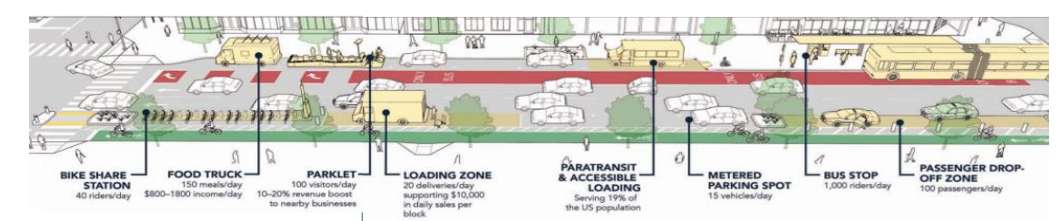
This parking plan is being developed alongside changes to the street grid in Tysons and Reston, Hunter Mill District Supervisor Walter Alcorn told Tysons Reporter. In some cases, parking policies will be developed for streets that do not yet exist, but have been incorporated into the two communities’ comprehensive plans to be more transit-oriented.
The management plan should encourage parking spot turnover to ensure that these future streets near transit stations, which are lined with mixed-use properties, do not become commuter lots, he said.
However, managed parking in Reston’s transit areas will have to overcome the controversy that Boston Properties ignited when the property manager introduced and later modified paid parking at the Reston Town Center.
“The number one lesson is, don’t make all your streets private,” Alcorn said. “We have an awful lot of private streets. What we’ve learned is that the public doesn’t have any say — it is up to the private street owner.”
While private streets make planning events more flexible, Alcorn says the 2017 flare-up, which focused mostly on the garage parking, could also be attributed in part to community members not having a say.
For the most part, though, what FCDOT is working on “is apples and oranges” compared to the RTC, he said.
Images via Google Maps, Fairfax County
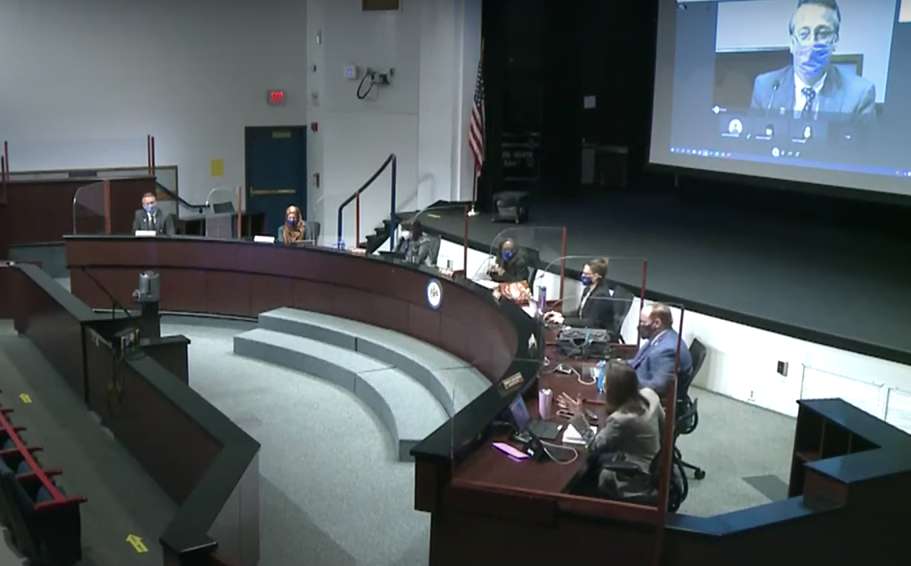
Fairfax County Public School administrators are looking to write a new policy that will ban secluding children across the division by 2023.
The new policy governing when and how children can be restrained or secluded would also require administrators to contact parents the day of an incident and to review data every quarter. After being restrained or put in a room alone, students would meet with a trusted staff member who could provide positive supports.
“We are delighted that FCPS recognizes that they were in shocking non-compliance with federal regulations,” Fairfax County Special Education Parent-Teacher Association President Michelle Cades told Tysons Reporter. “We are really optimistic that reporting is going to improve and that there is going to be more transparency.”
According to the policy, starting in 2021, seclusion will only be allowed at Burke School and Key and Kilmer Centers.
“We’re requesting that it be prohibited in 99% of schools now, but 100% is our desire, 100% is our goal,” Assistant Superintendent of the Special Services Department Michelle Boyd said in a work session last week.
The policy would go into effect Jan. 1, 2021, and includes some clauses that respond to feedback from parents and other stakeholders. FCPS will hold a public hearing on the new policy on Friday.
These changes come one year after a 2019 WAMU investigation found hundreds of instances of restraint and seclusion in FCPS, even though the school division had not reported a single incident to the U.S. Office of Civil Rights for 10 years.
“We have to make sure that people feel confident, not just in the new policy, but that we are implementing the data collection with fidelity,” Superintendent Scott Brabrand said during a Dec. 1 work session. “We have to acknowledge that for too many years, we reported no information, as did other school districts, and it was wrong.”
At-Large School Board Representative Abrar Omeish questioned what data FCPS is relying on to be confident that a new restraint and seclusion policy will be implemented properly.
“I worry about relying on this information, when we have reason to believe that it is not reliable,” she said. “We should imagine the worst-case scenario and put in place the checks that are going to hold us accountable to make sure we’re not wronging kids in the process.” Read More
As a tumultuous year of school closures and virtual learning inches toward a close, students in Fairfax County Public Schools say they are exhausted and feel forgotten by the administration and school board.
Their frustrations bubbled over during a school board meeting on Dec. 3. Two students took issue with recent headlines about upticks in failing grades and the board’s focus on how to resume in-person classes over how to improve the distance-learning experience.
John R. Lewis High School student Kimberly Boateng, who previously served as the school board’s student representative, chastised the board, saying its members have not demonstrated that they have turned the comments and criticisms she has submitted by letter, email and tweet into action.
She urged the county to do better, saying that she is tired of “aspirational goals” and wants the board and FCPS administrators to take concrete actions.
“I’m tired of the ‘we see you’ emails, the ‘we hear you’ tweets,” she said. “…Students are surrounded by so much grief, trauma, and death, and we are expected to continue on as if this is normal. This is not normal.”
As the board’s current student representative, South County High School student Nathan Onibudo said he is caught between knowing the extent of the county’s efforts to address the challenges caused by COVID-19 and experiencing the reality of student life.
“I see what’s possible and I see the hard work being put in,” he said. “[Many students] feel like somehow, they’re being forgotten even though all the conversations are about them.”
He told the school board that, for many students, the debate over whether they should learn virtually or in-person has become secondary to the struggle to survive each day.
“Students are simply suffering,” he said.
Boateng echoed that sentiment, saying that she feels unable to take a mental health day because it would bury her deeper under tasks.
“Students are sitting in front of their computer screens wondering when they’re going to catch a break, and the break never comes,” she said.
During an open comment period later in the school board meeting, FCPS Superintendent Scott Brabrand and a handful of board members promised to take action.
“Nathan, I heard you. Our leadership team heard you, our principals heard you, our staff heard you,” Brabrand said. “Kimberly, I sat with you here last year. I heard you. We want your voice and your input as we continue through this year, and we will use your recommendations to make the changes necessary to be sure students are heard, listened to, respected, valued.”
Mount Vernon District Representative Karen Corbett Sanders noted the board is also hearing about the impact of the pandemic on the county’s school children from parents, parent-teacher associations, neighbors, and relatives.
Springfield District School Board Member Laura Jane Cohen told the students that the board is “trying to get better answers.”
“I know sometimes it rings hollow, but please, hang in there and just know that we’re trying to make things better right now,” Cohen said.