
The McLean Citizens Association (MCA) could finally be weighing in tomorrow night regarding the group homes controversy, but the fight may already be over.
A draft resolution planned to be discussed at MCA’s Wednesday (June 5) meeting would oppose a special exception that would allow the Newport Academy, a for-profit therapy and rehabilitation program for teens, to open a facility at 1620, 1622 and 1624 Davidson Road, located in a residential neighborhood near McLean High School.
But the proposed resolution comes late in the game — local residents started protesting the issue more than two months ago.
A grassroots group opposing a rehabilitation facility recently claimed victory, although the sourcing for that win remains unclear.
An administrator on the Davidson and Kurtz Road Rehab Facility Facebook page — a nearly 500 member group that had been a discussion board for residents opposed to the development — said last Tuesday (May 28) he received the following statement from the Newport Academy:
Newport Academy is the nation’s leading provider of mental health residential and outpatient treatment for teens and young adults. As such, we have received direct requests from parents, clinicians, insurance companies and other referral sources to bring our well-recognized adolescent mental health treatment program to the Northern Virginia market. To that end, we acquired multiple properties to extend our reach more formally into the McLean community. Although these group homes are fully legal and protected under the Fair Housing Act, as well as other applicable federal, Virginia and Fairfax County laws, Newport Academy has listened to the community’s feedback and has opted to modify its expansion plans by ceasing planned openings on Davidson Road.
Our commitment to service the Northern Virginia market remains intact. We look forward to opening these much-needed services in McLean in the near future and hope to keep the lines of communication open with the community and its elected officials as we seek to contribute in a positive way towards addressing the mental health crisis in the greater DC area.
After repeated calls to the main company line and to the group’s community liaison in McLean over a week, Tysons Reporter was unable to confirm the source of the statement.
Staff at Dranesville District Supervisor John Foust’s office said they received an identical statement, but could not get confirmation from the Newport Academy that they were the source.
Two weeks ago, Fairfax County Zoning Administrator Leslie Johnson wrote in a letter that the facility would not be permitted as a by-right use and would require approval from the Board of Supervisors. Foust had previously said he would oppose the development if it was brought to the Board of Supervisors for a vote.
The Facebook group shut down one day after the statement allegedly from the Newport Academy was posted, though some members have already started another splinter group to continue discussing the facility and other community concerns.
What will happen with the other proposed group homes not addressed in Johnson’s letter — like the one at 1318 Kurtz Road — remains unclear. The MCA resolution states that the group will revisit the facts regarding the Kurtz Road property.
The MCA meeting starts at at 7 p.m. in the McLean Community Center (1234 Ingleside Avenue).
Neighbors opposed to a controversial for-profit therapy program got a win from a Fairfax County zoning official’s letter.
A piece of the Newport Academy’s plans to open a facility treating teenagers with mental health or addiction problems in a McLean neighborhood hinged on that facility being a by-right use — a use that won’t require approval by the Board of Supervisors. But local officials are now saying that isn’t the case.
Fairfax County Zoning Administrator Leslie Johnson said in a letter to local residents that the facility is a congregate living facility, which is not permitted as a by-right use at the location.
According to Johnson’s letter, in August 2018 the Newport Academy sent a letter to the Department of Planning and Zoning stating its intent to open two homes — one at 1624 Davidson Road and one at 1318 Kurtz Road — and asked if it could purchase a neighboring house and operate it as a licensed home.
In response, the zoning staff agreed that the buildings would be considered group residential facilities, which are limited to eight residents. The response did not directly answer whether a neighboring home could be used as a licensed home, and the Newport Academy did not contact Fairfax County after it purchased the properties at 1620 and 1622 Davidson Road.
But Johnson said the Newport Academy’s assertion that the homes were separate operations — crucial for qualifying for the eight resident limit — were contradicted by other applications listing the operations as a single program with residents above the limit for the group residential facility classification.
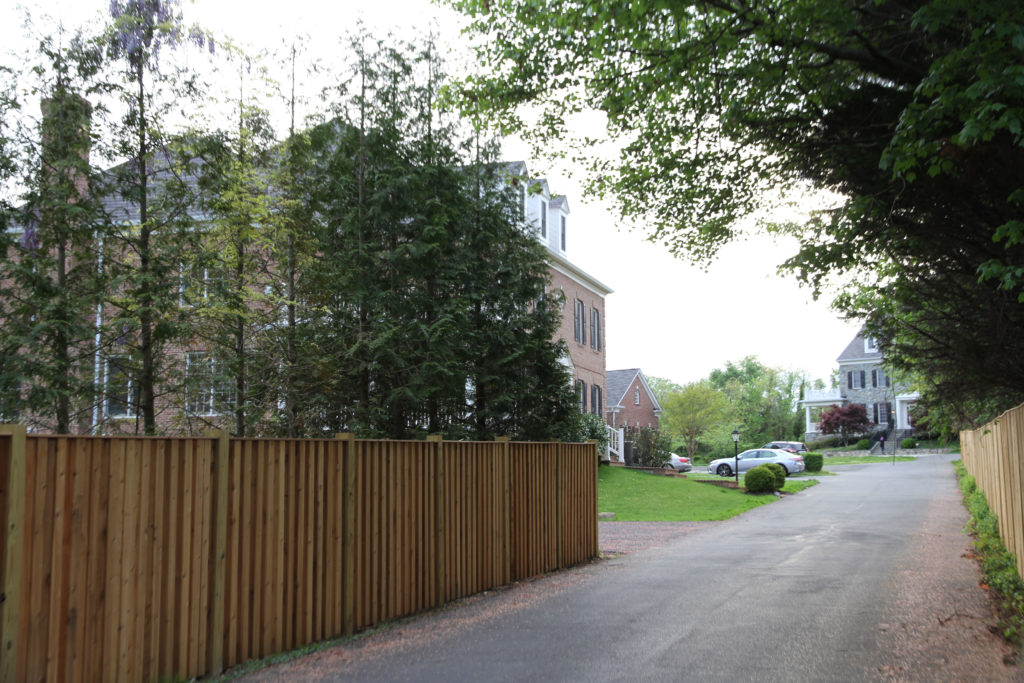
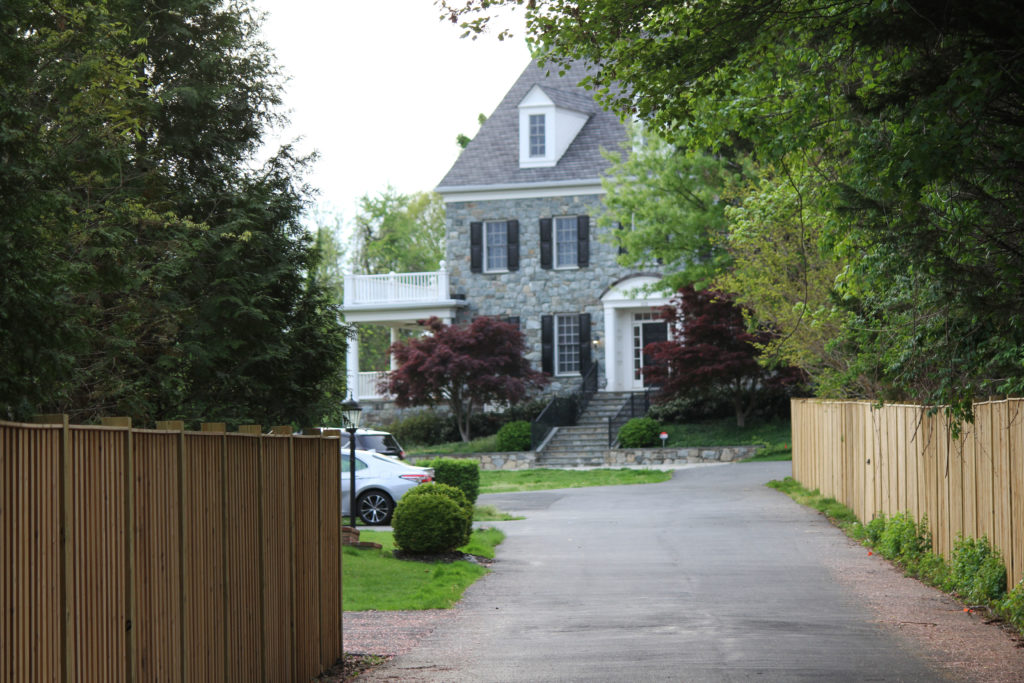
The appearance of the Newport Academy program being a single facility didn’t stop there. Johnson’s letter to the community notes that in April, county staff learned that a 6-foot fence had been built around the facility, “creating the appearance of a completely enclosed facility.”
Johnson’s letter said the supposedly separate facilities were listed as having shared staff, like a security guard and night staff, in both public meetings and other permit applications.”

New legislation could allow Fairfax County to establish exceptions to no-turn restrictions for local residents.
Last year, McLean residents shot down a plan to eliminate cut-through traffic because it would also limit street access for residents, but new legislation could allow a middle-ground option.
At a Fairfax County Board Transportation Committee meeting today (Tuesday), staff discussed a proposal that would give local residents permits to exempt them from cut-through restrictions either currently in place or to be established.
Dranesville District Supervisor John Foust said the idea came from a local citizen and was presented by Del. Kathleen Murphy (D-34th District) to the Virginia legislature, who sponsored HB 2033. The legislation allows Fairfax County to “develop a program to issue permits or stickers to residents of a designated area that will allow such residents to make turns into or out of the designated area during certain times of day where such turns would otherwise be restricted.”
Neil Freschman, section chief of traffic engineering at Fairfax County Department of Transportation (FCDOT), said the program would be jointly administered by FCDOT and the Virginia Department of Transportation (VDOT) to specifically handle traffic that has neither origin nor destination on the road in question.
“This is only relevant for cut-through turns,” Freschman said, “not safety restrictions.”
Once a cut-through restriction is put into place, Freschman said a letter would be sent out to local residents letting them know how to file for a permit.
Currently, staff said there are only two areas that have relevant cut-through restrictions: both of them in the Mason District, but Foust noted that there are places in the Dranesville District where this kind of permit could be a solution to transit woes.
“We don’t want to enforce it against residents, but they say it’s all or nothing: we enforce it against everybody or we don’t enforce it against anybody,” Foust said. “[This idea] allows residents to make the turn onto their own streets if there was a cut-through restriction.”
Staff estimated that developing the new ordinance could take six months, followed by seven months of updating agreements with partner agencies and designing the new permits, and a year to work with a contractor to develop new software. Part of that process would be determining permit-eligible areas and determining if a fee should be charged to residents for the permits, which staff currently does not recommend.
Staff also noted that permits would be issued to vehicles registered at permit-eligible addresses and would not be available to visitors, caregivers, service providers, relatives or others. After questioning from the committee, staff said they would look into seeing about easing that limitation.
Enforcement of the policy would be conducted on a complaint basis, staff said, rather than as a daily activity. Difficulties like low-light conditions and potentially confusing factors, such as unclear signage, were also noted in a report on the project.
The committee approved of staff moving forward with the plan to build guidance and to work with Fairfax County Police to ensure the program is enforceable. The project is expected to return for public hearing and consideration in early 2020.
“This is a breakthrough,” said Board of Supervisors Chairwoman Sharon Bulova. “We’ve never been able to use a tool like this, but the state legislation allows us to do that.”
Photo via Flickr/Mike Goad
Tensions reached a boiling point last night (Wednesday) in McLean as local residents threatened to run a therapy center out of town — legally or illegally, in the words of one neighbor.
A series of new group homes by Newport Academy, a corporation that runs therapy programs treating teenagers with mental health or addiction problems, are planned for a residential neighborhood.
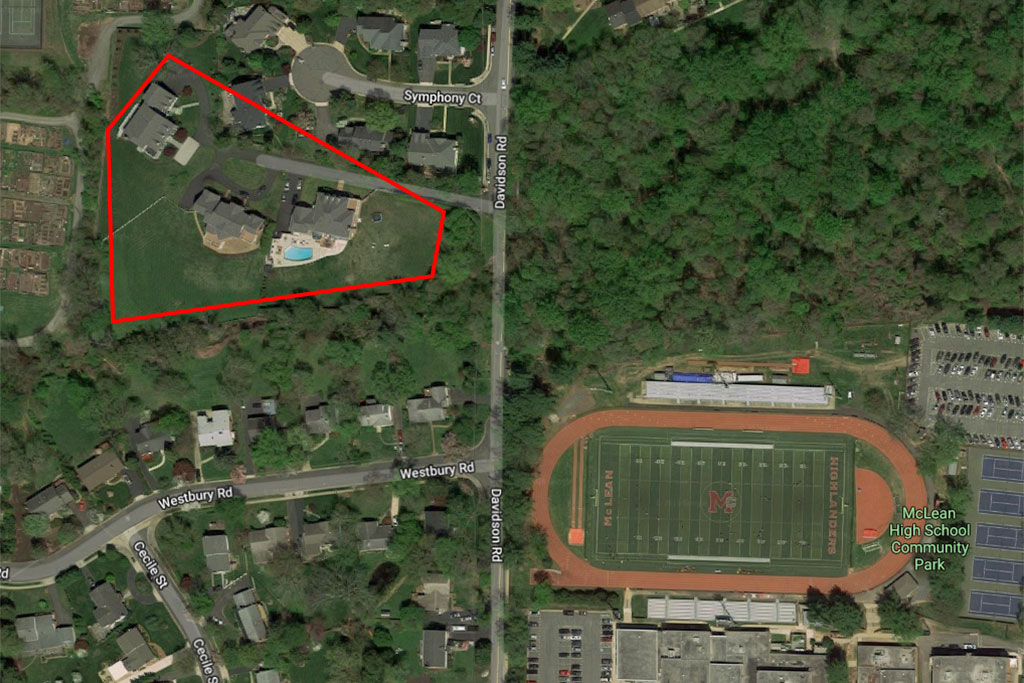
Three of the homes — 1620, 1622 and 1624 Davidson Road — are clustered on a private cul-de-sac one block away from McLean High School, while another one is going in at 1318 Kurtz Road.
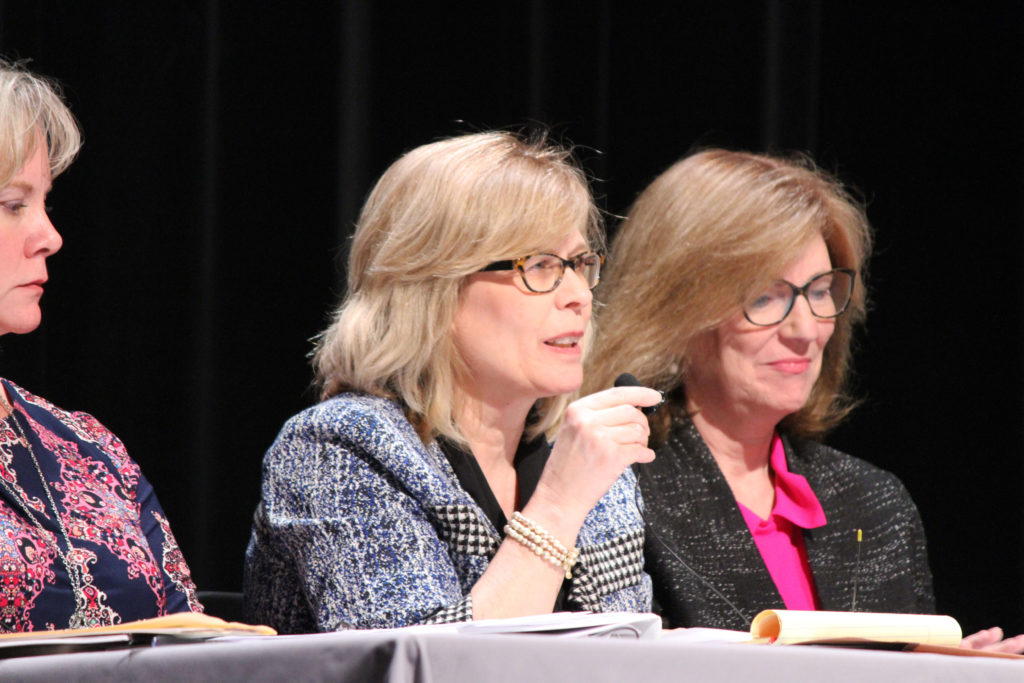
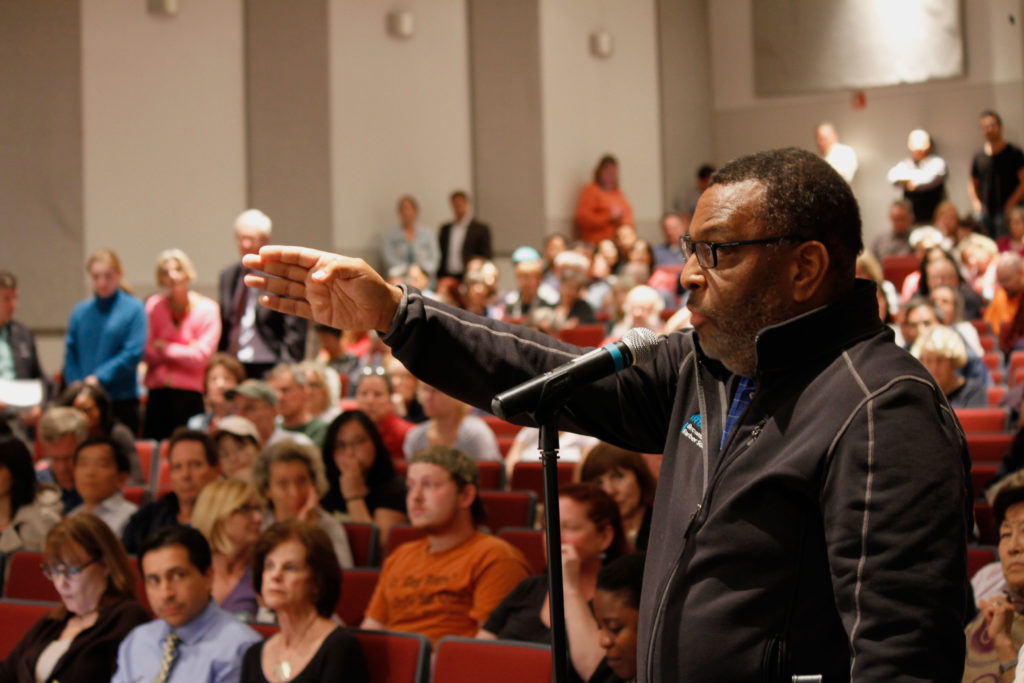
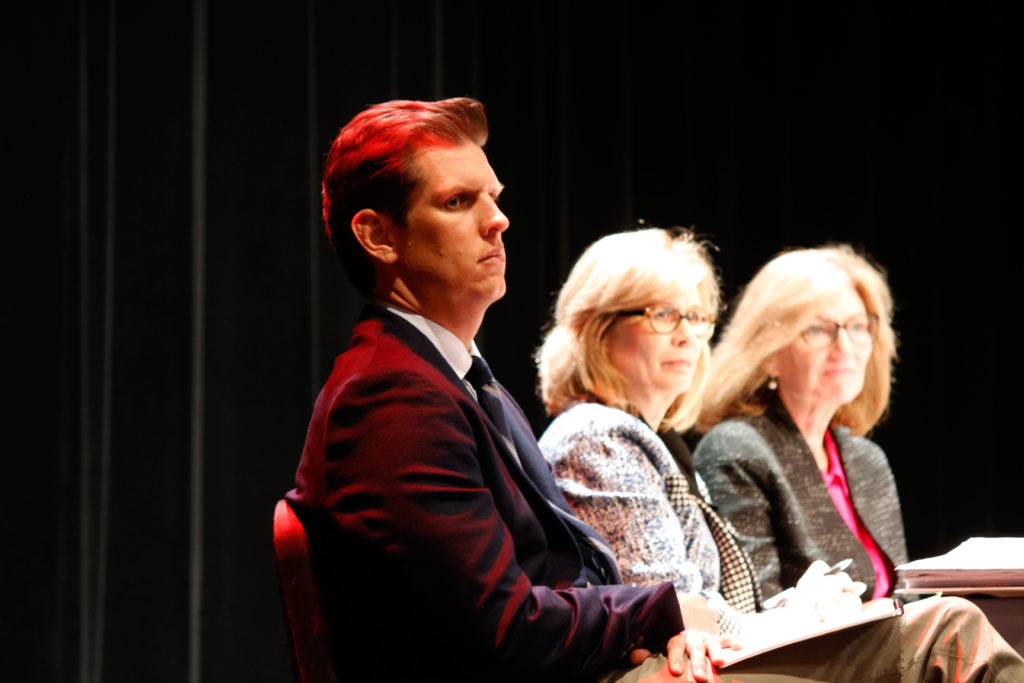
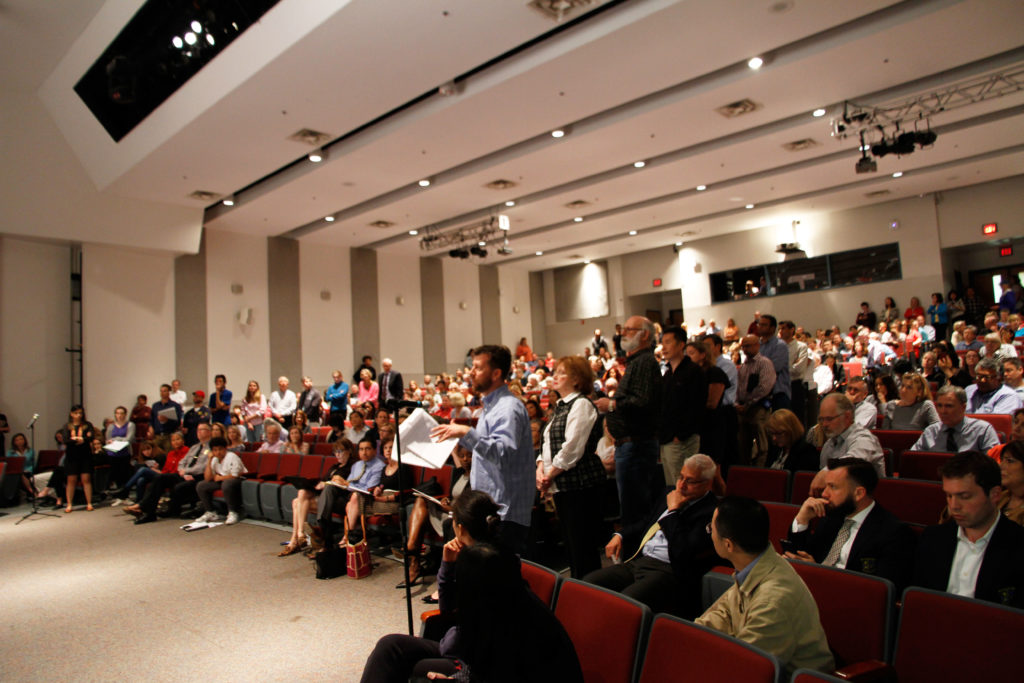
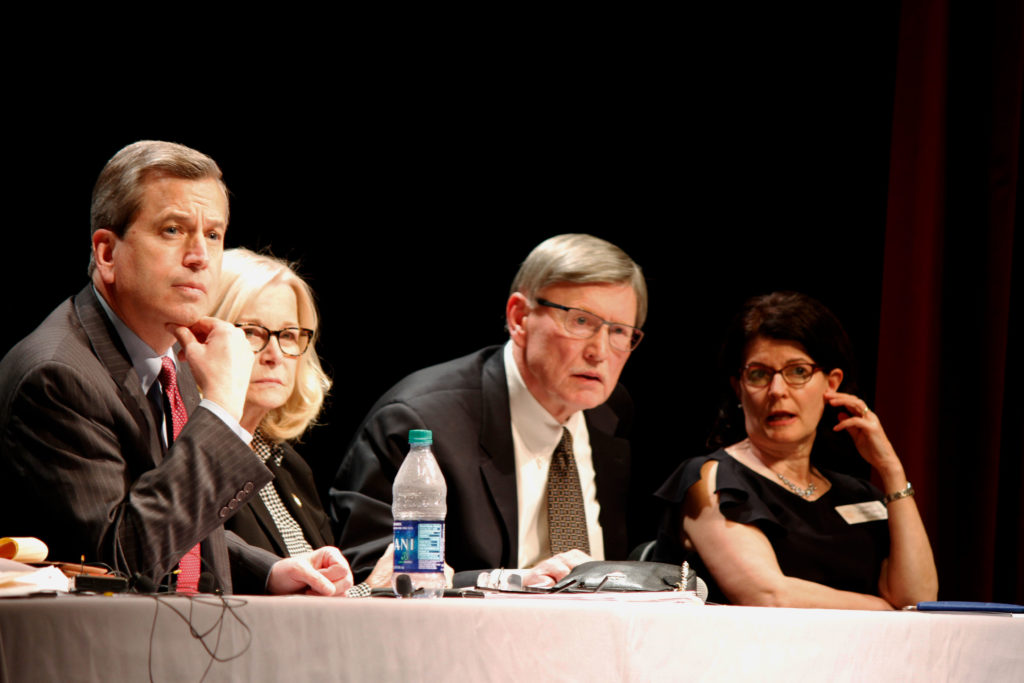
Representatives from the project, several elected officials and Fairfax County staff started a community meeting in the McLean High School auditorium with presentations about the project, but the more than four-hour-long public hearing after the presentations showed that the project has struck a deep nerve with the local community.
On one side were the Newport Academy staff and a handful of supporters in the audience who said the program is necessary to help deal with the local mental health crisis. Teenagers or adults who said they had struggled with mental health issues described the difficulty of finding treatment facilities in the area. These stories were frequently interrupted by a chorus of booing from the audience — at least once in the middle of a young woman recounting her trauma following a sexual assault.
But opponents of the project — mainly nearby residents or parents with children at McLean High School — comprised the vast majority of the standing-room-only audience in the auditorium.
While they were united in opposition to the project, their reasons varied. Del. Rip Sullivan (D-48th District) conducted an impromptu poll of the audience, and half said they are opposed to any group home while the other half would be fine with just one, but opposed the cluster.
“It’s three houses side by side; it’s a compound,” Robert Mechlin, a nearby resident, told Tysons Reporter. “If I want to build a shed, I have to get a permit. Why isn’t this the same litmus test?”
Mechlin also echoed concerns about how residents of the facility would affect safety in the nearby neighborhood. In the small town of Bethlehem, Conn., students at the Newport Academy were responsible for at least two criminal incidents — the theft of a car and a student who stole bottles of vodka from a local bar. Throughout the evening, nearby residents said the prospect of the treatment facility next door makes them feel unsafe.
Newport Academy Founder and CEO Jamison Monroe said security tightened after the incidents in Connecticut. A presentation on the project noted that alarms would be attached to every door and window and the students would be closely supervised by staff. Later in the meeting, Monroe offered to pay for a security guard to monitor the site, but by then the public concerns around the project ballooned beyond just security.
The secrecy and allegations of deception surrounding the purchasing of the property were also recurring themes among the opponents. Neighbors said that after the properties were purchased, the real estate agents who orchestrated the deals told neighbors they were subject to non-disclosure agreements.
“I was told multiple times that [the development] was for a wealthy individual,” Steve Wydler, a leasing agent with Wydler Brothers Real Estate in McLean, said. “It was only after construction started that we were told the project was under an NDA.”
Monroe admitted that he didn’t know why the non-disclosure agreements were put into place.
“I’ve learned some things about our real estate agents this evening that I was not aware of previously,” Monroe said.
Marc Lampkin, who became one of the unofficial orchestraters of the opposition from a seat in the front row, said the facility would extract money from the students and leave the neighborhood with problems.
“We all appreciate the notion of treatment, but the single biggest concern is that you failed the good neighbor policy out of the box,” Lampkin said. “You hired a real estate agent who bought the property with lies and misrepresentation. You are a for-profit entity and you’re driving a truck through a loophole [in Fair Housing law].”
As frustrations escalated throughout the evening, Monroe became the main target of the community’s rage, with local residents calling him smug, arrogant and a “son of a bitch” several times.
Caught between the two, the elected officials expressed unhappiness with the project, but said it was being redeveloped by-right and left their hands tied.
Two of the rallying cries from the opposition were “Remember Sunrise” — a reference to a plan by Sunrise Senior Living Facility that the Board of Supervisors denied following widespread public outrage — and a promise to oust elected officials if they didn’t vocally oppose the project.
“I do not support three houses on the same site,” Dranesville District Supervisor John Foust said. “But it is the law. In my opinion, one company buying those properties changes the character of the neighborhood. I oppose that. But we do not see a way to stop it.”
The county argued that the project is a group home, which is considered a “by right” development — meaning there’s no requirement of public notice and no zoning approvals needed from the county. Several of the politicians said they first heard of the project when the outrage started.
“I am not at all surprised to see this turnout,” Sullivan said. “Three weeks ago, our emails lit up with questions and comments.”
Complicating the issue, the Fair Housing Act makes it unlawful to discriminate against individuals because of a handicap or disabilities, which the Code of Virginia says includes residential facilities housing individuals with mental illnesses.
But several opponents noted that there are ways around that protection. Some locals questioned whether the project qualified as a group home. Wydler said that the project might not qualify as a residence — a crucial part of the project’s status as a by-right development — given that the average length of stay for students of the program is substantially less than the 183 days that the tax code considers residency.
Fairfax County Attorney Beth Teare said the county was still looking into the zoning regulations and rules surrounding the project. The group’s license application is still pending before the Virginia Department of Behavioral Health and Developmental Services.
If the licenses are granted, Monroe said the facilities could begin operation within a few months. If it does, at least one attendee threatened to file a lawsuit.
Regardless of the outcome, Sullivan said he and other elected officials would look into closing what the public saw as fair housing loopholes.
“One of the things I want to look at moving forward is making sure there is more advanced notice of this sort of thing,” Sullivan said.
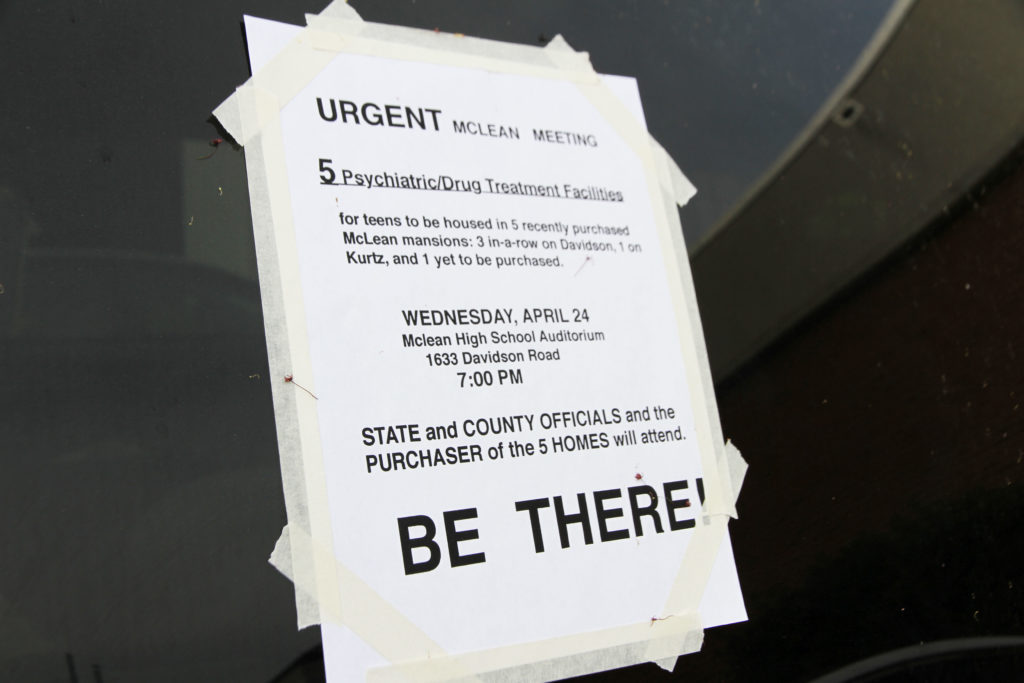
After a large amount of local consternation over the group homes for a rehab facility proposed near McLean High School, Dranesville District Supervisor John Foust and other local officials are putting together a meeting to clear things up.
The Newport Academy, a therapy program for teens with mental health or addiction problems, recently purchased three residential homes (1620, 1622, and 1624 Davidson Road) in McLean with the intent of using them as a treatment facility.
Another project is also planned for 1318 Kurtz Road in the Salona Village neighborhood.
The meeting is planned for Wednesday, April 24 at 7 p.m. in the McLean High School Auditorium (1633 Davidson Road).
Foust is expected to be joined at the meeting by a pair of local state lawmakers, Dels. Rip Sullivan and Kathleen Murphy. Representatives from Virginia Department of Behavioral Health and Developmental Services and from Monroe LLC — the company that runs the Newport Academy — are also planning to attend, to explain the new facility.
According to Foust’s office:
The purpose of the meeting will be to discuss the operations of the homes, licensing and permitting authority, relevant legislation and regulations, and resident concerns. Attendees will have the opportunity to ask questions and provide comments.
Photo via Google Earth
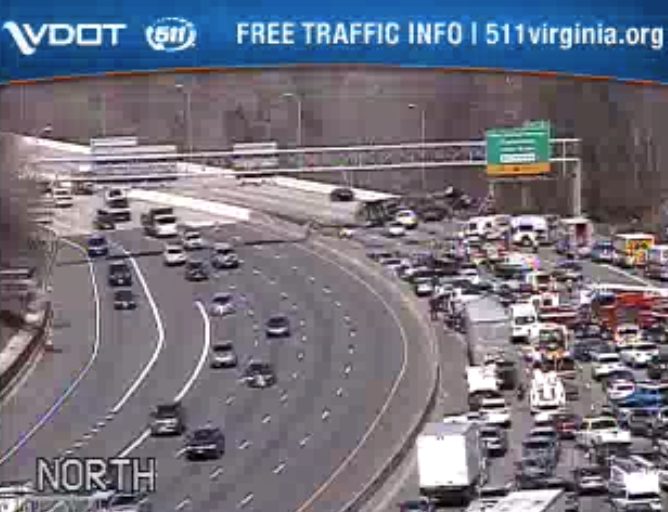
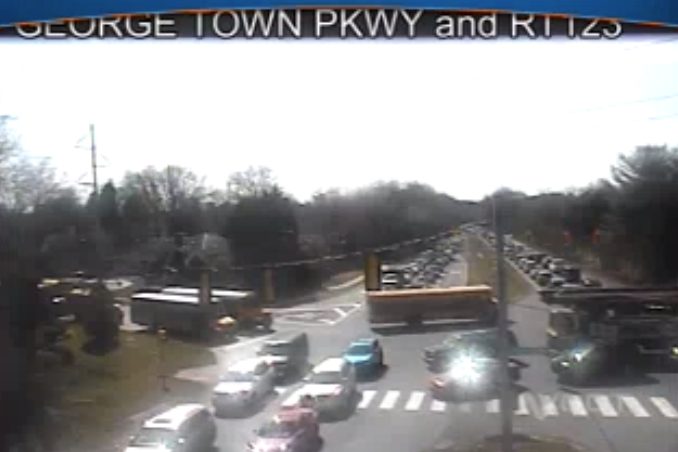
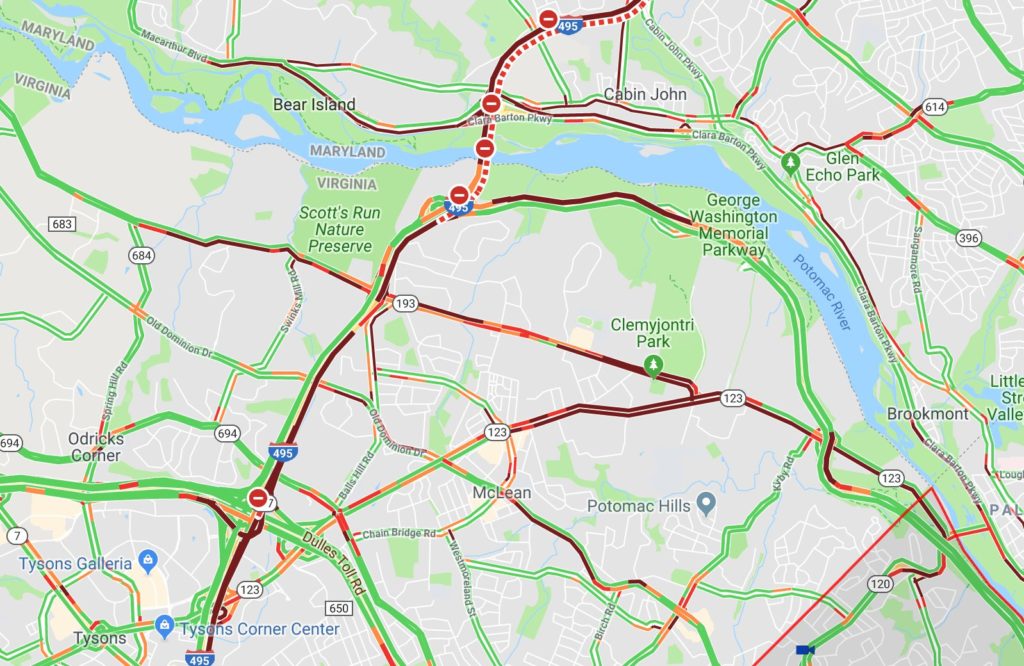
After the Beltway was paralyzed by a tanker crash near the American Legion Bridge last Thursday, questions have again surfaced about the possibility of a new connection between Northern Virginia and Maryland.
Potential solutions have included expanding the proposed “Purple Line” from Maryland down to Tysons. But this type of connection doesn’t come without a share of difficulties, and Dranesville District Supervisor John Foust says Virginia can’t afford to take its eye off the more attainable prize of fixing the American Legion Bridge first.
“The first priority has to be fixing the issues at the American Legion Bridge,” Foust said. “We have the cooperation of Maryland on that. But based on what just happened with the shutdown, it’s critical that we consider building a parallel bridge as opposed to just widening the one we have. That gives us some redundancy in the event of a crash like this or a terrorist attack, so we don’t shut down Northern Virginia.”
But an expansion of the American Legion Bridge, much less an entirely new one, has raised concerns that another crossing would add new roads through the Montgomery County Agricultural Reserve on the Maryland side, though some have said this impact is likely overblown.
“It raises serious environmental issues that have to be addressed, but it takes both sides of the river to cooperate and agree,” Foust said. “Historically, Virginia has been more inclined to do it than Maryland, who has been more insistent that they do not want another bridge.”
Frank Shafroth, director of the Center for State and Local Leadership at George Mason University, said there’s political momentum to push for the new connection despite the obstacles.
“Foust is correct about the challenge — not a challenge all that different from the initial challenge of the Beltway itself,” Shafroth said. “But leaders in this region have demonstrated, over the years, a practical ability to be creative in resolving these kinds of governance challenges: they tend to be far more practical than many federal elected officials, and much more accountable to constituents.”
Foust is far from alone in pushing for a new route over the Potomac. Springfield District Supervisor Pat Herrity expressed frustrations at the crash’s impact on regional traffic on Twitter.
Yesterday was yet another reminder of the critical need of the region to build a northern crossing over the Potomac River. It is past time to build the crossing. pic.twitter.com/r26JqQx0xp
— Supervisor Pat Herrity (@PatHerrity) March 29, 2019
In an ideal world, Foust said he would like to see more transit options on the Beltway, like dedicated bus lanes. However, transit options like a new Metro line are too far off to consider in transportation plans, Foust argues.
“I don’t think we can wait to get light or heavy rail to make that route from Maryland to Virginia,” Foust said. “We have to move forward with the bridge if possible, and provide the ability to add rail at a later date.”
Virginia recently approved new express lanes that will extend to the American Legion Bridge. Though unlikely to do much to relieve the crush of rush hour traffic, Foust says the lanes should offer some relief by giving Beltway drivers headed to the George Washington Parkway rather than the American Legion Bridge another option to get around traffic.
“But nobody thinks we’re going to solve the problem until Maryland does what they need to do with regards to that bridge and the capacity for the Beltway on the Maryland side,” Foust said. “Virginia is prepared to move forward. Maryland I think is talking as early as 2022 to begin construction, but realistically they have a lot of issues to resolve first. But I think [this crash] put an exclamation point on the fact that we need a solution.”
In January, Maryland’s highway administrator Greg Slater told WUSA9 that a new bridge should be built within the next few years and that it was a top priority of Maryland Governor Larry Hogan.
In what is a best-case scenario for an elected official, County Supervisor John Foust and others at last week’s Fairfax County Budget meeting in McLean said the new year’s spending plan has been fairly uncontroversial.
“In prior years it’s been much more controversial,” said Foust. “The budget this year seems to be generally accepted. People are happy that we’re holding the tax rate flat and I know people are thrilled that we’re able to fully fund the school operating budget.”
Others in the McLean Citizens Association said that the biggest talking point in the audience was concern over the McLean High School overcrowding, which is currently a School Board issue rather than a County Board one.
Foust noted that a leader of a local parent group spoke up and asked Superintendent Scott Brabrand about redistricting the school. At a School Board meeting last week, Brabrand said an update on solutions for McLean High School overcrowding would be released sometime in March.
Foust said 3.8 percent revenue growth, much of it driven by new development in Tysons, has given the Board flexibility to fund the School Board’s budget and funding for county priorities like gang and opioid prevention efforts. Foust said some of the biggest new items in this year’s budget are a series of environmental initiatives to address climate-change related issues.
But Foust also said one of the biggest criticisms of the budget has been that it doesn’t give enough to the county’s affordable housing programs.
“One issue that is not funded the way advocates would like to see funded is affordable housing,” said Foust. “There’s been so little concern expressed about this budget, but the extent that I’ve heard has been that we need to do more about affordable housing. I think the Board of Supervisors agrees and we’re working on that.”
Foust also said that there are concerns about the budget skipping a pay-raise for employees.
“There are concerns by employees that as advertised the Board does not pay full market rate adjustment to county employees,” said Foust. “We’re looking at our options to see if there’s anything to help find money in the budget to pay a little bit more.”
Public budget meetings are being held in each of Fairfax’s districts, but anyone wishing to address the Board of Supervisors directly regarding the budget is invited to speak at public hearings on April 9 and 11.

Tysons Company Tops Fortune List — Tysons-based Hilton is No. 1 on Fortune’s new 100 Best Companies to Work For list. The hotel operator was also joined by local companies Navy Federal (#29, Vienna), Capital One (#39, Tysons), CustomInk (#86, Merrifield) and Mars Inc. (#98, McLean) on the annual list. [Fortune, Twitter]
State of McLean: Under Construction — “McLean is poised to benefit from a raft of infrastructure and revitalization projects, Supervisor John Foust (D-Dranesville) told the Greater McLean Chamber of Commerce Feb. 14 [during] his annual ‘State of McLean’ speech.” [InsideNova]
Falls Church Property Assessments Rise — “Property values are on the rise in Falls Church, according to 2019 assessment data released by the city. Overall residential and commercial property values have increased from January 2018. Commercial property values rose by 4.3 percent and residential real estate values by 2.93 percent over the last year.” [Patch]

(Updated at 10:50 a.m.) As neighbors, McLean and Tysons couldn’t be more different. The former has a reputation as a quiet, suburban town with a long history and deep community roots, while the latter is a comparatively young and bustling pseudo-city in its own right.
But what happens in one will have a profound impact on the other, and Fairfax County Supervisor John Foust, who represents McLean, said that has become particularly clear with regards to regional traffic.
“Our plans say that Tysons development will be limited to Tysons and that the neighborhoods should be protected,” said Foust, “but the traffic that goes there goes through McLean and it has gotten worse.”
In discussions with members with the McLean Citizens Association, traffic was almost universally one of the most discussed items. The impact of the growing Tysons can already be felt in McLean, where both highways and residential streets are becoming increasingly clogged with commuter traffic. One of the big problems, on both a county and inter-state level, is the American Legion Bridge.
An average of 239,000 people use the American Legion Bridge every workday, according to a letter sent from the Fairfax Board of Supervisors to the Maryland Department of Transportation.
“The bridge is grossly over capacity,” said Foust. “It’s the responsibility of Maryland now. We’ve been encouraging them to expand… expansion would be a huge difference.”
Maryland has previously announced a $9 billion investment in reducing traffic congestion, including adding toll lanes north of the bridge, but the bridge itself remains a roadblock for commuter traffic heading to or from Tysons and McLean.
But expanding, supplementing, or replacing the bridge all come with difficulties. VDOT engineers have said that the bridge cannot be expanded and that it has reached capacity. Adding a new bridge to the site would also be difficult, if not impossible, given the low-density zoning in the area aimed at protecting the Potomac River. Fully replacing the bridge is a popular suggestion, but one that could take decades of planning, environmental, and financial work.
In the meantime, Foust said that traffic improvement projects in Tysons, like the Jones Branch Extension currently underway, will also help regional traffic flow. The new extension should take some pressure Route 123 and hopefully reduce congestion in McLean.
Ultimately, Foust said Tysons and McLean are going to need to rely on non-car transportation to help take some of the pressure off local roads. But paradoxically a lack of car-supporting infrastructure, at McLean Station on the Silver Line especially, makes that difficult.
“There’s a lack of parking at the stations here,” said Foust. “There’s no plan in place to build a lot [at McLean Station]. It’s very inconvenient. Generally, the Board does not want to encourage more traffic to drive into Tysons, but that means my constitutes can’t utilize the Metro.”
Foust said the County is working on expanding bus transportation, but that it will take a long time to get that to a convenient level. Given the growing pressure of traffic coming in and out of Tysons, it’s time McLean may not have.