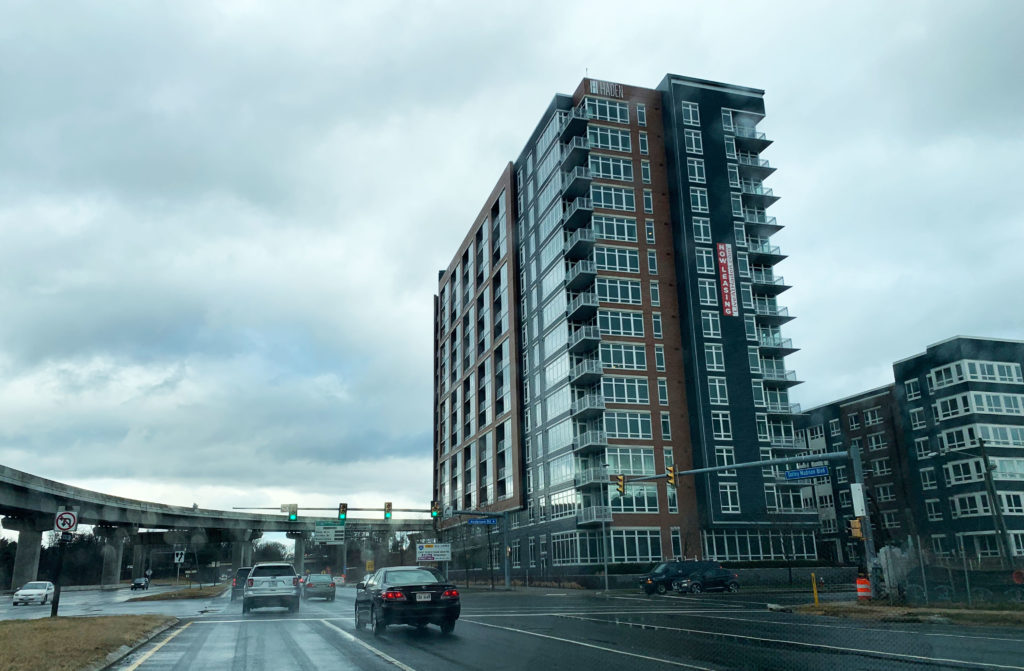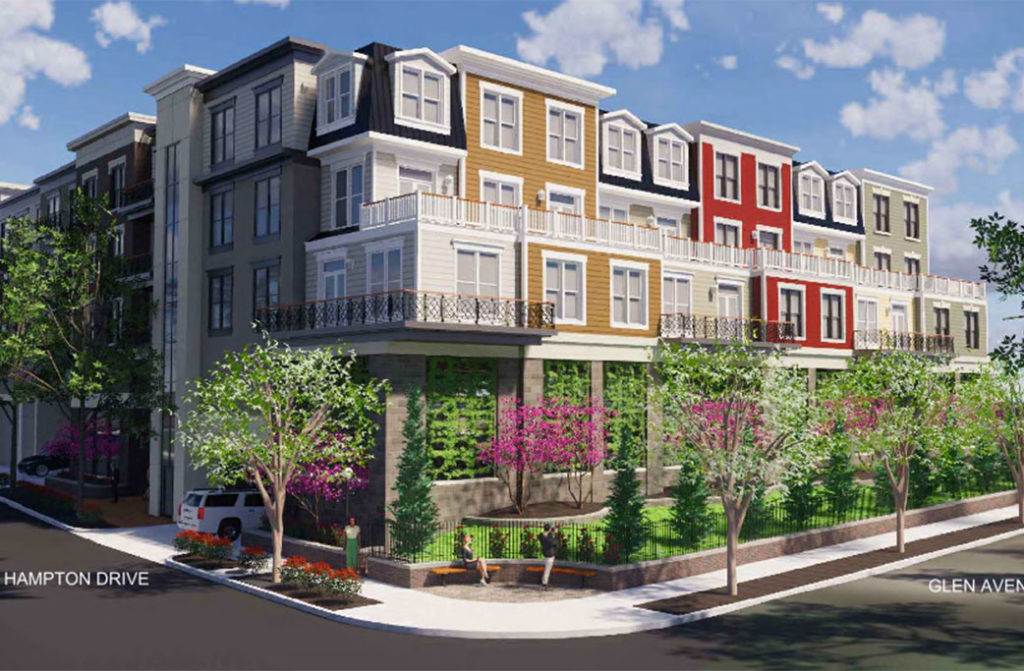

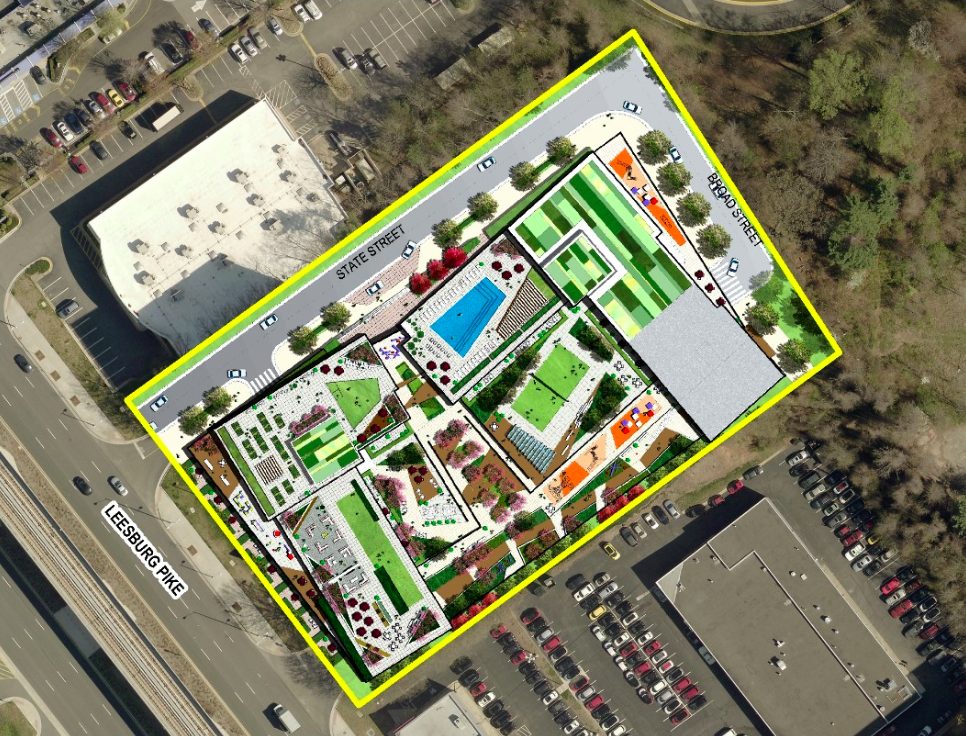
It’s not as high profile as Clemente Development Company’s The View development planned for the Spring Hill Metro area, but the nearby Evolution development could be exciting for affordable housing advocates.
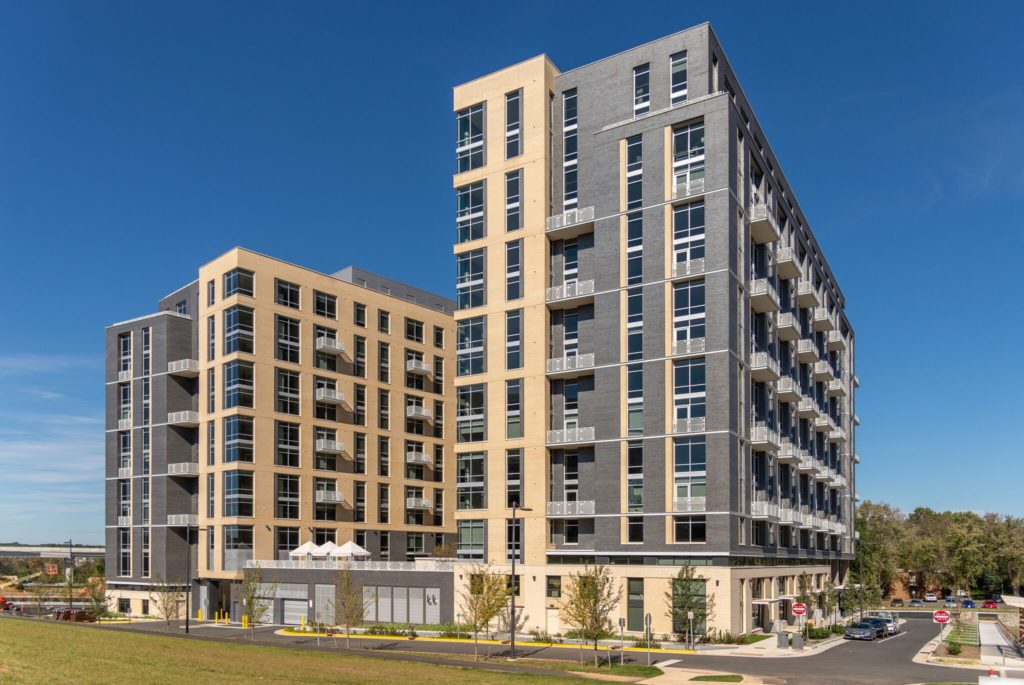
According to the application overview, the building would include 1,400 multi-family units in a high-rise building. All of the housing in the building would be workforce dwelling units — defined by Fairfax County as housing affordable to people making from 70 to 100 percent of the area median income.
The contact phone number listed for the project is inactive, but the housing is likely part of a requirement from Fairfax County that residential developments set aside 14 percent of units in a residential development as affordable, or 16 percent if the units are being constructed off-site.
According to Fairfax County Public School documents, the new building could add as many as 157 students to Spring Hill Elementary School.
Details on the project are still scarce. The application was submitted in late 2017, but staff at Fairfax County Planning and Zoning say little progress has been made since then, as the developer remains mostly focused on The View.
Photo via Fairfax County Planning and Zoning
As Tysons grows, it’s going to need access to medical care.
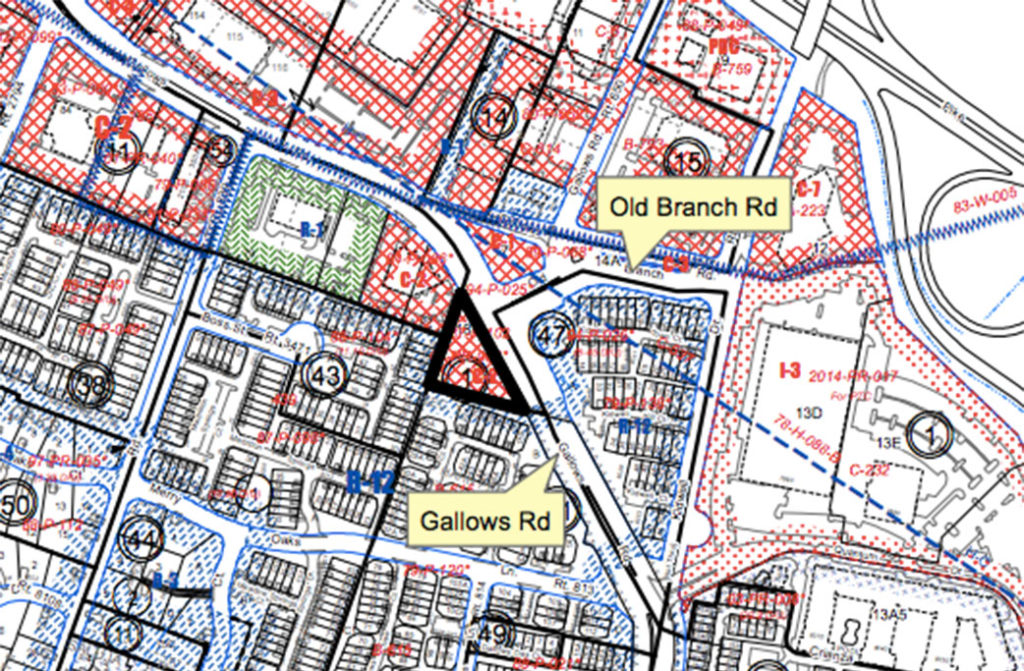
The Reston Hospital Center has an application, initially filed in late 2017 and still listed as “under staff review,” to build a freestanding emergency department at 2000 Old Gallows Road in Tysons.
“As Tysons continues to develop with additional office buildings and homes, it is essential that convenient and accessible health care services are available to meet the increasing need,” Reston Hospital Center, LLC, wrote in the application.
The emergency department would be located southwest of the Leesburg Pike-Beltway interchange. The proposed site is a triangular lot that closely abuts a residential development, which presents a number of development challenges.
The site is currently overgrown with foliage but was approved in 2002 to be developed as a drive-through bank. The application indicates that while the hospital would have a larger floor area, it would generate less peak hour and daily vehicle traffic than the drive-through bank.
“It will provide hospital-level emergency care in a convenient and accessible location and will be operated 24 hours per day,” according to the application. “Despite its capabilities and accessibility, the [freestanding emergency department] will accommodate far less patients than a typical emergency department operating within a hospital, allowing patients to receive necessary treatment quickly and efficiently.”
Though the facility would operate for 24-hours per day, patients would not stay overnight. The application notes that patients admitted to the building would be treated and discharged within hours of their admission or would be transferred to a hospital for higher levels of care.
HCA, Inc., which owns the Reston Hospital Center, operates a number of freestanding emergency departments across the country.
The application says that most patients visit these types of freestanding emergency departments between 9 a.m. and 8 p.m. and that an average of two patients are transported to the facilities via ambulance per day.
The growing need for emergency services in Tysons also prompted plans for a new fire station in Tysons East.
Image via Fairfax County Department of Planning and Zoning
The cost of living in Tysons is high — most of the new residential developments around Tysons advertise their new living units as “luxury” — and there’s a good reason why.
And as developers fight over the last few pieces of prime real estate near Metro stations, some are admitting that the cost of setting up shop in Tysons is unlikely to go down anytime soon.
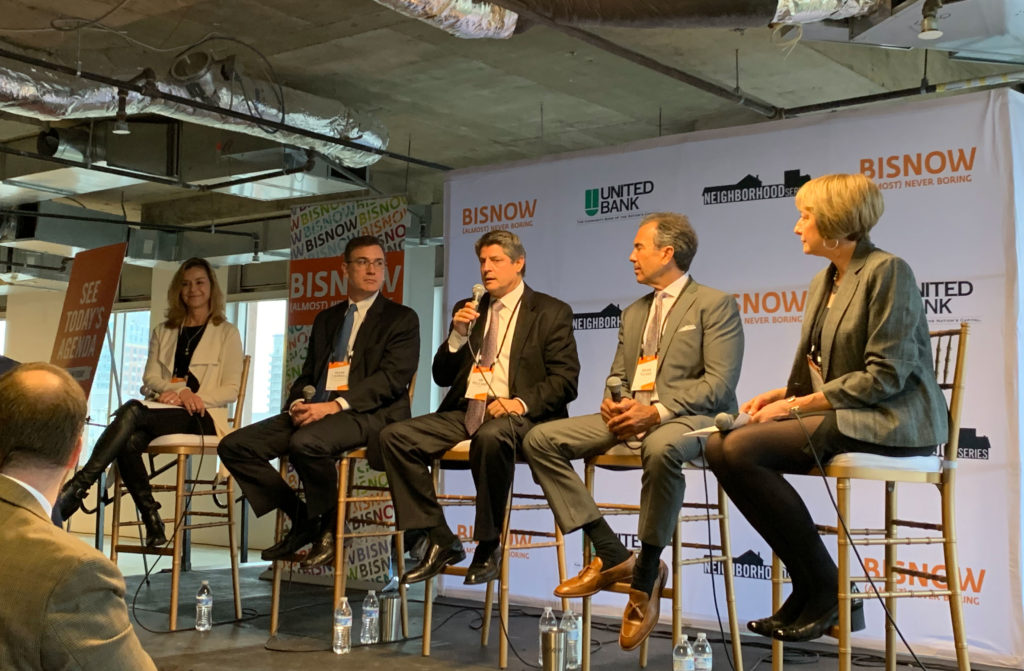
At Bisnow’s Tysons State of the Market event yesterday (Thursday) at 1600 Tysons Boulevard, developers met to discuss the challenges and opportunities facing the region over the next few years.
“Costs have risen,” said Gary Block, chief investment officer for the Meridian Group, developers of The Boro. “It’s tough to underwrite new residential development today. Rents have to be very high to justify development.”
One of the biggest drivers of cost in Tysons is also one of the biggest draws: nearly unlimited density. Speakers at the State of the Market event said a high capacity for density means developers are looking to get more out of each plot of land, which means building up, and that means using more expensive steel frames rather than wooden frames.
“Wood frame is an option,” said Jim Policaro, senior vice president of Lerner. “But you’re giving up potential density. You’re going to have more noise issues with wood frame construction, but the net effect is rent that might be slightly lower. If you’re willing to give up some density and sacrifice the height you can get, it’s definitely a viable option.”
But the market for residential development in Tysons is focused on areas near Metro, areas where density is king.
“Residential coming into the market is driven by density, “said Mark Carrol, executive vice president of Skanska Commercial Development. “These locations are within walking distance of the Metro.”
Developers said a boosted demand for higher-end residential development will likely be one of the main impacts of the new Amazon headquarters in Arlington.
“Not everyone can live in Arlington, or wants to,” said Policaro. “Employees who are married with children might see Tysons as a laudable option for residential.”
Carrol added that from a cost perspective, developers have seen an escalation of almost 7 percent in this market. If there are residential developments that are more affordable than the new luxury developments, they will have to be in places further away from Metro access.
“Those further away from the Metro are going to have to make certain changes and accept the fact that their rent streams are going to be significantly lower,” said Brian Tucker, managing director for JLL.
As for who is moving into these high-end residential developments, Bob Kettler, founder and CEO of Kettler, said half of the people moving into condominiums in the area are “empty nesters” — older couples whose children have left their home. The other half is split between professional couples and affluent single professionals.
Kettler also noted that the demand is still very present for high-end residential, with prices on units moving up three times over the last four months.
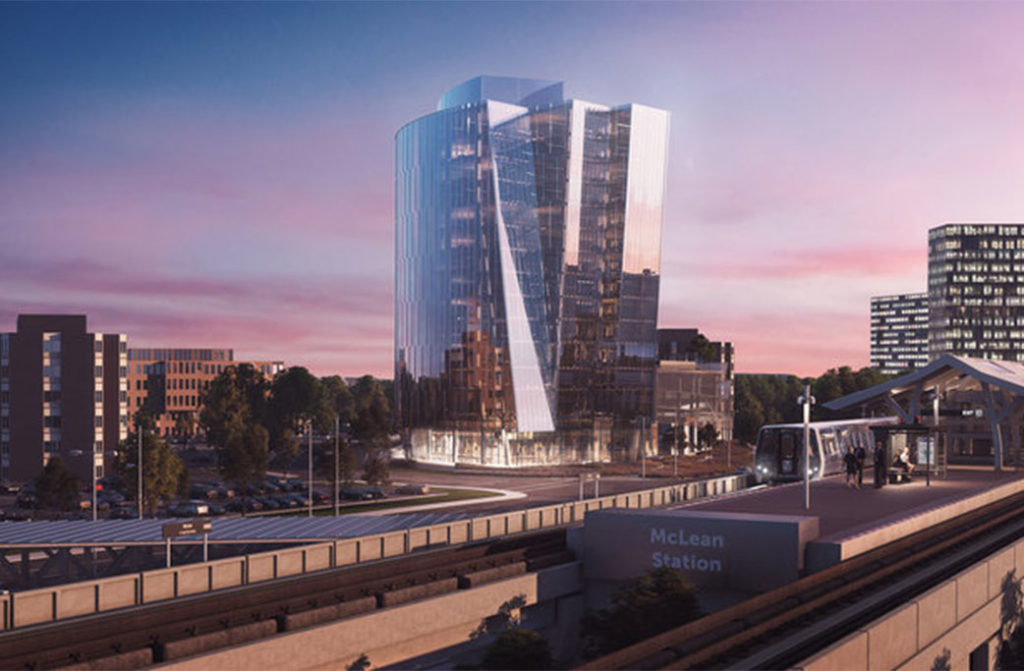
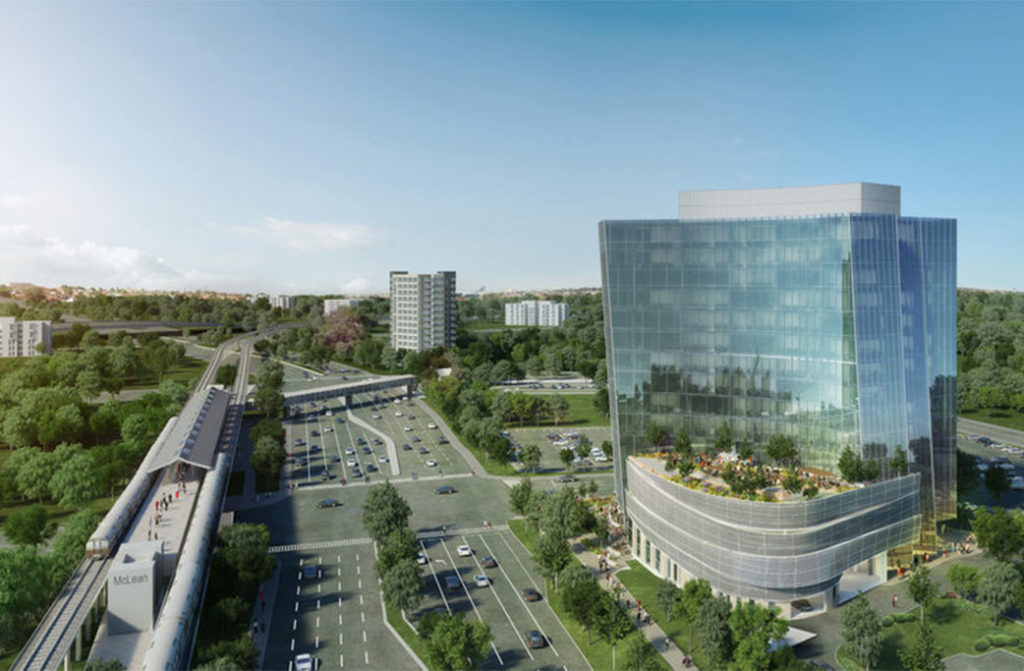
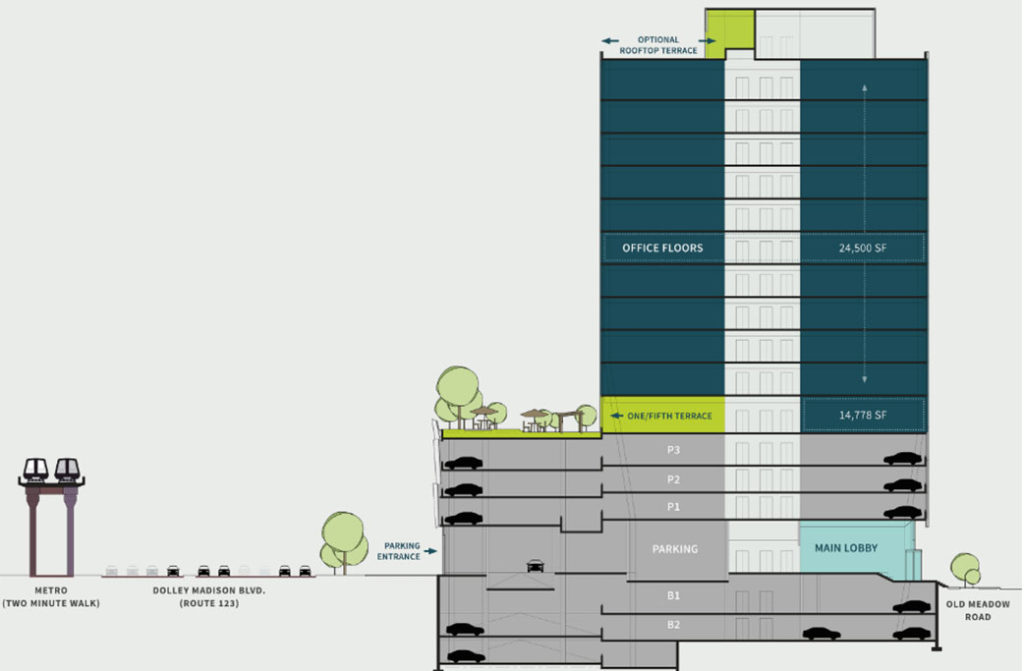
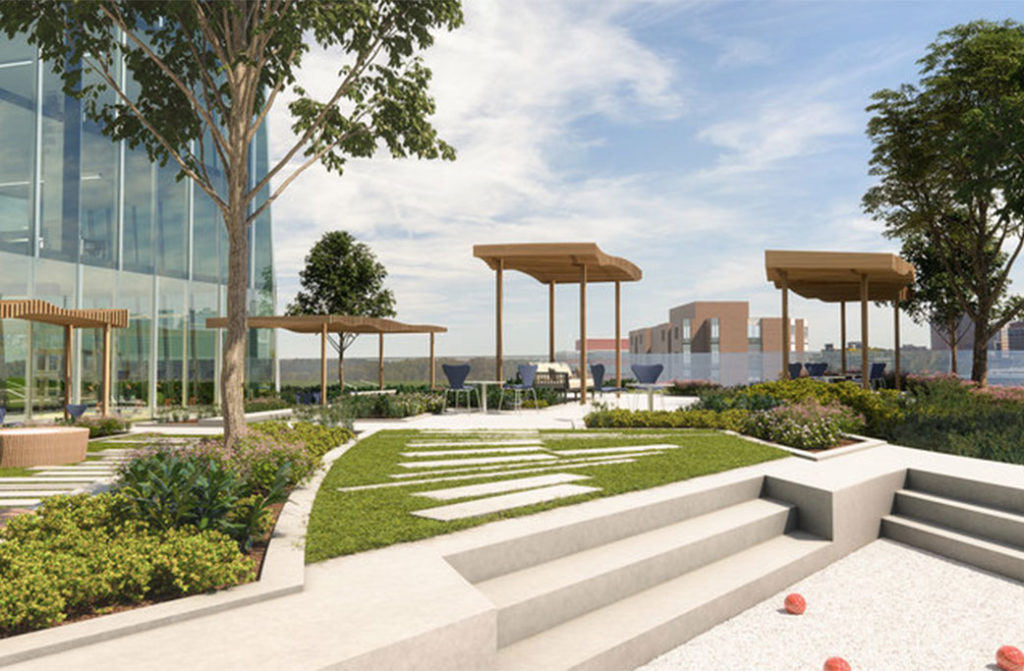
There are plans in the works for nearly every corner of Tysons East, and a distinctive curved glass building called “One Tysons East” is planned for a corner of Route 123 near the McLean Metro station.
“The proposed development of 1690 Old Meadow Road will fill in one of the final remaining pieces of developable property adjacent to the McLean Metro Station,” Fairfax County staff wrote in a report on the project. “The property is completely surrounded by… prior Tysons development approvals.”
To the north, across Route 123, is the sprawling Capital One development that was completed last month. The Scotts Run South development abuts the property on two sides. Working inside the tight confines of this space, the report says the proposed building is “a unique visual feature at a prominent location.”
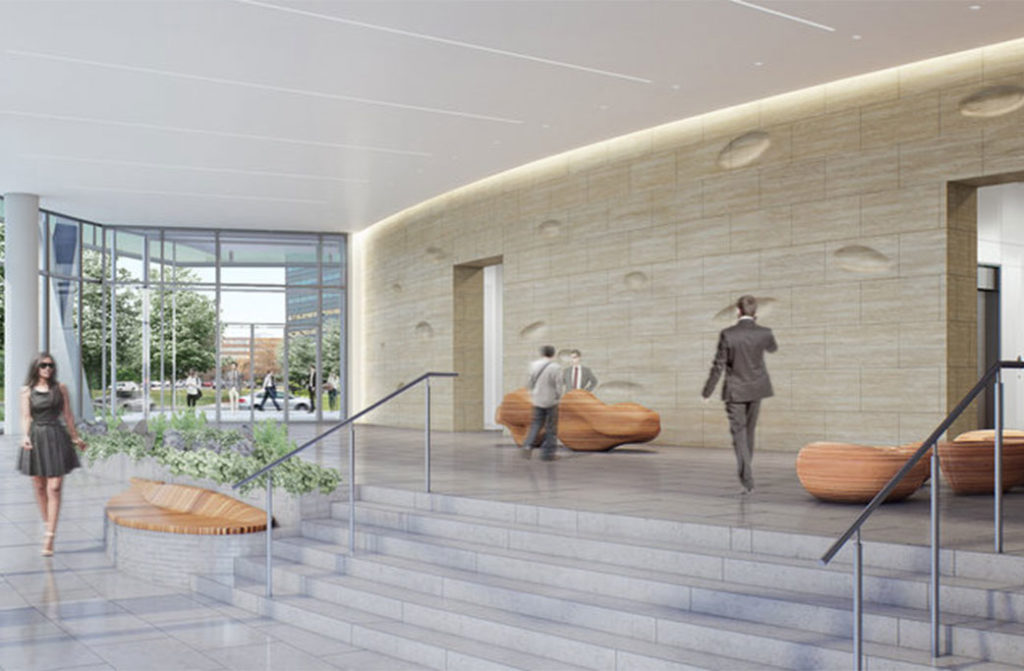
The applicant, Akridge, proposes a single office tower on the property with ground floor retail accessible to pedestrians. The building designs show that it would be accessible from every frontage. Encouraging bicycle transit is a key part of the development proposal as well, with a bicycle storage room and changing rooms included in the design.
One Tysons East would include 250,000 square feet of office and 12,000 square feet of retail.
The property is currently a two-story brick building constructed in 1977, formerly a GEICO training facility, which will be demolished as part of the construction.
The building has been in the works since at least late 2015, when Akridge acquired the brick building. According to the Fairfax County government website, the development is still under review by county staff.
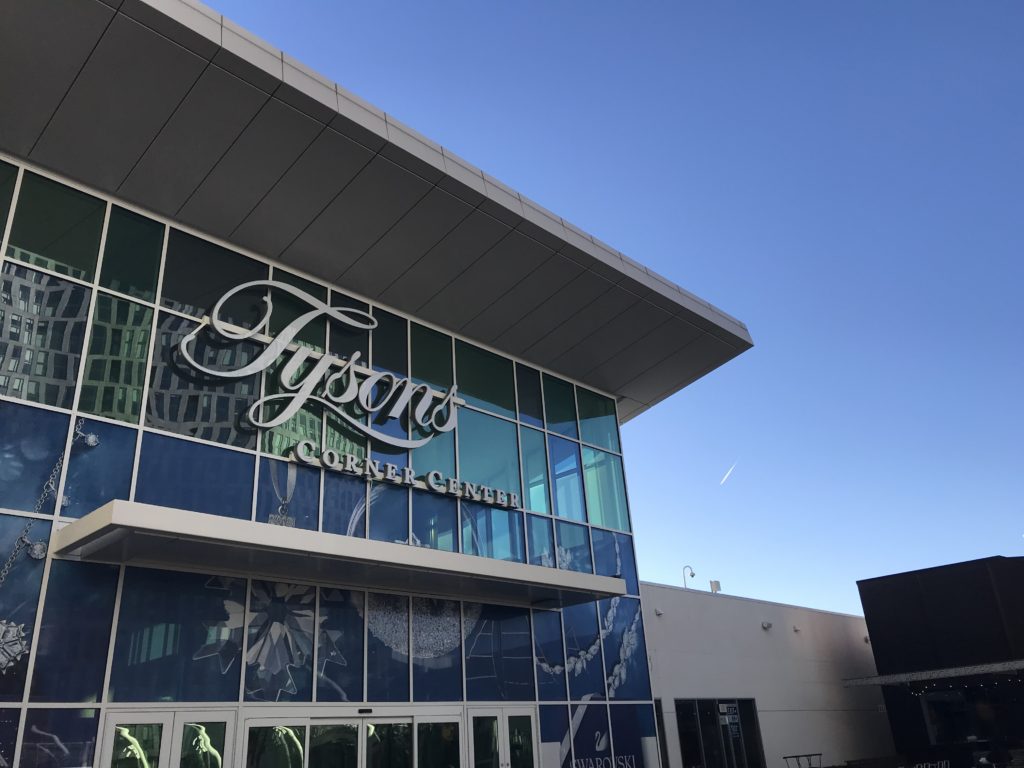
Another Tysons Firm Moving to Boro — “Alion Science and Technology Corp. is leaving one Tysons tower for another. The engineering firm, headquartered at Lerner Enterprises’ 1750 Tysons Blvd., has agreed to lease 16,000 square feet at Boro Tower… Alion will join KPMG LLP (roughly 168,000 square feet), Tegna Inc. (46,000 square feet), Hogan Lovells (44,500 square feet), and Womble Bond Dickinson (24,239 square feet).” [Washington Business Journal]
Weather Delays Silver Line Repairs — “Promised sealant for problem concrete panels at Silver Line stations due to open next year is on hold. The sealant is intended to prevent the panels, which were revealed last year to have an incorrect mix that could create problems, from deteriorating over coming decades.” [WTOP]
Tysons Development Quiz — “How much do you know about construction, leasing and development activity in Tysons? Take this quiz to test your knowledge.” [Bisnow]
Hunter Mill District Races — Two candidates are running for the Hunter Mill District seat on the Fairfax County School Board, which is being vacated by incumbent Pat Hynes. Meanwhile, long-time Hunter Mill District Supervisor Cathy Hudgins announced yesterday that she will retire after her term ends. [Reston Now, Reston Now]
Reminder: Drone Meeting Tonight — A meeting to discuss a comprehensive plan for Fairfax County’s use of drones, particularly for public safety, will take place tonight at the McLean District Governmental Center. [Tysons Reporter]
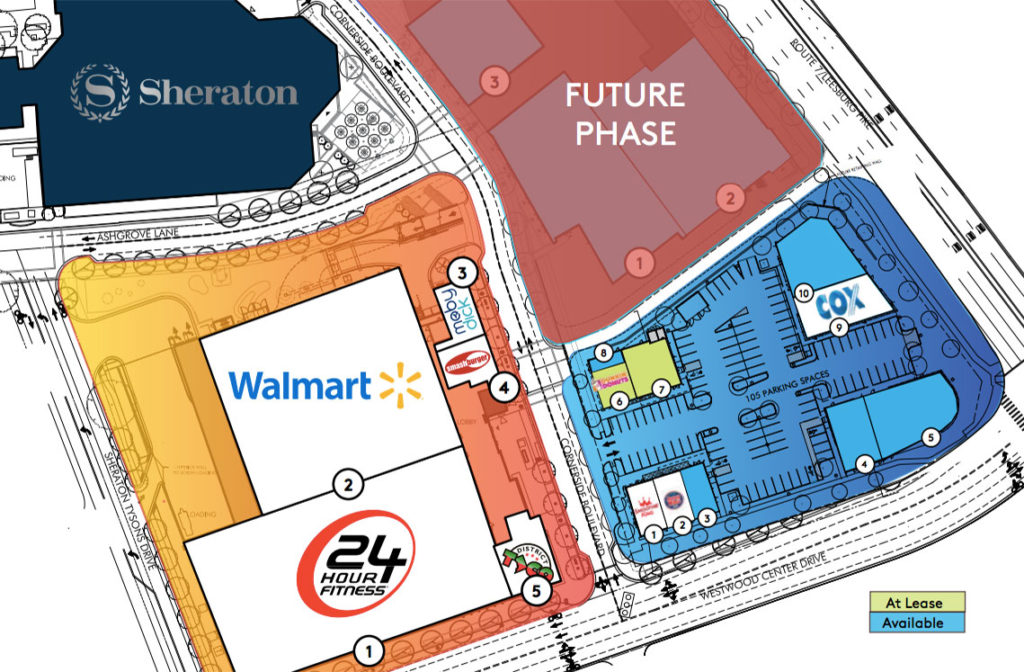
Work is coming along on the latest addition to the growing development around the Spring Hill Metro station.
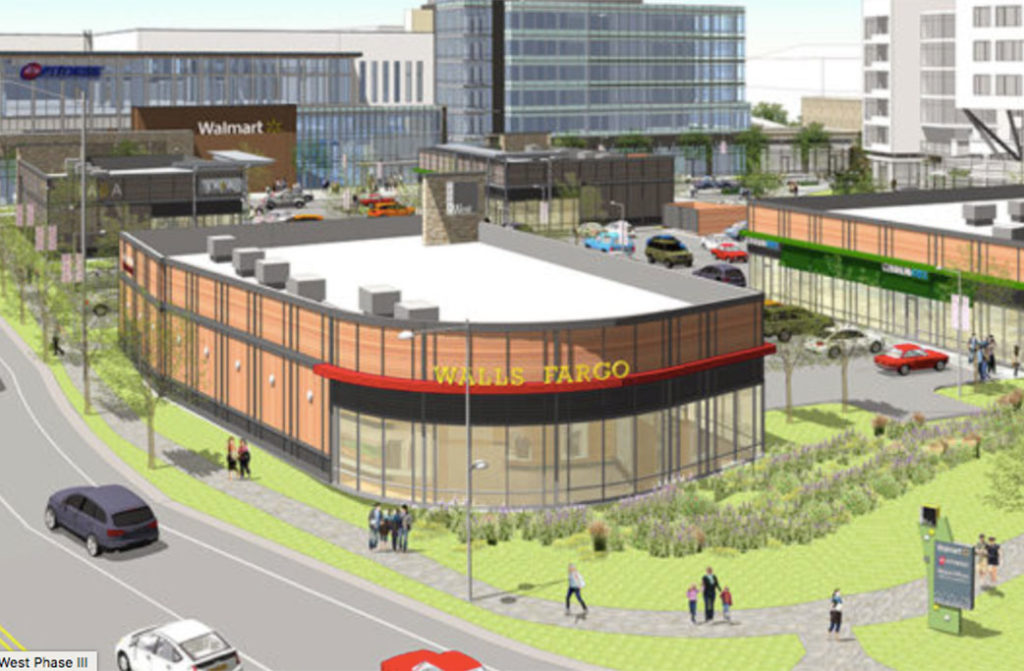
A project dubbed “Tysons West Phase III” is set to transform the under-utilized lot across from Walmart and create a mixed-use development.
“Tysons West Phase III builds on the success of the Walmart and 24 Hour Fitness [that] anchored Tysons West Phase I and provides an interim development of in-line retail buildings organized around surface parking,” construction contractor L.F. Jennings said in a press release. “These retail buildings will provide dining and service retail options that take advantage of the vehicular hub nature of the location as well as proximity to the metro station, local residents, and nearby offices.”
The development will contain four single-story buildings, with a combined 22,800 square feet of retail space.
Construction on the project started last July and is scheduled to be completed in the spring.
Plans from developer JBG Smith show Dunkin’ Donuts, Smoothie King, Jersey Mike’s and COX listed among the new retailers coming to the development.
Future Tysons West development is planned north of the site, and some of the car dealerships to the south are on sale with plans to be redeveloped as mixed-use buildings.
Space in the Kingston, one of the newest residential buildings in the growing Tysons East, is disappearing quickly.
Tysons has a residence deficiency, with roughly 100,000 jobs but only 19,000 residents. But the demand is there, with the 319-unit Kingston filling up faster than predicted in the project’s initial lease-up timeline. Currently, 44 percent of the building is leased.
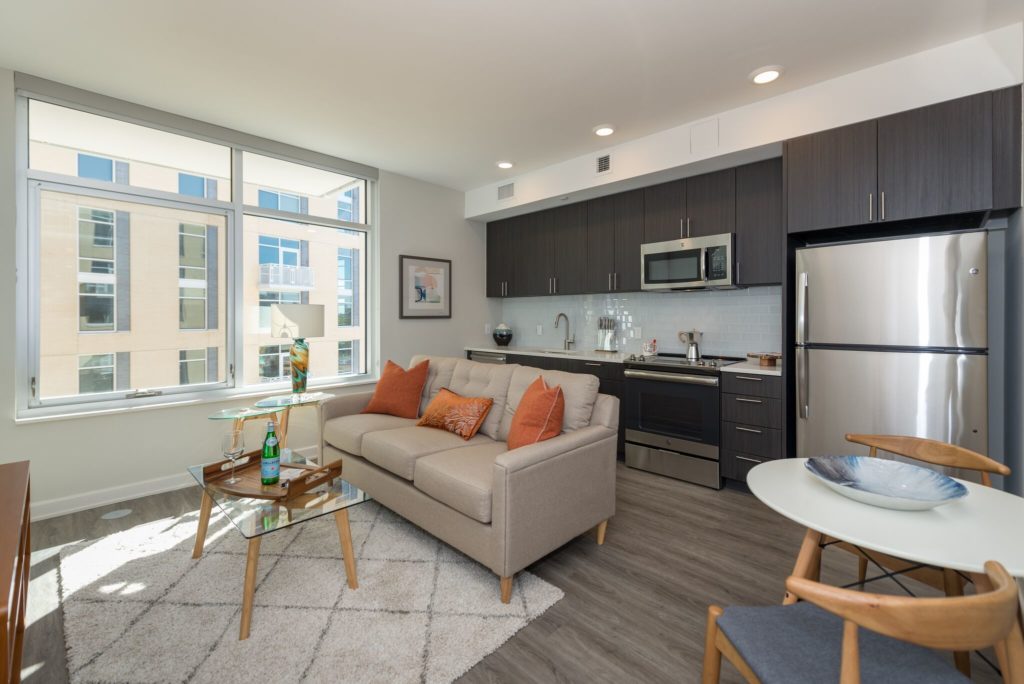
A residential unit in Tysons isn’t cheap either. There are 64 workforce dwelling units on the site, housing required by the county to be set aside as affordable, but the market rate rents start at $2,000 per month for a studio apartment. Two bedroom units cost $3,200 per month and three bedroom units lease for approximately $5,200 per month.
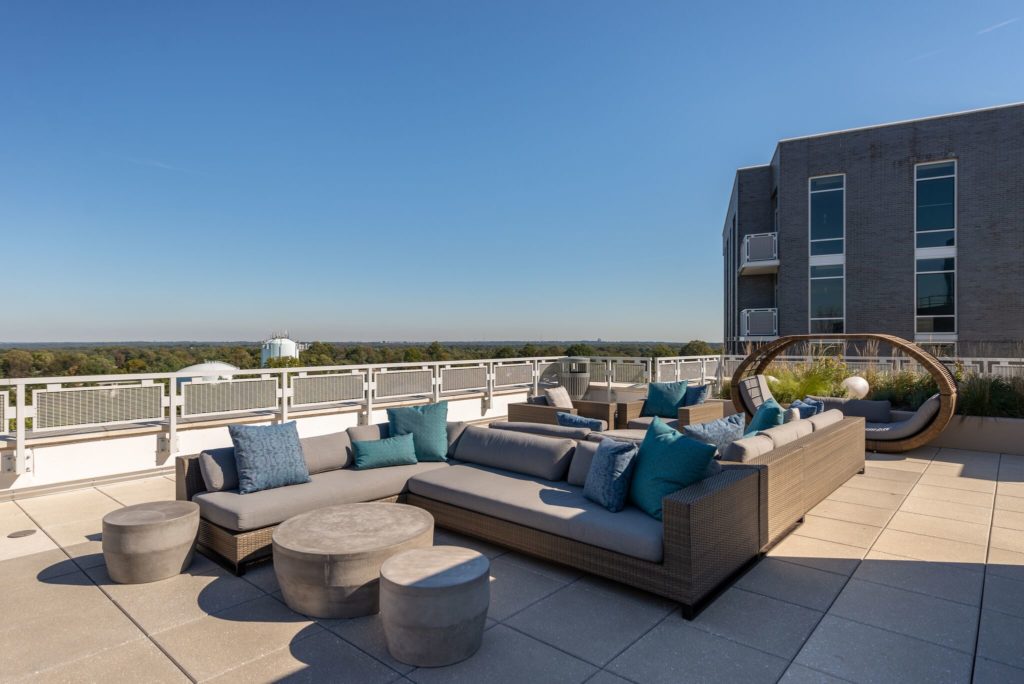
A press release for the apartment community highlighted the “high-end events” regularly hosted by the property management.
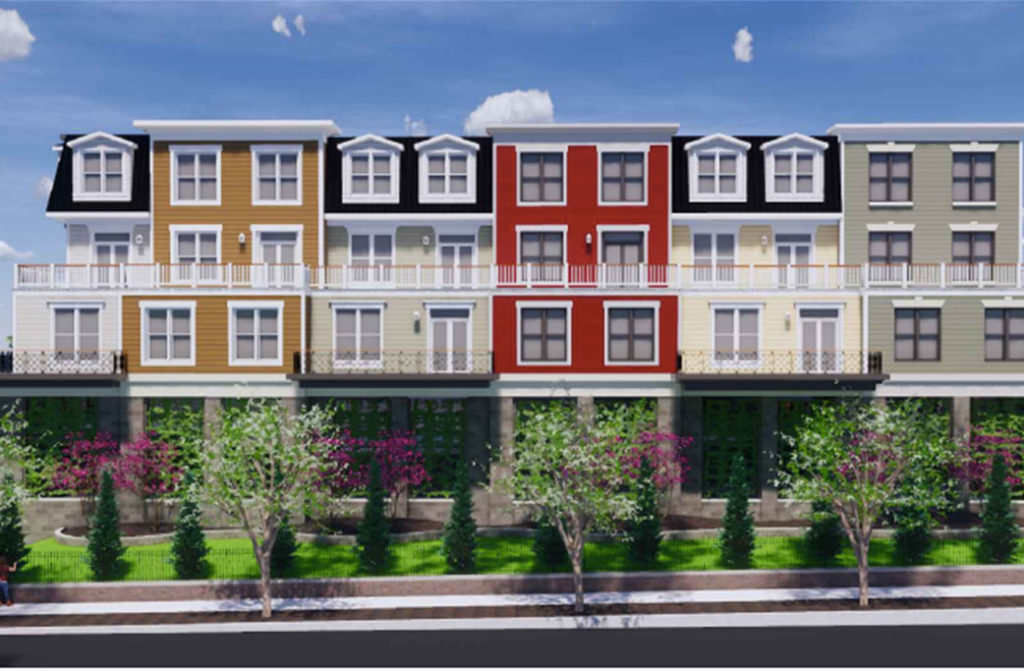
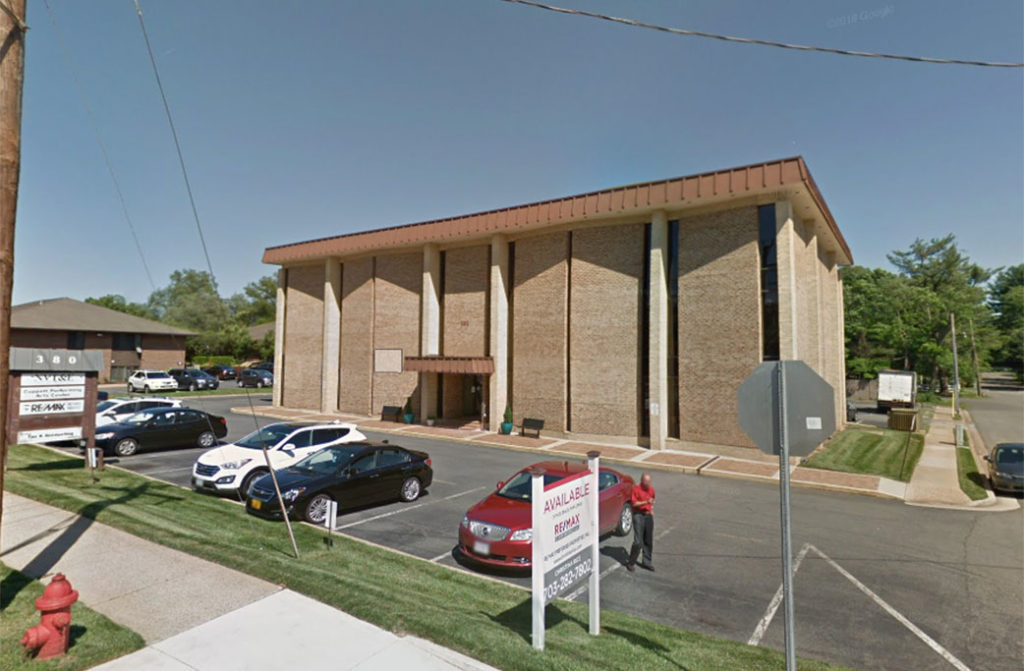
The three-story office building at 380 Maple Street in Vienna, a squat brick structure from the 1970s, could soon be replaced with a new mixed-use development.
At tonight’s Board of Architectural Review meeting, the Board will review a proposal to replace the building with 7,500 square feet of retail and 40 residential condominium units. The new development will include a dog park for residents of the building.
The development is proposed to have one floor of below-ground parking and two floors of structured above-ground parking.
The developer is also proposing to plant a series of trees along the surrounding streets as part of the development’s streetscape improvements.
The building is proposed as part of the Maple Avenue Commercial (MAC) zoning, which last year was at the center of a controversy surrounding a new development a block away.
A previous work session on the new development was held on Dec. 14.
Photo via Google Maps
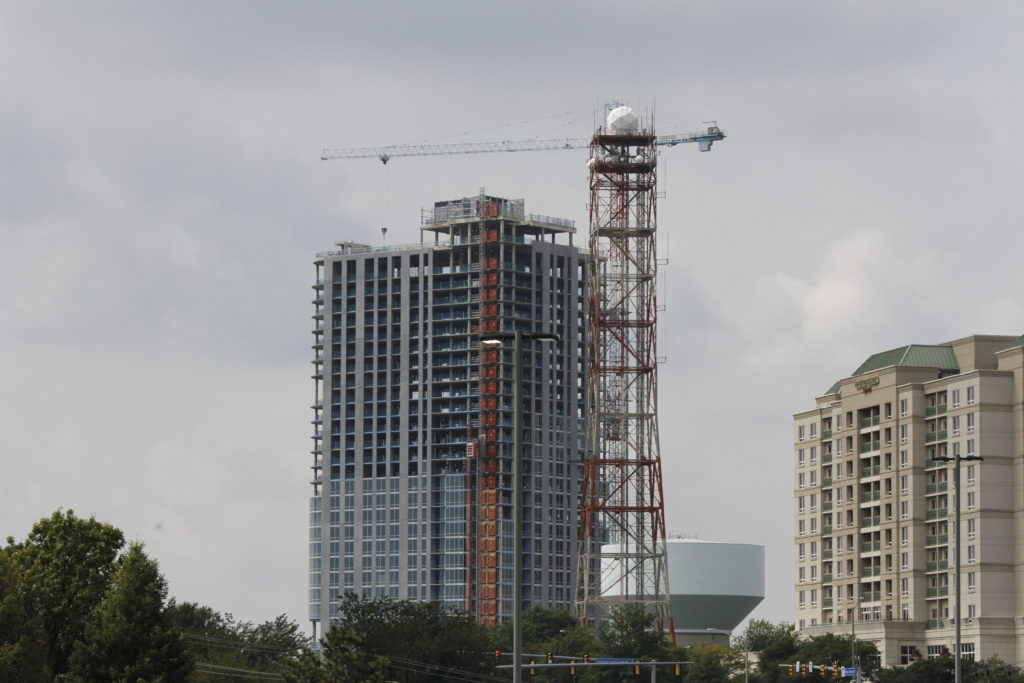
How is Tysons progressing in its quest to become America’s “next great city?”
A pair of upcoming events are planned to look at the current state of Tysons’ economy and where it should go from here.
The first, a “State of the Market” event next Thursday (Jan. 24), will focus on the development of the local office and retail markets. The event is hosted by Bisnow, a commercial real estate news organization.
The event will be held at 1600 Tysons Boulevard. Tickets to the event are $99.
Breakfast and networking start at 7:30 a.m. A discussion of continuing Tysons’ development boom starts at 8:30 a.m., followed by a discussion of how the new developments around the Greensboro Metro station will impact the market starts at 9:15 a.m.
“As we look at 1.5 million square feet of office under construction, 1,800 multifamily units to deliver, and massive mixed-use developments in the pipeline, the area shows no signs of slowing down,” Bisnow said in the event description. “With a few years of booming development, is the market fully built? How much more construction does the market need to see? Northern Virginia is poised for growth, but is it growing quick enough to meet the supply being delivered?”
One week later, the Northern Virginia Chamber of Commerce will host its 27th Annual Economic Conference. The central theme of the conference is a review of the last ten years of development in Tysons and examining economic indicators for the area’s future growth.
The event is scheduled for Jan. 31 from 7:30-11 a.m. in the Hilton McLean Tysons Corner at 7920 Jones Branch Drive.
Update 4:25 p.m. — Lynne Coan, communications and marketing manager for the Town of Vienna, said the Vienna Town Council removed pedestrian bridges and digital information board from the strategic plan and changed “get rid of planters” to “enhance streetscapes to encourage walkability.”
As the Vienna Town Council begins to craft a new strategic plan, one of the largest sections of the document focuses on how to revitalize the town’s economy.
A full draft of the plan can be found in the agenda for the Jan. 15 Town Council work session. The strategic plan’s stated aim is for Vienna to serve as a “location of choice for unique, independent businesses that add to the town’s charm, attract visitors as well as residents and collectively serve to establish the town as a destination.”
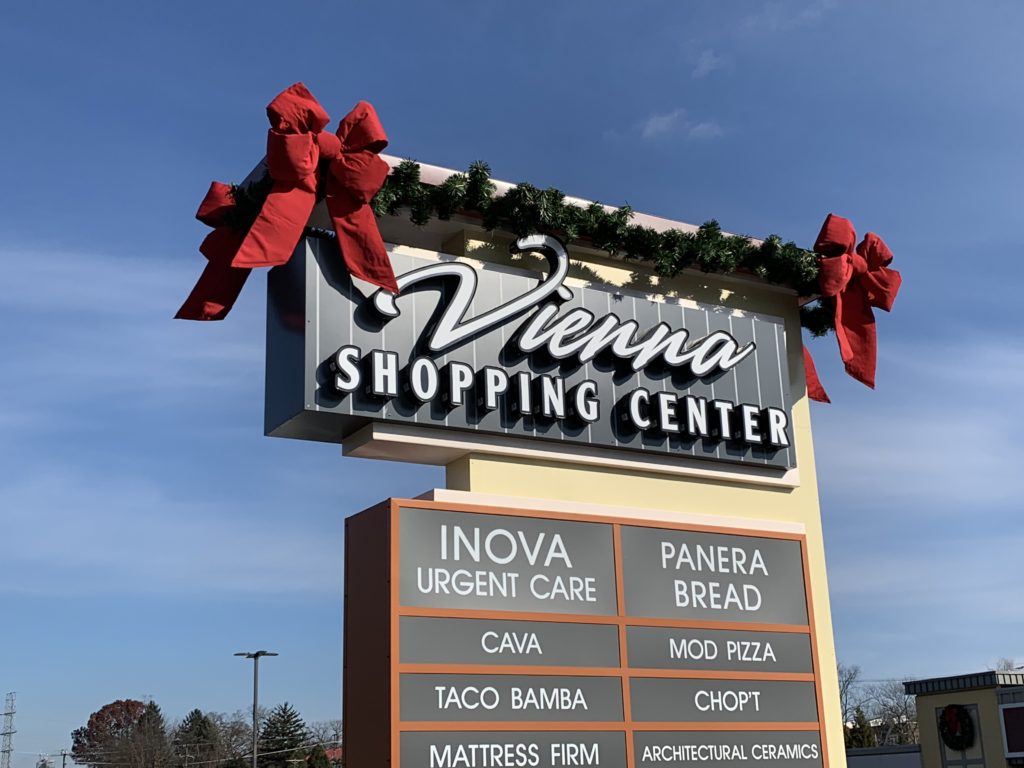
So far, that’s been a challenge for Vienna. While there are new businesses, many of the largest additions are retail chains, and the western end of Maple Avenue suffers from rampant vacancies and “blight” like the burned husk of Marco Polo.
The strategic plan points to plans to update the town’s zoning code as one of the largest projects in the next year related to new economic development. The strategic plan says the aim is to start work on addressing the zoning code in spring 2019. The process is anticipated to take 18 months.
Part of the plan to make Vienna a destination also involves making it more walkable. The plan includes a series of recommendations on how to make Vienna more pedestrian friendly:
- Make wider sidewalks a part of new Maple Avenue Commercial developments
- Get rid of planters to allow more walking area
- Enhance traffic-light timing to improve crossing Maple Avenue
- Add more pedestrian-controlled signals on Maple Avenue
- Start a local bus shuttle service to walkable destinations in Vienna
To help diversify the economy and bring in non-chain businesses, the plan recommends hiring an economic development consultant or deputy town manager to focus specifically on economic development. One of the recommendations would also loosen some of the sign ordinance restrictions, allowing businesses to get waivers allowing signs and balloons for events on Church Street, as well as additional way-finding signage.
In an effort to reduce the rampant vacancies, the plan recommends providing a link on the website to current vacant properties and opening up those spaces for pop-up arts or other short-term uses.
The plan also says that the current Town Green could be utilized more effectively as a social hub for Vienna, with recommendations for the square including bringing events with food trucks into the area.
Additional proposals in the strategic plan include:
- Implement campaigns such as restaurant week
- Celebrate small business week for a whole week, starting on the date of the Church Street Stroll; ask businesses to come up with deals to offer that whole week
- Create a mobile app with an interactive business map
- Create an app and printout for a Vienna walking tour focusing on local history and points of interest
- Publicize where to park off-hours
- Host more events that draw people to the commercial area
- Create a Vienna dining and restaurant directory
- Create a Chocolate Escape event; ask all businesses to feature a low-cost chocolate items as part of event
- Host a Casino Night; have live music frequently
- Encourage more dining options
- Encourage local groups to adopt a spot and keep it clean
- Create training centers
- Feature a business of the week
- Additional free events: dances, dance lessons, senior events.
Lynne Coan, communications and marketing manager for the Town of Vienna, said the strategic plan is still a work in progress with the Town Council scheduled to consider a draft of the plan in the spring.