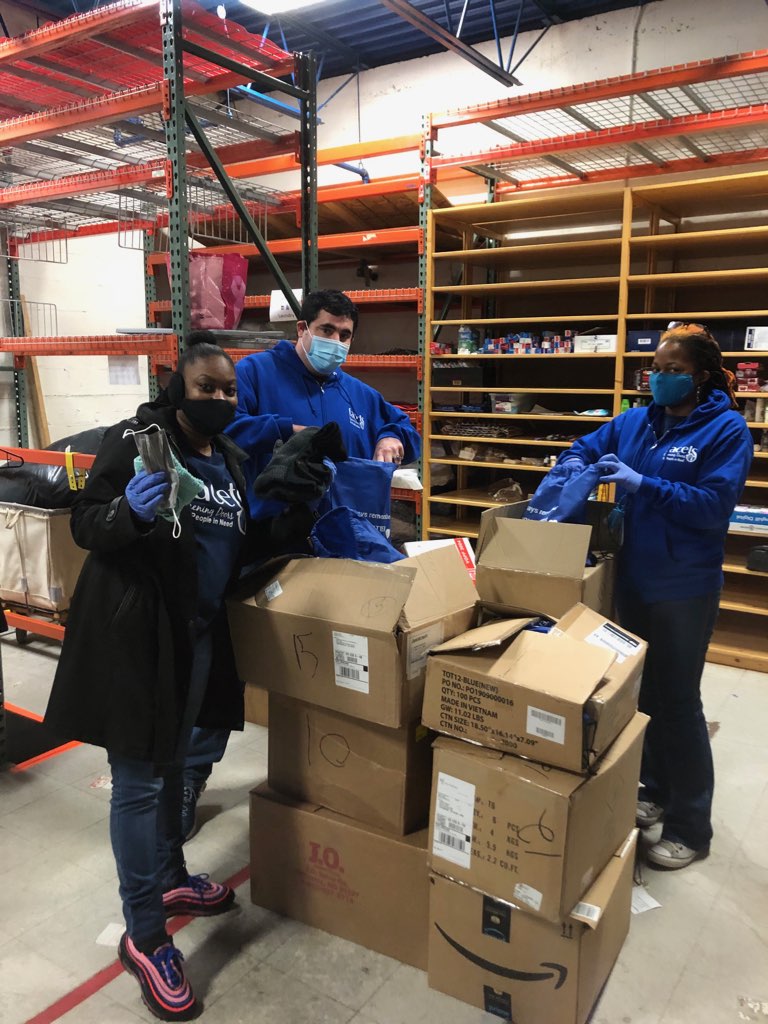


Inova Delivers First Vaccine to Healthcare Worker — “Months of preparations led up to an emotional moment for Inova Health System’s CEO after the first healthcare worker received the COVID-19 vaccine.” [ABC7-WJLA]
National Search Underway for Next Fairfax County Police Chief — Fairfax County has hired a search firm to assist in its search for a successor to Chief Ed Roessler Jr., who has announced that he will retire in February. The search process includes an online survey and focus groups with “key community organizations.” [Fairfax County Government]
Falls Church West End Developers Propose Major Revisions — West End Gateway Partners wants to revise its plans for an “ambitious 10-acre mixed use development at the City’s west end…under conditions of the global Covid-19 pandemic. A special public town hall to outline the changes is scheduled to be held online this Thursday, Dec. 17 at noon.” [Falls Church News-Press]
Teen-Run Business Focuses on Outdoor Jobs Amid Coronavirus — “TaskTeens, a spinoff of TeenServ created by McLean High School student Jack Lannin, connects teenagers that can perform yard work for homeowners.” [Patch]
Staff photo by Angela Woolsey
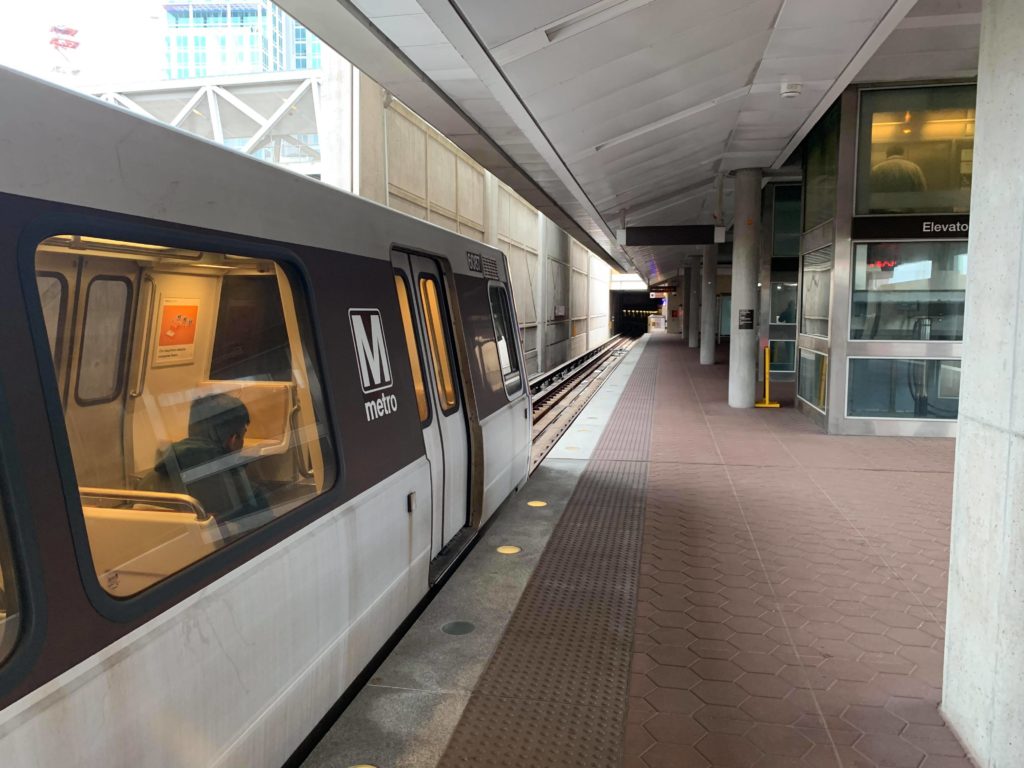
The Tysons Partnership has joined calls for federal legislators to give mass transit a financial boost as public transportation systems reel from dropping ridership levels and other impacts of the COVID-19 pandemic.
Charged with implementing the vision in Fairfax County’s Tysons Comprehensive Plan, the Partnership said yesterday (Tuesday) that its leaders sent a letter to members and stakeholders asking them to advocate for transit relief to their Congress members.
“There will be profound economic harm caused by transit service cuts in all urban centers that depend on transit to move people in [and] out of work, home, shopping and entertainment,” Tysons Partnership President and CEO Sol Glasner said.
Local elected leaders and transportation officials have stepped up their appeals for Congress to include public transit in a coronavirus relief package since Metro unveiled a sobering budget plan that includes drastic service cuts to compensate for an anticipated deficit of nearly $500 million.
In addition to closing 19 stations, including ones at McLean and Greensboro, the Washington Metropolitan Area Transit Authority’s proposed Fiscal Year 2022 budget would eliminate rail service on the weekends and reduce it to every half hour on weekdays. Bus service would also drop from 60 to 41 routes.
The WMATA board of directors voted on Dec. 10 move the proposal forward and authorize a public hearing on it in January or February. The board must adopt its next operating budget in March.
“If implemented, these transit cuts could be devastating to Tysons,” Glasner said. “Economic growth and development in Tysons may slow significantly as employers, retailers, employees and residents reconsider their respective commitments to a location in which the urban vision rests on the premise of access to transit.”
The Northern Virginia Transportation Authority and other transportation agencies in the region have been rallying in support of federal transit funding.
The NVTA included a call for additional federal COVID-19 funding for transit in its 2021 federal legislative program, stating that WMATA is critical to the federal workforce as well as first responders, healthcare workers, and other essential employees.
“At a time when we are looking to recover from the economic impacts resulting from the COVID-19 pandemic, it doesn’t make sense that our federal government would not prioritize transit systems that serve our federal capital and our national economic centers,” Glasner said.
According to the Tysons Partnership, Congress is currently negotiating a federal funding bill that allocates $15 billion to transit. The American Public Transportation Association says that public transportation around the country needs at least $32 billion in emergency funds to survive.

Fairfax County residents struggling to pay their water bills can now apply to Fairfax Water for payment assistance.
The not-for-profit utility provider announced yesterday (Monday) that it has received funds from a COVID-19 Municipal Utility Relief Program that Virginia set up using $120 million in federal CARES Act money.
“These are challenging times for Virginia families and businesses,” Gov. Ralph Northam said when announcing the allocation of $60 million to the program in November. “We remain committed to helping them keep the electricity on and the water running.”
Residents of Fairfax County and the Cities of Falls Church and Fairfax are eligible to apply for the program based on the following criteria:
- Have water and wastewater service bills between Mar. 1 and Dec. 30 are more than 30 days past due
- Have experienced economic hardship due to the COVID-19 pandemic
- Have not previously received CARES Act assistance for water or wastewater bills from any other sources, including the Rebuild Virginia Grant Fund and Fairfax County’s RISE program
To apply for relief, customers must fill out an application form on Fairfax Water’s website and send it to the utility by email, fax, or mail by Dec. 30.
Fairfax Water says it can also work with customers to develop a repayment plan that would allow them to pay their overdue balance over the next six months or longer. Service would not be disconnected as long as the payments are made within the agreed-upon timeframe.
People can call Fairfax Water’s customer service department at 703-698-5800 for more information on setting up an extended payment plan.
In addition, a number of local nonprofit community organizations are offering assistance for utility bill payments. Groups in the Tysons area include Committee for Helping Others (CHO) and Share of McLean.
Fairfax County Coordinated Services Planning has also been connecting residents to social services and resources. It can be contacted on weekdays at 703-222-0880. Falls Church City residents can call the city’s Department of Housing and Human Services for assistance at 703-248-5005.
Thanks to a revised state budget signed by Northam on Nov. 18, utilities in Virginia are currently prohibited from shutting off power, water, and gas service until the state of emergency declared in March in response to the COVID-19 pandemic ends.
Fairfax Water has suspended all water disconnections due to nonpayment of bills since March, but it warns that that “is not sustainable indefinitely.” As a not-for-profit organization, rather than a government agency, it receives all funding for operations and system maintenance from customers.
“The Fairfax Water drinking water system and the wastewater system operated by Fairfax County and the cities of Fairfax and Falls Church…rely on recovering all costs from the systems’ users,” Fairfax Water says. “Fairfax Water anticipates unpaid bills could soon reach a threshold that necessitates our resumption of disconnections for nonpayment.”
Photo by Pan Xiaozhen on Unsplash
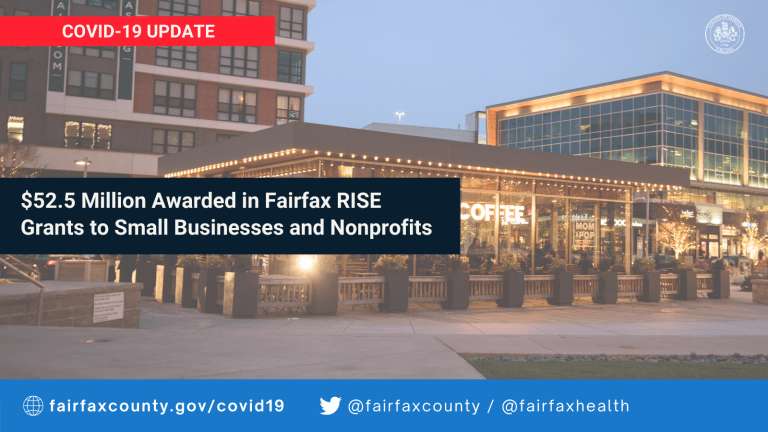
Fairfax County’s relief fund for small businesses and nonprofits affected by the COVID-19 pandemic has come to an end, the county announced on Dec. 11.
Established by the Fairfax County Board of Supervisors in May, the Fairfax Relief Initiative to Support Employers (RISE) assisted 4,809 local businesses and nonprofits by awarding $52.57 million in grants.
According to the county, RISE received 6,280 total requests for aid during the application period from June 8 through June 15. 95% of the grants went to local businesses, while the remaining 5% supported nonprofits.
More than 72% of the grant recipients identified as organizations owned by women, minorities, and/or veterans. That surpasses the county’s goal of allocating at least one-third of the available funds to businesses owned by those historically disadvantaged groups, which account for a third of the jobs in Fairfax County.
The Board of Supervisors praised the county staff and employees of the nonprofit Community Business Partnership who ran the program during an Economic Initiatives Committee meeting on Nov. 10.
“I think each of us have heard from recipients what a difference this has made,” Board of Supervisors Chairman Jeff McKay said. “We’ll be paying close attention to what we hope will be future federal stimulus that will help us do even more going forward. 4,800-plus businesses is not insignificant.”
Fairfax County created RISE using money that it had been allocated by the federal CARES Act. As of November, the county had received $340.5 million in federal aid, including $200.2 million from the CARES Act Coronavirus Relief Fund, whose eligibility period ends on Dec. 30.
RISE grant funds were intended to assist with wages, rent, employee health insurance, and other fixed operating costs critical to keeping businesses alive.
Recipients needed to have a principal place of business located in Fairfax County, including the Towns of Vienna, Herndon, and Clifton, and no more than 50 full-time employees in order to be eligible for the program.
Almost 40% of the grants went to businesses in the accommodation and food services, healthcare and social assistance, and professional services sectors. 8% of recipients were in retail trade, which joins food services and hospitality as industries hit especially hard by job losses and the pandemic’s other economic impacts.
More information about RISE and the grant recipients can be found on Fairfax County’s website and its RISE dashboard.
Image via Fairfax County government

The trajectory of COVID-19 cases in Fairfax County continues its upward climb this week.
As of today (Monday), the trailing weekly average of new cases hit 471, with an all-time high reported on Saturday when cases hit a weekly average of 505.
While the county’s caseload continues to break all local records, the acceleration of new cases reported daily seems to have slowed slightly.
Nonetheless, the county reported the highest number of daily cases — 725 — last week on Dec. 7. Overall, the case trajectory continues to be exponential over the last month, suggesting that community transmission is occurring.
Another measure to determine community spread — the test rate positivity — remained high this week. The county’s rate is 10.6 percent, slightly down from last week’s rate of 11.5 percent. The state’s rate is 10.9 percent.
New statewide restrictions went into effect today, including a curfew from midnight to 5 a.m., a 10-person cap on social gatherings, and an expanded mandatory mask requirement.
An initial shipment of the Pfizer vaccine was cleared by the Food and Drug Administration last week. Virginia Gov. Ralph Northam stated that the Commonwealth would receive its first shipment within the following 24 to 48 hours with initial distribution targeted toward healthcare workers and long-term care facilities.
Meanwhile, the county is urging residents to celebrate the holidays with the people in their immediate household.
“We must find a way to recognize our traditions without putting ourselves and others at risk,” said Fairfax County Health Director Gloria Addo-Ayensu.
Here are some shopping tips for a healthy, safe and enjoyable holiday 🛍️
Check out our recommendations for family celebrations and entertainment: https://t.co/U2eRplxu3k pic.twitter.com/CpqHqa5TR9
— FairfaxCounty Health (@fairfaxhealth) December 13, 2020
Image via CDC on Unsplash
New COVID-19 Restrictions Take Effect in Virginia — “On Monday, new COVID-19 restrictions went into effect in Virginia, including a curfew that with exceptions requires people to stay home between midnight and 5 a.m.” [ABC7-WJLA]
Snow Expected to Hit Mid-Atlantic Region This Week — “A major winter storm is set to wallop the Mid-Atlantic and the Northeast on Wednesday and Thursday…But for the immediate Washington area, a messy mix of precipitation is more likely than a major snowstorm.” [The Washington Post]
Vienna Hopes to Be a Trailblazer with New Holiday — “The Vienna Town Council on Dec. 7 unanimously adopted a resolution to recognize Liberty Amendments Month, which will honor the ratification of the U.S. Constitution’s 13th, 14th, 15th and 19th amendments.” [Sun Gazette/Inside NoVA]
Haycock Elementary School Teacher Publishes First Book — “Allison Kelly, an ESOL teacher at the school, published her book, “There’s Spaghetti on My Ceiling: And Other Confessions of a Reformed Perfectionist,” just in time for the holiday season. A mother of two McLean High School graduates, she writes about balancing life as a Fairfax County Public Schools parent and teacher.” [Patch]
It has barely been 10 days since Fairfax County launched its annual Hypothermia Prevention Program, and it’s already clear that this winter will be unlike any other that Abby Dunner has experienced in her nearly decade-long work with the initiative.
Now the manager of the Fairfax County Office to Prevent and End Homelessness, Dunner has been involved with the hypothermia prevention program since she was employed as a case manager and assistant by the nonprofit FACETS in 2012.
The COVID-19 pandemic, however, forced Dunner and the other county and nonprofit officials who run the program to completely reengineer their operations, which were well-honed after 15 years of providing shelter for people in need during the coldest months of the year.
This year’s hypothermia prevention program, which started on Dec. 1 and runs through Apr. 1, 2021, must contend not only with the public health risks and social distancing protocols created by COVID-19, but also the looming threat of a surge in homelessness if emergency assistance measures end.
“We recognize the challenges and kind of the unique situation that we’re in, but everybody is also very much on board with understanding that the program has to continue,” Dunner said. “We have to still be able to shelter people who are experiencing homelessness.”
County officials and the nonprofit contractors that operate the hypothermia prevention shelters realized early on that they would have to make major changes to the program to make it viable this year.
Dunner says the Office to Prevent and End Homelessness collaborated extensively with the Fairfax County Health Department throughout the planning process. Health officials walked through each site and recommended ways to implement social distancing as much as possible.
Typically, the county relies on faith communities and nonprofits to host the actual shelters, which rotate between different locations every week, but the churches and other buildings usually utilized were too small to allow for the approximately 100 square feet of space sought per guest.
This time, the county turned to its own facilities, ultimately identifying seven sites that were sufficiently spacious, centrally located, and accessible by public transportation.
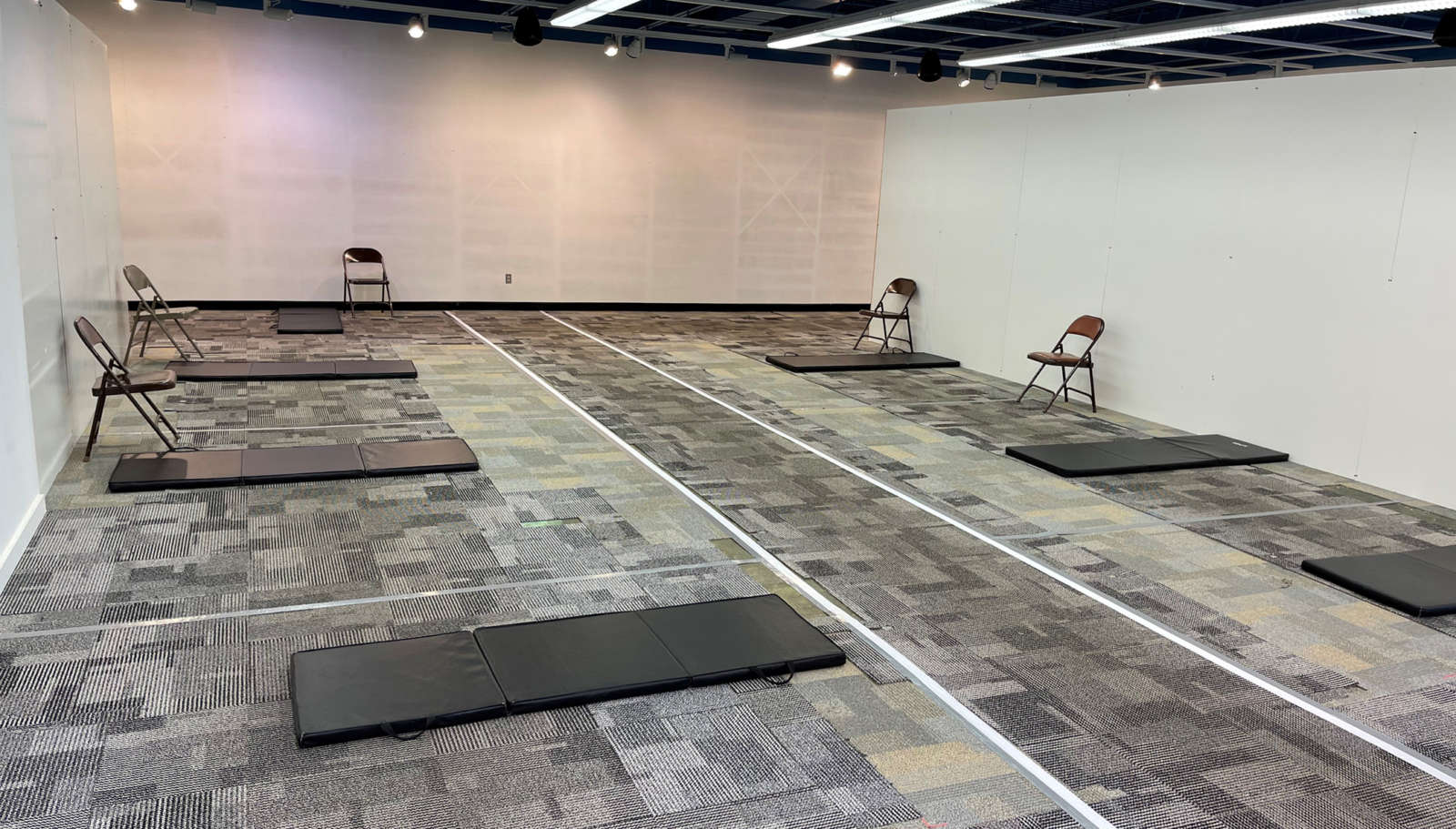
The ideal site for Central Fairfax, which includes the Tysons area, turned out to be a former Container Store at 8508 Leesburg Pike in Vienna.
According to Mike Dykes, the hypothermia coordinator for FACETS, which is operating the site, Fairfax County had been renting it out to George Mason University as a storage space before realizing it could be repurposed. At roughly 19,000 square feet in size, it can accommodate up to 84 shelter guests with social distancing.
“It’s quite a lot of space, much larger than the spaces we were looking at earlier and larger than most of the spaces we’re at in other years,” Dykes said.
Dunner says the hypothermia prevention program generally serves about 1,200 people across its four months of operation, and roughly 215 people utilize the shelters each night.
Though only a handful of people stayed at the Container Store site for the first couple of nights, the shelter averaged about 26 guests over the program’s first seven days, reaching 40 people on Dec. 7 with numbers expected to continue rising, according to Dykes. Read More

Fairfax County Public Schools could start expanding in-person learning to more students again in January.
Under a draft timeline that FCPS Superintendent Scott Brabrand presented to the county school board last night (Thursday), all students will learn virtually for the first week after winter break, which lasts from Dec. 21 through Jan. 3.
Students who opt for hybrid in-person/virtual learning would then begin returning to school buildings on Jan. 12, starting with five cohorts that encompass pre-K and kindergarten students, as well as students in special education, English learners, and other specialized programs.
Elementary school students will be phased in, two grades at a time, between Jan. 19 and Feb. 2. Middle and high school students have been split in two groups, with seventh, ninth, and 12th graders returning on Jan. 26, and eighth, 10th, and 11th graders returning on Feb. 2.
“This plan is contingent on health and operational metrics being met,” Brabrand emphasized. “We’ll provide the board an update on this plan on Jan. 5 at our next monthly return-to-school work session and as needed as we get closer to the target dates for the groups.”
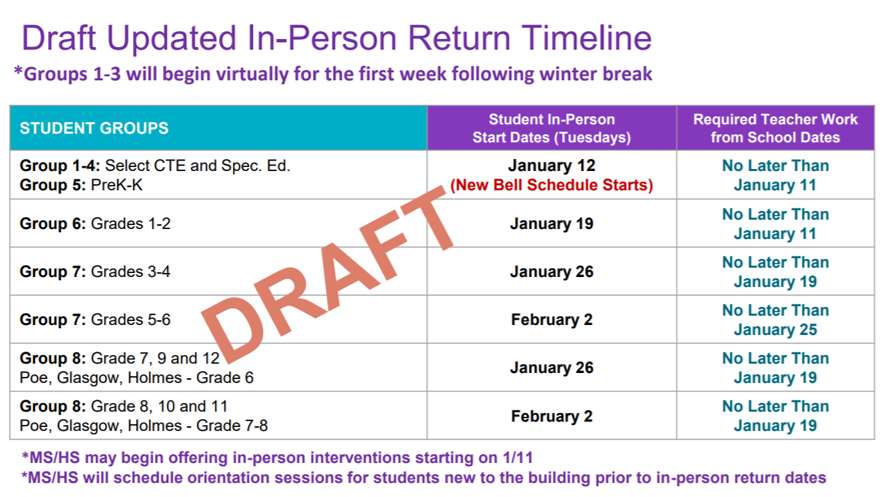
During the school board work session, Brabrand also laid out plans for a revised bell schedule to accommodate the increased time and reduced capacity needed to transport students to school by bus, a change that he acknowledged will present challenges for some families and employees.
“However, it is the only way we can return all of our grade levels back to in-person following health and safety guidance,” he said.
To address concerns about students falling behind academically while learning online, FCPS will loosen its grading policies and implement a system of interventions to give more individualized support to students who are struggling. English learners and special education students will also receive targeted support, including teacher-family conferences and regular check-ins.
Brabrand’s Dec. 10 presentation represents represent FCPS’s first concrete effort to resume a process that began on Oct. 5 but was suspended on Nov. 16 after Fairfax County’s COVID-19 caseload exceeded established thresholds for phasing students back into in-person learning.
Whether the new Return to School plan will actually come to fruition as proposed remains to be seen, as the Fairfax Health District continues to report record levels of COVID-19 transmission. Read More
Virginia Gov. Ralph Northam announced a series of new guidelines today (Thursday) aimed at getting the COVID-19 pandemic under control as case numbers soar in Fairfax County and throughout the state.
Starting at 12:01 a.m. on Dec. 14, all Virginians will be expected to stay at home between 12 and 5 a.m. unless they are traveling to and from work, obtaining food and goods, or seeking medical attention.
While the modified stay-at-home order only applies to those early morning hours, Northam urged people to stay home whenever possible during other hours of the day as well, stating that he “strongly” encourages people to telework if they can.
“We already have strong public health measures in place, and with these additional steps, we can turn this around,” Northam said. “Virginians, if you don’t have to be out, stay at home. Whenever we are around other people, we all need to wear a mask, indoors and out.”
The new COVID-19 mitigation measures that take effect on Monday also include an expansion of the state’s existing requirement that all Virginians 5 and older wear a mask in indoor public settings.
Now, all individuals 5 and older will be required to wear face coverings in all indoor settings other than their own home and in all outdoor public settings when within six feet of another person.
The limit on indoor and outdoor social gatherings has been reduced from 25 to 10 individuals. Like before, this rule applies primarily to parties, celebrations, and other social events, but not religious services, workplaces, and schools.
The prohibition on alcohol service in dining establishments after 10 p.m. remains in place, and all restaurant workers are required to wear a mask, even if they don’t interact with customers face-to-face.
Northam said that state agencies will step up their enforcement of social distancing, cleaning, and mask-wearing requirements for businesses. Virginia has issued 181 letters for COVID-19 rule violations so far.
However, the governor declined to follow the lead of some neighboring jurisdictions in shutting down indoor dining, stating that social distancing requirements already significantly reduce the capacity of restaurants.
Despite calls for a statewide return to virtual learning from teachers’ unions in Northern Virginia, Northam also did not introduce any new guidelines for educational institutions, leaving decisions regarding school operations up to the discretion of local officials.
“Local leaders know what’s right for their community,” Northam said. “We’re going to keep working with local leaders to make sure they have the information they need to make the right decisions.”
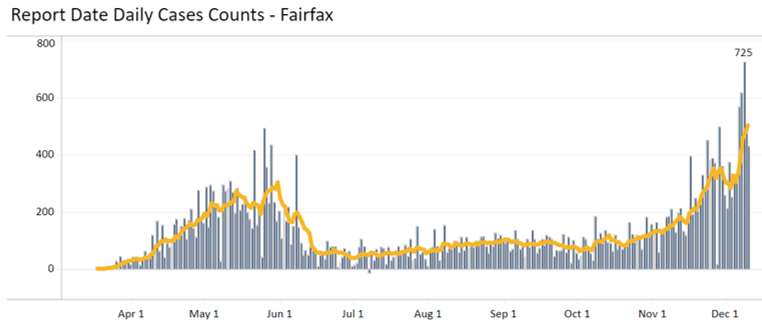
Virginia is now averaging 3,700 new COVID-19 cases per day, three times higher than the peak of 1,200 daily cases in May. The statewide testing positivity rate is 11%, and more than 2,000 Virginians are currently hospitalized, an 80% increase over the last four weeks.
The Fairfax Health District recorded 440 new cases today, and its seven-day average hit a new high of 501.9 cases after reporting a single-day record of 725 new cases on Dec. 8.
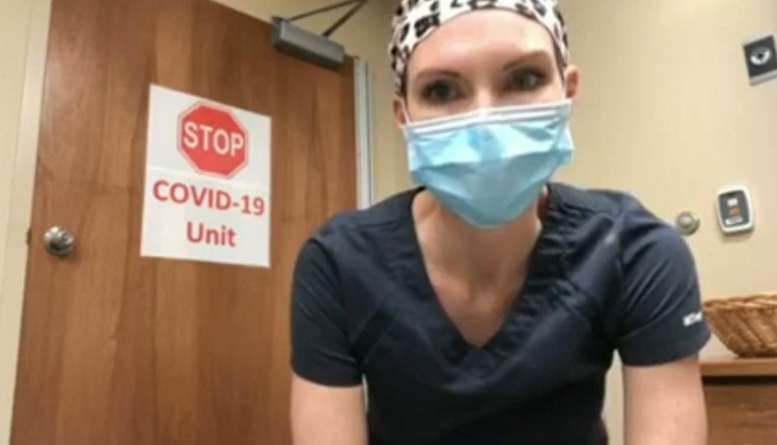
During his announcement, Northam played a video from a healthcare worker named Emily who has been working in a COVID-19 intensive care unit over the past month. She described holding patients’ hands as they died and putting an “ungodly” number of people in body bags.
“I cry a lot. This is real,” Emily said. “…If you could stop just one case by wearing a mask or staying home when you didn’t have to go out, it would help us so much.”
Images via Governor of Virginia/Facebook, Virginia Department of Health

The COVID-19 pandemic took a significant toll on the Fairfax County Park Authority’s revenue for Fiscal Year 2020, which lasted from July 1, 2019 to June 30, 2020, the department says in its annual report on proposed fee adjustments for the coming year.
With parks and recreation facilities closed for the spring and a portion of the summer, the park authority saw its net operating fund revenue decrease by $6.8 million from FY 2019, even after it cut down on expenses and fully depleted its stabilization reserve fund.
The agency says it anticipates revenue to remain down “significantly” for FY 2021, as health concerns and social distancing protocols continue to affect the availability and capacity of RECenters and other facilities.
The park authority also analyzed the county’s economic climate, including retail sales and unemployment claims, when developing its FY 2021 fee adjustment proposal.
“Collective consideration of these factors has resulted in a modest fee proposal that attempts to remain sensitive to economic conditions, the market dynamics and operational limitations associated with the COVID-19 pandemic and the need for revenue growth,” the FCPA said in its report.
The park authority says outdoor parks have been “heavily used” during the pandemic as people seek safe ways to exercise and engage in recreation.
However, the nearly 2 million park visits in FY 2020 represent an 8.9% decrease from the previous year, and the cancelation of all registered programs and camps contributed to a 50% drop in total revenue.
While Fairfax County’s golf courses have seen a surge in demand since reopening in May, RECenter attendance levels ended the year 25% below FY 2019. Before the facilities closed in March, attendance had been up by 1.12 million people, or 11.6%.
Continued uncertainty about how COVID-19 will affect facility attendance and capacity next year led the FCPA to not recommend any changes to RECenter fees.
“This year’s fee recommendations address those areas in which revenue opportunities exist based on shifting park use patterns resulting from the pandemic,” the FCPA said.
Proposed fee changes relevant to the Tysons area include:
- The addition of $110 two-hour timeslots to reserve the picnic shelter at Clemyjontri Park in McLean
- A full-day rental fee of $55 or $70, depending on the day, to reserve a picnic shelter at Ruckstuhl Park, which is currently planned for development in Idylwood
- Cart rental fee increase at the Jefferson District, Oak Marr, and Pinecrest Golf Courses from $11 to $13
- A $1 increase to the miniature golf fees at Jefferson District Park, the Oak Marr RECenter, and Burke Lake Park
The proposed fee changes will collectively generate an estimated $149,258 in additional revenue for FY 2021 and $356,529 in FY 2022, according to the FCPA.
The park authority board is scheduled to approve an advertisement for a Jan. 20, 2021 public comment meeting on the fee proposal when it meets at 5 p.m. on Wednesday (Dec. 9).
After a 30-day comment period from Jan. 6 to Feb. 4, the board will take action on the proposal on Mar. 10. If approved, the new fee adjustments would take effect on Apr. 1.
Photo via Fairfax County Park Authority