

Ahead of the Town of Vienna’s election this year, Tysons Reporter asked the candidates to answer the following questions and also submit a short biography. Each candidate had an opportunity to answer the same questions in their own words. We are publishing the Q&As this week in the order we received the responses.
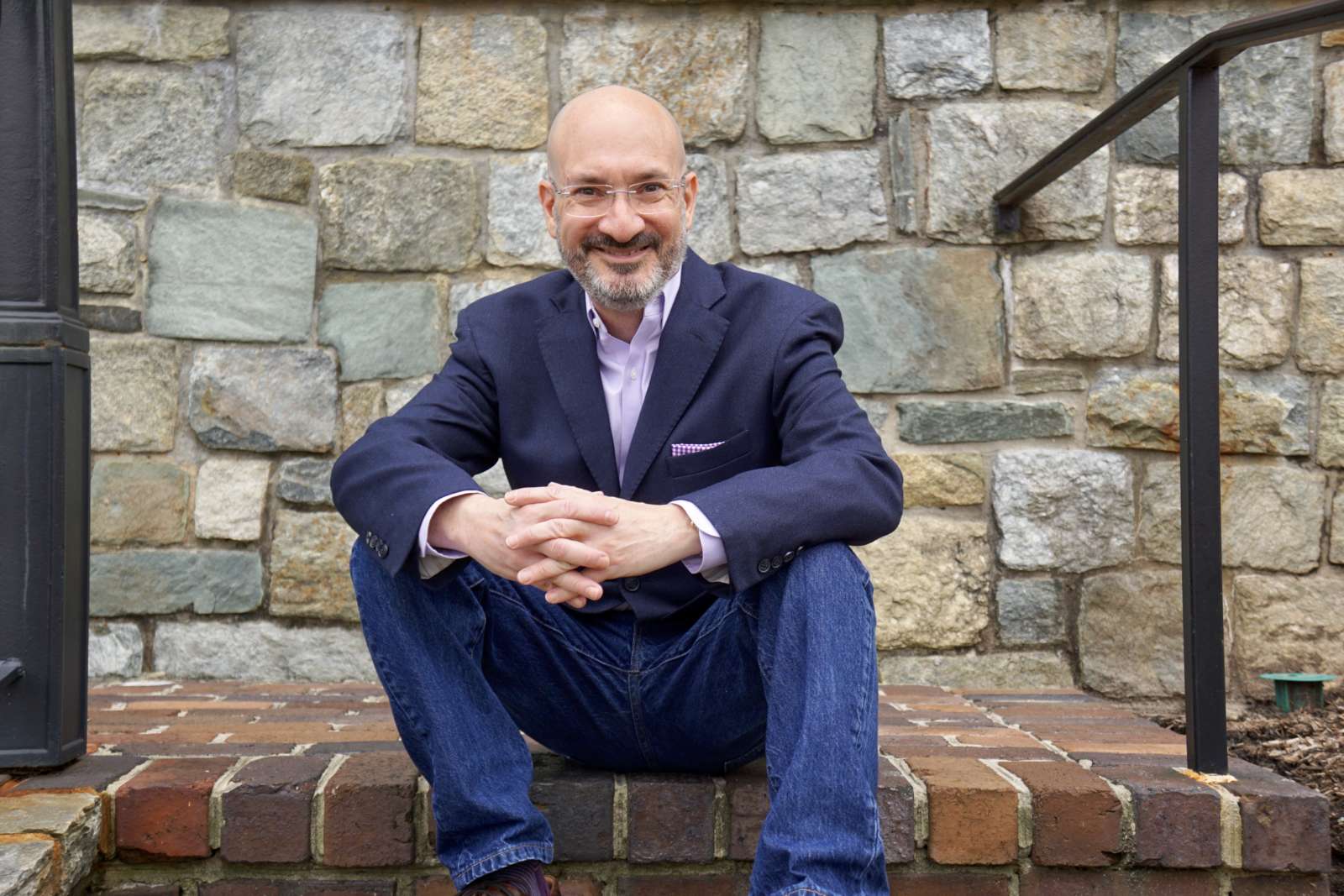
Featured here is Ed Somers, who is running for one of the councilmember seats.
Bio: I am running for town council to focus on priorities related to transportation safety, community engagement, and balanced development. I have 30 years of experience fighting for local governments at the national level and want to apply what I have learned to my home — Vienna.
Nearby, Tysons is urbanizing. How do you think the Town of Vienna’s identity should change in response to Tysons’ growth?
Vienna’s identity does not need to change as a result of Tysons. Yes, we will have to work with our neighboring communities to mitigate traffic as much as possible. But what I would also like to ensure is that Vienna does not simply become a “pass through” for people on their way to somewhere else. I want people to spend time in our Town, spend money in OUR stores and OUR restaurants, and generate business tax revenue to offset OUR property taxes.
What are your solutions to Maple Avenue congestion and cut-thru traffic in neighborhoods?
As for Maple Avenue, much can be done with signal timing and reducing the number of entrance and exit points to businesses that will help move traffic smoother through our major artery. Cut through traffic is a trickier issue, in that efforts to limit traffic on one person’s street can result in more traffic on someone else’s street. So, the entire Vienna street network must be evaluated as an interconnected system. Where needed and based on solid data, traffic calming should be employed.
But my top priority remains making sure that people who want to walk, bike or run in our town — especially children — can do so safely. Sidewalks and modern street crosses tools should be installed wherever possible — as we have prioritized during my time as chair of our town’s Transportation Safety Commission — with engagement and community support.
Should Vienna keep its “small town feel”? If so, how? If not, why and what do you propose?
I am not sure Vienna has been a “small town” in the traditional sense for some time. We are not a country village surrounded by farmland. I believe that many people have stayed in Vienna, or recently moved to Vienna, because it is a town with a good “balance.” We have houses of various sizes, nice sized yards, condos and apartments, shopping, restaurants and entertainment that people can walk to, and what amounts to the “river” that connects us — the amazing W&OD Trail.
I remember when some fought against having a Town Green — and now I bet many would say it is one of our best assets. The key is maintaining the proper “balance” and I believe this can be done, while still moving our town forward and NOT ending up with more vacant properties that are not generating business taxes for our town or providing the services we would like to have in our town.
Vienna has a long history of being named a “Tree City USA.” What steps would you like to see Vienna take to become greener and more sustainable/environmentally-friendly?
Let me answer that question in two parts.
First on the issue of tress, I remember a discussion we had in the Transportation Safety Commission regarding a sidewalk petition from residents. They were united for a sidewalk and our commission agreed their street needed it — until they learned that trees would have to come down. Then they changed their mind about wanting the sidewalk. I say this to point out how important trees are to our residents.
The trick I think is to have a long-term vision for tree installation and to remember that you can’t “build” a tree like you can something else. We need to invest in trees that match our ecology, can thrive in our climate, and will not need to be cut down because they were planted in the wrong location or became overgrown. This is why we have a town arborist and we need to listen to both the desires of town residents and professional advice. And we must ensure that all new construction requires tree installation.
But to the bigger question of how me make Vienna a more environmentally friendly and sustainable community, consistent with everything I have said, we MUST design a town the encourages and helps people to not use their cars whenever and wherever possible.
What do you want to see happen for parking when Parking Henry Library gets moved and rebuilt?
Let me just say this. What I know I do want is for people to have a place to park their cars and then walk in Vienna — on Maple Avenue, on Church Street, to the Town Green, and so on. It bothers me greatly when I see cars driving from shopping center to shopping center. This is not good for traffic, and it is not good for the environment.
Some kind of integrated parking solution for our main shopping and entertainment district must happen. Not having been on the town council or planning or zoning boards, I simply can’t say what the design should be. But I know that many towns have dealt with this very issue, and I plan to call on my network of experts to help us design parking solutions that are appropriate for Vienna.
What are your ideal height and building sizes for developments in the Maple Avenue Ordinance?
Again, not having been on town council or the planning board, I can’t exactly say what I think the maximum limit should be. Having studied the excellent survey that the town sent out to all residents to get their input — something I think must be replicated for other big issues the Town needs to address — my general feeling is no more than four stories.
I want to make sure there is plenty of sidewalk space, and I would like the designs to both encourage outside eating and gathering and have the proper rear designs to protect as much as possible people who live behind these new developments. I believe that consensus can be found on this issue — and much like the Town Green that many fought against — if done correctly, we really will have a vibrant Main Street that is appropriate for Vienna and that our residents will use and love for generations to come.
And I also know this. If we do not come together with a consensus plan for Maple Avenue that engages the current land owners in the process, we will end up with more “one off” construction projects and will look back with regret at a missed opportunity to help design a comprehensive, unified approach to Maple Avenue development. Just saying “no” is not enough. We must work together to get to a “yes” that benefits all who live in our town.
People interested in learning more about Somers’ campaign can check out his website, Facebook and Twitter.
Photo courtesy Ed Somers
Ahead of the Town of Vienna’s election this year, Tysons Reporter asked the candidates to answer the following questions and also submit a short biography. Each candidate had an opportunity to answer the same questions in their own words. We are publishing the Q&As this week in the order we received the responses.
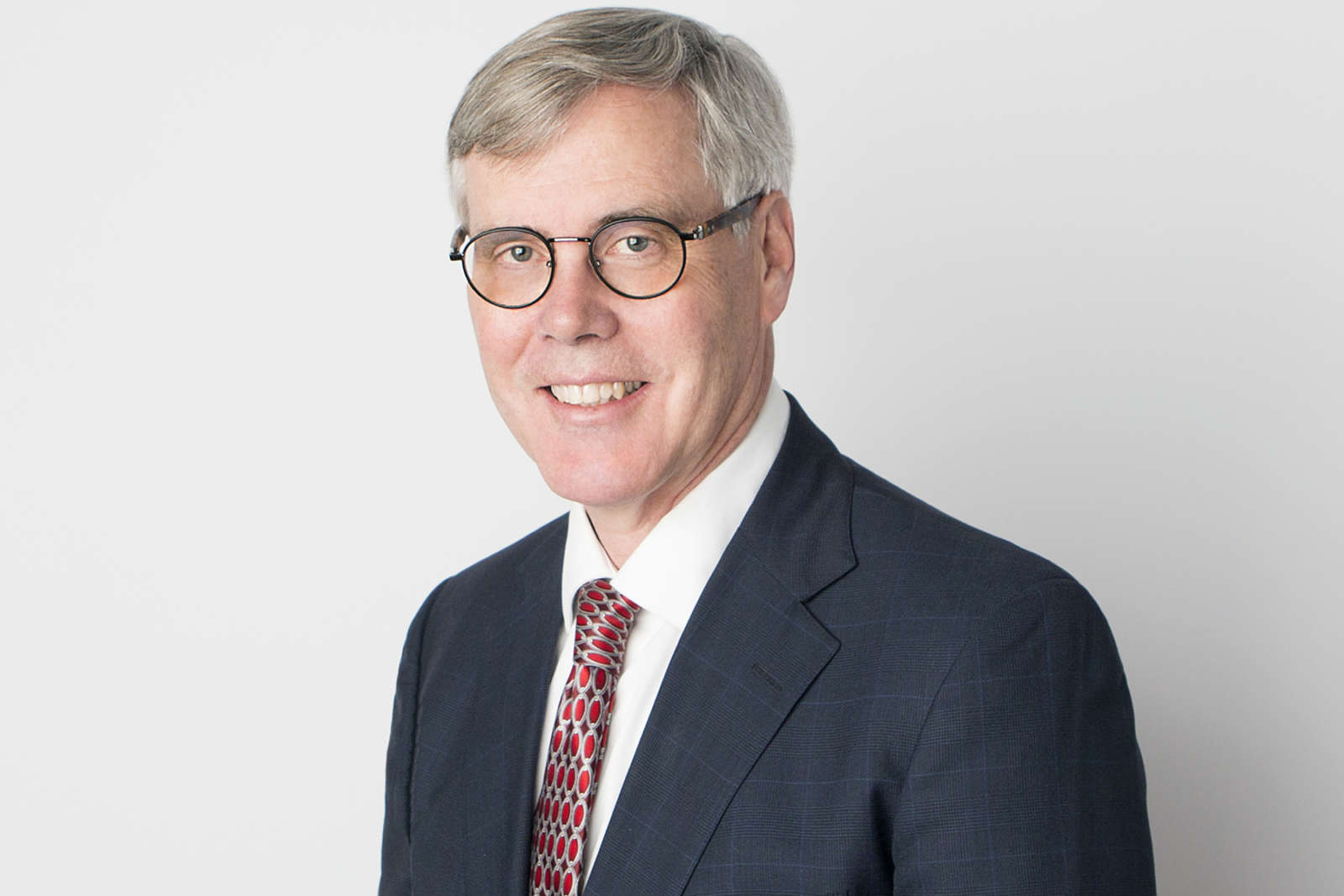
Featured here is Chuck Anderson, who is running for one of the councilmember seats.
Bio: Chuck is a long-time citizen organizer and advocate for appropriately-scaled development in Vienna. A former member and chair of the Planning Commission, Chuck has served on a number of other boards and civic associations in Vienna and has been active in church and scouts.
He has lived in Vienna since 1997. Chuck is also a co-founder and principal with Capital Trade, Incorporated, recognized as a premier consulting firm in the area of international economics. He is a graduate of Williams College and Oxford University.
Nearby, Tysons is urbanizing. How do you think the Town of Vienna’s identity should change in response to Tysons’ growth?
Vienna soon will be the closest small-town haven to this major new urban area. Like our predecessors, the future Town Council must work tirelessly to protect Vienna’s small town ethos. We should not allow ourselves to become simply an appendage of Tysons.
Rather, we should try to maintain our winning combination of low density, single family residential focus, vibrant community activities, and strong local government. One change we should consider is how to build non-auto transportation links (bike lanes, hiking paths) between Tysons and Vienna, so that Vienna becomes a non-auto small town destination for the growing Tysons population.
What are your solutions to Maple Avenue congestion and cut-thru traffic in neighborhoods?
In his book “Traffic,” Tom Vanderbilt explains how traffic is like water: it will seek the path of least resistance. The obvious solution to minimizing cut-through traffic in Vienna is to reduce congestion on Maple Avenue, with smart lights, and strict control on future density. There is no other magic solution to this long-standing problem.
One project that would eliminate a traffic light, make Vienna more pedestrian-friendly and reduce auto trips is a W&OD trail bridge across Maple Avenue. I would try to work with the county to realize this vision.
Should Vienna keep its “small town feel”? If so, how? If not, why and what do you propose?
Some have argued that Vienna should cast off its self-image as a “small town.” I strongly disagree. Most of us, myself a small-town boy from Blissfield, Michigan, have settled in Vienna precisely because of its small town ethos. That does not mean that we should ignore the urban-sized issues we face.
But as Deborah and James Fallows pointed out in Our Towns of their survey of resurgent American small municipalities, revitalization is most successful when it is built on the town’s unique assets. Vienna’s small town-ness and the W&OD bike path, are the two most important assets we have. We should embrace them.
Vienna has a long history of being named a “Tree City USA.” What steps would you like to see Vienna take to become greener and more sustainable/environmentally-friendly?
Our image as a Tree City succeeds or fails, in large part, on the density of the canopy along our major thoroughfares. One of the great tragedies of Vienna’s history is that the maple trees that gave Maple its name were cut down in the 50s when Route 123 was widened. We have an opportunity to bring the trees back.
One of the more important things we can do is to require higher tree density in any successor to the mothballed Maple Avenue Commercial district zoning ordinance. The Vienna Market MAC development, for example, is so dense that no trees can grow in its townhouse interior space.
What do you want to see happen for parking when Parking Henry Library gets moved and rebuilt?
Patrick Henry is one of our most important community assets. Even though a local branch, it has the traffic of a regional library. I strongly support the proposal to partner with the county in redeveloping Patrick Henry at its current site to build a structure that includes municipal parking.
As I learned when I co-chaired a Planning Commission study of parking for Church Street, most people will not walk more than a quarter mile from their car. A parking structure at the current Patrick Henry location is ideal for serving community events, as well as businesses on both Maple and Church. Because of its central location and importance to the town, any new library should be an architectural jewel.
What are your ideal height and building sizes for developments in the Maple Avenue Ordinance?
As I have stated for over seven years, I would not set height or building size limits, or even the geographical limits for a new Maple Avenue redevelopment district until we have a good understanding of how much additional density our main street can absorb. I would also favor allowing higher density only in the core area of town. If mixed use is proposed, then the residential portions must include sufficient green space, parks and common space for their own use.
People interested in learning more about Anderson’s campaign can check out his website, Facebook and Twitter.
Photo courtesy Chuck Anderson
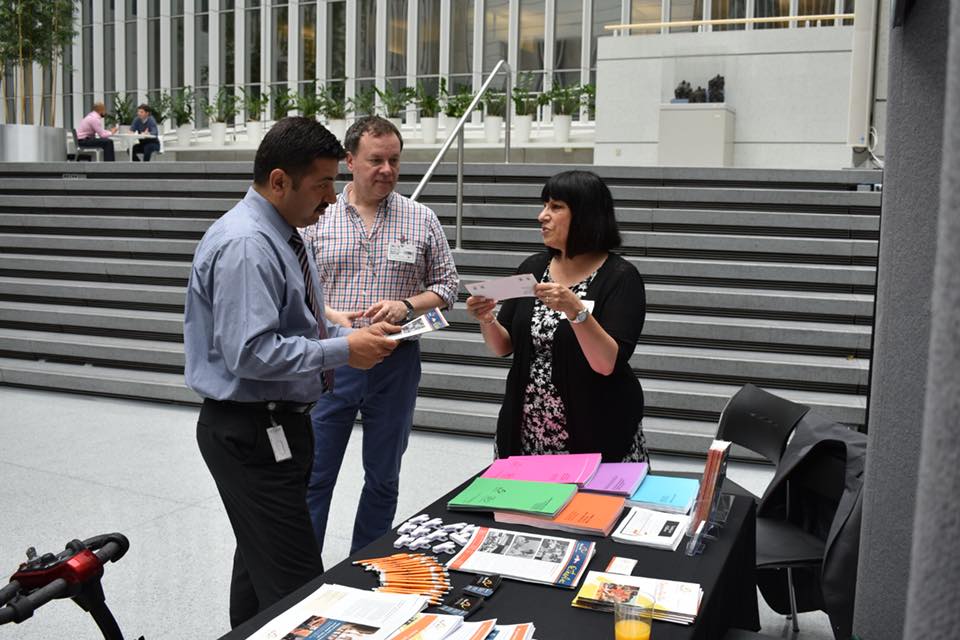
This op-ed was submitted by Rikki Epstein, the executive director of The Arc of Northern Virginia in Merrifield. It does not reflect the opinions of Tysons Reporter. We publish op-eds and letters to the editor of specific interest to the Tysons community. Contributions may be edited for length or content.
Since Gov. Ralph Northam issued the COVID-19 stay-at-home order for Virginia, I’ve been reaching out to families and individuals we serve. I wanted to check in, ask how they’re doing, and reassure them that The Arc of Northern Virginia’s services would continue.
Many wrote back, sharing what this “new normal” is like for their household. Some even asked about other families. With every note I read, I am reminded of the genuine honor it is to serve those with intellectual and developmental disabilities on behalf of our amazing organization.
I lay awake in bed at night thinking (because that’s what we all do now) about two sentiments that are common among many of the notes I’ve received. Nearly every family is struggling to find alternatives to necessary, often critical, support services. With a loved-one with an intellectual or developmental disability, life in normal times is a precarious balance. The disability alone robs one of the stability many of us take for granted.
It’s like a game of Jenga, with many of the pieces missing to begin with. But this is no game. Life depends on that tower not falling over, and each wooden piece represents a critical support service. As long as the supports are in place, there’s fragile stability. Now, start removing those supports.
Take away the piece that represents personal care attendants in the home, and you leave the work of caring for a family member with serious needs solely with the parents, 24 hours a day, 7 days a week. Parents are literally sleeping in shifts through the night.
Take away the piece that represents stable housing, and you have a family moving out of their apartment to protect their immuno-compromised child, saying “Elevators are terrifying repositories for anything picked up by the 896 other residents.”
Take away the piece that represents structured education and you have distance learning plans from some school districts that have been delayed or — worse yet — non-existent for students with disabilities.
Take away the piece that represents physical therapy.
Take away the piece that represents job coaching.
Take away the piece that represents speech therapy.
Take away the piece that represents occupational therapy.
Get the picture?
For many of these families, The Arc of Northern Virginia can help them put back some of those pieces. We can locate the resources that help restore a feeling of balance for families in need. It may be precarious. It may be temporary, but it keeps the house from falling down.
The second sentiment I heard in those notes is what finally allows me to sleep at night. It’s a sense of hope. A sense of optimism borne out of the experience of facing previous tragedies and coming through them stronger and more resilient.
“We’ll get through this” was said over and over again. And in my heart, I know we will. Because we’re in this together, and we draw strength from each other.
In this time of crisis, in this time of heightened anxiety, in this time of hardships for everyone, please don’t forget those who live with hardship and anxiety nearly every day, and yet persevere. It is essential that we keep families together, programs running, and critically-needed services in place for our most vulnerable population.
We need to make sure EVERY MEMBER of our community makes it through this crisis.
Photo via Arc of Northern Virginia/Facebook
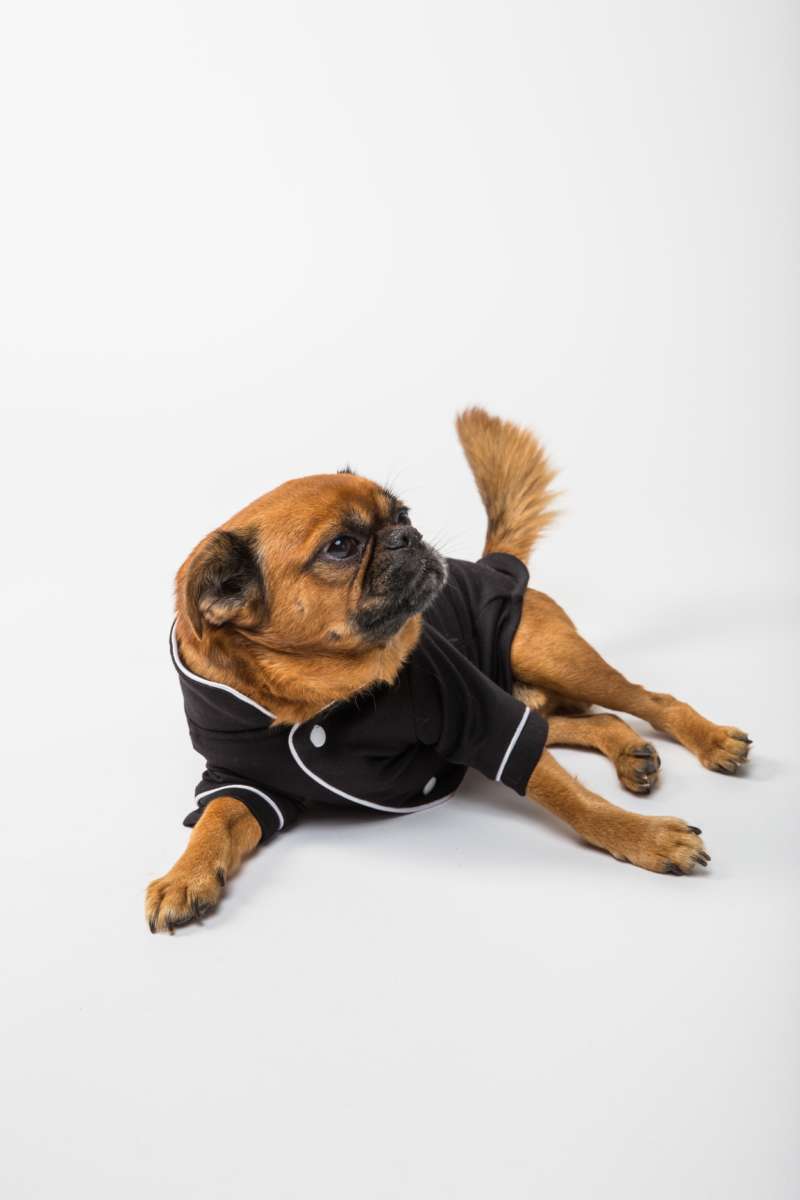
Today is National Wear Your Pajamas to Work Day.
The “holiday” started when Pajamagram started a campaign in 2004 to give people a chance to relax after filing their taxes, according to National Day Calendar.
Before the coronavirus pandemic, wearing pajamas while working from home might have been more of a rare treat than the “new normal” for many people.
For essential workers, teleworking isn’t always an option. And there are some people who get dressed up to work from home.
Whether you’re in cozy flannel, pairing a dress shirt with pajama pants or wearing your uniform, let us know in the poll below if you’re participating.
Photo by FLOUFFY on Unsplash

Virginia is ranked #35 for states with the most aggressive response to the coronavirus pandemic, according to a new report by WalletHub.
WalletHub says the rankings for the 50 states and D.C. were determined after weighting 51 metrics under three dimensions: “Prevention & Containment,” “Risk Factors & Infrastructure” and “Economic Impact.”
New York topped the “Most Aggressive States Against the Coronavirus” report’s list of states with the most aggressive measures against the virus, while Oklahoma came in last.
Virginia’s Response
The number of confirmed COVID-19 cases continues to climb in the state.
As of today, there are 3,333 confirmed cases and 63 deaths statewide, according to the Virginia Department of Health. Fairfax Health District, which includes Fairfax County, has the highest number of cases in the state with 532 cases as of today.
Gov. Ralph Northam issues a stay-at-home order last Monday (March 30).
The order, which will last until June 10, lets people leave their homes for essential services — including medical care, food, supplies, work and more — and social-distanced outdoor activities. Gatherings of 10 people or more are currently banned.
Recreation and entertainment businesses have been ordered closed, while restaurants and retailers have been able to stay open under modified operations — restaurants can stay open for delivery and take-out options, while non-essential businesses must limit the number of shoppers in stores.
Recently, Northam urged Virginians to wear cloth face masks or coverings to reduce the spread of the virus — especially by asymptomatic people.
The Centers for Disease Control and Prevention recommends that people wear cloth face coverings — not surgical masks or N-95 respirators that medical workers need.
What Other States Are Doing
Nearby, all non-essential businesses are temporarily closed in Maryland and D.C., which both have stay at home orders. In WalletHub’s report, D.C. was ranked #2, while Maryland was #13.
Other states have taken different approaches to combating the virus.
On March 19, California’s governor announced a statewide shelter-in-place order — restricting Californians to only essential errands.
MSN reported yesterday (Monday) that Iowa’s governor is urging people to stay home but has not made it an order, while Oklahoma’s governor has only ordered people who are elderly or who have immunodeficiencies to stay home.
Let Tysons Reporter know in the poll below what you think of Virginia’s response so far to the pandemic.
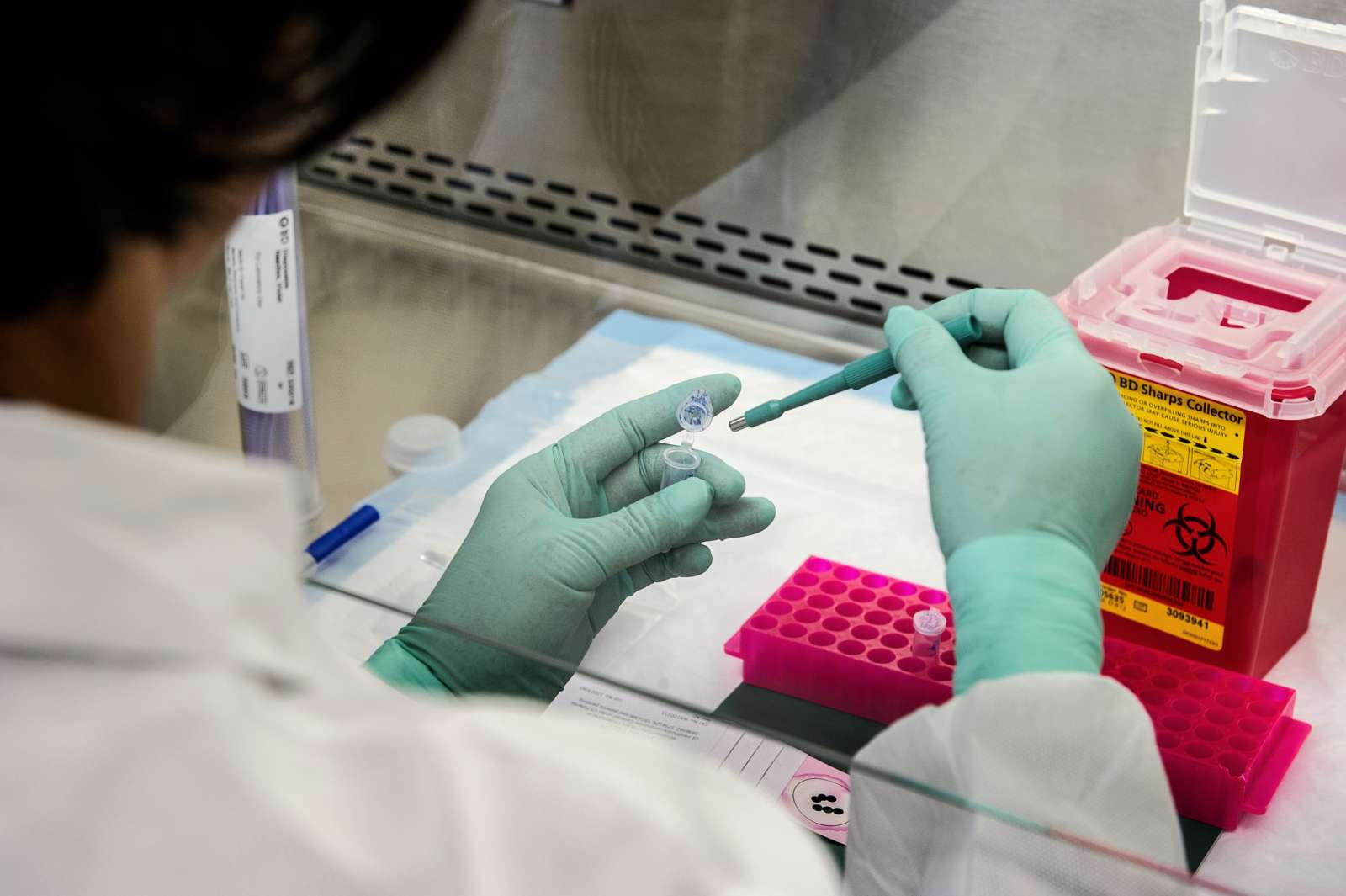
(Updated 4:55 p.m.) Drive-thru coronavirus testing sites are starting to pop up around the U.S. to screen patients for the virus.
Fairfax County doesn’t have any plans at the moment to open a drive-through testing site, Ali Althen, a spokesperson for Fairfax County, told Tysons Reporter yesterday.
“The decision to open sites would likely be made by the medical community and not the county government,” Althen said.
Earlier this week, Arlington County and Virginia Hospital teamed up for a drive-thru testing site to cut down on the number of people trying to get tested at hospitals and doctor’s offices.
“Arlington residents, county and school system employees and Virginia Hospital Center patients, who are experiencing symptoms consistent with coronavirus and have a written order from a healthcare provider, will be eligible for testing,” ARLnow reported.
While Fairfax County hasn’t teamed up with the hospital, there is a testing site atop the parking garage outside Kaiser Permanente’s facility in Tysons, WTOP reported.
“Kaiser has set up five different sites across the region for members with a doctor’s prescription for testing,” WTOP reported. “The health maintenance organization has testing sites in Baltimore, Largo, Gaithersburg, Tysons Corner and Woodbridge.”
As of Thursday morning, the Virginia Department of Health says there are 77 presumptive positive cases of COVID-19 in the commonwealth, with 14 in Fairfax County.
If the county does decide to open drive-thru sites, it would let people know “across our channels to help members of the public find and make use of those sites as necessary and appropriate,” Althen said.
On Thursday afternoon, Fairfax County released more information about testing sites:
Up until recently, COVID-19 testing was only available through the Centers for Disease Control and Prevention and state laboratories, with local health departments like ours helping to coordinate and facilitate those tests based on very specific testing criteria. Now that we have commercial laboratories testing capability, physicians have wider latitude to order testing.
Still, several challenges have limited testing for Fairfax County residents:
- With shortages of personal protective equipment across the nation, health care providers who lack recommended protective equipment may not test because of the risk to their health and ability to continue providing care in the community.
- The materials needed for specimen collection before being sent to the lab are in limited supply nationwide.
The Health Department does not evaluate patients or collect specimens for commercial testing because these functions are best performed by primary care providers, urgent care centers or Emergency Departments where a complete medical evaluation, radiology, and other types of laboratory testing are available.
Let us know what you think of the coronavirus drive-thru sites in the poll below.
Photo via CDC/Unsplash
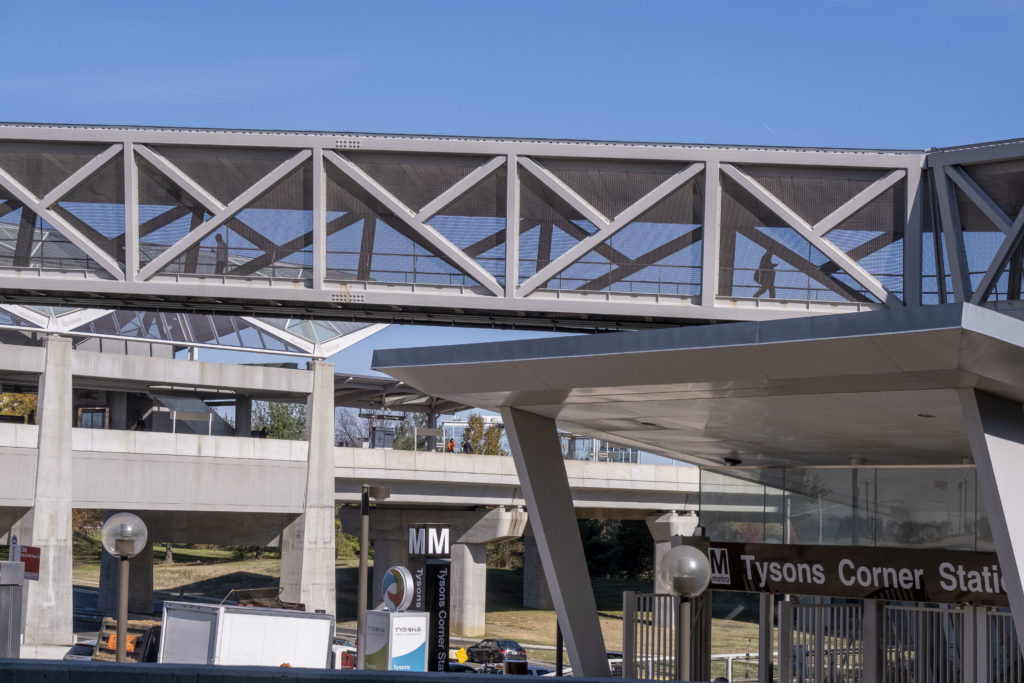
Metro is currently seeking input on its proposed fiscal year 2021 budget, which includes changes impacting hours and fares.
The ideas include:
- keeping Metrorail open until midnight Monday-Thursday and until 2 a.m. on Fridays and Saturdays
- adding more weekend service on Metro bus routes
- increasing Metrorail fares during peak periods
increasing bus fares for people loading their SmarTrip card with cash - creating a flat fare for Metrorail
- eliminating low-ridership bus routes
- eliminating transfer fares between Metro trains and buses
“Today, riders pay for Bus and Rail trips separately and get a $0.50 discount when transferring,” according to Metro. “Under this proposal, transfers between Metrorail and regular Metrobus services would be free.”
Before Metro’s budget year begins before July 1, people can submit comments via an online survey and provide feedback through March 2. Metro also plans to have open houses in Arlington, D.C. and New Carrollton.
What do you think of Metro’s ideas?

Valentine’s Day is tomorrow. Whether you’re single, in a relationship or something else, there are plenty of opportunities in the Tysons area.
Tysons Reporter recently rounded up a list of events this week that are Cupid-themed.
Forecasters predict that the weather will be sunny but cold. For people who want to bundle up for some free outdoor activities, the Wolftrap Stream Valley Park will be open until 8 p.m., while the Scott’s Run Nature Preserve will be open until 4:30 p.m.
Let Tysons Reporter know what your plans are for Valentine’s Day.

The Super Bowl is this Sunday, meaning either the San Francisco 49ers or the Kansas City Chiefs will become the NFL’s latest champion.
This year’s Super Bowl, though, isn’t just about the game on Sunday.
Fox, the Super Bowl’s host, is running a campaign to extend Sunday festivities into “Super Monday” — an unofficial holiday giving football fans and Fox viewers a chance to win $10,000, Adweek reported.
“The network’s ‘Super Monday’ campaign, which kicked off during the final weekend of the NFL regular season on Dec. 29, features the ‘Mayor of Monday’ (played by Saturday Night Live alum Finesse Mitchell, who appears in Fox’s new sitcom, Outmatched) telling sluggish office workers that he has created a new holiday,” according to Adweek.
What are your plans? Will you be observing “Super Monday” or heading back into the office? Let us know in the poll below.

(Updated at 12:50 p.m.) “How do you make a ‘sense of place’ in Tysons?” is a question developers, Visit Fairfax and locals are trying to answer. One proposal is to add a university.
Currently, Stratford University has a Falls Church location. Outside of the Tysons area, prospective students have options, like George Mason University.
During two panels at a Bisnow event on Jan. 16, Christopher Auth, the divisional vice president of PS Business Parks, said that he would like to see a university in Tysons — an idea that several other real estate professionals agreed with.
Public and private universities can add more jobs to offering opportunities for educational advancement for the local workforce.
Do you think Tysons could benefit from a university? Let us know below.
Photo by Element5 Digital on Unsplash
