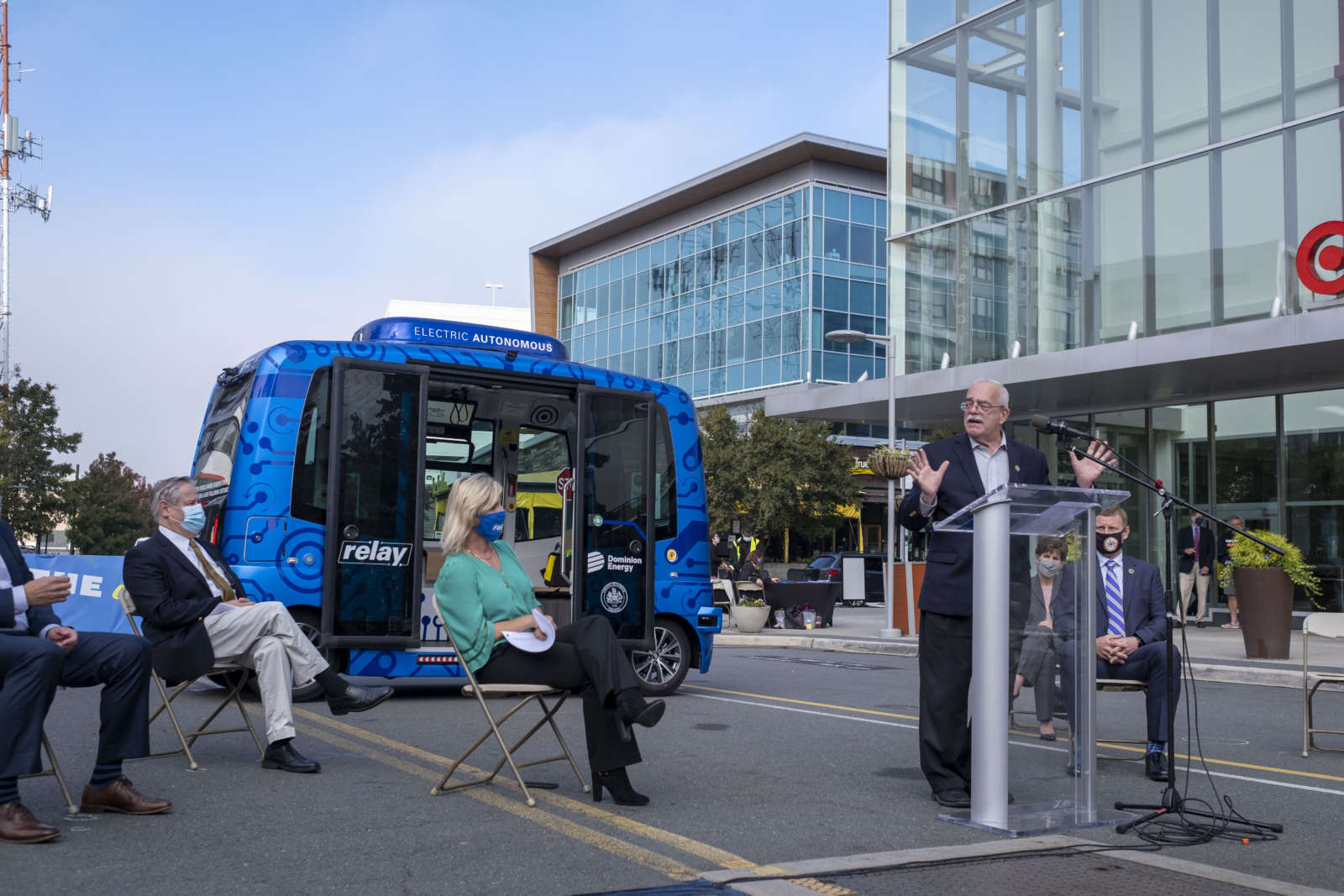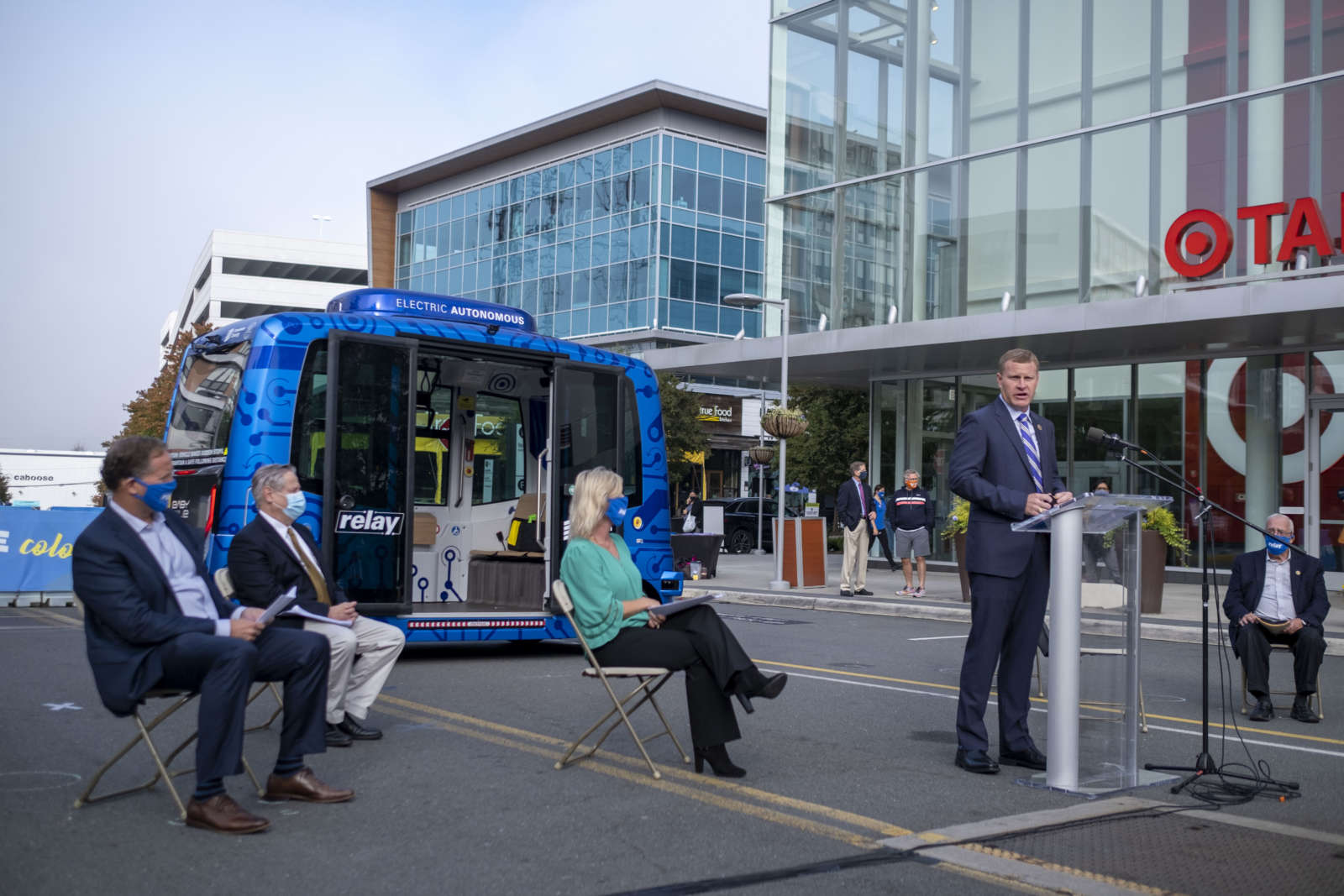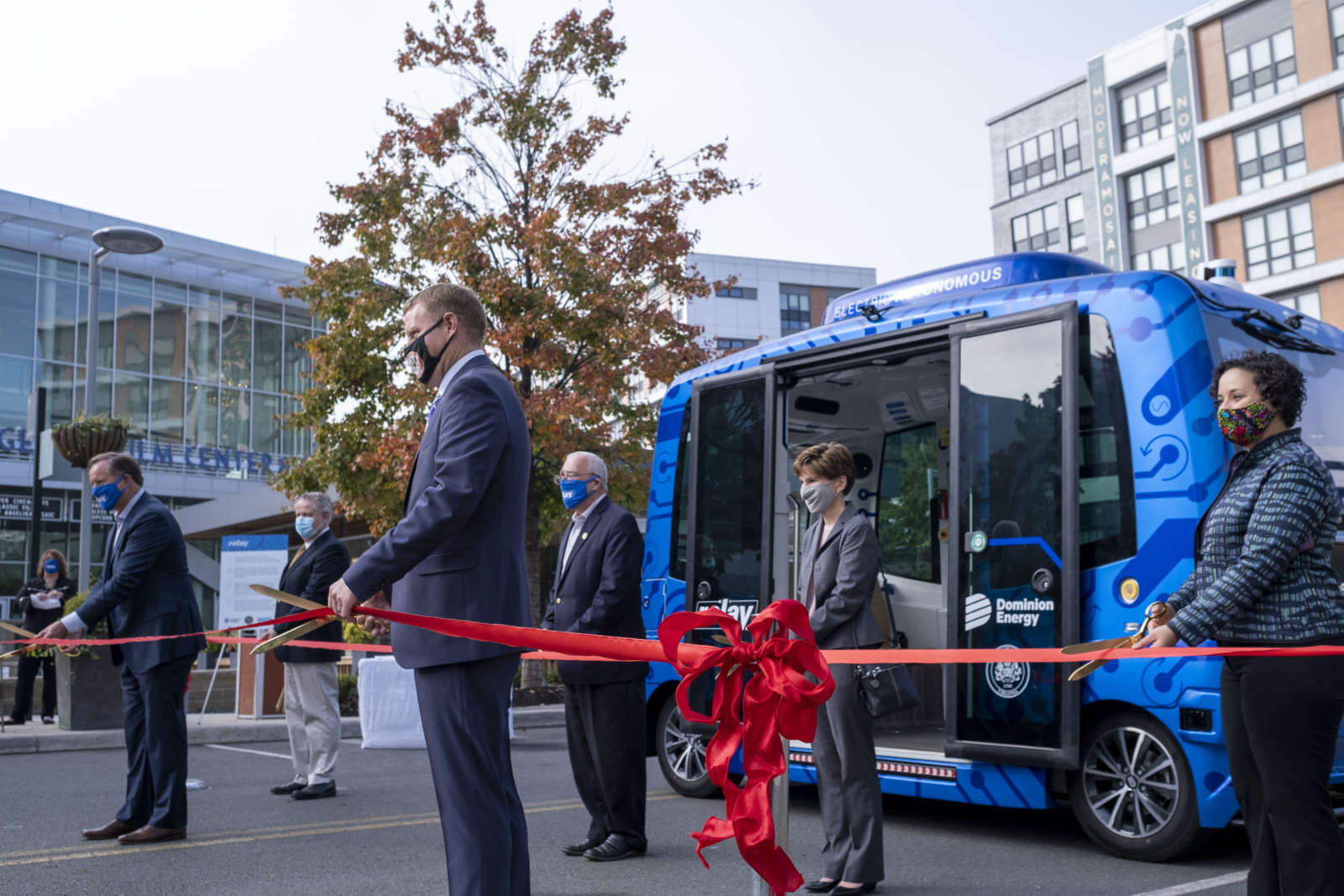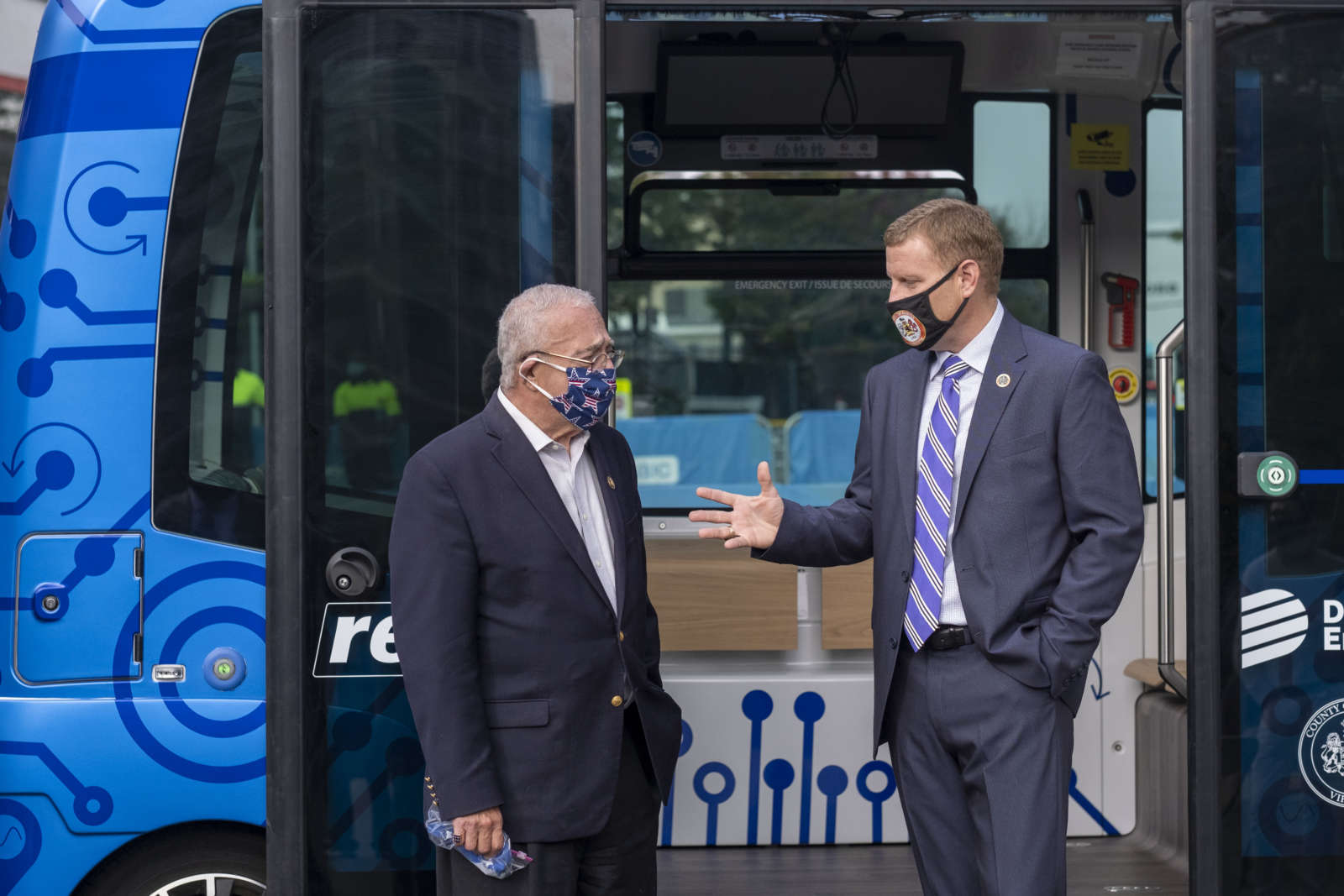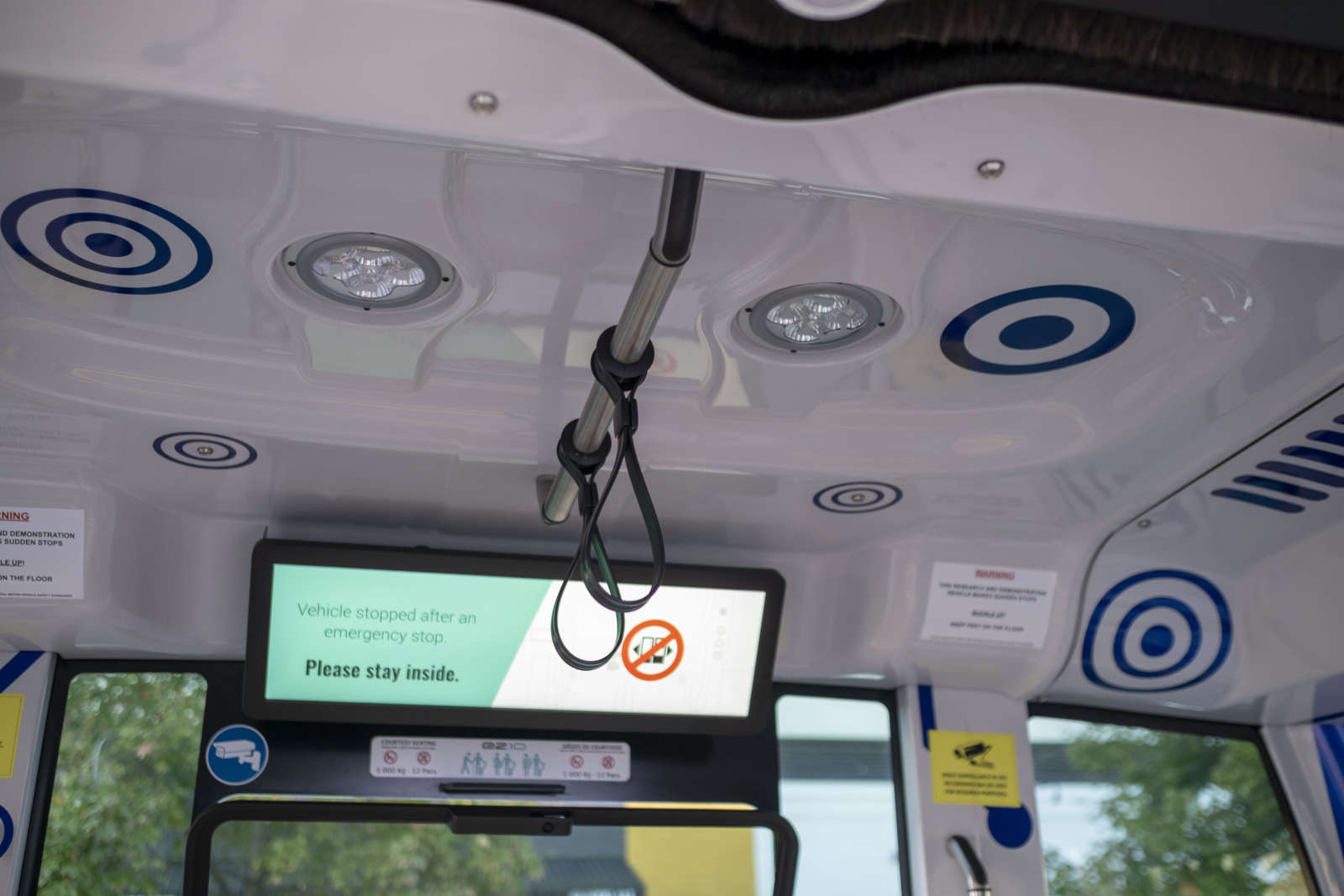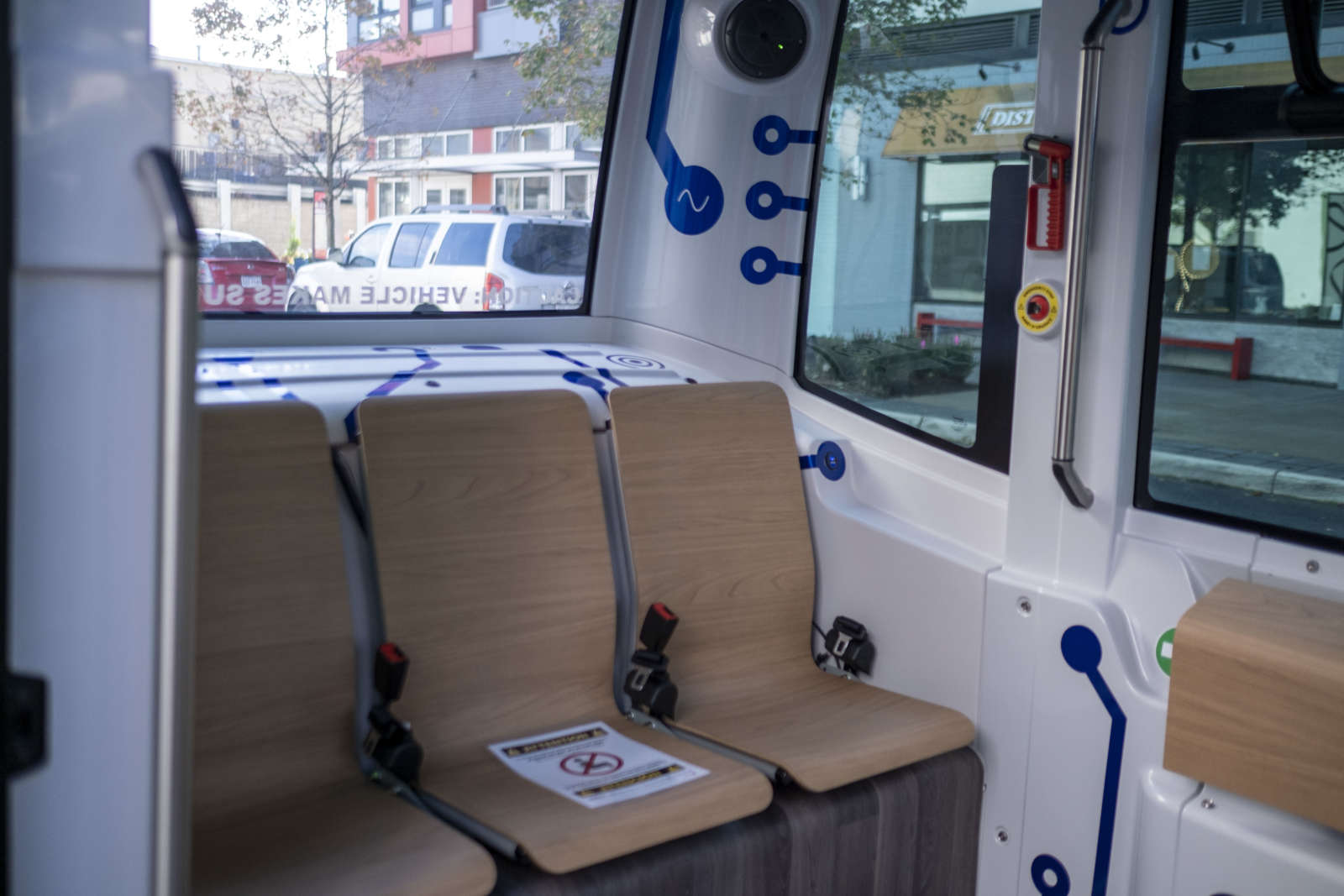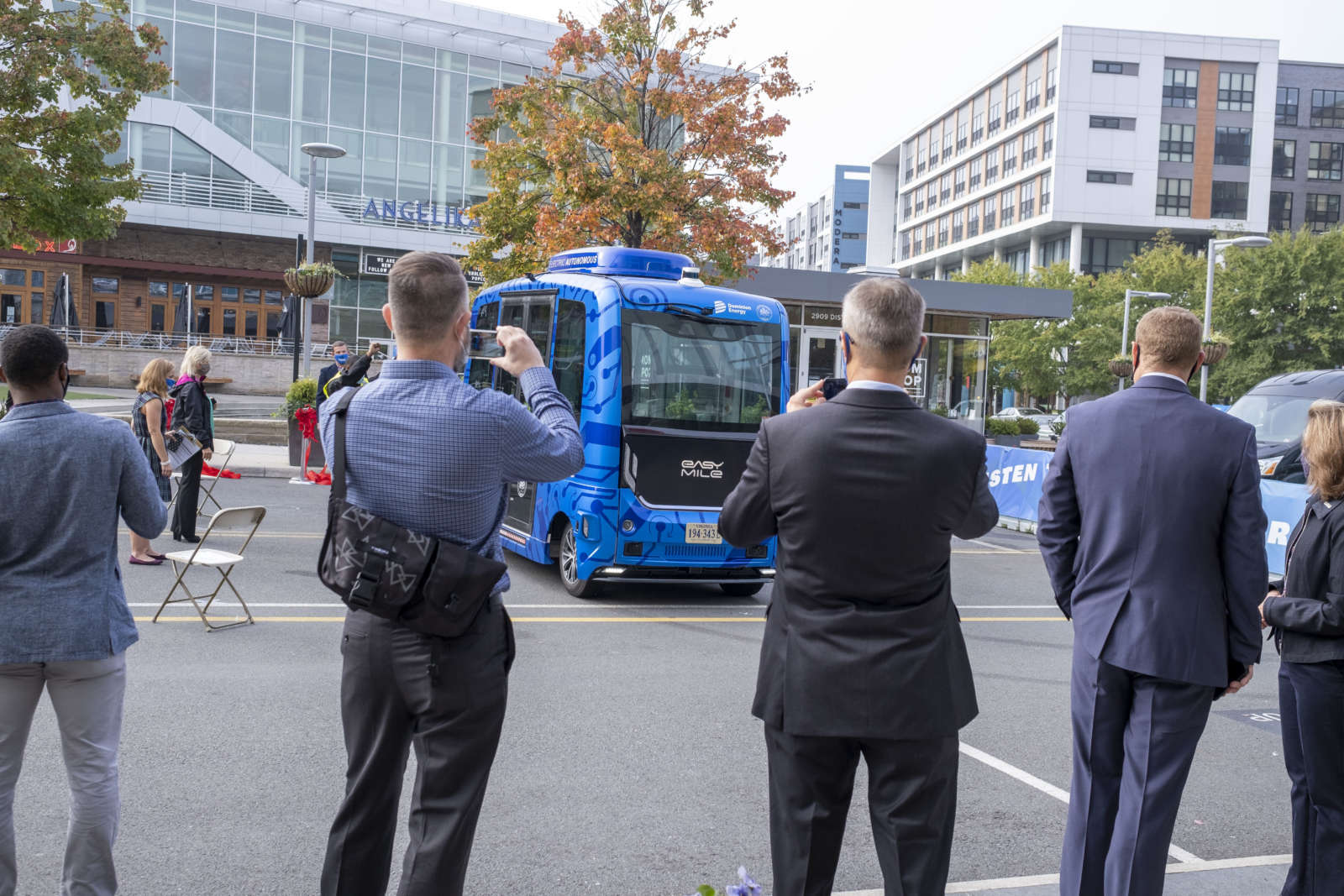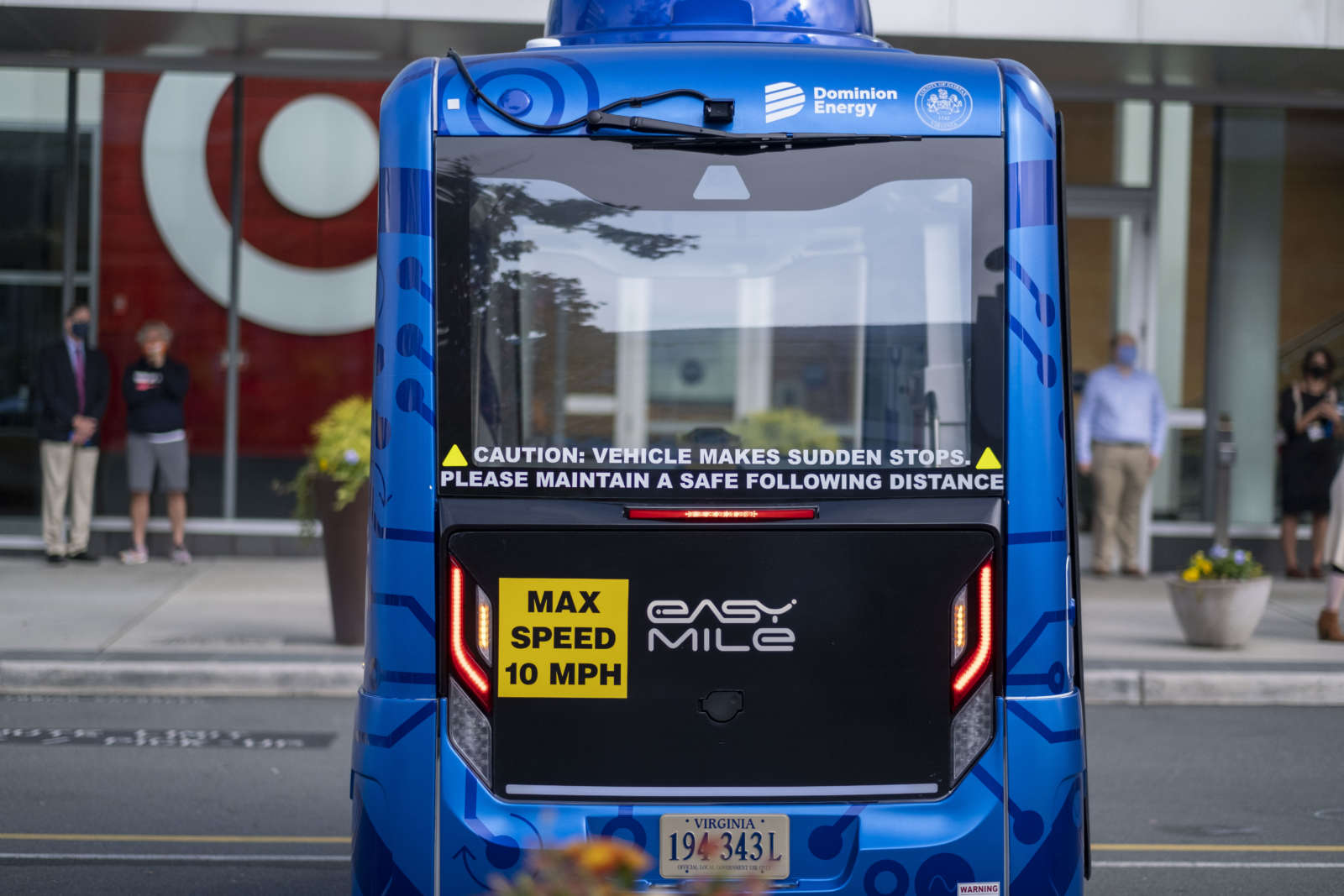

Fairfax County and Virginia state officials kicked off passenger service on Thursday (Oct. 22) for Relay, the first test of autonomous technology in public transportation in the Washington, D.C., metro area.
“Won’t it be great to look back and say, ‘We remember the day in 2020 when we were sitting in the Mosaic and this Relay vehicle successfully proved to the country that you can do this in a safe way and also look toward future innovations in transportation,” Jeffrey McKay, the chairman of the Fairfax County Board of Supervisors, said.
Relay, a 100% electric, autonomous vehicle, runs 10 miles per hour from the Dunn Loring-Merrifield Metrorail Station to the Barnes and Noble in the Mosaic District. It makes the trip every 15 to 20 minutes, Monday through Thursday, from 10 a.m. to 2 p.m.
Relay can transport up to 12 passengers — six seated and six standing — but to encourage social-distancing, it will currently only take three passengers and a safety attendant at a time. The shuttle is fully accessible for people with disabilities.
The project represents a public-private partnership between Fairfax County and Dominion Energy aimed at improving road safety, encouraging the use of public transit, and reducing greenhouse gas emissions. It received a $200,000 grant from the Virginia Department of Rail and Public Transportation and a $50,000 match from Fairfax County. The county is contracting with Transdev to manage the operations of Relay.
EDENS, the developer of the Mosaic District, provides shuttle storage and stop improvements. The Virginia Department of Transportation provided signage, lane striping and bus stops.
The ribbon-cutting event held Thursday, three months after its first test run, was abuzz with officials talking about the future and innovation.
Mark Webb, the chief innovation officer for Dominion Energy, said Relay “is just plain cool.”
“It’s the sort of thing we’d see in a Star Wars movie or Blade Runner movie without lift-off capabilities,” said Webb, whose company purchased the shuttle and contracted with EasyMile, a driverless technology company that mapped the route and manufactured the vehicle.
Even without the futuristic promises, Relay improves road safety, extends public transit, and reduces greenhouse gas emissions, Webb said.
Connecting the two ends of the Mosaic District will encourage people to ride public transit who are dissuaded by getting to and from transit stops, said Catherine McGhee, the director of research and innovation for the Virginia Transportation Research Council.
“Relay serves a real purpose. It’s not a one-off demonstration in a parking lot,” she said. “It is part of the transit ecosystem here in Fairfax County.”
Officials also reminisced about the underutilized, industrial, dull feel of the Mosaic District before serious efforts were undertaken to develop it, spearheaded by Rep. Gerry Connolly (D-Virginia).
“Without a Mosaic, there would be no Relay. There would be no autonomous vehicle project,” McKay said.
Providence District Supervisor Dalia Palchik wants to see the development extend to the older, industrial, and partially vacant zone in between the two Relay stops.
“I really hope it will help develop the areas between the two stops,” Palchik said. “We don’t stop here.”

The Fairfax Education Association is petitioning Fairfax County Public Schools to remain virtual until August 2021.
“Science and Health Safety data support and require that no one should return to in person instruction until there is a widely available scientifically proven vaccine or highly effective treatment,” the petition said. “The metric for Safe Reopening should be 14 days of zero community spread.”
So far, the petition has more than 1,000 signatures and is 600 away from its goal. The union, which represents 4,000 staff in the school system, published the petition on Sept. 30, but received renewed attention after a tweet about it went viral.
The Fairfax County teacher’s union wants all public schools closed at least until August 2021. @FCPSSupt pic.twitter.com/CuLCXRCGOV
— Rory Cooper (@rorycooper) October 20, 2020
But not all teachers support the petition, according to one Twitter user.
https://twitter.com/livinindc8/status/1318613492522430464
Tysons Corner’s first Restaurant Week kicks off next Monday and runs Oct. 12 through Tuesday, Oct. 20.
Guests can eat in or take home food from fixed-price lunch and dinner menus that were designed specifically for Restaurant Week and showcase classic dishes, seasonal options, and fan favorites. The Tysons Regional Chamber of Commerce is hosting the event.
Restaurateurs say they hope the week will bring customers back to their establishments after they experience the coronavirus precautions that have been put in place. They also hope that patrons who work and eat lunch in town but do not live there return to Tysons as a destination for foodies.
The novel coronavirus pandemic has obliterated the food service industry, with 37,000 jobs lost in Fairfax County, according to a recent report. The findings are the first step in a recovery strategy commissioned by Fairfax County and the Fairfax County Economic Development Authority.
Even after restaurants reopened, customers remain uncomfortable dining out.
“We realized that we can’t just open our doors and hope people go through them,” Dane Scott, the managing partner of Seasons 52, said.
Restaurants are taking extreme safety measures, Chamber of Commerce Chair Andrew Clark says.
“The irony is that restaurants are probably the cleanest places in town, but it will take a while for people to assimilate,” he said.
Tony Bass, the general manager of Urban Plates, is ready to change how people view Tysons with Restaurant Week.
“What I’m excited to show is that Tysons is a destination for food,” he said.
People who are dining for the first time since the pandemic started will see that things in the restaurants look different.
At Urban Plates, customers can still observe chefs making their food in the open kitchen, but can no longer approach the chefs, Bass said.
P.F. Chang’s has poured money into presentation, said operating partner Eric Padilla. The plateware is new, and dishes are served with a new flair.
“You’re not able to go to the movies, so we want to put on a show in the dining room,” he said. “Dinner is the main show: Come in, relax, have a good time, and take your mind off what’s going on.”
Scott, who sits on the Chamber of Commerce, said it has stepped up to care for Tysons’ businesses.
When Clark took over as chair this summer, he implemented some new initiatives. The chamber filmed a documentary on food safety and later threw a whisky-tasting event outside American Prime, complete with temperature checks and mask monitors.
Clark credited Restaurant Week taking off to volunteer photographers, videographers, printers and graphic and designers.
“There’s no money to be made,” he said. “They just love the community.”
Image via Tysons Regional Chamber of Commerce
An overwhelming majority of Fairfax County Public Schools teachers say they are not confident in Fairfax County Public Schools’ (FCPS) reopening plan, according to a survey conducted by the Fairfax County Federation of Teachers.
The federation released the results of three surveys Tuesday evening during a press conference. The data paint a stark picture for county teachers, who report fearing for their health and that of family members, working far beyond their contracted hours, and feeling the effects on their mental and physical health.
The message from the Federation of Teachers is clear: Members want the school district to delay reopening until the FCPS plan improves communication, provides specific metrics, and offers every teacher a virtual option, a few hallmarks of the teachers’ 11 requirements for a safe reopening.
“Our position has always been, and continues to be, that we want kids back in school as quickly as possible, but that means as safely as possible,” said Tina Williams, president, Fairfax County Federation of Teachers.
FCPS did not return Tysons Reporter’s request for comment.
The response comes one week after Fairfax County Public Schools Superintendent Scott Brabrand presented his reopening plan to the county school board. Under the proposed plan, about 6,700 students could return to school in October, with more trickling in throughout the year if conditions improve. Members criticized the lack of hard numbers and concrete metrics, especially regarding school closures after outbreaks.
Of the 1,300 teachers who responded, 85.7% are not confident in FCPS reopening plan, and 70% feel unsafe returning, while 21% said they are “unsure.” About 27% said they would consider taking a leave of absence, while 26% were undecided.
Some teachers who are older or have conditions that make them more vulnerable to the virus, or who live with family members who are high-risk, said they face an ultimatum to work or leave because their applications for accommodations were denied. Read More
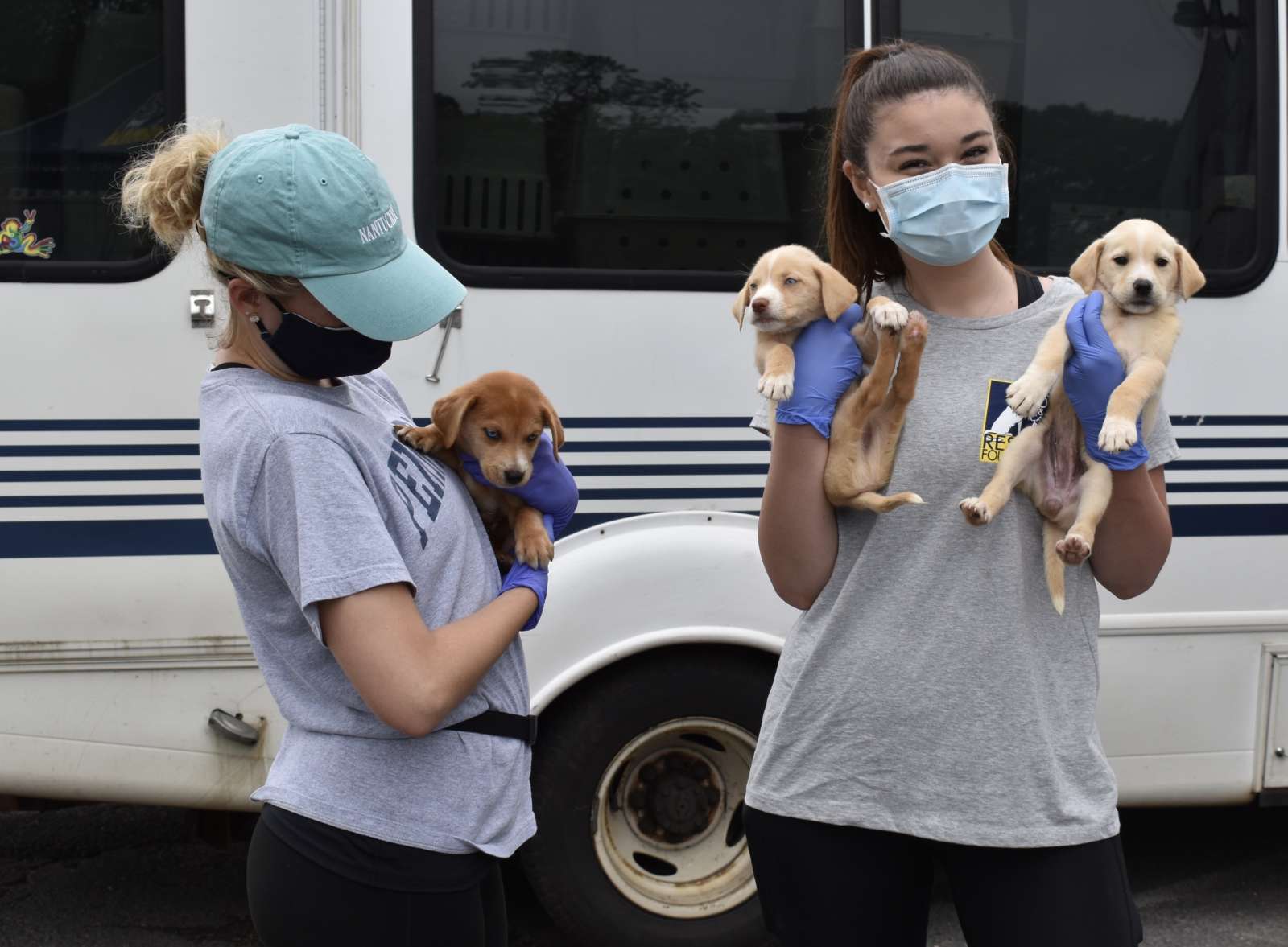
This October, beer fans and animal lovers can head over to Lost Dog Cafe to sip Solace Brewing Company’s Rescue Ale and support rescue efforts for dogs and cats.
The charity brew, which benefits the Lost Dog and Cat Rescue Foundation, will hit shelves at Solace Brewery on Oct. 8 and will start being poured at all Lost Dog Cafe locations on Oct. 9. A portion of all sales of Rescue Ale will be donated to LDCRF.
There are five Lost Dog Cafe locations, with one in Dunn Loring (2729A Merrilee Drive) and one in McLean (1690A Anderson Road).
The brewery will host a distanced adoption event, and an online auction will offer winners a tour of the brewery as well as pooch and beer-themed merchandise.
Lost Dog Cafe is a long-time supporter of the rescue and donates a portion of its revenue to support the care of animals rescued by LDCRF. Local breweries have brewed a Rescue Ale in support of LDCRF for the last four years, and this is Solace’s second year making the charity beer. Read More
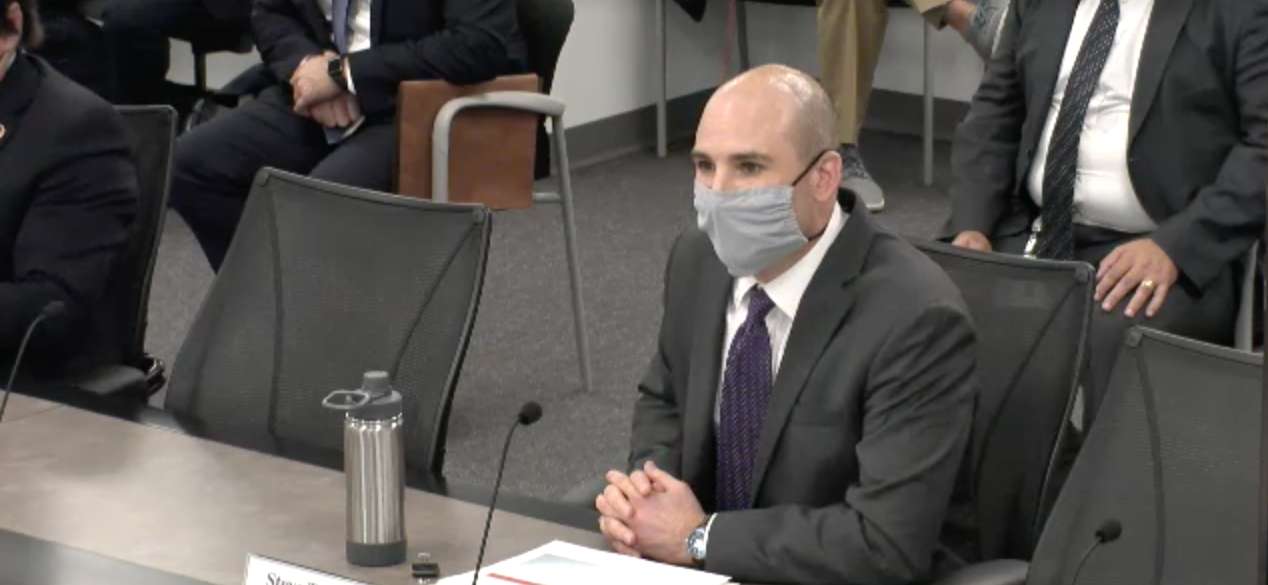
The Commonwealth’s Attorney Steve Descano said his overworked, understaffed office is in a state of crisis, which could have deep ramifications for public safety.
“Potentially innocent people could be wrongfully convicted, or guilty people could be left on the street, making our community more vulnerable,” he told the Board of Supervisors in a meeting on Tuesday.
The short-term solution he proposed involves hiring 20 staff for about $2 million. He said this would ensure the office does not fall behind when felony trials resume in November, after being postponed since March due to the coronavirus. The 20 staff would not be enough, for example, to handle the influx of potential evidence that would need independent review if every police officer starts wearing a body camera.
To ramp up the number of cases his office can prosecute thoroughly and ethically, Descano said he needs 137 attorneys and support staff, which would cost $19.1 million.
Fairfax County Board of Supervisors said they were surprised to hear Descano’s claim of unethical prosecutions and were experiencing a case of “sticker shock,” said Supervisor James R. Walkinshaw, of Braddock District.
“I think we’re all in a state of shock here,” Board of Supervisors Chairman Jeffrey C. McKay said.
A plan would need to be developed to address how these changes would impact other areas of law enforcement and justice, including the police department and the Fairfax County Attorney’s office, he said.
“While it is an emergency, we cannot respond to it like an emergency,” McKay said.
Supervisor John Foust, the Dranesville District Representative, told Descano: “You’ve found the problem, but I’m not sure you’ve identified the solution.”
The Office of the Fairfax Commonwealth’s Attorney prosecutes crimes that occur in Fairfax County and felonies that occur in Fairfax City and the towns of Herndon and Vienna. It tries cases in the county’s district and circuit courts, as well as the Juvenile and Domestic Relations District Court. The office works closely with state, county and local police departments.
But over the course of the year, Descano said he has had to cut back the number and scope of cases his office can prosecute.
The issue is a lack of state and local funding. Fairfax — the biggest jurisdiction in the state — receives less state funding in part because it tries to divert defendants from the criminal justice system. The state funds positions based on the number of defendants who make it to court and the number who are sentenced, Descano said.
He says local funding is low compared to surrounding jurisdictions, which spend up to four times what Fairfax County spends.
“A resident of Fairfax County can spend more on a gallon of milk than on the prosecution of crimes,” he said.
The ratio of officers to prosecutors is also imbalanced: For every prosecutor, there are 33 sworn officers making arrests, meaning prosecutors cannot keep up with the rate of arrests.
“We don’t have the time to do the cases properly,” he said. “The only way to give us more time is to add more staff. The reason we need this is without time, bad things can happen.”
These “bad things” include focusing on getting dockets cleared and farming out independent reviews of evidence to police officers.
“In essence, there were officers making case decisions as if they were attorneys, without the independent review of attorneys,” he said. “We like to think that has never happened in Fairfax County, but I’ve seen evidence that that has happened.”
Supervisor Pat Herrity, the Springfield District Representative, said he needs an executive session to be shown where the ethical issues are.
“I had not heard that before this issue came up and I think we ought to peel the onion on that skin a little bit,” he said.
Deputy County Executive David Rohrer, a former police chief for Fairfax County, defended previous commonwealth’s attorneys as well as the police department.
“I only observed the highest integrity and ethics in their staff,” he said.
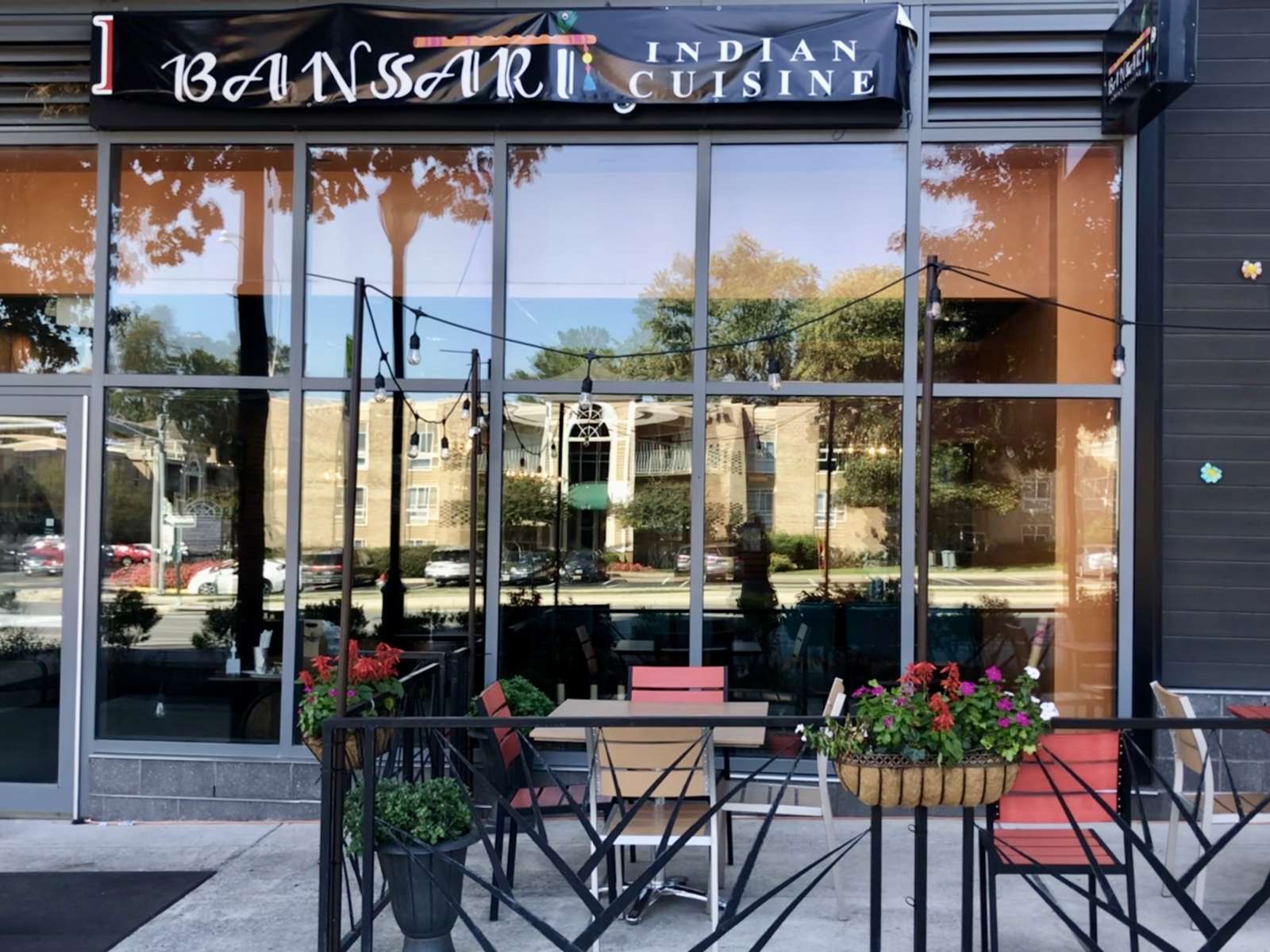
A month after opening Bansari Indian Cuisine (2750 Gallows Road) in Merrifield, Yash Bhatt picked up the phone.
It was Tim Carman, a food critic for The Washington Post.
He had been ordering takeout from the new Punjabi-style restaurant, enjoyed the food, and was writing a review.
“We had no clue,” Bhatt said. “We were serving him like a normal customer.”
His favorable review, published last week, buoyed the team.
“You feel that sense of pride when, not knowingly, you were doing the right thing the whole time,” he said.
The reward came after months of work and new obstacles caused by the shutdown. With regulatory agencies reachable only by mail or email, obtaining permits was slow going, but Bhatt “can’t complain.”
News of the restaurant is spreading. Outdoor dining fills up quickly, but people are skittish to eat indoors, he said.
The small team he has is “going crazy” trying to keep up, but Bhatt said “it is exciting to hear the phone ring all the time.” Bhatt wonders if it’s time to hire more wait staff.
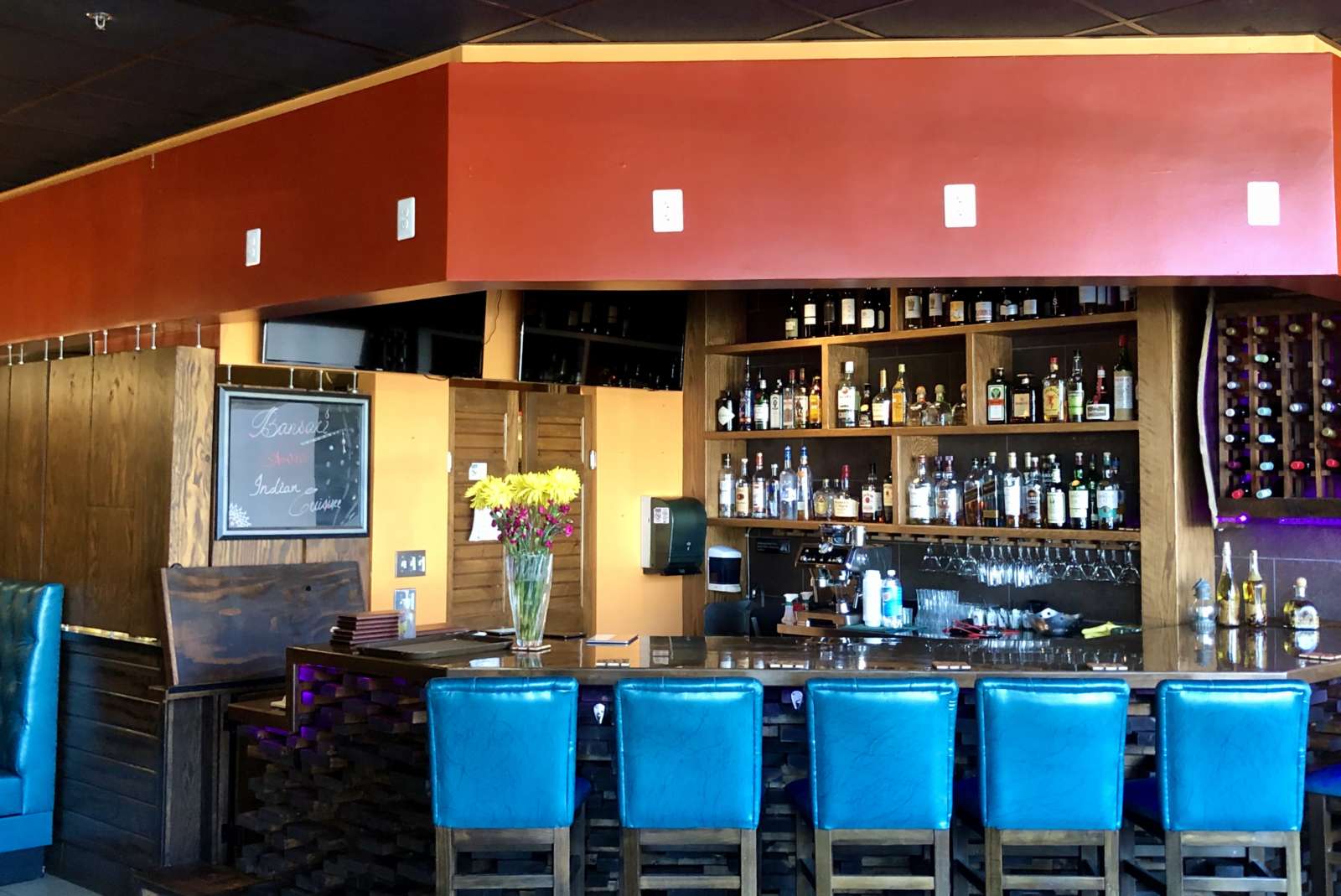
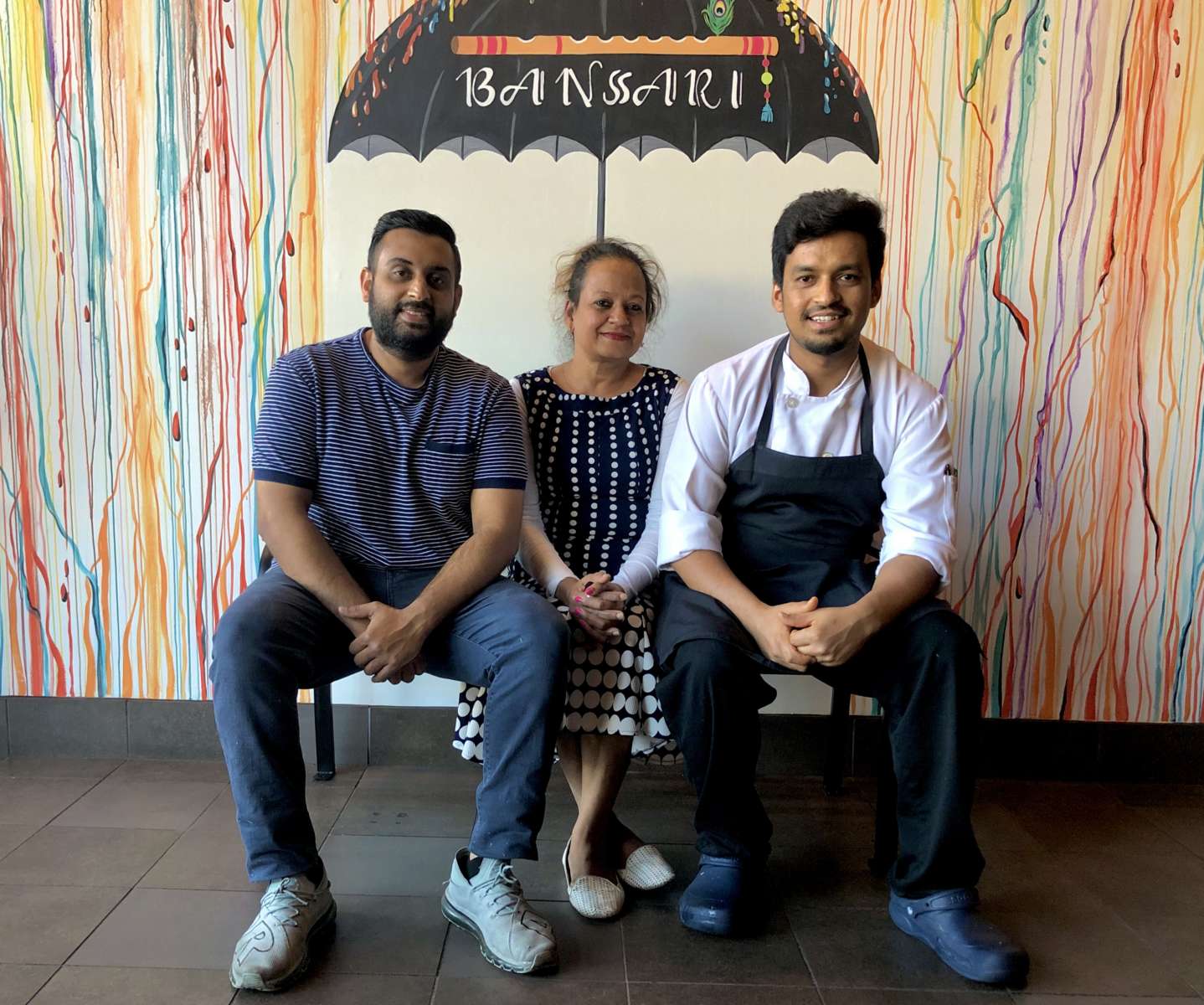
The restaurant used to be Punjabi by Nature, but the owners wanted out of the business, Bhatt said. His wife Nirali and head chef Deepak Sarin, who used to cook for Punjabi by Nature, became co-owners in June. The space was closed for renovations and opened in mid-July. Read More

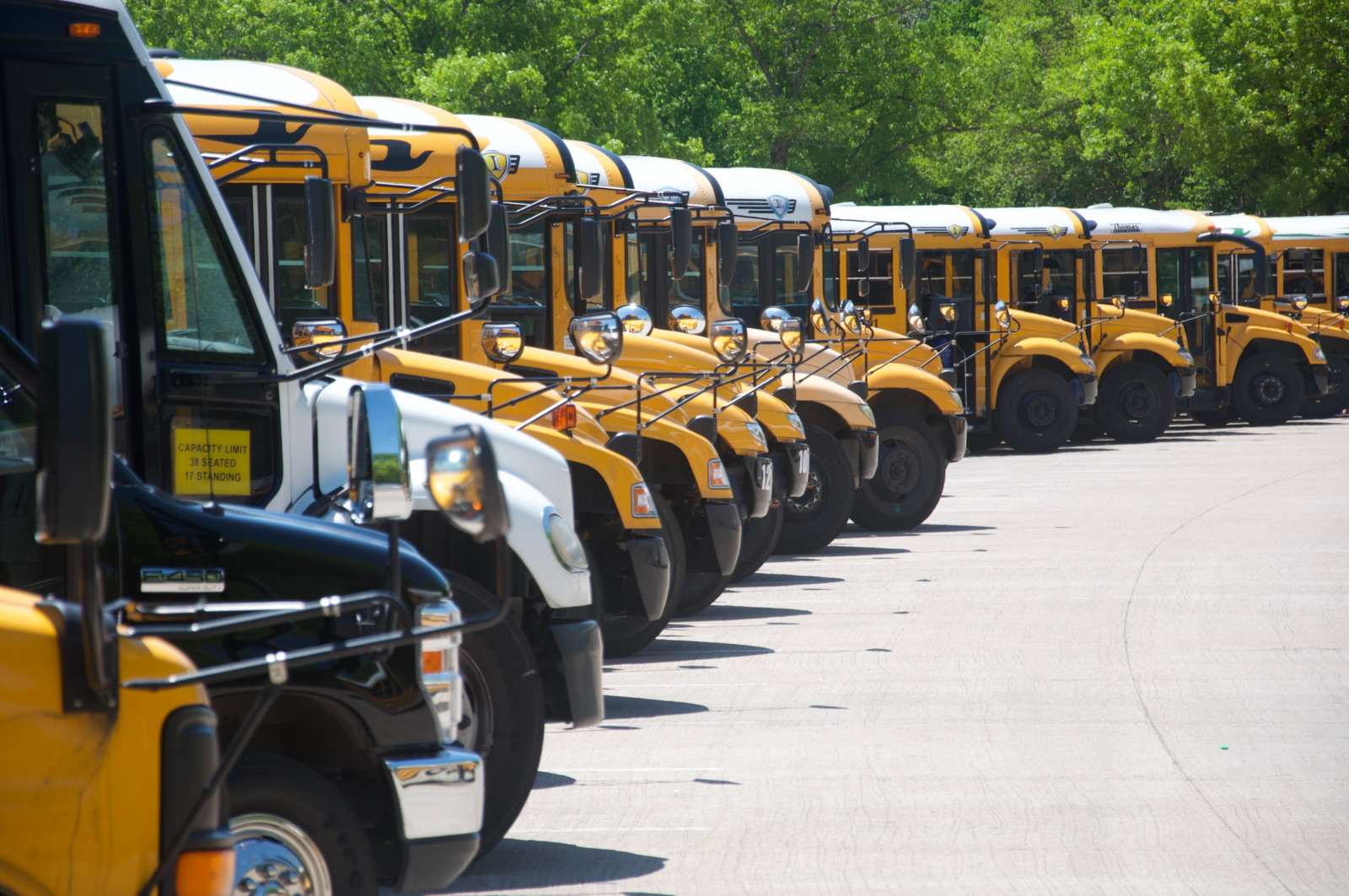
About 6,700 students could start trickling into Fairfax County Public Schools during October, according to a plan for limited in-person learning developed by the district.
Although Board of Education members indicated they approve of bringing back students, prioritizing those who need extra support in school, they criticized the plan as Superintendent Scott Brabrand presented to them during a work session Tuesday evening.
Members told Brabrand his presentation lacked the numbers that parents and teachers need to reconfigure their lives. They also pointed out that there was minimal information on the thresholds that the district needs to offer or suspend in-person instruction, depending on health levels.
“We continue to say, ‘data, data, data, measurements,’ and I don’t see it here,” Springfield District Representative Laura Jane Cohen said. “I don’t think this gives our staff and our families any sense of understanding of what is to come.”
Brabrand assured members that their thirst for data will be quenched once the Virginia Department of Health publishes a dashboard that currently only officials can access.
“The state dashboard health metrics will be a game-changer for this community and this school board, and it will be available in just a few days,” he said.
Members flooded FCPS administrators with other questions and concerns, chief among them, when kindergarten, first- and second-grade students can return.
Currently, students can come to be assessed for support services, groups can sit for socially distanced exams and teachers can access their classrooms.
By late October, administrators estimate that 653 teachers can teach 6,707 students in school buildings for anywhere between one half-day to four full days a week.
The district is targeting students who receive special education services, attend preschool, are English-language learners, newcomers to U.S. schools or have limited formal education. High school students can also come for certain technical-education courses.
But Vice-Chair and Sully District Representative Stella Petarsky said she is disappointed that English-language learners are only coming in for a half-day, once a week. She doubted that was “worth the inherent risk of bringing kids to school.”
Melanie K. Meren, the Hunter Mill District representative, said teachers are overwhelmed, and some are “outright resigning.” Others told her they are hurting from funding shortages that resulted from lower enrollment.
This year, 8,000 students unenrolled from FCPS.
The extent of the impact of lower enrollments has yet to be measured, but staffing problems could strain the return-to-school plan.
Over the summer, the district surveyed teachers to gauge if they prefer in-person or virtual learning during the pandemic. Teachers who preferred virtual learning were separated into four categories: At-risk teachers formed Tier 1, while those living with at-risk individuals comprised Tier 2. Those who worried about child-care formed Tier 3, while teachers with none of these concerns formed Tier 4.
To support in-person learning, most of the teachers in Tiers 2 through 4 need to teach in schools, or “make a decision not to work for Fairfax County Public Schools,” Brabrand said.
“If we want to bring the majority of our kids in each cohort, we have to bring back the majority of teachers who themselves do not have health accommodations,” he said.
Teachers in Tier 1 would be offered accommodations or be given a leave of absence. Those needing childcare can have temporary absence covered by the Families First Coronavirus Response Act. The district would try to match some teachers with virtual students, Brabrand said.
In response, a majority of board members told the superintendent they want to review the data on the staff who said they would consider leaving the district, and see if they could be offered a leave of absence instead.
“We do have enough staff for the first phase of the plan and will work on other matters moving forward to ensure a safe return for our staff and students into school buildings,” Caldwell said in the email.
Photo via Element5 Digital/Unsplash
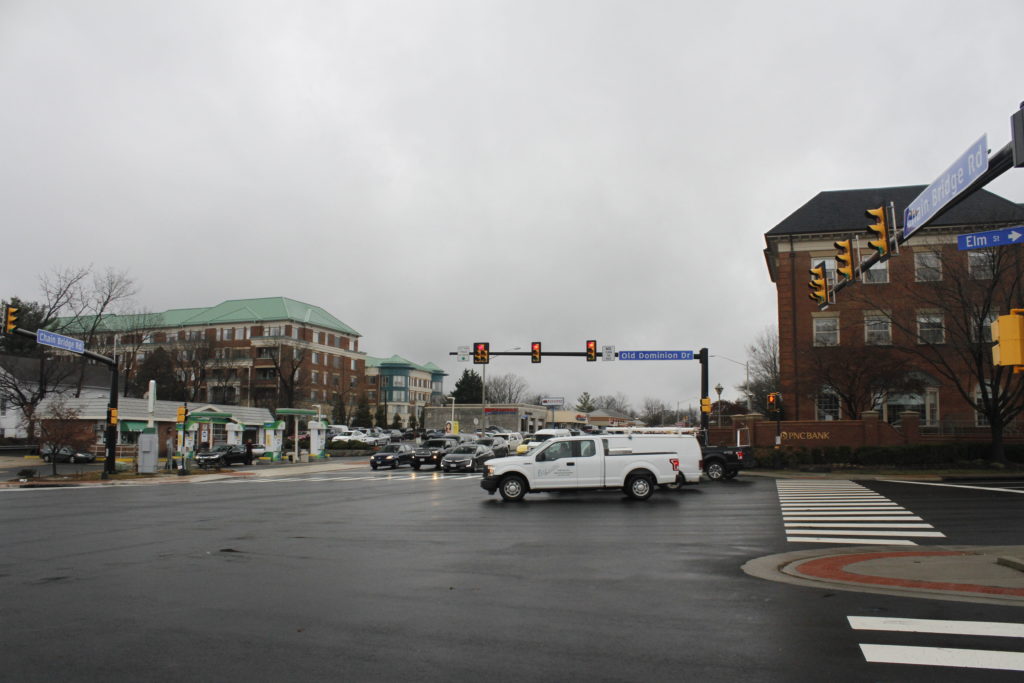
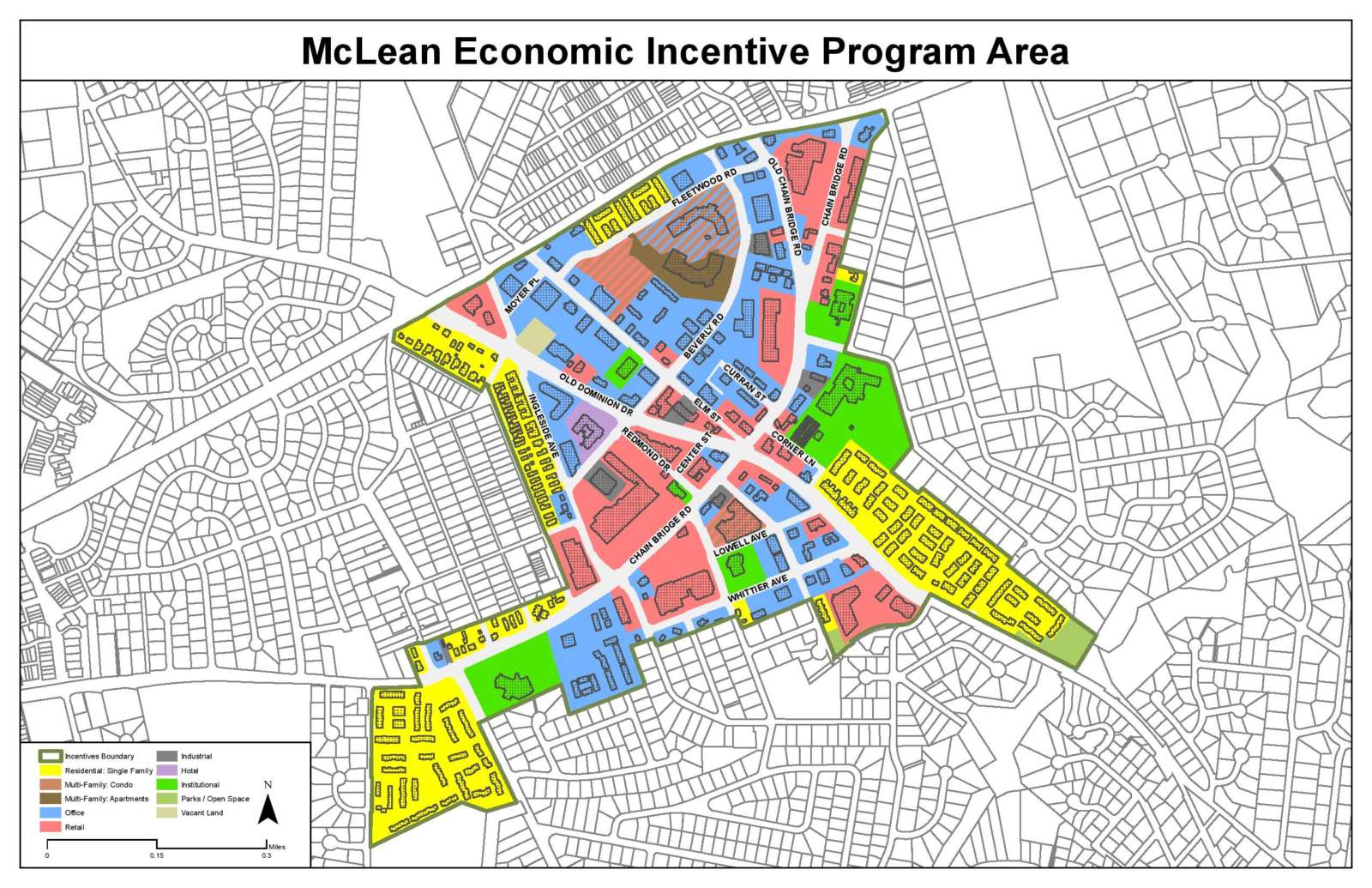
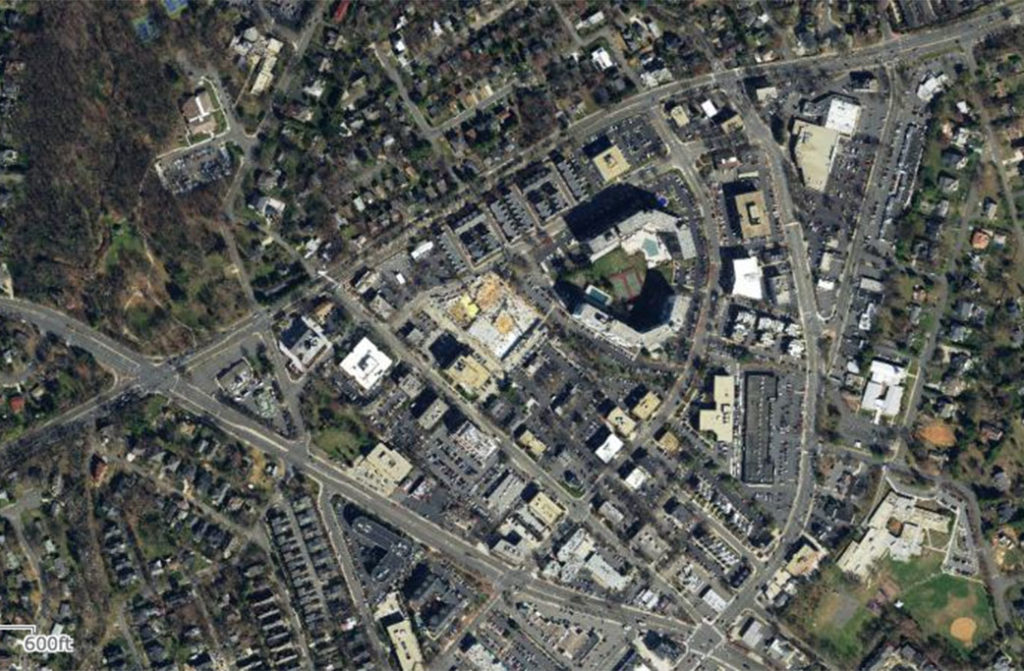
Downtown McLean could see new development over the next 10 years, after Fairfax County adopted a new program last Tuesday making it cheaper and faster for developers to build in revitalization districts.
Developers whose plans meet certain criteria could benefit from real-estate tax breaks, a 10% reduction in site plan fees and a fast-tracked process for zoning applications if they build in McLean, or one of the other five revitalization district in the county.
The Board of Supervisors adopted the Economic Incentive Program on Sept. 15 to give the private sector incentives to revitalize and redevelop properties in a half-dozen commercial revitalization districts, including McLean.
The program was established by an ordinance that amends the county code.
Other qualifying districts include:
- Baileys Crossroads/Seven Corners
- Annandale
- Lincolnia
- Areas along Richmond Highway, including suburban areas and part of the Huntington Transit Station Area
- Springfield, except the single-family portion of the Springfield Transit Station Area
To qualify for the lower costs and faster application processes, developments must be commercial, industrial or multi-family residential. Proposals need to be new and should consolidate at least two neighboring parcels of land totaling at least two acres.
Proposals need to align with the county’s Comprehensive Plan for redevelopment, and follow all laws and policies regarding affordable housing.
Developers will only receive tax breaks for their proposals if they act within the 10-year timeframe specific to their revitalization area. McLean’s window for the tax cut starts on July 1, 2024 and lasts through June 30, 2034.
The county plans to make the application process and forms available later this fall. Those who are interested can connect with county staff and discuss their eligibility by emailing Community Revitalization Section Director Elizabeth Hagg at [email protected].