

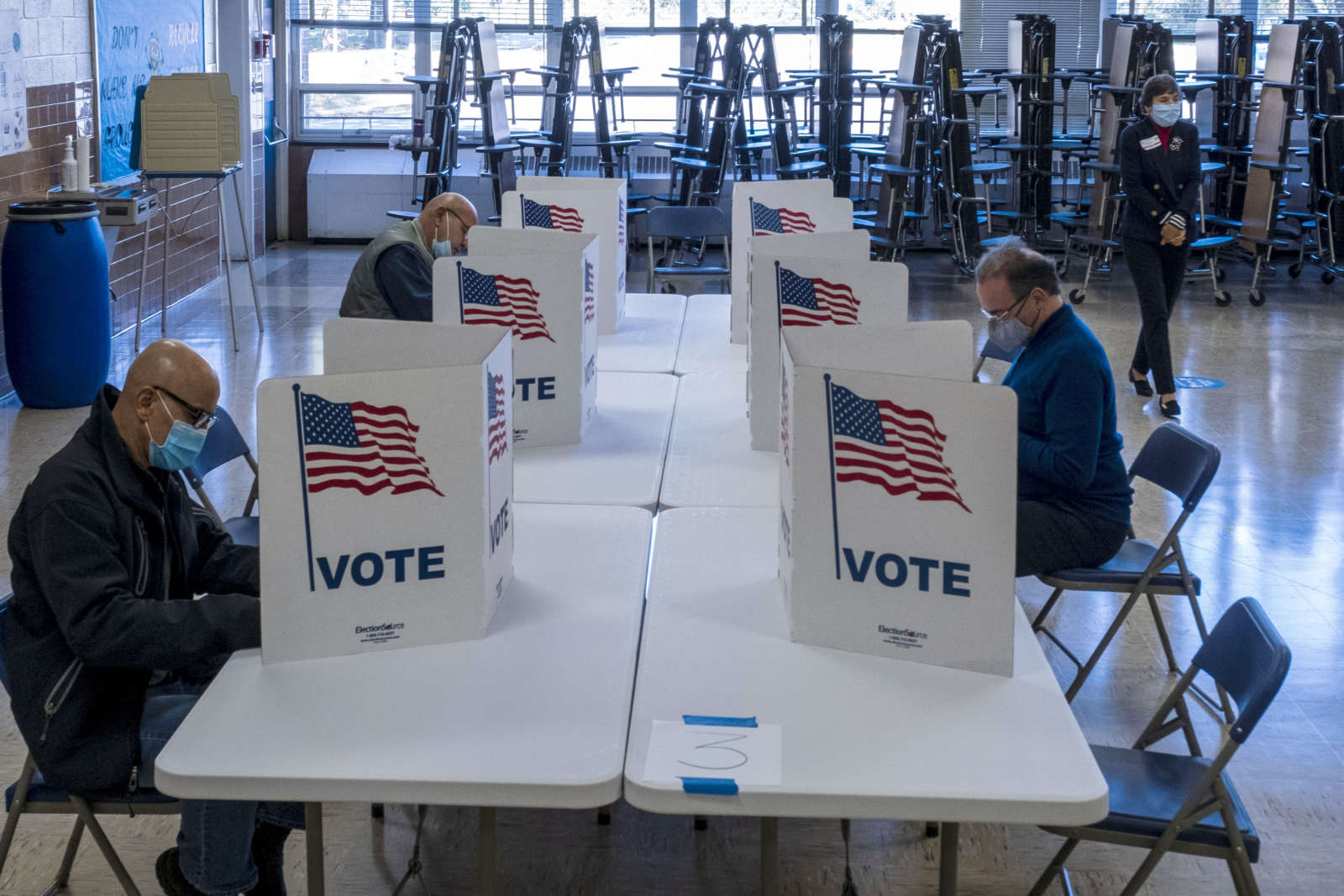
600,238 voters – or 78.8% – of Fairfax County’s 761,573 active registered voters participated in this year’s general election, more than two-thirds of them absentee in Virginia’s first election with no-excuse absentee voting.
Based on unofficial results from the Fairfax County Office of Elections, that likely sets a record for the most votes cast in an election in Fairfax County history, but the turnout rate falls short of the 2012 and 2016 general elections, which both had rates of 80.5% and 82.5%, respectively.
“This election year was unlike any other we have ever seen,” Fairfax County Board of Supervisors Chairman Jeff McKay said. “Our turnout throughout the process was truly encouraging and spoke to our residents’ faith in the democratic process.”
Though precinct-level results reveal some differences, Fairfax County voters as a whole clearly favored Democrats in this year’s election, supporting Joe Biden over incumbent President Donald Trump and reelecting Sen. Mark Warner, Rep. Don Beyer (8th District), Rep. Jennifer Wexton (10th District), and Rep. Gerry Connolly (11th District) to Congress.
Of the county’s nine districts, Hunter Mill had the highest voter turnout for the 2020 general election.
More than 81% of Hunter Mill District’s 93,193 active registered voters cast a ballot in the Nov. 3 election, either in person on Election Day or absentee. The district is also the only one in the county with over 90,000 active registered voters as of Oct. 30.
Springfield District had the second highest turnout at 80.8%, followed by Dranesville in terms of the percentage of voters who participated in the election (80.1%) or by Sully in terms of the total number of votes cast (71,082 to the 70,186 ballots recorded by Dranesville).
Springfield saw 23,333 in-person Election Day voters, the most in the county, while Hunter Mill voters cast the most absentee ballots with 55,134, though absentee voting surpassed in-person Election Day voting in all districts.
The gap between absentee voting and in-person Election Day voting was particularly wide in Providence District, where 50,814 of the district’s 87,100 active registered voters cast in in-person or by-mail absentee ballot and only 17,117 people voted on Election Day.
While the election results will not be official until they are certified on Nov. 16, all ballots are now in after the deadline for absentee ballots to be returned came at noon on Nov. 6.
The City of Falls Church, which held a special election to fill a vacant city council seat, saw a record turnout with 8,879 votes, though the 83.3% turnout rate fell short of the record 87.4% of active voters who cast ballots in the 2012 general election.
After Election Day, the city counted an additional 68 absentee ballots from drop boxes, by mail, and as federal write-ins, and officials accepted 25 provisional ballots, according to Falls Church City director of elections and general registrar David Bjerke.
Debora Schantz-Hiscott won the city council special election with 54% of the vote.
“We have a lot of work ahead. But I am excited for this opportunity,” Schantz-Hiscott said in a guest post for the Falls Church News-Press. “As we face tremendous uncertainty in our nation, it will take a village to see us through this crisis. Here in Falls Church City, I am certain we will rise to this occasion together.”
Staff Photo by Jay Westcott
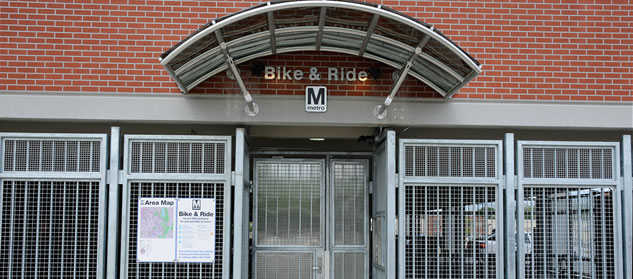
Work on Metro’s Bike and Ride facility for the Vienna Metro Station is finally nearing the finish line.
More than five years after it started, major construction on the project has now been completed, Washington Metropolitan Area Transit Authority spokesperson Ian Jannetta says.
“The Bike & Ride is being readied for customer use, including inspections and final project activities (such as integrating access control to the Metro network),” Jannetta told Tysons Reporter in an email on Oct. 30. “As soon as we have a date for when customers can use the facility, we will announce it.”
The Vienna facility is Metro’s second Bike and Ride in Fairfax County after one opened at the East Falls Church Metro Station in August. The two stations will have a combined 184 spaces for riders to park their bicycles before hopping on a train or bus.
Metro’s bike parking facilities are monitored around-the-clock by security cameras and include “fix-it stations” with a tire pump, tools, and a stand for making basic repairs and adjustments, according to WMATA.
In order to access the facilities, customers need a registered SmarTrip and must fill out an online form about 24 to 48 hours in advance of their visit, though the bike and rides are free to use.
Metro’s Bike and Ride facilities were recently the subject of a critical report by the WMATA Office of the Inspector General, which reviewed the projects after receiving public complaints and a request for information from a U.S. Senate subcommittee on federal spending oversight.
Released on Oct. 16, the report found that WMATA has spent over $5.9 million on three Bike and Ride facilities that collectively provide 304 parking spaces, amounting to approximately $19,400 per space.
The inspector general also criticized the prolonged construction schedule on the Vienna and East Falls Church facilities, the lack of timely communication with the public, and gaps in financial records for the projects.
Metro started developing Bike and Ride facilities in 2011 as part of a capital program designed to expand bicycle and pedestrian amenities at its stations.
While work on a Bike and Ride at College Park in Washington, D.C., started in August 2011 and finished in May 2012, the East Falls Church and Vienna projects were delayed by construction issues and contractor disputes, including a termination of the original contract in 2016.
Jannetta says WMATA has overhauled its structure for managing capital programs since the East Falls Church and Vienna Bike and Rides started construction in February 2015.
“While it took longer than it should have to get a new contractor on board, the issues were ultimately resolved, delivering bike capacity that will benefit current Metro riders and generations of environmentally conscious riders to come,” Jannetta said.
Photo via WMATA
In a perfect world, Sahar Javadi’s children would have gone back to school on Aug. 25 as the Fairfax County School Board planned when it adopted a calendar for this academic year in July.
In a perfect world, there would presumably be no novel coronavirus, let alone a pandemic that appears to be resurgent in Virginia just as the weather cools and Fairfax County Public Schools prepares to usher more students back into physical classrooms for the first time since March.
Because this is not a perfect world, however, Javadi and thousands of other parents in Fairfax County have spent the past month deciding whether to send their children back to school and risk them contracting COVID-19, or stick with virtual learning despite its challenges.
Javadi says she has been impressed by how the teachers at Freedom Hill Elementary School in Vienna have adapted to online classes, especially compared to the chaotic transition that FCPS went through when schools shut down in the spring.
When surveyed over the summer and again in October about whether to continue exclusively with virtual learning or to attempt the hybrid model proposed by FCPS, Javadi opted to sign her fifth-grade and second-grade sons up for two days of in-person classes both times.
“I am a little nervous, but part of it is also, [we] just gotta take a plunge and see where we go next and kind of be adaptive as we move along, because it’s not like COVID’s going away any time soon, right?” said Javadi, who is the president of Freedom Hill’s PTA.
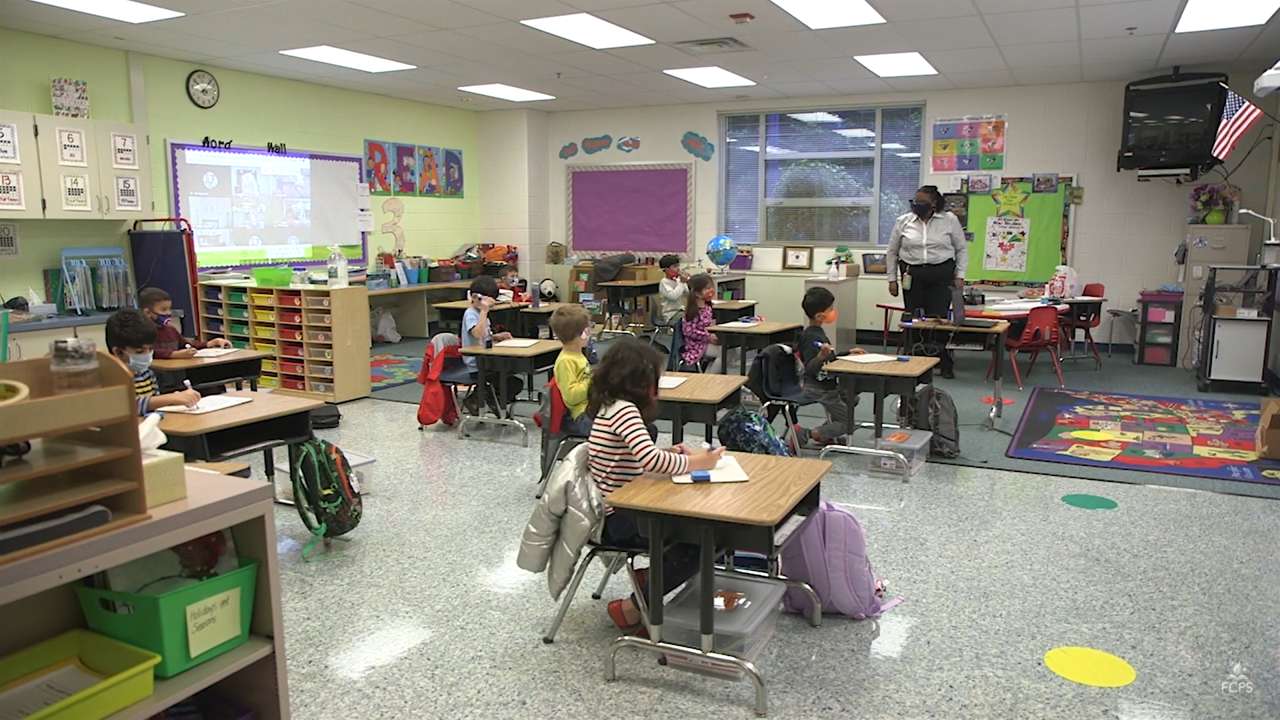
If FCPS sticks with its current “Return to School” plan, which could change if COVID-19 cases continue to rise, Javadi’s younger son will be part of the cohort of first-grade, second-grade, and special education students scheduled to resume in-person learning on Nov. 30.
Fairfax County started bringing students into classrooms on Oct. 5 for specialized high school career preparatory programs. Since then, select groups of special education students and English-language learners have returned, and a cohort of pre-kindergarten and kindergarten students is expected to start in-person classes on Nov. 16.
While Javadi says she feels reassured by FCPS’s planned health protocols, which include a mask requirement and reduced class sizes, Bailey’s Elementary School PTA president Melissa Snyder is more ambivalent about choosing hybrid learning for her first-grader and her third-grader, who is not scheduled to go back to school until Jan. 4.
“It was a difficult decision, and it’s not, from our perspective, an endorsement of the plan to return to school,” Snyder said. “It was made mostly because we didn’t think that the kids were going to get what they needed with the concurrent learning plan. If it had been a truly all-virtual class, we would’ve kept them virtual.” Read More
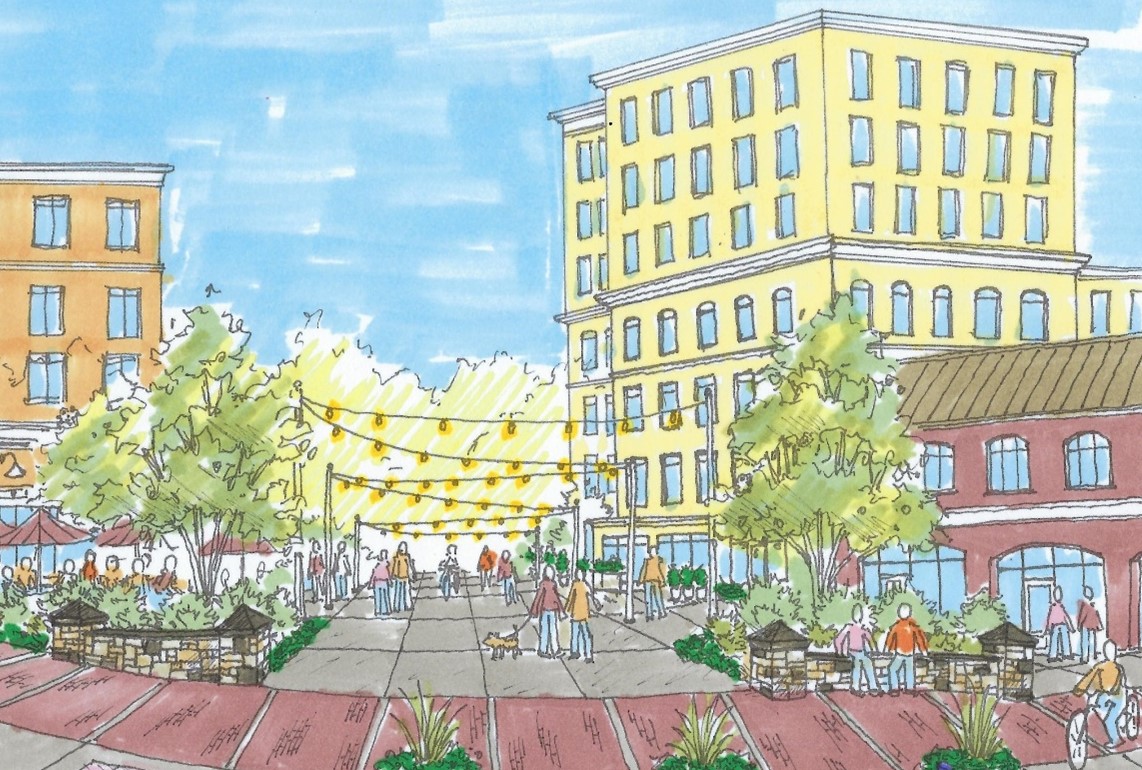
Fairfax County is inviting community members to provide feedback on its draft comprehensive plan for the McLean Community Business Center (CBC) at a virtual open house at 9 a.m. on Saturday (Nov. 7).
Hosted by the Fairfax County Department of Planning and Development, the open house will give members of the public an opportunity to learn about the latest work of the McLean CBC Task Force and share their thoughts on a draft plan for the future of McLean’s downtown area.
A group of 21 residents, local business leaders, and civic association representatives appointed by Dranesville District Supervisor, the McLean CBC Task Force has been meeting since May 2018 with the goal of developing recommendations regarding land use, transportation, public facilities, and other characteristics of the CBC.
Spanning about 230 acres between Chain Bridge Road, Dolley Madison Boulevard, and Old Dominion Drive, the CBC serves as a downtown district for McLean, and the conversation around the draft comprehensive plan has been driven by debates about density and how to balance development with open space.
Based off a Vision Plan finalized in December 2018 and released on Oct. 5, the latest draft of the comprehensive plan states that the CBC is being “planned to provide for the needs of the immediate surrounding community and not the regional needs at the scale found in [nearby] Tysons.”
The McLean Citizens Association, which has two representatives on the CBC task force, plans to hold a special meeting of its board of directors on Nov. 18 that will exclusively focus on the CBC comprehensive plan.
In an email to members ahead of the board’s regular meeting on Wednesday, MCA President Rob Jackson notes that the association traditionally does not take positions on comprehensive plan revisions until they are final, but the board decided to organize a special meeting after “a number of members” petitioned for one.
In addition to taking a preliminary vote on whether it wants to take a position now, the board will hear from committee chairs on the issues they would like to be considered in the comprehensive plan and determine which items to include in a draft letter to Foust.
“We are focusing on only big items to increase our chances of influencing the county, recognizing that an organization with a long list of priorities effectively has no priorities,” Jackson said. “Further, submitting a long list provides motivation for the county to toss us a couple of bones, while we are ignored on big items.”
Community members can join Fairfax County’s open house on Saturday by registering via WebEx. The county’s planning staff is soliciting comments and questions regarding the McLean CBC study at [email protected].
Photo via Supervisor John Foust/Twitter
Fairfax County voters approved the sale of $441 million worth of bonds to fund a full slate of pending capital projects during the 2020 general election on Tuesday (Nov. 3).
This year’s ballot featured four separate bond referendums that asked Fairfax County voters to authorize:
- $90 million for renovations and upgrades at four public libraries
- $112 million in parks bonds
- $160 million in transportation bonds to fund the county’s share of Metro’s capital improvement program, which covers rehabilitation and modernization projects for the Metrorail system
- $79 million in community health and human services bonds to renovate the Joseph Willard Health Center on Old Lee Highway and Alexandria’s Crossroads residential treatment facility
Though vote counts won’t be finalized until tomorrow’s noon deadline for absentee ballots, all four referendums passed with ease. The health and human services bonds garnered the most support with 76.5% “yes” votes, followed by parks with 72.4% and transportation with 67.7%. Just under two-thirds of voters (66.1%) supported the public library bonds.
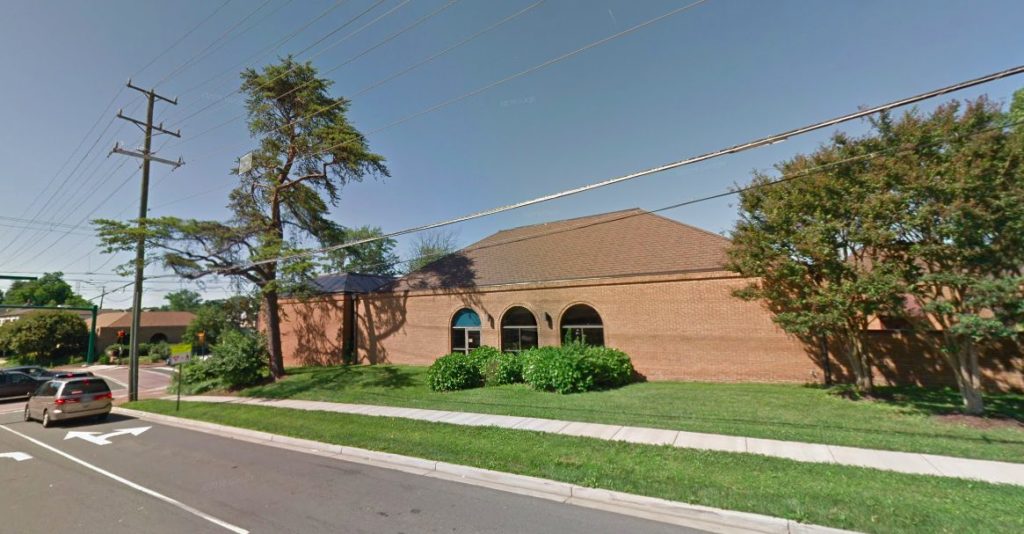
The public library bonds include $23 million for Fairfax County’s planned redevelopment of the Patrick Henry Community Library in Vienna.
Originally built in 1971, Patrick Henry Library operates close to the level of a small regional library as one of the busiest community branches in the Fairfax County Public Library system, according to the county’s FY 2021-2025 adopted capital improvements program.
“Renovation is required to upgrade building systems and infrastructure that are well beyond the end of their life cycle and meet current and future operational needs,” the CIP said. “The building is one of the oldest, resulting in an antiquated layout that does not adequately reflect modern library design and usage.”
The new library bond funds will help expand Patrick Henry Library by roughly 7,000 square feet to a 21,000-square-foot building, permitting more public seating and a larger children’s section.
The renovation will also involve the construction of a 213-space parking facility that the county is working on with the Town of Vienna as part of an agreement approved by the Fairfax County Board of Supervisors in July.
Fairfax County’s 2020 parks bond includes $100 million for the Fairfax County Park Authority and $12 million to pay for the county’s share of the Northern Virginia Regional Park Authority’s capital program, which focuses on resource protection, facility improvements, and the expansion of open space, trails, and recreational opportunities.
Tysons area projects covered by the Fairfax County Park Authority’s bonds funding include an upgrade of McLean Central Park in accordance with the park’s master plan and a renovation of the Providence RECenter to improve its efficiency.
The park bonds also have funds for design advancement for McLean’s Salona Park, even though the project was put on hold in September until the park authority develops a master plan for Langley Fork Park.
Photo via Google Maps

While Virginia’s U.S. Congressional delegation looks like it will remain largely unchanged after the 2020 general election, voters approved a state constitutional amendment that will reshape the process for how their representatives will be chosen in the future.
One of two statewide referendums on the ballot, Constitutional Amendment 1 shifts responsibility for drawing congressional and state legislative district lines from the Virginia General Assembly to a redistricting commission made up of eight legislators and eight appointed citizens.
According to the Virginia Department of Elections unofficial returns, Amendment 1 passed with 65.91% of voters casting their ballot in favor of it, though a few precincts had not yet reported results by Wednesday night and the results will not be official until they are certified on Nov. 16.
Fairfax County approved the measure by a smaller margin than the overall state, with 53.69% of voters supporting it and 46.31% opposing.
“From the start, this movement has been about putting the voices of citizens above politicians and political parties. Today, Virginia voters spoke loud and clear in approving Amendment 1,” Fair Maps VA executive director Brian Cannon and campaign co-chairs Wyatt Durrette and Bobby Vassar said in a joint statement on Wednesday (Nov. 4).
Fair Maps VA is a nonprofit advocacy organization formed in July by OneVirginia2021, the coalition of policymakers and citizens that spearheaded the redistricting commission proposal.
With Virginia set to redraw district lines next year, Fair Maps VA says the proposed commission will combat partisan gerrymandering by giving members of the public “a seat at the table” instead of leaving redistricting exclusively in the hands of legislators, as previously dictated by the Constitution of Virginia.
The General Assembly will vote on new district maps, but it will not be able to change them. If new maps are not approved by set deadlines, the Supreme Court of Virginia will draw them.
“In creating a bipartisan redistricting commission…[voters] said they want a transparent redistricting process,” Cannon, Durrette, and Vassar said. “They want civil rights protections to be added to the state constitution for the very first time. And they said that they want to end partisan gerrymandering in Virginia once and for all.” Read More
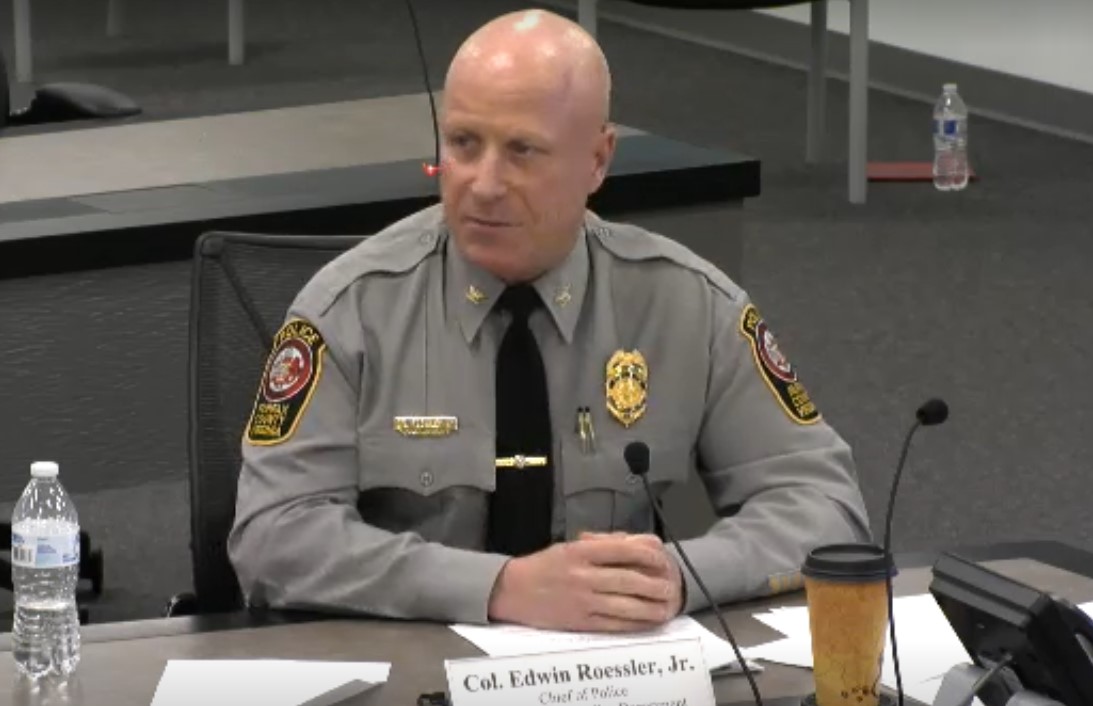
Fairfax County Police Chief Col. Edwin C. Roessler Jr. will step down from his position early next year, the Fairfax County Police Department announced this morning (Thursday).
The FCPD says Roessler will retire after eight years as Fairfax County’s police chief effective February 2021 in order to transition the agency, which is the largest police department in Virginia, to a new generation of leadership.
The FCPD’s announcement confirms news that was first reported by Washington Post journalist Justin Jouvenal.
“The FCPD is blessed with women and men, past and present, who understand their noble calling in life and are deidcated to serving and protecting others,” Roessler said. “…Our county leaders, community and its great police department are positioned to continue to serve as a model for the next generation of policing in America.”
Roessler’s tenure with the Fairfax County Police Department spans more than three decades. First hired as a police recruit in 1989, he rose to the position of deputy chief before serving as interim Chief of Police in early 2013 to replace then-Chief David Rohrer, who had been promoted to deputy county executive for public safety in October 2012.
Roessler was officially appointed as Fairfax County’s police chief by the Fairfax County Board of Supervisors in July 2013.
Roessler became police chief as the FCPD was facing increased scrutiny by county officials and community members after a Fairfax County police officer shot and killed Springfield resident John Geer in August 2013.
After the Board of Supervisors established an independent Ad Hoc Police Practices Review Commission to examine the FCPD’s policies and relationship to the community it serves, Roessler oversaw the implementation of many of the commission’s recommendations, including the creation of a body-worn camera program, the establishment of a civilian review panel and independent police auditor, and modifications to the department’s use-of-force policy.
The FCPD also started a Chief’s Diversity Council and worked with county leaders and community advocates through the Fairfax County Communities of Trust Committee, which was formed in 2015 by then-Board of Supervisors Chairman Sharon Bulova and led by then-Fairfax County NAACP President Shirley Ginwright.
Fairfax County Board of Supervisors Chairman Jeff McKay thanked Roessler for “his years of service to Fairfax County and his dedication to protecting our county,” emphasizing Roessler’s efforts to work with the board to implement reforms “that have solidified the police department as a leader in transparency and community trust.”
“I know I join many in wishing the Chief continued good health and success in his next chapter,” McKay said. “I look forward to beginning the search for his successor and continuing to build on our successes in Fairfax County.”
Photo via Fairfax County
Since JEB Stuart High School morphed into Justice High School in 2018, debates over changing school names are turning into familiar territory for Fairfax County residents, but the issues they dredge up have become no less contentious.
Held in two parts on Oct. 22 and 29, the Falls Church City School Board’s public hearing on whether to rename George Mason High School and Thomas Jefferson Elementary School featured passionate arguments from both proponents and opponents of renaming schools that bear the monikers of historical figures tied to slavery.
At the crux of this particular name change debate are the legacies of Mason and Jefferson, which are arguably more complicated than that of Confederate leaders like Stuart or Robert E. Lee.
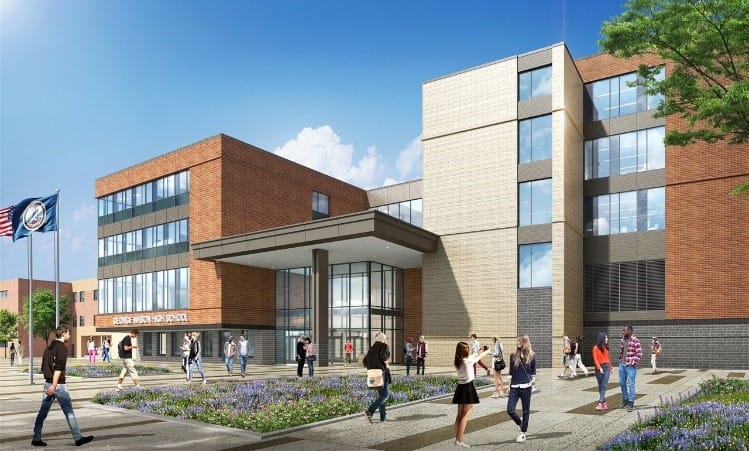
Arguing that romantic notions of America’s founding have wrongly overshadowed the violence Mason and Jefferson committed against the human beings they enslaved, supporters of removing their names from Falls Church schools cast this moment as a chance for the city to move away from its segregationist past and toward a more inclusive future, particularly with George Mason High School in the process of getting a brand-new campus.
“Our changing of the name will not erase or change history,” George Mason High School student Constance Meade said. “It will demonstrate that we’ve learned from our history and that we’ve chosen not to let these men represent our future and our community of students.”
Some critics of the proposed name changes argued that the ideals Mason and Jefferson espoused as the authors of the Virginia Declaration of Rights and the Declaration of Independence, respectively, are worthy of honoring even if they did not live up to them.
“The fact that Jefferson and Mason were slaveholders and behaved in ways viewed as completely unacceptable today does not at all outweigh the totality of their accomplishments and contributions,” Falls Church City resident and former school board member Hal Lippman said.
Other opponents contended that changing the names of schools is a symbolic gesture not worth the cost, which FCCPS estimates to be $96,760 for Mason and $13,500 for Jefferson.
“I’m a little frustrated with things that I perceive to be more on the order of virtue signaling, rather than content,” Alison Kutchma, the parent of FCCPS alumni, said. “I’d rather that our education dollars and your efforts and your meetings go to what happens inside the building.”
Name change proponents countered that the associated costs are negligible compared to the need to reckon with the damage wrought by slavery and systemic racism.
“I assure you that claiming money stands in the way of promoting an inclusive culture will not age well,” said Jamie Argento Rodriguez, the parent of two FCCPS students.
The Falls Church City School Board decided to consider changing the names of George Mason High School and Thomas Jefferson Elementary School on June 30 after community advocacy efforts gained renewed attention during the protests that emerged in the wake of Minneapolis police officers killing George Floyd on May 25.
The school board will review a draft survey report from the Herndon-based consultant K12 Insight on Nov. 10 before voting on whether to change the name of either school on Dec. 8.
“We’re really grateful for our community members who are taking time to share their thoughts with us,” Falls Church City School Board chair Greg Anderson said. “…The board is not endorsing or supporting any comments submitted to us, but we’re very happy to hear what you have to say.”
Photo via Falls Church City Public Schools
Mary Riley Styles Public Library Construction Closes N. Virginia Ave. in Falls Church — “The 100 block of N. Virginia Ave. will be closed from 7 a.m. to 6 p.m. on Wednesday, November 4, to allow for work on the library renovation and expansion project.” [City of Falls Church]
Halloween House Fire in McLean Causes Serious Damage — “An abandoned house in McLean went up in flames on Halloween night, causing $621,400 in damages…The cause of the fire remains under investigation.” [Patch]
How a Tysons Task Force Built a Road Map for Redevelopment — “The Tysons Land Use Task Force provides a potential model for permitting more housing in other expensive, suburban jurisdictions.” [Greater Greater Washington]
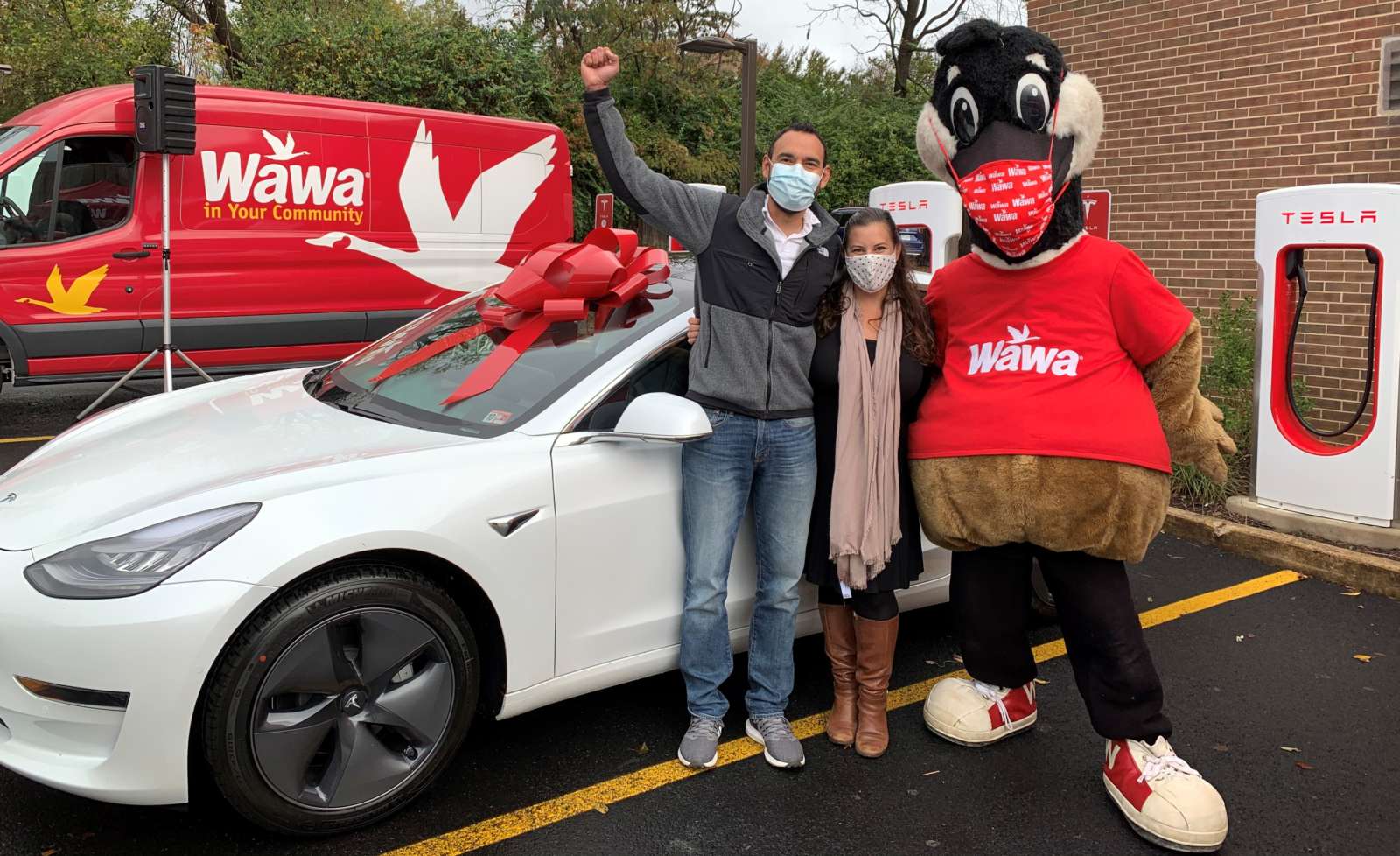
Wawa Hosts Tesla Giveaway and Electric Car Parade in Vienna — “Not only did the event crown Luis, local resident of Alexandria, VA, with a brand-new Tesla, but the event supported sustainable environmental causes throughout Vienna.” [Wawa]
Photo courtesy Wawa
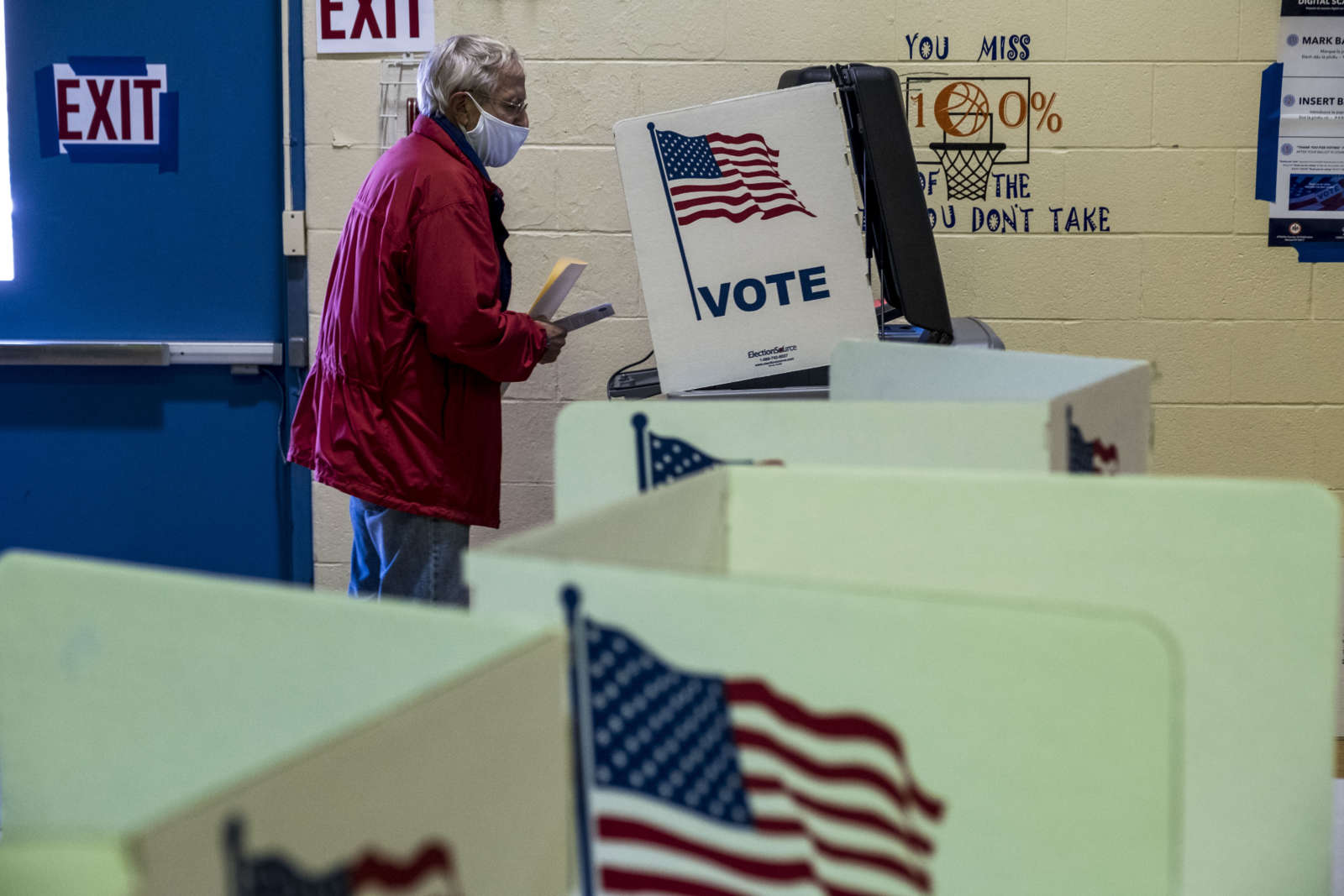
Updated at 11:00 p.m. — Falls Church Education Foundation executive director Debora Schantz-Hiscott appears likely to win the Falls Church City Council’s open seat based on preliminary results from the City of Falls Church Office of Voter Registration and Elections.
Schantz-Hiscott carried 47.5 percent of the city’s total vote after winning two out of three wards and attracting 48 percent of the 7,556 absentee ballots that had been counted on Tuesday.
Falls Church City Housing Commissioner Joshua Shokoor came in second with 27.3 percent, edging out Schantz-Hiscott to win the Third Ward, while community activist Simone Pass Tucker trailed with 11.6 percent of the vote.
The special election for the Falls Church City Council seat, which was left vacant by the late Councilmember Daniel Sze’s death from cancer in July, was part of a packed general election ballot that saw an unprecedented amount of early voting, enabled by Virginia General Assembly legislation that permitted no-excuse absentee voting.
The City of Falls Church set a record for the number of ballots cast with 8,786 votes easily surpassing the previous high of 7,860 ballots from 2016.
However, barring a massive influx of post-Election Day absentee ballots, the 82.5 percent of active, registered voters who turned out this year falls short of 2016, which had an 85.4 percent turnout. The 87.4 percent of active voters who cast ballots in the 2012 general election remains Falls Church City’s high mark for voter turnout in terms of percentages, according to Falls Church City elections director and registrar David Bjerke.
70.4 percent of Falls Church City voters turned in their ballots before Election Day. By the day’s end, the city’s central absentee precinct, which collects all absentee votes, was responsible for 7,556 ballots. The city’s three wards reported 1,230 ballots combined.
Fairfax County saw a similarly high rate of early voting with 51 percent of its 77.5 percent voter turnout coming before Election Day. As of 10:30 p.m. on Tuesday, the county office of elections had received 404,254 by-mail and in-person absentee ballots.
Turnout Update as of 4 p.m.
✔️ Today: 19.7%
✔️ Early Voting: 51%
✔️ Estimated Total: 70.7% of 787,000 registered voters in Fairfax CountyVote or return mailed ballots by 7 p.m. https://t.co/D58GOcVxM4#vote #vote2020 #electionday #election2020 #2020election pic.twitter.com/IRanLUVTj2
— Fairfax County Votes (@fairfaxvotes) November 3, 2020
Because Virginia will accept absentee ballots until noon on Nov. 6 as long as they are postmarked on or before Nov. 3, state and local election officials emphasized that the reported results for this year’s election are unofficial until they are certified on Nov. 16.
Based on Election Day results from its 243 precincts, which have now all reported, Fairfax County voters generally favored Democrats with presidential candidate Joe Biden, Sen. Mark Warner (D-Va.), and Reps. Don Beyer (8th District) and Gerry Connolly (11th District) each leading their respective races among county voters.
Only voters in the 10th District, which encompasses parts of Fairfax and Loudoun Counties, were leaning Republican with Aliscia Andrews holding a lead over incumbent Rep. Jennifer Wexton, though as of 10:40 p.m., the vote totals in Fairfax County’s unofficial returns do not yet include absentee ballots.
Fairfax County public information officer Brian Worthy told Tysons Reporter on Tuesday that the county was anticipating around 40,000 absentee ballots to remain uncounted by 11:00 p.m., when the Virginia Department of Elections is instructing local officials to report absentee results. That number includes ballots put in drop boxes on Election Day as well as any ballots that are still being returned by mail.
“Ballots must [be] postmarked today but will be counted if they’re received by the Office of Elections by noon on this Friday,” Worthy said.
The Associated Press projected by 8:30 p.m. that Biden would win Virginia and that Warner and Beyer would be reelected.
Staff photo by Jay Westcott
