

Barring an abrupt change in plans, Fairfax County Public Schools students will start returning to school buildings next week for the first time since classes resumed after winter break in January.
The Fairfax County School Board approved a new Return to School timeline last Tuesday (Feb. 2) that lets 8,000 students in special education and career and technical education programs get two days of in-person instruction and two days of virtual instruction per week starting on Feb. 16. All FCPS students will be phased into the hybrid learning model by Mar. 16, though students who choose to stay all-virtual can do so.
The school board’s decision came three days before Gov. Ralph Northam announced on Friday (Feb. 5) that all school divisions in Virginia must offer families some form of in-person learning option by Mar. 16, citing the need to prevent learning losses.
An FCPS report released in November found an uptick in failing grades during the first quarter of the 2020-2021 school year, particularly for students with disabilities and English-language learners, and research from the CDC suggests schools can deliver in-person instruction safely as long as mitigation protocols are followed, including mask-wearing and social distancing.
With COVID-19 cases declining in Fairfax County recently and FCPS staff prioritized for vaccinations, FCPS Superintendent Scott Brabrand expressed confidence last week that the division can pull of a successful return to in-person learning.
However, FCPS officials also said that transporting students will be a challenge due to the inability to ensure enough spacing on buses, and employees raised concerns in the past through the Fairfax County Federation of Teachers about inadequate implementation and enforcement of mitigation measures. FCPS has recorded 939 COVID-19 cases among staff, students, and visitors since Sept. 8.
Do you think FCPS is ready to restart in-person learning? Should the district move faster to expand in-person learning, or should it take a more cautious approach? Should schools be looking to resume in-person instruction at all?
The Fairfax County School Board voted last night (Thursday) to change the boundaries for McLean and Langley high schools — but not in the way they had discussed last month.
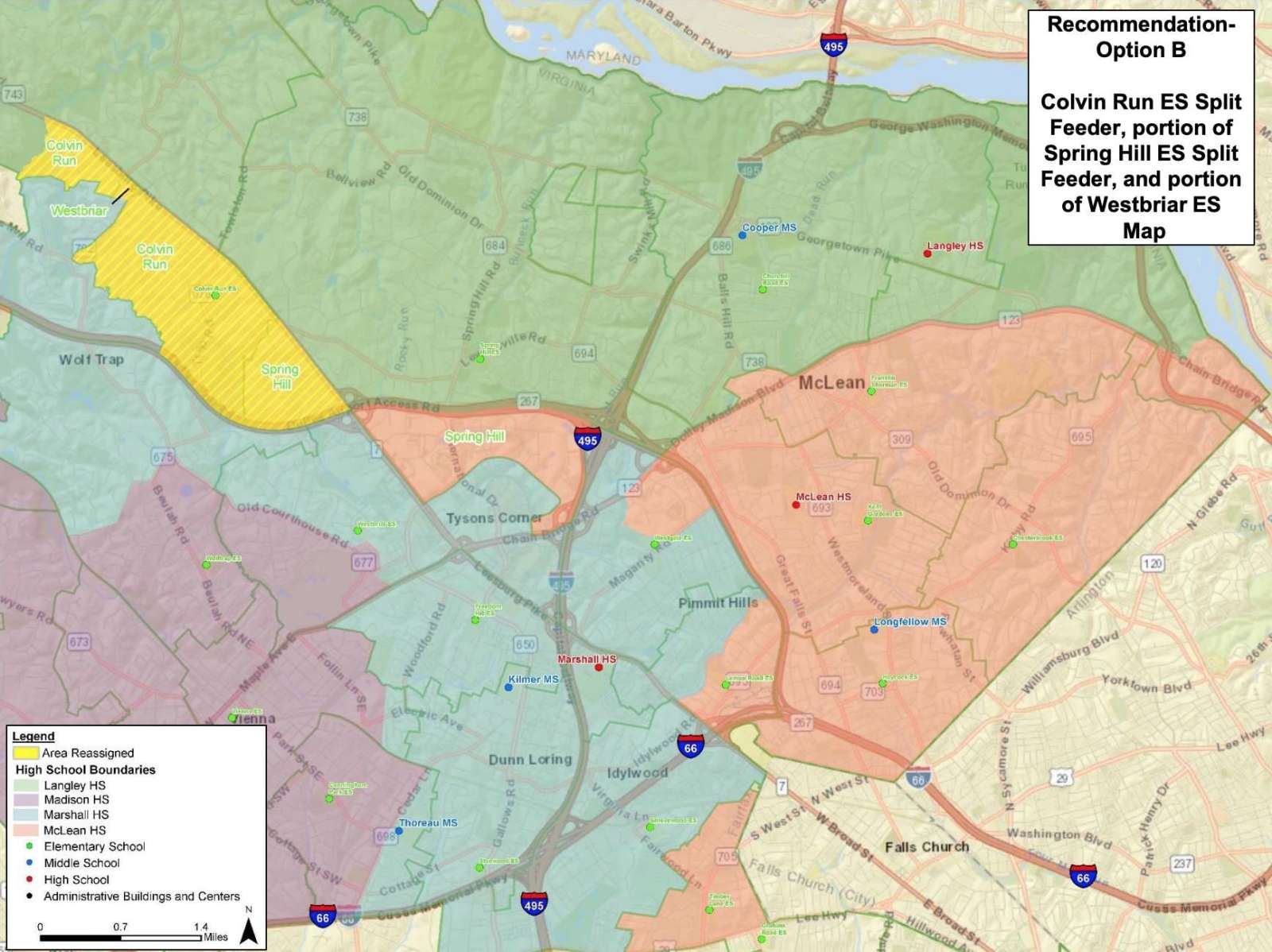
Of the three possible boundary changes presented to the community in December, Fairfax County Public Schools recommended a modified version of Option C when the school board met on Jan. 21. Last night, however, the option presented for the board to vote on was “Option B,” which passed 11-1 with Member-At-Large Abrar Omeish dissenting.
The approved boundary change will reassign students from McLean to Langley in the Colvin Run Elementary School split feeder area, along with portions of the Westbriar and Spring Hill elementary school split feeder areas.
Dranesville District Representative Elaine Tholen also included a provision that would allow rising ninth graders affected by the boundary change to either attend Langley High School this fall or be grandfathered into McLean High School and get transportation provided for all four years of school.
Overcrowding is a decades-old problem at McLean despite several attempts to add space, the latest of which comes in the form of 12 modular classrooms that are currently under construction. They will be finished later this month and ready for students’ return in March, Tholen said.
The option that was favored last month would have shifted some Spring Hill Elementary students from Longfellow Middle School and McLean High to Cooper Middle School and Langley High.
Tholen said Option B came out ahead after the board weighed “many considerations, many of them contradictory,” from the impact of future developments to diversity at Langley High School.
“We heard loud and clear from those who participated in our public hearing and public engagement process: Clean up at least one split feeder while giving McLean some capacity relief,” Tholen said.
Community input is also the reason why the two feeder middle schools of Longfellow and Cooper were included in the boundary adjustment study.
As a result of the new boundaries, an estimated 190 students previously assigned to McLean will now go to Langley, and an estimated 78 students from Longfellow will be moved to Cooper.
“This is not a perfect solution. Neither were the other options,” Providence District Representative Karl Frisch said, adding that he would have loved to address the Colvin Run and Spring Hill split feeders “in their entirety.”
Frisch said this option relieves capacity concerns at McLean without overloading Langley or Cooper, and improves both the Colvin Run and Spring Hill split feeders. He added that FCPS and the board will continue studying capacity data for McLean, Langley and Marshall high schools as well as other schools in the Tysons area.
Omeish commended Tholen for her diligence but predicted the board will be “finding ourselves here in a few years” with this limited change.
“I don’t feel in good conscience that this is the most long-term solution,” she said.
Image via FCPS
Fairfax County Public Schools students will start resuming in-person instruction on Feb. 16 under a new timeline unanimously approved by the Fairfax County School Board yesterday.
The board intended to formally vote on the latest proposal from FCPS Superintendent Scott Brabrand during its regular meeting on Thursday (Feb. 4), but enough members stated that they would support the plan during the board’s work session on Tuesday that they ultimately decided to not wait to give their consensus.
“While there’s no guarantee for anything in life regarding a pandemic, I think this is a strong plan with the resources we have to return to some semblance of what school was like before COVID,” Melanie Meren, who represents Hunter Mill District on the school board, said. “Of course, a lot will be different, but I think it’s needed to help people recover their learning loss.”
As with previous Return to School plans, families have a choice between all-virtual learning and a hybrid model with two days of in-person learning and two days of distance learning. All students have been learning virtually since FCPS returned from winter break.
Under the new timeline, students who opt to get some in-person learning will return to school buildings in phases, starting on Feb. 16 with about 8,000 special education and career and technical education students and concluding with third through sixth-grade students on Mar. 16.
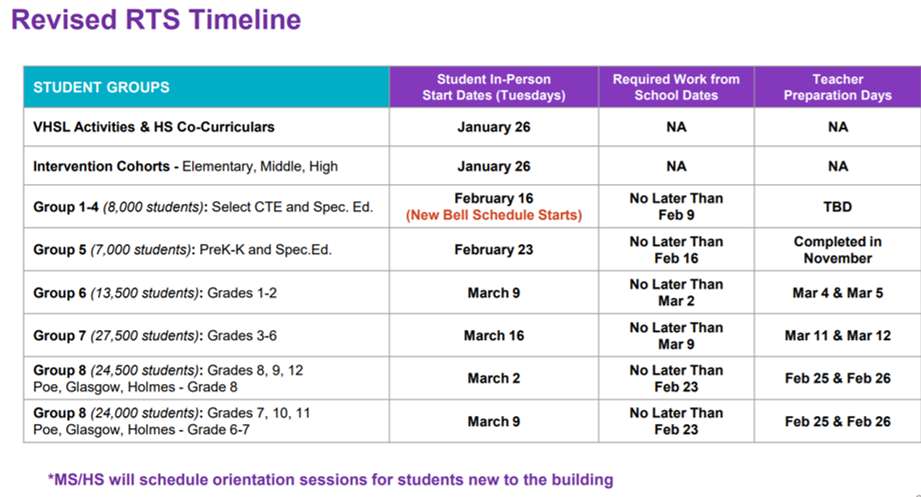
This schedule deviates from the one that was implemented in the fall before being suspended in having elementary school students restart in-person learning at the same time or even later than their older peers in middle and high school, whose return will be staggered across Mar. 2 and 9.
Braddock District Representative Megan McLaughlin questioned the two-week gaps between groups of elementary school students, noting that Loudoun County Public Schools plans to have students in pre-kindergarten through fifth grade in buildings by Feb. 16.
FCPS officials attributed the extended timeline for elementary schools primarily to staffing issues.
As of Feb. 1, FCPS has filled 74% of the 846 classroom monitor positions that it says are needed to restart in-person learning, but that still leaves 205 vacancies. The biggest gap is in grades three through six, where 94 positions – or 46% — remain vacant.
FCPS Deputy Superintendent Frances Ivey told the school board that, while some may prefer a more aggressive timeline, discussions with elementary school principals indicate that most of them support Brabrand’s proposal.
“There’s an overall positive consensus to the timeline, and recommendations were made based on that feedback,” Ivey said. Read More
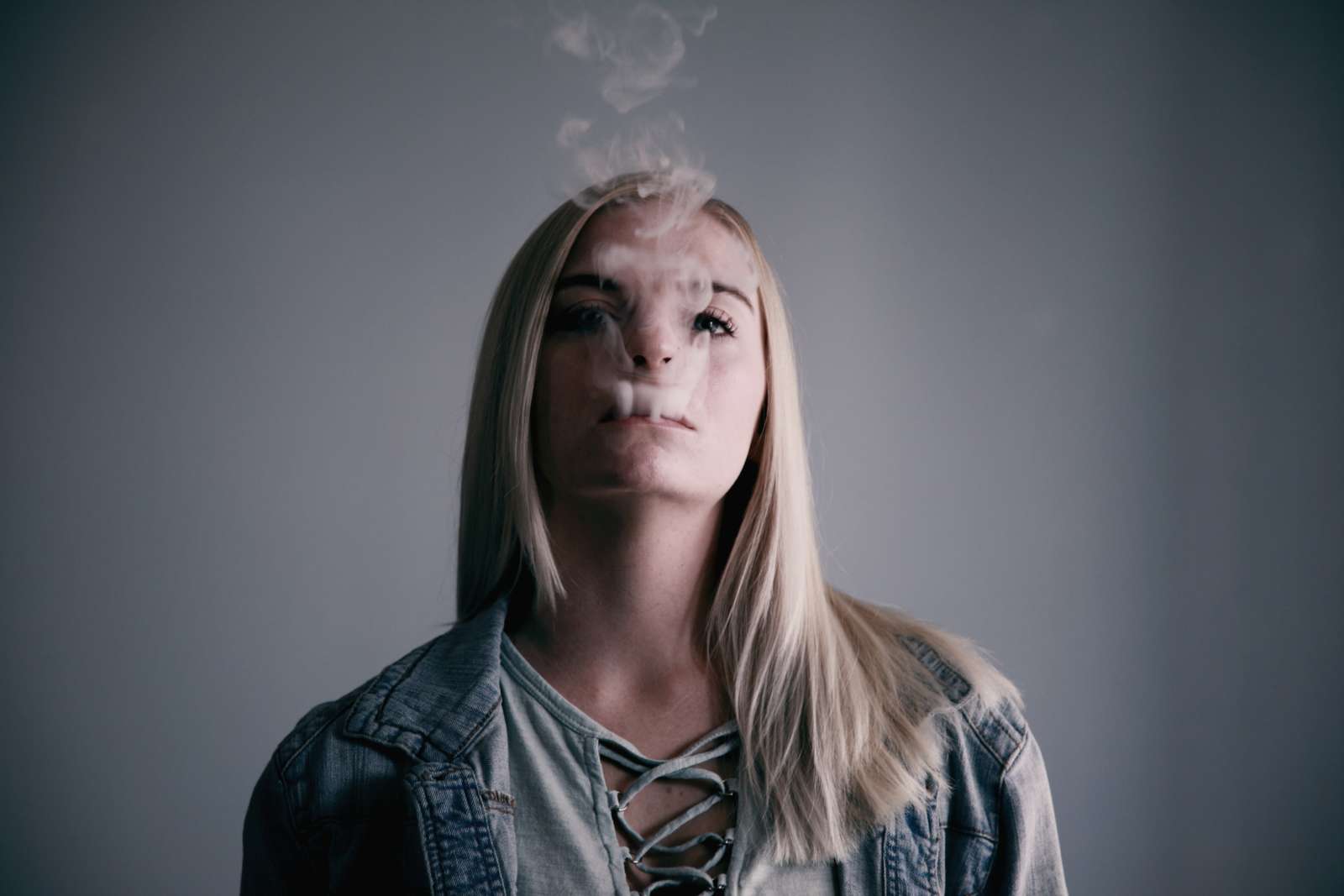
Vaping has reversed years of incremental progress in Fairfax County Public Schools in the number of students who report being drug-free, according to a report from the school system.
“The slow improvement FCPS had shown over the last several years on the drug-free youth metric ended during SY 2019-20 due to increased numbers of students who reported vaping,” the report said.
Over the last couple of years, vaping has emerged as the drug of choice among students in schools across the United States. Experts and school leaders have labeled it an “epidemic,” and studies have found that it is easy to access, targeted toward teens, and highly addictive.
In FCPS, one-third of middle and high school students reported alcohol and drug usage for the 2019-20 school year. The drug-free metric FCPS uses has not moved too much in recent years, but the uptick in vaping led to a “dramatic dip” for the 2019-20 school year, when 11% of students reported that they vaped, but did not use other drugs or drink alcohol.
The rapid downward trend due to vaping “requires direct and swift action to counteract, especially given the negative health impacts that have been associated with vaping,” the report said. It concluded that more funding may be needed to address the root causes of vaping.
FCPS included vaping in its drug-free metric for the first time for the 2018-19 reporting year. At the time, the report said, vaping did not have much of an impact — students who reported vaping also reported drinking or using other drugs.
Last year, the 11% of students who vape moved the needle 2 percentage points. When vaping is added in, the percentage of students who are drug-free drops from 79% to about 77%.
During the 2020 school year, 11.2% of students reported vaping while not using alcohol or other drugs. Broken down by grade level, 9% of eighth-graders, slightly more than 12% of sophomores and 12.5% of seniors reported vaping only.
Vaping appears to have also led to an increase in drug-related suspensions. Through March 2020, the number of students with suspensions for drug and alcohol offenses was 448, an increase of 6 percentage points when compared to the 2018-19 school year — 424 offenses through March 2019.
The report found that Asian and Black students were more likely to be alcohol and drug-free than Hispanic or white students.

In its report, FCPS concluded that its current interventions may not be enough to lessen vaping and other kinds of drug and alcohol use among students overall. The report said it is unclear whether any of FCPS’s traditional interventions would have specifically impacted vaping rates.
For example, substance abuse specialists were “likely managing students with more serious drug abuse issues,” the report said. Further, the “enhanced access to middle school health lessons would likely have had only an indirect or low-level impact on vaping.”
Photo via Sharon McCutcheon on Unsplash
A former Oakton High School student is seeking a new trial in her lawsuit against the Fairfax County School Board involving a sexual assault that occurred on a school band trip in 2017.
Attorneys representing the plaintiff, known as Jane Doe, and the school board delivered oral arguments to the Court of Appeals for the Fourth Circuit remotely on Monday (Jan. 25).
According to Public Justice, the nonprofit representing the plaintiff and her family, Jane Doe — then a junior — and another bandmate — then a senior — were sitting next to each other on a bus when he touched her without her consent.
Filed in 2018, the nonprofit’s original complaint alleged that administrators and employees failed to take meaningful and appropriate action. According to the complaint, administrators threatened to discipline her and discouraged her from reporting the assault to police or taking legal action.
In August 2019, a jury with the U.S. District Court in Alexandria found that Jane Doe was sexually harassed and that the experience negatively impacted her education. But the jury did not find the Fairfax County School Board could be held liable for the deprivation of her education as a result of her assault.
The jury determined that the school board did not have “actual knowledge” about the assault, though one juror later said there was confusion over the term’s definition. As a result, the jury did not discuss the final question in the case, which asked whether the school board acted with deliberate indifference toward Doe’s complaint.
FCPS’s liability, which appears to hinge on the extent to which school officials knew an assault had taken place and whether they took sufficient action to address the plaintiff’s concerns, is now being relitigated.
“There may be hard actual knowledge cases, but this isn’t one of them. This family did all they could to put the school on notice,” Public Justice attorney Alexandra Brodsky said in her argument on Monday. “This court should remand a new trial so a jury can reach, for the first time, the question of whether the school did enough.”
Stuart Raphael, the attorney for the school board, argued that the board did not have “actual knowledge” because Doe — in a conversation with Fairfax County Public Schools Director of Student Services Jennifer Hogan — did not describe her experience as sexual assault or nonconsensual. He added that Doe was “incredulous” when another administrator asked if she would press charges.
He argued that these facts, as well as inconsistencies between the stories that reached administrators, support the jury’s initial finding that the school board had no “actual knowledge” of the sexual assault.
“It cannot be that a school administrator’s failure to understand what constitutes sexual harassment is an absolute bar to liability,” Brodsky said. “That’s why this court and others have treated a failure to categorize reports of sexual harassment as evidence of a deficient response.”

Virginia Detects First Case of COVID-19 Variant — “The first case of the SARS-CoV-2 variant B.1.1.7 has been identified in a sample from an adult resident of Northern Virginia with no reported recent travel history. The B.1.1.7 variant, which first emerged in the United Kingdom in late 2020, is associated with increased person-to-person transmission of COVID-19.” [Virginia Department of Health]
Additional Ice Accumulation Possible This Morning — “Icy roads and trees can be expected in many areas this morning, but the majority of wintry weather is now behind us. However, hazards may linger into this afternoon as temperatures will only rise slowly this morning.” [National Weather Service/Twitter]
Fairfax Supervisors Prepare to Endorse American Legion Bridge Transit Study — The Fairfax County Board of Supervisors is scheduled to vote on whether to support the Virginia Department of Rail and Public Transportation’s I-495/American Legion Bridge transit demand study. Recommendations include several proposed routes to and from Tysons. [Sun Gazette/InsideNoVA]
Judge Allows Thomas Jefferson High School Admissions Lawsuit to Move Forward — “The ruling issued Thursday by Fairfax County Circuit Judge John Tran tosses out some aspects of the lawsuit but allows the core allegations to go forward. The lawsuit contends that state regulations require TJHSST to operate as a school for the gifted, as measured by scores on standardized tests.” [WTOP]
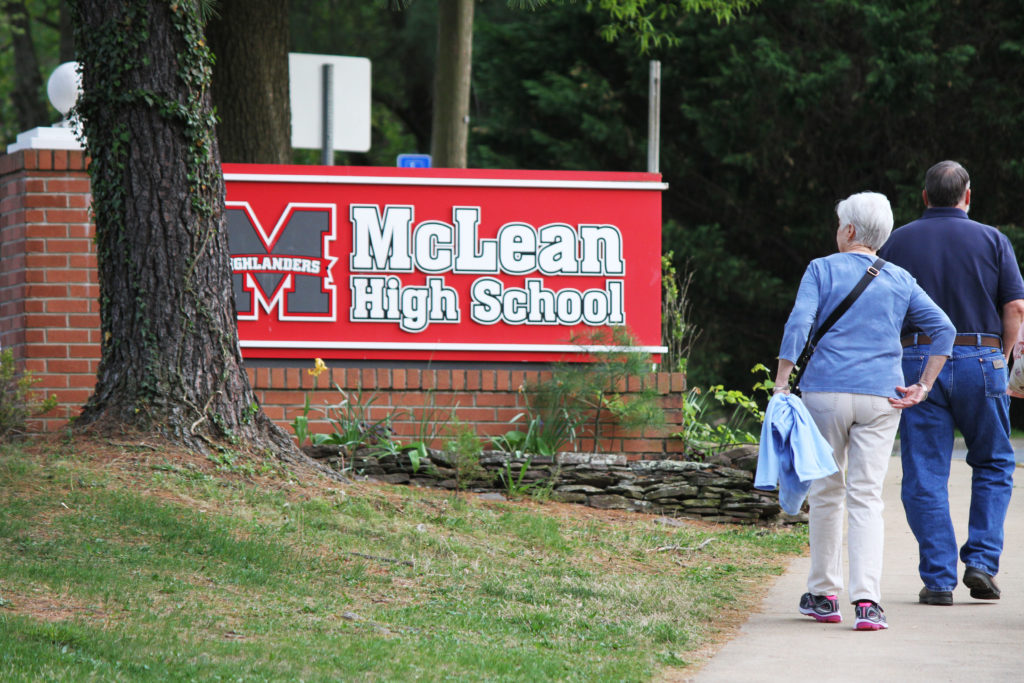
Fairfax County Public Schools has further refined a plan to relieve overcapacity at McLean High School using available space at Langley High School.
After presenting three possible boundary changes for the McLean and Langley pyramids at a community meeting on Dec. 7, FCPS Facilities and Transportation Services reviewed public feedback to refine one of its proposals, dubbed “Option C.” The updated option was presented to the Fairfax County School Board last night (Thursday).
For the last 10 years, overcrowding has persisted at McLean despite several limited attempts to add space over the years. The school sits at 118% capacity, with 2,350 students in a building designed for 1,993. Currently, 12 modular classrooms are being built to bring the capacity down to 100%.
The new recommendation from FCPS reassigns a portion of the area that currently feeds students from Spring Hill Elementary School to Longfellow Middle School and McLean. About 159 students would move from McLean to Langley, and about 73 students would move from Longfellow to Cooper Middle School.
“We have come a long way since work first began on the boundary adjustment between McLean and Langley pyramids,” Dranesville Representative Elaine Tholen said during the meeting. “Tonight, we are seeing some of the fruits of hard work our facilities staff has done to analyze option after option after listening to and incorporating public input.”
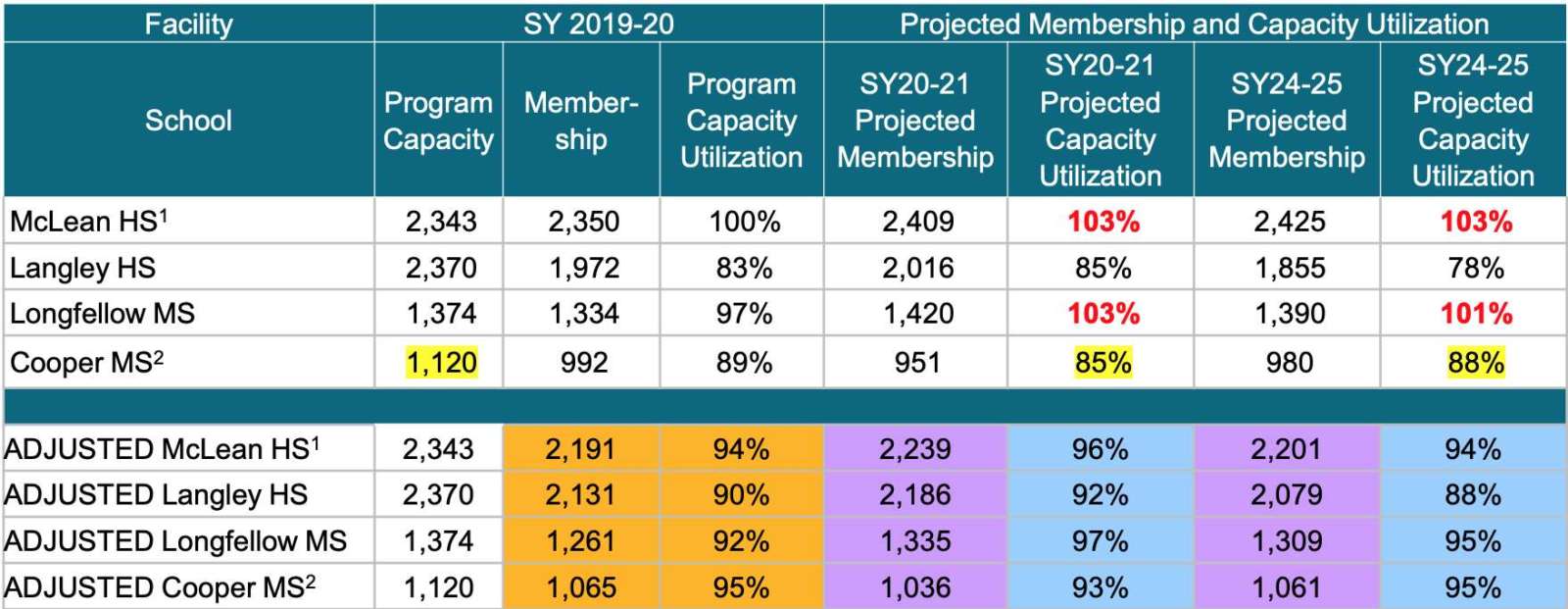
The original “Option C,” presented in December, considered reassigning students in the Spring Hill Elementary School split feeder area. After collecting emailed comments and verbal feedback, staff modified this option to create the new recommendation, said Jeffrey Platenberg, the assistant superintendent of facilities and transportation.
“This is a pretty natural process,” he said during the meeting. “We usually call these the hybrid recommendation.”
Staff who reviewed public feedback found that the communities involved were primarily concerned about the impact of development in and around Tysons, the possibility of too many split feeders, and the socioeconomic diversity of the schools involved, he said.
Meanwhile, Tholen said some have shared concerns about balancing populations amid COVID-19 uncertainties and ongoing development. Others worry that Cooper Middle School will be overlooked in the focus on McLean and Longfellow, and still other community members want FCPS to diversify the types of housing within the boundaries for Langley.
As for those worried about children in their final year of elementary, middle or high school, school board policy allows FCPS to grandfather in these students, Platenberg said.
The assistant superintendent said the proposed revision addresses some of these concerns while allowing FCPS to monitor growth at McLean and Langley high schools.
Tholen acknowledged that no plan will address all concerns, but she encouraged every neighborhood to share how they feel they would be impacted.
“We are still taking public input,” she said. “No final decision has been made.”
There will be a public hearing next Thursday (Jan. 28), and after that, the school board will vote to pick a plan on Feb. 4.
“Your input has been thoughtful and extremely helpful, so please continue,” Tholen said.
Chart via FCPS
What to Know About the 2021 Presidential Inauguration — Inauguration Day has arrived, and with it came a host of street closures and transportation service changes in the D.C. area, as local public officials advised residents to stay home and avoid traveling downtown. [Fairfax County Emergency Information]
FEMA Declines to Reimburse Virginia for Capitol Riot Response — “The Federal Emergency Management Agency has denied requests from Maryland and Virginia for an emergency declaration to cover expenses associated with responding to the Capitol riot and increasing security around President-elect Joe Biden’s inauguration.” [The Washington Post]
MetroWest Developers Look to Bring New Apartments to Vienna Metro Station Area — “Pulte Homes and the CRC Cos. are both pushing ahead with new construction on the 56-acre site, located just across Interstate 66 from the Vienna/Fairfax-GMU Metro stop. The companies could start work in 2021 after years of delays on what would eventually be a combined total of six buildings with at least 980 units and 41,500 square feet of retail.” [Washington Business Journal]
1st Stage Teams Up with Tysons Regional Chamber of Commerce on Food Drive — Food donations for the Capital Area Food Bank can be dropped off at the 1st Stage theater and offices between 10 a.m. and 2 p.m. from today through Friday, and from 12-4 p.m. on Saturday (Jan. 23). [1st Stage Theatre/Twitter]
Cunningham Park Elementary School Students Learn About Government with Mock Election — First graders at Cunningham Park got a virtual chat and tour of Vienna Town Hall with Mayor Linda Colbert before participating in a fictional mayoral election with storybook characters as candidates. [FCPS]
Fairfax County Public Schools to Start Vaccinations on Jan. 16 — “All FCPS employees will have access to the COVID-19 vaccine as a part of the Virginia Department of Health 1b group of other essential workers. All FCPS staff who wish to access the vaccine will have the opportunity to receive their first dose in the next three weeks.” [FCPS]
Metro Announces Inauguration-Related Service Changes — Metro will close 13 stations starting Friday (Jan. 15) through Jan. 21. Trains will operate according to a Saturday schedule, bypassing the closed stations, and 26 bus routes will be detoured around the security perimeter that law enforcement authorities have put in place for the Inauguration on Jan. 20. [WMATA]
Airbnb Cancels Reservations in D.C. Area — “Today, in response to various local, state and federal officials asking people not to travel to Washington, D.C., we are announcing that Airbnb will cancel reservations in the Washington, D.C. metro area during the Inauguration week. Additionally, we will prevent any new reservations in the Washington, D.C. area from being booked during that time by blocking such reservations.” [Airbnb]
Tysons-based Alarm.com Debuts No-Touch Video Doorbell — The video doorbell uses “video analytics to ring itself whenever it sees someone standing on your mat. That design eliminates the need for anyone to physically press a button, and the built-in camera and microphone let you talk with them through your phone without opening the door.” [CNET]
Staff photo by Jay Westcott
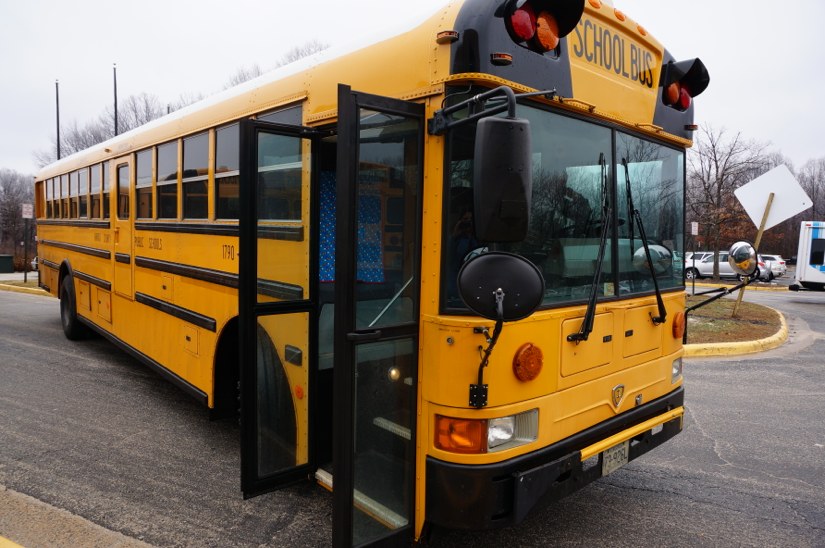
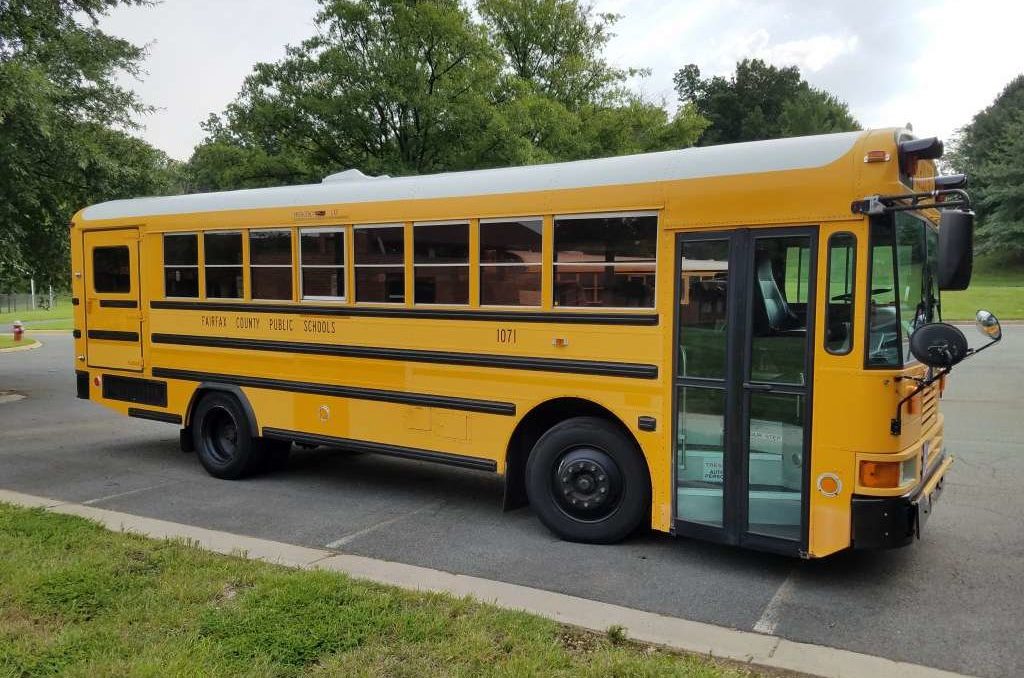
Fairfax County Public Schools is getting its first electric school bus today as part of a statewide initiative led by Dominion Energy.
The bus is expected to arrive at the Stonecroft Transportation Center in Chantilly. It is the first of eight vehicles that FCPS will receive from Dominion in an initial deployment of 50 buses throughout Virginia.
FCPS says it anticipates getting the remaining seven buses by the end of January.
Made by Thomas Built Buses, the new vehicles will join Fairfax County’s fleet of approximately 1,625 diesel-fueled school buses, one of the largest in the country.
“Electric school buses in FCPS will benefit not only the school division and its community, but the entire national capital area,” FCPS says. “…They will help reduce carbon emissions, serve as a resource for national emergency planning efforts, and provide stability and capacity to the grid with meeting increasing energy demands.”
While electric buses are more expensive to purchase than diesel ones, they are cheaper to maintain and operate. FCPS is covering the difference in the initial cost with a grant from Dominion Energy, which also funded the installation of electric charging infrastructure at the Stonecroft facility and is responsible for maintaining the equipment.
FCPS says training for bus drivers, maintenance technicians, and other staff will start once the first bus arrives. The vehicles will undergo testing before being assigned to routes in early to mid-April, though whether there will be any students for them to transport at that time remains to be seen.
The arrival of Fairfax County’s first electric bus is a welcome step forward for community members and public officials who have been advocating for a transition to electric vehicles, citing health and financial benefits as well as environmental ones.
One of the most prominent advocates for electric school buses has been the Fairfax County branch of the national climate advocacy group Mothers Out Front, which launched a campaign in 2019 calling on FCPS to commit to converting its entire fleet to electric power by 2024.
“We are so excited for Fairfax to get its electric school buses on the ground and running,” Mothers Out Front Fairfax co-leader Barbara Monacella said in a statement. “…Every electric school bus we add to our fleet reduces the air pollution from diesel that harms our kids’ health, and brings us closer to our goal of converting every bus in order to reduce emissions and fight climate change.”
The community advocacy group has teamed up again with Del. Mark Keam (D-35th) on legislation that would create a state fund for school districts to purchase electric buses, a move aimed at addressing concerns about the amount of control Dominion has over the current initiative.
Last year, lawmakers opted to pursue the utility company’s pilot program instead, but Monacella says Keam will reintroduce his bill when the Virginia General Assembly convenes for its 2021 session on Wednesday (Jan. 13).
“We applaud the buses Fairfax has added, and we hope to add more through the state grant fund in the future,” Monacella said. “With every electric bus we add, we move the needle for our kids’ health and their future in the face of climate change.”
