

Families and school systems are starting to make plans for when school starts again in the fall.
For Fairfax County Public Schools, students will either learn fully online or with a combination of in-person and online classes.
Roughly 45% of respondents to our poll earlier this week on learning options said they prefer fully online classes, while about 40% said they want the hybrid model. Approximately 15% of the respondents said they either don’t know which to choose or that the topic doesn’t apply to them.
FCPS and county officials are worried about childcare options for working parents, especially ones who can’t work from home.
Let us know in the poll before if you are facing childcare challenges ahead of school starting back up. Feel free to discuss in the comments section what your experience has been like.
Photo by Charles Deluvio on Unsplash

Fairfax County officials want to address looming childcare challenges ahead of the upcoming school year.
John Foust and Walter Alcorn, the supervisors for the Dranesville and Hunter Mill districts, presented a joint board matter yesterday to tackle the “unprecedented need” for childcare.
When classes start again this fall, Fairfax County Public Schools is planning to offer two systems: fully online and hybrid learning — a mix of in-person and online instruction. Working parents, especially ones who don’t work from home, now have to figure out childcare options, which have been complicated due to the pandemic.
Alcorn and Foust said that the county may have to expand its role in child care options depending on great the need is.
“For the sake of the children and their families it is essential that good quality child care services be made available,” the board matter said. “It is also critical to advance the county’s efforts to restart our economy that those parents who work but do not normally need childcare when schools are fully open can work and contribute to economic activity.”
County Executive Bryan Hill said that the county has 2,000 childcare providers: “The first thing we want to do is fill them up.”
Chairman Jeff McKay said that childcare providers he’s talked to have said that they are concerned about surviving the pandemic.
“Oddly, their businesses hurt more than most because what they are worried about is a ton of people now teleworking and not needing daycare,” McKay said.
The Board of Supervisors approved the board matter, which directs county staff to work with FCPS and to update the supervisors on how the county can provide additional resources and support.
“Even in the best of times, the infrastructure for childcare in Fairfax County is not adequate,” Foust said yesterday. “And these are far from the best of times.”
Photo by Shirota Yuri on Unsplash
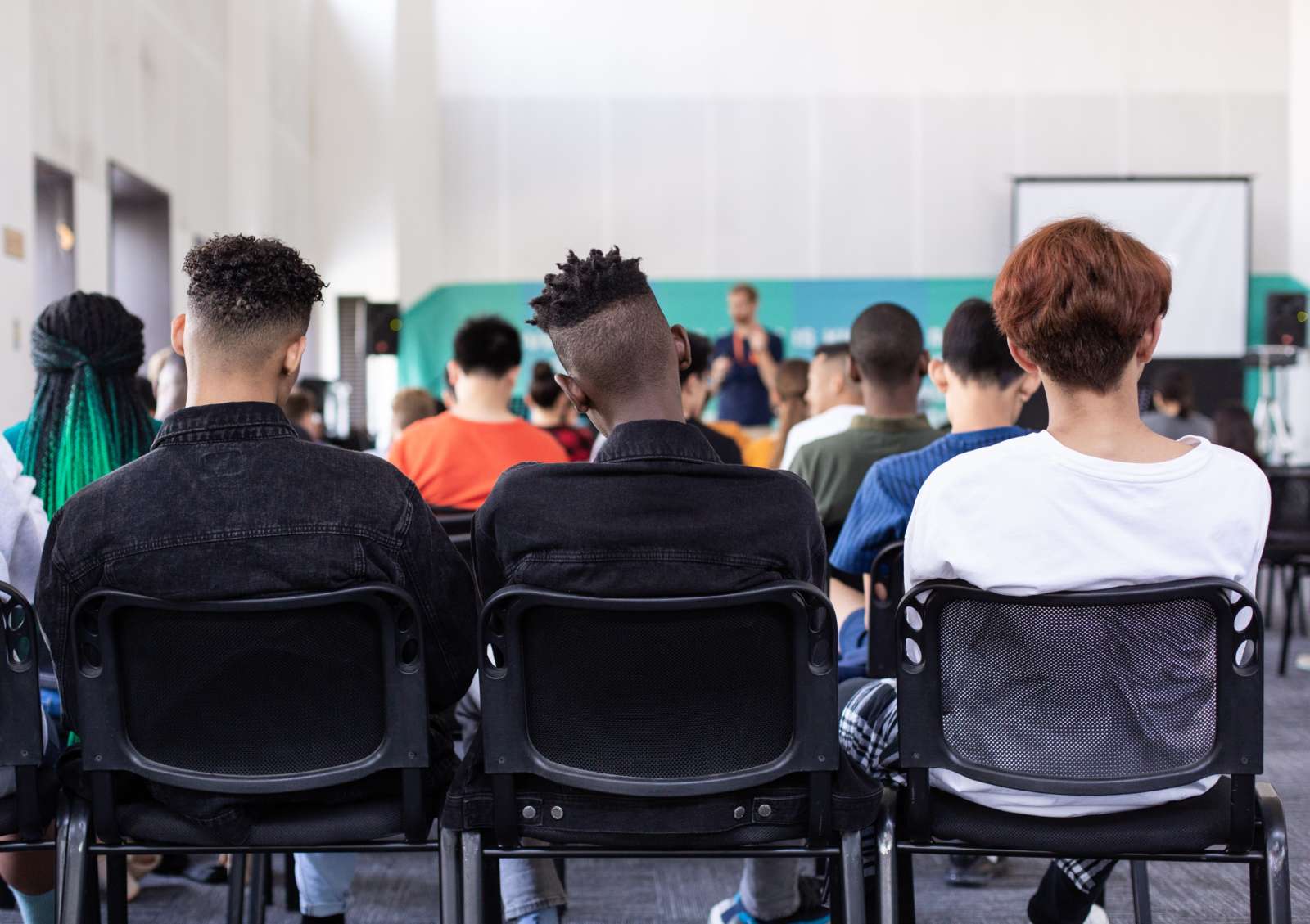
An online petition created by two Fairfax County Public Schools graduates is calling on the school system to improve its Black history curricula.
Tyler Hensen and Rachel Murphy, who are both graduates from 2012, launched the Change.org petition, which states that the school system’s curricula are insufficient to address systemic racism.
Here’s more from the petition, which has gained more than 800 signatures so far:
FCPS has played an important role in providing a safe and encouraging place for us to grow as students and world citizens. We have each had our lives positively impacted by the care of hardworking teachers and staff who opened our minds to a range of issues, fields, and passions. In a school system that is home to students who speak over 200 languages, FCPS prides itself on the racial and cultural diversity of its students and staff. However, there is a deficiency in our classrooms regarding education on issues of structural, institutional, individual, and systemic racism. Thus, we are calling for action to be made in the existing curricula and culture, for this action to be overseen by a committee that is responsible and responsive to all stakeholders in the County, and a public statement released by the FCPS School Board committing to lasting change.
We know that this proposal is the beginning of an ongoing conversation between our administration, community, and student body. The basis of justice, equity, and change begins with a properly educated and informed generation. We propose a list of tangible actions which are available to be read here.
In a recent statement, FCPS said teachers are working hard to improve the social studies curriculum:
A group of Fairfax County Public Schools (FCPS) teachers have been collaborating with colleagues from five other Virginia school districts to create a social studies curriculum that presents diverse perspectives and challenges students to critically examine materials, events, and institutions for bias, identity, and multiple perspectives. The new curriculum will be available to students in grades 3, 4, 6, 7, and 11 as soon as this fall.
Beginning in 2018 under the umbrella of the Virginia Inquiry Collaborative, FCPS teachers worked with colleagues from Albemarle County, Virginia Beach City, and Charlottesville, and later Madison County and Powhatan County Schools, to collaborate aroundcurriculum development designed for use across Virginia, beginning with a focus on fourth grade Virginia Studies.
According to a WUSA 9 report, the students said they believe their understanding of slavery and racism represents a “tremendous deficiency in the understanding that we are then released into the world as young adults with this really deficient understanding of how we are perpetuating a problem.”
They want the new curricula to emphasize the historical impact of Black leaders, writers, artists, and thinkers.
The petition also calls on FCPS to create a committee that oversees the implementation of “anti-racism” into the curricula and culture.
Photo via Sam Balye/Unsplash
The deadline is nearing for families to decide how they want their kids to return to Fairfax County public schools this year.
Families have until Wednesday, July 15, to complete a form indicating whether they want their kids to take fully online classes or join a hybrid model combining in-person and online learning.
Families who pick the fully online option would have four days of synchronous learning. The hybrid model would combine two days of learning in schools with asynchronous online learning.
Superintendent Scott Brabrand has said that the school system will consider adding more in-person days — not to exceed four — depending on the demand for the hybrid model.
For families who are having trouble deciding, Brabrand encourages parents to see how their kids react to wearing a face covering for six hours — the amount of time they would need to wear it while at school.
No matter which option parents pick, students will return to the county’s public schools on Tuesday, Sept. 8.
Let us know in the poll below what your preference is for students returning to school this fall.
Photo courtesy Dan Dennis on Unsplash
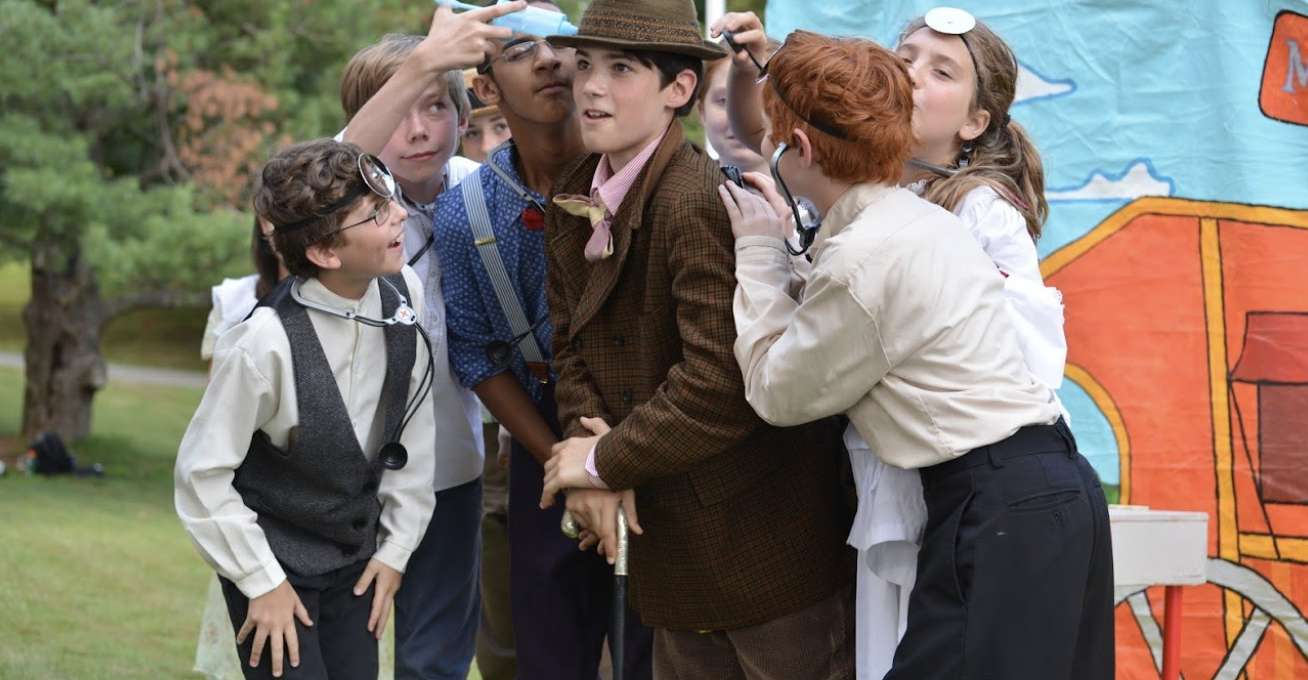
Traveling Partners Ensemble is hosting an online festival of classic plays next week.
Located in Tysons Corner Center, the theater troupe works with kids and teens in the D.C. area. The festival will be streamed via Youtube with performances running from 3 p.m. until closing words at 6:30 p.m. on Friday, July 17.
“Ariadne’s Thread,” the first performance, will begin at 3:15 p.m. and is approximately 25 minutes long, according to a press release from the company. The piece recreates the Greek myth Theseus and Minotaur and involves all things gods, goddesses, epics and more. The company commissioned the play from Judy White, their playwright-in-residence, in 2013.
“The Imaginary Invalid” will begin at 4 p.m. and is approximately 40 minutes long. This piece picks on hypocrisy within the medical profession and was written by French playwright Moliere.
Finally, “The Tempest” will begin at 5 p.m. and is approximately an hour long. The company will bring to light Shakespeare’s tale about wild human nature while stranded on an island, and how characters how are very different come together to eventually achieve peace.
Tickets can be purchased for $10 each.
In addition to the festival, the theater group is hosting two summer programs — one for fourth- to eighth-grade students and another for pre-college students — online.
People interested in joining the summer programming can participate in the next set of auditions via Zoom on July 11, according to the press release.
Photo via Traveling Players Ensemble/Facebook
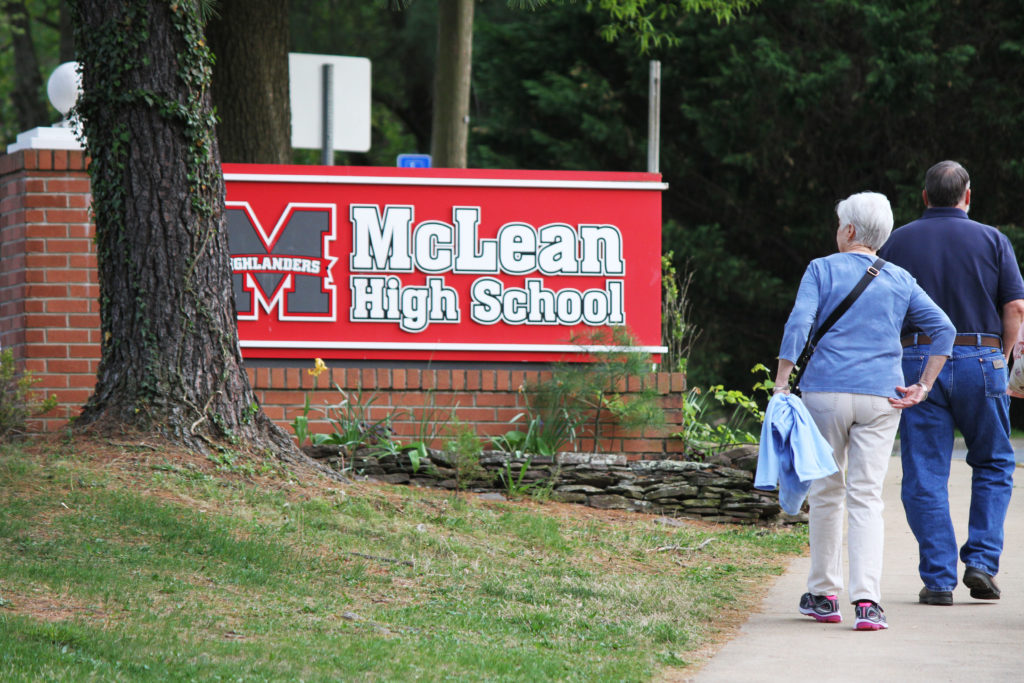
McLean High School plans to have its new modular ready by mid-December.
Ellen Reilly, the school’s principal, wrote in a newsletter to families today that the school’s tennis courts will close next Monday, July 13, so that the trailers can occupy the space.
Until the new modular is ready later this year, the trailers will need to stay on the tennis courts, she said.
Plans to address the school’s overcrowding with a proposed boundary adjustment have stalled as the Fairfax County School Board grapples with COVID-19 challenges.
The modular will replace 14 trailers at the school in an effort to alleviate some of the overcrowding issues, Elaine Tholen, the school board member who represents the Dranesville District, previously said.
Reilly said that she will keep families updated on the construction progress

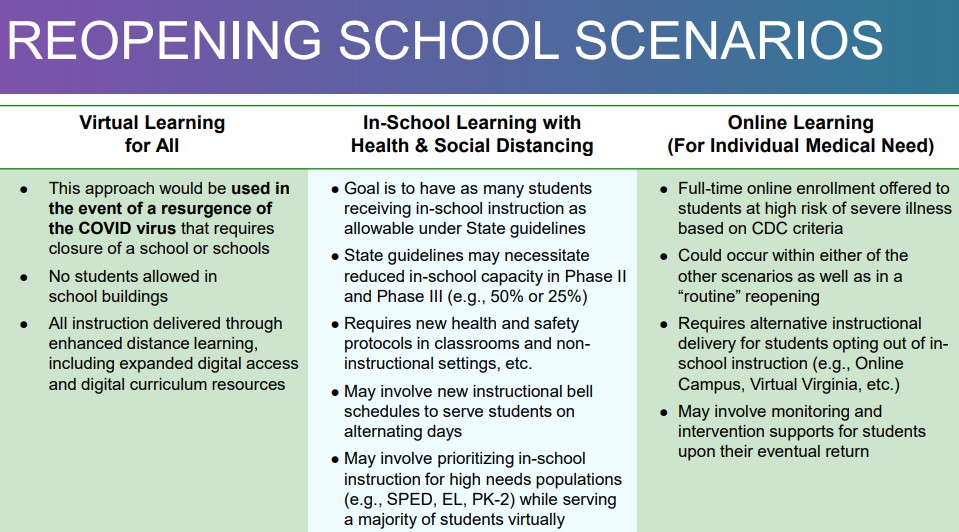
Due to the uncertainty of the COVID-19 pandemic, Fairfax County Public Schools (FCPS) has three scenarios for reopening schools this fall.
In May, a task force was created to prepare recommendations for FCPS reopening. On June 9, Gov. Ralph Northam unveiled his phased reopening plan, which provides flexibility for schools in Virginia.
The school board discussed the proposed Return to School plan, which includes three reopening scenarios, Monday afternoon.
The three scenarios are:
- virtual learning for all students
- in-school learning with health and social distancing
- online learning for students with a high risker of severe illness
In the first scenario, students would not be allowed in buildings but the staff would be. Students would have four days of synchronous learning per week and one day of asynchronous learning.
Meanwhile, the second scenario has two proposals for attendance in the buildings at any one time — 50% and 25%.
In-school learning would include cleaning of high-touch areas, daily health screening forms, social distancing in classrooms and on buses and restricting buildings to visitors.
Finally, the third scenario would make groups of students and teachers for online instruction. With the online model, students would receive four days of synchronous learning per week and one day of asynchronous learning.
Additionally, FCPS has proposals for what would happen if the pandemic prompted another shutdown. The plan also mentions shared elements of the three scenarios — middle and high school students having access to laptops via FCPSOn — and how they address equity.
Discussion during the meeting today noted that FCPS needs to prepare for the possibility that more than one scenario might happen, especially if there’s a resurgence of COVID-19.
How to keep students and staff dominated the school board’s discussion.
Gloria Addo-Ayensu, the director of the Fairfax County Health Department, said that there aren’t plans to test students prior to them coming back to school. Addo-Ayensu noted that screening forms are a recommendation from the Centers for Disease Control and Prevention.
Addo-Ayensu and Benjamin Schwartz, a medical epidemiologist with Fairfax County, said that data on the impact of COVID-19 on kids is limited.
They said that the infection rate is unknown for kids and added that information is emerging on Multisystem Inflammatory Syndrome of Children (MIS-C) — a rare but serious COVID-19 complication.
Input from local health data and the Fairfax County Department of Health will inform the final decisions, according to the plan.
“You’re talking hundreds and hundreds of kids coming in at once,” Superintendent Scott Brabrand said, adding that social distancing cannot be guaranteed in schools.
Brabrand said that safety procedures are also important for retaining staff: “We don’t want folks resigning.”
FCPS is looking to get face shields for bus drivers and special education teachers, Brabrand noted. Ricardy Anderson, the representative for the Mason District, called for teachers to receive face shields as well.

If FCPS decides to go with an in-person reopening that alternates days for students, childcare could become an issue for families.
Dranesville District Representative Elaine Tholen suggested that FCPS coordinate with the Fairfax County Park Authority so that families and staff have childcare options.
Tholen proposed a “creative idea” to turn outdoor space at the schools and nearby parks into childcare centers contained in tents, adding that kids could access WiFi outside the schools.
Brabrand and Hunter Mill District Representative Melanie Meren agreed that more childcare is needed, with Brabrand calling it a “great idea.”
As FCPS moves forward with plans for the fall, the school board is aware that the botched rollout of online learning this spring puts more pressure on the school system to get the reopening right.
“We can’t risk another failure like we did before,” Providence District Representative Karl Frisch said.
Brabrand addressed the criticism of the distance learning attempts, saying it’s important that FCPS does not overpromise and under-deliver: “We did that before.”
Families will have several opportunities to provide feedback on the recommendations ahead of the deadline for FCPS to announce a reopening decision on June 26.
FCPS plans to host a town hall on Tuesday, June 16, that will talk about the Return to School plans. The town hall is set to run from 6:30-7:30 p.m. and will include Brabrand, the assistant superintendent of Facilities and Transportation Services and the manager of School Health Services.
People can also submit feedback by emailing the superintendent at [email protected] and fill out a survey.
FCPS also plans to hold a virtual public hearing on the Return to School plans at 6:30 p.m. on Thursday, June 18. People can register online to speak.
Photo via Element5 Digital/Unsplash, infographics via FCPS
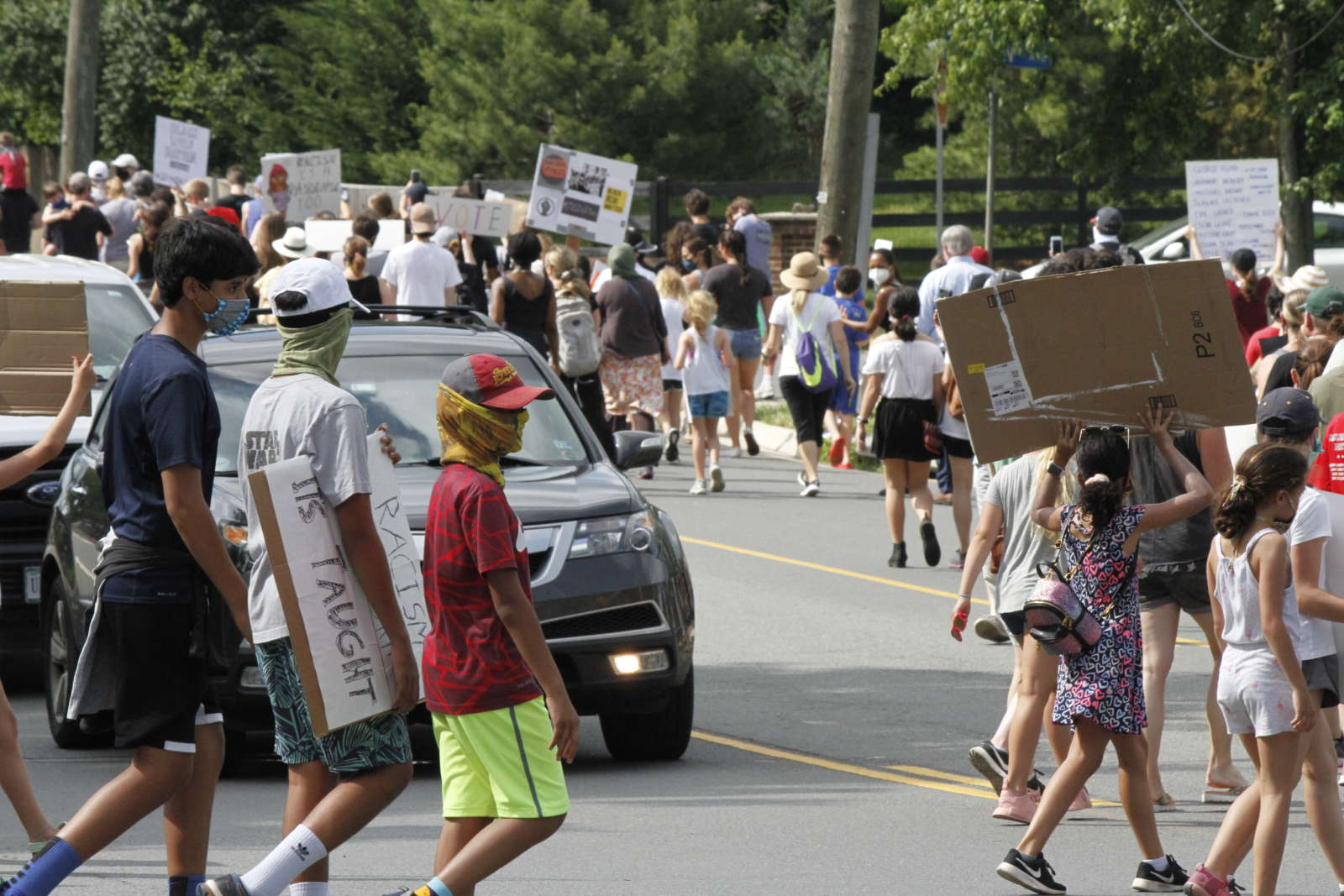
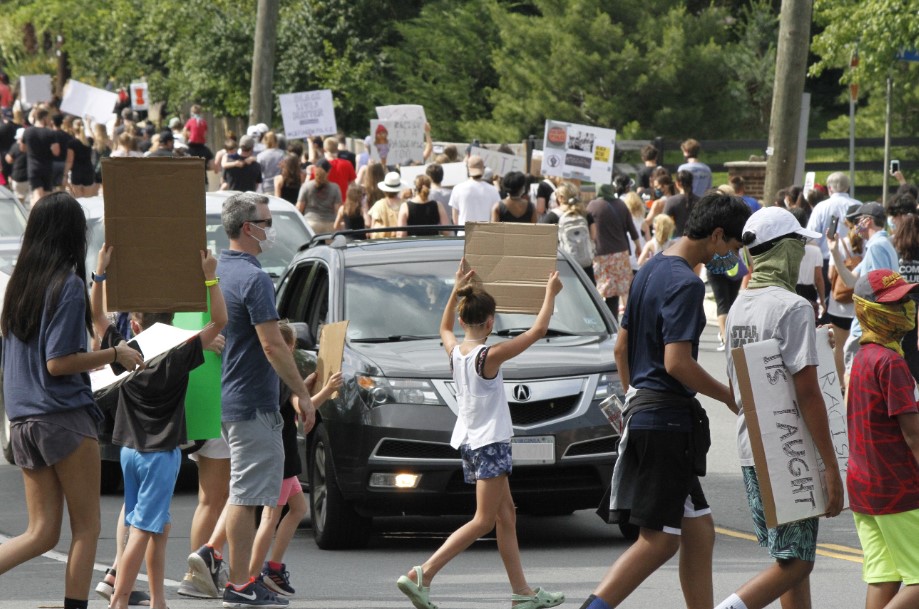
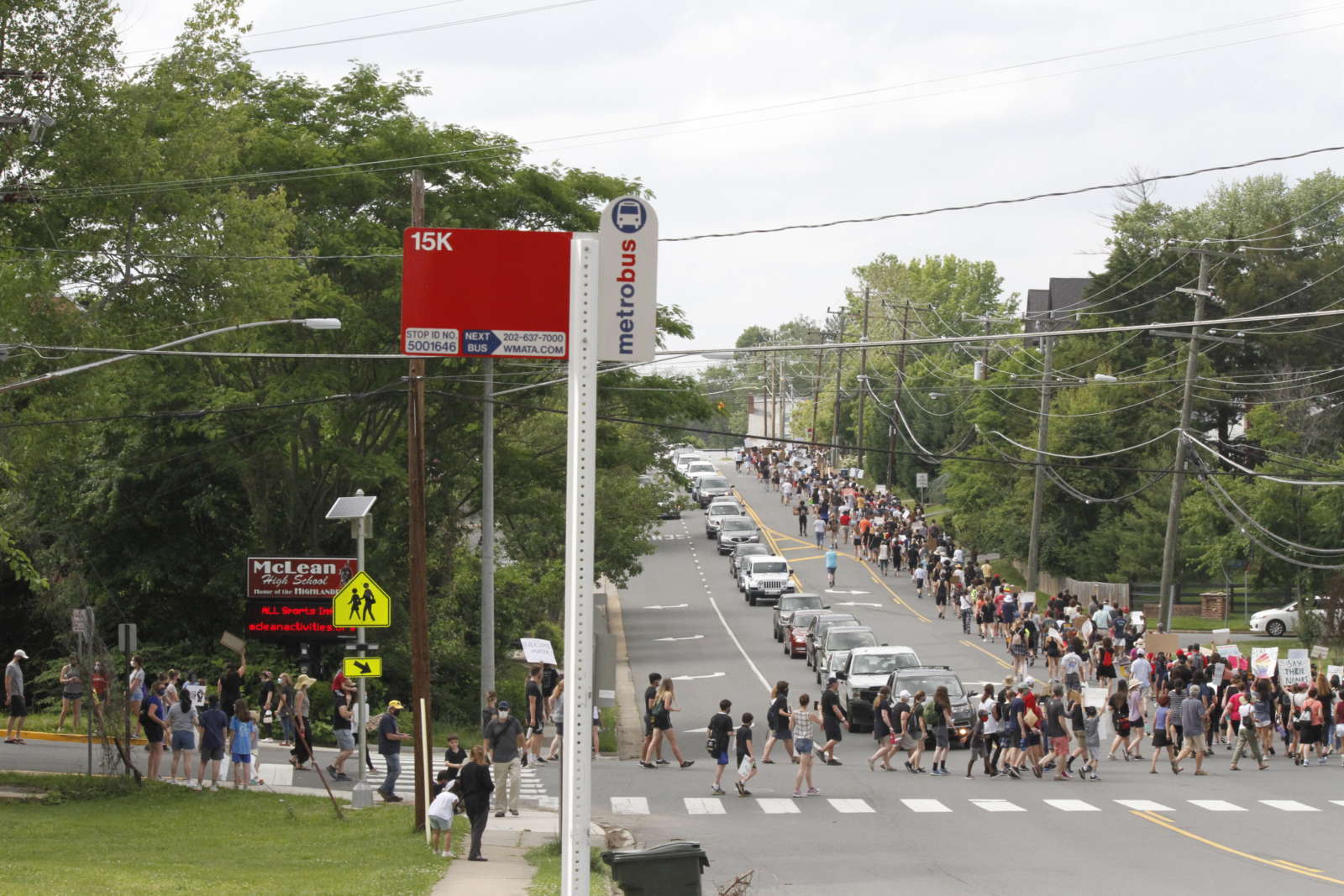
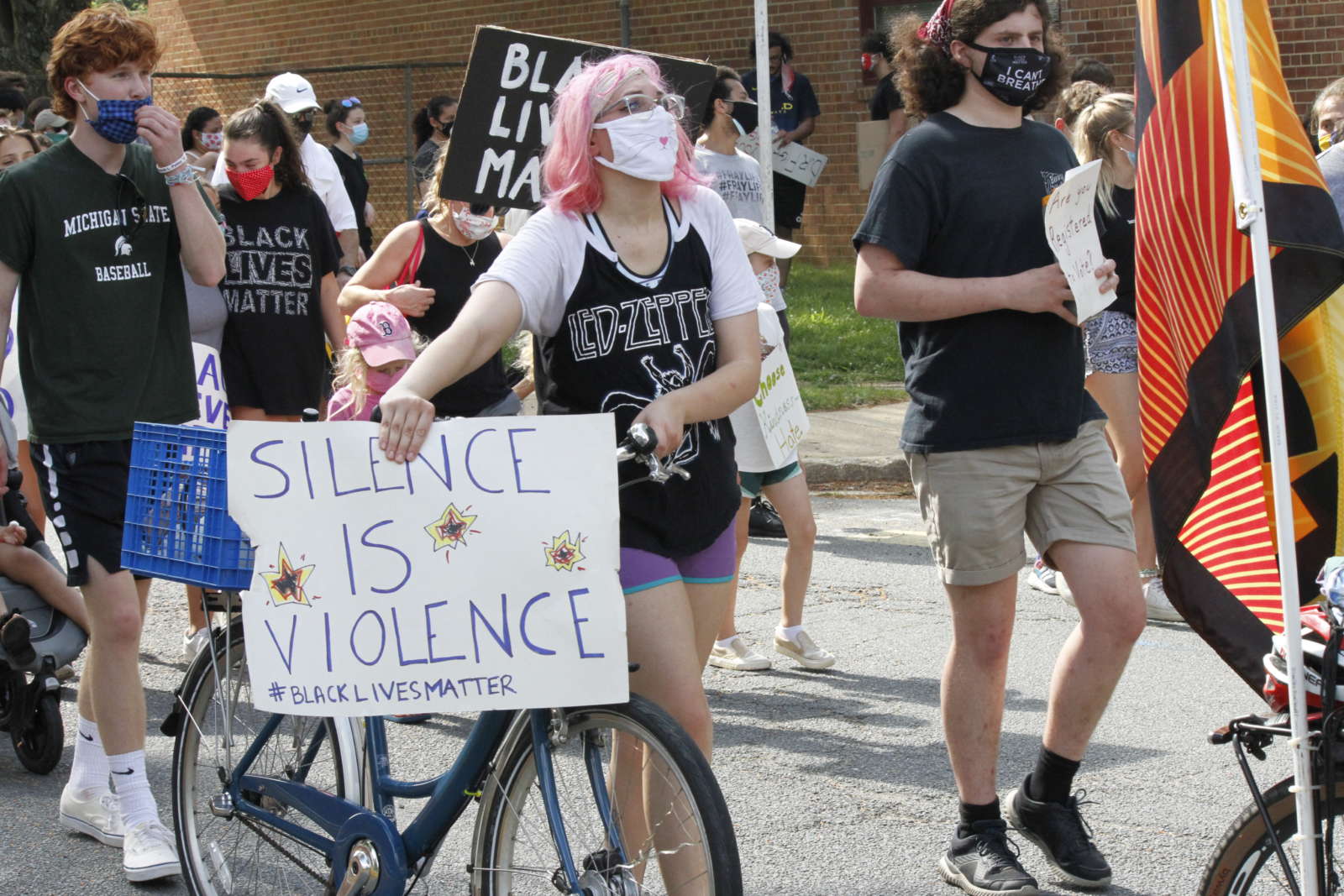
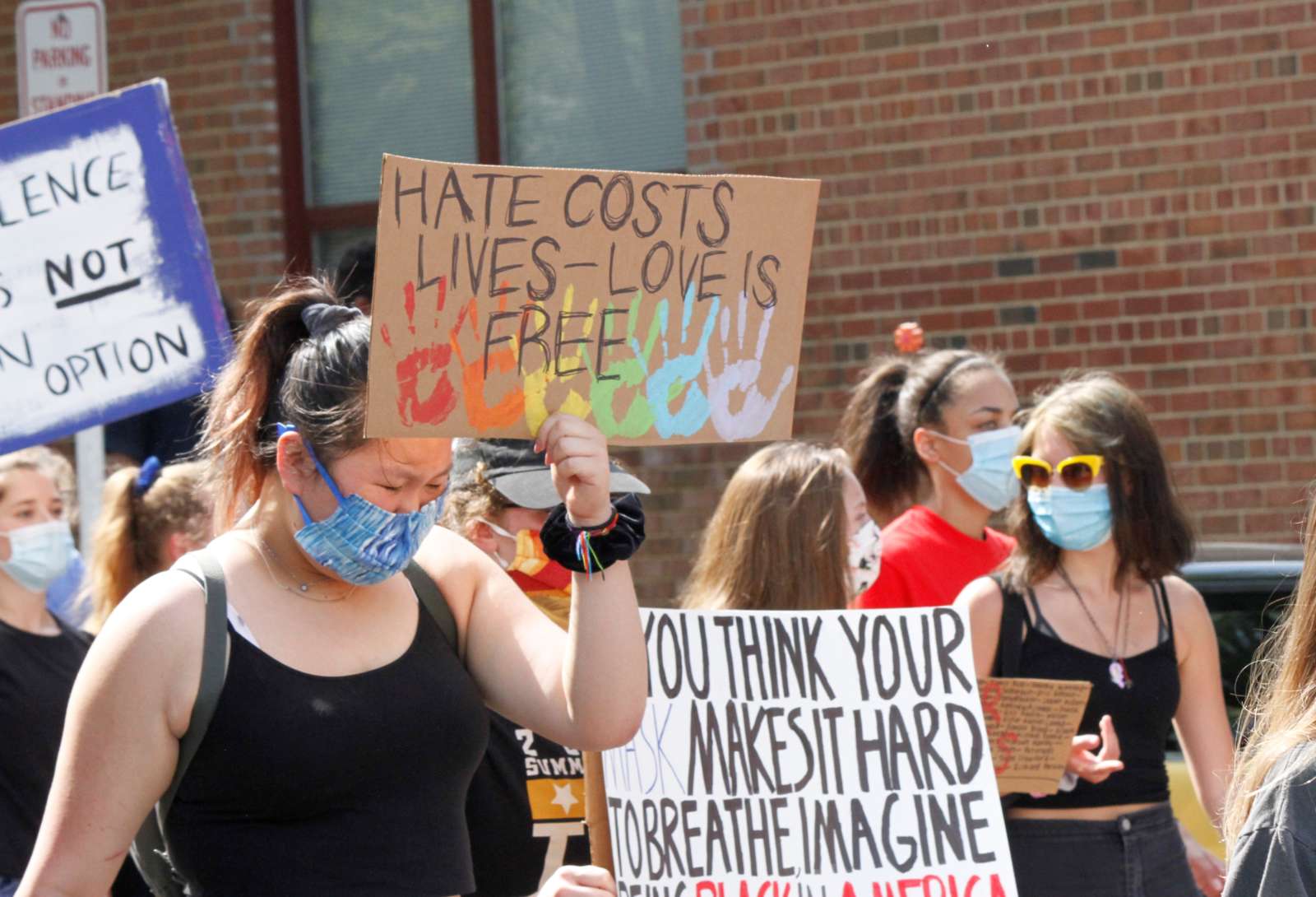
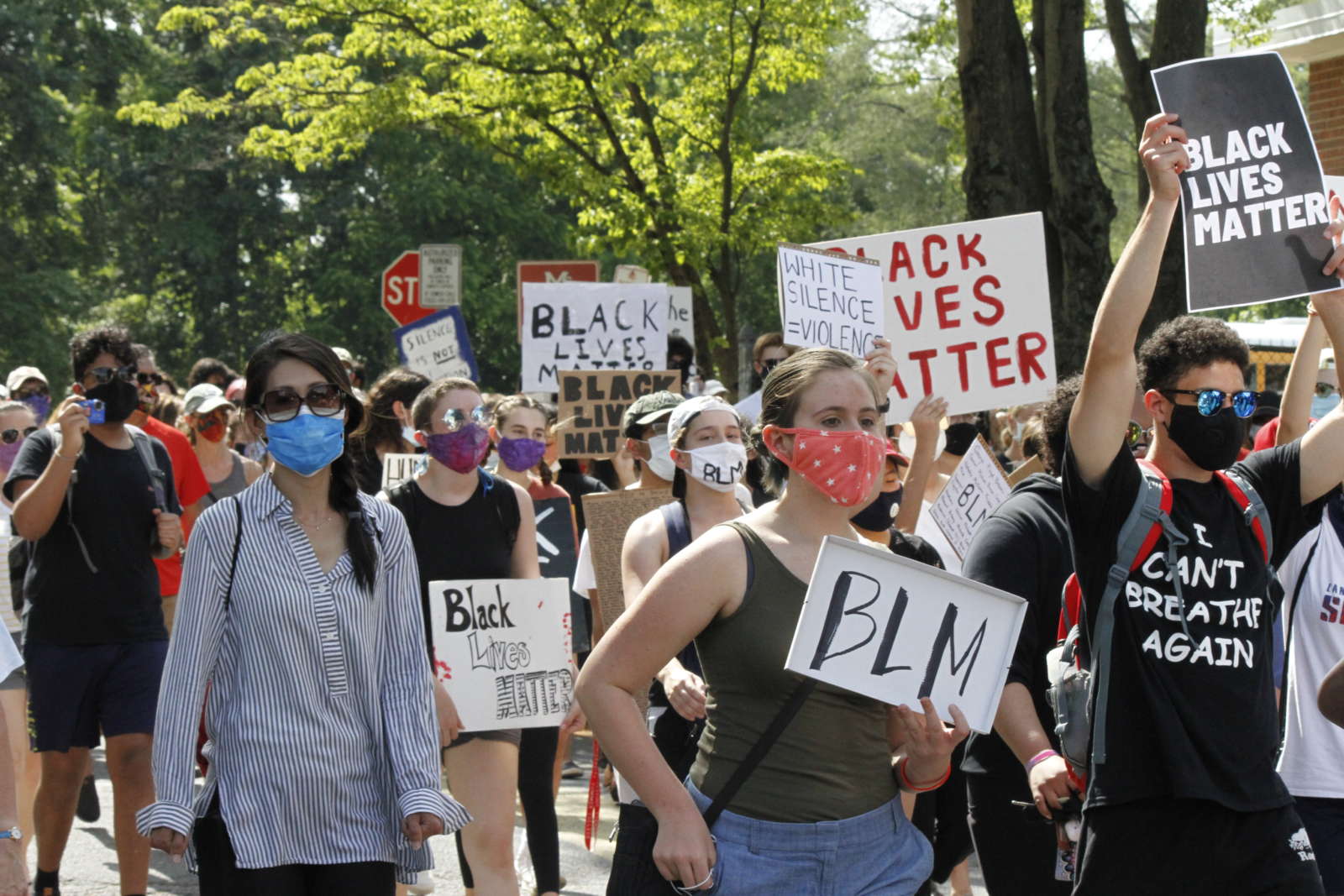
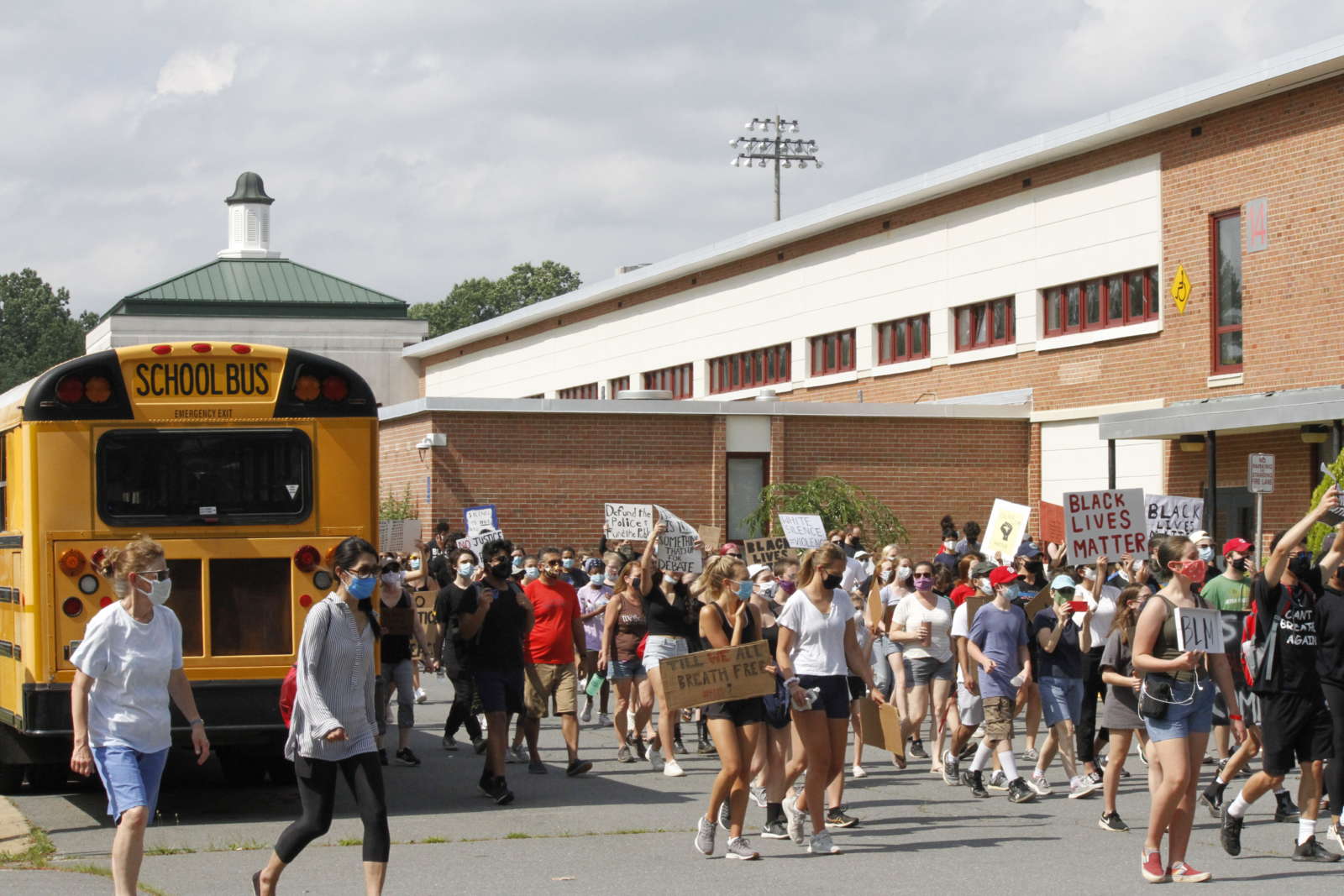
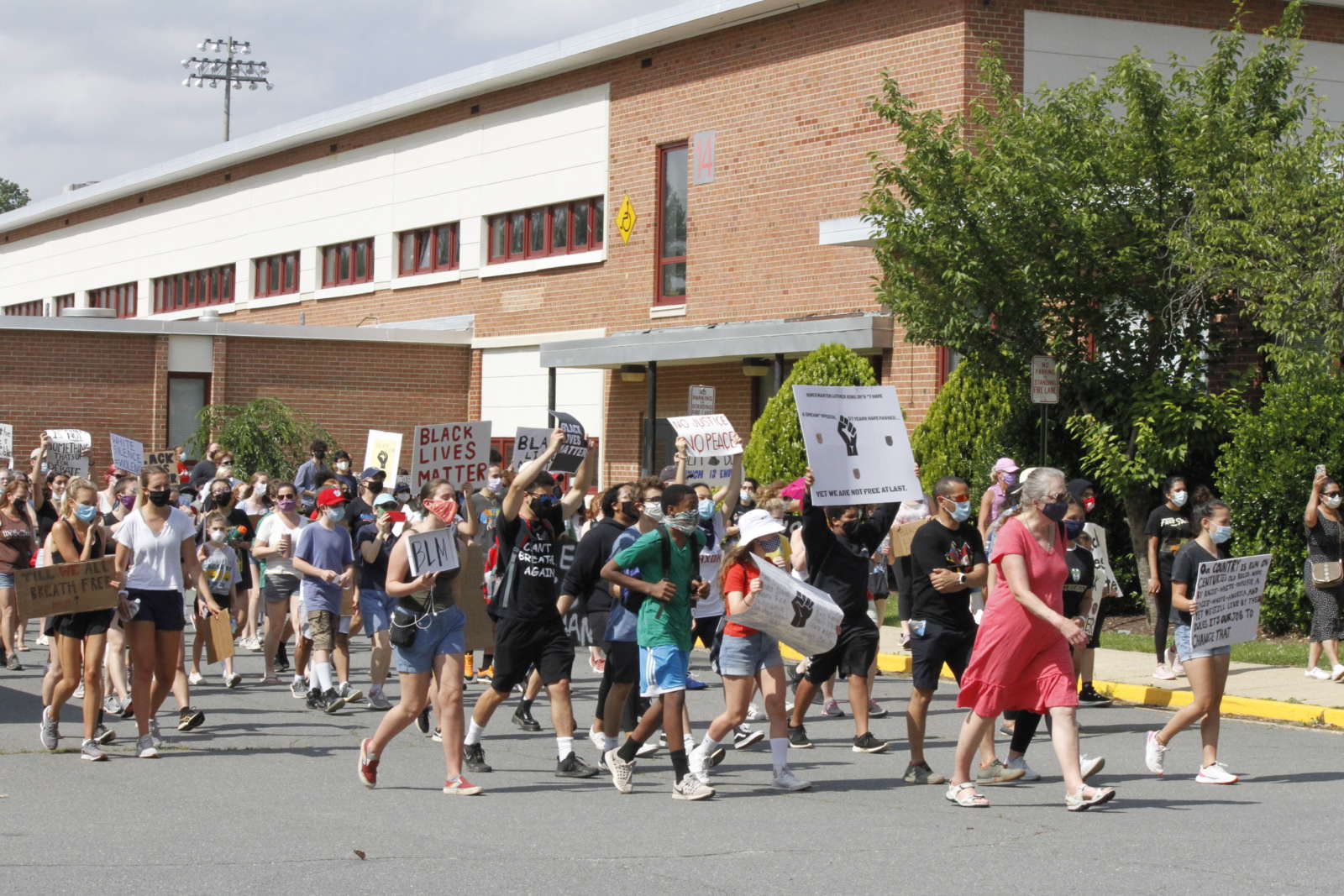
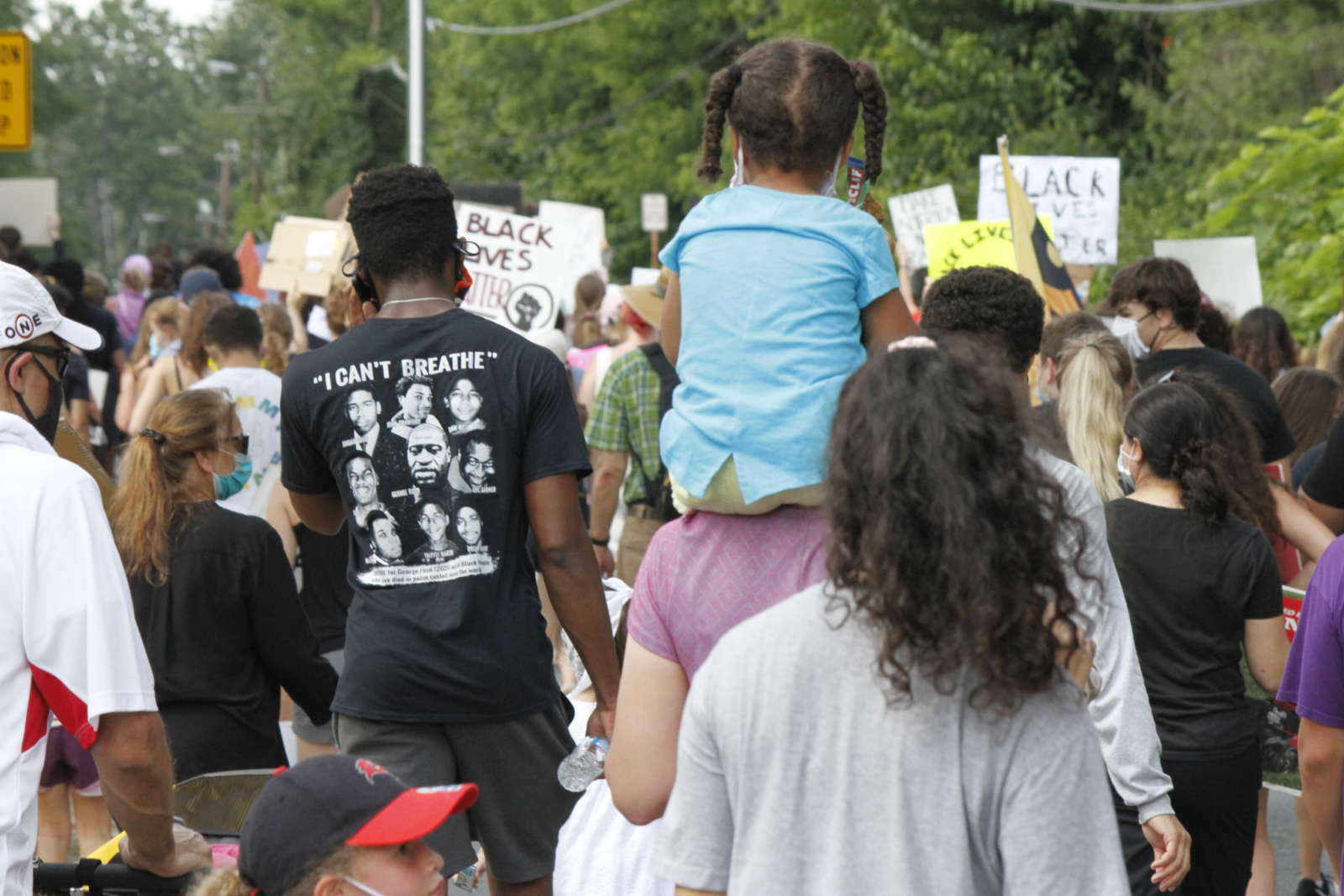
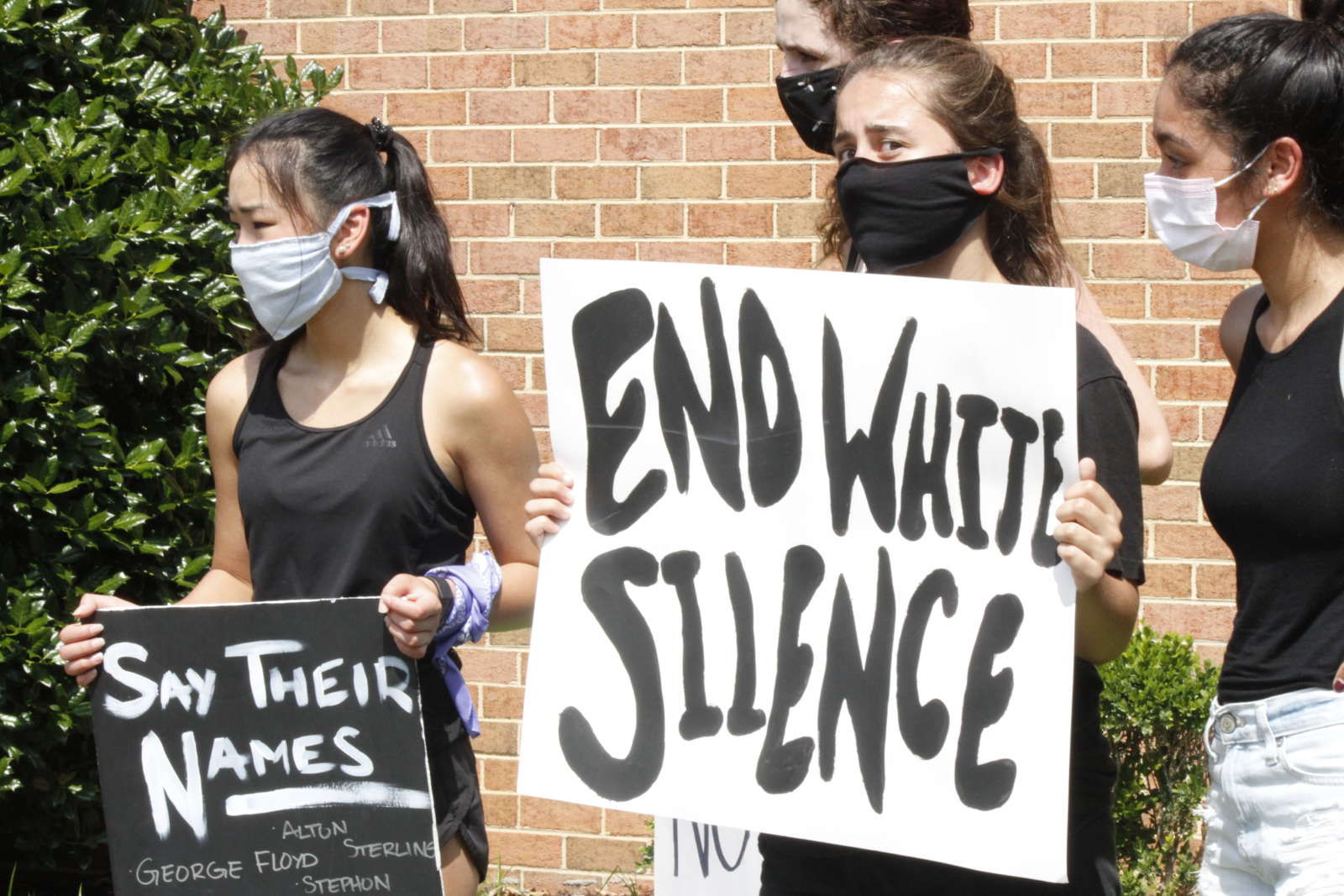
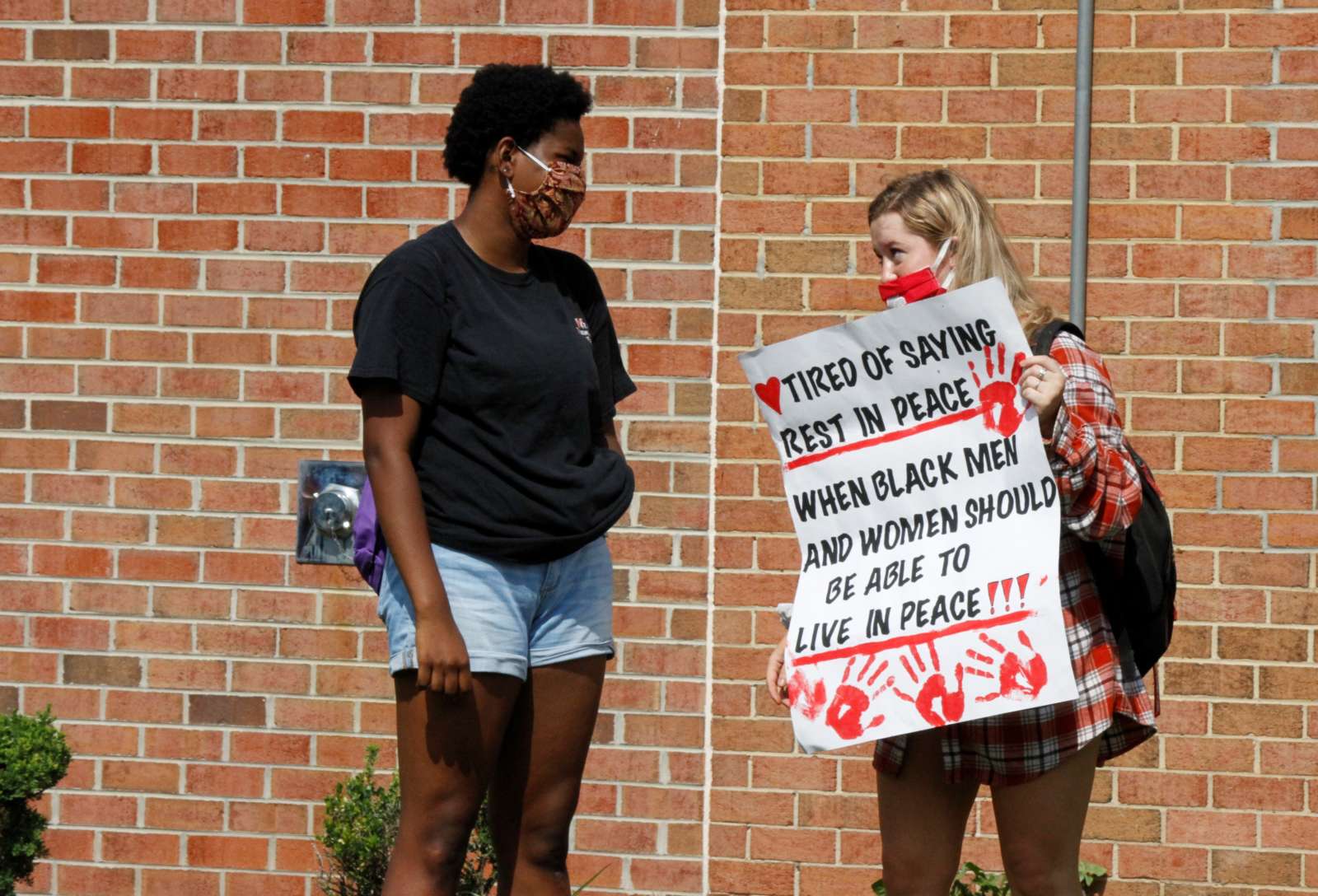
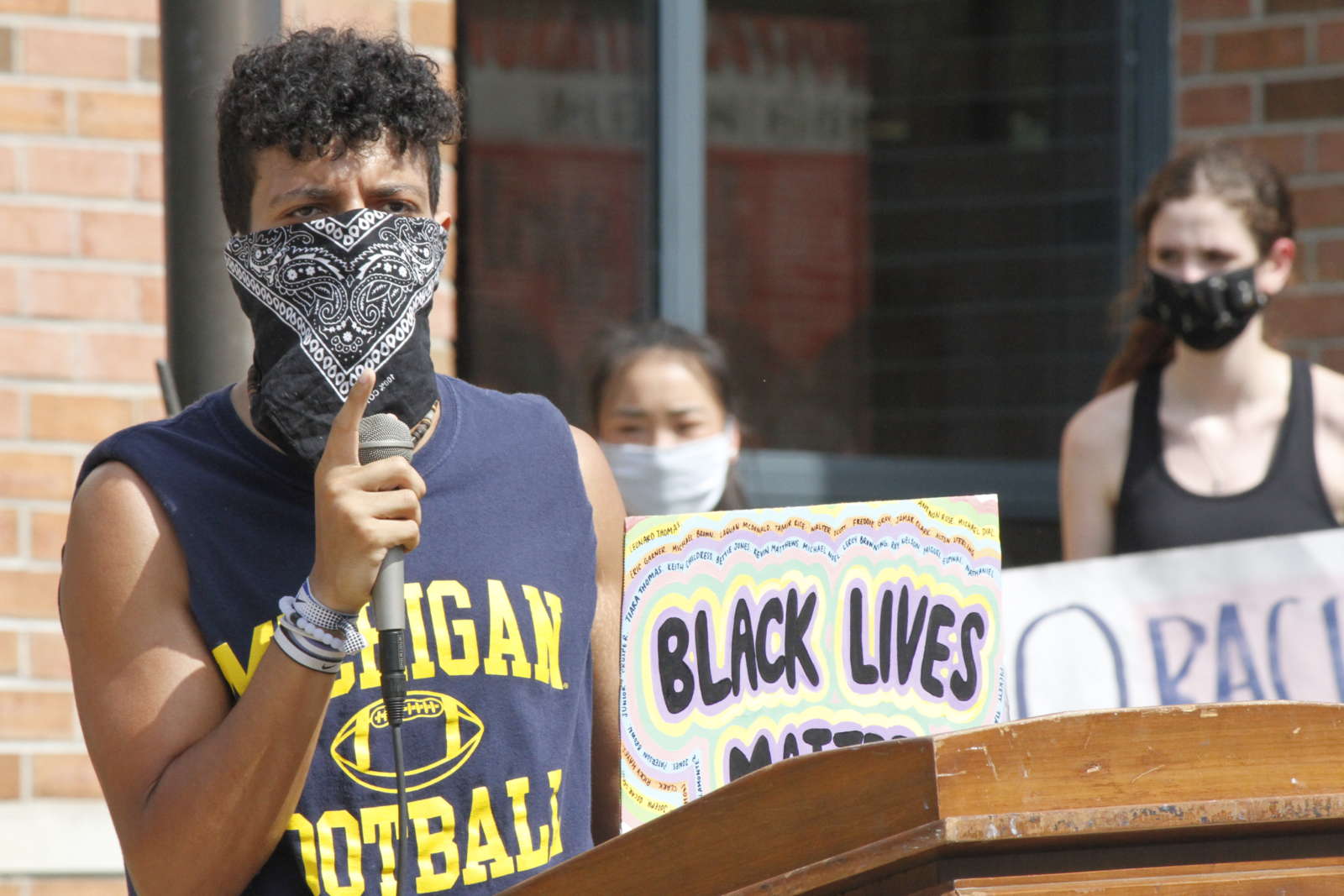
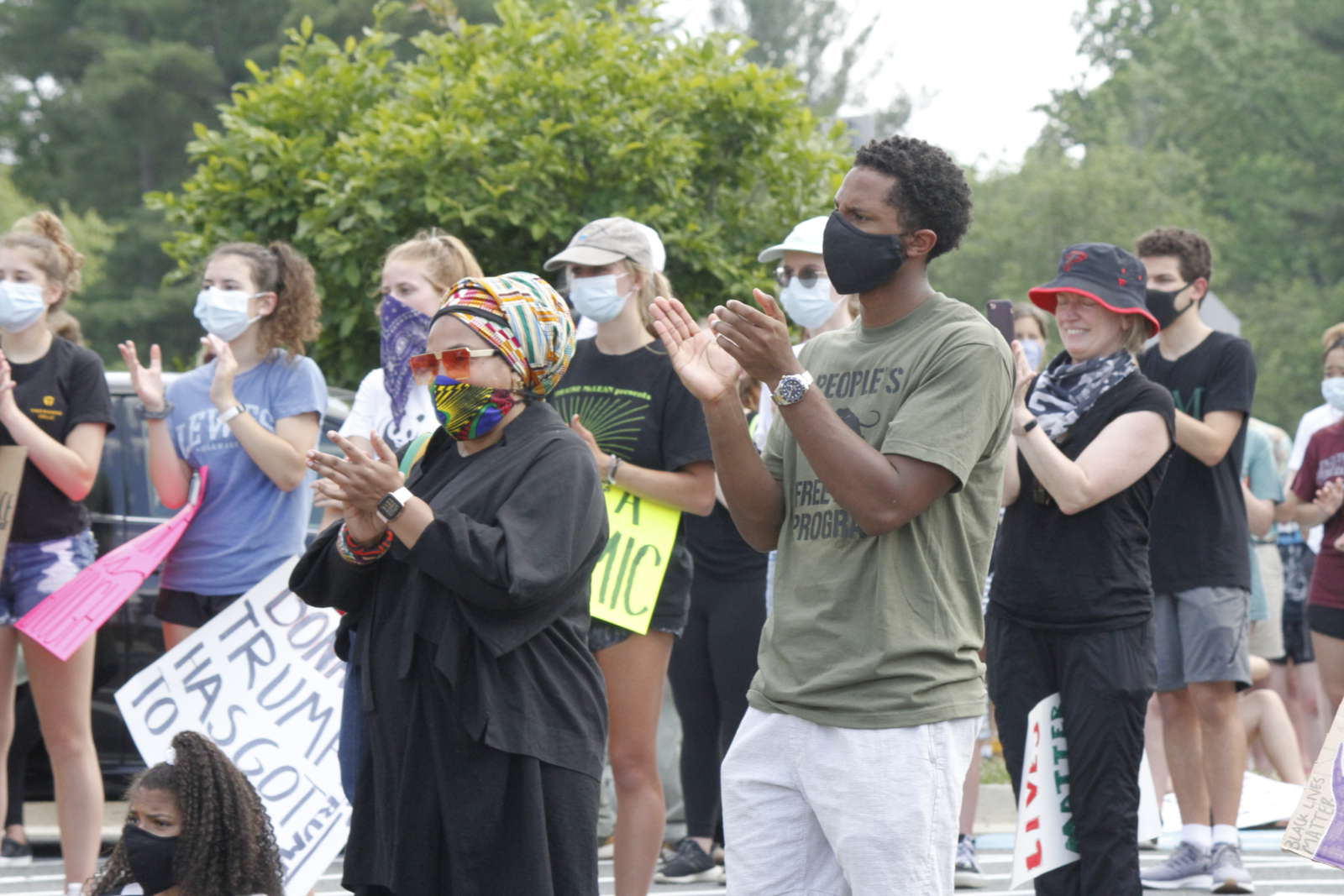
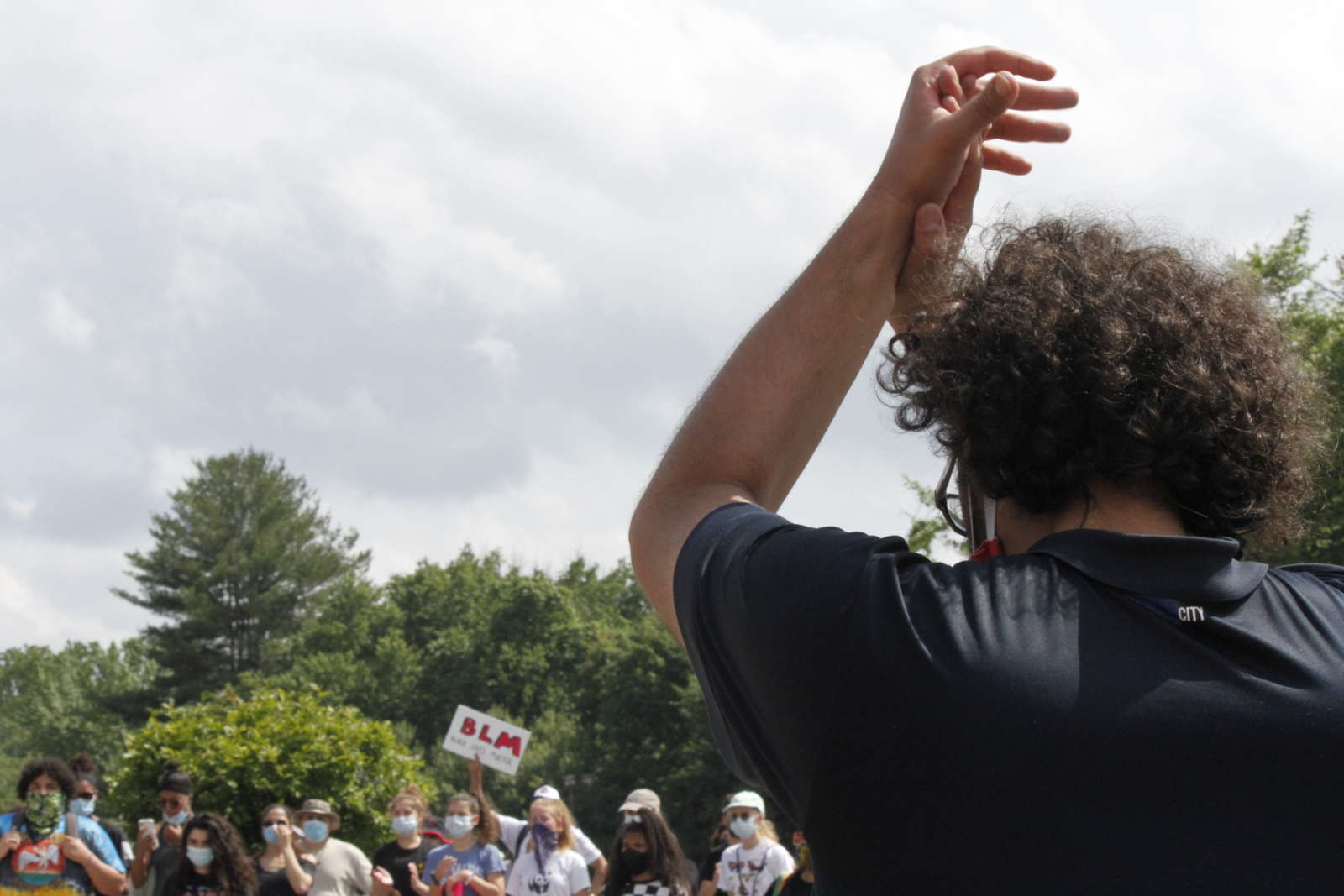
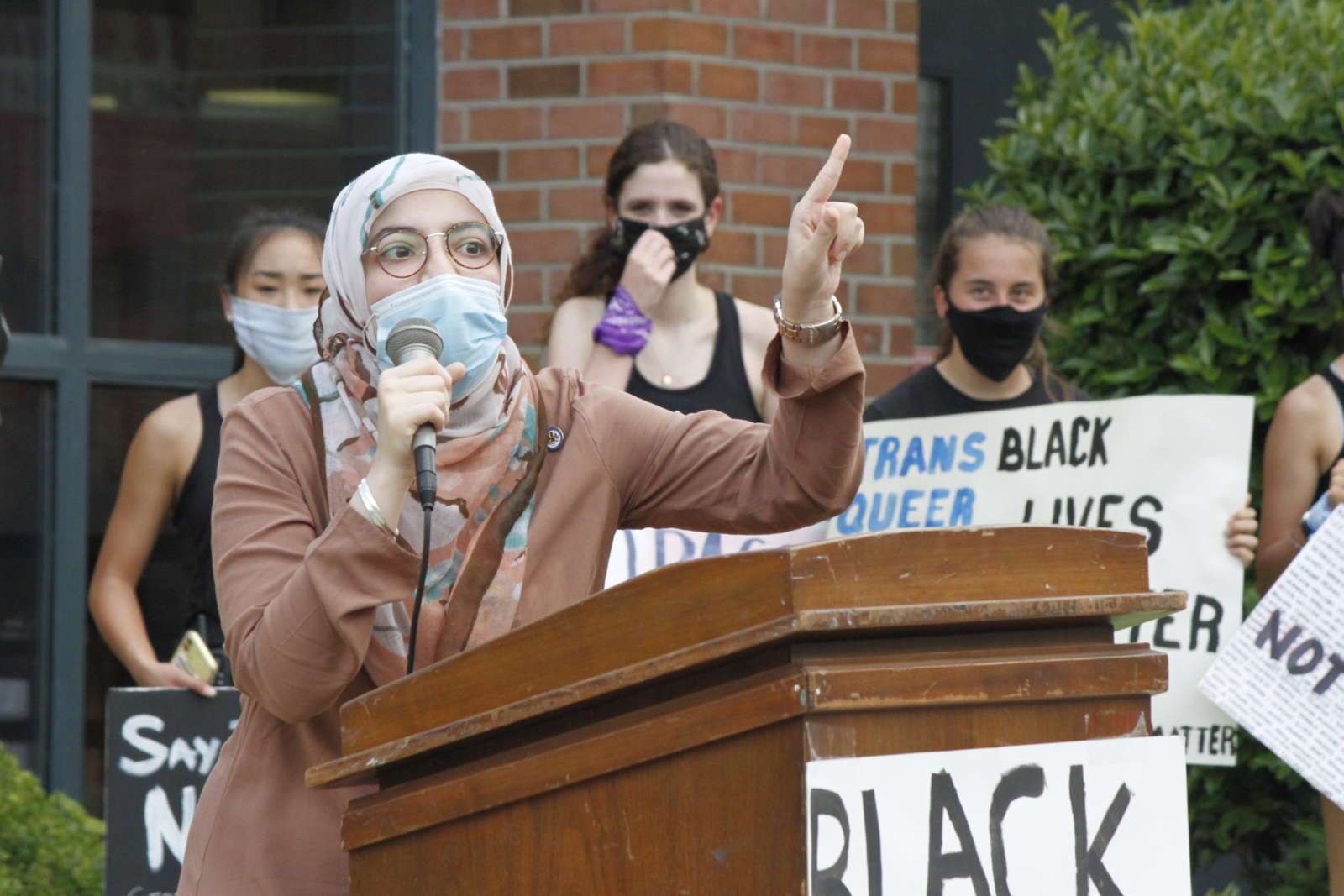
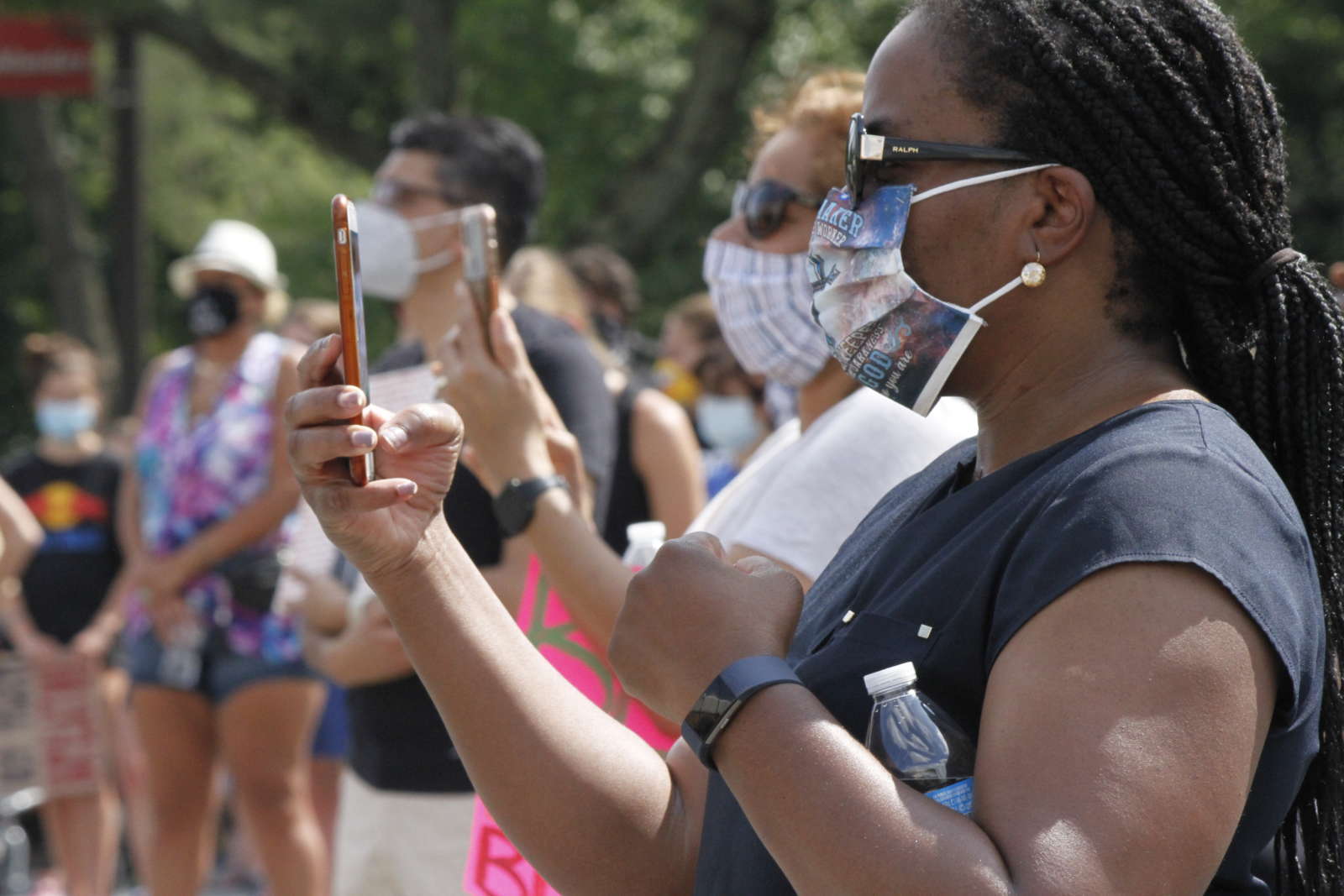
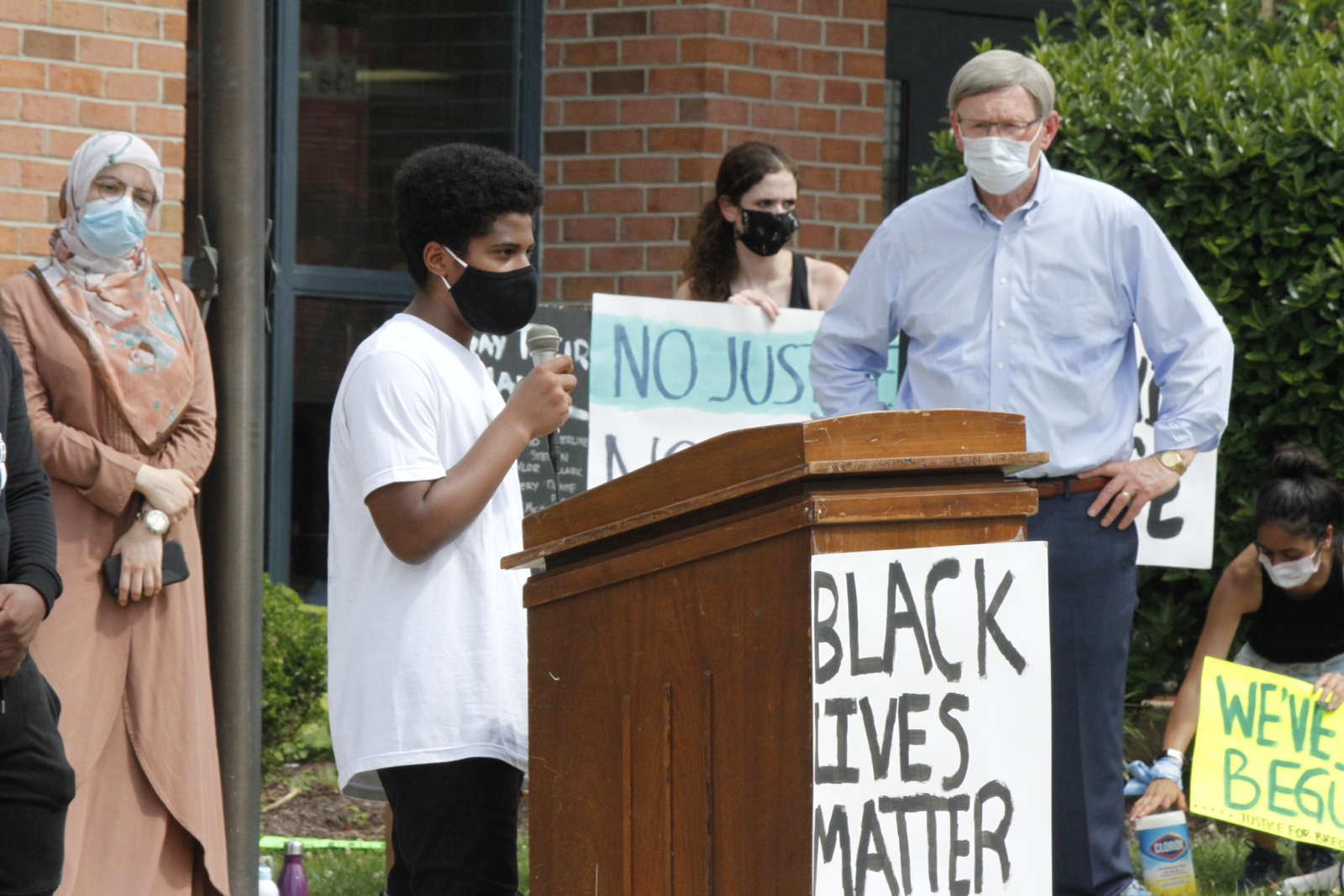
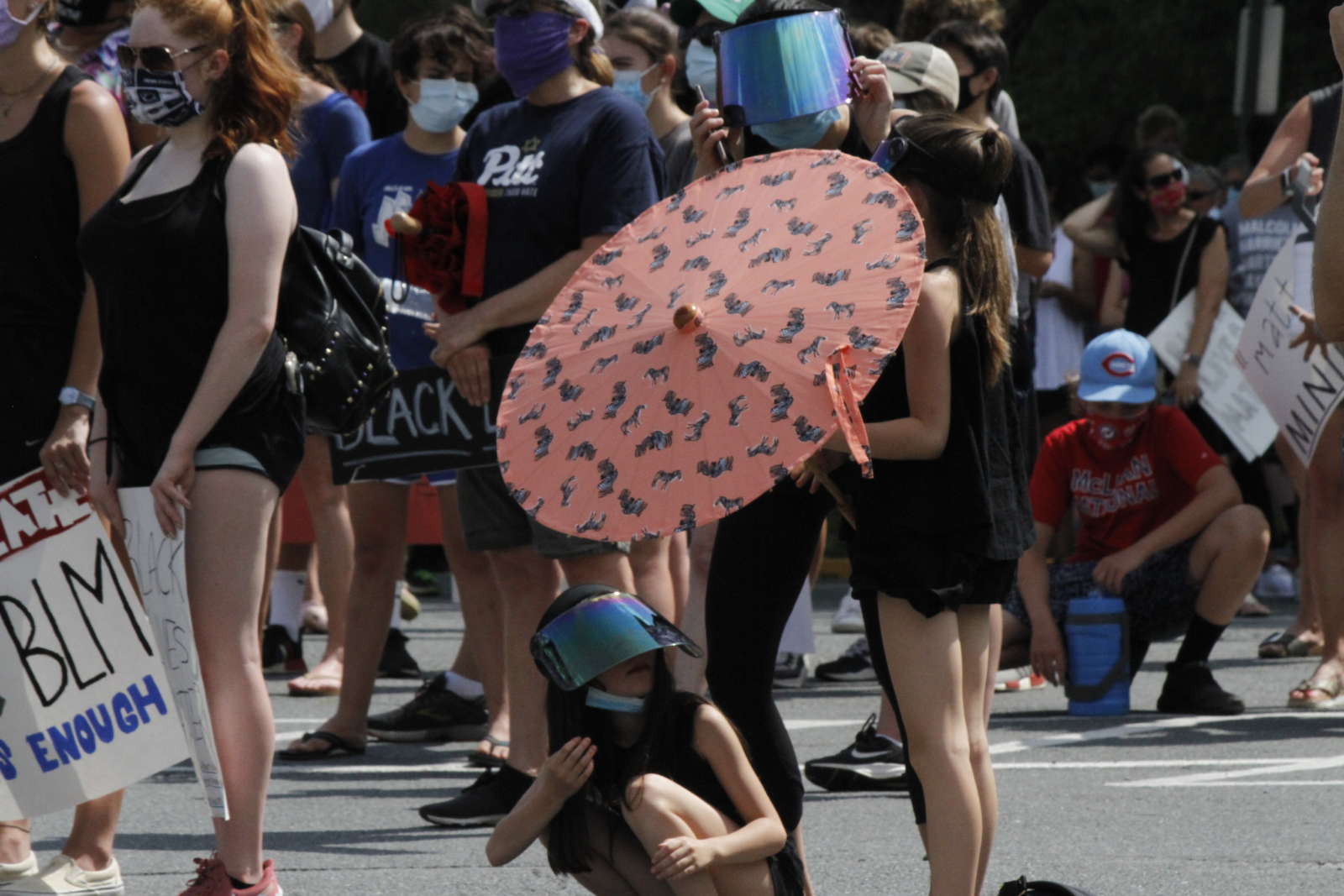
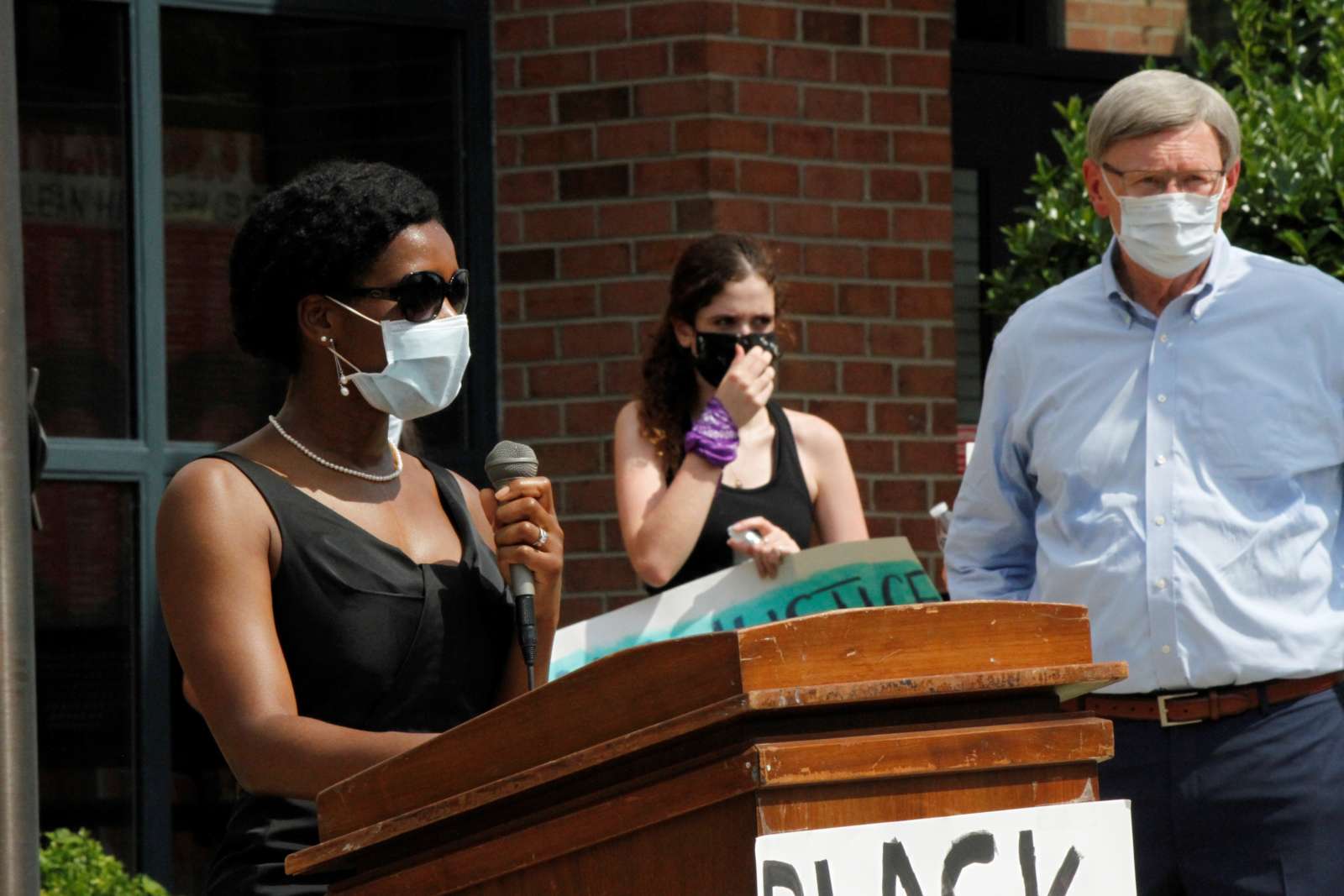
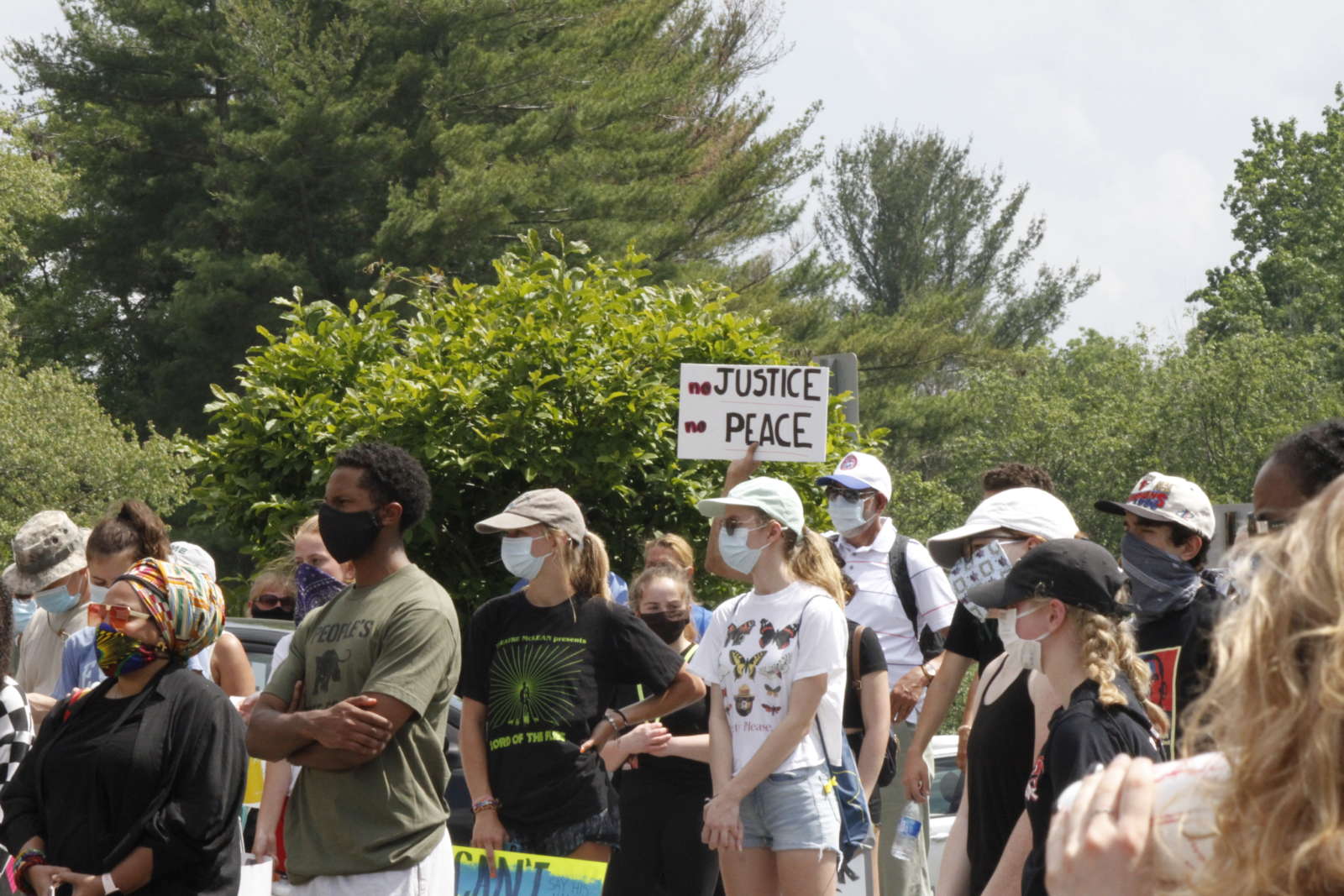
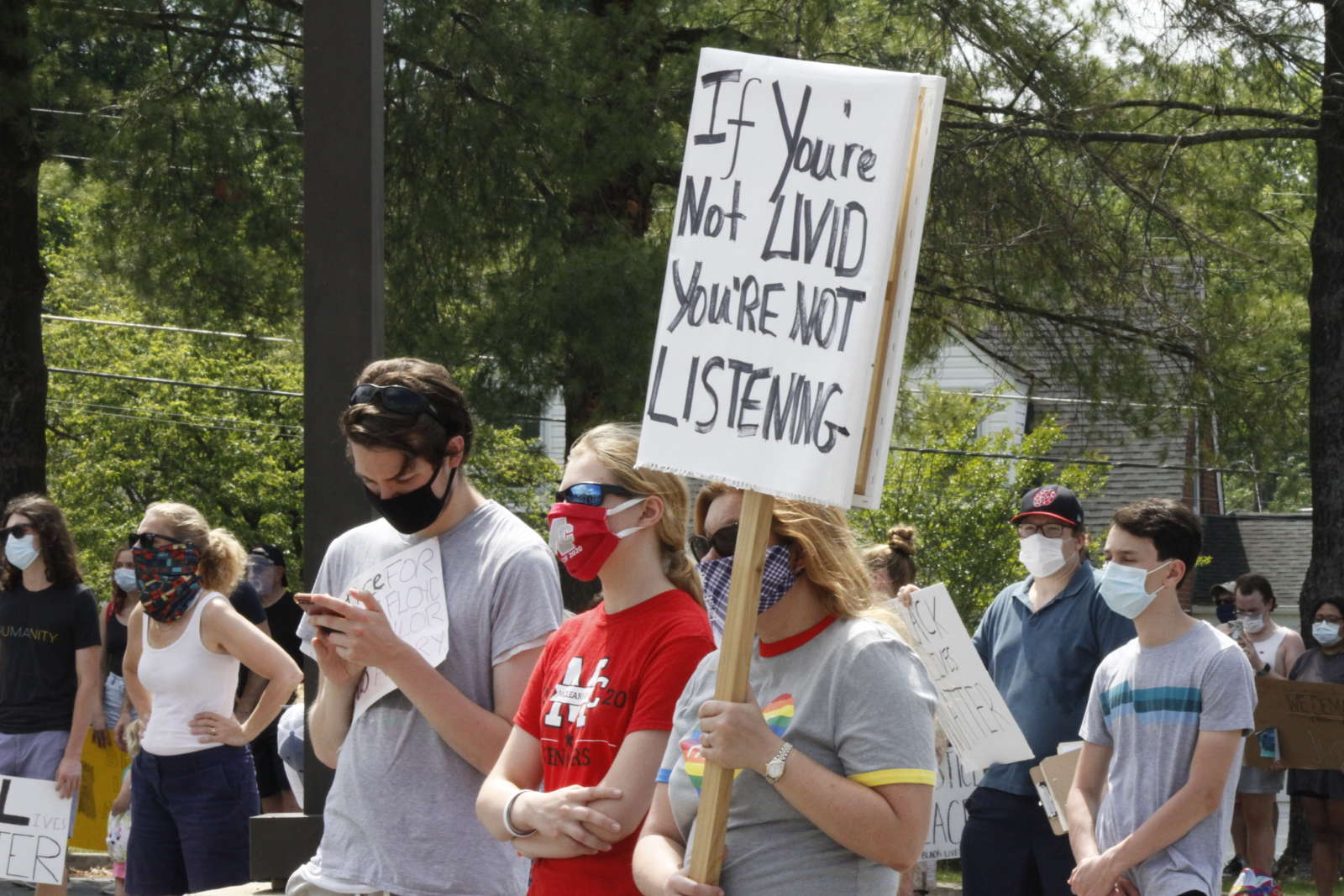
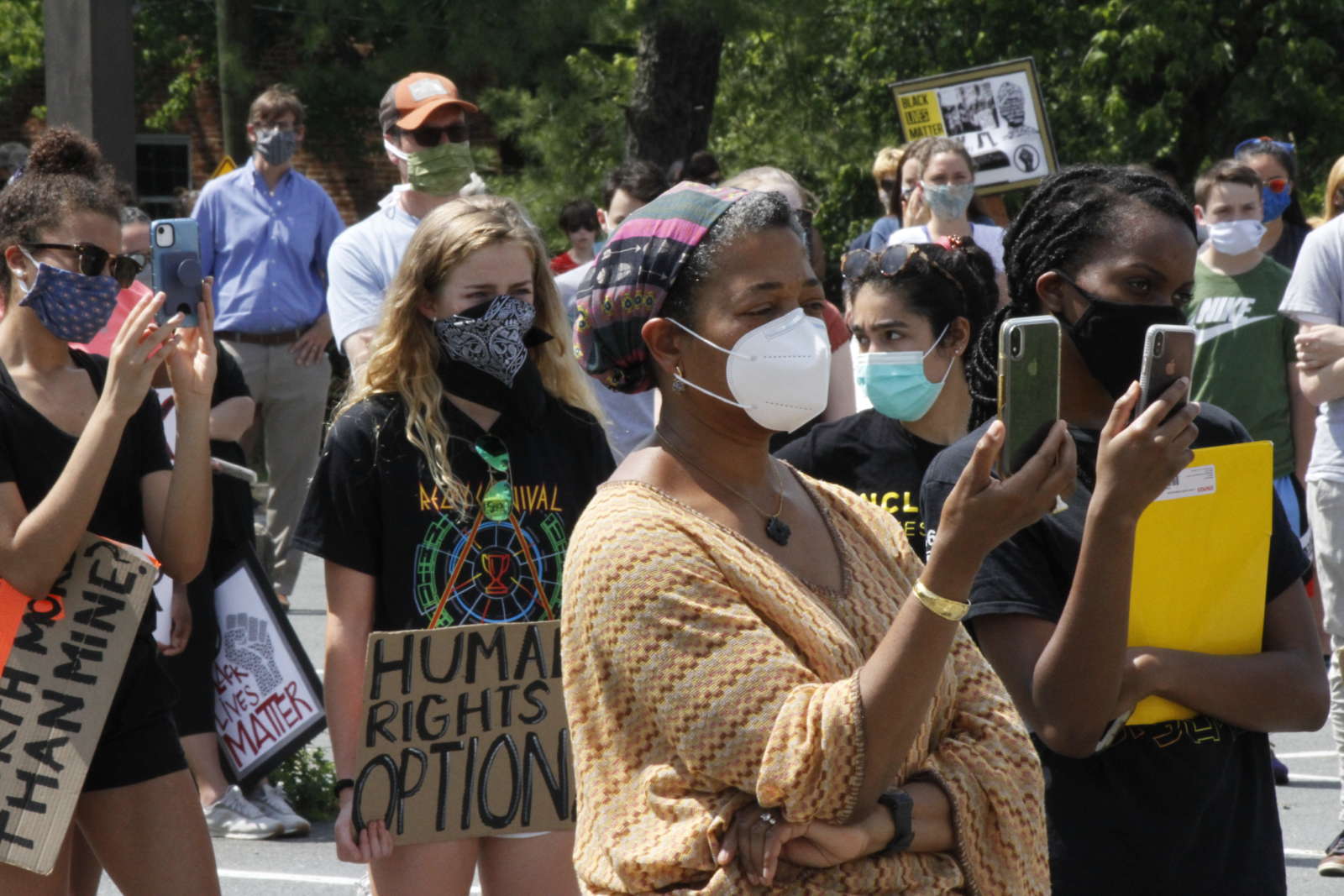
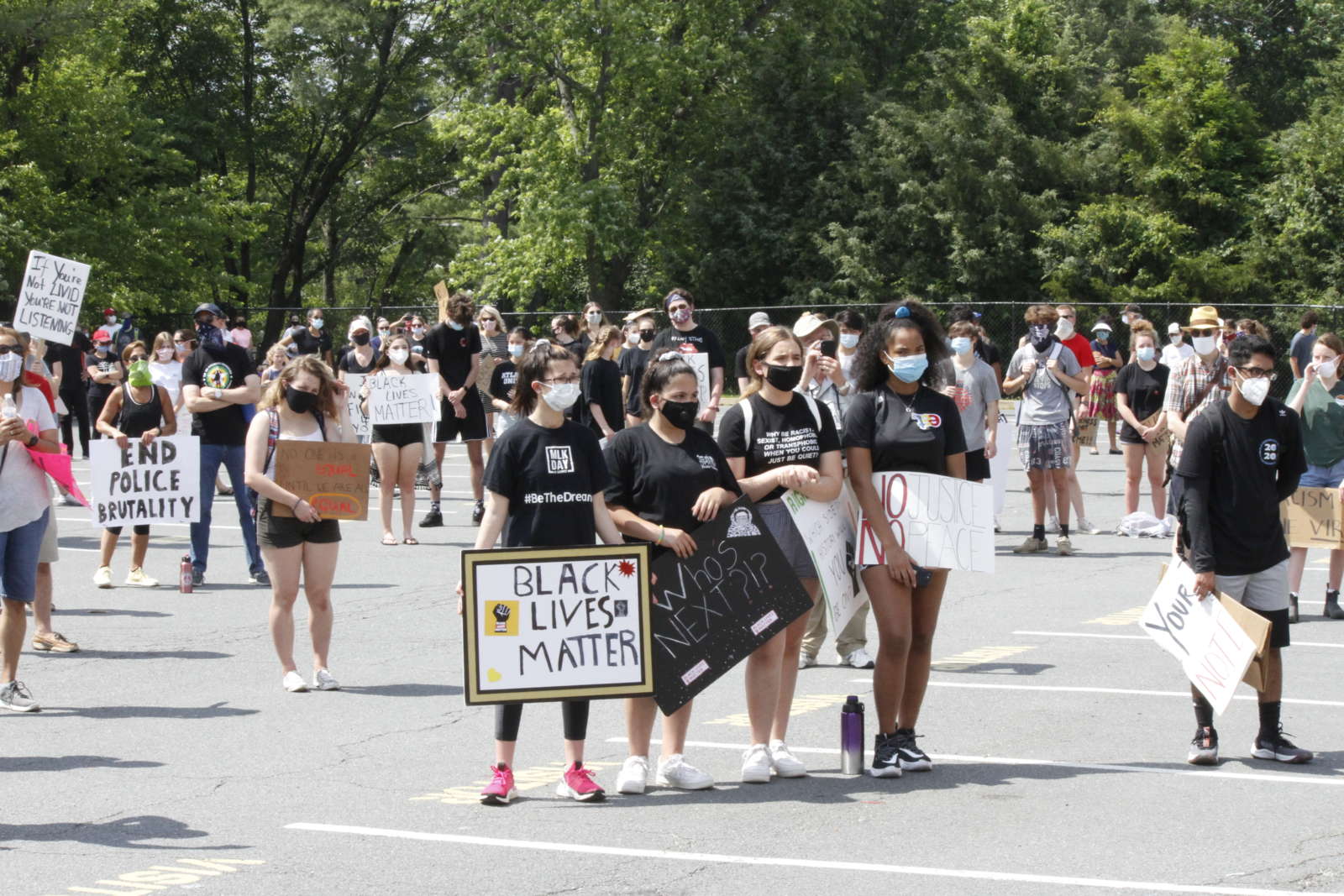
(Updated 9:15 a.m.) Hundreds of people chanted and marched in a Black Lives Matter protest led by six McLean High School students on Wednesday.
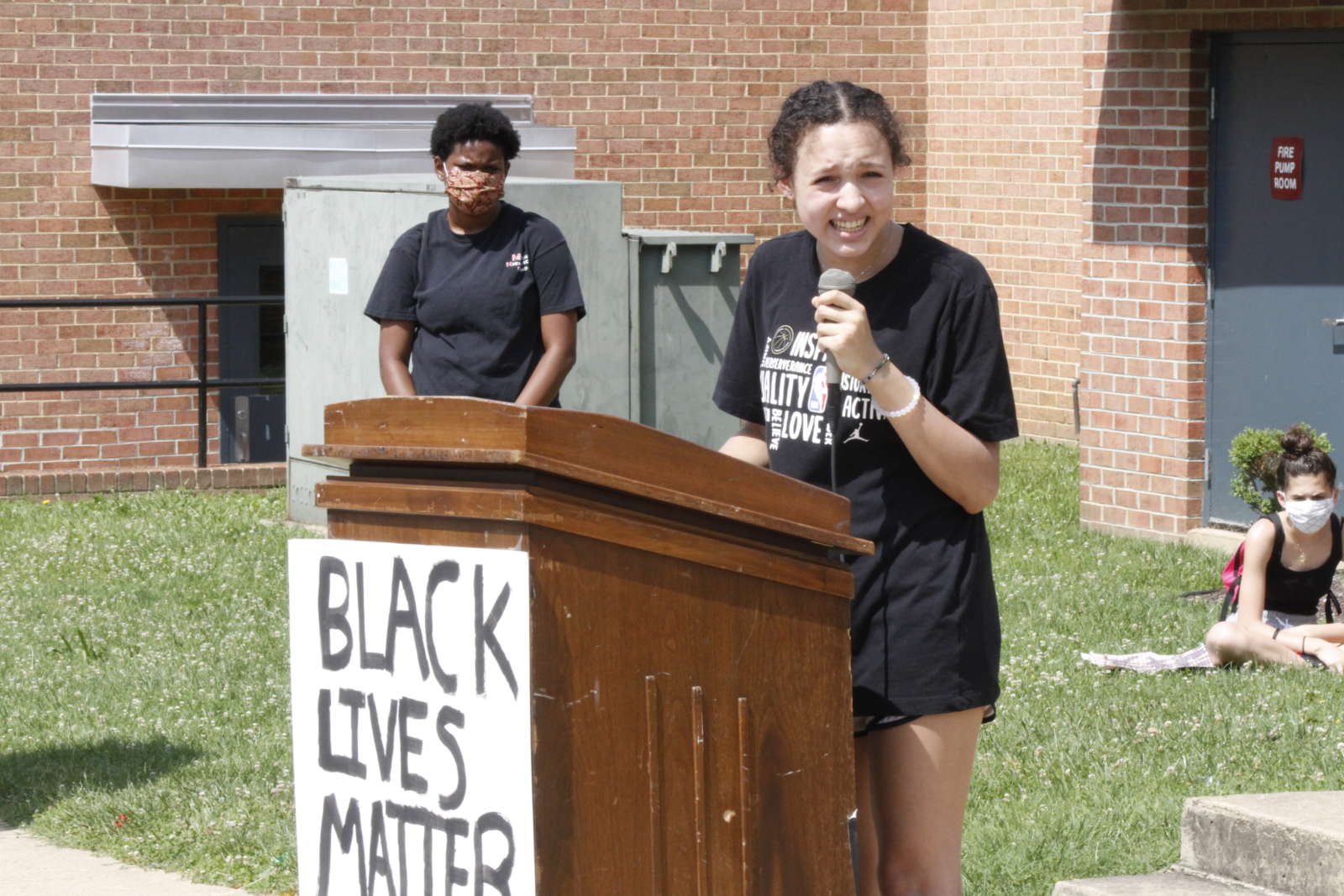
The protest kicked off around 2 p.m. in the parking lot of McLean High School with passionate speeches from students across Fairfax County and local elected officials calling on students and adults to fight racism.
“It’s kind of crazy I have to tell people I shouldn’t be killed, but here we are,” one student speaker said, later adding: “I don’t want my last words to be, ‘Don’t shoot.'” I want them to be, ‘We did it.'”
The speeches touched on a common theme: the fervor of youth activism.
“Our generation is the one that is going to change the world for the better,” Kendall J., a rising senior at McLean High School, told the crowd. Speakers encouraged parents to better support their kids’ activism.
People with voter registration forms circulated the crowd, encouraging teens about to turn 18 to vote in the upcoming elections.
For safety precautions due to the coronavirus pandemic, participants tried to social distance by spacing themselves out in the parking lot. Face coverings were required, and an organizer cleaned the microphone between each speaker.
Participants shouted chants like “No justice! No peace! No racist police!” and “Black Lives Matter!” At one point, the participants responded to a prompt of saying “I love you” to the people standing closest to them.
After a short prayer moment, the protesters took to the streets, flooding Clearview Drive around 4 p.m. “There are so many people here,” one of the organizers said into his walkie talkie as the march began.
“No justice. No peace. No racist police,” a young child with an adult on the corner of Westmoreland Street and Clearview Drive said as the march headed northbound on Westmoreland Street. Several drivers honked and waved in support.
Tysons Reporter witnessed a moment that punctured the peaceful and passionate protest: a white male driving by the protesters on Westmoreland Street shouted out his window that all lives matter and that they should “cut the bullsh*t.”
The protest was one of several anti-racism events in the Tysons area sparked by George Floyd’s death and the resurgence of the Black Lives Matter movement.
Like several protests and rallies in Falls Church, the McLean protest drew a diverse crowd spanning different generations and races.
— Catherine Douglas Moran (@c_douglasmoran) June 10, 2020
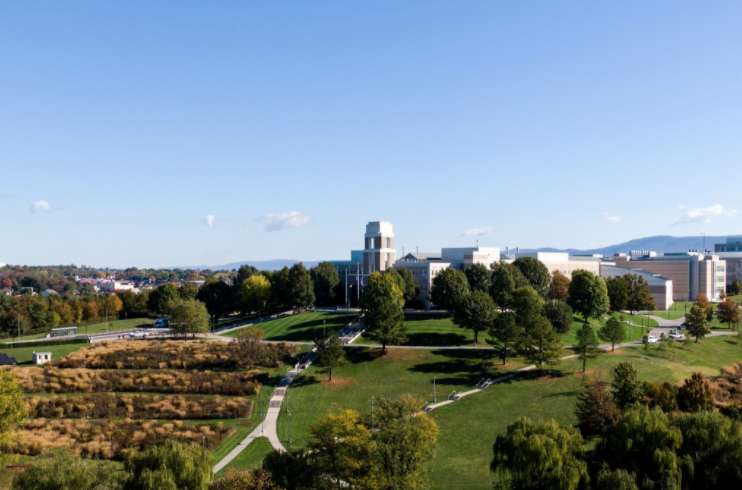
After her graduation from McLean High School in 2018, Isabel Romov received a prestigious scholarship that allows her to study a rare heart disease that can cause sudden death in young adults.
Romov is an upcoming junior studying biotechnology at James Madison University in Harrisonburg, Va. As the inaugural Beckman Scholar, Romov will assist JMU Chemistry Professor Nathan Wright with research over the course of a roughly 15-month period, according to a press release.
Romov will focus on arrhythmogenic cardiomyopathy. The disorder is transferred genetically from someone’s family and causes arrhythmias and thickens the walls of the ventricles in the lower chambers of the heart, the press release said. It affects roughly one in 5,000 people, according to Boston Childen’s Hospital and can cause sudden death, cardiac arrest or the sudden loss of consciousness.
Though Romov hasn’t worked with Wright before, she first expressed interest in his work after viewing one of his guest lectures.
For the research, the team is looking at the DNA, learning how to block the disease mutation and creating a “molecular Band-Aid” to cover it up, Romov said.
The scholarship includes $18,600 to funnel into her research.
Romov said the scholarship is competitive, and she thinks she was chosen because of her dedication to perfection, high grades and drive to help people after her mother passed away from amyotrophic lateral sclerosis (ALS) almost two years ago.
“It has given me a motivation I don’t think anyone else has unless they’ve been in that situation,” she said. “I want to help people and the fact that science works for me and I love it is secondary.”
Growing up, Romov said she struggled during high school because many of her teachers didn’t realize what was going on in her family life, but she said she was thankful for the competitive curriculum that helped her prepare for college.
Now at JMU, Romov serves on the board for Delta Gamma, a social sorority she said strives towards high grades, and is also a member of TriBeta, an honor society for biology students.
After college, she hopes to work with a biotech company or another institution that will help her pursue a graduate degree. Since Romov said she has been working since she was 14 years old, one of her main goals in life is to become financially independent.
“Going to a job is very exciting for me and I’m excited to learn and work in the science field.”
Photo via JMU/Facebook
As Northern Virginia localities prepare for the second reopening phase on Friday, here’s what people can expect.
Northern Virginia and the City of Richmond delayed entering phase two when the rest of Virginia started the phase last Friday (June 5). Gov. Ralph Northam said that trends of COVID-19 data indicate that Northern Virginia is ready for the next phase.
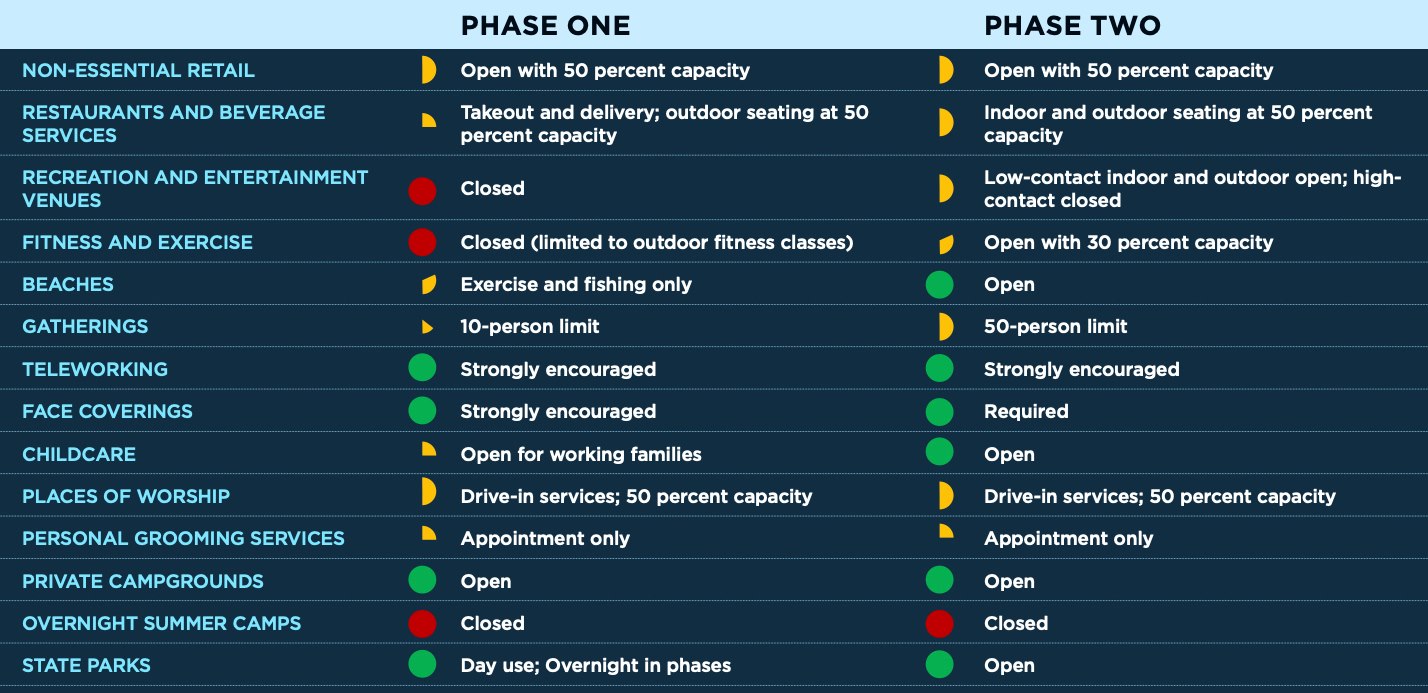
Here’s a snapshot of the phase two guidelines:
- “safer at home” guidance, telework encouraged
- face coverings required in indoor public places
- social gathering maximum raised from 10 to 50
- restaurants can have indoor dining at 50% occupancy
- fitness centers can open indoor spaces at 30% occupancy
- indoor and outdoor swimming pools can open
- still closed: overnight summer camps, indoor entertainment venues, amusement parks, fairs and carnivals
Museums, zoos, aquariums, botanical gardens and outdoor concerts, sports and performing arts venues may open with some restrictions as long as they don’t have shared equipment.
“All businesses should still adhere to physical distancing guidelines, frequently clean and sanitize high contact surfaces, and continue enhanced workplace safety measures,” the plan says.
Meanwhile, phase two continues current guidelines for religious services, non-essential retail and personal grooming services, according to the plan.
School Schedule
Northam also unveiled yesterday his phased plan to reopen K-12 schools.
“I know that parents are very interested in our plans for how to safely return children to our classrooms,” Northam said.
Previously, Northam closed schools on March 23 for the remainder of the 2019-2020 school year. “I believe these closures have helped mitigate the spread of COVID-19,” he said.
Northam said that the plan will let schools “slowly” offer in-person classes for the summer and 2020-2021 school year.
“We’ll start with small groups, and we will allow each school division the flexibility that it needs to respond to the needs of its own locality,” Northam said, adding that the plan provides schools with options instead of serving as a mandate.
In every phase, the schools must follow guidance from the Centers for Disease Control and Prevention, including daily health screenings of students and staff, remote learning and working options for high-risk students and staff, required face coverings for staff — and encourage used for students — when social distancing isn’t an option.
More about the plan from Northam’s website:
The K-12 phased reopening plan was developed by the Office of the Secretary of Education, Virginia Department of Health, and the Virginia Department of Education and is informed by guidelines from the Centers for Disease Control and Prevention (CDC).
All PreK-12 schools in Virginia will be required to deliver new instruction to students for the 2020-2021 academic year, regardless of the operational status of school buildings. The PreK-12 guidance is aligned with the phases outlined in the Forward Virginia blueprint and provides opportunities for school divisions to begin offering in-person instruction to specific student groups…
Local school divisions will have discretion on how to operationalize within each phase and may choose to offer more limited in-person options than the phase permits, if local public health conditions necessitate. Entry into each phase is dependent on public health gating criteria, corresponding with the Forward Virginia plan. School divisions will have flexibility to implement plans based on the needs of their localities, within the parameters of the Commonwealth’s guidance.
The opportunities for in-person instruction in each phase are as follows:
- Phase One: special education programs and child care for working families
- Phase Two: Phase One plus preschool through third-grade students, English learners, and summer camps in school buildings
- Phase Three: all students may receive in-person instruction as can be accommodated with strict social distancing measures in place, which may require alternative schedules that blend in-person and remote learning for students
- Beyond Phase Three: divisions will resume “new-normal” operations under future guidance
Beginning with Phase Two, local divisions and private schools must submit plans to the Virginia Department of Education that include policies and procedures for implementing Virginia Department of Health and CDC mitigation strategies.
State Health Commissioner M. Norman Oliver, MD, MA has issued an Order of Public Health Emergency that requires all Virginia PreK-12 public and private schools to develop plans that demonstrate adherence to public health guidance. Public schools must also outline plans to offer new instruction to all students regardless of operational status.
Graph via Virginia Gov. Ralph Northam