

(Updated at 4:55 p.m.) Two technology companies in Tysons have each received $100,000 grants as part of a new state initiative intended to support projects that turn research into commercial products or services.
Gov. Ralph Northam announced yesterday (Monday) that Virginia will award $3.4 million in grants to 34 small, technology-focused businesses for the inaugural round of the Commonwealth Commercialization Fund (CCF), which launched in 2020 to help advance promising technology through the development process.
The Tysons-based recipients are the cybersecurity company Onclave Networks Inc. and Jeeva Informatics Solutions Inc., which is developing a cloud platform to help medical researchers recruit and work with patients for clinical trials.
“Facilitating research breakthroughs and getting new technologies out of the lab and into the hands of consumers is key to driving economic growth and creating jobs in the Commonwealth,” Northam said in the news release. “I am confident this first round of CCF awards will produce far-reaching benefits and congratulate these innovators and entrepreneurs on their success in developing transformative solutions to improve lives and address some of the most pressing challenges we face.”
The CCF consolidated Virginia’s existing Commonwealth Research Commercialization Fund and Virginia Research Investment Fund. Each of the Fiscal Year 2021 recipients received $100,000 and will provide matching funds.
According to the news release from the governor’s office, the fund focuses on technology “with a high potential for economic development and job creation” and that “position the Commonwealth as a national leader in science- and technology-based research, development, and commercialization.”
Onclave received a grant for its Zero Trust network, which aims to allow for remote communications and operations of “smart” infrastructure, such as telemedicine services or autonomous transportation, while providing protection from security threats.
The company previously received funding from the 2020 Commonwealth Research Commercialization Fund and was selected to participate in the Smart City Works accelerator program as a winner of Fairfax County’s first Smart City Challenge in March.
Onclave is also working with the Center for Innovative Technology to deploy its technology at the Virginia Smart Community Testbed in Stafford County.
“We have repeatedly seen how important it is to secure not just our devices and networks, but the data as well,” CIT Chief Technology Officer David Ihrie said in a statement. “As the Internet of Things continues to rapidly expand, cybersecurity solutions like Onclave’s Zero Trust platform are essential foundational elements of our new digital infrastructure.”
Other Fairfax County recipients of CCF funding include AtWork Systems and Rimstorm Inc. in Herndon as well as Service Robotics & Technologies in Springfield and Keshif in Alexandria.
“The Fairfax County Economic Development Authority applauds the granting of the inaugural round of the Commonwealth Commercialization Fund awards, including to the 6 Fairfax County-area-based companies,” Fairfax County Economic Development President and CEO Victor Hoskins said by email. “The CCF awards will provide funding support to spur research commercialization, with the intent of technological development leading to economic growth in Virginia.”
Photo via Alesia Kazantceva/Unsplash

The Arlington-founded burger chain Big Buns Damn Good Burgers is coming to Vienna, looking to take over the Danor Plaza space formerly occupied by Elevation Burger (142 Branch Road SE).
Big Buns, which specializes in making different styles of burgers and also provides craft beer and more, filed for Virginia Alcoholic Beverage Control beer, wine, and mixed drinks licenses around May 28 and June 1.
“We couldn’t be more excited about these locations,” founder Craig Carey said in an email to Tysons Reporter, noting that the eatery is also working on sites in Franklin Farm and Fairfax.
Big Buns plans to open in Vienna on Sept. 1. Its hours of operation will be from 11:30 a.m. to 9 p.m. Monday through Thursday, 11 a.m. to 10 p.m. on Friday and Saturday, and 11 a.m. to 9 p.m. on Sunday, according to a state ABC application obtained by Tysons Reporter.
Patch reported that the organic-focused chain Elevation Burger closed its Danor Plaza location in March. A sign still posted to the door notes that its Arlington location remains open (2447 Harrison St. N.).
Big Buns’ planned fall opening depends on permits, construction, and hiring, but Carey believes the timeline should be doable.
“We would love more patio seating but will need to see what the county comes back with in terms of occupancy after they review our plans,” Carey wrote about possible changes from Elevation Burger’s setup.
The chain seeks to have indoor and outdoor seating, with 14 tables outside for 28 people and a full capacity for over 55 seated customers, not including a counter/bar area, according to its state ABC application.
Carey and his business partner Tom Racosky started the chain in Arlington’s Ballston neighborhood in 2007 with the goal of providing a variety of burgers as an alternative to “best burger” restaurants that each focus on their own specialty.
Those seeking jobs at the Vienna location can start at the Reston Big Buns (1908 Reston Metro Plaza) now and will transfer over to Vienna as part of a grand opening team, Carey wrote.
The chain, which typically has a staff of 25 full and part-time workers at each location, is offering $500 sign-up bonuses for workers on their 100th day.
PIVOT Grant Application Deadline Today — This is the last day for hotels, restaurants, and other local businesses affected by the pandemic to apply for COVID-19 relief funding from Fairfax County’s PIVOT grant program. The application portal will close at 11:59 p.m. [Fairfax County Government]
COVID-19 Mostly Spreading Among Unvaccinated People Now — “From December 29 to June 25, 99.7 percent of new COVID-19 cases have occurred among unvaccinated or partially vaccinated Virginians, according to VDH. Those residents made up 99.3 percent of hospitalizations and 99.6 percent of deaths over the same time period.” [Virginia Mercury]
McLean Nonprofit to Raffle Off Nats Memorabilia — “The McLean area branch of the American Association of University Women’s (AAUW) used-book sale, its annual charitable fund-raiser, has been postponed again due to lingering effects of COVID-19. Instead, the group will hold a substitute fund-raiser featuring [Washington Nationals pitcher Max] Scherzer memorabilia, along with a request for contributions to support education and local scholarships for women.” [Sun Gazette/Inside NoVA]
Help Clean Up Nottoway Park This Weekend — “Join us at Nottoway Park on Saturday, July 10th, to celebrate Latinx Conservation Month, and help manage invasive plants, visit some sheep, and learn how to care for plants. Nottoway Park is located at 9537 Courthouse Road in Vienna, VA.” [Palchik Post]

County Leaders Frustrated by State Funding for Prosecutors — Fairfax County leaders say Virginia’s current formula to determine funding for Commonwealth’s Attorney offices undermines criminal justice reform efforts by rewarding localities that seek incarceration over diversion. A 15-month, state-commissioned study of the issue is set to launch this month. [The Washington Post]
Progress on Unemployment Rate Stalls — “Like much of Northern Virginia, Fairfax County’s jobless rate has improved substantially from the depths of the COVID crisis a year before, but now seems struck in neutral as it attempts to return to pre-pandemic lows…Fairfax’s jobless rate of 3.7 percent in May was up a tick from 3.6 a month before, according to figures reported June 30 by the Virginia Employment Commission.” [Sun Gazette/Inside NoVA]
Tysons-Based Engineering Contractor Acquired — “Newport News-based Fortune 500 military shipbuilder Huntington Ingalls Industries will acquire McLean-based defense contractor Alion Science and Technology Corp. from Veritas Capital in a $1.65 billion, all-cash deal, HII announced in a news release Tuesday. The deal is expected to close by the end of this year.” [Virginia Business]
County to Hold Virtual Meeting on Strategic Plan — “Join us July 21 for a virtual community conversation to share your thoughts on the Fairfax Countywide Strategic Plan as we move forward to shape the future of Fairfax County together. Register online.” [Fairfax County Government/Twitter]

A new report shows that minority-owned businesses in Fairfax County and Northern Virginia as a region suffered more acutely due to the COVID-19 pandemic than businesses owned by their white counterparts.
The Community Foundation of Northern Virginia released a report in late June detailing findings and recommendations from their minority-owned business working group.
They found that at the end of 2019, there were 128,000 minority-owned businesses in Northern Virginia, which encompasses five counties, including Fairfax. That’s approximately 42% of all establishments in the region, well above the national average of 29%.
Of the 128,000 minority-owned businesses in Northern Virginia, about 55,000 are in Fairfax County, according to statistics provided by the Fairfax County Economic Development Authority (EDA).
More than 8,000 non-farm businesses with paid employees in the county are owned by people of color, representing about a third of all such businesses in the county.
“It’s turned out to be one of our winning hands,” says EDA’s CEO and President Victor Hoskins about the number and contributions of minority-owned businesses in the county. “It’s something grown up here over time…just part of the DNA of not just Fairfax, but Northern Virginia.”
While the number of minority-owned businesses remained essentially flat throughout 2020, revenue and staffing at those businesses has decreased dramatically, while unemployment insurance claims have gone up.
According to the report, minority-owned businesses are more likely to be smaller in size, concentrated in high-risk industries such as accommodation and food service, and face more difficulties in securing capital. Due to these factors, minority-owned businesses are more likely to have “poor or fair” financial health.
Consistent with the rest of the region, Fairfax County minority-owned businesses have also suffered more acutely due to the pandemic. Because these businesses tend to be smaller in size, they simply have had less ability to overcome the economic hardships brought by the pandemic.
“Smaller businesses were disproportionately impacted by not having the financial wherewithal to weather the storm that this pandemic caused,” said Stephen Tarditi, EDA’s director of marketing intelligence. “They tend to be concentrated in industries more adversely…impacted by the pandemic.”
The report offered a number of recommendations for ways to better support these businesses, including better tracking of data and information to understand more specifically which businesses need help and when.
It also notes that more financial help is needed, including with grant funding and better strategies to improve access to capital for these businesses.
Officials agree with the report that more can be done. For example, specific data, like numbers related to revenue and number of paid staff, can drive policy, but there’s often a lack of up-to-date information.
“I was just surprised at how little…or regularly updated data that we have on hand to make these decisions,” Tarditi said. “I’m having a tough time knowing what the pandemic’s impact has been on our minority business community. This data drives the decisions and drives the strategy, which is extremely important, especially in this past year.”
EDA officials say the plan going forward is to disseminate more surveys more often with better outreach to be able to compile more and better data.
Last year, Fairfax County distributed more than $52 million in relief funding to small businesses through its RISE program, about half of which went to minority-owned businesses.
“We actually designed the RISE program to target a portion of small and minority-owned businesses,” says Hoskins. “I think the target was 30%, but we ended up [with] 72% [going to] women, veteran, or minority-owned businesses.”
The county is currently accepting applications for its new PIVOT program, but that doesn’t have any provisions directly dedicating a certain portion of funds to minority-owned businesses.
The Northern Virginia Black Chamber of Commerce told Tysons Reporter last month that they’ve felt neglected in the development of some of Fairfax County’s major business grant programs.
When asked about this, Hoskins said the EDA works with the Northern Virginia Black Chamber of Commerce all the time and are located in the same building. Beyond that, he wasn’t familiar with the details of their comments or complaints.
Photo via Tim Mossholder/Unsplash
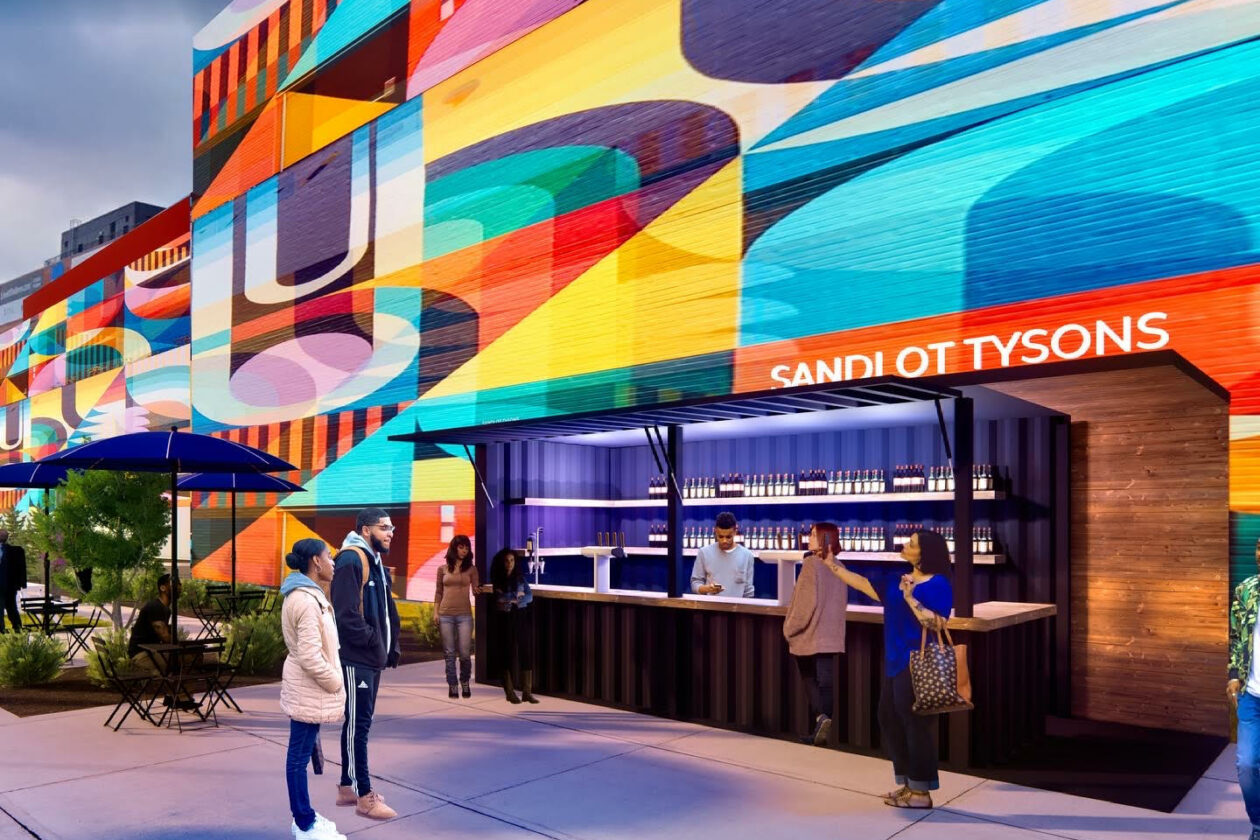
The Sandlot is coming to Tysons.
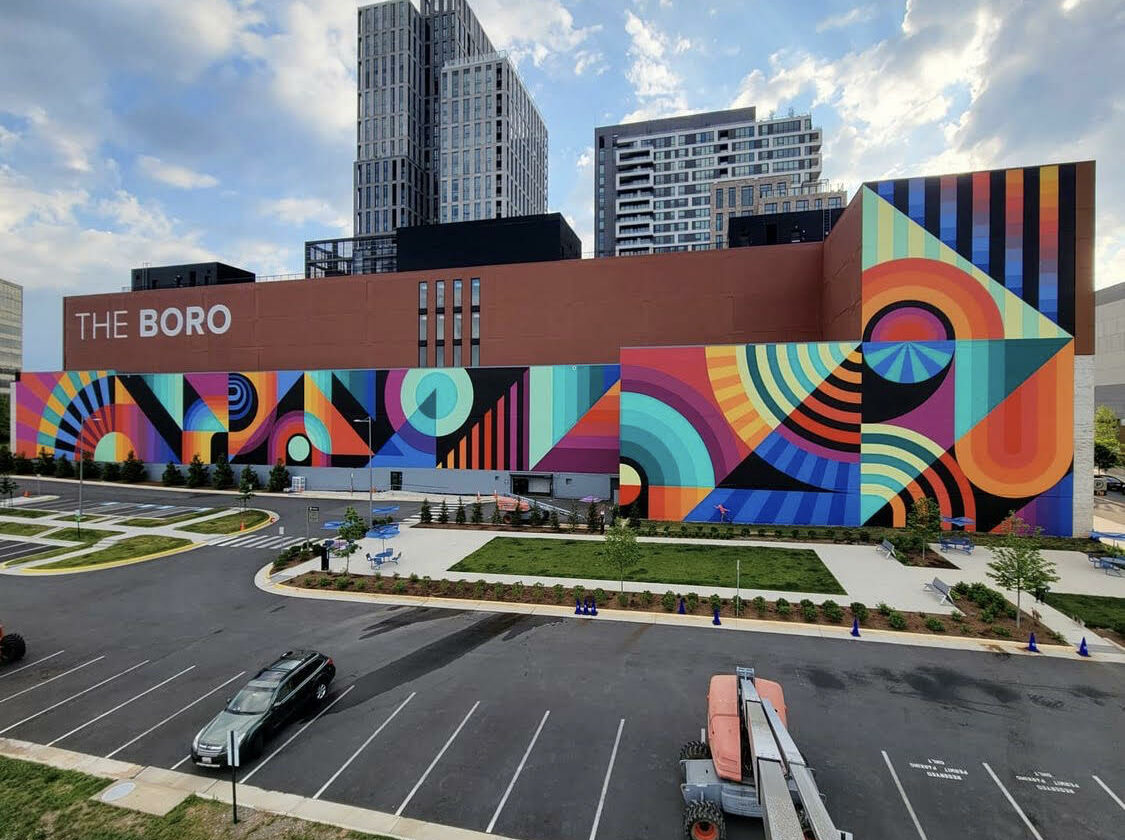
The Boro announced on Thursday (June 24) that the space in front of its new mural will soon be occupied by the outdoor bar concept that currently has two locations in D.C.
Ian Callender, co-creator of The Sandlot and owner of Suite Nation, describes the pop-up amenity as “a cultural arts facility with intersecting industries of commerce derived from community engagement.”
“It’s the ideal environment to bridge the gap between culture and community authentically,” Callender told Tysons Reporter.
The focus of The Sandlot is to give a space for the community to interact. There are tables and chairs for guests to come have a drink and chat with neighbors.
“The retailers and restaurants at The Boro will be the highlighting culinary and cocktail component,” Callender said. “We’re just bringing the vibes.”
The Sandlot operates booths out of shipping containers, similar to the plans for ShipGarten, the restaurant/beer garden that’s supposed to open in Scotts Run any day now.
The offerings are tailored to the specific neighborhood where each site is located. For example, Sandlot Southeast has a designer shoe booth, and Sandlot Georgetown has cold-pressed juice cocktails.
The Sandlot started as an idea of Kevin Hallums, Callender’s childhood friend of 30-plus years. The idea was to create a pop-up to celebrate the 25th anniversary of the movie “The Sandlot” down on Half Street near Nationals Park.
Hallums has said that the movie is about more than baseball, it’s about a space for friends to hang out, and that’s the space they were trying to create. The first location, Sandlot Southwest, opened in March 2019 but closed in June 2020.
All Sandlot locations are temporary and contingent on the weather. Once the development where The Sandlot is located decides they want that space back, the containers have to pack up and move on.
The Boro has said the development in front of the mural is years down the road, so Sandlot Tysons will occupy the space for the foreseeable future.
The Sandlot Tysons will open July 9 with a grand opening celebration on July 11 that will include a free concert from the D.C.-based band Black Alley.
Along with their kick-off event, The Sandlot has announced a lineup of weekly programs:
- Car wash and cocktails with Xact Detail (Fridays)
- Free outdoor fitness and workout sessions, courtesy of the gym Sweat DC (Saturday mornings)
- Live regional DJs from Rock Creek Social Club, Joy Club, Adobo DMV, and more (Saturdays)
- Sunset Sip & Paint sessions with renowned artist Lex Marie (Sundays)
“This Sandlot concept will be different from other existing locations with the specific programming for the community and its collaboration with existing Boro restaurants and retailers,” a spokesperson from The Boro said.

Rosslyn-based Taco Rock is planning to open its third location — and its largest to date — in Falls Church this fall.
In a press release, Chef Mike Cordero announced yesterday (Tuesday) that the new Taco Rock will open at 1116 West Broad Street in October.
“The former retail space will be transformed into a 2,815-square-foot fast casual taqueria and tequila bar that replicates its Rosslyn and Alexandria locations,” the press release said.
The restaurant will seat 85 guests and feature a 25-foot tequila bar. The menu will match the existing Arlington and Alexandria locations with the eponymous tacos on blue corn tortillas and churros, along with tequila and Mexican beer.
The new Taco Rock will be located in Falls Plaza Shopping Center, which has been rebranded as Birch & Broad in conjunction with ongoing renovations to the property. Existing retailers include a remodeled Giant, CVS Pharmacy, Starbucks, and Jersey Mike’s.
“Team Cordero is excited to expand Taco Rock‘s footprint in Northern Virginia with the opening of our largest and third location,” Cordero said in the press release. “The newly renovated Birch & Broad shopping plaza makes a perfect fit for our establishment and we anticipate the Falls Church community will welcome our concept.”
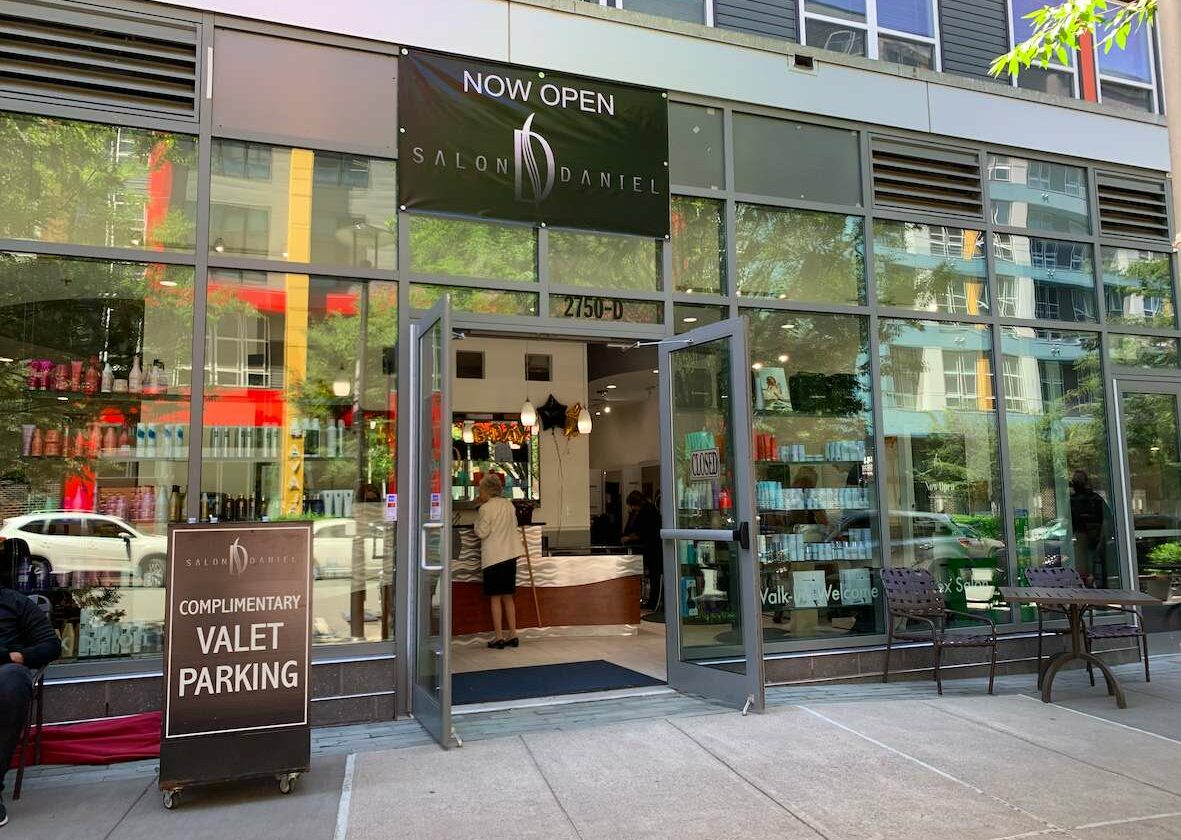
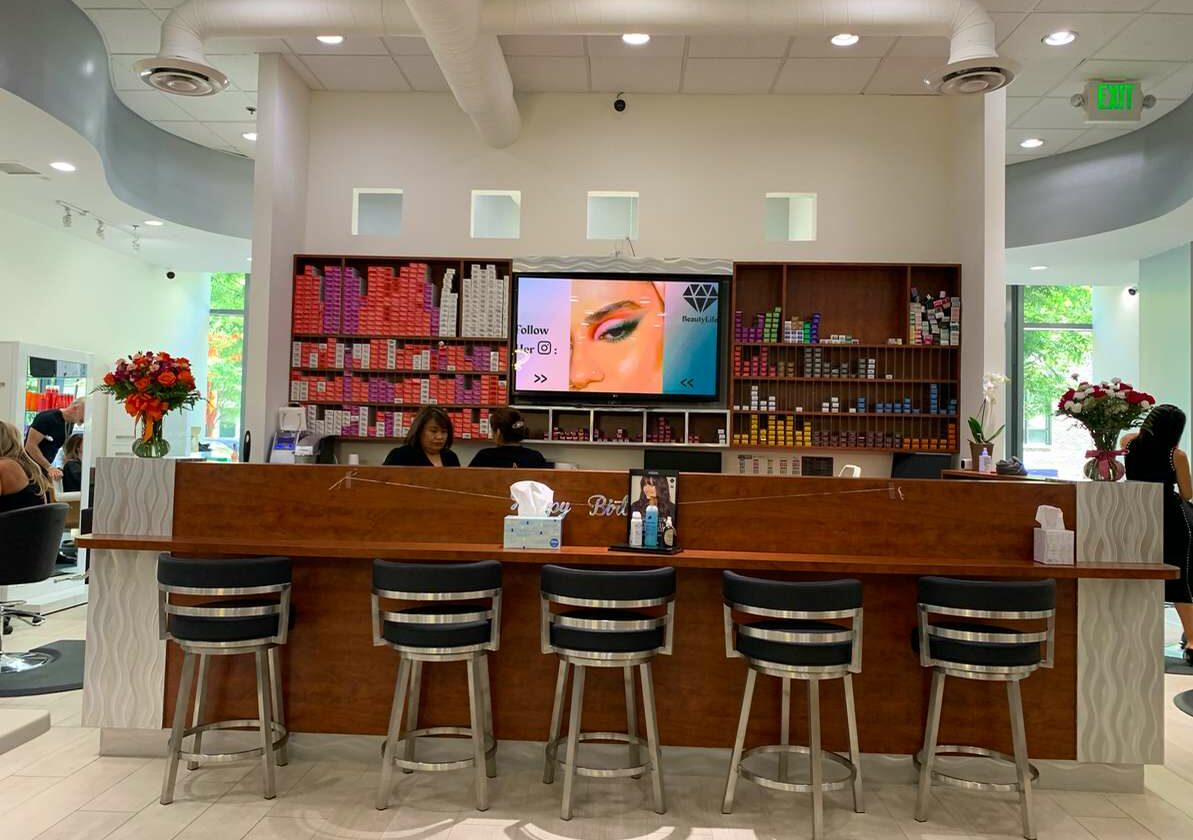
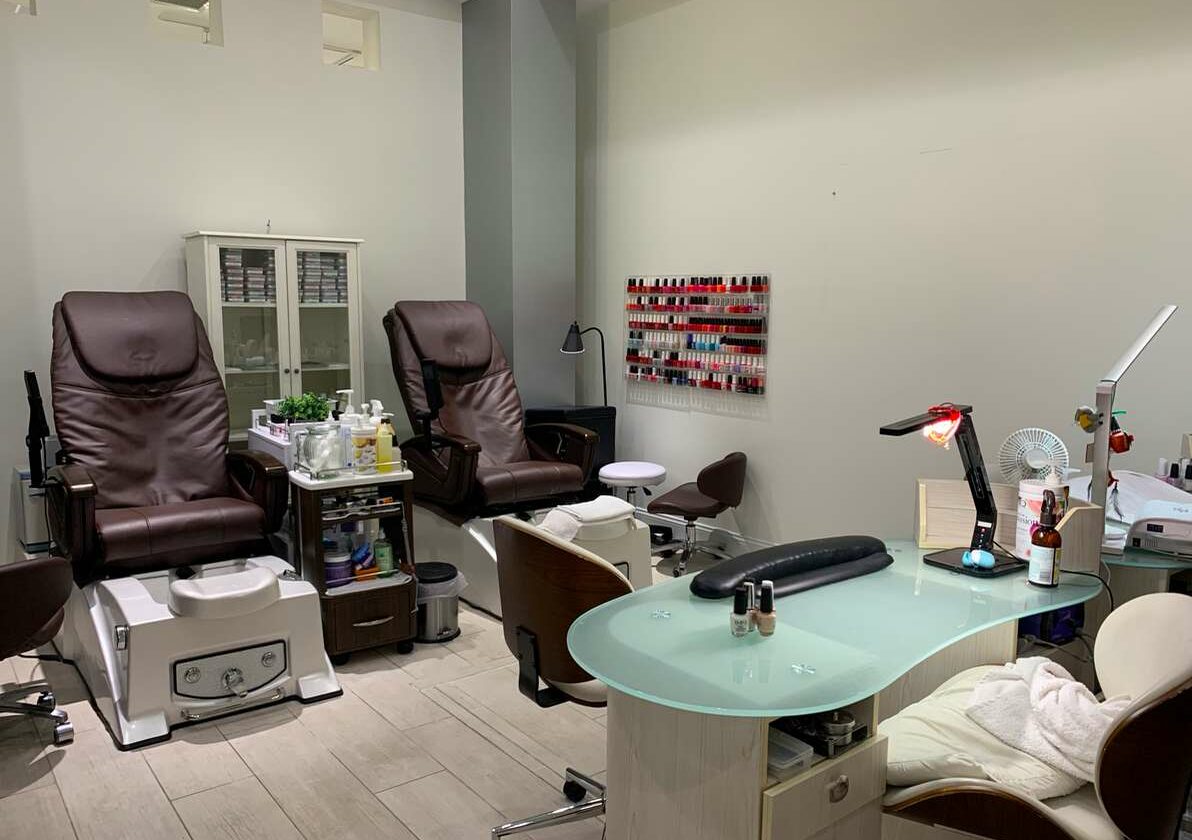
Daniel Bechara knows better than most that sometimes to save a look, you need to make some cuts. It’s why Bechara decided to pull his hair salon, Salon Daniel, out of McLean after 30 years to move to a more visible location in Merrifield (2750 Gallows Rd.).
Bechara says the new location brings the salon into a more publicly accessible place than their previous locale.
“It feels great,” Bechara said. “It’s a new generation, a younger generation, and it’s a better location. I was [in McLean] for exactly thirty years, but it was hidden up on the second level and it was hard to see. I was only getting new clients because of our reputation, but not from somebody walking by and seeing us. It was time to move.”
The new location is two blocks south of the Dunn Loring-Merrifield Metro station, almost halfway between the station and the Mosaic District. Bechara says the new location also benefits from being on the ground floor of a residential building.
“We’re right next to the Metro and in the Avalon Community,” Bechara said. “We’re in a retail and residential area with 830 residents right above us, and we haven’t even tapped into that yet because we want to make sure we have the capacity.”
The new salon location has been open for around three weeks. Bechara says all of his old team and many familiar clients have carried over into the new location. After years of stagnation in the other location, Bechara said he’s had over 25 new walk-in clients since opening.
“It’s new business every day,” said Bechara.
After 40 years working in hair salons, Bechara says the change in venue also gave him the opportunity to try something new with his salon.
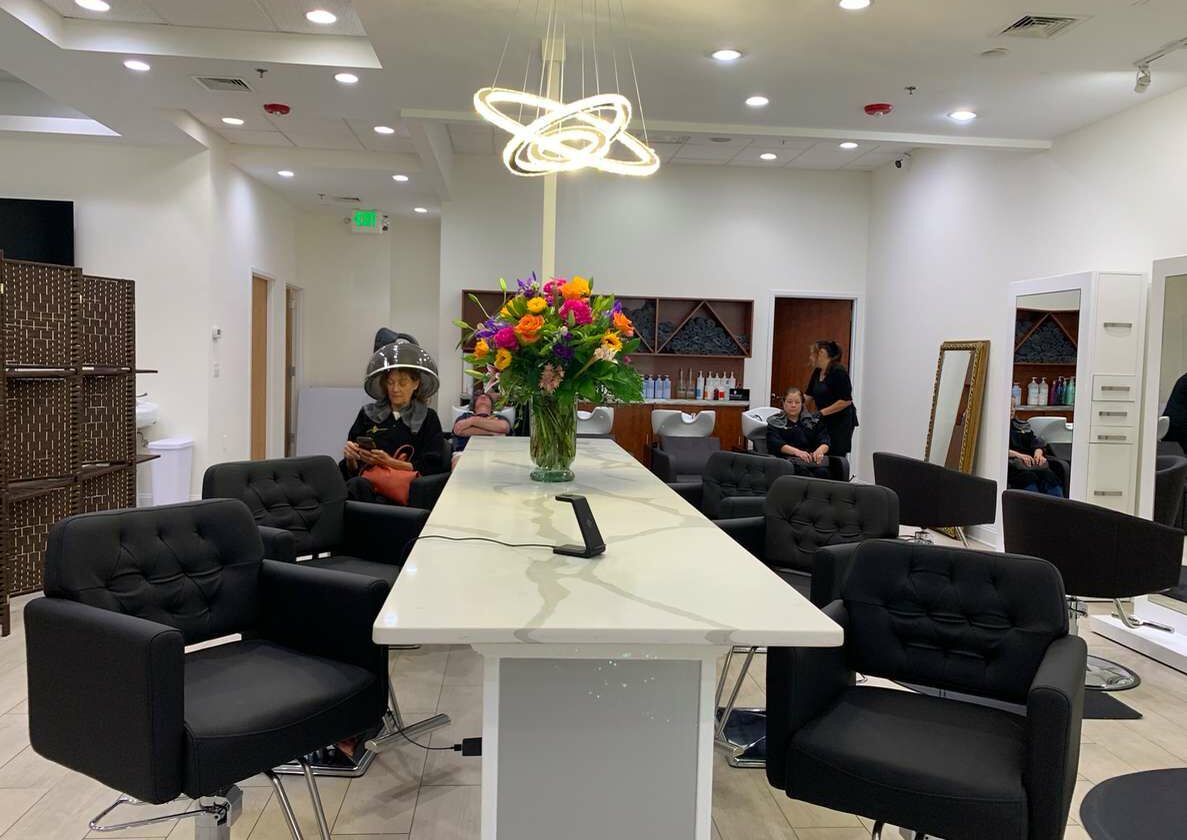
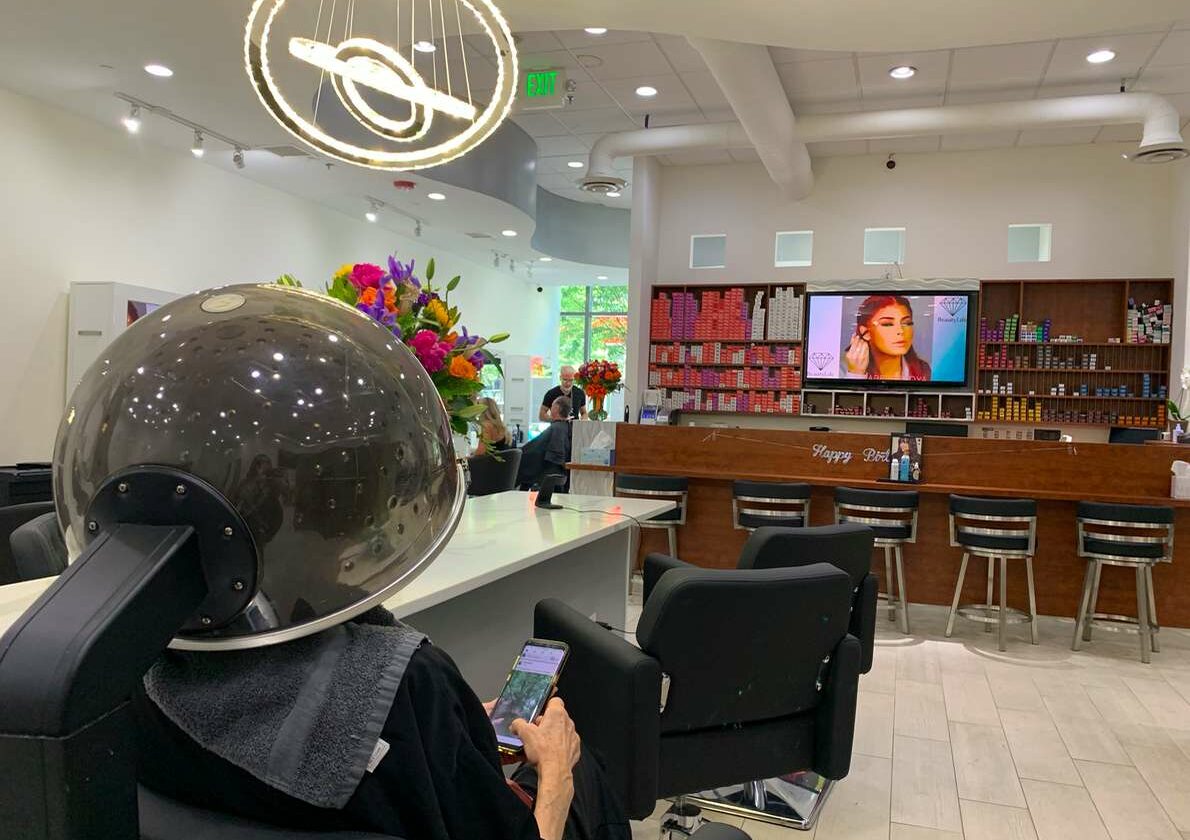
“The other one was 30 years old. It was a different design,” Bechara said. “This one is more of a Miami-style salon. It’s a different vibe, a different look, more open concept with a bar. People can hang out at the bar and have a drink.”
Bechara says the new salon has the same price range as the McLean location, which varies by haircut type and by stylist. One new addition, however, is complimentary valet parking.
“It’s like pulling into the Ritz Carlton,” Bechara joked.
One of the things Bechara says he’ll miss from the McLean location is the camaraderie with other salons in the area, many of them owned by stylists who got their start with him. Bechara says he felt like a “godfather” to many of the nearby salons.
As the Merrifield neighborhood grows, Bechara said he looks forward — over time — to seeing a new community of hair salons take off in the area.
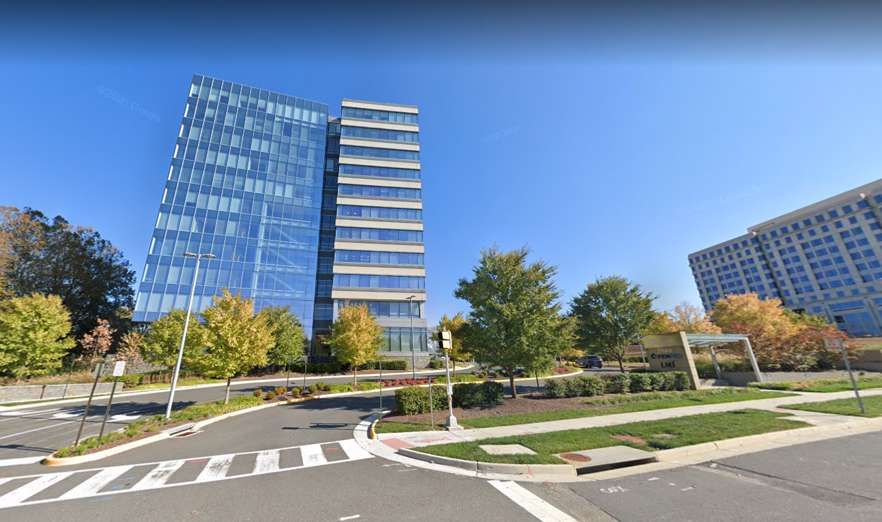
The Tysons-based consulting firm LMI has been named one of the best places to work in the D.C. area by The Washington Post, which announced the results of its eighth annual Top Workplaces survey on Friday (June 18).
Recognized in a virtual awards ceremony held on June 17, LMI landed at the top of the list for “Largest Companies,” the category for organizations with 1,000 or more employees in the D.C. area.
Employing 1,800 local workers, LMI primarily serves the federal government, but it recently announced a partnership with Howard University that will support academic research and student mentoring for the university, according to The Washington Post.
“Having recently joined LMI myself, very quickly I realized there were distinct aspects that set us apart as an organization — the resiliency and commitment of our employees,” LMI President and CEO Doug Wagoner said in a press release. “Over the past year, LMIers have not missed a beat. We continue to excel in terms of contract wins, revenue, and profitability, as well as expand our capabilities by hiring great talent and remaining focused on our customers’ missions.”
According to the Post, more than 3,500 area companies were invited to participate in the survey, which was conducted through the third-party platform Energage LLC. More than 65,500 employees completed the questionnaires, addressing topics from pay and benefits to the company’s direction and leadership.
While LMI was ranked the highest, the Tysons area was well-represented among the 200 companies on the list. Here are the other local businesses that made the cut:
Largest (1,000+ employees)
- Capital One Financial Corporation (#3)
- Jim Koons Automotive (#8)
- Dovel Technologies (#10)
Large (500-1,000 employees)
- Appian (#8)
- HITT Contracting (#21)
- ActionNet (#23): This Vienna-based cybersecurity firm has been recognized every year of the survey
- Applied Insight (#29)
Mid-Size (150-500 employees)
- ValidaTek (#8)
- SMS Data Products Group (#9)
- Thomson Reuters Special Services (#10): This is the McLean-based data and research analysis firm’s third consecutive appearance on the list
- Markon Solutions (#18)
- MicroHealth (#21)
- Credence Management Solutions (#26)
- Tax Analysts (#29)
- Steampunk (#36)
- EGlobalTech (#44)
- IntelliBridge (#48)
- Slalom Consulting (#53)
- Metropolitan Hospitality Group (#54)
- CollabraLink (#58)
- Alpha Omega Integration (#62)
Small (50-150 employees)
- New Editions Consulting (#5)
- Octagon (#12)
- Cassaday & Company (#22)
- SpinSys (#38)
- Favor TechConsulting (#51)
- Quadrint (#62)
- Infina (#67)
- B&A (#73)
- Counterpoint Consulting (#79)
Photo via Google Maps

Fairfax County is slated to send additional funding to businesses that suffered the most during the COVID-19 pandemic, but a Black nonprofit says more can be done.
The Northern Virginia Black Chamber of Commerce has repeatedly been neglected in the development of major business grant programs connected to Fairfax County, the nonprofit’s executive director Sheila Dixon says.
“I would have thought we would have had the opportunity to be at the table,” she said.
The county says it’s committed to working with more than 55 chambers, including minority chambers, multicultural groups, and other community and business support groups in multiple languages with its most recent financial assistance initiative.
A working group of local minority business owners is also trying to make changes and build bridges. A webinar co-hosted by the Community Foundation of Northern Virginia on June 23 seeks to address the needs of minority-owned businesses and how they can be helped.
The group has reached some conclusions and recommendations about equitable recovery across the region and is sharing data, according to the event description. Georgetown University adjunct professor Melissa Bradley, who also co-founded a business mentoring service called Ureeka, is the keynote speaker.
The county has noted these kinds of inequities. A consultant report for the county completed in January detailed how low-income and minority households faced greater difficulties in the workforce, along with women, who have been held back by affordable child care challenges.
Those findings came from working with businesses and a roundtable of minority chambers. The Northern Virginia Black Chamber of Commerce was invited to give input and was also asked to participate in a survey about impacts and recovery, according to the county.
Fairfax County’s Relief Initiative to Support Employers (RISE) program, which gave grants to small businesses and nonprofits, dedicated at least 30% of funding to businesses owned by women, minorities, or veterans. Those businesses ended up with 72% of the approximately $53 million of RISE funding, according to the county.
“We are building on and expanding those efforts,” county spokesperson Wendy Lemieux said in an email, adding that the county is committed to extensive outreach with businesses, particularly ones owned by women and people of color affected by the pandemic.
Unlike the RISE program, the county’s new PIVOT grant program didn’t include any provisions explicitly dedicating funds to often marginalized groups when the Board of Supervisors passed it last week.
Meanwhile, the Black chamber of commerce has shared the PIVOT grant information, but it’s also continuing its own initiatives to help businesses recover from the economic effects of COVID-19.
The organization recently launched an outreach called BTRNow (Build Thriving Returns Now) that provided an online workshop for kid entrepreneurs this spring, held a “Caring through COVID” panel discussion on Monday (June 14), and is currently carrying out a listening tour, among other programming.
Dixon says a lot of the chamber’s members have pivoted amid the pandemic and have been thriving.
But she also noted that there can be disparities, and various Black businesses might be reluctant to apply for resources if they’re skeptical that the support will materialize, even if race is considered as a factor in applications.
“It will be interesting to see if people feel more comfortable,” Dixon said. “We are building up and scaling up our businesses and providing them with the education and the resources that are available within the community.”
Photo via Nathan Dumlao/Unsplash