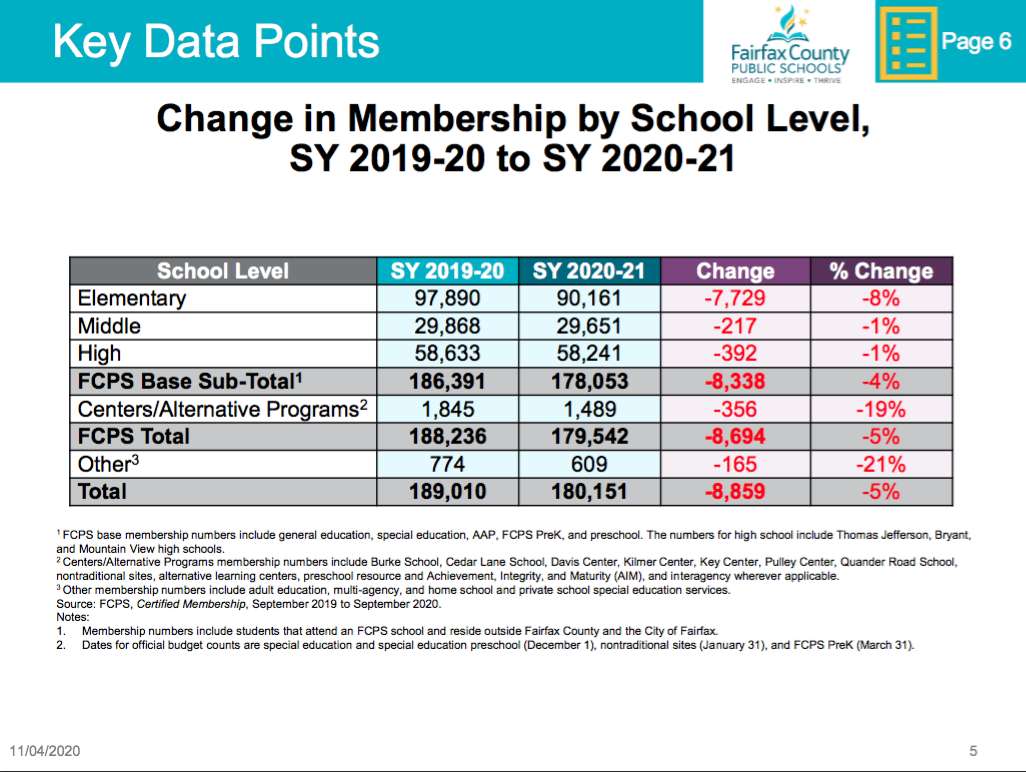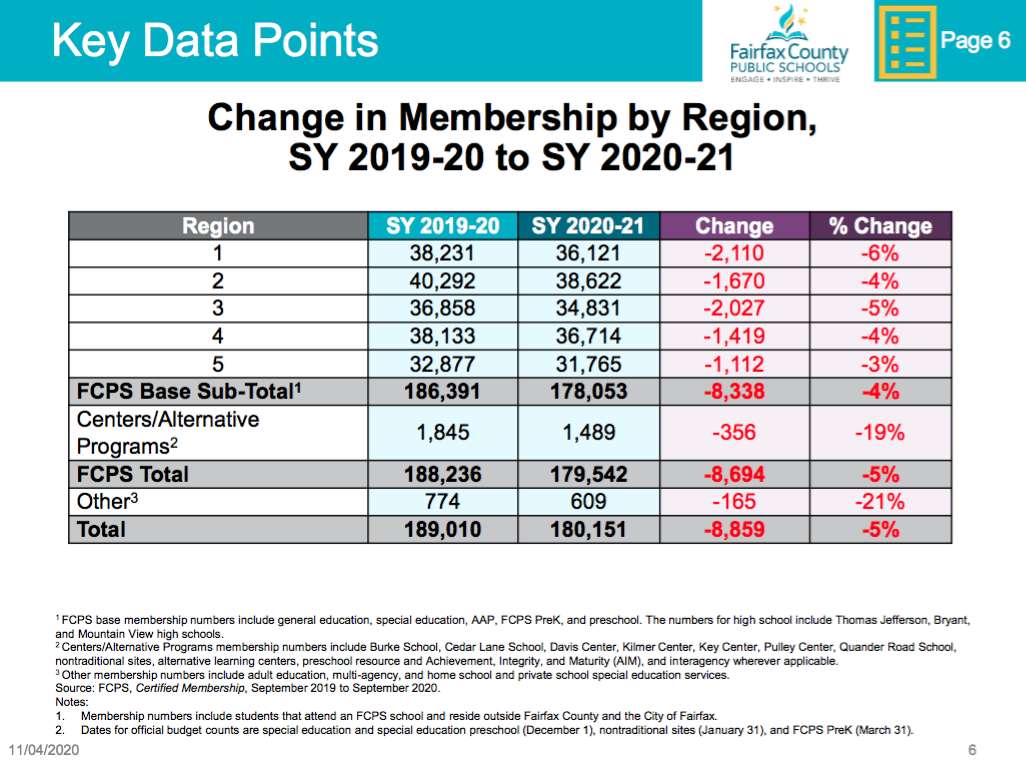

Driven by the uncertainty created by the COVID-19 pandemic, 8,959 students left Fairfax County Public Schools this school year with elementary school students, particularly kindergarteners, representing the most withdrawals.
About 87% of the students who left are in elementary school, and of those, 2,208 students would be kindergarteners, according to a Membership Trends Report presented to FCPS School Board members last Wednesday (Nov. 4). This report is used to inform the school board’s capital improvements planning process.
Transfer rates to other public schools in Virginia and the U.S. are on par with previous years, but FCPS has seen new spikes in students who transferred to private schools in Fairfax County or who switched to homeschooling.
“Right now, this is an unprecedented time, and it is reflected in the data we have,” Jeffrey Platenberg, the FCPS assistant superintendent of facilities and transportation services, said. “We have a lot going on and we don’t know how to proceed forward until we get this pandemic under control. To do anything during this time might not be recommended by the wisest of folks, because the data reflects such a marked difference from last year.”
If the dip in enrollment is temporary, FCPS will see a bubble in kindergarten next year that will roll through Fairfax County for the next 12 years, according to Superintendent Scott Brabrand.
“You have to do some things differently in our facilities for the next decade,” he said.
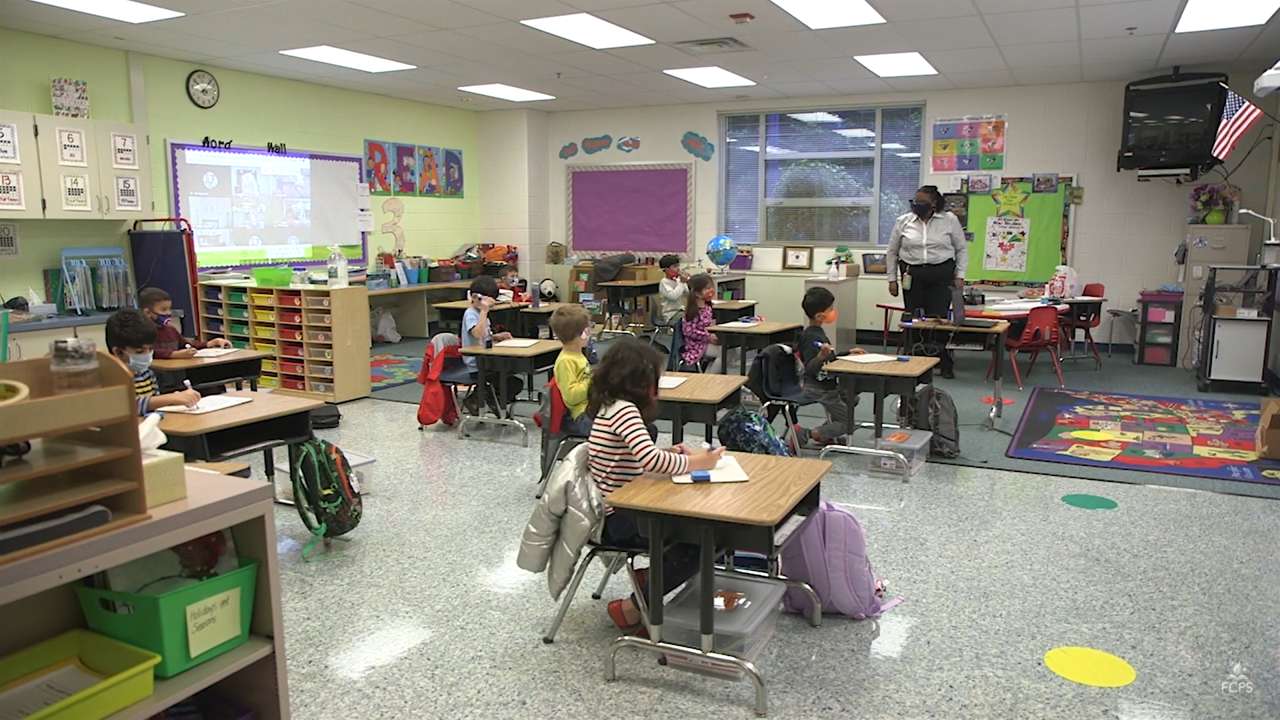
School board members and FCPS staff are already bracing for kindergarten enrollment to surge both when FCPS welcomes them back to school on Nov. 16 and for the next academic year starting in the fall of 2021.
That influx is a source of concern for school principals, Springfield District School Board member Laura Cohen says.
“Short-term and long-term kindergarten problems, how are we going to solve this?” Cohen asked.
Brabrand said FCPS is “overstaffed in kindergarten” because it acquired staff in the spring, when attendance had not yet taken a hit, rather than in late summer, when the hiring pool is much smaller.
“I know people don’t want to hear the ‘t-word’ of trailers, but we’re going to have some space challenges at those schools,” he said.
The remaining membership decreases were more modest, with 217 middle school students, 392 high school students, 356 center and alternative program students, and 165 students in other programs.
Yearly, FCPS sees thousands of students leave for public schools in other states, but the number of students who instead chose to homeschool or attend a private religious or secular school in the county this year is out of the ordinary.
Nearly 1,900 left to be homeschooled this year, up from 264 last year. About 1,100 left for a private religious school in Fairfax County, and 713 for a non-religious private school, up from 296 and 237 last year, respectively.
“When you look at those who have chosen [private schools], there is a significant increase over the prior year,” Platenberg said. “That’s pretty informing why families chose to withdraw from FCPS.”

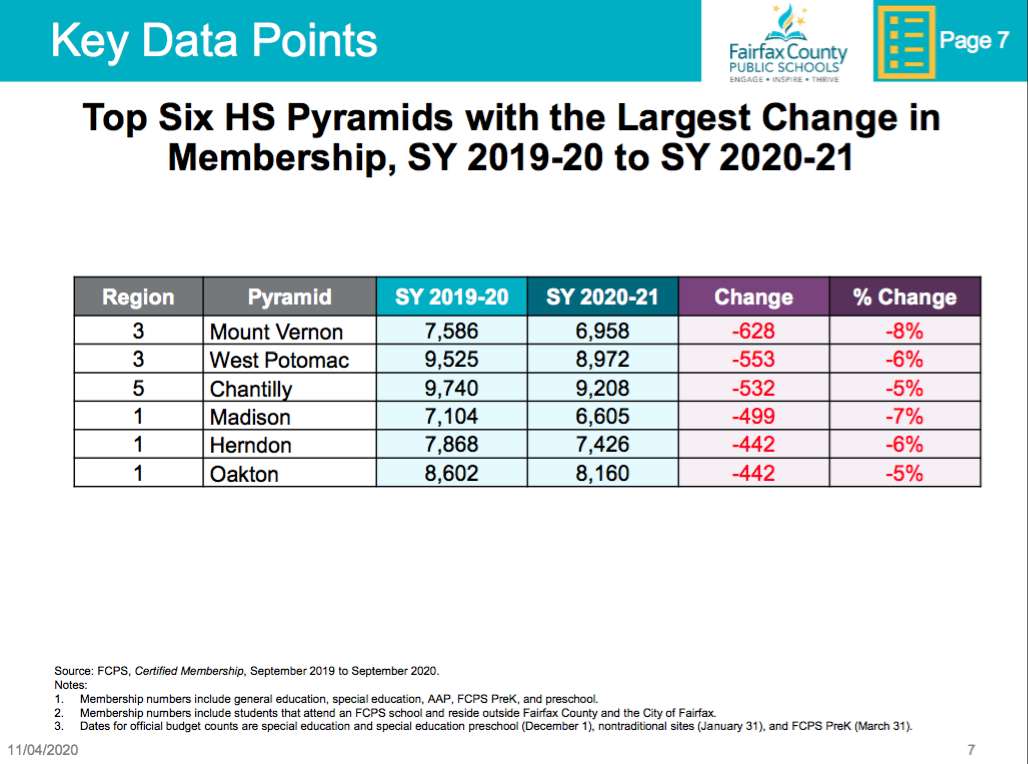
Of the five FCPS regions, the largest withdrawal rates come from Region One, which has schools in Herndon, Reston, Vienna, and the Langley area of McLean, and Region Three, which encompasses the area south of the city of Alexandria.
“I’m concerned when I look at some of these numbers at our high school level,” At-Large School Board Member Rachna Sizmore Heizer said.
She said schools with high rates of students who qualify for free- and reduced-price meals are seeing higher enrollment drops from last year to this year. She asked staff whether these changes are due to students not logging in and dropping out.
“We really are tracking that very carefully,” Deputy Superintendent Francis Ivey said.
This is not the first time schools with higher levels of families below federal poverty lines have been impacted by current events, Platenberg said.
“We’ve seen those trends with economic changes and changes in administrations, lags and shifts that occur,” he said.
Photo via FCPS
In a perfect world, Sahar Javadi’s children would have gone back to school on Aug. 25 as the Fairfax County School Board planned when it adopted a calendar for this academic year in July.
In a perfect world, there would presumably be no novel coronavirus, let alone a pandemic that appears to be resurgent in Virginia just as the weather cools and Fairfax County Public Schools prepares to usher more students back into physical classrooms for the first time since March.
Because this is not a perfect world, however, Javadi and thousands of other parents in Fairfax County have spent the past month deciding whether to send their children back to school and risk them contracting COVID-19, or stick with virtual learning despite its challenges.
Javadi says she has been impressed by how the teachers at Freedom Hill Elementary School in Vienna have adapted to online classes, especially compared to the chaotic transition that FCPS went through when schools shut down in the spring.
When surveyed over the summer and again in October about whether to continue exclusively with virtual learning or to attempt the hybrid model proposed by FCPS, Javadi opted to sign her fifth-grade and second-grade sons up for two days of in-person classes both times.
“I am a little nervous, but part of it is also, [we] just gotta take a plunge and see where we go next and kind of be adaptive as we move along, because it’s not like COVID’s going away any time soon, right?” said Javadi, who is the president of Freedom Hill’s PTA.
If FCPS sticks with its current “Return to School” plan, which could change if COVID-19 cases continue to rise, Javadi’s younger son will be part of the cohort of first-grade, second-grade, and special education students scheduled to resume in-person learning on Nov. 30.
Fairfax County started bringing students into classrooms on Oct. 5 for specialized high school career preparatory programs. Since then, select groups of special education students and English-language learners have returned, and a cohort of pre-kindergarten and kindergarten students is expected to start in-person classes on Nov. 16.
While Javadi says she feels reassured by FCPS’s planned health protocols, which include a mask requirement and reduced class sizes, Bailey’s Elementary School PTA president Melissa Snyder is more ambivalent about choosing hybrid learning for her first-grader and her third-grader, who is not scheduled to go back to school until Jan. 4.
“It was a difficult decision, and it’s not, from our perspective, an endorsement of the plan to return to school,” Snyder said. “It was made mostly because we didn’t think that the kids were going to get what they needed with the concurrent learning plan. If it had been a truly all-virtual class, we would’ve kept them virtual.” Read More
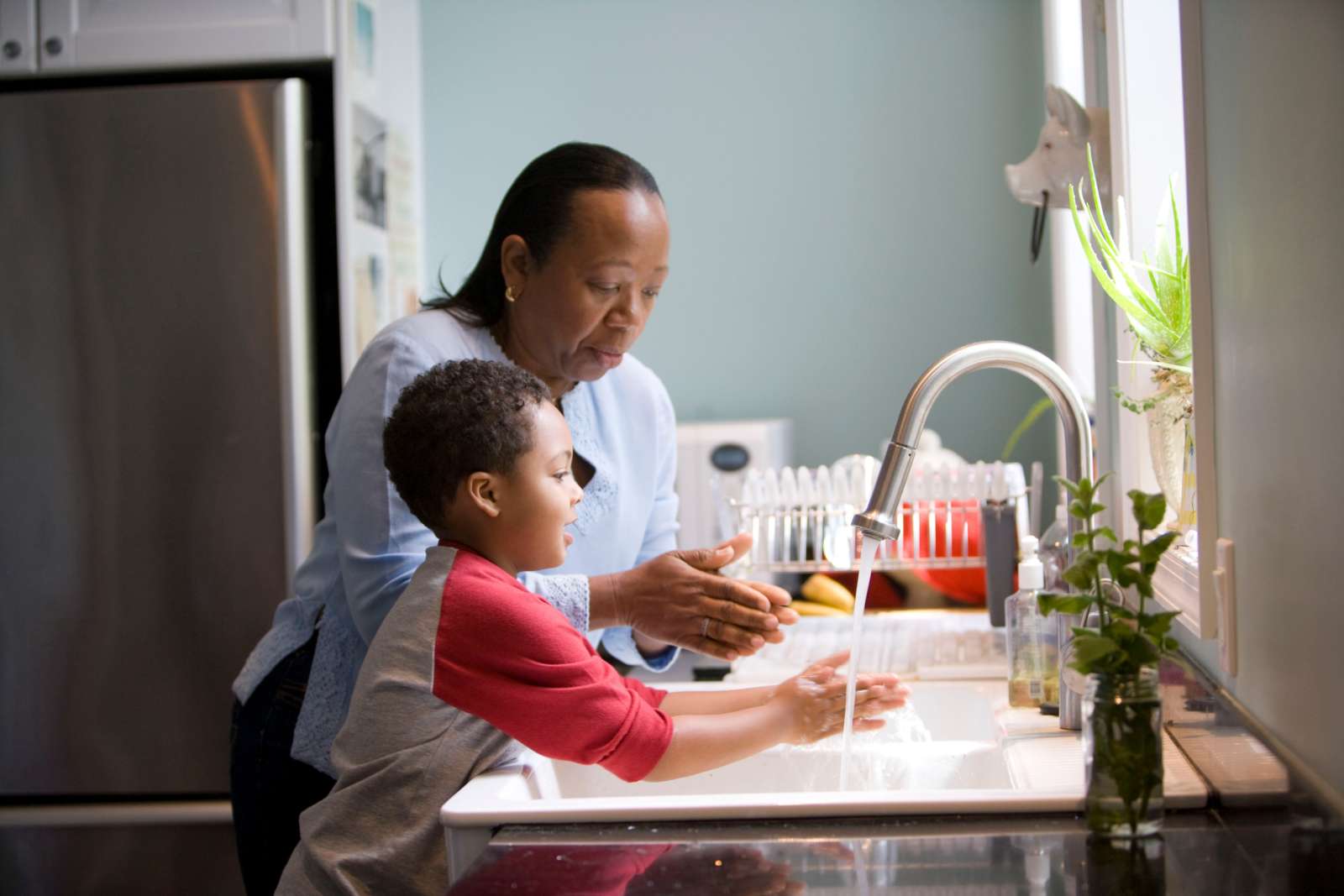
With Covid-19 cases rising and cold and flu season on the horizon, schools must focus on common-sense cleaning and disinfecting practices if they want a safe return, the American Cleaning Institute says.
On Nov. 16, Fairfax County Public Schools will open in-person instruction for Early Head Start, pre-kindergarten, kindergarten, and special-education students receiving intensive supports and attending center-based programs, according to an update sent to parents on Oct. 23. In-person cohort learning will begin on Nov. 30 for grades 1-2 and special-education students in career centers.
In partnership with the U.S. Centers for Disease Control and Prevention, the ACI is asking schools and families to encourage children to wash their hands with soap at school and at home. Hand hygiene is a foundational habit for slowing the spread of the novel coronavirus and seasonal illnesses like influenza, especially in schools.
“It’s so simple and so important, especially at schools, as they plan to reopen,” said Brian Sansoni, the Senior Vice President of Communication, Outreach and Membership at the American Cleaning Institute.
But among adults in the United States, hand-washing rates are down compared to the start of the pandemic, according to a recent survey by the ACI. Parents play as big a role as schools in forming hand hygiene habits, Sansoni said.
“Kids see what parents do and don’t do,” he said. “Reinforcing habits at home is really important for setting examples.”
Schools must be extra diligent in communicating to parents the importance of hand-washing habits at home. Schools must also be hyper-vigilant in restocking soap and hand-sanitizer dispensers, and providing supervision and encouraging hand-washing before eating and after restroom use.
“Where the extra care is required, hopefully there is communication between parents and school staff,” Sansoni said.

Another common-sense practice is disinfecting high-touch hot-spots daily. These zones include desks, chairs, tables, countertops, knobs, light-switches, classroom electronics, toilets, and drinking fountains.
Coincidentally, the COVID-19 pandemic hit as the ACI was planning to revamp its Healthy Schools, Healthy People initiative, Sansoni said. This year, the institute was preparing to focus more on hand hygiene and cleaning as a way of reducing absenteeism caused by seasonal illnesses.
“Once we get past this, hopefully, we don’t take our foot off the pedal when it comes to common-sense hygiene,” Sansoni said. “The cold and flu happen every year, and there are countless school days lost due to infection among students and staff.”
Pre-pandemic, the ACI spoke with school nurses across the nation and learned that nurses, at the front lines of school health, face an uphill battle with hygiene education.
Some nurses were frustrated at the lack of soap and cleaning materials, Sansoni said. In other areas, nurses needed their school districts and systems to encourage everyone to exemplify good behaviors.
“They have a tough job,” Sansoni said. “They try to emphasize this year round.”
Photo via the CDC

As Election Day approaches, public facilities in Fairfax County are announcing what will be closed and what will remain open on the state holiday.
Since the county opted to give most employees the day off, most Fairfax County government facilities will be closed, including the government center. However, the Office of Elections will be open, and polls will be open from 6 a.m. until 7 p.m.
“The right to vote is a very important, very important part of our American process,” Fairfax County Executive Bryan Hill said on the “Connect with County Leaders” podcast. “The Board of Supervisors on the FYI 22 calendar added Election Day as a day off, so it made most sense on a presidential election cycle to also add it.”
“Once they added it on…the calendar year ’22, I spoke to the supervisors and asked them if they would like it also to be on November 3, 2020,” Hill added.
The City of Falls Church will be operating as normal, according to Susan Finarelli, the director of communications for the city.
The Town of Vienna will also stay open, Vienna marketing and communications manager Lynn Coan says.
Students within Fairfax County Public Schools will have both Nov. 2 and Nov. 3 off of school, with today marking the end of the first quarter. Additionally, FCPS will be distributing double breakfast and lunch meals on Nov. 2 to cover both days off as a food resource for students, according to FCPS.
Virginia designated Election Day as a state holiday for the first time this year when the General Assembly passed legislation to substitute it for Lee-Jackson Day, which the Commonwealth had observed on the Friday preceding Martin Luther King Jr. Day in January since 1904.
“Voting is a fundamental right, and these new laws strengthen our democracy by making it easier to cast a ballot, not harder,” Virginia Gov. Ralph Northam said upon signing the bill into law. “No matter who you are or where you live in Virginia, your voice deserves to be heard.”
Photo by Element5 Digital/Unsplash
Updated on 10/30/2020 — The Virginia High School League announced that Virginia Gov. Ralph Northam has signed an executive order allowing high school students to start playing sports in December.
“Keeping our student athletes safe is critical during this pandemic,” Northam said. “I know I join many parents in looking forward to the safe return of school sports.”
Earlier — The Virginia High School League is currently working with the governor’s office to potentially get a waiver that would let public school students compete in sports starting on Dec. 7, even if the state remains in Phase 3 of its reopening plan.
Signs point to Virginia public schools “likely” getting permission to proceed with a truncated winter sports season, Fairfax County Public Schools student activities and athletics director Bill Curran said in a virtual town hall on student athletics hosted by Hunter Mill District School Board representative Melanie Meren on Wednesday (Oct. 28).
“VHSL has worked very closely with the Virginia Department of Health and governor’s office with regard to opening back up and what guidance and changes would need to be made so we can have high school sports on Dec. 7,” Curran said.
Virginia has been in the third phase of Gov. Ralph Northam’s Forward Virginia plan for guiding the Commonwealth through the COVID-19 pandemic since July 1.
Under Phase 3, both indoor and outdoor recreational sports are limited to 250 people, including players, staff, and spectators. Those individuals are also expected to maintain 10 feet of physical distance “where practicable.”
As it is now written, Phase 3 “basically does not allow for high school sports” beyond optional workouts for individual teams, Curran says.
As the nonprofit that serves as Virginia’s governing body for student athletics and activities, the VHSL has spent the past several months developing guidelines that it hopes would enable high school sports to resume this winter with Phase 3 restrictions in place.
After voting on July 27 to delay all sports and activities until mid-December, the VHSL executive committee unanimously agreed on Sept. 17 to adopt a condensed schedule with winter, fall, and spring sports.
The proposed “Championships + 1” Condensed Interscholastic Plan would generally unfold as follows:
- Dec. 7-Feb. 20: winter sports, including basketball, gymnastics, indoor track, swim and dive, wrestling
- Feb. 4-May 1: fall sports, including football, volleyball, golf, field hockey, cross country, and competitive cheerleading
- Apr. 12-June 26: spring sports, including baseball, softball, tennis, lacrosse, soccer, and track and field
Trying to resume sports when FCPS is still wrestling with how to reopen schools for in-person learning might raise some eyebrows, but Meren says she believes it is an important discussion to have.
“I know how important it is for kids to be active,” Meren said. “Sports can be a gateway to scholarships, academics, and careers.” Read More
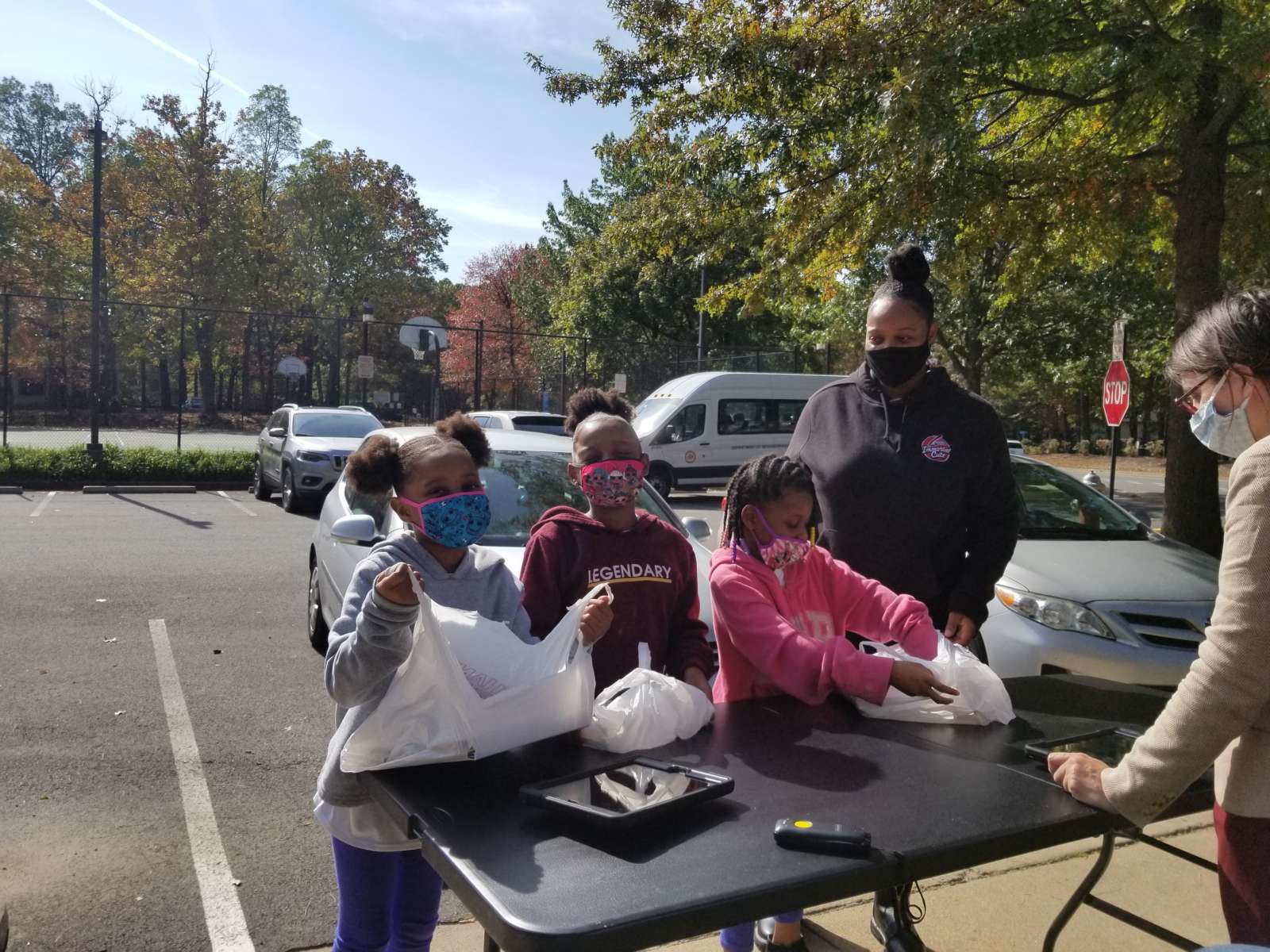
Young readers now have virtual access to the Fairfax County Public Library through a new program created in partnership with Fairfax County Public Schools.
LEAP, or Library Equity Access Pass, started on Oct. 1. The program was initially piloted in 2019 and was created to ensure student access to library materials, even without a library card or an account with the library, according to the program website.
Now, the program has been adapted to a virtual platform, making access even easier in the midst of the pandemic.
Through LEAP, students grades PreK-12 only need their name to check out materials. Additionally, the program will never charge fines or fees. Each account will allow students to check out up to three items at a time for six weeks each.
The program has been running for about three weeks and has already served students at each of the county’s branches. While the program hasn’t run long enough to collect specific usage data, LEAP customers and staff have reported questions about the program from across the community.
“Word is spreading, our marketing efforts are reaching people, and the community seems enthusiastic about LEAP,” said Ted Kavich, the administrative services division director of the FCPL.
In particular, on Oct. 20, the staff at Reston Regional Library worked with staff from Dogwood Elementary School to check out books to local families using the LEAP accounts, according to Kavich. According to the school, more than 15 families were provided with books.
For more information, students and parents can ask a teacher or librarian at their school, or call any FCPL location.
Photo via Dogwood Elementary School/Twitter
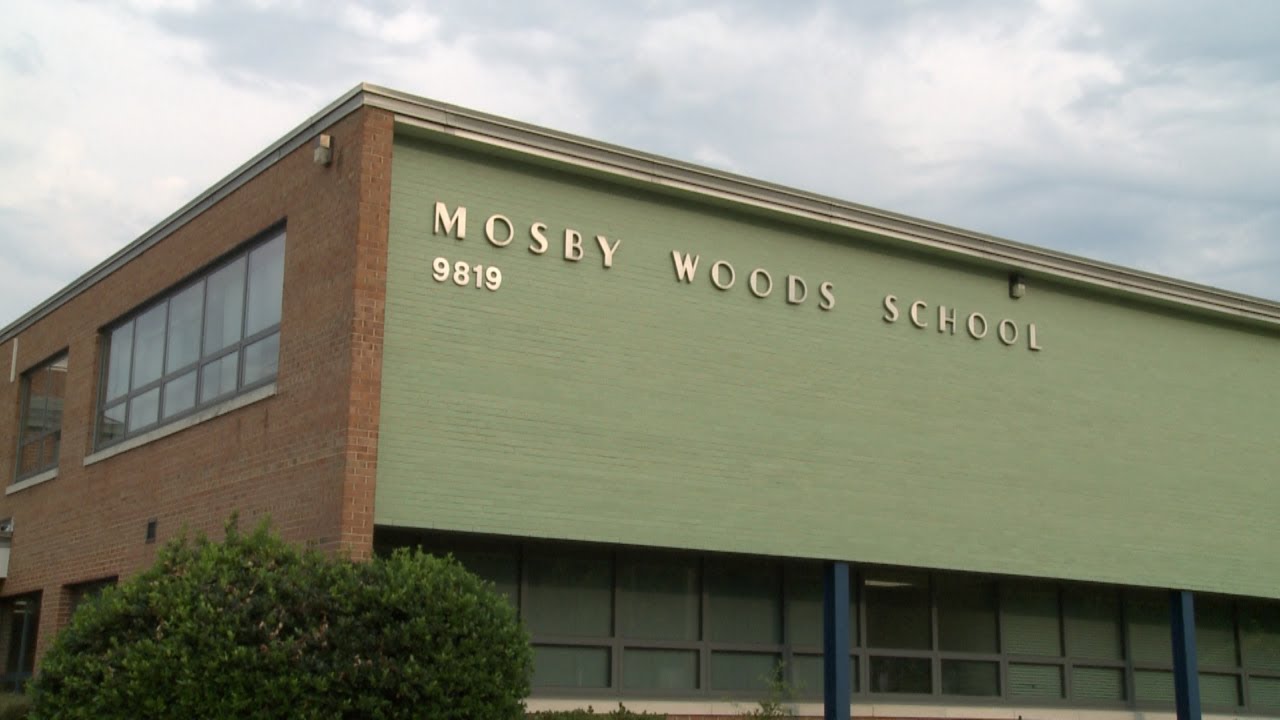
Fairfax County Public Schools Superintendent Scott Brabrand revealed his suggestions for a new name for Mosby Woods Elementary School to the Fairfax County School Board on Thursday (Oct. 22).
Listed in no particular order, the recommended names are:
- Mosaic – a nod to the school’s proximity to the Mosaic District
- Five Oaks – the name of the road where the school is located
- Katherine Johnson – a mathematician who helped make spaceflight and the Apollo 11 moon landing possible as a “computer” for NASA
- Mary McBride – a teacher who helped start a school near Fairfax Court House for the children of freed slaves after the Civil War
- Barbara Rose Johns – a student civil rights activist who led a strike in protest of conditions at the all-black Moton High School in Farmville, Va., paving the way for Brown v. Board of Education
Brabrand compiled his recommendations based on input from the Mosby Woods community after the school board voted on Oct. 8 to change the Fairfax school’s name so that it no longer bears the moniker of John S. Mosby, who achieved prominence as a calvary commander for the Confederate Army.
Providence District School Board representative Karl Frisch and at-large member Karen Keys-Gamarra proposed renaming Mosby Woods Elementary School on June 18 with the support of descendants of Mosby.
Under the current FCPS regulation for renaming school facilities, the school board is required to provide a one-month period for public comment between the superintendent’s submission of recommendations for a new name and the board’s final vote on the new name.
Led by the region assistant superintendent and the school board members who represent the area where the school in question is located, the public comment period must include a community meeting, public hearing, and the acceptance of mail and electronic feedback.
The community meeting on the recommended names for Mosby Woods has been scheduled for Nov. 30, and a public hearing will be held on Dec. 2 before the school board has a deciding vote on the new name on Dec. 3.
Image via FCPS
The Fairfax Education Association is petitioning Fairfax County Public Schools to remain virtual until August 2021.
“Science and Health Safety data support and require that no one should return to in person instruction until there is a widely available scientifically proven vaccine or highly effective treatment,” the petition said. “The metric for Safe Reopening should be 14 days of zero community spread.”
So far, the petition has more than 1,000 signatures and is 600 away from its goal. The union, which represents 4,000 staff in the school system, published the petition on Sept. 30, but received renewed attention after a tweet about it went viral.
The Fairfax County teacher’s union wants all public schools closed at least until August 2021. @FCPSSupt pic.twitter.com/CuLCXRCGOV
— Rory Cooper (@rorycooper) October 20, 2020
But not all teachers support the petition, according to one Twitter user.
https://twitter.com/livinindc8/status/1318613492522430464
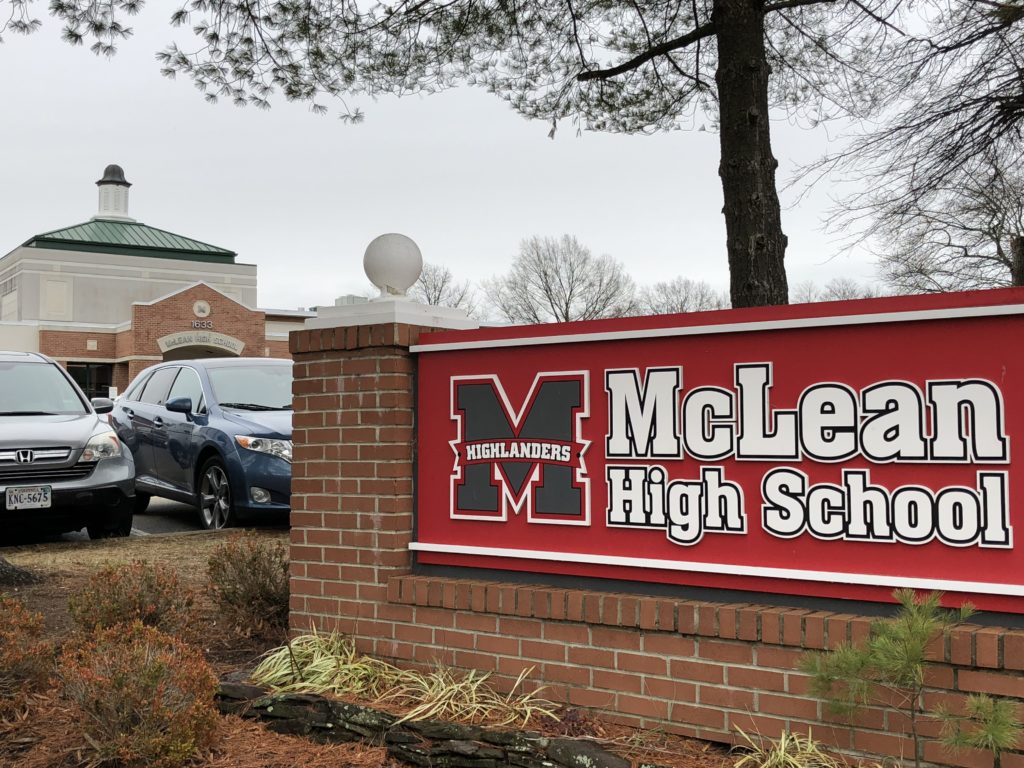
McLean High School is one of three Fairfax County public schools that have canceled plans to serve as test centers for the SAT on Nov. 7.
One of the other schools, Hayfield Secondary School in Alexandria, has scheduled a make-up date for Nov. 21, but McLean’s next SAT test date is not until Dec. 5. The third school to opt out of the Nov. 7 testing date — Westfield High School in Chantilly — does not appear to be offering the SAT again until Mar. 13.
Fairfax County Public Schools says it is customary for individual schools to make their own decisions about hosting the SAT, because they are responsible for assigning staff to proctor the test.
“The three schools that cancelled in Fairfax County for November 7 cited various reasons for doing so, primarily due to staffing difficulties,” FCPS director of news and information Lucy Caldwell said in a statement to Tysons Reporter. “Fortunately, students are able to take the exams at any of the schools where it is offered.”
Higher education institutions have long used scores from standardized tests like the SAT to help determine student admissions, but skepticism of this approach has grown in recent years, with critics arguing that the tests tend to be culturally biased and favor students whose families can afford to pay for private tutoring.
According to the National Center for Fair and Open Testing, also known as FairTest, more than 1,630 four-year universities and colleges in the U.S. have made reporting SAT or ACT scores optional for fall 2021 admissions, including Fairfax’s George Mason University, which became the first public university in Virginia to adopt a test-optional policy in 2007.
Because of school closures and public health concerns triggered by the COVID-19 pandemic, the National Association for College Admission Counseling released a statement on Aug. 26 urging public institutions to make standardized test scores optional for the 2021-22 admissions cycle.
“Inequities caused by COVID-19 disruption – loss of family income, secondary school closures, interruptions in the K-12 educational program – will worsen an already difficult situation for millions of students,” NACAC said. “In this critical time, public colleges must be mindful of their founding purpose of serving students and families and recognize that lifting testing requirements in 2020-21 will be in the students’ best interest.”
College Board, the nonprofit that oversees the SAT, asked colleges to provide flexibility by extending deadlines for receiving test scores, giving equal consideration to students who can and cannot submit scores, and recognizing that students who do submit scores may not have had the opportunity to take the test more than once.
After putting the SAT on hiatus in April, May, and June, College Board resumed administering the test in August, but the organization notes that “there is limited testing capacity in certain areas due to public health restrictions and high demand.”
FCPS high schools hosted an SAT School Day on Sept. 23. A list of schools that will be hosting the SAT on Nov. 7 can be found at fcps.edu/sat.
Students are required to wear masks, complete a health screening questionnaire, and register the exam ahead of time, rather than on-site, among other guidelines.
“Fairfax County Public Schools is committed to the health and safety of all staff, students, and parents/guardians,” FCPS says. “All testing procedures and safety protocols will be followed to ensure testing and cleaning practices meet current health department and division guidance.”
Photo via McLean High School PTSA
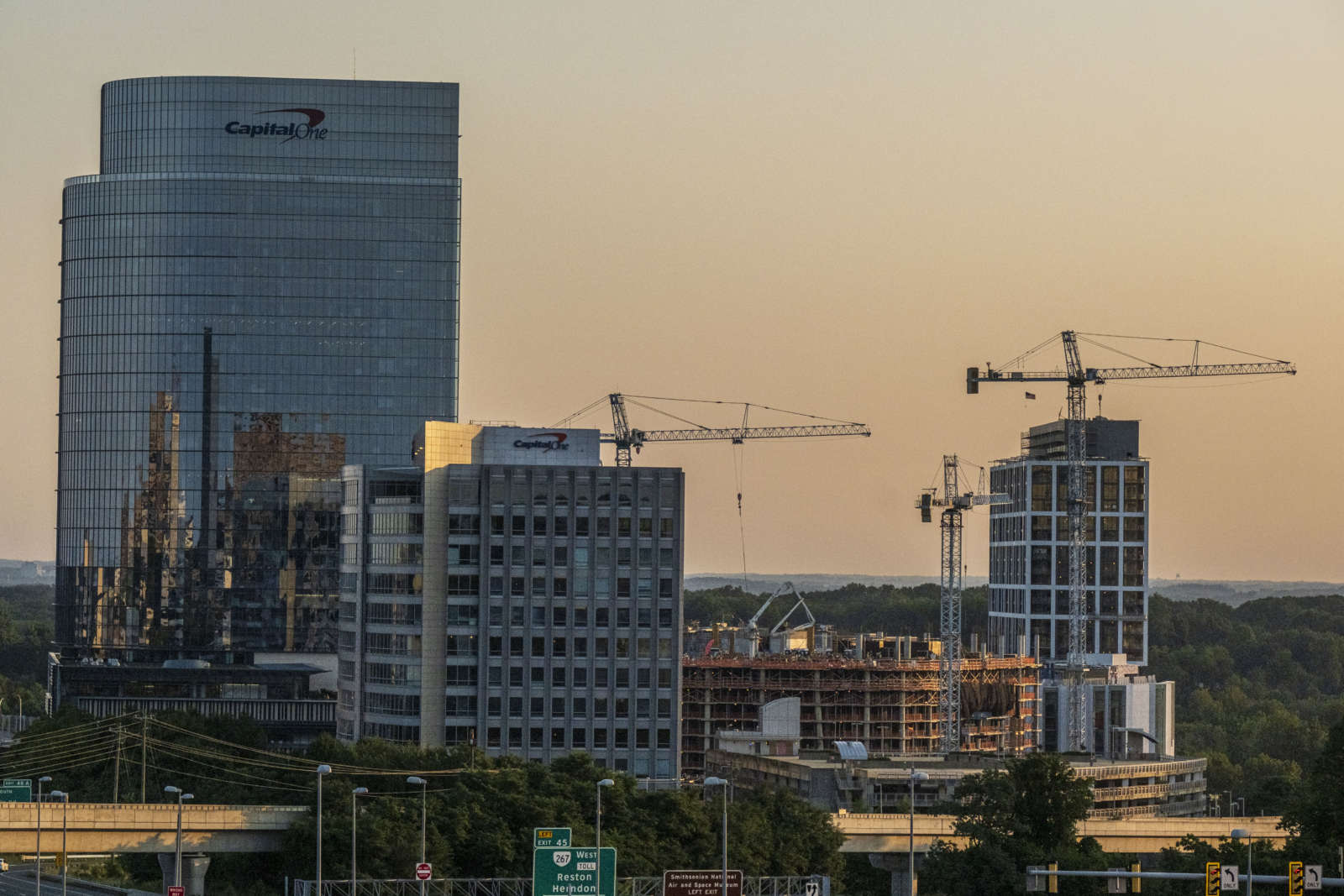
As the Tysons plan reaches its 10-year anniversary, Supervisors John Foust and Dalia Palchik spoke candidly to the McLean Citizens Association last night (Wednesday) about some of the challenges facing the Tysons plan today.
While many of the issues were Tysons-specific, they are also challenges the entire region faces as Northern Virginia becomes more urbanized:
- Walkability
- Schools
- Affordable Housing
For some of these, the recent pandemic has both brought the issues into focus and helped present new opportunities.
“One of my favorite topics is walkability,” Palchik said. “[We’re] looking now at how we make Tysons more walkable.”
Palchik pointed to a recent success in temporarily closing a section of Tysons Blvd to allow for more cycling and walking. Palchik pointed to it as a step in the right direction, but said it also took a lot of work to make it happen.
“It took a month to get Fairfax and the Department of Transportation to agree on a location,” Palchik said. “I hope to see more flexibility to create a sense of place.”
Palchik pointed to the planned pedestrian and bike bridge going over the beltway as another upcoming walkability success. Tysons is also slated for more investments to connect the blooming city’s street grid.
“Sometimes, new streets can feel in conflict with existing conditions, but [we’re] trying to make it more walkable,” Palchik said. “Change can be hard, but we’re looking at the upsides and really listening.”
Palchik and Foust both repeatedly praised the foundation of the Tysons plan, but said there are things that need tweaking.
“One issue that continues to bother me is the fact that we don’t have a plan for delivering school facilities in Tysons yet,” Foust said. “We have gotten a proffer of land for an elementary school. That’s an issue that’s going to head up, going forward.”
Palchik said the county needs to be more flexible on how schools are built, for example, building smaller schools with less grade levels than traditional elementary, middle, and high school models.
“We’ve been working on proffers, because the county can’t buy land,” Palchik said. “We’re looking at being more flexible, knowing this area is urbanizing. Can we get five acres? Can portions of development be dedicated to classrooms?”
Foust said another issue that’s really been prevalent during the pandemic is the lack of affordable housing in the area.
“Our challenge is delivering housing for 80% below and 60% below [Area Median Income],” Foust said. “We’re working on that challenge to increase the amount of housing that is truly affordable.”
COVID-19, Foust said, has hopefully helped to highlight the role essential workers play.
“COVID, if nothing else, has opened up our eyes to who is truly our essential workers, and they’re not the people making the income that can put you in a luxury apartment in Tysons,” Foust said. “They’re the kind of people working in the department stores and grocery stores, the service providers, and they deserve to live in the community where they work.”
Staff photo by Jay Westcott