

The Oakton-based nonprofit that runs Northern Virginia’s suicide and crisis hotline is now offering mental health services specifically geared toward young, LGBTQ people.
PRS announced yesterday (Thursday) that it’s hiring 40 new crisis workers who have specialized training and experience to handle calls and texts from LGBTQ individuals who are 25 or younger.
The support services are part of the organization’s CrisisLink program, which operates the national, 24-hour 988 Suicide and Crisis Lifeline for most of Virginia.
“Providing tailored crisis services will help us reach more people and connect them with safer life-saving services and resources that affirm their identities,” PRS CEO Joseph Getch said in a statement. “We now have crisis workers dedicated to this community that have additional training, lived experience, and a dedication to serving individuals within the LGBTQIA+ community. We are proud and eager to provide hope, empathy, and compassion.”
Formerly known as the National Suicide Prevention Lifeline, 9-8-8 was established by Congress in 2020 as the nationwide phone number for accessing emergency mental health support. It officially replaced the pre-existing, 10-digit number on July 16, 2022.
The legislation required the new lifeline to have a “mechanism” where LGBTQ youth, minority and rural callers can access specialized services, because those populations are statistically at higher risk of contemplating or dying by suicide.
More than half (52%) of high school students who identify as lesbian, gay or bisexual or who are questioning their sexual identity reported recently experiencing poor mental health, and 45% had seriously considered suicide within the past year compared to 15% for their heterosexual peers, according to a February report by the Centers for Disease Control and Prevention.
The CDC report, which examined trends from 2011 to 2021, didn’t address gender identity, but this summer, Denmark released a first-of-its-kind study that found transgender people died by suicide at 3.5 times the rate of the rest of the country’s population.
In Virginia, 43% of LGBTQ youth, including 53% of transgender and nonbinary youth, reported seriously considering suicide in the past year. In addition, 13% of LGBTQ youth, including 17% of trans and nonbinary individuals, attempted suicide in the past year, according to state-level data collected in 2022 by The Trevor Project.
The LGBTQ youth-focused suicide prevention nonprofit attributes those trends to the rejection and discrimination those populations experience in society, especially in a year when lawmakers have introduced hundreds of bills restricting their access to health care, education and other rights.
Virginia Gov. Glenn Youngkin’s administration rolled out policies in July that direct schools to identify students based on their legal sex and names, though Fairfax County Public Schools has maintained its existing policies that support transgender and gender-expansive students.
“We know these young people face stigma, discrimination, and oppression making reaching out for help and connecting to safe resources incredibly difficult and scary,” Gretch said, noting that PRS is continuing “to evolve our crisis services to meet the needs of different populations.”
Established in 1963, PRS provides therapy, peer support, housing and employment assistance and other behavioral health services, along with its CrisisLink call center, which receives 14,000 calls per month on average, including 4,500 from Northern Virginia.
According to a press release, PRS is one of only four 988 Suicide & Crisis Lifeline centers in the country to offer chat and texting option to LGBTQ youth in addition to calls.
The LGBTQIA+ service provides several ways to get in touch: text “Q” to 988; press 3 when prompted while calling 988; or go to 988lifeline.org/chat and check the LGBTQI+ box in the pre-chat survey. These options are designed for anyone under 25 who wants to connect with a trained crisis worker specifically focused on meeting the needs of LGBTQIA+ youth and young adults.
A Fairfax County Public School basketball coach is facing embezzlement charges.
Drew Smerdzinski, 33, of Herndon, embezzled money from a school event, the Fairfax County Police Department said today (Friday).
According to the FCPD, detectives began an investigation in July after the police department received a tip from FCPS about the possible misappropriation of funds by an employee.
Smerdzinski turned himself in yesterday (Thursday) after detectives obtained a warrant for him on Wednesday (Oct. 4). He was suspended from his position after his arrest, police said.
Smerdzinski was employed at James Madison High School in Vienna, but “the embezzlement occurred in relation to his role as a basketball coach,” an FCPD spokesperson says. He’s not listed in the school’s staff directory.
He was charged with felony embezzlement and released on an unsecured bond.
FCPS declined to comment, citing the police investigation.
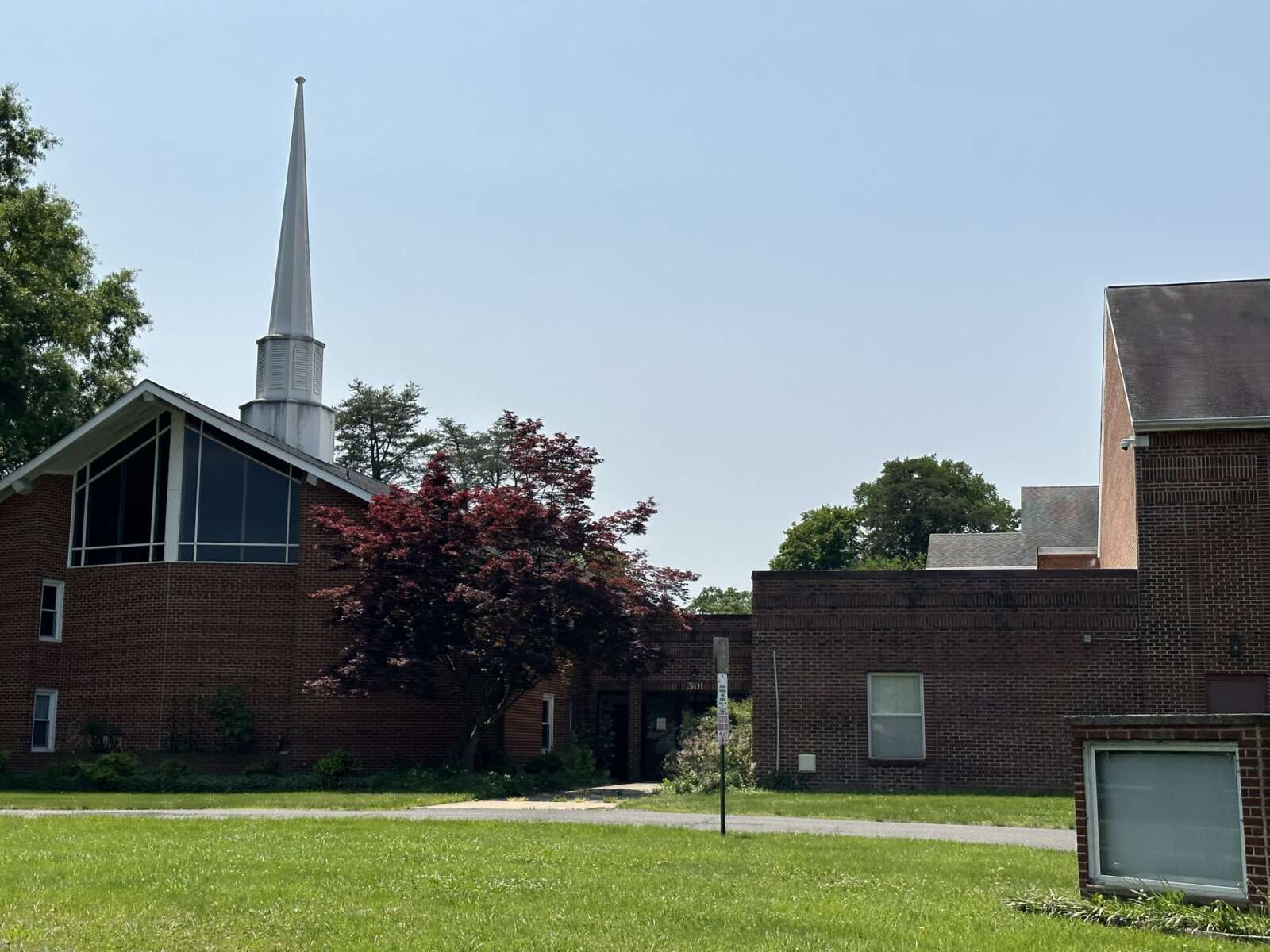
(Updated at 2:20 p.m. on 10/31/2023) The end is nigh for Vienna’s former Faith Baptist Church.
The Vienna Town Council gave town staff the green light on Monday (Oct. 2) to pay a contractor $327,608 to demolish the building at 301 Center Street South, where it has stood since the 1950s and remained vacant since the police department finished moving out in January.
The town’s public works department anticipates that the demolition will take place three to four months from now, according to Town of Vienna Public Information Director Karen Thayer.
“Unless something unexpected comes up, the building will likely be removed by early February,” Thayer told FFXnow.
Vienna bought the 3-acre property for $5.5 million in September 2020 to temporarily house its police officers during construction on a new, $14 million police station just down the road at 215 Center Street South.
However, the town has yet to settle on a long-term plan for the site, now known as the Annex. Council members debated whether to keep at least the church’s gym, but they ultimately voted on June 5 to tear it all down after seeing escalating costs of maintaining the two-story building and bringing it up to code.
The demolition budget increased as well from an initial estimate of $250,000. Coming out of a 2022 capital projects bond, the funds approved this week include a 10% contingency and the cost of removing asbestos that a survey found in August, acting public works director Adam Lehman told the town council.
“The asbestos has to be removed out of the building prior to tearing down the building itself,” Lehman said.
The demolition will be done by The Berg Corporation, which will also be responsible for removing the asbestos and “all concrete slabs and walkways” belonging to the building, town staff said.
“The contractor will provide tree protection, erosion control measures and will import clean fill and topsoil as necessary to provide positive drainage after the building has been demolished,” staff said in a summary for the council. “The contractor will provide seed/straw to stabilize areas disturbed by the demolition work.”
The property’s parking lot and driveway won’t be included in the demolition.
A study conducted this spring and summer to gather public input on a long-term use for the Annex suggested community members favor a recreational facility, but with a new parks master plan on the horizon, the council held off on a more in-depth evaluation of a potential project’s operational and financial needs.
The council deferred a vote on Monday that would’ve kickstarted the development of the new parks plan, by hiring the consultant Kimley Horn for $236,230.
“The Park System Master Plan will set a vision to guide long-term future development, re-development and improvements to the Town’s parks systems, open space, trails and recreation facilities over the next 5 to 10 years,” town staff said. “…The project will also update the inventory of existing parks, open space and trails, and provide a conditions report for each park and its facilities.”
The Annex is one of several town-owned properties that staff have suggested considering for recreational uses, including the water towers on Tapawingo Road and Wall Street and the Beulah Road site previously used for mulching.
As part of the planning effort, the town has asked Kimley Horn to propose three development options for the Robinson family’s property at 124 Courthouse Road SW. Already identified by the council as a site for a future park or recreational facility, the house has been vacant since former councilmember Maud Robinson died in 2019.

Toll Lanes Proposed on I-495 From Springfield — “A proposal to widen an 11-mile stretch of the Capital Beltway in Virginia has entered a new phase with the release of nine possible construction alternatives. Topping the list is an extension of toll lanes into Maryland.” The concepts also include dedicated bus lanes and “technological enhancements.” [Washington Post]
Teens Arrested in Kingstowne Shooting — “Two teenagers were arrested in connection with a shooting that took place last month in the Kingstowne Shopping Center, according to the Fairfax County Police Department. Shortly after 9:30 p.m. on Sept. 22, police officers responded to the 5900 block of Kingstowne Towne Center for the report of the sound of gunshots…No one was injured from the gunfire.” [Patch]
Early Education Center Nears Opening in Lorton — “A few months after the July 26 opening of Lidl supermarket at Liberty Market in Lorton, several other businesses are preparing to open their doors. One of the highly anticipated openings is the new Brynmor Early Education & Preschool, which will hold a ribbon- cutting ceremony and tours Saturday, Oct. 14 at 10 a.m. before opening to children ages six weeks to five years on Monday, Oct. 16.” [On the MoVe]
Fairfax County Libraries See Few Book Complaints — “As some books are getting challenged across the country — and in some cases, removed from school libraries in Virginia — few concerns result in formal complaints in Fairfax County libraries, according to Dustin Booher, the library system’s collection coordinator. On average, one or two books per year make it to the formal review process.” [WTOP]
Vienna Town Council Sets Hearing on Tree Preservation — “With one additional vote that hadn’t been there a week earlier, the Vienna Town Council narrowly agreed Oct. 2 to hold an [Oct.] 23 public hearing on a proposed tree-canopy ordinance…The Council differed over elements of two proposed tree-canopy ordinances.” [Gazette Leader]
Animal Shelter Staff Reunite With Rescued Beagles — “It’s been a year since we welcomed 26 beagles as part of the historic rescue of 4,000 beagles from a mass breeding facility owned by Envigo. We were thrilled to see some Fairfax County alumni at the recent Beagleversary Bash hosted by The Humane Society of the United States.” [Fairfax County Animal Shelter/Facebook]
‘Historic Ascent’ for Reston Tech Company’s New CEO — “Toni Townes-Whitley officially started as the CEO of Reston-based Science Applications International Corp. (SAIC) on Monday, October 2. Townes-Whitley is one of two Black women currently running Fortune 500 companies. She succeeds Nazzic S. Keene, a rare example of a woman CEO handing off to another woman at a large publicly-held company.” [FCEDA]
Discount Offered Cirque Du Soleil Tickets in Tysons — “@tysons_va has partnered with @Cirque to host a Tysons Community Day during their US debut of Echo on Oct. 8! Attendees can use this link to receive up to 20% off their tickets, receive free popcorn, and have the chance to meet the cast after the 5PM show” [Dalia Palchik/Twitter]
It’s Friday — Patchy fog is expected before 9am followed by mostly cloudy skies and a high near 77. Night brings a 60% chance of showers and possible thunderstorms, a low of 61. Rainfall amounts will generally be under a tenth of an inch but could be higher with thunderstorms. [Weather.gov]

Any Fairfax County residents who recently bought a budding tree or shrub may want to keep an eye on its leaves.
A relatively new disease called vascular streak dieback is killing plants from nurseries in Virginia and five other states, the Department of Public Works and Environmental Services’ (DPWES) Urban Forest Management Division says.
“Dieback may look like yellowing or paling of the leaves’ green color (leaf chlorosis), brown or scorched leaf margins and stunting and/or wilting of current year’s growth,” DPWES said in a press release on Tuesday (Oct. 3).
In Virginia, the plants that appear to be most susceptible to the disease are maple, dogwood and redbud trees, according to Virginia Tech and the Virginia Cooperative Extension (VEC), which have cataloged 21 different affected woody ornamental plant species, as of March.
First detected in cacao in Papua New Guinea during the 1960s, vascular streak dieback was mostly confined to southeast Asia until the past couple of years. The Virginia Department of Agriculture and Consumer Services (VDACS) confirmed that the disease had emerged in the state last year.
Researchers have traced the disease to a fungus called Ceratobasidium theobromae, whose spores get carried from plant to plant by the wind, according to DPWES.
“After a spore infects a leaf, it travels into the branch and the main stem’s woody tissue, eventually killing the plant,” the department says. “Researchers continue to study VSD, and the fungus related to it, to find ways to prevent infection and the potential spread into the natural environment.”
Available data on how to prevent VSD is limited, but Virginia Tech and the VEC say it can help to minimize stress on plants by ensuring they have the right amount of soil, water and other conditions needed to stay healthy.
Here’s more from DPWES:
Virgina Cooperative Extension recommends that nurseries ensure best management practices of plant stock to prevent chances of infection. Residents looking for trees in nurseries may consider asking nursery staff about vascular streak dieback and if the internal woody tissue may safely be checked for VSD before purchasing. Also, look for any signs of scorched leaves and buds or dieback of young stems. If VSD is suspected in a recent purchase report it to the Virginia Cooperative Extension and dispose of the plant material correctly to prevent its potential spread. Plants, or the suspected live branches, also may be bagged and either taken or mailed to the Extension, where the disease can be positively identified. If mailing, a two-day delivery is best to avoid damage to live tissue.
The county’s urban forest management team has also been combatting a beech leaf disease that emerged in the area last fall and the invasive spotted lanternfly, which feeds on trees, shrubs and herbs “in unusually large numbers,” DPWES has said.

(Updated at 12:10 p.m. on 10/9/2023) A central piece of the Scotts Run development near the McLean Metro station is now in place.
Distinguished by a tall, glass-box front, the 28-story Heming has wrapped up construction after more than three years, bringing 410 new apartments and 38,000 square feet of retail space to 1800 Chain Bridge Road in Tysons, developer Skanska announced yesterday (Wednesday).
With site work underway since August 2020, the project required 1.1 million hours of labor, 2,700 tons of steel rebar and 37,000 cubic yards of concrete, according to the construction firm.
“We are excited to deliver this stunning project thanks to the unwavering commitment and meticulous work of our construction team,” Dale Kopnitsky, general manager and executive vice president of Skanska’s D.C. building operations, said in a press release. “As the communities of Tysons and McLean continue to grow, Skanska is honored to be part of the team transforming Scotts Run into a modern urban core.”
Resident move-ins began on Sept. 5, a Skanska public releations representative says.
The apartments that are still available range in size from a 545-square-foot, one-bedroom studio to 2,195-square-foot, three-bedroom units that cost $ 7,118 per month, according to property manager Bozzuto’s website for the building. The cheapest unit is a $1,331-per-month studio, one of 53 designated workforce dwelling units (WDUs).
(Correction: This article initially said the cheapest available unit was a $1,885-per-month one-bedroom apartment, and that there were 82 WDUs. Corrected numbers were provided by Skanska.)
The WDUs are reserved for households earning up to 60% to 80% of the area median income, or a maximum of $85,200 for one person, according to Fairfax County Housing and Community Development.
The residential tower is supplemented by underground parking and 23,000 square feet of amenities, including a penthouse dining room on the top floor, co-working spaces, club and game rooms, a pet spa, an outdoor pool with cabanas, a community garden and a fitness center.
Though Skanska didn’t provide information on how many units have been leased, the developer says Heming saw “a surge of interest” from both residents and businesses over the summer.
“The completion of Heming marks a substantial milestone for the Scotts Run Development and transitions this area of McLean and Tysons into a community that is navigable for pedestrians and cyclists,” said Mark Carroll, Skanska USA Commercial Development’s executive vice president of D.C. operations.
As part of the project, a new private street called Platform Avenue was built to connect Colshire Drive and Dartford Drive. Skanska has said the road could be blocked off for events, such as farmers markets.
Heming’s retail is centered around The Levels, a 21,000-square-foot, tiered outdoor public plaza that will host neighborhood gatherings and events.
Incoming tenants include Modan, a Japanese restaurant slated to open next spring, and Body Fit Training, which is scheduled to open in Suite 202 on Nov. 14, according to Pavan Katariya, the fitness company’s D.C. area developer.
The 3,374-square-foot studio will serve as Body Fit Training’s flagship franchise in Northern Virginia, where it plans to have about eight locations. Discounted memberships are now available for those who sign up for the founding member club.
Katariya says the company was drawn to Tysons for the area’s growing sense of community, something it tries to foster in its regular training sessions and through volunteer activities like races. Leading up to its opening, the new studio is offering free outdoor workouts at 9:30 a.m. on Saturdays.
“With the population increasing, with a lot of the pedestrian-friendly activities, with a lot of the things like The Perch at Capital One, it’s getting its own identity and its own neighborhood,” Katariya told FFXnow. “So, we felt like it would be a really good fit for Body Fit Training there.”
Scotts Run is planned for over 6.6 million square feet across 17 buildings at full build-out. Other completed portions of the mixed-use development include the Haden apartments, the Mitre4 office building, the temporary pop-up Shipgarten and Archer Hotel.
Sushi Umi was expected to open by the hotel at 7615 Colshire Road this summer, but a pop-up message on the Herndon-based restaurant’s website just says its new Tysons location is “opening soon.”

Virginia is beginning to create plans for how to reduce greenhouse gas emissions, the primary driver of climate change, on a state and regional basis thanks to millions of dollars from the federal government.
This June, the U.S. Environmental Protection Agency awarded about $6 million in grants to Virginia’s Department of Environmental Quality, regional planning organizations in Northern Virginia, Richmond and Hampton Roads and the Monacan Indian Nation to create two plans.
One, the Priority Climate Action Plan, will identify projects that can immediately start reducing greenhouse gas emissions. The other, the Comprehensive Climate Action Plan, aims to craft long-term strategies to achieve reductions.
“This grant will help us plan for reducing climate pollution and promoting climate resilience in the commonwealth, both of which are central to our mission,” said DEQ Director Mike Rolband at a webinar last week. “Just as changing climatic conditions impact all of Virginia, these changes also impact all of the environmental programs here at DEQ. “
The funding for the Climate Pollution Reduction Grants program comes from the Inflation Reduction Act, major federal legislation passed last year that aims to spur investments in climate technologies.
The priority plan is due in March 2024. Projects included in the plan will be eligible to compete for an additional $4.6 billion round of grants for implementation.
The comprehensive plan is due later, in July 2025, and will involve broader strategies for reducing emissions from the transportation, electricity and other sectors, as well as an analysis of the benefits of greenhouse gas reductions.
Both plans require that officials consider the benefits of reductions for low-income and disadvantaged communities and monitor emissions.
Statewide plan
Virginia’s Department of Environmental Quality will be the lead agency coordinating the state’s planning process, which will include the Virginia Department of Transportation, Department of Housing and Community Development, Department of Conservation and Recreation and other agencies.
Virginia has already taken a number of significant steps to reduce greenhouse gas emissions, many of which DEQ cited in its application to the EPA.
The 2020 Virginia Clean Economy Act seeks to decarbonize the state’s electric grid by 2050 by setting renewables development targets for regulated utilities and mandating that increasing portions of their generation be carbon-free. In 2021, Virginia also tied its vehicle emissions standards to California’s rather than remaining on the federal standard in an effort to drive greater adoption of electric vehicles, and the state is planning to use National Electric Vehicle Infrastructure program funds for charging infrastructure buildouts.
Additionally, Virginia since 2021 has participated in the regional carbon market known as the Regional Greenhouse Gas Initiative, or RGGI. That program requires electricity producers to pay for allowances for each ton of carbon they emit and returns the revenues to the state for energy efficiency and flood preparedness programs.
Most state-level efforts, however, were initiated under Democratic control of government, which disappeared when Gov. Glenn Youngkin won the governorship and Republicans retook the House of Delegates in 2021. The state energy plan unveiled by Youngkin last fall calls for the continued use of natural gas as part of an “all of the above” approach to meet energy needs, and the administration is pushing for Virginia to leave RGGI, despite legal opposition to the move.
At the webinar hosted by DEQ to explain the planning process, Tom Ballou, DEQ’s air data analysis and planning director, noted that transportation is Virginia’s largest greenhouse gas contributor, responsible for 42% of the state’s emissions. According to Virginia’s greenhouse gas inventory from 2021, that is followed by the electric power sector, at 21%, and then the industry, commercial, residential and agriculture sectors.
Of the emissions in Virginia, 80% are from carbon dioxide, followed by methane at 12%. If carbon dioxide is removed, methane, a greenhouse gas that is 25 times more potent than carbon dioxide at trapping heat in the atmosphere, would constitute 62% of Virginia’s emissions.
“This type of data analysis could be important during the planning process if reducing high-potency emissions, one of DEQ’s goals, is further explored,” said Ballou.
Data centers, which have boomed in Virginia and led Dominion Energy to alter its long-term plans to account for rising grid demand, are another part of the state’s planning discussion.
“These data centers rely on fossil fuel generators to supply emergency backup power when needed,” DEQ’s work plan states. The Climate Pollution Reduction Grants will help “ensure that the development and siting of data centers is done in an environmentally responsible manner through the promotion of Tier IV generators, micro grids, innovative technologies (hydrogen), and streamlined transmission line approvals.”
DEQ is looking to increase staffing for the planning process and already has brought on one person. The agency will also be working with local governments to include their desires in the priority plan.
Regional planning
The three regional authorities that received funding include PlanRVA, the Metropolitan Washington Council of Governments and the Hampton Roads Planning District Commission. The Monacan Indian Nation, which also received funding, is based in the Lynchburg area.
Each of the regional planning groups are following a similar process to DEQ that seeks to gather data while incorporating climate-related policies and plans they’ve previously adopted into their strategies.
In Richmond, that means using the RVAGreen 2050 sustainability plan to encourage more efficient building operations, implement carbon sequestration strategies and adopt zero-waste practices.
“The Richmond region, like many other metropolitan areas, is a fast-growing hub with a vibrant economy. But it also faces significant climate-related challenges, especially extreme heat, increased precipitation, and sea level rise,” said Nicole Keller, resilience planner at PlanRVA. “We will work alongside Virginia DEQ and the other awarded metro areas across the state to undertake this significant planning effort. Climate pollution and greenhouse gas reduction is an issue that is much larger than our local footprint.”
Similarly, MWCOG will be relying on its Climate and Energy Action plan to reduce emissions by 2030. MWCOG will oversee the Northern Virginia efforts, which will encompass other Virginia counties as far west as Warren County, as well as the District of Columbia and Maryland.
At a recent MWCOG Transportation Board meeting, Climate & Energy Program Director Jeff King said the creation of the priority plan and simultaneous application for the additional implementation funding made for a “really interesting grant. Haven’t seen one quite like it.”
Hampton Roads Planning District Commission meanwhile is seeking a consultant to help with the planning process.
“We are just getting started,” said Whitney Katchmark, the commission’s principal water resources planner. “Initially, we will build on locality ideas and support green energy development.”
Attempts to reach the Monacan Indian Nation for comment were unsuccessful.
Photo via Ella Ivanescu/Unsplash. This article was reported and written by the Virginia Mercury, and has been reprinted with permission.
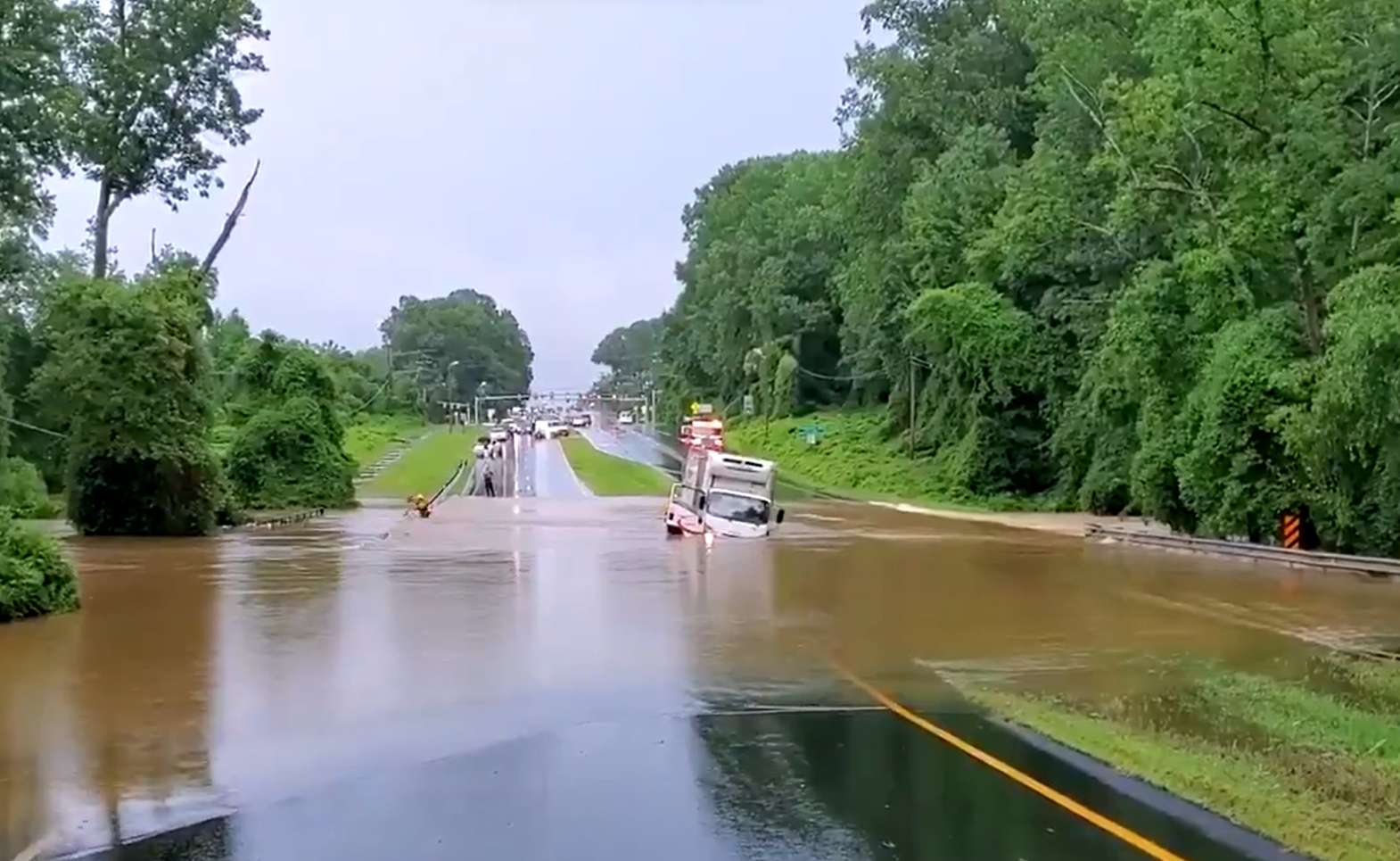
The Fairfax County Department of Public Works and Environmental Services (DPWES) has proposed a new grant program to help curb flooding in the county.
The flood mitigation assistance program (FMAP) would reimburse residents and property owners for purchasing and installing approved products and services that reduce the risk of flood damage to their property.
The program calls for a cost-sharing agreement where the resident or property owners cover 50% of the cost, and the county covers the other half up to $5,000, DPWES Deputy Director Eleanor Ku Codding told the Fairfax County Board of Supervisors at an environmental committee meeting on Tuesday (Oct. 3).
The program was made to be flexible, according to Codding. It’s open to residential or commercial multi-family properties, common-interest communities, and places of worship. Approved flood mitigation practices include:
- window wells
- flood gates
- modified basement areaways
- sump pump backup batteries
- utility protection
- exterior grading or drains
However, if an owner wanted to use another flood mitigation service not listed, it would be considered on a case-by-case basis.
Codding said, since drainage is not a straightforward issue, sharing the cost is a good solution.
“By establishing a cost-share program, we are allowing residents to be empowered to take action to mitigate that risk of flooding,” she said. “In addition, we have seen that the best flood risk reduction programs — including FEMA — include these types of cost-share programs.”
Dranesville District Supervisor John Foust supported the program but called for the county to take more action.
“We should be thinking bigger in terms of stormwater management because it’s a huge problem,” Foust said. “And once we adopt this, then we’ll be done with it. We’ll check it off and move on to the next thing, and I just think the problem deserves more.”
Codding said other programs could be brought to the board in the future.
The county has discussed raising its building stormwater standards to accommodate more frequent and extreme flooding, and earlier this year, it piloted a program for sharing the cost of projects with private property owners, essentially testing the approach proposed for the new assistance program.
Funded through the county’s Stormwater Service District taxes, FMAP would start on July 1, 2024, and applications would be reviewed on a first come, first served basis. The Northern Virginia Soil and Water Conservation District would administer the program.
DPWES will return to the board at a public hearing to get authorization to sign the memorandum of understanding with the conservation district. The agreement will establish rules for how the district should administer the program.
Screenshot via FCFRD/Twitter
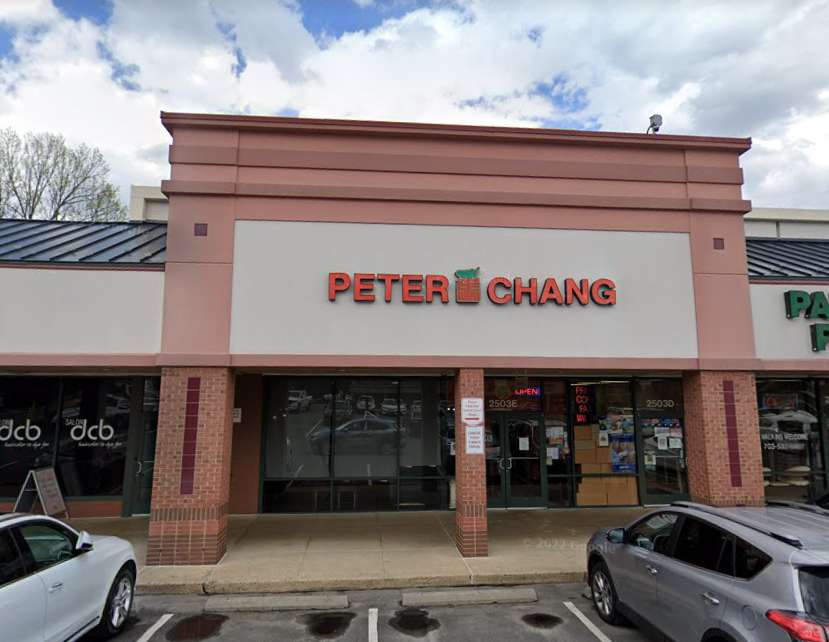
(Updated at 2:30 p.m.) Peter Chang’s new McLean restaurant is almost ready for diners.
The eponymous restaurant from the prolific Chinese chef will open at 6715 Lowell Avenue in one week on Oct. 12.
Located under Tachibana in the former House of Fortune space, Peter Chang will serve a variety of Chinese dishes, including Peking roast duck, dim sum, wagyu beef lo mein, Amish honey ribs and more.
Operating hours will be 11 a.m. to 3 p.m. and 4:30-9:30 p.m. on Monday through Thursday, 11 a.m. to 10 p.m. on Friday and Saturday, and 11 a.m. to 9 p.m. on Sunday.
“We’re expanding to McLean after listening to guest feedback on where they’d like to see the next Peter Chang restaurant,” co-owner and chef Lydia Chang said. “We hope to bring the same quality and nutritious Chinese food with bold flavors to McLean with our new location. We look forward to welcoming our McLean neighbors, hearing guest feedback, and getting to know the community.”
This is the 11th location for the Chang family’s signature brand and the first in Fairfax County, though the family has two different establishments in Fairfax City — Mama Chang and Lu Wei by Peter Zhang.
The Changs also have restaurants in D.C., Bethesda, Baltimore and Arlington, which is home to the first Peter Chang in the D.C. area and slated to get a new NiHao near Amazon’s HQ2.
The Burn reported in May that Chang has leased 3,500 square feet in Arrowbrook Centre near Herndon. While The Burn said the location will be a second Mama Chang, a spokesperson says it will actually be another Peter Chang restaurant.
A commercial alteration permit application for the new location was submitted to Fairfax County for review in September.
Image via Google Maps

Another strike may be on the horizon for the D.C. area, this time led by office cleaners who say wages have stagnated even after they were expected to keep working through the pandemic.
About 9,100 janitors, more than 3,000 of them in Northern Virginia, are voting this week on whether to go on strike if they’re unable to agree on a new contract with the Washington Service Contractors Association (WSCA) before the existing one expires on Oct. 15.
Cleaners employed in commercial buildings across Fairfax and Loudoun counties unanimously voted on Tuesday (Oct. 3) to authorize a strike, following the lead of their colleagues in D.C., who voted a day earlier, according to 32BJ SEIU, the Service Employees International Union’s branch for the D.C. region.
Coinciding with a three-day strike by Kaiser Permanente employees that’s reportedly the largest ever by U.S. health care workers, Baltimore area cleaners were set to vote yesterday (Wednesday), followed by Montgomery County workers today and Arlington County workers tomorrow.
“No one wants to strike, but we are ready to strike if employers keep pushing cuts that cleaners can’t afford,” 32BJ SEIU Executive Vice President Jaime Contreras said.
According to the union, a core sticking point in the contract negotiations, which began in June, has been a proposed reduction in shift lengths from five to four hours for about 1,100 cleaners — a third of the Northern Virginia workforce.
The change would amount to a 20% pay cut for the affected cleaners, who would have earn $100 less per week and have less time to do the same amount of work, the union says.
Peter Chatilovicz, the WSCA’s lead negotiator, told FFXnow yesterday that proposal has been taken off the table, noting that it would’ve primarily affected D.C. workers. The goal was “to provide flexibility to bring in new workers,” not cut wages for existing ones, as commercial property owners adapt to a challenging office market, he said.
The region has lost about 1,000 office janitorial jobs in recent years, according to 32BJ SEIU. A union spokesperson confirmed the shifts proposal was “verbally” withdrawn, but as of last night, nothing has been put on the record in writing.
The cleaners and WSCA last held contract negotiations four years ago, and there’s a “tentative agreement” for the next one to be the same length, extending to October 2027, Chatilovicz says. He’s “cautiously optimistic” that a deal will be reached in time, but the two groups are still split on pay.
“That’s the big issue right now is coming up with a wage compromise so that employees who are not the highest paid employees in the area or in America get a fair wage during this time, and so that we’re able to still be competitive and deal with the issues in the industry,” Chatilovicz said. “So, it’s a typical negotiation where we’re trying to exchange proposals and come up with a compromise that management can live with and the union is satisfied with.”
Under their current contract, Fairfax County cleaners earn $15 per hour, while Loudoun cleaners get $12.50 an hour. They also receive benefits like paid vacation, holidays and sick leave, health insurance if they work full-time and access to a training, education and legal services fund, per 32BJ SEIU.
While those rates exceed Virginia’s minimum wage, albeit just barely in Loudoun County, they’re not enough to match inflated prices and soaring rents, the union argues.
Alejandria Paz, a member of the union’s bargaining team who has worked as a cleaner at 1881 Campus Commons in Reston for over a decade, says she’s already struggling to keep up with the rising costs of food, rent, transportation and other necessities.
However, she also sees the prospect of reduced hours and pay as a frustrating reflection of how little attitudes toward cleaning staff have changed, despite the heightened attention to building cleanliness and ventilation brought by COVID-19. Read More
