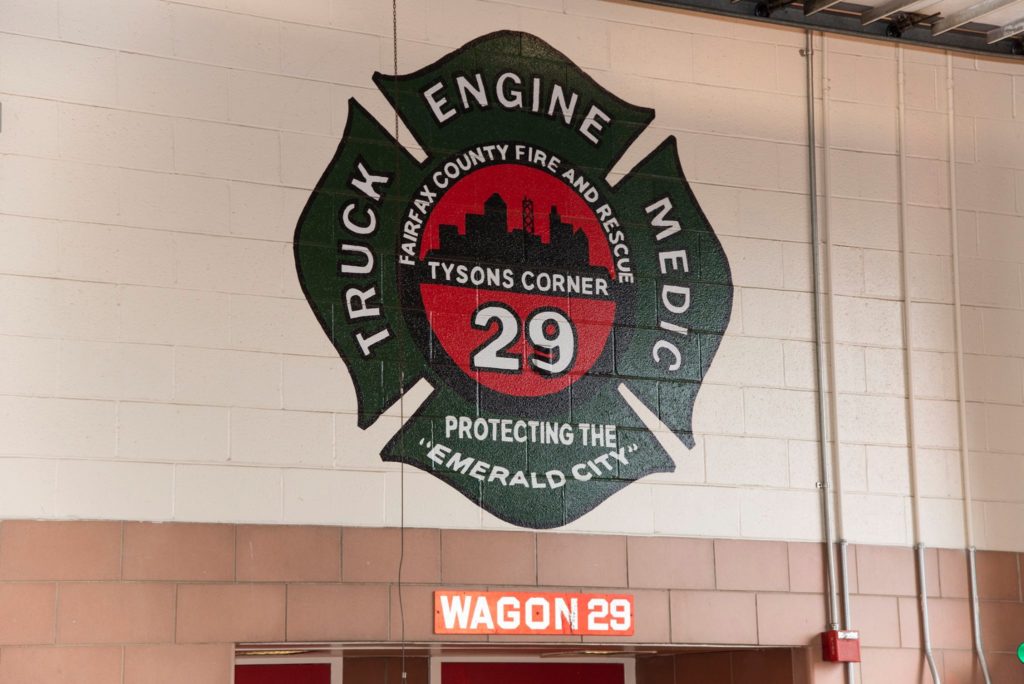

For nearly as long as there’s been a Tysons, there’s been a Fire and Rescue Station 29 watching over it.
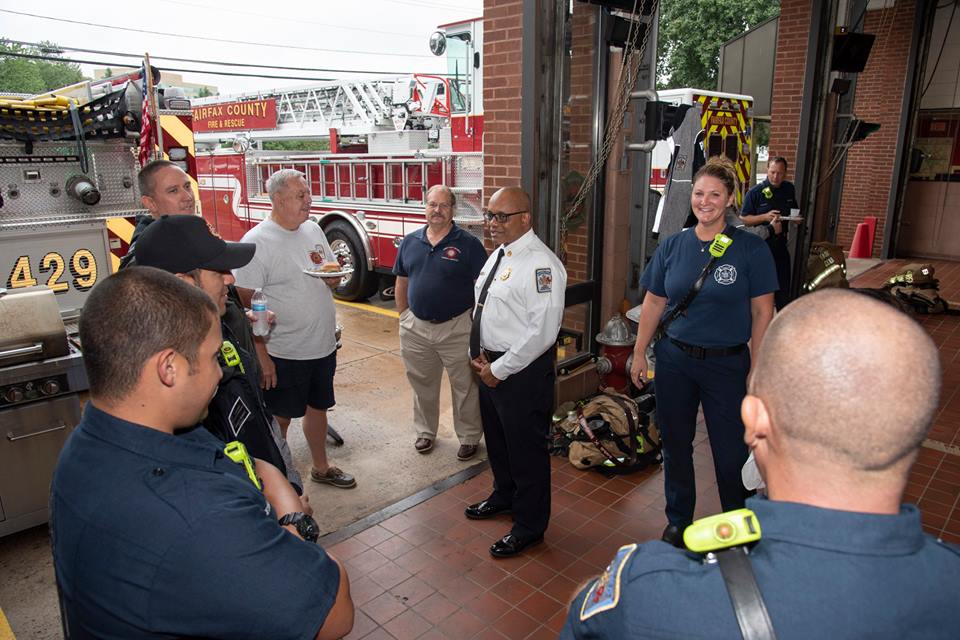
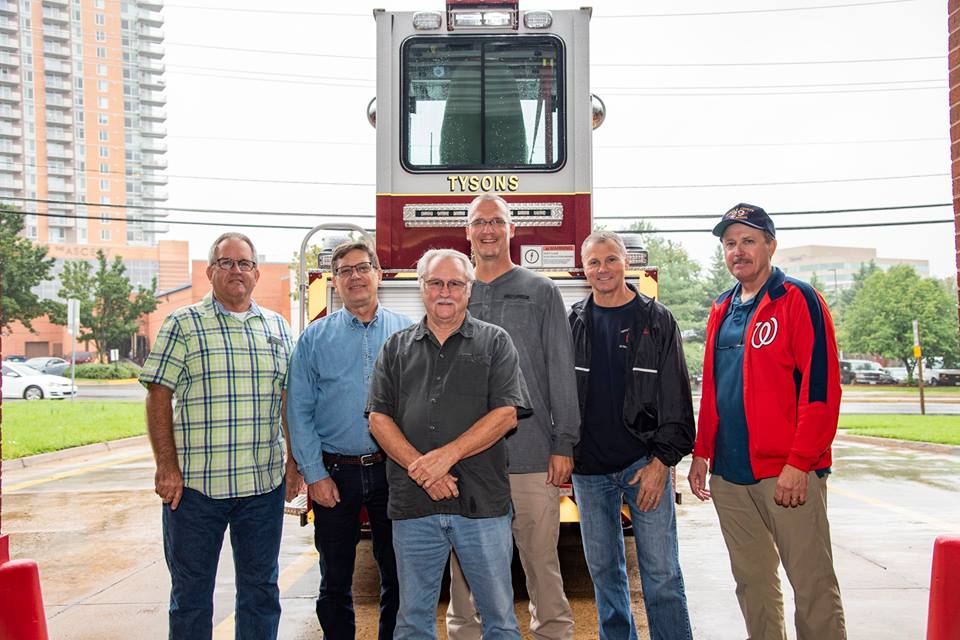
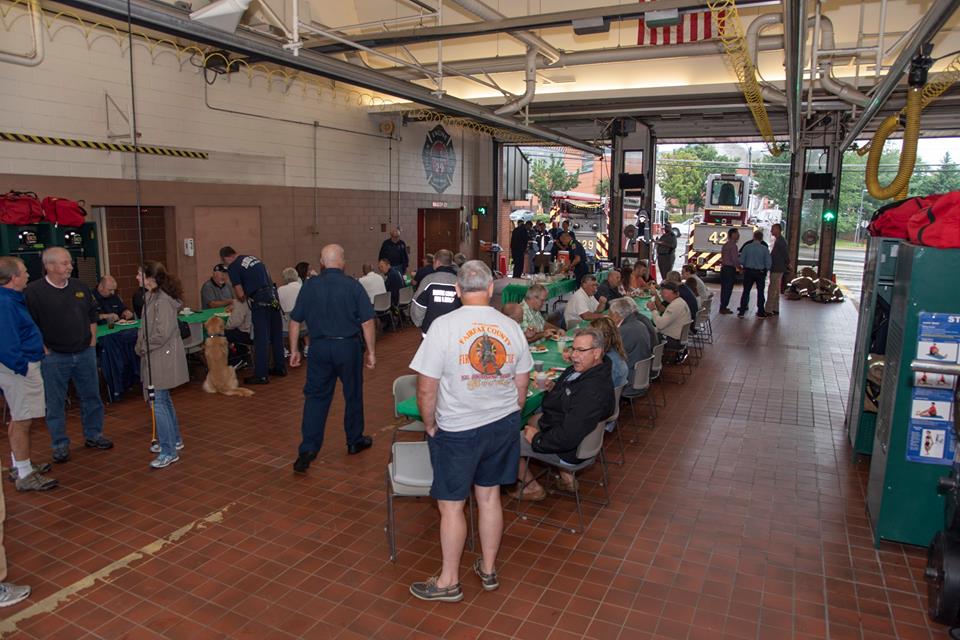
On Sunday (Sept. 23) past and present members of the Station 29 crew met to share stories and celebrate the station’s 40th anniversary.
Newly-appointed fire chief John Butler also attended to greet members of the fire and rescue crew.
Those that work at Fire Station 29 say the station is unique in the types of challenges it faces. Other stations cover more rural parts of Fairfax County. The Reston and Bailey’s Crossroads both have to contend with high rises. But according to Captain Michael Whetsell, Commander of Fire Station 29, only the Tysons station has to contend with every type of emergency on the books.
“Tysons is a unique location,” said Whetsell. “You have a mixture of all kinds here. We have high rises and residential. You can go left and we have non-hydrant areas. We have the Metro coming through. Every operations manual operates out of Station 29.”
Despite the dramatic increase in density and population in Tysons, Fire Station 29 has not grown except for a county-wide increase from three to four personnel per fire engine or ladder truck. Whetsell says there are ten personnel total on call at the station at any given time.
The main engine receives between 10-15 calls per day, and Whetsell said the medic unit receives about the same. The fire truck responds to roughly ten calls each day.
Whetsell said most of the calls that come in are medical emergencies, accidents or fire alarms. The crew of Station 29 is also regularly called out to Route 7, the Beltway, and the Dulles Toll Road to deal with car accidents.
It’s a difficult job, and Whetsell said the continued development is only making it harder.
“It’s a very busy station,” said Whetsell. “Every day it gets harder and harder due to traffic increases. There’s increased people coming in to work and live, and now the new construction is commercial and residential high rises.”
Whetsell said high rises can be a particularly challenging call for a fire department. With the rapid pace of construction, the department has had to make an increasing amount of high angle rescues.
Earlier this month, Fire Station 29 made a vertical rescue using a construction crane to lower a victim from the sixth floor of a construction site.
There is some relief in sight for Fire Station 29. Fairfax County Fire and Rescue is planning on constructing a new station, Tysons East Fire and Rescue Station 44, on Old Meadow Lane. The station will have 23 personnel with additional staffing planned as part of a five-year safety plan.
Delivery of the station is scheduled for Dec. 31, 2020, but as of the fiscal year 2019 Fairfax County government’s Capital Improvement Plan funding for the project is still to be determined.
Whetsell said the new fire station would cover calls in the eastern section of Tysons, also covering Route 123 and the Beltway.
But for all of the challenges, Whetsell says Fire Station 29 is home for him. He has worked at the station for nine years total. Whetsell started as a rookie at the station, then came back as a truck lieutenant, and finally came back as a captain.
While the usual job of the fire crew is responding to emergencies, Whetsell said he also loves getting a chance to meet with members of the public at events.
“We like getting out to the public,” said Whetsell. “So if anyone has an event to invite us to, get in touch and we’d love to show the fire trucks. We do a lot of birthdays. Just seeing the smiles of kids when we show up… the smiles are priceless.”

(Updated at 10:50 a.m.) As neighbors, McLean and Tysons couldn’t be more different. The former has a reputation as a quiet, suburban town with a long history and deep community roots, while the latter is a comparatively young and bustling pseudo-city in its own right.
But what happens in one will have a profound impact on the other, and Fairfax County Supervisor John Foust, who represents McLean, said that has become particularly clear with regards to regional traffic.
“Our plans say that Tysons development will be limited to Tysons and that the neighborhoods should be protected,” said Foust, “but the traffic that goes there goes through McLean and it has gotten worse.”
In discussions with members with the McLean Citizens Association, traffic was almost universally one of the most discussed items. The impact of the growing Tysons can already be felt in McLean, where both highways and residential streets are becoming increasingly clogged with commuter traffic. One of the big problems, on both a county and inter-state level, is the American Legion Bridge.
An average of 239,000 people use the American Legion Bridge every workday, according to a letter sent from the Fairfax Board of Supervisors to the Maryland Department of Transportation.
“The bridge is grossly over capacity,” said Foust. “It’s the responsibility of Maryland now. We’ve been encouraging them to expand… expansion would be a huge difference.”
Maryland has previously announced a $9 billion investment in reducing traffic congestion, including adding toll lanes north of the bridge, but the bridge itself remains a roadblock for commuter traffic heading to or from Tysons and McLean.
But expanding, supplementing, or replacing the bridge all come with difficulties. VDOT engineers have said that the bridge cannot be expanded and that it has reached capacity. Adding a new bridge to the site would also be difficult, if not impossible, given the low-density zoning in the area aimed at protecting the Potomac River. Fully replacing the bridge is a popular suggestion, but one that could take decades of planning, environmental, and financial work.
In the meantime, Foust said that traffic improvement projects in Tysons, like the Jones Branch Extension currently underway, will also help regional traffic flow. The new extension should take some pressure Route 123 and hopefully reduce congestion in McLean.
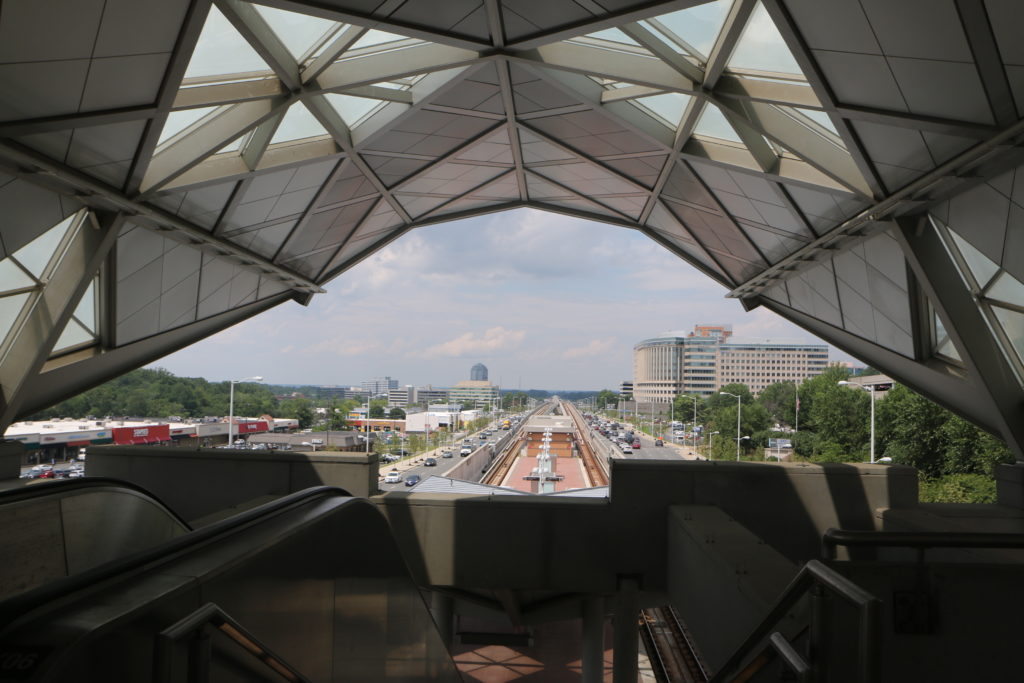
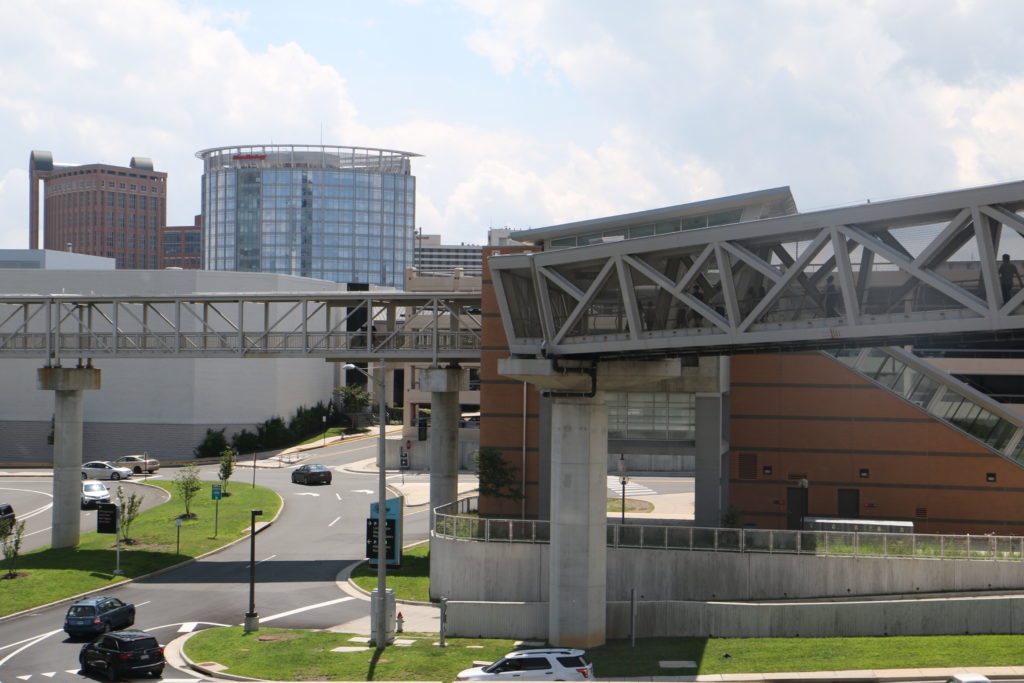
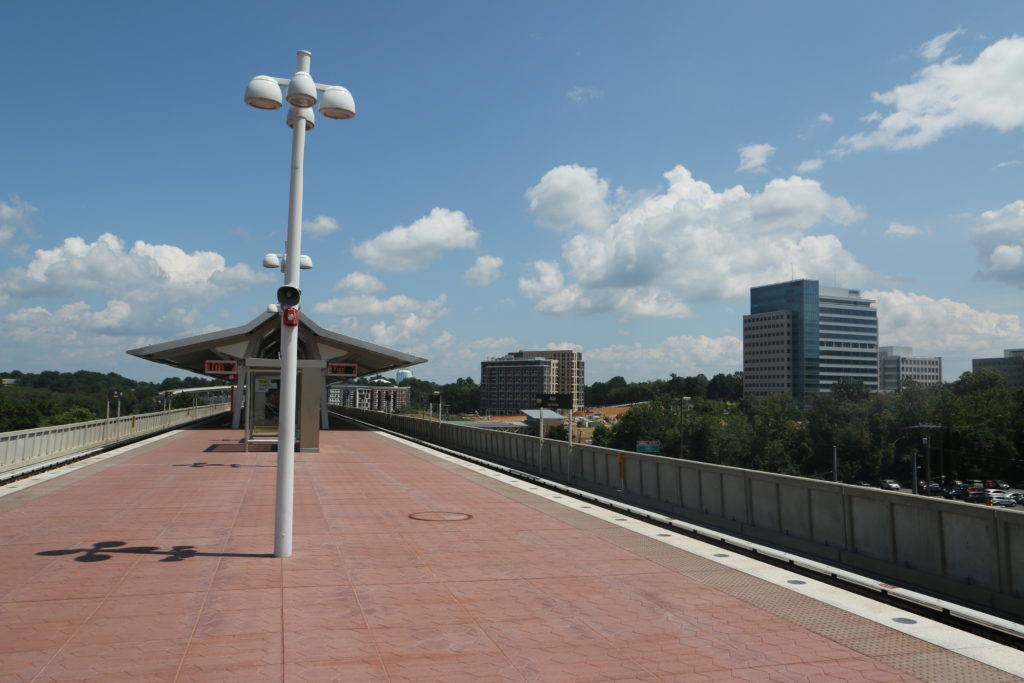
Ultimately, Foust said Tysons and McLean are going to need to rely on non-car transportation to help take some of the pressure off local roads. But paradoxically a lack of car-supporting infrastructure, at McLean Station on the Silver Line especially, makes that difficult.
“There’s a lack of parking at the stations here,” said Foust. “There’s no plan in place to build a lot [at McLean Station]. It’s very inconvenient. Generally, the Board does not want to encourage more traffic to drive into Tysons, but that means my constitutes can’t utilize the Metro.”
Foust said the County is working on expanding bus transportation, but that it will take a long time to get that to a convenient level. Given the growing pressure of traffic coming in and out of Tysons, it’s time McLean may not have.
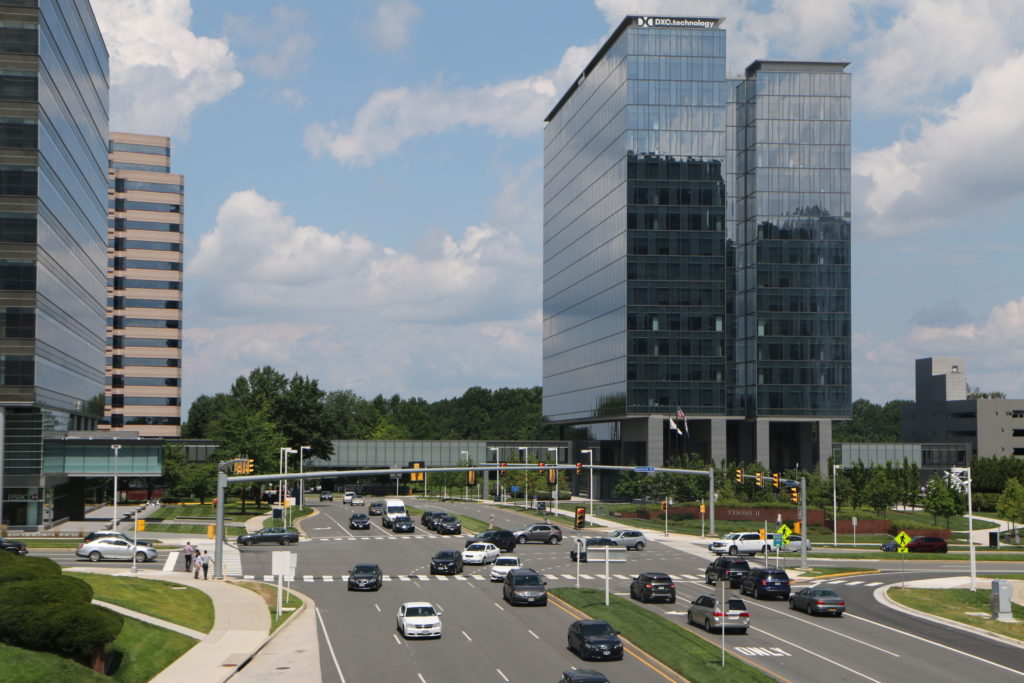
Tysons boasts 29 million square feet of office space, according to the Fairfax County Economic Development Authority. But the area hopes to become known for much more than that.
“The hope is really for Tysons to stand on its own and not just be seen as an office park that happens to be close to D.C.,” said Brianne Fuller, the Tysons Revitalization Program Manager in Fairfax County’s Office of Community Revitalization. “The intent is really for there to be places for people to live [and] work and [have] entertainment and such there.”
The vision of Tysons as a “live, work, play” center is also advocated by Tysons Partnership, an organization that operates “between the county and the private sector to insure the vision that the county laid out [is] actually going to be translated into reality,” the partnership’s president and CEO Sol Glasner said.
Tysons faces several challenges as it moves toward that reality. Transportation and traffic loom large among them.
“People see [Tysons] as very car-driven, and we really want it to be walkable and bikeable and for transit to be pretty plentiful there and to all the places that people need to go to,” Fuller said.
Tysons Partnership is the county-designated Transportation Management Association for Tysons, Glasner said.
In that role, their “objective and mission is to move people better, faster, etcetera,” he said. When they talk about walkability, “people look at Tysons and they say, ‘well that’s a joke, where’s the walkability,'” Glasner said. Though developing a walkable infrastructure takes time, “that’s starting,” he said.
Citizens groups, like the McLean Citizens Association and Greater Tysons Citizens Coalition, also work to ensure the county fulfills plans to add parks and athletic fields to Tysons — something key to the “live” and “play” components of future city life.
“We keep track because it’s very important to us that Tysons does become a livable, inviting community and that requires that Tysons has adequate park and athletic field facilities to service its population,” said Sally Horn, president of the Greater Tysons Citizens Coalition.
Another facet of Tysons’ development to watch are residential additions, which alter “the very nature of Tysons Corner, which was at one time strictly a business community and now becomes a full-time almost a city unto itself,” said Jerry Gordon, president and CEO of the FCEDA.
Tysons Partnership’s work includes considering what “we need to do collectively that can help create a diversification of housing,” Glasner said.
“You can create a downtown, but if you’re really talking about an urbanized area that has some texture to it and some variability to it, then you need to have people live here and I think you need to have a diversified pool of housing from which they can choose,” he said.
If Tysons grows to its hoped for size, updates to the existing public safety infrastructure will also be important, Horn said.
“When Tysons does get to 100,000 residents and 200,000 people working there, obviously the police districts are going to need some adjustments,” Horn said. “We just want to make sure people… start thinking now about smart ways to achieve satisfactory public safety infrastructure for everyone.”
County planners, community members and developers will continue to face questions surrounding those topics and many others.
“Creating an organic, functioning, really livable urban environment and community does take time,” Glasner said. Turning a collection of buildings “into a real place evolves more… slowly, and we kind of measure that in decades.”
“Imagine the future Tysons as a different, better place than today.”
So begins the “Vision for Tysons,” as laid out in Fairfax County’s Comprehensive Plan for Tysons. A “different, better place” is something that stakeholders want — from developers to citizens groups.
The Fairfax County Board of Supervisors adopted “the first relevant comprehensive plan” for Tysons today in 2010, “and that was a very hard fought document by all parties,” said Sally Horn, who today serves as chair of the Greater Tysons Citizens Coalition. “I think people all accept it as a decent compromise document.”
A 36-member task force developed that plan, working to reach satisfactory conclusions on questions from the number of parks in Tysons to the appropriate way to divide tax burdens.
“We were most interested in making sure that there were adequate public facilities, especially for transportation, that they would be rolled out at the same time as the development and that it wouldn’t become… an unfair burden on taxpayers,” said Rob Jackson, who was president of the McLean Citizens Association from June 2007 through May 2012 and is the chair of MCA’s planning and zoning committee today.
The plan they came up with has been updated several times since 2010. Its ultimate goals extend to 2050, a time by which planners hope Tysons will boast 100,000 residents and 200,000 jobs.
Though developers, community members and county representatives recognize that Tysons has a long way to go, many also see the better future as possible. Some pieces of that imagined future, like Metro’s Silver Line, have already started to come together.
“I think that plan is going to be satisfied more quickly than [2050],” said Jerry Gordon, president and CEO of Fairfax County Economic Development Authority. “We’ve already seen a lot of the construction.”
Gordon has previously described Tysons as a place where “we have disposed of all the laws of supply and demand,” in part due to rapid high-density development the area saw after the Board of Supervisors approved the Tysons plan.
“We leapfrogged that period where supply [of office space] was low,” Gordon said. “It demonstrated that not only did the developers and the owners of the land have confidence that Tysons Corner was going to continue to grow dramatically… It also demonstrated more importantly that the banks were willing to finance that.”
Still, Tysons continues to face growing pains. When it began developing, prevailing planning concepts dictated that “you didn’t mix things up, that… employment centers weren’t good places to live and you protected residential areas from intrusions from commercial traffic and commercial activities,” said Stephen Fuller, head of George Mason University’s Stephen S. Fuller Institute. “Tysons reflected that former concept, and now we’re trying to make it easier for people to live near where they work.”
Though change in Tysons dates back to the 1960s, the area is relatively young for a city, especially one working to adopt a challenging vision.
“It has a long reach back, but that isn’t long in the life of cities,” Fuller said. “We’re youngsters, and trying to change that pattern abruptly is complicated and that’s what they’re hoping to do in Tysons.”
The term “Tysons Corner” is perhaps today most associated with Tysons Corner Center, the giant shopping mall turned mixed-use development that recently marked its 50th anniversary.
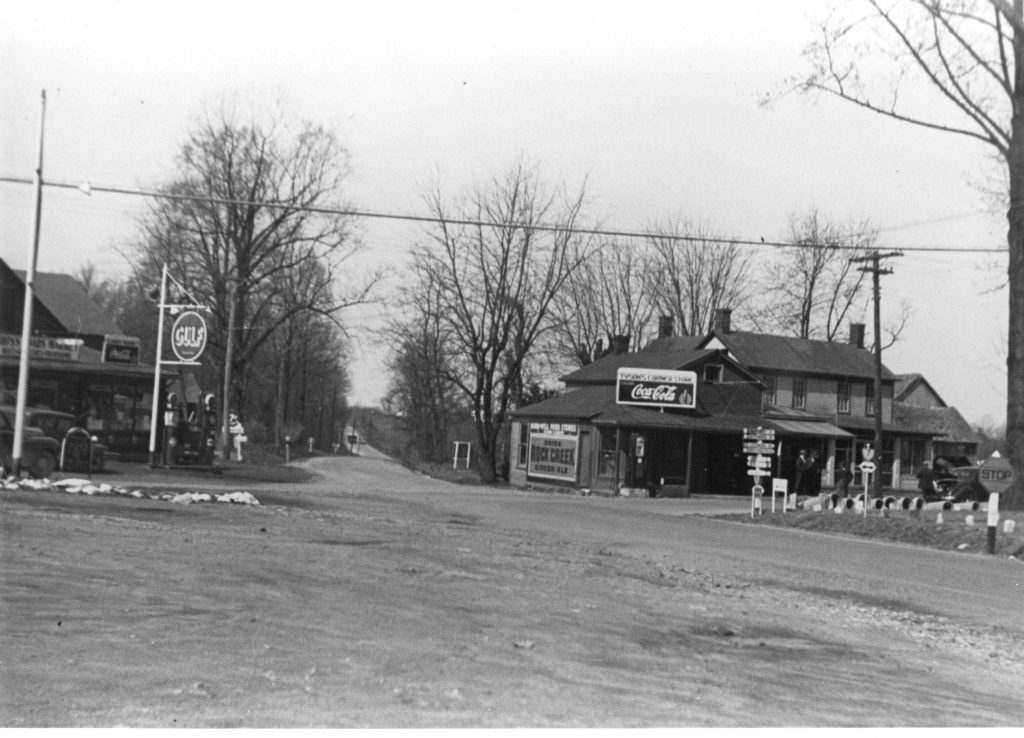
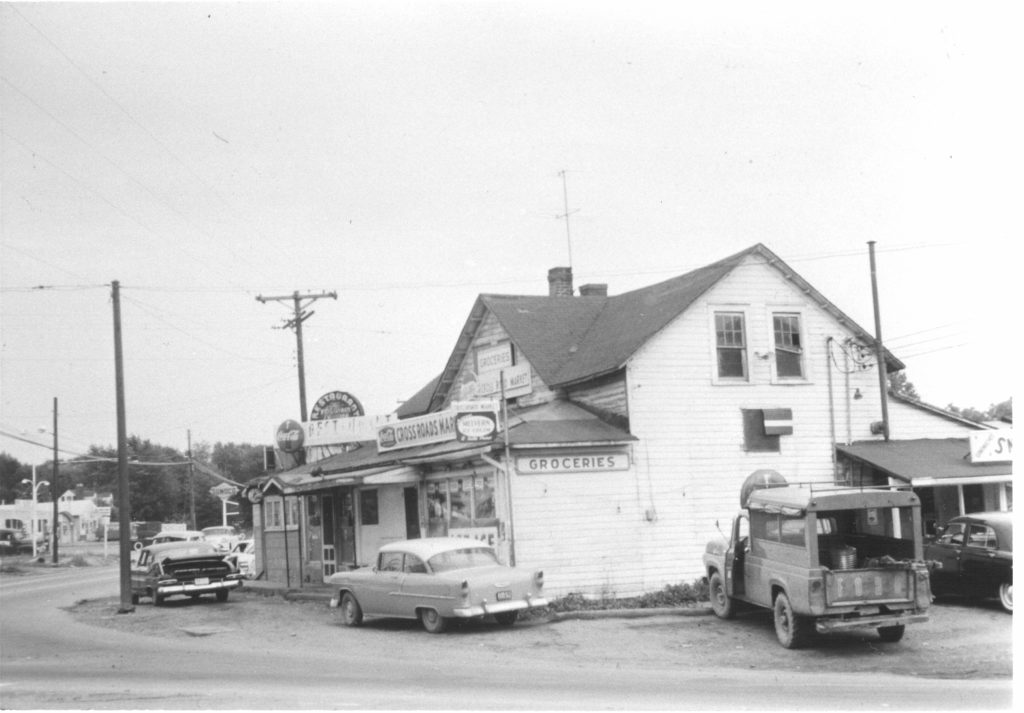
But in the 1850s, when William Tyson purchased land around the intersection of Route 7 and Route 123, the 35 stores that made up the original iteration of the mall were more than a century away. The area was known as Peach Grove, and then Tysons Crossroads. Well into the 20th century, the section of land today frequently known simply as Tysons remained rather undeveloped.
“There were more cows than people. Maybe not quite, but it was quite a rural place,” Stephen Fuller, the head of George Mason University’s Stephen S. Fuller Institute, said. “It changed dramatically and the key factor that changed it, [that] put it on the map was the Beltway.”
Already located at the intersection of Routes 7 and 123, the addition of the Capital Beltway, which first opened in 1961, made Tysons “sort of the nexus of auto transportation in all directions,” Fuller said.
On top of that, when Dulles International Airport opened in 1962, the Dulles Access Road ran 13.5 miles from the airport to Route 123 and the Beltway.
“That’s where Tysons Corner happened to be located, right where that access road stopped,” said Paul Ceruzzi, a curator at the Smithsonian’s National Air & Space Museum and author of Internet Alley, a book that documents much of Tysons’ history.
It wasn’t until 1983 that the access road would be extended to connect with I-66, which had just been completed through Arlington. Had the access road gone all the way to D.C. from the start, “Tysons Corner may never have happened,” Ceruzzi said.
Tysons’ advantageous location attracted “shrewd insight” from real estate developers, Ceruzzi said. “The landowners there were also savvy in that they allowed this development to proceed,” letting developers “assemble big parcels to assemble really high quality office buildings and other facilities.”
Early investors included Gerald Halpin, who in 1962 with partners purchased 125 acres of land in the Tysons area from dairy farmers, and Ted Lerner, whose triumphs include Tysons Corner Center and who with his family today is the majority owner of the Washington Nationals.
Also key to making developments in Tysons possible was Fairfax County. As early as October 1961, the Fairfax County Planning Commission presented the Tysons area as a possible regional center, as The Washington Post reported at that time.
That doesn’t mean growth always came easily. Lawyer and developer Til Hazel notably led people like Lerner through the legal process to make construction possible.
Ultimately, the initial rise of Tysons was the result of a “combination” of factors, Ceruzzi said — among them, the introduction of interstate highways, suburbanization after World War II, real estate development and proximity to the Pentagon, which “was generating these institutes and companies,” he said. “All of that kind of came together.”
Plans for the area’s future, in private and public realms, are still evolving. Today, Tysons is in something like the “third phase of its life,” Fuller said. “It was a retail center first, then it morphed into an employment center and now it’s becoming a mixed-use center with hopes it’ll become more livable.”
Next week, check back to read about some of the forces that have helped shape Tysons today, including Fairfax County’s Tysons Comprehensive Plan and evolving planning priorities.