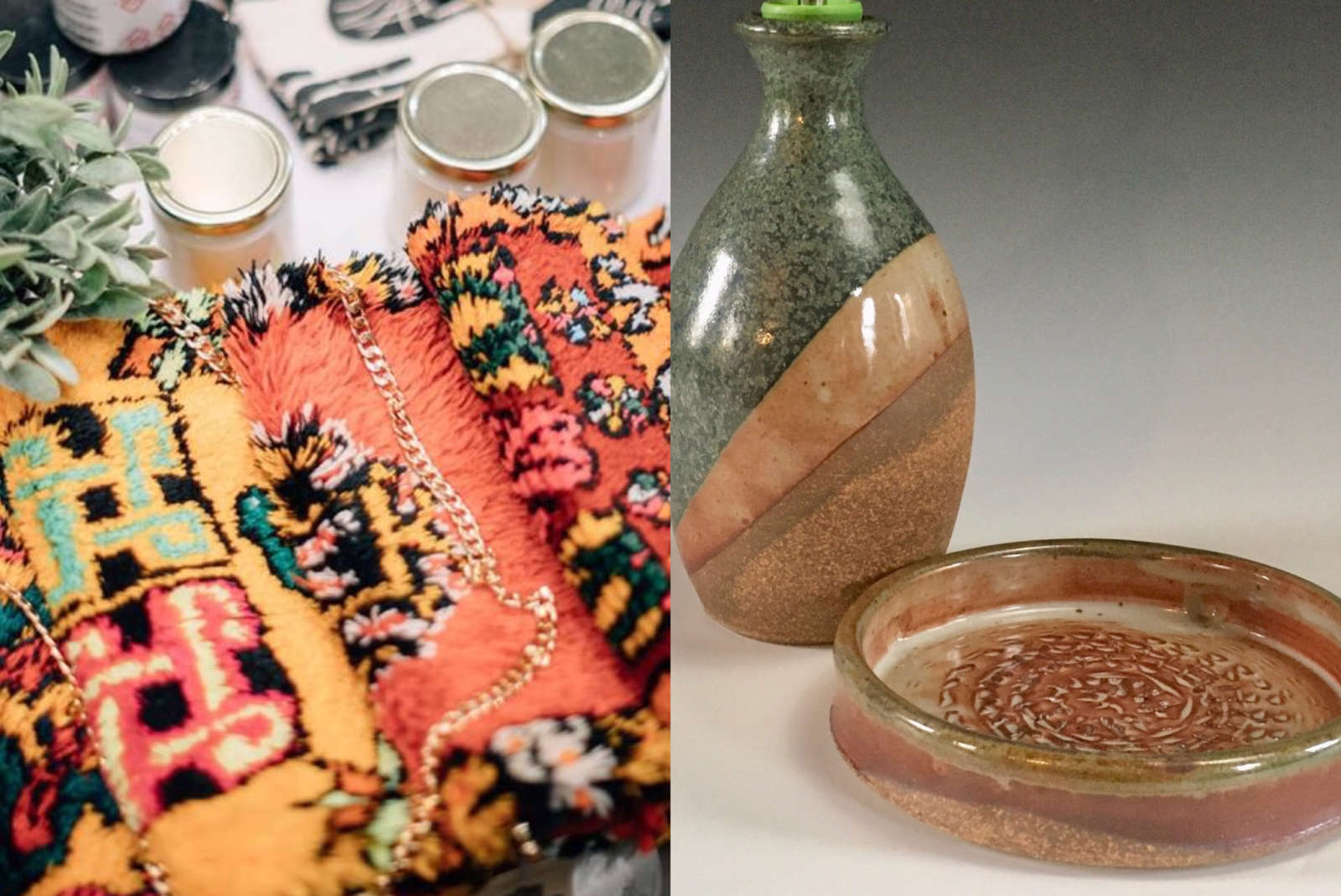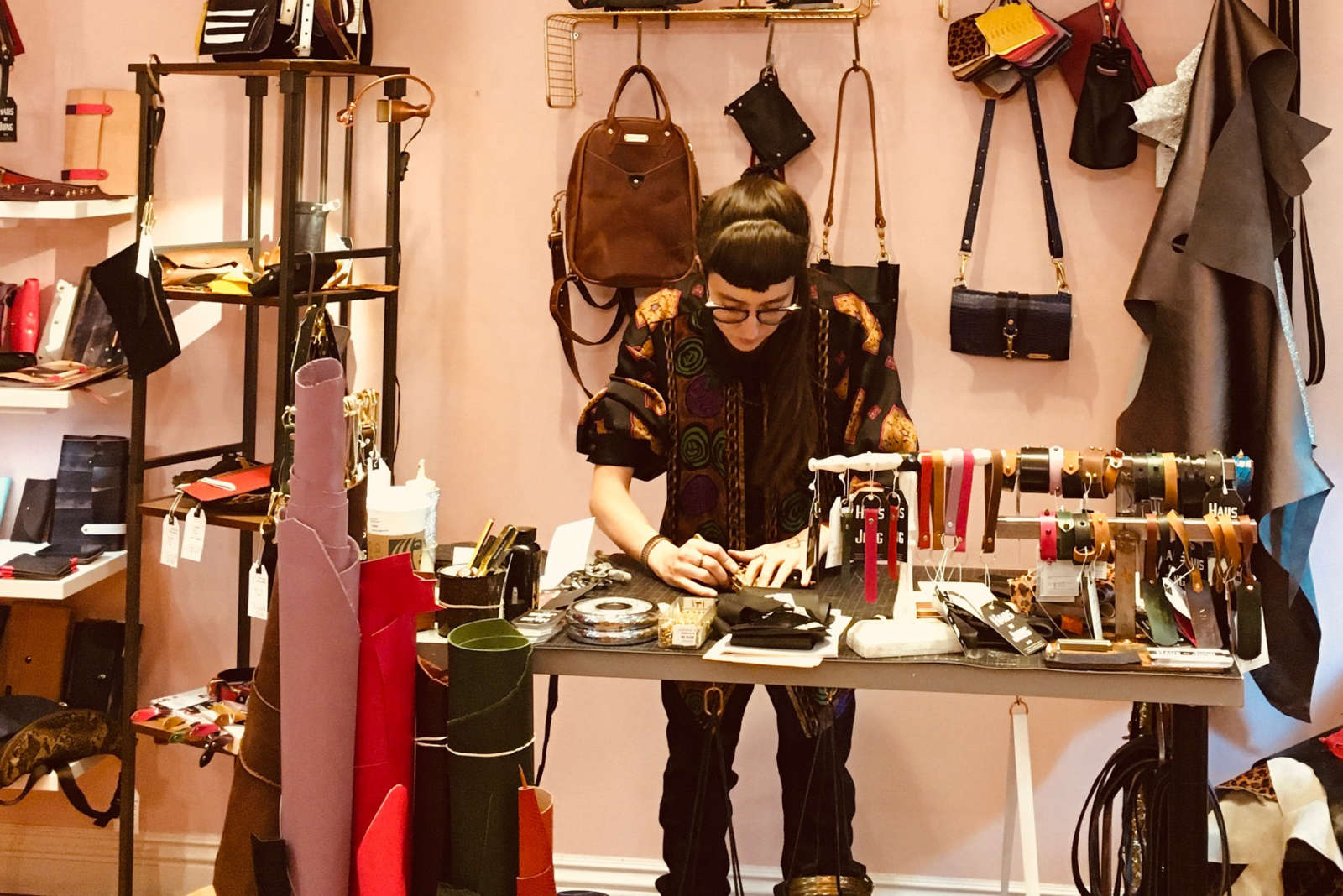


Founded in Vienna, Virginia, by an immigrant black woman from West Africa, The Scripture Company is the embodiment of a mission driven company. In the founder’s words, “Our mission is to create products that inspire women to seek spiritual wholeness, practice self-care and improve well-being.”
Their all-natural scented soy wax candles are inspired by powerful women whose legendary stories of survival, bravery, intelligence, tenacity and success are told in the Bible.
The four debut fragrances Queen of Sheba, Ruth, Hadassah and Proverbs 31 contain notes like bergamot, sandalwood, zesty lemon, florals like blue lilies and heavenly honey. These are the type of candles that you can smell through packaging and leave a room with hints of its presence long after the wick is snuffed.
The founders have perfected their signature candle making formula making them a strong contender against high-end designer brands. The candles are hand-poured in small batches and allowed to cure for several weeks before they are sold. They burn cleanly and evenly and infuse a room with exceptional scent.
It’s refreshing to see such mission-oriented brands emerging during this tumultuous COVID-19 period. Scripture is one such company that gives us all hope that there are still rainbows at the end of the storm.
Their holiday line themed Gold, Frankincense and Myrrh is now available for sale and pre-order via their website. Holiday pop-up shops will also be announced soon via their website.
Follow them on Instagram @thescripturecompany, or shop online at www.thescripturecompany.com.
Laura Schwartz is a licensed Realtor in VA, D.C. and M.D. with McEnearney Associates in Vienna. You can follow Laura on Instagram at @LauraSchwartzRealtor or her Facebook page. Laura can be reached at 703-283-6120 or [email protected].
“Throughout Vienna’s history, the Freeman Store has been a store, home, train depot, hotel, hospital, officers’ quarters, fire department and historic site — the building is on the Virginia Landmarks Register and the National Register of Historic Places.” — The Historic Vienna, Inc. website
The Freeman Store is an iconic stop on downtown Church Street, next to the Vienna Town Green (which is the host of many events throughout the year), next to the W&OD, the gathering spot of the annual “Church Street Stroll” and tree lighting/menorah lighting at the holidays.
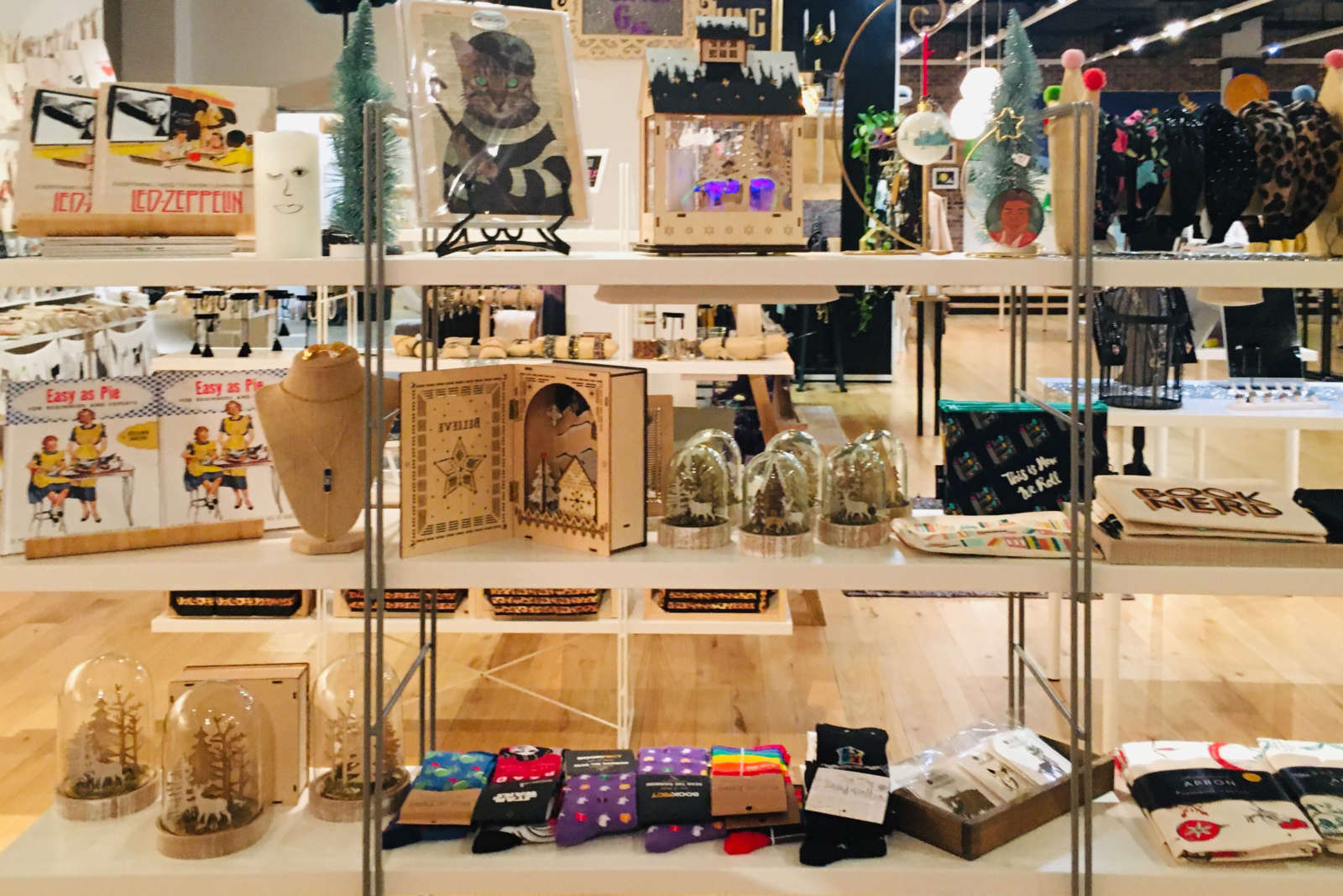
You’ll find the store has some of the cutest Vienna-centric gifts like blankets, water bottles, tea towels, pillows, ornaments, notecards and more. Mostly made by local artists, these are sold by the Freeman Store to support efforts by the Historic Vienna activities and programs. In the basement, you’ll also find a used book store.
Normal Business Hours (non-pandemic) March through December: Wednesday to Sunday, 12-4 p.m.; January and February are by appointment only.
**Starting Thursday, November 26 through December 20, the store will be open Saturday and Sunday 12-3 p.m.
They have random online pop-up sales with contactless pickup, but you’ll need to check the website for those date announcements, or follow them on Facebook or Instagram.
This is a great place to find house-warming gifts or gifts for people leaving the area, holiday gifts, ornaments, or keepsakes.
Shop small from the comfort of your home this holiday season at the Creative Collective Virtual Holiday Pop Up, starting November 20.
For the past two years, Creative Collective has held a holiday pop-up at Tysons Corner Center featuring small, local businesses. This year, due to the pandemic, they are moving the pop-up online.
The Creative Collective Virtual Holiday Pop Up will feature videos from local creative makers, designers and curators.
“Our customers love meeting the people behind the products, learning about what inspires them and about their creative process. These videos help our customers make that personal connection with our local business partners,” said Aurelou Cole and Wendy Whittleton, owners of Creative Collective.
The Creative Collective Virtual Holiday Pop Up will showcase products from these local, predominantly women- and minority-owned businesses. “We love supporting small, local businesses. They have great products, and we hope this virtual holiday pop-up will help them during this very difficult time to continue to grow,” Cole and Whittleton said.
The Creative Collective Virtual Holiday Pop Up begins November 20. Follow the action at Creative Collective’s Instagram and Facebook pages (@creativecollectivepop).
Virginia’s General Assembly proposed a bill, Senate Bill 1443, that would remove mandatory minimum sentences for all crimes excluding Class 1 felonies. The bill has sparked significant concerns from anti-drunk driving organizations.
Before the bill, there were a series of mandatory minimum sentences for certain blood alcohol content levels (BAC). For a BAC of 0.08 — twice the legal limit — the offender was required to be in jail for five days. Those with a BAC of 0.2 or higher had a mandatory minimum of 10 days in jail.
There were specific stipulations for repeat offenders as well. If someone got two convictions within a five-year span, they must serve a mandatory 20 days in jail. If those two convictions took place within 10 years, that sentence is reduced to 10 days.
Senate Bill 1443 would remove these mandatory minimums, allowing the judge or jury to decide the sentence for each specific situation. Several advocacy groups have spoken about their concerns about removing mandatory minimums for drunk driving cases. They are especially concerned about extreme cases involving repeat offenders or those with astronomical blood alcohol content called “super drunk” drivers. They argue that, without mandatory minimums, drunk driving offenders may be released with minimal penalties and return to their destructive behaviors.
Crime Classifications
What classifies as a Class 1 felony varies from state to state. In Virginia, Class 1 felonies include murder and sexual abuse of a child under 15 years old. Committing these crimes can result in life imprisonment, a fine of up to $100,000.
Senate Bill 1443 would specifically keep mandatory minimum sentences in place for these felonies. However, all other crime categories would lose their mandatory minimum sentencing, such as aggravated manslaughter and child pornography. In cases involving these crimes, it would be up to the judge or jury to decide the sentencing requirements for that particular case.
Why Anti-Drunk Driving Advocates are Concerned
There is a long list of anti-drunk driving advocacy groups opposing this bill. The Washington Regional Alcohol Program, Mothers Against Drunk Driving, the American Automobile Association’s Virginia Branch, and the Foundation for Advancing Alcohol Responsibility banded together to write a letter to the General Assembly discussing their qualms with the current state of the bill.
Kurt Erikson, president of the Washington Regional Alcohol Program, explains their reservations by using the expression “throwing the baby out with the bathwater.” Essentially stating that Senate Bill 1443 is a good idea, but it should not apply to drunk driving cases.
There is some truth behind his statement. Two-thirds of drivers involved in fatal crashes had a BAC of 0.15 or higher, and on average, a Virginian dies in a car crash every 33 hours. These two statistics clearly show how drunk driving can be hazardous for Virginia’s citizenry.
However, there are some, including the Democratic State Senator John Edwards from Roanoke County, who authored the bill. He argues that judges overseeing these cases would still have the jurisdiction to impose harsh sentences. The bill would only remove mandatory minimums for a majority of drunk driving cases. His statements have done little to settle the worries of anti-drunk driving advocacy groups.
Where Are We Now
Against the concerns of several anti-drunk driving advocacy groups, Senate Bill 1443 passed with a 21-17 vote. However, many organizations are still fighting to decrease the number of people who die in DUI related car crashes.
Currently, Fairfax County has the most deaths in Virginia with an average of 19 DUI related fatalities each year between 2006 and 2010. Fairfax Criminal Lawyers are working with the Fairfax County Police Department in a campaign called Checkpoint Strikeforce in an attempt to decrease these numbers.
Even while making these attempts to decrease the number of DUI cases, advocacy groups are still concerned about what this could mean for future drunk driving cases. It has yet to be seen how removing mandatory minimums may affect the number and severity of drunk drivers on Virginia’s roadways.
Virginia is set to legalize marijuana usage on July 1, 2021, but will continue to keep marijuana production and sale illegal until 2023. Many State Democrats are speaking out against this apparent disparity.
The current argument is that a regulated market needs to be established with clear laws and regulations outlining how marijuana will be treated as a legal drug. However, many are still concerned about what this means for communities of color and how this contradictory law could lead to further racial discrimination.
What Does the Law Say?
To better understand why dissenters are concerned, let us look at what the law itself proposes. Marijuana use will be legalized starting on July 1, 2021. However, it will still be illegal to grow, sell, or distribute products containing marijuana until a regulated market is established in 2023.
Until then, civil penalties will still be in place. Possession of one ounce of marijuana or greater could lead to a fine ranging from $250 to $250,000. In extreme cases, an offender can be sentenced to up to 10 years in prison. The criminal penalty amount originally proposed was five pounds of marijuana but has since been reduced to one.
Although criminal punishment is still on the table for marijuana possession, Virginia lawmakers are currently designing a plan that would regulate marijuana as a legal drug. All criminal records featuring marijuana-based penalties will be cleared of those crimes. They also plan to remove the law where any lawmaker convicted of a marijuana-related offense must be removed from office.
When marijuana is bought legally, though it is unclear how to do so, the State gets a cut of the profits through taxes. All marijuana sales would have a 30 percent tax, with 21 percent being a state excise tax and up to 3 percent going to localities.
The Issues
It is clear that there are already some structuring issues regarding how this bill has been proposed. For starters, what is the purpose of legalizing the use of a drug without also legalizing its production? This is the main argument of State Senator Richard Stuart, a Republican representative from Stafford County who referred to it as “ludicrous.”
State Senator Jennifer McClellan, a Democratic representative from Richmond County, argues that enforcing soon-to-be-ending prohibition laws against the drug only hurts the citizenry. Essentially, if they have truly decided that this is an action that should not be criminalized, then why continue punishing people for it?
There is also the issue of the amount of marijuana that must be in possession for a criminal penalty. Though five pounds in possession was the original proposition, Delegate Terry Kilgore from Scott County argued that such a high amount could lead to people selling marijuana without a license. Majority Leader Charniele Herring, a Democrat from Alexandria County, agreed with Kilgore after seeing a photo of five pounds of marijuana.
However, the most significant concern seems to be how this could impact lower-income communities of color. The American Civil Liberties Union (ACLU) is wary of the proposed marijuana legislation for this reason. They argue that there are unintended consequences to contradictory legislation like this and that those contradictions will hurt black and brown communities disproportionately.
Virginia lawmakers are working with Richmond Criminal Lawyers to negotiate elements of the new proposed legislation. There is no telling how this proposed marijuana law could impact lower-income communities of color if there is no correction. It has yet to be seen if the timeline for a regulated market will be pushed sooner to correct for the disparity.
Laura Schwartz is a licensed Realtor in VA, D.C. and MD with McEnearney Associates in Vienna. You can follow Laura on Instagram at @LauraSchwartzRealtor or her Facebook page. Laura can be reached at 703-283-6120 or [email protected].
I can’t believe Thanksgiving is right around the corner.
I find it incomprehensible we’ve been battling COVID-19 for nine months! I am also coming to grips with our own personal reality that my family will be (lucky enough) to spend Thanksgiving as a foursome instead of with our usual extended family.
Looking at the silver linings, that also means that I’m trying to take advantage of that and do things unconventionally. I tried to persuade my boys to do a seafood main, but that didn’t go over like I had expected, so we’re doing a small-scale turkey dinner. We’ve also contributed dinners to two families who needed help, so don’t forget about the different options to help others this year.
But let’s talk dessert. Maybe you’re a pumpkin or pecan pie kind of person, or maybe you go for an apple crisp like me. Or maybe this year you want to go crazy and get an ice cream cake. Whatever you’re looking forward to indulging in, I’ve got some ideas for you below.
Lots of local restaurants are also doing Thanksgiving dinners to go, so check with them if you’re looking for the whole shebang.
- My favorite apple crisp is from The Fresh Market. Hands down.
- Pie Gourmet — Try their chocolate cream pie, but they want orders by tomorrow, November 17. They also do savory pies if sweet isn’t your thing!
- S’mores Pie from Amphora Bakery
- Custard from Kiln and Co
- Chocolates from Cocoa Vienna
- Flourless chocolate cake (gluten free!) from Bazins
- Hot Chocolate Bombs by Whisked by Mukta. These are so fun for kids, and my husband declared this the best hot chocolate.
- Pastries from Sweetbites in McLean
- Anything from Best Buns! They have a few specials for Thanksgiving that require 48-hour notice, including white chocolate cheesecake, pumpkin pie and chocolate bourbon pecan pie.
- Chocolate Chip Espresso Cookie Dough Pie from Northside Social. (Pro tip: Try their quiche or pastries for breakfast as well)
- Vienna Farmer’s Market local Savagely Good — they have gluten-free chocolate torte and key lime pie, but my kids love their cinnamon rolls.
- A little treat just for the kids? Try a cake pop from Vienna local Delicioso Decor.
- Another unexpected treat: 100 percent vegan, gluten- and soy-free custom cakes from plant-based Viva Sol.
One more thing — if you know anyone over the age of 70 spending the holiday alone, Medium Rare is delivering free meals to them.
No matter how you choose to spend your Thanksgiving, from my family to yours, wishing you a healthy and happy holiday.
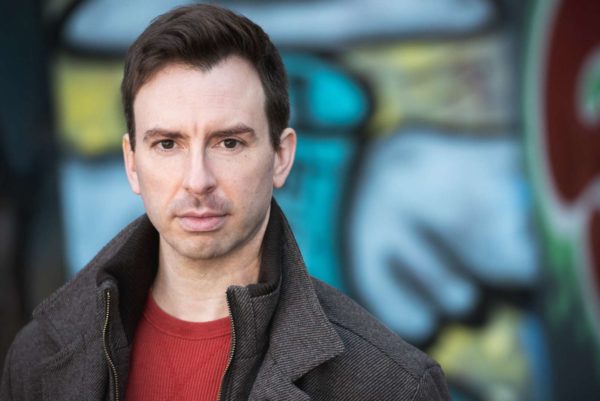
After a decade of working day jobs in fields like risk management and travel insurance, Vienna filmmaker Giuseppe Lucarelli, 40, is hitting a career milestone with the release of his first film on Blu-ray and DVD today.
Checkmate, originally titled Bystander, is currently available on Amazon and Google Play. Last year, the film screened at the Action on Film Mega Fest in Las Vegas, where it won Best Editing, and the Hollywood Dreams International Film Festival, receiving nine award nominations between the two festivals.
Lucarelli also submitted a short, Malanak, at the two festivals that received a collective seven nominations, winning Best Title and Best Graphics at the Hollywood Dreams International Festival.
Lucarelli says he is excited to see his first film available in stores.
“Getting distribution was our goal,” Lucarelli said. “We were so excited when Indie Rights partnered with us to distribute our film. It’s a true accomplishment, and to do it with my very first film, it feels great. It’s exciting that it will be available in stores around the country.”
Though he still has a day job as a real estate agent for Weichert Realty in Vienna, Lucarelli has accrued an impressive range of skills and experience as a filmmaker.
In addition to writing, producing, directing, editing, and sometimes acting, he is the founder and owner of Mountain Wind Productions. The company has produced two independent films, including Checkmate and The First Seal, as well as small commercials for local companies.
Lucarelli is an alumnus of West Virginia University where he received a Bachelor of Science in exercise physiology in 2002 and Master of Science in industrial relations and rehabilitation counseling in 2006.
Lucarelli took acting classes while attending West Virginia University, but it wasn’t until he was working in risk management with Liberty Mutual in 2007 that he began learning the business side of film during his free time.
“What I was doing was basically getting paid for education,” Lucarelli explained. “I was sitting there watching the crews, the big crews, learning what they were doing right, especially from a structural standpoint, what they were doing doing poorly, learning the ropes that way.”
In 2009, Lucarelli returned to West Virginia University, where he accepted a teaching position as a visiting instructor and pursued a Master of Business Administration. After obtaining his MBA in 2013, Lucarelli bought an LLC for Mountain Wind Productions.
After college, Lucarelli worked full-time for Travelers Insurance and part-time for Mountain Wind Productions. He left Travelers in 2016 and began working with his production company full-time.
Lucarelli compares being an independent filmmaker to being a soccer coach.
“So much of the coaching is done before the game that once they’re out there, the players have to go,” Lucarelli said. “You can yell and bark, but players have to make the decision. So, 80% of the directing is done in pre-production. I talk with my actors a lot. I’m very engaged, but I feel like if everybody’s having a good time, they’ll put their best foot forward.”
Lucarelli says he enjoys being an independent filmmaker in Northern Virginia because of the large talent base, especially those he’s interacted with through Women in Film & Video of Washington, D.C., a nonprofit that provides support and resources to media professionals. He serves as an at-large member on the organization’s board of directors.
“We have a lot of accomplished documentarians and filmmakers in the area,” Lucarelli said. “…[Women in Film & Video] is just a wonderful organization, and we do a lot of great things for members ranging from students to very, very, very accomplished people. It’s a great network, it’s been nice to be a part of, and [I’ve] found a lot of very good people in there.”
When it comes to advice for aspiring independent filmmakers, Lucarelli suggests taking classes and learning the business side of the movie industry.
“Having an understanding of business is a really important thing,” he said.
Photo courtesy Guiseppe Lucarelli
When someone passes away, not all assets are immediately or easily transferred to the intended heirs. Although creating and maintaining a will typically help transfer assets, a deceased’s assets are required to go through the court’s probate system. In these situations, it is important to learn about the probate process and seek legal advice when necessary.
What is Probate?
Probate is the court process that distributes someone’s estate after a loved one has passed. Typically, the probate process can take anywhere from six months to over a year. For descendants without a will, the estate is required to undergo a longer process. In these instances, the court will either select or approve an executor to manage the estate assets.
People who pass away with lots of debt may use probates so that the court can handle the claims. The court will decide how much each creditor is entitled to receiving. This helps prevent creditors from suing your heirs for assets and speeds up the asset transfer process. Likewise, people may use probate to ensure that the assets are divided properly amongst heirs. This can be especially helpful if your heirs may be overly contentious when dividing your assets.
How Do I Find Out the Probate Jurisdiction?
Typically, probate is handled by the circuit court where the deceased person owned real estate or resided before death. In circumstances where the deceased lived in a nursing home or hospital at the time of death, the circuit where they previously lived is typically granted court jurisdiction.
Virginia Probate Laws
Probate policies differ from state to state and have different taxes and process mechanisms.
Most notably, Virginia has a probate tax for estates over $15,000. Typically, this includes a $1 state tax and $0.33 local tax for every $1,000 someone has within an estate. For $100,000 estates, this probate tax would come out to $133.
Estates with more debt than assets are called insolvent estates. Typically, Virginia law provides that insolvent estates must pay debts and claims in priority order. High priority payments may include the expenses of administering the estate, family allowance, and funeral expenses of up to $3,500. Additionally, federal or state debt and taxes will also have priority over other claims.
In these cases, it is important to contact knowledgeable legal counsel so that the executor can maximize the estate’s potential and properly handle the debt-paying process.
How Can I Handle Virginia Probate?
To help understand the probate intricacies, Trusts and Estates Attorney Kerri Castellini explains how a lawyer can help manage the probate process.
“After the death of a loved one, a family wants to take time to grieve a loss,” says Castellini. “Unfortunately, debt collectors contact a family after their death and add to a growing list of expenses. In these cases, it may be difficult to determine how much debt your loved one owes and where to start with paying off expenses.”
When handling debt, oftentimes, an executor of an estate may pay off a funeral bill right away. In cases where other debts take priority, this can mean that the executor may be required to reimburse the funeral bill if the estate is insolvent. Speaking with a dedicated trust and estate attorney can help you tackle the probate process properly.
To help handle the probate process and prevent insolvent estate problems, the following steps may be helpful for executing an estate.
- Obtain a copy of the deceased’s death certificate
- File the will (or deceased’s estate assets) in the local circuit court
- Find and communicate with professionals — an estate attorney, accountant, insurance agent, and others to file the appropriate paperwork
- Create an estate account to hold the deceased’s assets
By beginning with those four steps, executors can help stay organized during the probate process. As going through probate is quite tricky, organization and collaboration amongst the different parties involved are essential to executing an estate.
Settling an estate through probate can be tiresome and confusing. With different creditors and heirs involved, the process can create an emotional toll during an already difficult time. To help prevent issues, it is important to seek estate execution assistance. Proper help can ensure that the estate debts are properly paid and that assets are paid out to the intended heirs.
Marijuana, or “weed,” comes from the cannabis plant and contains a psychoactive compound called THC, which gives users the euphoric “high” feeling when ingesting or smoking it. Today, marijuana is currently illegal on a federal level. However, in recent years, the subject of legalizing it all together has become a hot topic of conversation within the congress chambers.
Many states across the United States have legalized the drug with certain limitations on usage. As marijuana legalization continues to occur in more states in the US, it seems that congress may choose to either legalize or decriminalize it in the future. Legalization of this drug seems to be widely supported among the democratic party and is becoming increasingly popular among some republicans as well.
Why or Why Not Legalize Marijuana?
While some believe that marijuana has a horrible image, connected to drug abuse and trafficking, others believe that legalizing the drug could prove to do more good than harm. Proponents of marijuana legalization argue that marijuana is not nearly as bad as alcohol and does not cause people to abuse it, as it is not considered an addictive drug. Also, these proponents argue that marijuana can have serious physical and mental benefits, such as stress and anxiety relief, physical pain relief, as well as sleep assistance.
One of the most important reasons why many believe that marijuana legalization could significantly reduce mass incarceration as these laws disproportionately affect people of color and those in lower income communities. Opposition to widespread legalization centers around a fear of health and safety risks.
What States Have Legalized Marijuana?
As states and territories across the United States continue to make efforts to legalize marijuana, seventeen U.S. states, territories, or districts have already legalized the drug. As marijuana is still federally banned, the country has implemented the Cole memorandum for states to have separation of powers. Under this clause, states have the authority to implement their own marijuana provisions, while the drug is still federally banned. The one provision that all state laws must share is that a person must be over the age of 21 to buy, sell, or legally possess marijuana. The following states have legalized marijuana:
- Colorado
- Washington
- Alaska
- Oregon
- Washington, D.C.
- California
- Maine
- Massachusetts
- Nevada
- Michigan
- Vermont
- Guam
- Illinois
- Arizona
- Montana
- New Jersey
- South Dakota
While the amount of legal possession differs in each state, most states keep the maximum one ounce. Michigan, Maine and Washington D.C., on the other hand have larger maximums. Michigan for example, allows citizens to possess a maximum of 2.5 ounces of marijuana. Other provisions that differ are the amount an individual can grow, use in products, as well as retail and excise taxes.
Decriminalization Vs Legalization
Some states have taken a different approach to the marijuana debate by decriminalizing it while still making it legal to use, possess, or sell. In addition to the seventeen states that have legalized marijuana, 26 states have decriminalized it.
Decriminalization is the act of decreasing the consequences or penalties of a certain criminal act, or reclassifying a criminal act based on the reduction of these penalties. In most of these states jail time has been removed or at least limited, especially for first time offenders. Most states have also lowered the fine amounts for the possession of marijuana. Moreover, many states have classified the penalties of possession, or buying/selling of marijuana as a civil offense rather than a criminal one.
“New York has decriminalized possession of small amounts of marijuana; however, this does not mean possession is legal,” says New York criminal attorney Jeffrey Lichtman. “Instead, it means those in possession of less than 25 grams of marijuana will not face criminal penalties unless they have prior offenses on their record.”
With growing support across the country for the legalization and decriminalization of marijuana, the next step may be implementing these law changes on the federal level.
Laura Schwartz is a licensed Realtor in VA, D.C. and MD with McEnearney Associates in Vienna. You can follow Laura on Instagram at @LauraSchwartzRealtor or her Facebook page. Laura can be reached at 703-283-6120 or [email protected].
What a year 2020 has been — highs and lows for everyone — but our community has a need for support for those struggling to pay rent and buy food.
I often see posts about ways to help and, especially at the outset of the holidays, now is a good time to explore some options on where to put your resources should you have any to give. We have A LOT of great organizations around to help, so depending on what speaks to you, I’m offering some options below (which also looks different than in years past).
One thing I might offer: If you’re looking for a more direct impact in your own community, call your local school and ask if any of the families need help. The front office staff should be able to find out what families are in need at this time.
If you’re looking for a larger organization to support, check out these options:
Britepaths
In a non-pandemic year, Britepaths offers the option of adopting a family at Thanksgiving where you can bring them food to cook a Thanksgiving meal themselves. However, due to COVID-19, they can’t facilitate the direct delivery of food this year. Therefore, Britepaths is looking for gift card donations for families to go shop for food themselves. Learn more here.
Food For Others
Food For Others distributes food to more than 2,600 local families in need each week. They collect food throughout the year, but especially around Thanksgiving, they need items like cranberry sauce, stuffing, green beans, pie filling, gravy and canned sweet potatoes. Find out more here.
Bringing Resources to Aid Women’s Shelters (BRAWS) (Vienna)
BRAWS was started by a Vienna local, Holly Seibold, to help bring menstrual supplies, underwear and bras to local women and girls in need in the area. They work with school districts, shelters, food pantries and other community organizations. To learn how you can donate supplies and/or funds learn more here.
The Lamb Center
The Lamb Center is a day-time drop-in homeless shelter where individuals can eat, take a shower, do laundry, get housing and job counseling, see a nurse or a dentist, and more — for free. They are accepting donations of cleaning supplies, travel hygiene items, clothing and juice. Get more information here.
Additionally, Vienna’s own Social Burger provides a weekly meal to the Lamb Center, which you can also sponsor.
SHARE of McLean
SHARE has a Holiday Celebration, which is their biggest event of the year. They need volunteers as well as donations. You can also sign up to host a food drive to help stock their pantry, which they use to give food and gift cards to families in need. They have in-person volunteer hours, which may involve moving furniture, sorting clothing or restocking the shelves. If you want a more hands-on interaction, you can also greet and register the clients.
Women Giving Back (WGB) (Sterling)
WGB is an organization that supports women and children with the basics to get back on their feet. Please check their site to see what items they need. You can drop them off locally at First Excel Title just outside of Oakton at 3201 Jermantown Road Suite 350 in Fairfax. The store throughout the rest of the year needs clothing, accessories, shoes and kids clothes. Learn more here.