
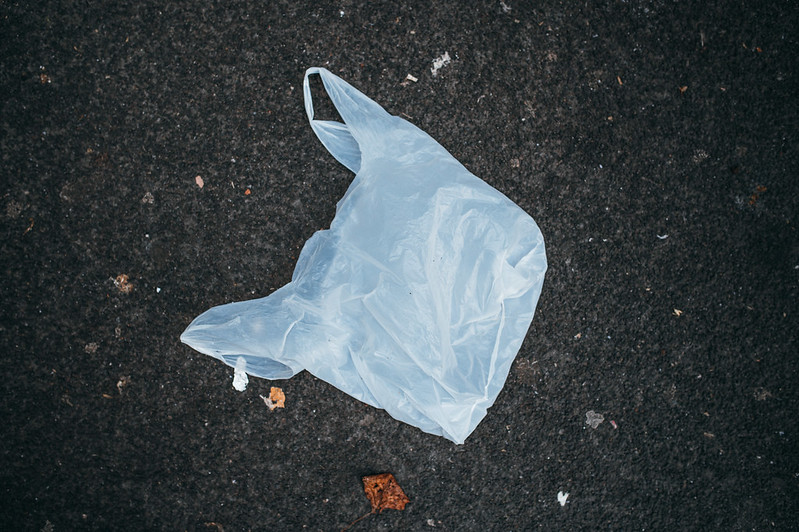
Fairfax County will require certain businesses, but not all, to pay taxes on disposable plastic bags in a move to encourage customers to use reusable bags.
The Board of Supervisors passed the measure yesterday (Tuesday) after a new state law gave counties and cities the authority to begin imposing a 5-cent tax starting in 2021. The tax will take effect on Jan. 1, 2022 for Fairfax County.
In a statement released after the vote, Board of Supervisors Chairman Jeff McKay acknowledged the challenges of introducing a new tax while the county continues to grapple with the COVID-19 pandemic, but he says the impact of plastic bags on the environment “is too great” to not act.
“There are simple steps residents can take to avoid the over-use of disposable plastic bags,” he said. “A small fee on plastic bags is an opportunity for residents to look at their habits while providing the County with avenues for environmental cleanup, education, and access to environmentally friendly alternatives.”
Fairfax County is the first locality in Northern Virginia to adopt a plastic bag tax, according to Braddock District Supervisor James Walkinshaw’s office. Walkinshaw initiated a board motion to pursue the issue in July as part of a joint effort with McKay and Mount Vernon District Supervisor Dan Storck.
Consistent with the state law, the tax applies to grocery stores, convenience stores and drug stores, but there are exemptions for reusable plastic bags, bags used for perishable food to prevent damage or contamination, bags that carry prescription drugs or dry cleaning, and bags sold in bulk, such as garbage bags.
“Plastic bags frequently end up in a landfill, where it can take more than 500 years for the bag to disintegrate. Many plastic bags end up in our streams,” Fairfax County Office of Environmental and Energy Coordination Deputy Director Susan Hafeli said. “While the impact on human health is still being addressed, there is evidence that humans ingest and inhale thousands of microplastics per year, which result in the breakdown of disposable plastic bags and other plastic products.”
The Office of Environmental and Energy Coordination says the tax is intended to influence consumer behavior by discouraging consumers from using single-use disposable plastic bags.
According to the Environmental Protection Agency, the U.S. uses over 380 billion plastic bags and wraps yearly, requiring 12 million barrels of oil to create. Turtles, one of several aquatic creatures that suffer from the trash, die of starvation after eating them.
The Board of Supervisors approved the measure 9-1 with Springfield District Supervisor Pat Herrity — the lone Republican member — opposing it. He said food banks reported relying on the bags to distribute food and argued that it’s the wrong time to add any tax.
Before the vote, the board held a public hearing where dozens of community members spoke both for and against the proposed tax.
Proponents included sixth-grade student Emily Ackerman, who said by video that she wants her generation grow up in a country that’s clean and not full of trash.
“It upsets me most when I see [plastic bags] floating in the water,” she said.
Jennifer Cole, executive director of the nonprofit Clean Fairfax Council, suggested the choice customers face is not between plastic and paper, but sustainable and unsustainable, noting that while stores appear to give disposable bags away for free, it’s surely baked into the costs that customers absorb.
John Cartmill spoke while carrying a reusable bag filled with plastic bags that he said he’s collected over the past week along Sugarland Run Trail.
Opponents included former EPA administrator Andrew Wheeler, who argued that making this a local issue is misguided compared to the scale of the environmental challenges that the world is facing with climate change.
Pointing to China as the world’s biggest contributor to greenhouse gas emissions, he said a cotton tote bag would have to be used for 54 years to offset the environmental damage done by creating it. He suggested increasing educational programs and adding locations to recycle bags would be a better approach.
Walkinshaw noted after the hearing that former EPA administrators from both major political parties have criticized Wheeler’s tenure, which was under the Trump administration.
“If Andrew Wheeler says that we should turn right on an environmental issue, we should turn left,” the Braddock District supervisor said. “And that will help guide us, I think, tonight.”
Fairfax County advises people to take plastic grocery bags to larger grocery stores, where there are usually drop-off bins at or near the doors, for recycling. The county doesn’t accept plastic bags in its curbside recycling program, because they tangle and damage sorting equipment and can contaminate other kinds of recyclable plastic.
Studies have shown that plastic bag taxes can lead customers to sharply drop their plastic bag use.
Other individuals who argued against the plastic bag tax cited its potential impact on low-income county residents and sanitary concerns.
Maureen Brody said she goes out every week to clean roadways and rarely finds plastic bags but does find another form of trash: face masks.
Like with sales taxes, Virginia will collect the plastic bag tax and then send money back to local municipalities. McKay said he hoped no money would come from it.
“Not one single person in this county has to pay this fee,” McKay said after the public hearing, noting that people can avoid paying the tax by using alternatives.
McKay told FFXnow that the county hasn’t done any estimate on how much revenue it would generate, but any proceeds would supplement existing efforts, which he thought should prioritize litter pickup and getting reusable bags to those in need.
According to a staff report in the board agenda, revenue from the plastic bag tax can be used for environmental clean-up initiatives, including educational programs and pollution and litter mitigation, and to provide reusable bags to recipients of federal food assistance benefits.
Passed by the General Assembly in March 2020, Virginia’s plastic bag tax law notes that, if a city or county chooses to implement the tax, businesses could technically still give plastic bags to customers for free. However, those companies would still have to pay the tax for each bag.
In a move to encourage business to collect the money, those affected can keep 2 cents per bag until Jan. 1, 2023. After that, the dealer discount will drop to 1 cent per bag.
Photo via Ivan Radic/Flickr
Fairfax County has provided drug or mental health treatment services to more than 2,100 people who would have otherwise wound up in jail since launching a diversion initiative five years ago, a recent report on the program says.
Released in August, the 2020 annual Diversion First report suggests the county’s efforts to emphasize support services over incarceration for people with mental health and substance use challenges are starting to pay off.
According to the report, Fairfax County’s jail population saw a 28% decrease from 2015 to 2020 in the number of people with behavioral health issues and misdemeanor charges, while the Fairfax-Falls Church Community Services Board’s Merrifield Crisis Response Center received 37% more cases per year between 2016 and 2020.
Since Diversion First launched on Jan. 1, 2016, total calls for service involving mental illness with police response have risen every year, from 3,566 calls in 2016 to 9,989 in 2020. It wasn’t immediately clear whether that means the number of cases has increased or they are receiving more attention.
“Over the past several years, there has been increased attention on people with mental illness, co-occurring substance use disorders and/or developmental disabilities who come into contact with the criminal justice system for low-level offenses,” Diversion First Director Lisa Potter said in a statement. “In addition, training and screening has increased, allowing for greater opportunities for identification, diversion, and referral and engagement in services.”
Fairfax County created the initiative in the wake of Natasha McKenna’s death at the Adult Detention Center in February 2015. Multiple sheriff’s deputies at the jail hit and used a Taser on McKenna, who had been diagnosed with schizophrenia, when attempting to transfer her to another facility.
While prosecutors declined to press charges in McKenna’s death, the county admitted that its jail had “become a warehouse for people with mental illness.”
“Diversion First offers alternatives to incarceration for people with mental illness, co-occurring substance use disorders and/or developmental disabilities, who come into contact with the criminal justice system for low-level offenses,” the initiative’s website says.
Diversion First has expanded from its initial focus on transferring individuals from police custody to the Merrifield Center, which provides behavioral health and substance abuse services, to also encompass housing and judicial components.
Introduced in 2017, the housing aspects of the initiative include money to assist with initial rents and deposits for Oxford House group recovery homes as well as a partnership with the nonprofit New Hope Housing to provide permanent housing.
“The [New Hope Housing] program has been successful in keeping 30 individuals housed while helping to decrease their rate of psychiatric hospitalization and time spent in jail. This program costs considerably less than what it does to house an individual in jail — more than 50% less,” the 2020 report says, adding that 39 people have been served with this outreach throughout the program’s history.
The county has also added specialty dockets to its court system for veterans, mental health, and a drug court.
Fairfax County Chief Public Defender Dawn Butorac says all three dockets have been going well, as the courts are looking to expand the number of accepted individuals. But she notes there’s room for improvement.
“We see plenty of people who come into our system who…should have been diverted to Merrifield, but because it’s left to the individual discretion of each police officer, it’s not really uniformly applied,” Butorac said.
At a recent drug court, adults involved in a drug rehabilitation program talked about their progress and challenges with a judge in conversations that more closely resembled those between a patient and therapist than a typical court hearing.
“How have things been going since we last saw you in court?” Judge Dontaè Bugg said when seeing one participant, a query he echoed throughout his introductions with each person.
Bugg talked to participants one by one, cross-examined them when their statements conflicted, and when the circumstances arose, encouraged them to be truthful with program staff. He noted that participants can sometimes find the process frustrating but encouraged and thanked them when they were honest about relapses.
Launched in September 2018, the drug court is for people who were convicted of a nonviolent crime and violated their probation due to substance abuse. In lieu of jail time, they are given drug testing and counseling requirements and will have their probation terminated if they successfully graduate from the program.
The docket allows for some flexibility, as Bugg demonstrated when accommodating a participant who had sought to visit his grandmother for her birthday. The judge noted the program was able to pivot.
Like the rest of the county’s court system, the specialty dockets were upended by the COVID-19 pandemic, disrupting Court Services staff’s normal support of clients as in-person meetings were temporarily halted, according to the 2020 Diversion First report.
Potter noted that pandemic-related stressors have led to increased anxiety and depression for many people, and people with mental illnesses can be more vulnerable to stressors than compared to the general population.
“We are closely monitoring trends to assess the impacts of the pandemic, as well as overall community needs,” Potter wrote. “Now more than ever, Diversion First programs are essential in our community.”

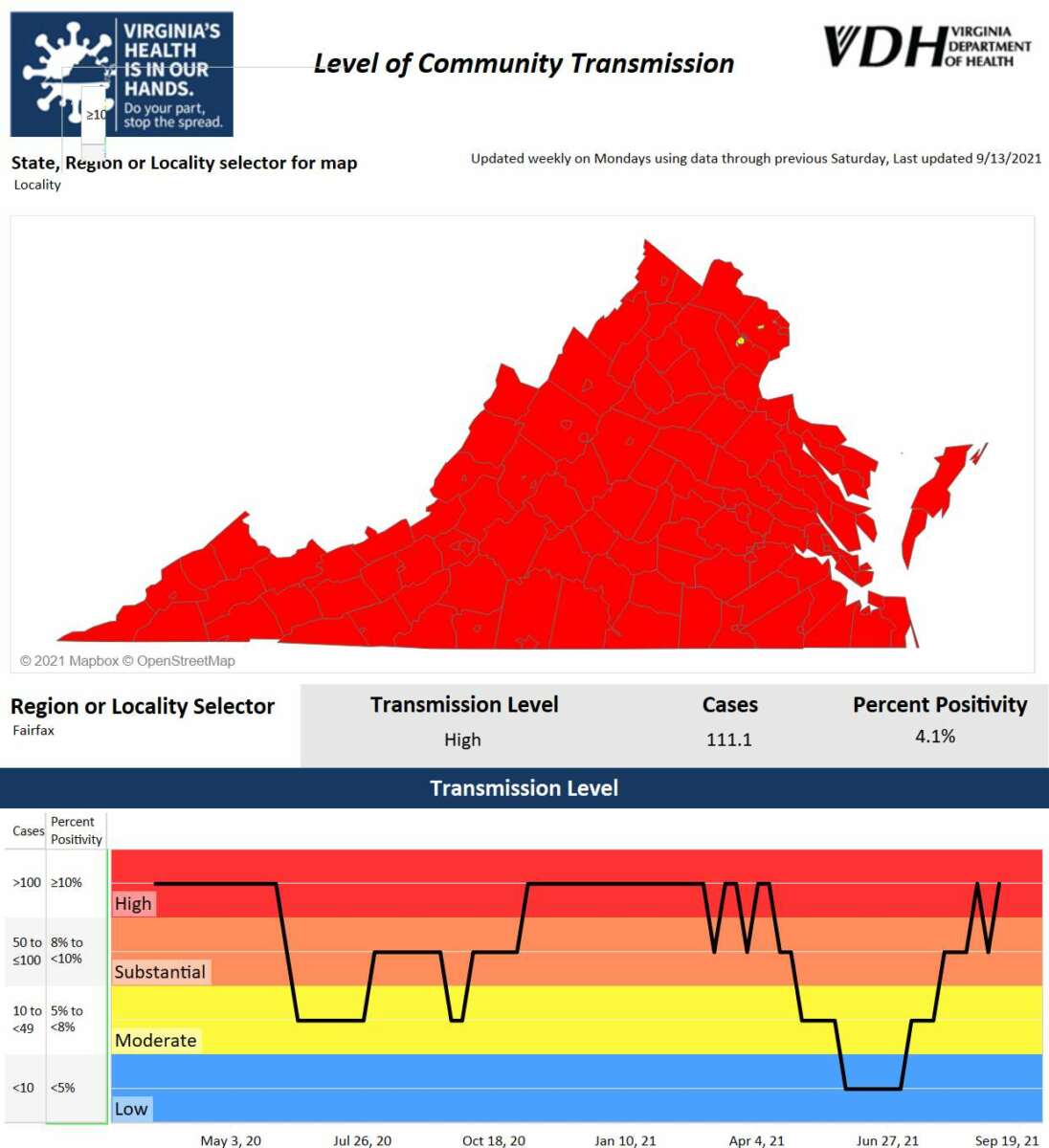
After a one-week drop back into “substantial” territory, Fairfax County is once again seeing high levels of COVID-19 transmission.
For the week of Sept. 5-11, the county saw 111 new cases per 100,000 residents, and 4.1% of tests came back positive for COVID-19 — the two metrics used by the Centers for Disease Control and Prevention and the Virginia Department of Health to measure the level of community spread.
While the testing positivity rate remains low, the number of cases per 100,000 people has climbed over the 100-case threshold for high transmission.
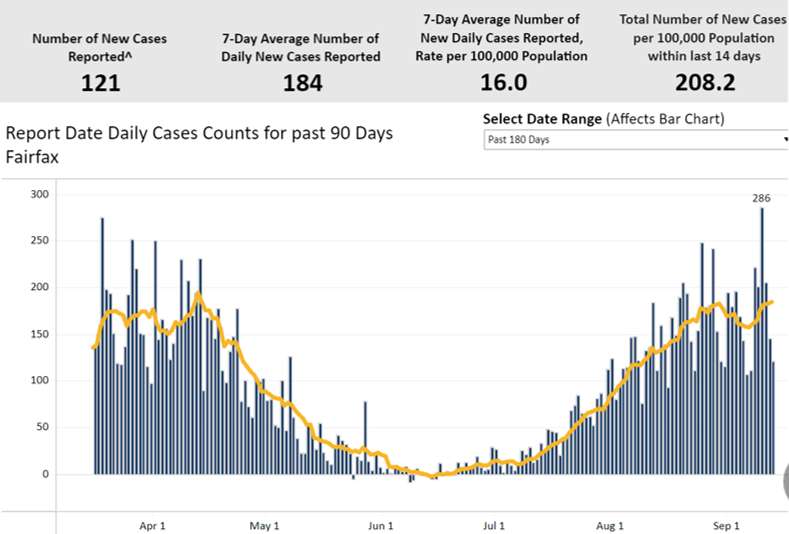
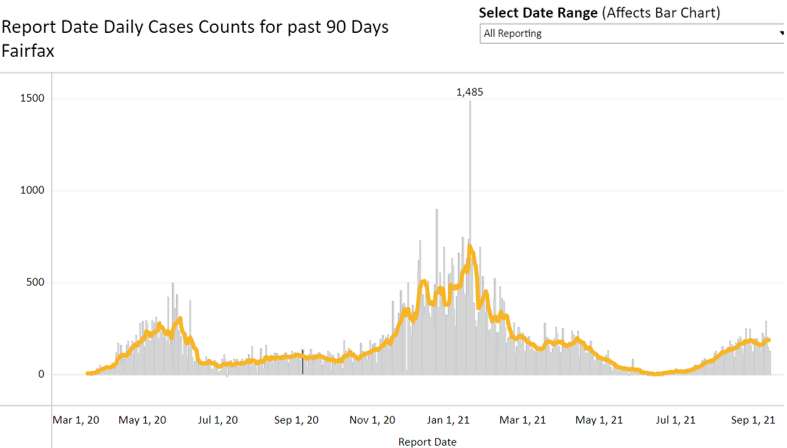
The rise stems in part from the addition of 286 cases on Friday (Sept. 10), the most new infections that the county has seen in one day since 397 new cases were reported on Feb. 13, according to VDH data. Feb. 21 came close with 283 cases.
As a result, Fairfax County is now averaging 184.4 new cases per day for the past week, surpassing the summer high of 182.6 cases on Aug. 30. The seven-day average is still below the spring peak of 194.4 cases recorded on April 13.
With 130 more cases coming in today (Monday), 86,347 residents of the Fairfax Health District — which includes the cities of Fairfax and Falls Church — have contracted the disease caused by the novel coronavirus. 4,250 people have been hospitalized, and 1,170 people have died, according to the Fairfax County Health Department’s dashboard.
As the particularly contagious Delta variant keeps driving up COVID-19 cases statewide, the VDH announced last Tuesday (Sept. 7) that it has added more than 170 community testing events across the Commonwealth in response to an increase in people seeking to get tested.
That increase extends to the Fairfax Health District, which received more test results in the week of Aug. 29 than any other week since Jan. 24. Testing declined the following week of Sept. 5 leading into Labor Day weekend.
COVID-19 tests remain widely available in Fairfax County from primary care providers, health clinics, and a variety of other community testing sites, such as pharmacies. The county recommends that anyone experiencing symptoms or who has come in close contact with someone that tested positive for COVID-19 get tested, regardless of their vaccination status.

However, the majority of COVID-19 cases, hospitalizations, and deaths in Virginia continue to occur in unvaccinated people, who have developed the disease at 8.5 times the rate of fully vaccinated individuals since mid-January, according to the VDH.
In the Fairfax Health District, 793,392 people have gotten at least one vaccine dose. That constitutes 67% of all residents, including 79.2% of people 18 and older, but it also means just 1,457 more people have gotten a shot since Tuesday.
719,571 Fairfax Health District residents — 72.2% of adults and 60.8% of the overall population — are fully vaccinated.
Local, state, and federal officials have taken an increasingly hardline approach in recent weeks to urging the remaining eligible unvaccinated Americans to get their shot.
President Joe Biden announced a host of new vaccine mandates on Thursday (Sept. 9), including ordering all employers with at least 100 workers to require COVID-19 vaccinations or weekly testing.
“President Biden’s directive to employers with 100 or more employees to require their employees to be vaccinated will build more momentum for COVID-19 vaccination in the private sector. VDH echoes that call,” Virginia State Health Commissioner Dr. M. Norman Oliver said in a statement.
Oliver noted that many major employers in Virginia, including the state government, have already issued mandates.
The Fairfax County government and public school system announced on Aug. 20 that they will require staff to get vaccinated or face weekly testing, though the exact timing of when those requirements will take effect remains nebulous.
Private employers in the county that have implemented vaccine requirements include Capital One, Inova Health System, Google, and Microsoft.
“With the U.S. averaging close to 150,000 cases and about 1,500 deaths per day, primarily attributable to the Delta variant, it is imperative we do all we can to beat back this surge,” Oliver said.
Photo via CDC/Unsplash
Fairfax County Public Schools could start providing livestreamed or recorded classes for students who can’t be in school buildings due to COVID-19 later this month.
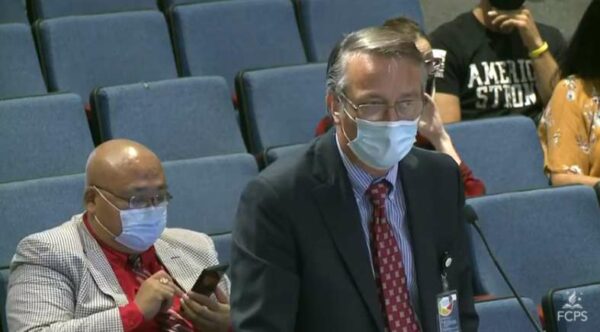
Superintendent Scott Brabrand told the Fairfax County School Board on Thursday (Sept. 9) that administrators are developing a plan to let students attend their regular classes remotely when they have to quarantine, isolate, or pause in-person learning in response to testing positive for COVID-19 or being identified as a possible close contact of someone with the virus.
“We’re looking at several different options to get the important instructional content to our students, so it could be livestreaming. It could be teachers recording the lesson and posting the lesson,” FCPS Chief Academic Officer Sloan Presidio said at the meeting.
As of Thursday, FCPS has seen 555 reported cases of COVID-19 since Aug. 1, including 432 student infections. While that’s just 0.24% of the district’s 178,000-plus student population, the disruption in learning that comes with each positive case can affect entire classes or sports teams.
In addition to requiring isolation for students who test positive and quarantines for any unvaccinated close contacts, FCPS has been pausing in-school activities for students who could potentially be close contacts so the Fairfax County Public Health Department can conduct contact-tracing investigations.
“Fully vaccinated students who are identified as a close contact with someone with COVID-19 do not need to remain home as long as they do not have symptoms,” the school district says in its current health and safety guidance.
Last week, FCPS introduced a new system for electronically reporting students’ vaccination statuses in an effort to speed up the contact-tracing process.
Brabrand told the school board that FCPS is examining whether the 14-day quarantine period for unvaccinated students who come into close contact with a COVID-positive individual could be reduced to 10 or seven days.
Five of the seven COVID-19 outbreaks that have occurred in schools this academic year so far involved athletics, according to Brabrand. FCPS announced on Aug. 30 that it will require student athletes to get vaccinated against the coronavirus, effective Nov. 8.
A state law requires all public schools to provide in-person education for the 2021-2022 school year but allows for some exceptions. If a district offers online education for some students, it’s legally required to do so for all, such as students with disabilities and those with language needs, Brabrand said.
FCPS currently has a virtual program for a limited number of students with documented medical needs.
Braddock District Representative Megan McLaughlin raised concerns about the lack of a virtual learning option for elementary school students, who remain ineligible for the vaccine.
“We’ve gotten hundreds of emails from parents,” she said, pointing to Prince George’s County in Maryland. “They were offering it to 12,000 kids, and right now we only offer it to 400 kids.”
If approved, the classroom live-streaming option would be exclusively for students who aren’t able to attend school in-person for COVID-related reasons, as stated in Brabrand’s presentation and previously confirmed by FCPS officials.
FCPS officials said that, due to limited staffing, the live-streamed classes wouldn’t be interactive like last school year, when the district adopted a concurrent learning model where teachers worked with in-person and online students simultaneously. The school board largely balked at the idea of continuing that experiment into the new year.
Under the live-streaming approach, teachers could assist students through email correspondence. FCPS is reviewing whether office hours or other forms of outreach could be involved.
FCPS officials expect to present more details of their plans to the school board at a work session on Sept. 21.
As the country reflects on the 20 years that have passed since the 9/11 attacks in New York City and at the Pentagon, volunteers in Fairfax County will spend this Saturday (Sept. 11) giving back to the community.
Volunteer Fairfax, the county’s volunteer network, has hosted a countywide day of service each fall to support local nonprofits for over 25 years. The 2021 VolunteerFest has been timed to coincide with the 20th anniversary of 9/11 and will involve over 30 volunteer projects, including ones that can be done at home.
The proceedings will begin at 9 a.m. at the Fairfax County Government Center (12000 Government Center Parkway) with a Chalk4Peace.org art project for youth to create positive messages of peace using art and sidewalk chalk.
Fairfax County will also host a remembrance ceremony for those lost on 9/11 at the Bailey’s Crossroads Volunteer Fire Department (3601 Firehouse Lane) in Falls Church, though members of the public are being encouraged to watch online through Facebook or the county government’s cable channel.
Scheduled to begin at 2 p.m., the event is expected to have a number of public safety and elected officials in attendance, including Rep. Gerry Connolly, Fairfax County Board of Supervisors Chairman Jeffrey McKay, Fire and Rescue Chief John Butler, and Police Chief Kevin Davis.
Additionally, the Department of Public Safety Communications will make a special, countywide announcement over Fire and Rescue radios at 10:28 a.m.
Starting at 10 a.m., the county will also hold its first Stuff the Bus food drive of the fall with sites at the government center and 22 other locations around the county, including Fairfax, Chantilly, Reston, Lorton, and McLean.
Now in its 10th year, the program organized by the county government and local nonprofits collects donations for local food banks to address hunger in the community. Volunteer Fairfax has also been accepting monetary donations online during the pandemic.
Registration is still open for a range of VolunteerFest projects.
In-person projects include removing invasive plants at Difficult Run Stream Valley Park in Oakton, cleaning up Centreville Elementary School’s gardens, and helping prepare a large garden bed for planting several trees to beautify South Run RECenter in Springfield.
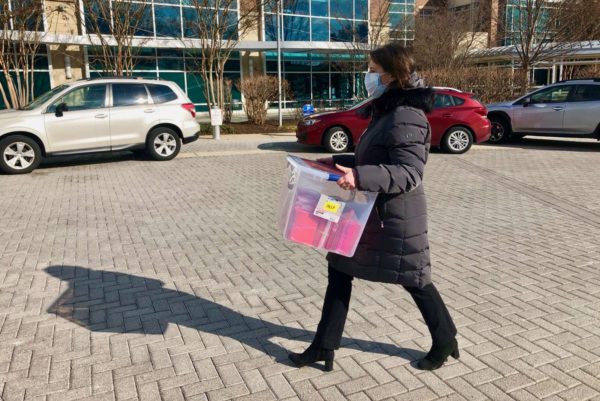
Those looking to participate in an at-home project can create “homeless survival kits” to be distributed across Northern Virginia, make fleece blankets or toys for rescue dogs and cats, and craft face masks for people with mental health, substance use and homelessness issues at Recovery Program Solutions of Virginia centers.
There will also be a gratitude station at the government center for community members to compose messages of remembrance and thanks that will be distributed to local fire and police stations. The station is co-hosted by Kids Give Back, a local nonprofit that supports youth volunteering.
Originally called the Voluntary Action Center of Fairfax County when it was created in 1974, Volunteer Fairfax took on its current moniker in 1992 as the organization’s focus evolved to accommodate more volunteers looking to serve, including youths.
Volunteer Fairfax now works with almost 14,000 volunteers who have contributed more than 54,000 service hours to over 650 nonprofits and public agencies, according to its site.
According to a news release, this year’s edition of VolunteerFest is supported by AT&T, NetApp, Kaiser Permanente, Accenture, Deloitte, Virginia Service Foundation, and The Williams Foundation.

The disposable plastic bags that remain ubiquitous at grocery and convenience stores could soon be subject to a five-cent tax in Fairfax County.
Under an ordinance proposed by county staff, the tax would be imposed on grocery, convenience, and drugstore retailers, rather than their customers. There would be some exceptions, including:
- Plastic bags designed for reuse
- Bags exclusively used to wrap meat, produce, and other perishable food items to avoid damage or contamination
- Bags used to carry prescription drugs or dry cleaning
- Bags sold in packages for garbage or other kinds of waste disposal
Building off of legislation passed by the Virginia General Assembly in April 2020, the Fairfax County Board of Supervisors voted on July 14 to direct staff to draft the ordinance, which would take effect on Jan. 1, 2022 if adopted.
Proponents of the measure on the board argued that imposing a tax will incentivize individuals and retailers to use fewer disposable plastic bags, which generally wind up in landfills or as litter that can be harmful to the environment.
Revenue from the plastic bag tax could be used to fund environmental cleanup programs, education on reducing waste, pollution and litter mitigation programs, and reusable bags for food assistance benefit recipients, according to the state law.
Springfield District Supervisor Pat Herrity, the lone board member to oppose drafting the ordinance, took issue with the idea of introducing a new tax in the middle of the COVID-19 pandemic.
Past research also suggests paper bags and reusable cotton bags require more carbon emissions to manufacture than disposable plastic ones, so they need to be reused a lot to be more environmentally friendly.
The timing of the ordinance is important, since the state law lets retailers retain two cents of the imposed tax to offset the cost of changing their operations until Jan. 1, 2023, at which point the discount shrinks to just one cent.
Community members will get their first chance to weigh in on the proposed tax at a public hearing scheduled for the Board of Supervisors’ upcoming meeting on Tuesday (Sept. 14). Speakers can register to deliver testimony in person, by phone or video, or in writing.
Photo via Takoma Park/Flickr
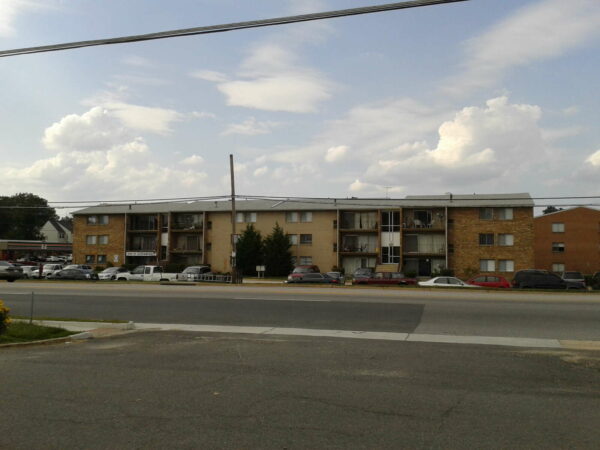
While the federal eviction moratorium is no more, local experts say a Virginia law that took effect on Aug. 10 still provides notable protections for both renters and landlords in Fairfax County.
The Supreme Court ruled on Aug. 26 that the hold on evictions imposed by the Centers for Disease Control and Prevention was unconstitutional, eliminating a nationwide policy intended to keep people housed during the COVID-19 pandemic.
“[The eviction moratorium] certainly is one protection that’s removed for the tenant,” said Dipti Pidikiti-Smith of Legal Services of Northern Virginia, a local nonprofit that works with Fairfax County to provide pro-bono legal assistance. “But it wasn’t the main protection. There’s a really good state protection in place.”
In place through June 30, 2022, H.B. 7001 prohibits landlords from evicting tenants who have experienced financial challenges due to the pandemic unless they notify renters about the Virginia Rent Relief Program and apply for assistance on their behalf if the tenant doesn’t apply themselves within 14 days.
Pidikiti-Smith says the bill is a very strong protection that helps both tenants and landlords.
“The state provides more protection initially in preventing filing of these evictions because landlords have to apply for rent assistance,” Pidikiti-Smith said. “Once that’s done, the money is there. The landlords get their payment and tenants have relief… and there’s no need to file a case.”
Tenants can apply for up to 15 months of assistance, which could mean anywhere from a few hundred to tens of thousands of dollars, depending on their need and eligibility.
Pidikiti-Smith says she knows one tenant who received $35,000 in relief, though the average is about $5,000 to $6,000. Most tenants who apply do qualify for at least partial assistance.
While the moratorium’s end affected cases already in court, it has had less of an impact statewide on potential evictions.
“We’ve been telling tenants it’s okay that the [eviction moratorium] isn’t in place right now,” Pidikiti-Smith said.
County officials expressed relief last month when the CDC extended its eviction moratorium into October, but they also said the county had ample funds to support those in need.
Earlier this summer, the county set up a new emergency rental assistance program using federal relief funds that has provided more than $12 million in both housing and utilities assistance to about 1,550 households so far, according to data provided to FFXnow.
Before the program was implemented, the county provided more than $28 million in housing, food, and utility assistance from other sources.
Fairfax County Board of Supervisors Chairman Jeff McKay said by email that the Supreme Court’s ruling on the federal eviction moratorium was “not ideal.”
“However Fairfax County staff has been incredibly proactive in distributing rent relief, collecting data on those who are at-risk of eviction, and opportunities for both renters and landlords to have access to funds,” McKay said. “We know how important it is for people to be in their homes and we are doing all in our power to make our rent relief efforts expansive and data-driven.”
The availability of financial assistance hasn’t completely stopped evictions, though.
August saw 68 writs of evictions, a court-ordered notice allowing the sheriff’s office to evict a tenant, according to county data. The writs often stem from a tenant failing to submit an Eviction Protection Declaration, not qualifying for assistance, or being evicted for a reason other than their ability to pay rent.
“Even with the CDC order, we never stopped receiving notices from landlords and Writs of Eviction from the court,” the Fairfax County’s Sheriff Office wrote in a statement. “If a tenant did not submit the declaration or was being evicted for a lease violation not related to rent payment, the CDC moratorium did not apply.”
Pidikiti-Smith says there are two types of evictions — formal ones that go through the courts and informal ones where tenants leave before the court process plays out.
She says informal evictions can happen when tenants don’t know their rights or where to go for help, leaving them feeling intimidated when their landlord tells them to leave. Those types of evictions are impossible to track.
The emergency rental assistance program has proven beneficial to landlords as well as tenants.
According to Northern Virginia Apartment Association Executive Director Patrick Algyer, tenants owe about $2,000 on average — far less than they did at the beginning of 2021, thanks largely to Virginia’s rent relief programs.
Vacancy rates have also significantly decreased across Northern Virginia, dropping from the 15-25% range earlier this year to 4-6%, Algyer says. Prior to the pandemic, 2-3% was considered typical.
While Algyer supports the rental assistance program, he says it’s difficult when the responsibility to apply falls on landlords.
“The program has been essential in helping tenants cover back rent owed,” he wrote in an email. “However, landlords are legally responsible for applying on behalf of their tenant and it is a cumbersome and protracted process that could be easier to navigate.”
He also disputed the perception of landlords as “large corporations.” Individual landlords own about 40% of rental properties regionally, and about a third of all properties serve low or moderate-income tenants, according to NVAA.
“Many of these smaller landlords have been forced between a rock and a hard place, with little recourse when a tenant doesn’t pay rent — and in some cases have run into issues where tenants don’t comply with the landlord’s mandatory application for rental assistance, further complicating the process,” Algyer wrote. “Meanwhile, landlords’ expenses such as mortgages, taxes, utilities and repair bills have not abated.”
Although the landlord-tenant relationship is often seen as adversarial, cooperation and communication can ensure everyone gets what they want, Pidikiti-Smith says: landlords get owed back rent and tenants can stay in their homes.
“It’s fundamental to every human relationship, communication,” Pidikiti-Smith said. “There’s a pandemic and everybody has stressors that they’re trying to navigate. I think that escalates some situations. But once that application is submitted [for rent relief], it always has great results.”
Photo via Ser Amantio di Nicolao/Wikimedia Commons
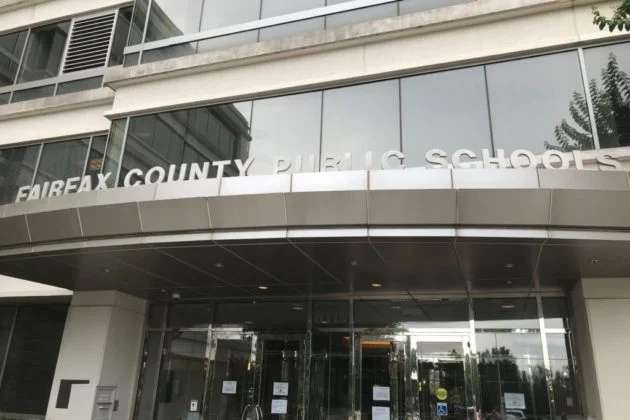
Two weeks into a new school year that was supposed to herald the full return of in-person learning, Fairfax County Public Schools is considering adding a new, limited option for virtual instruction in an effort to minimize disruptions related to COVID-19.
Under the proposal, which will be shared in more detail during the Fairfax County School Board’s meeting tomorrow (Thursday), students who are directed to isolate, quarantine, or pause in-person learning due a COVID-19 case would be allowed to attend their classes via live video streaming, FCPS spokesperson Julie Moult confirmed to FFXnow.
“We understand that students learn best in person and that being required to quarantine is not an ideal situation,” Moult said in a statement. “We are doing our best to find solutions for those who need to be out of the classroom.”
FCPS has not reported any outbreaks to the Virginia Department of Health since the beginning of August, but it has recorded 510 COVID-19 cases, including 397 cases among students, over the past six weeks, according to the district’s dashboard for the 2021-2022 academic year.
411 of those cases have come in since classes began on Aug. 23, and there were 160 cases in the first seven days of September, even with students getting both Friday (Sept. 3) and Monday (Sept. 6) off for Labor Day weekend.
According to FCPS, a student, staff member, or visitor testing positive for COVID-19 may prompt a pause to in-person instruction, sports, and other activities for individuals identified as potential close contacts so the Fairfax County Health Department can conduct an investigation, including contact tracing.
While the department has a team specifically dedicated to school-related cases, the start of school has brought an influx of COVID-19 infections, including ones acquired outside of school. That has stressed the system and led to investigations that sometimes take several days, the FCHD said in a blog post last Thursday (Sept. 2).
The length of the investigations is part of a growing list of frustrations with this school year, from bus delays and crowded cafeterias to communication issues that have resulted in students showing up for class when they’re supposed to stay at home.
FCPS announced last week that it worked with the county health department to implement a new system where parents can electronically confirm their children’s vaccination status to speed up the contact-tracing process and enable them to return to in-person classes more quickly.
The school system also said that student athletes will be required to get a COVID-19 vaccination to participate in winter and spring sports in part because the majority of pauses to in-person instruction for high school students have been triggered by exposure during athletic activities.
Just this week, Herndon High School postponed its football games against South Lakes High School that were scheduled for tomorrow and Friday (Sept. 10). Moult confirmed that the Herndon football team has been paused, necessitating the postponement.
WUSA9 reported last night that parents were notified on Aug. 30 that the entire Herndon football team had to stay home last week after a varsity player tested positive for COVID-19.
FCPS is offering some virtual instruction this year, but enrollment was strictly limited to students with a documented medical need to learn remotely. Officials told the school board on Aug. 24 that approximately 400 students were enrolled in the program, 42% of them students with disabilities.
While some families have advocated for FCPS to offer virtual learning more widely, the live classroom streaming option will only be available to students who are paused, isolating, or quarantined due to COVID-19 if it’s approved, Moult says.
“We are working with principals, teachers and teacher associations to finalize the details and should have this ready to share with families shortly,” Moult said. “We hope this will alleviate some of the concerns about potentially missing out on in-person instruction.”

Pickleball continues to grow in popularity, and Fairfax County is looking for ways to accommodate a rising demand for local, dedicated facilities.
A draft report that the county released last week highlights the conflict that pickleball has experienced with other recreational activities. It also provides strategies for how to minimize or eliminate problems when adding pickleball courts, especially in spaces shared with other sports like tennis and basketball.
“A key finding of the study was that the potential for conflict between sport courts exists when providing shared-use courts or repurposing courts to sports for which they were not initially constructed, such as tennis or basketball,” the report said.
People can comment on the draft report through Oct. 1 by email and phone and at a virtual meeting scheduled for next Tuesday (Sept. 14).
Based an online survey that Fairfax County Park Authority carried out from December 2020 to January 2021, the report says respondents have experienced conflicts with tennis players using available courts, thereby limiting their use for pickleball.
One person said conflict “is too strong a word, but [we] occasionally have to change plans when courts are already taken by tennis players.” Another person reported a tennis player saying the courts were for tennis only.
The county’s report says both tennis and pickleball got a boost across the country amid the COVID-19 pandemic, as people sought activities that can be played while maintaining advised social distancing.
The number of tennis players increased 22% to 21.64 million in the U.S. from 2019 to 2020, according to the U.S. Tennis Association. Meanwhile, pickleball grew 21.3% to 4.2 million players during that same time frame, according to the USA Pickleball Association.
In the Fairfax County Park Authority’s survey, which generated over 1,800 responses, approximately 78% of people said they played pickleball in the last year, and most played a few times a week or month.
The county’s report said local participation in pickleball mirrors regional and national trends, and more publicly maintained courts have already started to emerge during the pandemic.
“In the 18 months prior to this report, 19 pickleball courts were added to existing tennis courts and the two pickleball-only courts were constructed, representing a 68 percent net increase in the number of pickleball courts,” the report noted.
In the report, county staff shared strategies for identifying where pickleball spaces could be added, either by constructing new courts dedicated solely for pickleball or by repurposing or sharing existing courts.
Park authority officials say that a 2024 park bond or other funding sources could assist with designing and constructing a pickleball-only facility that has at least six courts.
For transforming existing spaces into shared or dedicated courts for pickleball, the county points to a phased approach adopted by Montgomery County as a best practice “that has demonstrated success in the Washington, D.C. metro region.”
The process involves placing pickleball court lines on a court temporarily, observing the space for two to four weeks, and noting any conflicts or reported issues as well as player usage trends before either removing the temporarily lines or making them permanent for shared use with continued monitoring.
“Prior to the introduction of pickleball at a court, or prior to the removal of nonpickleball play at a court, decision makers should evaluate a facility’s current utilization, area service levels, and potential reasons for under-utilization such as demand, location, access, or maintenance,” the report said. “It is inappropriate to change the use of a court if such a change would result in a significant reduction of adopted service levels or conflicts between sports that cannot be minimized or mitigated.”
The report also found that Fairfax County is comparable to other areas in terms of the overall number of pickleball courts it provides per capita, but only two facilities are dedicated to pickleball, while 48 outdoor courts are shared with tennis players.
However, pickleball players here said the county didn’t offer enough opportunities to play the sport, such as courts dedicated solely to pickleball or groupings of pickleball courts to support many concurrent games, so county staff determined that one solution is to strategically locate pickleball courts together to better facilitate group and tournament play, Park Authority long range planning chief Ryan Stewart said in a statement.
As part of those concerns, many people still expressed dissatisfaction with how Fairfax County’s development of facilities compared to other jurisdictions.
“Of area jurisdictions, only Prince William County has, to date, provided purpose-built, dedicated pickleball courts. This eight-court facility was often cited in the public survey as players’ preferred venue,” the report said. “Montgomery Parks is currently converting its tennis courts at Bauer Lane Local Park to six pickleball-only courts with lighting.”
County staff said the report’s recommendations should be considered in conjunction with ongoing community engagement from participants, neighbors, and other stakeholders.
“The Park Authority has valued the contributions of the community of players and remains committed to ongoing dialog as these recommendations are implemented and as new opportunities emerge to address growing demand,” the report said.
The draft report stems from a formal review of pickleball players’ needs that the county launched in the summer of 2019. The county expects to finalize the report next month after the latest round of public comments, and the park authority board could approve it in November.
Photo via Lauren Bryan/Flickr

Safety, access, and equity are among the top priorities for Fairfax County residents when it comes to envisioning the future of transportation in the area.
The Fairfax County Department of Transportation released a draft report on Aug. 31 for its ActiveFairfax Transportation Plan, which will combine and update the county’s Bicycle Master Plan and Countywide Trails Map into an overarching plan for amenities to support walking, cycling, and other self-propelled modes of travel.
The draft comes after the county conducted a dozen virtual community conversations with residents this past spring to learn more about their concerns and desires.
The county also received public input from 1,474 virtual community survey responses, 1,217 comments on a virtual barrier and destination feedback map, and 537 comments on virtual planned trail, bikeway network, and complete streets map.
The feedback informed the draft report, which proposes a general framework for the ActiveFairfax plan with four goals:
- Access and connectivity
- Safety and comfort
- Livability and health
- Equity and social justice.
Access and connectivity refers to the goal of providing “a well-connected, multimodal transportation network that offers safe, convenient, healthy, sustainable and affordable mobility options for Fairfax County,” according to the draft.
Objectives under that goal include a focus on planning, implementing, and maintaining a network of safe and comfortable sidewalks, bikeway, trails, and streets that link residential and commercial areas.
The “safety and comfort” goal encompasses efforts to minimize traffic injuries and fatalities with an emphasis on active transportation users, including by pursuing policies and incentives that reduce vehicle trips and travel speeds.
Addressing livability and health will “advance public health, sustainability and the quality of life by providing inviting sidewalks, bikeways and trails that encourage frequent usage,” the draft says.
In order to achieve this goal, the draft proposes providing a variety of educational and promotional programs and events to promote active transportation modes, as well as applying best practices to street designs, including adding wider sidewalks and ensuring bicycle facilities are available for a variety of ages and abilities.
Finally, the goal of addressing equity and social justice aims to “provide a multi-modal transportation system that prioritizes the needs of the most vulnerable road users including communities of color, low-income communities, small children and their caregivers, youth, people with disabilities, and older adults.”
This fourth goal’s objectives include adhering to the county’s One Fairfax policy when developing or evaluating active transportation policies, programs, facilities, and practices. It also means making sure the public engagement process for transportation policies and projects is inclusive so that everyone’s needs are adequately addressed.
The county’s transportation department will host two virtual community meetings to further discuss the draft’s vision, goals, and objectives. The meetings will be held Sept. 13 at 7 p.m. and Sept. 15 at 6:30 p.m., and links to sign up for each are available on the county’s site.