


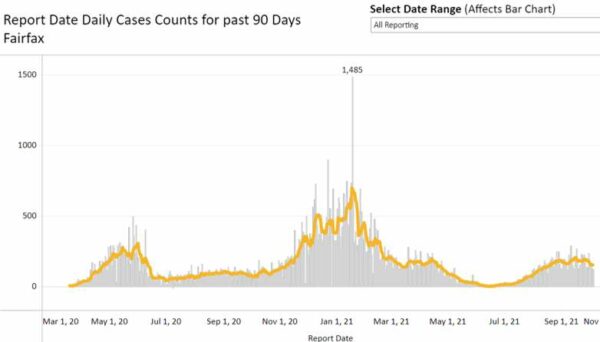
With the addition of 136 cases today (Monday), the Fairfax Health District has reported a total of 90,010 COVID-19 infections since identifying its first positive case nearly 20 months ago.
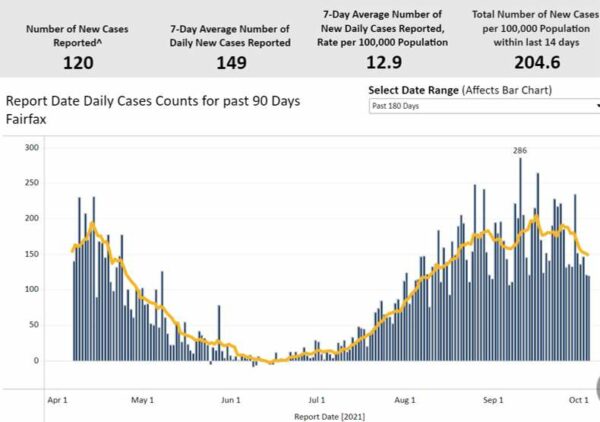
Case levels in the district, which includes Fairfax County and the cities of Fairfax and Falls Church, have stayed consistent for more than a month now after surging in August due to the spread of the especially contagious Delta variant.
According to the Virginia Department of Health, Fairfax County has seen an average of 149 new cases per day for the past week. This is the first time the weekly average has been below 150 since Aug. 19, when the county averaged 144 cases over seven days.
At the current rate, the Fairfax Health District would surpass 100,000 COVID-19 cases by the end of 2021.
4,308 district residents have been hospitalized by the disease caused by the novel coronavirus, and 1,181 residents have died.
In vaccination news, 80.7% of Virginia residents 18 and older have now received at least one dose of a COVID-19 vaccine, according to VDH’s dashboard. That is more than 5.8 million people — 68% of the Commonwealth’s total population.
72.1% of adults and 60.6% of residents overall are considered fully vaccinated, meaning it has been at least two weeks since they got the last required shot of either the two-dose Pfizer and Moderna vaccines or the one-shot Johnson & Johnson vaccine.
The Fairfax Health District has slightly outpaced Virginia as a whole.
The Fairfax County Health Department reports that 815,401 residents or 68.9% of the population, including 81.4% of adults, have gotten at least one vaccine dose. 736,772 residents — 73.8% of adults and 62.3% of all residents — are fully vaccinated.
Over 1.51 million doses have been administered to the district’s residents. It’s unclear how many of those are booster shots, which became widely available for older residents, people with underlying medical conditions, and other eligible groups last Tuesday (Sept. 28).
Photo via CDC/Unsplash
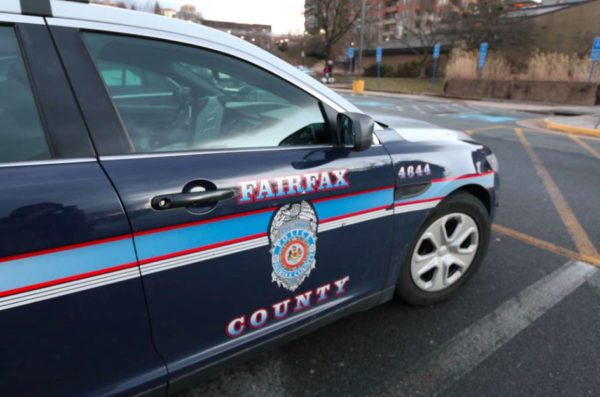
Less than a third of Fairfax County sheriff’s deputies and less than half of Fairfax County Police Department officers have undergone Crisis Intervention Team training, which seeks to help first responders more safely and effectively help people with mental health issues.
Changing how law enforcement handles situations involving mental health issues is the goal of a program that Fairfax County resumed testing earlier this week, pairing CIT-trained officers with mental health specialists to respond to non-criminal 911 calls.
The pilot program is the county’s first step toward fulfilling a state requirement that it have mental health professionals involved in behavioral health crisis responses by July 2023, but it also stems from the ongoing Diversion First initiative aimed at preventing unnecessary arrests and hospitalizations.
FCPD says 46% of its approximately 1,500 officers are currently CIT-trained.
“It is important to acknowledge the county only adopted the current model of CIT in 2016 and is committed to the continual training of department personnel in crisis intervention training,” police said in a statement.
The Fairfax County Sheriff’s Office says 132 of its 439 deputies have received CIT training.
Neighboring counties report more robust adoption rates.
The Loudoun County Sheriff’s Office tells FFXnow that every deputy serving patrol, corrections, or courthouse duties takes the training within their first two years on the force. Since 2016, Arlington County has required that all new officers take the 40-hour course within six months of completing field training.
Differences in training can contribute to discrepancies in how individual officers treat people with mental health or substance use issues. That inconsistency is one challenge facing Diversion First, Fairfax County Chief Public Defender Dawn Butorac told FFXnow in September.
During a public safety committee meeting on Tuesday (Sept. 28), Board of Supervisors Chairman Jeff McKay said the county “is hoping to get many more officers in” CIT training, calling that a baseline qualification for selecting personnel for the co-responder pilot.
Fairfax County adopted the “Memphis Model” of CIT training in 2016 in response to the Ad Hoc Police Practices Commission that the Board of Supervisors formed in 2015 after facing public criticism and a lawsuit over how the county handled a police officer shooting and killing Springfield resident John Geer in 2013.
In a final report released on Oct. 8, 2015, the commission recommended that the FCPD create specially trained crisis intervention teams, provide base-level training for all officers, require CIT training for certain command positions, including in the patrol division, and offer incentives like flexible shift hours to encourage suitable officers to join a CIT.
According to a progress report on the commission’s 202 recommendations, those proposals have all been implemented, but the FCPD did not respond by publication time when asked for details on the incentives it has for officers to get the CIT training.
The FCPD’s CIT-related administrative records and protocols consist of slideshows used for the training and a general order about emotionally disturbed persons, according to a county administrator.
Other kinds of mental health training for county law enforcement include a Mental Health First Aid Day for the sheriff’s office. In addition, the police department’s general order on the use of force states that officers should take into consideration people’s “medical issues, mental health issues, disabilities, or language and/or cultural differences.”
Meanwhile, the Virginia Department of Criminal Justice Services and Department of Behavioral Health and Developmental Services have issued guidance for CIT programs that in fact discourages agencies from giving the training to all patrol personnel “except as necessary to achieve 24/7 coverage.”
“Experience suggests that a successful CIT program will, at a minimum, have 20-25% of the agency’s patrol division, which will likely result in 24/7 CIT officer coverage,” the state guidance says. “The ultimate goal is to have an adequate number of patrol officers trained in order to ensure that CIT-trained officers are available at all times.”
Per the state guidance:
Just as officers for other specialty areas in law enforcement are not equally suited to every job, so it is with CIT officers. CIT is a training that demands officers have certain skills and experience in order to be effective. For example, because CIT asks officers to take a very different approach in dealing with certain situations, it is beneficial to train officers who are extremely comfortable with their basic policing skills and procedures and have been on the road for a significant period of time. Additionally, CIT training is NOT effective as a means of ‘fixing’ an officer who may not have a well developed set of interpersonal skills.
The Fairfax County Sheriff’s Office has 24/7 CIT coverage on every squad and shift, whether deputies are assigned to the Adult Detention Center, courthouse, or civil enforcement, spokesperson Andi Ceisler said.
She noted that all deputies assigned to the Merrifield Crisis Response Center have CIT training.
All Fairfax County employees will be required to be fully vaccinated or submit to weekly COVID-19 tests by Monday, Oct. 11, FFXnow has learned.
County government employees who do not get vaccinated or are not fully vaccinated by Oct. 11 will be required to undergo weekly COVID-19 testing to remain employed, including if they receive a medical or religious exemption.
While the county has started providing booster shots to eligible individuals, people are still considered “fully vaccinated” two weeks after they receive the second dose of either Pfizer or Moderna vaccines or a single dose of the Johnson & Johnson’s Janssen vaccine.
Fairfax County announced that it will implement a vaccine requirement back in August, but no specific date was given for when the mandate would take effect beyond “this fall.”
The county announced its requirement the same day that Fairfax County Public Schools shared its own vaccine mandate for employees, which it said will take effect “late October.”
An FCPS spokesperson confirmed that the end of October remains the school system’s goal for when all employees are expected to be vaccinated or submit to weekly testing.
Back in July, the county Board of Supervisors unanimously voted to direct County Executive Bryan Hill to evaluate the possibility of a vaccine requirement for county employees.
“We know vaccinations save lives and that these vaccines are safe and effective,” Board of Supervisors Chairman Jeff McKay wrote in a statement back in August. “Throughout the pandemic we have focused on measures to keep our employees and our community safe, and this is another key piece of that effort. As one of the largest employers in Virginia, and one that has successfully and consistently stressed to our residents the importance of being vaccinated, we must practice what we preach.”
FFXnow has reached out to both the SEIU Virginia 512 and Fairfax Workers Coalition, unions that represent Fairfax County employees, for comment but has not heard back as of publication.
The county’s vaccine requirement falls in line with policies announced by other jurisdictions in the D.C. area, including Arlington County, which has had a mandate in place since the end of August, and Loudoun County, which has not set a timeline yet.
Alexandria City Mayor Justin Wilson said in August that the city anticipated implementing a vaccination requirement in the “September/October timeframe.”
D.C. announced on Sept. 20 that school and child-care workers in the city must get vaccinated with no option to produce a negative test instead. FCPS told FFXnow that it is not changing its plans to have a testing option for employees who don’t get vaccinated.
Virginia’s requirement for state government employees took effect on Sept. 1, and President Joe Biden issued an executive order on Sept. 9 requiring all federal government workers to get vaccinated against COVID-19.
Photo via Machvee/Flickr
Fairfax County will resume an effort today (Wednesday) to avoid arresting people in mental health crises by using behavioral health experts in the hopes of eventually putting the service into effect 24/7.
Pairing a crisis intervention specialist with specially trained police officers, the “co-responder” teams address 911 calls related to behavioral health issues for the resumed service, a micropilot program that’s expected to be in place three days a week.
“Over time, we’re going to have a better sense of handling these types of calls, and we might get to a place where we don’t have to have both behavioral health and police at the same time,” said Lee District Supervisor Rodney Lusk, chair of the Fairfax County Board of Supervisors’ Public Safety Committee.
The county initially tested the approach for over a month this past March with teams working in eight-hour shifts Wednesdays through Fridays, ultimately diverting 40% of incidents from potential arrest or hospitalization.
One such case involved a family situation between siblings, where an autistic man assaulted his adult sister, said Abbey May, emergency and crisis services director for the Fairfax-Falls Church Community Services Board (CSB), which provides multiple mobile emergency response services, among other health supports.
“She had locked herself in the bathroom and reported her brother had slipped a knife under the door to intimidate her,” May said.
A co-responder team gathered critical information from talking to the woman, asking what calms her brother down and what makes him upset. The responders explained that they were there to help.
“They were able to successfully de-escalate the situation without the use of force, incarceration, or hospitalization,” May told the Board of Supervisors yesterday (Tuesday) at its public safety committee meeting.
To support the resumed micropilot program, the CSB is reallocating one of its two Mobile Crisis Units. The pairings with police will continue on a limited basis, and it’s unclear how long the initiative will last this time, but it could serve as a bridge to an expanded service, said Lisa Potter, director of the county’s Diversion First program.
The county’s effort to reform how it responds to certain 911 calls comes after Virginia adopted a law last year creating a Marcus Alert system.
Named after high school biology teacher Marcus-David Peters, who was killed by a police officer while experiencing a mental health crisis in 2018, the statewide system is designed to ensure behavioral health experts are involved in emergency responses related to mental health and substance use issues.
The law requires every Community Services Board to create a co-responder model. Fairfax County must have a program in place by July 2023 and is now working to align its initiatives with the new state requirements.
Fairfax County could use its American Rescue Plan Act money to fund an expansion of the micropilot. County leaders have identified a multi-pronged approach that includes having an officer and crisis intervention specialist travel and respond together in teams that would each cover two police districts.
The $4 million ARPA-funded proposal would create four co-responder teams in the field and cover 26 positions — which would include 10 crisis intervention specialists, eight police officers, and other staff — as well as vehicles and other equipment.
While other mental health efforts help divert unnecessary arrests and jailing, the co-responder approach provides real-time 911 responses, May said. Diversion First leaders have pressed to eventually make the effort available around the clock.
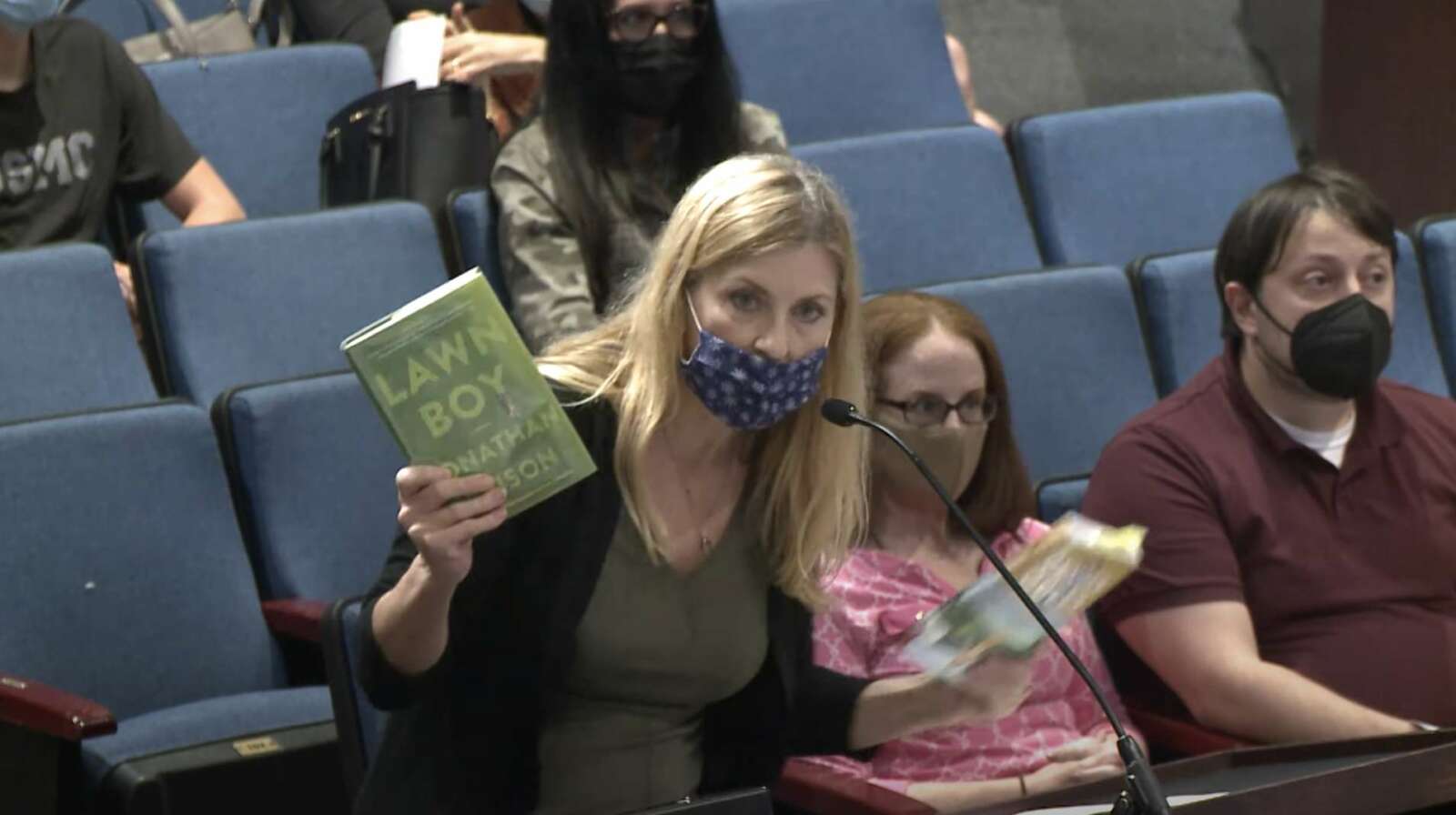
Fairfax County Public Schools has pulled two books from its shelves after a local mom complained to the school board that the titles contain graphic sexual content and pedophelia.
A spokesperson for FCPS confirmed to FFXnow that “Lawn Boy” by Jonathan Evison and “Gender Queer” by Maia Kobabe have been temporarily pulled from shelves.
Two committees under the supervision of the school system’s library service coordinator will assess the suitability of both texts for high school libraries. The committee will include representation from staff, students, and parents, according to the spokesperson.
“The recommendation of the committees will be put forward to the Assistant Superintendent of Instructional Services who will make a final decision as to whether FCPS continues to provide access to these books in our high school libraries,” the spokesperson said.
Stacy Langton, a Fairfax County mother, held up content from the books at a heated Sept. 23 school board meeting. The material — which was blurred in a recording of the meeting — included details of a man having sex with a boy, oral sex, masturbation, and nudity.
“Pornography is offensive to all people,” Langston said. The recording also muted Langton’s descriptions of the books’ content, which she said includes a scene in which a 10-year-old boy recounts sucking an adult man’s penis.
A Patch review of the two books disputed that characterization, reporting that “Lawn Boy” — a coming-of-age novel about a Mexican landscaper — contains no scenes of adults having sex with minors and that the illustration that drew objections in “Gender Queer,” an autobiography, appears in the context of the author’s teenage fantasy.
Another county resident and former FCPS teacher — Adrienne Henzel — said she was appalled by what she described as “homo-erotic material” supported by county taxpayer dollars.
FCPS Pride, an employees’ group that represents the LGBTQIA+ community and formed in 2015, said the inclusion of books that represent “oft-excluded communities such as LGBTQIA+ and other marginalized groups” help feel students more welcome and safer. LGBTQIA+ stands for lesbian, gay, bisexual, transgender, intersex, queer and questioning, and asexual.
“These books are ‘mirrors and windows’ as they ‘tell a story’ to give a window on a community that a reader may not belong to, and they share a narrative with which a given student may identify,” said Robert Rigby, co-president of FCPS Pride and an FCPS high school teacher.
Rigby told FFXnow that FCPS Pride is thankful for librarians who have established catalogs and collections that include all communities — especially marginalized ones.
Langton’s comments drew several objections from Springfield District board member Laura Jane Cohen, who noted that there were children in the room and that the books are available only in high schools.
She was cut off when she went over the three-minute time limit for public comments and refused to leave the podium for the next speaker, prompting the school board to take a five-minute recess “to clear the room.”
The incident was picked up by several conservative-leaning national news outlets and flagged by Asra Nomani, vice president of strategy and investigations for Parents Defending Education, a recently formed nonprofit organization that fights what it calls “indoctrination” in education.
At last night's @FCPSNews school board meeting, brave mom Stacy Langton revealed porn + pedophilia in library books. The board cut her mic + fled but I was able to record Stacy. Parents yelled, "Shame!" at the board for turning the county into #Fairfaxxx. No rest for @defendinged pic.twitter.com/efbT6c79H2
— Asra Q. Nomani (@AsraNomani) September 24, 2021
Langton said she was inspired to protest the distribution of the books after a similar discussion at a school board meeting in Texas.
But Rigby says the current “attacks” on literature with LGBTQIA+ and Latinx characters reflect a longstanding trend of protests against books that center marginalized individuals, including Black and Asian people, people with disabilities, and immigrants.
Deborah Caldwell-Stone, director of the American Library Association’s Office for Intellectual Freedom, says her office has seen an increasing number of challenges to books focused on LGBTQIA+ characters and related themes based on the data it collects from censorship reports and media coverage.
Six of the top 10 most challenged books in 2018 and eight of the books on the 2019 list drew objections due to “LGBTQIA+ content,” though the 2020 list is dominated by texts that deal with racism and Black people’s experiences.
Protests of LGBTQIA-related material, which have targeted picture books like “And Tango Makes Three” as well as novels aimed at a more mature audience, often stem from a perception that it sexualizes children or is otherwise inappropriate, a stance that the ALA has “great difficulty with,” Caldwell says.
“There are families who have a desire and a need for this information,” she said. “There are young adults who have the ability to understand and want to read about other people’s lives, and they should be able to read this without another person’s values coming into play.”
The removal of “Lawn Boy” and “Gender Queer” from Fairfax County high schools came just before the start of Banned Books Week, an annual initiative organized by the ALA and other literary and free speech organizations to advocate for open access to information and spotlight censorship issues.
This year’s event kicked off on Sunday (Sept. 26) and lasts through Saturday (Oct. 2).
While parents can guide what their own children read, those personal beliefs should not dictate whether students in general have access to specific books, says Nora Pelizzari, director of communications for the National Coalition Against Censorship (NCAC), another group involved with Banned Books Week.
“It is imperative that books be judged based on the stories they tell, the way they tell them and what they can share about the world, rather than on passages taken out of context of the full book,” Pelizzari said in a statement. “When selecting books for school libraries, librarians have a responsibility to ensure that diverse voices and stories are available to all students, perhaps particularly those who have traditionally struggled to find stories they feel represent their lives and experiences.”
Both the ALA and NCAC argue that books should remain on shelves whenever a school or library reviews them in response to a removal request. Taking them out of cirulation before a review is conducted “privileges the personal viewpoints and opinions of the challengers,” Pelizzari says.
“NCAC encourages districts to ensure that they have strong book review policies in place and to follow them closely when challenges do arise, to ensure that educational reasoning and not personal viewpoints guides the selection of school materials,” Pelizzari said.
Angela Woolsey contributed to this report.
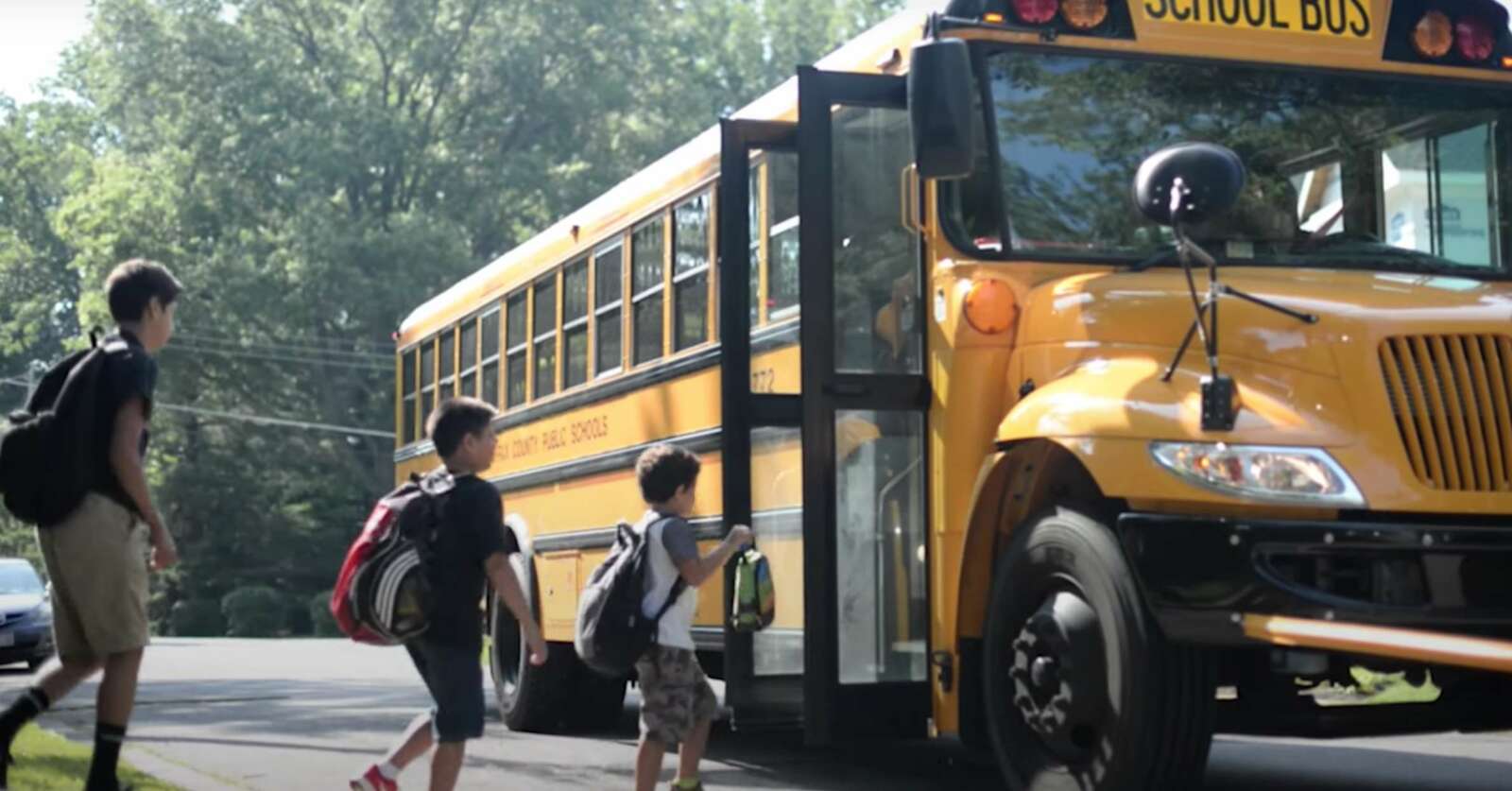
Over a month into the current school year, Fairfax County Public Schools is grappling with two key issues: how to recruit and retain staff, especially in special education and transportation, and how to feed students.
FCPS officials have said shortages in those areas are affecting the rest of the country, while supply chain issues have resulted in more students getting fewer choices to pick from in school cafeterias, thanks in part to free meals becoming available to all students.
When it comes to staff retention, the Fairfax County School Board approved some immediate relief at its regular meeting on Thursday (Sept. 23), increasing seasoned bus drivers’ salaries by 2.5%. The change will show up in their paychecks starting Oct. 23.
The change excludes new bus drivers who got a pay boost in August when the board voted to increase starting hourly rates from $19.58 to $22.91.
“Attract is one thing, but retain is something altogether different,” Springfield District Representative Laura Jane Cohen said.
In consultation with stakeholders, FCPS is conducting an in-depth market compensation study that it plans to finish by the end of the school year. The need to retain experienced bus drivers will only grow in urgency, as 25% will become eligible to retire.
FCPS also offers a $3,000 signing bonus, and Superintendent Scott Brabrand said the changes have boosted applications from about five to seven per week to an additional 20-50 each week.
Meanwhile, as of Sept. 15, FCPS had 133 teaching vacancies, nearly half of them in special education, according to Karen Corbett-Sanders, the school board’s Mount Vernon District representative.
Brabrand has suggested that state requirements for special education teachers need to be adjusted to ease the process for existing teachers, saying Thursday that he plans to bring the school board more information later to help its advocacy efforts.
School systems nationwide have reported bus driver deficits as potential hires turn to higher-paying commercial jobs, among other factors.
However, the commercial driving sector is experiencing labor shortages of its own, which are colliding with supply chain disruptions and increased student demand to create problems in school cafeterias.
In its annual “Opening of Schools” report, FCPS says it is now serving some 138,000 students per day — about 28,000 more than before the pandemic. Brabrand reported on Thursday that the school system distributed a record number of meals the previous week, when 150,000 students used its food services.
Mason District School Board Representative Ricardy Anderson noted that families have raised concerns and wondered about the quality of the food. Department of Financial Services Assistant Superintendent Leigh Burden said the issues have affected the number of the options available to students, but not the quality.
“We’ve had to double down on some of our oldies but goodies like pizza, which maybe doesn’t make students upset, but we want to continue to fully implement the food and nutrition health guidelines,” Brabrand said.
Anderson said knowing about the supply chain issues could help families better understand the situation that FCPS is facing.

A transformer blowing out? A meteor? Or just really loud thunder?
A big boom was reported across a wide swath of Fairfax County from Reston and Herndon to McLean around 10:40 a.m. today, leaving many residents confused regarding the possible source.
Most residents have assumed that the sound was caused by loud thunder that accompanied a slow and steady rain in the region that’s expected to last most of the day.
The Fairfax County Fire and Rescue Department reported that it dispatched units to the 13000 block of Woodland Park Road in Reston at approximately 10:59 a.m. after a building there was struck by lightning, though it’s unclear if that was the source of the reported noise.
Heard the loud boom? Can’t totally confirm this is related but-at approximately 10:59 AM, units were dispatched to building struck by lightning in 13000 block of Woodland Park Road. Lightning protection system did its job-no damage to building! Two minor injuries. #FCFRD #weather pic.twitter.com/K0ZFmFvdxK
— Fairfax County Fire/Rescue (@ffxfirerescue) September 28, 2021
One McLean resident told FFXnow by email that she heard “a loud boom/explosion that did not sound like thunder” around about 10:35 a.m.
“We are on Brook Rd between Rt 7 and Old Dominion Dr.,” Diane Van Tuyl wrote. “My friend in Great Falls on Towlston Rd also heard it. She felt rumbling and some shaking.”
Other residents took to social media to share their bafflement regarding the possible source of the sound, which one user compared to a concussion grenade:
Shook the crap out of my house in Herndon. Loudest thunder I’ve ever heard!
— CH (@zaynadu) September 28, 2021
Heard it McLean too. The pup was not happy about it. I thought maybe a transformer blew. Cloudy here but no rain/ thunder/ lightning.
— Tara Ajello (@tara_ajello) September 28, 2021
Big flash and then big boom in south Reston. Set off a car alarm across the street
— Martha Vockley (@MarthaVockley) September 28, 2021
Last week, the National Aeronautics and Space Administration said a similar boom heard through the greater Shenandoah County region was a fireball.
Photo via Breno Machado/Unsplash
FCPS is ramping up efforts to provide on-site testing and prepare for vaccinations for elementary school-aged kids, including by enlisting a third party that hasn’t been publicly identified yet.
Although the Food and Drug Administration has not yet approved emergency use of COVID-19 vaccines for kids ages 5-11, Pfizer says its vaccine is safe for that age range, and it could obtain authorization in October.
That will open up vaccinations to an additional 87,693 FCPS students, according to Melanie Meren, who represents Hunter Mill District on the Fairfax County School Board.
As part of its preparations, FCPS is developing a survey for families to determine what their needs are and how it can best respond, Assistant Superintendent for Special Services Michelle Boyd said at a school board meeting on Thursday (Sept. 23).
The survey will ask questions such as:
- Whether parents would be okay with students getting vaccinated during the school day without their presence
- Whether they would be interested in participating in clinics with their children
- Whether they would prefer their primary medical provider to vaccinate students
Meren told FFXnow that the survey is a step in the right direction, but there needs to be more done.
During the meeting, she proposed that FCPS work with community partners, including public health officials and medical providers, to develop a plan for how to use different resources like bloodmobile services to deliver vaccinations.
Her motion calls for convening “community stakeholders to plan for mass distribution of children’s vaccines in Fairfax County, so that vaccines are accessible to families in accordance with families’ personal decisions about vaccinating children.”
Meren noted that pediatricians’ offices are already overwhelmed, and she wants FCPS to look at ways to be best prepared, noting that schools have had to take on an unprecedented public health role.
“The school division is being tasked with really stepping up in ways that have never been seen before in terms of public health,” Meren said at the school board meeting.
Meren also proposed that the school board direct Brabrand to create a Department of Special Services staff position to help the assistant superintendent manage public health-related work in FCPS.
Since both items were introduced as new business, meaning that they weren’t up for discussion or action, the school board will address them at its next regular meeting on Oct. 7.
At the same time, FCPS is continuing to tackle issues related to its existing COVID-19 health procedures, primarily when it comes to disruptions to in-person learning.
“We’ve already got some kids entering their second quarantine,” FCPS Superintendent Brabrand said during the school board meeting. “28 days without a teacher or instruction is not something we can do.”
Out of roughly 178,000 students, FCPS has recorded 818 positive COVID-19 cases in August and September as of yesterday (Sunday).
However, as of Sept. 15, around 2,900 students have had to stay home due to potentially coming into contact with people who have contracted COVID-19, according to FCPS.
While noting that student transmission of the virus is low, Brabrand reiterated at the school board meeting that FCPS is continuing to look at ways to improve its COVID-19 communication policies and procedures.
Braddock District School Board Representative Megan McLaughlin said she wants FCPS to show it’s serious about helping minimize the time that students are not in school, noting that Loudoun County Public Schools has reduced its mandated quarantine period from 14 to 10 days.
Fairfax County Health Director Dr. Gloria Addo-Ayensu recommended 14 days at a Board of Supervisors committee meeting last Tuesday (Sept. 21), stating that the 10-day alternative allowed by the CDC carries an estimated 10% increase in the risk of post-quarantine transmission.
Starting this week, FCPS is offering an online platform where students who have to be paused, quarantined, or isolated due to a COVID-19 infection or exposure can live-stream in-person classes.
However, FCPS has otherwise declined to expand its virtual options, despite requests from many community members, including several speakers who delivered remarks during the community participation portion of Thursday’s board meeting.
“We simply don’t have the staff,” Brabrand said. “We don’t even have the staff right now to operate full in person. We’re strained to provide staffing for the limited virtual that we have, per CDC guidelines for students with diagnosed medical and health needs.”
He added that the area school systems like Prince George’s and Arlington counties that have offered broader virtual programs have significant wait lists or are filling up to 40 to 50% of their staff positions with substitute teachers.
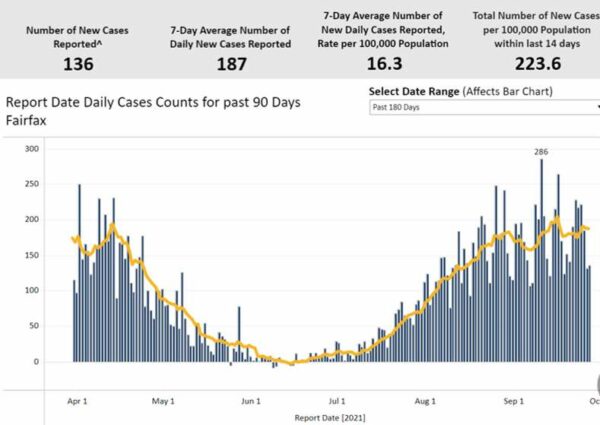
After seeing COVID-19 cases climb throughout August, Fairfax County seems to be finishing September at a plateau in the Delta variant-driven surge that has refilled hospitals in many parts of the country.
The Fairfax Health District, which includes the cities of Fairfax and Falls Church, added 160 new cases today (Monday), bringing its total for the pandemic up to 88,817 cases, according to the Fairfax County Health Department.
The novel coronavirus has now contributed to 4,283 hospitalizations and 1,178 deaths, including five in the past week.
While community transmission is still considered high, the county is currently averaging 187.3 cases per day for the past seven days. That remains on par with the case rate in mid-April, right before vaccinations became available to all adults and stifled the virus until the Delta variant’s arrival, but the weekly average has only exceeded 200 cases for exactly one day — Sept. 16 — since late February.
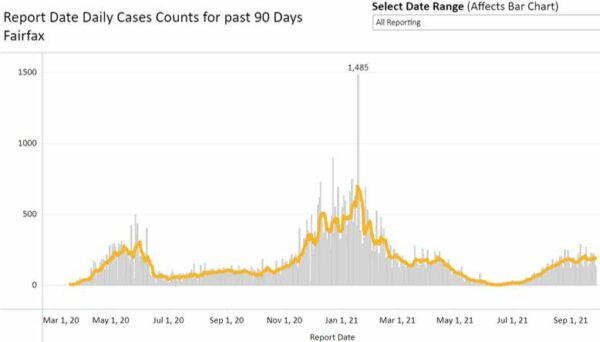
The recent stabilization of COVID-19 cases coincides with preparations for the biggest shift in Fairfax County and Virginia’s vaccination campaigns since adolescents became eligible for the vaccine in May.
Backing an authorization issued by the Food and Drug Administration on Wednesday (Sept. 22), the Centers for Disease Control and Prevention endorsed a recommendation by its advisory committee on Friday (Sept. 24) that booster shots of the Pfizer-BioNTech vaccine be made available to certain populations.
The CDC’s new guidelines state that adults 65 and older, individuals 18 and older in long-term care settings, and people aged 50-64 years old with underlying medical conditions should get a third dose of Pfizer’s vaccine at least six months after they received the first two required doses.
Booster shots can also go to people 18 and older who are at increased risk of contracting COVID-19 due to underlying medical conditions or their occupation, including:
- First responders
- School staff
- Public transit workers
- Food and agriculture workers
- Grocery store workers
- Manufacturing workers
- Corrections workers
- U.S. Postal Service workers
These categories generally align with the populations who were prioritized for the initial vaccine rollout.
The CDC says the vaccine remains effective at preventing severe illness due to the coronavirus, but recent data suggests the amount of protection it provides against infection and mild illness decreases over time. Preliminary research indicates that booster shots can increase recipients’ immune response.
State vaccination coordinator Dr. Danny Avula said in a statement that Virginia welcomes the CDC’s support for booster shots, which were only available to immunocompromised people before.
“The Virginia Department of Health (VDH) has been working with its vaccination partners — pharmacies, healthcare providers, hospitals and other institutions — to prepare for this rollout,” Avula said. “We are confident that we will have enough supply, and that access will be widely available.”
VDH officials confirmed last week that the state is exploring a variety of strategies for delivering booster shots, including potentially reviving the mass vaccination site at Tysons Corner Center that delivered more than 50,000 doses in the spring.
The Fairfax County Health Department said on Friday that booster doses will soon be available for those who are eligible at pharmacies, medical providers, hospitals, and county sites, but it is still “waiting on specific federal and state implementation guidance prior to offering booster doses to residents.”
The county’s Vaccine Administration Management System now allows Fairfax Health District residents to find and schedule an additional dose as well as their first and second doses.
VDH notes that its top priority continues to be getting the vaccine to people who haven’t gotten any doses yet, since data shows that unvaccinated people are significantly more likely to contract COVID-19 and develop severe illness as a result, leading to possible hospitalization and death.
As of today, 814,362 Fairfax Health District residents have gotten at least one vaccine dose. That is 68.8% of the total population, including 81.3% of people 18 and older and 83.9% of adolescents aged 12 to 17.
740,341 residents — 74.3% of adults and 62.6% of the overall population — are fully vaccinated, meaning they’ve gotten two doses of the Pfizer or Moderna vaccines or the one-shot Johnson & Johnson vaccine.
Virginia and Fairfax County have not yet started reporting data on how many people have received a booster shot.
Photo via CDC/Unsplash
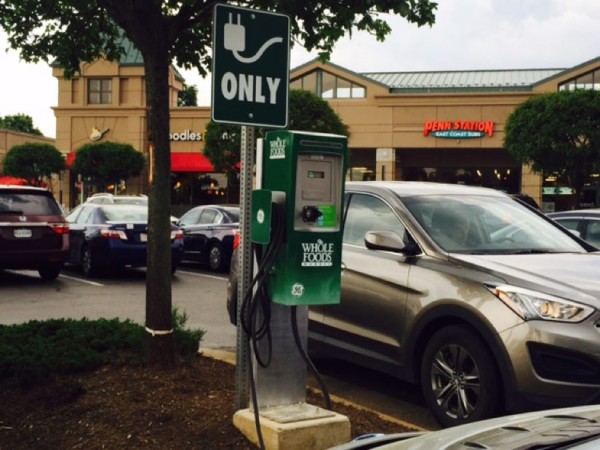
A new rebate program that starts next year would give thousands of dollars to Virginians who buy or lease an electric vehicle.
But it’s not funded.
Fairfax County officials said the Virginia House of Delegates sought to put $5 million into the program, which awards $2,500 rebates and more, but that money wasn’t included in the General Assembly’s budget.
“Until the General Assembly funds the rebates, there won’t be any rebates,” said Tarah Kesterson, a spokesperson for the Virginia Department of Mines, Minerals, and Energy.
Her department is tasked with establishing a website to administer the program that includes weekly updates about the availability of funds.
Virginia Gov. Ralph Northam approved HB 1979 — the bill that created the program — on March 31, and it went into effect July 1. It stated that the rebates depend upon available funds.
The rebates would cover vehicles that must use electricity as their only source of power. They’d cover two categories:
- new and leased vehicles that have a base price of $55,000 or less
- used vehicles that cost $25,000 or less
Introduced by Loudoun County Del. David A. Reid, the legislation was intended to encourage greater adoption of electric vehicles in the Commonwealth. About 7% of U.S. adults have an electric or a hybrid vehicle, an adoption rate that lags behind China and Europe, according to the Pew Research Center.
The Fairfax County Board of Supervisors’ legislative committee, which tracks state bills and determines the county’s policy positions and priorities, discussed the matter during a meeting on Tuesday (Sept. 21).
Board Chairman Jeff McKay, who serves as vice chair of the committee, suggested that the state should also modify a second rebate that was included in the bill.
Under the law, an additional rebate of $2,000 could be used for people whose household income is 300% or less of the federal poverty level, which currently equates to $38,640 for a single adult or $65,880 for a family of three.
McKay said that threshold would shut out many people in Fairfax County, even though they would be more likely to buy an electric vehicle than residents of some other parts of the state.
“This is really important from an equity standpoint,” McKay said. “Those can be affordable vehicles with these [types] of rebate programs.”
