


Updated at 4:20 p.m. on 8/8/2021 — Trevor Stewart will bring home a gold medal after the U.S. won the final men’s 4×400-meter relay on Saturday (Aug. 7), beating the Netherlands, which won silver, and Botswana, which got the bronze medal in the event.
Earlier: Lead-off runner Trevor Stewart helped his team secure the top qualifying spot in the 4×400 meter relay today (Friday) at the 2020 Tokyo Olympics, which could mean another medal for him in his first Games.
A former South County High School student, Stewart ran 44.79 seconds for Team USA’s combined time of 2:57.77, the fastest time posted for the Olympic Games in Tokyo not only for the Americans in their qualifying heat, but also against a second qualifying heat of eight other teams.
The event’s final race will take place at 8:50 a.m. EDT tomorrow (Saturday).
The Lorton native’s time was slightly faster than his other lead-off leg for the 4×400 meter mixed relay, where Team USA won a bronze medal last Saturday (July 31). This year marked the first time that the Olympics featured the event, where men and women compete together.
“When you believe in yourself, anything can be accomplished,” the 24-year-old said in an Instagram post published on Aug. 1 after the race.
In the mixed relay race, Stewart and teammates Kendall Ellis, Kaylin Whitney, and Vernon Norwood finished with a collective time of 3:10.22. They replaced another American team that was initially disqualified. The U.S. was allowed to continue after the decision was appealed and overturned.
During the men’s qualifying race, which aired live this morning due to Tokyo’s 13-hour time difference, Stewart handed off the baton to former college teammate Randolph Ross, but the two had a slight hiccup in which Ross reached for the baton twice.
Stewart, who has been asthmatic since childhood, helped his North Carolina Agricultural and Technical State University team win NCAA championship titles earlier this year, running the 4×400 meter race in 44.67 seconds and 44.17 seconds indoors and outdoors, respectively. He finished his college career with the A&T Aggies anchoring those races.
That team also included Ross, who will be a sophomore at A&T when classes begin Aug. 18.
Ross was the only teammate continuing with Stewart on the U.S. men’s 4×400 Olympic team as their other teammates moved forward with their home countries: Akeem Sirleaf represented Liberia and Daniel Stokes represented Mexico.
Stewart isn’t the only former FCPS student competing in this year’s Olympics. Other local athletes include swimmer Andrew Seliskar, discus thrower Chioma “CiCi” Onyekwere, shooter Lucas Kozeniesky, and West Potomac High School graduate Keyshawn Davis, who will be in contention for the boxing gold medal on Sunday (Aug. 8).
Photo courtesy USATF
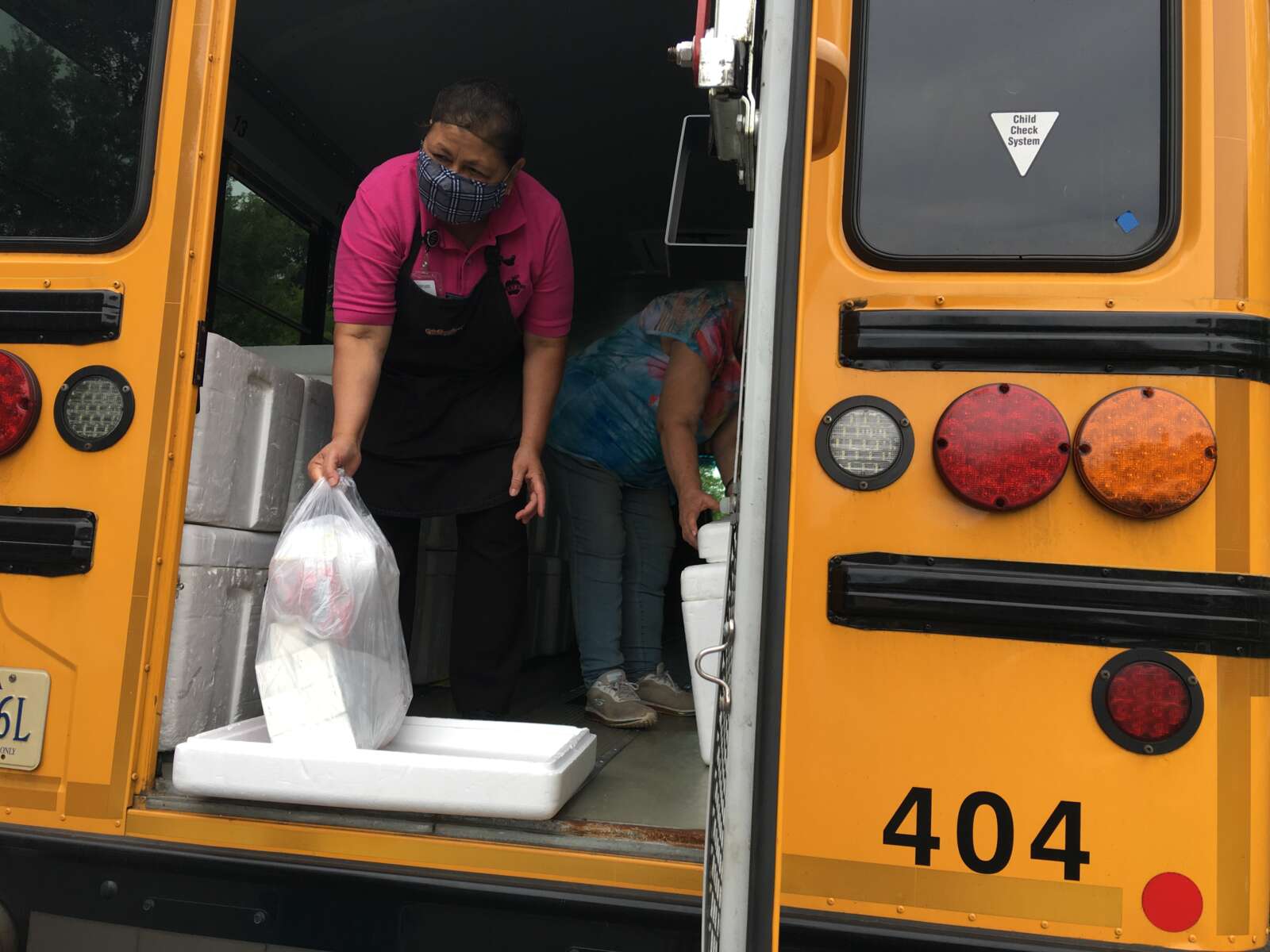
Fairfax County Public Schools children will continue to get free meals amid uncertainty with the pandemic.
The U.S. Department of Agriculture extended schools’ abilities to provide the food — traditionally for low-income families through free and reduced meal programs — by giving them special exemptions last year when schools were shut down due to COVID-19.
For FCPS, it means all students, regardless of their families’ incomes, can get free breakfast and lunch through June 2022.
“Pivot was the key word of success to the FCPS response to the pandemic and meals,” FCPS Food and Nutrition Services Director Maria Perrone said in a statement. “On March 13, 2020 — the day that schools closed — our FNS team opened 5 meal distribution sites” and continue to open more.
She says that by the close of this past school year, FCPS had 75 locations and over 400 bus stops distributing meals to students.
“By March of 2021 — one year after the start of the pandemic — the FNS team had served over 15 million meals,” Perrone noted.
The extension is funded by federal relief money from the Families First Coronavirus Response Act that Congress first passed in March 2020 and extended in September, according to the USDA. The USDA has provided waivers to school districts to allow them to operate programs outside their normal parameters.
Buses with food drove through neighborhoods across Fairfax County yesterday (Wednesday) as part of a meal kit distribution effort, where children 18 and younger can get a week’s worth of food for free. FCPS will also provide meal kits at several schools through Aug. 16 as part of the USDA Summer Food Service Program.
A mother who teaches in FCPS picked up food for her kids and remarked how she wished more people would have been there.
FCPS Superintendent Scott Brabrand said the continued outreach comes as officials recognize the uncertainty that the pandemic has created for families.
After remote learning filled much of 2020, FCPS gradually shifted students back into classrooms throughout the school year, finally moving to four days a week in April. The district will return to five days a week for almost all students when it starts the school year on Aug. 23.
FCPS announced on July 28 that masks will be required in school buildings when students are present, regardless of an individual’s vaccination status.

(Updated at 2:30 p.m.) The Fairfax County Courthouse is renewing its mask policy once again even as the judicial system tries to inch back to normal amid a backlog of cases.
The Fairfax County Circuit Court issued an amended order today (Wednesday) stating that, effective immediately, masks will again be required to enter the judicial complex and in all public areas in the courthouse, though judges have the authority to let individuals take off their masks in their courtrooms.
At the same time, courts are starting to resume more in-person procedures. Plexiglass barriers have been installed to keep jurors socially distanced, and defense attorneys as of last month have been able to meet with clients in the jail rather than trusting in Zoom to meet confidentially.
But amid the safety efforts, many cases have been delayed, putting a pause on justice.
“The backlog remains a major factor in our operations and is unlikely to be fully resolved for years,” said Ben Shnider, a spokesperson for Fairfax County Commonwealth’s Attorney Steve Descano.
Last month, the Centers for Disease Control and Prevention recommended that vaccinated people wear masks indoors in areas with high or substantial COVID-19 transmission, which now includes Fairfax County.
That reversed a loosened CDC policy that began May 13 — prior to the highly transmissible delta variant making up over four out of five coronavirus cases in the U.S.
The Fairfax County Courthouse says its reversal was due to the CDC update but noted that a presiding judge may direct otherwise in individual courtrooms.
Inside the courthouse, there’s yet to be a criminal trial with the new plexiglass format for the county’s chief public defender, Dawn Butorac, who wonders if the changes will influence jurors’ perceptions.
“It’ll be interesting to see how a witness is perceived in that environment,” she said. “It’ll be closer to normal.”
Under a transition plan that was last adopted on July 7, the Fairfax County Circuit Court restarted in-person hearings for all civil trials and non-Friday motions on July 1.
The courthouse installed the plexiglass changes this summer to increase the number of criminal trials, but backlogs remain throughout the system.
During the pandemic, arrests continued, but courts scaled back operations. Notably, in early 2020, the Virginia Supreme Court suspended a state law that adds another level of protection to one’s constitutional right to speedy trials. The suspension was renewed in September.
Even as operations ramp back up, citizens still have the option to postpone jury duty when summoned to court. COVID-19 questionnaires allow people to postpone their legally required obligation, depending on individuals’ circumstances regarding the virus. Exemptions include health conditions such as cancer, obesity, heart issues, and asthma, as well as pregnancy and smoking.
While the backlog in cases will still be a challenge, Fairfax County’s most recent budget enabled the commonwealth attorney’s office to add 15 positions, increasing its staff to 83.
That means there will be 50 prosecutors compared to 25 attorneys in the public defender’s office, according to Butorac.
“In theory…we have progressive prosecutors that should be prosecuting less,” Butorac said.
Descano and his office have sought to adopt a progressive approach that seeks alternatives to jail sentences when possible, arguing that diversion efforts can keep people from being unnecessarily criminalized and help prevent recidivism.
According to Descano’s office, it will continue to prioritize alternatives to incarceration when a case “best meets the safety and justice needs of the community.” In a statement, Shnider said prosecutors are trained to avoid reflexively seeking the most punitive outcome in every case.
Photo via Google Maps
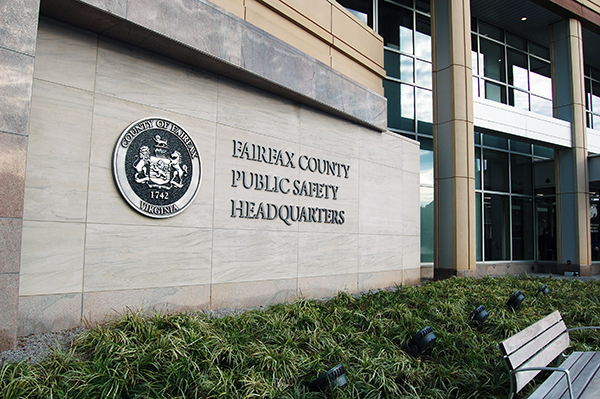
The Fairfax County Police Civilian Review Panel, a citizen-led board intended to help with police accountability, is getting an executive director.
The Fairfax County Board of Supervisors approved the change on July 27 at the urging of the review panel, which is facing increasing caseloads and seeking to gain investigatory powers.
“We’re thrilled that this new position will help us maintain our independence,” Civilian Review Panel Chair Jimmy Bierman said, thanking Board of Supervisors Chairman Jeff McKay and Lee District Supervisor Rodney Lusk, who chairs the board’s public safety committee.
Established in December 2016, the civilian review panel reviews Fairfax County Police Department investigations into civilian complaints with allegations that a police officer abused their authority or engaged in misconduct.
While the panel can make recommendations regarding law enforcement policies and practices, it was not granted the authority to conduct its own investigations.
The review panel, which consists of nine volunteers, documented in February its need for an executive director in an annual report and a four-year review, a document that Bierman spent three months of 40-hour weeks to develop.
The executive director will help the panel document and summarize investigations. Currently, the panel reviews police investigations in person and writes lengthy, time-consuming reports, which means its efforts are heavily dependent on its chair’s schedule.
Bierman, an attorney, likens the change to a congressional committee relying on staff to help draft materials or a federal judge using legal staff to write bench memos.
“It adds to the professionalism of the panel,” he said. “We want to be fiercely independent.”
Since its creation, the review panel has also relied on staff in the office of the independent police auditor, which will now send one position to the panel for the executive director.
Bierman says the staffing switch will help the panel maintain a good working relationship with police by ensuring the independent police auditor’s resources are not overtaxed.
The change to the panel comes after the Virginia General Assembly adopted a law last year that officially permitted localities to create police oversight boards with the power to investigate incidents, make binding disciplinary determinations, and more.
Bierman says the law shows the Commonwealth is serious about supporting independent oversight bodies for police.
The new executive director won’t have independent investigatory powers, but the position could lay the groundwork for the Board of Supervisors to update the panel’s bylaws to give it more authority, as allowed by the new state law, according to Bierman.
The person hired for the new position will be paid $100,000 to $150,000 per year and report directly to the board of supervisors. Springfield District Supervisor Pat Herrity was the only supervisor to oppose the measure.
“I voted against this motion because I didn’t support the original motion to form the Civilian Review Panel as we had an Independent Police Auditor, which is where most significant reviews and recommendations for reforms have come from,” Herrity said in a statement.
On Sept. 28, the board of supervisors’ public safety committee is slated to hear a presentation about the review panel along with recommendations on further reforms in line with the panel’s four-year review. Read More
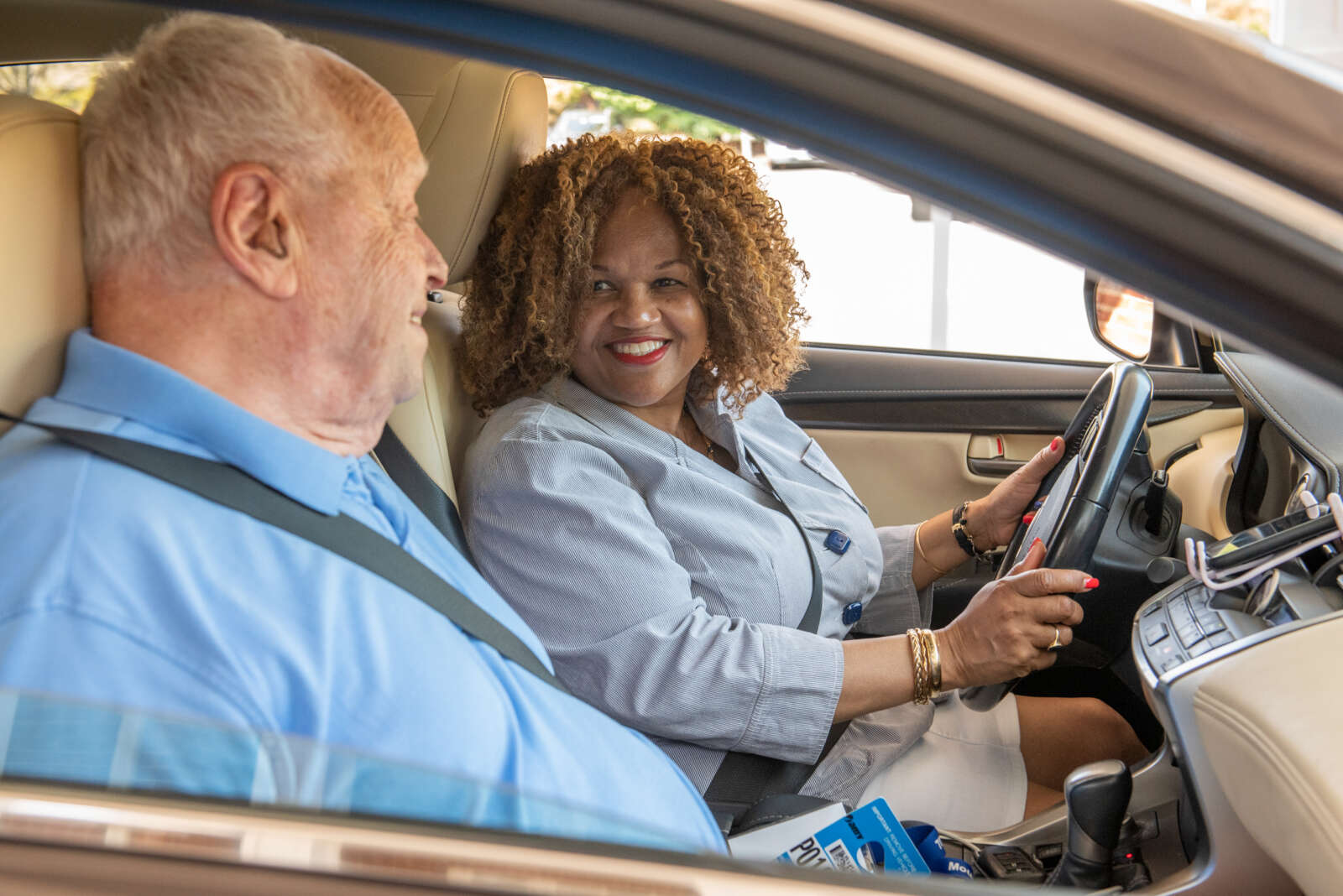
A program that connects elderly people in Northern Virginia with volunteer drivers needs a new manager.
NV Rides manager Jennifer Kanarek left her position in mid-July, Pozez Jewish Community Center (JCC) of Northern Virginia Executive Director Jeff Dannick said yesterday (Monday).
“We started this program a little over 7 years ago, and Jennifer was our first manager,” Dannick said, crediting Kanarek for helping build the program. “The community owes a great debt to Jennifer for her years of service.”
Housed at the Pozez JCC in Fairfax, NV Rides is a network of volunteer driver programs that formed in 2014 after a Fairfax County survey identified access to safe and reliable transportation as a top concern among the county’s older residents, a population that is expected to continue growing over the next two decades.
In its 2020 demographic report, the county projects that people 65 and older will constitute its largest age group by 2025, eventually making up 17.5% of the total population in 2040.
“I have learned so much over the last seven years and knowing the impact that the NV Rides program has had on vulnerable adults in our community is what gets me out of bed in the morning,” Kanarek said in a statement. “I have thoroughly enjoyed working with our community partners, stakeholders, and my staff in building, developing, and growing this crucial program.”
Kanarek announced that she was stepping down from her position with NV Rides last week, saying on her LinkedIn page that the decision comes with “mixed emotions.”
“I am proud of all I and my partners have accomplished, and I have made the decision to pursue other opportunities,” she wrote.
NV Rides consists of 15 partner organizations, ranging from local Shepherd’s Centers and religious organizations to Reston Community Center’s RCC Rides service, which has been suspended during the COVID-19 pandemic.
According to the NV Rides website, the network has provided close to 40,000 rides since it began.
“They’re not taxi drivers. They’re coming to help you get to your appointment. They’re coming to help you shop for groceries. So, it’s really a companionship piece,” Kanarek said in a July video about the program, noting that while many elderly people can use ride-hailing apps such as Lyft or Uber, there can be varying levels of trust with a paid stranger versus a volunteer.
According to Kanarek, NV Rides has looked to recruit younger drivers because the average driver has been around 67 years old, and they may not want to return when the pandemic subsides.
After seeing ridership decline when Virginia went under a stay-at-home order in the spring of 2020, Dannick says NV Rides has now returned to “around pre-COVID levels” for volunteer drivers.
In June, NV Rides partnered with the Reston-based Dulles Airport Transportation Association on an outreach effort to provide transportation to medical appointments for veterans in Fairfax, Loudoun, and Prince William counties.
The Pozez JCC is currently advertising for a long-term successor to Kanarek. The job posting lists the position’s annual salary as $45,000 to $55,000.
Meanwhile, the program’s interim manager is Tom Eversole, a retired naval officer who serves on the NV Rides Advisory Council.

The Fairfax County Economic Development Authority gave nearly $29,000 to 10 social media influencers over the past year to highlight its jobs portal and virtual career fairs.
The campaign primarily involved Instagram users posting about events with hashtags and links to drive traffic. Economic development officials said the effort was intended to develop its brand as well as the region’s job market and engage target audiences, specifically with millennials in mind.
“We felt like we needed to do some experimentation,” FCEDA President and CEO Victor Hoskins said.
The campaign drew 536 clicks to the authority’s Work in Northern Virginia jobs board and generated 276 views in online registration page traffic for technology and entry-level career fairs.
While Instagram advertising can average around $1.25 per click, the FCEDA said influencer marketing helps reach a highly targeted audience through sources that users trust. The campaign required the influencers to note that their social media posts were sponsored content.
The social media influencer contracts cost a total of $28,800 with individual agreements ranging from $800 to $7,000 and mainly required users to make Instagram posts and stories, according to agreements obtained by Tysons Reporter. One agreement included an Instagram video, and some included blog post requirements.
The authority says third-party consultant New York City-based Development Counsellors International and each influencer negotiated rates.
“[What we’re] really ultimately trying to do is build awareness of northern Virginia as this location that has thousands and thousands of jobs, and it’s a great place to live,” said Alan Fogg, the authority’s vice president of communications.
Economic development officials say the campaign delivered $205,000 in earned media value, reached more than 332,000 Instagram users, and generated nearly 25,000 likes, comments, and shares.
The FCEDA is not unique in using social media personalities to reach potential audiences. Other governmental bodies have turned to social media influencers for tourism marketing as well as running COVID-19 messaging.
Fairfax County funds the economic development authority with around $9 million each year currently, and social media advertising is just one way economic development leaders are trying to market the region to help improve the jobs pipeline.
“The message we deliver to all the recruiters and chief human resources officers from all the companies here in Fairfax County is: You sell your organization, your company, and why [to] come work there, and we’re going to help complement you with selling the region,” Mike Batt, the director of the authority’s talent initiative program, said.
The FCEDA used Development Counsellors International to identify and vet the influencers, set goals for the number of posts, and ensure posting requirements were met, Fogg said in a statement. FCEDA staff selected the influencers presented to them.
Batt said Development Counsellors International received a competitively awarded contract from the EDA. The consultant also developed the jobs hub, which the authority recently lauded.
The Fairfax County Economic Development Authority spearheaded the jobs posting site, but it’s connected to nine other economic development groups and localities in Northern Virginia.
“Economic development is not the business it was five years ago,” Hoskins said. “It really takes a lot of innovation.”
Photo via Solen Feyissa/Unsplash
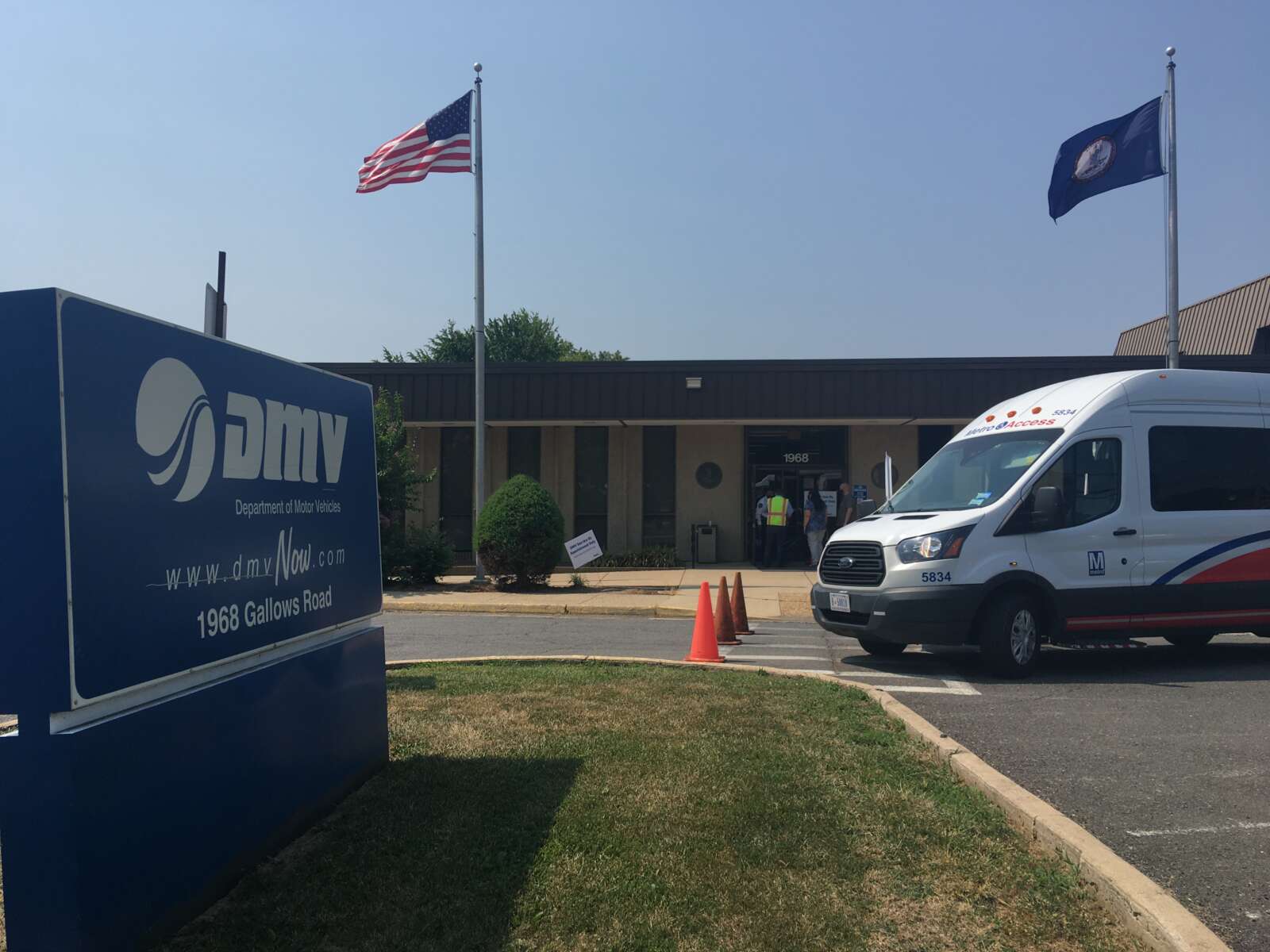
Fairfax County residents in need of Department of Motor Vehicle services are finding they need to book an appointment months in advance.
In response to those reported concerns, the county Board of Supervisors agreed on Tuesday (July 27) to contact the state to see how it will address wait times.
Springfield District Supervisor Pat Herrity said residents have reported that they’re traveling as far as three hours away to South Hill to get DMV services.
“Given that DMV services are essential, Fairfax County residents should not have to wait over a month or be forced to go to other parts of Virginia for an appointment,” Herrity said.
The DMV introduced the appointment system when it reopened sites in May 2020 after a pandemic-induced shutdown. During that time frame, it has also added more online capabilities to help reduce foot traffic.
“We are not yet where we need to be, but we are proud of the progress we’ve made from implementing a brand new appointment system in the height of a global pandemic a little more than a year ago,” DMV spokeswoman Jessica Cowardin said in a statement.
On a recent visit to a DMV center in Tysons, Great Falls resident Barbara Martin found the experience quite different compared to when walk-ins were allowed, which would result in dozens of people crowding into the building.
Martin booked her appointment about a month and a half ago and said she was relieved to be there, expressing appreciation for the staff’s attention to details.
The DMV reopened its Tysons location (1968 Gallows Road) in June 2020 and its Sterling location (100 Free Court) in August 2020. It also opened a new customer service center in Sterling (22360 S. Sterling Blvd., Unit D112) this past January.
“By installing an appointment system we have become more efficient, transactions are conducted quickly and customer wait times have been minimized,” Cowardin wrote. “And appointment availability will continue to increase as we are able to hire and train employees and emerge more fully from the pandemic, which is still ongoing.”
Chai Chala of McLean says he lucked out and only had to wait 10 days for an appointment at the Tysons DMV center, which he visited to register a new car.
“The experience was really nice,” he said, adding his only complaint was the sun’s heat.
Since reopening, the DMV added several services to its website that can save customers a trip to a physical building.
In September, it introduced two-year renewals for driver’s licenses and ID cars by online and mail, and in November, it began online renewals for commercial driver’s licenses. As of February, it also now offers drivers the ability to replace licenses and permits that were lost or stolen.
Customers can also get appointments with DMV Select partner officers, which conduct vehicle-related transactions, as well as DMV Connect, a team of mobile workers whose regular stops include the Fairfax County Government Center.
Cowardin said the DMV intends to keep the appointment system for the foreseeable future, noting that the vast majority of transactions conducted since May 2020 have been conducted remotely.
“During the pandemic, customers shifted the way they conduct business with DMV in that more customers are now conducting DMV business by service delivery methods other than the [customer service centers], such as mail, internet, online dealers or DMV Select partners,” she noted.

Fairfax County will use an estimated $10 million in COVID-19 relief money for another major grant program aimed at helping community partners keep their doors open.
The Board of Supervisors approved the Active and Thriving Community Grants Program at its meeting yesterday (Tuesday), where grants will range from $2,000 to $18,000 depending on the size of the business or nonprofit.
While businesses have pushed to reopen, many continue to struggle, and COVID-19 concerns persist. The grants target child care providers, community-based safety net providers, youth recreational or educational programs, youth athletic groups, and pools.
“As someone who visits a child care center everyday, they’re still operating under COVID restrictions that other businesses aren’t,” Braddock District Supervisor James Walkinshaw said during the board meeting. “So, they’re still dealing with that in terms of capacity and PPE [personal protective equipment] and masking.”
County staff reported that many community-based organizations “continue to struggle economically” due to COVID-19 and most have had to cancel or significantly alter major fundraising events.
“For many, giving levels have not returned to prior levels,” county staff wrote in the meeting agenda. “For many donors, giving patterns have changed. Even where giving has increased, it has not made up for lost revenue or increased expenses.”
Fairfax County Neighborhood and Community Services Deputy Director Sarah Allen told the board that the application period for the new grant program will launch by the end of August.
To be eligible, recipients will be required to show that they had a 15% decline in gross revenue in 2020 compared to 2019 or a 15% increase in expenditures directly tied to costs due to the pandemic.
The new grants are projected to allocate:
- $4.3 million for child care providers
- $1.9 million for community-based safety net providers
- $1.8 million for youth recreational or educational programs
- $1.5 million for youth athletic organizations
- $500,000 for pools
“A lot of these organizations survived through the pandemic because the…volunteer board members or the parents or community members involved dipped into their own pockets to keep things going so they didn’t have to go out of business,” Walkinshaw said.
The money comes as the county is finalizing awards for its PIVOT program, which will provide over $24.4 million in grants from the American Rescue Plan Act to businesses in the retail, food, and lodging sectors and other organizations financially affected by the pandemic.
When the county created the PIVOT program on June 8, staff were also looking for ways to provide additional assistance. A county survey of child care programs conducted in March found that over half of respondents did not know how long they would be able to stay open without financial support.
“The potential closure of child care programs could come at a time when more parents are returning to work, impacting working parents and their children, employers, and the child care workforce and their families,” the staff report said.
In awarding the grants, the county expects to use a priority measure related to vulnerable populations to pick recipients in the child care and pool categories. The remaining awards would be determined by a lottery system.
It wasn’t immediately clear how exactly the priority measure would work, but the county said staff will look at the social and economic conditions that made populations more vulnerable to COVID-19 as well as recent economic, health, and other data relevant to the pandemic’s impact.
Similar to the PIVOT grants, the county will use a third-party vendor — the Latino Economic Development Corp. — for the online grant administration portal and awards. Advertising and outreach in multiple languages will begin before the August launch.
“This grant program will prioritize disproportionately impacted populations and communities wherever possible,” county staff said.
Photo via Fairfax County/Facebook
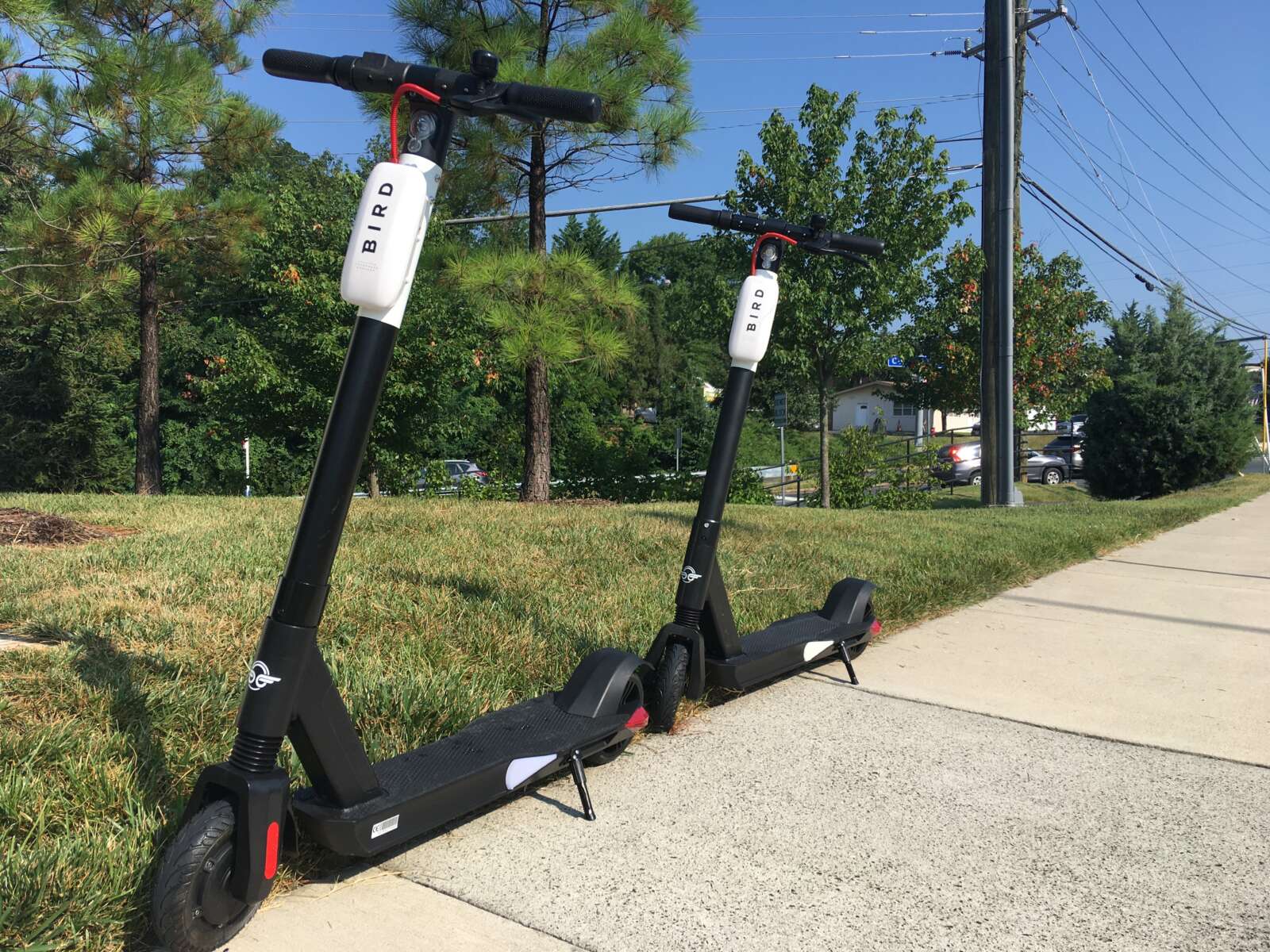
Hundreds of electric scooters have started popping up around Fairfax County after the county announced last week that it had approved two vendors for its shared mobility device program.
Bird and Superpedestrian’s LINK can each have up to 300 scooters in the county, but depending on usage, that number could go up to a combined 1,200 scooters for the two companies. The devices are available for rent, costing $1 to unlock with rates depending on ride time.
Bird has discounts for low-income and older residents as well as veterans and other users, and the company already listed the devices on its app, including six scooters in West Falls Church as of mid-morning Tuesday (July 27). Other clusters are farther south and southeast in the county.
Superpedestrian says it plans to make its scooters available this fall.
“Like bicycles, e-scooters can be used on a highway, sidewalk, shared-use path, roadway, or crosswalk,” the county said in a news release.
The county required companies to limit scooters’ maximum speeds to 10 miles per hour, and they can’t be used on sidewalks or crosswalks with signage banning shared mobility devices. The county said Tuesday such signage hasn’t been placed so far.
The county says users should leave scooters parked in areas that don’t impede normal car or foot traffic. People who violate the county’s rules can face a misdemeanor and fine up to $50 for the first offense and up to $500 for each subsequent offense.
“When riding an e-scooter, use the sidewalk when possible,” county transportation spokesperson Anna Nissinen said in a statement. “Remember, if you’re riding on the sidewalk, you are required to yield the right of way to pedestrians! If there is no sidewalk or other off-street path to use, you may ride a scooter on the road if the speed limit is 25 mph or less.”
She also noted that e-scooter users should stay as far to the right as practicable and use the bike lane if there is one.
The Board of Supervisors approved the devices in November 2019. They were allowed to start Jan. 1, 2020, but no companies applied for permits until the spring of 2021.
During the approval process, supervisors placed rules on operations as it noted concerns about scooters possibly being abandoned.
To help address issues, the board is requiring $5,000 bonds from companies operating in the county. The money can be used if county staff have to remove and dispose of abandoned scooters.
“If you notice an e-scooter parked in an inappropriate place or left on private property, you can contact the device operator listed on the e-scooter and the operator must remove it,” the county said, noting that people can email [email protected] to report any issues.
Near Arlington National Cemetery, pedestrians and cyclists can at times see rideshare scooters abandoned along trails, scattered horizontally on the grass.
Bird spokesperson Courtney Black said in a statement that the company looks to educate riders with proper scooter etiquette, reminding them to not leave scooters in the public right-of-way, ensuring that sidewalks, driveways, and fire hydrants are accessible.
The company also allows members to use its Community Mode feature to report issues, which can involve things such as damaged or poorly parked scooters. Bird reviews the reports and sends someone to respond.
When asked about the county’s concerns with abandoned scooters, Superpedestrian says it has worked with cities across the U.S. with similar requirements where it operates.
“We’re proud that we’ve never been asked to leave a city or stop operation,” spokesperson Jamie Perkins said in a statement.
To address potential issues, the company has an in-house fleet team of local workers to manage operations in a timely way, using technology to make sure scooters are parked according to requirements and re-parked when needed to ensure availability and prevent them from stacking up in one place.
Superpedestrian is assessing how many scooters it will place in the area, working with Fairfax County as it scales up operations.
“We prioritize our service to areas with critical connections to public transit, areas with parking congestion and business demand, and also serve underserved areas,” Perkins wrote.

Electric vehicles are changing the automobile industry, including how it sells products to customers.
The sprawling dealerships that still line many major roads throughout Fairfax County will soon belong to the past, supplanted by smaller showrooms — or so Tysons Corner Center believes.
Property owner Macerich wants Fairfax County to allow vehicle sales at the mall using existing parking areas, seeking up to 240 spots to be made available for businesses. Applications submitted to the county in June for amendments to the site’s proffer conditions and final development plan suggest those spots would be used for storage.
“With over 11,000 parking spaces on-site at the Center, the maximum of 240 spaces represents approximately 2% of the total number of parking spaces available,” Brian Clifford, a senior use planner with the global law firm DLA Piper, wrote in the application.
Macerich is asking the county to allow vehicle sales at Tysons Corner Center for up to eight tenants, who would have as many as 30 dedicated spaces each in the mall’s parking decks.
Maurisa Potts, a spokesperson for the mall, said by email that the application is “simply to permit vehicle sales to take place out of retail showrooms.”
The shift comes as the retail market has been in flux and “exacerbated by the pandemic,” according to the application. Stores linked to malls faced particularly uphill battles amid shutdowns, with companies such as J.Crew, JCPenney, and Neiman Marcus part of a surge in bankruptcy protections.
Investment bank UBS noted last year, though, that online competition has been eating into profits of brick-and-mortar stores for years, and it projected that 100,000 stores would close by 2025.
Macerich’s application follows up on the rezoning approved by the Fairfax County Board of Supervisors in 2007 that established plans for mixed-use development around the now-open Tysons Metro station.
In the application, the property owner says permitting vehicle sales will allow the mall “to stay viable and keep up with market conditions” with the advent of electric vehicles. It argues that EV manufacturers have modernized the car-buying process and no longer require “acres and acres of asphalt filled with cars ready for customers to drive off the lot.”
Indeed, Tesla lets people request a test drive and even has a contactless way to do so. Customers order the vehicles directly through the company, which also operates the showrooms, unlike the industry’s standard of third-party dealerships selling manufacturers’ cars.
Tysons Corner Center currently has a Tesla showroom with six dedicated parking spaces, including two electric charging stations, located on-site in a nearby parking deck. The application says the county decided that could be considered retail sales, which was already permitted, as opposed to vehicle sales, since the vehicles are delivered to customers at a later date off-site.
Another electric vehicle manufacturer, Lucid, which focuses on luxury vehicles, is slated to open its own store at Tysons Corner sometime this year.
“Many car [manufacturers], including Tesla and Lucid, don’t even manufacture the vehicle until it is ordered and paid for (at least in part) by the customer,” Clifford also noted. “The showrooms themselves are smaller and given the long lead time between ordering the car and delivery of the vehicle, there is less need for a large inventory of vehicles on site.”
Vehicle service isn’t being considered with the application. Fairfax County Planning Commission is scheduled to weigh in on the application on Dec. 1, and the Board of Supervisors could do so on Dec. 7.
