
Despite some rain scheduled for this afternoon (Thursday), it’s full steam ahead for the outdoor Tysons Tailgate party.
The 2018 Tysons Tailgate runs from 5-8 p.m in Valo Park (7950 Jones Branch Drive).
The party includes live music from local band Chuggalug, beer and wine tents, snacks, lawn games, and raffle prizes. According to the event page, there will also be an arcade game tent for attendees to show off their Pac-Man or Space Invaders skills.
The Tysons Partnership said on Twitter that the event will be held under a large outdoor tent.
Tickets are $30 if purchased online in advance, or $35 at the door. The proceeds of the event go to benefit Second Story, the only youth emergency shelter in Northern Virginia.
We're not going to let a little rain dampen our #TysonsTailgate! We have added a big, beautiful outdoor party tent! Attendees will enjoy the same setup with beer and wine tents, games, live music, raffle prizes, and more — while keeping dry! https://t.co/WklHTR0MRs #TysonsCares pic.twitter.com/sKmnt1pUE6
— Tysons Partnership (@tysonspartners) September 26, 2018
Photo via Tysons Partnership

The Women in Technology organization is hosting its fall job fair tomorrow (Wednesday) in Tysons.
Both men and women are encouraged to attend and meet recruiters. The event is free but online registration is required and will allow exhibitors to view the applicant’s resume. Exhibitor registration for the event has been closed, but potential exhibitors are encouraged to check later for the spring job fair.
Exhibitors at the job fair range from large corporations like Sony and Amazon to organizations like the International Atomic Energy Agency. A full list of exhibitors can be viewed here.
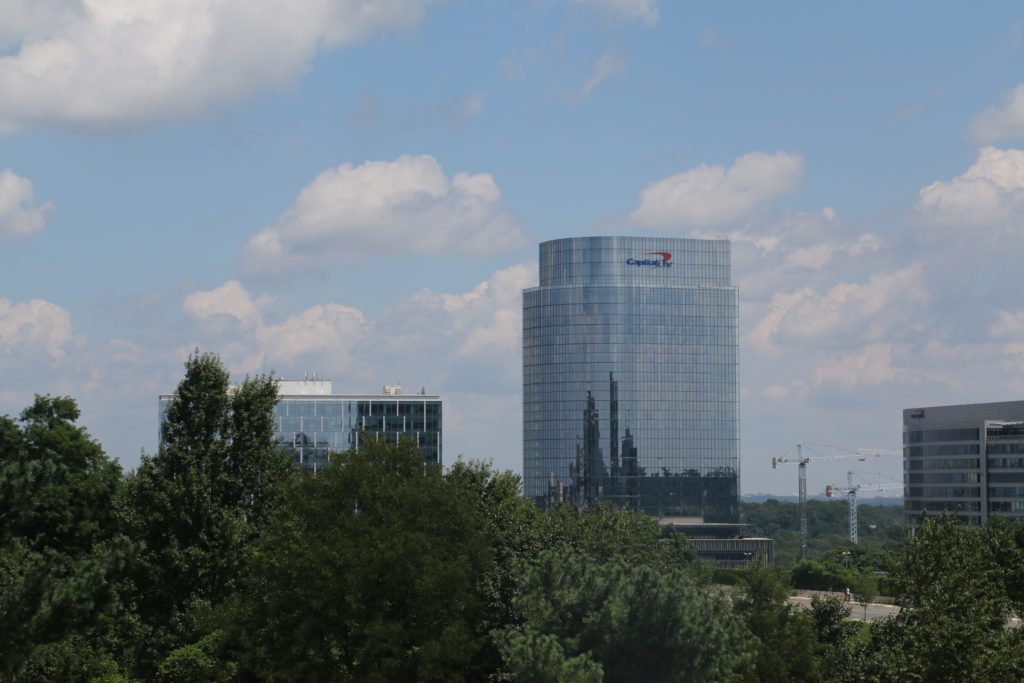
The event runs from 4-7 p.m. at Valo Park — the former Gannett headquarters at 7950 Jones Branch Drive.

The Tyson’s Biergarten is bringing a little Germany to Fairfax with the 2018 Oktoberfest Kickoff tomorrow (Saturday).
The Kickoff starts with the tapping of a Weihenstephaner Ceremonial keg imported from Germany. For adults there is also a meet and greet with beer representatives, but all-ages activities are also available like a moon-bounce.
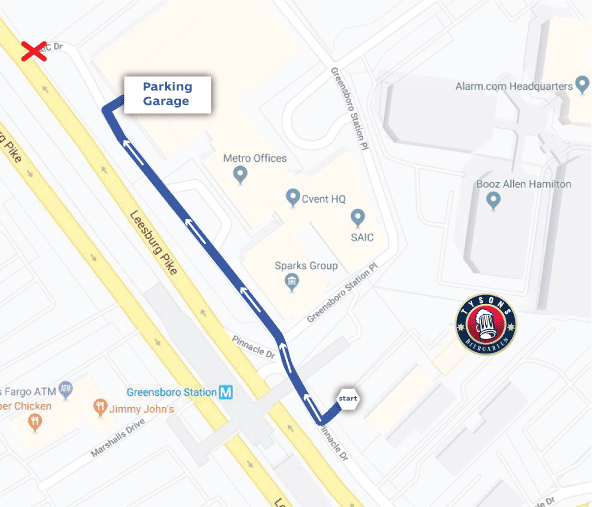 The event is free to attend, running from 3 – 7 p.m. at the Tysons Biergarten (8346 Leesburg Pike). There is limited parking at the Biergarten, so attendees are encouraged to park in the nearby garage and check in with the cashier at the Biergarten for a validation ticket.
Tomorrow is just the start of a full month of activities at the Biergarten celebrating Oktoberfest. The next day (Sunday), the Biergarten will host its second annual OktoberBreast Fundraiser. The event will raise money for the Willow Foundation, an organization that provides funding for advanced stage cancer research.
The full list of Oktoberfest events at the Tyson’s Biergarten is below:

Photos via Tysons Biergarten
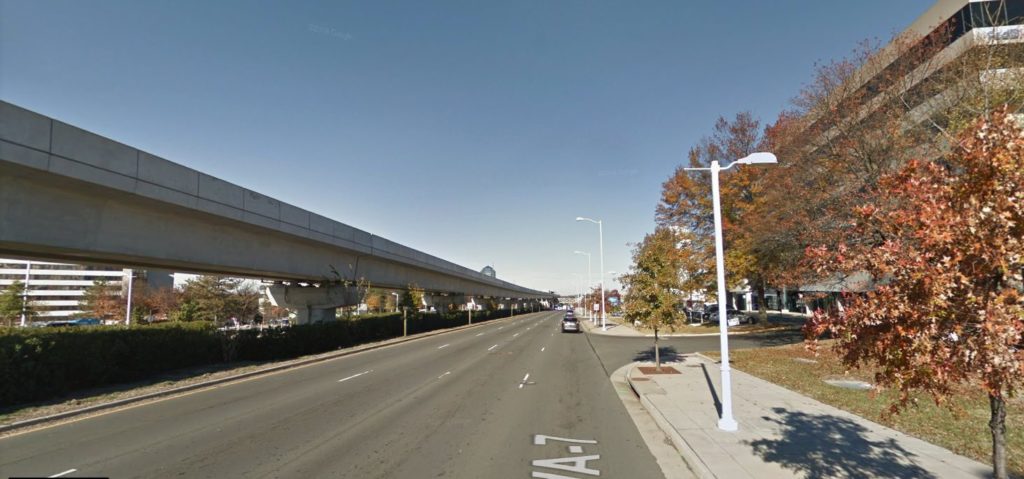
Honking horns over a stopped vehicle escalated into an exchange of racial obscenities and an allegation of an assault last Friday (Sept. 14) in downtown Tysons.
On the 8000 block of Leesburg Pike, Fairfax County Police reported a woman stopped her vehicle at an intersection when a fire truck was approaching with its emergency equipment activated. The driver behind her did not realize why she had stopped and began to honk his horn.
According to the police, the woman claimed the man began to call her racial slurs and eventually slapped her in the face with an open hand. The man claimed that it was the woman who had initially been using racial slurs and denied having struck the woman.
Police say neither party was ultimately interested in pressing charges.
Photo via Google Maps
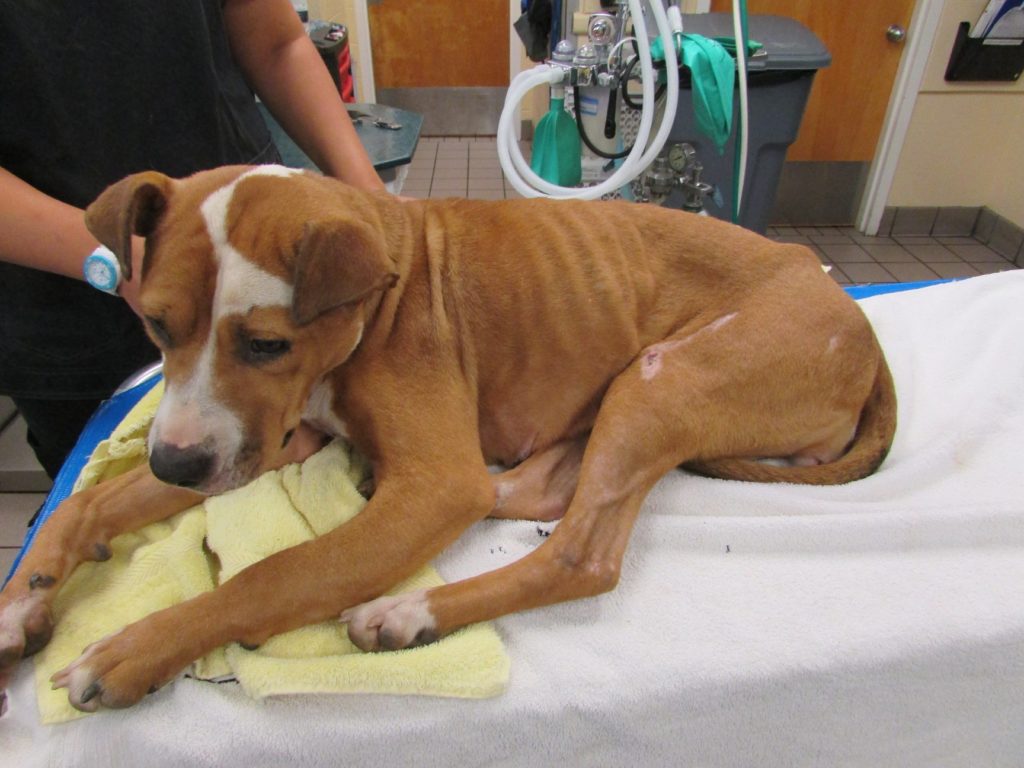
An emaciated, dehydrated and badly injured dog was found wandering around Tysons, and now Fairfax County Police are hoping the public can help locate the dog’s owner.
The female pitbull mix was found on the 8000 block of Skokie Lane. She had been shot with some kind of projectile. A veterinarian also discovered the dog had fractures on her front left leg and pelvis, with a bad cut on her back left leg. According to the Fairfax County Police Department, the dog was most likely brought to the area and abandoned. The dog is currently being held at the shelter while the police search for the dog’s owners.
Anyone with information about the animal is asked to contact Fairfax County Police Department, Animal Services Division at 703-691-2131.
Update on Sept. 18 — Social Media Week Fairfax has been rescheduled for Oct. 18.
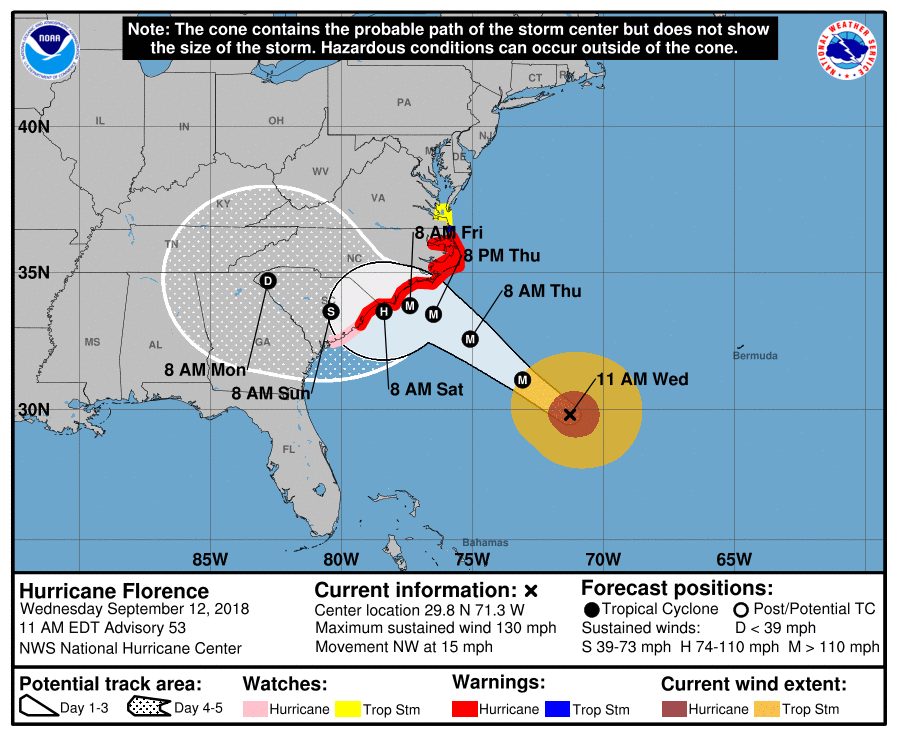
The uncertainty of Hurricane Florence’s path has led to Social Media Week Fairfax being postponed.
The event, originally scheduled for Friday (Sept. 14) in Tyson’s Capital One Auditorium, is a one-day forum on how social media and technology are influencing society. Tickets purchased for the event will be valid for whichever date the event is rescheduled for.
“Please know that this decision did not come easily, but our main concern is and will always be the safety of our attendees and speakers,” said Rachel Adler, executive director of Social Media Week Fairfax, in a statement. “We are currently looking for a new date to present the same great lineup and will be contacting you shortly.”
The hurricane — currently a Category 3 storm — is expected to make landfall Thursday night. While the projected route will have North and South Carolina taking the brunt of the impact, substantial wind and rainfall is still expected in parts of Virginia.
The storm is expected to bring 2-4 inches of rain locally with the potential for flooding over the weekend. The impact of the flooding could continue into next week as floodwaters make their way southeast across Fairfax County, according to the county government.
Tomorrow’s Virginia Department of Transportation (VDOT) meeting to discuss congestion solutions in McLean, meanwhile, has been cancelled. Supervisor John Foust said the meeting was cancelled partially because of the weather risk and partially to allow VDOT to focus its effort on storm-related transportation issues. The meeting will be rescheduled.
Image via NOAA
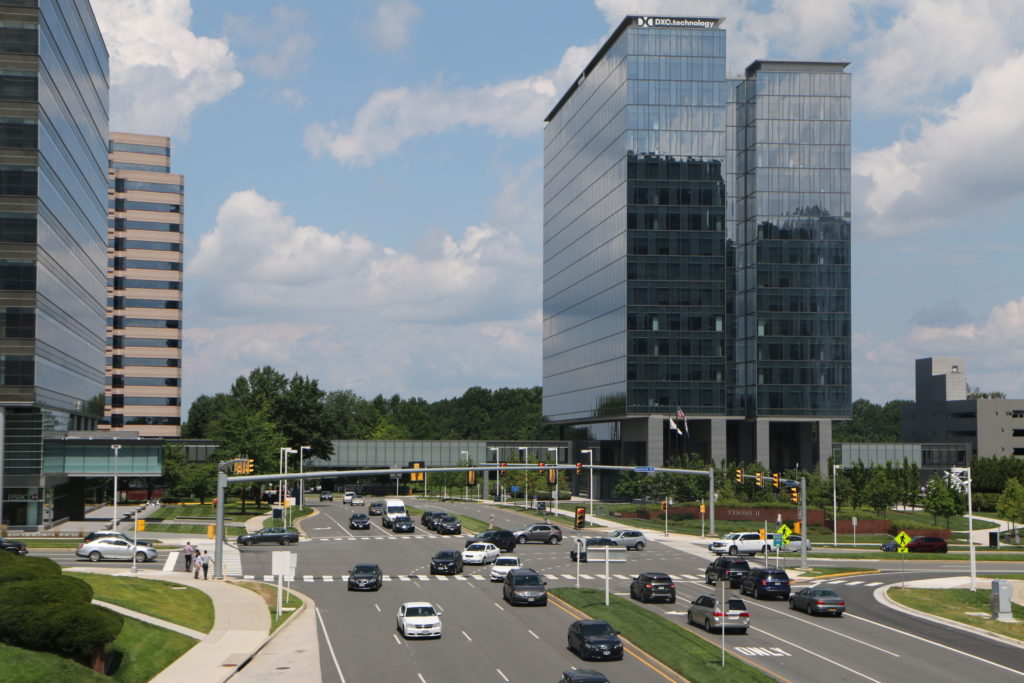
Tysons boasts 29 million square feet of office space, according to the Fairfax County Economic Development Authority. But the area hopes to become known for much more than that.
“The hope is really for Tysons to stand on its own and not just be seen as an office park that happens to be close to D.C.,” said Brianne Fuller, the Tysons Revitalization Program Manager in Fairfax County’s Office of Community Revitalization. “The intent is really for there to be places for people to live [and] work and [have] entertainment and such there.”
The vision of Tysons as a “live, work, play” center is also advocated by Tysons Partnership, an organization that operates “between the county and the private sector to insure the vision that the county laid out [is] actually going to be translated into reality,” the partnership’s president and CEO Sol Glasner said.
Tysons faces several challenges as it moves toward that reality. Transportation and traffic loom large among them.
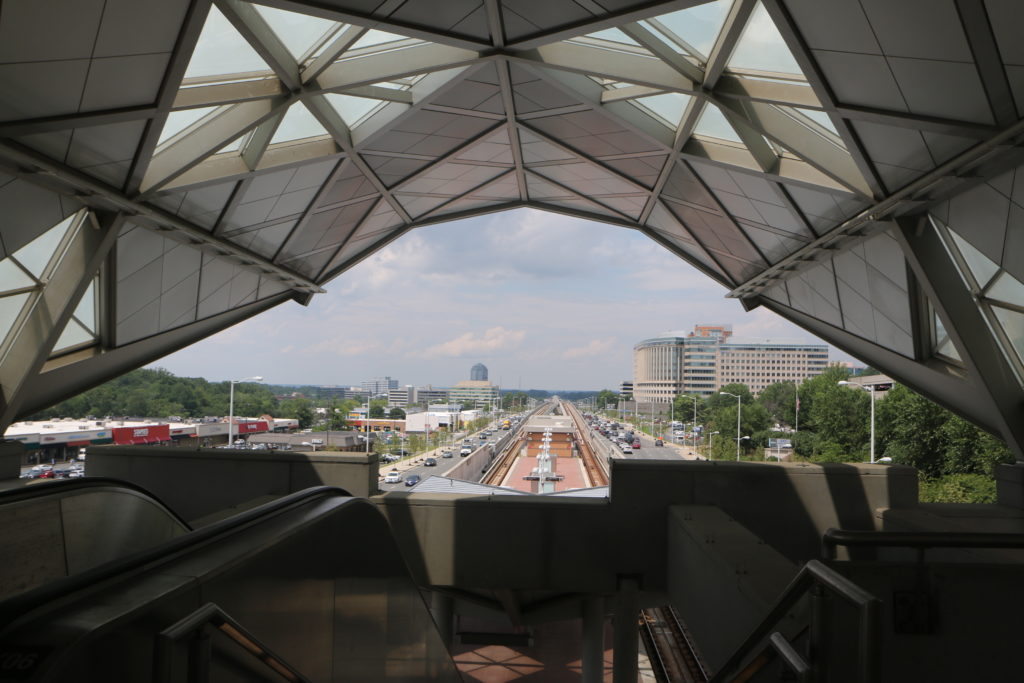
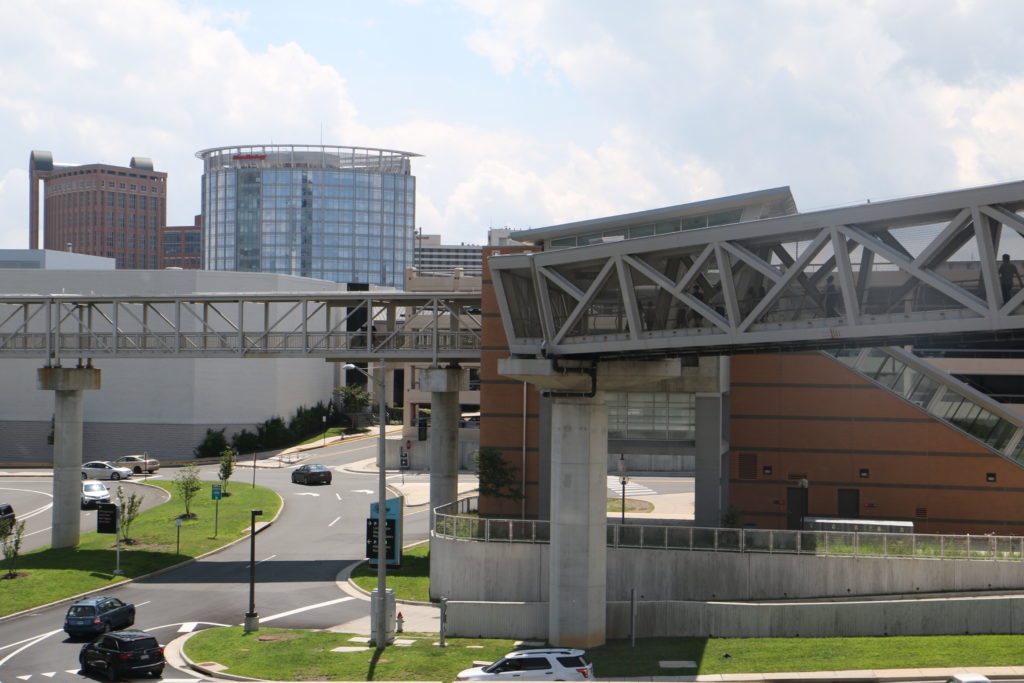
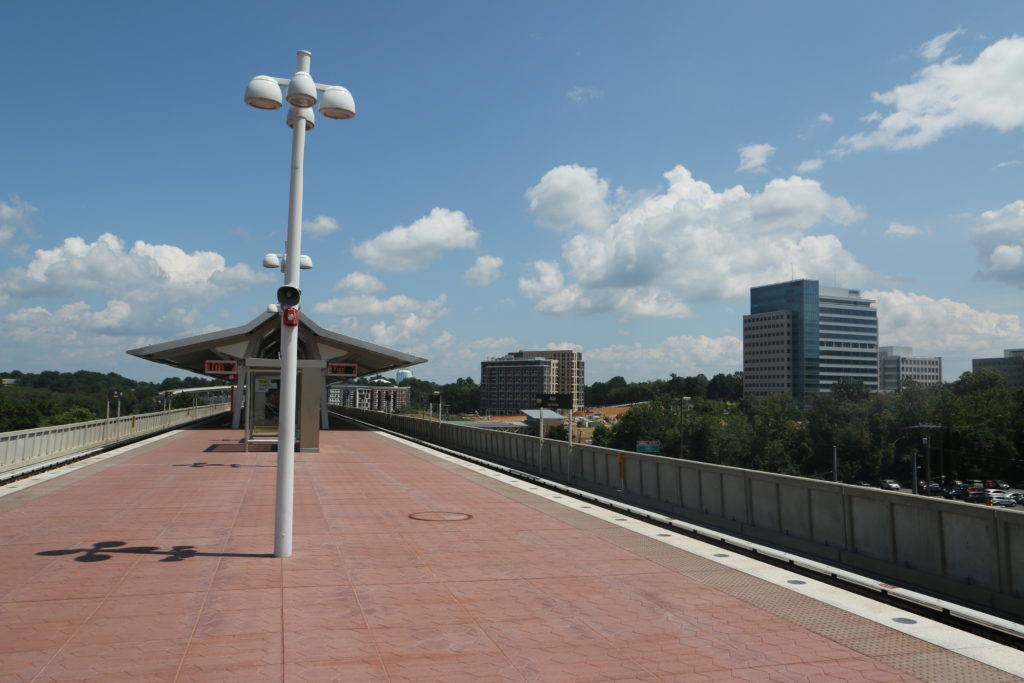
“People see [Tysons] as very car-driven, and we really want it to be walkable and bikeable and for transit to be pretty plentiful there and to all the places that people need to go to,” Fuller said.
Tysons Partnership is the county-designated Transportation Management Association for Tysons, Glasner said.
In that role, their “objective and mission is to move people better, faster, etcetera,” he said. When they talk about walkability, “people look at Tysons and they say, ‘well that’s a joke, where’s the walkability,'” Glasner said. Though developing a walkable infrastructure takes time, “that’s starting,” he said.
Citizens groups, like the McLean Citizens Association and Greater Tysons Citizens Coalition, also work to ensure the county fulfills plans to add parks and athletic fields to Tysons — something key to the “live” and “play” components of future city life.
“We keep track because it’s very important to us that Tysons does become a livable, inviting community and that requires that Tysons has adequate park and athletic field facilities to service its population,” said Sally Horn, president of the Greater Tysons Citizens Coalition.
Another facet of Tysons’ development to watch are residential additions, which alter “the very nature of Tysons Corner, which was at one time strictly a business community and now becomes a full-time almost a city unto itself,” said Jerry Gordon, president and CEO of the FCEDA.
Tysons Partnership’s work includes considering what “we need to do collectively that can help create a diversification of housing,” Glasner said.
“You can create a downtown, but if you’re really talking about an urbanized area that has some texture to it and some variability to it, then you need to have people live here and I think you need to have a diversified pool of housing from which they can choose,” he said.
If Tysons grows to its hoped for size, updates to the existing public safety infrastructure will also be important, Horn said.
“When Tysons does get to 100,000 residents and 200,000 people working there, obviously the police districts are going to need some adjustments,” Horn said. “We just want to make sure people… start thinking now about smart ways to achieve satisfactory public safety infrastructure for everyone.”
County planners, community members and developers will continue to face questions surrounding those topics and many others.
“Creating an organic, functioning, really livable urban environment and community does take time,” Glasner said. Turning a collection of buildings “into a real place evolves more… slowly, and we kind of measure that in decades.”
The term “Tysons Corner” is perhaps today most associated with Tysons Corner Center, the giant shopping mall turned mixed-use development that recently marked its 50th anniversary.
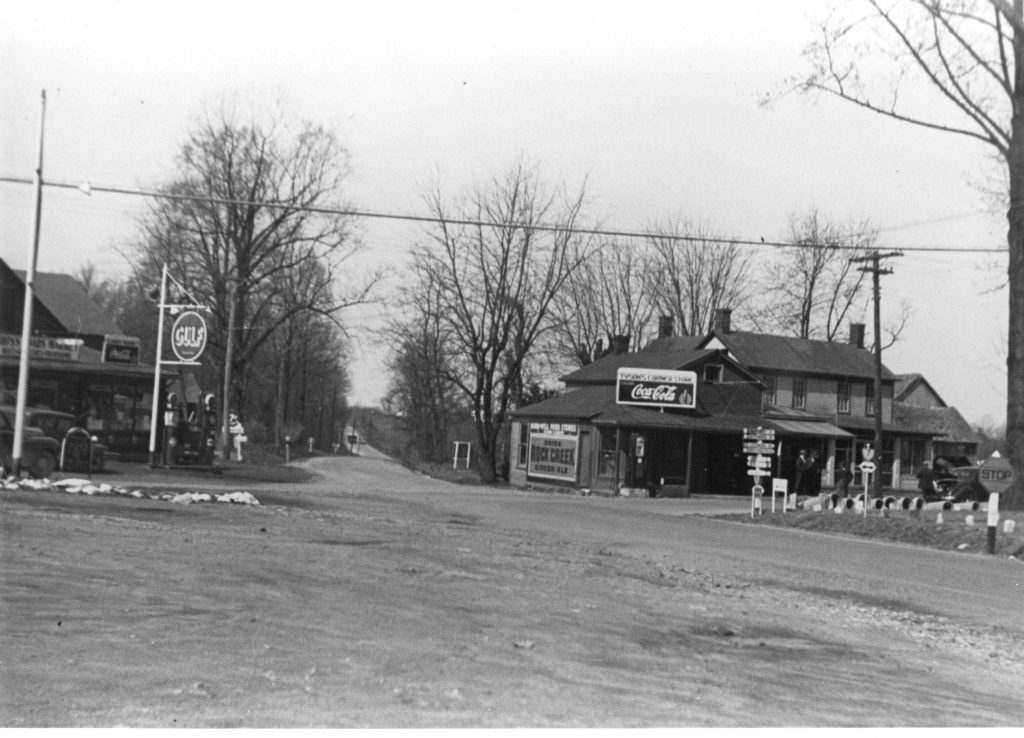
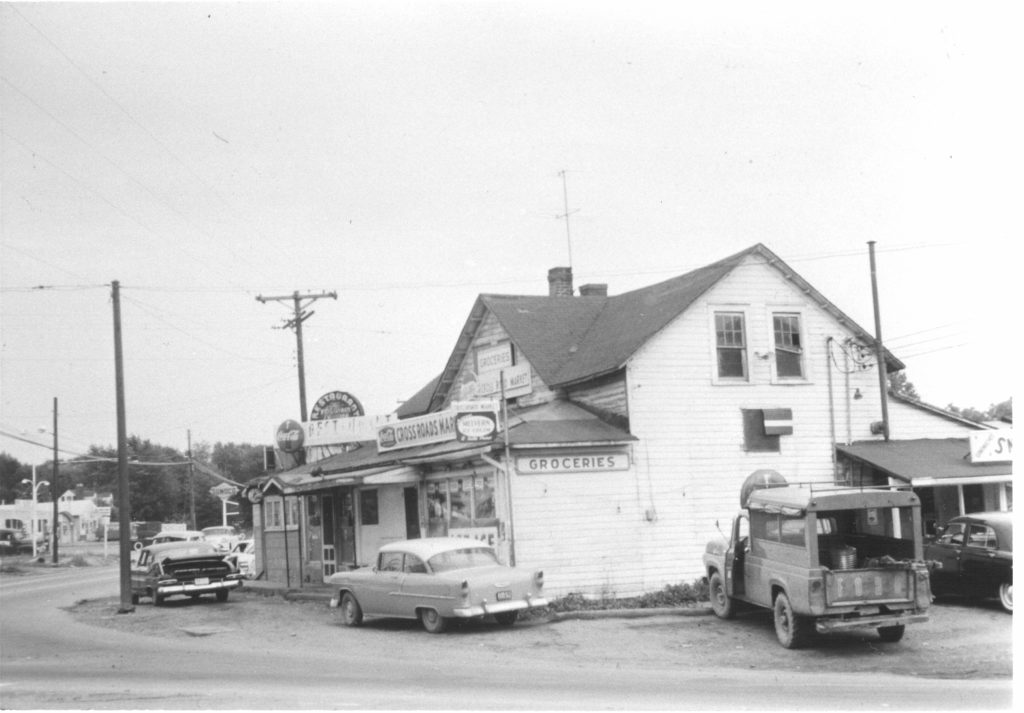
But in the 1850s, when William Tyson purchased land around the intersection of Route 7 and Route 123, the 35 stores that made up the original iteration of the mall were more than a century away. The area was known as Peach Grove, and then Tysons Crossroads. Well into the 20th century, the section of land today frequently known simply as Tysons remained rather undeveloped.
“There were more cows than people. Maybe not quite, but it was quite a rural place,” Stephen Fuller, the head of George Mason University’s Stephen S. Fuller Institute, said. “It changed dramatically and the key factor that changed it, [that] put it on the map was the Beltway.”
Already located at the intersection of Routes 7 and 123, the addition of the Capital Beltway, which first opened in 1961, made Tysons “sort of the nexus of auto transportation in all directions,” Fuller said.
On top of that, when Dulles International Airport opened in 1962, the Dulles Access Road ran 13.5 miles from the airport to Route 123 and the Beltway.
“That’s where Tysons Corner happened to be located, right where that access road stopped,” said Paul Ceruzzi, a curator at the Smithsonian’s National Air & Space Museum and author of Internet Alley, a book that documents much of Tysons’ history.
It wasn’t until 1983 that the access road would be extended to connect with I-66, which had just been completed through Arlington. Had the access road gone all the way to D.C. from the start, “Tysons Corner may never have happened,” Ceruzzi said.
Tysons’ advantageous location attracted “shrewd insight” from real estate developers, Ceruzzi said. “The landowners there were also savvy in that they allowed this development to proceed,” letting developers “assemble big parcels to assemble really high quality office buildings and other facilities.”
Early investors included Gerald Halpin, who in 1962 with partners purchased 125 acres of land in the Tysons area from dairy farmers, and Ted Lerner, whose triumphs include Tysons Corner Center and who with his family today is the majority owner of the Washington Nationals.
Also key to making developments in Tysons possible was Fairfax County. As early as October 1961, the Fairfax County Planning Commission presented the Tysons area as a possible regional center, as The Washington Post reported at that time.
That doesn’t mean growth always came easily. Lawyer and developer Til Hazel notably led people like Lerner through the legal process to make construction possible.
Ultimately, the initial rise of Tysons was the result of a “combination” of factors, Ceruzzi said — among them, the introduction of interstate highways, suburbanization after World War II, real estate development and proximity to the Pentagon, which “was generating these institutes and companies,” he said. “All of that kind of came together.”
Plans for the area’s future, in private and public realms, are still evolving. Today, Tysons is in something like the “third phase of its life,” Fuller said. “It was a retail center first, then it morphed into an employment center and now it’s becoming a mixed-use center with hopes it’ll become more livable.”
Next week, check back to read about some of the forces that have helped shape Tysons today, including Fairfax County’s Tysons Comprehensive Plan and evolving planning priorities.