


Like much of its history, Maryland’s Purple Line light-rail project has hit another snag in its development.
Recently, the construction’s contractor group terminated its deal with the state due to over $800 million in unpaid cost overruns. This means Maryland will need to completely pause its work on the light-rail project connecting Maryland communities from Bethesda to New Carrollton for the time being.
After a lengthy legal battle, the state will shift its efforts into finding contractors and figure out how to balance transportation budget restrictions over the next six months. Unfortunately, this delay means that Marylanders won’t be riding on the purple line until 2024, at the earliest.
Given the numerous setbacks and the implications for Maryland taxpayers and Metro riders alike, here is an overview of recent Purple line developments.
The Litigation
Back in September, Purple Line Transit Partners, the group building the project, sued the state for breach of contract, seeking more than $100 million. The contractors sought to obtain compensation for the state’s requirements to hide subsequent delays within public project schedules and refusal to pay for delays.
That lawsuit served as a counterclaim against the Maryland Transit Administration, which was filed for more than $75 million in damages for the contractors’ “illegal notice” in leaving the project undone. The state cited $800 million in unpaid cost overruns and more than 2 ½ years of construction delays in its rationale.
Ultimately, the judge’s decision came down to whether or not the contractors may terminate the contract due to extended delays. With enough evidence that the state efforts inhibited their ability to continue the project efficiently, a judge allowed the contractors to terminate the contract.
New Agreement
Recently, the Board of Public Works in Maryland approved a new $250 million legal deal to reactivate the project within nine months. The state claims the plan is about 40 percent complete and refinancing will only take about three months before construction can resume. Still, actual work on the project may not resume until a new contractor is brought on board, which is expected to take around six months within a larger one year frame.
Under the payment agreement, Maryland will pay the first $100 million of the settlement before 2021. Soon thereafter, the remaining $150 million will be paid within 12 months, depending on when the state formally replaces the contractors.
A Legal Perspective
To help sort through this complicated litigation process, Attorney Seth Price helps explain the factors at play.
“The settlement came about because of disagreements over construction scheduling and funds,” says Attorney Seth Price. “For the contractors, there was a certain expectation that the state would allow progress and pay for delays when such disruptions were inevitable. With a breach in that expectation, the contractors were able to bring a breach of contract lawsuit against the state.”
What’s Next for the Purple Line?
Right now, the Purple Line’s progress is at a standstill with crews securing the work areas for safety. Eventually, the state will find a new set of contractors and begin development once again.
With these delays and funding concerns, however, there is no set due date for the Purple Line’s completion. Some estimates suggest late 2024, but with a project so disrupted and unreliable as the Purple Line, Marylanders know there are no guarantees.
The curve where the Beltway merges with I-270 is famously known for accidents. Between March 1, 2020 and September 1, 2020 there have been 36 accidents in the stretch of the outer loop, specifically at the big curve where I-270 and the beltway merge. In 28 of those 36 commercial vehicle accidents the drivers were charged with at least one traffic violation.
Types of Accidents
The accidents that happen at this junction are primarily trucking accidents that can be catastrophic for anyone involved and bring the road to a standstill. Types of accidents that police have reported include jack-knifed tractor-trailers, roll-overs and trailers that have broken loose. A few of these crashes have involved cars that have hit these trucks navigating the curve, or a car that was traveling in the blind spot of a tractor trailer when changing lanes and merging.
State Police
Maryland State Police know this “big curve” frequently has accidents as a result of traffic infractions and regularly patrol the area. Maryland State Police has reported that they are sending more officers to patrol that stretch looking for drivers that are speeding or driving recklessly. Over 1,200 tickets have been written for this Beltway and I-270 area, and State Police have reportedly conducted 272 commercial vehicle inspections and have given out over $23,000 in fines to drivers. However, these efforts of ticketing drivers and enforcing good driving behavior are not working as well as they should.
Preventing These Crashes
While Maryland State Police are working hard to catch drivers who are speeding and ticketing those who are committing traffic violations, it is currently not enough. The Maryland Department of Transportation (MDOT) in conjunction with Maryland State Highway Administration (MDSHA) are working to alert truck drivers to the upcoming curve. MDSHA has put up electronic signs to try and give these drivers early warnings to slow down and that a curve is approaching.
Despite there being 36 commercial vehicle accidents along the “big curve” there has not been a single fatality. While this should be good news it leaves MDOT and MDSHA nervous that if they cannot figure out how to stop the crashes at the curve there will soon be a fatality. No one has been able to figure out how to stop the crashes, it seems that no matter how much signage is used, collisions are still happening. The victims of these crashes have been incredibly lucky thus far, but the concern is that the first fatality could happen sooner rather than later if adequate prevention methods are not put into place.
Crash Causes
When large trucks follow a curved path, they have centrifugal force pulling the truck to lean away from the curve which in turn can cause a truck to overturn and rollover. When a truck is driving too quickly the likelihood of a crash happening increases exponentially as speed plays a major role in these collisions. That is why MDOT and MDSHA are trying to caution drivers early to the upcoming curve so they have adequate time to slow down. In addition, distracted drivers and faulty equipment also plays a role in these crashes.
Highway officials believe that some truckers feel they can safely speed since there are fewer drivers on the road due to the pandemic. However, drivers should follow the mandated speed of 50 miles per hour when navigating this particular junction and curve, or even drive slower if the conditions are precarious. When trucks and other vehicles drive faster they risk losing control of their vehicle.
Navigating Curves
The single best thing a driver can do when driving on a curved road, or going around a curve is to take measures to drive slowly to decrease the likelihood of a rollover. Drivers should also turn as little as possible, and while that sounds redundant, turning too much around a curve could cause an accident with another vehicle or cause a rollover accident. Trucks do not drive through curves as a normal car would, they are larger and have a much higher center of gravity making them more dangerous.
If drivers try to turn too much and too quickly that could disturb the vehicle equilibrium and cause an accident. Drivers should focus on following the laws of the road and paying attention to signage while operating their vehicle.
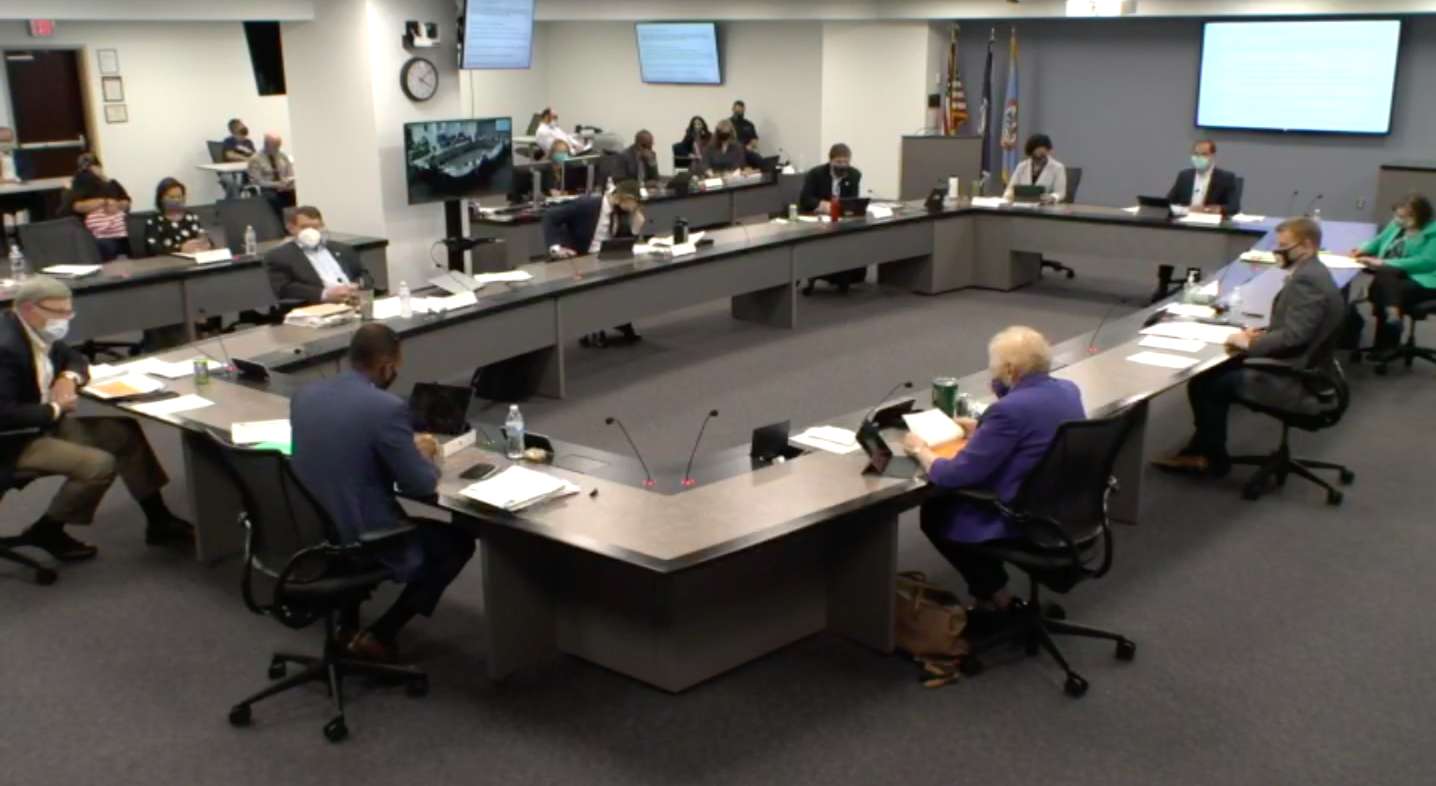
Amid a year where national policing reforms were brought into the spotlight, Fairfax County is reviewing a suite of changes at a local level to improve police accountability.
At a Public Safety Committee Meeting, Chairman Rodney Lusk presented an overview of proposed changes in what was described as possible changes rather than new policies set into stone.
Near term considerations included improved data collection to improve accuracy, with ethnicity and a breakdown of arrest data included in documentation. Data would be released quarterly.
One of the other practices that’s come under fire nationally is the firing and immediate re-hiring of police officers across jurisdictions. One proposed change would crack down on that as part of a statewide push to make decertification easier.
“Consider and discuss implementation of state legislation related to the decertification of law enforcement officers who have been terminated or resigned for misconduct and the request and disclosure of information for prospective law-enforcement hires,” the input matrix said.
While many of the items items being considered focused on more transparency and restrictions on police, another item being considered was a review of how to boost morale in the police department, which Lusk said was at an all time low.
The committee also considered some mid-term options, like reviewing regulations around school resource officers and a review of Fairfax County Police Department use of force policies. with more data about the racial distribution of arrests, another mid-term goal was reviewing racial disparities in use of force and arrests.
“These are public suggestions… not approved by the board,” said Fairfax County Board chair Jeff McKay. “This is a parking lot of ideas that have come through your office and now must be adjudicated by this board based on data and conversations… Some of these will go off to other committees.”
Image via Fairfax County
By Personal Injury Attorney Gary Christmas of Christmas Injury Lawyers
Early in 2020, the United States House Energy and Commerce oversight and investigations subcommittee will hear from five of the nation’s largest e-cigarette companies.
CEOs from Juul, Reynolds America, and NJOY, as well as the Presidents of Logic and Fontem, will testify before the House concerning their role in increasing the rate of youth vaping, as well as their responsibility in vape-related personal injuries.
These five companies account for 97 percent of the $19.3 billion U.S. e-cigarette market. However, this will be the first time that the House has heard from companies other than market-leader, Juul. Subcommittee members are looking for information about how the companies’ marketing techniques may relate to the epidemic of teen-vaping amongst middle and high school students.
Illinois Democrat, Jan Schakowsky, is hoping to hear a measure of accountability on the part of vaping companies. They are widely blamed for hooking children on vaping products through a combination of sweet flavors, nicotine additives, and a misconception that users are only breathing in harmless water vapor.
Federal data shows that more than five million middle and high school students use vape products at least once every 30 days. After a rash of sudden vape-related deaths and illnesses — thousands were treated for this injury that left dozens dead — the Trump Administration finalized policy to reel in the industry.
The administration sought to at least temporarily ban certain flavored vaping products — namely the popular fruit and mint pod-based flavors — but left tobacco and menthol untouched. The policy also avoided regulating disposable, open tank, and e-liquids available in vape shops.
Critics say this amounts to a giant hole in federal vaping regulation. Matt Myers, President of the Campaign for Tobacco-Free Kids, says that the Trump rule leaves millions of flavored vape products on the market, including ones popular with kids. He also questions whether popular mint flavors might simply be relabeled as menthol.
Come May, the administration is requiring companies to get approval from the federal Food and Drug Administration (FDA) for its products and to prove they offer a public health benefit. The “health argument” was the initial marketing campaign for vaping — that it is better for a person than smoking tobacco.
The controversy has stemmed mainly from new “tobacco product” users — i.e., youth vapers — now addicted to vape-sourced nicotine, in addition to the significant uptick in vape-related deaths and illnesses last year.
Some worry that, under the broader argument that vaping helps people quit smoking, these FDA bans will be only temporary, and that the products most enticing to children will be as available as before, but now with a label of “healthy.”
By Personal Injury Attorney Gary Massey of Massey & Associates, PC
Washington Senator Maria Cantwell, a Democrat, is questioning whether the United States Consumer Product Safety Commission (CPSC) is doing its due diligence to protect consumers against dangerous and defective products.
Cantwell worked with minority party staff members of the United States Senate Committee on Commerce, Science, and Transportation to produce a report detailing instances where they allege the CPSC has inexcusably failed to protect the American public.
In at least three separate cases, the report alleges, the CPSC showed inappropriate deference to regulated industry interests at the expense of the public that the CPSC is tasked with protecting.
Specifically, the report identifies 200 different instances where wheels fell off a Britax B.O.B. jogging stroller, causing injuries. As a result of the 2018 settlement between Britax and the agency, the company offered the almost 500,000 stroller owners the option to receive a replacement part or receive a 20% discount on a new jogging stroller. The strollers, notably, were not replaced or refunded.
This response came after agency leadership reportedly ignored warnings from its staff, calling for an immediate recall for the defective and dangerous product.
Similarly, a Fisher-Price inclined infant sleeper known as a Rock ‘n’ Play was linked to numerous deaths before the CPSC took any action. In April of last year, Fisher-Price publicly announced that the sleeper was connected to the deaths of 10 babies. It was not until the American Academy of Pediatrics pointed to a Consumer Reports study identifying 32 associated infant deaths that the agency mandated a recall by the company.
The committee report also discusses the CPSC’s response to known hazards relating to residential elevators. The report asserts that the agency has shifted responsibility and blame to state regulators and families, away from the manufacturers themselves.
Senator Cantwell alleges that the agency whose mission is supposed to be protecting consumers and families from dangerous defective products is instead cozying up with the industry groups it is tasked with regulating. She reiterates that the public should feel confident in the safety of products available to them on the market and that real remedies should be made in cases of faulty products.
The CPSC declined to comment on the report.
By Family Attorney Billie Tarascio of Modern Law
Last month, the Arizona Supreme Court issued its final opinion in an emotionally-charged case.
In 2014, Ruby Torres was diagnosed with breast cancer. Out of concern for her future fertility, she wanted to use her eggs and donor sperm to create embryos that she could freeze for use at a later date — after she had beat her cancer.
Torres’ boyfriend, John Terrell, eventually agreed to be the sperm donor for these embryos. They went to an in vitro fertilization (IVF) clinic to have the procedure done. In the course of this, the two signed an agreement that laid out the controlling terms of the embryos, should Torres’ and Terrell’s relationship change in the future.
The agreement stated that the embryos were joint property and that both partners had to consent for future use of them. Four days later, they married. Seven embryos were frozen.
However, before the embryos could be used, the couple divorced. Torres wanted to keep and use the embryos, so that she could have biological children. Terrell disagreed, stating that he wanted to donate them to another couple.
After a protracted legal battle, the Arizona Supreme Court decided that the agreement the couple had signed was no different than any other contract — the sensitive subject matter notwithstanding. The embryos were to be donated.
In the background, Arizona state lawmakers began pushing legislation that would preempt a situation like this from having a similar outcome in the future. The state enacted a law requiring judges to give viable embryos to the spouse who seeks to allow them to be born, regardless of what a separate contract might say. It’s worth noting that this did not apply retroactively to Torres’ efforts to obtain possession of the embryos.
However, the Arizona law represents the very first of its kind in the nation, which gives preference to a party’s right to have a child. Courts traditionally have sided with a person’s right to decide not to have one.
It is unclear whether this is the start of a trend, but in any case, individuals contemplating an IVF procedure might benefit from considering several key elements. This includes reading any forms before signing them, as well as giving careful consideration to what should happen to any unused embryos. As shown by the Torres case, plans for what should happen in the event of a relationship’s end should also be planned out.
Dr. Art Castelbaum, a reproductive endocrinologist, points out that most patients survive their cancer, but that not every relationship will sustain. He recommends women take sole custody of their embryos and that they freeze not only embryos, but additional eggs, as well.
By Family Attorney Billie Tarascio of Modern Law
Holidays are often shown as a time of joy and good cheer, bringing the family together to celebrate and relax. However, experts suggest this can be far from the truth.
For many, the holidays can serve as a constant reminder of significant stressors already present in a relationship. One expert, Cam Melick, a licensed clinical social worker in Idaho, describes what he typically sees during the holidays in his profession: significant social pressure on people.
Between the constant ads that tell people to spend money, along with individuals’ personal financial stress, and time constraints when attempting to schedule holiday plans — these issues can easily turn from harmless conversations into heated arguments that, in some instances, may lead to complete breakdowns.
Although a total break of communication and even a relationship itself may seem drastic, a survey completed in Los Angeles, California, found that divorce filings increase by nearly one-third immediately following the holidays.
However, despite the increased time constraints and financial pressure that can occur during the holidays, there are some tips that experts suggest using to avoid these types of common pitfalls. Some strategies for successfully navigating the holidays include creating a holiday budget in advance, so that spouses do not feel external pressure to spend more and more and stretch their finances to an upsetting level.
Additionally, experts recommend that spouses discuss their expectations for the holidays beforehand and create a plan for what activities each partner wants to participate in, which family members they visit, and which family members they may not be able to visit during this season. Finally, and perhaps most importantly, experts recommend the individuals take a moment to recognize their own personal frustrations, as well as being mindful of their partner’s frustrations.
This way, a couple can assess their own needs, the needs of their partner, and create a strategy to reduce stress and plan for holiday success.
By Immigration Attorney Natalia Segermeister
A controversial ruling in Southhaven, Mississippi has gotten the local chapter of the American Civil Liberties Union involved.
The ruling claims that a police officer who shot undocumented immigrant Ismael Lopez should not be charged, on the basis that Lopez lacked any Constitutional rights due to his non-citizen status. In this case, the Fourth and Fourteenth Amendments are in question.
Ismael Lopez was from Mexico and had been deported twice to Mexico. Since his second removal, he had returned to the United States. According to court documents, Lopez had prior arrests and an outstanding warrant in Mexico. These details were introduced in court documents because his criminal past as well as his immigration status, the city argued, did not afford Mr. Lopez any constitutional rights. This was the final decision of the court.
The decision of the court concluded that there is nothing to be done in this case, due to Ismael Lopez’s lack of U.S. citizenship at the time of his death. In fact, the court also stated that the Lopez family has no jurisdiction for a case, in which case the U.S. has no obligation to take action, due to the lack of a relationship between Mr. Lopez and the United States.
A grand jury decided that no criminal charges should be brought against the police officer and the city involved in the shooting. Claudia Linares, Mr. Lopez’s widow, was understandably angered by this decision. As a result, she has filed a civil rights action lawsuit on the basis that Mr. Lopez’s Fourth and Fourteenth Amendment rights were violated. The Fourth Amendment protects citizens’ right against unreasonable searches and seizure, while the Fourteenth provides equal protection for all citizens under the law.
Linares’s lawyer, Murray Wells, has told the media that he is disgusted by the claim, stating that this specific interpretation of the U.S. Constitution is, in fact, unconstitutional. Linares is seeking $20 million in damages for Mr. Lopez’s wrongful death.
By Criminal Defense Attorney Matthew Wilson of Matthew Wilson Attorney at Law
It was in November of 2019 that the federal government moved closer to passing marijuana legislation.
The House Judiciary Committee passed a bill that would decriminalize marijuana at the federal level. This means that if someone was caught committing what is a marijuana offense today, instead of facing high fines and lengthy jail sentences, they would only receive a ticket, similarly to those handed out for traffic infractions. However, it is unclear if the bill is likely to get much further.
The bill that was passed is known as the “Marijuana Opportunity Reinvestment and Expungement Act of 2019”. In its short form, the bill is known as simply the “MORE Act”. If passed, the law would remove cannabis from Schedule I of the federal Controlled Substances Act. This schedule also lists drugs such as LSD and heroin. The bill would also impose a five percent sales tax on cannabis sales through the Cannabis Justice Office, an office that would be created for that very task.
However, many people are predicting that the bill will not get much further than the House, and there is a good reason why. The bill must be passed by the entire House, and then the Senate. Of these two moves, gaining approval in the Senate would likely be the most difficult. The Republicans hold a majority in the Senate, and the party has never favored any type of marijuana legalization or decriminalization before.
Even if it does pass through the Senate, it will then go to President Donald Trump’s desk for his signature. Trump has always been extremely vocal about his criticism towards marijuana and has even paid for ads displaying the harmful effects of the substance.
Those that are hoping for marijuana legalization may have to wait to see what happens with the 2020 election. Many of the candidates support decriminalizing the drug, if not fully legalizing it.
By Criminal Defense Attorney David Clark of David Clark Attorney at Law
In 2018, a new piece of criminal justice reform legislation called the First Step Act was signed into law by Congress.
The First Step Act creates the opportunity for prisoners to work for an early release by engaging in good behavior, job training and counseling. It includes valuable correctional reforms, such as providing inmates access to important medication-assisted treatment and prioritizes placing inmates in facilities closer to their homes.
The act also deviates from the antiquated structure of minimum sentencing and allows judges or juries to decide prison terms that they feel are appropriate for the crime and the criminal. This unique and revolutionary law aims at reducing recidivism, the tendency of a convicted criminal to reoffend.
The First Step Act passed with overwhelming bipartisan and presidential support. In the time since its passing, the legislation has been put to the test as to how effective it can be in practice. Since December 2018, the Bureau of Prisons (BOP) has seen an increase in 1,700 volunteers within the system. Moreover, 2,471 fair sentencing orders have been granted, 124 compassionate releases have been approved, and 382 elderly offenders have been given the opportunity to serve the remainder of their sentences under home confinement.
Twenty new contacts have been made between employers and the BOP, critically assisting the Ready to Work initiative that provides employment and community reintegration to former inmates.
While the benefits of the First Step Act remain clear, some drawbacks have also become apparent. For example, prisoner Joel Francisco, who was originally serving a life sentence for the distribution of crack cocaine, became involved with the First Step Program 14 years into his sentence. After demonstrating good behavior and engaging in career training and counseling, Francisco was granted an early release. Shortly thereafter, he was accused of a brutal stabbing murder in Providence, Rhode Island.
Francisco’s story is a perfect example of the slow and challenging process of implementing effective criminal justice reform. Even with solutions that exhibit overwhelming stories of success, crime continues to be a prevalent issue in American society.
The benefits of the act may be lost or overshadowed in the wake of cases like Francisco’s where tragic recidivism would not have occurred if not for the First Step Act. Only time will tell whether the First Step Act will eventually be viewed as a success or failure in the slow process of criminal sentencing reform.
