

The following article excerpt is from our content sharing partner, FairfaxNews.com.
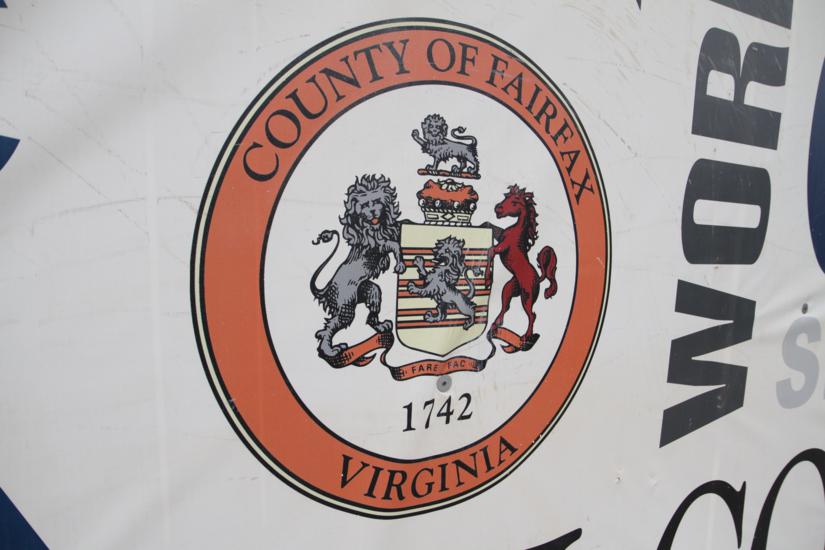
The Fairfax County Board of Supervisors this week inched closer to making changes in its pension plans for new county hires, acting on a longtime argument by Supervisor Pat Herrity that Fairfax pension benefits are too generous.
The board voted to authorize a public hearing on November 20, 2018 to consider proposed amendments to the ordinances for Fairfax County’s three retirement systems. The changes would be effective for new employees hired after June 30, 2019.
“Pension costs compete with our ability to provide quality services to our residents and to pay competitive salaries to hire the best and brightest teachers and employees,” Herrity said in an emailed statement. “We cannot continue to ask our residents to work after their retirement to pay significant increases in their taxes so our new County employees can retire as early as age 55 with a pension benefit that is much more generous than surrounding jurisdictions.”
The action has been a long time coming. In 2009, Herrity asked for a review of the county’s pension plans and in 2013, the board made some minor changes. Following additional advocacy for changes to address the plan’s unfunded liability and cost, the board began another review in late 2016.
Read more at FairfaxNews.com

One month into Fairfax County’s new regulations on short-term lodging, a group of local citizens are suing to have the regulations voided.
On July 31, the Board of Supervisors adopted the Short-Term Lodging (STL) Zoning Ordinance Amendment aimed at regulating home-sharing inside Fairfax, most commonly carried out through the websites Airbnb and VRBO.
Short-term lodging operators must apply for a $200 two-year zoning permit, and homeowners or community associations can still prohibit lodgings within their subdivision or development.
The new requirements went into effect on Oct. 1, along with a series of new regulations on short-term lodging:
- Homes cannot be used for STL more than 60 nights per year.
- The maximum number of lodgers per night is six adults.
- The maximum number of rental contracts per might is one, so all lodgers must be associated with the same contract.
- Any events or activities like parties, meetings, or luncheons where there may be direct or indirect compensation is prohibited.
- All advertisements must include the STL permit number and identify the location of parking.
- STLs cannot be set up in detached structures
- A new Transient Occupancy Tax must be collected for each rental contract by the end of each month following the reporting month. A monthly return must also filed even if no taxes are due. If receipts exceed $10,000, a Business Professional and Occupational License is required.
- STL operators must be permanent residents of the property and obtain written consent from property owner (when applicable).
- Maintain a guest log including name, address and telephone number of all lodgers to be made available to any County employee upon request.
- All STLs are required to be open for inspection during reasonable hours.
The 36 Fairfax residents collectively suing the County say the Board of Supervisors overreached and the move is the latest in a two-year trend of the county targeting STL.
In 2017, the General Assembly enacted a code allowing localities to establish a short term rental registry and require operators to register annually. Localities are also allowed to charge a fee for registration.
According to the Fairfax County website, the code prompted the Board of Supervisors to analyze short-term lodging in Fairfax and make zoning changes to allow STLs while maintaining the overall character of residential neighborhoods.
But the lawsuit says the requirements that nearly all of the other regulations, like the requirement that operators be permanent residents and the requirement of a guest log book, all exceed the authorities explicitly granted by the state.
As Virginia is a Dillon Rule state, one where the localities can only engage in activities explicitly sanctioned by the state government, the lawsuit alleges that Fairfax’s actions constitute an overreach.
Among the allegations are claims that the STL ordinance constitutes unlawful piecemeal downzoning, a violation of due process, and that the requirement that homes be open for inspection constitutes authorization of unlawful search and seizure.
According to the Fairfax Circuit Court clerk’s office, a hearing for the case is scheduled for Nov. 1 at 8:30 a.m.

Columbus Day in Fairfax County — Fairfax County government offices and schools will be closed and the Fairfax Connector will operate on a modified holiday schedule due to the Columbus Day holiday. Vienna Town Hall will also be closed. [Fairfax County, Fairfax Connector, Twitter]
Vienna Fund Raises Quarter Billion — Vienna-based Aldrich Capital Partners “has spent three years proving out its entrepreneur-driven investment thesis — and it just closed a $256 million outside fund to bring it to life.” [Washington Business Journal]
Tysons Company Makes Another Acquisition — “DXC Technology (NYSE: DXC), the world’s leading independent, end-to-end IT services company, today announced the acquisition of argodesign, a nationally known product design consultancy based in Austin, TX.” [Business Wire, Fast Company]
New Coworking Space Coming to Tysons — “Short for the Brandywine Experience, the first Bex is set to open soon from ground-floor space at 8260 Greensboro Drive in Tysons, a nondescript, seven-story office building. It’s not big, at about 6,300 square feet, but Brandywine hopes it will have an outsized impact on occupancy rates across its Northern Virginia portfolio.” [Washington Business Journal]
Reminder: Voter Registration Deadline Approaching — “The deadline to update your voter registration information and register to vote is Monday, Oct. 15, for the upcoming Nov. 6 general election. There are 754,493 registered voters in Fairfax County, including 695,925 active registered voters.” [Fairfax County]
