

Expanded SACC Program Returns in August — “As students prepare to get back to class in the fall, Fairfax County Board of Supervisors Chair Jeffrey McKay and Fairfax County School Board Chair Stella Pekarsky held a press conference to announce that SACC will be providing before and after school services in 142 locations this year, including two new centers located at Clearview Elementary and McNair Upper Elementary.” [WUSA9]
Metro Pushes Vote on Arrest Ban to September — “Metro’s board on Thursday postponed a vote on a plan that would let transit police ban someone arrested on suspicion of a sex crime or an offense involving a dangerous weapon. The delay came after civil liberties groups and activists voiced opposition to the measure and asked the transit agency to reconsider.” [The Washington Post]
Merrifield Business Association President Lauded — “Fairfax County supervisors on July 27 honored former Greater Merrifield Business Association (GMBA) president Billy Thompson for his decades of community service. Thompson joined GMBA in 1995 and served as its president for seven years. Supervisors credited him with providing support and mentorship to many business owners in Merrifield and Fairfax.” [Sun Gazette]
Vienna to Bring Back Church Street Block Parties — “The Town of Vienna will host the Chillin’ on Church block parties along historic Church Street near the Town Green on Aug. 20 and Sept. 17. The events will run from 6:30 p.m. to 9:30 p.m. with food, beer and wine, and entertainment. Admission is free.” [Patch]

Like much of the D.C. area, Fairfax County is now under a Severe Thunderstorm Watch that will be in place until 9 p.m.
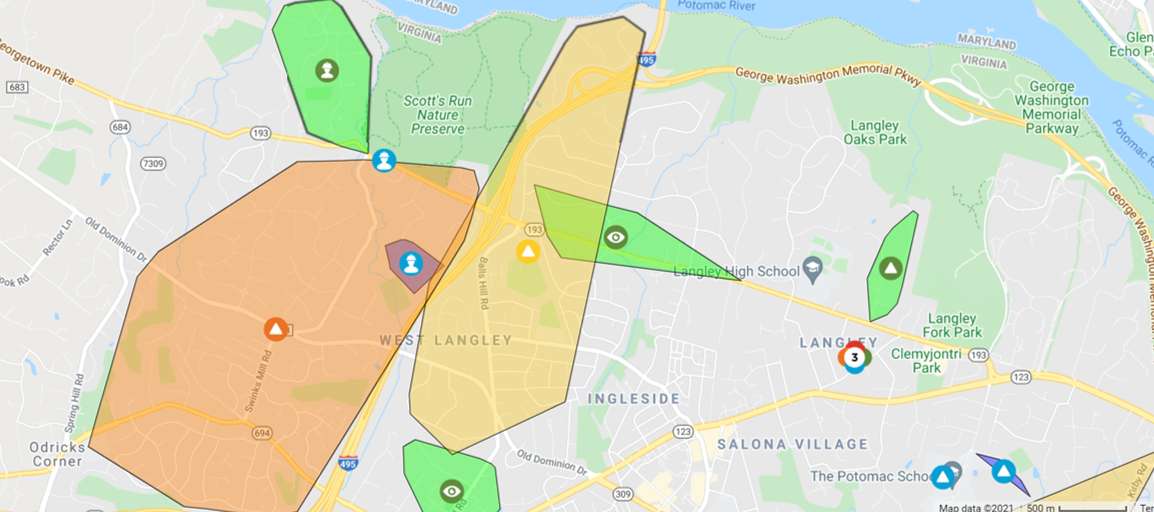
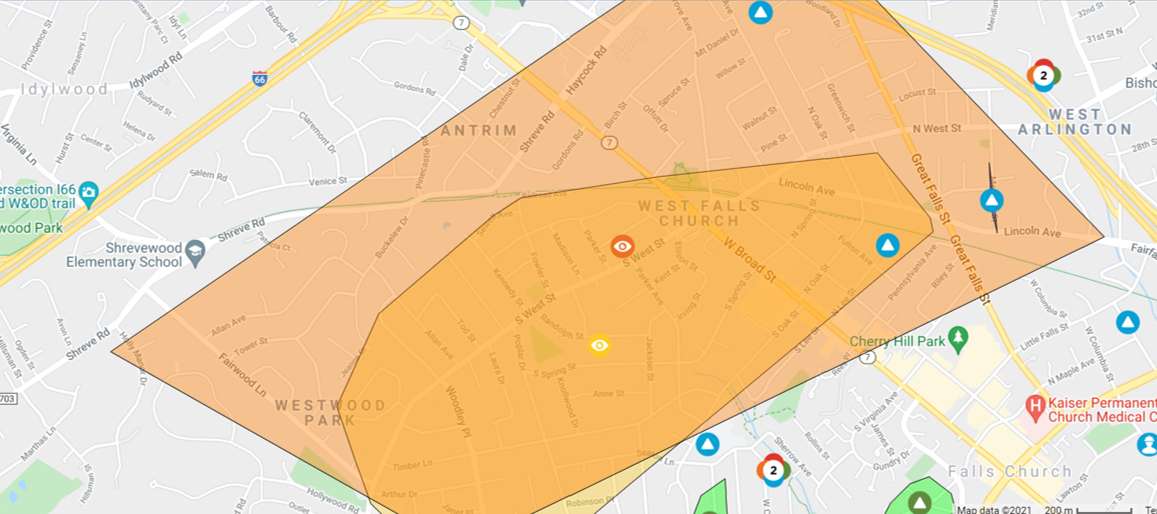
The region is bracing for a second consecutive night of potentially damaging wind and rainfall after a storm that swept through late Wednesday (July 28) resulted in power outages that affected thousands of people in Fairfax County, particularly around McLean and Falls Church.
While many of the outages have been addressed, Dominion Energy’s outage map shows that, as of 3:30 p.m., crews are still working to restore electricity in some areas. The current estimated time of restoration for the lingering outages ranges from before 5 p.m. to 6-11 p.m.
A Tornado Watch has been issued for D.C.’s Maryland suburbs, but Fairfax County could see damaging hail, isolated flash flooding, and large hail from the incoming storm, according to the National Weather Service.
The Fairfax County Office of Emergency Management advises residents to “stay weather aware and know what to do if a warning is issued,” which would mean that severe weather is imminent or underway.
A Severe Thunderstorm Watch has been issued for areas outside of the Tornado Watch, both of which are until 9 PM tonight. Main threat for these storms will be for damaging winds, large hail, isolated flash flooding and tornadoes. pic.twitter.com/eNM7nyBtFK
— NWS Baltimore-Washington (@NWS_BaltWash) July 29, 2021

(Updated at 4:10 p.m.) Virginia recommends that even vaccinated individuals wear masks indoors in certain circumstances, but with different locations experiencing different levels of COVID-19 transmission, the state has stopped short of issuing a mandate.
While some states revised their mask rules shortly after the Centers for Disease Control and Prevention’s announcement on Tuesday (July 27), Virginia had not indicated how it will approach mask-wearing amid rising COVID-19 case levels, with officials saying only that they were reviewing the new guidance.
Gov. Ralph Northam issued the first official statement on the issue via social media on Thursday (July 29), writing that “all Virginians should consider wearing a mask in public indoor settings where there is increased risk of COVD-19 transmission, as the new CDC guidance recommends.”
“This is not a requirement, but a recommendation,” he said.
All Virginians should consider wearing a mask in public indoor settings where there is increased risk of #COVID19 transmission, as the new @CDCgov guidance recommends.
This is not a requirement, but a recommendation.
— Governor Ralph Northam (@VAGovernor73) July 29, 2021
These situations include masking indoors at K-12 schools and in areas of the Commonwealth that have “substantial” community transmission of the virus.
Northam noted in further tweets that there has been a dramatic rise in COVID cases in Virginia over the last month due to the delta variant and that “over 98%” of hospitalizations and deaths are residents who are unvaccinated.
When asked why the state is recommending but not requiring indoor mask-wearing, a Virginia Department of Health spokesperson said the department “doesn’t have anything to add at this moment” beyond Northam’s statement.
When explaining the decision to revise its guidelines, the CDC cited new scientific evidence showing that vaccinated people infected with the delta variant could potentially spread the virus to others. While the available vaccines effectively protect against severe illness and hospitalizations, the findings concerned officials enough to prompt a reversal of sorts after mask requirements were eased in May.
“This new science is worrisome and unfortunately warrants an update to our recommendations,” CDC director Rochelle Walensky said.
With case numbers climbing locally, as they have elsewhere around the country, Fairfax County has moved to put new rules in place in the hopes of slowing the virus’ spread without jeopardizing plans to reopen workplaces and schools.
Fairfax County Public Schools announced yesterday (Wednesday) that it will require universal masking in school buildings regardless of an individual’s vaccination status, and the Board of Supervisors approved a motion on Tuesday (July 27) to evaluate whether to implement a vaccine mandate for 12,000 county employees.
Board of Supervisors Chairman Jeff McKay said in a statement that he supports a shift back to wearing masks indoors for places with high COVID-19 transmission and around people who are unable to get vaccinated:
With the delta variant surging in unvaccinated communities, I support masking in areas with more people vulnerable to contracting COVID-19 who aren’t able to be vaccinated (such as schools) and areas with a high risk of transmission. In Fairfax County we will continue to follow state guidelines on masking and sharing the effectiveness of masking to slow the spread of COVID-19.
Currently, 76% of Fairfax Health District residents over the age of 18 have received at least one dose of the vaccine and 69.4% are fully vaccinated, according to the Fairfax County Health Department’s vaccine dashboard.
While that’s above Virginia and national rates, those numbers have barely budged over the last several weeks as the county looks for ways to get more residents immunized.
Health experts and public officials continue to reiterate that vaccines are the best tools in the fight against the pandemic.
“The vaccine is the strongest tool we have to fight this pandemic,” McKay wrote. “For the sake of our economic recovery, sending students back to school, and returning to normal, we need even more people to get vaccinated. If you aren’t vaccinated, go to vaccine.gov to get scheduled, there are appointments available near you!”
In terms of transmission rates, Fairfax County is currently doing better than many other Virginia counties.
While the CDC’s COVID tracker shows that a large swath of the Commonwealth has “substantial community transmission,” Fairfax County currently has “moderate” transmission like Arlington County. A number of nearby localities like the City of Alexandria, Stafford, and Spotsylvania counties have “substantial” or even “high” transmission.
D.C., which has substantial spread, announced today that it will require everyone 2 and older to wear masks indoors regardless of their vaccination status starting Saturday (July 31).
Photo via Mika Baumeister/Unsplash
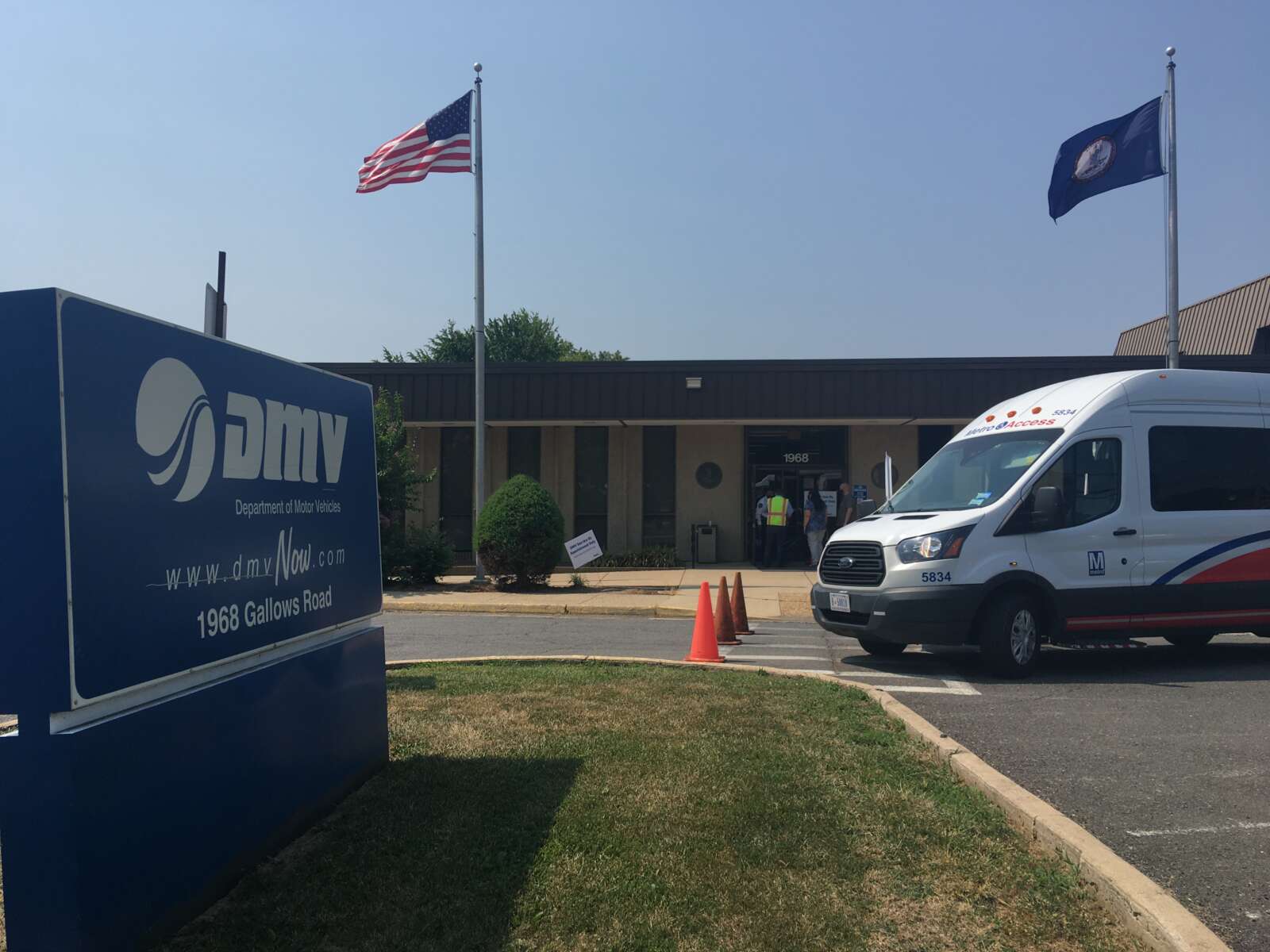
Fairfax County residents in need of Department of Motor Vehicle services are finding they need to book an appointment months in advance.
In response to those reported concerns, the county Board of Supervisors agreed on Tuesday (July 27) to contact the state to see how it will address wait times.
Springfield District Supervisor Pat Herrity said residents have reported that they’re traveling as far as three hours away to South Hill to get DMV services.
“Given that DMV services are essential, Fairfax County residents should not have to wait over a month or be forced to go to other parts of Virginia for an appointment,” Herrity said.
The DMV introduced the appointment system when it reopened sites in May 2020 after a pandemic-induced shutdown. During that time frame, it has also added more online capabilities to help reduce foot traffic.
“We are not yet where we need to be, but we are proud of the progress we’ve made from implementing a brand new appointment system in the height of a global pandemic a little more than a year ago,” DMV spokeswoman Jessica Cowardin said in a statement.
On a recent visit to a DMV center in Tysons, Great Falls resident Barbara Martin found the experience quite different compared to when walk-ins were allowed, which would result in dozens of people crowding into the building.
Martin booked her appointment about a month and a half ago and said she was relieved to be there, expressing appreciation for the staff’s attention to details.
The DMV reopened its Tysons location (1968 Gallows Road) in June 2020 and its Sterling location (100 Free Court) in August 2020. It also opened a new customer service center in Sterling (22360 S. Sterling Blvd., Unit D112) this past January.
“By installing an appointment system we have become more efficient, transactions are conducted quickly and customer wait times have been minimized,” Cowardin wrote. “And appointment availability will continue to increase as we are able to hire and train employees and emerge more fully from the pandemic, which is still ongoing.”
Chai Chala of McLean says he lucked out and only had to wait 10 days for an appointment at the Tysons DMV center, which he visited to register a new car.
“The experience was really nice,” he said, adding his only complaint was the sun’s heat.
Since reopening, the DMV added several services to its website that can save customers a trip to a physical building.
In September, it introduced two-year renewals for driver’s licenses and ID cars by online and mail, and in November, it began online renewals for commercial driver’s licenses. As of February, it also now offers drivers the ability to replace licenses and permits that were lost or stolen.
Customers can also get appointments with DMV Select partner officers, which conduct vehicle-related transactions, as well as DMV Connect, a team of mobile workers whose regular stops include the Fairfax County Government Center.
Cowardin said the DMV intends to keep the appointment system for the foreseeable future, noting that the vast majority of transactions conducted since May 2020 have been conducted remotely.
“During the pandemic, customers shifted the way they conduct business with DMV in that more customers are now conducting DMV business by service delivery methods other than the [customer service centers], such as mail, internet, online dealers or DMV Select partners,” she noted.
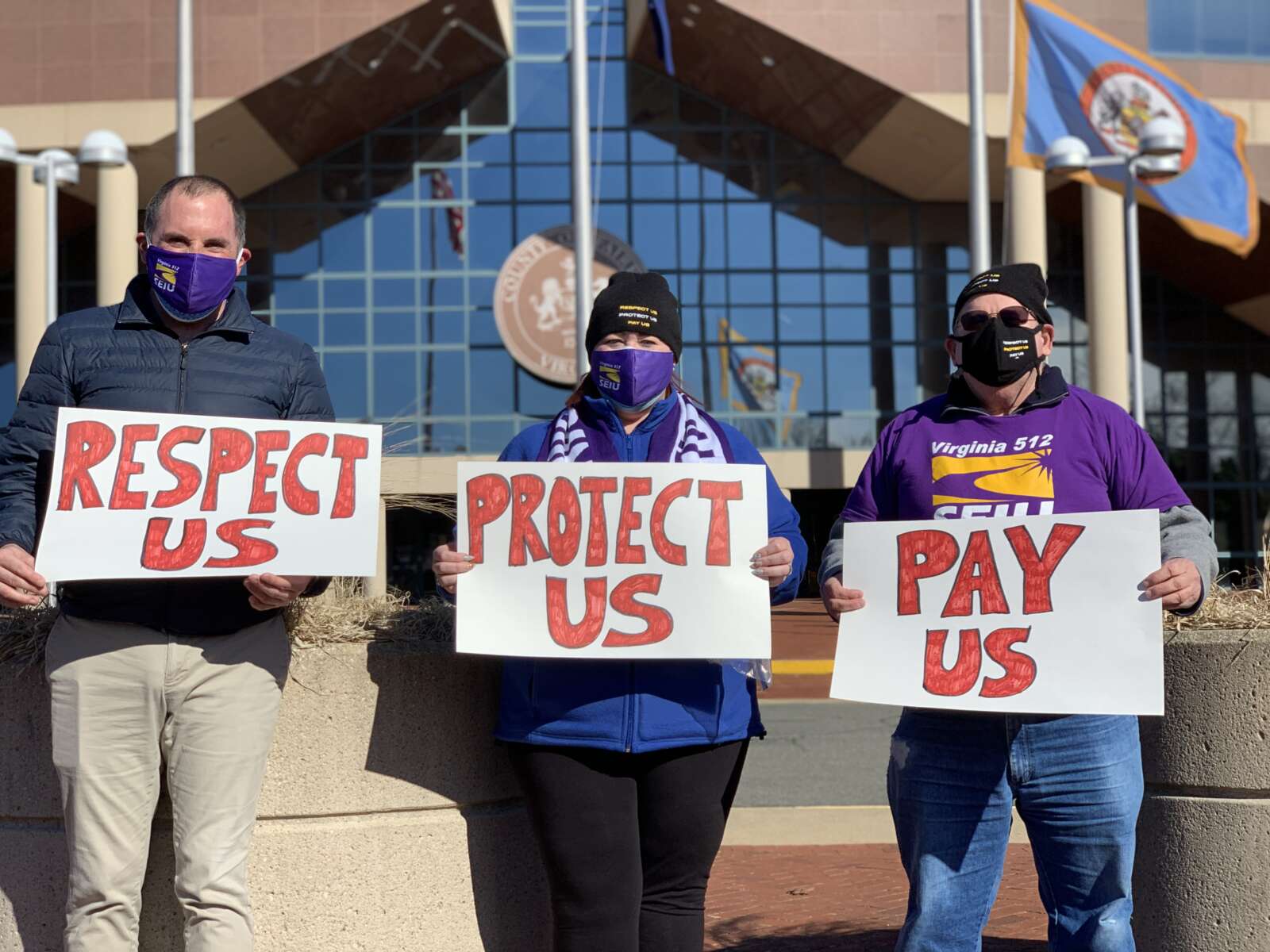
One in seven Fairfax County employees can’t afford an adequate standard of living in the county where they work, a report released last week by a Richmond-based think tank found.
Published on July 21 by The Commonwealth Institute for Fiscal Analysis (TCI), which advocates for public policy that advances racial and economic justice in Virginia, the “Rebuilding Stronger for Fairfax County” report comes as county leaders continue discussions on a collective bargaining ordinance for public employees.
Comparing government workers’ salaries to the cost of living and what their private-sector counterparts earn, the study authors say their findings support the need for collective bargaining, where employee unions can negotiate compensation, working conditions, and other terms of their employment.
“The fair and clear standards provided by unionization particularly help Black and Latinx workers,” TCI Research Director Laura Goren said in a statement. “Women, who make up the majority of local government workers, would also particularly benefit from collective bargaining.”
Using the Economic Policy Institute’s family budget calculator, TCI determined that a single person would need an annual income of at least $57,052 to afford a “modest yet adequate” standard of living in Fairfax County, including housing, transportation, health care, taxes, and other necessary expenses.
A family with one parent and two children would need to earn at least $106,395 a year.
According to the report, however, the bottom 20% of Fairfax County’s workforce in terms of salary, including part-time employees, make between $40,000 and $60,000 annually, leaving them unable to support themselves.
Only the top 20% of workers, who earn under $120,000, can cover the cost of living for a family of three.
The findings came after TCI released a similar report on Loudoun County, where one in five county workers can’t afford an adequate standard of living. The Board of Supervisors there voted on July 20 to proceed with crafting a collective bargaining ordinance.
According to TCI, public employees in Virginia are typically paid 29.9% less than what they would get in the private sector, a gap that widens to 33.4% in Northern Virginia. When pension and health care benefits are considered, the difference in compensation narrows slightly to 28% for the Commonwealth as a whole.
As the cost of living has risen, so have turnovers and vacancies, which went from 3.4% of all Fairfax County government positions in fiscal year 2007 to 8% of all positions in FY 2016, according to a county “lines of business” review of employee compensation.
While it won’t close the gap between public and private wages, the TCI report says giving public workers the ability to collectively bargain would help address inequities, boosting pay by 5 to 8%.
“This report provides rigorous research that backs up what essential workers have always known to be true,” Tammie Wondong, president of SEIU Virginia 512’s Fairfax County chapter, said. “Having a seat at the table through collective bargaining allows us to advance equity and build an even stronger community where every working family can thrive.”
SEIU’s Fairfax County Government Employees Union Chapter, which represents more than 2,000 workers, has been advocating for a collective bargaining ordinance since the Virginia General Assembly passed legislation giving localities that authority in 2020, though the law didn’t take effect until May 1 of this year.
County staff released an initial draft ordinance on May 25, and the Fairfax County Board of Supervisors has been debating the scope and details of the proposal for the past two months. The most recent draft came before the board’s personnel committee on July 20.
Board of Supervisors Chairman Jeff McKay echoed Wondong’s sentiments, saying the TCI report confirms that collective bargaining will reduce inequity, support quality jobs, and improve county services.
“I’m proud of the steps we’ve taken to ensure a great county workforce, including a $15 living wage, paid family leave, initiatives to increase workforce housing, and a strong retirement system,” McKay said. “Collective bargaining will further help us attract and retain great employees to ensure we continue delivering quality public services for our community.”
Fairfax County Human Resources Director Cathy Spage said at last week’s committee meeting that when the board meets on Sept. 14, county staff will ask it to authorize a public hearing on the proposed collective bargaining ordinance on Oct. 5.
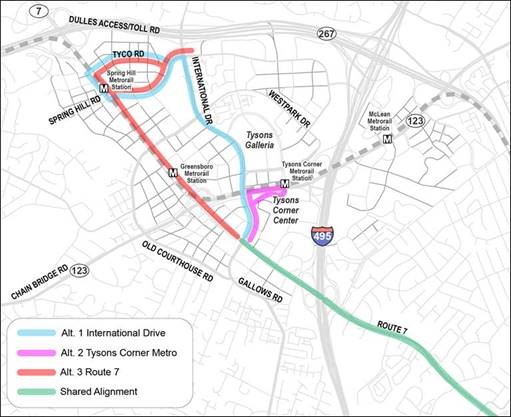
The Fairfax County Board of Supervisors has approved a bus rapid transit (BRT) route through the heart of Tysons, despite some concerns that it might not be as “express” as hoped.
Fairfax County started studying options for BRT through Tysons three years ago as part of a regional push to establish a bus line between Tysons and the Mark Center in Alexandria.
After reviewing several alternative routes, the board voted on Tuesday (July 27) to approve county staff’s recommendation for a route that will run from the Spring Hill Metro station up to International Drive and from there down to Route 7 past Tysons Galleria and Tysons Corner Center.
“The outreach on this plan was very well done, very thoughtful, and working with our transit associations,” Providence District Supervisor Dalia Palchik said. “I think this has had robust input from our community…This is going to be best for businesses in Tysons and for our pedestrians and cyclists.”
One concern raised at the board meeting by Springfield District Supervisor Pat Herrity is that the route won’t have pull-off spots that will allow for both express buses that run directly between major points without interruption and local buses that would make more frequent stops within Tysons.
“I think we’re really short changing ourselves not doing the local stops, where they pull off, so we can run express [buses] on it,” Herrity said. “I think long term, we’re going to be sorry for that.”
Herrity abstained from the final vote, saying he supported the project overall but had concerns about its structure.
Chairman Jeff McKay said the existing configuration represented a compromise between the need for better transit and respecting the right-of-way limitations in Tysons.
“Right of way is at a premium,” McKay said. “The impact to our businesses and impacts to our residents on the right-of-way needs of these projects is significant and significantly challenging.”
With the route approved, the Tysons BRT route will be incorporated into the Northern Virginia Transportation Commission’s broader Envision Route 7 study, which is currently in its fourth and final phase.
Almost 7,000 people in Fairfax County still have no electricity after a thunderstorm took out trees and wires late last night (Wednesday).
According to PowerOutage.US, 6,920 Dominion Energy customers in the county are experiencing a power outage as of 9:10 a.m. Dominion’s outage map shows that, while there are scattered outages farther south, the vast majority of those without power are in McLean and Falls Church.
Crews are working on and investigating many of the reported outages. The estimated time of restoration is noon to 5 p.m. for those in the Langley and Scott’s Run area and 6-11 p.m. for the many outages in McLean southeast of Route 123 and West Falls Church.
“Our plan includes all resources engaged w/ over 50 bucket trucks,” Dominion spokesperson Peggy Fox said on Twitter. “Stay away from downed lines — assume energized.”
Good morning.
NoVa @DominionEnergy
Storm Damage Power Outage Update:
9009 customers out—down from 27,000.Estimated Restoration Times from 5 PM to 8 PM tonight.
Our plan includes all resources engaged w/ over 50 bucket trucks.
Stay away from downed lines—assume energized. pic.twitter.com/ZN0puAt0eb
— Peggy Fox (@PeggyDomEnergy) July 29, 2021
The Fairfax County Fire and Rescue Department warns that people should stay away from any downed wires. Fallen trees can be reported to 9-1-1 if it is a life-threatening situation or the Virginia Department of Transportation if they are impeding roads, though removal of trees on private property is the owner’s responsibility.
According to the National Weather Service, more storms are expected to hit the D.C. area this afternoon and evening, with the possibility of flash flooding and even a tornado.
Showers and thunderstorms are expected this afternoon and evening. Some of the storms may be severe with damaging wind gusts. An isolated tornado is also possible. Isolated instances of flash flooding may also occur due to heavy rain. For the latest: https://t.co/5RyZgoXicj pic.twitter.com/XOB2L8cDTM
— NWS Baltimore-Washington (@NWS_BaltWash) July 29, 2021
Storm Brings Power Outages, Hail to Fairfax County — Thunderstorms swept through Fairfax County last night (Wednesday), resulting in reports of damaging winds and even hail “that toppled trees and wires.” As of midnight, Dominion Energy’s outage map showed thousands of people in the county without power, particularly around McLean. [Capital Weather Gang]
Farmer’s Market Nonprofit Awarded State Grant — FRESHFARM will get a $50,000 grant from the Virginia Food Access Investment Fund to establish new fresh food mobile markets in food-insecure areas of Northern Virginia. The nonprofit operates several farmer’s markets in Fairfax County, including the ones at the Mosaic District and The Boro. [Patch]
More Traffic Control Sought for Great Falls Park — “Great Falls Citizens Association (GFCA) officials are seeking to have the federal government provide $100,000 in permanent, annual funding for U.S. Park Police to control traffic at Old Dominion Drive and Georgetown Pike outside the park’s entrance when park usage is especially heavy…Traffic congestion outside the park routinely occurs on weekends, holidays and fee-free days from March through early November, GFCA leaders said.” [Sun Gazette/Inside NoVA]
Madison HS Student Brings Books and Bikes to Tanzania — James Madison High School rising junior Sophia Brown organized a bicycle drive at the Vienna school in May and collected dozens of donated books to bring to Tanzania for a Girl Scout project. Sophia traveled to the East African country this summer with support from the nonprofit Wheels to Africa, which she has worked with since she was in second grade. [FCPS]

Fairfax County will use an estimated $10 million in COVID-19 relief money for another major grant program aimed at helping community partners keep their doors open.
The Board of Supervisors approved the Active and Thriving Community Grants Program at its meeting yesterday (Tuesday), where grants will range from $2,000 to $18,000 depending on the size of the business or nonprofit.
While businesses have pushed to reopen, many continue to struggle, and COVID-19 concerns persist. The grants target child care providers, community-based safety net providers, youth recreational or educational programs, youth athletic groups, and pools.
“As someone who visits a child care center everyday, they’re still operating under COVID restrictions that other businesses aren’t,” Braddock District Supervisor James Walkinshaw said during the board meeting. “So, they’re still dealing with that in terms of capacity and PPE [personal protective equipment] and masking.”
County staff reported that many community-based organizations “continue to struggle economically” due to COVID-19 and most have had to cancel or significantly alter major fundraising events.
“For many, giving levels have not returned to prior levels,” county staff wrote in the meeting agenda. “For many donors, giving patterns have changed. Even where giving has increased, it has not made up for lost revenue or increased expenses.”
Fairfax County Neighborhood and Community Services Deputy Director Sarah Allen told the board that the application period for the new grant program will launch by the end of August.
To be eligible, recipients will be required to show that they had a 15% decline in gross revenue in 2020 compared to 2019 or a 15% increase in expenditures directly tied to costs due to the pandemic.
The new grants are projected to allocate:
- $4.3 million for child care providers
- $1.9 million for community-based safety net providers
- $1.8 million for youth recreational or educational programs
- $1.5 million for youth athletic organizations
- $500,000 for pools
“A lot of these organizations survived through the pandemic because the…volunteer board members or the parents or community members involved dipped into their own pockets to keep things going so they didn’t have to go out of business,” Walkinshaw said.
The money comes as the county is finalizing awards for its PIVOT program, which will provide over $24.4 million in grants from the American Rescue Plan Act to businesses in the retail, food, and lodging sectors and other organizations financially affected by the pandemic.
When the county created the PIVOT program on June 8, staff were also looking for ways to provide additional assistance. A county survey of child care programs conducted in March found that over half of respondents did not know how long they would be able to stay open without financial support.
“The potential closure of child care programs could come at a time when more parents are returning to work, impacting working parents and their children, employers, and the child care workforce and their families,” the staff report said.
In awarding the grants, the county expects to use a priority measure related to vulnerable populations to pick recipients in the child care and pool categories. The remaining awards would be determined by a lottery system.
It wasn’t immediately clear how exactly the priority measure would work, but the county said staff will look at the social and economic conditions that made populations more vulnerable to COVID-19 as well as recent economic, health, and other data relevant to the pandemic’s impact.
Similar to the PIVOT grants, the county will use a third-party vendor — the Latino Economic Development Corp. — for the online grant administration portal and awards. Advertising and outreach in multiple languages will begin before the August launch.
“This grant program will prioritize disproportionately impacted populations and communities wherever possible,” county staff said.
Photo via Fairfax County/Facebook

1st Stage Theatre in Tysons has unveiled its 2021-2022 season lineup.
1st Stage is reopening its doors to patrons in August for the first time since the venue at 1524 Spring Hill Road closed in March 2020 due to the COVID-19 pandemic.
“We’re thrilled to finally be bringing people back together,” 1st Stage Artistic Director Alex Levy said in a statement. “One of the things that I think we felt so strongly over the last year and a half is not only how crucial of a role the arts plays in our lives but specifically how important live theater is. We’ve missed coming together to share in stories and be in communion with our friends and neighbors.”
The theater will kick off the season with a reimagined version of the Logan Festival of Solo Performances, which will take place outdoors at Boro Park (8350 Broad Street) with lawn seating available for up to 100 people per performance.
Last month, The Boro played host to 1st Stage’s first in-person event in more than a year, a fundraiser that the theater said drew almost 1,000 people and raised $87,000.
“The festival will activate the new space and provide programming for residents and partnerships between local restaurants and 1st Stage, allowing our 1st Stage family to come together in person and to celebrate the return of live theatre,” the theater said in a press release.
1st Stage will resume indoor performances once the Logan Festival wraps up.
Levy says 1st Stage decided to start with the outdoor festival before returning inside as a precaution due to the continued threat of COVID-19. The theater will have “increased” safety measures and keep monitoring the community health situation.
“We are in continued conversation and assessment to make sure that we are providing the safest atmosphere possible for our audiences and artists,” Levy said.
The 2021-2022 season shows are:
- Making Opera Soup: Aug. 21, 22, 28 & 29 (Logan Festival)
- Charmed Life: Aug. 27 & 28 (Logan Festival)
- Bo-Nita: Sept. 16-19, 22-26 (Logan Festival)
- The Book of Mamaw: Oct. 7-10, 14-17 (Logan Festival)
- Secret Things: Nov. 18-Dec. 19
- The Phlebotomist: Feb. 7-March 13
- The Mamalogues: April 14-May 8
- Under the Sea with Dredgie McGee: June 2-26
More information on showtimes and tickets can be found on the 1st Stage Theatre website.
Photo by Stephanie Richardson