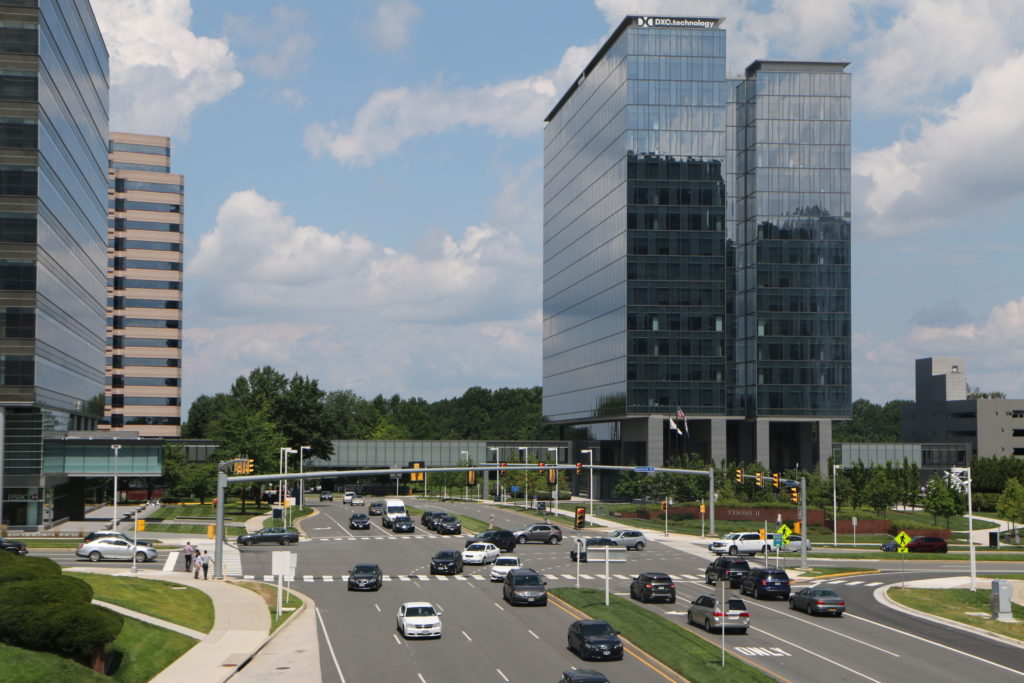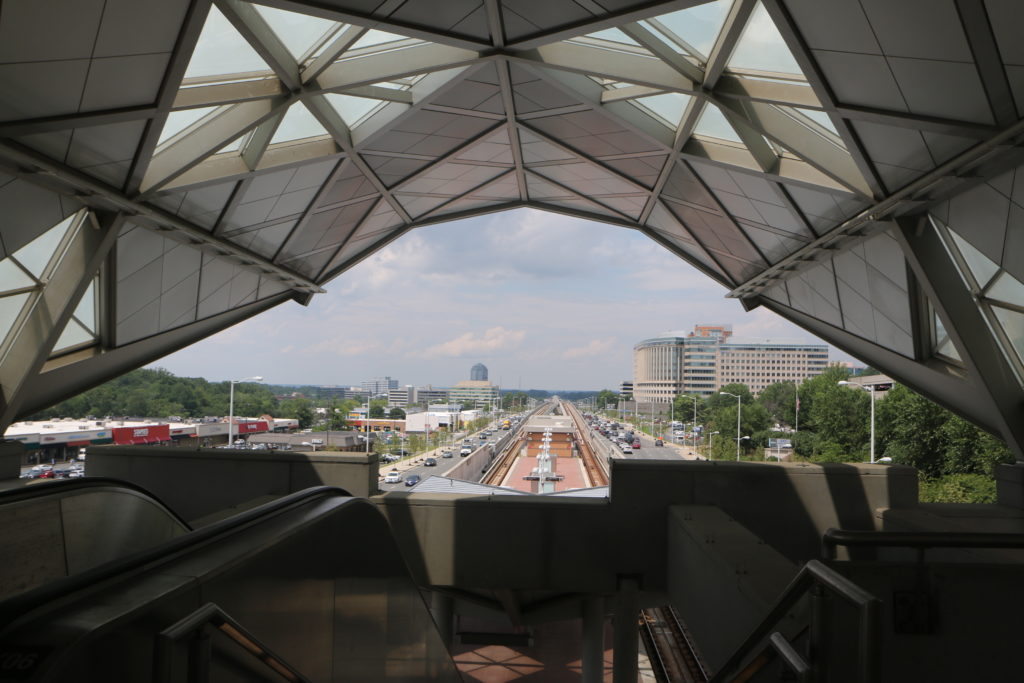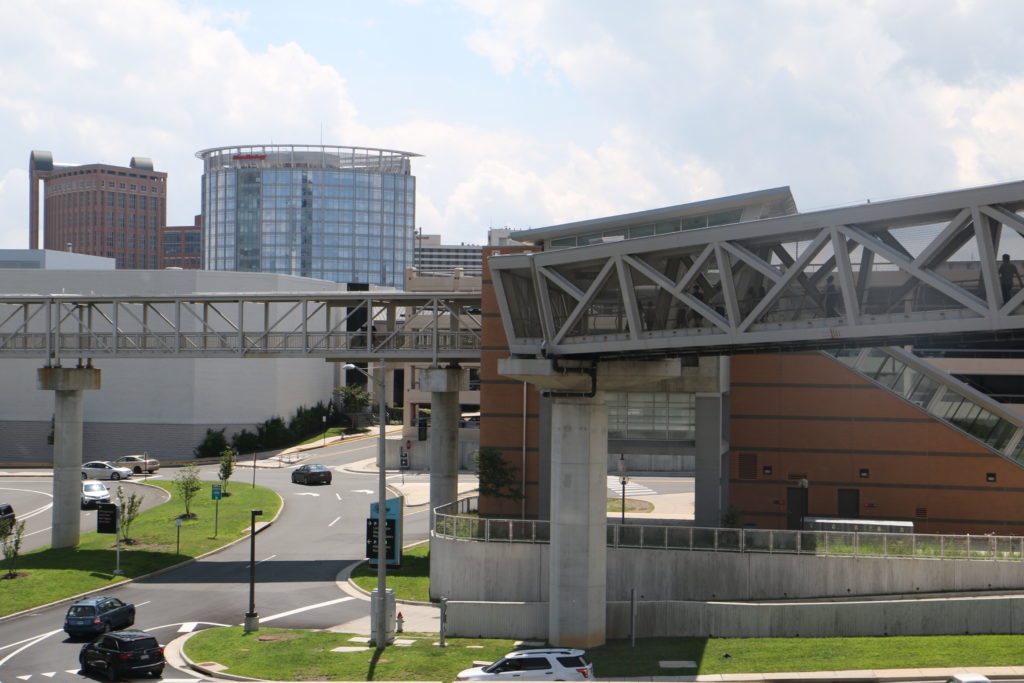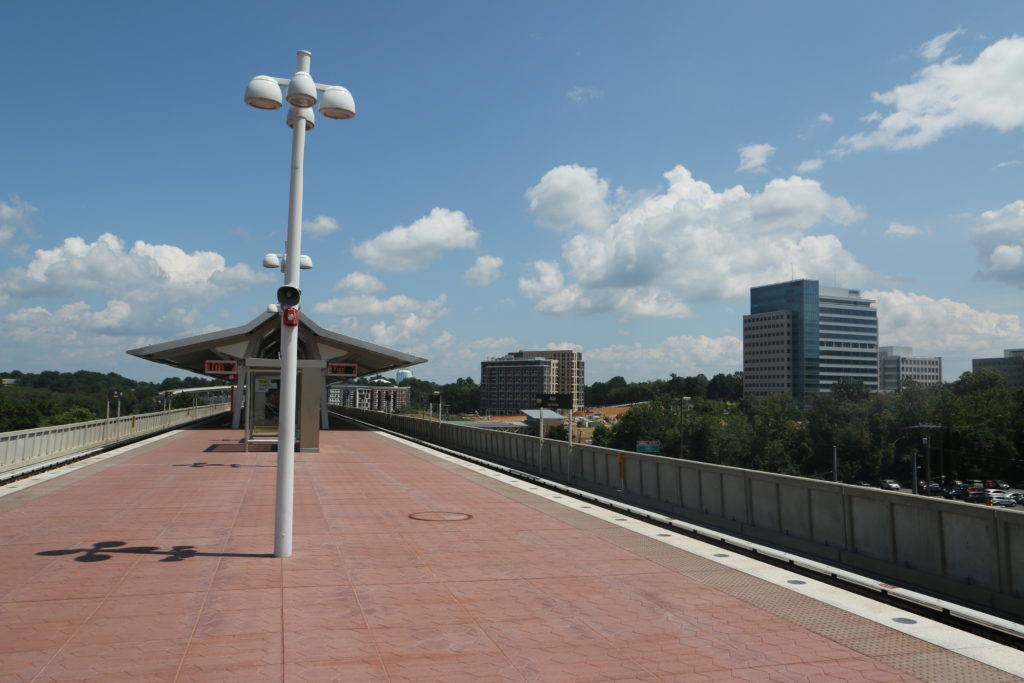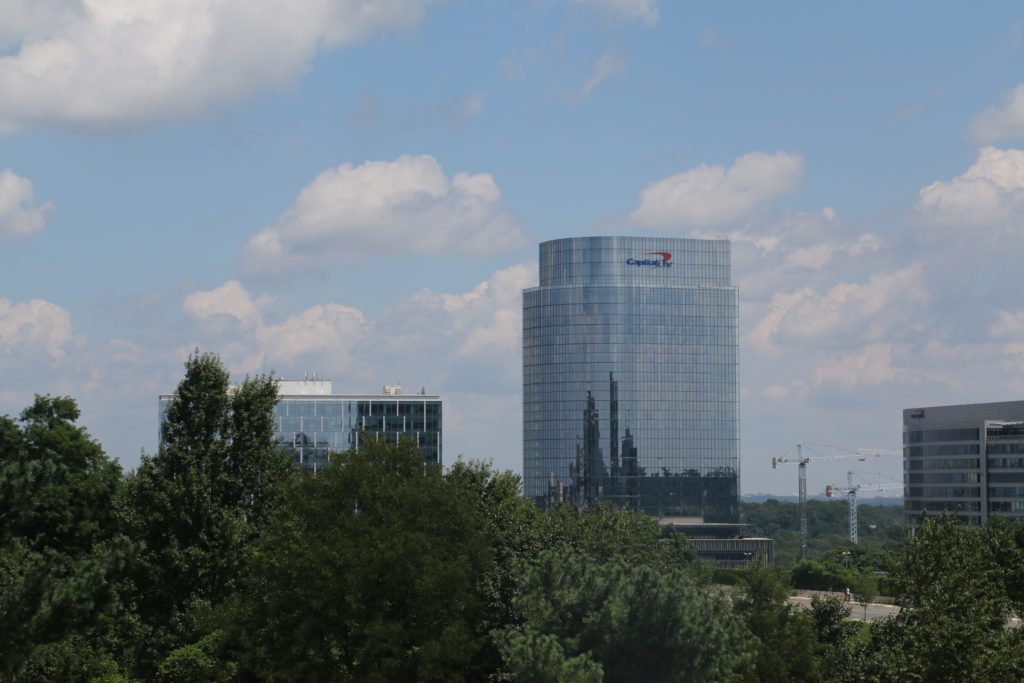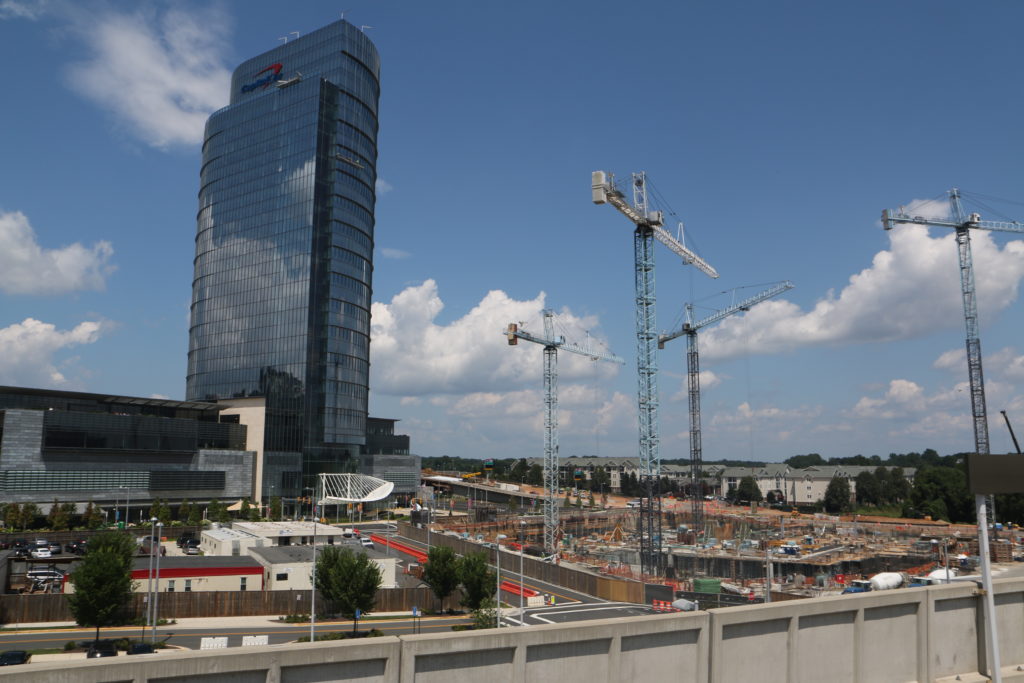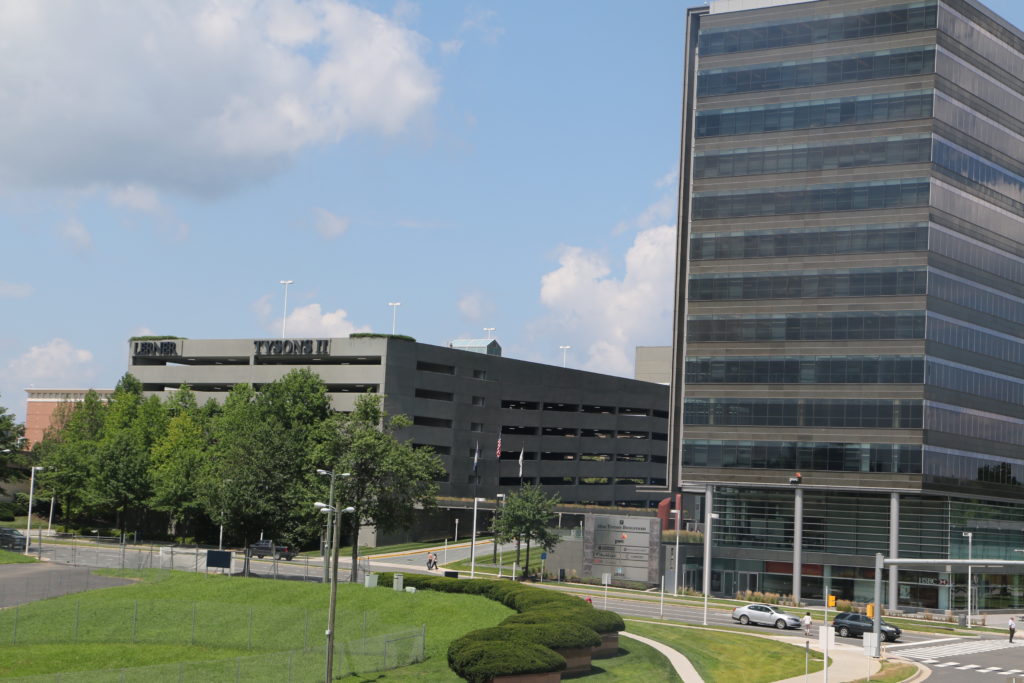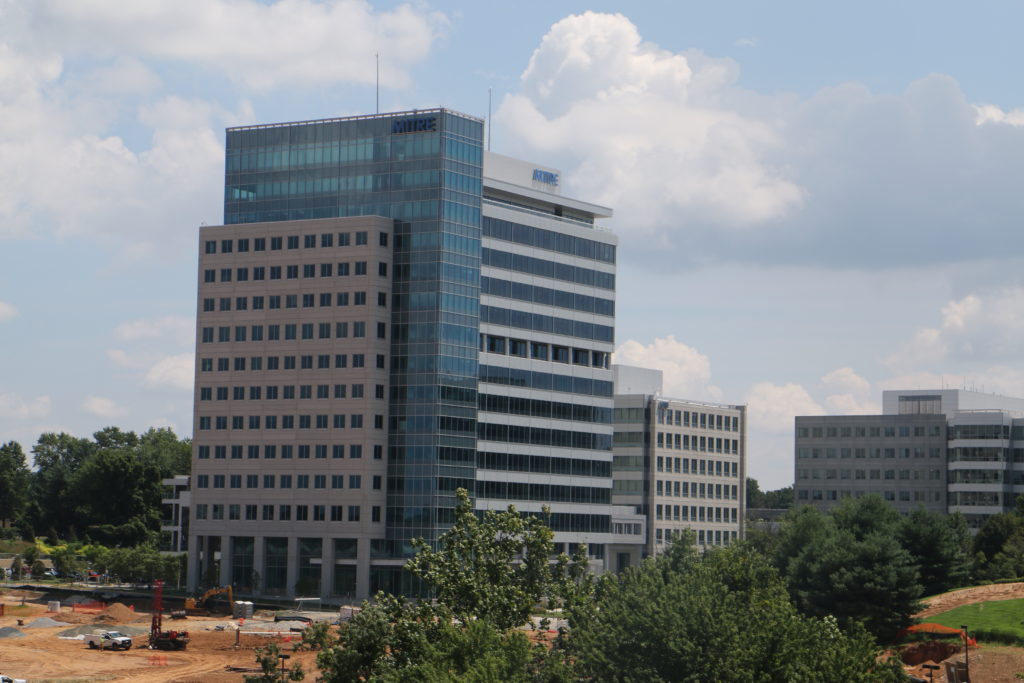

Tysons boasts 29 million square feet of office space, according to the Fairfax County Economic Development Authority. But the area hopes to become known for much more than that.
“The hope is really for Tysons to stand on its own and not just be seen as an office park that happens to be close to D.C.,” said Brianne Fuller, the Tysons Revitalization Program Manager in Fairfax County’s Office of Community Revitalization. “The intent is really for there to be places for people to live [and] work and [have] entertainment and such there.”
The vision of Tysons as a “live, work, play” center is also advocated by Tysons Partnership, an organization that operates “between the county and the private sector to insure the vision that the county laid out [is] actually going to be translated into reality,” the partnership’s president and CEO Sol Glasner said.
Tysons faces several challenges as it moves toward that reality. Transportation and traffic loom large among them.
“People see [Tysons] as very car-driven, and we really want it to be walkable and bikeable and for transit to be pretty plentiful there and to all the places that people need to go to,” Fuller said.
Tysons Partnership is the county-designated Transportation Management Association for Tysons, Glasner said.
In that role, their “objective and mission is to move people better, faster, etcetera,” he said. When they talk about walkability, “people look at Tysons and they say, ‘well that’s a joke, where’s the walkability,'” Glasner said. Though developing a walkable infrastructure takes time, “that’s starting,” he said.
Citizens groups, like the McLean Citizens Association and Greater Tysons Citizens Coalition, also work to ensure the county fulfills plans to add parks and athletic fields to Tysons — something key to the “live” and “play” components of future city life.
“We keep track because it’s very important to us that Tysons does become a livable, inviting community and that requires that Tysons has adequate park and athletic field facilities to service its population,” said Sally Horn, president of the Greater Tysons Citizens Coalition.
Another facet of Tysons’ development to watch are residential additions, which alter “the very nature of Tysons Corner, which was at one time strictly a business community and now becomes a full-time almost a city unto itself,” said Jerry Gordon, president and CEO of the FCEDA.
Tysons Partnership’s work includes considering what “we need to do collectively that can help create a diversification of housing,” Glasner said.
“You can create a downtown, but if you’re really talking about an urbanized area that has some texture to it and some variability to it, then you need to have people live here and I think you need to have a diversified pool of housing from which they can choose,” he said.
If Tysons grows to its hoped for size, updates to the existing public safety infrastructure will also be important, Horn said.
“When Tysons does get to 100,000 residents and 200,000 people working there, obviously the police districts are going to need some adjustments,” Horn said. “We just want to make sure people… start thinking now about smart ways to achieve satisfactory public safety infrastructure for everyone.”
County planners, community members and developers will continue to face questions surrounding those topics and many others.
“Creating an organic, functioning, really livable urban environment and community does take time,” Glasner said. Turning a collection of buildings “into a real place evolves more… slowly, and we kind of measure that in decades.”
“Imagine the future Tysons as a different, better place than today.”
So begins the “Vision for Tysons,” as laid out in Fairfax County’s Comprehensive Plan for Tysons. A “different, better place” is something that stakeholders want — from developers to citizens groups.
The Fairfax County Board of Supervisors adopted “the first relevant comprehensive plan” for Tysons today in 2010, “and that was a very hard fought document by all parties,” said Sally Horn, who today serves as chair of the Greater Tysons Citizens Coalition. “I think people all accept it as a decent compromise document.”
A 36-member task force developed that plan, working to reach satisfactory conclusions on questions from the number of parks in Tysons to the appropriate way to divide tax burdens.
“We were most interested in making sure that there were adequate public facilities, especially for transportation, that they would be rolled out at the same time as the development and that it wouldn’t become… an unfair burden on taxpayers,” said Rob Jackson, who was president of the McLean Citizens Association from June 2007 through May 2012 and is the chair of MCA’s planning and zoning committee today.
The plan they came up with has been updated several times since 2010. Its ultimate goals extend to 2050, a time by which planners hope Tysons will boast 100,000 residents and 200,000 jobs.
Though developers, community members and county representatives recognize that Tysons has a long way to go, many also see the better future as possible. Some pieces of that imagined future, like Metro’s Silver Line, have already started to come together.
“I think that plan is going to be satisfied more quickly than [2050],” said Jerry Gordon, president and CEO of Fairfax County Economic Development Authority. “We’ve already seen a lot of the construction.”
Gordon has previously described Tysons as a place where “we have disposed of all the laws of supply and demand,” in part due to rapid high-density development the area saw after the Board of Supervisors approved the Tysons plan.
“We leapfrogged that period where supply [of office space] was low,” Gordon said. “It demonstrated that not only did the developers and the owners of the land have confidence that Tysons Corner was going to continue to grow dramatically… It also demonstrated more importantly that the banks were willing to finance that.”
Still, Tysons continues to face growing pains. When it began developing, prevailing planning concepts dictated that “you didn’t mix things up, that… employment centers weren’t good places to live and you protected residential areas from intrusions from commercial traffic and commercial activities,” said Stephen Fuller, head of George Mason University’s Stephen S. Fuller Institute. “Tysons reflected that former concept, and now we’re trying to make it easier for people to live near where they work.”
Though change in Tysons dates back to the 1960s, the area is relatively young for a city, especially one working to adopt a challenging vision.
“It has a long reach back, but that isn’t long in the life of cities,” Fuller said. “We’re youngsters, and trying to change that pattern abruptly is complicated and that’s what they’re hoping to do in Tysons.”