


The potential benefits and challenges of converting commercial properties into housing both emerged during a public hearing last week on a proposal to repurpose the now-vacant Sheraton Tysons Hotel at 8661 Leesburg Pike.
Promising up to 544 new residential units, the project will boost the supply of housing in Tysons with a unique, market-rate affordable option, a representative for developer JBG Tysons Hotel touted at the hearing before the Fairfax County Planning Commission on Thursday (Dec. 14).
Because the development will utilize the existing hotel structure, the majority of units — about 80% — will be smaller-than-average studios, a currently “underrepresented” housing type, according to Walsh Colucci land use attorney Robert Brant. Some one and two-bedroom units will also be included, along with designated workforce dwelling units.
“This is an opportunity to provide diversity in the range of housing. The smaller units, combined with the fact that this is adaptive reuse, will make them also naturally more affordable,” Brant told the commission. “…Folks will be able to have an affordable housing option right here at the doorstep of the Spring Hill Metro station.”
The planning commission recommended that the Fairfax County Board of Supervisors approve the conceptual development plan, which will amend a plan for the Tysons West neighborhood that was originally adopted in 2013 to allow the hotel-to-residential conversion.
The developer is also seeking to revise a second planned, but unbuilt residential building along Leesburg Pike (Route 7) from a 400-unit, six-story mid-rise to 265 units with five to eight stories and 5,000 square feet of retail. The overall height of 85 feet would stay the same.
The smaller footprint for “Building C” preserves the top portion of the existing hotel parking garage and provides more room for park space, getting Tysons West up to the 3.05 acres of publicly accessible urban park space required by the county.
However, whether that space will actually meet the needs of future residents and surrounding community remains a question mark.
“We would say definitely the applicant has made improvements in terms of the quantity of park space. We remain concerned about the quality and functionality of the park spaces,” Fairfax County Park Authority Assistant Director of Planning and Real Estate Sam Hudson said.
Eight park spaces are proposed for the 16-acre development, mostly pocket parks and urban plazas along Cornerside Boulevard. FCPA staff told the planning commission that not all of the plazas meet the minimum size for a “civic plaza” under the county’s urban parks framework. Read More

County Expands Electric Vehicle Pilot — The Office of Environmental and Energy Coordination recently picked five new communities to join its Charge Up Fairfax pilot program, which helps neighborhoods install electric vehicle charging equipment. The latest participants are the Colonies at McLean, Strathmeade Square Community, Villa Ridge Condominium, Washington Plaza Cluster Association and Waterford Square Condominium Unit Owners Association. [WTOP]
School Board Members Share Identity Through Books for Inauguration — “Four returning members and eight newcomers were sworn onto the board at the ceremony Wednesday evening. Some members brought sentimental Bibles, some brought stacks of books they connected with and others used no book at all. A number of members saw the ceremony as an opportunity to demonstrate their stance on the rise of book challenges.” [Washington Post]
Fairfax Man Gets Prison for Cyberstalking — “A man from Fairfax was sentenced on Monday to over three years in federal prison for cyberstalking a man and a woman.” Michael Ghali, 35, pleaded guilty to sending “sexually explicit and threatening text messages” to a Maryland woman starting in June 2020, and he also sent emails threatening a former coworker around that same time. [DC News Now]
Transit Advocate Laments Vienna’s Lack of New Housing — “[Fairfax County] estimates that Vienna’s zoning policies will only lead to 250 new residents between now and 2050. So to try to make up for Vienna and other jurisdictions’ refusal to do their part, the county is trying to jam as much housing as it can into the one place that can’t say no because it’s not a city: Tysons.” [Greater Greater Washington]
Bailey’s Crossroads Shopping Center Adds Furniture Store, Restaurant — “Two new businesses are coming to the Crossroads Place Shopping Center in Bailey’s Crossroads — Charleys Cheesesteaks and Wings and Fortunoff Backyard Store. The companies just signed leases with the owner, Levin Management Corp., so it’s too soon to set opening dates, says Sandy Crisafulli of Caryl Communications.” [Annandale Today]
Art Projects Enliven Annandale Commercial Spaces — “The ‘Art in Daily Spaces’ initiative invites 10 local artists to showcase their Pop Art creations in commercial spaces throughout Annandale. The artworks will be displayed in such places as restaurants, coffee shops, stores, hair salons, laundromats, or office lobbies.” [Annandale Today]
N. Va. Pizza Chain Named One of World’s Best — “Arlington’s Pupatella has been recognized by an international pizza ranking guide as one of the premier pizza chains worldwide…The pizza chain has expanded to seven additional locations across the D.C. area,” including ones in Reston, Merrifield and Springfield. [ARLnow]
McLean Group Gets “Visit” From Former First Lady — “A woman who helped steer the ship of state during her husband’s incapacitation visited with the McLean Historical Society at its Dec. 12 meeting. Phyllis Verhalen portrayed First Lady Edith Wilson, the wife of President Woodrow Wilson, at the event, discussing her life and role during the final years of her husband’s presidency.” [Gazette Leader]
It’s Tuesday — Expect mostly sunny skies and a high near 40 degrees, accompanied by a breezy northwest wind. In the evening, the sky will remain clear with temperatures dropping to around 27 degrees, while the northwest wind decreases to 7 to 11 mph. [Weather.gov]
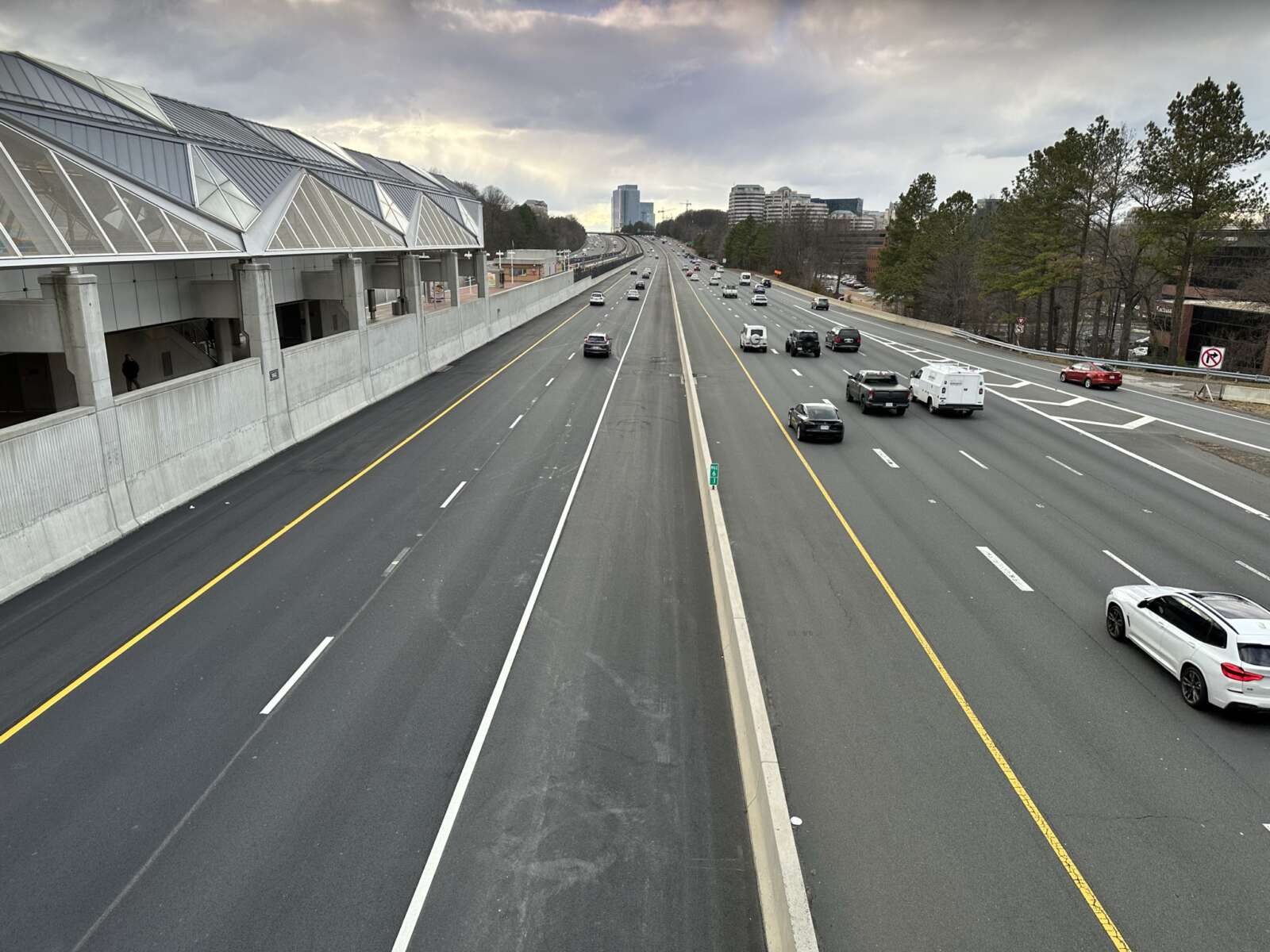
The Dulles Toll Road by the Wiehle-Reston East Metro station (staff photo by Angela Woolsey)
Fairfax County has launched a new data dashboard to offer insights into its mobility and transportation realm.
The dashboard — which was developed as part of the county’s strategic plan — dives into four indicators: efficient and varied transportation options; infrastructure conditions, sustainability and environmental impact; traveler safety; and increased accessibility, affordability and equity.
So far, data shows that working from home is decreasing after spiking at the start of the COVID-19 pandemic. According to the dashboard, 27.9% of residents worked from home in last year, down slightly from 37.2% in 2021.
Of the people who commuted last year, roughly 9 in 10 residents drove to work — with 80% driving alone.
The dashboard also highlights a spike in traffic-related deaths. In 2022, there were 60 fatal crashes, up 43% from 2019.
Although crashes of all types decreased by 17% from 2019 to 2022, the total number of crashes increased by 31% between 2020 and 2022.
Data from the dashboard is intended to illustrate how the county is doing on efforts to move away from reliance on single-occupancy vehicles, improve walkability and reduce traffic-related incidents.
“The dashboard is designed to inform residents and stakeholders, monitor progress overtime, identify any demographic or geographic disparities among residents, and guide community leaders, practitioners, and advocates in making data-driven decisions,” the county said in a news release.
The dashboard also highlights the fact that the county has installed 620 traffic calming devices since 1998, most of them at speed humps and speed tables.
The county plans to update the dashboard on a yearly basis in order to monitor community progress.
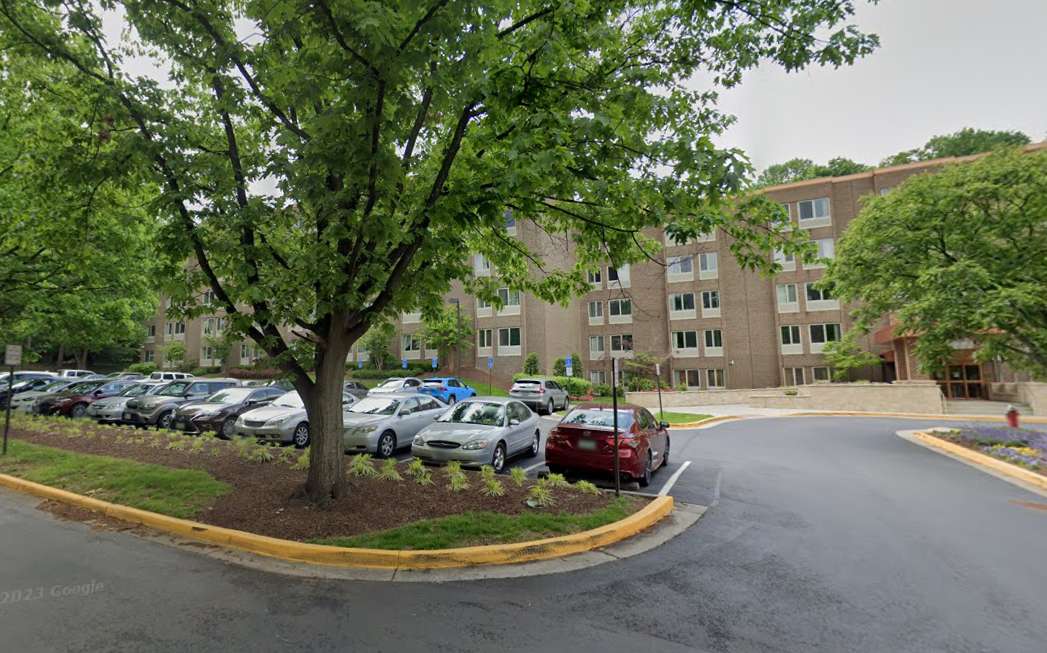
The available parking at the Tysons Towers apartments has proven inadequate, the property owner says.
Identified in Fairfax County property records as the Fairfax Education Association Retirement Housing Corporation, the owner is seeking to add 24 parking spaces at the apartment building, which exclusively houses seniors 62 and older and people with disabilities.
An application submitted to the county in late November asks to confirm that the changes can be made without violating the special permit first approved for the site at 8500 Tyspring Road in 1973.
“The property has been experiencing insufficient parking spaces for the tenants for many years,” William Prodo, a senior project manager for the engineering firm Walter L. Phillips Inc., wrote in a letter to the county’s Department of Planning and Zoning. “To rectify this problem, the owner would like to construct 24 additional parking spaces in two existing islands in the parking lot.”
The six-story apartment building was built in 1976 with 119 parking spaces, exceeding the 76 that were required at the time to support 275 dwelling units and 14 employees, according to a site plan.
Accessible parking spaces aren’t shown in the site plan, but the property owner added markings later to comply with Americans with Disabilities Act requirements, leading to the current capacity of 118 on-site parking spaces, Prodo wrote.
The application says the additional spaces won’t be close to or “negatively impact any neighboring properties.”
“While one end of the additional parking spaces is located near the property frontage on Tyspring Street, the property is located at the end of a cul-de-sac so little traffic drives by the property,” Prodo said.
A proposed layout for the reconfigured parking lot indicates that two trees will be removed and two lights need to be relocated. The owner also plans to construct a new underground stormwater facility designed to meet current quantity requirements.
Per the application, the facility will “probably” meet the county’s stormwater quality requirements as well, but “it is possible that a very small amount of nutrient offset credits may need to be purchased.” The size, location and type of facility planned haven’t been finalized.
The application was accepted by county planners on Nov. 30 and is currently under review.
Image via Google Maps
When Fairfax County adopted its Tysons Comprehensive Plan in 2010, it wasn’t quite creating a community from scratch. After all, the area had history: first as home of the Manahoac tribe, then as rural farmland and finally, as a suburban crossroads known for malls and offices.
However, transforming car-centric sprawl into a place people not only want to go to, to take a phrase from the Washington Post, but also stay in remains a formidable challenge.
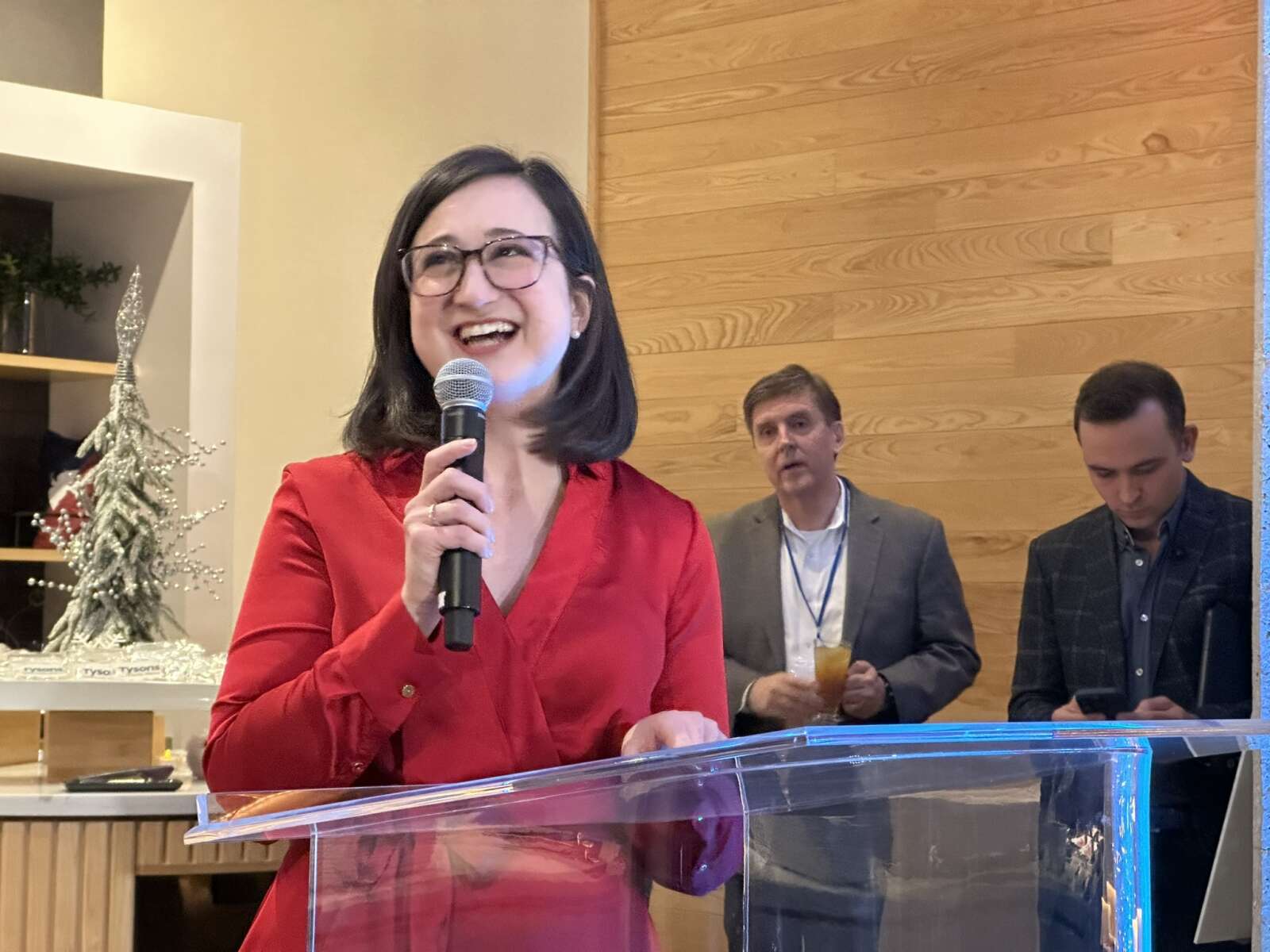
Tasked with ensuring that challenge is surmounted, the Tysons Community Alliance (TCA) released a strategic plan on Thursday (Dec. 14) that reaffirms the priorities laid out in the comprehensive plan and the recently established booster organization’s mission.
Celebrating the organization’s first year of existence at The Watermark Hotel in Capital One Center, TCA leaders noted that the importance of connections between people and places emerged as a predominant theme of the strategic plan, which is titled “Connecting Tysons.”
“So much of the vision of the Tysons comp plan and, in fact, the potential for success of Tysons depends on public sector, private sector, civic sector working together,” TCA CEO Katie Cristol said. “So, to literally be able to bring those groups of people together across the table from one another to build this plan made a huge impression on me and, I think, made the plan a lot stronger.”
Work on the strategic plan began this spring and involved a committee of residents, business leaders, county officials and other community members with varied experiences of Tysons. They formed “task groups” that focused on different sectors: office and the workforce, resident life and housing, retail and entertainment, hospitality, transportation and community amenities.
The resulting document highlights five overarching themes that will guide efforts to implement the county’s vision of Tysons as a “dynamic, 24/7 urban center”:
- Cultivate and promote identity. Strategies include using marketing to define Tysons as a whole and its individual neighborhoods.
- Energize place. Create attractive public spaces where people can gather and feel connected to their community.
- Build connections and enhance mobility. Improve the accessibility of Tysons for all modes of transportation, particularly walking, bicycling and transit.
- Build a livable and inclusive community. The plan calls for affordable and attainable housing, enhanced parks and other community facilities, and broad public outreach.
- Foster a vital economy. Key goals include attracting and retaining businesses that serve offices and residents, enhancing the “workforce experience,” increasing capacity for large meetings or community gatherings, and diversifying the retail and hotel markets.
The plan’s development was informed by data from a Tysons market study released on Aug. 4 as well as a community survey that drew 831 responses.
The study found a need for more housing in Tysons, examined how the economy is recovering from the pandemic, and identified gaps in the area’s transportation facilities. Cristol says the findings provided more specific evidence to back up experiences that committee members were sharing anecdotally.
“The number one thing that we heard in terms of the need to get people back to the office and, therefore, companies leasing office space, or to encourage the recovery of midday hospitality business or support the growing residential sector is creating a destination where people want to be,” she said.
For the survey, more detailed results will be published early next year, but initial highlights include:
- Improvements to walking and biking conditions are a top priority.
- The primary reason residents choose to live in Tysons is its central location and proximity to work, Metro and retail.
- 77% of survey respondents who don’t already live in Tysons said they’d consider moving there.
- The proximity of their workplace to home is important to respondents who work in Tysons.
- The Perch at Capital One Center was the most popular park.
Respondents also expressed a “strong desire” for more neighborhood-focused retail, including grocery and food stores, book stores, small businesses that provide specialty services and bodegas or corner stores.
When asked about needed community amenities, respondents most frequently suggested a community center — which is in the works — as well as a large central park, a public swimming pool and museums or “other cultural institutions.”
Survey takers were a mix of residents, workers and people who have visited or “played” in Tysons.
With the strategic plan now complete, the TCA hopes to continue strengthening its role as a community advocacy group with a newly launched Tysons Teammates program, which will provide a platform for people to meet other, give feedback and stay in the loop on events and initiatives.
The first activity will be a volunteer opportunity in February to support the nonprofit Food for Others.
The program is open to anyone who has a connection to Tysons, whether they live and work there or simply visit, according to Cristol.
“We want this to be broad-reaching,” Cristol said. “Folks who have a sense of connection to the Tysons community, who want to get more engaged, who want to meet others in the Tysons community, this is just a fun avenue to do it and we hope we’ll keep building up that sort of social fabric that really matters as Tysons becomes a place to live and a full neighborhood.”
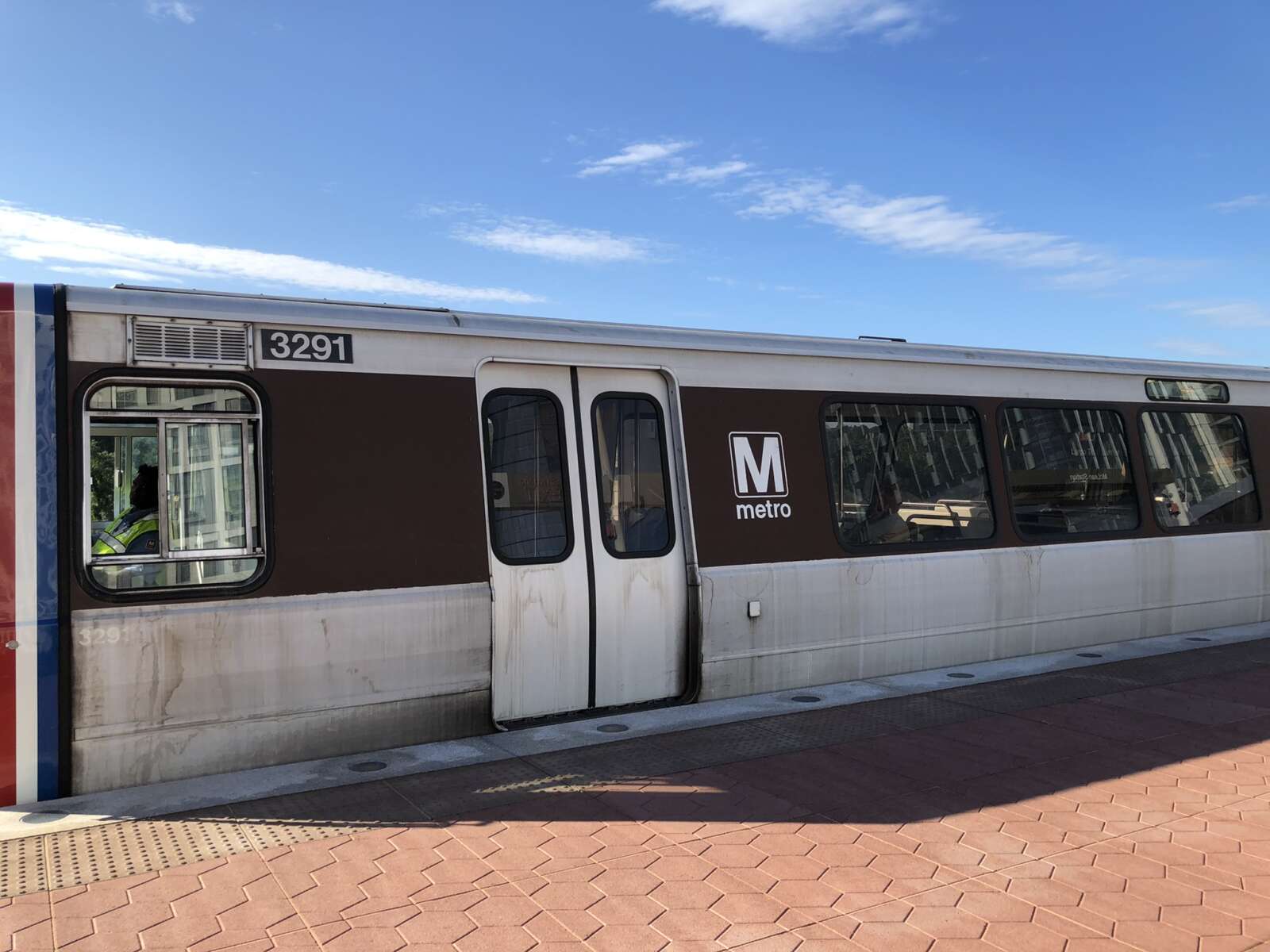
Local and state officials in Virginia say the path to dig Metro out of its looming $750 million deficit is uncertain — but action is necessary to avoid the significant service cuts, systemwide fare hikes, layoffs and station closures laid out in the transit agency’s newly proposed budget.
Leaders in Fairfax County — which already faces lean economic times — say they don’t plan to offer up additional funds unless jurisdictional and federal partners can throw some more skin into the game.
“What we have said is there’s absolutely no way that local governments can bear the responsibility of that entire bill,” Fairfax County Board of Supervisors Chairman Jeff McKay told FFXnow in an interview before the Washington Metropolitan Area Transit Authority released its official budget proposal.
WMATA has been sounding the alarm on its projected budget shortfall since June.
“What I think you’re going to see happen is there’s going to be some matching and some partnerships,” McKay said.
In a first glimpse of the proposed budget, which was released last Tuesday (Dec. 12), Metro General Manager Randy Clarke laid out what would happen if Metro can’t secure local, state and federal funds to address a problem that has been coalescing for years.
“Metro is facing an unprecedented, existential crisis that requires our region to rally together if we want to avoid the catastrophic impacts this budget would have on our region,” he said.
The system would close at 10 p.m. every day and shutter 10 low-ridership stations. Silver Line trains would turn back at Stadium-Armory, with trains running between Ashburn and that station. Similar reduced turn-backs would take place on the Red Line.
Trains would run every 15 minutes for most stations — a 17 to 67% increase in wait-times across the board on weekdays — and every 20 minutes on weekends for most stations — a 40 to 70% increase. Fares would also jump by 20%.
Among other cuts and more than 2,000 layoffs, Metro would use $193 million from its capital funds to cover operating maintenance expenses — essentially borrowing against the future.
“Such a large transfer of capital funds to operating expenses puts the system’s state of good repair, including safety and reliability, at risk, and threatens to delay, defer, decrease, or cancel several long-term projects to modernize the system,” WMATA cautioned in a press release.
But it’s unclear when and if local and state bodies will offer up enough funding. The subsidized system relies on annual subsidies from Maryland, Virginia and D.C., as well as fare revenue and federal dollars. The fiscal year 2025 budget begins July 1, 2024.
Metro needs subsidy increases of $180 million from Virginia, which has already allocated $348 million. Similar increases are sought from other jurisdictions. The upcoming General Assembly session will determine how much the state is willing to put down to assuage the bleeding after federal COVID-19 funding ends for the system.
Recent news that the Washington Capitals and Wizards plan to move near the new Potomac Yard Metro station in Alexandria emphasizes Metro’s “pivotal role” in the region, Hunter Mill District Supervisor Walter Alcorn says.
“Funding from Virginia will be critical in limiting the additional burden to be borne by local property taxpayers,” Alcorn said.
He also stated that a long-term solution that extends “beyond property taxes is critical to make Metro truly sustainable for Virginia residents and businesses.”
On the federal side, Rep. Gerry Connolly (D-11) said finding more funding for WMATA will be “very difficult,” particularly after the government provided $2.4 million in emergency Covid relief funding that staved off a major deficit for four years.
“We renewed the $150 million annual federal capital funding commitment to WMATA as part of the Bipartisan Infrastructure Law,” Connolly said in a statement. “And the WMATA Board just removed its second Inspector General in two years the day after the Inspector General reported that WMATA was not in compliance with statutory conditions for federal funding — conditions I authored to address a culture at WMATA that resists accountability at every turn from the IG to the safety oversight commission.”
Still, he believes the federal government needs to step in more.
“It is long past time that the federal government pay its fair share to support the system’s operating costs, conditional of course on WMATA improving safety, reliability, and customer service,” he said.
Phyllis Randall, chair of the Northern Virginia Transportation Authority and the Loudoun County Board of Supervisors, noted that NVTA has pledged to invest $258 million in Metro’s capital improvements, signifying its commitment to support the system.
“Stakeholders must work together to secure sufficient state and federal funding and implement operational changes to ensure that Metro continues to meet the transportation and economic development needs of the region,” she said.
But McKay told FFXnow he still expects to see service cuts in the short term, even if state, federal and local entities can team up to at least limit the impact of the budget shortfall.
In the long term, he says the federal and state government need to pony up more funds to support Metro, noting that the federal funding is currently “a fixed-dollar amount” that doesn’t adjust with inflation.
“There are discussions underway about putting in place a longer-term fix to Metro that will probably require a lot of things, not the least of which is some reforms at Metro to improve management,” McKay said. “…I think the county has a role to play, but we’re not willing to play a role unless all of our funding partners are also making a commitment to do that.”

FCPS Considers Later Middle School Start Times — Fairfax County Public Schools “is exploring the possibility of starting middle school classes at 8 a.m. or later, it said. Currently, middle schools in the county start classes at 7:30 a.m…The goal is for the new start time to be in place for the 2025-26 school year, the school system said.” [WTOP]
Hybla Valley Man Arrested in Stolen Car — “A Hybla Valley man accused of committing five burglaries in 24 hours was arrested Tuesday. Then released on bond Thursday. Now, he’s back in jail.” When the 22-year-old man was arrested again Friday (Dec. 15), he was in a Hyundai Sonata stolen from the West Springfield Police District station earlier in the day. [WUSA9]
Fairfax Doctor Pleads Guilty to Tax Fraud — “A Fairfax doctor pleaded guilty [Friday] and has agreed to pay $3.1 million in taxes and $2.2 million to insurance companies for corruptly obstructing the IRS by underreporting his income and filing false tax returns in connection with his medical practice.” [DOJ]
Local Economic Development Leaders Call for Transportation Investments — “As Fairfax County grows in population, development and jobs, transportation is struggling to keep up…With more people moving to live in the suburbs and returning to their pre-pandemic commutes, real estate leaders and county officials say now is the time to put the pedal to the metal to improve the county’s mass transit and vehicular transportation options.” [Bisnow]
Metro Ends Fare Card Fee for Seniors — “Metro’s Board of Directors approved the elimination of the $2 fee on Senior SmarTrip® cards. Beginning Tuesday, January 16, 2024, Senior SmarTrip cards will be issued at no cost to customers age 65 and older…The elimination of the $2 fee removes the need for a third-party payment collection, which is currently a barrier to participation for social service agencies and other organizations to distribute the card.” [WMATA]
How AOL Shaped Northern Virginia — “In 1996, America Online announced that it would move its headquarters from Tysons to the former British Aerospace building, just east of the Broad Run creek…Currently, the abandoned campus is being demolished, making way for even more data centers…Although AOL’s footprint in Loudoun may soon be erased, the company’s legacy and impact on the community — and especially Ashburn — live on.” [Inside NoVA]
McLean Resident Swims Distance of Earth’s Circumference — “We just had to share this incredible accomplishment from local McLean resident Chuck DiMeglio! He has swam more than 24,901 miles or the distance around the world, and 40% of that swim distance (1,753,030 pool lengths) has happened in Fairfax County Park Authority Rec Center pools!!” [FCPA/Facebook]
FCPD Offers Security Surveys to Faith Communities — “Our Police Department encourages faith leaders to request a security survey for their houses of worship…There hasn’t been an increase in bias related crimes in the county, but there’s a rising trend of bias-related crimes across the country, so the Police Department wants to be proactive and continue efforts to keep the community safe.” [Fairfax County Government]
It’s Monday — Expect showers, mainly before 1pm, with cloudy skies clearing later and a high near 52. It will be windy, featuring gusts up to 44 mph and a 70% chance of precipitation. Tonight, there’s a slight chance of showers after 1am, with partly cloudy skies and a low of 33. [Weather.gov]

Some facility upgrades are in the works for three Fairfax County parks.
The Fairfax County Park Authority (FCPA) Board approved a total of $55,325 in Mastenbrook grants on Wednesday (Dec. 13) to help fund improvements at Lake Fairfax Park in Reston, McLean Central Park and Frying Pan Farm Park south of Herndon.
Lake Fairfax Park (1400 Lake Fairfax Drive)
The Cricket Association of Fairfax County (CAFC) was awarded $15,325 to replace Lake Fairfax’s cricket pitch, which was developed in 1997 and is “one of the few in the Northern Virginia region large enough to meet the international standards of cricket,” according to the FCPA.
In its proposal to the park authority, the association reported that it has replaced the field’s artificial turf three times in the past 20 years, but inadequate drainage has damaged the wicket — a concrete base covered by artificial turf used to bounce the ball — and results in frequent waterlogging.
“Recent discussions with the park management have resulted in the determination that the wicket cannot be repaired,” the CAFC said. “A new wicket needs to be constructed with elevation and drainage to prevent water build up.”
The project to replace the pitch’s base and turf carries a total estimated cost of $30,650, half of which will be covered by the cricket association.
McLean Central Park (1468 Dolley Madison Blvd)
The 28-acre park near the McLean Community Center is getting a renovated basketball court, thanks to a friends group formed this year to honor Thomas A. Mulquin, a McLean resident who was “an avid supporter of basketball,” according to an FCPA staff summary for the board.
“The basketball court is currently in disrepair and therefore seldom used,” the Friends of Thomas A. Mulquin wrote in its grant application. “A tree root protrudes through the surface at one end of the court and a thicket downhill at the other end makes retrieving balls difficult and unsafe.”
Supported by $45,176 in community contributions, on top of $20,000 from the park authority, the $65,176 renovation will refurbish the court surface, update the color coating and line painting, replace both hoops and add a 10-foot-tall chain link fence “to prevent basketballs from going into the heavy overgrowth near the court,” according to the FCPA press release.
Frying Pan Farm Park (2709 West Ox Road)
Spirit Open Equestrian also requested and received a $20,000 grant — the maximum allowed for a single project by the Mastenbrook Grant Program, which provides matching funds for park improvements undertaken by local residents or community groups.
The nonprofit wants to bring electricity to the equestrian facilities where it provides therapeutic horseback-riding programs. The four horse barns and three sheds with supply and office space currently rely on solar panels, which are limited in capacity and unreliable, depending on the season, per the grant application.
“The project plan proposes to have Dominion Energy extend power from an existing cell tower, and then to contract with a vendor to outfit the buildings with wiring, conduit, outlets and related electrical components,” FCPA staff said.
With the project estimated to cost $72,458, the park authority grant will be supplemented by $52,458 from SOE.
All three projects are on track to be completed by spring 2024, according to the park authority.
These will be the last improvements supported by Mastenbrook grants for the time being. The FCPA has suspended applications to the 25-year-old program as it conducts a review, prompted by concerns about a gap in the quality of park facilities based on the ability of different neighborhoods to fundraise.
“The goal of the review is to examine the process through an equity lens and determine how to improve accessibility and benefit of the program in all areas of the county — particularly in communities of opportunity,” the park authority said.
FCPA staff are expected to deliver recommendations for the program’s future to the board in early 2024.
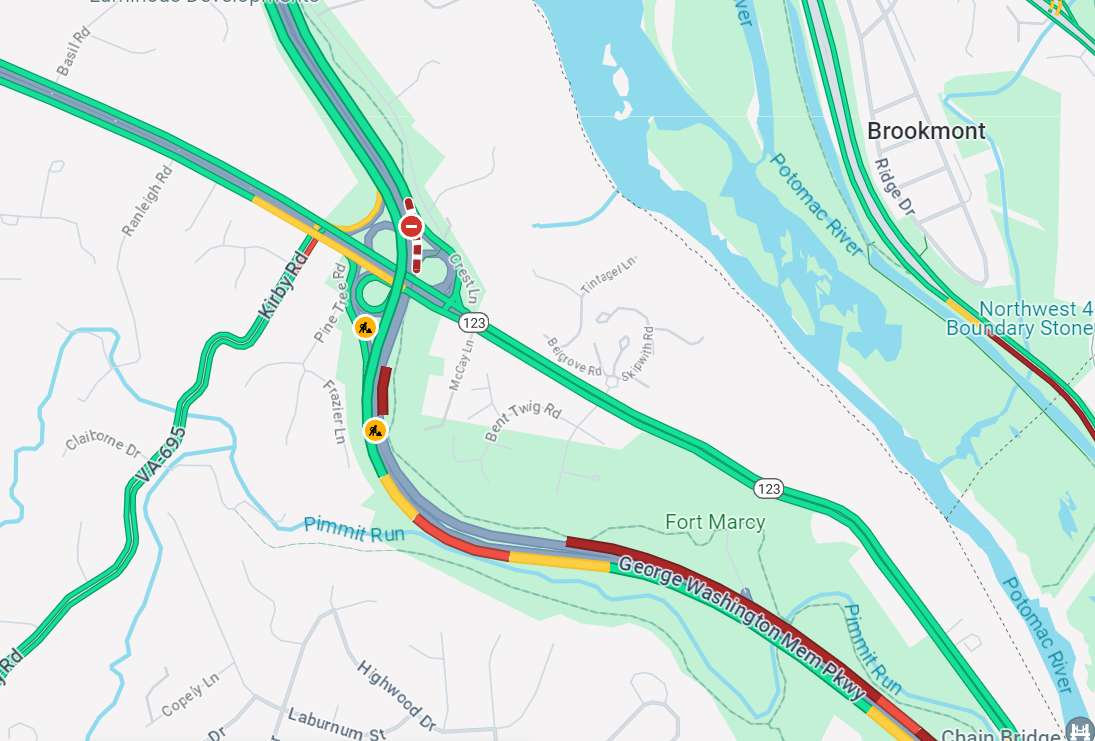
(Updated at 1:05 p.m.) Traffic on northbound George Washington Memorial Parkway is being detoured after a man was hit by a vehicle near Route 123 (Chain Bridge Road) in McLean this morning (Friday).
The U.S. Park Police (USPP) says its officers responded to the area of the GW Parkway and Route 123 interchange around 8:50 a.m. for a crash that involved “a vehicle and a person on foot.”
“The person on foot was transported to the hospital for treatment of life-threatening injuries,” a Park Police spokesperson said. “The northbound GWMP is diverted to Spout Run Parkway.”
Police confirmed that the person who got hit had been working on the GW Parkway. The northern section of the GW Parkway has been under construction for months as part of a rehabilitation project.
According to scanner traffic on Open MHz, a dispatcher told responding Fairfax County Fire and Rescue Department units around 8:59 a.m. that the crash had been described as a “hit and run.” However, USPP says it wasn’t a hit and run.
As of 11:14 a.m., the GW Parkway’s northbound lanes remained closed around the ramp to Chain Bridge for the crash investigation, according to the Virginia Department of Transportation’s traffic camera site.
Traffic alert: Crash investigation George Washington Memorial Parkway in area of Rt. 123. Northbound traffic diverted to Spout Run Parkway.
— USPPNEWS (@usparkpolicepio) December 15, 2023
UPDATE: Crash with Injury. George Washington Parkway NB at VA-123. Fairfax County, VA. All northbound travel lanes remain blocked with ongoing investigation. Northbound traffic is diverted to Spout Run Parkway. Extended closure expected. Delays remain in both directions.
— MATOC Alerts (@MATOC) December 15, 2023
Map via Google Maps. Hat tip to Alan Henney

The Virginia Board of Education is asking the General Assembly to develop a plan for changing the state’s existing school funding formula to help divisions strapped for money but isn’t backing a proposal to remove a cap that limits the number of support positions the state will fund.
According to an earlier report by the Joint Legislative Audit and Review Commission, which conducts analysis and provides oversight of state agencies on behalf of the General Assembly, changing the formula could help address the underfunding of schools.
“We don’t have a good school financing system in Virginia. It is inequitable, and it’s outdated,” said Board of Education member Andy Rotherham during a special meeting Tuesday.
Virginia’s funding formula establishes how much state and local governments must provide to meet the state’s Standards of Quality (SOQ), the requirements that Virginia public schools must meet. The board reviews those standards every two years and proposes changes as necessary, while the General Assembly makes decisions about how much funding divisions should get.
In addition to backing a new funding formula, the board on Tuesday also urged the General Assembly to provide flexible funding for innovative approaches to literacy and math education, require high school students to have an opportunity to make their own academic and career plans and provide funding for a statewide individualized education program system.
Although board members noted that a decision by the General Assembly to provide divisions more flexible funds could allow them to address a range of different needs, member Anne Holton pushed unsuccessfully for the body to recommend a minimum funding commitment from lawmakers.
“Many divisions, the ones that can afford to fund way over the minimum SOQs … their kids are doing okay,” Holton said. “But the divisions that can’t afford to go way above the state and dated minimum SOQs don’t fund over it, and their kids are not doing okay.”
Funding formula
JLARC this summer recommended the General Assembly consider changing the funding formula after finding that Virginia schools receive 14% less state funding than the 50-state average, equal to roughly $1,900 less per student.
Virginia’s current SOQ formula determines funding for divisions by calculating the number of staff they need and then the cost of those staff.
While the Virginia Department of Education said in a Dec. 12 report that the approach worked historically, it said school divisions today are “faced with a myriad of unique student needs.”
“Funding should be allocated by student, recognizing the unique needs of each student rather than using a formula driven by staffing ratios,” the report stated.
On Tuesday, in line with that suggestion, the board recommended policymakers “investigate, model and develop a plan to move to a student-weighted funding formula for purposes of determining the required state and local shares of cost for the Standards of Quality.”
JLARC estimated that if Virginia had used the student-based rather than staffing funding formula, schools would have received an additional $1.17 billion in fiscal year 2023. Additional funds could benefit programs for at-risk students, English learner programs, gifted education, special education and career and technical education.
Most states use a student-based funding formula, according to JLARC.
JLARC contended the student-based funding model is “simpler,” more accurate, more transparent and easier to adapt to changes in educational practices over time. However, it noted some researchers have found student-driven formulas don’t always account for issues such as retirement rate changes and can provide schools “too much flexibility” in hiring.
Scott Brabrand, executive director for the Virginia Association of School Superintendents, said the association is open to considering a new formula, but urged the board to continue studying the two formulas.
“Any new formula must address the key finding of the JLARC study that Virginia has underfunded all of its public school divisions,” Brabrand said. “Any new formula must increase funding across all of our school divisions. Further understanding of the pros and cons of a new formula is essential.”
Grace Creasey, president of the Board of Education, told the Mercury that “the board was clear that funding should be allocated by student and recognized that each student has unique needs that are not well reflected in a formula driven by staff ratios.”
No backing for elimination of support cap
But while the Board of Education threw its support behind funding formula changes, most members declined to recommend that the General Assembly remove a funding cap placed on support staff positions during the Great Recession.
The cap limits state funding for central office and administrative, technical, clerical, maintenance and instructional support positions.
Funding levels have never been restored, and the support cap was only partially lifted by the last state budget negotiated this past summer, which increased the funding ratio from 21 support positions per 1,000 pupils to 24 per 1,000 pupils.
“The support cap has effectively restricted the way school divisions can utilize funding to meet the needs of our students,” said Jenna Alexander, president of the Virginia Parent Teachers Association. “This is particularly problematic because over the last several years, we’ve seen increased enrollment of special education and English language learners students, both of which need additional services to reach their full academic potential.”
At a Nov. 15 board meeting, Deputy VDOE Superintendent Kent Dickey said removing the cap could cost over $100 million.
Board member Amber Northern said while she understood the need for schools to have additional support positions, she would have preferred to have a conversation about which positions best drive positive student outcomes.
“You want more people in your building, but you also want the people that are actually driving towards outcomes,” Northern said Nov. 15. “If we want to talk about support staff, we need to talk about what type of support staff we really support and the ones that actually do have more of a research base behind them in terms of driving outcomes.”
Unless lawmakers take up the board’s proposal during the upcoming session, local governments will have to wait until recommendations are due from a workgroup made up of Senate and House finance committee members next November.
Photo via Taylor Flowe on Unsplash. This article was reported and written by the Virginia Mercury, and has been reprinted under a Creative Commons license.
